Many writers have a weakness, but are not aware of it. They fall short when they describe places. Their places don’t seem real and are not vivid  or accurate. They are not interesting. Because of an inadequate handling of places, a work that may be superb in every other respect is without convincingly-described locations, scenes, and settings. Descriptions of places are not window dressing that a writer need pay little attention to, but a feature of writing fiction, nonfiction, and drama that is indispensable. Poorly written descriptions of places detract from the quality of the written piece.
When you read a description of place by someone such as Joseph Conrad, Charles Dickens, Virginia Woolf, or Ernest Hemingway, who has elevated that skill to the level of art, you are impressed. You read the description more than once. You think, “This person can really write.” You realize that giving attention to skillfully composing your book’s or story’s places will enhance the works that you are striving so hard to make readable, enjoyable, salable.
 Award-winning short story specialist Eudora Welty did more than anyone else to point out how central to effective fiction place is. She said that the story’s place affects “all currents” of the work, all of its emotions, beliefs, and moral convictions that “charge out from the story” as the author unfolds it. She said the places should always be identified, and adds that they should be described in a particular way that requires significant writing skills.
They should be described concretely.
They should be described exactly.
To describe places concretely and exactly requires the writer to be patient and take time writing about the places and not dismiss them with a few vague words. It is worthwhile to pay attention to places in works you read so you might learn from them. Don’t hurry through them. Study them. See how they are so skillfully put together.
Look at the places in writing you are working on, especially the work you are submitting to publishers or intend to publish yourself, and make sure places are both concrete and exact.
Some Writers, Poets, and Artists Are Known for Their Places
 Place has been particularly important to some noted authors. You cannot imagine the story’s characters without the place where the author has put them: Dublin to James Joyce, small town and rural Mississippi to Eudora Welty and William Faulkner, Paris, Spain, and Africa to Ernest Hemingway, Camden, Ohio to Sherwood Anderson, southern United States to Truman Capote, James Agee, Reynolds Price, Pat Conroy, and many other “Southern writers,“ the plains of Nebraska to Willa Cather, Chicago to Saul Bellow, the Mississippi River to Mark Twain, the English moors to Charlotte Bronte and sister Emily, eighteenth century London to Charles Dickens, Mexico and the state of Texas to Katherine Anne Porter, Los Angeles to mystery writer Raymond Chandler, and so on.
Places are very important to poets too: America is Walt Whitman’s subject, and Patterson, New Jersey is special to William Carlos Williams. And a place may be a favorite subject of painters: his gardens to Claude Monet, the hill visible from his window to Paul Cezanne.
Models
Below are places from my life I have described in stories I’ve written:
A Chicago Alley Late On a Rainy Night When I Was Five
 (My father was an air raid warden during World War II, and once he took me with him during an air raid practice when the lights of the city were turned off and the skies were filled with search lights) “My father and I turned and came up behind the church where a delivery truck was parked. We walked down the alley, keeping our eyes trained on the apartment buildings’ windows, past the empty lot overgrown with weeds and covered with tin cans and newspapers, and past the bent-in-half, arthritic and reclusive witch’s bleak house. Her ferociously unfriendly German shepherds were oddly quiet. We passed the drowsy homes and apartment buildings of neighbors, only some of whose names we knew. Behind the walls of those buildings were people not unlike us, simple people, all with the stories of their lives never to be written. All shades were drawn, and so the night was perfect, with no more reminders necessary.
My father stopped to look straight up through the drizzle again and then so did I. Between the sweeping beams of the search lights, white stars  and a full moon dangled in the sky. On the back porches in neat array, like miniature glass sentinels, stood the empty bottles left out for the milk man. Branches of trees laden with rain bent low over back fences like old women on canes. When the wind blew, the leaves showered the two of us with water, and we laughed. On the ground lay deep puddles that we had no choice but to step through, which was fine with me because I was wearing boots. My father’s shoes made squishing sounds and he said,” Another pair down the drain” and we laughed at that, and I splashed through, heavy-footed.”
Chicago on a Summer Night
“It was a typical August night in the city, a moonlit night that if you lived in that part of the country you knew intuitively would witness a drop in temperature that would turn a blistering hot day cold almost precisely one minute after the stroke of twelve. In the air circulating on a breeze were fish smells from the beaches of Lake Michigan that were coming into view as we walked through a park that had a merry-go-round and  swings. The night had taken on an indefinable splendor and given me a feeling of exquisite peace that I hadn’t felt since childhood. I saw a white yacht that was illuminated by deck lights out on the lake. Small waves rocked a rowboat that was not very far from me. With a whoosh, waves tumbled over themselves onto a beach. A bell chimed somewhere on the water. There was a splash and then another. The vivacious woman I was with took off her shirt and bra and swung them over her head like a lasso. She said, “Guess what I do for a living.” I said, “I’ll bet you four million dollars that you are an actress.”
A Bar in a Town in Montana, United States
After we graduated from high school my good friend Nick and I–he eighteen, I seventeen–decided to ride freight trains for a while. A train heading west came along and we hopped it.
“Down the wide main street and prominently visible from our freight train that had just pulled in, the alluring green neon sign of the Welcome Inn burned brightly. It was a small, squat, one-story square log building that night and day hummed and trembled with pulsing music and in which who knew what went on. But we were curious to find out. We entered that tumult of sweat and whiskey, amidst the glow of the red bar lights and clouds of floating cigarette smoke, and stood at the bar next to a tattooed woman snapping a bull whip and wearing a black satin cape with shining red lining, and saw a man with a chin scar and an eye-patch get angry and pull a pistol on another man. The second man took the gun away from the first and slugged him over the head. He turned to us disgusted with his friend, who lay dazed and prone on the floor, people stepping over him, and said, not in any way angry, “He’s always doing that,” and that was the end of that.
 Old cars with dented fenders and gaudy garters dangling on their rear-view mirrors and pick-up trucks with rifle racks cradling ominous shotguns and carbines were parked four deep in the lot. When the door of the Inn swung open, muscular men, their shirt sleeves rolled up above the bicep, sauntered out arrogantly, their arms tight around the waists of conspicuously made-up women, their heads thrown back in exaltation and abandon, and the chime of laughter spilled into the night like flowing wine.”
The College Town Where I Lived
“… a small drowsy college set in a little town of narrow, winding cobblestone streets crowded with lovely old gnarled oaks, maples, and sycamores and wild, untrimmed hedges. Pinnacles, domes, and spires of church towers, like the great cathedrals of Europe, rose gradually and wonderfully and were visible everywhere. In the yards, along crumbling stone fences sprouting moss, lichens, and ferns, were an abundance of rose gardens that were sadly withered at that time of year. The town was surrounded on all sides by tractors and threshers left overnight by farmers in wheat fields, and the campus was split in two by a river with an Indian name.”
 Excellent writers should be able to describe places that they have experienced or have heard or read about and can clearly envision as they compose. They should be able to create vivid descriptions that enliven the text and appeal to the reader’s senses.
© 2022 David J. Rogers
For my interview from the international teleconference with Ben Dean about Fighting to Win, click the following link:
Order Fighting to Win: Samurai Techniques for Your Work and Life eBook by David J. Rogers

Click on book image to order from Amazon.com
or
Order Waging Business Warfare: Lessons From the Military Masters in Achieving Competitive Superiority

Click on book image to order from Amazon.com
or
 Highland Park is not a big place at all. It is an idyllic little Midwestern American city of about thirty thousand–clean and peaceful, and until the Fourth, safe. Clustered together at its center are a railroad station, City Hall, public library, and on the library lawn a long chromium sculpture no one understands. It is a community that values the arts: more writers live here than in any other community between Chicago to the south and Milwaukee to the north. Double screen writing Academy Award winner William Goldman was from Highland Park. Actor/movie director Orson Welles lived here in his adolescence and sat on his lawn reading Shakespeare; Frank Baum would take the train up from Oak Park to meet with his Oz books illustrator who lived here; the high school theatre program is renowned. Also, Michael Jordan lived here when he was leading the Chicago Bulls to championships. I’d see him at the Post Office waiting in line just like everyone else. There is no standing on ceremony in Highland Park.
 have finished a painting that in your judgment is excellent in every respect. Like Ariel you are trained and educated in your craft and recognize your paintings’ consistently high quality and dazzling originality. You know you can’t do better. You feel that no one but you could have executed this project. It required blending many abilities not every painter possesses. You see in your painting, as Ariel saw in hers, something especially flamboyant and fetching. Your hopes for its artistic and financial success are high.
 your book. She recognizes its significant sales potential. She calls you In Chicago from New York and says that your book is one of the two or three best books of any type she has ever read. She is entranced with the book and pledges to you to commit to “putting it over” whatever resources are necessary to make it the country’s top best seller (The book is topical and has that kind of potential.) You call your agent and ask him about the publisher reputation and he tells you that they are known for selecting one of their titles each year and making it the kind of best seller the publisher described.
 resilient means first of all accepting such adversities and those you have experienced yourself as an unavoidable part of the writer’s and artist’s life. That insight deeply-felt and never forgotten is essential for maintaining a firm, unshakeable spirit.
 period the body-builder rests, those muscles are rebuilt, but bigger and stronger than they had been. Don’t be so afraid of hardships, stresses, difficulties, and crises. They strengthen you emotionally, spiritually, and mentally.
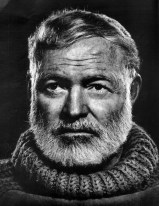 working, as confident as van Gogh and became one of the most popular American writers of his era. Ernest Hemingway said that at the beginning of his career every day “the rejected manuscripts would come through the slot in the door…I’d sit at that old wooden table and read one of those cold slips that had been attached to a story I had loved and worked on very hard and believed in, and I couldn’t help crying.” But he had faith that eventually his work would be in demand and never stopped working. The crowning achievement was the Nobel Prize in Literature.
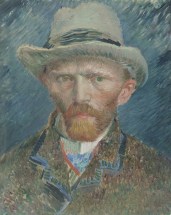 Vincent van Gogh spent a short, intense five-year career producing an astonishing three thousand masterpieces that are now auctioned for many millions of dollars, but in his lifetime sold only one painting, and that was for a few brushes and paints. But he continued working confidently and never doubted that in the future his talents would be recognized
 In every era, in creative after creative, three empowering qualities like three ingredients of a potent formula have proven to help writers and artists not to give up when they fail. Those qualities are being resilient, being persistent, and having faith in yourself. Resilient, persistent writers and artists with strong faith in themselves never give up.
 Faith in yourself touches every facet of your being–whether you think about your prospects positively or in a self-defeating way, how strongly you motivate yourself, your susceptibility to self-doubt and discouragement, and the positive changes you will be able to make in your life.
 successful. Catherine Cox studied greatness and disagreed. She found that persistence is a key. Persistence is so important in almost every endeavor that it compensates for lesser intelligence. Cox concluded: “High but not the highest intelligence, combined with the greatest degree of persistence will achieve greater eminence than the highest degree of intelligence with somewhat less persistence. “
 I think of the famous Michael Jordan “flu game” when he had to be carried off the floor after the game with the flu by a teammate, yet scored 38 points and led the Bulls to victory. “Probably the most difficult thing I have ever done,” said Jordan.
 would prefer to be cheerful and happy, but as far as creative work is concerned, how you feel is secondary. What matters most are the requirements of the craft you have committed yourself to, and one requirement is day after day to put out effort to achieve your creative goals. It seems to me that one constant goal that is shared by most people in the arts is to develop your in-born talents to the fullest and that another requirement is to
  corresponded about. Nurturing depression in and out of psychiatric hospitals, some of them committed suicide including John Berryman and Randall Jarrell. Poets Sylvia Plath and Ann Sexton were friends and felt the same. They talked to each other often, and also committed suicide.
 Whatever has been said about the relationship between creatives’ state of mind and their performance, writers and painters I know or have read or heard about have found writing or painting the most fulfilling and blissful thing they do.
 had the same view of the function of writers and artists. Ruskin: “The whole function of the artist in the world is to be a seeing and feeling creature.”
 Painter Edouard Manet thought the urge to create is a simple reflex that doesn’t require thought: “There is only one true thing: instantly paint what you see. When you’ve got it, you’ve got it. When you haven’t, you begin again.”
 Creatives have complex memories from which their art derives: “The essential factor of development of expertise is the accumulation of increasingly complex patterns in memory” (Andreas Lehmann).
 Since the earliest civilizations people have been theorizing about creatives among them and the creative process. The first question was: is creative ability a gift from the gods?
 The best writing resists critical explanation: “In truly good writing no matter how many times you read it you do not know how it is done. That is because there is a mystery in all great writing and the mystery does not dissect out” (Ernest Hemingway).
 The breathtaking Hawaiian Islands are an inappropriate place to become ill, but Honolulu, their state capital, largest city, and principal port, is where my younger sister Sharon had chosen to live–where the last months of her life she was hospitalized. In her early twenties she had left Chicago where we had grown up and I still live and she had visited one exquisite picture post card place after another in Spain, France, the South Pacific, and the Mediterranean, and so on, in search of the single place where she thought she would be happiest living and had found it.
 On the nights of my visit after seeing her I would walk on the beaches, reflecting on the day, finding restful the fresh air and coolness, and sleeping at Sharon and Ron’s apartment. On the kitchen floor there was a scale to measure the dwindling of my sister’s existence, and sheets of paper on a clipboard suspended from a nail on the wall that recorded her declining weight: ninety-eight pounds, ninety, eighty-eight…and a calendar that had Xs on days she wasn’t healthy enough to work that in recent months had become all Xs. Against a wall there was a full-length gold-framed mirror that in the past she had looked into. The mirror was dusty.
 There was no need for Kathy and me to discuss where Sharon stood. It needn’t be said that it wouldn’t be long and that soon Sharon would be gone entirely from my life and from the world. I knew that the moment coming from the airport and entering her hospital room and putting down my bag when I saw with a shock how puny Sharon looked now. The illness had given her an old woman’s body that had been ravaged by suffering there in that bed that was now her final home–so skinny–all bones–very sick–dying. The pain had turned her black hair white and it was short from the treatment and no longer long. Her once-pretty face was gaunt, her cheeks gray, her body very tired. Her long pianist’s fingers were so thin that her ring had slipped off and was lost. But there in her gray, lonely, fading beauty there was still about her that same gentleness you could ruffle with your breath, the same spirit in her fierce eyes, the same poise, and the same elegance. Looking into my eyes, imagining what I was seeing, Sharon had clutched her gown across her chest in embarrassment –covering herself in shame–still a modest woman–and said, breaking my heart, sucking the breath out of my lungs, “I’m a mess aren’t I?,” and I had replied to her, “Shar, you are beautiful.”
 the happy girl and boy that we had once been, getting ready to ride our bikes to the library. The gray interior lights were dimmed low, as if the plane itself were drowsy. Everything was silent but for the deep hum of the engines, the other passengers asleep. I wanted to prepare myself for what it would be like now without a sister, my parents without a daughter, my children without an aunt.
 As a really good writer, painter, actor, architect, or composer you have the ability to generate the best solutions to creative problems. The solutions are much better than the solutions less capable creatives settle on. Your aesthetic judgment is better than theirs. You perceive features of the problems facing you and the solutions to them that lesser creatives don’t notice and can’t think of.
 He had a staggering knowledge of American songs. I knew Marvin and would do exhaustive research trying to stump him with the least known and most esoteric songs my research could find, asking him “Who wrote…?” and “Who wrote…?” However obscure the song and no matter how confidently I thought, “He will never know this one,” he always knew.
 Unlike ordinary writers who might not be aware that their plots are not believable, a really good writer would be aware if theirs were not. Yet, in spite of being vividly aware and quite objective and accurate about their own work, expert artists and writers have the weakness of often being wrong in their predictions about the performance of novices they have been asked to evaluate. It is as though they are unable to recognize talent while it is still in a formative state. In fact, the greater their expertise, the more likely they are to be wrong in predicting the performance of novices.
 including the senior editor whose judgment was “always right” rejected it as impossible to understand. Only Charles Monteith, who had never edited a book before, argued angrily on behalf of the book he had fallen in love with despite its obvious flaws. Unlike the experts, he saw that good editing could remedy its weaknesses. Lord of the Flies, edited by Monteith, became an international best seller.
 Really good creatives are able to pull out of their minds–with ease–the insights they need. They are so able and accustomed to using the substantial skills they have developed, that they do so automatically, “without thought” as a Zen master would say. To them writing or painting is easy. Yet, at the same time, they may be victims of inflexibility in the face of new circumstances. At times they have trouble adjusting to situations confronting them.
 Really good creatives spend considerable time analyzing the problems facing them while less accomplished creatives spend less time and are not as patient as the exceptional creatives.
  Genius in the arts or in any other pursuit is almost always specific to one art, one domain. Often it is assumed without too much thought that a person with a high level of skill in one area will almost automatically be skilled in another area or many other areas. That’s called “the halo effect.” Yet while there are exceptions, the halo effect is generally invalid. High-performing creators do not excel in areas where they have no expertise. But in a single domain they are on their home turf, and their work is really good.
 books is the lucrative and exciting field of public speaking which in my case changed my life, evolving in a wholly unexpected way, with a momentum of its own and with little effort on my part, from writing to speaking to large audiences for large fees.
 Now that COVID is more under control we will be getting back to normal life. Among the changes will be the return of the on-site public speaker who for the past two years has been absent. That will open opportunities for author-speakers. More organizations, associations, and companies will no longer need remote conferences but will again be putting on in-person conferences, seminars, and classes for which they will need quality speakers.
 Mark Twain, considered by many to be the greatest American writer of all time, is a prime example of a writer who was a gifted speaker. In his day he was known for his public speaking almost as much as for his writing.
 published I was a seasoned public speaker to small groups of no more than about two hundred people. But because of the popularity of both those books–traditional print best sellers–I jumped to speaking engagements involving much larger audiences for high fees in North America and Europe. I was then “in the chips” from royalties and lecture fees.
 Always aim to be the keynoter. Make that a goal you will eventually reach. Be
  use of language to entertain, educate, and persuade–the goals also of speeches. They are trained and educated to write. If you are to succeed as a public speaker you must first write polished speeches, Good writers are equipped to do that. Writing and public speaking are related talents. The good speaker tells stories as novelists tell stories. Good writers and good speakers are clear. Their choice of words is interesting. They are able to simplify complicated ideas.
 where creative work is done in solitude and gone out into the noisy world and through public speaking come in contact with live human beings that open new vistas. Creatives-speakers then see before their eyes how people respond to their ideas and to them. They now interact with people who have come to listen to them and perhaps to meet them, to ask questions and share opinions, to hear what they have to say, and to applaud them–new and gratifying experiences for many writers and artists who never leave their work room.
 sincere and genuinely decent person, and that will come across to your listeners. You may not be brilliant, a spell-casting word-smith, or physically appealing, all of which help a speaker. But people will forgive you those deficiencies. If you are a sincere, genuinely decent man or woman the effect on the audience can be potent and positive.
 focus on a system to improve your creative performance is to be aware of what you are trying to accomplish–with your life, and in this year, this day, this moment. When you acquire the habit of saying to yourself often in your daily life–morning, noon, and night–“Focus on your purpose,” those words become a hypnotic motto that stirs your muscles and mind to action. Then your life takes on a quality that is now becoming rare even among gifted creators–vital intensity that facilitates the production of works that can be pointed to and admired. That single goal–producing works as a result of talent combined with discipline–is more powerful than all other creative goals.
 that specialty. And you must
  free of suffering are the goal in Buddhism. The Buddhist Eightfold Path consists of eight ideals that when practiced bring an upright and happy life. They are eight prescriptive “rights,” including right association–being careful about associating with good, wholesome, even holy people; right intent–making up your mind as to the one main purpose in life you really want to pursue; right speech–no lying, backbiting, or slander; right thoughts–thinking compassionately, generously, and with goodwill; right conduct–not killing, stealing, or lying; right effort–using your will power and taking action to achieve a good life; right concentration–the use of techniques to enhance concentration and enlightenment. And there is right livelihood–doing what you’re best suited to do in an honest occupation that harms no one.
 Success in a creative field (in fact success in any field) is not attributable to one thing alone such as talent or IQ as many people believe, or three or four things. I believe there are eight components. It’s important to understand what the eight components are and the questions they will answer:
 their creative lives by means of the work they do. If they are unable to work or the work is poor quality or is stopped-up and doesn’t go well, they suffer. Regarding the necessity of a creator to
  There isn’t one universal work/production program that suits all creators. A production program won’t work if it’s imposed. Each creator’s program will have to be idiosyncratic–custom-designed by yourself for yourself. To find the ways and means to improve the quantity and quality of your production, you should experiment and try out different approaches until the best work/production program suited to yourself is found.
 For high quality uninterrupted work to happen, not all, but most creators need isolation and solitude. “The concentration of writing requires silence. For me, large blocks of silence. It’s like hearing a faint Morse code…a faint signal is being given and I need quiet to pick it up” (Philip Roth). Some creators prefer noisy environments. But even the feeling that you might be interrupted interferes with creative thought.
 production goals continuously in mind. Production ebbs and flows. Some days work comes out of you in torrents. You’re in overdrive. But other days–nothing. But one way or another,
  A curious thing would happen. The quantity group would also produce the highest quality work. The quantity group would churn out streams of work and learn from their many mistakes and develop wide assortment of skills. But the quality group would get caught up the elusive concept of perfection and grandiose dreams and would become paralyzed. Some creators produce 10, 15, or 25 times more works than other creators. Those who produce the most works usually rise higher, do better work, and find a greater sense of accomplishment.
 If you neglect an activity for just two days you’ll function much less effectively when you resume work. In writing and painting, as in everything else, inactivity leads to the atrophy of abilities. Your level of motivation affects your willingness to work. The quantity of your production is in direct proportion to the intensity of your
  had, but doesn’t. It is a highly-regarded journal and would enhance any serious writer’s reputation to appear in it. That journal had published other pieces of Kathy’s in the past during her particularly prolific period when work poured out of her and was in demand by editors and readers. Some of her books were being published at the time, and many of her articles appearing in magazines were achieving record readership scores.
 I am talking about the difference between writers whose overriding goal is to see their work in print–a Publication Focus–contrasted with writers whose overriding goal stops short of publication in which they are not interested. They are concerned solely with generating what is in their judgment the highest possible quality text–a Production Focus. The latter are more than contented to produce works they are proud of without seeing them published.
 matters to them is that the works they produce be the best they have the skills to produce. They believe that because they are not interested in publishing but in producing the highest quality work they can, they are more creative and do better work than they would were they competing with others to see their work in print, and there are grounds for that belief.
 produced was then graded by professionals–seasoned painters grading the paintings, experienced writers the writing, etc. The results were significant in that no matter what the reward was or when it was given, if the subjects thought they were working for external rewards, even a little trinket, and not for fun and pleasure, they became less creative. But when they were light-hearted and fooling around and no external reward was involved, they were more creative and their work was better.
 a clear, informative, and entertaining way concepts that were unfamiliar to western thinking. It was a challenge because the concept of the book was totally new and original. Every day’s work of many hours was fulfilling, I didn’t spend a second thinking about how my book would do in the stores, only about the book’s clarity and how useful I could make it and how inviting it would be for readers. It was a highly successful and profitable book and my ambitions for the next book I began were high. But I found my thoughts losing focus. They often wandered away from the book’s content and style and how to satisfy the reader to where I would build the new house the new book’s royalties would bring me and the kind of cars I would buy. Both books received many accolades and made best seller lists. But whereas I wouldn’t change a single word of the first book, I live with the knowledge that the second book could have been better.
 “One day I seemed to shut a door between me and all publishers. I said to myself, ‘Now I can write.” He started working on The Sound and the Fury, “thinking of books, publication, only in the sense in saying to myself, I wont (sic) have to worry about publishers liking or not liking this at all.”
 writing every day. Most of them quit because of the heavy, depressing weight of too many failures and too few–if any–successes and the toll of failures on one’s
  bored. Just as children do that, writers can do something remarkable. As fully absorbed as children, they can work on perfecting a single paragraph forty or fifty times without experiencing a moment of boredom while people who are not writers and think that one draft is sufficient are astonished that such a feat is possible. The conclusion of Amabile’s experiments was that a playful approach like that of children increases the likelihood of producing creative results, and that pursuing external rewards diminishes the person’s creativity.
 themselves) which Production Writers experience has been shown to improve the quality of the work that is produced. That is why so many famous writers think that they, and no one else, are the best judge of their work and why so many of them ignore or don’t ask for the advice of editors. Who enjoys being evaluated? Writers often dread evaluations, and evaluations negatively affect the writer’s mood and thus the quality of work that is produced. A Production Writer may ask for editorial assistance–to be helped–but not to be evaluated.
 A writer begins with a talent. Talent is the raw material from which a writer’s career is shaped. Doing well what others find difficult is talent. It is not possible to describe the complete, complex structure of knowledge and skills the talented writer has acquired. The best predictor of future success isn’t just time spent writing, but the amount of time devoted to improving not just this skill or that skill, but the specific skills which are the most essential if a person is to become excellent--those ten or so necessary abilities they must possess if they hope to excel. Developing those skills is the first focus of a person on the Writer’s Way. Skills are taught–by a teacher, or a mentor, or they are
  contentment. “There is a blessed peace in a retreat that happens to suit my fraught nature…I arrive in a heaven…and I sink immediately in a sort of peace from life that I don’t seem to be able to find anywhere else” (Lynn Freed).
 Then, possibly without being aware of how it happened, out of the act of writing more frequently, acquiring knowledge of effective writing, involving yourself in the writing world, enduring at times frustration, suffering, and pain you wouldn’t have had were you not a writer, and growing in
  Writing as a Way opens up new facets of your being that you might not be aware of. You write regularly over an extended period of time–one year, five, ten, thirty, or fifty. It’s writing that you think most about and talk with other writers about and possibly bore your loved ones speaking about. Writing as a Way becomes an indispensable part of your daily and weekly life.
 When you’re writing, you’re focused. Your mind is sharp, crisp. Your thoughts don’t wander. You’re not thinking of anything else. A headache disappears. Worry about the rent dissolves. You forget about yourself, almost as though you’ve stopped existing except in the words you’re putting so carefully on the screen before you. You may be working on four, five, or six projects simultaneously, moving from one to another as the mood strikes, each project requiring different talents. When people don’t recognize the value and quality of your writing, your faith in yourself helps you persist. Poet Stephen Spender said, “It is evident that faith in their work, mystical in intensity, sustains poets.”
 The most distinguishing quality of creative people is a persistent and enthusiastic absorption in their work, in spite of any frustration and suffering they may endure. Creative talent is indistinguishable from passion and intensity. You can hardly call yourself creative without them. One reason writers who are experts are more accomplished than writers who are very good but not great is that experts are more passionate about writing and spend more hours at it, working six hours while less capable writers work two hours. The only way you could keep some people from writing would be to break their fingers.
 It is not unusual for writers and other artists fully absorbed in their work to be for that time in a
  In the arts,
  Through writing you’re drawing out of yourself all that is in you–all the knowledge you’ve acquired, all the experiences you’ve lived through, what your emotions are, what skills you bring, and what you aspire to become. You gain meaning in life and a better understanding of who you are through performing writing. You have the sense that you are a person who is able to reveal important things. Delving deeply, expressing to the world what treasures you have found, you are now an artist, a remarkable status you have achieved by following the Way of the Writer.


