Preface
Most of the time the reason writers, visual artists, and other creatives aren’t yet accomplished isn’t because they are unintelligent or lack talent but because they don’t know enough. Many writers, painters, and other creatives across the globe reading this post are experts. Expert artists differ from non-experts in the knowledge they possess and can bring to the creative task.
 Expert creatives have outstanding performances because their knowledge is extensive. An expert’s knowledge is ready at hand to be used and easy for the creative to access.
Most of the mistakes any artist makes are a result of incorrect or inadequate knowledge. If you have the knowledge, you won’t make the mistakes you would otherwise make.
Knowledge guidelines for practitioners in the arts are:
- Absorb as much knowledge of your art, other arts, and of the world as you are able to.
- Stop thinking that talent guarantees success, but do continually add to your knowledge.
- Patiently watch the years of effort pass, your knowledge increasing, and your capabilities growing strong.
Creatives: Older Is Better Than Younger
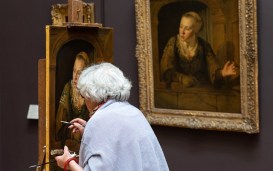 If you want to be successful in the arts, be older rather than younger. Older is better because most outstanding contributions to the arts are not made by people in their teens, 20s, 30s, or 40s, but in their 50s, 60s, and 70s. Why is that so? The main reason why, artistically, older is better than younger is that to have the ability to do artistic work expertly and do increasingly superior work, the main factor is the artist’s KNOWLEDGE and its PRACTICAL APPLICATION over a period of time that is often long.
That people in the arts generally require a lot of time between their first exposure to their art and their first significant work is well documented. And also well documented is that usually considerably more time must pass before they do their best work. Why is so much time necessary?
It is because artist’s knowledge has to become more comprehensive with time, study, and practice if they are to reach the apex of their performance, make the fullest use of their capabilities, establish their reputation, and reap the highest rewards.
 No artist has ever lived –Shakespeare, Michelangelo, Proust, Picasso, Mozart–who had so much talent that they didn’t need considerable knowledge to excel at a high level. Talent is a blessing, but talent alone isn’t enough.
Talent may be given to artists at birth, but knowledge must be earned through sweat and toil. Artists who reach high success like Faulkner in writing and Cezanne in painting put in many thousands of hours of exhausting work and study.
Absorb Knowledge of Your Field
Absorbing knowledge of your field is a requirement of any artist who wants to far surpass “mediocre” and “adequate.” Every art has a set of fundamental skills that must be mastered if the artist is to graduate to expertise. The rules of the art, its techniques, traditions, history, facts, principles, experts’ opinions, experiences of other artists living and dead, and criticisms the artist receives provide a foundation to help them solve problems that have to be solved if quality works are to be produced.
 In any field in which you are intensely engaged, such as serious writing or painting, the brain you feed with knowledge just goes on learning and learning and learning and your abilities grow and grow. The more knowledge you have, the faster you’ll recognize related information that’s relevant to solving problems you are facing. You’ll be able to say, quite quickly, “So-and-so handled the problem I’m now facing by…” Acquiring knowledge is what you are doing all the time you’re working at your craft, talking with others about your craft, studying it, taking classes, reading, and practicing to develop your skills.
Set and Pursue Knowledge-Enhancement Goals
You would be smart to set specific KNOWLEDGE-ENHANCEMENT GOALS. The greater your knowledge and the then higher the quality of your works, the more tangible the successes you will have.
Many writers in particular are self-educated and have developed their knowledge through a rigorous learning program they designed themselves. It was only after a period of self-education that American author Jack London became the most popular and successful writer in the world.
London submitted stories hundreds of times before his first success. He realized that he had very little formal knowledge–hadn’t graduated from high school–and needed to educate himself. He got hold of the reading lists of universities and studied them on his own.
 The more knowledge that is needed to excel in a field, the more formal education is needed, whether at a university or self-taught. For example, writers must learn from their predecessors, their contemporary writers, their current times, and people in other fields so that what has already been achieved becomes internalized and ready for a future use in the same way a master chess player knows the strategies and techniques past masters used to win matches. You won’t amount to much if you aren’t aware of what has come before you. In his advice to aspiring screen writers, Academy Award winning producer Tony Bill said, “Whatever you do—don’t read any ‘How-to-write-a-screenplay’ books. Just read a bunch of great scripts and let it go at that.”
Shakespeare learned from Chaucer. Proust studied the work of Englishman John Ruskin for six years and wrote a book about him. If he hadn’t done that, it is doubtful that he would have written–or even attempted to write–his monumental masterpiece In Search Of Lost Time.
 Following in the footsteps of the greats is a vital route to writing knowledge, and knowledge leads to skills, and skills coupled with confidence lead to success. What helps is an aptitude for learning and learning fast, which I can hardly imagine a person in the arts not possessing.
An artist in one field learning from artists in other fields can be effective. You may wish to make cross-training a feature of your own training. For example, my own observation is that many painters like English artist Janet Weight Reed and Australian Michelle Endersby are also superb writers. They must have acquired that skill somewhere. Hemingway studied painter Paul Cezanne and translated some of Cezanne’s techniques into literary techniques.
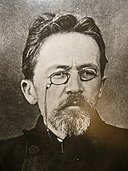
Goals you set for increasing your knowledge, like any goal you might set, should be specific and should be programmed–a schedule set up. For example, if you want to improve your short story writing you may wish to develop a schedule to study short story masters Anton Chekhov, Guy de Maupassant, and Ernest Hemingway and read critical studies of their approaches. Visual artists often select one or a small number of artists and study their work and what has been written about them
Be a Sponge
 Let’s hope that your mind is a sponge sopping up knowledge because people in the arts who can acquire knowledge quickly and remember large amounts of it have an advantage when trying to create something original.
Review
In any field you’re intensely absorbed in, your brain develops an insatiable hunger and just goes on learning and learning.
You can excel in the arts only when your knowledge is sufficient to excel. Not before. The person who studies harder will acquire knowledge faster and reach expertise sooner.
All artists benefit from setting knowledge-enhancement goals: “What must I know?” “Where will I find it?” “Who can help me acquire the knowledge I will need?”
You are a better painter, writer, actor, dancer, etc. now than you were five years ago because you have practiced and because you have acquired knowledge. The probability is that your knowledge is now substantial, and you are still adding to it and amassing it, and that your knowledge is reflected in the higher quality of your work.
© 2021 David J. Rogers
For my interview from the international teleconference with Ben Dean about Fighting to Win, click the following link:
Order Fighting to Win: Samurai Techniques for Your Work and Life eBook by David J. Rogers
Click on book image to order from Amazon.com
or
Order Waging Business Warfare: Lessons From the Military Masters in Achieving Competitive Superiority
Click on book image to order from Amazon.com
or
 fix. I was writing what should be an easy section on planning what you are about to write or paint. Now planning is something I know a lot about. For years I was a trainer for a consulting company I founded. I trained thousands of people to use the best techniques of planning so they might effectively plan whatever business or career project they had in mind.
 Even as children girls and boys who will become writers and painters when they grow up have been told and taught by teachers to plan the work before they begin to execute it. They are taught that in grade school, and in graduate school professors or experienced visiting artists and writers stipulate that every work should have a plan. Planning becomes a habit that isn’t questioned because “everyone knows you have to have a plan before you begin. How else will you know how to proceed?”
 Some creatives meticulously plan and think the work to be produced through to the last detail. But some non-planner creatives begin to paint or write without a subject in mind, preferring to permit the work to grow organically and emerge. Some writers, like me, begin without any conscious concept of how to proceed other than, at best, a notion not at all well-developed of what the work should probably be about.
 Non-planning Virginia Woolf said that her idea for Mrs. Dalloway started without any conscious direction. She thought of making a plan but soon abandoned the idea. She said, “The Book grew day by day, by week, without any plan at all, except that which was dictated each morning in the act of writing.” Had someone asked her what exactly she was trying to accomplish other than to follow a woman throughout a day she would have replied, “I’m not sure.” The planner- writers are sure of where they are going. Their plan tells them.
 The more spontaneous process which non-planning creatives like greats Woolf and Mark Twain (possibly America’s greatest writer) and Michelangelo and Leonardo da Vinci use to complete a work is contrary to the rational goal-setting, plan-making processes. Following a plan inhibits certain creatives for whom a more spontaneous approach results in better work.
 Galenson describes two significantly different types of artists. The “everything must be planned” artists are called Conceptualizers: they must have a full-blown concept of the work they wish to create in all its detail before they begin writing or painting the work. Ernest Hemingway, William Faulkner, James Joyce, Herman Melville, and F. Scott Fitzgerald were Conceptual writers. Pablo Picasso was a Conceptual painter. Conceptualizers state their carefully- wrought goals for a particular work precisely
  Once Conceptualizers find the crucial problem they advance slowly with a plan, but Experimentalists move fast without a plan. Experimentalist’s goals are imprecise. They have ideas about what the work will be like when it is finished, but are unclear about everything else until the piece is written, the painting mounted on a wall. That imprecision is how Experimentalists like to work, but it creates problems. Not clear as to what they want the final work to look like, they have trouble finishing works.
 Conceptualizers tend to bloom early, often with a striking new style or innovation or great success at the start of their career. They mature quickly, starting very early, not gradually through years of trial and error as Experimentalist painters like Jackson Pollock and Claude Monet did, but rapidly. A young Ernest
  People in every walk of life and in every hemisphere on earth–in cities, on deserts, in towns and villages–long to create something. My nine year old grandson is a talented artist and cellist studying architecture. His six year old sister takes dance and will begin taking piano lessons in the fall. Their forty two year old father was an excellent cellist in his youth and was inspired by the performance of a famous cellist to return to it last year. My wife, is a former cellist, and has taken up water colors and has returned to the piano. I write every day. I have for many years, and when I am not writing I am thinking about it and planning what I will write. We are representative people no different from millions of others with whom we share the globe because the current era is an Age of Heightened Creativity. Little children and women and men of all ages are bent on having creative experiences. They will not let their creative instincts be stifled.
 It became a permanent part of your entire being–an idea, a theme, or an image that became a guiding force in your life. You may not be conscious of it, but it starts you out in a creative direction, and gives you a sense of moving steadily in that direction, of heading straight toward something concrete and specific. Making a living in art is difficult and so most artists must find financial security other than in art. But whatever your occupation if you are to be an artist you will define yourself first as an artist, an accountant, HR manger, or English teacher second.
 Noted composers and performing artists in musical fields–so sensitive to sound and tone—possess what the Germans call Horlust–“hearing passion.” Writers–particularly poets and lyrical writers–have a word passion (they adore words), and painters adore colors and shapes, often from the cradle.
 What is inside the shut door is the artist’s rich inner life from which creative products pour–without stopping if the artists explore themselves more and more deeply. Transformation of what is inside the artist into what is outside is the
  Poet W.H. Auden wrote, “Speaking for myself, the questions which interest me most when reading a poem are two. The first is technical: ‘Here is the verbal contraption. How does it work?’ The second is, in the broadest sense moral. What kind of guy inhabits this poem? What is his notion of the good life or the good place? His notion of the Evil One. What does he conceal from the reader? What does he conceal even from himself?” William James said it is the amount of life in the act of creation which artists feel that makes you value their mind.
 Artists must be people of action because their main goal is production of works over which they think and
  Children and adults may drop out, but those who turn to art may well be playing the cello or dancing or painting, only getting better and enjoying their art perpetually–all their lives– with fond
  Although talent in the arts most often shows itself early, because it takes so many years to develop their talent and become highly proficient in the arts, people who will become expert musicians, painters, performers, and writers can expect to be late bloomers. Artists who perform at a high level do not demonstrate remarkable talent in short order. They are not usually in their twenties or thirties, but in their forties, fifties, and sixties. All spend many years developing the knowledge, attitudes, and skills that will eventually enable them to be recognized for their mastery. All arts involve learning form and the art’s devices, and the need for control, craft, revisions, and structure–time consuming efforts. All begin by imitating existing techniques they have studied.
 A survey of 47 outstanding instrumentalists found that their ability was first noticed on average at the age of four years and nine months. Then they began a very long and arduous period of development of their talent. Pianists work for about seventeen years from their first formal lessons to their first international recognition, involving many thousands of hours of intense practice. The fastest in one study was twelve years, and the slowest took twenty-five years. In other fields you may even be an early bloomer, but in the arts if your expertise is to be at a high level of mastery, unless you are a Dylan Thomas, a rarity who was at his peak at nineteen, you had best avoid discouragement and expect to bloom late.
 Novelist
  When the majority of their friends and associates are settled in a career and life style, late bloomers are not. Late bloomers may eventually reach the height of their achievements and fulfillment which I call “their true
  If you’re a late bloomer, you’ve made false starts. You haven’t peaked yet, haven’t reached your destiny yet, but you may be determined to bloom one day. Late bloomers are more willing than most to persevere and if need be to fail but try again and again until they reach a life they desire. If you are a late bloomer, more than most people you have the sense that you’re constructing yourself as you go along, even rejecting what other people may call golden opportunities if those opportunities don’t appear to lead you in the direction you desire most.
 with the goal in mind for me to have a national television talk show. It was an excellent opportunity and would have paid extremely well. But my wife and I talked it over and I decided that what I wanted to do with my life above all else was simply to sit at a computer in my upstairs work room while my four children played noisily downstairs and my wife came up once in a while to say hello, and produce artful paragraphs that reflected my years of hard work and training. To me that was blooming. I turned the opportunity down. Late bloomers often make similar very difficult decisions while they are constructing themselves.
 Most people–possibly all–who find fulfillment later in life find it in a mission, calling, or vocation. You cannot be dissatisfied when you’re doing the work for which you feel you were brought into the world, a thought that consoled
  Going back to school as a transition to another field is a strategy late bloomers find appealing, in essence ending one career and starting another.
 Have you bloomed? If you haven’t what are you going to do about that? People who aren’t leading satisfactory lives haven’t bloomed at all, and many are trying to, but many have never started trying, and just as many have given up. Better to start if you haven’t already, whatever your age or condition in life. You can always forget the past and start out again, making no excuses for starting out late. Experiment, follow your instincts, and assess yourself and your feelings about your life. Are you going right or are you going wrong?
 Writing vivid descriptions is a skill writers should strive to refine. Yet it is a weakness of many writers. If your ability to write effective descriptions is lacking it should be worked on vigorously and
  picked up. Into the air fluttered two hundred gulls with noisy wings. Above us clouds raced each other headlong across the coal black sky. Onto the shore crashed a procession of liquid walls–white-crested, angled slightly off to the south where blocks of limestone twenty feet high lay as if dropped from the heavens by gods. The magnificent waves rose–hills of water that seemed to pause, suspended for a moment at their peak as though they could rise no higher, and then crumbled and broke on the shore like a multitude of shattered stars. The spume spread and undertows slid back like shears below the breakers. Wave upon wave upon wave upon wave rose, lunged, and plunged like a field of gray-green wheat bowing under the wind. Just a moment before there had been not a breeze, not a breath of wind. But now all the wind in the world seemed to be concentrated on that strip of earth. It was a lion of a wind unleashed, untamed, cool, cold, with a sparkle, bite, and sting–many winds in fact, one gust coming, ending, another coming, another waiting–bringing pouring in to us the odors of water, of fish, and of the wind itself. The hoarse roar of the foaming waves filled all the air with the sounds of artillery. Trees on the shore bent as though made of rubber and our drenched bodies glistened.
 “Young couples sitting on benches held each other, kissed, and heard the melancholy saxophone through the open windows of the gymnasium. Past a grove of gray trees, out on the lagoon, among mallards drifting on the water like leaves and bull frogs hidden in the shadows like thieves, students in row boats whose oars dangled free and made little splashing sounds, lay back, their bodies warm and glowing under light blankets. Contented, they were looked down upon by a pageantry of stars that seemed so close together that a finger wouldn’t fit between them. And while laughter floated like smoke through the night, they spoke of the incredible deeds they would one day perform.”
 There was a tenderness and manly sweetness in my father’s manner, and too, the restraint of a gentlemanly politeness and natural shyness about speaking of things that moved him most profoundly, and which I knew indisputably he felt toward me, as I did toward him.
 Have a need for self-expression and self-disclosure. Good writers reveal themselves in their work. Readers want writers to reveal themselves. A novel, for example, enables authors to convey a wealth of information that expresses them. Your writing, even the way you turn a phrase and the metaphors you use (why did you use an image of a fish then instead of a train?) and your vocabulary and points of view, tell the reader what you’re like. Writers have a need to discover exactly what they are thinking by writing it out, and then to artfully communicate it to the reader who wants to know.
 Possess
  Have a strong concern for your
  Be able to muster an abundance of physical strength and stamina. Often it’s the end of writers’ endurance that stops their working day. Novelist Thomas Wolfe would turn in manuscripts a million words long . He claimed that the physical demands on the writer made the writer’s life seem to him to be the hardest life man has ever known.
 Have or develop a business sense. You have a career to manage and responsibilities and expenses. Study marketing and salesmanship–read. Take business classes.
 Buddhism sets up qualities a life must have if the person is to find fulfillment. One quality is “Right Livelihood:” To be most fulfilled the person must be in the occupation that most suits them and is most beneficial to them. My wife and I have four children. Each is very different than the others but is perfect for their occupation. The analytical one who loves mathematics is the director of revenue for a city. The organized one manages a number of people. The one who wants to help people is a therapist. The most sociable one is a real estate agent helping people find the home they will be most happy in.
 All necessary components have to be present if you are to excel at the writer’s craft. If just one component is missing, you no longer have an ideal writer. If you are to succeed in an art there must be a fit between the talent you possess and the talent necessary to participate with distinction in the art.
 Writers and other artists should be able to recall many thousands of detailed memories that form a basis of their writings–a gift to recall sensations and experiences from many years earlier and to reconstruct them in their original freshness and vividness.
 Good writers can do that, but not all writers can, even some writers who work very hard trying to learn how to. Think of any writer’s skill–some people will master it easily, some only with great difficulty, and some will never master it. Whatever they do, some writers’ scenes are not effective.
 A writer should have an insatiable passion to write and the skill of persistence. Joyce Carol Oates is a prolific author of fifty-eight novels for a reason. She has good writing practices, and finds no reason why one who professes to be a writer shouldn’t be writing all the time. She says, “When writing goes painfully, when it’s hideously difficult, and one feels real despair (ah, the despair, silly as it is, is real!)–then naturally one ought to continue with the work; it would be cowardly to retreat. But when writing goes smoothly–why then one certainly should keep on working, since it would be stupid to stop. Consequently one is always writing or should be writing.”

 We were sitting about three feet apart, facing each other. I said, “I’ll be happy to.” The host said, “Should we go over there where we have more room?” I said, “This is fine. I won’t have to get up out of this chair. Throw a punch at me as though you are mad at me and want to knock me down. Don’t hold anything back. Really throw a punch.”
 I’ve seen emotional extending used successfully to overcome the fear of an upcoming speech many times. Go into a room by yourself, sit on a chair, and alone, worry and make yourself afraid. Tell yourself things that scare you. Exaggerate. Do this for five or six minutes, or longer, if necessary. After a while you will find the fear disappears. Extending excites emotions that are troubling you, then calms them down. The fear of asking for a promotion or a raise, of having an upcoming job interview or of asking for a date can be dealt with the same way. Whatever the fearful situation is, extending will help.
 If you choose to use the aikido approach to overcome external and emotional adversaries, be aware that the way to “serve” one’s adversary in the aikido style is to understand what they want, and to give them more of it to get what you want. Remember: the extending technique or process can be an antidote to the emotions of fear, worry, anxiety, the blues, and depression.
 thousands of hours developing yours (so that I’d recognize anywhere that it is yours), I have consciously spent many hours developing mine.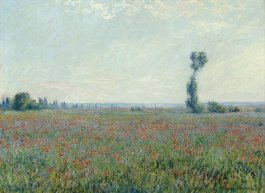

 changing or ineffable in a single sentence, you face both the limitations of the sentence itself and the extent of your own talent” (Pat Conroy).


