
Fjord, Norway by Pamela Jones
Some creatives have an ability to perceive images in their environment or deep in their memories and to elaborate them in works with astonishing dexterity. Simple images that are ready for practical artistic use in poems, novels, essays, short stories, and paintings and such pour in unabated rivers from their minds. Skill in image-making comes so effortlessly to superb image-makers that although their ability is exceptional, it seems routine and unexceptional to them. If one image would do the trick, they can easily think of three, four, or five others that would suffice as well.
Skill with images is so necessary to the professional or professional-caliber amateur that if it is a weakness, it must be practiced and made a strength. That is possible to do.
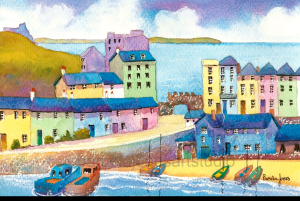
Tenby Harbour Pembrokeshire West Wales by Pamela Jones
Creatives differ in the vividness of the imagery in their minds and in their ability to transform imagery. Compared with low imagers, vivid imagers experience large mental images of greater clarity, remember pictures better, and read text more slowly, presumably because they are visualizing as they read. Skill with imagery is a collection of identifiable abilities such as moving and rotating mages and inspecting them. Vivid imagers are able to hold in mind many features of an image at the same time. People can be good at one or more of these abilities, but poor at others.
POETRY OF IMAGISTS
William Carlos Williams
(Excerpt from “Nantucket”)
Flowers through the window
lavender and yellow
changed by white curtains–
Smell of cleanliness–
Sunshine of late afternoon–
On the glass tray
a glass pitcher, the tumbler
turned down
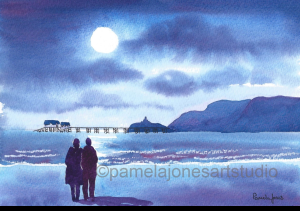
Stroll in the Moonlight Mumbles by Pamela Jones
For image-makers, remembering images and turning them into artistic products is a necessary part of their everyday approach to their work and a gift granted to many artists that surpasses the abilities of the overwhelming majority of people. In a single glance artists with a facility with images encounter a world of pictures, sounds, sensations, and odors that are their raw material.
An Imagist Poet:
“Evening” by Richard Aldington:
The chimneys, rank on rank,
Cut the clear sky;
The moon
With a rag of gauze about her loins
Poses among them, an awkward Venus–
And here am I looking wantonly
Over the kitchen sink.
Poems written in a strict imagist style are spare, elegant, and vivid. They are different from most poetry in that the reader isn’t expected to analyze them or search for symbols in them or explicate them. The imagist poem must be rooted in the ground of reality–must grow from the local and particular, and raise those to the universal, so when looking at some apparently small object one feels the swirl of significant events.
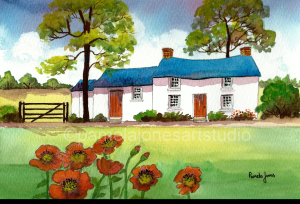
Cottage, Carmarthenshire, with Poppies by Pamela Jones
There is a juxtaposition of accumulated fragments. The poems require alertness enough mainly to “see” in your mind and don’t require explanation. One can’t explain a bead of water on a leaf, but it can be described, its beauty or mystery captured in words just as a painter captures them in pigment or the composer in notes and chords. Readers will enjoy them better if the poet or writer shuts up and just describes. The poems are complete as they are and need no interpretation. The physical and tangible qualities of the object–colors, shapes, odors, sensations–are identified one by one simply and precisely.
In the poetry of images the reader should not expect lofty sentiments. The poems do not have a regular beat and usually lack end-rhymes. Their language is vivid–plain, and direct. They calmly describe the scene and the object. They describe them precisely and exactly. Their imagery is compelling. Readers run their eyes along the scene. The poems focus on a short, specific period of time, are free verse, and often have a short poetic line such as my “Morning Glories:”
Sitting on a window sill
Watching people
Exchanging stories
Over white and purple
Morning glories
On the flanks of the hill
The poetry and prose of images emphasize verbs, not adjectives. The writing is clear, not obscure, and it is colloquial. Images are juxtaposed, one after another. They purposely stay on the surface of things, presenting details with no comments. If there are any ideas, they are left alone to take care of themselves. The writer or poet doesn’t reflect on them. The writing is not lofty or pretentious. The poet or writer takes obvious pleasure in words like the painter’s pleasure in using a brush.
THE VALUE OF MEMORY AND DETAIL

Hillside Cottage, Snowdonia, Snowdon, North Wales by Pamela Jones
There is an art underlying all the arts, and that is the art of memory and detail. The writing of the best writers and paintings of the best painters is full of details they recall–detailed images, detailed descriptions. They needn’t be long, but there must be memorable details if the work is to be convincing. The goal of a writer is to generate in the audience the sense that what the audiece is reading or hearing really happened, or is happening now, or might have happened in “real life.”
Content that is general and not vivid has little real-life effect on audiences or readers. Content like that isn’t convincing and is a misuse of words. But content that is not general, but specific, detailed, clear, unambiguous, truthful, and potent animates the readers’ minds and lets them know that a real person with an active mind and good memory of real things is talking to them.
I think if it were possible to analyze the brains of imagistic artists, poets, and writers, it would be found that the ability to recall the smallest and sometimes the most insignificant detail of lived experience–however long ago it occurred–is a major strength of a fine artist of any kind. A multiplicity of details must be put into the creative performance when art is to be done beautifully. A preciseness of vision is a necessity.
Details must be strategically placed in a written text so that they have maximum dramatic impact.
KEEP A NOTEBOOK OF IMAGES
A good practice if you want to animate your writing with images is to keep notebooks of images that come to mind and that you might one day put to use in writing or art. Here is a sample from one of my notebooks that contain thousands of images:
SUMMER: The warm summer rain pours through the sunlight. At night a fog floats in from the lake and slithers along the ground (like a snake.)… The report of fire crackers and booms of exploding rockets begin at nine: Independence Day… The orange and blues of the sunset were so beautiful at night that it was hard to believe they weren‘t painted…With every gust of wind the butterfly I’m watching is blown to another flower. ..It was morning. Here comes (came) the sun, warming every tree, every leaf, every pebble in the street… …waves scattering like broken glass,
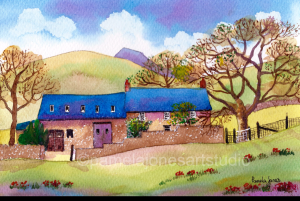
Farmhouse in the Brecon Beacons Wales by Pamela Jones
SPRING: A band of squirrels climbs the trees …Whiter than snow and clearer than daylight was the night when the lightning flashed… Sparrows, blue jays, warblers and humming birds enjoyed themselves on the bushes, in the trees, in the sky. It had been a long day for them, but they seemed contented leading birds’ busy lives. Flowers seemed happy being flowers too. Two chipmunks sat aloof in the grass…The gutter leaked and a small waterfall poured from it… Squirrels shoot up the trees like gray rockets, hop across the branches, come back and bound across the grass where hungry robins stretch worms out of the ground…
SOUNDS Birds calling and playing, winds wafting in trees, lawn mowers humming–commuter trains rumbling, car horns and truck horns, fire engines, dogs barking, people laughing, shouting and talking, footsteps sounding, church bells playing songs.
T.S. Eliot was not an Imagist, but was influenced by Imagism.
From Eliot’s “Preludes:”
The winter evening settles down
With smell of stakes in passageways.
Six o’clock.
The burnt-out ends of smoky days,
And now a gusty shower wraps
The grimy scraps
Of withered leaves about your feet
And newspapers from vacant lots
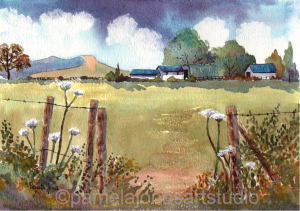
Farm in the Brecon Beacons with Cow Parsley by Pamela Jones
Some poems of poetry of images are about stillness and some are about motion. The language is colloquial and vivid. The images are fresh and the reader is intended to see and listen freshly. Poetry and prose of images are written by people with vivid sensibilities and are intended for readers with similar sensibilities.
These skilled writers are describing what is occurring during specific moments of life, and pay close attention to the surfaces of physical things, as does my poem “Waitress in a Café in Kayenta Arizona.”
Fingers like sausage links,
Face round as a tire,
Hips the breadth of a moving van,
Elaborate, beauty-shop hair,
HAIKU AND IMAGERY
Haiku are made up almost always and almost completely of visual images. The three greatest haikuists were Basho, Buson, and Issa. The meaning of a haiku, like that of an imagist poem, is direct, clear, and perfect without interpretation or reference to other things. The meaning of haiku, like that of the imagist, is unmistakable and complete,
A few stars
Are now to be seen–
And frogs are croaking. (Basho)
Ah, how glorious
The young leaves, the green leaves,
Glittering in the sunshine. (Basho)

Three Cliffs Bay, Gower South Wales by Pamela Jones
Haikuists keep their eyes steadily on the objects. There is great art in the selection of the facts presented, but no “coloring.” The incidents, situations, and details are chosen from common life. Haikus describe things in themselves, not as symbols of other things. Haikus show modesty, simplicity, lack of affectation, no striving for effect, no trying to impress, no showing off. The haikuist just writes the story or sketch as plainl and as true to the haikuist’s vision and to life as he or she can. There is gentleness, and using the eye in particular, distinctness of the individual thing. Directness is in everything, snow, sky, clouds, sun. Each thing is simple and true:
The harvest moon–
Mist from the mountain foot
Clouded patties” (Basho)
The haiku must express a new or newly perceived sensation, a sudden awareness of the meaning of some common human experience of nature or man. Importantly, it must above all things, not be explanatory, or contain a cause and effect. There are nothing beyond phenomena. They are not symbols of something beyond themselves.
Flowers and birds
There among them, my wild
Peach blossoms. (Buson)
PROSE AND IMAGISTIC WRITING
Imagistic, highly descriptive prose augments writing that might otherwise be bland and lifeless. No material is dull in the hands of an imagist. Such prose is not just added on to the text like a pretty trimming, but is crucial to the meaning, the “feel” of the writing, and its impact on the reader.
Ernest Hemingway from The Sun Also Rises:
“Before the waiter brought the sherry the rocket that announced the fiesta went up in the square. It burst and there was a gray ball of smoke high up above the Theatre Gayarre, across on the other side of the plaza. The ball of smoke hung in the sky like a shrapnel burst, and as I watched, another rocket came up to it, trickling smoke in the bright sunlight, I saw the bright flash as it burst and another little cloud of smoke appeared. By the time the second rocket had burst there were so many people in the arcade, that had been empty a minute before, that the waiter, holding the bottle high up over his head, could hardly get through the crowd to our table.”
From my “Wolves in the Rocky Mountains:”
“We sat at a table in the inn and ordered coffee. The utensils were gold. From the windows we watched through the falling snow eight stalking wolves winding down the mountain in single file, slowly, like liquid through the spruces and evergreens. It was getting late. We had stayed too long. We didn’t want to stay around until dark when at that elevation it would be really cold, and the wolves were on our mind. We paid and left on foot.
“Looking over our shoulders we saw the wolves streaking among the trees and circling and wheeling around and teasing and tormenting a young deer they had separated from a herd. We could hear the wolves and the deer breathing and see the wolves when they weren’t attacking the deer playfully burrowing their snouts in the snow. There was nothing we could do to save the deer. We didn’t want to watch.”
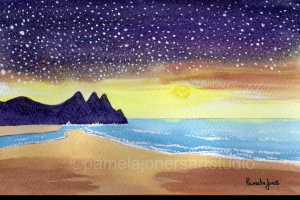
Starry Sky, Three Cliffs Bay, Gower by Pamela Jones
The prose and poems of images depend on the power of a clear perception of concrete–not abstract–things seen, heard, smelled, or touched by the creative to capture and hold readers’ attention and convey meaning. An imagistic writer’s, poet’s, and painter’s “eye” and “ear” in particular are capable of reproducing a sensual world they have experienced at some time in their lives and have not forgotten.
The artist whose work is featured in this post is Pamela Jones, a superb landscape artist who ives in West Cross Mumbles in Swansea, Wales. In her enchanting paintings, she is influenced by the beautiful scenery in Wales and the UK. She says, “I have a slightly impressionistic style, staying away from the photographic copying of a scene. I simplify what I see. I feel the artist must balance skill and imagination for there to be feeling in the painting. Colour harmony is most important. I give the impression of the place. I hope the viewer sees this when they look at my paintings.” She says that she just has to paint; it is a sort of obsession, and she paints every day.
© 2020 David J. Rogers
For my interview from the international teleconference with Ben Dean about Fighting to Win, click the following link:
Interview with David J. Rogers
Order Fighting to Win: Samurai Techniques for Your Work and Life eBook by David J. Rogers

Click on book image to order from Amazon.com
or
http://www.barnesandnoble.com/w/fighting-to-win-samurai-techniques-for-your-work-and-life-david-rogers/1119303640?ean=2940149174379
Order Waging Business Warfare: Lessons From the Military Masters in Achieving Competitive Superiority

Click on book image to order from Amazon.com
or
http://www.barnesandnoble.com/w/waging-business-warfare-lessons-from-the-military-masters-in-achieving-competetive-superiority-revised-edition-david-rogers/1119079991?ean=2940149284030
Follow my blog with Bloglovin
 ball passing back and forth between you and life. No one ever holds the advantage all the time. The advantage can swing to you or away from you at any time. Sometimes you hold the advantage, and an ideal life and great achievements in your career or personal life seem so near you can touch them with your fingers. Then you suffer a setback, a crisis, or a major problem, and you’re driven down into the dark depths of discouragement. You have lost the advantage, and your need now is to get it back.
 “The Swing of the Advantage” is a concept from my print best seller Fighting to Win: Samurai Techniques for Your Work and Life (now available as an eBook). From the twelfth through the nineteenth centuries Japanese samurai (bushi) were fighting men and women in service of a lord, a “daimyo.” They were the greatest warriors who ever lived, and based their expertise on physical, psychological, and Zen spiritual insights and techniques that they acquired through as demanding training as there has ever been in any discipline. Their skills were legendary. Fighting To Win prescribes their spiritual/psychological insights and adaptations of their techniques for overcoming obstacles to a productive and fulfilling life.
 dragon’s mask.”
 Is there any area in your personal or professional life right now in which the advantage has swung away from you? What will you do to get the advantage back? Whatever it is, don’t delay. Run straight toward it zan totsu–boldly.
 Gardner: “If the promising writer keeps on writing–writes day after day, month after month–and if he reads very carefully, he will begin to ‘catch on.’” Hemingway, convinced of the value of persistence, wrote, “Anyone who says he wants to be a writer and isn’t writing, doesn’t. Professionals
  Hemingway: “The hardest thing in the world is to write straight honest prose on human beings. First you have to know the subject; then you have to know how to write. Both take a lifetime to learn.” The vocabulary in a Hemingway work is simple, the sentences clear and uncomplicated. And short. The style is non-literary, and is colloquial American English. His rule was that his language must be readable, accurate, and economical.
 Andrea, a friend—“Andy”–seemed to reach her peak when she had two short stories published in prestigious literary journals at twenty-four and a novel that sold moderately well at twenty-eight. She didn’t think then it would be her peak, but assumed it was a preview of other successes soon to come. But they haven’t come and she’s been wondering what’s wrong with her.
 path to solving the problem by admitting she’s found herself on a performance plateau—in a performance rut.
 decides they are different. The earlier work was simpler and more heart-felt and sincere. She realizes that she has fallen into a trap of “showing off”–of trying to impress readers with what a good writer she is and how brilliant she is rather than in telling a story in a simple, direct, “Here’s my work, take it or leave it” style.
 She also plans to read biographies and autobiographies of writers living and dead who will inspire her.
 That’s 3 or 400 thousand words a year.” Novelist
  years. They worry and doubt themselves. They are discouraged and anxious. The act of writing does not excite or enchant them as it usually does. They have suffered agonies and are growing hopeless because of the dreadful misery called writers block that has taken hold of their mind, imagination, and spirit and will not let go.
 subjects just need time, as I’ve learned over and over again” (Joyce Carol Oates). This opinion says that there are “half hour” writing problems— problems that need a half hour to be solved—and “six month” writing problems that won’t be solved in less than half a year. These writers believe that you can’t solve the problem until it has reached its allotted time.
 One is to simply persist. Sit down at the computer every day and hack away without any self-judgment. Don’t worry or get anxious or depressed. Do this until your block cures itself. Another way is to completely cut off your involvement with writing. Don’t allow yourself to think about it. Forbid yourself from sitting down and writing at the computer or by hand. Don’t talk about writing. Do that for a specified period of time you set for yourself–ten days or two weeks. At the end of that period you may feel so deprived that you will develop a new enthusiasm and energy that may help you get on track again.
 From childhood on, there have been moments in my life–and I think you have experienced this in your life too—when I’ve had to perform and no one could help me—not my mother, not my wife, not a friend.
 It’s very lonely knowing that whether or not you will succeed depends solely on your own skills, your own personality and character, your own preparation, and your own strengths. Then no one can help you, no one can write the novel for you, no one can paint the portrait for you today, or dance in your place, or perform your role in tonight’s play. You’re on your own, my friend. Will you be at the height of your talent today or won’t you? Will you have it? Will your work be good? Will you be satisfied?
 When you write, you’re asking yourself, “Does it sound right?” “Does it flow?” “Is it a good quality?” You’re also “self-instructing.” Self-instruction is talking to yourself to guide actions and telling yourself what strategies you should use. A writer may self-instruct to use more imagery in the story, and self-monitor to count the number of images or tell herself, “My mind is starting to wander. I should focus my attention better.”
 Boil your whole performance down to a few statements, words, phrases, or images:
 and he suddenly was rich. On the other hand, when Ernest Hemingway was young and poor in Paris and unable to support his family with his stories he would catch pigeons in the Luxembourg Gardens when the gendarme on duty went into a café during his break, and then take them home and cook them. Some writers, like painters such as Pablo Picasso, love being rich. Picasso said he wanted to work without material worries “like a pauper,” “but with a lot of money.”
 What do geniuses talk about?
  One of the problems superb writers face is that they–and no one else–are the best judge of their work and yet they must endure sometimes ignorant, amateurish editors and critics. Henry Miller found himself being abused by editor after editor he submitted work to. He snarled, “Who are these shits? Where do they get off saying such things to me?”
 Sherwood Anderson died after swallowing a toothpick with a hors d’ oeuvre at a cocktail party. Katherine Mansfield married a singing teacher eleven years older than herself and abandoned him the morning after their wedding night. George Bernard Shaw said, “Experience is the name everyone gives to his mistakes.”
 ready to start writing. Ernest Hemingway had to first sharpen all the pencils he anticipated using that day. Edgar Alan Poe petted his cat before he started.
  Jonathan Swift, author of Gulliver’s Travels, went a year without talking to anyone. Truman Capote’s advice to young writers was to socialize and not “go up to a pine cabin all alone,” because “You reach that stage soon enough.” Voltaire preferred the company of his mistress. He wrote in bed using her back as a desk.
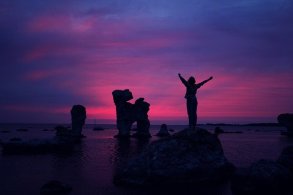 Maurice Valency thought that failure is very difficult for a writer to bear, “but very few can manage the shock of early success.” P.G. Wodehouse said that success comes to a writer rather gradually, and that it is something of a shock to him or her to realize the heights to which they have risen.
 Playwright Lillian Hellman said writers are “fancy talkers about themselves.” She said that if she had to give advice to young writers she would say, “Don’t listen to writers talk about writing or themselves.”
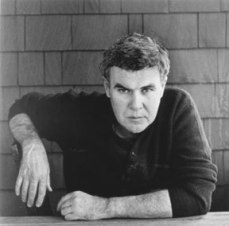 American Chekhov.” Another critic considered Carver “one of the greatest modern short story writers.” Poet Hayden Carruth wrote, “Among the great American writers of the 20th century, no question, Carver is the most endearing. He carries our humanity into the 21st.”
 college class at Chico State University by John Gardner (1933-1982). In years to come Gardner, then twenty-six, would become an important and influential person in American literature. Carver said that a good writing teacher is something like a literary conscience, a friendly critical voice in your ear, and that after being taught by Gardner, all his writing career he sensed him looking over his shoulder when he wrote, showing approval or disapproval over words, phrases, and strategies.
 Gardner thought that a novelist needed “an almost daemonic compulsiveness.” He was energetic and charismatic and his students responded. One student said “he was born with a quicker ratio to the passage of time than the rest of us.” Carver said that Gardner’s teaching “went right into my blood stream and changed the way I looked at things…He took my stories more seriously…I was completely unprepared for the kind of criticism I received from him.” He considered Gardner the teacher who first inspired him and intimidated him, teaching him to be tough on himself.
 In Publish and Flourish, Tara Gray advocates a writing program of a short 15-30 minutes rather than waiting for large blocks of time longer than three hours. Her interest was mainly academic writing and her little book was aimed at academics writing scholarly articles. But the research findings she cites and her prescriptions are pertinent to any writers who don’t have the luxury of lots of available time.
 Form a pact with a buddy. You’re more likely to achieve your writing goals—or
 If you need to do research, keep your research minutes to the barest reasonable minimum and your writing minutes to a maximum. You needn’t write for long periods to be more highly productive than you might expect.


