Anyone who knew what we were planning said, “You’re crazy.” They said, “You’ll come face to face with evil in the form of men whose death would improve the world, men out there who are too evil to live in society. They live by rules you have no knowledge of. They will slit your throats for your shoes.”
After we graduated from high school my good friend Nick and I–age seventeen–decided to do something we had never done before nor had known anyone who had. We would ride freight trains across America for half a year before we started college. People told us that we shouldn’t. We were just boys.
We spent six months hitchhiking and “ridin the rails,” a life that is alien to the more secure lives of stock brokers, school teachers, social workers, demographers, meteorologists, and the like that I thought was worth writing about so there would be a record of that unique way of life.

Running Along the Tracks
How free I feel though far from my home
Along railroad tracks on a hot June day
With a knapsack bouncing on my back,
The chink, chink, chink, chink
Of crushed stones and coal cinders
Under the soles of my scuffed boots as I sprint,
Laughing with my buddy.
Setting Out
Nothing in this world will burden me.
Fields of crops out to the horizon.
Breathing in winds that rejuvenate like milk.
Waving to hikers come out from the city. We aim
To jump off this train a thousand miles away.
A Savory Dinner
Sitting cross-legged, face to face like diplomats or friends,
Backpacks for tables, water from canteens,
We dine on ham on bread with caraway seeds.
Full Throttle
We were really moving now, the hot wind raging in through the two open doors, but outside the box car not a leaf was moving. Birds sailed this way and that in the gossamer sky, grasshoppers chirped and leaped along the tracks, and butterflies, their wings outspread and fluttering, darted among the bushes. One of the butterflies flew into the car, explored a bit, found that our company wasn’t to its liking, then flew back out while in the background a scarecrow was out in a field together with a cluster of flitting blue jays and surrounded by mist. Then the ground rose to overlook a meadow resplendent with white wild flowers.
Hobos in a Clearing
We reach the crest of a hill at dusk.
Below us, like the camps of infantry,
Burn the scattered fires of forgotten men,
Each a separate picture.
They live in the open or in
The opulence of tarpaper lean-tos against a tree,
And migrate as punctually as geese.
They wear black–perhaps it is the soot of freight trains–
And squat on their haunches like crickets
Beside the snapping flames.
Streams of smoke trail off high into the trees
And embers flicker and fade, flicker and fade
In the harsh bite and sparkle of the wind,
And glow bronze on the men’s untroubled faces
Late into the night.
Knife Fight
Overcast this morning.
When we were looking for a box car to board
We saw dead beetles floating on a puddle.
And then we saw three men lying against a log.
When we were close to the men the big one
On the right asked if we had any money.
I said no. He asked if I was sure and I said I was.
I saw that the one in the middle had a newspaper
Wrapped around his arm.
The newspaper was drenched with blood.
The man’s skin was gray, his limp eyes were
Sunken into his head, and he looked weak.
The man on the left said,
Do you want to see something?’”
And reached over and took off the newspaper.
The man’s bloody arm had a deep, three-inch wide
Gash from the crook of his arm down to his wrist.
I went closer and could see the inside of his
Arm very clearly–red, blue, purple, gristly, and white.
His eyes were dull and without luster.
Blood trickled out of his wound and dripped in the dirt.
The man on the right said,
“He was in a knife fight and the guy cut him up.
It’s pretty bad, huh?”
“It’s very bad,” I said. “You have to get him to a doctor.”
“Think so?” the man on the left said.
“We’re in the middle of nowhere,” the man on the right said.
On either side of the track were a fresh-smelling
Forest of oaks and pines and a broad stream
Running through it. We hadn’t seen buildings
For two hours on the train and there was nothing there.
“Go up front and tell the engineer that
You’ve got a dying man here and you’ve got
To get him to a doctor right away.” I said.
The dying man said, “Don’t bother,”
And closed his eyes.
Later, on the train Nick said,
“I guess he’s going to die.”
“Yes, he’ll die all right,” I said.
“He’ll bleed to death right there.”
His eyes would blur over with death
And his breath seep out,
And his associates would gaze on
With wonder as strange as dreams.
Girl for Sale
In a train yard one morning
A man approached with a girl
My younger sister’s age
Wearing a yellow sun dress,
Frail, her limbs just bones.
“You can have her for twenty dollars.”
“What?”
“You can buy this girl for twenty dollars.”
No sale, he continued down the track,
The shy girl following dutifully.
Milk
 The train hadn’t stopped
For a long time, and our canteens
Were empty.
We’d never been as thirsty.
I fell asleep in the heat and dreamed
That I opened the refrigerator
At home and saw every shelf loaded
With bottles of milk.
Then in a second dream
I saw waterfalls of milk spraying
And roaring down like Victoria Falls–
Streams of milk, rivers of milk–
An ocean of cold milk. Nick asked if I was
Awake and I said I was.
“What are you thinking about?” he asked.
“Milk.”
“Milk?”
“Milk.”
Ice Cold Nights in Box Cars
On cold nights we paced back and forth,
From end to end, side to side,
Stamped our feet, pressed ourselves against the walls,
Rubbed the circulation into our hands, and
Flapped our arms against our bodies for warmth.
In the Company of the Most Beautiful Girl
We stopped for coffee one night in a little café up in North Platte, Nebraska. Outside it was cold and gray. We went inside, out of the rain, and sat at the counter and waited. In a few minutes we saw the kitchen door swing open and a waitress about our age came out. She poured our coffee carefully, biting her lower lip, her finger on the top of the pot, not looking at us, and our eyes large, we watched her closely. She had long, lovely-shaded hair that flowed like oil and tossed from side to side. She smiled so gently, so exquisitely, that I was numb. It was my opinion that she was the most beautiful girl we would ever see in our lives and Nick agreed. We stayed as long as we could just to look at her and be around her. When we paid up and left at closing time we said goodbye to her, regretting we would never see her again, and she blushed and smiled at us in a friendly way, her eyes very bright. We were warmed by the sincerity with which she said, “Good luck, boys.” The thought of her made us happy for a long time.
What You See and Hear Along a Siding On a Rainy Night
 In the distant moon’s quiet light
Shadows of elegant birches
Are silk patches lying lightly
On the surface of puddles.
The chatter of fidgety locusts in the grass
Is gossip of talkative neighbors.
Arrayed along this siding are cars stenciled
Santa Fe, Illinois Central, Southern Pacific,
Northern Pacific, Union Pacific, Central Pacific,
The Soo Line, and B&O.
In a warm and refreshing wind
Whispering up from the south
You can hear
The booming midnight clash of freight cars coupling and uncoupling,
The heavy huff of released steam from brakes,
The languid breathing of engines cooling
As though they are falling asleep,
The muted voices of gaunt men stepping out of darkness,
Carrying oil cans with long necks, and swinging
With ease and grace, yellow-glowing lanterns,
Setting signals, and calling to each other in a garbled language
That we have no hope of understanding.
I may be wrong, but I think this is Montana.
Shot at, Chased By Dogs
When our freight train reached Kelso-Longview
The railroad police were waiting,
Holding the leash of a German shepherd
In one hand, waving a gun in the other.
Shouting and running, we youngest, running fastest,
Hobos leaped or fell from the cars and dashed
In every direction, chased by the cops.
As Nick and I ran we laughed at how out
Of our element we were and how ludicrous
The whole scene must appear–a hundred
Running hobos and bulls, men firing revolvers,
Other men praying not to be shot,
Ferocious dogs snapping at our heels.
Cherry Pickers
Cold, we stand at a curb in darkness at four in the morning
With a group of half-drunk, miserably poor, but good-hearted
Homeless men–day laborers–the Yakima sun too fierce
To work past noon. The boss hits Nick and me on the shoulder
With a rolled magazine. We look strong. We will work today, and
Everyone who works will be paid twenty-five cents a pail.
We are hauled out to the orchards under a tarp in a truck
Past rows of ramshackle abandoned houses with no
Windows and open front doors hanging from their hinges.
Everyone is in a good mood. Comrades now, we joke that the
Driver doesn’t know where the hell he’s going:
“Hey, he’s taking us to Walla-Walla.”
(A chorus of laughter shakes the truck.)
Working in a thick silence as though mute,
Clans of indefatigable
Migrant workers from Texas–
Old men, old women, young men, young
Women, children sweep the orchards clean
Like locusts with nimble fingers.
Love in a Parking Lot
Old cars with dented fenders and gaudy garters dangling on their rear-view mirrors, and pick-up trucks with rifle racks cradling shotguns and carbines were parked four deep in the lot. When the door of the Inn swung open, muscle-bound men, their shirt sleeves rolled up above the bicep, sauntered out, their arms tight around the waists of conspicuously made-up women, their heads thrown back in exaltation and abandon, and the chime of laughter spilled into the night like flowing wine.
On a Flat Car of a Freight Train Crossing the Great Salt Lake Desert Late at Night
Cold settles savagely on the
Great Salt Lake desert late at night.
When we reached it after a long, lazy day,
The massive red sun pulsating in the sky
Like a throbbing heart,
The temperature fell precipitously.
There would be a frost.
Then in the great, black,
Brooding mass of night,
The wind of the fast-moving train
Became a wall of icy air coming straight at us,
Death seeking to lay hold of us,
The frost to murder us, growing colder.
Colder, we in shirt sleeves.
You wanted to scream; you wanted
Someone to end this pain, to come
To your aid, to save you, to be merciful.
You prayed the train would fly off the
Track so it would have to stop
The merciless cold wind.
You wished to beg some power to
Lift you off this little island of misery
Where you knew without doubt you
Might die before the sun rose.
I had it in my mind that were
We to sleep we would never
Wake again, like mountain climbers
Dying on glaciers, so I shouted-
-La, la, la, tra-la, la, la–that
I thought would keep us awake.
I thought: “If I am about to die,
If am about to die,
If I am about to die
Why must it be as my life is beginning?
Why couldn’t death wait twenty
Or thirty years? What’s the hurry?
What is to be gained by killing a boy?”
Craning my neck I looked up
And saw the high twinkling stars.
I thought then that as long as I lived
I would never forget how beautiful they had been.
My thoughts flew like sparrows,
Repeating, “Tomorrow will be better,
Tomorrow will be warm, tomorrow
I will be out of it, and I will never have to
Come back to this place again.” And all the while
The sky was sublime: the orange glow of sunset,
The blue glow of evening; the white glow of the moon.
Eight Stalking Wolves
I point my finger and call to my friend:
“There, there up on the slope above us,
There, to the left, in those trees.”
Eight stalking wolves coming down
The mountain slowly, like liquid
Through a drizzle of large, wet snowflakes
In single file. A fawn has strayed from the herd.
.As the herd moves en masse, the wolves
Streak to the fawn through evergreens
And blue spruces, the wind blowing their tails,
Circling, wheeling, teasing, and tormenting the fawn,
Burrowing their snouts playfully in the snow.
Barks and cries echo through the canyons.
We shout and wildly wave our arms.
They stop. Every sound, every muscle,
Every movement ceases, their ears perk.
But they know that we are not hunters.
They have no fear of us. Their yellow eyes glisten.
As we leave the mountain the contours and the dim colors
Of the slopes, the sky, and the trees become beautiful.
So placid, so sublime, the radiance of the moon.
The Flanks of Tall Mountains
The flanks of tall mountains are abundant with gray shale
Slipping from higher elevations and lying like the rubble
Of fallen pillars of ancient kingdoms and battlefield dead.
On windy days and nights the air hisses in lofty evergreens
Slanting off mountains, furtive sounds everywhere.
Always vast distances lie wherever we look.
The lumpy hills of Sun Valley, with red-brown and
Black shadows spread like blankets, rise and gently dip.
Occasionally in the pall of night, here and there,
As though to frighten us, appears an unexplained light
Through the darkness, mysterious and indifferent.

© 2023 David J. Rogers
For my interview from the international teleconference with Ben Dean about Fighting to Win, click the following link:
Order Fighting to Win: Samurai Techniques for Your Work and Life eBook by David J. Rogers
Click on book image to order from Amazon.com
or
Order Waging Business Warfare: Lessons From the Military Masters in Achieving Competitive Superiority

Click on book image to order from Amazon.com
or
 The manuscript Golding submitted was worn, torn, and stained when Monteith first saw it. It had obviously been rejected by other publishers. Even Monteith agreed that this work of a public school teacher was over-written, disorganized, repetitive–a mess–and seemed never to get started. After many rejections Golding was losing hope of having the book published, of ever being published.
 be recognized as a person with a talent that can generate revenue. When a writer is discovered by an agent or publisher, their life changes for the better. This post is about writers who were discovered, then published, and found success–perhaps more success than they expected. There are so many writers with all the talent in the world who are trying very hard to be discovered by an agent or publisher who is trying as hard to discover them. There is a good chance that many writers we read would never have been published had they not been discovered by the right agent and a right publisher.
 Finally a small publisher picked it up. However, this editor who discovered the book, was different. He was enthusiastic and said to Harold, “Your book is going to be a best seller.” Finally what Harold had been hoping for: someone had faith in the book and its spiritual message. It became a phenomenal best -seller, the most popular book in the world, selling twenty -five million copies.
 Persistent and confident in spite of failures, Jack London submitted his manuscripts hundreds of times to publishers that rejected the work before an editor discovered him. But after that, within a single year London, a self-educated writer, took the literary world by storm and was the most popular, most critically and financially successful novelist/short story writer in the world.
 Invariably I would think, “All these incredibly talented performers I see–artists who are looking for a big break and are dying to be discovered.” Much like them, so many writers with so much talent also are trying very hard to be discovered. Without the people who discovered William Golding, Thomas Wolfe, Harold Kushner, or Jack London, would we have ever heard of those famous authors?
 I was excited waking up at 3:00 A.M. yesterday, and I was not thinking of going back to sleep. I wanted to finish some poems where I had left off the night before. I thought, “Let my wife–a calmer, less excitable person–sleep; I
  Intense writers and artists do everything intensely–experiencing, feeling, thinking, and imagining. They are significantly different human beings from other writers and artists (and agents and family members and co-workers) who are not intense. They feel their emotions strongly. They soar high with elevated emotions, and they plunge into dark
  Intensity is a quality found in many creative people that facilitates artistic pursuits. Abbe Dimnet said that the creator’s intensity will be reflected in the quality of the work: “The experience of most artists is that the quality of their production is in keeping with the intensity of their wish.” Henry James wrote: “It is art that makes life, makes intensity, makes importance.” Horace said, “Painters and poets alike have always had license to dare anything.” It is their intensity that gives them strength. Keats said, “The excellency of every art is its intensity “ A problem every writer and artist faces is maintaining in every phase of their story or painting the intensity that keeps it going and energizes the creator’s every gesture and the work’s every detail. They must be able to generate and sustain intensity as they work.
 Who could be more intense than poet Walt Whitman who expressed a wish to have “one hour of madness and joy,” “to feed the remainder of life with one hour of fullness and freedom,” “To have the feeling today or any day I am sufficient as I am.” Who more intense than novelists Charles Dickens with his phenomenal storehouse of drive that enabled him to work on a multiplicity of books, speeches, plays, travels, and social projects at the same time without ever tiring?
 If you are to be a writer who will be recognized, you must have faith that you have been created to be a writer, that writing is a destiny toward which your life has been aimed. Virginia Wolf and Toni Morison felt that way, and James Joyce, Dylan Thomas, and Ernest Hemingway. Many writers we haven’t heard of yet, but will, also feel that way. The faith that you are fated to be a writer is a writer’s first requirement. You must believe that it is when you are writing that you’re doing what you were brought into the world to do.
 History shows that writers who will amount to anything also all have an attitude of “seriousness” about their work and their lives: “This is my only life; I am not playing games. I try to write every day. I strive to get better and better still and will do that all my life.”
 As a writer you must be true to your awesome potential–must be in fact what you are potentially. If you are not doing enough with your gifts, your conscience lets you know. The conscience of a writer asks, “Who am I? Why am I here? Where am I going? Have I become what I should have become? If I have not become what I should have become, what will I do now?” Your writer’s conscience is the voice that calls you to be the person you are fully prepared to be, the uniquely talented writer you have been created to be.

 Monet was the most renowned and most influential pioneer of Impressionism–the giant of Impressionism. Painting out of doors, Monet devoted his life to creating new ways of capturing light’s changeable qualities on canvas. A 12:00 p.m. sunlight is not the same as a 4:00 p.m. sunlight, or even a 12:05 sunlight or 12:10 sunlight. Early evening sunlight is similar to but, different from morning sunlight. The suns of one month are different from the suns of every other month. Such facts filled Monet’s thoughts.


 Monet became obsessed with the sculptured shape of haystacks and with the dramatic contrasts of light and shade inherent in their form. The haystack paintings were a great success and led Monet to a more elaborate analysis of the effects of light on objects.
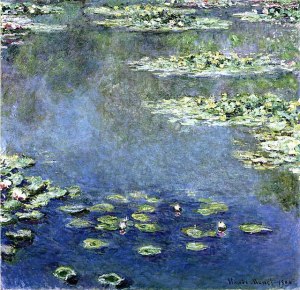 Monet gradually transformed his art from painting spontaneous approximations of the effects of light and atmosphere to an art of abstract surfaces existing for themselves. The focus of his art became the surface of pools and areas where the balance of water, light, air and the delicate substance of blossoms co-mingled, echoed each other, crossed on another’s boundaries, and blended together so that there was no difference between them. His last works were a series of large decorative panels in which the forms of nature are difficult to distinguish.
 If the water lilies are thought of as real-life water lilies they become a great disorderly mass of arbitrary color. But if the water lilies are considered abstract arrangements of color applied in careful strokes they coalesce meaningfully.
 Think of the last time you were discouraged. You were knocked off balance and became weakened and vulnerable. Possibly something you longed to happen did not happen, or something you dreaded happening did happen. Then you were discouraged. Courage is a thing of the heart. The word “courage” derives from couer,” the French for heart. To be “dis” couraged is to lose heart. You were never too young and will never be too old be to be discouraged. You don’t outgrow discouragement.
 Action is the most effective antidote to discouragement To rid yourself of being discouraged strive to be a person of action. The happiest and most courageous people in the world have a preference for action. Rarely are they discouraged. They are too busy to be. In high spirits they persist through difficulties, overcoming setbacks, resisting gloomy moods, never losing hope. That is why they are so happy. The samurai of ancient Japan were the most action-obsessed men and women who ever lived.
 peace. So I began to search for solace and wisdom.
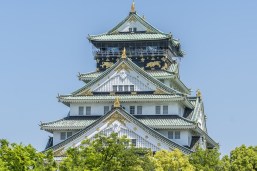 I chose as the basis of the book the spiritual insights of samurai warriors of ancient Japan. It may seem that the psychology of people like that who lived four centuries ago in a foreign country would have little to say to you, yet if you are interested in ways to strengthen yourself spiritually, that is the place and era to look for information. Samurai had introduced the teachings of Zen into the Japanese culture. Zen was “the religion of the samurai.” Many samurai were poets.
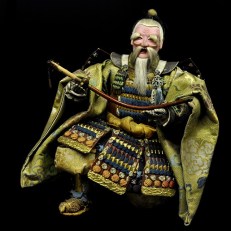 Samurai were models of action-oriented people. The essential feature of the samurai “Way” (way of life) is action. (That a discipline is a Way is indicated by the suffix “do.” The samurai Way is “bushido). All samurai spiritual insights and training were designed for one reason: to equip the person (a samurai or you) to make up their mind quickly and firmly and to go into action
 Every day’s goal of healthy people is to be happy, to love and be loved, and not to be discouraged. But there are many impediments–opponents. In the arts among artists and writers I know so well, and in everyday work and personal life, like a samurai in battle, everyone encounters those opponents. Some are outer opponents–an outrageous person who’s hard to get along with (a harsh critic of your writing or painting, for example if you are in the arts), personal crises, setbacks, failures, Etc. People who steal from you.
 All samurai training was designed to overcome those dragons so that in your everyday life you will progress smoothly from experience to experience, challenge to challenge, achievement to achievement, happiness to happiness.
 Acquiring wisdom from the samurai Way suits people who wish to overcome discouragement and are able to make use of insights and techniques from any era or culture that will help them. What strikes me is the ease with which readers of the book adapt those insights from centuries ago to their current everyday living.
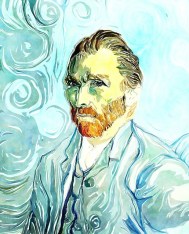 Writers and artists throughout history have feared and hated rejections of their work.
 Each rejection compounds the effects of the previous rejections and can lead writers and artists from heights of blissful optimism to the total disappearance of confidence. Yet without
  respond when editors reject their work, and there it was, the questions “What is winning? Is winning the only thing that matters? Is getting published the only thing that matters? Is that the only credential that makes you a significant literary person?”
 I remember once learning that a publishing house I was interested in submitting to typically received 5,000 unsolicited manuscripts a year. Less than seventy would be published. What about those thousands of disappointed writers? I’m sure they had worked very hard and had high hopes. But their hopes would be shattered. Are they to conceive of themselves as failures? Are they supposed to give up hope of ever being successful?
 You are winning and not failing when you are persistent in spite of setbacks, are able to recover quickly, and are resilient.
 You are winning and not failing when you are
  Those are the ways you are really winning even during those times when it feels like you are not.
 Whether you find creative people in remote little mountain kingdoms accessible only by mule or in big, modern, cosmopolitan cities, you will discover that they are surprisingly alike. The many traits they share are not all favorable; some are obstacles. Yet those traits–the worst and the best together–prepare creative people for fascinating lives other people look at with admiration and envy.
 May be “overlooked” as school children. Their talents unrecognized, they may have undistinguished elementary and high school careers, only to be recognized for their significant achievements later in life to the surprise of everyone.
 Sadly, at times may be too emotionally ill to work, particularly poets and writers who may be victims of the high and inexplicable incidence of debilitating
  Have an insatiable need to
  “Know who they are.” Are marked by a clear, unambiguous sense of identity, as “I am an historical novelist specializing in women’s roles in England during the Victorian era.”
 Can be playful, child-like, humorous, silly, fun to be with, and seem younger than their age.
 Benefit from a rare a
 For survival must become skilled at overcoming obstacles, of which there are many in the arts.
 painter. The storm buffeting the windows and pelting them with hail and snow made impossible even the thought of digging cars out and driving home. But everyone was in a good mood, and the house was warm. We were happy being together again after being separated so long by COVID.
 accomplished people in the arts have wondered what they have that makes their creative work possible. The main quality anyone must possess if they are trying to be successful in anything, not just the arts, but certainly the arts, I feel, is energy.
  “Painters, writers, actors, and dancers enter the world talented. From the beginning of their lives they can draw better than other children or write more interesting compositions, act out scenes more skillfully, dance more gracefully. Just look at the lovely paintings some little children can paint and the poems they can write. Some children are too young to have learned to paint, yet they paint wonderfully and have technique. No one has taught them. They can paint superbly before being taught. When they are being taught they absorb information so quickly, it’s astonishing. That’s the definition of talent.
 “I think that
  The storm still didn’t look so good, so they stayed the night. In the morning Paul insisted on making breakfast. I made coffee. We vowed to get together again soon. Then in early afternoon a bright sun came out, the winds died, and they left for home where work and many challenges were waiting.


