The Birth of My Popular Post: “Why Artists and Writers Are So Self-Absorbed.”


Hands typing on a keyboardI have been a professional, best-selling author, poet, teacher, and blogger for a long time.  I am obsessed with and think about writing, painting, and other arts all the time. I have published two hundred prescriptive-posts that were written solely to improve the performance of the thousands of creative people who read them.

One day my wife asked me, “David, why are you so self-absorbed?” Being self-absorbed is usually thought to be an unpleasant quality, but my wife’s question was not a criticism. It was a statement of fact. She knows that I am self-absorbed, and I know it too, but she wanted to know why I am. I am self-absorbed because being a person in the arts, I have to be–I have no choice and it’s a good thing I am. Being self-absorbed is a necessary part of my make-up–and yours too if you are a writer or artist. That’s explained in the post “Why Artists and Writers Are So Self-Absorbed.”


© 2024 David J. Rogers

For my interview from the international teleconference with Ben Dean about Fighting to Win, click the following link:

Interview with David J. Rogers


Order Fighting to Win: Samurai Techniques for Your Work and Life eBook by David J. Rogers

Fighting to win Amazon

Click on book image to order from Amazon.com

or

http://www.barnesandnoble.com/w/fighting-to-win-samurai-techniques-for-your-work-and-life-david-rogers/1119303640?ean=2940149174379


Order Waging Business Warfare: Lessons From the Military Masters in Achieving Competitive Superiority

Waging Business Warfare812sCY9edLL._SL1500_

Click on book image to order from Amazon.com

or

http://www.barnesandnoble.com/w/waging-business-warfare-lessons-from-the-military-masters-in-achieving-competetive-superiority-revised-edition-david-rogers/1119079991?ean=2940149284030


Follow my blog with Bloglovin

3 Comments

Filed under Popular Posts

What is Image-Based Writing?

What is image-based writing and why is it effective?

With writing that is image-based the images in the narrative or poem have a starring role, and the chief skill of the writer is creating images. The writer needs a mind that thinks in images. Without vivid image-based writing, texts are lifeless, bland, dull. They don’t seem real and lack vitality. They seem to be business reports, not literature. With image-based writing, texts spring to life. Fill your writing with images.

Practice to develop the skill of image-making. With vivid image-based writing, readers believe that characters are made of flesh and blood and what they are doing really happened. The world of your physical descriptions is real and has three dimensions. That is what you are trying to have your readers believe–and you had better do it quickly, within the first paragraph.

Here are samples of image-based writing from David J. Rogers, author of the popular post “Imagery in the Arts.


Indian Summer Picnic

A sparrow flutters its wings just above the grass,
Squirrels shimmy up trees, a gopher pokes
Its head curiously out of a hole. The sunlight gives
The landscape a coppery hue. The sky grows dark
And threatening, and the clouds turn black.
The breeze has become surges of wind that spin leaves
In the air and drop them ten feet away. Everyone
Hurries to clear off the tables and take everything inside,
Everyone rushes around gleefully, pitching in, doing their share.

They snatch things up, and as they dash for the house
Raindrops the size of pebbles fall and soon the leaves on the
Ground are saturated. What an afternoon–
How fresh, as if floating on a pond–the dark sky,
The farm, the trees, and the people during the flight of
This passing moment.


Woman on a Hill Overlooking a Lake

As she walked
Her lithe body swayed and
The sun shone bright on her wild,
Stormy-looking hair, engendering in me
A sense of her sophistication, and not coldness,
But rather inaccessibility, delicacy, refinement,
And intelligence. For that’s the impression
Women whose beauty is beyond words make.


Welsh Men, English Woman

The men in that Welsh-American family smiled appropriately,
Frowned sympathetically, and looked as grave
As morticians at times, puckering their foreheads,
Pursing their lips, and pouting. Not for a single
Instant were they amazed, puzzled, or unsure
Of themselves, and their voices were firm.
They stood so erect, so confidently, as they talked
So earnestly, straight as if braced by rods, as though
What they were saying were unassailable truth
And could not be doubted but by a nitwit.

Or they stood nonchalantly and slack, their hips shifted to
The left or right, with nothing other between their
Hair and shoes than supreme, unshakeable
Self-assurance. But the English woman was alone against
A tree like a twig that could easily be broken in two or
An object on display to anyone who had a desire to
Stare–a scarecrow staked deep into the ground,
Impossible to budge.


Hints of Winter

The previous week’s frost wilted
And turned brown many of the flowers in the beds, but those
That are still alive are bright and straight. The farther back
You go in the yard, the stronger are the fragrances that
Come from all sides. Across the grass, close to the house,
A sprinkling of white and purple dresses the tops of
Oleander bushes.

The sun sheds light in patches on the grass.
Beside the barn, as if kneeling, is a gnarled and bent tree and
Farther away other straighter trees whose leaves are changing.
I can smell the green leaves and the dry leaves, the young
Leaves, and the old leaves that give hints of winter.


Then and Now

Chicago’s Sheridan Road ran parallel to Lake Michigan, as it does today, and when you walked down it in those days you heard the sounds of the traffic mingling with the lapping of the waves on the beaches. From the beaches on clear days you could see on the horizon’s edge the western shore of Michigan to the east, and out on the lake low in the water turgidly-moving barges carrying heavy loads of ore down from Minnesota to the steel mills of northern Indiana. On certain afternoons in July and August the sun bore down on the sand so intensely that it was painful to walk on it, so mothers and fathers with feet on fire dashed to and from the tumbling waves carrying their squealing children tight in their arms.

One by one the beaches were filled in and all the great industrialists’ mansions with ample lawns that lined the street were torn down and replaced by closely-packed towering apartment buildings with hundreds of balconies which were far more impressive architecturally, but far less beautiful. Few people remember the mansions or the beaches, but most believe that the high-rises have stood there forever. Now when you walk down Sheridan Road the traffic is so heavy and the water so far away behind the buildings that you can no longer hear the waves.


© 2024 David J. Rogers

For my interview from the international teleconference with Ben Dean about Fighting to Win, click the following link:

Interview with David J. Rogers


Order Fighting to Win: Samurai Techniques for Your Work and Life eBook by David J. Rogers

Fighting to win Amazon

Click on book image to order from Amazon.com

or

http://www.barnesandnoble.com/w/fighting-to-win-samurai-techniques-for-your-work-and-life-david-rogers/1119303640?ean=2940149174379


Order Waging Business Warfare: Lessons From the Military Masters in Achieving Competitive Superiority

Waging Business Warfare812sCY9edLL._SL1500_

Click on book image to order from Amazon.com

or

http://www.barnesandnoble.com/w/waging-business-warfare-lessons-from-the-military-masters-in-achieving-competetive-superiority-revised-edition-david-rogers/1119079991?ean=2940149284030


Follow my blog with Bloglovin

2 Comments

Filed under Creativity, Imagery in the Arts, Writing, Writing improvement, Writing models

Gentle Poems in a Troubled World

by David J. Rogers


A Writer Loves to Work:

What has night to do with sleep
When you are a writer?


As I Lie in Bed at Night

I lie in bed listening.
Soon the sounds
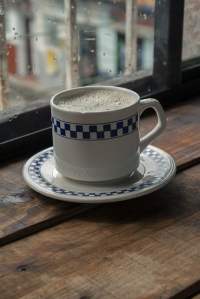
White and blue coffee cup and saucer near a windowOf spoons against coffee cups
And the low drone of speech
From the kitchen cease
And my parents go to bed.
I hear the whisper of
Their slippers in the hall.

Of my family I think in my child’s
Way they are all of them–each of
Them–good people, devoid
Of malice, and I am fortunate to be
Among them.
Why have I been so favored?

“Whoever you are please treat us kindly.
Spare us please from pain or
If sparing us is not possible so apportion
Suffering so that none of us is asked to bear
More than we should be required to.”
I fall to sleep. I dream.


Swimming in Space

Nightly, I have been swimming in space,
The safest, serenest place,
Stroking through eternity
Gracefully, smoothly, effortlessly,
Since childhood.

Alone,
Far beneath what’s above,
High over what’s below–
Towers and cities and rivers and seas–
Gusts of silver wind I breathe.

Content, blissful,
I leave my body behind
And float as aimlessly as air
I am the air,
No destination in mind.

I am as free as I think
It is possible for me to be.
I am immortal.
I am beautiful.
I will pass this way again.


Butterflies, Flowers, and Lovers

Green and brown butterfly on a leafButterflies, you and I,
Fluttering over gardens–
Our little world–
From flower to flower
In search of that one who is to us,
Though perhaps to no one else,
The loveliest flower,
And when we find that lovely flower,
Then we are content forever.


One Dog, Two Cats, a Squirrel

My dog and cats are dead now
But the squirrel who loved them
Comes every morning to sit on the fence,
Expecting them.


Night to Day

The solitary moon glows,
The glittering stars glow.
The sun rises daily over city lawns–
The pallor of dawn.
So my life passes into and
Out of my thoughts.


Waiting For a Bus on Christmas Eve

I am ten, my little sister eight.
Excited, we are looking out
The living room window.
Slush
On the street,
Soft and hushed.

Down the street,
Before the red brick fire
House, clanking chains lashed
Around softly humming tires
Splash past.

A warm Christmas Eve,
End of day.
Grandma and Grandpa
With gifts
On their way.

Look, there they are
What do they have
In the red and yellow bags?

A doll with golden hair.
A Louisville Slugger.
Books.


Midwest Winters

In late October among clouds in the shapes of bells
Withered leaves spread out on dying grass
In the sorrow of fading light
Unwelcome memories fill a Midwesterner’s thoughts
With premonitions of gray, raw, implacable winter.

Too soon cruel, inevitable
North and West winter winds apply their treachery
To frigid fingers, feet, and faces.
Eyeballs freeze in their sockets.
Wailing medieval demons of winds howl
Across cities, towns, fields, silos, prairies.

Laarge snow-covered tree at the side of a snowy expanseSnow drifts smother every highway,
Street, river, and stream.
Everything everywhere sparkles with frost.
In a weary succession of cold monotonous days
Citizens beat a path from home to work to home,
Hungry for warmth, pleading to see any color
But the white of snow.

There is no more hateful damnable
Rapacious ferocious and treacherous
Winter than right here in the Midwest.
Where winter punishes us for adoring summer.


Summer Evening

After dinner when the weather was good, the fathers,
Some in gaudy suspenders, to a man seeking peace,
Left their families and went alone outside in the yard to smoke.
The glowing tips of their cigarettes or bowls of their pipes
Hovered like red ornaments suspended from invisible strings
In the darkness. The men nodded cordially to one another,
But only rarely went to their fences to speak. They stood
Stationary and solitary in the middle of the yard gazing
Up at the field of glinting stars, being reminded of
Their own inadequacy, their own insignificance,
Feeling in their souls the overwhelming rapture
And wonderment of being alive on this earth. In a little
They shredded their cigarettes or tapped out their pipes
On the soles of their shoes and watched the embers
Drift into the grass.


My Mother Doing the Laundry

Monarch of the
clothes pin,

servant of the
breeze;

white sheets
muttering,

white shirts
fluttering

on the
line.

Mother at her
loveliest

on the gray creaking
porch

on a sunfresh
afternoon.


Memories

Flickering portions of you
That accompany the people who love you,
Fastened around their heart
Forever.


Cool Wind

And I thought how lovely
It was to feel
Through an open window
A cool wind on a hot night
Such as this
And to see let in
Between the window shade
And the window sill
Leaves’ shadows dancing on
A midnight floor


Disguises

We are all so complicated and sealed up
In the disguises we wear
That we can know intimately in one lifetime
Only a person or two, and they not always,
But only in momentary bursts of understanding.
All the others we reduce to a few strokes:
That woman in the garden is lovely,
Has a lovely smile,
Owns a lovely dog.


The Death of a Loved One

Death leaves nothing when it departs
But still another vacancy in the heart.


Mushrooms White and Brown

At the base of this tree–sycamore I think–
Maple? (I don’t know) grow
Mushrooms–little umbrellas
White and brown.


Wind at the Beach

Suddenly a wind strikes up.
Into the air ascend three hundred white gulls.
Waves rise up from the lake,
Lunge and plunge like a field of gray-green
Wheat that then collapses on the shore,
Splaying into streams that sink into the sand
Slowly, as though unwilling to disappear.


© 2024 David J. Rogers

For my interview from the international teleconference with Ben Dean about Fighting to Win, click the following link:

Interview with David J. Rogers


Order Fighting to Win: Samurai Techniques for Your Work and Life eBook by David J. Rogers

Fighting to win Amazon

Click on book image to order from Amazon.com

or

http://www.barnesandnoble.com/w/fighting-to-win-samurai-techniques-for-your-work-and-life-david-rogers/1119303640?ean=2940149174379


Order Waging Business Warfare: Lessons From the Military Masters in Achieving Competitive Superiority

Waging Business Warfare812sCY9edLL._SL1500_

Click on book image to order from Amazon.com

or

http://www.barnesandnoble.com/w/waging-business-warfare-lessons-from-the-military-masters-in-achieving-competetive-superiority-revised-edition-david-rogers/1119079991?ean=2940149284030


Follow my blog with Bloglovin

10 Comments

Filed under Memory, Personal Stories, Poetry

When You Are in the Arts and Nobody Knows Who You Are: “The Matthew Effect”

This is a post about something that about 98% of people in the arts have bad memories about.

A Conversation at a Party.

The cases Of Ernest Hemingway, Jack London, And Henry Miller

I was talking to a woman at a party. It was a nice party and the woman–a well-known painter from the Midwest–was good company–cheerful, friendly. Our conversation turned to the arts, as my conversations—and hers–often do, and we talked of this and that. And then, knowing I was a writer and poet, she asked me, “Did you ever not get published because you lacked the credential of previous publications?”

I said “Yes, when I was starting out, which is of course the worst possible time for a writer, the time of greatest vulnerability. I think everyone in the arts has been stymied by the particular problem of credentials.”

She said, “I certainly have.”

I said, “Funny isn’t it, you’re so famous.”

“But that wasn’t always the case. It was a long time before anyone knew I was a good saleable painter.”

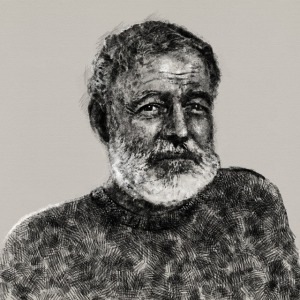
I said, “It makes me think of all the great writers who had trouble getting published for that reason. I Black and white drawing of Ernest Hemingwaythink of my favorite writer, Ernest Hemingway, and ask myself, ‘How could an editor with any judgment at all reading young Hemingway’s beautiful prose say, ‘We can’t publish you because no one knows who you are.’ Hemingway would often cry as he received still another rejection slip. Yet he persevered submitting stories and in not many years he would be recognized as the best writer in the world, and in a few more years he would be the most famous and the most highly paid. The same happened to Jack London–unable to be published, hundreds of rejections, a publication, then within a year the most popular writer in the world.“

Henry Miller was angry with editors who rejected him because literarily he was a nobody. He was living in poverty, his only possessions the clothes he was wearing and a comb. Editors abused him mercilessly. He wrote in a letter to a friend,” Who do these shits think they are to say such things to me?”


“The Matthew Effect”

You may not like it, but unless you write or paint or act solely for the joy of it (as many people do) and have no interest in going any further in the Darwinian survival-of-the fittest, ferociously-competitive modern world of the arts, you have to compete for attention. Opportunities in the arts are limited, yet there are millions of Americans who claim to be “in the arts.”  They are trying to get their story rather than yours in the magazine, or their book released by the publisher rather than yours, or get their painting rather than yours in the show, or get the lead in Macbeth.

All any person in the arts asks for is a level playing field. But the playing field is not level. The concept of “The Matthew Effect” derives from the Bible’s book of Matthew (25, 29): “For unto everyone that hath shall be given, and he shall have abundance: but from him that hath not shall be taken away even that which he hath.” That refers in writing and painting (and all the other arts and all the sciences and in all of academia) to the rich get richer, the fact that more status is given to the most highly recognizable people in the field (though they might not be the most deserving), while recognition is withheld from writers, painters etc., who aren’t well-known (though they might be the most deserving).

Watercolor in blue with some brown and purple of a bird above a waveWhat unpublished author hasn’t had the depressing experience of reading crappy books by writers who have published fifteen other books just as crappy and thought, “I’m better than they are, so how does such a thing happen? Is there no justice?” It’s “The Matthew Effect” in operation—they hath and you hath not. The artist who hasn’t been recognized yet must understand and overcome “The Matthew Effect” to now become recognized—to become one who hath.


© 2024 David J. Rogers

For my interview from the international teleconference with Ben Dean about Fighting to Win, click the following link:

Interview with David J. Rogers


Order Fighting to Win: Samurai Techniques for Your Work and Life eBook by David J. Rogers

Fighting to win Amazon

Click on book image to order from Amazon.com

or

http://www.barnesandnoble.com/w/fighting-to-win-samurai-techniques-for-your-work-and-life-david-rogers/1119303640?ean=2940149174379


Order Waging Business Warfare: Lessons From the Military Masters in Achieving Competitive Superiority

Waging Business Warfare812sCY9edLL._SL1500_

Click on book image to order from Amazon.com

or

http://www.barnesandnoble.com/w/waging-business-warfare-lessons-from-the-military-masters-in-achieving-competetive-superiority-revised-edition-david-rogers/1119079991?ean=2940149284030


Follow my blog with Bloglovin

4 Comments

Filed under Adversity, Matthew Effect

Reflections of My Life in Poetry by David J. Rogers

Where Among Dreams She Had Often Walked

Shore of white sand in front of blue waterSmall and delicate, fair as a flower,
A woman on this earth who
At thirty-seven of her years passed
Away. Since her absence from the visible
World she has lived in many of my memories.
She died too soon to be aware of much of
My life, and I will not be able
To tell her about it, nor she to share her
Thoughts of what her life might
Have been had she grown old where
It ended: in beauty far across the pitching
Blue sea, along rows of white-sand beaches
Where among dreams she had often walked.


Chicago’s El Trains

At eight years–
My place of birth.
Walking through
The viaduct
Under the el platform
And into and out of
The cool, spread shadows
Amidst the thunderous
Rattle of the trains
Overhead that make
The earth and my heart
Tremble


The Welcome Inn

Lantern in front of a door with an old bell and a welcome signWe enter that tumult of sweat and whiskey, amidst the
Glow of the red bar lights and clouds of floating smoke
And stand next to a tattooed woman snapping a
Bull whip and wearing a black satin cape with red lining
And see a man pull a pistol on another man. The
Second man snatches the gun from the first and
Slugs him over the head. He turns to us
Disgusted with his friend, supine on the floor, and says
“He’s always doing that,” and that is the end of that.


What Are We To Do?

What’s the use trying to say what I feel?
How does it happen? How is it concluded
That this person should be happy, that one not?
This one healthy; that one ill; one blessed, the other
Troubled; he–undeserving– to live a long
And happy life; she who in her life has hurt
No one to die before she has fully lived?
How is it decided that this one should be put
Together with that one and that they should
Love each other all their days, but that another
Shall despair in loneliness. What happens to us
That we become the people we are, and
What are we to do now?


Judy Wazorick

We were in grammar school together.
She had a blue eye and a brown
And sat in the last seat of the last row.
She was very shy, but when I looked at her
She smiled at me.
Now I see she won’t be at the reunion,
And I am so sad because Judy Wazorick

Orange butterfly on pink flowersHas passed away.


Butterflies, Flowers, and Lovers

Butterflies, you and I,
Fluttering over gardens–
Our little world–
From flower to flower
In search of that one who is to us,
Though perhaps to no one else,
The loveliest flower,
And when we find that lovely flower,
Then we are content forever.


The Girl in Greenwich Village

I saw you
Looking at me
Knowing I had
Looked at you,
No chance ever
To see you again
Or you to
Look at me again
With your dark eyes,
You who had I
Known long ago
I would have run
My finger over
So carefully
And held
In my hand
Like an orchid.


Awaiting the Arrival of Dawn

A bare tree on a gentle hill infront of an orange and blue skyI delight in darkness and know that a bond
Intertwines me with everyone who exists
Or ever has, or will; and know too that some
Yet unknown purpose to my life beckons fondly
And that one day I will discover it.
So I dream of splendid things through
Each day as my life flickers away.
I welcome the luminous skies above and the
Magnificence of morning–and I will all
My life while awaiting the arrival of dawn.


A Man Like Every Other

I thought as all children think of their fathers
At that age that he was a great man. He had
Made a life out of little accomplishments that
Were magnificent to me–had made a paper
Weight, had painted a wagon, could change a tire.
Then he felt he had done something, and so did I,
A man who would live in anonymity, do the best he
Could, be remembered a little while
And forgotten. A man like every other.


Lightly Falling Snow

In the mountains, near the snow line, a blue
Haze is draped in grandeur over the land,
The summits surrounding us stupendous
.We have a snowball fight and then lie exhausted
And breathing hard in the snow while laughing
And making angels with our arms and legs.

We then come to an inn set far back from the road
Across a gravelly parking lot surrounded by tall trees
That are black with rain that fell last night.
We go up the long wooden stairway to a landing
With roughly-hewn wooden tables and chairs. But it is
Too cold to sit outside and so we go in.

The dining room is empty but for a waiter leaning
Against a wall. The tables are set with white linen
And gold utensils, and dressed as we are we seem
Out of place. We sit at a table by a wide window with
A good view of the mountains. The waiter comes over and
We order coffee.

From the window, Nick, the waiter,

A bare tree with falling snowAnd I watch a lightly falling snow.


Bedtime Prayer of a Little Boy

Of my family I thought in my child’s way–
They were all of them–each of them–good people, devoid of malice,
And I was blessed to be among them. Why, I wonder, had I been so
Favored. I thought, “Dear Lord, keep us safe, and please treat us kindly.
Spare us please from suffering or so apportion it so that none of us is asked
To bear more than one should be required to.” I prayed, as always fast,
“God bless Mom and Dad and…” and I fell asleep beseeching God.
The day ended then, and I dreamed and in a moment another dawn broke.


Hobos in a Clearing

We reach the crest of the hill at dusk.
Below us, like the camps of infantry,
Burn the scattered fires of forgotten men,
Each a separate picture.
They live in the open or in
The opulence of tarpaper lean-tos against a tree,
And migrate as punctually as geese.
They wear black–perhaps it is the soot of freight trains–
And squat on their haunches like crickets
Beside the snapping flames.
Streams of smoke trail off high into the trees
And embers flicker and fade, flicker and fade
In the harsh bite and sparkle of the wind,
And glow bronze on the men’s untroubled faces
Late into the night.


Ice Cream Man

A bevy of children
Proffering handfuls
Of nickels and dimes
To the wizened Ice Cream
Man in exchange for
A bar thickly crusted with
Brittle dark chocolate
Or nuts, or both


LONGER NARRATIVE POEMS

Lyric for Angela

At seventy-five cents per hour
I am a twelve year old
Professional bagger of cans
Of pineapples and tomatoes,
Weigher of potatoes,
Stocker of shelves
So the labels artfully frame
For the customers’ eyes
The Gerber baby,
The Scott tissues,
The orange carrots,
The vivid green peas.
When I am near Angela,
The dark-eyed store owner
Who favors me
My heart beats faster.
I cannot breathe
When I am near Angela.
As she works she sings.

Her spirit enfolds and singes me
As with molten tongs.
She smiles with
Such sweetness, gentleness,
And goodness it breaks my heart.
Her hair, her voice, her hands, her
Presence bring
A quality into my life
Which I know to be love.
My youth is purer,
My memories more
Lasting because of her.

Angela’s husband is awful
To her and treats
Her cruelly.
I vow that one day I will
Whisper to Angela,
“Why don’t you run away?”
But I fear she will not
And that after I have gone
To high school and college
And am grown up
She will still be heard
Singing in the aisles
Of this little store
Like a bird in her cage.


A Wagon, an Old Man, and Old Horse
(A Scene from Edgewater, Chicago, 1949)

Keeping to no particular schedule other than
It be daylight nearing evening, from down the alley
Through sunlight and shade, always from the west,
Never the east, comes the old disheveled
Rag Man–appearing to be a rag himself.
He sits high atop a large horse-drawn, creaking wagon
Loaded with junk, his gruff, metallic voice preceding
Him by half a city block:  “Rags, old iron.”

As the wagon nears, I hear, faintly at first, and then
More clearly, more purely, more emphatically, the
Mellow clomp, clomp, clomp of the shod hooves
Of the old brown mare whose head hangs low, neck bowed,
And swaying slowly to the rhythm of her gait.  She elevates
Her head as high, as majestically, as a queen of horses
Who is a about to speak and shakes her harness
Chains musically but uncomfortably and opens wide her mouth
To gulp the air. Then I hear her snorts as she struggles
Futilely with her bit and notice her bulbous brown eyes
Glazed with an expression of weariness and sorrow,
And the sunlight glistening off the thick sheet of sweat coating
Her flanks and the sinewy twitching muscles of her legs.

The sounds of hooves grow soft, then softer, and vanish,
Not to be heard again until another afternoon I witness the
Elegant procession of a wagon, a man, and a horse, and
Hear a voice bellowing, “Rags, old iron.”


On A Beach on a Wind-Blown Day

Beach with children running into the wavesSo there it is, laid out in my mind: that moment in our lives,
That day in July. We are told that memories recede, grow fainter,
Fall to tatters, but I remember that afternoon that
Has persisted through all the successive years, recalling it
Just as I lived it. Though it is intangible and lies in memory alone,
Nothing else is as real; everything vanishes in comparison.
It is with me when I bend to tie my shoelace, or ask for a fork. Or
Fall asleep:  my sister on the beach gripping my hand not to be
Swept away by the swirling, angry wind, and she standing on her
Tip-toes on a little stool down the aisle in the stacks at the dusty library,
Reaching for Little Women; my realizing in that instant, watching her,
That she was irreplaceable; I couldn’t do without her. So with her
In front of me on her red bike, I on my blue English racer, the two
Of us hurtled down Chicago streets at dusk. Her black hair flowing,
We raced–a glorious day when we were young.


Nurse’s Goodbye to Her Patient

I saw my sister’s favorite nurse up ahead
In the parking lot and called her name and she stopped
And turned around and I ran and caught up with her.
I expressed my gratitude to her for the gentleness
She had shown my sister. I told her I would never forget
Her kindness and thoughtfulness, and that I
Would remember her all my life, as I have.

She told me
What a good patient Sharon was, how despite her suffering
Sharon had never complained and was always so nice and
Had good manners, and how it would make her very sad
When she would have to say goodbye to her.

That night I left for home.


© 2024 David J. Rogers

For my interview from the international teleconference with Ben Dean about Fighting to Win, click the following link:

Interview with David J. Rogers


Order Fighting to Win: Samurai Techniques for Your Work and Life eBook by David J. Rogers

Fighting to win Amazon

Click on book image to order from Amazon.com

or

http://www.barnesandnoble.com/w/fighting-to-win-samurai-techniques-for-your-work-and-life-david-rogers/1119303640?ean=2940149174379


Order Waging Business Warfare: Lessons From the Military Masters in Achieving Competitive Superiority
Waging Business Warfare812sCY9edLL._SL1500_

Click on book image to order from Amazon.com

or

http://www.barnesandnoble.com/w/waging-business-warfare-lessons-from-the-military-masters-in-achieving-competetive-superiority-revised-edition-david-rogers/1119079991?ean=2940149284030


Follow my blog with Bloglovin



8 Comments

Filed under Personal Stories, Poetry

What Are Serious Writers Like? What Do They Do?

A serious writer has the identity of a writer, emphasizes the production of works, and is a skilled craftsman.

Serious Writers Have a Writer’s Identity

Sometimes a person who one day will become a serious writer doesn’t know herself what she might do with her life. But she feels instinctively that she’s good for something and has some reason for existing. She has a hunch that there is something important in her that’s worth pursuing further. She finds that something in words. She makes herself into a writer–an expert in expressing herself via written language. At times, with some people, writing becomes the center of their identity, and they become another Saul Bellow who said that when he wrote he felt like an artist, but when he was not writing he didn’t feel like anything.

As a writer you’re specially endowed with (and may have been born with) not only “creative stuff” but with an assortment of personality qualities that equip you specifically for the writer’s role. And it’s that identity that gives you the sense that you’re a person with a definite life task—to write, to create. Whether you find writers in big cities or in remote jungles or rain forests and deserts you will also find them generally to be quite similar. Writers who succeed have a combination of such inner qualities as curiosity, obsessiveness, doggedness, and endurance. They’re playful, sensitive to life, open to experience, and have an abundance of physical strength, energy, and stamina. Often it’s the end of the writer’s endurance that stops her work day. They have a much higher tolerance for ambiguity than the great majority of people—one reason they’re usually such good problem-solvers.

Your everyday identity isn’t the same as your writer identity.  The “you” that shines through a novel you’ve written isn’t the same person your neighbors know. It’s a version of you, but yet it’s different. As a writer you’ve a sensitivity to language which a person either possesses or does not possess.

Language—for a writer shaping it into phrases, sentences, and paragraphs–is delightful. Amy Tan wrote, “I am a writer. And by definition, I am someone who has always loved language. I am fascinated by language in daily life. I spend a great deal of my time thinking about the power of language.”

You know the basics of grammar (know a noun, a verb, and a preposition when you see them), and have the biggest vocabulary and highest appreciation of words, the greatest skill in using them, and the best ear for them.  Most writers are able to produce large volumes of work. But that’s just the tip of the characteristics writers have in common and which make up the identity of serious writer.


Serious Writers Emphasize Production of Works

A main goal of writers and all other creative people is to produce works. Writers make the structure of their creative lives by means of their work. If they are unable to work or the work doesn’t go well, they suffer. The writer–the artist, whatever the art–uses the art to express emotion and when they are denied that expression they feel tension and conflict.

Always have your production goals in mind: “The only certainty about writing and trying to be a writer is that it has to be done, not dreamed of or planned and never written, or talked about…but simply written” (Janet Frame). Saul Bellow said, “For the artist work is the main thing and always comes first.” Psychologist Howard Gardner writes about high-excelling creative people. He says, “Individuals whose stock in trade is to do things which are novel, are people who’ve got to have a pretty good command of how they work.” Psychologist Abraham Maslow said, “The fact that people who create are good workers tends to be lost.” The inventor, whether artist or thinker, creates the structure of his psychic life by means of his work…It is only as the work is done that the meaning of the creative effort can appear and that the development of the artist…is attained” (Brewster Ghiselin.)

In Art & Fear, authors David Bayles and Ted Orland write about what happens in a ceramics class that I’ve found also happens in a class of writers.  You could take two imaginary groups of writers in a class—those on the left side of the room would be graded solely on the quantity of the work they produced. Those on the right side would be graded only on the work’s quality. On the final day of the class the teacher would measure the amount of work of the quantity group—500 pages an A, 350 pages a B, and so forth. Those the teacher graded on quality would have to produce only one story, but it would have to be perfect to justify an A.

A curious thing would happen. The quantity group would also produce the highest quality work. The quantity group would churn out streams of work and learn from their many mistakes and develop a wide variety of skills. But the quality group would get caught in the elusive concept of perfection and grandiose dreams and would become paralyzed. Some writers produce 10, 15, or 25 times more writing than others and those most productive usually rise higher, do better work, and find a greater sense of accomplishment.

Experienced writers almost always structure their work time and environment carefully. A perfect work place and good production routines and rituals are to be treasured. Simply by being there, ready to work repetitively the same time day after day, the power of good habits goes into effect. Some writer’s production habits will strike you as strange.  The poet H.D. (Hilda Doolittle) splashed ink on her clothes to give her a feeling of freedom when she wrote. Hard-boiled detective writer Raymond Chandler could only write when he was drunk, and poet A.E. Housman rarely wrote unless he was sick. Voltaire wrote love poems in bed using his mistress’ back as a desk. I’m sure you have your own peccadillos too, and if we ever meet you can tell me about them. I’ll tell you about mine.

Writers’ production ebbs and flows. Some periods the words come out of you in torrents. You’re in overdrive–700 words a day, a thousand, 1,500, and every word is perfect. Other days they wouldn’t come out were you to use blasting powder. Some writers—most—find it easy to be distracted. Beth Henley, Pulitzer Prize winning playwright at 28, said, “I love to work, although sometimes I spend whole days doing nothing more than picking the lint off the carpet and talking to my mother on the phone.” Joyce Carol Oates says she squanders as much as 90% of her time writing letters—e-mails—to authors, her writer friends. “The problem is that they write back, and so do I. And suddenly the morning has vanished irretrievably.”

There isn’t one universal work/production program that suits all writers. A production program won’t work if it’s imposed on you. Your program will have to be custom-designed by yourself for yourself. To find the ways and means to improve your production should be a major aim.

If as a writer you’re productive, you’re happy.  If you’re not, you’re unhappy. Ernest Hemingway, as hard a working and production-minded writer as there’s ever been, said that for him, “Work could cure almost anything.” But many writers aren’t successful because they haven’t figured out the best work/production program that equips them to:

  1. Focus on the work for desired periods of time
  2. Abandon what isn’t working, putting aside futile problems that will lead to dead-ends
  3. Free themselves from distractions and time-wasters
  4. Persist in the midst of obstacles and setbacks
  5. Maintain their energy
  6. Achieve a desirable level of output


Serious Writers Are Craftsmen

The sciences and anything involving a machine are mysteries to me. I have no aptitude for them. Once I got hold of an old used paperback on how to become handy around the house and did some wiring and put in a light switch in the children’s bedroom without burning the house down. My children watched me and marveled.  I swelled with pride. I felt I’d really accomplished something. I’d say to guests, “come upstairs for a second” and show them the light switch and brag, “I put that in.” A very unusual accomplishment for me. But writing I understand and am good at. I’m confident about it. It’s my best craft.

Writers are talented people who have open to them many routes that could enable them to express themselves. But they focus on writing. Everyone has one dominant ability, and writing may well be yours. Ernest Hemingway could have been a professional big-game hunter or deep-sea fisherman—he was that versatile. He said, “I like to do and can do many things better than I can write, but when I don’t write I feel like shit.” William Faulkner could have made it as a painter.

The craft you choose to try to excel in has to be appropriate and can’t be simply wishful thinking. A moment comes—an experience occurs—and you become aware that writing, not something else, is the direction that suits you best and  will lead to a fulfillment you might not reach if you follow another route to another craft—the craft of the engineer, the attorney, the athlete, etc., for example.

Your aptitudes, personality, abilities, capabilities, temperaments, tastes, strengths, weaknesses, and interests are matched up first of all with a writing career and then with the kind of writing you wish to do. Will you specialize in fiction or non-fiction, drama, or poetry, novels or short stories, comedies or tragedies,  or will you be a jack of all trades and write more than one?  What you choose becomes the craft that’s your own.

Awakening to the realization that the writing craft is appropriate to you and you to it can strike at any time in a person’s life. Harriet Doerr finished her degree at 67 and won the National Book Award at 73. Englishman Thomas Chatterton was a mature poet by the age of sixteen. Poets, like mathematicians, mature very young. Dylan Thomas was at his most talented at nineteen.


A serious writer’s identity, production, and craftsmanship are three pillars of a structure of writing excellence.


© 2024 David J. Rogers

For my interview from the international teleconference with Ben Dean about Fighting to Win, click the following link:

Interview with David J. Rogers


Order Fighting to Win: Samurai Techniques for Your Work and Life eBook by David J. Rogers

Fighting to win Amazon

Click on book image to order from Amazon.com

or

http://www.barnesandnoble.com/w/fighting-to-win-samurai-techniques-for-your-work-and-life-david-rogers/1119303640?ean=2940149174379


Order Waging Business Warfare: Lessons From the Military Masters in Achieving Competitive Superiority

Waging Business Warfare812sCY9edLL._SL1500_

Click on book image to order from Amazon.com

or

http://www.barnesandnoble.com/w/waging-business-warfare-lessons-from-the-military-masters-in-achieving-competetive-superiority-revised-edition-david-rogers/1119079991?ean=2940149284030


Follow my blog with Bloglovin


5 Comments

Filed under Advice, The Writer's Path, Writers, Writers' Characteristics

New and Revised Poems by David J. Rogers

DELIA POEMS


She and I (In the Manner of Catullus 84-54 B.C.)

If ever there was a young woman who is self-sufficient and
Requires nothing beyond herself
And has a heart that like stone will never break
It is Delia. While she likes me and I like her and we are content together,
It is apparent that she doesn’t need me any more than I need her.
She calls her other affairs “flings” and when they
End they end. They are brief, none intense.
She says she feels more deeply about me than she is
Capable of feeling about anyone else, yet
For her and for me love is as elusive as a bumble bee.

Watercolor of woman's face with paint dripping in pink, yellow, blue and green

The Difficulty of Recalling a Past Romance`

Why when we gave ourselves to them
So passionately, tenderly, proudly
And for that period with them
Thought only of them and they committed
Themselves to us can we not now recall
Through memory’s thick gray mist what
They were like?


An Affair Begins and Ends

Unfathomable,
Troubled,
Delia entered
My life so
Suddenly
And I hers
Neither was prepared.
Three unexpected
Years together
Seemed a moment
Yet ended
Abruptly
With her flowing tears.


Goodbye

But that last night I was firm and told Delia
That I must be leaving forever
In a few minutes.
She was surprised and did not
Understand what had happened
Between Friday and Monday
That from now on the woman
On my mind would be someone else,
And that shortly I would be gone entirely
From her life.


Meeting Diana

I saw her across the college cafeteria
And put down my book and went to meet her.
Her name, my name.
Black hair. Green eyes.
Elegant. Exquisite.  Young.
The most beautiful woman on earth.


GOING HOME AND OTHER POEMS

Going Home

I will go back where I grew up and visit
The people I miss the most–
My sister Sharon, my parents,
A few friends, all gone now.
Colorful drawing of a city residential neighboorhood I will arrive in the evening as the sun

Begins to set at the end of the street
Above the church where my father sang.
I will smell three hundred six o’clock dinners and
Watch the night hawks circle our chimney,
Neighbors coming home from work,
Children putting their bikes away.
I will watch my younger self run a race
To the corner and back.
Then I will sit on the stairs listening
To crickets in the hedge chirping
Their praise of summer nights.


Awaiting the Arrival of Dawn

I relish waking early
And feeling that tingle in my waking body,
The chilly air lying so comfortably on my skin,
The enchantment that only a five in the
Morning holds for me.
I feel the growing anticipation
Of a remarkable day waiting ahead, of a
Remarkable life thronging with possibilities.
The knowledge doesn’t frighten me that
We are all marionettes dangling
Between the vast and sacred past and the vast
And sacred future.
I delight in darkness and know that a bond
Intertwines me with everyone who exists
Or ever has or will; and know too that some
Yet unknown purpose to my life beckons fondly
And that one day I will discover it.
So I dream of splendid things through
The seasons as they measure out my life.
I welcome the luminous skies and the
Magnificence of morning–
And I will all my life
While awaiting the arrival of dawn.


The Printers

The one skill they all shared
Was that they were masters
Of the big presses–
Rough good-hearted men
Who lived like vagabonds
Leading solitary lives in Chicago
Boarding houses with broken
Chairs and tables and nine or ten
Paperbacks with crimped pages.
The soft-spoken one named Aaron
Had made and lost fortunes
In investments many times
And currently was penniless.
He worked in monogrammed
Pink, blue, or gray shirts with stiff collars
And French cuffs and
Never spilled a drop of ink on them.


A President’s Death

Poor Professor Johnson,
I pitied him–his deep feelings.
A dignified man, a scholar,
Teacher of eighteenth
Century British poetry,
Couldn’t speak but to
Say go home, there would
Be no class today.
On the subway someone
Had a portable radio.
No passenger speaking,
Everyone listening in shock,
The tinny, crackling
Radio voice telling us over
And over as though we
Wouldn’t believe him, that
The President I felt I knew
Though he was rich and I
A student struggling with
Illness and poverty,
Had been shot.  Professor
Johnson went home and read
Alexander Pope’s masterful
Couplets through tears.


Her Yellow Bathing Suit

With rapturous eyes and golden tan
She was the loveliest girl
In the neighborhood.
She had freckles, was Irish,
Had an Irish name–McGuire.

She liked me.  At her door
She took my hand.
As we walked to the beach–
Her hand so soft–
We sang of happy things.

Her hair was parted
And drawn back with
Thin red ribbons
Except when she swam and let her
Long hair free to float as it wished.

I can’t forget her face
Which made everyone stare as she approached and
Still after she had passed, and that
Rendered plain every other girl who,
Jubilant, dove headlong into the frothing waves.

When she turned her head
She did so gracefully, like a
Bashful doe hiding in a thicket. That day
She was wearing a
Gold necklace with tiny links.

Everything she did; everything she said,
Her every feature, enchants my memory,
Particularly the yellow, yellow,
Yellow of her yellow bathing suit,
The only yellow on the crowded beach.


A Writer’s Epiphany: The Object in the White Light

A lighted lantern in front of a tree at nightWorking so hard on abstract
Problems–being so sick of them that
My brain ached. Troubled, anxious,
Confused, sleepless, I went out for a walk
Hoping that the cool late night air
Might be therapeutic and might clear
My thinking so that I could decide
Calmly if such a life would provide happiness
Or if I should choose a style of life
More conducive to peace of mind.
The dim streets empty, restful, a light rain,
The whistle of a distant train,
The bell on a boat ringing,
A woman on the boat singing.
Near the beds of flowers, on the pavement–showered
In the white light of a street lamp–a single object:
A book.
Perhaps this book I had found, which a scholar may have lost
Or angrily thrown to the ground,
Had been purposefully intended for me
By the ineffable wisdom of the stars, by good fortune,
As a sign, a portent, a clue, a key.
And that what this epiphany of the book
In the pure white light in the rain
And the shrill whistle of the far-off train
Meant was that I could not escape my pre-
Ordained destiny that suited the architecture of my genes,
The juncture of talents, gifts, desires, qualities–
Not striving to become any of the thousand entities
Others are suited to be, but that are alien to me,
Becoming thereafter one thing alone:
A being gluttonous of words, a fish content and
Self-possessed, free of anguish,
Swimming in seas of language.


The Fathers in My Youth

After dinner, when the weather was good, the fathers–
Some in gaudy suspenders, to a man seeking peace–
Went alone outside in the yard to smoke.
They stood stationary and solitary in the middle of the yard,
Gazing up at the dazzling field of glinting stars,
Being reminded of their own inadequacy, their own insignificance,
Feeling in themselves the overwhelming rapture and wonderment
Of being alive on this earth on this night.


Long Day

I’m still at work though it’s getting late.
I’m using an orange as a paper weight.


The Memory of Pain After a Long Illness

There is no memory
Like that of pain–
Impossible to share
And futile to compare.
There is no memory
Comparable to that of pain.


SIX MONTHS RIDING FREIGHT TRAINS ACROSS AMERICA WITH A FRIEND


Overview

We zigzagged back and forth across the country.
We heard the cries of hawks echoing through canyons and watched
Eagles circling like feathery kites above the great, austere
Shapes of mountain peaks. And always in the background
We heard the unceasing clackety-clack of the swaying trains.
We prowled train yards and for many hours
We sat on box cars, our legs dangling,
Gleaming railroad tracks under us.
And we felt deeply the fearful stillness of big cities
In darkness–their gloomy late nights. We saw
Women selling stuffed armadillos, a beautiful woman
Eating apricots at a picnic table, and evening after evening
Saw the sunlight fade.


A Place to Sleep

We slept on box cars and flat cars,
On benches in parks and playgrounds,
And in laundromats and on motel lawns,
Railroad box cars in alternating orange and yellowThe gaudy, intermittently-flashing lights of the vacancy
Signs keeping us awake. We slept without bedding
On creaking bed springs that cut your back torturously
Like knives in foul-smelling small-town two-bit jails that
Put us up for the night and fed us along with the prisoners.


Crossing a River in a Boxcar on a Rainy Night

A downpour had struck up suddenly and surprisingly
As our freight train was pulling in. Waves of cold rain rushed
In one side of the boxcar and out the other sheet after
Sheet. Flashes of lightning illuminated the entire sky
And cracked like gun shots in a shooting gallery.

Then the rain stopped just as
Suddenly, the lightning ceased, and the wind died. The
Sky had already cleared then and was tinged with a mellow
Violet at its edges. A wind, warm and refreshing in the cool
Night had come up from the south. We had
Crossed the Mighty Mississippi on a
Shaking railroad bridge that early September night.


Thoughts of Home

Often toward evening under skies appearing low enough to touch,
I thought of Chicago: the beaches, Sheridan Road, night falling, city
Lights starting to glitter, the people I loved.


A BOY’S ADOLESCENCE


Grocery Store Clerk/Delivery Boy

How I loved being twelve and
Out on a grocery delivery to an old
Neighborhood widow on streets whose every bump,
Hill, and crack my wagon was friends with–
No one with me to boss me, no problems to concern me,
And there feeling I was in a garden
Delighting in the air, golden
Sunlight, and glorious shades and shapes of
That tiny patch of the earth that fortune
Had so generously allocated to me for my pleasure,
And sounds beyond number that sang in my young ears.


Lyric for Angela

At seventy-five cents per hour
I am a twelve year old
Professional bagger of cans
Of pineapples and tomatoes,
Weigher of potatoes,
Stocker of shelves
So the labels artfully frame
For the customers’ eyes
The Gerber baby,
The Scott tissues,
The orange carrots,
The vivid green peas.
When I am near Angela,
The dark-eyed store owner
Who favors me
My heart beats faster.
I cannot breathe
When I am near Angela.
As she works she sings.

Her spirit enfolds and singes me
As with hot tongs.
She smiles with
Such sweetness, gentleness,
And goodness she breaks my heart.
Her hair, her voice, her hands, her
Presence bring
A quality into my life
Which I know to be love.
My youth is purer,
My memories more
Lasting because of her.

Angela’s husband is awful
To her and treats
Her cruelly.
I vow that one day I will
Whisper to Angela,
“Why don’t you run away?”
But I fear she will not
And that after I have gone
To high school and college
And am grown up
She will still be heard
Singing in the aisles
Of this little store
Like a bird in its cage.


© 2024 David J. Rogers

For my interview from the international teleconference with Ben Dean about Fighting to Win, click the following link:

Interview with David J. Rogers


Order Fighting to Win: Samurai Techniques for Your Work and Life eBook by David J. Rogers

Fighting to win Amazon

Click on book image to order from Amazon.com

or

http://www.barnesandnoble.com/w/fighting-to-win-samurai-techniques-for-your-work-and-life-david-rogers/1119303640?ean=2940149174379


Order Waging Business Warfare: Lessons From the Military Masters in Achieving Competitive Superiority

Waging Business Warfare812sCY9edLL._SL1500_

Click on book image to order from Amazon.com

or

http://www.barnesandnoble.com/w/waging-business-warfare-lessons-from-the-military-masters-in-achieving-competetive-superiority-revised-edition-david-rogers/1119079991?ean=2940149284030


Follow my blog with Bloglovin


8 Comments

Filed under Personal Stories, Poetry

Why Are So Many Talented Writers Unsuccessful?

I’m assuming that you have a writing talent, and that you may even have been the most talented in your class, in your school, and now are the Hands typing on a laptopmost talented in your writers’ group, most talented in your home town. That’s something to be proud of. But talent alone isn’t enough to make you a highly successful writer in the competitive field of creative writing in which almost everyone is talented, everyone gifted, and everyone exceptional.

But there are qualities other than talent that will determine how successful, fulfilling, and happy your writing career will be in that competitive world of very talented people. That hard-to-define stuff called talent is just one of the many requirements of the writer who excels. If you are relying solely on the talent you were born with to bring you writing success and happiness you are making a mistake.

Poet John Berryman thought that talent was no more than 20% of a successful poet’s personality, and why shouldn’t the same may be true of novelists, dramatists, screen writers, and essayists?  What I’m asking is, “What comprises the eighty percent of a writer’s personality that blended with natural talent brings about success?”

To that question there are innumerable possible answers. According to writers, teachers, critics, and researchers other factors that are important are:


Endurance/ Persistence

Novelist Kurt Vonnegut said that talent was extremely common, but what is rare is endurance, the willingness to endure the sometimes difficult and trying life of the writer. Many writers have come to the conclusion that sheer old-fashioned day-by-day doggedness is the key to writers’ success. In the book The Courage to Write, Ralph Keyes says, “Success as a writer is within the grasp of whoever can tell a story on paper that people want to hear and is willing to persevere, to put up with boredom, frustration, and anxiety. Determined writers will find ways to get published regardless of whether they are brilliant or have a degree from the Iowa Writer’s Workshop.”

Hand writing on blackboard in white chalk NEVER GIVE UPWhenever people say to me “I hate writing” I am shocked. Teachers tell me that most people hate writing. It is only a person who has a continuous intense interest in writing and in mastering the skills of writing who will persist in developing their abilities over a long period of time. Non-writers cannot be motivated or even forced to work at a writing task to the extent that a person with an intense interest does willingly. Writers—creative people generally—are often such astoundingly motivated people that less creative people have difficulty comprehending their zeal, their stamina, their capacity for sustained effort. Few people who ever lived–whatever their art, whatever their field–were as motivated as Shakespeare, Dickens, or Faulkner.


Passion, Intensity, Obsessiveness, Willpower, and Patience

Among the personal qualities that cause motivation strong enough to sustain a writer through the inevitable trials, disappointments, setbacks, and self-doubts are those that are not luxuries but necessities for any writer who is in any way serious about writing: passion, intensity, obsessiveness, willpower, and patience. Gertrude Stein said that all of a writer’s work comes out of a passion as a powerful force, and added that if you really have that passion you aren’t able to recognize it because you don’t know what it is to feel any differently.  Many people with obsessive compulsiveness–including writers I’ve known–are especially productive not despite that affliction but because of it.


Hard Work, Commitment, and the Hunger for Success

Writing teachers are generally in agreement that it’s not the best, most talented students whose names they see in print in later years, but the hardest workers and the hungriest for success. The students with the most talent but the weakest work ethic who dazzled the class disappear into oblivion, while the hard workers often go on to great achievements. Many prodigiously gifted but poorly motivated people do not end up where gifted people belong:  in the upper echelons of their field. Without pursuing all your goals with clear-mindedness, confidence, and commitment over years, you’ll probably quit after repeated failure.

Every writer, as every artist and every actor, who experiences minimal success eventually asks “Should I quit?” or lowers their ambitions. Writers who have achieved a high level of excellence and success are not satisfied to reach merely an acceptable level of performance, but are motivated to pursue increasingly higher goals.


Example of Pursing Increasingly Higher Creative Goals: Frank Loesser

Piano keyboard with fingers on a keyIn the field of music Frank Loesser began by being contracted to write individual songs for movies. To hear what they sounded like he made up makeshift lyrics. His wife told him that his makeshift words were better than the lyrics of the lyricists he turned his music over to, so he then started writing words as well as the music.  Then he became more ambitious and turned to writing all the music in movies and then, more ambitious still, turned to writing the stories and the librettos (the words and music) in plays like Guys and Dolls and How to Succeed in Business Without Really Trying. Similarly, novels are often written by men and women who started their careers as short story writers where they learned the fundamentals of their craft.


Self-Confidence and The Need to do Your Best

Those who are sure of themselves intensify their efforts when they don’t reach their goal. Studies of high-performers in all the arts show that they are all universally alike: over and over again they are people who believe in trying to excel, in doing one’s best, in working very hard and spending time constructively. They are intensely attracted to their field from their first exposure to it and all through their efforts to develop their skills and their “reach.” In fact, if you have an intense interest in a creative field, that in itself is almost always a sign that you have a natural talent in it.


The Effect of Passing Comments

Talent can be ignited at any time. The cause of motivation to write a 300 page book or continue on the writer’s life path may be nothing more than a passing comment. Simply being told by someone else or telling yourself that you can achieve much more through trying harder will get most people to try harder.  Just being told that they are talented is often enough to start people off to develop that talent.


An Analogy

Talent in writing will not bring success unless it is supplemented by other human qualities. Without endurance, determination, intensity, passion for writing, obsessiveness, will power, hard work, commitment, hunger for success, and self-confidence a writer would be analogous to an automobile–beautiful, streamlined, expertly designed–but lacking an engine.


© 2023 David J. Rogers

For my interview from the international teleconference with Ben Dean about Fighting to Win, click the following link:

Interview with David J. Rogers


Order Fighting to Win: Samurai Techniques for Your Work and Life eBook by David J. Rogers

Fighting to win Amazon

Click on book image to order from Amazon.com

or

http://www.barnesandnoble.com/w/fighting-to-win-samurai-techniques-for-your-work-and-life-david-rogers/1119303640?ean=2940149174379


Order Waging Business Warfare: Lessons From the Military Masters in Achieving Competitive Superiority

Waging Business Warfare812sCY9edLL._SL1500_

Click on book image to order from Amazon.com

or

http://www.barnesandnoble.com/w/waging-business-warfare-lessons-from-the-military-masters-in-achieving-competetive-superiority-revised-edition-david-rogers/1119079991?ean=2940149284030


Follow my blog with Bloglovin


7 Comments

Filed under Confidence, Developing Talent, Human Potential and Achievement, High Achievement, Intensity, Persistence, Success, Willpower, Writers, Writers' Characteristics

Why Your Life as a Writer Creates Conflicts

Stick figure in black leaning on a desk stacked with books Writing is a time-consuming process of self-discovery, self-awareness, and self-expression that may satisfy a writer’s deepest needs. Some writers find that nothing can compete with, nothing can replace, the writer’s joy of creating.  Many writers so saturate themselves with their work that it becomes a need as strong as sleep, sometimes stronger. Many writers think, “This writing that I am doing is essential to my fulfillment and well-being. At times I may be so involved I will forget to eat. I will forget to make love. I will block out distractions. I will arrange a life-style and personal habits and routines to accommodate my writing.”

But writers have other roles too. And this fact creates conflicts. Psychiatrist Carl Gustav Jung thought that the artist’s life cannot be otherwise than full of conflicts because two forces are at war in them—on the one hand the normal human longing for happiness, satisfaction, and security, and on the other hand “a ruthless passion for creation which may go so far as to override every personal desire.” That passion for creation absorbs almost all the artist’s energy: “A special ability means a heavy expenditure of energy in a particular direction with a consequent drain from some other side of life.” The artist’s work “means more to him than his personal fate, whether he is aware of it or not. Being essentially the instrument for his work, he is subordinate to it.” (Carl Gustav Jung, “Psychology and Literature’ in Brewster Ghiselin, ed. The Creative Process).

In Silences, Tillie Olsen points out that delaying a focus on writing for a long time during a period in your life may become a habit: “The habits of a lifetime when everything else had to come before writing are not easily broken, even when circumstances now often make it possible for writing to be first; habits of years—response to others, distractibility, responsibility of daily matters—stay with you, mark you, become you” (Tillie Olsen, Silences, p. 38). If you desire to be a serious writer, these habits of letting other things come first create conflicts.

Open laptop with a plant, cup, and cellphone next to itSome writers do consider writing the most important role in their life and give other roles short shrift. Many writers would agree with Katherine Anne Porter who said that the “thing” between her and writing was the strongest bond she had ever had—stronger than any bond she had ever had with any person or activity. A survey showed that writers and poets are considered highly desirable occupations for a mate. But many are so consumed by writing, and work such long hours in such solitude, that they may make poor spouses. Nobel Prize winner Saul Bellow—married five times–said, “I have always put the requirements of what I was writing first—before jobs, before children, before any material or practical interest, and if I discover that anything interferes with what I’m doing, I chuck it. Perhaps this is foolish, but it has been the case with me.” (Saul Bellow in Conversations with Saul Bellow, p. 20)

Others consider writing enjoyable, but not nearly their most important role. Being an actively involved parent–a time-consuming function–can take precedence. Some writers think during the day about when they’ll have all the time to write whenever they want, but because they have other roles to fulfill, they consider themselves lucky if they can write at all. Married women writers especially testify to the difficulty of finding the time and support needed to have a successful writing career while also possibly holding another job and managing a family.

Hourglass next to a checklistHere it seems appropriate to talk about my Law of Give Up to Get. The Law of Give Up to Get means simply that to get something important in life, you must give up something else. Gripe all you want, rail at the gods, and wish it weren’t so, but you have no choice. In the long run, perhaps you can have everything you desire. But at any one time, to get A you’ll have to give up B. To get X you must give up Y,  and maybe you might have to give up Z too.  To write, you have no choice but to give up something else—maybe more than one thing. That’s a law, the way life works: to achieve this, you’ll have to give up that—time, energy and other resources spent doing other things, attaining other satisfactions.

 

Your Roles in Addition to Writing

Now I want you to identify four other roles you  have in addition to your role as a writer. Also think about how important each role is to you and your major responsibilities in that role. Rank them in a hierarchy from the most important  to the least important. (Include the role of a writer which may be number 1, number 5, or somewhere in between).

Where does your writing role fit on your hierarchy?

Now, answer the question: “What will I do to fulfill my role as a writer to the degree I want while also fulfilling the demands of other roles that I value highly?”

Brown silhouette of a woman showing her brain in yellow as she looks at laptop, cellphone, calculator, and other itemsAre there any roles in your life that can be supported with a smaller investment of time, energy, and other resources so that you can devote more time to writing? Are there any roles currently in your life you might dispense with?

You may have found that the life of a serious, hard-working writer is a difficult life. Yet in the midst of difficulties, writers from the Greeks and Romans to the present would agree with Henry Miller that writing is worth pursuing because, despite difficulties and disappointments, setbacks and trials, and the competition among your roles, writing is “a delectable thing.”


© 2023 David J. Rogers

For my interview from the international teleconference with Ben Dean about Fighting to Win, click the following link:

Interview with David J. Rogers


Order Fighting to Win: Samurai Techniques for Your Work and Life eBook by David J. Rogers

Fighting to win Amazon

Click on book image to order from Amazon.com

or

http://www.barnesandnoble.com/w/fighting-to-win-samurai-techniques-for-your-work-and-life-david-rogers/1119303640?ean=2940149174379


Order Waging Business Warfare: Lessons From the Military Masters in Achieving Competitive Superiority

Waging Business Warfare812sCY9edLL._SL1500_

Click on book image to order from Amazon.com

or

http://www.barnesandnoble.com/w/waging-business-warfare-lessons-from-the-military-masters-in-achieving-competetive-superiority-revised-edition-david-rogers/1119079991?ean=2940149284030


Follow my blog with Bloglovin


7 Comments

Filed under Advice, Creativity Self-Improvement, Developing Talent, Human Potential and Achievement, Goals and Purposes, Habits, Law of Give Up to Get, Writers, Writers' Life

Bring Your Memoir to Life: The Writer’s Skill of Evoking People and Places from the Past

A Talent That Is Remarkable

Exceptional writers have exceptional memories. Their talent to evoke in exact detail written images of the places, people, and events they recall is remarkable. Their writing is vivid and immensely readable.  It conveys the sense of ”What I am telling you really happened” that you and all  other  memoirists would like their work to convey.

Most good writers find their richest material  in their  past. Writer after writer reports that.  I believe it was John Updike who said he had all the material he would ever need by the age of twelve. No one knows why there is such a strong connection between breadth, depth, and accuracy of memory and writing skill.

A hand writing with a pen in a journalEvery memoirist, (as well as every writer of fiction and personal essays and every poet and playwright) should strive to make that attainable talent to evoke the past  a part of their repertoire of skills. They can then call on that talent every day as they compose, and it will bring their writing vividly to life.


Exemplar: Aunt Sarah’s Living Room in 1948 as I Remember It

Aunt Sarah’s 1948 living room was wonderfully cluttered. On a gorgeous filigreed silver tray– catching your eye first–was a herd of delicate colored glass figurines of unicorns, deer, bears, tigers and leopards–red, pink, orange, green, and blue that stood in mute silence on glass shelves in a five-foot tall unbalanced glass case that rattled when anyone came too close–and a collection of miniature porcelain tea cups and saucers that seemed so delicate that a careless breath would dislodge them and send them crashing to smithereens at your feet. There were thick beige and red throw-pillows soft as balls of cotton scattered on the enormous plush sofa and on the neighboring recliner that through years of use had acquired the shape of Aunt Sarah’s body, and two large upholstered straight-back chairs.  The faint path visible in the carpet leading in from the front hall was beginning to wear more noticeably this year.

There was a paisley ottoman and a footrest that you could trip over if you weren’t careful–or even if you were–and a glass coffee table that it was advisable to guard your shins from. In a corner lived a noisy parakeet that spent its every waking hour pecking at the door of its cage–to no avail.

Stackd metal folding chairsThere were not enough living room chairs to go around when the full family came over, but there were the dining room chairs to carry in and also  for an overflow crowd there were  gray metal fold-up chairs stenciled on the back in white “Property of Ebenezer Baptist Church.” Aunt Sarah stored them in the hall closet hidden behind her prized full-length fur coat, and was embarrassed for strangers to see them, for fear they believe the impossible, but conceivable–that she had pilfered the chairs from that house of God.

Lamps were everywhere. Aunt Sarah was a believer in bright lighting because in her words, “You have only one pair of eyes and they must be preserved.”  There were gold floor lamps with shades still in their clear plastic wrappings,  large, heavy, orange table lamps, and a miniature blue and white Little Bo Peep lamp on a tiny wooden platform that gathered dust on the wall over the upright piano, a piano around which a family sings together being a  virtual necessity in a Welsh home.

A plastic fern decorated,  as well as it could, the mahogany credenza next to the long, low radiator that from morning to night during the brutal Midwest winters and on chilly spring nights clanged, clanged again, and sputtered steam. The walls were papered in a design of vivid red and alluring pink roses with curved green stems.

An old-fashioned white oven with a green teapot, red crockery, and a vase of pink flowers on topOn a kitchen wall, above the old serviceable stove, was fastened an Elgin clock that ran fast, forcing everyone to subtract twenty-two minutes a day if they wished for some reason to be accurate, and in the corner of the living room, close to the large drafty window fronting Austin Avenue, was an impressive century- old grandfather clock whose big bronze pendulum, to the entire family’s collective memory, had never moved.


© 2023 David J. Rogers

For my interview from the international teleconference with Ben Dean about Fighting to Win, click the following link:

Interview with David J. Rogers


Order Fighting to Win: Samurai Techniques for Your Work and Life eBook by David J. Rogers

Fighting to win Amazon

Click on book image to order from Amazon.com

or

http://www.barnesandnoble.com/w/fighting-to-win-samurai-techniques-for-your-work-and-life-david-rogers/1119303640?ean=2940149174379


Order Waging Business Warfare: Lessons From the Military Masters in Achieving Competitive Superiority

Waging Business Warfare812sCY9edLL._SL1500_

Click on book image to order from Amazon.com

or

http://www.barnesandnoble.com/w/waging-business-warfare-lessons-from-the-military-masters-in-achieving-competetive-superiority-revised-edition-david-rogers/1119079991?ean=2940149284030


Follow my blog with Bloglovin

Leave a comment

Filed under Developing Talent, Human Potential and Achievement, Imagery in the Arts, Memoir Writing, Memory, Personal Destiny, Writing, Writing models