The other day I was talking to a novelist and she said, “In the next ten months I want to accomplish five things. First I will…Then…And also…” She was clear and confident about her goals and I was shocked because many writers, like many artists, dancers, actors, composers, and other creative people—probably most, and probably most people, creative or not–don’t give their goals enough thought. (You’ve heard that from me before and no doubt you will again.) Only a minority of people do. And if they do, many aren’t willing to put out the effort necessary to reach their goals. Yet everyone knows–or should know—that reaching important goals takes lots of effort and there’s no way around that.
But if we cast a glance at people in general, standing still in life and doing nothing is the common condition, taking decisive action a rarity. The majority of people anywhere on earth are content to wait for things to happen to them. Only a small minority make things happen. The latter tend to excel and to be the people we hear about.
And many people haven’t the vaguest notion of the causes of success or failure or how to achieve their goals—the means that have to be involved. But successful people in every pursuit reflect on themselves, their performance, their careers, and their lives, and develop clear ideas of what will lead them to their high performance and a sense of fulfillment.
They follow these six crucial keys:
1. Be powerfully motivated to succeed. Drive, determination, and commitment are evident in the people who become successful. The passion and intensity  some people direct toward their goals is remarkable, bordering on the maximum possible for a human being. There’s probably never been a great writer or painter, athlete, social worker, or entrepreneur who didn’t have a strong sense of single-mindedness and an ability to face difficulties and concentrate on reaching his or her goals while resisting distractions and wandering off on unimportant tangents.
An interesting question is, “Why do some people but not others possess those qualities, and why do almost all creative people?”
2. Believe you’re doing well. Researchers studying motivation find that the prime factor is the self-perception among motivated people that they are in fact doing well. Whether they are or not by any objective measure doesn’t matter.
3. Have the ability to focus your attention for a long time. To reach high performance necessitates that the person possess many other skills in addition to technical knowledge. High-powered focused attention for days, months, and years is also needed, the ability to be absorbed, caught up in and wholly involved, body and mind.
Most people find it very hard to keep concentrating on one goal, one project, and one activity for a long time. But creative people in every occupation—almost miraculously—do possess it, as though high ability and focus have come out of the same womb. Not just some, but virtually all high performers are capable of sustained, focused, ferocious concentration, conscious only of the task in front of them. A surgeon performing a long, difficult surgery was so focused that he was completely unaware that during the surgery big chunks of the ceiling had broken off and crashed to the floor all around him.
4. Have unbreakable confidence that you’ll succeed, if not now, eventually. To succeed requires qualities that aren’t typical. One is supreme confidence. I was watching hockey’s Stanley Cup finals and was struck by how often during the series the commentators talked about the goalies’ confidence: “He looks confident tonight,” or “I think he’s going to have a tough time; he’s not confident.” “He wasn’t confident in the last game, but he’s very confident tonight.” The announcer, a former player, said, “When I was playing I lost my confidence for eleven years.” And then I was watching tennis’s Wimbledon championships and a track meet and a baseball game and realized how important confidence is in all sports. If athletes are confident you can tell that right away—you see it reflected in the way they stand, the way they move, a look in their eyes.
People in every occupation need that kind of total confidence too—confidence in themselves and confidence in their work–and I’m convinced that in a writer’s texts or artist’s work and a salesman’s presentation you’ll find evidence of his confidence or the lack of it. Never for a minute lose the confidence that you have what it takes. If you have faith in yourself you’ll reach higher levels of success than other people of equal ability who lack it. Past success is the most powerful and direct basis for confidence. Since you’ve succeeded in the past, why shouldn’t you be able to succeed again?
5. Possess all the skills you need to reach your goals. Since time immemorial people have wanted badly to know how to acquire expertise and reach their  highest possible performance. Lengthy training to develop skills is nearly always the reason for superior performance.
Ask yourself if your skills as they stand right now are adequate and highly developed enough to carry you to noteworthy performance. It’s just silly to ask yourself to try reach goals you lack the skills to reach. If the demands of your goals are higher than your skills, you won’t achieve the goals. And you’ll feel frustrated, disappointed, and anxious. If your goals are considerably less than your skills and success is guaranteed, you’ll be bored.
So to reach high performance, your skills must perfectly match the goals you’re aiming to reach. The skills are exactly what’s needed to achieve the goals. No skill is missing. You begin with an understanding of the skills you need. If you lack a necessary skill, develop it, simple as that. If there’s one quality that all successful people have in common, whatever the field, it’s that they all work very hard developing their abilities. That along with confidence, is a foundation of their success.
Think now of the five most vital skills needed to succeed in your field:
1.
2.
3.
4.
5.
Do you possess them now or should you develop them?
6. Persist. If you can learn to persist, everything else will fall into place. Potential combined with a focused and tenacious pursuit of important goals is  the hallmark of high achievement. People who have self-confidence and are sure of themselves intensify their efforts when they don’t reach their goal and persist until they do reach it. “The years of silence” refers to the period of hard work and skill development when there aren’t any tangible positive results. But your persistence will pay off. The years of silence are followed by a long period of productivity. American Novelist Philip Roth said, “I work all day, morning and afternoon just about every day. If I sit there like that two or three years, at the end I have a book.”
Are your motivations to succeed powerful?
Do you believe you’re doing well?
Are you able to focus for months and years?
Are you strongly confident you’ll succeed?
Do you have all the skills you’ll need, or if not are you developing them?
Are you persistent? Is the statement, “I’m willing to work hard for a long time to achieve important goals” very much like you? Or is it somewhat like you, not much like you, or not like you at all?
© 2016 David J. Rogers
For my interview from the international teleconference with Ben Dean about Fighting to Win, click on the following link:
Order Fighting to Win: Samurai Techniques for Your Work and Life eBook by David J. Rogers

Click on book image to order from Amazon.com
or
Order Waging Business Warfare: Lessons From the Military Masters in Achieving Competitive Superiority

Click on book image to order from Amazon.com
or






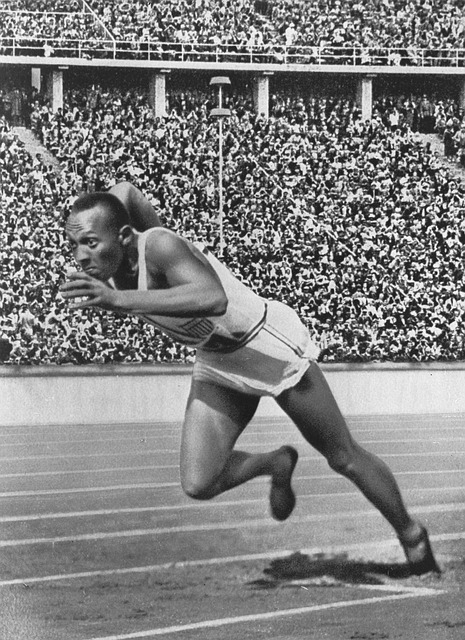




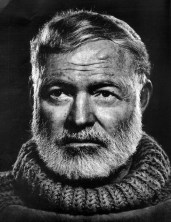 Mastery models in your life should discuss ways in which their confidence in themselves helped them to achieve their desired goals, and their errors and failures they had before eventually performing at a mastery level, and the work they put in to reach success. Ideally, the mastery model will be a warm, enthusiastic, and encouraging person who is trying to help someone else learn new behaviors after possible years doing things in a different, less productive way.















 davidjrogersftw