 Although talent in the arts most often shows itself early, because it takes so many years to develop their talent and become highly proficient in the arts, people who will become expert musicians, painters, performers, and writers can expect to be late bloomers. Artists who perform at a high level do not demonstrate remarkable talent in short order. They are not usually in their twenties or thirties, but in their forties, fifties, and sixties. All spend many years developing the knowledge, attitudes, and skills that will eventually enable them to be recognized for their mastery. All arts involve learning form and the art’s devices, and the need for control, craft, revisions, and structure–time consuming efforts. All begin by imitating existing techniques they have studied.
Harriet Doerr’s first novel was published when she was seventy three, and won the National Book Award. Playwright George Bernard Shaw and novelists Sherwood Anderson and Joseph Conrad were famous late bloomers. American short story specialist Raymond Carver was too. Painters Henri Matisse, Paul Gauguin, and Grandma Moses bloomed late, as did composer Camille Saint Saens. Gauguin worked for years in the French stock market before quitting and turning to art, and Polish Conrad who would become the quintessential stylist in English, didn’t speak or write a word in English till he was in his twenties.
 A survey of 47 outstanding instrumentalists found that their ability was first noticed on average at the age of four years and nine months. Then they began a very long and arduous period of development of their talent. Pianists work for about seventeen years from their first formal lessons to their first international recognition, involving many thousands of hours of intense practice. The fastest in one study was twelve years, and the slowest took twenty-five years. In other fields you may even be an early bloomer, but in the arts if your expertise is to be at a high level of mastery, unless you are a Dylan Thomas, a rarity who was at his peak at nineteen, you had best avoid discouragement and expect to bloom late.
Trouble Getting Started: Two Examples from The Arts
Late Bloomers have trouble getting started, but once they decide what to do with their lives, there is no stopping them. Sometimes the very tardiness of their entering into a field is a powerful motivator to make up for lost time, “catching up” with people of equal age who started years sooner and often surpassing their accomplishments. They think, “I have no time to waste anymore.” They buckle down, focusing, achieving, feeling surges of vitality which if they are in the arts they turn into paintings, novels, plays, movies, buildings and museums, and so on.
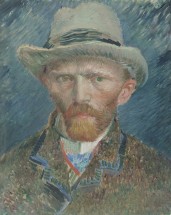
 Novelist Raymond Chandler was fired from his high-paying executive job (chairman of five corporations at the same time) and found himself without an income. Luckily, he had a talent and became a writer, but not producing a first short story until the age of forty-four and his first novel at fifty-four. That book–The Big Sleep–was a success and spawned quickly many other works–many novels, short stories, essays, articles, and screen plays. Vincent van Gogh, a troubled soul, spent most of his life searching unsuccessfully for a field to work in, trying this and that, believing that there was an appropriate occupation for everyone, including himself. He turned to a life of serious painting at thirty-three. In the brief five years remaining in his life his energy, which was almost superhuman and beyond belief, was ignited, and he produced three thousand works.
The Life Pattern of Late Bloomers
 When the majority of their friends and associates are settled in a career and life style, late bloomers are not. Late bloomers may eventually reach the height of their achievements and fulfillment which I call “their true destiny,” but later in life. Their lives fill us with optimism. They demonstrate that whatever your condition at present, whatever your age, a fulfilled life, even one you may not have remotely anticipated, may await you.
To bloom is to reach your true destiny, to live intelligently, not stupidly, to come into your own, to find fulfillment. The discovery of your true destiny can come early in life, or in the middle, or late. It’s the bell curve: of those who bloom: a minority bloom early, the great majority bloom in their middle years, and a minority bloom in their sixties, seventies, or later. But some people never bloom because they don’t set their minds to.
The Sense of Constructing Yourself As You Go Along
 If you’re a late bloomer, you’ve made false starts. You haven’t peaked yet, haven’t reached your destiny yet, but you may be determined to bloom one day. Late bloomers are more willing than most to persevere and if need be to fail but try again and again until they reach a life they desire. If you are a late bloomer, more than most people you have the sense that you’re constructing yourself as you go along, even rejecting what other people may call golden opportunities if those opportunities don’t appear to lead you in the direction you desire most.
For example, I had published books before with good presses, starting in my mid-twenties, but my first important book with a major publisher (Doubleday) was published when I was forty-two. The next best seller was published three years later. Before I knew it I was making speeches about them to audiences of thousands in auditoriums across North America and in Europe. I have a flair for public speaking and present myself well, and was approached by an agent  with the goal in mind for me to have a national television talk show. It was an excellent opportunity and would have paid extremely well. But my wife and I talked it over and I decided that what I wanted to do with my life above all else was simply to sit at a computer in my upstairs work room while my four children played noisily downstairs and my wife came up once in a while to say hello, and produce artful paragraphs that reflected my years of hard work and training. To me that was blooming. I turned the opportunity down. Late bloomers often make similar very difficult decisions while they are constructing themselves.
Late Blooming Is Problem-Solving
When people try to solve problems, the solutions arrived at toward the end of the solution-generating period are the best. The most effective problem-solvers tend not to accept as the solution the first or the first flurry of solutions that come to mind. Their thinking is, “This is a good-looking solution all right, but there may be better ones,” and they continue to work on solving the problem. They hold out for a better answer. This is called “deferred judgment” and requires that you live in ambiguity, possibly for a long time. But people in the arts have a higher tolerance for ambiguity than the great majority of people. It’s not far -fetched to view late bloomers as people who defer judgment for a period of time–even many years–living patiently in ambiguity until finding a solution to the problem of living their life and reaching what is, for them, a more highly fulfilling existence that makes full use of their talents. If your life is not fulfilling, you know it. No one need tell you.
The Importance of Missions, Callings, and Occupations
 Most people–possibly all–who find fulfillment later in life find it in a mission, calling, or vocation. You cannot be dissatisfied when you’re doing the work for which you feel you were brought into the world, a thought that consoled Raymond Carver through his alcoholic’s torturous life. Psychologist Charlotte Buhler was concerned with people finding fulfillment in a “task” as artists find in their art. She wrote, “We find our most complete fulfillment if we can be ourselves and do what we like to do while dedicating ourselves to a task we believe in. In this we transcend ourselves, but simultaneously we satisfy ourselves.” George Bernard Shaw said, “This is the true joy in life, being used for a purpose recognized by yourself as a mighty one.”
Getting More Education and Training Is a Route Many Late Bloomers Follow
Late bloomers need more time to get settled. My son was a high-powered advertising salesman making a lot of money. He began to dread his work. He was unhappy because he felt he wasn’t doing anything meaningful. He wanted to work in a helping profession. He had been hit by a car and sustained serious injuries and underwent a long, painful recovery. His friend was killed in that accident and my son was deeply affected. He felt a powerful need to apply himself to serving an important goal that went beyond his own self-interests. In his late thirties he went back to school and acquired a Master’s degree in social work. He now provides therapy to people who survive traumas as did he.
 Going back to school as a transition to another field is a strategy late bloomers find appealing, in essence ending one career and starting another.
Some Goals and Interests the Late Bloomer Just Does Not Forget
Or, you may set out again in pursuit of goals that were dear to you in the past and you’ve neglected, possibly for a long time. Especially determined people are more likely than most to find success by changing their lives in mid-stream, pursuing abandoned purposes and projects, resuming activities and interests that they have laid aside, sometimes many years earlier, but never stopped thinking about. Herbert guided tours through the North Woods before stopping to assess what he wanted. After asking himself hard questions about where his life was going he returned to his earlier interest in medicine. He went back to school and became an MD. Wally Amos was an unsuccessful Hollywood talent agent who found that he had always enjoyed most baking cookies. So later in life he opened the first store in what would grow into the Famous Amos Chocolate Chip business.
It Is Never Too Late To Become the Person You Are Supposed To Be
No matter your age or position in life– a seventy-three year old grandmother of ten, a middle-aged druggist, or a young clerk, housewife, or college student– you can always become the person you have the wherewithal to be. Because you haven’t bloomed yet doesn’t mean you won’t. Your heights of satisfaction and accomplishments may be ahead of you. When you bloom isn’t the important thing. Blooming at all is.
 Have you bloomed? If you haven’t what are you going to do about that? People who aren’t leading satisfactory lives haven’t bloomed at all, and many are trying to, but many have never started trying, and just as many have given up. Better to start if you haven’t already, whatever your age or condition in life. You can always forget the past and start out again, making no excuses for starting out late. Experiment, follow your instincts, and assess yourself and your feelings about your life. Are you going right or are you going wrong?
You can either search for fulfillment or flee from it. You can’t trade it for someone else’s fulfillment because theirs seems easier or more profitable or praiseworthy. Yours is yours. It stands in need of you. You are asked to fit yourself to it. It is given just as it is, just as the yellow sun and blue sky are given just as they are.
© 2021 David J. Rogers
For my interview from the international teleconference with Ben Dean about Fighting to Win, click the following link:
Order Fighting to Win: Samurai Techniques for Your Work and Life eBook by David J. Rogers

Click on book image to order from Amazon.com
or
Order Waging Business Warfare: Lessons From the Military Masters in Achieving Competitive Superiority

Click on book image to order from Amazon.com
or
 Writing vivid descriptions is a skill writers should strive to refine. Yet it is a weakness of many writers. If your ability to write effective descriptions is lacking it should be worked on vigorously and
  picked up. Into the air fluttered two hundred gulls with noisy wings. Above us clouds raced each other headlong across the coal black sky. Onto the shore crashed a procession of liquid walls–white-crested, angled slightly off to the south where blocks of limestone twenty feet high lay as if dropped from the heavens by gods. The magnificent waves rose–hills of water that seemed to pause, suspended for a moment at their peak as though they could rise no higher, and then crumbled and broke on the shore like a multitude of shattered stars. The spume spread and undertows slid back like shears below the breakers. Wave upon wave upon wave upon wave rose, lunged, and plunged like a field of gray-green wheat bowing under the wind. Just a moment before there had been not a breeze, not a breath of wind. But now all the wind in the world seemed to be concentrated on that strip of earth. It was a lion of a wind unleashed, untamed, cool, cold, with a sparkle, bite, and sting–many winds in fact, one gust coming, ending, another coming, another waiting–bringing pouring in to us the odors of water, of fish, and of the wind itself. The hoarse roar of the foaming waves filled all the air with the sounds of artillery. Trees on the shore bent as though made of rubber and our drenched bodies glistened.
 “Young couples sitting on benches held each other, kissed, and heard the melancholy saxophone through the open windows of the gymnasium. Past a grove of gray trees, out on the lagoon, among mallards drifting on the water like leaves and bull frogs hidden in the shadows like thieves, students in row boats whose oars dangled free and made little splashing sounds, lay back, their bodies warm and glowing under light blankets. Contented, they were looked down upon by a pageantry of stars that seemed so close together that a finger wouldn’t fit between them. And while laughter floated like smoke through the night, they spoke of the incredible deeds they would one day perform.”
 There was a tenderness and manly sweetness in my father’s manner, and too, the restraint of a gentlemanly politeness and natural shyness about speaking of things that moved him most profoundly, and which I knew indisputably he felt toward me, as I did toward him.
 Have a need for self-expression and self-disclosure. Good writers reveal themselves in their work. Readers want writers to reveal themselves. A novel, for example, enables authors to convey a wealth of information that expresses them. Your writing, even the way you turn a phrase and the metaphors you use (why did you use an image of a fish then instead of a train?) and your vocabulary and points of view, tell the reader what you’re like. Writers have a need to discover exactly what they are thinking by writing it out, and then to artfully communicate it to the reader who wants to know.
 Possess
  Have a strong concern for your
  Be able to muster an abundance of physical strength and stamina. Often it’s the end of writers’ endurance that stops their working day. Novelist Thomas Wolfe would turn in manuscripts a million words long . He claimed that the physical demands on the writer made the writer’s life seem to him to be the hardest life man has ever known.
 Have or develop a business sense. You have a career to manage and responsibilities and expenses. Study marketing and salesmanship–read. Take business classes.
 Buddhism sets up qualities a life must have if the person is to find fulfillment. One quality is “Right Livelihood:” To be most fulfilled the person must be in the occupation that most suits them and is most beneficial to them. My wife and I have four children. Each is very different than the others but is perfect for their occupation. The analytical one who loves mathematics is the director of revenue for a city. The organized one manages a number of people. The one who wants to help people is a therapist. The most sociable one is a real estate agent helping people find the home they will be most happy in.
 All necessary components have to be present if you are to excel at the writer’s craft. If just one component is missing, you no longer have an ideal writer. If you are to succeed in an art there must be a fit between the talent you possess and the talent necessary to participate with distinction in the art.
 Writers and other artists should be able to recall many thousands of detailed memories that form a basis of their writings–a gift to recall sensations and experiences from many years earlier and to reconstruct them in their original freshness and vividness.
 Good writers can do that, but not all writers can, even some writers who work very hard trying to learn how to. Think of any writer’s skill–some people will master it easily, some only with great difficulty, and some will never master it. Whatever they do, some writers’ scenes are not effective.
 A writer should have an insatiable passion to write and the skill of persistence. Joyce Carol Oates is a prolific author of fifty-eight novels for a reason. She has good writing practices, and finds no reason why one who professes to be a writer shouldn’t be writing all the time. She says, “When writing goes painfully, when it’s hideously difficult, and one feels real despair (ah, the despair, silly as it is, is real!)–then naturally one ought to continue with the work; it would be cowardly to retreat. But when writing goes smoothly–why then one certainly should keep on working, since it would be stupid to stop. Consequently one is always writing or should be writing.”

 We were sitting about three feet apart, facing each other. I said, “I’ll be happy to.” The host said, “Should we go over there where we have more room?” I said, “This is fine. I won’t have to get up out of this chair. Throw a punch at me as though you are mad at me and want to knock me down. Don’t hold anything back. Really throw a punch.”
 I’ve seen emotional extending used successfully to overcome the fear of an upcoming speech many times. Go into a room by yourself, sit on a chair, and alone, worry and make yourself afraid. Tell yourself things that scare you. Exaggerate. Do this for five or six minutes, or longer, if necessary. After a while you will find the fear disappears. Extending excites emotions that are troubling you, then calms them down. The fear of asking for a promotion or a raise, of having an upcoming job interview or of asking for a date can be dealt with the same way. Whatever the fearful situation is, extending will help.
 If you choose to use the aikido approach to overcome external and emotional adversaries, be aware that the way to “serve” one’s adversary in the aikido style is to understand what they want, and to give them more of it to get what you want. Remember: the extending technique or process can be an antidote to the emotions of fear, worry, anxiety, the blues, and depression.
 thousands of hours developing yours (so that I’d recognize anywhere that it is yours), I have consciously spent many hours developing mine.


 changing or ineffable in a single sentence, you face both the limitations of the sentence itself and the extent of your own talent” (Pat Conroy).
 ball passing back and forth between you and life. No one ever holds the advantage all the time. The advantage can swing to you or away from you at any time. Sometimes you hold the advantage, and an ideal life and great achievements in your career or personal life seem so near you can touch them with your fingers. Then you suffer a setback, a crisis, or a major problem, and you’re driven down into the dark depths of discouragement. You have lost the advantage, and your need now is to get it back.
 “The Swing of the Advantage” is a concept from my print best seller Fighting to Win: Samurai Techniques for Your Work and Life (now available as an eBook). From the twelfth through the nineteenth centuries Japanese samurai (bushi) were fighting men and women in service of a lord, a “daimyo.” They were the greatest warriors who ever lived, and based their expertise on physical, psychological, and Zen spiritual insights and techniques that they acquired through as demanding training as there has ever been in any discipline. Their skills were legendary. Fighting To Win prescribes their
  dragon’s mask.”
 Is there any area in your personal or professional life right now in which the advantage has swung away from you? What will you do to get the advantage back? Whatever it is, don’t delay. Run straight toward it zan totsu–
 Gardner: “If the promising writer keeps on writing–writes day after day, month after month–and if he reads very carefully, he will begin to ‘catch on.’” Hemingway, convinced of the value of persistence, wrote, “Anyone who says he wants to be a writer and isn’t writing, doesn’t. Professionals
  Hemingway: “The hardest thing in the world is to write straight honest prose on human beings. First you have to know the subject; then you have to know how to write. Both take a lifetime to learn.” The vocabulary in a Hemingway work is simple, the sentences clear and uncomplicated. And short. The style is non-literary, and is colloquial American English. His rule was that his language must be readable, accurate, and economical.
 Andrea, a friend—“Andy”–seemed to reach her peak when she had two short stories published in prestigious literary journals at twenty-four and a novel that sold moderately well at twenty-eight. She didn’t think then it would be her peak, but assumed it was a preview of other successes soon to come. But they haven’t come and she’s been wondering what’s wrong with her.
 path to solving the problem by admitting she’s found herself on a performance plateau—in a performance rut.
 decides they are different. The earlier work was simpler and more heart-felt and sincere. She realizes that she has fallen into a trap of “showing off”–of trying to impress readers with what a good writer she is and how brilliant she is rather than in telling a story in a simple, direct, “Here’s my work, take it or leave it” style.
 She also plans to read biographies and autobiographies of writers living and dead who will inspire her.


 davidjrogersftw