Category Archives: Motivation

When Writers’ and Artists’ Lives Are Simple

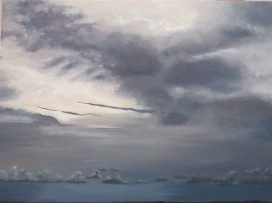
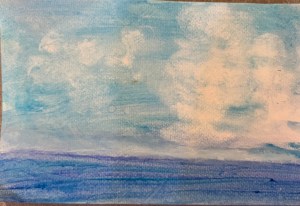
Clouds over blue water

You hear so much yapping about a career in writing and art being a hard life. Shoveling coal for a living is a hard life, but when you are doing what you were put on earth to do with your life–and that is to write or paint–your life is simple, for then you have answered the most crucial questions of all: “What shall I be? “What shall I do? Then you ask, “How do I do it” and that is your craft, that is your art.

My blog is intended for writers and artists. Three million Americans identify themselves as writers. 2.7 million Americans identify themselves as artists. Of course, the blog also reaches millions of people in foreign countries who also identify themselves as artists and writers. To date my blog has been looked at by four hundred thousand writers and artists, the majority Americans, and others from even the least populated mountain and island kingdoms.


 An Example of What Happens to Writers as Their Lives Unfold: The Opportunities that Appear

I will use myself as an example of a writer whose career over many years I can describe. It may be of value to writers and artists to compare to their own careers. Fighting to Win: Samurai Techniques for Your Work and Life is my best and my favorite book. It was written to help people. The main beneficiaries of Fighting To Win are discouraged people—broke, out of work, disappointed with their career or life, etc. Fighting to Win lifts them up.

Many people–probably most– struggle to find direction for their lives, but some people know from their earliest years the life, the career, they will pursue. I began writing professionally at eight–$25 for a story published in Jack & Jill. I didn’t know then that eventually in my career as writer I would, as many writers do, evolve into writer/poet/book marketer/public speaker/blogger. I decided on the way home from school on a rainy day that my goal when I grew up would be to be a writer so I could write beautiful words like “lovely,” “sea-faring,” and “proficient.” That goal has never changed through the publications of twelve books that are not self-published.

Ninety percent of a writer’s talent is inborn. That’s why writers needn’t attend the Iowa school of writing, but are generally self-taught. Some writers who write surprisingly well when they are very young are prodigies. There are artist prodigies too that draw and paint beautifully like much older artists. They master perspective when they seem too young to have mastered it .Mozart was a music prodigy, composing at four. Baryshnikov was a prodigy in ballet. He was the greatest dancer of his era because he could leap highest.

An early blooming prodigy can perform something before being taught to do it. For example, a young writing prodigy can write a story that has a plot, characterization, themes, tension, mystery, a strong conclusion though they have not been taught those features. The remaining ten percent of a writer’s expertise is skill and technique that comes from study, a ten percent separating great from good, and a phase that introduces the need for hard work, even among the most naturally-gifted.

As in every field, sweat-and-toil hard workers out-perform  lazy or listless workers. You cannot rely on natural talent alone to bring high success. Without drive and intelligence–however naturally talented you are–you will not go as far as you could.  Each day writers and artists should hope they have talent and tell themselves. “Today I will be energetic. Today I will be focused.”

A career in the arts is in keeping with my Welsh heritage. The Welsh entertain each other with stories and songs. I completed three degrees in American literature and taught Self Development in a university graduate school. At age twenty I had a short story published in a major literary journal. At twenty-one, a highly-regarded writing teacher said of my paper, “Teachers wait their entire career for a student who can write like this.”

I knew nothing about publishing and sent the entire manuscript of Fighting to Win to a publisher who called me and said they wanted to publish the book. I asked what kind of changes they wanted made and they said, “None. The book is a perfect book.” That statement soured me. Surely no book in first draft form is that good. I wanted a more demanding publisher who would encourage me to write my best. I turned the offer down. Having some doubts about the book I wrote an entirely new draft, starting from scratch, consuming a year.

I made an agreement with an excellent literary agent. I owe him a debt of gratitude.  He was energetic and honest, and placed my book Fighting to Win with Doubleday. After the success of Fighting to Win, another publisher said they wanted me to write a book for them. “What do you want me to write about?” I asked. They said, “Whatever you want.” So I wrote Waging Business Warfare for Scribner’s publisher, a book that The Wall Street Journal said would change the way companies do business. Both books climbed the best sealer charts. Fighting to Win was also a best seller in Sweden. Waging Business Warfare in France and Japan.

Writer or artist, you have to distinguish yourself from the crowd. You have to get known.  I’ve had many appearances in the national media on publicity tours and on my own. The books and my name became known in North America and foreign countries who purchased rights. I discovered that I am a good interviewee for marketing books, which is really sales. I have trained people in selling technique. The goal of a writer marketing to the broadcast media is to be invited back. Ideal is when the host of the show says “Call whenever you have something you want to talk about. We’ll put you on right away.”

Having written a book that becomes known by the public changes the author’s life forever. If you’re an author you’d better like the book since you and it from the publication date to the end of your life will be inseparable. You will be known as “So and so, the he author of….”   

A New York publisher, I didn’t know, head of a major house who “had read everything,” generously called me out of the blue to tell me  she had read Fighting to Win and found it “One of the  two or three best books of any type–prose, poetry, biography, history, arts etc.–I have ever read.”

Then I took on a new career: public speaking in auditoriums in North America and Europe to audiences of thousands about their self-improvement, based on the content of Fighting to Win. I discovered a talent for public speaking to large audiences that I wasn’t aware of. Long ago I was afraid of public speaking, but now I enjoy it as much as I do writing, and the income is impressive. Many speakers/writers earn more money from speaking than from writing.  The writer who can also speak is lucky. It is quite a shock to writers accustomed to working alone to find themselves on a stage addressing three, four, five thousand people who have come to hear an author’s wisdom.

Later I began this blog, designed to stimulate thinking about the important roles of writers and artists, especially those who hope to excel, a goal I share, placing emphasis on research and prescriptive how-to advice.  I wanted to think of every aspect of writers’ and artists’ work life and write something practical to aid them. Each blog is an essay pertaining to the life of writers or artists–their necessary knowledge, their moods, their challenges, their discouragements, and so on. My most popular post is “The Characteristics of Creative People.” There are now 141 essays.

A major change in this writer’s life was turning, later in life, from writing prose to writing poetry. Since then there has been a stream of publications of poems and great joy. I wrote a book of poetry about  adventures I had at seventeen when for six months I lived the life of a hobo hitching rides on freight trains: The Poetry of Riding Freight Trains Across America.

Philip Roth said eventually people won’t read novels anymore because with such busy lives, growing busier, they don’t have the many hours needed to read a novel. A poem can be read in a few minutes.

Gold and white clouds on a blue sky

In Bliss

When you spend thousands of hours working hard over many years as many writers and artists have, and think of your craft all the time since childhood, writing and painting and other arts are the simplest  tasks of your time here on earth. Dancers find a similar joy in dancing, actors in acting. When unhindered, such craftsmen write, paint, act, and dance in bliss.


© 2025 David J. Rogers

For my interview from the international teleconference with Ben Dean about Fighting to Win, click the following link:

Interview with David J. Rogers

Order Fighting to Win: Samurai Techniques for Your Work and Life eBook by David J. Rogers
Fighting to win Amazon

Click on book image to order from Amazon.com

or

http://www.barnesandnoble.com/w/fighting-to-win-samurai-techniques-for-your-work-and-life-david-rogers/1119303640?ean=2940149174379


Order Waging Business Warfare: Lessons From the Military Masters in Achieving Competitive Superiority

Waging Business Warfare812sCY9edLL._SL1500_

Click on book image to order from Amazon.com

or

http://www.barnesandnoble.com/w/waging-business-warfare-lessons-from-the-military-masters-in-achieving-competetive-superiority-revised-edition-david-rogers/1119079991?ean=2940149284030


Follow my blog with Bloglovin


7 Comments

Filed under Artists, Developing Talent, Human Potential and Achievement, Fame, Fighting to Win, Motivation, Personal Destiny, Personal Stories, Public Speaking, Publishing, Right Livelihood, Writers, Writers' Life

Motivating Quotes for Writers and Artists


  • “Painters and poets alike have always had license to dare anything.” (Horace)
  • “The incurable itch of writing possesses many.” (Juvenal)
  • “He is the greatest artist who has embodied, in the sum of his work, the greatest number of the greatest ideas.” (John Ruskin.)
  • “The excellency of every art is its intensity.” (John Keats)
  • “Great artists need great clients.” (Artist I.M. Pei.)
  • “It seems to me that the writers who have the power of revelation are just those who, in some particular part of life, have seen or felt considerably more than the average run of intelligent beings…The great difference, intellectually speaking, between one man and another is simply the number of things they can see in a given cubic yard of the world.” (Gilbert Murray.)
  • “High but not the highest intelligence, combined with the greatest degree of persistence will achieve greater eminence than the highest degree of intelligence with somewhat less persistence.” (Catherine Cox.)
  • “I think if you’re going to write, you’re going to write and nothing will stop you.” (William Faulkner.)
  • “It is the nature of man to rise to greatness if greatness is expected of him.” (John Steinbeck.)
  • “The essential factor of development of expertise is the accumulation of increasingly complex patterns in memory.” (Andreas Lehman.}
  • “Gifts like genius, I often think, means only an infinite capacity for taking pains.” (Jane E. Hopkins)
  • “Writing a book is a horrible, exhausting struggle, like a long bout of some painful illness. One would never undertake such a thing if one were not driven on by some demon one can never resist or understand.” (George Orwell)
  • “It is through art and through art only, that we realize our perfection; through art and art only that we can shield ourselves from the sordid perils of actual existence.” (Oscar Wilde)
  • “If I set out to sculpt a standing man and it becomes a lying woman I know I am making art.” (Henry Moore.)
  • “The whole function of the artist in the world is to be a seeing and feeling creature; to be an instrument of such tenderness and sensitiveness, that no shadow, no hue, no line, no instantaneous and evanescent expression of the visible things around him, nor any of the emotions they are capable of conveying to the spirit which has been given him, shall either be left unrecorded, or fade…The work of his life is two-fold only; to see, to feel.” (John Ruskin.)
  • “I am just a man in the position of waiting to see what the imagination is going to do next.”(Saul Bellow.)

Rainbow in sky with clouds above a thick row of trees and water


© 2025 David J. Rogers

For my interview from the international teleconference with Ben Dean about Fighting to Win, click the following link:

Interview with David J. Rogers


Order Fighting to Win: Samurai Techniques for Your Work and Life eBook by David J. Rogers

Fighting to win Amazon

Click on book image to order from Amazon.com

or

http://www.barnesandnoble.com/w/fighting-to-win-samurai-techniques-for-your-work-and-life-david-rogers/1119303640?ean=2940149174379


Order Waging Business Warfare: Lessons From the Military Masters in Achieving Competitive Superiority

Waging Business Warfare812sCY9edLL._SL1500_

Click on book image to order from Amazon.com

or

http://www.barnesandnoble.com/w/waging-business-warfare-lessons-from-the-military-masters-in-achieving-competetive-superiority-revised-edition-david-rogers/1119079991?ean=2940149284030


Follow my blog with Bloglovin


2 Comments

Filed under Artists, Creativity, Motivation, Quotations, Writers

Writers with No Desire to Publish

The senior editor of a literary journal asked a writer friend of mine to submit a piece for a future issue, but my friend who thanked the editor for the compliment has no interest in submitting anything to that magazine or any other.  I’ll call her Kathy because that’s the name she wishes she brown silhouette against gold background of a woman working at a computerhad, but doesn’t. It is a highly-regarded journal and would enhance any serious writer’s reputation to appear in it. That journal had published other pieces of Kathy’s in the past during her particularly prolific period when work poured out of her and was in demand by editors and readers. Some of her books were being published at the time, and many of her articles appearing in magazines were achieving record readership scores.

Kathy is far from alone now being a writer who works as hard as ever at the writer’s craft to perfect her work, and has high standards–revising, refining, embellishing, cutting, and improving endlessly–but does not care to be published by book or magazine publishers. People like Kathy enjoy writing for its own sake and its own sake alone. Publication that was once important to her is not important to her now. People ask her, “Don’t you get a kick out of seeing your name in print?” and she answers, “Ive seen it in print many times so it is not as big a thrill.”

colorful pile of open magazine pagesI am talking about the difference between writers whose overriding goal is to see their work in print–a Publication Focus–contrasted with writers whose overriding goal stops short of publication in which they are not interested. They are concerned solely with generating what is in their judgment the highest possible quality text–a Production Focus.  The latter are more than contented to produce works they are proud of without seeing them published.

Having their work published seems an automatic motivation for writers that follows sequentially from writing the work, and is generally expected of writers–you are a writer and you write a story, for example, and then you are expected to submit it to a magazine (or a novel to a publishing house) where a committee of editors and managers evaluate it in comparison with other submissions and decide if it is suitable for them to publish. The submitting writers are competing for a prize and the prize they are competing for is seeing their name and their work printed, perhaps for pay, but even if not for pay, for the delightful satisfaction of well, having a work published which they can tell friends and family about, which for most writers is the whole point, the end goal for which they are prepared to work very hard.

What could writers who are not motivated to publish possibly be thinking, and what does motivate them to go on writing with no intention or hope of seeing the finished product in print where it would be read by  hundreds, or thousands of others–or more–many of them fans of good writing?

Research

Production Writers who have no desire to publish don’t have to wait for money or praise or any external reward to be fully satisfied. All that fantasy picture of woman standing on an open book flying a kitematters to them is that the works they produce be the best they have the skills to produce. They believe that because they are not interested in publishing but in producing the highest quality work they can, they are more creative and do better work than they would were they competing with others to see their work in print, and there are grounds for that belief.

Harvard psychologist Teresa M. Amabile has spent her entire career trying to understand what motivates people to be creative and what are dis-incentives. She has staked her reputation on proving that creativity increases when you are what she calls intrinsically motivated and engage in the creative activity for the sheer pleasure it offers (as Production Writers do). If you write, paint, sculpt, dance, etc, to earn rewards other than the enjoyment, satisfaction, and challenge of performing the activity as well as you are able (as Publication Writers do), you are extrinsically motivated and  become less creative. The work that results is not as finished-beautiful-aesthetically pleasing-masterful as it might have been.

Amabile tested subjects ranging from young children to college women, giving some of them rewards for doing the work. What they had pile of magazines and booksproduced was then graded by professionals–seasoned painters grading the paintings, experienced writers the writing, etc. The results were significant in that no matter what the reward was or when it was given, if the subjects thought they were working for  external rewards, even a little trinket, and not for fun and pleasure, they became less creativeBut when they were light-hearted and fooling around and no external reward was involved, they were more creative and their work was better.

In one experiment Amabile divided writers into two groups. She had one group fill out a questionnaire about the joys of writing for its own sake such as being able to experiment with words. The other group filled out a different questionnaire about the external benefits of writing like being on a bestseller list. Writers in both groups then wrote short, haiku-like poems. Then a panel of judges—poets–rated the poems. The writers who had been thinking about rewards like bestsellers wrote inferior poems. Extrapolated, that suggests that it may be detrimental to the quality of your next novel to have making The New York Times list on your mind.

I had experiences that confirmed Amabile’s research in my writing life. When I was writing one book, my mind was solely on communicating in man sitting on the edge of a cup of coffee, writing on a laptop computera clear, informative, and entertaining way concepts that were unfamiliar to western thinking. It was a challenge because the concept of the book was totally new and original. Every day’s work  of many hours was fulfilling, I didn’t spend a second thinking about how my book would do in the stores, only about the book’s clarity and how useful I could make it and how inviting it would be for readers. It was a highly successful and profitable book and my ambitions for the next book I began were high. But I found my thoughts losing focus. They often wandered away from the book’s content and style and how to satisfy the reader to where I would build the new house the new book’s royalties would bring me and the kind of cars I would buy. Both books received many accolades and made best seller lists. But whereas I wouldn’t change a single word of the first book, I live with the knowledge that the second book could have been better.

Publication Writers in Contrast with Production Writers

Publication Writers often experience stress and worry about the chances of the work being published. But in contrast the Production Writer feels no pressure, no stress, and is relaxed. That experience can make Production Writers feel freer and bolder and unafraid of taking chances they might not otherwise take, but which might improve the work. That freer confident mood can lead to leaps in their performance. William Faulkner is a good example.

When Faulkner realized that his complex rhetorical style and subject matter weren’t those of a commercially-popular author (would not lead to extrinsic rewards such as high sales) he began a period of sustained creative energy. He started to become great. He decided to write for himself: brown shut door in the middle of black wall“One day I seemed to shut a door between me and all publishers. I said to myself, ‘Now I can write.” He started working on The Sound and the Fury, “thinking of books, publication, only in the sense in saying to myself, I wont (sic) have to worry about publishers liking or not liking this at all.”

A disincentive Publication Writers must face is the inevitability that their work is going to be evaluated by editors and others. They are competing for the good opinion and a favorable decision of people who have power who will be passing judgment on the quality of the work, and indirectly, also the quality of the writer. That is why rejections can be so hurtful and discouraging, and taken so personally: “In rejecting what I have worked so hard on and put so much effort into they are telling me I am inadequate.” Thousands of writers make the decision to quit silhouette of dejected man sitting with head on his hand with a background of words such as worthless, unwanted, hopeless, etc.writing every day.  Most of them quit because of the heavy, depressing weight of too many failures and too few–if any–successes and the toll of failures on one’s confidence and sense of competence and self-esteem. Extraordinary self-confidence is necessary to persist in the face of failures and setbacks.

The knowledge that the submission will be evaluated negatively affects the writer and tends to produce works that are more conventional. Some of them are written specifically to suit the publication as if to order. Magazines and publishing houses make very clear the kinds of materials they are in the market for and will publish. Possibly the works could have been better written had the writer been more relaxed and playful and had not been seeking the approval of editors so desperately.

Writers at ease and at work–in a favorable state for creativity–have many of the attributes of children at play. Psychiatrist D.W. Winnicott wrote that “it is in playing and only playing that the individual child or adult is able to be creative.” Psychoanalyst Erik Erikson said it is striking to see a two-year old child rolling a ball. They can throw the ball on the floor again and again, watching it roll a hundred times and never get little boy in yellow and blue rain jacket playing with a ball in a water puddle or near a water's edgebored. Just as children do that, writers can do something remarkable. As fully absorbed as children, they can work on perfecting a single paragraph forty or fifty times without experiencing a moment of boredom while people who are not writers and think that one draft is sufficient are astonished that such a feat is possible. The conclusion of Amabile’s experiments was that a playful approach like that of children increases the likelihood of producing creative results, and that pursuing external rewards diminishes the person’s creativity.

Being competitive makes it hard for most writers to be relaxed and in a light and child-like playful mood that is conducive to creativity. But competition is a major feature of most writers’ experience Out of necessity writers are forced to be competitive when they try to get their work published. There may be hundreds of other writers attempting to get their work published at the same time in the same magazine or thousands with the same book publisher.

In contrast, the absence of competition and evaluation (other than their own evaluation, perhaps severe, but coming from no one but Woman writing on glass pane in front of her the words, "I'll do it My Way."themselves) which Production Writers experience has been shown to improve the quality of the work that is produced.  That is why so many famous writers think that they, and no one else, are the best judge of their work and why so many of them ignore or don’t ask for the advice of editors. Who enjoys being evaluated? Writers often dread evaluations, and evaluations negatively affect the writer’s mood and thus the quality of work that is produced. A Production Writer may ask for editorial assistance–to be helped–but not to be evaluated.

The best way to recognize which kind of motivation you have is to ask yourself if you’d continue doing the work if no reward were to follow. If you answer, “No way,” your motivation is that of a Publication Writer. But if you answer, “Of course I would; it wouldn’t affect my work whatsoever,” it is the motivation of playful, child-like Production Writers.


© 2022 David J. Rogers

For my interview from the international teleconference with Ben Dean about Fighting to Win, click the following link:

Interview with David J. Rogers


Order Fighting to Win: Samurai Techniques for Your Work and Life eBook by David J. Rogers

Fighting to win Amazon

Click on book image to order from Amazon.com

or

http://www.barnesandnoble.com/w/fighting-to-win-samurai-techniques-for-your-work-and-life-david-rogers/1119303640?ean=2940149174379

Order Waging Business Warfare: Lessons From the Military Masters in Achieving Competitive Superiority
Waging Business Warfare812sCY9edLL._SL1500_

Click on book image to order from Amazon.com

or

http://www.barnesandnoble.com/w/waging-business-warfare-lessons-from-the-military-masters-in-achieving-competetive-superiority-revised-edition-david-rogers/1119079991?ean=2940149284030


Follow my blog with Bloglovin


14 Comments

Filed under Boldness, Confidence, Creativity, Motivation, Productivity, Publication Writer or Production Writer, Publishing, Self-Confidence, The Creative Process, Work Production, Writing

What Makes a Writer a Writer

Components of a Certain Kind Make a Writer a Writer

A Monte Python skit tells the story of an accountant who was dissatisfied with accounting because he felt it was so boring. He went to a service that analyzed an individual’s personality and capabilities and advised the person on the occupation that would best suit them. The tests revealed that he was a very boring person, which made him perfect for the accountant’s job. The skit gets a laugh, but also illustrates the fact that certain personal characteristics do equip people to perform well in a pursuit.

A number of components come into alignment to result in the direction of a person’s life and career. The components making a social worker are different from the components that work together to make a diplomat or a baker. Why do you happen to be a writer and not an acrobat or botanist? You didn’t become the writer you are willy-nilly. There are reasons. Why were Picasso and Monet painters and not novelists?

Pink lotus on green backgroundBuddhism sets up qualities a life must have if the person is to find fulfillment. One quality is “Right Livelihood:” To be most fulfilled the person must be in the occupation that most suits them and is most beneficial to them. My wife and I have four children. Each is very different than the others but is perfect for their occupation. The analytical one who loves mathematics is the director of revenue for a city. The organized one manages a number of people. The one who wants to help people is a therapist. The most sociable one is a real estate agent helping people find the home they will be most happy in.

You’re a writer because you have components of a certain type—an unusual type—of many personal qualities, interests, motivations, values, attitudes, abilities, experiences, and other elements equipping you specifically for the writer’s life, which I needn’t tell you is anything but an ordinary, typical, or easy life.

Jigsaw puzzle piecesAll necessary components have to be present if you are to excel at the writer’s craft. If just one component is missing, you no longer have an ideal writer. If you are to succeed in an art there must be a fit between the talent you possess and the talent necessary to participate with distinction in the art.

The existence of serious writers is atypical. Most people do not live a serious writer’s life. They do not keep artist’s work hours.  They are not absorbed in words, paragraphs, style, and sentences. They are not concerned with publishers’ deadlines. They do not worry about the rhythms of sentences, their music. Their training is different.  Their friends are different, as are their ambitions and dreams. They are not so self absorbed as writers are. Writers’ lives are like other writers’ lives.

Ernest Hemingway—quite probably the most innovative stylist of all–had all the components. William Faulkner had them all.  Shakespeare had them all, and Marcel Proust, Eugene O’Neill, Virginia Woolf, and Joseph Conrad and James Joyce and centuries before them Sophocles and Euripides. No component was missing.  Stephen King, Joan Didion, and John Grisham have them. People who win Nobel Prizes have them. Do you have them?

Louise Nevelson said: “My theory is that when we come on this earth, many of us are ready-made…Some of us–most of us–have genes that are ready for certain performances. Nature gives you these gifts.”

Needed Writers’ Skills

Tree and grass near a pondWriters and other artists should be able to recall many thousands of detailed memories that form a basis of their writings–a gift to recall sensations and experiences from many years earlier and to reconstruct them in their original freshness and vividness.

A seventy-five year old writer may describe the expression on her mother’s face at her fourth birthday party. And if a photograph of that face that day were held up it would be identical to the skilled writer’s written description.

If you don’t have the writer’s components and wish to excel as a writer you’ll have to acquire them–if you can. For example, having a rich imagination, being comfortable working in solitude, and being inquisitive are qualities that writers should possess. (If writers cannot be productive working alone for long periods they will have problems.)

But not everyone who wishes to be a writer is able to easily acquire all the components. For example, to be considered a good writer, a writer must possess a range of identifiable technical capabilities such as the ability to create an effective dramatic scene.

silhouette of writer working at a typewriterGood writers can do that, but not all writers can, even some writers who work very hard trying to learn how to. Think of any writer’s skill–some people will master it easily, some only with great difficulty, and some will never master it. Whatever they do, some writers’ scenes are not effective.

They become known as novelists or short story writers who though perhaps superlative in other respects, write scenes that are flat. Some writers are masters of the sentence. Their sentences seem to pop out of the text and startle you with their beauty. Thomas Wolfe could not handle the plots of his novels but wrote wonderful episodes.

Or the writer’s descriptions of characters and landscapes are always poor because they have no facility for creating images, metaphors, and similes although a good writer should have an “eye” and know how to write vivid descriptions that enliven the text and appeal to readers’ senses. Some writers must struggle to create a single image while others–painters in words–are able to pull five good ones out of the air at will. They are asked, “How are you able to do so easily what is so difficult for me?” It is a gift.

Hands of woman writing in a parkA writer should have an insatiable passion to write and the skill of persistence. Joyce Carol Oates is a prolific author of fifty-eight novels for a reason. She has good writing practices, and finds no reason why one who professes to be a writer shouldn’t be writing all the time. She says, “When writing goes painfully, when it’s hideously difficult, and one feels real despair (ah, the despair, silly as it is, is real!)–then naturally one ought to continue with the work; it would be cowardly to retreat. But when writing goes smoothly–why then one certainly should keep on working, since it would be stupid to stop. Consequently one is always writing or should be writing.”

© 2021 David J. Rogers

For my interview from the international teleconference with Ben Dean about Fighting to Win, click the following link:

Interview with David J. Rogers


Order Fighting to Win: Samurai Techniques for Your Work and Life eBook by David J. Rogers

Fighting to win Amazon

Click on book image to order from Amazon.com

or

http://www.barnesandnoble.com/w/fighting-to-win-samurai-techniques-for-your-work-and-life-david-rogers/1119303640?ean=2940149174379

Order Waging Business Warfare: Lessons From the Military Masters in Achieving Competitive Superiority

Waging Business Warfare812sCY9edLL._SL1500_

Click on book image to order from Amazon.com

or

http://www.barnesandnoble.com/w/waging-business-warfare-lessons-from-the-military-masters-in-achieving-competetive-superiority-revised-edition-david-rogers/1119079991?ean=2940149284030


Follow my blog with Bloglovin


23 Comments

Filed under Achievement, Motivation, Right Livelihood, The Writer's Path, Writers, Writers' Characteristics, Writers' Life

2 Psycho-Techniques for People in the Arts

Man alone at sunsetFrom childhood on, there have been moments in my life–and I think you have experienced this in your life too—when I’ve had to perform and no one could help me—not my mother, not my wife, not a friend.

The responsibility for what would happen next was completely my own—standing alone on a stage in an auditorium looking into the 12,000 eyes of the 6,000 people who had paid money to hear what I had to say, for instance. Or standing at the starting line of an 800 meter race with seven highly trained athletes that in a couple of minutes I would be trying hard to beat as they would be trying just as hard to beat me.

Runner in blue running suit at starting lineIt’s very lonely knowing that whether or not you will succeed depends solely on your own skills, your own personality and character, your own preparation, and your own strengths. Then no one can help you, no one can write the novel for you, no one can paint the portrait for you today, or dance in your place, or perform your role in tonight’s play. You’re on your own, my friend. Will you be at the height of your talent today or won’t you? Will you have it? Will your work be good? Will you be satisfied?

At crucial moments–beginnings, endings, changes of direction–everything you are, everything you know and hope for, everything that drives you, and all the capabilities you’ve worked so hard to develop and refine to the highest possible level are brought to bear on that always-ultimate artist’s goal–to produce a work of which you will be proud.

I’m a great believer in using psycho-techniques to help performance and wrote a whole book about them that an internet poll named “best motivational book evert written”–Fighting to Win: Samurai Techniques for Your Work and Life.

I’d like to recommend two psycho-techniques here that I find useful: Think Aloud Strategies and Brief Performance Cues. They will be helpful whatever your art, whatever your occupation.


Use Think Aloud Strategies to Inspire Yourself

a mouth talking into an earWhen you write, you’re asking yourself, “Does it sound right?” “Does it flow?” “Is it a good quality?” You’re also “self-instructing.” Self-instruction is talking to yourself to guide actions and telling yourself what strategies you should use. A writer may self-instruct to use more imagery in the story, and self-monitor to count the number of images or tell herself, “My mind is starting to wander. I should focus my attention better.”

“Think aloud” strategies involve verbalizing “private speech,” the kind of speech you don’t usually use in public. People don’t generally talk aloud to themselves, and when they do, their speech is often incoherent. But sometimes thinking aloud to yourself clarifies your understanding and activates problem-solving.

A think-aloud strategy often entails reciting out loud the chatter that’s going on in your head. Describing to yourself how to proceed and execute a task should improve performance.  For example, you might say aloud, “There are too many long sentences: mix long and short sentences.” Self-verbalizations such as self-praise statements—“I’m really doing well”–verbalizing the strategies you’re using—“I’m keeping track of time”–and actions you’re taking—“I’m stopping to review the paragraph before moving on”– are extremely  helpful kinds of thinking aloud.


Use Brief Performance Cues

Performance cues are important reminders that you repeat silently or say aloud. Focus on a few simple reminders–summaries of the main things you’re trying to accomplish—that you should bear in mind: “I want my writing style to be simpler.” The cue you’ll repeat to yourself, “Simplicity!” Completing a project brings the artist elation. A project cannot be a work of art until it is finished.  Not starting, but finishing works, is the artist’s credo. The cue is “Finish!’ “Finish!”  Above all else, if you are a writer your writing should always be clear. The writer’s cue is “Clarity.”

Thumb up with a smiley face on the thumbBoil your whole performance down to a few statements, words, phrases, or images:
 

“Relaxed and confident”

“Good work today”

“Stay focused”

“Organized and sharp.”

Patience!”

“Persevere!”

“I’m in the groove

“Grit and guts!”

“Take risks.”

Boldness


The cues will excite your spirit. They will improve your performance. Begin by writing out performance cues you will use when you’re working.


Those psycho-techniques along with the insights you can find in Fighting To Win should help you make the most of your talent.


© 2020 David J. Rogers

For my interview from the international teleconference with Ben Dean about Fighting to Win, click the following link:

Interview with David J. Rogers


Order Fighting to Win: Samurai Techniques for Your Work and Life eBook by David J. Rogers

Fighting to win Amazon

Click on book image to order from Amazon.com

or

http://www.barnesandnoble.com/w/fighting-to-win-samurai-techniques-for-your-work-and-life-david-rogers/1119303640?ean=2940149174379

Order Waging Business Warfare: Lessons From the Military Masters in Achieving Competitive Superiority

Waging Business Warfare812sCY9edLL._SL1500_

Click on book image to order from Amazon.com

or

http://www.barnesandnoble.com/w/waging-business-warfare-lessons-from-the-military-masters-in-achieving-competetive-superiority-revised-edition-david-rogers/1119079991?ean=2940149284030


Follow my blog with Bloglovin


24 Comments

Filed under Advice, Creativity Self-Improvement, Developing Talent, Human Potential and Achievement, Motivation, Producing Artistic Work, Productivity, Psycho-Techniques

Drive and Motivation: The Creative’s Urge to Produce Works of Art

If it is your goal is to do creative work it is important to be able to understand your motivation, your drive–is it strong or weak–and to know what drives you personally through difficulties and setbacks to creative fulfillment and joy. Without drive to sustain you, your creative career will fizzle out before you reach your peak. That’s so because drive is not a luxury, but a creative’s necessity.

Drive is that ingredient igniting the human spirit and pushing creative people forward to explore the scope of their talents. It is an irresistible urge to produce-and continue producing–works of your imagination and skill. Strong drive is the reason many successful creatives work so intensely and never give up when so many of their fellow creatives have cried “Enough” and simply quit.

Many people reading this post have been writing, painting, acting, composing–creating–for twenty, thirty, or forty years. How different are they from Vincent van Gogh who said, “That which fills my head and my heart must be expressed in drawings or pictures…Drawing becomes more and more a passion with me, and it is a passion just like that of a sailor for the sea.”

Psychologist Teresa M. Amabile wondered what motivated creative people. Was creativity merely a means by which the creator could reach other goals, or was creativity for the creative an end in itself?  She staked her reputation on proving that creativity increases when you engage in the activity as an end in itself for the sheer pleasure it offers, and that if you do things to earn rewards other than the enjoyment, satisfaction, and challenge of performing the activity you become less creative. She tested subjects ranging from grade school children to undergraduate women, rewarding some of them for performing creative tasks. Their work was then graded by professional creatives–established painters grading the paintings, writers the writing, etc.

No matter what the reward was or when it was given, if the subjects thought they were working for external rewards they became less creative.  But when they were playing and having fun and no reward was involved, they were more creative. The conclusion was:  a playful approach to the task increases the likelihood of producing creative results and external rewards have the opposite effect on creativity.

Another experiment showed that even the hint that an external reward was riding on performance was enough to make the subject lose interest. The same happens to chimpanzees. Given paint and canvas chimpanzees become so absorbed in painting that they show little interest in sex or food. But if the chimps are tangibly rewarded for their painting, the quantity and quality of their painting declines. They do only well enough to get the reward. Chimps, like many humans, are more likely to be creative when no external rewards are contingent on their performance. Even thinking about extrinsic rewards reduces creativity among many people, possibly you. Playwright Oscar Wilde said, “Genius is born, not paid.”

Enjoying the work itself is reward enough for people who are strongly intrinsically motivated like those chimps. Virginia Woolf was writing about her intrinsic motivation when she referred to her “rapture”: “Perhaps this is the strongest pleasure known to me. It is the rapture I get when in writing I seem to be discovering what belongs to what, making a scene coming right, making a character come together.” Literary critic Alfred Kazin thought writers were intrinsically motivated. He said the writer writes in order to teach himself to understand himself, to satisfy himself. The publishing of his ideas, though it brings gratifications, is a “curious anticlimax.”

Intrinsically motivated creatives enjoying their work don’t have to wait for money or praise or any other kind of external reward to be satisfied. They don’t need anything else but their “rapture.” Intrinsically motivated writers are caught and captivated by the writing itself and compelled to be immersed in it and in making it into something they feel is worthwhile.  The intrinsically motivated creative will often say, “What I do isn’t work. It’s joy. You can say in a real sense I’ve never worked a day in my life.”

But some creatives are driven by a need for extrinsic, not intrinsic, rewards.

Blaise Pascal who wrote that “anything that is written to please the author is worthless” was obviously not intrinsically motivated. Samuel Johnson wrote that no one but a blockhead writes except for money. And Anthony Trollope wrote in his wonderful An Autobiography that all “material progress has come from man’s desire to do the best he can for himself and those about him.” He said that what motivated him was what motivates lawyers and bakers—“to make an income on which I and those belonging to me might live in comfort.” Stronger even than that after a troubled childhood was his drive to make something of himself, “to be more than a clerk in the Post Office…to be Anthony Trollope.”

Pablo Picasso loved being rich, and said he wanted to work without material worries “like a pauper,” “but with a lot of money.” George Orwell thought that a writer’s main motivation was also extrinsic: to seem clever and be talked about, and be remembered after death.

There are other kinds of extrinsic motivating factors than money alone—recognition, praise, encouragement, popularity, acclaim, fame, feedback, and other forms of positive reinforcement that can be far, far more powerful motivators than money. While writers often don’t consider themselves competitive, they are.  When you’re told you’re the best there is, your motivation rises. When a writer’s work isn’t intrinsically interesting, as during those times it’s boring and tedious, an extrinsic reward such as a sumptuous dinner or a compliment might supply the right motivation to continue working.

The best way to recognize extrinsic motivation is to ask if you’d continue doing the work if no reward was to follow. If you’d answer “No way” your motivation at that time is extrinsic. But if you would answer, “Of course I would” it is intrinsic.

The majority of creatives pursue both intrinsic and extrinsic rewards.

Working skillfully makes writers feel fulfilled intrinsically. But they usually also want to see the work published somewhere—an extrinsic goal. American poet Anne Sexton wrote to her agent: “I’m in love with money, so don’t be mistaken, but first I want to write good poems. After that I am anxious as hell to make money and fame and bring the stars all down.” I suppose it’s possible to imagine anything, but it stretches the imagination considerably to imagine a pure intrinsically motivated writer who cares nothing about receiving some kind of external reward, or to imagine s pure extrinsic motivated writer who works only for rewards.

Extrinsic and intrinsic motivation aren’t two different types of motivation. They are on a continuum from most intrinsic to most extrinsic.

Whatever else we can say, we know one thing for sure: most human beings don’t do anything without anticipating a payoff. The payoff needn’t of course be monetary. It may be to be paid off for your efforts in other ways: through recognition or acclaim; through feedback and praise.

James Jones, author of From Here to Eternity, said “I do think that the quality which makes men want to write and be read is essentially a desire for self-exposure.” Some people create to produce great art that aficionados will admire. Playwright/short story master Anton Chekhov wrote, “I take pleasure in anticipating that these same passages will be understood and appreciated by two or three literary connoisseurs and that is enough for me.” Philosopher Alfred North Whitehead said, “A man really writes for an audience of about ten persons. Of course if others like it, that is a clear gain. But if those ten are satisfied, he is content.”

I think most creatives are driven to express beauty, the beauty they perceive in the world–the trees, the grass, a human smile, kindness, and the beauty in their souls that cries out to be shared–even if the subject of the work is not beautiful. Some are driven because they’re obsessed and can’t help themselves.

For some creatives performing their art is therapy. D.H. Lawrence, who should know, wrote: “One sheds one’s sicknesses in books.” Some are driven to have revenge. Mary Higgins Clark said that rejection slips only produced a “wait and see” attitude. She’d show people who doubted her. Perennial best-seller John Grisham said, The good thing about writing is that you can get back at people.”

Other painters, writers, actors, composers, etc., are driven by the desire to have the self-respect they don’t get on their jobs or in social or family life. That desire sparks their creativity, drive, and hard work to succeed and gain respect they haven’t found in any other area of their lives.  Some are driven by the pleasure of doing creative work.

Others are driven by their need for praise, and many others for tangible rewards like wealth that motivates almost everyone to a lesser or greater degree. There are many other reasons why creatives are driven.  Many artists’ main drive is to improve their abilities so they might improve their workmanship to an exceptionally high level just to see how excellent they can become.

Ask yourself, “Where on the Intrinsic Motivation—Extrinsic Motivation continuum would I put myself?  Most of the time I’m:

Rate yourself on a scale from intrinsic to extrinsic motivation. Where do you fall on the scale?


What motivates you most?

“The particular thing that motivates me more than anything else is:”

1.


“Also important to me are:”

2.

3.

4.

5.


It’s worth assessing how intense your creative drive is by choosing one of the following statements to describe yourself:

  • “My drive to survive, improve, and find fulfillment in the arts is very strong.”
  • “My drive is so-so.”
  • “I need more drive because right now I don’t have much.”


Assessing your motivation on the Intrinsic/Extrinsic motivation continuum and the current intensity of your creative drive can help you make changes in your creative practices that will make your work more fulfilling.


© 2019 David J. Rogers

For my interview from the international teleconference with Ben Dean about Fighting to Win, click on the following link:

Interview with David J. Rogers


Order Fighting to Win: Samurai Techniques for Your Work and Life eBook by David J. Rogers

Fighting to win Amazon

Click on book image to order from Amazon.com

or

http://www.barnesandnoble.com/w/fighting-to-win-samurai-techniques-for-your-work-and-life-david-rogers/1119303640?ean=2940149174379

Order Waging Business Warfare: Lessons From the Military Masters in Achieving Competitive Superiority

Waging Business Warfare812sCY9edLL._SL1500_

Click on book image to order from Amazon.com

or

http://www.barnesandnoble.com/w/waging-business-warfare-lessons-from-the-military-masters-in-achieving-competetive-superiority-revised-edition-david-rogers/1119079991?ean=2940149284030


Follow my blog with Bloglovin


5 Comments

Filed under Actors and Directors, Artists, Composers, Creativity, Creativity Self-Improvement, Creators' Work Life, Drive, Motivation, The Creative Process, The Nature of Artists, Work Production, Writers

Reward Yourself: A Secret of Self-Motivation

You may not be doing something you should be doing and because of that may not be feeling the creative zest that should fill you while you write, paint, compose, practice, or perform. Let’s begin by asking why some creatives work tirelessly while many of their fellow creatives’ time spent doing the work they should be doing is minimal.

Tulip bouquetA secret is the rewards the former give themselves.  The operating principle is simple and clear–easy to understand: it is human nature to want to do things which you will be rewarded for doing.

Creatives who reward themselves for their efforts work harder and longer, accomplishing more than those who perform the same tasks, but don’t reward themselves. And self-rewarders are much more likely than non-rewarders to solve the problems they face while performing their craft. Rewards strengthen their problem-solving persistence, and persistence is the only way difficult problems of an art will be solved.

Don’t wait until the whole task is finished before rewarding yourself. Reward yourself for finishing components of the task. For example, a poet might reward herself after completing a stanza or a line. An actor, known for his spellbinding performances, might give himself the task of learning his lines Dog receiving rewardto perfection (as he always does) before he rewards himself with a glass of wine. The reward needn’t be major. Just so it’s something that you find pleasurable.

It is probable that if you increase the rewards you give yourself, you will find yourself putting in more time at your craft (another principle is that the more time you spend developing your abilities, the more successful you will be.) By rewarding yourself you will probably become more adept at solving the creative problems facing you than you have been, and will accomplish more than you are accustomed to. Self-rewards also increase concentration.

Man in front of laptop, holding his head in frustrationRewards are particularly effective when what you’re working on is tedious, as the crafts of art may sometimes be. The person who is under the misconception that the artist’s life is romantic and so exciting that it is free of boredom hasn’t known how dreary making creative things can sometimes be.

You may make the reward of breaking for dinner or going to a movie contingent on putting the finishing touches on the article. Or, as a reward, get away from your work place and do something pleasant and refreshing: go to the zoo, visit a museum, talk to your friends, walk to the store and buy a Reese’s Pieces.

Ernest Hemingway said, “Don’t get discouraged because there’s a lot of mechanical work to writing. There is, and you can’t get out of it.  I rewrote A Farewell to Arms at least fifty times.” Rewards that are a result of your accomplishments increase your self-confidence and are an antidote to discouragement. Self-confidence is crucial to all artists. Achieving your goal may be all the reward you need, but if there aren’t any rewards along the way to the goal, you may feel little or no gift box wrapped in gold papermotivation to continue working and may be susceptible to the scourge of discouragement.

The greatest danger facing a creative is the possibility of quitting. When you quit, your career ends. The majority of creatives quit–hundreds of thousands every year– from the little boy or girl who, although gifted, doesn’t want to practice anymore, disappointing parents whose hopes were high,  to the writer who for years has never had a work published and thinks, “What’s the use?” Quitting is more likely to occur if the creative receives no rewards from continuing to work and thinks it is hopeless to go on.  A reward brightens your spirits and makes you want to go on.

If rewards you need do not come from the outside, they must come from yourself to sustain you until eventually they come from the outside too. The greatest predictor of future success is past success. If you’ve succeeded once, you can do it again. Have faith. In other words, all that may be necessary to supply the motivation to go on working for years may be a single success. But if you give up, even that single success, as important as it could be, will be unreachable.

Stack of books with coffee and pastry on topDecide how you’ll reward yourself. Custom design your rewards to suit yourself.  Some people devise complex systems of rewards involving charts where they record steps on the way to the goal. Parents sometimes use this rewards of this kind to encourage children to practice. For me, “making paragraphs” that I think are pretty good is a reward in itself. Good, clear, paragraphs bring a strong feeling of satisfaction—a glow of overall contentment that I’ve worked energetically and efficiently and it’s paid off. I look at paragraphs on the screen and they excite me.

Then as a further self-reward, after a substantial workday I get to read the wonderful books I collect that are waiting in stacks downstairs for me. To get that feeling that will last into the next working day, leaving a residue in my mind of language beautifully used–to read those books–l  will work very hard for hours, even when the work is not enjoyable and seems to be going nowhere.  But if I don’t persist, I give myself no reward.

Make self-rewards you’ve designed for yourself a key part of your work schedule and see positive changes in your creative behavior. Don’t forget to reward Rose gardenyourself every day.  Begin now by listing the rewards that will motivate you most strongly: 1, 2, 3, 4, 5, and so on.

When you do a good job you might walk through a rose garden. Or if you prefer noise, walk down a busy street.


© 2019 David J. Rogers

For my interview from the international teleconference with Ben Dean about Fighting to Win, click on the following link:

Interview with David J. Rogers


Order Fighting to Win: Samurai Techniques for Your Work and Life eBook by David J. Rogers

Fighting to win Amazon

Click on book image to order from Amazon.com

or

http://www.barnesandnoble.com/w/fighting-to-win-samurai-techniques-for-your-work-and-life-david-rogers/1119303640?ean=2940149174379

Order Waging Business Warfare: Lessons From the Military Masters in Achieving Competitive Superiority

Waging Business Warfare812sCY9edLL._SL1500_

Click on book image to order from Amazon.com

or

http://www.barnesandnoble.com/w/waging-business-warfare-lessons-from-the-military-masters-in-achieving-competetive-superiority-revised-edition-david-rogers/1119079991?ean=2940149284030


Follow my blog with Bloglovin

4 Comments

Filed under Achievement, Artists, Becoming an Artist, Creators' Work Life, Developing Talent, Human Potential and Achievement, Goals and Purposes, Motivation, Rewards, Self-Confidence, Work Production, Writers

Many Paths to a Meaningful Life

“Nobody has a right to be unhappy, or to live in a way that makes them unhappy” (James Agee).

Painting of Sunrise

Glowing by Nadia Parsons

There are many paths to the top of a mountain, and there are many paths to a meaningful life readily available to us. Paths are as innumerable as stars, and everyone has more than one.  If you think your paths are best, well then they’re best–for you, though even the person dearest to you might give you an argument. But even if they did, it wouldn’t matter. If you believe yours are best, no argument will convince you they aren’t. And if you believe someone else’s aren’t, no argument will convince you they are.

Some find that living what I call a “smart” life–a life rife with meaning and vitality and purpose involves acquiring wealth and luxury. Others–like me–have little interest in that at all. They can’t understand what the overly aggressive pursuit of wealth is all about and what makes pursuers of it tick. If you are a writer, artist, or actor, and I asked you about your attitude toward money I suspect you would be something like me.

Some people live to acquire power, and they run for political office or head a corporation.  Others, like many artists, like to stay out of the limelight and are not interested in acquiring power, they prefer quiet, modest lives. Some other people like to win and are so competitive that they’ll bet you that their pat of butter will melt faster than yours or their elevator will beat yours to the top. But others find no meaning in competitiveness and couldn’t care less about butter pats or elevators.

Painting of grey clouds over pink sky

Coating of Smog by Nadia Parsons

However they differ, all paths to meaning and living a smart life have this in common: for the people traveling them they have heart. Following paths that have heart brings you happiness. You don’t find meaning as if it’s lying around like a quarter on the sidewalk by a parking meter. You have to decide on the paths you’ll follow and hold them prominently in mind and commit yourself to them. That’s mature living.

These are ever-changing times. Everything is going faster. But here are paths that are leading people like you and me to meaningful creative lives.

Beauty

You and I have had moments of experiencing something so incredibly beautiful it was indescribable. It was then that we were reminded of what we had forgotten in the whirl of our everyday lives: we are insignificant and half the time we don’t know what we’re doing, but there’s pure joy in just being alive. The flow of life in our veins, in the world, before our eyes–the dazzling sun settled in the sky like a yellow coin, flopping in the whitest snow when we were children, sky-writing on a summer day in a clear sky, clouds, friends waving as they come down the street, a poem, a painting, the smell of a barbeque, a yelping dog chasing a squirrel in the yard– precious life at its simplest. What is more to be treasured than the energy I feel in my muscles right now, this moment, and the ability to think any idea I wish this moment, and excited now, to follow it wherever it leads?

Devotion to a Purpose.

A life without purpose is a meaningless existence. For many people life is tedious and unrewarding. But when, perhaps suddenly, they discover the purposes that ignite their imagination, their lives acquire a vital meaning. They focus on their most important purpose and their lives change instantly.

Adventure, Thrills, Excitement, and New Experiences.

Paintng of sky with blue and orange sections

Divisions by Nadia Parsons

This is the path of men and women of action: explorers, mountain climbers, high wire trapeze artists, etc. Race car drivers are the happiest they will ever be when they’re banking into a curve at 180 miles an hour.

Fun and Laughter.

Play comes naturally to animals, including humans. Every mother knows that even babies have a sense of humor. Smiles are universal. In every culture on earth a smile means the same thing. Laughter is therapeutic. There are more than five thousand laughter yoga centers worldwide.

Leading a Moral Life

“How lovely goodness is in those who, stepping lightly, go smiling through the world” (Virginia Woolf.) Our goodness tells us what we ought to do. During the Great Depression my mother found a hundred dollars on the floor of a bus. That was a lot of money in those days; money was scarce in our family. Instead of spending it she placed a notice in the newspaper, despite the fact that she and my father were broke, unemployed, and had a family to support. Here was a good woman and good man. No one claimed the money so it now belonged to my folks.

Achievement.

People often think of hard work and long hours as unpleasant and damaging to one’s health. They consider it something to be avoided, whatever the achievements it might lead to. It’s often thought that people who are like that are “work addicted.” Well, that’s true, they very well might be addicted, but hard work in pursuit of your purposes, overcoming obstacles to them,  is a positive addiction. People who train hard every day to run a marathon–for that achievement–are addicted, and it’s positive. We applaud them. Psychologist George Valliant studied the lives of leading achievers among graduates of the Harvard Business School. He found that they had unusually excellent health, and good marriages and happy lives, in spite of seventy hour work weeks.

Living Up to Your Duties and Responsibilities.

A duty is an obligation. It’s what we owe. Even the word “duty” sounds like a burden to some people.  But if we love what we owe the duty to, it is no burden at all, and we welcome it.

“Responsibility” is derived from the Latin “re-spurdere,” which means, “to answer the challenge.” We bear responsibilities to ourselves, our husband or wife, our children, our parents, our lovers, our friends, the earth, and all humankind. When we live up to them, we answer the challenge to a responsible life.

Painting of sky in white and grey

Climate Shift 2 by Nadia Parsons

Some people will shirk responsibility and refuse to answer the challenge whenever they can. You see that in personal life and at work. In any group or organization, given a task to perform, if one member of the group doesn’t do his job, the best workers will generally assume the responsibility he is avoiding rather than not accomplishing the task. To complete the task is their duty. Many people living smartly and meaningfully relish taking personal responsibility rather than being the pawns of circumstances. They owe that duty to themselves and to those who depend on them.

Some duties you bear as lightly as a feather and live up to gladly. But duties are not always pleasant. You would rather stay home on a rainy night when you are bone tired rather than driving twelve miles to visit your friend in the hospital. But you do what your duty requires you to do, without regard to how pleasant or unpleasant it is, and you’re proud of yourself and happy you answered the challenge. To lead a life of duties fulfilled is worthy of you.

Financial Security.

The need for security is a powerful human need, and people will do almost anything to satisfy it. It’s said, “Money can’t buy happiness.” But after having none of it for a long time and suffering, when you have it, it certainly does bring happiness. Some people have the need to acquire security, and when they do they’re at their best and leading a smart and happy life.

The Good Life

A life of ease, luxuries, good food, good drink, and good times brings meaning to the lives of many people. It has down through the long corridors of history. In the ancient Roman city of Timgat an inscription was found in the pavement which reads, “To hunt, to bathe, to gamble, to laugh, that is to live.”

Good Health

The young believe they are generally immune to illness, just as they are not quite convinced that they’re mortal and will not live forever. Older people know they are mortal and everything about the body goes through periods of disrepair. That’s why you hear them say, “The most important thing is your health.” For some people, attaining and preserving good health through such things as diet, exercise, and fitness is prominent in their life path.

Leisure

Some people value vacations, long weekends, or puttering around in nature. A famous little Zen poem reads: “Sitting quietly, doing nothing/ Spring comes/ And the grass grows by itself.” Wonderful nineteenth century American author and naturalist Henry David Thoreau wrote, “Time is but the stream I go fishing in.”

A Spiritual Life.

Painting of heavy, dark clouds

Clarity by Nadia Parsons

It’s been said that the essence of modern life is that nothing is sacred. But for many people who are leading a smart, meaningful life that’s not true at all. Some people find happiness in material objects, but others find it by turning away from outward things. They seek happiness inwardly, in the spirit. Many find meaning in the belief that they belong to something cosmic, something beyond human existence. They believe that we all come from God trailing clouds of glory and are the beneficiaries of divine grace, and that one’s soul can be elevated toward God. Walt Whitman wrote: “I see something of God each hour of the/ Twenty four and each moment then/ In the faces of men and women/ In my own face in the glass.”

Unhappiness.

Some people are happiest and seem most alive when they’re miserable. You might be able to name people like that. But in some ridiculous way, they may have found something that suits them. Their unhappiness may be deceptive. Listen to your friend bitterly complain about a terrible job, nagging wife, troublesome children, interfering in-laws, the price of gas, a bad movie, problems with the boss, too-tight shoes, a medical report, crooked politicians, traffic, etc. In the middle of their complaints interrupt him and ask, “Are you happy?” They will stop talking, smile, and say, “Yah, I’m pretty happy.”

The Respect of Other People

We have a need for family, for friends, for company, to fit in and be a part of society, to belong. But at the same time we also have the contrary need–to be unique, to be different, to be noticed and singled out and respected for who we are alone, individually, for ourselves.

Self-respect, Self-esteem.

Life isn’t a courtroom. People needn’t prove their worth to anyone else. But they do need to find themselves acceptable, approve of themselves, be a person they can believe in, feel proud of being someone they can confidently reveal to the world and not hide. They can boldly declare, “This with my flaws, weaknesses, and strengths is who I am.”  Those who pursue a path of self-respect, no matter what circumstances they find themselves in, never lose sight of that goal. They strive never to do anything that is in any way unhealthy for them. Then they are in good company with themselves.

Loving and Being Loved

“Love is patient and kind…. Love bears all things, hopes all things, endures all things” (First Corinthians 13) “Love seeks only one thing. The good of the one loved” (Thomas Merton). We are intended to be loved and to love, and not to be lonely and unloved. We are not isolated islands in a sea of humanity. If we love, we will be loved. D.H. Lawrence wrote: “Those who go searching for love/ Only make manifest their own lovelessness/ Only the loving find love/ And they never have to search for it.” To have a day as I have and you have when everything turns against you, to arrive home, to be greeted by someone you love and who loves you, to see a smile, to hear laugher somewhere in the house, to be kissed: that is life at its fullest.

Sacrifice and Service.

Painting of sunset

Transitioning to Night by Nadia Parsons

Leading a life without concern for others becomes increasingly unsatisfying. We are capable of pettiness, jealousy, and selfishness, but we are also capable of unselfishness, compassion, helpfulness, kindness, and sympathy. “Man achieves fullness of being in…care for others. He expands his existence by bearing his fellow man’s burden….The deepest wisdom man can attain is to know that his destiny is to aid, to serve” (Abraham Joshua Heschel). Some people find great happiness devoting themselves to the wellbeing of others, and ask nothing in return. There are countless examples of such quiet self-sacrifice in everyday life. Someone set out this morning to help the needy, and someone else to comfort the sick, or to visit the home-bound, or to raise money for a charity. They make the other person’s problems their own. Helping to solve them, they are making the most of their lives.

There are many paths to the top of a mountain, and there are many paths to a meaningful life. What are you doing here on this earth with this life you’ve been granted gratis?  Does it have meaning? How will you be remembered? What paths are you following?

The beautiful and powerful paintings featured in this post are by artist Nadia Parsons, the Sky Painter, whose path is to capture fleeting moments of change in the sky. “As we observe the sky,” the artist says,  “we can become acutely aware of how small we are in contrast to the vast scale of the universe. We also have an opportunity to appreciate our importance as it coexists with fears of our own insignificance.” (Nadia Parsons, https://www.skypainterstudios.com/about/ )

© 2018 David J. Rogers

For my interview from the international teleconference with Ben Dean about Fighting to Win, click on the following link:

Interview with David J. Rogers

Order Fighting to Win: Samurai Techniques for Your Work and Life eBook by David J. Rogers

Fighting to win Amazon

Click on book image to order from Amazon.com

or

http://www.barnesandnoble.com/w/fighting-to-win-samurai-techniques-for-your-work-and-life-david-rogers/1119303640?ean=2940149174379

Order Waging Business Warfare: Lessons From the Military Masters in Achieving Competitive Superiority

Waging Business Warfare812sCY9edLL._SL1500_

Click on book image to order from Amazon.com

or

http://www.barnesandnoble.com/w/waging-business-warfare-lessons-from-the-military-masters-in-achieving-competetive-superiority-revised-edition-david-rogers/1119079991?ean=2940149284030


15 Comments

Filed under Achievement, Beauty, Creativity, Creativity Self-Improvement, Developing Talent, Human Potential and Achievement, Duty and Responsibility, Finding Meaning in Life, Goals and Purposes, High Achievement, Moral Life, Motivation, Self-Concept, Self-Direction, Spiritual Life

A Strategy for Defeating Writer’s Block and Painter’s Block

Hand of artist dipping brush into colored cups of paintWhen they are free of blocks creators are the most productive human beings on earth, capable of generating tremendous volumes of writing, painting, music, etc., the likes of which no one has ever seen. When I was in the business world lecturing on human motivation, my approach was unusual. I held up my beloved writers, artists, actors, composers, and particularly ballerinas as models of commitment, sacrifice, and inexhaustible drive and courage.

I’d say, “Study people in the arts. They will teach you more than anyone else what motivation and the quest for excellence really is, the demands it makes on you, and the heights of achievement it can take you to.”

Yet, it’s quite possible that at any given time the majority of creators–wonderfully talented though they are, with so much potential to contribute beauty to this oh-so-needy world, longing for one thing only: to create–are experiencing a block that is tying them in knots, and are at a standstill. The ability to overcome blocks is a major survival skill for creators

Some blocks last hours, and some for years. Minor blocks come and go and are nothing to worry about. For example, just not being in a mood to work for a short period. But some creators even now are being controlled by a chronic inability to create that is driving them to despair and anguish.

What could be more of a torture to a creator than to long to work, to be ready to work, and to have something urgent to say, but be unable to work?

There are many causes of creator’s blocks. Some of them are hard to diagnose and hard to cure. Exceptionally rare is the creator who is not blocked some of the time, though many puff out their chests and boast that they have never been and claim to be unable to imagine how anyone could be. That infuriates the person who is deeply mired in a block who prays night and day to know where to turn to remedy it.

A writer whose head is composed of crumpled paper uses a typewriter.

By Drew Coffman

The causes of blocks may be much more complicated than many people realize. It has been found that blocked creators are more anxious and less confident people than creators who aren’t burdened by blocks. Blocked creators tend to worry excessively, and are self-doubting, and more prone to depression. They have also been found to be less ambitious and more easily discouraged than creators who are not blocked.

So to cure a severe block, the creator’s whole unique psychology–who they are as human beings and how they differ from other people–may have to be factored in if the block is to be overcome. A creator’s mind, more than other people’s minds, is the birthplace of rich images.

No one on earth can generate mental images as skillfully and profusely as creators. That’s the role they commit themselves to–makers of vivid images in words, paints, physical gestures and movements, and sounds. I believe that a path to freedom from creator’s blocks is through those images. I’ve written extensively about that in another post.

BUT THE PERSISTENCE OF BLOCKS IS STRONGLY ASSOCIATED WITH A POOR CAPACITY FOR DAYDREAMING.

Here is a strategy involving your creator’s abilities to make images and daydream that may begin to loosen the grip of a protracted creative block. I have designed it for writers, but it can be adapted successfully by creators of any kind:

  1. When you are caught or snagged and having difficulty writing, I want you to slow your breathing down, inhaling and exhaling smoothly, using an ancient breathing technique I’ve written about. There is no need to hurry. Just breathe comfortably for a while until there is a rhythm.
  2. Now I’d like you to project your consciousness above you into a corner of the room and see yourself in images in your mind’s eye writing smoothly and effortlessly as though you are someone else who has never had any trouble writing. There’s no strain and the words appear almost magically on the page under the direction of your creator’s mind.
  3. Think about the state of being you would be in at maximum productivity. Can you identify it? What would it entail?
  4. Think about the state you’d like to avoid—anxious, compulsive, self-doubting, and depressed. Let all your ridiculous worries and all obsessions and doubts drift away.
  5. Think of your mental state. It should be alert. It should be sharp. You should be thinking of writing words and not thinking of yourself doing this exercise.
  6. Now, daydream to your heart’s content.

Vivid mental images that can be made into creative daydreams and “mind wanderings” that writers I’ve talked to have found helpful in breaking through blocks include:

Traveling through space to get to a place of creative freedom (I often in my fantasies do the backstroke through space high above the earth. Below me are ancient cities with palaces with magnificent gold steeples and minarets.)

Going down deeper, inside and under the block

A faucet opening and the words you’ve been waiting for pouring out in a deluge

Flipping on a light switch

Going around a wall

Crossing a bridge

Enjoy the images. Go with them. Revel in them.


Use this strategy, doing the exercise once or twice a day for seven consecutive days or whenever you are blocked, and you should see results.


© 2018 David J. Rogers

For my interview from the international teleconference with Ben Dean about Fighting to Win, click on the following link:

Interview with David J. Rogers


Order Fighting to Win: Samurai Techniques for Your Work and Life eBook by David J. Rogers

Fighting to win Amazon

Click on book image to order from Amazon.com

or

http://www.barnesandnoble.com/w/fighting-to-win-samurai-techniques-for-your-work-and-life-david-rogers/1119303640?ean=2940149174379

Order Waging Business Warfare: Lessons From the Military Masters in Achieving Competitive Superiority

Waging Business Warfare812sCY9edLL._SL1500_

Click on book image to order from Amazon.com

or

http://www.barnesandnoble.com/w/waging-business-warfare-lessons-from-the-military-masters-in-achieving-competetive-superiority-revised-edition-david-rogers/1119079991?ean=2940149284030


17 Comments

Filed under Artists, Conquering Blocks, Creativity Self-Improvement, Developing Talent, Human Potential and Achievement, Emotions of Creators, Inner Skills, Moods, Motivation, Painter's Block, Survival Skills, Work Production, Writer's Block, Writers

More Inspiration and Information for Creative People

Part 4 in a Series

See also Part 1 and Part 2 & 3

Drawing of hand holdng a pen

CREATORS WELCOME ALONENESS, LONELINESS

  • “Aloneness…is not merely the effect of the circumstances in the life of creators: it is often also part of their personality–for the creator is frequently apart and withdrawn even in the presence of others, and makes a deliberate attempt to seek solitude… Research shows that people are likely to come up with better ideas when they work alone.” (R. Ochse)
  • “Nothing will change the fact that I cannot produce the least thing without absolute loneliness. Once again I had the experience that I can work only in absolute solitude, and that not only conversation, but even the very presence in my house of loved and esteemed persons at once diverts my poetic nature.” (Goethe)
  • “What one bestows on private life—in conversations, however refined it may be…is the product of a quite superficial self, not of the innermost self which one can only recover by putting aside the world and the self that frequents the world.” (V.S Naipaul)
  • “Everything that matters in our intellectual and moral life begins with an individual confronting his own mind and conscience in a room by himself.” (Arthur Schlesinger)
  • “The most remarkable piece of research apparatus is the human brain. Some people want to buy every price of equipment known to science. They believe that with a beautiful building filled with modern equipment they have a first rate research institute. That is superstition. The greatest discoveries have been made by men working alone.” (Bernado Houssay)
  • “Originality is a form of solitude.” (Waldo Frank)
  • “Society is harmful to any achievement of the heart.” (Lord Byron)
  • “Conversation enriches the mind, but solitude is the school of genius.” (Edward Gibbon)
  • “Isolation and complete loneliness are my only consolation and my salvation.” (Richard Wagner)


INTERRUPTIONS, OBSTRUCTIONS, AND TROUBLE ARE A SCOURGE TO CREATORS

  • “interruption …is one of the major enemies of creative thinking.” (R. Ochse)–“interruption or the feeling that there may be an interruption at any time.” (Walter Bradford Cannon)
  • “Dreadful indeed are such interruptions. Sometimes they break the thread of inspiration for a considerable time, so that I have to seek it again, often in vain.” (Tchaikovsky)
  • Everything I have had to do has been interfered with or cast aside. I have never in my life had so many insuperable obstacles crowded into the way of my pursuits.” (Charles Dickens)
  • “I avoided writers very carefully because they can perpetuate trouble as no one else can.” (F. Scott Fitzgerald)


CREATORS ARE COMPLICATED

  • “It is at bottom fairly true that a painter as a man is too much absorbed by what his eyes see, and is not sufficiently master of the rest of his life.” (Vincent van Gogh)
  • Creative people are those who are more willing to redefine the ways in which they look at problems, to take risks, to seek to overcome daunting obstacles, and to tolerate ambiguity even when its existence becomes psychologically painful.” (Scott Barry Kaufman and James Kaufman)
  • “The creative artist seems to be almost the only kind of man that you could never meet on neutral ground. You can only meet him as an artist. He sees nothing objectively because his own ego is always in the foreground.” (Raymond Chandler)
  • “What distinguishes a great artist from a weak one is first their sensibility and tenderness; second their imagination, and third their industry.” (John Ruskin)
  • “The challenge of screen writing is to say much in little and then take half of the little out and still preserve an effect of leisure and natural movement.” (Raymond Chandler) and Chandler: “If my books had been any worse, I should not have been invited to Hollywood, and if they had been any better, I should not have gone.” (He was nominate twice for the best screen play Academy Awards.)
  • “To create, you must have a slightly hard heart.” (Albert Camus)
  • “All art constantly aspires to the condition of music.” (Walter Pater)
  • “The actor appears only to practice and to perfect himself.” (Actress Maria Casares)
  • “You have to remember that nobody ever wants a new writer. You have to create your own demand.” (Doris Lessing)
  • “The moment a man sets his thoughts down on paper, however secretly, he is in a sense writing for publication.” (Raymond Chandler)


CREATORS BETTER ACQUIRE CONSIDERABLE KNOWLEDGE

  • “People who gain a wide range of knowledge have a relatively good chance of being creative. They will have acquired a large universe of items from which possible new combinations could be drawn.” (R. Ochse)
  • “To creators knowledge isn’t everything. But it is almost everything.” (David J. Rogers)
  • “Creativity: a type of learning process where the teacher and the pupil are located in the same individual.” (Arthur Koestler)
  • “The literary artist is of necessity a scholar.” (Walter Pater)
  • Over the long run, superior performance depends on superior learning.” (Peter Senge)
  • “The most eminent creators are consistently those who have immersed themselves utterly in their chosen field, have devoted their lives to it (and) amassed tremendous knowledge of it” (Geoff Colvin)
  • “Learning is necessary to the development of creativity of the highest order, although attendance at an academic institution is not essential.” (R. Ochse)


CREATORS MUST FIND THEIR AUTHENTIC STYLE, TECHNIQUE, AND VOICE

  • “In the long run, however little you talk or even think about it, the most durable thing in writing is style, and style is the most valuable investment a writer can make with his time. It plays off slowly, your agent will sneer at it, your publisher will misunderstand it, and it will take people you never heard of to convince them by slow degrees that the writer who puts his individual mark on the way he writes will always pay off.” (Raymond Chandler)
  • “If you’re a creator the first thing you notice about the work of an accomplished writer, painter, actor, dancer, composer, etc., is a distinctive style, It cannot be hidden.” (David J. Rogers)
  • “No matter what elevated state of inspiration you might find for yourself, you can’t write the book until you find the voice for it. As it happens there is just one voice and one voice only for a given book and you must ventriloquize until you find it.” (E.L. Doctorow)
  • “Technique is the ability to do what you want to do…You must have a certain intention, and the ability to do that is the index of your technique.” (Pianist Leon Fleisher)
  • “Don’t get alarmed if you dislike what you write. It takes years to find your real voice, your tone and the truth in your heart.” (Albert Camus)
  • “It was at this point that I really began to write. I began from scratch, throwing everything overboard, even those I most loved. Immediately I heard my own voice. I was enchanted: the fact that it was a separate, distinct, unique voice sustained me. It didn’t matter to me if what I wrote should be considered bad. Good and bad had dropped out of my vocabulary…My life itself became a work of art. I had found a voice. I was whole again.” (Henry Miller)
  • “The writer’s work consists in writing with as much effort as possible; and at the end of this labor it sometimes happens that he finds what he sought for so long inside himself.” (Albert Camus)


THE WORK OF CREATORS IS SUBJECT TO CRITICISM, SOME FAIR, SOME UNFAIR.

  • “Good critical writing is measured by the perception and evaluation of the subject; bad critical writing by the necessity of maintaining the professional standing of the critic.” (Raymond Chandler)
  • “Most critical writing is drivel and half of it is dishonest.” (Raymond Chandler)


CREATORS FOCUS AND WORK HARD

  • “The inventor, whether artist or thinker, creates the structure of his psychic life by means of his work…It is only as the work is done that the meaning of the creative effort can appear and that the development of the artist brought about by it is attained.” (Brewster Ghiselin)
  • “Creation is not a joy in the vulgar sense of the term. It is a servitude, a terrible voluntary slavery.” (Albert Camus)
  • “With the piano, there’s no way of getting around hours at the piano if you practice to play correctly. It is what it does for your control of sound…The more time you spend at the piano, the more control you have.” (Pianist Andre-Michel Schub)
  • “Genius is nothing but a great aptitude for patience.” (French biologist Boffer)
  • ”For the artist work is the main thing and always comes first.” (Saul Bellow)
  • “I have had to work hard; anyone who works just as hard will get just as far.” (Johann Sebastian Bach)
  • “Everybody has the same energy potential. The average person wastes his in a dozen little ways. I bring more to bear in one thing only: my painting, and everything else is sacrificed to it…myself included.” (Pablo Picasso)

© 2017 David J. Rogers

For my interview from the international teleconference with Ben Dean about Fighting to Win, click on the following link:

Interview with David J. Rogers


Order Fighting to Win: Samurai Techniques for Your Work and Life eBook by David J. Rogers

Fighting to win Amazon

Click on book image to order from Amazon.com

or

http://www.barnesandnoble.com/w/fighting-to-win-samurai-techniques-for-your-work-and-life-david-rogers/1119303640?ean=2940149174379

Order Waging Business Warfare: Lessons From the Military Masters in Achieving Competitive Superiority

Waging Business Warfare812sCY9edLL._SL1500_

Click on book image to order from Amazon.com

or

http://www.barnesandnoble.com/w/waging-business-warfare-lessons-from-the-military-masters-in-achieving-competetive-superiority-revised-edition-david-rogers/1119079991?ean=2940149284030


Leave a comment

Filed under Acquiring Knowledge, Artistic Quality, Artists, Creativity, Creativity Self-Improvement, Developing Talent, Human Potential and Achievement, Inner Skills, Motivation, Quotations, Writers