Category Archives: Success

Take Charge of Your Creative Life

What would you say is most significant about the writers and artists I’m going to describe?

How are you like them?

How are you different?

What might you do if you wished to be more self-directed?

“I could…”

For the last few days before starting work I’ve been inspiring myself looking at my write-ups of artists and writers I’m Cezanne-image(1)especially drawn to—Nobel Prize playwright Eugene O’Neill, novelists Henry Miller and Raymond Chandler, and painters Paul Cezanne, Mary Cassatt, and Jackson Pollock–and have decided that they have in common not only their accomplishments and prodigious skills and the uniqueness of their personalities, but that they were all self-directed—guided by themselves, no one else.  At one time or another you’ve observed first hand, heard about, or read about self-directed writers and artists too. Textbooks, anthologies, magazines, literary journals, galleries, museums, shows, and newspapers are filled with their names. They strike out on their own, taking full responsibility for themselves, their work, their careers, and their fate.

They all possess that rarest of qualities I admire so much and most people nowadays seem to have lost—intensity, single-mindedness, a “seriousness of intent” about their work. Their art means everything. There is not a minute of their waking day when their minds are not is some way or another on their work. They are vital: alive and electric. They give off sparks. They mean business. They go about their work undeterred, unknown or famous, poor or rich, unhappy or happy, in a bad mood or good mood. The commitment of their less memorable and less serious, less intense peers peters out, but that of a real writer and real artist goes on and on.

the-song-of-first-swallow-paul-pulszartti

The Song of First Swallow by Paul Pulszartti

Nothing can compete with, nothing can replace, their joy during the act of creating– the self-discovery, self-awareness, and self-expression that satisfies their deepest needs. They so saturate themselves with their work that to paint or write—or sculpt, act, or dance– becomes as much a need as sleep. A painter perceives the world in which she finds herself in lines and planes, a dramatist thinks in dialogues and scenes. A novelist divides his life into episodes.

Production is their never-ceasing main goal–to get the work out. Their existence is centered on, focused on, and organized around that work, and their ability to produce it is staggering. Shakespeare wrote an average of two plays a year–thirty six–many of the greatest examples of literature in the world’s history. And was also a poet, an actor, a family man, and a producer who had to attend to the practical concerns of mounting the plays’ performance. Due to bad health (a nerve problem that made it impossible to hold a pencil) and wandering the world in search of a place to work—France, Switzerland, America—Eugene O’Neill lost twelve years mid-career, but still wrote 49 plays. Belgian Georges Simenon who was capable of writing 60 to 80 pages per day, produced 200 novels, 150 novellas, autobiographical works, numerous articles and scores of pulp novels under two dozen pseudonyms—yet all of high quality.

Their standards lead to setting high goals and high goals lead to high success. Once unknown, they become known. It may take time. Raymond Chandler didn’t start writing until his forties and published his first novel at 53, becoming an “overnight” success. Success may not be easy: Henry Miller lived the life of a homeless beggar on the streets of Paris, penniless, yet considering himself the happiest man on earth, into his late forties before his genius was recognized. Early mary-cassatt-89730_640(1)in his career, before becoming rich and the talk of the art world, Jackson Pollock was poor and couldn’t afford brushes, so he’d steal them. Mary Cassatt, the greatest woman painter of the nineteenth century, didn’t become able to buy a chateau until two things happened in mid-career: she became an Impressionist and she found her subject: mothers with their children.

They produce continually better work and expand their abilities. Over an extended period writers and artists with a minimum of natural talent who apply themselves can acquire a great talent. Writing and art teachers are generally in agreement that it’s not the best, most talented students whose names they hear about in later years. The students with the most talent but the weakest work ethic who dazzled the class, disappear into oblivion, while the hard workers often go on to excel. Poet John Berryman thought that talent was no more than 20% of a successful poet’s personality, and the same is probably true of every creative field. Every minute spent painting or writing increases your talent. High performing self-directed people in all the arts and every other field wherever on the globe they’re to be found are universally alike: over and over again they are people who believe in trying to excel, in doing one’s best, in working very hard and not wasting time. Van Gogh in particular was an artist who couldn’t waste time, starting late but producing in just over a decade 2,100 works before his death at 38.

The word “easy” never enters their mind because what’s easy isn’t worth bothering with. If they don’t meet their high standard they are dissatisfied. Then what they do is not what everyone does. They work harder than before and don’t stop until they’re satisfied that they’ve done their best. If to be superb a poem must be revised 200 times, they revise it 200 times.

If they’re self-directed they set their own work schedules, work alone, and persist over a long period of time that the majority of people cannot match. They direct their achievements by setting challenging long-range and short-range aims to develop themselves and increase their knowledge and skills, and by applying a variety of five, six, ten, fifteen pragmatic strategies, techniques, and rituals to reach those goals.

Eugene O'NeillThey’re original; they invent and innovate. Cezanne and Pollock both revolutionized painting. O’Neill single-handedly created serious American theatre.

They believe in themselves and their capabilities, and are committed to meeting the challenges of the creator’s life, which is not an easy one. They are willing to take risks and sacrifice other goals and other activities. Psychiatrist Carl Gustav Jung thought that the creator’s life cannot be otherwise than full of conflicts because two forces are at war in him—on the one hand the normal human longing for happiness, satisfaction, and security, and on the other hand “a ruthless passion for creation which may go so far as to override every personal desire.”

The confidence in their abilities of self-directed people can’t be broken, and more than anything else is the most powerful source of their drive. So much of achieving goals and realizing your long-held creative hopes is a result of knowing exactly what they are, wanting badly to achieve them, and believing that you can. The more self-assured a writer and artist is, the stronger his commitment to high achievements. All great writers, artists, actors, and dancers were and are self-assured where their work is concerned.

Writers and artists—actors and performers–who harbor deep and prolonged doubts about their capabilities are easily set back by obstacles and failures. But when confident self-directed writers and artists encounter daunting obstacles, disappointments, and failures, they find a way to show courage, rally, and make a comeback, intensifying their efforts and persisting until they succeed. Among the personal qualities that cause self-direction and motivation that is strong enough to sustain success through the inevitable trials, valleys, disappointments, setbacks, and self-doubts are not luxuries but necessities for any writer or artist who is in any way serious about his craft: passion, obsessiveness, will. new-york-115629_640Very little is known about why some artists and writers give up before reaching their peak while the steady commitment of others to their goals and their doggedness in achieving them borders on the super-human.

They are self-aware and monitor and continually evaluate their performance, keeping track of their productivity, their working time, and their career progress. They strive to keep regular working hours, and organize their life and their environment to accommodate their commitment to their creative existence. Their names and their works are often topics of conversation. They’re published. Their works are shown. They win prizes. When they die, they’re remembered.


© 2015 David J. Rogers

For my interview from the international teleconference with Ben Dean about Fighting to Win, click on the following link:

www.mentorcoach.com/rogershttp://www.mentorcoach.com/positive-psychology-coaching/interviews/interview-david-j-rogers/

Order Fighting to Win: Samurai Techniques for Your Work and Life eBook by David J. Rogers

Fighting to win Amazon

Click on book image to order from Amazon.com

or

http://www.barnesandnoble.com/w/fighting-to-win-samurai-techniques-for-your-work-and-life-david-rogers/1119303640?ean=2940149174379

Order Waging Business Warfare: Lessons From the Military Masters in Achieving Competitive Superiority

Waging Business Warfare812sCY9edLL._SL1500_

Click on book image to order from Amazon.com

or

http://www.barnesandnoble.com/w/waging-business-warfare-lessons-from-the-military-masters-in-achieving-competetive-superiority-revised-edition-david-rogers/1119079991?ean=2940149284030

17 Comments

Filed under Artists, Creativity Self-Improvement, Developing Talent, Human Potential and Achievement, Goals and Purposes, High Achievement, Motivation, Self-Direction, Success, The Writer's Path, Vincent van Gogh, Work Production, Writers

Feedback and Help for Creative Success

Without doubt, performance feedback and creative success go hand in hand. Useful feedback can help you evolve and reach high levels of satisfaction and achievement. But where are you to find the quality of feedback and help you need? Deprived of it, some artists and writers quit before they reach their peak. They bid their beloved craft adieu.

Something, for example, has gone out of publishing. Something is missing. No longer can you find the publisher’s textual editors who once existed who would work tirelessly with you, the author, suffer with you, and use their specialized skills to help you create the best you’re capable of. Creators are rare and exceptional human beings who are able to work alone in seclusion long hours without recognition, without praise, sacrificing, overcoming hardships without flinching, always returning with high energy to the work which they have a talent for. For a writer or artist who by necessity spends so much time alone, the insights of a close collaborator who cares as much about your work as you do can be a godsend.

hands-545394_640In a novel I wrote an episode in which a New York publisher’s editor came out here to the Midwest to spend a week in a cabin at a lake working intensely with a promising writer. I wrote this episode knowing very well that an actual editor would say, “Well, such a thing is simply not conceivable.” But I thought how wonderful if it were. I enjoyed writing that episode more than any other.

Maxwell Perkins was the most acclaimed book editor of the twentieth century and thus far in the twenty-first. During the 1920s and 30s his Scribner’s writers included the greatest and most gifted working with one editor in the history of American publishing. They included, in addition to his protégé Thomas Wolfe, Ernest Hemingway, F. Scott Fitzgerald, and Ring Lardner. Wolfe’s association with Perkins is the most celebrated author/editor relationship in American literature.

The day before Christmas, 1929 Wolfe wrote to Perkins: “One year ago I had little hope for my work, and I did not know you…. You are now mixed with my book in such a way that I can never separate the two of you. I can no longer think clearly of the time I wrote it, but rather of the time when you first talked to me about it, and when you worked upon it….You have done what I had ceased to believe that one person could do for another–you have created liberty and hope for me.” Wolfe wrote a note to Perkins: “In all my life, until I met you, I never had a friend.” Wolfe described Perkins as “a man of immense and patient wisdom and gentle but unyielding fortitude.”

Wolfe was immensely talented, but his main problems were his uncontrollable, obsessive verbosity and a chronic inability to cut that resulted in unedited manuscripts of fantastic lengths, three or four times longer than a publishable book could possibly be. Those problems in turn were caused by Wolfe’s difficulty making any kind of independent decisions. He didn’t know where or what to cut. He would stare for hours at the manuscript before eliminating a few sentences when his agreement with Perkins was that he would strike out tens of thousands–a hundred thousand—words. He would start by rereading the manuscript section by section, trying to find things that were unnecessary and could be omitted. But he was totally blind to them. He never in his entire career had a concept of a publishable book.

I am certainly no Thomas Wolfe, but my wife Diana is my Maxwell Perkins. She has been a highly-regarded writing teacher, tutor, and mentor for years, and I doubt her judgment and skill can be surpassed. She edits all my work, and over the years I’ve been prolific—well over a million words–and she’s been busy. I—we—have had published best-selling nonfiction, as well as fiction and poetry, many magazine and newspaper articles, and this blog.

But she is far more than a conventional editor, and in this post I’m holding her up as an ideal, one the likes of which every writer and artist should find, hold onto, and treasure. I heard a psychiatrist say, “Everyone could benefit from a therapist.” And every writer and artist could benefit from knowledgeable, frank criticism—sympathetic criticism of course, not thoughtless and cruel criticism. When tough, street-smart novelist Henry Miller found himself being abused by editor after editor he submitted work to, he snarled, “Who are these shits? Where do they get off saying such things to me?” If you are to survive in the arts, as in life, you must never be intimidated by anyone. I think the greats were all bold, all brave.

Diana and I have developed a harmonious division of labor. I create. She evaluates. I respect her talents and she respects mine. They are different talents, but are aimed at the same object: the quality of the work. I’m aware that she will be my first and most demanding audience. I’m always eager to hear what she has to say because her opinions will help me improve. And isn’t to improve, transforming a gift into an achievement, what every creative person wants most?

ernest-hemingway-401493_640The most important criticism a seasoned writer or artist receives is self-criticism. The standards of good writing, painting, or dancing, etc., are now a part of the writer or artist’s makeup. Yet, a creative person of any level of ability should ask, “Am I getting honest feedback regularly also from someone else whose judgment I trust? Have I made arrangements to do that? Am I receptive to constructive criticism? Am I confident enough for it? Can I be dispassionate about it? Can I be non-attached?”

We all wish to be lavished with praise for every work we produce. John Irving said that “Good job” is the only feedback a writer wants. But it’s much more beneficial to have a wife or friend or coach, editor, teacher, writer’s or artist’s group, etc. who’ll point out flaws and shortcomings before the work reaches agents, publishers, newspaper reviewers, and the final judge—the audience.

Some writers and artists and people in every other profession would prefer to not know how well or poorly they’re doing. Others very much want to know if knowledgeable people they trust think they’re doing okay, and possibly more importantly, if they’re doing poorly, and if they are, in what areas they might improve. They welcome feedback and actively seek it, feedback that is (1) timely, (2) specific, (3) well-meaning, and (4) helpful.

Ernest Hemingway, for example, didn’t become the most innovative literary stylist of the last 100 years without incorporating into his work the advice of his newspaper editors, and fellow writers Sherwood Anderson, Ezra Pound, Gertrude Stein, and F. Scott Fitzgerald who were generous enough to share their expertise with him

Diana advises me, consults with me, inspires me, encourages me, and criticizes every facet of my work—objectively I believe, and always fairly. She is not easy on me, but pushes me. Well, not “pushes.” Pushing isn’t in her nature. But from her commitment I feel myself gaining energy. She is to me what a real editor should be, though I know how trying writers can be. (I once called my publisher’s editor and she sounded demoralized. So I said, “What’s wrong, Kathy?” She said, “Oh, I just had an hour-long argument with one of my authors about a comma.”)

vincent-van-gogh-self-portrait-1887Many creative people benefit from close personal support and encouragement from one other person such as a lover, husband or wife, sibling, or close friend: Frederick Chopin/George Sand, Jackson Pollock/Lee Krasner, Jean Paul Sartre/Simone De Beauvoir, Henry Miller/Anais Nin, Vincent van Gogh/Theo van Gogh, Virginia Woolf/Leonard Woolf, Salvador Dali/Gala, and George Gershwin/Ira Gershwin.

It may not be the oddest phenomenon, but it is something of a phenomenon that as soon as a creator is in his judgment finished with a work, he immediately loses interest in it. He wants to go on to something else. A study found that professional writers couldn’t remember what they had just written. But amateurs could remember very clearly exactly what they had written. And writers, like artists, are often working on 3, 5, or 10 projects simultaneously, moving restlessly from one to another as the mood strikes. While at times I’ve forgotten about whole projects I’ve got going, Diana somehow remembers. She will say, “Whatever happened to…?”

I might work on a piece for a long time, turning down invitations to go to movies, visit friends, or take vacations. Poet John Milton said some people—like me–“scorn delights to live laborious lives.” But when I can say, “That’s it,” well, that’s it. It’s all done. Something shuts off. All responsibility for it disappears. My mind elsewhere now, I might say flippantly, “Well you take care of it from here. Just mop it up.” And Diana will say, “Oh, no, you’re the writer, not me. I won’t make a change without your approval. So let’s get going. Why in the fourth sentence do you say…?”

Diana doesn’t usually suggest subjects I should write about. I develop my own ideas. But once she gave me a subject and it will give you an idea of how we work. I’d never really written anything significant about the death of my sister Sharon who was very dear to me. Diana said I should. I wrote what I thought was a good piece and gave it to her. She didn’t like it. I said, “It’s perfectly fine. I’m done with it. I’m not doing anything more.” Her words in reply were “It is not up to your standards.” I liked the implication that I had high standards, and in the back of my mind I knew I wasn’t satisfied with it either. I redid it seven or eight times. It became “Days End.” When it was done, a critic said, “This is not just writing. This is literature.” If it is, it wouldn’t have been without Diana so persuasively prodding me.

I’ve learned more of what they call “classical restraint” from Diana. That that style appeals to her is not coincidental. It suits her. She is dignified and calm—classically restrained. Her favorite word in the English language is equanimity—composure, level-headedness. A writer’s most effective writing mood is important, and every writer has to find his/her own, just as painters and sculptors, etc., must find their most productive working mood.

Diana is able to find in my writing what I may not see. I asked her to go over some fiction of mine. As she read she stopped abruptly and said, “Hmmm, this passage right here is a poem.” She said, “Just read it. These lines here. It’s a really nice poem just as it is.” I put it verbatim in poem form without changing a word and it was published and won a contest. I hadn’t noticed my poem among the prose.

I’m currently writing a book that I believe has something original to say to writers who wish to achieve their writing goals, including becoming a higher quality writer and being successful in other ways too. I don’t let Diana or anyone else read anything I’m working on until in my judgment it’s pretty much done. I never tell anyone exactly what I’m doing. But she knows something about the book and the other day let slip the comment, “You should really make it applicable not just to writers, but to artists and actors, and so on.”

I’ve tried, but for the life of me I cannot get that sentence out of my mind. I wonder, “Should I do what she suggests? It would take more time, more work. It wouldn’t be easy, it would be tough. There are a hundred reason why I shouldn’t do it.”

But damned if I don’t have a hunch that once again she’s right.


© 2015 David J. Rogers

For my interview from the international teleconference with Ben Dean about Fighting to Win, click on the following link:

www.mentorcoach.com/rogershttp://www.mentorcoach.com/positive-psychology-coaching/interviews/interview-david-j-rogers/

Order Fighting to Win: Samurai Techniques for Your Work and Life eBook by David J. Rogers

Fighting to win Amazon

Click on book image to order from Amazon.com

or

http://www.barnesandnoble.com/w/fighting-to-win-samurai-techniques-for-your-work-and-life-david-rogers/1119303640?ean=2940149174379

Order Waging Business Warfare: Lessons From the Military Masters in Achieving Competitive Superiority

Waging Business Warfare812sCY9edLL._SL1500_

Click on book image to order from Amazon.com

or

http://www.barnesandnoble.com/w/waging-business-warfare-lessons-from-the-military-masters-in-achieving-competetive-superiority-revised-edition-david-rogers/1119079991?ean=2940149284030

14 Comments

Filed under Artistic Relationships, Artists, Creativity Self-Improvement, Developing Talent, Human Potential and Achievement, Editor, Feedback, Goals and Purposes, High Achievement, Personal Stories, Success, The Writer's Path, Thomas Wolfe, Work Production, Writers

Writer and Artist Warriors

sunset-190922_640My younger sister Sharon died of bone cancer at the age of thirty-seven in a hospital in Honolulu, where she lived. She was a small, delicate woman who had the will of a warrior. When a doctor came to see her as she lay in her bed, he jumped back as though he had been pushed. He said to her, “I feel your power coming out to me.” But she was dying. There was no hope. Once she had been beautiful. I prayed, “Dear God, give me her pain so she will be free of it.”

I told her that I’d had writing a book in mind for a long time, but that I was very busy running the business I had started and really had no time, and that even if I did write it, it would take years to research and more years to write, and I wasn’t sure it would ever be published—the odds were against that as they are against any book being published–and I had a wife and four children to support and couldn’t afford to take a chance. And I was afraid I wouldn’t succeed, that I didn’t have what it took. But I didn’t tell her that.

She was in such pain that even the slightest, even the lightest, touch of another person on her was agony. So when I left to fly back home, knowing I would never see her again, I couldn’t kiss her. The pressure of my lips would bring her pain. I leaned over her and rested my head next to hers on the pillow. She whispered in my ear, “Dave, you write that book. I have faith in you. Write it for me.”

I returned home and organized my work space and set to work, thinking of her “Write it for me.” I told my wife, “I’ll close the business and I’ll finish the book in one year, and during that year we will have no income.” My wife said, “I understand. Go ahead. It’s important.” Nothing could stop me. What before had been a vague dream now became a purpose to devote myself to, to write a book, a good book for my little sister. It became my wife’s purpose and my children’s too. Whenever I was discouraged that purpose made me return to the book and to work till dawn, to sleep a few hours and get back to work for a year until the book was done. While I was working on it I thought, “I’m making a book Sharon would be proud of.”

I dedicated it to her with the inscription: “In memory of my sister Sharon. Just one word—courage,” and that word meant a lot to me because in this life everyday courage is so important.

Fighting to win Amazon

My book Fighting to Win: Samurai Techniques for Your Work and Life came out and has been called “an underground bestseller” because with almost no advertising it swept the country and my life was changed in so many ways. The book became known in my family as FTW. It went through multiple printings, and appeared on bestseller lists; the cover price rose and rose. FTW discussion groups took shape in big cities and remote towns in America and Europe. Articles about this strange book with the Japanese symbol “spirit” on its cover appeared in scholarly journals and popular magazines alike. The book was read by generals, governors, and dancers, writers, artists, and riveters, heart surgeons, business executives, retirees, and sales clerks. It began being included on university required reading lists. It was not about Anthropology, Physics, or Botany, but about how to live. This little book is about musha-shugyo, “training in warriorship.” It teaches the skills and passes on the insights of samurai warriors adapted to everyday life.

It is an optimistic and encouraging book. That’s how I intended it. It is full of promise, full of hope. It teaches strength and makes you strong. It says we have but one life, but this one life can be changed in an instant. It can become two lives. The life before the changes and the richer, more fulfilled and stunning life after them. We can renew ourselves and start fresh at will on a new creative course, a more fruitful course, a better course any moment we wish, putting aside disappointments, discouragements, false starts, and failures and emerging as full-blown, skilled, exceptional artists or writers. Every living thing, every artist, every writer, has an urge to grow, to realize its full potential. My life tells me that. I believe it more every day.

Warrior symbol

“Warrior” by tiseb

The book teaches us to persevere, to be brave and not hide from difficulties, but to race forward to meet them so we may overcome them all the more quickly, maintaining high spirits and complete faith in ourselves. It teaches that we must never be stationary, but must be always moving at a good clip toward a better life, never slowing down because we’re too lazy, or afraid, or self-doubting, or discouraged, or have been set back by circumstances. “When you meet calamities and rough situations, it isn’t enough simply to say you’re not flustered. Whenever you meet difficult situations dash forward bravely and joyfully.”

Readers started contacting me, and I was happy to get to know them and listen to the stories they told me. In the revised E-book edition I mention a few of their stories.

A Hollywood movie director called me and said he felt that people in that aggressive film industry had been “eating him alive.” A successful opera singer wrote me and told me she had been overwhelmed by a sudden and inexplicable fear of performing. She felt helpless. She didn’t know what to do and stopped singing. They read FTW. He became more assertive, self-confident, and successful; she overcame her fear and went back on stage and resumed her career.

A newspaper was having serious financial problems. Its existence was in jeopardy. And so the publisher was going to launch a five-day intense telephone subscription sales campaign using 100 sales people. The publisher, who was also a playwright, was confident that exposure to FTW ideas would inspire them, and had me speak to them for an hour. Following the campaign, he called me and said that the campaign had been a huge success–the staff was fired up and the result was thousands of new subscriptions. He said, “You and FTW saved the paper.”

The book teaches us the samurai concept of mo chih ch’u, “going ahead without hesitation.” It’s not looking back once you have decided on your course of action. Once you can say to yourself “This is what I want to do”—“Write the novel I’ve been talking about so long;” “Rent a studio;” “Move”– then be on your way immediately, mo chih ch ’u. Why delay when life is so brief and the most important time of your entire life is this present moment?

I shouldn’t have to ask where you intend to go in your career. I should be able to tell by watching you and hearing and reading about you. Your undeviating aim should be to reach the fulfillment of the creator’s life you can envision, letting no impediments keep you from it. You know that in this life you’ve chosen rather than the other 5,000 easier lives you could have chosen, courage is a necessity, that there really is nothing to be afraid of and no reason to hold anything back in reserve, and that the whole secret of existence is to have no fear. Getting closer each day to a more fulfilled creator’s life, becoming extraordinary, your energy and strength will be boundless. Others will let go of their dreams, but you never will. You’ll draw from deeper inside and be willing to exhaust yourself for the sake of your happiness.

You must never lose the expectation that no matter what, you will succeed. Your art will work out. Your book will be published. Your skills will get better and better, equipping you for your craft in ways you haven’t dreamed of yet. Knocked down, maintain your confidence that all will go well as long as you get up. Knocked down seven times, get up eight. For that is how a better creator’s life is reached. Like a warrior, you must only “take care that your spirit is never broken.” Never let disappointment and discouragement “penetrate to the depths.” “Wear your existence light as a feather.”

The samurai warrior spoke of internal “dragons” and “striking through the dragon’s mask.” The samurai was taught what we should take to heart: “When all psychological blocks are removed the swordsman will move without conscious effort.” When your blocks are removed you will write, paint, sculpt, or perform without conscious effort. “Success will always come if your heart is without disturbance.”The meaning of all things is within, in your mind, not something that exists ‘out there.’” After reading the book people ask themselves, or ask their friends, “What is holding me back? What are my dragons? How can I overcome them?”

dragon-149393_150Ask any small child what a dragon is and you’ll get an earful of terror and horror. You and I both believed in fire-breathing dragons until we discovered that the only place they existed was in our minds, that they were merely products of our imagination. They only “lived” and had the power to frighten us because we granted them license to. They died and no longer troubled us when we revoked their license. All obstacles inside us—in our minds–are dragons. They are no longer of the fire-breathing variety. They are now a different species entirely. But the effect of scaring us and making us draw back in horror is precisely the same. The goal of the warrior writer and artist is to strike through dragon’s masks and free himself/herself of obstacles so the mind is “free to function according to its own true nature.”

The five most powerful dragons samurai—there were women samurai too–were trained to strike through, and artists, writers and performers must train themselves to strike through, are any kind of fear, the fear of taking risks, thinking too much of what might go wrong, doubting yourself, and hesitating, particularly when that golden but fleeting opportunity appears. If the samurai was afraid, didn’t take risks, thought too much, doubted himself, or hesitated, he would lose—possibly his life–because of fear most of all. A creative person must be bold; fear cripples her: “Fear is the true enemy, the only enemy. Overcome fear and nothing can stop you.”

The one constant factor in warfare as well as a writer’s and artist’s life is uncertainty. Half the things you try to accomplish are obscured by it. Risk and danger and fear and self-doubt are always partners. You do not go into the arts if you want a secure, uneventful life of ease. In samurai swordsmanship there is a move that requires you to take two leaping steps forward and to come within a hairsbreadth of your opponent’s sword. It is not a difficult move and can bring quick and total victory, but it is rarely used. Why? Because taking the risk of coming so close to the foes blade terrifies most swordsmen. In a creator’s life, as with that sword move, it is only by edging yourself in close to danger and living more dangerously that you approach great success. Who are those artists and writers who are least satisfied with their lives? Precisely those gloomy writers and artists—and actors and dancers– who regret, now when it’s too late, being timid and playing it safe all their lives.

bird-226700_640As an artist or writer, you must have an immovable mind—a mind totally committed to facing with calmness and composure any fate, circumstance, or challenge a creator’s life throws at you. An artist’s or writer’s life is often filled with troubles. But you must never let them disable you: “Forget about death, forget about the enemy, forget about yourself, keep your thoughts motionless.” Then you will “flow with whatever may happen.” Then your craft will blossom and you will reach your destiny.

Unless you have mastered your mind and body, you cannot beat your enemies on the battlefield.” Take up one idea. Make that idea your life, recalling,  “No matter what it is, there is no hardship you can’t overcome.” Like a warrior “When crossing marshes, your only concern should be to get over them quickly.”

© 2015 David J. Rogers

For my interview from the international teleconference with Ben Dean about Fighting to Win, click on the following link:

www.mentorcoach.com/rogershttp://www.mentorcoach.com/positive-psychology-coaching/interviews/interview-david-j-rogers/

Order Fighting to Win: Samurai Techniques for Your Work and Life eBook by David J. Rogers

Fighting to win Amazon

Click on book image to order from Amazon.com

or

http://www.barnesandnoble.com/w/fighting-to-win-samurai-techniques-for-your-work-and-life-david-rogers/1119303640?ean=2940149174379

Order Waging Business Warfare: Lessons From the Military Masters in Achieving Competitive Superiority

Waging Business Warfare812sCY9edLL._SL1500_

Click on book image to order from Amazon.com

or

http://www.barnesandnoble.com/w/waging-business-warfare-lessons-from-the-military-masters-in-achieving-competetive-superiority-revised-edition-david-rogers/1119079991?ean=2940149284030


8 Comments

Filed under Artists, Becoming an Artist, Blocks to Action, Boldness, Creativity Self-Improvement, Developing Talent, Human Potential and Achievement, Eastern Philosophy, Goals and Purposes, Motivation, Personal Stories, Samurai Techniques, Success, Warriors, Work Production, Writers

13 High Achievement Skills for Artists and Writers

Part I

I’m writing a book that says high achievement for artists and writers is within reach. It describes eight qualities creators need if they are to excel. If even one quality is missing, they will not excel. Day after day for a week I made no progress on one section. I would sit down to work at the computer and find myself fiddling around mindlessly for a few hours, then going down to the kitchen for a snack or looking around for someone to talk to, or I’d do laundry or something and after a while would go back upstairs to the computer with every intention of working on that section only to find myself Laundrychecking the sports scores. Then I’d quit for the day and feel that nagging dissatisfaction with myself that writers and artists so often feel. Finally I sat down on my recliner to try to get to the bottom of this and asked myself, “What’s the problem?” and I immediately answered, “That section is too easy for me.”

Most people in the world can be divided psychologically into two broad groups. Probably you are in one group, just as I am. There is the minority who set and pursue challenges for themselves and are willing to work hard to achieve something, and then the majority who don’t care about challenges all that much and don’t work hard. Those two groups are to be found among artists and writers everywhere in the world, just as they can be found among students, accountants, businessmen and women, athletes, and people in any other field. Mozart was a tremendous worker who practiced, performed, and gripped a quill pen to compose so many hours that by the age of 26 his hands were deformed.

The first group that sets out in pursuit of challenges possesses a distinct kind of motivation, a specific kind of measurable psychological need that the group that is indifferent to challenges lacks. That need is called Achievement Motivation, Success Motivation, or The Need to Achieve, and the people who have it are those who reach higher achievements than most other people, certainly higher than those who don’t care. (Much of the initial work on race-695303_640Achievement Motivation was done by psychologist David C. McClelland). The achievers are more successful artists and writers, just they are more successful students, physicians, athletes, salespeople and business executives. It is naïve of a creator to think talent alone will take a person to great heights. Most teachers of writers and artists will tell you that it is rarely the most talented pupil who dazzled the class that they hear and read about later. They hear about the one who was the most determined to succeed and the most dogged—a member of the first group.

So it seems to me extremely important if you want to enjoy more success, however you define success, to understand what high success people are like, so if you wish, you can become more like them and achieve more creatively and find more fulfillment. If they are in the business world, achievement motivated men and women have high career aspirations just as achievement motivated writers and artists are ambitious and have high career aspirations. Author Ernest Hemingway was as ambitious as anyone. An unbelievably hard worker, he wanted nothing less than to be the world’s greatest writer. And in 1954 when he was awarded the Nobel Prize, he was. Vincent van Gogh said that while he wasn’t successful during his life—he sold only one painting in his lifetime and traded another for brushes–one day he would take his place among the immortals. In the work world achievement motivated people get more raises and are promoted rapidly. If they are unemployed they get new jobs more quickly than less motivated people. Companies that employ a lot of them prosper.

If you are in the first group—achievers—I know you very well. I know how you think. I know how you act. I know your values. I know something about how your parents reared you. I know what color clothes you prefer to wear.

man-73318_150First of all, you are definitely goal-directed, and it’s no secret to you that achieving goals will require that you follow a linked series of steps over an often long period of months or years as you progress from beginner to expert, and sometimes amateur to professional. P.G. Wodehouse said, “Success comes to a writer, as a rule, so gradually that it is always something of a shock to him to look back and realize the heights to which he has climbed.”

From the start you exert yourself and mobilize more energy to reach your goals than other people. And you are able to persist steadily without interruption whereas poorly motivated writers and artists have low energy and will interrupt their work more often and not engage in it for long periods, even years. That can have a detrimental effect: if you neglect an activity for just 48 hours you function much less effectively when you resume the activity. While achievement people are hard persistent workers, they need not fill their entire day with work and are able to cut out and enjoy leisure time. At least in America most people work at least 7 hour days and must travel to and from work, but professional writers usually work at home about four hours, 16.7 % of the day, leaving 20 hours for other things (though some, like prolific novelist Philip Roth, work all the time).

paintings-316440_640A long gestation period is required before artists and writers are fully developed and performing at their peak, and during that period you spend your time actively thinking about how to do things better. You constantly talk about doing things better. You’re concerned with getting better all the time. You take classes, you study, you read, you learn. In other words, you are dominated by what is called An Urge to Improve. It’s not difficult to understand why people who constantly think about doing better:

  1. Are apt to do better at what they’re interesting in doing better
  2. Prefer working in situations where they can tell easily if they are improving or aren’t
  3. Keep track of their performance so they can tell if they’re in fact doing better

If you are an achiever, the goals you set are one or more of four types:

One, you compete with yourself, trying to achieve more in the future than you’ve achieved in the past. Is this true of you? If it is, you stay interested by aiming higher and higher. Once you’ve achieved a goal, the goal loses its luster and you now want something more. You had an essay published. That’s over and done; now you’ll write a book.

Two, you compete with others. You may not like it, but unless you do your creative work solely for the joy of it, you have to compete. Hundreds of writers, possibly thousands, are trying to get their stories in the same magazines as you and as many artists are trying to get their work shown in the same galleries. As novelist Doris Lessing said: “You have to remember that nobody ever wants a new writer. You have to create your own demand.” No one wants a new painter either. And so to draw attention to yourself in a cluttered field of one talented person among many talented people, you must develop the competitive survival skills of the showman and self-promoter.

The necessity of competing needn’t cause anxiety if you learn to be dispassionate and non-attach. Then you see competing as just another challenge and role, the role of the marketer of your work, a set of skills that can be learned, the logical conclusion of all your development and all your work.

Three, you engage in a long-term involvement over the long haul, and four, you pursue unique accomplishments–definitions of the work of writers and artists.

painting-316135_640You have sub-goals which will lead in an orderly way to the achievement of your major goals. For example, you know that to do as well as you hope, you’ll need to acquire more and more knowledge of your craft throughout your career. Knowledge is not quite everything, but almost. Writers and artists of all kinds draw from all the cumulative knowledge they’ve acquired. They do that sometimes consciously, sometimes spontaneously. What they know is reflected in their every word, every turn of phrase, every image, every idea, and every choice of color and perspective and every brush stroke. So it is incumbent on them if they are to excel to learn more and more about their craft, including how it’s done and how others have done it.

You take a futuristic view and are a long-range planner who keeps his/her goals in mind continually. They are never out of your mind very long. (In itself, this makes you exceptional because most people have very little idea of what their goals are and don’t think of them often.) The more important the goal is to a low-motivated person, the less interested in it he becomes. He loses focus on what’s important. But the more important it is to you, the achiever, the more challenging and therefore the more interesting to you it is. As it becomes ever more important it becomes ever more challenging and ever more interesting.

It’s worth remembering that to an achievement motivated person like yourself failure to achieve a goal makes the goal more attractive, not less. Failure doesn’t devastate you, but pushes you to greater effort because now it is even more of a challenge, and you thrive on challenges. You try again. And then again and again tenaciously until you succeed, whereas a less strongly motivated writer or artist may not try a second time and never reach success.

You are aware that reaching your goals depends on how difficult they are in relation to your capabilities. The ideal you’re trying for is to match your abilities perfectly with your goals, your abilities equipping you to achieve them all. If you lack the ability, you cannot reach the goal. Simple tasks and very difficult tasks are interesting to people with low motivation, but not to those with achievement motivation like yourself. You’re drawn to goals that are moderately difficult—not too easy; not too hard, but a little out of reach. Goals like that motivate you the most.

It’s been said that if writers were good businessmen, they’d have too much sense to be writers, and John Steinbeck said the profession of book writing makes horse racing seem like a solid, stable business, and the same is true of painting, dancing, and acting. If you’re an achievement motivated writer or artist you won’t even try to reach goals that in your judgment of your own capabilities you don’t have at least a 30% chance of reaching. I submitted a manuscript to a publisher with the odds of publication statistically about 3,000 to 1 against. But I was confident and thought I had a 30% chance. I was right and the book was published.

joshua-tree-5104_640You will not pursue goals that aren’t challenging enough. Sure things hold no excitement for you. They’re not interesting, just as the section of the book I’m writing is too easy for me. So you spice things up to make the goals more challenging, sometimes making the sculpture or the novel you’re working on more complicated, more ambitious, something, you’ve never tried before, for example. If something is important to the achiever, she will sometimes work days or weeks non-stop. But if it isn’t, she’ll avoid work. She’ll go fishing.

Think about your three main writing/art goals at this time. Your crucial goals should always be held clearly in mind so that if I asked you could quickly say…

“No doubt about it, my major overriding goal now is…

“My second most important goal is…

“Also very important is…

Do you feel all in all you have a 30%-65% chance of reaching them? (I’m asking you if they are moderately difficult goals, the achiever’s aim.)


Part II

 You work in intense, concentrated spurts (which studies find now is the most effective way to work). Other people often marvel at your capacity for sustained effort. They ask, “What do you have going for you that you can stick to it and never seem to tire?” It’s because you are achievement motivated. But when the work is done, you put it completely out of mind and want nothing more to do with it. You want to go on right away to the next moderately difficult project, or you want to go to the beach and forget all about your work. The change from hard work to a total disinterest in work is so extreme at times that your significant other will say to you, “One minute you’re a ball of fire, the next I can’t get you to do a thing.” A research study found that professional writers couldn’t remember what they had just written, but amateurs could remember very clearly what they had written.

You consider your goals very carefully if you are achievement motivated. You “research the environment,” gathering information wherever you can and consider the probability of success of a variety of alternatives and try to find goals and tasks that will excite you. Should you continue working on the project you’ve started or stop and begin something else? One thing experienced creative people are good at is knowing when something is not going to work out, and if it isn’t, they don’t hesitate to junk it. Writers have been known to write an entire book, then decide they don’t like it and put it in a drawer and forget about it. Should you get help? Getting help is a sign in itself that you’re trying to reach the goal. Should you try something completely different such as a new style, a new technique, a new market for your work? You take time to reflect on your career, your strengths, your weaknesses, your ambitions, and your possible future continually.

When you set goals you spend more time thinking about what it would be like to succeed than what it would be like to fail. You don’t dwell on failure, only on success. And what is success to you? It is reaching excellence. Producing excellent work is far more important to you than prestige. But prestige is more important than excellence to those whose motivation is low, and they dwell on the possibility of failure.

When working in a group setting and asked to pick someone to help them solve a problem, low motivated people will tend to choose friends, but the most highly motivated will choose for a partner someone who’s more able than they are, friend or no friend.

You are task-oriented, a hard-worker no matter what the situation is—writing, painting, doing chores, planning a novel, assembling a dresser. The low-motivated writer or artist avoids working hard whenever he can. Also, highly motivated people, surprisingly, are better able to recall tasks they didn’t finish. And if they’re given a chance, they will return and compete those tasks. Even tasks that were interrupted many years before—the so-called Zeigarnik Effect. Achievers are not comfortable with unfinished business.

You prefer to take personal responsibility for outcomes rather than to leave the outcome to chance. You want outcomes to be the result of your own efforts and your own skills. You are not a gambler if no personal skills are involved and if winning and losing is a matter of luck and not of skill. Lotteries and slot-machines aren’t appealing because no skill is involved. If you were able to throw dice with a 1 in 3 chance of success or work on a problem with the same odds, you will choose to work on the problem because the result would be dependent on your abilities rather than chance.

Since achievement motivated people are always interested in improving their performance, they crave feedback on how well they are doing. The feedback must be (1) rapid and (2) specific. They want to know now and they want to know why. They are writers and artists who want constructive criticism.

So if you wish to be more of an achieving writer and artist:

  1. Pursue moderately difficult goals that require: a) doing better, b) competing for success, and c) engaging in projects that need long-term involvement and unique accomplishments.
  2. Get in the habit of researching your environment, looking for many sources of useful information you’ll need to set reasonable and attractive goals.
  3. Don’t dwell on failure; dwell on success. Think of what it will be like when you’ve succeeded.
  4. Be always expanding your knowledge. Set knowledge development learning goals.
  5. Take a long-term view of your writing, your painting, your sculpting.
  6. Be interested in excellence for its own sake.
  7. Work intensely in spurts and persist in the face of failure.
  8. Carefully consider the probability of success achieving each of your goals.
  9. Take personal responsibility for your work and your career.
  10. Get rapid and specific feedback on your efforts continually.
  11. Get help
  12. Be thinking all the time of how to do things better.
  13. Place your confidence in your own abilities and your own hard work.

I’ll have to find a way to make writing that section of the artist’s and writer’s book more interesting—more moderately difficult–so I can work harder and finish it. We’ll see what happens.

© 2015 David J. Rogers

For my interview from the international teleconference with Ben Dean about Fighting to Win, click on the following link:

www.mentorcoach.com/rogershttp://www.mentorcoach.com/positive-psychology-coaching/interviews/interview-david-j-rogers/

Order Fighting to Win: Samurai Techniques for Your Work and Life eBook by David J. Rogers

Fighting to win Amazon

Click on book image to order from Amazon.com

or

http://www.barnesandnoble.com/w/fighting-to-win-samurai-techniques-for-your-work-and-life-david-rogers/1119303640?ean=2940149174379

Order Waging Business Warfare: Lessons From the Military Masters in Achieving Competitive Superiority

Waging Business Warfare812sCY9edLL._SL1500_

Click on book image to order from Amazon.com

or

http://www.barnesandnoble.com/w/waging-business-warfare-lessons-from-the-military-masters-in-achieving-competetive-superiority-revised-edition-david-rogers/1119079991?ean=2940149284030


10 Comments

Filed under Artists, Becoming an Artist, Creativity Self-Improvement, Developing Talent, Human Potential and Achievement, Goals and Purposes, High Achievement, Motivation, Success, Work Production, Writers

Writers’ and Artists’ Deadline Problems and What To Do About Them

vincent-van-gogh-74018_640Writers and artists are almost always marvelously productive human beings able to generate huge quantities of work, amounts of work which put people in other walks of life to shame. They are concerned with their production and pay close attention to it—did you write your 500 words today; did you finish painting that corner of the canvas before quitting for dinner? If production falls off, they want to know why, and if good work pours out of them fluently, they want to know why that is happening too.

Hard as I try, I find it difficult to imagine any writer or artist—amateur or professional, novice or expert–who hasn’t had  production deadlines to meet, and it’s not unusual for them to have had problems meeting them at least once or twice, and possibly more frequently than that. You’ve heard it said, and maybe you’ve said it yourself when you’ve been under the pressure of a tight deadline and are having trouble meeting it: “This deadline is important. It’s in the contract, and it’s very clear.”  Think how ominous the word is. It’s not a “lifeline,” but a “dead” line, as though if you exceed it you’re a goner.

You have a task that you’re supposed to finish by 2:00. Or it may be by next Tuesday, or one year from Tuesday. There’s some kind of principle or another—Murphy’s Law–that goes, “If something can go wrong, it will go wrong.” Let’s say you start to work and encounter a setback. You begin thinking, “I’m falling behind.” You’re not worried and you continue on, but you run up against another snag or block that slows you down more. More work, another snag; the ideas just won’t come, or you can’t find a concept for the drawing, or your computer crashes, and it will be a long time before it’s fixed. (I had that problem once and was told there was a backlog and that I’d have to shut down for ten days while I waited for a repair person. But I had a deadline to meet, and I really couldn’t wait ten days. So I called the national president of my internet service provider at that time, calendar-148598_640 (1) AT&T, and had a nice conversation with his personal assistant. I explained to her that I was an author and had a book to get out to the publisher right away, so I needed my computer to work. She was an avid reader which I think helped. A repairman was ringing my doorbell at 8:00 the next morning. By 8:20 I was back at work, everything copacetic, things under control.) Or you move out of your old place into a new place or have a baby, and your work comes to a standstill.  A crack in your confidence then appears. You soon begin to conjure up a grim chain of possible events: “If I don’t finish this assignment-story-novel-report-painting-lithograph on time, this might happen and that and that, and that would be very bad.” And then there are other slowdowns and still more. Eventually you think, “Oh, God, no matter what, I can’t possibly finish on time. My butt’s in a sling. What a predicament.”

Strategies for Freeing Yourself from Deadline Difficulties

  1. Pay not the slightest attention to the deadline. You have only so much attention. It’s not divisible. If it’s on one thing, it can’t be on another. Resist any inclination to worry about the deadline. Fix it in your mind once, enter it on a calendar, then get to work immediately. Whatever attention you devote to fretting about it is that much less you can devote to the job at hand. Yet that’s where your mind should be totally focused. It will be helpful if you are able to be dispassionate and non-attached. Perfectly unworried.

archer-160389_640Archery contests are held at a temple in Japan and the best archers compete. The object of the contest is to see how many arrows the marksmen can shoot from one end of a 128 yard long veranda into a target on the other end in one day. The ceiling of the veranda is very low, and the archer has to shoot without much arch. That requires considerable strength and is exhausting. The record is 8,133, or about five arrows every minute for twenty-four consecutive grueling hours. Now how many arrows would the archer have shot if he stopped to fret about the deadline? Certainly not 8,133.

No matter what, we must refuse to let our mind waver from the job at hand, agonizing less about the deadline, absorbing ourselves in tasks, just shooting our arrows, just punching away at the keyboard, just drawing lines. The more we remain firm and focused, shifting our minds again and again persistently to what is in front of us that needs doing, the higher the quality of the work we produce will be and the sooner the work will be accomplished.

  1. Remember that some time pressure actually enhances performance. There are many things we would never have completed if we hadn’t had a deadline to prod us. In school you had papers to write or a drawing to do. You were forewarned: it was due in four weeks. If you were like most students, you put it off for three weeks, six days and 19 hours. You stayed up the night before and, bleary-eyed and rendered useless the rest of the day, turned it in on time. There you are; you obeyed another principle: work tends to expand to fill the time available for its completion. So had you just one week, you would have finished it in one week, and would have finished it on time had you had only five hours.
  2. Bear in mind, however,  that unrealistic deadlines create too much pressure, and too much pressure interferes with performance. You worry. You tighten up. You lose focus. After a while when you’ve fallen behind, you find yourself beginning to pay more attention to the deadline than to doing well what needs doing. The need to finish on time gets more urgent and you start taking shortcuts. You really don’t want to, but you’re lowering your usually high standards and getting sloppy and the work’s quality is falling off.
  3. If you have any say in the matter make the deadline reasonable. Realistic deadlines motivate performance. I’ll confess: I’m a naturally excitable person, and I used to get very stirred up and to be too optimistic about reaching any deadline that I set. At times my staff had to work ridiculously long hours and on weekends and holidays and even while they were sick to meet them. So I devised a simple precaution which I called “the kick.” When I was asked by a client to estimate how long a job would take, an associate would kick me under the table. That was the signal to increase my estimate by 30%. Never let your enthusiasm exceed your better judgment. Can you use some version of the kick?
  4. Choose deadline-beating thoughts, not worry-creators. You are inwardly free to replace one thought with another whenever you want. Instead of, “I’m losing ground,” replace it with, “I’m making progress. I’m whittling this baby down,” or “Every time I stop to look at the clock (or the calendar) I’m wasting time.” “I’m going to have the focus of those archers.”
  5. Accept the deadline as an exciting challenge. When I was working on a particular book, as I turned in one chapter after another, the editor thought, “This is pretty good stuff, and it’s getting better and better. This book is going to make money.” She told the publisher, “I think we have something.” The publisher then said to her, “The longer his book, the larger the cover price we can charge. Have him double the number of words we contracted for (from 60,000 to 120,000 words). And let him know since the book is so good, we’ll want an earlier pub date. Finish with it as soon as possible.” So the length was doubled and time pressure increased. Rather than the usual “cut, cut, cut” I had to think “add, add, add.” I could have renegotiated, but accepted the new terms as a challenge and didn’t ask for any more time. I just worked longer hours (an extra writing shift every night), and everything went well.
  6. In some cases, renegotiate the deadline. When you do not see the time constraint as challenging, but rather as completely unrealistic, renegotiation makes sense. No one wants you not to meet the deadline.
  7. Overcome the causes of the snags and slowdowns. For example, often a person’s failure to meet a deadline isn’t that person’s fault at all, but of someone else’s failure to meet their deadline. If you can help them overcome their snags it will help you overcome yours.

I don’t think American novelist Thomas Wolfe (1900-1938)—that master of language–ever met a single deadline his entire career. When you’re as talented as Wolfe, you can get away with murder. Until you can get away with murder too, you will have to find effective ways to handle your deadlines, striving never to be late.

© 2015 David J. Rogers

For my interview from the international teleconference with Ben Dean about Fighting to Win, click on the following link:

www.mentorcoach.com/rogershttp://www.mentorcoach.com/positive-psychology-coaching/interviews/interview-david-j-rogers/

Order Fighting to Win: Samurai Techniques for Your Work and Life eBook by David J. Rogers

Fighting to win Amazon

Click on book image to order from Amazon.com

or

http://www.barnesandnoble.com/w/fighting-to-win-samurai-techniques-for-your-work-and-life-david-rogers/1119303640?ean=2940149174379

Order Waging Business Warfare: Lessons From the Military Masters in Achieving Competitive Superiority

Waging Business Warfare812sCY9edLL._SL1500_

Click on book image to order from Amazon.com

or

http://www.barnesandnoble.com/w/waging-business-warfare-lessons-from-the-military-masters-in-achieving-competetive-superiority-revised-edition-david-rogers/1119079991?ean=2940149284030


8 Comments

Filed under Artists, Blocks to Action, Creativity Self-Improvement, Developing Talent, Human Potential and Achievement, Motivation, Success, Work Production, Writers

Leadership: The Effective Leader’s Mind

David J. Rogers writes for artists, writers, performers, and creative people of all kinds and has also provided consulting in strategy and leadership to some of the world’s largest corporations. He has lectured on these subjects extensively in North America and Europe. His best-selling book Waging Business Warfare: Lessons from the Military Masters in Achieving Competitive Superiority–now a new, revised, and updated E-book–has been called a business masterpiece.

“The responsibility for a host of a million lies in one leader who is the trigger of its spirit.”(Ho Yen-His)

alexander-the-great-35767_640The greatest competitive leaders in business, whatever the industry, are exceptional. They may be anywhere in the organization—as is also true of leaders in warfare. They are out of the ordinary because they combine a complement of qualities that equip them perfectly for a leader’s life but that are only rarely found together in one individual. They are knowledgeable, talented, creative, intelligent, energetic, flexible, and driven. They are obsessed with the need to take direct action and mix it up with the competition, and they are savvy strategic thinkers.

Hannibal, the Carthaginian (247-183 B.C), was a true master of strategy. In fact, he is called the father of strategy. Napoleon considered him superb in every aspect of warring, and the Duke of Wellington thought him to be the single greatest soldier in all of history. To this day Hannibal’s victory against the Romans, commanded by Varro at Cannae in 216 B.C., is considered the most perfect tactical battle ever fought. Hannibal’s army of 50,000 annihilated the Roman army of 86,000.

Before the battle began, Hannibal, knowing the importance of a leader keeping his people informed, called his army together and addressed them. He told them that at a certain point during the fighting it would appear that they were about to lose, but to have courage and have no fear because what would be happening then was part of his plan, and soon the tide would turn. It has been said that the mind of the leader is passed on to ten thousand subordinates.  A great leader is an inspiring leader.

How could a much smaller army beat a larger one, and so deci­sively? The historian Polybius provides an important answer: it wasn’t Hannibal’s soldiers or order of battle that made the Carthagin­ian army superior to the Romans. It was Hanni­bal’s superior personal skills. Then Polybius makes a matter-of-fact comment that carries immense implications for businesses vying for com­petitive excellence: “As soon as the Romans found a general who equaled Hannibal in ability, they immediately defeated him.”

And how could a little pipsqueak of a company like the WD-40 Company with its minute work force consistently outcompete giants Du Pont, 3M, and Pennzoil the way Hannibal beat the Romans?

In short, a contest within the contest between the Carthaginian and Roman armies was the contest between leaders. The better leader won; the less capable leader lost. More than 135,000 men took part in the battle of Cannae, each pitting his abilities against his counterpart on the other side. Yet it was the qualities of just two human beings—Varro and Hannibal— which stood out and dominated the day.

startup-594126_640 (1)The situation is precisely the same in business competitions. Many companies have had all the material resources necessary to gain the advantage over competitors but weren’t able to do so until the right leader with the right vision, right strategy, right plan, and right insights into how to manage people took charge. We should guard against becoming so accustomed to discussing competitions between businesses that we forget that businesses don’t run themselves: people run them. We shouldn’t forget for a moment that behind the corporate names GE, Procter & Gamble, IBM, McDonald’s, Toyota, GM, Microsoft—and behind their every strategic and tactical move are the leaders who are pitting their quality as leaders against the quality of competitors’ leaders.

CEOs know how integrally leadership ability bears on the well-being of their corporations. When 300 of them around the world were asked what they would look for in their successors, “personal leadership style” was the most sought-after attribute. “Aggressive competi­tive outlook” was second. Who a leader is and what he or she is made of and how clear a thinker may be more important than all the other company resources, including size and wealth.

Every strategic and tactical move reflects the minds, the spirits, and the personalities of those leaders. However much information the business man or woman or entrepreneur has in hand–studies, reports, analyses, anecdotal stories, scenarios–strategic decisions require problem-solving under shifting, loosely-defined, ill-structured circumstances. They are made in a kind of fog and because of the fog always require of leaders qualities of decisiveness, courage, and clear thinking.

Man thinking-23838_640Effective leader-strategists are thinkers with a two-pronged ability. First, they are sensitive to the complexities of the problems they are facing and able to process multiple perspectives. They try patiently to understand the situation objectively and to penetrate the problem to its core.  They also consider a range of goals that are sometimes inconsistent before considering a number of solutions and arriving at a satisfactory answer. Then, second, they are equally adept at integrating the perspectives into a coherent viewpoint, in this instance, a strategy. They are not conservative in their thinking, but are independent, open-minded, and flexible.

People with little strategic ability, being less complex thinkers, think simply. They work with only a single, simplistic perspective, and are generally unwilling or unable to consider alternative solutions. They are impatient and evaluate quickly and then turn to other matters. Their thinking tends to be rigid, dogmatic, and inflexible, a world removed from the more active, quick, alert, and subtle mind of the superb leader-strategist.

French colonel Ardant du Picq (1821-70) made highly detailed and scrupulous studies of the factors leading to success in battle. His most fundamental conclusion was that “It is the mind that wins battles; that will always win them, that always has won them throughout the world’s history.”

In his Art of War, Sun Tzu (400-320 B.C.) put the issue quite simply: any commander will be able to forecast which side will win by answering the question, “Which of the two commanders has the most ability: me or him, (or her)?”

It is minds that win business competitions—often one woman, one man sitting in an office alone, thinking.

© 2015 David J. Rogers

For my interview from the international teleconference with Ben Dean about Fighting to Win, click on the following link:

www.mentorcoach.com/rogershttp://www.mentorcoach.com/positive-psychology-coaching/interviews/interview-david-j-rogers/


Order Waging Business Warfare: Lessons From the Military Masters in Achieving Competitive Superiority

Waging Business Warfare812sCY9edLL._SL1500_

Click on book image to order from Amazon.com

or

http://www.barnesandnoble.com/w/waging-business-warfare-lessons-from-the-military-masters-in-achieving-competetive-superiority-revised-edition-david-rogers/1119079991?ean=2940149284030


Order Fighting to Win: Samurai Techniques for Your Work and Life eBook by David J. Rogers

Fighting to win Amazon

Click on book image to order from Amazon.com

or

http://www.barnesandnoble.com/w/fighting-to-win-samurai-techniques-for-your-work-and-life-david-rogers/1119303640?ean=2940149174379


3 Comments

Filed under Business Strategy, Business Warfare, Developing Talent, Human Potential and Achievement, Goals and Purposes, Leadership, Success

Imagination and Creative Success

The mind imitates what it first imagines.

Writers and artists often reflect on their careers and wish they were doing better—were more skilled, had made more progress, and were experiencing important successes more often. All the while they are wishing, they are in possession of a highly refined ability that may hold the answer to their wishes. When we possess the potential to perform something, if we vividly and in detail imagine ourselves performing it successfully, our potential will be released and we will perform nearly the same way during the actual performance as we did in our imagined performance. This insight—this technique—can help a writer or artist achieve greater success.

Nadejda Sarbatova2

Painting by Nadejda Sarbatova

If there is one unique skill writers and artists possess in abundance, it is making vivid visual images. Images are the basis of the writer’s and artist’s work. They think in images, and the central problem is how to put the image of the thing—the poem, the book, the play, the painting, the sculpture, the building—into a tangible form that satisfies the creator and also appeals to an audience. Can you write a description of a character’s face or of the leaves on a tree or paint them without the ability to visualize images of them in your mind and then to make facsimiles of those images in words and pigments, words and pigments that will recreate for the reader and viewer the very images you had salvador-dali-32079_640imagined? Surrealist Salvador Dali liked to use in his work images that came to him when he fell asleep—you can understand why–so he would sit at a table while sleepy, prop his chin with a spoon, and then wait to be awakened when he fell asleep and the spoon fell.

Images also affect the writer’s audience because the audience thinks in images too. Even the smallest image is like a photograph the audience mentally sees. In poetry the just right image can make a poem, but just one wrong image can ruin it—that’s how sensitive readers are to images. In her book, The Creative Habit, dancer/choreographer Twyla Tharp tells the story of the difficulty director Mike Nichols was having getting Annie ready for Broadway. A scene that was supposed to get laughs was failing, so Nichols asked famed choreographer Jerome Robbins to fix the scene. Robbins looked at the stage and pointed to a towel hanging at the back of the set. He said, “That towel should be yellow.” The change was made and thereafter the audience laughed at the scene.

Remembering is at the core of a writer’s repertoire of skills, the writer’s stock in trade. And it is composed of images—remembrance of things past. Artists who paint in studios paint from memory of the landscape, the sunset, the garden. Images, imagination, and intuition go hand in hand. Novelist Thomas Wolfe’s ambition was to turn even the most minor experience he had ever had in life and every image he remembered into words—“those thousands of things which all of us have seen for just a flash…which seem to be of no consequence…which live in our minds and hearts forever.”

table-92514_640So it should not be difficult for you to use your highly-developed image-creating and image-remembering powers to help you achieve your goals—to visualize yourself working diligently to achieve them, and then achieving them with great success. What first occurs in your imagination is a rehearsal for reality. Turn that to your advantage.

The research and practical experience showing that imaginative practice—mentally visualizing performing an action the way you wish to perform it—can actually improve performance—and substantially–is overwhelming. That your mental images can do that is a stunning insight. I can vividly imagine myself running a mile in 3:47, but I will never be able to do it, nor will I ever sing a Puccini aria on the stage of the Metropolitan Opera though I can picture that too. They are beyond my physical capabilities. But when something is within the range of our capabilities–and that range is much broader than we usually believe it to be–the images we hold can have a startling effect on actual performance such as becoming a better and more financially successful writer and artist.

There’s no arena in which the effects of inner images on performance is as widely recognized as athletics. In one landmark study that looked at the effects of imaginative practice on actual performance, basketball free throw shooting was looked at. Participants were divided into three groups. The performance of each participant was measured on the first and last days to see if the experiment led to any improvement. One group practiced shooting for twenty minutes each day for twenty days. A second group didn’t practice at all. The third group spent twenty minutes a day not actually shooting–not touching a basketball at all–but just imagining themselves shooting free throws successfully; standing at the free throw line, looking at the rim, bending their knees, etc. When they “saw” themselves missing, they imaginatively corrected their aim. The group that practiced actually shooting improved their performance by 24% over the twenty days. Not surprisingly, the second group that hadn’t practiced at all didn’t improve at all. But the group that hadn’t actually shot one ball, but practiced in their imagination alone, improved in scoring almost as much as those who actually shot the ball—23%.

golf-163637_640(1)Golfers were divided into three groups. Before putting, Group I imagined the ball rolling into the cup. Group II practiced every day, but made no use of imaginative practice. Group III imagined the ball missing the cup. The performance of the group using imaginative practice of the ball rolling into the cup improved 30% between day one and day six. The group that practiced every day, but made no use of imaginative practice also improved, but only 10%. The group that imagined the ball missing the cup showed a decrease of 21% over the six days. These experiments weren’t really “about” free throw shooting or sinking putts at all. They were about the impact of practicing in your mind on your actual performance.

Mental patients have improved their condition by imagining that they are perfectly normal and then behaving in exactly the way they imagine. Hospitalized patients took a personality test. Then they took the same test a second time. The second time they were instructed to answer the questions not as they normally would, but as they would were they a typical, well-adjusted person on the outside. To do that they had to form and hold in mind an image of how a well-adjusted person would act. Seventy-five percent showed improved test performance. Some of the improvements were dramatic. Imagining how a normal person would act, many began to act like, and feel like, a well-adjusted person functioning in the outside world. That affected their recovery.

The famous concert pianist Arthur Schnabel took lesson for only seven years compared to the twenty or twenty five years many pianists take. And while even the most successful concert pianists generally spend hours every day piano-302122_640practicing, Schnabel hated practice and spent little time on it. He was asked how he could practice so little and be so great. “I practice in my head,” he said. Mozart made very few corrections on his compositions. Before he began to put notes on paper he already had a complete mental picture of what they would be. He wrote:

…provided I am not disturbed, my subject enlarges itself, becomes methodized and defined, and the whole, though it be long, stands almost complete and finished in my mind, so that I can survey it, like a fine picture or a beautiful statue, at a glance.

  • Hold clearly and steadily in mind throughout the year, throughout the day, images of what you aspire to—the writer or artist you wish to be; to produce exceptional work, to write beautiful or persuasive or moving text, to draw or paint more skillfully than ever. It is first in your imagination that you launch yourself toward your highest aspirations. Decide what they are, and then vividly imagine what you want to have happen. Then pursue them with determination in the way you have vividly imagined them.
  • Regularly, for fifteen minutes every day (weekends included) imagine the actions you want to take:

Vividly

In specific detail

Step by step

Over and over.

Repetition fixes an image of the ideal performance in your mind.

  • Imagine that writing or painting come easily to you—the ideas are clear, the words and brushstrokes come out of you without effort, fluently, as if on their own. Now there they are on the page and canvas exactly as you want them.
  • Imagine you’ve found the solutions to artistic problems that till now you haven’t been able to solve. Imagine that you have overcome obstacles that have been blocking you.
  • Delete from your mind every image of failure such as imagining yourself receiving a rejection from an editor or gallery and add only images of success. Do that continually and relentlessly. Get rid of images of yourself as a failure, not competent, not up to the writer’s or artist’s tasks—discouraged, disappointed, weak.
  • When an image of failure enters your mind—as it will (you are human)–replace it with a more optimistic image of success. If you visualize yourself failing, you sabotage yourself and increase your chances of doing that, just as putters who visualize themselves missing the hole are prone to missing the hole. You are actually practicing failure.
  • It isn’t necessary to be relaxed when you’re visualizing. In fact, some tension, some excitement, makes you more alert and focused.
  • Visualize yourself working as skillfully as you would like in the ideal work setting you would like, during the hours you would like, for the length of time you would like.
  • Then, focus your mind on the task ahead of you often. Think of it again and again. Then, immediately before you perform it, clearly visualize yourself performing the action perfectly—the right words, the right imagery, the right form and technique, right style, the meanings you intend.
  • Do it–whatever it is—precisely the way you have imagined doing it. Images, no matter how vivid, will come to nothing unless you translate them into actions that conform to the images, so let the images guide you.
  • Be enthusiastic and confident. Enthusiasm and confidence add zest to your images.
  • Combine your images with thinking aloud. For example saying aloud as you are visualizing, “I will work smoothly and efficiently. Everything will go well. I don’t anticipate problems, but if there are any, I’ll be able to solve them.”

Add Feelings

youth-570881_640The technique of adding feelings is adding emotions of successful achievement to what you have visualized as though you’ve already succeeded. This is a very effective motivational technique. You’re not interested now in the mental images of the way you will achieve the goal. Rather you’re letting yourself feel what you will feel when you have reached the goal—or solved writing or artistic problems or made progress. Having done those things you’ll feel satisfaction, pleasure, pride, a sense of accomplishment and self-confidence; you’ll feel relieved, and possibly excited, overjoyed, elated, and thrilled. Whatever you imagine you will feel then, feel it now in anticipation. Don’t wish and hope you’ll succeed, but treat success as an accomplished fact. It’s done, and you have already succeeded and are glowing with positive emotions. Feel the physical sensations of that glow, that sense of warmth, the excitement, the energy, the heightened perception, the sharpness. Imagining what you will feel when you succeed fuels your motivation to succeed because that is how you want to feel. Congratulate yourself: YOU DID IT and now you are enjoying the feelings.

Every day—once, twice, three times, four times — let yourself feel the strong emotions you’ll feel when you’ve succeeded.

© 2015 David J. Rogers

For my interview from the international teleconference with Ben Dean about Fighting to Win, click on the following link:

www.mentorcoach.com/rogershttp://www.mentorcoach.com/positive-psychology-coaching/interviews/interview-david-j-rogers/

Order Fighting to Win: Samurai Techniques for Your Work and Life eBook by David J. Rogers

Fighting to win Amazon

Click on book image to order from Amazon.com

or

http://www.barnesandnoble.com/w/fighting-to-win-samurai-techniques-for-your-work-and-life-david-rogers/1119303640?ean=2940149174379


Order Waging Business Warfare: Lessons From the Military Masters in Achieving Competitive Superiority

Waging Business Warfare812sCY9edLL._SL1500_

Click on book image to order from Amazon.com

or

http://www.barnesandnoble.com/w/waging-business-warfare-lessons-from-the-military-masters-in-achieving-competetive-superiority-revised-edition-david-rogers/1119079991?ean=2940149284030


3 Comments

Filed under Artists, Becoming an Artist, Creativity Self-Improvement, Developing Talent, Human Potential and Achievement, Expectations, Goals and Purposes, Motivation, Success, Writers

Patience: A Path to Creative Success

This is a post about the importance of CREATIVE WAITING and shows a specific scientifically-tested method for improving the quality of your artistic work and at the same time reaching a higher level of lasting success.

“Darby”

woman-716592_640For five or six years I’ve been thinking about a story I’m sure I’ll write eventually. It’ll be called “Darby” after the main character, a lonely woman who doesn’t love her husband and probably never has and is looking for a man to be in love with. When I write “Darby” I’ll be influenced by four particular stories: Chekov’s “About Love,” “Three Years,” and “The Lady and the Dog,” and James Joyce’s “Eveline.” And of course coming into the mix is, “Does this fit the real Darby, the actual woman I’m thinking about?” I’m not one to range very far from the truth of what really happened.

Chekov and Joyce often wrote about people who want to escape but can’t. In “Darby” there will be images of being in a box, being trapped, like a woman I’ve written about before. It will end with an ironic twist. I have a file called “Darby” to which I add notes that come to mind from time to time—just a word or phrase here and there. The last sentence of “Darby” will be, “A very good looking older man.” I’m confident it will be a very good story, but it’s not ready to be written, and so although I’m dying to write it, I’ll have to be patient and wait till I get a fix on it that I’m convinced will lead me in the most fruitful direction.

Thirty-One Artists and Twenty-Seven Objects

Thirty-one graduate students in a prestigious art school in the United States were asked to participate in an experiment to look in a systematic way at how a work of art is produced. Twenty-seven objects of the sort artists use to construct a still-life were placed on one table, among them a small manikin, a bunch of grapes, a steel gearshift, a woman’s velvet hat, a brass horn, an antique book, and a glass prism. A second table was empty except for art materials the students would use to draw. The students were told to choose objects from the table they would use to stimulate their imagination and arrange them in any way that pleased them on the second table. They could choose as many objects as they wanted and spend as much time as they wanted selecting the objects and making a drawing from them. They were told, “The important thing is that the drawing should be pleasing to you. You may take five minutes or five hours, as long as the result is pleasing to you.” (In Jacob W. Getzels and Mihaly Csikszentmihalyi, The Creative Vision: A Longitudinal Study of Problem-Finding in Art.)

butterfly-744115_640When the students were ready, an observer began to keep a record of their behavior such as the number, kind, and sequence of objects handled or manipulated (e.g. feeling the texture and weight of the of the objects, moving their parts, changing their shape, etc.); the number and kinds of objects finally selected; procedures used in organizing the selected objects; behavior during drawing (e.g. changes in the type of media, rearrangement of objects, etc.); and the amount of time everything took. In addition, photos were taken three, six, and nine minutes after drawing was begun and at six minute intervals thereafter until the drawing was completed. The photos would reveal how the drawing was progressing.

The Skill You Need of Finding the Right Problems to Solve

The stage most important in this study was formulating a problem to work on, which they called PROBLEM-FINDING, a stage that precedes problem-solving. They wanted to find if there was a correlation between what happened during the first stage of problem-finding and the quality of the finished drawings. From the time artists begin to draw, paint, sculpt, etc., or writers begin to write the text, they are involved in the solution to the problem they have posed for themselves. When you’re a writer who is problem-solving, you have an idea how to get going and are assembling words, reviewing and evaluating how you’re progressing, and deciding what you will say next and how you’ll say it. With “Darby” I’m not there yet. I am still problem-finding—trying to define exactly what I’ll be trying to say and what I’m trying to create.

laser-737434_640Every writer, artist, and composer has to first problem-find, and what happens at that stage makes a tremendous difference because what you do before starting to paint or write determines to a large extent what will happen after you start. The painting or story may be changed later and its form altered beyond recognition, but the starting point is the selection of the material and arrangement of it made during the stage when you’re formulating the problem. I have Darby and she is trapped—that I’m certain won’t change. The problem is what I will do with those central facts.

Einstein believed and many other knowledgeable people also believe that problem-finding is a more crucial skill than problem-solving, because focusing on trying to solve the wrong problem, the inessential problem, doesn’t solve the real problem.

The problems you as an artist or writer must find and solve are unstructured, and the special difficulty with unstructured problems—as you’ve already found many times–is that the more unstructured they are the more directions you can take, and most will be the wrong direction creatively. It’s not unusual for even the greatest writers and artists to work on something for a long time only to realize that it was the wrong thing to work on. Authors have been known to complete a book only to throw it away because they had selected the wrong problem to solve. Under many painting masterpieces are other paintings the artist wasn’t satisfied with and simply painted over. I’m being careful not to have my story go off in a wrong direction.

Problem-finding is anything but restful. When you’re doing it, your mind, sorting things out, is as active, or more active, than it is when you’re executing the work.

rose-140446_640The right problem and right solutions to it often appear on their own, unfolding effortlessly, and agitate the creator until in a sudden recognition she understands them and uses her skills to shape them into expression, possibly never knowing where the problem or solution came from, and not knowing quite where she’s going and what the final work will look like until she gets there. Yet she is confident all the way through that in fact she will get there: “Undoubtedly, if I knew exactly what I was doing, things would go faster, but if I saw the whole unwritten novel stretching out before me, chapter by chapter, like a landscape, I know I would put it aside in favor of something more uncertain—material that had a natural form that it was up to me to discover.” (William Maxwell)

 The Length of Time Spent Problem-Finding Is a Key

The length of time the problem was kept open for alteration varied from artist to artist in the study. For some all the structures and elements were present after as few as six minutes. But one worked 49 minutes and it wasn’t until the 36th minute (74% of the total working time), that the final drawing was in evidence. With that artist, the problem remained open almost to the end.

Six years later there was a follow-up to see how successful the students had become in the art world. The main findings were striking and contain lessons for practicing writers and artists:

(1)Those in the study who approached their work by keeping the problem-finding stage wide open for a long time before ending it went on in their careers to produce higher quality work. Those who went on to become less successful were the same people who during the study were anxious to begin and started drawing more quickly. Apparently they never got out of that let’s-get-started habit and their work suffered. And one reason why that happens is because while effective problem-finders can live with ambiguity, poor problem-finders are uncomfortable with it and wish to put an end to it as quickly as possible.

IF YOU WANT TO IMRPOVE THE QUALITY OF YOUR WORK, SPEND A LOT OF TIME PATIENTLY PROBLEM-FINDING.

Serious writers and artists may spend many hours or months or longer thinking, mulling over, guessing, sketching, trying this, trying that. The better artists in the study dawdled and played with the objects they were going to draw, touching them, turning them, trying this angle and that for considerable time before getting down to the final drawing, just as better writers fiddle around with their material till something clicks. Poet Denise Levertov said, “If…somewhere in the vicinity there is a poem then, no, I don’t do anything about it, I wait.” Author Anne Dillard said, “I usually get my ideas in November and I start writing in February. I’m waiting.”

(2)The best problem-finders in the study, not coincidentally, went on years later to become the most materially successful artists of the thirty-one. Some became known in the art world while many poorer problem-finders disappeared completely from it.

IF YOU WANT TO REACH LASTING CAREER SUCCESS AND APPEAL TO AN AUDIENCE, BE SURE TO DEVELOP THE SKILL OF EFFECTIVE PROBLEM-FINDING.

surfer-13415_640

The skill of waiting and holding in check the urge to rush prematurely to solutions is almost always overlooked, yet it is crucial. Training yourself to acquire this skill will take you far and take your artistic work to higher excellence. Be like a surfer: wait for the perfect wave to take you in.

I’ve been thinking more about Darby. I have a hunch she might never escape, but maybe she will. I’ll have to wait and see.


© 2015 David J. Rogers

For my interview from the international teleconference with Ben Dean about Fighting to Win, click on the following link:

www.mentorcoach.com/rogershttp://www.mentorcoach.com/positive-psychology-coaching/interviews/interview-david-j-rogers/

Order Fighting to Win: Samurai Techniques for Your Work and Life eBook by David J. Rogers

Fighting to win Amazon

Click on book image to order from Amazon.com

or
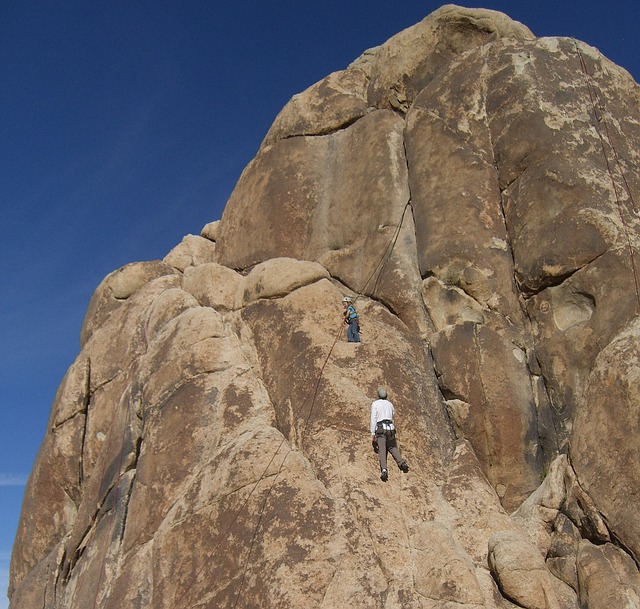
http://www.barnesandnoble.com/w/fighting-to-win-samurai-techniques-for-your-work-and-life-david-rogers/1119303640?ean=2940149174379


Order Waging Business Warfare: Lessons From the Military Masters in Achieving Competitive Superiority

Waging Business Warfare812sCY9edLL._SL1500_

Click on book image to order from Amazon.com

or

http://www.barnesandnoble.com/w/waging-business-warfare-lessons-from-the-military-masters-in-achieving-competetive-superiority-revised-edition-david-rogers/1119079991?ean=2940149284030


16 Comments

Filed under Artists, Becoming an Artist, Creativity Self-Improvement, Developing Talent, Human Potential and Achievement, Success, Writers

Luck: How Artists, Writers, and Other Creative People Can Get It

In the arts here in America and everywhere else, the causes of success are ability, confidence, persistence, resilience—and good luck. A guarantee: with high ability, high confidence, high persistence, high resilience, and enough good luck, you will achieve your artistic goals, whatever they may be. Let’s have a look at luck, the most difficult cause to account for.

painting-284546_640An artist’s and writer’s career may take shape over a long period of time—ten years, fifty years–and incidence of good or bad luck occurs many, many times. In 1921, in New York, a good friend introduced William Faulkner, 24, to Elizabeth Prall, manager of the Doubleday book store, and she hired Faulkner as a clerk—a stroke of good luck for Faulkner because Prall married Sherwood Anderson, one of the most popular authors in the country. Elizabeth invited Faulkner to dinner (good luck) and he and Anderson liked each other (good luck) from the start and spent many hours together, talking and drinking, and Anderson became Faulkner’s mentor (good luck). Mrs. Anderson asked her husband if he would recommend Faulkner’s book to his publisher, and Anderson said he would (good luck) as long as he didn’t have to read it. He did, and his publisher did put out the book (good luck), and Faulkner’s career was on its way, a Nobel Prize in store for him twenty-eight years later.

Chance shapes your life throughout your life, affecting the career you settle into, who your friends are, who your life partner is, where you live, the school you attend and education your receive, your genes and personality–the very fabric and quality of your existence. Some episodes in your career were extremely lucky, but other episodes couldn’t have been unluckier. The Academy award winning actor, the late Philip Seymour Hoffman, went into theatre in high school because the girls happened to be so good looking. What if they hadn’t been? Would he have become an accountant?

alexander-the-great-35767_640Gamblers speak of people who are lucky and those who aren’t, and consider luck to be in the person: “She’s lucky but he isn’t.” And so do military people. Even the most scholarly and erudite studies of warfare usually discuss luck. The Macedonian Alexander the Great referred to his good luck as a “star” that guided him to great victories. I suppose it did. He conquered most of the known world before the age of thirty.

The book Creativity by psychologist Mihaly Czikszentmihalyi describes how much good luck figured in the career of a successful (and fortunate) artist “whose work sells well and hangs in the best museums and who can afford a large estate with horses and a swimming pool.” The artist “once admitted ruefully that there could be at least a thousand artists as good as he—yet they are unknown and their work is unappreciated. The one difference between him and the rest, he said, was that years back he met at a party a man with whom he had a few drinks. They hit it off and became friends. The man eventually became a successful art dealer who did his best to push his friend’s work. One thing led to another. A rich collector began to buy the artist’s work, critics started paying attention, a large museum added one of his works to its permanent collection.” His career was made.

When I wrote Fighting to Win about how people today could achieve fulfillment by applying the wisdom of ancient Japanese warriors, my timing could not have been luckier. At the precise time it came out Americans were infatuated with and trying hard to learn more about the Japanese culture, and the book took off.

In college I read Englisman Gerard Manley Hopkins’ poem “God’s Grandeur,” and was impressed with its beautiful language. For some reason years later (before Amazon.com and before the internet) I suddenly had the urge to read a book studying Hopkins’ imagery so that it might affect my imagery. Wherever I traveled across the world—and I did extensively–I visited new and used bookstores, and in every bookstore I browsed for such a book, but never found it. Once I was to give a speech in Rock Island, Illinois. It’s a small city in the western part of the state that I had never visited before. I discovered that the hotel I was to stay in had just been built and had opened its doors only a few days before. It had hosted a conference for fire fighters–its first guests. They had left just the day before. I arrived very late at night and was given the only available room. I entered the room, laid my bags on the bed, and then noticed something in the trash basket. Apparently it had been left by one of the firefighters and the maid had overlooked it when she cleaned the room. There it was: fifteen years after I’d read him: a full-length book on the imagery of Gerard Manley Hopkins—a lucky break, a book that helped me.

books-683901_640Another time, I’d been writing and researching fifteen or sixteen hours a day on fifteen or twenty cups of black coffee for many months to meet a book deadline, neglecting my wife, neglecting my children, concerned only with putting enough words on a page every day to satisfy me—words, words, words, words–an abstract existence. That night I’d had it; I couldn’t work another minute; couldn’t drag from my agonized brain another word. I quietly left my home at about 3:00 a.m. and walked the streets trying to decide if I wanted to continue leading a grueling, neglectful life like that or follow a more conventional life, committing myself to “a regular nine-to-five job.”

It was a cool pleasant night—very dark—with a filmy mist in the air. Should I continue a writer’s life, or shouldn’t I? Should I just finish this book and then give it all up? Then I noticed ahead of me something lying on the sidewalk precisely in the middle of a pool of bright white light cast by a street lamp as though that object lying there had been placed there very carefully for me and me alone to see. I went to it and bent down and picked it up. It was a book—of all things a book. You see: I could not get away from the written word. I took this as a sign that, like it or not, a writer’s life—imperfect, isolated, much too demanding–was my destiny and that it was futile for me to think it would ever not be at the center of my existence. That I could ever get away from it. That was another lucky break because writing and reading has brought me so much fulfillment.

lantern-451233_640I have what I call my “Research Angel” which I rely on. I am writing and researching for hours every day and have been for many years, but my research is totally unsystematic. I begin with no notion whatever of where I am going but go ahead anyway as though quite content to wander on and on in a deep forest without worrying about how—or if ever– I’ll get back home. I’m trusting my Research Angel—based completely on a confidence in good luck—to steer me to the information I’ll need. The Research Angel has never failed me, and has taken me to unexpected discoveries and new directions in my life, just as it led me to the Hopkin’s book and the book lying in that pool of white light at four that early misty morning.

In Chases, Chance and Creativity medical researcher James Austin identifies four kinds of chance that affect creative activity:

  • Blind luck that doesn’t depend on any personal characteristics of the creator
  • The good luck that follows “persistence, willingness to experiment and explore”
  • Chance that allows the creator because of his training to grasp the significance of something overlooked by everyone else.
  • Serendipity

Lucky people—lucky artists and writers, lucky actors and dancers—-follow certain principles. They:

  • Are good at creating and noticing chance opportunities. They are relaxed, not anxious, people who are aware of their surroundings. Anxiety makes you blind to opportunities. Lucky people’s perceptions are sharper than unlucky people’s. They see opportunities the unlucky person doesn’t notice.
  • Are intuitive and respect hunches. Artists are on intimate terms with intuition. Half the decisions artists and writers make are intuitive—to use that color rather than this; that word rather than another.
  • Are open-minded and flexible in their thinking. Another characteristic of creative people.
  • Have optimistic expectations. They don’t just hope to be lucky; they expect to be. They are confident they’ll be lucky again. Positive expectations create lucky events. Good things happen to people with optimistic expectations. People with optimistic expectations are happier and healthier.
  • Are extremely resilient and able to quickly recover from bad luck. They see the positive side of bad fortune: “I fell down the stairs and broke my foot. It could have been my neck.” “I failed that time and it was very painful for me, but I learned so much that helped me succeed the next time.”

Be ready to take advantage of good luck, and when your luck is bad don’t let it get the better of you, but be aware that bad luck can change to good luck, and may in the blink of an eye. Be alert, strong, and opportunistic whatever may happen. Think strategically. Be ready. Be able to say, “This now that is happening to me is good luck and it may change my life.”

fish-582695_640Create the conditions for good luck to occur—set the stage. Be like a swimming fish waving its tail and stirring up the sand at the bottom of the tank. Get out, be spontaneous, meet new people, make contacts and seek people out. Form friendships. Do things you’ve never done before. Break away from your routines. Take chances you wouldn’t usually take. Don’t resist, don’t be afraid. Be bold, not timid. Experiment, explore. Be intuitive and pro-active and look for opportunities. Let good luck happen to you. Then chase the opportunities where they lead.

On a scale of 1 to 100, how lucky a writer or artist would you say you are?

Not Lucky                                                 Pretty Lucky                                       Very Lucky

1                                                               50                                                      100

Ask yourself, “In what areas of my creative life would I like to be luckier?”

What will you do now to make yourself lucky?

I will:

1.

2.

3.

4.

5.

Napoleon was looking for a subordinate to add to his staff. One after another his high-ranking officers described a particular candidate whom they talked glowingly about at length. Impatiently, Napoleon said, “Yes, yes, I know he is brilliant, but is he lucky?”

Yes, yes, I know you’re brilliant too, and prodigiously talented, but are you lucky? Do you behave like a lucky person? Do you foster good luck? Do you have the mind and expectations of a lucky person?


© 2015 David J. Rogers

For my interview from the international teleconference with Ben Dean about Fighting to Win, click on the following link:

www.mentorcoach.com/rogershttp://www.mentorcoach.com/positive-psychology-coaching/interviews/interview-david-j-rogers/

Order Fighting to Win: Samurai Techniques for Your Work and Life eBook by David J. Rogers

Fighting to win Amazon

Click on book image to order from Amazon.com

or

http://www.barnesandnoble.com/w/fighting-to-win-samurai-techniques-for-your-work-and-life-david-rogers/1119303640?ean=2940149174379


Order Waging Business Warfare: Lessons From the Military Masters in Achieving Competitive Superiority

Waging Business Warfare812sCY9edLL._SL1500_

Click on book image to order from Amazon.com

or

http://www.barnesandnoble.com/w/waging-business-warfare-lessons-from-the-military-masters-in-achieving-competetive-superiority-revised-edition-david-rogers/1119079991?ean=2940149284030


6 Comments

Filed under Artists, Becoming an Artist, Blocks to Action, Boldness, Creativity Self-Improvement, Dancers, Developing Talent, Human Potential and Achievement, Expectations, Goals and Purposes, Motivation, Success, Writers

Salesmanship for Artists and Writers: The Inner Skills

A goal always on an artist’s and writer’s mind is to generate consistently high-quality work, and a continuing question he/she wrestles with is “how can I do that?” Answering that question is bottom-line, and it’s a complicated question that creative people are trying to answer all their careers, and is one whose success in answering distinguishes one from another. Shakespeare produced better text than anyone else; Michelangelo better art; Mozart better music. But creating high quality work is just one of a writer’s or artist’s skills among many others. It’s naïve to think that the best artist is necessarily the most successful artist. To succeed, the writer, painter, actor, composer must accomplish much more than generate excellent work.

Professional artists and writers have careers to manage and responsibilities and expenses. Food must be put on the table. A life of financial risk and the threat of going broke can keep them on their toes and motivate them or it can be paralyzing. To many writers, artists, and performers, their work is not a hobby and is not just a craft and not just an art, but a hard-nosed, deadly serious, ferociously competitive war of survival requiring the skills of the showman and unabashed, unapologetic self-promoter. Those are roles that seem unnatural to many creative people and make them uneasy and unsure of themselves.

color-palette-207082_640Inhibitions are hard to hide, and research and everyday experience alike bear out that many writers—many artists; many creators of all types, many “inner-directed” people in general—are haunted by them, and know better than anyone that they are, and don’t want to be, and wish they weren’t. And everyone on the globe—the most powerful, the most famous, the most accomplished–is inhibited sometimes. It will be impossible to reach your creative goals if your inhibitions are powerful. They are impediments that can prevent even the most talented and gifted writers and artists from achieving the successes they are aiming for. And that can happen, and I’m sure it does, more than we realize or care to admit.

Working in solitude—the lifestyle of the creator–is a way of hiding from inhibitions because inhibitions involve interactions with other people. In fact, one of the main reasons creative people have chosen a creator’s life rather than a more typical life is to be able to work alone, secluded, sheltered, untouched, and away from other people; hidden from the world. But when writers and artists come out of hiding into the clear light of day, so to speak, some essential tasks require that they do something about their inhibitions—give in to them, or overcome them.

When my first major book was published, I was surprised to learn that not every author is sent by the publisher on a publicity tour to promote their book because they “don’t come across” to audiences, and that, it seems to me, is a direct result of inhibitions. One publisher jokingly asked if I would go on tour to promote other of their author’s books; so many writers didn’t come across. Also, every writer and every artist of every type eventually realizes that talent and skill are not enough to guarantee success, though that would be the artist’s ideal world, but that you’d better learn the skills of marketers and salesmen, skills that inhibited people do not perform well. But to survive, they must learn to. Or they may perish, giving up completely, or will go only so far, and will reach a plateau, and will not reach the career peak they otherwise could. All creative work involves showmanship and salesmanship.

hands-545394_640When I was a business consultant for many corporations, I trained hundreds of people to be high-excelling marketers and sales people, and time and again witnessed before my eyes the growth of awkward and inhibited, tongue-tied, self-doubting people into fluent, persuasive, uninhibited people confident and comfortable with themselves. Such a transformation is possible for anyone. Every artist’s and writer’s skill, including marketing and selling—foreign though they may seem–is learnable.

After reading my Fighting to Win: Samurai Techniques for Your Work and Life, which lays out practical strategies for living a more vigorous assertive (and hopefully happier) life, a shy, soft-spoken, self-doubting artist/illustrator called me and said she wished she had a samurai like those she had seen in the book to help her market her work (which had won awards) to galleries, clients, magazines, and publishers, and I said, “You don’t need another person. Become a samurai yourself.” She took that to heart and acquired marketing and sales skills coupled with her new self-confidence, and now her lovely work seems to be everywhere.

The Basic Problem

People weighed down with inhibitions don’t express their genuine personalities. That’s the basic problem. Inhibitions such as shyness, self-consciousness, dreading new experiences, feelings of inferiority and inadequacy, guilt that’s out of proportion to the event that caused it, feeling ill at ease with strangers and in social situations, difficulty getting along with others, and excessive modesty are psychological obstacles that affect writers, and artists of all kinds time and again. These “maladies” are based on being too concerned with how you’re coming across, of what people are thinking of you, or trying too hard to impress others. Inhibitions result in excessive caution and carefulness.

Some people aren’t inhibited enough. You probably know some. They’re too impulsive, too rash, too inconsiderate, too outspoken, too hard-headed, too much of a boring windbag everyone wishes would shut up. But the more general and serious problem is being too inhibited.

Many specialists believe that some inhibitions are genetic. But it’s a myth that once your genetic blueprint is established at birth it is set forever. I know a sculptor who was shy all her life, but decided at the age of thirty she wasn’t going to be shy anymore, so she stopped being shy, just stopped. Many inherited traits can be changed by changing behavior.

Strategies for Conquering Inhibitions: Be Yourself; No One Else

  • Realize that inhibitions are not a fate. You can get rid of inhibitions.
  • Be indifferent to the reactions of others. There is such a thing as a healthy and liberating disregard for the opinions of others. Don’t stop to think of how they are judging you. Don’t worry what they’ll think of you if you do or say X. Just do and say X. Don’t give a damn what they think.
  • Don’t exaggerate your embarrassment. Why are we so ready to say that this embarrassed me or that embarrassed me, even over the silliest things. When you’re feeling embarrassed ask yourself if what is embarrassing is all that important in the grand scope of things. It isn’t.
  • Overcome self-consciousness. Self-consciousness is really other-consciousness. To believe that every eye is on you is an error. Most people could hardly care less what you look like, what you’re wearing, what you’re saying, and what you’re doing. They’re preoccupied with what they look like, and what they’re wearing, saying, and doing.
  • Never try for a contrived effect. You’ll rarely go wrong if you’re sincere. The people who make the best impression are the very people who aren’t trying to make a good impression. You can’t be fooled by a phony for very long. For example, job interviewers encounter legions of applicants who behave the same as everyone else. Then an applicant appears who lets his or her sincerity come through. She stands out and the interviewer is impressed, and she gets the job. If you’re sincere you’ll favorably impress people, even if you’re not trying to impress them.
  • Be like a baby; be authentic. A baby isn’t pretentious, artificial, or superficial, but just what he or she is. A baby expresses honest feelings and isn’t the least bit inhibited.
  • Be more spontaneous. When you’re anxious about a situation, your spontaneity flies out the window. When you’re spontaneous–with a friend over a beer for example, or your family around the table–you’re not on guard for fear of making a mistake. Your spontaneity gives you courage.
  • Be fast. Do what you’re thinking of doing or saying before an inhibition appears.
  • Speak with greater verve, and louder than you normally would. Inhibited people often speak softly and in a monotone. Raising your voice and speaking in a louder and more energetic voice can free you from social inhibitions.
  • Look people in the eye. Don’t avert your eyes.
  • Be “larger than life.” You might have noticed that people who are self-confident and persuasive literally seem larger. Stand up straight and expand your chest as an exercise. Develop the habit of physical expansiveness.
  • When talking with others stand closer than you think you should, be physically involved, and be friendly. Particularly persuasive and socially comfortable people tend to stand a little closer than most people do. Gesture, smile, move your hands and your eyes. If you expect the other person to like you and you behave accordingly—as though they already do– you will be proven right in almost every instance.
  • Recognize your right to be imperfect. If we were perfect our lives would be very dull– we would be very dull– and we would still find something in ourselves to complain about. And others would always find something in us to complain about too. We shouldn’t think we have to be perfect to be worthwhile.
  • Don’t second-guess yourself. Inhibited people wonder if they did the right thing: “Maybe I shouldn’t have said that. Maybe I hurt her feelings. I probably should have put it differently,” when more than likely the person spoken to has no memory of what was said or didn’t think it was all that significant.
  • Forgive yourself– for making a mistake, for being too timid, or for saying the wrong thing or making a stupid remark. Perhaps you felt awkward or were intimidated, or self-conscious, or were inauthentic and insincere, etc. Forgive yourself. Then get right back into action and be genuine, be yourself, no one else.


© 2015 David J. Rogers

For my interview from the international teleconference with Ben Dean about Fighting to Win, click on the following link:

www.mentorcoach.com/rogershttp://www.mentorcoach.com/positive-psychology-coaching/interviews/interview-david-j-rogers/

Order Fighting to Win: Samurai Techniques for Your Work and Life eBook by David J. Rogers

Fighting to win Amazon

Click on book image to order from Amazon.com

or
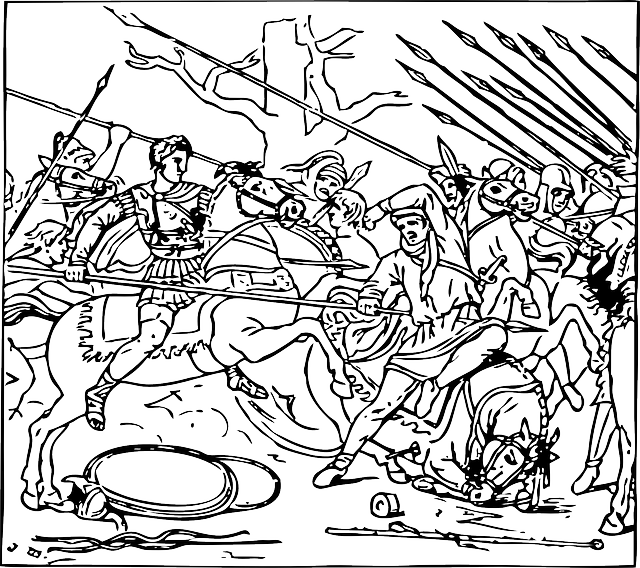
http://www.barnesandnoble.com/w/fighting-to-win-samurai-techniques-for-your-work-and-life-david-rogers/1119303640?ean=2940149174379


Order Waging Business Warfare: Lessons From the Military Masters in Achieving Competitive Superiority

Waging Business Warfare812sCY9edLL._SL1500_

Click on book image to order from Amazon.com

or

http://www.barnesandnoble.com/w/waging-business-warfare-lessons-from-the-military-masters-in-achieving-competetive-superiority-revised-edition-david-rogers/1119079991?ean=2940149284030


6 Comments

Filed under Artists, Blocks to Action, Boldness, Business Strategies and Tactics, Creativity Self-Improvement, Developing Talent, Human Potential and Achievement, Goals and Purposes, Salesmanship, Success