Cool Wind
And I thought how lovely
It was to feel
Through an open window
A cool wind on a hot night
Such as this
And to see let in
Between the window shade
And the window sill
Leaves’ shadows dancing on
A midnight floor.
The Silence That Settles So Softly
Silence has settled as softly
As pollen on her hospital room
As visitors take their magazines
And as quietly as moths
Go out the door, leaving
Us to face this night alone.
“How fast life goes, Dave,” she says.
“It’s no longer than a mosquito’s life.
Why does it go so fast?”
A little room, a bed,
A pair of eyes; someone watching,
A young woman very ill.
Night has come, the day is gone.
Over the city shines a blue light.
Chrysanthemums stand in a vase.
She asks, “How do you explain life?
What does a person live for?”
It is probably happiness.
Yes, that was it all the time,
The happiness one feels. No one
Could say she hadn’t known exquisite happiness.
I feel such love toward her that could I,
I would die for her
And am so regretful that I cannot suffer
Her pain for her, and am powerless to help her,
And that she soon will be gone entirely from my life
And from this world.
But now, dear sister,
Close your brown eyes.
Phoebe Leads Quite a Life
My friend Phoebe the writer leads quite a life.
She tried to explain why in affairs she chooses men that are out of character.
She said: “I read in George Eliot’s biography a perfect description
Of myself not as I seem, or would want to be, but as I really am:”
She quoted Eliot:
A retiring woman of gentle disposition and orderly habits.
A very cautious woman who chooses courses of action she cannot rationally defend.’
Sounds Beyond Number
I’ve run down the front stairs and
Out into the neighborhood
On my seventh birthday.
No adults who love me restrain me.
I am as free as the wind.
About me: the air and sunlight; the clouds,
The church tower, Lake Michigan, the cityscape
That good fortune has allocated for my pleasure
During these years of my happy youth.
These languorous streets of mine,
Mapped indelibly in my mind, are shaded by
Cool poplars, sycamores, and elms this sunny October day.
Familiar cars pass, and in the hedges
Crickets whose voices I recall are out in noisy numbers.
Bob the panhandler is dozing in his favorite doorway.
His mouth is closed but his lips flutter.
Machinists, teachers, clerks, and mechanics
On their way to somewhere else pass me by without a word.
Odors of bubbling tar are in the street where men
Soaked wet with sweat and without shirts
Work diligently in the torrid noon sun.
The silver-painted wagon I am pulling rattles
Among other street sounds beyond my counting.
They ring in my receptive ears
Like the jingle- jangle of festive bells.
Mister Koehler
When I was a boy in Chicago
Every Sunday the tallest man in the world
Sat in the seat next to mine in church–8’2”
The disparity in our height was
An object of humor, but not to me.
He had difficulty walking because he was so tall
And his spine was weak.
He shuffled between two wood canes,
Bent over, frail, his arms quivering, his eyes cast down
So that he would not fall.
He drove a car. He was a salesman.
His car had no front seat,
Only a back seat where he sat,
His long arms reaching the steering wheel,
His long legs the pedals.
There is a replica of him
In a wax Museum in London.
He is cited in
The Guinness Book of World Records
As earth’s tallest person.
He was too tall to have a long life.
Woman Sitting at a Table
In a Restaurant on Broadway
In New York City
I saw you
Looking at me
Knowing I had
Looked at you,
No chance ever
To see you again
Or you to
Look at me again
With your mystic eyes.
You who had I
Known long ago
I would have run
My finger over
So carefully
And cupped
In my hand
Like an orchid.
Young Woman in the Pontchartrain
Hotel, Detroit, Michigan
If I tell you that in the elevator
At three a.m. she stopped me and said,
“I’ve been looking for you all night”
You would have an idea of her lonely
Profession, but no idea what kind of
Woman she was, nor how pretty.
In the summer before the often cruel cold Chicago winter each year of my childhood there came in a truck the coal-shoveler who would appear in the alley to do his job. On the way to school I would walk past him carrying my books and would look at his tall pile of coal and wonder “How in the world will one man be able to shovel all that coal?” When I returned home the coal would be gone and the coal- shoveler–his work done– would be sleeping, waiting to be picked up, or he would be gone until reappearing when I would be a year older.
The Silent Coal -Shoveler
Behind the apartment building
Where I lived with my family and
Beside a mountain of coal
Toiled the always silent, always alone,
Never-speaking, never-grunting,
Never- complaining
Muscular black coal-shoveler.
From chilly dawn
To the end of afternoon
While I was at school
Or at the playground
From the alley
Behind my gate
Across from the church,
That cadenced scrape
Of his shovel
Between coal and pavement
Could be heard, and chunks of coal
Thumping, tumbling noisily
Like pieces of thunder
Down the wooden chute
Into the dark cellar.
Encounters in the Natural World
When I was a boy my father, brother, and I would leave the city and hike in the forests north of Chicago, where now, in a thriving suburb, I live with my wife. I remember our last hike:
In the underbrush along the path we followed were morning glories, wild flowers, lilies of the valley, azaleas, and asters. In the trees squirrels preened on their hind legs, then leaped from branch to branch. A chipmunk made its departure into the lush chipmunk world.
A small female white-tail deer waited for us to pass, a puzzled expression in her bulging eyes, and then bounded across the path. We were so close we could have touched. Then a full-grown, majestic male with more serious eyes appeared as though it had come up from the ground.
Grasshoppers still damp with morning dew dried themselves in the sunlight, and we took care to step around them. A yellow finch, its head bobbing, whistled sweetly, and insects squabbled in the air. The fragrance of warm, sweet clover was everywhere.
A wind rippled across the river in front of us and the gold leaves on the trees along its banks rattled. The sun bright, the trees cast long, thin shadows that in the wind swayed on the water like a company of dancers.
Jim, Jim, I’ve Remembered You Often
Jim, Jim, I’ve remembered you often,
My roommate in college, a tortured
Red-headed business major so caught
In the grip of a terrible addiction to
Alcohol that, when desperate, he
Drank anything, including:
Lighter fluid
Hair tonic
Motor oil and lubricants
Gasoline
I had been studying all night when I heard Jim
Staggering up the stairs after a night ending at dawn at County Line, the dump
Where he often wound up after hours. There nothing was prohibited.
He was trying so hard to appear sober crossing the bedroom floor,
But his hands were shaking. His legs were as stiff as brooms.
I watched him compassionately without speaking a word
As I would watch an injured cat or dog, hoping that he would
Be able to do what I could see he had in mind to impress me with–
Hoping that he would be able to hang neatly on a hanger
Without any help the blue jacket he was holding in his right hand.
But the hanger slipped tragically from his grip and
Clattered on the wooden floor.
Then I saw what I cannot erase
From memories of my college years or of Jim:
The expression on his face of shame.
A False Assumption
Some people fall into a trap. They assume
That because the woman or man they desire is beautiful
And seems to be their ideal that they also possess fine qualities
Such as intelligence, kindness, and decency,
But often soon find them lacking virtues without a trace.
The Death of Judy Wazorick
I remember Judy Wazorick fondly.
We were in grammar school together.
She had a blue eye and a brown eye,
And sat in the last seat of the last row.
She was shy, but when I looked at her
She always smiled at me.
Now I see she won’t be at the reunion,
And I am so sad because Judy Wazorick
Has passed away.
Wings
Two seasons each year–spring and fall–
Flocks of familiar geese flutter down
From the sky to dine on the grassy field outside my home,
Waddling, pecking, bickering like
Children or thieves–then a truce–
Only a misunderstanding:
All is forgiven, friend. Departing
They assemble for the flight
In perfect order, poised, silent; air quivering.
Then torrents of ascending wings–wings.
There Were
There were pleasant, guileless women I liked on sight,
And women with the look of dreamers that I knew were
Full of dangers, but couldn’t resist and didn’t try very hard to.
There were women with long, raven-black hair that flowed like oil,
And plain, sincere, friendly women, and women who smiled
So gently, so exquisitely, that I was numb.
There were women who acted as if they were personal friends of God,
And light-hearted women, and women whose mood never changed,
And women with deep voices and treacherous eyes.
There were young, ugly-duckling women who were just about to be beautiful,
And attached women who enjoyed being fallen women, as well as a
Playful, petite woman full of horse-sense and laughter.
They and others brightened my life and are a pleasure to remember.
© 2023 David J. Rogers
For my interview from the international teleconference with Ben Dean about Fighting to Win, click the following link:
Order Fighting to Win: Samurai Techniques for Your Work and Life eBook by David J. Rogers

Click on book image to order from Amazon.com
or
Order Waging Business Warfare: Lessons From the Military Masters in Achieving Competitive Superiority

Click on book image to order from Amazon.com
or
 Think of the last time you were discouraged. You were knocked off balance and became weakened and vulnerable. Possibly something you longed to happen did not happen, or something you dreaded happening did happen. Then you were discouraged. Courage is a thing of the heart. The word “courage” derives from couer,” the French for heart. To be “dis” couraged is to lose heart. You were never too young and will never be too old be to be discouraged. You don’t outgrow discouragement.
 Action is the most effective antidote to discouragement To rid yourself of being discouraged strive to be a person of action. The happiest and most courageous people in the world have a preference for action. Rarely are they discouraged. They are too busy to be. In high spirits they persist through difficulties, overcoming setbacks, resisting gloomy moods, never losing hope. That is why they are so happy. The samurai of ancient Japan were the most action-obsessed men and women who ever lived.
 peace. So I began to search for solace and wisdom.
 I chose as the basis of the book the spiritual insights of samurai warriors of ancient Japan. It may seem that the psychology of people like that who lived four centuries ago in a foreign country would have little to say to you, yet if you are interested in ways to strengthen yourself spiritually, that is the place and era to look for information. Samurai had introduced the teachings of Zen into the Japanese culture. Zen was “the religion of the samurai.” Many samurai were poets.
 Samurai were models of action-oriented people. The essential feature of the samurai “Way” (way of life) is action. (That a discipline is a Way is indicated by the suffix “do.” The samurai Way is “bushido). All samurai spiritual insights and training were designed for one reason: to equip the person (a samurai or you) to make up their mind quickly and firmly and to go into action
 Every day’s goal of healthy people is to be happy, to love and be loved, and not to be discouraged. But there are many impediments–opponents. In the arts among artists and writers I know so well, and in everyday work and personal life, like a samurai in battle, everyone encounters those opponents. Some are outer opponents–an outrageous person who’s hard to get along with (a harsh critic of your writing or painting, for example if you are in the arts), personal crises, setbacks, failures, Etc. People who steal from you.
 All samurai training was designed to overcome those dragons so that in your everyday life you will progress smoothly from experience to experience, challenge to challenge, achievement to achievement, happiness to happiness.
 Acquiring wisdom from the samurai Way suits people who wish to overcome discouragement and are able to make use of insights and techniques from any era or culture that will help them. What strikes me is the ease with which readers of the book adapt those insights from centuries ago to their current everyday living.
 Highland Park is not a big place at all. It is an idyllic little Midwestern American city of about thirty thousand–clean and peaceful, and until the Fourth, safe. Clustered together at its center are a railroad station, City Hall, public library, and on the library lawn a long chromium sculpture no one understands. It is a community that values the arts: more writers live here than in any other community between Chicago to the south and Milwaukee to the north. Double screen writing Academy Award winner William Goldman was from Highland Park. Actor/movie director Orson Welles lived here in his adolescence and sat on his lawn reading Shakespeare; Frank Baum would take the train up from Oak Park to meet with his Oz books illustrator who lived here; the high school theatre program is renowned. Also, Michael Jordan lived here when he was leading the Chicago Bulls to championships. I’d see him at the Post Office waiting in line just like everyone else. There is no standing on ceremony in Highland Park.
 have finished a painting that in your judgment is excellent in every respect. Like Ariel you are trained and educated in your craft and recognize your paintings’ consistently high quality and dazzling originality. You know you can’t do better. You feel that no one but you could have executed this project. It required blending many abilities not every painter possesses. You see in your painting, as Ariel saw in hers, something especially flamboyant and fetching. Your hopes for its artistic and financial success are high.
 your book. She recognizes its significant sales potential. She calls you In Chicago from New York and says that your book is one of the two or three best books of any type she has ever read. She is entranced with the book and pledges to you to commit to “putting it over” whatever resources are necessary to make it the country’s top best seller (The book is topical and has that kind of potential.) You call your agent and ask him about the publisher reputation and he tells you that they are known for selecting one of their titles each year and making it the kind of best seller the publisher described.
 resilient means first of all accepting such adversities and those you have experienced yourself as an unavoidable part of the writer’s and artist’s life. That insight deeply-felt and never forgotten is essential for maintaining a firm, unshakeable spirit.
 period the body-builder rests, those muscles are rebuilt, but bigger and stronger than they had been. Don’t be so afraid of hardships, stresses, difficulties, and crises. They strengthen you emotionally, spiritually, and mentally.
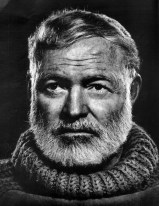 working, as confident as van Gogh and became one of the most popular American writers of his era. Ernest Hemingway said that at the beginning of his career every day “the rejected manuscripts would come through the slot in the door…I’d sit at that old wooden table and read one of those cold slips that had been attached to a story I had loved and worked on very hard and believed in, and I couldn’t help crying.” But he had faith that eventually his work would be in demand and never stopped working. The crowning achievement was the Nobel Prize in Literature.
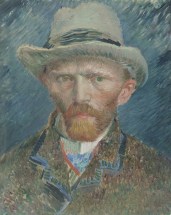 Vincent van Gogh spent a short, intense five-year career producing an astonishing three thousand masterpieces that are now auctioned for many millions of dollars, but in his lifetime sold only one painting, and that was for a few brushes and paints. But he continued working confidently and never doubted that in the future his talents would be recognized
 In every era, in creative after creative, three empowering qualities like three ingredients of a potent formula have proven to help writers and artists not to give up when they fail. Those qualities are being resilient, being persistent, and having faith in yourself. Resilient, persistent writers and artists with strong faith in themselves never give up.
 Faith in yourself touches every facet of your being–whether you think about your prospects positively or in a self-defeating way, how strongly you motivate yourself, your susceptibility to self-doubt and discouragement, and the positive changes you will be able to make in your life.
 successful. Catherine Cox studied greatness and disagreed. She found that persistence is a key. Persistence is so important in almost every endeavor that it compensates for lesser intelligence. Cox concluded: “High but not the highest intelligence, combined with the greatest degree of persistence will achieve greater eminence than the highest degree of intelligence with somewhat less persistence. “
 The breathtaking Hawaiian Islands are an inappropriate place to become ill, but Honolulu, their state capital, largest city, and principal port, is where my younger sister Sharon had chosen to live–where the last months of her life she was hospitalized. In her early twenties she had left Chicago where we had grown up and I still live and she had visited one exquisite picture post card place after another in Spain, France, the South Pacific, and the Mediterranean, and so on, in search of the single place where she thought she would be happiest living and had found it.
 On the nights of my visit after seeing her I would walk on the beaches, reflecting on the day, finding restful the fresh air and coolness, and sleeping at Sharon and Ron’s apartment. On the kitchen floor there was a scale to measure the dwindling of my sister’s existence, and sheets of paper on a clipboard suspended from a nail on the wall that recorded her declining weight: ninety-eight pounds, ninety, eighty-eight…and a calendar that had Xs on days she wasn’t healthy enough to work that in recent months had become all Xs. Against a wall there was a full-length gold-framed mirror that in the past she had looked into. The mirror was dusty.
 There was no need for Kathy and me to discuss where Sharon stood. It needn’t be said that it wouldn’t be long and that soon Sharon would be gone entirely from my life and from the world. I knew that the moment coming from the airport and entering her hospital room and putting down my bag when I saw with a shock how puny Sharon looked now. The illness had given her an old woman’s body that had been ravaged by suffering there in that bed that was now her final home–so skinny–all bones–very sick–dying. The pain had turned her black hair white and it was short from the treatment and no longer long. Her once-pretty face was gaunt, her cheeks gray, her body very tired. Her long pianist’s fingers were so thin that her ring had slipped off and was lost. But there in her gray, lonely, fading beauty there was still about her that same gentleness you could ruffle with your breath, the same spirit in her fierce eyes, the same poise, and the same elegance. Looking into my eyes, imagining what I was seeing, Sharon had clutched her gown across her chest in embarrassment –covering herself in shame–still a modest woman–and said, breaking my heart, sucking the breath out of my lungs, “I’m a mess aren’t I?,” and I had replied to her, “Shar, you are beautiful.”
 the happy girl and boy that we had once been, getting ready to ride our bikes to the library. The gray interior lights were dimmed low, as if the plane itself were drowsy. Everything was silent but for the deep hum of the engines, the other passengers asleep. I wanted to prepare myself for what it would be like now without a sister, my parents without a daughter, my children without an aunt.