Tag Archives: psychological obstacles

Luck: How Artists, Writers, and Other Creative People Can Get It

In the arts here in America and everywhere else, the causes of success are ability, confidence, persistence, resilience—and good luck. A guarantee: with high ability, high confidence, high persistence, high resilience, and enough good luck, you will achieve your artistic goals, whatever they may be. Let’s have a look at luck, the most difficult cause to account for.

painting-284546_640An artist’s and writer’s career may take shape over a long period of time—ten years, fifty years–and incidence of good or bad luck occurs many, many times. In 1921, in New York, a good friend introduced William Faulkner, 24, to Elizabeth Prall, manager of the Doubleday book store, and she hired Faulkner as a clerk—a stroke of good luck for Faulkner because Prall married Sherwood Anderson, one of the most popular authors in the country. Elizabeth invited Faulkner to dinner (good luck) and he and Anderson liked each other (good luck) from the start and spent many hours together, talking and drinking, and Anderson became Faulkner’s mentor (good luck). Mrs. Anderson asked her husband if he would recommend Faulkner’s book to his publisher, and Anderson said he would (good luck) as long as he didn’t have to read it. He did, and his publisher did put out the book (good luck), and Faulkner’s career was on its way, a Nobel Prize in store for him twenty-eight years later.

Chance shapes your life throughout your life, affecting the career you settle into, who your friends are, who your life partner is, where you live, the school you attend and education your receive, your genes and personality–the very fabric and quality of your existence. Some episodes in your career were extremely lucky, but other episodes couldn’t have been unluckier. The Academy award winning actor, the late Philip Seymour Hoffman, went into theatre in high school because the girls happened to be so good looking. What if they hadn’t been? Would he have become an accountant?
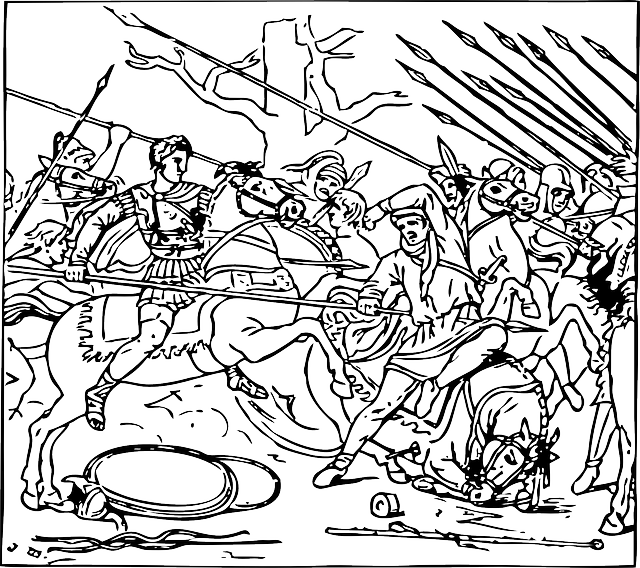
alexander-the-great-35767_640Gamblers speak of people who are lucky and those who aren’t, and consider luck to be in the person: “She’s lucky but he isn’t.” And so do military people. Even the most scholarly and erudite studies of warfare usually discuss luck. The Macedonian Alexander the Great referred to his good luck as a “star” that guided him to great victories. I suppose it did. He conquered most of the known world before the age of thirty.

The book Creativity by psychologist Mihaly Czikszentmihalyi describes how much good luck figured in the career of a successful (and fortunate) artist “whose work sells well and hangs in the best museums and who can afford a large estate with horses and a swimming pool.” The artist “once admitted ruefully that there could be at least a thousand artists as good as he—yet they are unknown and their work is unappreciated. The one difference between him and the rest, he said, was that years back he met at a party a man with whom he had a few drinks. They hit it off and became friends. The man eventually became a successful art dealer who did his best to push his friend’s work. One thing led to another. A rich collector began to buy the artist’s work, critics started paying attention, a large museum added one of his works to its permanent collection.” His career was made.

When I wrote Fighting to Win about how people today could achieve fulfillment by applying the wisdom of ancient Japanese warriors, my timing could not have been luckier. At the precise time it came out Americans were infatuated with and trying hard to learn more about the Japanese culture, and the book took off.

In college I read Englisman Gerard Manley Hopkins’ poem “God’s Grandeur,” and was impressed with its beautiful language. For some reason years later (before Amazon.com and before the internet) I suddenly had the urge to read a book studying Hopkins’ imagery so that it might affect my imagery. Wherever I traveled across the world—and I did extensively–I visited new and used bookstores, and in every bookstore I browsed for such a book, but never found it. Once I was to give a speech in Rock Island, Illinois. It’s a small city in the western part of the state that I had never visited before. I discovered that the hotel I was to stay in had just been built and had opened its doors only a few days before. It had hosted a conference for fire fighters–its first guests. They had left just the day before. I arrived very late at night and was given the only available room. I entered the room, laid my bags on the bed, and then noticed something in the trash basket. Apparently it had been left by one of the firefighters and the maid had overlooked it when she cleaned the room. There it was: fifteen years after I’d read him: a full-length book on the imagery of Gerard Manley Hopkins—a lucky break, a book that helped me.

books-683901_640Another time, I’d been writing and researching fifteen or sixteen hours a day on fifteen or twenty cups of black coffee for many months to meet a book deadline, neglecting my wife, neglecting my children, concerned only with putting enough words on a page every day to satisfy me—words, words, words, words–an abstract existence. That night I’d had it; I couldn’t work another minute; couldn’t drag from my agonized brain another word. I quietly left my home at about 3:00 a.m. and walked the streets trying to decide if I wanted to continue leading a grueling, neglectful life like that or follow a more conventional life, committing myself to “a regular nine-to-five job.”

It was a cool pleasant night—very dark—with a filmy mist in the air. Should I continue a writer’s life, or shouldn’t I? Should I just finish this book and then give it all up? Then I noticed ahead of me something lying on the sidewalk precisely in the middle of a pool of bright white light cast by a street lamp as though that object lying there had been placed there very carefully for me and me alone to see. I went to it and bent down and picked it up. It was a book—of all things a book. You see: I could not get away from the written word. I took this as a sign that, like it or not, a writer’s life—imperfect, isolated, much too demanding–was my destiny and that it was futile for me to think it would ever not be at the center of my existence. That I could ever get away from it. That was another lucky break because writing and reading has brought me so much fulfillment.

lantern-451233_640I have what I call my “Research Angel” which I rely on. I am writing and researching for hours every day and have been for many years, but my research is totally unsystematic. I begin with no notion whatever of where I am going but go ahead anyway as though quite content to wander on and on in a deep forest without worrying about how—or if ever– I’ll get back home. I’m trusting my Research Angel—based completely on a confidence in good luck—to steer me to the information I’ll need. The Research Angel has never failed me, and has taken me to unexpected discoveries and new directions in my life, just as it led me to the Hopkin’s book and the book lying in that pool of white light at four that early misty morning.

In Chases, Chance and Creativity medical researcher James Austin identifies four kinds of chance that affect creative activity:

  • Blind luck that doesn’t depend on any personal characteristics of the creator
  • The good luck that follows “persistence, willingness to experiment and explore”
  • Chance that allows the creator because of his training to grasp the significance of something overlooked by everyone else.
  • Serendipity

Lucky people—lucky artists and writers, lucky actors and dancers—-follow certain principles. They:

  • Are good at creating and noticing chance opportunities. They are relaxed, not anxious, people who are aware of their surroundings. Anxiety makes you blind to opportunities. Lucky people’s perceptions are sharper than unlucky people’s. They see opportunities the unlucky person doesn’t notice.
  • Are intuitive and respect hunches. Artists are on intimate terms with intuition. Half the decisions artists and writers make are intuitive—to use that color rather than this; that word rather than another.
  • Are open-minded and flexible in their thinking. Another characteristic of creative people.
  • Have optimistic expectations. They don’t just hope to be lucky; they expect to be. They are confident they’ll be lucky again. Positive expectations create lucky events. Good things happen to people with optimistic expectations. People with optimistic expectations are happier and healthier.
  • Are extremely resilient and able to quickly recover from bad luck. They see the positive side of bad fortune: “I fell down the stairs and broke my foot. It could have been my neck.” “I failed that time and it was very painful for me, but I learned so much that helped me succeed the next time.”

Be ready to take advantage of good luck, and when your luck is bad don’t let it get the better of you, but be aware that bad luck can change to good luck, and may in the blink of an eye. Be alert, strong, and opportunistic whatever may happen. Think strategically. Be ready. Be able to say, “This now that is happening to me is good luck and it may change my life.”

fish-582695_640Create the conditions for good luck to occur—set the stage. Be like a swimming fish waving its tail and stirring up the sand at the bottom of the tank. Get out, be spontaneous, meet new people, make contacts and seek people out. Form friendships. Do things you’ve never done before. Break away from your routines. Take chances you wouldn’t usually take. Don’t resist, don’t be afraid. Be bold, not timid. Experiment, explore. Be intuitive and pro-active and look for opportunities. Let good luck happen to you. Then chase the opportunities where they lead.

On a scale of 1 to 100, how lucky a writer or artist would you say you are?

Not Lucky                                                 Pretty Lucky                                       Very Lucky

1                                                               50                                                      100

Ask yourself, “In what areas of my creative life would I like to be luckier?”

What will you do now to make yourself lucky?

I will:

1.

2.

3.

4.

5.

Napoleon was looking for a subordinate to add to his staff. One after another his high-ranking officers described a particular candidate whom they talked glowingly about at length. Impatiently, Napoleon said, “Yes, yes, I know he is brilliant, but is he lucky?”

Yes, yes, I know you’re brilliant too, and prodigiously talented, but are you lucky? Do you behave like a lucky person? Do you foster good luck? Do you have the mind and expectations of a lucky person?


© 2015 David J. Rogers

For my interview from the international teleconference with Ben Dean about Fighting to Win, click on the following link:

www.mentorcoach.com/rogershttp://www.mentorcoach.com/positive-psychology-coaching/interviews/interview-david-j-rogers/

Order Fighting to Win: Samurai Techniques for Your Work and Life eBook by David J. Rogers

Fighting to win Amazon

Click on book image to order from Amazon.com

or

http://www.barnesandnoble.com/w/fighting-to-win-samurai-techniques-for-your-work-and-life-david-rogers/1119303640?ean=2940149174379


Order Waging Business Warfare: Lessons From the Military Masters in Achieving Competitive Superiority

Waging Business Warfare812sCY9edLL._SL1500_

Click on book image to order from Amazon.com

or

http://www.barnesandnoble.com/w/waging-business-warfare-lessons-from-the-military-masters-in-achieving-competetive-superiority-revised-edition-david-rogers/1119079991?ean=2940149284030


6 Comments

Filed under Artists, Becoming an Artist, Blocks to Action, Boldness, Creativity Self-Improvement, Dancers, Developing Talent, Human Potential and Achievement, Expectations, Goals and Purposes, Motivation, Success, Writers

Salesmanship for Artists and Writers: The Inner Skills

A goal always on an artist’s and writer’s mind is to generate consistently high-quality work, and a continuing question he/she wrestles with is “how can I do that?” Answering that question is bottom-line, and it’s a complicated question that creative people are trying to answer all their careers, and is one whose success in answering distinguishes one from another. Shakespeare produced better text than anyone else; Michelangelo better art; Mozart better music. But creating high quality work is just one of a writer’s or artist’s skills among many others. It’s naïve to think that the best artist is necessarily the most successful artist. To succeed, the writer, painter, actor, composer must accomplish much more than generate excellent work.

Professional artists and writers have careers to manage and responsibilities and expenses. Food must be put on the table. A life of financial risk and the threat of going broke can keep them on their toes and motivate them or it can be paralyzing. To many writers, artists, and performers, their work is not a hobby and is not just a craft and not just an art, but a hard-nosed, deadly serious, ferociously competitive war of survival requiring the skills of the showman and unabashed, unapologetic self-promoter. Those are roles that seem unnatural to many creative people and make them uneasy and unsure of themselves.

color-palette-207082_640Inhibitions are hard to hide, and research and everyday experience alike bear out that many writers—many artists; many creators of all types, many “inner-directed” people in general—are haunted by them, and know better than anyone that they are, and don’t want to be, and wish they weren’t. And everyone on the globe—the most powerful, the most famous, the most accomplished–is inhibited sometimes. It will be impossible to reach your creative goals if your inhibitions are powerful. They are impediments that can prevent even the most talented and gifted writers and artists from achieving the successes they are aiming for. And that can happen, and I’m sure it does, more than we realize or care to admit.

Working in solitude—the lifestyle of the creator–is a way of hiding from inhibitions because inhibitions involve interactions with other people. In fact, one of the main reasons creative people have chosen a creator’s life rather than a more typical life is to be able to work alone, secluded, sheltered, untouched, and away from other people; hidden from the world. But when writers and artists come out of hiding into the clear light of day, so to speak, some essential tasks require that they do something about their inhibitions—give in to them, or overcome them.

When my first major book was published, I was surprised to learn that not every author is sent by the publisher on a publicity tour to promote their book because they “don’t come across” to audiences, and that, it seems to me, is a direct result of inhibitions. One publisher jokingly asked if I would go on tour to promote other of their author’s books; so many writers didn’t come across. Also, every writer and every artist of every type eventually realizes that talent and skill are not enough to guarantee success, though that would be the artist’s ideal world, but that you’d better learn the skills of marketers and salesmen, skills that inhibited people do not perform well. But to survive, they must learn to. Or they may perish, giving up completely, or will go only so far, and will reach a plateau, and will not reach the career peak they otherwise could. All creative work involves showmanship and salesmanship.

hands-545394_640When I was a business consultant for many corporations, I trained hundreds of people to be high-excelling marketers and sales people, and time and again witnessed before my eyes the growth of awkward and inhibited, tongue-tied, self-doubting people into fluent, persuasive, uninhibited people confident and comfortable with themselves. Such a transformation is possible for anyone. Every artist’s and writer’s skill, including marketing and selling—foreign though they may seem–is learnable.

After reading my Fighting to Win: Samurai Techniques for Your Work and Life, which lays out practical strategies for living a more vigorous assertive (and hopefully happier) life, a shy, soft-spoken, self-doubting artist/illustrator called me and said she wished she had a samurai like those she had seen in the book to help her market her work (which had won awards) to galleries, clients, magazines, and publishers, and I said, “You don’t need another person. Become a samurai yourself.” She took that to heart and acquired marketing and sales skills coupled with her new self-confidence, and now her lovely work seems to be everywhere.

The Basic Problem

People weighed down with inhibitions don’t express their genuine personalities. That’s the basic problem. Inhibitions such as shyness, self-consciousness, dreading new experiences, feelings of inferiority and inadequacy, guilt that’s out of proportion to the event that caused it, feeling ill at ease with strangers and in social situations, difficulty getting along with others, and excessive modesty are psychological obstacles that affect writers, and artists of all kinds time and again. These “maladies” are based on being too concerned with how you’re coming across, of what people are thinking of you, or trying too hard to impress others. Inhibitions result in excessive caution and carefulness.

Some people aren’t inhibited enough. You probably know some. They’re too impulsive, too rash, too inconsiderate, too outspoken, too hard-headed, too much of a boring windbag everyone wishes would shut up. But the more general and serious problem is being too inhibited.

Many specialists believe that some inhibitions are genetic. But it’s a myth that once your genetic blueprint is established at birth it is set forever. I know a sculptor who was shy all her life, but decided at the age of thirty she wasn’t going to be shy anymore, so she stopped being shy, just stopped. Many inherited traits can be changed by changing behavior.

Strategies for Conquering Inhibitions: Be Yourself; No One Else

  • Realize that inhibitions are not a fate. You can get rid of inhibitions.
  • Be indifferent to the reactions of others. There is such a thing as a healthy and liberating disregard for the opinions of others. Don’t stop to think of how they are judging you. Don’t worry what they’ll think of you if you do or say X. Just do and say X. Don’t give a damn what they think.
  • Don’t exaggerate your embarrassment. Why are we so ready to say that this embarrassed me or that embarrassed me, even over the silliest things. When you’re feeling embarrassed ask yourself if what is embarrassing is all that important in the grand scope of things. It isn’t.
  • Overcome self-consciousness. Self-consciousness is really other-consciousness. To believe that every eye is on you is an error. Most people could hardly care less what you look like, what you’re wearing, what you’re saying, and what you’re doing. They’re preoccupied with what they look like, and what they’re wearing, saying, and doing.
  • Never try for a contrived effect. You’ll rarely go wrong if you’re sincere. The people who make the best impression are the very people who aren’t trying to make a good impression. You can’t be fooled by a phony for very long. For example, job interviewers encounter legions of applicants who behave the same as everyone else. Then an applicant appears who lets his or her sincerity come through. She stands out and the interviewer is impressed, and she gets the job. If you’re sincere you’ll favorably impress people, even if you’re not trying to impress them.
  • Be like a baby; be authentic. A baby isn’t pretentious, artificial, or superficial, but just what he or she is. A baby expresses honest feelings and isn’t the least bit inhibited.
  • Be more spontaneous. When you’re anxious about a situation, your spontaneity flies out the window. When you’re spontaneous–with a friend over a beer for example, or your family around the table–you’re not on guard for fear of making a mistake. Your spontaneity gives you courage.
  • Be fast. Do what you’re thinking of doing or saying before an inhibition appears.
  • Speak with greater verve, and louder than you normally would. Inhibited people often speak softly and in a monotone. Raising your voice and speaking in a louder and more energetic voice can free you from social inhibitions.
  • Look people in the eye. Don’t avert your eyes.
  • Be “larger than life.” You might have noticed that people who are self-confident and persuasive literally seem larger. Stand up straight and expand your chest as an exercise. Develop the habit of physical expansiveness.
  • When talking with others stand closer than you think you should, be physically involved, and be friendly. Particularly persuasive and socially comfortable people tend to stand a little closer than most people do. Gesture, smile, move your hands and your eyes. If you expect the other person to like you and you behave accordingly—as though they already do– you will be proven right in almost every instance.
  • Recognize your right to be imperfect. If we were perfect our lives would be very dull– we would be very dull– and we would still find something in ourselves to complain about. And others would always find something in us to complain about too. We shouldn’t think we have to be perfect to be worthwhile.
  • Don’t second-guess yourself. Inhibited people wonder if they did the right thing: “Maybe I shouldn’t have said that. Maybe I hurt her feelings. I probably should have put it differently,” when more than likely the person spoken to has no memory of what was said or didn’t think it was all that significant.
  • Forgive yourself– for making a mistake, for being too timid, or for saying the wrong thing or making a stupid remark. Perhaps you felt awkward or were intimidated, or self-conscious, or were inauthentic and insincere, etc. Forgive yourself. Then get right back into action and be genuine, be yourself, no one else.


© 2015 David J. Rogers

For my interview from the international teleconference with Ben Dean about Fighting to Win, click on the following link:

www.mentorcoach.com/rogershttp://www.mentorcoach.com/positive-psychology-coaching/interviews/interview-david-j-rogers/

Order Fighting to Win: Samurai Techniques for Your Work and Life eBook by David J. Rogers

Fighting to win Amazon

Click on book image to order from Amazon.com

or

http://www.barnesandnoble.com/w/fighting-to-win-samurai-techniques-for-your-work-and-life-david-rogers/1119303640?ean=2940149174379


Order Waging Business Warfare: Lessons From the Military Masters in Achieving Competitive Superiority

Waging Business Warfare812sCY9edLL._SL1500_

Click on book image to order from Amazon.com

or
http://www.barnesandnoble.com/w/waging-business-warfare-lessons-from-the-military-masters-in-achieving-competetive-superiority-revised-edition-david-rogers/1119079991?ean=2940149284030


6 Comments

Filed under Artists, Blocks to Action, Boldness, Business Strategies and Tactics, Creativity Self-Improvement, Developing Talent, Human Potential and Achievement, Goals and Purposes, Salesmanship, Success

Boredom and Burnout: What To Do When Artistic Work Stops Being Fun

barbed-wire-345760_640During World War II prisoners of war often contracted “barbed wire disease.” It was not the result of maltreatment, but of lack of stimulation. Ships’ crews, explorers, and people in monasteries contract it too. It is characterized by irritability, restlessness, pessimism, and boredom. Nothing excites them. They lack vitality, freshness, energy, and verve. Writers and artists—often those working on a project steadily for a long time, especially without feedback—may develop a form of barbed wire disease.

They go flat and their work becomes a burden and its quality suffers grievously. When work is drudgery creativity quickly declines. You’ve experienced that, sometimes for considerable periods of time, and sometimes to the extent that you don’t want to face the work and so you avoid it, entering a stage of total non-productivity about which you feel miserable. No two ways about it, you’ve now come eye to eye with a major obstacle.

I’m sure I am not the only serious writer who after working steadily and intensely for a long time writing, writing, writing, writing experiences a “word nausea” when you become sick of the sight of written words. For a time you cannot write; nor can you tolerate reading another word. When you’re experiencing a writer’s or painters barbed wire disease, keyboard-313373_640you can always imagine a more exciting place to be, a more exciting thing to be doing, and exciting people to be doing it with. Sometimes the disease spreads and everything turns gray and seems boring beyond belief. When you’ve burned out and bored you “kill time,” hoping the barbed wire disease will blessedly pass.

Here’s what you can do:

Strategies

If your interest starts to decline make the “boring” task a game. In my first writing job I wrote grant proposals for an organization. I wrote many, many of them. At the beginning, the proposals were quite long and the success rate quite high. Millions of dollars were raised. Writing grant proposals every day from 8:30 to 5:00 is a ritual that is not nearly as stimulating as writing a poem or novel, as you can imagine. They are dry, and after a number of them you burn out. I needed a more interesting, more challenging goal. So then my goal became to raise the level of funds the organization received as a result of my proposals relative to the length of the proposal—to write the shortest possible proposals for the most money. Eventually the proposals were extremely short, but just as successful.

How could you make your work a game, a contest? One way is to monitor your daily production and make the aim of the game to produce more every day compared to the previous days. Every hour I monitor the number of words I’m producing and look at yesterday’s tallies.

Focus continually on your overall goal. Success in life is often built on tedium. Tedium can be tolerated if it must be endured to achieve a larger purpose that matters a great deal to you–to write a good book, to have your work in galleries, to be satisfied and successful. The French Pointillist painter Georges Seurat was certainly bored some of the time–perhaps most of the time—when for two years he applied those almost three and a half million tiny dots of various hues to a ten foot wide canvas to paint Sunday Afternoon on the Island of La Grande Jatte, the painting that altered modern art and introduced Neo-impressionism. But that was his purpose, and his boredom was irrelevant to him.

Choose to do what you’re doing. Boredom is often caused by the sense that you’re being forced. But when you declare your right to make a decisive choice and say to yourself, “I’m choosing to do this of my own free will,” your outlook changes dramatically.

Focus on external rewards. When you’re bored, the work has lost its intrinsic value to you so think of other rewards: “I may not be happy with the work but I’m going to make a lot of money, and maybe I’ll win an award.”

Have the intention of doing just what you’re doing, nothing else—no distractions, no impediments, no worries, fears, or self-doubts. Just you and the work. Boredom is caused by the wish that there were something else you were doing: “I wish I were…” at a movie, or making love, or sitting in the bleachers. Make what you’re doing the single thing at that time you have every intention of doing. You don’t change the task. You change your attitude. You can mesmerize yourself with the thought, “This, now, right now, is the one thing in the world I want to do. Nothing could be better.”

Look for something of interest in the work and in the process of working–even if you have to look hard. There is always at least a tiny core worthy of your interest in everything, like the eye of a violet. What is boring for your friend may be the most exciting thing in the world for you. That’s because nothing is intrinsically boring. Physicists and formula-594149_640(1)mathematicians love spending their lives scribbling figures on chalkboards. Would you like to spend your best hours doing that? But people do. And then again many people would find what you love doing—producing artistic work as often as you can—about as unpleasant an activity as they can imagine.

If you tell yourself something is boring that’s just how you’ll find it, so never use that word or any such word. Eliminate them from your vocabulary starting now. Our emotions follow what we’re thinking, including boredom. Instead of, “Oh, man, I can’t stand this anymore,” think, “To say I can’t stand it is incorrect. It’s an exaggeration. I can stand it. I will stand it.” Instead of, “Damn, is this tedious” replace it with an interest-inducing statement: “There is something stimulating here. All I have to do is stay focused long enough to find it. Look—there’s something interesting!” By focusing and absorbing yourself in something, it becomes more interesting. And the more interesting it becomes the more you’ll be drawn to it, the more attention you’ll want to give to it, and the more engrossing it will become.

The famous naturalist Louis Agassiz was known for turning out students with incredible powers of observation. Many of them went on to become eminent in the field. A new student appeared and asked Agassiz to teach him. Agassiz took a fish from a jar of preservative and said, “Observe this fish carefully and when I return be ready to report to me what you noticed.”

goldfish-537832_640Left alone, the student sat down to look at the fish. It was a fish like any other fish. There was nothing special about it. The student finished looking and sat waiting, but no teacher. Hours passed and the student grew restless. He asked himself why he had hooked up with an old man who was obviously behind the times.

Bored and with nothing else to do, he counted the fish’s scales, then the spines of the fins, then drew a picture of it. In doing so he noticed it had no eyelids. He continued drawing and noticed other features that had escaped him. And he learned that a fish is interesting if you really see it.

Persevere longer with whatever bores you. The person who holds uninteresting ideas in mind until they gather interest will succeed. Many people give up too quickly.

Wait. The sense of boredom may go away on its own without you doing a thing.

Tackle the most interesting part of the job first. Most tasks have features that you find boring and others that you find more interesting. Bodybuilders often start their workouts with lifts they enjoy most. Once started, they go on to the lifts they enjoy less. Try to do the same whatever you’re lifting.

Aim for more difficult goals. If the goals you’re pursuing are too easy, you’ll be bored.

Alter your routines. Sometimes it’s not the tasks that are boring, but the routine of carrying them out. Change your schedule. People need change or they go as stale as old cookies. Much of the time our lives grow stagnant, unhappy, and mechanical for no other reason than that the same things are done in the same way, at the same time, with the same people with no variation, like a broken CD that plays the same phrase over and over. It’s torture. How many times can you follow the same never-changing routines without going nuts?

Stay physically active. Hit golf balls or get down on the floor and do pushups. Creative work requires intense, exhausting mental concentration and benefits from a “physical” break.

Take periodic breaks. Working hard in short, intense, concentrated spurts, with rest periods between spurts proves to be the best way to work.

sisters-74069_640Let your mind wander. Don’t resist. During boredom our minds wander and we daydream, and daydreaming and mind-wandering often lead to the solutions to our problems.

Get yourself temporarily to another project. Most artists have more than one project going on simultaneously—some have many. If one becomes boring, they work on another. Painters work on small paintings as a break from large paintings. Writers alternate research and writing and write short stories to break the monotony of long, uninterrupted work on a novel.

Eliminate what you find boring. Let’s say you’ve tried everything your inventive mind can conjure up and you’re so bored you can hardly breathe. If you’re that bored and that burned-out maybe you shouldn’t do it anymore. Maybe the boredom is a message telling you the book or the sculpture isn’t a good idea after all and you should go on to another. Identify the specific activities that bore you and are burning you out and slice them off like shavings off a stick.

© 2015 David J. Rogers

For my interview from the international teleconference with Ben Dean about Fighting to Win, click on the following link:

www.mentorcoach.com/rogershttp://www.mentorcoach.com/positive-psychology-coaching/interviews/interview-david-j-rogers/

Order Fighting to Win: Samurai Techniques for Your Work and Life eBook by David J. Rogers

Fighting to win Amazon

Click on book image to order from Amazon.com

or

http://www.barnesandnoble.com/w/fighting-to-win-samurai-techniques-for-your-work-and-life-david-rogers/1119303640?ean=2940149174379


Order Waging Business Warfare: Lessons From the Military Masters in Achieving Competitive Superiority

Waging Business Warfare812sCY9edLL._SL1500_

Click on book image to order from Amazon.com

or

http://www.barnesandnoble.com/w/waging-business-warfare-lessons-from-the-military-masters-in-achieving-competetive-superiority-revised-edition-david-rogers/1119079991?ean=2940149284030


4 Comments

Filed under Artists, Blocks to Action, Creativity Self-Improvement, Goals and Purposes, Motivation, Success, Writers

Setting Your Artistic Potential Free

 “Think differently about yourself today than you did yesterday.”

“We should weave more of the actor into our lives.”

tool-210385_640A sculptor told me that for most of her life she considered herself average in every way. She was never the worst in anything, and never the best either. But when she stopped conceiving of herself as an average sculptor and conceived of herself as exceptional, she became exceptional and met one goal after another and had success after success. No longer considering herself average, she did what exceptional artists do–she took her art more seriously, became more ambitious and more conscientious, worked harder and learned all she could about sculpting and sculptors—took more classes, went to workshops, read. She made it a point to develop relationships with other artists and people in the field. And no longer average, her art quickly became less inhibited and freer and bolder. Her confidence grew every day, and her art came out of her more effortlessly and was of a higher quality. She gained the reputation as the hardest worker among her artist friends, and as a very bright and determined, successful woman. No one thinks of her as average.

When I was a business consultant, I once consulted with a company that had a rule that no one from one unit was to visit another unit during working hours. Signs to that effect were posted everywhere. Faced with such a ridiculous rule, the first thing people with any imagination will do is what you would do if you are an artist—they break it. But in this company you had to be very careful. Wherever you went you heard people whispering, “Whatever you do, don’t get caught out of your unit.”

Your self-concept is lot like that rule. It is like a miniature judge sitting vigilantly and unforgivingly on your shoulder, its eyes wide open, continually telling you like that company rule: “Be careful. Don’t get caught out of my definition of the kind of person you are, the kind of artist or writer you are, and of what you’re capable of and what you aren’t.” If you’re living inside a self-concept that limits your art because it is the wrong self-concept (“you’re average, not exceptional”), you’re up against a major inner obstacle that directly affects the quality of your work—your paintings, your stories, your poetry–and your ability to produce it. When you rid yourself of a limiting self-concept you’ll see other obstacles in you disappear. They will melt away.

We don’t just hold our inner views of ourselves in our mind as if they are some kind of internal ornament. No, we act as if they really are not just an opinion we’ve formed of ourselves, but the Gods-honest truth, as if they are accurate representations of ourselves. That’s the law of consistency–our self-concept and our actions are ordinarily consistent. All of your actions, and even your abilities in any area, including your art, tend to be consistent with it. We do what it tells us we can do, and shy away from what it tells us we can’t. The sculptor fashioned a new “exceptional” concept of herself and her exceptional actions became consistent with it.

The Ubiquitous “I Ams,” “I’m Nots,” and “I Can’ts”

You create and then maintain your self-concept by characterizing yourself in particular ways. You do that in the “I ams” you use when thinking or talking about yourself–“I am a generous person,’ or “I am clumsy.” And you shape it also by the “I am nots” you habitually use: “I’m not an affectionate person.” And there are “I cans” that you use when thinking or talking about your capabilities: “I can ride a bike, drive a car, and draw a lovely landscape.”

“I’m nots” lead to “I can’ts.” “Since I’m not A, I’ll never be able to do B.” “Since I’m not X, naturally I can’t do Y.” “I’m not a person who’s good with numbers, so I can’t help my daughter with her math.”

De-hypnotize Yourself

oil-painting-571164_640When under hypnosis, a timid man who’s afraid of public speaking is told and believes that he’s a confident public speaker, he is changed instantly. He speaks like an orator. He becomes what he’s told he is. His “I can’ts” disappear. Now he can. Under hypnosis we can do amazing things. We can become convinced we’re powerful and strong. Then we are able to lift heavy objects that we normally couldn’t lift. But what has really happened? Our physical strength hasn’t increased. We have merely lifted the limits we had been placing on that ability. In essence the hypnosis did not take place when we were told we could do things we didn’t believe we could. The hypnosis was taking place all the time that we believed that we did not have these abilities.

We have hypnotized ourselves into believing our self-concept—this inaudible voice in us–is reality. We’ve hypnotized ourselves into believing that we are like this when we could have been something else all along, could have been a thousand other types of persons all along, had we hypnotized ourselves differently. We created a fictional idea of ourselves, and then came to believe that idea, and then acted as if it were true when all along it was just an idea, just a notion. If we’ve hypnotized ourselves into a limiting self-concept, it’s our job now is to de-hypnotize ourselves. And that we can do.

The moment you de-hypnotize yourself and think of yourself as being something else is the moment you’re on your way to being it. A woman I know never thought of herself as a particularly good mother, but one day at the playground a woman she didn’t know said to her, “I’ve been watching you playing with your children these last weeks and wanted to tell you what a perfect mother you are.” That changed her concept of herself; “I am a good mother after all.”

Research demonstrates that as soon as people start thinking, “I am creative” instead of “I’m not creative” their creativity increases, even in a matter of minutes, and sometimes phenomenally. I’ve seen that happen hundreds of times with people of all ages from all walks of life. A group of people are given a problem to solve. They are graded and the person who graded them expresses disappointment, and says, “I really thought you’d come up with more creative solutions because I know you are very, very creative people.” Then they are asked to work on the problem again, this time developing solutions that are creative, being reminded that “My expectations of you are high because you are very creative people.”

A few minutes later they turn in their solutions and the solutions are more creative. Something miraculous has happened. The problem-solvers have abandoned their old self-concept that they hypnotized themselves into believing and have taken another which they needed in order to solve the problem creatively. The creativity that was in them all along waiting to be ignited shined through once they changed their self-concept. They have learned that they are creative after all. When an artist reaches a plateau, and doesn’t progress, it may be because his self-concept needs to be changed.

Two Strategies for Overcoming a Limiting Self-Concept

There are two methods you can use to free yourself from a limiting self-concept. One, you can change it. You can do that by trading it for another that you intentionally create that’s more beneficial, more to your liking, and that serves you better. Or, two, you can do without any self-concept at all. You do that by attending solely to the actions that life presents to you which are right there, right in front of you at every moment that need attending to. You pay no attention to this concept of yourself or that one. You pay no attention to yourself at all, but only to what needs to be done right now.

 Strategy I–The Storekeeper and the Thief: Trading in your Old Self-Concept

samurai-41200_640In Japan in the nineteenth century, storekeepers were considered lily-livered cowards and weaklings. One storekeeper became sick and tired of that reputation. To prove that it was totally false he took lessons at a martial arts dojo. He devoted himself religiously and after some years he became an expert.

After closing his shop late one night, the storekeeper and his wife started home down the dark streets. They had just turned a corner when a man holding a knife stepped out of the shadows and ordered the storekeeper to hand over his money.

At first he refused, but when the thief charged him, growling, “You miserable merchant, I’ll cut you to pieces,” the storekeeper lost his courage, fell to his knees, and began to tremble with fear.

Suddenly his wife cried out, “You’re not a storekeeper, you’re an expert in the martial arts.”

The storekeeper turned his head and looked at his wife. “Yes,” he said, “I am.”

He stood, a warrior now, totally fearless, completely calm. He let out a powerful katzu, “battle shout,” and leaped at the thief. He defeated him easily in a matter of seconds.

 Strategy II–The Teaman and the Ronin: Doing Without a Self-Concept

In feudal Japan, a servant, a poor practitioner of chado, the Way of tea, unwittingly insulted a ronin, a masterless samurai. Outraged, the ronin challenged the servant to a duel.

“I’m not a warrior,” the teaman said, “and I’m very sorry if I offended you. I certainly didn’t mean to. Please accept my apology.”

But the ronin would have none of it. “We meet at dawn tomorrow,” he said, and as was customary he handed the terrified teaman a sword. “Go practice,” said the ronin.

The teaman ran to the home of a famous sword master and told him the terrible thing that had happened.

“A unique situation,” the sword master said. “For you will surely die. The thing I might be able to help you with is isagi-yoku, the art of dying well.”

While they talked, the teaman prepared and poured tea. The masterful way he did it caught the eye of the sword master. He slapped his knee and said, “Forget what I just told you. Put yourself into the state of mind you were in as you prepared the tea and you can win this fight.”

The teaman was shocked. The sword the ronin had given him was the first he had ever held. “What state of mind?”

“Were you thinking ‘I’m a teaman?’ ” asked the master.

“No. I wasn’t thinking at all.”

“That’s it!” The sword master laughed. “Tomorrow draw your sword and hold it high over your head, ready to cut your opponent down. Don’t think you’re a teaman or that you’re a swordsman. Just listen. When you hear him shout, strike him down.”

The next morning the ronin appeared on the field and the teaman immediately raised his sword overhead, his eyes on the ronin, his ears waiting for the battle cry.

The ronin too raised his sword and stood staring at the teaman. Then he saw the determination in the teaman’s eyes and said, “I cannot beat you.” He sheathed his sword and walked away.

The teaman had taken an alternative to changing his self-concept. He didn’t exchange one concept of himself for another. He didn’t change, “I’m just a teaman and not a warrior, so how can I hope to beat this trained ronin?” to “I am a good fighter.” He forgot about having any self-concept at all. He just did what life called on him to do—be prepared to strike the ronin down.

If I am a painter applying Strategy II, I do not replace the thought, “I’m an average painter” with “I’m a great painter.” I just pick up the brush and without any self-concept at all, just use all my skill and paint.

Strategies: Change or Do Without

  • Define your artist or writer current self-concept. What is it? It’s helpful to write an essay titled, “My Current Self-Concept.” It can be a paragraph or twenty or more pages–as long as you want. What do you say and think about yourself that begins, “I am,” “I’m not,” “I can,” and “I can’t”?
  • Design a more beneficial self-concept to your own specifications. Describe in writing what you want it to be. If you want to change it you should have in mind what you want to change it to.
  • Start with the realization that you don’t have to be any particular way. You don’t have to have the opinion of yourself that you do now. You can change it, and by changing it you will change your entire life. Or you can force it to change by stepping out of it and acting differently, even in a way it would never expect you to.
  • Wholeheartedly believe in your new opinion of yourself. As soon as you see yourself in a different light and believe completely what you now see, you instantly change.
  • Remember that all behavior is an act, a performance, and you can learn to be a good actor. You can author a new play with a new part for yourself. The first part of the word “action” is “act.” We should weave more of the actor into our lives. Act as if you can and you are when you feel you can’t and you’re not. Do that for an “I can’t” and “I’m not” and you’ll prove to yourself that you can and you are. Do that time and again.
  • Be careful what you say to yourself. You are what you are because you keep telling yourself you are. When you stop telling yourself you are, you change.
  • Replace every “I just can’t” that is holding you back with a determined, “I can.” Stop telling yourself nonsense. Don’t tell yourself that you’re fated to be in the future what you’ve been in the past. Don’t think so much and tell yourself that there are forty-four things–or one hundred and forty- four things– that could go wrong. Think differently about yourself today than you did yesterday.

lotus-214619_640Strategy II

  • Do what you want to do without any self-concept at all. Just turn your attention outward. Act as if you already are the way you want to be. Act as if you’re brave and you are brave, act as if you are a person of action and you are, act decisively and you are, act confidently and you’re confident, etc. Act that way consistently, at every opportunity, without any exceptions, moment by moment. Become what you want to be.
  • Absorb yourself in the action and not in yourself. Don’t think of anything else but the action. Don’t say to yourself that you are one way or the other, a good artist or a bad artist, courageous when facing life’s setbacks or cowardly, shy or outgoing, self-doubting or confident, happy or unhappy, discouraged or confident. Just put all concepts of yourself aside with no thoughts whatsoever of yourself and do what at every moment is right there in front of you to be done. Let no inner view of yourself get in the way.
  • Take no thought of any “I am,” or “I cant’s,” or “I’m nots,” and don’t concern yourself with “What great things will happen if I succeed,” or worry about, “What bad things will happen if I fail.” Don’t worry about anything. Don’t struggle to protect your inner view of yourself: “Oh, no, I could never do that. I’m not good at that kind of thing. I would be embarrassed if I tried and failed.” Every moment and every day and all lifelong just turn your thoughts away from yourself and back to the matter at hand.
  • Bloom like a flower. A flower is not a flower all its life. It starts as a seed and becomes a flower. Every moment affords you the opportunity to set your life out in a new direction and grow into the artist you have the potential to be.

© 2015 David J. Rogers

For my interview from the international teleconference with Ben Dean about Fighting to Win, click on the following link:

www.mentorcoach.com/rogershttp://www.mentorcoach.com/positive-psychology-coaching/interviews/interview-david-j-rogers/

Order Fighting to Win: Samurai Techniques for Your Work and Life eBook by David J. Rogers

Fighting to win Amazon

Click on book image to order from Amazon.com

or

http://www.barnesandnoble.com/w/fighting-to-win-samurai-techniques-for-your-work-and-life-david-rogers/1119303640?ean=2940149174379


4 Comments

Filed under Artists, Becoming an Artist, Blocks to Action, Creativity Self-Improvement, Developing Talent, Human Potential and Achievement, Eastern Philosophy, Samurai Techniques, Writers

Self-Confidence of Artists and Writers

I went with my wife to a poetry reading to read poems I’d written, and before starting, talked with other people who were there to read theirs. I’d never spent much time with poets, but before beginning the readings there was wine and cheese and I talked with some of the others. As my wife and I found seats, I asked her, “Do you think all poets are as meek as these poets?” I had the same impression during the readings. So many seemed to lack confidence. The lack of confidence is very hard to hide

I wondered if they also lacked confidence when they were writing and how that affected the quality of their work. Then I thought of all the many talented writers, painters, dancers, and actors I’ve known, some of them very close to me, who also lacked confidence or who once had confidence and lost it, and because of that ended their artistic careers prematurely. So I thought this blog post might encourage an artist or two to have confidence and persevere.

This post says, “Take heart”:

ballerina-534356_640_copy2You must never lose the faith that you have the ability to produce quality art successfully and consistently. The desire to succeed and the confidence that you can, along with skill and the ability to overcome obstacles are the most important indicators of eventual success in art.

Artists fail because (a) they lack the necessary skill or (b) they have the skill but don’t have the confidence to use that skill well. If you have confidence and faith in yourself, you’ll reach higher levels of success than other writers, painters, dancers, actors, and performers of equal ability who lack them.

Artists who are sure of their abilities, sure of themselves, intensify their efforts when they fail to achieve their goal, and persist until they achieve it. Self-confidence is the ultimate source of an artist’s motivation.

All great artists of the past were confident.

The will of a successful artist must be indestructible.

 Learned Helplessness

“Learned helplessness” has destroyed the careers of many artists who had all the potential they needed to excel. They met failure and they never recovered. Failure is a necessary part of an artist’s life, bringing with it growth and new learnings, and sometimes sudden leaps in performance. No one met more failures and took more wrong turns and was more average than Walt Whitman until suddenly, seemingly without any preparation, he wrote Leaves of Grass and established himself as America’s greatest poet—ever. If you’re not failing some of the time, you’re not aiming high enough.

Helpless artists believe that no matter what they do, their actions will not lead to success. Consequently, they give up. Learned helplessness was first observed among young animals which had been placed in a situation in which they received inescapable electric shocks. When placed in a different situation, they made no attempt to escape or avoid the shock—they had learned to be helpless. Like those animals, when people believe that their actions will have no effect on what happens to them, they also become passive.

Helpless-oriented artists attribute their failures to personal inadequacies—they’re think they’re not smart enough, or not talented. Their thinking is self-defeating. Their expectations are negative—“I won’t succeed. This problem is too much for me.” The act of painting/dancing/ writing becomes unpleasant, even painful, an activity to be avoided. Helpless artists lose focus and can’t concentrate. They worry, continually question their worth as artists, and begin to put out less and less effort. Good work habits disappear. They avoid challenges and risks. Their performance declines.

 Disappointment Needn’t Lead to Discouragement

You’re an artist; you know what it is to be discouraged. When you’re deeply discouraged you’re weak and vulnerable. You’ve been deprived of confidence, hope, and spirit. Your courage and strength abandon you. If you’re to succeed you must get them back right away, taking immediate action with strong determination. Lay the discouragement aside as though putting it in a drawer. Get back to your work. The will of a successful artist needs to be indestructible.

Rather than conceiving of yourself as a beaten person, hold a completely different view: you are a person who has been set back—as happens–but yet a person with important accomplishments ahead and a rich life of creativity to lead, a decisive, courageous, fearless person.

sisters-74069_640Self-doubt and self-confidence are affected by the comments of other people. Someone saying, “You can do it; don’t give up” can save a career. Seek out encouraging, supportive people. When Impressionism was beginning in Paris in the nineteenth century, and the Impressionists were being attacked on all sides by critics, other artists, and the public, they banded together and met frequently in their homes and cafes. Their mutual support strengthened them all. Today artists and writers living great distances apart, strangers to each other, support and encourage one another via networks of blogs.

Accepting setbacks as an unavoidable part of the artist’s life is essential for maintaining an unshakeable motivation and the high spirits needed to do good work. Look for what caused the discouragement and make decisions as to how to move forward now. Maintain a sense of proportion—“It’s bad, but it’s not that bad.”

James Joyce’s Dubliners was one of literature’s landmark collections of short stories. It was rejected by twenty-two publishers, but Joyce never lost confidence in himself or faith that it would be published. Jack London’s stories were rejected 600 times before the first one was published, but within two years after that first success he was one of the most popular novelists in the world. Publisher after publisher rejected e.e. cummings’ first book of poetry, but he wasn’t deterred and continued writing. When it was finally published, he included a dedication which read, “With no thanks to…” followed by the long list of publishers who had turned it down.

ludwig-van-beethoven-62844_640(1)Resilient artists adapt. What could be more discouraging for a composer than losing his hearing and being unable to hear the music he was creating? At 51 Beethoven was deaf. As a substitute for hearing the actual sounds, he removed the legs of his piano and placed it on the floor so he could feel the vibrations of the music.

Discouragement is so much a part of the creative person’s existence that if you don’t develop the resiliency and energy to recover from it, you will have difficulty surviving.

 Confidence and Faith

Maintain an optimistic frame of mind: “I’m in a funk, nothing clicking, the ideas not coming. Discouraged. But I’ve come out of this kind of thing before and I will again. I am (your name), the same person who… (wrote, painted, won, achieved…) and I can again.” Persist.

Look to your past successes. Past success is the most powerful and direct basis for confidence. If you have proof that you have the ability to achieve what you want to achieve—the skills, motivation, and know-how– because you’ve succeeded in the past, you will try to achieve it again. If you feel that way, you’ll be confident and will not likely be stopped by self-doubt, an artist’s main psychological obstacle. You’ll have high expectations of success. You won’t dwell on past failures; you’ll think about them not as true failures, but as temporary conditions and useful lessons, bumps in the road, not the end of the road. You’ll dwell on past successes. Even the most self-doubting artist has had past successes to reflect on. There is always something positive to fasten onto during periods of doubt.

Develop your skills. As your skills improve, your self-doubt fades and is replaced by confidence.

Don’t be intimidated by difficulty; don’t hide from challenges. Rather, seek them out, welcome them. You progress by tackling increasingly difficult challenges. Two artists may be equally competent. The one who has an effort-will-win-out-and-my-skills-can-improve orientation will not be discouraged by initial difficulty. But the “helpless” artist will immediately lose confidence and may not recover.

Recover quickly. Temporary self-doubt after a setback is a natural reaction. What matters most is how quickly you take action and regain your confidence.

Bearing this post in mind and practicing these prescriptions should increase your confidence, and that should be reflected in your perseverance and the success of your work.

© 2015 David J. Rogers

For my interview from the international teleconference with Ben Dean about Fighting to Win, click on the following link:

www.mentorcoach.com/rogershttp://www.mentorcoach.com/positive-psychology-coaching/interviews/interview-david-j-rogers/

Order Fighting to Win: Samurai Techniques for Your Work and Life eBook by David J. Rogers

Fighting to win Amazon

Click on book image to order from Amazon.com

or

http://www.barnesandnoble.com/w/fighting-to-win-samurai-techniques-for-your-work-and-life-david-rogers/1119303640?ean=2940149174379


Order Waging Business Warfare: Lessons From the Military Masters in Achieving Competitive Superiority

Waging Business Warfare812sCY9edLL._SL1500_

Click on book image to order from Amazon.com

or

http://www.barnesandnoble.com/w/waging-business-warfare-lessons-from-the-military-masters-in-achieving-competetive-superiority-revised-edition-david-rogers/1119079991?ean=2940149284030


9 Comments

Filed under Actors and Directors, Artists, Blocks to Action, Creativity Self-Improvement, Dancers, Developing Talent, Human Potential and Achievement, Expectations, Motivation, Writers

The Artist as Warrior

“The tramp of warriors sounded like a thousand convulsions of the earth. The shouts of warriors, the whistling of arrows, the thunder of the feet of foot soldiers and the hooves of chargers did not cease.”

“Fear is the true enemy, the only enemy.”

“When all psychological blocks are removed the swordsman will move without conscious effort.”

“The meaning of all things is within, in your mind, not something that exists ‘out there.’”
(From the Samurai Way)

martial-arts-291051_640Each time I visited a successful painter friend of mine I saw the same unfinished painting on the easel. Nothing about it changed month after month. Not a single new brush stroke touched the canvas. Then she moved away and I didn’t see her for a number of years. When we got together again I asked, “Whatever happened to that green pastel that was on your easel so long?”

She said, “I never finished it.”

I said, “You were afraid.”

She said, “I was terrified of it.”

I know a talented young writer who contacted 100 agents in hopes of getting his first book published. He had worked extremely hard on the book and it was very good. He thought of making it a trilogy, and had mapped out the next five years of writing. One agent showed interest and the writer was hopeful, but then the agent lost interest. Discouraged, doubting himself, having lost confidence, not wishing to be so disappointed again the writer stopped writing creatively and devoted himself to his teaching career.

I know an opera singer who has had a successful career, but suddenly and inexplicably after five years developed a fear of performing and for two years retired from the stage. She’s performing again but doesn’t know if that debilitating fear will ever return.

Each early morning I go into my work room upstairs and settle down to write. Now I’m in my element–confident, contented, primed and ready to work. I’ve been writing so long and have produced so many words. Generating text is second nature to me—easy, effortless, without strain. Yet, there is another emotion that is there with me some days. I pause, fold my hands in my lap, and ask myself, “What are you feeling now? Why are you hesitating?” And I answer, “I am feeling fear.”

paintings-316440_640“What are you afraid of?”

“I don’t know. Possibly that I won’t have my skills today; that I won’t be successful; that I’ll let myself down. I really don’t know.”

“Is that so important? Writing is such a small part of life.”

“Right now it is the most important thing possible.”

Bear in mind that I’ve had success writing. Also, I am no coward. I rescued a woman from a would-be rapist–chased him, caught him, fought with him, wrestled him to the ground, and held him till the police came. Yet when I sit at the computer to do the thing I do better than anything else sometimes I’m scared.

We speak of writer’s block, but that’s too narrow. There are sculptors’ blocks and actors’ blocks and ballet dancers’ blocks—the drawing back (intimidated, helpless) from the art we love and have performed many times before–being stopped by some powerful obstacle or set of obstacles that are not out there in the world, not visible to the eye, but are inside us.

The Samurai

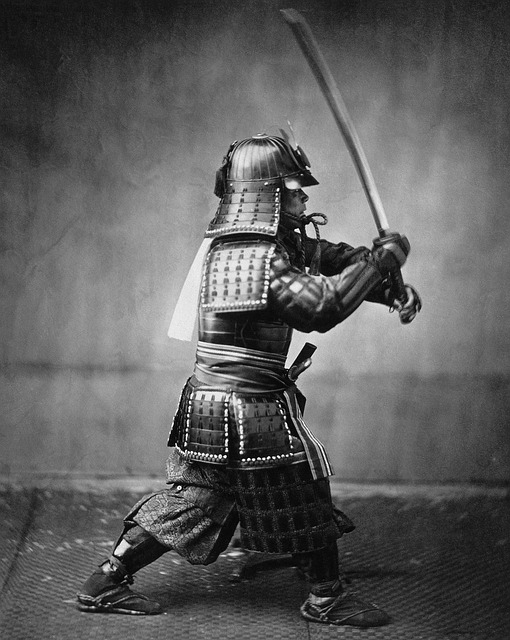
The samurai–the finest warriors ever to walk this earth– were ordinary men and women who were trained to perform extraordinary feats of courage. Just as writers, artists, dancers, or actors face internal obstacles that interfere with their work, so did the samurai. The bulk of his or her training (there were women samurai) was devoted to overcoming those inner obstacles that are no different than the obstacles artists of all descriptions face—anxiety, procrastination, self-doubt, hesitation, fear of taking risks, discouragement, over-analysis, depression, apprehension, impatience, and more.

target-211225_640The release of the arrow is the most difficult problem archers face; they think too much, as often do artists, explaining the sudden loss of spontaneity, the sudden loss of skill. Fear is a dragon that often keeps us from success. The samurai was taught: “Strike through the dragon’s mask.”

The samurai’s mind was trained to be fudoshin—to be “immovable,” to never budge from the main goal (for the artist, to get the work done.) They were taught that when your thoughts get “caught” (toroware), or “stopped” (tomaru) on internal obstacles, you will have trouble executing any action—when your mind gets “hooked” or “snagged,” the way the opera singer’s mind was snagged for two years. Better to acquire tomaranu kokoro, “a mind that knows no stopping,” that flows smoothly from idea to idea without being stopped.

What I did in my book Fighting to Win: Samurai Techniques for Your Work and Life was to pluck the wisdom of the samurai off the battlefield and apply it to everyday modern life producing a book of musha-shugyo, “training in warriorship” so that people might overcome the internal obstacles that are troubling them.

Zen and the Samurai

The warrior class was the first segment of Japanese society to embrace Zen. From the twelfth-century on Zen became known as the religion of the samurai. What explains the fit between these two apparently different approaches to life?

Zen is many things—a religion, a philosophy, a life-style. It is also a psychology, a psychology of action, grounded on decisiveness, spontaneity, strength of will, adaptability, courage, and bravery. It was this psychological aspect of Zen which appealed most to the samurai, for to rush forward to face the enemy even if only death awaited him, he needed what Zen taught—to act without hanging back, without reservations, and with total commitment.

Warrior Artists

samurai-67662_640The elite samurai were members of the cultured, aristocratic upper classes—the daimyos, the lords. Bunbu ryodo “The united Ways of the pen and the sword” refers to the tradition of the warrior artist, master swordsmen who were also poets, calligraphers, and painters. The famed Miyamoto Musashi is considered the greatest samurai swordsman who ever lived. He was also one of Japan’s foremost artists whose work today has a place in Japan’s national art museum.

Samurai Maxims

“A warrior must only take care that his spirit is never broken.”

“Success will always come if your heart is without disturbance.”

“Let your mind be free to function according to its own nature.”

“Stick to the larger view of things. If your vision is narrow your spirit will be narrow.”

“Adversity in life is essential to training.”

“The end of our Way of the sword is to be fearless when confronting our inner enemies and our outer enemies.”

“If you walk, just walk. If you sit, just sit. But whatever you do, don’t wobble.”

You needn’t look too far or too hard to see that these maxims and the inner training of the samurai Way apply to the artist’s life. Like the warrior, if the artist is to grow, it will be from within. The artist’s work, like a warrior releasing an arrow, should be like a drop of dew falling from a leaf or a fruit falling when it’s ripe.

© 2015 David J. Rogers

For my interview from the international teleconference with Ben Dean about Fighting to Win, click on the following link:

www.mentorcoach.com/rogershttp://www.mentorcoach.com/positive-psychology-coaching/interviews/interview-david-j-rogers/

Order Fighting to Win: Samurai Techniques for Your Work and Life eBook by David J. Rogers

Fighting to win Amazon

Click on book image to order from Amazon.com

or
http://www.barnesandnoble.com/w/fighting-to-win-samurai-techniques-for-your-work-and-life-david-rogers/1119303640?ean=2940149174379


Order Waging Business Warfare: Lessons From the Military Masters in Achieving Competitive Superiority

Waging Business Warfare812sCY9edLL._SL1500_

Click on book image to order from Amazon.com

or

http://www.barnesandnoble.com/w/waging-business-warfare-lessons-from-the-military-masters-in-achieving-competetive-superiority-revised-edition-david-rogers/1119079991?ean=2940149284030


17 Comments

Filed under Artists, Becoming an Artist, Blocks to Action, Creativity Self-Improvement, Eastern Philosophy, Samurai Techniques, Writers

A Vision Of What At Last You Could Be

frosty-472871_640Creative people in the arts and every other field are in the habit of reflecting a great deal on their goals, their success in reaching them, and the lessons they’ve learned from efforts that didn’t work out. They continually analyze what they do well and what they do not do well, and then exploit their strengths as far as they can and work to develop themselves in areas where they’re not as gifted.

And they have a particular way of dealing with apparent failures or defeats: they treat them as prods to even greater achievements and opportunities to learn lessons that are of value to their careers. People who have achieved a high level of excellence have not done so by accident and are not satisfied to reach merely an acceptable level of performance, but have much higher ambitions.

Possible Selves/Visions of the Future.

When you say “I’m a good person;” “I’m an ideal parent;” “I’m a poor public speaker;” “I’m very lazy” your self-concept is speaking. Your self-concept is the view you hold of yourself, your opinion of the kind of person you are and are not at the present time. The current self is the one we’re most familiar with. But we have other selves too, such as the selves we could be in the future. Those are our Possible Selves. One type of possible self is the ideal you’d very much like to become—a famous athlete or painter or writer, for example. There are also other selves you could become, as well as those you’re afraid of or dread becoming.

The possible selves you may hope for may include the happy self, the creative self, the wealthy self, the physically fit self, and the successful self. The dreaded possible selves could be the lonely self, the incompetent self, the drug addict self, the unhappily married self, the bag lady self. There is your good self that you’re proud of, and the bad or the guilty one that you’re ashamed of and prefer never to think or talk to anyone about.

A vision of the future and a possible self guided your decisions to choose to go to college and to take one job rather than another. A young girl sees a painting in a museum that moves her and decides on the spot on a possible self and a vision of the future: she will become a painter. She will go to art school and study.

When we think of possible selves and visions of the future that are positive and appealing we’re strong with hope. We’re liberated and set free because we realize that the present is not unchangeable. We never have to be a self we don’t wish to be, but can create a different self, a different future.

You’re free at every moment to create any variety of possible selves and visions of the future. Your life may not be going well—may be going all wrong in every way–but your positive possible future holds the promise of better days. But negative visions of the future make us unhappy and afraid. They can imprison us because they may cause hopelessness—the would-be dancer who thinks, “Day after day I don’t make progress. Nothing clicks. It’s probably foolish of me to think I could be a ballerina.”

The Impact of Possible Selves On Our Lives

ballet-542170_640Possible selves form the basis for personal growth and change. It becomes clearer to you every passing day that the main cause of personal success isn’t something that comes like a generous gift from the outside, but is your own conception of yourself and the development of your capabilities, that all real growth comes from within.

A clear view of what we could become sets our motivation in motion. No two ways about it: we must have a vision of the future to be committed to the goals we’ll need to reach the future we hope for. Day-dream, because it’s often in daydreams that our visions of the future are born.

When I was in the third grade the teacher read to the class a theme I’d written in which I wrote that playing football I was tackled and “fell to the ground like a blob of jelly coming out of a jar” and the teacher said “That is poetic language. That is a simile. David has made a simile.” Walking home after school, I decided that if I became a writer I’d get to write similes the rest of my life. Everything after that was aimed in that direction. That was my possible self that became my actual self.

In my freshman year of high school I made the track team as a middle-distance runner. One day I was getting dressed in the locker room. A senior middle distance runner—the reigning Chicago city champ –sat down beside me on the bench. That surprised me because we’d never spoken before. He said, “I’ve been watching you. You’re very good. You have more potential than you probably realize, but you’re very shy and I can see you don’t have confidence. You don’t have a conception of what you could be. Pick up your head, be strong, and say to yourself over and over, ‘I could be the best. I could be the fastest runner in the city.’ Work hard.” It meant so much to me that he cared and had taken the time to share that with me, and I took it to heart. So now I had a new ambition, a new vision of the future that right then I vowed to devote myself to, and a new possible self, a new identity that I would become. I began to study innovative training methods and to apply myself and worked very hard.

The First Step

berries-302341_640A vision of the future of yourself as a highly successful artist or athlete or effective business person self is the first step in achieving that future. It will not only guide your decisions, but will immediately set planning in motion. It will help you focus on goals, and keep you from needless distractions.

What if right now you were to forget about the past, wipe the slate clean of failures and false starts, and start fresh, setting the goal of becoming as successful an artist, writer, sales woman or whatever as you could possibly be—to buckle down? Is that goal appealing, or don’t you much care? How would you go about achieving that goal? What would you do? Where would you start? Where would the goal take you? What would your life be like were you to achieve that goal? What would be the link between the actions you would engage in now at the present time—and in the next six months, and the next year and years beyond that– and the attainment of the future you envision?

Set short-term and long-term goals and reach them, one after another, overcoming impediments as they appear. You must have positive images of the person you’re aiming to become and negative images of the person you want to avoid becoming. Other people can serve as models—pro and con–and so can your past.

Think of your prior successes and of what steps were needed for you to succeed then and repeat the same again. Past success is the most powerful and direct basis for judging if you will succeed in achieving a new goal. If you believe you have the ability—the skills, motivation, and know-how–to achieve what you want to achieve and have done so in the past, you will try to achieve it. If you feel that way, you’ll be confident and will not likely to be haunted by self-doubt, possibly a person’s main internal obstacle. You’ll have high expectations of future success. You’ll think about past failures as useful lessons.

Share your vision with other people: talk about it; be confident. But stating an ideal possible self isn’t enough to produce sustained effort and changes in behavior. For that to occur, your goal needs to be linked with specific strategies, concrete behaviors such as an artist working with an excellent and more experienced artist, increasing your knowledge of your field, sticking firmly to a regular work schedule, and developing the skills essential to your work. Strategies help to focus on goals while also anticipating and planning how you’ll handle setbacks by developing plans of action and contingency plans. Most successful people in every field point to strategies as the main cause of their success.

Some of your goals—the important ones—won’t be easy. You’ll have to acquire new capabilities. A defeat, setback, or loss or lapse of commitment can have a devastating effect on a possible self, so be prepared. An agent’s cruel reply to an inexperienced writer’s submission can destroy the writer’s possible author self—she may quit– or a businessman’s blunder resulting in the loss of a major contract, or a field goal kicker missing the kick that would have won the game.

When you’re discouraged the hoped-for self is replaced by a weakened, vulnerable one. But even the smallest encouragement has the effect of bolstering your spirits. Being resilient and accepting setbacks as an unavoidable part of work life that even the greatest in any field can’t avoid is essential for maintaining a firm, unshakeable motivation.

It may seem illogical to think of anything negative and seem better to block all negatives out and think only of positive possibilities. But a balanced view—thinking of both positive and negative possibilities–has been shown to improve focus and to lead to important self-improvements and good results. The fear of not succeeding drives many people to unexpected success.

Having both positive and negative images in mind serves as a carrot and a stick both, reminding you of what glorious things may happen if you stay on track, as well as what may happen if you lose your commitment and fail to follow-through effective strategies: if you don’t develop your skills to a high level you will not improve.

Figuring out how you’ll become your desired self and avoid becoming your undesired self can lead to tremendous, life-changing results. Action is a necessity.

© 2014 David J. Rogers

For my interview from the international teleconference with Ben Dean about Fighting to Win, click on the following link:

www.mentorcoach.com/rogershttp://www.mentorcoach.com/positive-psychology-coaching/interviews/interview-david-j-rogers/

Order Fighting to Win: Samurai Techniques for Your Work and Life eBook by David J. Rogers

Fighting to win Amazon

Click on book image to order from Amazon.com

or

http://www.barnesandnoble.com/w/fighting-to-win-samurai-techniques-for-your-work-and-life-david-rogers/1119303640?ean=2940149174379


Order Waging Business Warfare: Lessons From the Military Masters in Achieving Competitive Superiority

Waging Business Warfare812sCY9edLL._SL1500_

Click on book image to order from Amazon.com

or

http://www.barnesandnoble.com/w/waging-business-warfare-lessons-from-the-military-masters-in-achieving-competetive-superiority-revised-edition-david-rogers/1119079991?ean=2940149284030


9 Comments

Filed under Artists, Becoming an Artist, Creativity Self-Improvement, Dancers, Developing Talent, Human Potential and Achievement, Expectations, Goals and Purposes, Motivation, Writers

Decisive Choices

“We have to learn to pay close attention to our lives right now, not just tomorrow or next week or next year–or even in an hour.”

Moments of Decisive Choice

cliffsDuring the Nazi occupation of Europe there were rescuers and bystanders. The majority were bystanders. They stood by. Rescuers helped people who were being hunted. They hid them; they fed them; they helped them get away.

Bystanders claimed they had no choice because the penalty for harboring fugitives was death. Rescuers said they had no choice but to risk death because they were doing the right thing. But each did have a choice. The rescuers could have said, “I won’t help,” and the bystanders could have said, “I will.” They each made a decisive choice.

We make decisive choices all our lives. At one time or another we’ve chosen to be brave or cowardly, to be happy or not, to fall in love or not, to shirk our responsibilities or live up to them. You make a decisive choice to take a risk to start a new career, to face up to a serious problem, to end something or start something, or to get yourself out of a miserable predicament.

We fell in love with freedom as children and have been trying all of our adult lives to have more of it. During moments of decisive choice you’re as free as you’ll ever be. You come to an impasse, then say, “I’ve had enough of this routine, of this style of life, of these habits, of thinking the same old shop-worn thoughts, of this place, of these people. It’s time to change.” You’re bold. You declare yourself: “This is what I believe and this is what I’ll do.” The happiest people in the world are the ones that have made up their mind. Then you set sail; you catch the wind.

Moments of No Choice

Just as there are moments when you make a decisive choice, there are moments when you should make a decisive choice, but don’t. Moments of no choice are moments when you would be happiest leading one kind of life or another, but lazily or fearfully you follow the course already set.

You would think that being in a bad situation, people would want to find a way out. Lizzie would start a better life as soon as she leaves Ted, and she knows that. No one has to tell her Ted is no good for her; that her life is being ruined. But months pass and she makes no choice. Lizzie never leaves him and her life stays the same. People look at her and say, “What a shame. What a wasted life.”

Burt makes no choice, permitting his loneliness to continue, coming home from work, switching on the light, and as he does every other night sits down on the edge of the bed to wonder wearily what the rest of the world is doing. Many people moan about their troubles, but do nothing to get rid of them.

Have you noticed how many people who make no choice are leading lives that are beneath them? How many can’t seem to imagine a better life? How many doubt themselves and lack confidence?

 Choice-Point Living

sunrise-165094_640We have the freedom at any point to freeze the action of our lives, take a step back, and decide to continue as we are or to start out in a more promising direction. At any moment you’re at liberty to:

1. Stop the action, reflect, and make an honest appraisal of your life as it stands. Is it progressing the way you want?

  1. Will you continue it as it is, or will you change its direction? You don’t have to wait until next week or next month, or until you feel completely up to it. Right now as you read this you can stop the action, look up from the screen, and ask, “Do I really want to continue my life as is, or should I change it?”
  1. Plan the changes you’ll make. Set goals because if you have goals clearly in mind you will be motivated to achieve them, be more persistent in pursuing them, more self-confident, better able to overcome obstacles, and more successful.
  1. Take decisive action and do what you’ve decided to do.

That’s intentional Choice Point Living–purposely stopping, appraising, deciding, and acting. It may start when you find yourself thinking, “Everything is fine—I’m leading a good life and have so much to be content with. But yet, yet, I can actually feel in my gut, feel physically, that something isn’t right, something is seriously wrong somewhere, and something should be done.”

 Points of No Return/No Retreat Societies

In your life there have been and will be again points of no return, periods of total commitment. Now you’re fully mobilized for action. There is no longer any other choice to be made, no “should I do this or should I do that?” or “Should I wait?” There’s no stopping you from the direction you’ve consciously chosen. Now there is no time for second thoughts. Everything is clear to you. Everything is perfect. You can remember some of your points of no return and how glorious you felt making up your mind and committing yourself.

Among Native American warriors there were “no retreat societies.” These warriors declared themselves. They were in the fight to the finish, and there was no going back, no retreating. Your points of no return have been like that. They’ve been some of the happiest times of your life. Once you were decided you were in it straight to the end.

What points of no return do you remember best?

Is it time for another?

The Single Purpose of This Present Moment

japanese-cherry-trees-324175_640We’re accustomed to thinking of broad vistas–of where we will stand in life and how well we will be doing in six months or five years or ten or twenty. We neglect to notice how uncertain life is and how time is racing, how our lives once gone are gone forever. We’re no different than cherry blossoms that don’t last long in the wind that blows them from the tree. All we remember is how beautiful they were. Our lives are five minutes long.

We have to learn to pay close attention to our lives right now, not just tomorrow or next week or next year–or even in an hour. Why concern yourself with how you’ll feel a day from now, or in a minute, or what may happen, when far more important is what needs to be done right now, this present moment.

Gather your strength, or courage, or defiance into a decisive choice. Come to life.


Moments of Decisive Choice—Strength, Freedom

Moments of No Choice—Lack of Confidence, No Change

Choice Point Living—Conscious Change, New Goals, Setting Sail

Points of No Return—Total Commitment, Strength

No Retreat Societies—No Going Back, Happiness

The Single Purpose of This Present Moment—Awareness, Confidence, Focus


© 2014 David J. Rogers

For my interview from the international teleconference with Ben Dean about Fighting to Win, click on the following link:

www.mentorcoach.com/rogershttp://www.mentorcoach.com/positive-psychology-coaching/interviews/interview-david-j-rogers/

Order Fighting to Win: Samurai Techniques for Your Work and Life eBook by David J. Rogers

Fighting to win Amazon

Click on book image to order from Amazon.com

or

http://www.barnesandnoble.com/w/fighting-to-win-samurai-techniques-for-your-work-and-life-david-rogers/1119303640?ean=2940149174379


Order Waging Business Warfare: Lessons From the Military Masters in Achieving Competitive Superiority

Waging Business Warfare812sCY9edLL._SL1500_

Click on book image to order from Amazon.com

or

http://www.barnesandnoble.com/w/waging-business-warfare-lessons-from-the-military-masters-in-achieving-competetive-superiority-revised-edition-david-rogers/1119079991?ean=2940149284030


3 Comments

Filed under Blocks to Action, Developing Talent, Human Potential and Achievement, Goals and Purposes, Motivation

To Think, To Decide, To Act: Trust Only Movement

Living at White Heat

highway-393492_640“A motto for man: to do and through doing to ‘do’ himself
and be nothing but what he has made of himself.” Jean Paul Sartre


Katherine is such a good woman, a kind-hearted woman, obviously very bright, and likable, friendly, and generous to a fault. There is so much to her, so many gifts, so much to offer, so much promise, but she’s snagged, she’s caught, she’s trapped, and she is not looking for a way to escape. And the days pass.

Someone asked her if she’s happy and she said she is. But the next morning she thought about it and realized she isn’t. It’s no mystery to her why. She knows she’s not nearly as ambitious as she might be, and hasn’t found a heartfelt purpose to get up for in the morning. And she’s in a job she doesn’t like, but makes no attempt to find anything more suitable. Her partner abruptly ended their long relationship, and she’s lonely. But she’s made no effort to find someone else or to look for an activity she would enjoy and would divert her attention from her loneliness. She has friends, but none of them close.

Her life has settled into a tedious routine. From her building’s elevator over to the garage, the mile to the office, lunch at the Greek restaurant, the mile home, and the elevator. Laundry Wednesday night about seven and shopping on Saturday morning, the newspaper on Sunday, and on Monday at 8:30 her favorite TV show.

She looks in the mirror twice a day and sees she’s gaining weight around the middle, and doesn’t like that, but doesn’t do anything about it. No different from a billion other people, she never stops to ask herself, “Why am I living this life when I could always a live another.” She could be leading a better life, a life with meaning, if she made new decisions and followed through on them, no more apathy and no excuses.

To think, to decide, to act, to do something, to get things done, to attend to what needs attention, to reduce the distance between where you are now and where you want to be in life–that’s a human being’s inherent nature. You were not created to be stationary, to be limp and weak and unmoving, but were brought into this world with movement in mind. Action is your natural inclination, a fulfilling life your true destiny. It’s what you’re body and mind are designed for: to make choices and changes, take risks, accept responsibility, exert energy, and achieve purposes. You only reveal the person you truly are in decisive action. Only then do you reach your enormous possibilities. But you must trust only movement.

If we cast a glance at people in general we find the opposite of a continuous advance toward a better life. Standing still in life and doing nothing is plainly the common condition, resisting change even if one’s life is quietly unbearable. Letting opportunities to explore new ways of being and discover new strengths, new people, and new pleasures slip away, and slip away again.

 Recognize the Clues

No one has to tell you there’s a discrepancy between the life you’re leading and the better one you have the potentials to be leading. You know something is wrong before anyone else, and you know it better than anyone else. And if you are intelligent and aware, that knowledge never leaves you alone. Some people intend to change their life, and may swear to others they will. “Someday,” they say, “I’ll do this and then I’ll do that and things will get better.” But when they cast an honest eye on their life in progress they see certain indications that their life is going wrong, certain clues.

An Inappropriate life

There comes a moment when you realize that you could have just as well have lived a thousand different lives but have lived this one, that you could just as well have taken a thousand different paths but took this one; that perhaps they are the wrong life and the wrong path.

Running Out of Time

From time to time you have to ask yourself if you’ve have made the most of your limited time here on earth. Then in a moment of quiet panic some people realize they haven’t. Entering the Garden of Eden, God called to Adam, “Where art thou.” He was asking Adam to account for himself. We all have to account for ourselves. X days and years of the time allotted to you have passed. How far have you gotten?

Hideouts and Cover Stories

People often go to extreme lengths to fabricate a cover story to explain why they’re not making the most of their lives. They hide out. You know people who are hiding out. You can even recite their cover stories, you’ve heard them so often: “This didn’t work out and that didn’t work out. My luck was bad, and things were so dead set against me. I’m as smart as anyone else, but I didn’t get the breaks.” During moments of clarity they become aware that the best part of themselves has never come out of hiding. They cower behind the cover stories they invented and escape to hideouts. You want to say, “Wake up! Stop hiding. Don’t settle for a crummy life.”

Cancelled Dreams

At some point some people give up and abandon their dreams. They continue the rest of their days recalling how pleasant their dreams once had been. Dreams are frail things that disappear if they aren’t turned to reality.

Inaction

You may be a person of action. If you are, when there’s something to be done, you do it. Hard work is necessary if you are to have the life you deserve, so you work hard. You have purposes to attend to and you attend to them. There are obstacles to conquer, so you conquer them. But this man is paralyzed by inaction. He doubts himself and is afraid. He doesn’t do what’s necessary to improve his life. When he is set back he gives up trying and doesn’t bother anymore. His determination withers away. He can follow routines–up at six, home at six–because routines require no imagination or initiative; no risks, no commitments. But when it comes to stepping out of the familiar stream of daily routine and taking action to make more of his life–changing careers, starting a business, leaving a disappointing life behind, moving to a different place, for example– he’s in over his head, he’s helpless There’s procrastinating over the small things–failing to return a library book on time–and there is procrastinating over the big things–failing to make important life-changing decisions and take action, procrastinating your existence into oblivion.

Disillusionment

There’s supposed to be some vital meaning to our lives. But there comes a time when some people are forced to ask, “Is this all there is?” They realize that their lives have little meaning, and without meaning there isn’t much to life. They long to be breathless with desire for–something, anything.

 Unfulfilled Promise

In high school Kim was somebody. But now she realizes that something somehow happened, and she’s been left behind. She’s nowhere near the bright future that once seemed so clearly, like a beacon, to lie ahead. She can’t shake that off. She lives in the past, in her glory years. She’s snagged; she’s stuck. She makes no progress.

A Mechanical Existence

There’s a saying: “Be sure you’re riding the horse and the horse isn’t riding you.” Some people choose to be ridden by the horse. They’re living all right–their heart is beating and they breathe– but they’re not leading their life at all, but are being led. Their lives are too easy, too predictable, and too uneventful, and are headed nowhere. There’s nothing in store, no excitement, no surprises.

A Phony Life

Many people live one way while their true self urges them to live a truer, more authentic, more suitable way. They often stay busy in a whirlwind of activity that unbeknownst to them is designed to allow no time to stop and ask, “Am I doing the best I can, am I going right, or have I just gotten good at leading a phony existence?”

 Living with White Heat

When you put behind you an inappropriate life, hideouts and cover stories, cancelled dreams, inaction, unfulfilled promise, a mechanical existence, and a phony life and disillusionment and choose to live a decisive style of life, you become committed to your actions with your whole person. You live with white heat. When you decide with your whole being, all that you are and all that you can be and hope to be are right there with you. You throw yourself completely into the decision. You’re in this thing to the end and your commitment knows no bounds. You focus, you bear down. There’s something out of the ordinary about you that people recognize, a seriousness of intent, a rare intensity. You’re not fooling around, you’re deadly serious about your life and its goals, and you’re not run of the mill. You’re a different breed of man, a different breed of woman, and that’s obvious. Your determination is as hard as granite. You’re unbendable. You never deviate from your decisiveness.

We’re born and hurled into the future. What’s unique about you sets you apart and launches you in a direction. Always follow where your gifts, your talents, and your intelligence lead you. You were meant to let yourself be drawn in that direction. Why resist?

A man was curious and attended an art show to ask a famous sculptor if he had advice for his son John, a sculptor who was just beginning. The sculptor said, “Yes I do have advice. It’s very simple. You tell John to pick up his mallet and his chisel and make chips.”

We’d be better off, you and I, if like a sculptor sculpting our own lives, we too made a decision to make chips.

© 2014 David J. Rogers

For my interview from the international teleconference with Ben Dean about Fighting to Win, click on the following link:

www.mentorcoach.com/rogershttp://www.mentorcoach.com/positive-psychology-coaching/interviews/interview-david-j-rogers/

Order Fighting to Win: Samurai Techniques for Your Work and Life eBook by David J. Rogers

Fighting to win Amazon

Click on book image to order from Amazon.com

or
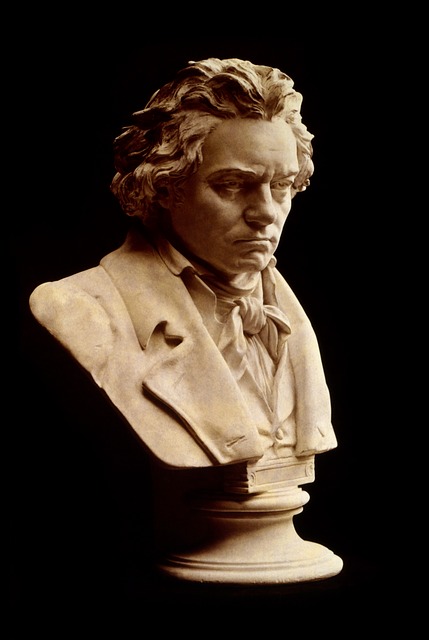
http://www.barnesandnoble.com/w/fighting-to-win-samurai-techniques-for-your-work-and-life-david-rogers/1119303640?ean=2940149174379


Order Waging Business Warfare: Lessons From the Military Masters in Achieving Competitive Superiority

Waging Business Warfare812sCY9edLL._SL1500_

Click on book image to order from Amazon.com

or

http://www.barnesandnoble.com/w/waging-business-warfare-lessons-from-the-military-masters-in-achieving-competetive-superiority-revised-edition-david-rogers/1119079991?ean=2940149284030


Leave a comment

Filed under Blocks to Action, Developing Talent, Human Potential and Achievement, Goals and Purposes, Motivation

The Doctrine of Ki, Part II: Clearing Your Mind, Increasing Your Strength

“If your mind is preoccupied, your ki tenses, and you become awkward.”

“Form follows ki, and ki follows the mind.”

(Adapted from the eBook Fighting to Win: Samurai Techniques for Your Work and Life, David J. Rogers, Crossroad Press, 2014)

Shin is your frame of mind, ki is your vital energy, and ryoku is your power. They always go together, and they may fill you with strength or with weakness. In this post we’ll look at shin and whether it is yielding strength or weakness.

A Common Tale

I have two friends, Jack and Bob, who seem to me to be similar in many ways. However, in spite of their similarities, they’re very different. Jack is discouraged and depressed easily, and sees work life (and personal life too) as a burden full of trouble that one has to suffer through.

Bob, on the other hand, is buoyant, energetic and optimistic. Both men have suffered setbacks in business and outside it, but they react to them very differently. Jack dwells on his. He moans and becomes grumpy and irritable. Bob picks himself up and reenters the stream of life eager to see what lies ahead.

Jack endures his job the way one endures a dreaded disease. He has told me more than once that whatever he touches turns to shit. Bob moves quickly from one success to another.

A major difference between these two otherwise similar men is the difference in their frame of mind, their shin. Because their shin is very different, so are their ki and ryoku. Bob’s ki is positive and his power of action is all right there, 100 percent. Jack’s ki is negative and his power is almost nonexistent. Their shin is a difference that makes all the difference.

Olympic Athletes and You

What separates winners from losers? What differentiates Olympic athletes from other world-class competitors? According to a group of researchers who studied America’s top wrestlers, the difference is not in physical ability. And it’s not in training methods: they’re pretty standard. The difference is in the athletes’ frame of mind, their shin—in what they think.

Men who were eliminated in U.S. Olympic trials tended to be more confused or depressed before the match—that’s very bad shin— while the winners were positive and relaxed, which is very good shin. Those who made the Olympic team were more in control of their reactions than the losers, who were more likely to become upset emotionally.

Without seeing even one wrestling match, the researchers were able to predict 92% of the winners by using profiles of the athletes.

Feeling free and easy, being relaxed and calm, not being caught up in problems or worries, thinking positively and optimistically, expecting to do well, being committed to what you’re doing, not being grumpy or irritable, feeling fearless, buoyant and confident … all these are positive shin, positive ki, ryoku power-producers.

Experiencing worry, anger or hostility, losing heart, being afraid of something lying ahead of you, worrying, expecting defeat, holding a grudge, feeling timid or uneasy and being confused in action . . . these are examples of negative shin, negative ki, power-depleters.

Exercises for Transmitting Your Ki

  • Reflect on your thought habits and change negative to positive. Many people, possibly most, simply don’t realize how much negative ki they’re creating. To find out for yourself, a useful technique is to stop the action for five minutes once a day and write down your thoughts as they pop into your head. After you’ve filled a few sheets of paper put a plus sign after each positive ki thought and a minus sign after each negative thought you’ve listed. Any thought that creates power, good chemistry with others, optimism or forward movement gets a plus; and any thought that diminishes your power, creates bad chemistry, is pessimistic or prevents you from moving forward toward your goals and responsibilities gets a minus.Ask yourself, “Which predominates, positive or negative?”
  • Reject negative shin thoughts and replace them with positive, power-producing thoughts. Do this whenever a negative thought appears in your mind. Whenever your thoughts drift off to the negative, stop them, then substitute positive shin thoughts—“I like this person.” “I’m having a good time.” “We can work this out.” “I’m happy.” “I’m going to succeed.” Always reject negative ki and consciously replace it with positive.
  • Spit. To add determination to your rejection of negative thoughts, spit out the troublesome thought. Go “thoo” and spit out the thought.
  • Pay special attention to “red alert,” negative ki thoughts. Whenever you feel any of the following–afraid, scared; confused, indecisive; distracted, upset; depressed, sad or miserable; worried, nervous, anxious, upset, tense, pressured; beaten down, defeated, your spirits sagging; listless, unmotivated and bored; shy, non-assertive, timid; defensive, ready to hit back, bitter; guilty–your ki is negative, your ryoku power is weak. Right away, remind yourself of shin-ki-ryoku. Tell yourself, “Remember, make your thoughts pure and transmit your ki.”
  • Control your expectations. Negative-expectations, negative-ki people are that way only out of habit. By developing new, more positive shin thought habits you condition yourself to have positive expectations and you put more power into your actions. More than 100 studies of 15,000 people show that those who expect to succeed are happier, healthier, and more successful. Always jump to the positive. Be like a fish that is swimming in one direction, but can quickly turn and go in the opposite.
  • Constantly remind yourself of the importance of positive shin, positive ki. Make a pact with someone. If one of you is becoming tight, irritable or gloomy, the other is to say, “C’mon now. Don’t forget. Transmit your ki.
  • Write out reminders on three-by-five index cards and put them in prominent places around your house and office. “Plus creates plus.” “Good shin creates good ki creates power.” Read them aloud, and with feeling, from time to time. On each card draw a large minus sign and a large plus sign. Draw an arrow from the minus to the plus to remind yourself to move your negative thoughts to positive.(Martial artist Bruce Lee visualized his negative thoughts written on a piece of paper, then saw himself wadding the paper into a ball, lighting it with a match and watching it burn to a crisp. He said the thoughts never returned to disturb him.)
  • Draw a ring of harmony around yourself wherever you are. You can generate goodwill and cooperation by imagining a yellow ring of harmony around you constantly. Make the ring red or blue if you like—the color doesn’t matter. All that matters is your imagining the ring around yourself and making certain that whenever another person passes into it, there is cooperation and harmony between you.
  • Stop judging others negatively. People can pick up very quickly if you’re thinking they’re dumb, nasty, unpleasant, overly talkative, ugly, poorly dressed, too highly paid for what they do, etc. If they sense that you don’t like them, they won’t like you. So instead, like them, respect them, find real value in them, even if you have to work hard at it.
  • Be generous with your feelings. If you like people, let them know about it. Transmit your ki to them. Much of the negative ki in business is caused by the supervisor who always criticizes and never praises. Parents often do the same with their children. Simply let people know you appreciate what they’re doing and morale will improve immediately—in business and in the home.
  • See your positive ki being passed from you to others. See it as a ray of white light being transmitted by you to another person or a whole group of people. Actually visualize it moving from you to them under the direction of your mind.
  • Maintain your ki even in defeat. Everyone gets beaten. The question is not whether you’ll experience defeat, but how you’ll handle it when you do. When you’re beaten—by another person, an event, a situation—keep your ki positive and strong. Never let the defeat “penetrate your depths,” never let it get to your shin. When you havc a crisis, positive shin can rescue you. Be able to say, “I lost this one (job, person, disagreement, etc.) but I’m not defeated. I’ve failed, but I’m not a failure. I’ve still got the only solution I need—me. ” Even in defeat—especially in defeat—keep your ki going full blast.

You can choose how much power you will have by choosing what to think.

© 2014 David J. Rogers

The Next Post

The next post will show that “the way to draw the power of ki is very easy,” and that “If your ki is settled, your actions will flow.”

For my interview from the international teleconference with Ben Dean about Fighting to Win, click on the following link:

www.mentorcoach.com/rogershttp://www.mentorcoach.com/positive-psychology-coaching/interviews/interview-david-j-rogers/


How to Get The Book

Order Fighting to Win: Samurai Techniques for Your Work and Life eBook by David J. Rogers

Fighting to win Amazon

Click on book image to order from Amazon.com

or

http://www.barnesandnoble.com/w/fighting-to-win-samurai-techniques-for-your-work-and-life-david-rogers/1119303640?ean=2940149174379


Leave a comment

Filed under Developing Talent, Human Potential and Achievement, Eastern Philosophy, Expectations, Samurai Techniques