Tag Archives: artists and writers

Samurai Concepts for Creatives Part 2

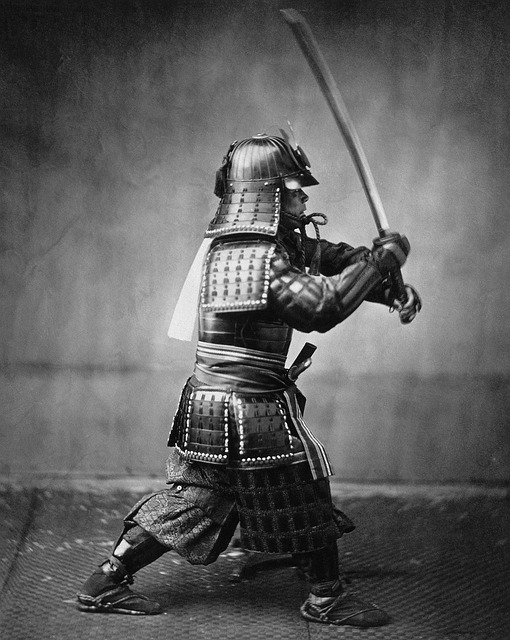
In the last post, subtitled, “A New Language for Creative People,” I applied Samurai terms to the lives of creatives to show that those terms have relevance to writers, artists, composers, architects, and actors today, a thousand years samurai-statueafter “the tramp of warriors sounded like a thousand convulsions of the earth,” and “the shouts of warriors, the whistling of arrows, the thunder of the feet of foot soldiers and the hooves of chargers did not cease.”

Do: The Concept of a “Way”

The Japanese “do” (pronounced “dough”), means “way,” short for “way of life” or “life path.” That a discipline is a Way is indicated by the do suffix at the end of a word. Thus kendo (ken, sword; do, way) means “sword Way,” or Way of the sword. Bu (warrior) do (Way), refers to the attitudes, behavior and life-style of the Samurai warrior.

In kyudo, the Way of the bow, no quiver is worn and the archer fires just one arrow. From this the archer is to learn daido, a “principle that operates in all things.” The archer is to come to value his life more fully, for each arrow is like the japanese-flowers-ikebanatotality of his life. You have but one life; thus you shoot but one arrow. The Samurai was taught, “The Way is your daily life.”

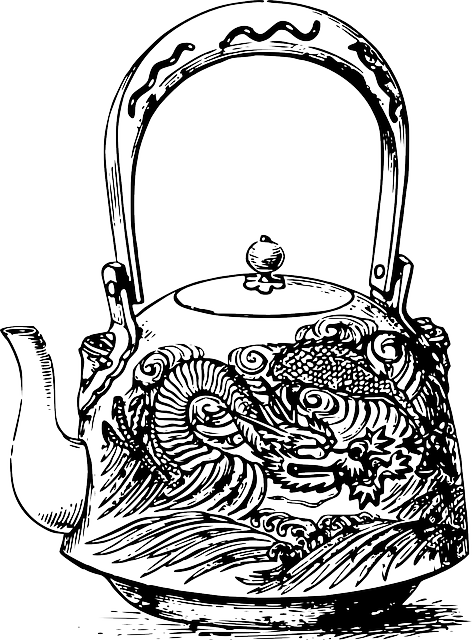
A serious writer’s or artist’s life is a “Way,” for example, the Way of the Writer,” “the Way of Writing,” and “the Way of the painter or sculptor”– just as in Japan there is the Way of floral arrangement, the “Way of flowers,” and “The Way of tea.” It’s axiomatic that what applies to one teapot-37046_640Way has application to all the other Ways. For example, a basis of the Way of the Warrior is showing courage in the face of adversity. And a writer or actor and painter too faces adversity and will benefit from having a warrior’s courage.
When creating is a Way you say to yourself, “I am full of unrealized potentials and special gifts that need to be developed, and am what I make of myself. I take full responsibility on myself and am choosing a creative’s life of my own free will.  I have felt that creative calling for a long time.  So many years and days allotted to me have passed and I believe I haven’t gotten far enough. I’m clear now and I have stores of energy in me that will make possible extraordinary achievements. My life now will be an existence that I’m designing to my own specifications. I have the conviction that the life I now envision is the life I was always meant to have.”

On the creative’s Way you’re committed to:

  • Finding a best outlet for your talents
  • Perfecting your aptitudes and skills
  • Discovering and expressing yourself
  • Creating beauty
  • Expressing truth
  • Communicating with a public
  • Learning a discipline, becoming part of a tradition
  • Prevailing over difficulty
  • Developing and improving
  • Being paid and/ or compensated in other ways such as through recognition and acclaim
  • Finding pleasure in creating and the creatives’ life

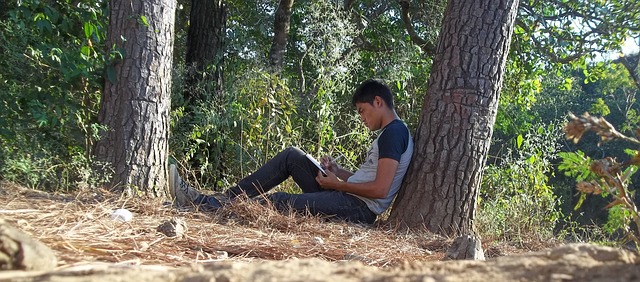
Skills can be taught, but a Way can’t. There’s no searching for a Way. It comes to you on its own when you’re ready. And when it does come, you know.  As a boy-paintingchild, you begin writing or drawing no differently than anyone else, but at some point—it could be at the age of five or a hundred and five–you begin creating more purposefully than other people. Then almost without being aware of how it happened, out of the processes of creating,  gaining knowledge of your craft, and the craft’s world, and growing in skill, you are “taken” by it fully and completely and find yourself on the Way of the painter, writer, or actor, etc.

The logical end of the creative’s Way is to become a Real Writer, or Real Painter, or Real dancer, and so forth—to become known by your family, friends, teachers, and audience, and to define yourself as “someone who is serious about creating.”

Let your work become a Way.

Mokuteki Hon’I: “Focus on Your Purpose’’

When as a person doing creative things you discover what you must accomplish with your talents and that becomes a major goal there comes something new and extraordinary into your existence. You’re electric with that rarest of qualities—intensity. Doing the work as well as you’re able becomes a Purpose.

The Samurai was taught, Mokuteki hon’I, “Focus on your purpose.” With a purpose your every act takes on power. Obstacles, once so intimidating, fall away because your purpose is more powerful than the obstacles. You feel a zest, a tingle. Your imagination is on fire. It is strength to be of one mind, complete and undivided, fully committed to a life with purposes.

When you make a purpose out of what a moment before was merely a responsibility, or a chore, or a duty by thinking, “This, what I am doing now, is a-focused-mindmy purpose,” extraordinary achievements become possible. Impediments become light as feathers.

Begin every project and every day, every time you return to work after a break, with your purpose in mind. Say the words, “Focus on your purpose.” I can’t tell you how many times in my life I’ve said “Focus on your purpose” aloud to myself and been inspired by those words. Thousands.

Kufu: “Struggling, Wrestling, and Grappling with Something

Until a Good Solution Is Found”

I was interviewing people for a job that required the ability to write reports. While he wanted the job, Jack confided that he had a problem—writer’s block. Anyone who will apply for a writer’s job and be so honest as to tell the person doing the hiring that he has problems writing is my kind of guy. He told me more. “When I sit down to work, all that I want to say seems clear to me. But when I actually start I have a tough time. The ideas and words don’t come. I try, but after about an hour I give up. What do you think I should do?”

“Don’t quit after an hour,” I said.

The point I was making was a simple Samurai one. I was telling Jack to kufu his way out. Some problems are one-hour problems, others are two or five hour or longer problems.

Kufu. It’s a wonderful concept that applies equally to the small everyday tasks and problems in a creative’s life and to the big ones too. It means giving yourself completely to discovering the solution or to finding the way out of your difficulties and to your creative goal.

It means to struggle, to grapple, to wrestle until you find the solution. It is holding nothing back in reserve. It is closing ground on the problem and never retreating or hanging back. When you take the kufu, grapple-your-way-out approach, you know that somewhere ahead of you lies a breakthrough point, a moment when you will get the better of the creative problem or the task. It is there awaiting you. All you have to do is remain concentrated and focused on the goal.

“Who knows,” I told Jack, “but your breakthrough point could come at sixty-one minutes or seventy-five or may take days. If you give up after an hour, hand-299675_6401you’ll never reach it. Kufu your way out of this writer’s block.”

Months later Jack came to tell me that he had gone back to his writing to try the kufu approach of staying with it, trying it again and again, no matter how long it took. Suddenly, he said, writing had become not totally effortless, but noticeably less difficult.

No one is spared resistances to the creative breakthrough experience. Jack continued to encounter concentration problems from time to time, but he had learned what many people never learn: the kufu spirit of staying with it until the problem is solved.

Makoto: “Sincerity”

Makoto is the Samurai precept of precepts and a concept of action that the Japanese of today value above all others. It is usually translated into English as “sincerity.” But it does not mean sincerity in the sense of “I’m sincerely pleased with our conversation.”

Makoto means putting absolutely everything you have, everything you are into an act—all of your heart, and all your spirit, mind, and all of your physical strength.  To hold anything back in reserve or to hesitate in any way whatsoever is for the creator to act . . . insincerely.

Creative people are tremendously productive individuals who at their best practice makoto every day, putting all their talents, skills, and training into their work, holding nothing in reserve.

The Samurai terminology I’ve described in the last two posts express ideas that have been useful to creative people everywhere in the world as they all aimed so steadily at perfecting their skills and so devotedly pursued their Way.

japanese-garden


© 2016 David J. Rogers

For my interview from the international teleconference with Ben Dean about Fighting to Win, click on the following link:

www.mentorcoach.com/rogershttp://www.mentorcoach.com/positive-psychology-coaching/interviews/interview-david-j-rogers/

Order Fighting to Win: Samurai Techniques for Your Work and Life eBook by David J. Rogers
Fighting to win Amazon

Click on book image to order from Amazon.com

or

http://www.barnesandnoble.com/w/fighting-to-win-samurai-techniques-for-your-work-and-life-david-rogers/1119303640?ean=2940149174379

Order Waging Business Warfare: Lessons From the Military Masters in Achieving Competitive Superiority

Waging Business Warfare812sCY9edLL._SL1500_

Click on book image to order from Amazon.com

or

http://www.barnesandnoble.com/w/waging-business-warfare-lessons-from-the-military-masters-in-achieving-competetive-superiority-revised-edition-david-rogers/1119079991?ean=2940149284030


13 Comments

Filed under Artistic Integrity, Artistic Perfection, Artists, Becoming an Artist, Courage, Creativity Self-Improvement, Developing Talent, Human Potential and Achievement, Eastern Philosophy, Fighting to Win, High Achievement, Inner Skills, Samurai Techniques, The Writer's Path, Warriors, Writers

Samurai Concepts For Creators

A New Language For Creative People

A newspaper reviewer of my book Fighting To Win: Samurai Techniques For Your Work and Life thought that a unique feature of the book is that it exposes the reader to an exciting new vocabulary–Asian terms for self-improvement for which there are no Western equivalents. The book begins with an example of what the book is about: the application of the psychological and spiritual insights of the samurai, the most remarkable warriors ever to walk the earth, to the everyday lives of ordinary working people—the most magnificent people of all.

samurai-161642_640It says: “The tramp of warriors sounded like a thousand convulsions of the earth. The shouts of warriors, the whistling of arrows, the thunder of the feet of foot soldiers and the hooves of chargers did not cease,” and tells the story of a sales woman who uses insights from the samurai Way to overcome her fear of an intimidating prospect and makes a sale.

I think it will be worthwhile to apply a select few of these terms to the lives of creative people–the Way of the artist, the Way of the writer, the Way of the composer, the architect, the performer–since so many creative people read my blog and the concepts will be so beneficial to them. As you read, think of the many applications there are to your creator’s life as so many people have.

Musha Shugyo: Samurai Training. Samurai were trained to fight in the service of a lord—with supreme self-confidence, courage, bravery, and superb samurai-67662_640skill with weapons.  Four things were especially important to samurai:

Duty—we must make good what we owe.

Self-Control—body, mind, spirit, emotions under control.

Commitment to Immediate Action—“The Way of the samurai is immediacy”—no delays.

Constant Self-Improvement—no resting on your laurels; always striving to do better; to develop your skills to the highest level you’re capable of. What creator is not trying to improve?

Ryuu: Dragons. For samurai warriors of feudal Japan all obstacles in a person’s mind, heart, and spirit were “dragons.”  A creator’s dragons are no longer of the fire-breathing variety that scared him or her as a child. They’re dragon-149393_150now a different species entirely, and to become all the creator you wish to become you will have to break completely free of them. When a samurai overcame a dragon he was “striking through the dragon’s mask.”

I arrived early at a conference room where I was to speak. Two men and a woman who’d come to hear me were early too and were at a table with their copies of Fighting To Win open. They seemed to be working hard and I asked “What are you working on?” The woman said, “We’re discussing our dragons.”  The main dragons the samurai faced and creative people face too are:

Fear: Creative women and men experience fear most every day. The samurai set out to master fear, to learn to be no more ruffled whatever he was facing—however terrible–than “someone sitting down for breakfast.”

Being Afraid to Take Risks: The desire for certainty, the sure thing, often makes us cowards. There’s no room for sure things in a creator’s world. Samurai were taught that the greatest rewards lie one inch from the foe’s blade—edge in close, take a chance. Why aren’t we more confident and bolder?

Thinking Too Much: To be creatively free creators have to learn to think much less about what might go wrong.

Doubting Yourself: The creator’s most powerful dragon is dwelling again and again and again on his shortcomings, on what he lacks.

Hesitating: Wanting to do something but stopping.

Cowardice: The Chinese language permeates the Japanese language. The Chinese character for “cowardice” is composed of two symbols, “meaning” and “mind.” Creators are often finding too much meaning in things—he or she thinks too much—often worrying and fretting and dissipating their creative energy, that fuel creators need so much of. If you believe you’re thinking too much and that it’s driving you away from instead of to your work, this could be a dragon you’ll want to get rid of.

Try to make it a point to remember the term tomaranu kokoro. No small thing in samurai fighting, it has been called “the secret essence” of the samurai martial-arts-291051_640Way. More important, it’s relevant to the Way of the Creator.  It means “a mind that knows no stopping.” If you have ever seen a master swordsman in action, you’ve witnessed tomaranu kokoro. Without once stopping he attacks, feints, cuts, slashes, turns, leaps, spins, and thrusts in a whirlwind of action.

The reason he is able to move so smoothly, effortlessly and quickly, his sword a blur, is that he is doing the same thing in his head. His body moves without stopping because his mind is tomaranu kokoro. His mind doesn’t stop to worry, to ask “what if”—“What if I lose?” “What if I die?”—or the creative person’s “What if I’m not good enough?” It doesn’t stop for anything. It keeps moving and facilitates the movement of his body.  You can see that tomaranu kokoro is an ideal state of mind for the creator–an uninhibited, free, fluent, effortless yet focused mind and body.

Toraware—its opposite–means “caught,” and tomaru means “stopping” or “abiding.” You might want to remember them too, because they help explain why so many exceptionally talented creators are not as successful as they have the potential to be. It’s when your thoughts get caught (toraware) or stopped (tomaru) that you have trouble executing a creative action. It’s when your mind doesn’t flow from one idea to another but gets hooked or snagged on self-doubt or worry or anger, etc.  that you are prevented from fully functioning  creatively. Recall the last time you had problems with a painting, sculptor, story, composition, or performance and you were upset or troubled. It was because your thoughts got caught or stopped; they didn’t flow.  You were all tied up—your mind, your body.

Whenever you find your thoughts getting caught or stopped, tell yourself to remember toraware, “caught,” and tomaru, “stopping.” More important, tell yourself to get back to tomaranu kokoro, the mind that knows no stopping, and return with confidence to your work. Let your mind be free to function according to its own natural free-flowing nature.

Fudoshin: The Skill of Making the Body Obey the Mind and Immovable Mind

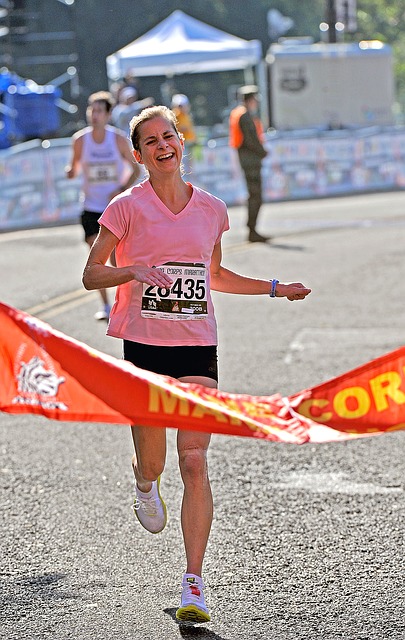
Have you ever run in a marathon, felt pain, thought of stopping but refused to?  If so, you’ve tasted fudoshin, immovable mind. No matter what you were athletics-229808_6401going through your mind wouldn’t budge from the goal of finishing. The samurai spoke of iwoa no mi, “rock body” and wanted his commitments to be as immovable as a mountain. Why not yours?

The skill of making the body obey the mind is this: going into action—getting your work done, being creative, thriving, reaching success in spite of your dragons.  Not letting any dragon stop you. You needn’t go off to the top of a mountain to overcome a dragon.  You can say, “OK fear, come along if you want. “ Self-doubt, hesitation, thinking too much—you can’t stop me.” “Come on, tag along. But you cannot stop me. I’ve got a story to write, an etching to complete, a performance to give, a career to manage.”

Every day in studios, work rooms, and theatres some creators are thinking: “In order to do it (whatever it is) I’ve got to first overcome my problem—my fear (or shyness, lack of self-confidence, bad habits, indecisiveness, etc.). Once I get rid of that baby, I’ll be all right. Then I’ll be able to create my great work.” The real problem isn’t what they think it is. It is not the fear or lack of confidence. It’s their belief that the fear has the power to prevent them from doing what they should be doing.

If the creator forgets about himself and his dragons completely and focuses only on adapting to what his creative life path requires of him, no dragon will ever stop him. The dragon has no right to stop you. But your mind must be immovable. Keep your mind focused on the task. Put negative emotions out of the equation.

*******

In my next post, Part II of this topic, I’ll discuss more samurai concepts creative people can apply to improve their work and lives.

© 2016 David J. Rogers

For my interview from the international teleconference with Ben Dean about Fighting to Win, click on the following link:

www.mentorcoach.com/rogershttp://www.mentorcoach.com/positive-psychology-coaching/interviews/interview-david-j-rogers/

Order Fighting to Win: Samurai Techniques for Your Work and Life eBook by David J. Rogers

Fighting to win Amazon

Click on book image to order from Amazon.com

or
http://www.barnesandnoble.com/w/fighting-to-win-samurai-techniques-for-your-work-and-life-david-rogers/1119303640?ean=2940149174379

Order Waging Business Warfare: Lessons From the Military Masters in Achieving Competitive Superiority

Waging Business Warfare812sCY9edLL._SL1500_

Click on book image to order from Amazon.com

or

http://www.barnesandnoble.com/w/waging-business-warfare-lessons-from-the-military-masters-in-achieving-competetive-superiority-revised-edition-david-rogers/1119079991?ean=2940149284030

11 Comments

Filed under Artists, Blocks to Action, Boldness, Confidence, Courage, Creativity Self-Improvement, Eastern Philosophy, Fearlessness, Fighting to Win, Inner Skills, The Writer's Path

Confidence of Creator Champions

I

How confident a creator are you? The reason I’m asking is that many creative people are blessed with talent that’s astonishing and dazzling and have magnificent promise. Yet, they puzzle everyone—especially themselves–by not reaching the heights as expected because although they have all the talent they would ever need, they don’t have the confidence to make full use of it.

It isn’t a question of ability. Creators who lack the inner skill of confidence may have as much ability or more ability, or much more ability than their confident martial-arts-291051_640counterpart who is less gifted but much more successful. Creators who aren’t confident avoid activities which, were they confident, they might excel in.  So they’ll never know how successful they might have been had they been confident.

But when a highly confident creator begins a project, she not only thinks she will do it well, she believes she will do it superbly, believes that her novel, painting, or stage performance will be remarkable. The higher your confidence, the higher you’ll set your goals and the stronger your commitment to achieving them will be. And it is high, challenging goals, not easy goals that lead to major achievements. When you’re confident, you work harder. But low-confidence creators facing difficulty lower their effort or stop completely.

I was asked to do a teleconference. Though it seemed I was talking about many topics in that hour, there was one that I went back to time and again. And that was the need for you, for me, for he and she to have confidence because the more thinking I do, the more I believe confidence is the single most important success factor. Whatever the field, wherever you live, it’s number one. Talent without confidence will not take a writer, artist, actor, composer, or performer—or English sales person, Swedish teacher, or French social worker far.

There is no premium on talented people—he’s talented, she’s talented. Practically everyone I know is talented. But talented people who are also confident and are making full use of their talents and reaching the successes they desire are a much rarer breed. Some degree of that stuff we call talent is just one of the requirements of the creator who stands out. But it’s naïve to think that talent without confidence is sufficient to take a creator to great heights.

It’s my theme in everything I do—something I discovered a long time ago–that there’s more to everyone than they realize, more to you than even you are medal-1622523_640aware of. You are more extraordinary than you know. Being as great as you are, don’t sell yourself short.  Be confident. Aim much higher. Then you must take up the idea of becoming all the writer, painter, actor, dancer, composer you can become.  Make that idea part of your life. Think of it. Dream of it. Let your brain and every part of you be full of that idea. That’s the way to great success.

II

As a boy I was shy and had been trained by my parents to be modest and self-effacing, maybe the same as you. There was a girl in my Chicago neighborhood I had my eyes on. But after all, I was shy. I never asked her out, never talked to her. Years later she told me she wished I had.

I think I spent half my childhood and adolescence running. I loved running so much—the feel of it through my body, the joy. My first season running the 800 meters on the high school track team I did well, finishing second in the conference championship. As the second season was beginning the best senior middle distance runner sat down beside me on the bench in the locker room. We’d never spoken and I was wondering what he wanted. He said, “You’re a talented runner. I see you working harder than anyone. You’re a nice guy. But you’re not confident enough. It hasn’t sunk in yet how really good you could be. You’ll have to get over that. You have to be bold and have a concept of yourself as the best, the champion, if you hope to BE the champion.”

His doing that so selflessly, knowing I would be his main competition, meant a great deal to me and put me on the right path.  I did win the championship and set a record. Like runners, all creators and all people in whatever life’s pursuit have a need if they are to reach their peak achievements for:

Supreme self-confidence

An empowering concept of themselves

The realization that with application and never-stopping persistence high excellence is possible.

If a creator lacks self-confidence he/she must acquire it. The most powerful oscarand direct basis for confidence is past success.  If you have some kind of proof that you have the ability to achieve what you want to achieve—the skills, motivation, and know-how–because you’ve succeeded in the past, you will try to achieve it again. If you feel that way, you’ll be confident and will not likely be stopped by self-doubt, a creator’s main psychological obstacle. Strong self-confidence helps you overcome the scourge of discouragement, that dreariness that has ended thousands and thousands of creators’ careers.

Even the most self-doubting or discouraged creator has had past successes. No one fails at everything all the time. There is always something very positive that will fuel your confidence to fasten onto during periods of doubt—prizes you’ve won, awards you’ve received, the best piece of work you’ve produced, a new skill you’ve learned, a compliment. Make them the foundation of becoming the champion you deserve to be.

We are what our thoughts have made us.  Confidence says, “Never mind failures. They’ll wake you up.” Be a creator-warrior. Dwell only on success. Kick every other thought out of your mind.


© 2016 David J. Rogers

For my interview from the international teleconference with Ben Dean about Fighting to Win, click on the following link:

www.mentorcoach.com/rogershttp://www.mentorcoach.com/positive-psychology-coaching/interviews/interview-david-j-rogers/

Order Fighting to Win: Samurai Techniques for Your Work and Life eBook by David J. Rogers

Fighting to win Amazon

Click on book image to order from Amazon.com

or

http://www.barnesandnoble.com/w/fighting-to-win-samurai-techniques-for-your-work-and-life-david-rogers/1119303640?ean=2940149174379

Order Waging Business Warfare: Lessons From the Military Masters in Achieving Competitive Superiority

Waging Business Warfare812sCY9edLL._SL1500_

Click on book image to order from Amazon.com

or

http://www.barnesandnoble.com/w/waging-business-warfare-lessons-from-the-military-masters-in-achieving-competetive-superiority-revised-edition-david-rogers/1119079991?ean=2940149284030

14 Comments

Filed under Confidence, Creativity Self-Improvement, Developing Talent, Human Potential and Achievement, Goals and Purposes, High Achievement, Inner Skills, Self-Confidence, Warriors

Art and Memory

“A man’s work is nothing but the slow trek to rediscover, through the detours of art, those two or three great and simple images in whose presence his heart first opened “(Albert Camus).

I

I’m now well, but for years I wasn’t. I lay in bed day and night in an upstairs room in a silent house alone but for my son’s cat Monty beside me to my left cat-114629_640and my dog Jack to my right: my beloved companions. I watched no TV, listened to no radio, read no newspapers, and heard no music.

From that bed I could see out the bedroom windows the crowns of a grove of tall, flourishing trees.  I watched on the trees the seasons change, the leaves brilliant, blinding green in spring, crimson and gold in autumn, brittle and curled when they came to rest on my window sill. Some winters there was more snow there on the branches of those trees than other winters.

Unable to write anymore or to read the books I loved or live a physical life. I decided I would not waste time wondering why what had happened to me had winter-1153669_640happened.  I would have to stay alert and live a life of the mind, and I set a project for myself. I would reconstruct my life to date through my memory. From that bed I would flee into solitude and journey backwards in time.

We set the dead aside as though we have no need of them. But I wanted to pluck out of the long ago the people who had populated my world when I was growing up. I had lived among them and knew their gestures. I had heard them speak so many times, and wondered greatly about them. But I didn’t know who they really were, didn’t know what their days and nights had been like. I realized that if I wanted to be with them, though most had died, I would have to discover them in myself where they all still lived.

I was growing older. My children were gone now—my daughters Stephanie and Alice and my sons Evan and Eli. Their laughter no longer brightened the house. I didn’t know what would become of me. But I wanted to see things as they were before forgetfulness mounted and memories faded and were lost or my life ended and the memories I had assembled ended with me.

I longed to walk through the house where I had grown up and to look out on the street and see the wealth of familiar things that were before me every day days-and-nights-pic_copyin my youth, no sights as dear to me as what I saw from the kingdom of my porch. I wanted to hold my father’s hand again and look into his kind eyes. I wanted to revel in everything–the hum of voices, the smells of night air, those early-evening hawks floating above my house and tucking their wings in to their bodies and diving like falling kites, the taste of my mother’s dinner in my mouth, the sight of her trying on a new hat, and of my younger sister Sharon—my pal–who died so young as a little girl coming up the stairs in her favorite beige coat with a fur collar as I remembered her.

I decided I would try to remember accurately and when I was able to write again, if ever, I wouldn’t lie about what I had discovered because in writing or painting—or acting–one should never lie.  Russian Anton Chekhov said, “Art has this great specification: it simply does not tolerate falsehood.”

And so hour after hour, again and again in my search for truth I burrowed back into myself and evoked the days and nights of my childhood. I notebook-86792_640remembered as well as I could what I had experienced myself and what had been told to me. When there in that room  I came upon something that didn’t make sense to me, and I couldn’t explain, or didn’t remember clearly, or couldn’t possibly know, I relied on my imagination.

My father’s brother died tragically and violently, and my great uncle was a war hero under enemy fire–a rescuer of wounded men–and too, died tragically. I thought about them so many times—of the stories of them I’d been told–and decided that what I’d been told must be incomplete. So I inferred what their real stories were that I hadn’t been told. I concluded that my uncle, that troubled and most charming man we all loved, must have let himself be murdered.

Loneliness, solitude, and isolation are at the core of a creator’s life as they are of a sick person’s life. I learned to adjust to them because I had no choice. I became an expert on despair and pain during that period—despair that is beyond despair, pain beyond pain.

II

At first my remembering was over in a few minutes and was very general and unclear. Memories were there in my mind and then slipped away. I might be distracted by a sound: a storm wind blowing wildly through my trees, or a siren. But then I slowed down and focused intently and remembered in finer and finer detail.  At first I might remember being six and feeling again that tingle of anticipation—of joy– I always felt in my boy’s strong body–my arms, handsmy legs, my fingers–and climbing flights of thickly carpeted stairs with my family—my father in front of me, my brother John behind–and entering an apartment. Then I would remember a hallway; then in a glass case that was taller than a man my Aunt Sarah’s menagerie of little colored glass animals, a rearing white unicorn, a red deer. Then the smell of turkey. It was a holiday. We were all happy.

Detail is the secret of remembering, I discovered–details and details of details, a multiplicity of details, as it is the secret of all the arts when they are done beautifully, a preciseness of vision. That was an important revelation. “Thus the greatest poets are those with memories so great that they extend beyond their strongest experiences to their minutest observations of people and things” (English poet Stephen Spender).

III

My life, like yours, has been carried away by passing days. But time doesn’t disappear absolutely, gone forever, but remains inside—every image and horizon-768759_640impression once experienced is waiting patiently to be retrieved—“those thousands of things which all of us have seen for just a flash…which seem to be of no consequence…which live in our minds and hearts forever” (American novelist Thomas Wolfe).

Over and over, hour after hour, day after day I was moving in closer, backing up and rethinking until I was satisfied and could say, “Yes, yes, that is how it was when I was a boy. I’ve gotten it right.” I did that carefully. I had all the time in the world because I didn’t know if I’d ever be well and wasn’t in a hurry.  I didn’t know if I’d have what it takes to transform memories into meaningful images and words, into art. But I was growing more confident now that one day I would.

Night would be falling before I heard footsteps on the stairs and a door opened and I could answer the question I’d waited so eagerly for all day: “Hello, dear, what did you remember today?”

Time passed and I was well again. Then I left that room.


© 2016 David J. Rogers

For my interview from the international teleconference with Ben Dean about Fighting to Win, click on the following link:

www.mentorcoach.com/rogershttp://www.mentorcoach.com/positive-psychology-coaching/interviews/interview-david-j-rogers/

Order Fighting to Win: Samurai Techniques for Your Work and Life eBook by David J. Rogers

Fighting to win Amazon

Click on book image to order from Amazon.com

or

http://www.barnesandnoble.com/w/fighting-to-win-samurai-techniques-for-your-work-and-life-david-rogers/1119303640?ean=2940149174379

Order Waging Business Warfare: Lessons From the Military Masters in Achieving Competitive Superiority

Waging Business Warfare812sCY9edLL._SL1500_

Click on book image to order from Amazon.com

or

http://www.barnesandnoble.com/w/waging-business-warfare-lessons-from-the-military-masters-in-achieving-competetive-superiority-revised-edition-david-rogers/1119079991?ean=2940149284030


15 Comments

Filed under Artistic Integrity, Artists, Growing Up Stories, Memory, Personal Stories, Writers

Joys Of A Workaholic Writer Wasting Time

I’ve been trumpeting to anyone within ear shot that workaholic artistic people frog-1339897_640with their powerful and constant and sometimes obsessive need to work at their craft so they might improve and be more successful are the hardest working and most productive individuals on this planet.

That’s all true, but today my plan is to not produce a thing.

Today I will explore the joys of wasting time.

When I was a business consultant giving presentations to executives I’d say “Ladies and gentlemen I have utmost respect for your capacity for work, and I know you think you’re a hard worker. But you should spend a day with a ballerina. Then you’ll see what it means to work hard.” I’d ask, “For example, how many of you feel so strongly about reaching excellence that you’d practice till your poor muscles screamed and your feet bled?”

But I’m going to waste time all day. I’ll just see what happens.

A number of studies comparing novices with experts in most fields support the idea that because of their great knowledge and skill, experts are able to accomplish with almost no effort what non-experts can accomplish only with difficulty or can’t accomplish at all. That’s just common sense, isn’t it?

But common sense or not, that’s not true of artistic work. In fact, the opposite is true. Expert artists of all sorts—you very well may be one–work harder, not less hard than non-experts.  So:

THE BETTER SCULPTOR, PAINTER, NOVELIST, ACTOR, OR POET WORKS HARDER.

But I’ve taken this Wednesday in August off and I’m not thinking of anything like that because rarity of rarities I don’t feel a bit like working and have frog-914522_640decided to play hooky. I’m playing over again and again Simply Red singing the exciting “Fairground” and I feel terrific.  I’m writing this and don’t have the faintest idea where I’m going with it, and that feels great. I feel free, as if I’m in a forest as the Zen people say sitting quietly under a tree, doing nothing, while the roses grow by themselves.

At the moment it’s 2:10 p.m. In a few hours my wife Diana will be coming home and we’ll go out to eat. But first I want to finish this, wherever it’s taking me.

My “Let’s accomplish absolutely nothing today” rebellious mood began this morning when I woke up in yesterday’s street clothes on the couch at five according to the TV I’d left on all night. I just lay there and thought of my goals for the day, the way I start every day—take a look at the long email an editor sent and write a response thanking him, and continue finishing up my book I’ve designed for those whom I call “Stage Three Creators” who are not Stage One or Stage Two creators.

(If you’re curious, according to me:

Stage I creators don’t know the first thing about their craft, but don’t know they don’t know

Stage II creators realize they don’t know the first thing about their craft. So they try to learn as much as they can about their craft

Stage III creators realize there’s a lot more to know about their craft than anyone told them)

But I could tell my goal-setting mind and my I’m-all-set-to- work-let’s-get-the-show-on-the-road mind weren’t synchronized today. So my normal write-read-study daily schedule was tossed out the window and I thought, “For today at least, good riddance.  I think I’ll just putter around the house without feeling guilty.”

I can’t be away from written words for more than a few hours. So I went downstairs to my bookcases and tried to find something that would make me

booksfeel I’d gotten something out of the day even if I didn’t write a word. I passed up Chekhov, Virginia Woolf, Ernest Hemingway’s Death in The Afternoon, which I’d never read, and Flannery O’Connor whom I’ve never read, and John Cheever’s collected stories and Raymond Carver’s Cathedral, and so forth.

And there packed in among all my so-many books I saw that little paperback my father had bought me that early autumn afternoon he’d taken my older brother John and me for a commercial boat ride on Lake Michigan when I was eight or nine, I think—The Great Short Stories of Robert Louis Stevenson. Ten brilliant tales by the best-loved storyteller of all time, the book says. Dad had taken us to a book store in Chicago’s downtown (which we Chicagoans call The Loop) before the boat ride and told us completely by surprise that we could each pick out any book we wanted and he would give it to us. We weren’t rich. What a luxury for me to have my own book.

It was the first book I’d ever owned, that I’d taken my time going through the store and picked out myself. I can remember as though it is happening now looking over the racks for the right book—will it be this one or that one? I looked at the book’s price this morning—35 cents—and at the copyright date—so long ago. The pages are brown and the paper is brittle. The cover is bent but not torn. Through the years I’ve taken good care of it. Wherever I’ve moved, whatever heaven or hell I was going through, it’s come along. How could I possibly be without it?

What pleasure it gives me to see that little book again and to hold it in my hands. It meant so much to me that day. During the boat ride (the boat was named The Blue Dog) I remember that I could hardly take my eyes off the book though it was a lovely day, the sunlight reflected so brightly off the towering buildings along Chicago’s luscious skyline, the surface of the lake blue-gray and green. But it was my book, the first book that I alone had picked out and now could read as many times as I wanted and could keep.

It’s back to work tomorrow for me, but now I’m thinking I don’t know if my father giving me that book was in any way instrumental in setting me off in the direction of a writer’s life. But here I am thoroughly, completely, and irrevocably a writer. And I’ve never since childhood wanted to be anything but.

Writer's Block


© 2016 David J. Rogers

For my interview from the international teleconference with Ben Dean about Fighting to Win, click on the following link:

www.mentorcoach.com/rogershttp://www.mentorcoach.com/positive-psychology-coaching/interviews/interview-david-j-rogers/

Order Fighting to Win: Samurai Techniques for Your Work and Life eBook by David J. Rogers

Fighting to win Amazon

Click on book image to order from Amazon.com

or

http://www.barnesandnoble.com/w/fighting-to-win-samurai-techniques-for-your-work-and-life-david-rogers/1119303640?ean=2940149174379

Order Waging Business Warfare: Lessons From the Military Masters in Achieving Competitive Superiority

Waging Business Warfare812sCY9edLL._SL1500_

Click on book image to order from Amazon.com

or
http://www.barnesandnoble.com/w/waging-business-warfare-lessons-from-the-military-masters-in-achieving-competetive-superiority-revised-edition-david-rogers/1119079991?ean=2940149284030

9 Comments

Filed under Artists, Goals and Purposes, Personal Stories, Wasting Time, Work Production, Workaholic, Writers

Creative People’s Goals

I’d been talking to a novelist and asked her what she was up to. She said, “In the next three years I want to accomplish five things. First I will …Then … And also …” Was I impressed. She was clear and confident about her goals and I was shocked because many writers, like many artists, dancers, actors, composers, and other creative people don’t give their goals enough thought. So much so that I can just hear them thinking right now, “Oh, this post is going to be about goals—that kind of stuff. So I’ll read something else.” Big mistake.

In the business world goals are talked about all the time. Everyone who works in an organization has goals. But many creators have an aversion to goals that Set Goalsmystifies me. And they invent phony-baloney excuses for not pursuing them such as: “Creative people don’t need goals; they’re too spontaneous,” “I don’t see the value,” “I’ve never been able to stick to goals,” “I don’t have time for that,” and so on.

But the creator’s ever-active, never-resting mind—your mind, my mind–is confused when it doesn’t know what to do—when it doesn’t have clear, specific, empowering goals. (Be sure the goals are specific; general goals are meaningless.) The last thing a creative person needs is a muddled brain. So the mind’s greatest burden is to decide very clearly what must be done. When you discover what you must accomplish—today, in a year, in five–uncertainties disappear and you become productive. And productivity—the production of fine works one after another for the whole length of a successful career—is the main goal of creative people. Productivity is what all their routines and rituals are aimed at.

Many creative people don’t realize that usually the best in a field is also the most prolific. Except those who produce very little, but everything they do produce is perfect and hasn’t a single flaw.

Think Hard

Think hard about your creative goals because the more thought and the more intense the thought you give to shaping, reshaping, and fleshing them out, the  clearer and more specific they’ll become and the more strongly you’ll be committed to achieving them. That’s not just my opinion. It’s an indisputable fact.

The more intense you are about reaching your goals, and the more you talk about them with family, friends, and other creators and teachers and mentors the more likely you are to overcome obstacles and persevere and reach them. Simply stating a goal to another person–saying as that novelist said to me, “Here is what I’m going to accomplish”–increases the likelihood that you’ll accomplish it.

Then you feel a sudden zest, a tingle. Your imagination catches fire.  You’re Be optimisticfilled with optimism. Then you’re confident, and bear in mind that in every field on earth without exception–especially in the arts–more people fail because they lack confidence than fail because they lack talent.

It is confidence and not talent that’s the secret of most successful people’s success. Confident creators are rarer than talented creators. I take for granted that you’re talented. You wouldn’t have gone into acting, writing, painting, etc. in the first place if you weren’t talented. But if you have faith in yourself you’ll reach higher levels of success than other creators of equal talent who lack that faith in themselves. Think about that. Read that sentence again. You must never for more than five minutes lose confidence. Whenever you feel your confidence seeping away say, “Hey, enough of that.”

When your goals are highly charged  and you’re committed to them heart and soul, there’s hardly an obstacle that you can’t overcome—big obstacles, small obstacles, old obstacles, and new obstacles—no obstacle out in the world, and no obstacle in you. Then you have both tremendous power and clear direction.

Run Through the Tape

The majority of artists and writers, like the majority of all other people, relax when the completion of a task or the achievement of a goal—even the goal of happiness–is within reach. Is it laziness or weariness or over-confidence or burnout or because the pressure is off? There are theories, but no one has been able to adequately explain why. Many athletes relax in the vicinity of victory, and entire armies do too. And many individuals, athletes, armies, writers and other artists just plain give up and quit.

Particularly when a long time is necessary to achieve a goal, you may become exhausted and disheartened. It’s only then, when you feel you’ve given everything that should reasonably be asked of a person and can’t go any further, yet continue bravely on nevertheless, that you show your true worth.

The best-trained track men and women don’t run to the tape, they run through it. They race to an imaginary finish line a few feet farther than the actual one. Run through the tapeIt’s that imaginary line they are racing to reach. There’s a tendency in many people not only to relax when they’re approaching their goals, but also when they’ve reached them. I know a man who had been trying to get a book published for years without success, but lost all ambition once he was told it was to be published.

We have to learn to pour it on and run through the tape and pursue our goals with unwavering, powerful commitment, striving much harder, not less hard, the closer we get to reaching them. Tell yourself, “Run through the tape. Run through the tape.”  When your friend Kate or Jack or Milly or Bill is easing up tell them, “Run through the tape. That’s the only way you’ll succeed.”

Stick like Glue

Stick to your creator’s goals like glue. Never let a gap open between you and them. Many people fail to reach their potential because they let too much distance open up. Or they let too much time elapse and lose momentum. Or they lose focus, frittering their days and years away as if they have an unlimited supply of them.

Whatever creative success is for you, attach yourself to it. Where it goes, you go. Always be gaining ground on your goals, your dreams. Never fall back. Never get so caught up in the B.S. of daily life that you forget all that your craft means to you. The creator’s life is the best life—you know that. If you’ve gotten sidetracked, straighten up and set out again with determination and courage. Fear nothing.  If you need to make changes, make them, sacrificing this, sacrificing that—they were mere impediments. Constantly remind yourself of your goals. Then stick to them like superglue.

© 2016 David J. Rogers

Parts of this post are based on material from my book Fighting to Win: Samurai Techniques for Your Work and Life.

For my interview from the international teleconference with Ben Dean about Fighting to Win, click on the following link:

www.mentorcoach.com/rogershttp://www.mentorcoach.com/positive-psychology-coaching/interviews/interview-david-j-rogers/

Order Fighting to Win: Samurai Techniques for Your Work and Life eBook by David J. Rogers

Fighting to win Amazon

Click on book image to order from Amazon.com

or

http://www.barnesandnoble.com/w/fighting-to-win-samurai-techniques-for-your-work-and-life-david-rogers/1119303640?ean=2940149174379

Order Waging Business Warfare: Lessons From the Military Masters in Achieving Competitive Superiority

Waging Business Warfare812sCY9edLL._SL1500_

Click on book image to order from Amazon.com

or

http://www.barnesandnoble.com/w/waging-business-warfare-lessons-from-the-military-masters-in-achieving-competetive-superiority-revised-edition-david-rogers/1119079991?ean=2940149284030

8 Comments

Filed under Artists, Confidence, Goals and Purposes, Optimism, Success, Writers

Serendipity in a Creator’s Life

My journey on the life path of the writer (you may be on a creator’s life path too)–studying writers and the writer’s life, and writing and reading a great Road with the-sun-470317_640deal of my time, setting writing as a high priority in my life; thinking of it all the time; sacrificing for it—was shaped by serendipitous experiences which are probably not very different from yours.

In the third grade when I was seven, the teacher, Miss Gross, stood at the front of the room and read to the class my theme–I’d described playing football. I’d said when I was tackled “I fell to the ground like a blob of jelly coming out of a jar.” Miss Gross said to the class. “David has used poetic language. He’s written what’s called a simile.” That single little event—her saying that and showing admiration for those few words,  and making me feel that it was somehow worth commenting on—immediately sparked something in me, let something  break free in me.

David youngRunning home down the street after school feeling wonderful and liberated—when I was young I was almost always running–I decided I would become a writer if there were such people and make similes as often as I wanted all the rest of my life. Miss Gross then encouraged me and worked with me and nurtured me. She arranged for my stories and poems to be published in newspapers and magazines. She asked me to apply myself and work hard at the writer’s craft. I was awarded first prize in a regional essay contest.

What if there hadn’t been a generous, giving Miss Gross in my life? What if she hadn’t been that kind of extraordinary teacher who holds students in highest regard and inspires them to aim high? What if she hadn’t cared enough to help me?

At about the age of nine I happened to be playing in front of the TV instead of playing tag outside with my brother and sisters when an old black and white English movie came on.  I knew nothing about acting, but there was one actor Laurence Olivieron the screen who I could see was doing something remarkable. He was just different, unlike any of the other actors, though I couldn’t say how. But I could see that something right there on the screen. What he was doing, how he was acting, the impression he was making made me feel a sensation which I now know was awe. I realized I was watching some exceptional thing I had never seen in movies before, in my life before. I pointed to him and asked my mother who that was. She was a movie buff. She knew. “That’s Laurence Olivier. He’s the greatest actor in the world.” Even so young I had recognized supreme mastery, the highest attainment of an art.

I decided that I wanted one day to be able to affect people the way his performance had affected me—he had made me gasp. And I thought the best way to do that was to write things so beautiful that people would gasp too. A major event for me in college involved another teacher, Dr. Hunt, a well-known visiting professor of creative writing who one day read to the class a piece I’d written. (The assignment was to describe a person by describing a piece of clothing they were wearing, and I wrote “My Father’s Corduroy Jacket,” the best writing I’d done to date.)  When she finished reading, she said, “A teacher waits her entire career for a student who can write like this.”  She had me visit her in her office and helped get my work in a prestigious literary journal. So there was my second encouraging Miss Gross who happened to be on the faculty for one semester—the same semester it fit my schedule to take her class.

To create beauty—to write beautiful poems and stories—I decided depended on how moving the subject was and also the beauty it was expressed with, and Writing near a treeI placed a great deal of emphasis on the imagery in the writing.  In college I’d read Gerard Manley Hopkins’ “God’s Grandeur,” and was greatly impressed with its beautiful language. I never forgot Hopkins and years later (before Amazon.com or Barnes & Noble) I had the urge to read a book studying his imagery so that it might affect my imagery. Wherever I traveled—and I did extensively, big cities, small towns–I visited new and used bookstores and in every bookstore I browsed for such a book, but never found it.

Once I was to give a speech in Rock Island, Illinois. It’s a small city in the western part of the state that I had never visited before. I discovered that the hotel I was to stay in had just been built and had opened its doors only a few trash-25081_640days before. It had hosted a conference for fire fighters. The attendees had left just the day before. The event at which I was to speak came next. I arrived at midnight and was given the only available room. I laid my bags on the bed, and then noticed something in the trash basket. Apparently it had been left by one of the firefighters and the maid had overlooked it when she cleaned the room.  There it was: a full-length book on the imagery of Gerard Manley Hopkins—another serendipitous event, the only available room, a fire fighter who liked Hopkins too, and a maid who’d forgotten about a trash basket.

Years later I’d been writing and researching fifteen or sixteen hours a day for many months to meet a book deadline, neglecting my wife, neglecting my children, concerned only with putting enough words on a page to satisfy me—words, words, words, words, words–an abstract existence. Everything, every experience that would go into the book had to be translated into language.

That night I’d had it; I couldn’t work another minute, stoic though I am; could not pull from my agonized brain another word. I quietly so as not to wake anyone left my home at about 3:00 a.m. and walked the Chicago streets trying to decide if I wanted to continue leading a grueling, neglectful life like that or follow a more conventional life, committing myself to “a regular 9-5 job.” It was a cool, pleasant night—very dark—with a soft, filmy mist in the air. Should I continue a writer’s difficult life?  Should I just finish this book and give it all up?

Then I noticed ahead of me something on the sidewalk precisely in the middle of a pool of bright white light cast by a street lamp, as though it had somehow Spotlightbeen known that I would find my way to that little street, and that object—whatever it was–had been placed there as though in a spotlight very carefully for me and me alone to see. I went to it and bent down and picked it up. It was a book—of all things a book–not a glove someone had dropped, or a scarf, but a new, thick hard-cover book. You see: I could not get away from the written word. I took this as a serendipitous sign that like it or not a writer’s life—imperfect, isolated, and much too demanding–was my identity and that it was futile for me to think writing would ever not be at the center of my existence.

It was a waste of time to imagine that I could ever get away from a life that had been shaped by Miss Gross, Laurence Olivier, Dr. Hunt, a literary fire fighter and forgetful maid, and the lesson of that book left for me in the pool of white light late at night on a Chicago street.

I’m sure you’ve had similar serendipitous experiences steering you straight to the craft you love and will always love–your writing, painting, acting, dancing, singing. And if you have the time I’d love to hear about them.


© 2016 David J. Rogers

For my interview from the international teleconference with Ben Dean about Fighting to Win, click on the following link:

www.mentorcoach.com/rogershttp://www.mentorcoach.com/positive-psychology-coaching/interviews/interview-david-j-rogers/

Order Fighting to Win: Samurai Techniques for Your Work and Life eBook by David J. Rogers

Fighting to win Amazon

Click on book image to order from Amazon.com

or

http://www.barnesandnoble.com/w/fighting-to-win-samurai-techniques-for-your-work-and-life-david-rogers/1119303640?ean=2940149174379

Order Waging Business Warfare: Lessons From the Military Masters in Achieving Competitive Superiority

Waging Business Warfare812sCY9edLL._SL1500_

Click on book image to order from Amazon.com

or

http://www.barnesandnoble.com/w/waging-business-warfare-lessons-from-the-military-masters-in-achieving-competetive-superiority-revised-edition-david-rogers/1119079991?ean=2940149284030


18 Comments

Filed under Becoming an Artist, Developing Talent, Human Potential and Achievement, Goals and Purposes, Personal Destiny, Personal Stories, Self-Direction, Serendipity, The Writer's Path, Writers

The Perfect Creative Personality

The Perfect Creator Is Bold

What have you been working for these years and developing your talents for if not to set your creative potential free? And you will not do that without being bolder.

I know a painter. The best teacher she ever had gave her the best advice she ever received. He looked at her as she painted and said, “You’re being too careful. Make bolder strokes.” He went away. She followed his advice. The teacher came back and studied her work. He raised his voice and said, “Bolder.” Later he came back again and said, even louder, “Bolder! What are you afraid of?” It’s worthwhile to say to ourselves from time to time in our creative lives, “Bolder! What are you afraid of?”

The argument easily can be made that boldness in and of itself is what brings success in life. It’s a quality of excellence, of greatness, in every discipline, paint-33883_1280every field, especially in the arts where courage isn’t a luxury but a necessity. The great creative personalities couldn’t have attained success had they not taken bold risks. Even becoming creative at all carries risks. Creating seriously isn’t a typical life. Most careers are much less risky.

For almost all people—creative men and women among them–the problem isn’t being too audacious, but not being audacious enough. Boldness is the power to let go of the familiar and the secure. It isn’t something you save for when your life and your creativity are going well. It’s precisely when things are going badly that you should be boldest. When things look grim and you’re most discouraged, increase your determination and go forward boldly. Boldness brings a new intensity and sets you apart. When the situation is unclear but the outcome is important, be bold.

I’m interested in the samurai way of life and wrote a book about it. I find in it many analogies to creative peoples’ lives. In kendo—samurai swordsmanship—there’s a move that requires the swordsman to pass very close under the arms fighter-155746_150of his opponent. It’s not a difficult move, but taking the chance of coming so close to the opponent frightens the swordsman. It’s only the fear of taking the risk that prevents victory. But accepting the fear and edging in close anyway can bring easy victory. The great swordsman is bold and knows that the greatest rewards lie one inch from the foe’s blade. Your greatest future success in your creative life may lie close to the blade.


The Perfect Creator Is Sincere and Has Integrity

The true center of our experience with any kind of creation is the sense that someone with a mind, a personality, and a range of experiences is trying to communicate with us. That sense accounts—if it’s favorable–for much of the pleasure we get from the work or performance.  What a creative person is water-lilly-1227948_640intellectually, spiritually, and emotionally radiates in the work and can’t be hidden. Herman Melville said, “No man can read a fine author, and relish him to his very bones, while he reads, without subsequently“ forming “some ideal image of the man and his mind. And if you look…you’ll find the author has furnished you with his own picture.”

The  most loved creator is the one who’s able to develop a relationship with the audience that goes beyond liking and beyond friendship to intimacy, and that comes from above all else the sincerity we find in the work or the performance. Sincerity is what I sense all through the works of Pulitzer Prize winning author James Agee. Anyone who can write so beautifully and so sensitively, honestly, and intensely must be trying to pass on to me something that he cares deeply about.  (See especially Agee’s Let Us Now Praise Famous Men.) The sincere, intimate creator invites us in to her inner life and says “Here I am.” The sincere creative man or woman is trying hard to convey something directly to me as well as he or she is able. And I respond.

Good creators have integrity. They are whole and authentic. When we have integrity we guarantee we aren’t faking, or deceiving, or compromising. It’s futile to think we can hide ourselves from the audience for very long or fool them into believing we’re something we’re not. The person we are—with our history and our points of view and perspectives and opinions–comes through clearly.

A creative person’s authentic voice isn’t achieved by adding something, but by the opposite process—by subtracting what’s pretentious or phony. Every creative person is different from every other. There are no duplicates. But whatever he is like, we’re trying to locate him, understand, and admire him.


The Perfect Creator Is Fearless

All athletes, business executives, adventurers–and cab drivers, accountants, homemakers—and all creative people of any kind know that the single emotion that most often holds them back is fear. Hardly a single day goes by without most people being afraid of something.

Every early morning I go to my work room upstairs and settle down to write. I’ve been writing so long and have produced so many words that generating work-space-232985_640text is second nature to me—easy, effortless, without strain. Yet, there is another emotion that is there with me some days, and certain days it’s powerful and tries to keep me from work. On those days I pause, fold my hands in my lap, gaze at the screen and ask myself, “What are you feeling now? Why are you hesitating?” And I answer, “What I’m feeling right now is fear.”

Author Joan Didion wrote, “I don’t want to go in there at all. It’s low dread every morning.. I keep saying ‘in there’ as if it is some kind of chamber, a different atmosphere. It is, in a way. There’s almost a psychic wall. The air changes. I mean you don’t want to go through that door.”

I ask myself, “What am I afraid of?”

Bear in mind that I’ve had many successes in writing. I’ve proven myself. Also, I am no coward who’s easily intimidated. I once rescued a woman from a would-be rapist–chased him, caught him, fought with him, wrestled him to the ground, and held him till the police came. I was heroic. Yet, when I sit at the computer to do the thing I do better than I do anything else, sometimes I’m scared.

Each time I visited a painter friend I saw the same unfinished painting on the easel. Nothing about it changed month after month. Not a single new brush stroke touched the canvas. Then she moved away and I didn’t see her for a number of years.  When we got together again I asked, “Whatever happened to that green pastel that was on your easel so long?”

She said, “I never finished it.”

I said, “You were afraid.”

She said, “I was terrified of it.”

The goal is to be fearless when facing your creative responsibilities and tasks and obstacles, as many creative people are. Or to learn to be unafraid, or being afraid, to face up to fears and conquer them. There are creative people who are totally fearless. They don’t experience any fear whatsoever, the way some soldiers are fearless—and happiest–when under fire in combat.  Such creative people have a high threshold of fear, just as some people have a high threshold of pain.

janet self protrait3

Janet Weight Reed, self-portrait http://janetweightreed.co.uk/

There are creative people who experience fear and are stopped by it. They may be superb creatively but that doesn’t matter. They’re at fear’s mercy. When you’re stopped by fear, you have only the slightest chance of being successful. That’s why the top is such an exclusive place—because fear stops so many people from reaching it. Thousands upon thousands of wonderfully talented creative people fall by the way and simply quit–hundreds or thousands every day– because fear paralyzes them and they aren’t able to recover. There’s no premium on gifted creators. Gifted creators with indefatigable courage are a rarer breed.

Then there are other creative people who feel afraid but conquer their fear by nevertheless doing what must be done. They feel as afraid as anyone else, but they react differently. They have a lower threshold of fear than the fearless person. But they don’t permit their fear to stop them. You look at them and you can hardly believe your eyes. You know they’re afraid, and yet are unstoppable. They know that the best way to conquer fear is to do what you fear to do no matter how afraid you are. And that you can do.

sea-gull-939474_640In Ernest Hemingway’s The Old Man and the Sea, the old man Santiago is in his skiff out on the sea when a small bird lands on the boat to rest. The old man talks to it, saying that the bird can stay for a while but then must fly away, taking his chances like every other bird And so must we creative people take our chances, afraid or unafraid.


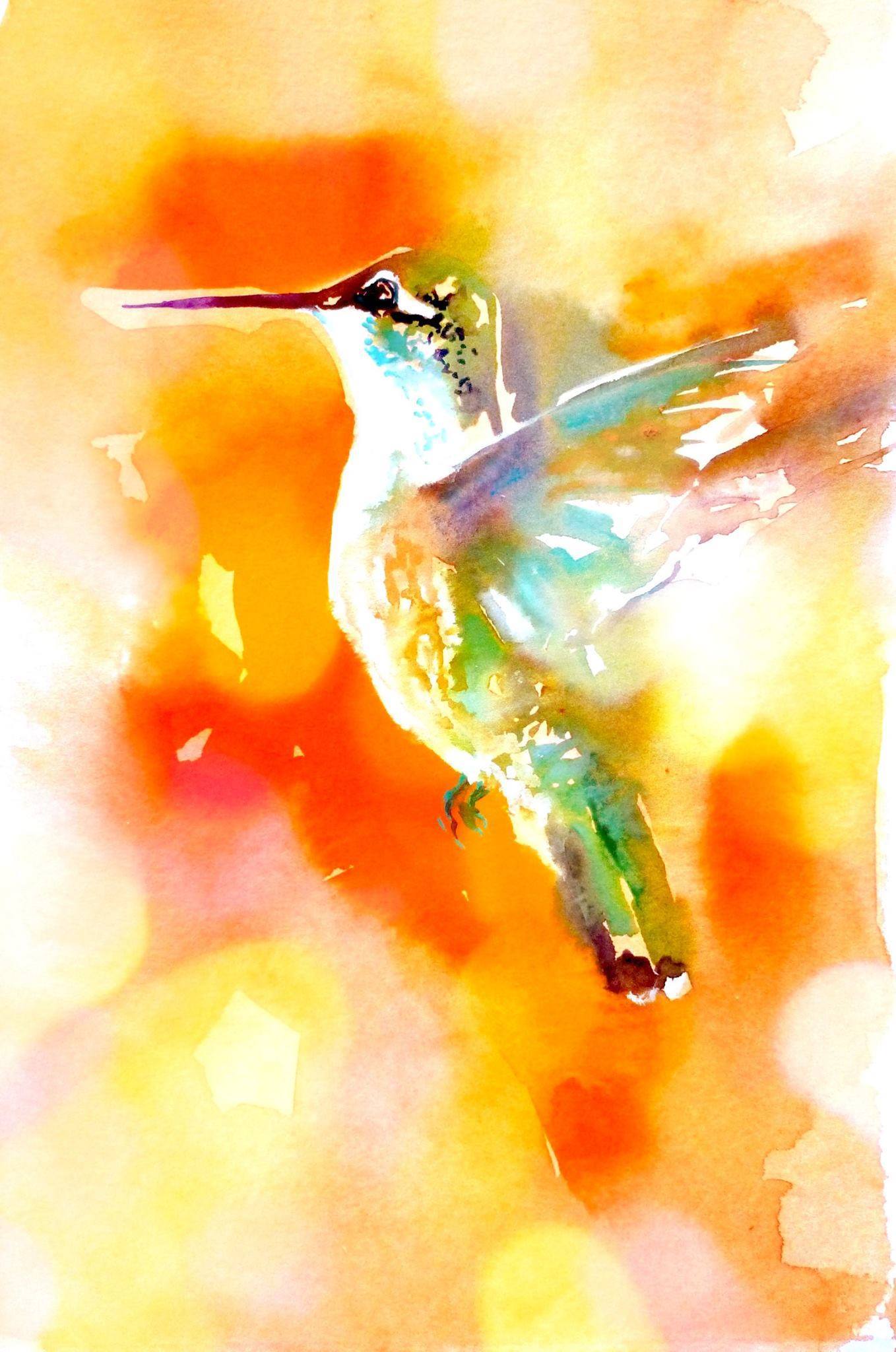
Paintings by Janet Weight Reed, one of my favorite artists and bloggers, are featured in this post. When I told her I was writing a post on boldness, fearlessness and sincerity and would like to use a piece of her artwork, she sent me three paintings, saying:

If ever a painting of mine symbolises boldness and fearlessness, it is the attached (large oil on canvas) self-portrait.   It was painted in 1989 during one of the biggest turning points in my life and career.     I keep the painting with me as a reminder of what it is to persevere through seemingly impossible obstacles.

The hummingbird  (watercolour) also symbolises for me the same traits.     They have been significant in my paintings, large and small over the past 35 years, symbolising the ‘unseen magic’ of our world….a source to be tapped into during times of great duress.

When I observe the life of cats (small and large) – I see the same traits…..

Loving all Janet’s work, it was very difficult for me to choose one of the paintings, so I have included all three she sent me.


© 2016 David J. Rogers

For my interview from the international teleconference with Ben Dean about Fighting to Win, click on the following link:

www.mentorcoach.com/rogershttp://www.mentorcoach.com/positive-psychology-coaching/interviews/interview-david-j-rogers/

Order Fighting to Win: Samurai Techniques for Your Work and Life eBook by David J. Rogers

Fighting to win Amazon

Click on book image to order from Amazon.com

or

http://www.barnesandnoble.com/w/fighting-to-win-samurai-techniques-for-your-work-and-life-david-rogers/1119303640?ean=2940149174379

Order Waging Business Warfare: Lessons From the Military Masters in Achieving Competitive Superiority

Waging Business Warfare812sCY9edLL._SL1500_

Click on book image to order from Amazon.com

or

http://www.barnesandnoble.com/w/waging-business-warfare-lessons-from-the-military-masters-in-achieving-competetive-superiority-revised-edition-david-rogers/1119079991?ean=2940149284030


31 Comments

Filed under Artistic Integrity, Artistic Perfection, Artists, Boldness, Courage, Developing Talent, Human Potential and Achievement, Fearlessness, Inner Skills, Samurai Techniques

Overcome Your Inner Blocks

“How easy it is to obliterate and wipe away every thought which is troublesome or unsuitable, and immediately to be in complete tranquility” (Roman Emperor Marcus Aurelius).

I’m best known for my book Fighting to Win: Samurai Techniques for Your Work and Life. In it I point out that the majority of our problems are not caused by anything outside us out there in the world as most people seem to believe, but by our own inner psychological blocks that it’s our lifelong job to overcome.

When painters are painting and writers are writing and actors acting—inventors inventing, sprinters sprinting–their mood almost always improves painting-1380016_640however poorly they were feeling before they started and whatever inner blocks they were facing. Why is that?  Because whatever they were thinking before, however dismal, however anxious or troubled, now they’re thinking, “At this moment I am doing what I love. I’m at my best.” And their mood brightens and blocks disappear from their mind. This example illustrates what happens to you and me many times every day.

  1. Something happens to you–a situation.
  2. You feel something about it–an emotion.

But something is missing. Something happens between the situation and the emotion. What is it? YOU THINK. You form an opinion of the situation.

So it really works like this:

  1. There’s a situation.
  2. You think, forming an opinion of the situation.
  3. You feel an emotion.

Emotions don’t just happen willy-nilly and they aren’t caused by situations. They’re caused by your reactions to situations, by your opinion of situations. One person jumps at the opportunity to write an important essay, enjoys writing, is very good at writing, and is thrilled about it. Another dreads it and is afraid she won’t do a good job. Objectively the situation– writing an essay– is the same for both. But their opinions are very different. And because they are, the emotions they feel are very different. One is confident and happy. But the other is up against an inner psychological block.  For him the situation is fraught with danger:

The situation: writing an important essay.

His opinion: “I’m afraid I’ll do a bad job.”

His opinion results in blocks: self-doubt and the fear of failing.

The transition from situation to emotion is a quick leap. It occurs instantaneously. There doesn’t seem to be any middle stage at all. But if you could replay your thoughts and slow them down, you’d find them interpreting the situation, resulting in an emotion. When Wally is cut off in traffic he gets very angry and pounds the steering wheel. But his wife sitting next to him doesn’t get mad at all. You look at her and it’s as if absolutely nothing has happened. They are both in the same car that has been cut off, but he thinks, “That bastard. Who does he think he is?” and she thinks, “He’s probably in a hurry to get home and see his family.” Wally’s mad and has lost his composure. His heart rate is soaring. His wife is settled and calm.

Almost invariably whenever the same thing happens again we think the same things about it. That’s how we create the same inner blocks again and again. We get stuck in emotional ruts because our thoughts are in a rut. We’re in the habit of interpreting the situation the same way, so much so that we think we have to feel that way when in reality we don’t.

The insight that emotions are not in what happens to us but in our opinions is the basis of cognitive psychology. But there’s nothing new about the idea. It appeared in the third century B.C. in the Buddhist Dhammapada: All you are is the result of what you’ve thought. And it was the cornerstone of Stoic philosophy of classical Greece of 2,500 years ago.

There were two great Stoic philosophers, Marcus Aurelius, an emperor, and Epictetus, a slave. Epictetus wrote, “Men are disturbed not by things that happen, but by their opinions of the things that happen.” In his Meditations Aurelius wrote, “It is in our power to refrain from any opinion about things and not to be disturbed in our souls; for things in themselves have no natural power to force our judgments;” and “Today I have got out of all trouble, or rather I have cast out all trouble, for it is not outside, but within, in my opinions,” and, “Consider that everything is opinion, and opinion is in your power.” Philosopher/ theologian Martin Buber wrote, “Whatever one thinks, therein one is, one’s soul is wholly and utterly in what one thinks.”

What you think is both a source of inner psychological blocks and a way of pensive-female-580611_640conquering them. We are sometimes victims and sometimes beneficiaries of our thoughts. They can be our jailers or our liberators. You have the ability to completely change the contents of your mind.

It’s one short step from “I feel what I think” to, “Since what I think determines how I feel, I can change how I feel by changing what I think.” When you consciously change what you think in order to change what you feel, you aren’t denying reality as it is–you’ve still been cut off in traffic, or you still have an essay to write. No, you simply reinterpret reality. You make the choice to evaluate it differently than you normally do so that you feel differently than you normally do.

The only way to drive out an undesirable thought is by substituting a powerful desirable thought. By thinking differently, you can replace self-doubt and discouragement with self-confidence, fear with courage, boredom with interest, pessimism with optimism. You’re able to rid yourself of the thoughts that are creating inner blocks and substitute opposite thoughts that conquer them.

You can manufacture emotions at will. If you want to see how easy it is to create an emotion like fear, some time when you’re not afraid repeat fear-producing thoughts–“What if something terrible happens to me,” “What if I die,” or “What if my book is rejected by the publisher” or “He seemed cold; maybe he’s stopped loving me,” or “What if I’m never able to solve this problem?” Now dispel them by thinking courage-producing thoughts: “There’s absolutely nothing to be afraid of. I can deal with this” and keep repeating such thoughts.

Create Your Happiness by What You Choose to Think

What is happiness but a state of mind?  It doesn’t lie in situations. Situations are evaluated differently by different people. Parties make some people happy, but other people hate them. Some people find happiness working hard at their goals. But others don’t. Surely happiness isn’t in things, not even in great achievements. We can be accomplished and famous, and rich, beautiful, and gifted—and very unhappy. Or we can go about our everyday lives not particularly famous, not rich, nor beautiful, nor especially gifted, and find happiness every day.

That happiness can be cultivated by deliberately controlling what we think strikes some people as incredible. But not only can it be done; it’s one of the girl-358770_640only ways it can be. When you think happily your senses sharpen. You see, smell, taste, and hear better. And your memory improves. When we think happily and optimistically we are happy. We’re at liberty to choose to think happily any time we want, and whatever is happening outside us, at times in spite of what’s happening outside us. That’s what happy people do

A Crucial Strategy

  1. List the three inner blocks that trouble you most.
  2. Write out your thoughts that create the blocks. People who are trying to create something original are often discouraged. For the discouragement block you might write down–“I’ve tried so many times, and every time I couldn’t make it and I feel miserable about it. I’d be better off if I just stopped trying. I’m giving up.”
  3. Choose how you would like to feel, such as happy instead of unhappy, bold rather than cowardly; absorbed instead of bored, confident and not shy, etc. Write it down in sentence form.
  4. Write out more useful thoughts you will choose to think to defeat the blocks and create emotions you want: “When I face a problem, instead of thinking, ‘I’ll never be able to solve this,’ I’ll think, ‘I’m not going to let it get the better of me. I’ll just find a way to solve the problem that I haven’t thought of before.” Discouraged? Think, “I’ve found that no matter what it is, there is hardly anything I cannot do if I apply myself.” Afraid of failing? Write, “There’s no way I can’t succeed.”
  5. Rehearse using the thoughts you’ve written until they’re second nature. Say to yourself, “Whenever I’m running up against X block I’ll think…” Then practice thinking it.
  6. When the block appears think what you’ve written and create the emotions you want. The block will appear. But you’ll be prepared. You’ll think what you’ve written out and rehearsed.
  7. Be consistent. Make certain you think in the way you want every time the inner block appears. Selecting what you will think in order to conquer your blocks is one of the easiest things in the world NOT to do.

runner-802912_640It takes discipline to train yourself to run a marathon. It takes discipline to paint expertly or write expertly or act expertly. It takes discipline to train yourself to think a new way. What you need if you are to conquer a deeply entrenched inner block is the repetition of new thoughts. Mastery of anything takes repetition upon repetition upon repetition. If you do something a hundred times you should be good at it. Do it a thousand times and you’ll be better.

Four Reminders

  1. Remember that you have to change your opinions if you are to overcome inner blocks. You can always change your mind; can always change your opinions. And doing that, can always change your life.
  2. Think differently. If you’re accustomed to thinking in a way that creates inner blocks, develop new opposite thought habits. Inner blocks originate in your mind. They’re caused by thinking incorrectly. To conquer a self-doubt block repeat the thought, “I can do this thing. I will do it. I can do this thing. I will do it, “and take action. There’s a stubborn block standing in your way. To defeat it think over and over, “The best way out is always through.” Adversity strikes. Instead of letting it stop you, change your opinion. Think, “It’s only a temporary setback. I can overcome it if I keep moving forward in spite of it. Be strong.”
  3. Clarify what you really mean. Instead of blaming yourself with, “I didn’t get the commission for the painting. I’m a failure,” think, “What I really mean is that I wish I’d gotten the commission. But in no way does that make me a failure.” You’re giving a speech. You stumble over your words. Instead of, “I’m a lousy speaker” and losing confidence, stop yourself and say, “No, I’m not saying I’m a bad speaker or that I could never be a great speaker. All I’m saying is I’m human and like any human might do, I made a mistake. Big deal.”
  4. Be a fish. When your mind drifts back to your old blocks-producing ways of thinking, be a fish. Swish your tail, flick your fins, and change directions.

fish-582695_640


© 2016 David J. Rogers

For my interview from the international teleconference with Ben Dean about Fighting to Win, click on the following link:

www.mentorcoach.com/rogershttp://www.mentorcoach.com/positive-psychology-coaching/interviews/interview-david-j-rogers/

Order Fighting to Win: Samurai Techniques for Your Work and Life eBook by David J. Rogers

Fighting to win Amazon

Click on book image to order from Amazon.com

or

http://www.barnesandnoble.com/w/fighting-to-win-samurai-techniques-for-your-work-and-life-david-rogers/1119303640?ean=2940149174379

Order Waging Business Warfare: Lessons From the Military Masters in Achieving Competitive Superiority

Waging Business Warfare812sCY9edLL._SL1500_

Click on book image to order from Amazon.com

or

http://www.barnesandnoble.com/w/waging-business-warfare-lessons-from-the-military-masters-in-achieving-competetive-superiority-revised-edition-david-rogers/1119079991?ean=2940149284030


6 Comments

Filed under Artists, Conquering Blocks, Inner Skills, Moods, Self-Confidence

15 Ways to Overcome Fear of Failure

When most creative people pursue their goals they imagine what it would be like to reach them (Hope of Success). And they also worry that the goal will not mountain -seabe reached (Fear of Failure). Those two emotions go together and are reverse sides of the same coin. That creators’ fear of failure is perfectly natural and is to be expected whenever you’re facing a difficult, challenging task, such as a writer crafting a play if she’s never written one before, or a lithographer preparing a work for an important contest.

But at times the fear of failing becomes a major psychological obstacle that keeps creators from reaching the success and satisfaction they’ve been hoping for. Creators who are dominated by the fear of not succeeding, but failing have developed—often without realizing it–characteristic tactics for protecting themselves from enduring what often is not just a fear of failing, but a much more dreadful terror of failing. Ironically, those tactics do more to contribute to failure than to prevent it.  It’s worthwhile looking at those tactics that you might recognize in yourself so that something might be done about them.

Rather than enduring the misery of experiencing that terror of failing the person harried by it may:

  • Avoid competing with others of comparable ability. They prefer being the big fish in the little pond.
  • Be perfectionists. They don’t attempt things in which they won’t be able to attain perfection or near perfection. The tactic here is to carve out a very narrow area of competence in which they excel and can approximate perfection.
  • Prefer very easy or very difficult tasks, nothing in the middle. In contrast, most high achievers generally pursue tasks and goals they have a one in three or two in three chance of succeeding at. Not a sure thing and not an impossible thing.
  • Avoid displaying their abilities in public. A pianist may be able to perform beautifully in private, but shy away from performing in front of people.
  • Avoid attempting anything important. The more important the activity, the more they avoid it. A writer may avoid trying to get his work published even though publication is the logical outcome of the writing process.
  • Avoid taking risks. Most creators who become eminent experience turning points at which they take a risk which their less eminent contemporaries are too timid to take. Fear of taking chances melts in the face of a strong and urgent purpose and self-confidence (If you’ve been reading my posts you can’t have helped but notice I’m enamored with self-confidence because it, along with skill, is the antidote to most creator’s main problems, including self-doubt and discouragement).
  • Have trouble performing under time pressure. They panic as they approach the deadline. Even the word “deadline’ scares them. They delay. They give up. They shut down. More confident creators are challenged by a race against time and are often the most excited and highly focused and at the height of their skills when the clock is ticking. The best tactic is to forget about the deadline completely and focus totally on the task.
  • Prefer practice and games rather than the real thing.
  • Seek social support. People who fail tend to have as friends others who fail.
  • Have unrealistic expectations–oddly enough, on the high side. Asked to estimate how well they’ll do at achieving a goal they will say they’ll do far better than they actually will. I had an egotistical friend in college who wrote a paper for English in which he said he was brilliant, a great lover women couldn’t resist, handsome, a wonderful athlete, and a conversationalist who could charm birds out of trees. The professor returned his paper with the comment scrawled on it: “It’s a shame you can’t add a command of the English language to the list of your other accomplishments.”
  • Misjudge past performance. They also exaggerate how well they did in the past.
  • Reject the measure of a skill. For example, the student who doesn’t do well and says, “Getting good grades doesn’t mean a thing.”
  • Avoid measurements of their performance. They don’t want to know how well or poorly they’re doing, for if they knew they might have to admit they failed. Without contrary information they can always say, “I’m doing pretty well.” At work, they are the employees who dread performance evaluations. They might even arrange to stay home on the day of the evaluation. The best writers, best painters and actors are just the opposite. They want to know if they’re doing well or poorly. They welcome feedback, and actively seek it, feedback that is rapid, specific, and helpful. They are always asking about their work, “Well, what d’ya think of it?” Studies of highly creative people show that they accept helpful guidance and have “an openness to advice.”
  • Not try. A fear that dominates many creators and makes them quit trying to succeed is the fear of failing to reach financial success, or just break even. Writer Francois Voltaire and painter Claude Monet won Money treefortunes in government lotteries and were able to devote themselves completely to their work. But Nobel Prize winner William Faulkner spent most of his writing life in virtual poverty. When his picture appeared on the cover of Time magazine he couldn’t  pay his electric bill of $35. He wrote: “People are afraid to find out how much hardship and poverty they can stand. They are afraid to find out how tough they are.” But financial risk is part of the creator’s life style and for many writers the fear of being broke can be exhilarating, a source of creative energy. Most creators perform better under some amount of financial pressure. Sherwood Anderson’s publisher thought financial security would help him produce more and sent him a weekly stipend. But that made him less productive, and Anderson asked them not to send it anymore: “It’s no use. I find it impossible to work with security staring me in the face.” In The Courage to Write Ralph Keyes says, “Knowing that there is a direct line between putting words on a page and food on the table keeps me focused.” Picasso said he was rich but tried to work as though he was poor.
  • Reject responsibility for their failures. If you wipe your hands of responsibility, all pressure is off and all fear of failing disappears. You might know creators who go to great lengths to avoid responsibility. They concoct elaborate excuses for their failures.

symphony-hall-893342_640A not uncommon fear of failure among creators takes the form of “encore anxiety.” It is the fear after producing a successful first work that no matter what you do you won’t be able to produce a second work that’s as good or as successful.


To overcome fear of failure, go down the above list and develop counter-tactics. For example:

  1. Always try; don’t not try.
  2. Be interested in measurements of your performance; don’t avoid them.
  3. Consider your past achievements dispassionately; put your ego aside.
  4. Associate with other successful creators of comparable ability, not failures with less ability.
  5. Pursue goals that aren’t easy, goals that are a little out of reach.
  6. Open yourself up to areas in which you haven’t yet mastered perfection
  7. Take more chances; that shouldn’t he hard because creators are attracted by risks.
  8. Have realistic, not unrealistic, expectations.
  9. Judge your performance as accurately as you can.
  10. Actively seek feedback on your performance; don’t avoid it.
  11. Have no fear of financial pressures; let them motivate you.
  12. Be confident that you will succeed again.
  13. Don’t be intimidated by deadlines and time pressures; they help you perform better.
  14. Don’t fear competition. It may bring out the best in you and help you reach a level of success in your craft you’ve never dreamed of.
  15. Accept responsibility for failures.

success-620300_640All creators are capable of overcoming fears of failing, and when they aren’t extreme and debilitating, those fears can be positive—a push, an incentive– and have helped many creative people reach success.


© 2016 David J. Rogers

For my interview from the international teleconference with Ben Dean about Fighting to Win, click on the following link:

www.mentorcoach.com/rogershttp://www.mentorcoach.com/positive-psychology-coaching/interviews/interview-david-j-rogers/

Order Fighting to Win: Samurai Techniques for Your Work and Life eBook by David J. Rogers

Fighting to win Amazon

Click on book image to order from Amazon.com

or

http://www.barnesandnoble.com/w/fighting-to-win-samurai-techniques-for-your-work-and-life-david-rogers/1119303640?ean=2940149174379

Order Waging Business Warfare: Lessons From the Military Masters in Achieving Competitive Superiority

Waging Business Warfare812sCY9edLL._SL1500_

Click on book image to order from Amazon.com

or

http://www.barnesandnoble.com/w/waging-business-warfare-lessons-from-the-military-masters-in-achieving-competetive-superiority-revised-edition-david-rogers/1119079991?ean=2940149284030


6 Comments

Filed under Artists, Becoming an Artist, Blocks to Action, Conquering Blocks, Creativity Self-Improvement, Developing Talent, Human Potential and Achievement, Expectations, Faulkner, Fear of Failure, Feedback, Goals and Purposes, High Achievement, Inner Skills, Motivation, Picasso, Publishing, Self-Confidence, Success, The Writer's Path, Writers