Tag Archives: talent development

Imagination and Creative Success

The mind imitates what it first imagines.

Writers and artists often reflect on their careers and wish they were doing better—were more skilled, had made more progress, and were experiencing important successes more often. All the while they are wishing, they are in possession of a highly refined ability that may hold the answer to their wishes. When we possess the potential to perform something, if we vividly and in detail imagine ourselves performing it successfully, our potential will be released and we will perform nearly the same way during the actual performance as we did in our imagined performance. This insight—this technique—can help a writer or artist achieve greater success.

Nadejda Sarbatova2

Painting by Nadejda Sarbatova

If there is one unique skill writers and artists possess in abundance, it is making vivid visual images. Images are the basis of the writer’s and artist’s work. They think in images, and the central problem is how to put the image of the thing—the poem, the book, the play, the painting, the sculpture, the building—into a tangible form that satisfies the creator and also appeals to an audience. Can you write a description of a character’s face or of the leaves on a tree or paint them without the ability to visualize images of them in your mind and then to make facsimiles of those images in words and pigments, words and pigments that will recreate for the reader and viewer the very images you had salvador-dali-32079_640imagined? Surrealist Salvador Dali liked to use in his work images that came to him when he fell asleep—you can understand why–so he would sit at a table while sleepy, prop his chin with a spoon, and then wait to be awakened when he fell asleep and the spoon fell.

Images also affect the writer’s audience because the audience thinks in images too. Even the smallest image is like a photograph the audience mentally sees. In poetry the just right image can make a poem, but just one wrong image can ruin it—that’s how sensitive readers are to images. In her book, The Creative Habit, dancer/choreographer Twyla Tharp tells the story of the difficulty director Mike Nichols was having getting Annie ready for Broadway. A scene that was supposed to get laughs was failing, so Nichols asked famed choreographer Jerome Robbins to fix the scene. Robbins looked at the stage and pointed to a towel hanging at the back of the set. He said, “That towel should be yellow.” The change was made and thereafter the audience laughed at the scene.

Remembering is at the core of a writer’s repertoire of skills, the writer’s stock in trade. And it is composed of images—remembrance of things past. Artists who paint in studios paint from memory of the landscape, the sunset, the garden. Images, imagination, and intuition go hand in hand. Novelist Thomas Wolfe’s ambition was to turn even the most minor experience he had ever had in life and every image he remembered into words—“those thousands of things which all of us have seen for just a flash…which seem to be of no consequence…which live in our minds and hearts forever.”

table-92514_640So it should not be difficult for you to use your highly-developed image-creating and image-remembering powers to help you achieve your goals—to visualize yourself working diligently to achieve them, and then achieving them with great success. What first occurs in your imagination is a rehearsal for reality. Turn that to your advantage.

The research and practical experience showing that imaginative practice—mentally visualizing performing an action the way you wish to perform it—can actually improve performance—and substantially–is overwhelming. That your mental images can do that is a stunning insight. I can vividly imagine myself running a mile in 3:47, but I will never be able to do it, nor will I ever sing a Puccini aria on the stage of the Metropolitan Opera though I can picture that too. They are beyond my physical capabilities. But when something is within the range of our capabilities–and that range is much broader than we usually believe it to be–the images we hold can have a startling effect on actual performance such as becoming a better and more financially successful writer and artist.

There’s no arena in which the effects of inner images on performance is as widely recognized as athletics. In one landmark study that looked at the effects of imaginative practice on actual performance, basketball free throw shooting was looked at. Participants were divided into three groups. The performance of each participant was measured on the first and last days to see if the experiment led to any improvement. One group practiced shooting for twenty minutes each day for twenty days. A second group didn’t practice at all. The third group spent twenty minutes a day not actually shooting–not touching a basketball at all–but just imagining themselves shooting free throws successfully; standing at the free throw line, looking at the rim, bending their knees, etc. When they “saw” themselves missing, they imaginatively corrected their aim. The group that practiced actually shooting improved their performance by 24% over the twenty days. Not surprisingly, the second group that hadn’t practiced at all didn’t improve at all. But the group that hadn’t actually shot one ball, but practiced in their imagination alone, improved in scoring almost as much as those who actually shot the ball—23%.

golf-163637_640(1)Golfers were divided into three groups. Before putting, Group I imagined the ball rolling into the cup. Group II practiced every day, but made no use of imaginative practice. Group III imagined the ball missing the cup. The performance of the group using imaginative practice of the ball rolling into the cup improved 30% between day one and day six. The group that practiced every day, but made no use of imaginative practice also improved, but only 10%. The group that imagined the ball missing the cup showed a decrease of 21% over the six days. These experiments weren’t really “about” free throw shooting or sinking putts at all. They were about the impact of practicing in your mind on your actual performance.

Mental patients have improved their condition by imagining that they are perfectly normal and then behaving in exactly the way they imagine. Hospitalized patients took a personality test. Then they took the same test a second time. The second time they were instructed to answer the questions not as they normally would, but as they would were they a typical, well-adjusted person on the outside. To do that they had to form and hold in mind an image of how a well-adjusted person would act. Seventy-five percent showed improved test performance. Some of the improvements were dramatic. Imagining how a normal person would act, many began to act like, and feel like, a well-adjusted person functioning in the outside world. That affected their recovery.

The famous concert pianist Arthur Schnabel took lesson for only seven years compared to the twenty or twenty five years many pianists take. And while even the most successful concert pianists generally spend hours every day piano-302122_640practicing, Schnabel hated practice and spent little time on it. He was asked how he could practice so little and be so great. “I practice in my head,” he said. Mozart made very few corrections on his compositions. Before he began to put notes on paper he already had a complete mental picture of what they would be. He wrote:

…provided I am not disturbed, my subject enlarges itself, becomes methodized and defined, and the whole, though it be long, stands almost complete and finished in my mind, so that I can survey it, like a fine picture or a beautiful statue, at a glance.

  • Hold clearly and steadily in mind throughout the year, throughout the day, images of what you aspire to—the writer or artist you wish to be; to produce exceptional work, to write beautiful or persuasive or moving text, to draw or paint more skillfully than ever. It is first in your imagination that you launch yourself toward your highest aspirations. Decide what they are, and then vividly imagine what you want to have happen. Then pursue them with determination in the way you have vividly imagined them.
  • Regularly, for fifteen minutes every day (weekends included) imagine the actions you want to take:

Vividly

In specific detail

Step by step

Over and over.

Repetition fixes an image of the ideal performance in your mind.

  • Imagine that writing or painting come easily to you—the ideas are clear, the words and brushstrokes come out of you without effort, fluently, as if on their own. Now there they are on the page and canvas exactly as you want them.
  • Imagine you’ve found the solutions to artistic problems that till now you haven’t been able to solve. Imagine that you have overcome obstacles that have been blocking you.
  • Delete from your mind every image of failure such as imagining yourself receiving a rejection from an editor or gallery and add only images of success. Do that continually and relentlessly. Get rid of images of yourself as a failure, not competent, not up to the writer’s or artist’s tasks—discouraged, disappointed, weak.
  • When an image of failure enters your mind—as it will (you are human)–replace it with a more optimistic image of success. If you visualize yourself failing, you sabotage yourself and increase your chances of doing that, just as putters who visualize themselves missing the hole are prone to missing the hole. You are actually practicing failure.
  • It isn’t necessary to be relaxed when you’re visualizing. In fact, some tension, some excitement, makes you more alert and focused.
  • Visualize yourself working as skillfully as you would like in the ideal work setting you would like, during the hours you would like, for the length of time you would like.
  • Then, focus your mind on the task ahead of you often. Think of it again and again. Then, immediately before you perform it, clearly visualize yourself performing the action perfectly—the right words, the right imagery, the right form and technique, right style, the meanings you intend.
  • Do it–whatever it is—precisely the way you have imagined doing it. Images, no matter how vivid, will come to nothing unless you translate them into actions that conform to the images, so let the images guide you.
  • Be enthusiastic and confident. Enthusiasm and confidence add zest to your images.
  • Combine your images with thinking aloud. For example saying aloud as you are visualizing, “I will work smoothly and efficiently. Everything will go well. I don’t anticipate problems, but if there are any, I’ll be able to solve them.”

Add Feelings

youth-570881_640The technique of adding feelings is adding emotions of successful achievement to what you have visualized as though you’ve already succeeded. This is a very effective motivational technique. You’re not interested now in the mental images of the way you will achieve the goal. Rather you’re letting yourself feel what you will feel when you have reached the goal—or solved writing or artistic problems or made progress. Having done those things you’ll feel satisfaction, pleasure, pride, a sense of accomplishment and self-confidence; you’ll feel relieved, and possibly excited, overjoyed, elated, and thrilled. Whatever you imagine you will feel then, feel it now in anticipation. Don’t wish and hope you’ll succeed, but treat success as an accomplished fact. It’s done, and you have already succeeded and are glowing with positive emotions. Feel the physical sensations of that glow, that sense of warmth, the excitement, the energy, the heightened perception, the sharpness. Imagining what you will feel when you succeed fuels your motivation to succeed because that is how you want to feel. Congratulate yourself: YOU DID IT and now you are enjoying the feelings.

Every day—once, twice, three times, four times — let yourself feel the strong emotions you’ll feel when you’ve succeeded.

© 2015 David J. Rogers

For my interview from the international teleconference with Ben Dean about Fighting to Win, click on the following link:

www.mentorcoach.com/rogershttp://www.mentorcoach.com/positive-psychology-coaching/interviews/interview-david-j-rogers/

Order Fighting to Win: Samurai Techniques for Your Work and Life eBook by David J. Rogers

Fighting to win Amazon

Click on book image to order from Amazon.com

or

http://www.barnesandnoble.com/w/fighting-to-win-samurai-techniques-for-your-work-and-life-david-rogers/1119303640?ean=2940149174379


Order Waging Business Warfare: Lessons From the Military Masters in Achieving Competitive Superiority

Waging Business Warfare812sCY9edLL._SL1500_

Click on book image to order from Amazon.com

or

http://www.barnesandnoble.com/w/waging-business-warfare-lessons-from-the-military-masters-in-achieving-competetive-superiority-revised-edition-david-rogers/1119079991?ean=2940149284030


3 Comments

Filed under Artists, Becoming an Artist, Creativity Self-Improvement, Developing Talent, Human Potential and Achievement, Expectations, Goals and Purposes, Motivation, Success, Writers

Patience: A Path to Creative Success

This is a post about the importance of CREATIVE WAITING and shows a specific scientifically-tested method for improving the quality of your artistic work and at the same time reaching a higher level of lasting success.

“Darby”

woman-716592_640For five or six years I’ve been thinking about a story I’m sure I’ll write eventually. It’ll be called “Darby” after the main character, a lonely woman who doesn’t love her husband and probably never has and is looking for a man to be in love with. When I write “Darby” I’ll be influenced by four particular stories: Chekov’s “About Love,” “Three Years,” and “The Lady and the Dog,” and James Joyce’s “Eveline.” And of course coming into the mix is, “Does this fit the real Darby, the actual woman I’m thinking about?” I’m not one to range very far from the truth of what really happened.

Chekov and Joyce often wrote about people who want to escape but can’t. In “Darby” there will be images of being in a box, being trapped, like a woman I’ve written about before. It will end with an ironic twist. I have a file called “Darby” to which I add notes that come to mind from time to time—just a word or phrase here and there. The last sentence of “Darby” will be, “A very good looking older man.” I’m confident it will be a very good story, but it’s not ready to be written, and so although I’m dying to write it, I’ll have to be patient and wait till I get a fix on it that I’m convinced will lead me in the most fruitful direction.

Thirty-One Artists and Twenty-Seven Objects

Thirty-one graduate students in a prestigious art school in the United States were asked to participate in an experiment to look in a systematic way at how a work of art is produced. Twenty-seven objects of the sort artists use to construct a still-life were placed on one table, among them a small manikin, a bunch of grapes, a steel gearshift, a woman’s velvet hat, a brass horn, an antique book, and a glass prism. A second table was empty except for art materials the students would use to draw. The students were told to choose objects from the table they would use to stimulate their imagination and arrange them in any way that pleased them on the second table. They could choose as many objects as they wanted and spend as much time as they wanted selecting the objects and making a drawing from them. They were told, “The important thing is that the drawing should be pleasing to you. You may take five minutes or five hours, as long as the result is pleasing to you.” (In Jacob W. Getzels and Mihaly Csikszentmihalyi, The Creative Vision: A Longitudinal Study of Problem-Finding in Art.)

butterfly-744115_640When the students were ready, an observer began to keep a record of their behavior such as the number, kind, and sequence of objects handled or manipulated (e.g. feeling the texture and weight of the of the objects, moving their parts, changing their shape, etc.); the number and kinds of objects finally selected; procedures used in organizing the selected objects; behavior during drawing (e.g. changes in the type of media, rearrangement of objects, etc.); and the amount of time everything took. In addition, photos were taken three, six, and nine minutes after drawing was begun and at six minute intervals thereafter until the drawing was completed. The photos would reveal how the drawing was progressing.

The Skill You Need of Finding the Right Problems to Solve

The stage most important in this study was formulating a problem to work on, which they called PROBLEM-FINDING, a stage that precedes problem-solving. They wanted to find if there was a correlation between what happened during the first stage of problem-finding and the quality of the finished drawings. From the time artists begin to draw, paint, sculpt, etc., or writers begin to write the text, they are involved in the solution to the problem they have posed for themselves. When you’re a writer who is problem-solving, you have an idea how to get going and are assembling words, reviewing and evaluating how you’re progressing, and deciding what you will say next and how you’ll say it. With “Darby” I’m not there yet. I am still problem-finding—trying to define exactly what I’ll be trying to say and what I’m trying to create.

laser-737434_640Every writer, artist, and composer has to first problem-find, and what happens at that stage makes a tremendous difference because what you do before starting to paint or write determines to a large extent what will happen after you start. The painting or story may be changed later and its form altered beyond recognition, but the starting point is the selection of the material and arrangement of it made during the stage when you’re formulating the problem. I have Darby and she is trapped—that I’m certain won’t change. The problem is what I will do with those central facts.

Einstein believed and many other knowledgeable people also believe that problem-finding is a more crucial skill than problem-solving, because focusing on trying to solve the wrong problem, the inessential problem, doesn’t solve the real problem.

The problems you as an artist or writer must find and solve are unstructured, and the special difficulty with unstructured problems—as you’ve already found many times–is that the more unstructured they are the more directions you can take, and most will be the wrong direction creatively. It’s not unusual for even the greatest writers and artists to work on something for a long time only to realize that it was the wrong thing to work on. Authors have been known to complete a book only to throw it away because they had selected the wrong problem to solve. Under many painting masterpieces are other paintings the artist wasn’t satisfied with and simply painted over. I’m being careful not to have my story go off in a wrong direction.

Problem-finding is anything but restful. When you’re doing it, your mind, sorting things out, is as active, or more active, than it is when you’re executing the work.

rose-140446_640The right problem and right solutions to it often appear on their own, unfolding effortlessly, and agitate the creator until in a sudden recognition she understands them and uses her skills to shape them into expression, possibly never knowing where the problem or solution came from, and not knowing quite where she’s going and what the final work will look like until she gets there. Yet she is confident all the way through that in fact she will get there: “Undoubtedly, if I knew exactly what I was doing, things would go faster, but if I saw the whole unwritten novel stretching out before me, chapter by chapter, like a landscape, I know I would put it aside in favor of something more uncertain—material that had a natural form that it was up to me to discover.” (William Maxwell)

 The Length of Time Spent Problem-Finding Is a Key

The length of time the problem was kept open for alteration varied from artist to artist in the study. For some all the structures and elements were present after as few as six minutes. But one worked 49 minutes and it wasn’t until the 36th minute (74% of the total working time), that the final drawing was in evidence. With that artist, the problem remained open almost to the end.

Six years later there was a follow-up to see how successful the students had become in the art world. The main findings were striking and contain lessons for practicing writers and artists:

(1)Those in the study who approached their work by keeping the problem-finding stage wide open for a long time before ending it went on in their careers to produce higher quality work. Those who went on to become less successful were the same people who during the study were anxious to begin and started drawing more quickly. Apparently they never got out of that let’s-get-started habit and their work suffered. And one reason why that happens is because while effective problem-finders can live with ambiguity, poor problem-finders are uncomfortable with it and wish to put an end to it as quickly as possible.

IF YOU WANT TO IMRPOVE THE QUALITY OF YOUR WORK, SPEND A LOT OF TIME PATIENTLY PROBLEM-FINDING.

Serious writers and artists may spend many hours or months or longer thinking, mulling over, guessing, sketching, trying this, trying that. The better artists in the study dawdled and played with the objects they were going to draw, touching them, turning them, trying this angle and that for considerable time before getting down to the final drawing, just as better writers fiddle around with their material till something clicks. Poet Denise Levertov said, “If…somewhere in the vicinity there is a poem then, no, I don’t do anything about it, I wait.” Author Anne Dillard said, “I usually get my ideas in November and I start writing in February. I’m waiting.”

(2)The best problem-finders in the study, not coincidentally, went on years later to become the most materially successful artists of the thirty-one. Some became known in the art world while many poorer problem-finders disappeared completely from it.

IF YOU WANT TO REACH LASTING CAREER SUCCESS AND APPEAL TO AN AUDIENCE, BE SURE TO DEVELOP THE SKILL OF EFFECTIVE PROBLEM-FINDING.

surfer-13415_640

The skill of waiting and holding in check the urge to rush prematurely to solutions is almost always overlooked, yet it is crucial. Training yourself to acquire this skill will take you far and take your artistic work to higher excellence. Be like a surfer: wait for the perfect wave to take you in.

I’ve been thinking more about Darby. I have a hunch she might never escape, but maybe she will. I’ll have to wait and see.


© 2015 David J. Rogers

For my interview from the international teleconference with Ben Dean about Fighting to Win, click on the following link:

www.mentorcoach.com/rogershttp://www.mentorcoach.com/positive-psychology-coaching/interviews/interview-david-j-rogers/

Order Fighting to Win: Samurai Techniques for Your Work and Life eBook by David J. Rogers

Fighting to win Amazon

Click on book image to order from Amazon.com

or

http://www.barnesandnoble.com/w/fighting-to-win-samurai-techniques-for-your-work-and-life-david-rogers/1119303640?ean=2940149174379


Order Waging Business Warfare: Lessons From the Military Masters in Achieving Competitive Superiority

Waging Business Warfare812sCY9edLL._SL1500_

Click on book image to order from Amazon.com

or

http://www.barnesandnoble.com/w/waging-business-warfare-lessons-from-the-military-masters-in-achieving-competetive-superiority-revised-edition-david-rogers/1119079991?ean=2940149284030


16 Comments

Filed under Artists, Becoming an Artist, Creativity Self-Improvement, Developing Talent, Human Potential and Achievement, Success, Writers

The Life Path of Artists and Writers

path and sunlight-166733_640Who are you? Where are you going? Where have you been?

As a boy I realized that Socrates’ advice that everyone in the Western world has heard at least five or six times–“Know thyself”–was no less difficult than to walk from my porch to the moon. But I know now that if we look carefully at where we have been, who we have known, what our life’s events from the earliest days have meant to us, and where we are going, we can in fact satisfy Socrates and know ourselves. This is a goal that is particularly important to creative people because their work is an exact reflection of the remarkable men and women their lives have made them.

 Your Ground Plan

It is a biological concept that applies very much to artists and artists’ development: everything that grows—a rose, an eagle, a human being– has a life plan, a ground plan, and a life structure. All parts of this structure have a time to emerge that when complete form a unified identity, in our case, they come together to form the identity “artist,” and more specifically a type of artist: novelist, violinist, classical pianist, jazz pianist, movie composer, stage actor, ballet dancer, modern dancer, etc. That ground plan leads either directly in a straight line or in a roundabout helter-skelter way to that identity, but lead to it, it does. There is an order to our past, present, and future lives, however disorderly and unconnected they may seem.

frank-lloyd-wright-396991_640(1)

Frank LLoyd Wright

Frank Lloyd Wright, America’s most renowned architect, knew from his earliest days that he would be an architect. When he was a child his mother told him he would, considering architecture man’s crowning achievement, and began to mold him to that art by placing illustrations of architectural masterpieces on his bedroom walls and encouraging him. And prodigies, Mozart, dancer Vaslav Nijinsky, Broadway composers Marvin Hamlisch and George Gershwin, and trumpeter Miles Davis among innumerable other artists followed a “neat and tidy” development, and knew as children precisely what their adult life’s pursuit would be. There could be no doubt. Novelist Henry James and his philosopher/psychologist brother William were raised with one objective in mind: to make them creative geniuses, and that’s what they became.

However, many successful artist’s ground plans follow a less neat and tidy, “messy,” meandering path, as in the cases of painters Vincent van Gogh (failed teacher, failed preacher, failed everything who yearned to find his true calling—and did at thirty-three when he was told he was starting too late), and Paul Gauguin (former affluent stock broker who abandoned his family to paint), and novelists Sherwood Anderson (successful business owner who also abandoned his business and family to write),Joseph Conrad (sea captain), and Henry Miller (telegraph office worker), and playwright Eugene O’ Neill (ship’s deck hand, grave digger, and aimless ne’r-do-well). The meandering path is typical of many artists as they experience hits and misses, successes and failures, victories and defeats, false starts and detours over and over. Straight or roundabout, tidy or messy, the artist’s ground plan is in effect and leads to his/ her being an artist and being recognized as such. There is not one best way to become a successful artist—writer—performer, etc. But there are any number of perfectly fine ways.

Has your creative ground plan been tidy or has it been messy?

La Grande Ligne

Out of the mass of experiences of his life, the artist (1) must somehow or other settle on an art and way of life that fits him; (2) must have the personal makeup necessary to excel in the art; must possess the (3) knowledge, (4) drive and persistence, (5)  confidence and (6) complement of skills necessary to excel, and must (7) further develop strengths along certain clear lines.

music-7971_640La grande ligne (“the long line”) is a term in music that means simply that every good piece of music gives the audience a sense of flow, of continuity from the first note to the last. That continuity and flow is the challenge and be-all and end-all of every composer’s existence. Every artist’s life—every painter, writer, actor, dancer–whatever his/her chosen art, has a grande ligne, a flow from beginning to end. All of the artist’s choices and goals should be understood as relating to their ground plan, whether the artist is or isn’t aware of that fact.

A number of components must come into alignment to result in a unity of direction and purpose of a person’s life, and certain steps must be followed. The components making a business woman are different from the components that work together to make a diplomat or a baker. Artists have alignments of components of a certain characteristic type–many personal qualities, interests, motivations, values, abilities, experiences, and other components. If just one component is missing, you no longer have a painter, sculptor, writer, or dancer. Everything must be present.

Life History Process

A way to acquire a clear view of your life’s “long line” is to come to understand: yourself as you are at this moment; the relationship between the person you are now and the days and years of your past life; how you conceive of your whole life; what happened in your life—what events meant to you and what they mean to you now. And to answer the question, “What am I trying to do as a human being, and as a creative person?”

  • Divide your life into periods, such as:

++++ Birth-15 years

++++ 15-25

++++ 25-45

++++ 45-65

++++ 65-

  • Recall key EPISODES from those periods, period by period—“When I was six this happened to me. It was very important because it introduced me to music…” “At twenty-three I had a gig at a local bar and met an agent at a party…” “At thirty I started to dabble with bright colors…” Very often an episode occurs when the artist’s existence seems to be organized and focused toward the art and he has a premonition that from that point forward the art will be prominent in his life. Your entire life is a drama composed of the total number of significant episodes. Looked at closely and objectively, they reveal larger plots and themes. Right now, even without much thought, what particularly meaningful episodes come quickly to mind?

++++ Episode 1

++++ Episode 2

++++ Episode 3

++++ Episode 4

Methods that can be used to help you recall key episodes include discussions with relatives and friends, looking at report cards, documents, and records, and at your products—stories, drawings, compositions, paintings, performances. Photo-history is a method that involves looking at photographs to stimulate your memory. Assemble photographs from your life. Put the photos in chronological order; look at one at a time; ask about the photos—when was it, where was I, who are those people, what was happening?

Looking closely at individual episodes, ask: “What was I trying to do?” “Who was I?” “What was I learning?” “How was I changing?” “Was something leading me in the direction of my future work—an experience, a teacher, a success, a failure?” How did everything contribute to your becoming who you are? When did your artist’s, writer’s, or actor’s ground plan start taking shape? How did it begin? Through what ups and downs did it lead you then?

You may wish to write an autobiographical narrative about important episodes as I do with my “Growing Up” stories—direct statements of what happened when. When you do, memories buried deep in your mind will come flooding back, and you will remember what was happening and how you were feeling. Memories—particularly of childhood–are a main source of a creator’s inspiration. Author Thomas Wolfe’s ambition was to describe everything he had ever experienced. Author John Updike said that nothing that happens to you after the age of twenty is worth writing about. Personal motifs begun earlier in life stay with the artist throughout life and are reflected again and again in everything he or she produces. These themes cannot be avoided; they are the artist’s DNA. Artists accumulate experiences, people, places, key episodes, and ideas which they will draw on the rest of their lives, endlessly recapitulating them in their work. He/she never forgets them. These are the origins—and the content– of their craft.

  • When reflecting on episodes think about:

++++ Your characteristics; your personality at the time

++++ Your abilities

++++ Your needs

++++ Your ambitions and dreams

  • Look at the episodes for times in your life of shifts and changes of direction—crises, periods of trouble and distress, great pleasure, and achievements. Look for the choices you made and how you dealt with their consequences. What did the choices mean to your life?
  • Sift through episodes for MAJOR THEMES. Your life has been a route of recurring themes, like those in a musical composition or a novel. For author Ernest Hemingway the themes of danger, of war, of adventure. Chagall’s Hasidism. Themes help explain many events in a person’s life and show continuity. Themes are groups of episodes that fall into a type.

What do you think right now, without much reflection, are your significant life’s themes?

My major themes are childhood, family, the place where I grew up, growing in understanding.

++++ Theme 1

++++ Theme 2

++++ Theme 3

++++ Theme 4

Bearing the major themes you’ve found in mind, ask yourself:

“Where do I seem to be headed? Where does it appear my grande ligne will lead me now?”

“What have I learned about myself from reflecting on my life and my artistic career?”

“What more do I want out of my painting, my dancing, my writing, my acting? What more can I give to it?

“Where do I want to be headed from this day on?”


© 2015 David J. Rogers

For my interview from the international teleconference with Ben Dean about Fighting to Win, click on the following link:

www.mentorcoach.com/rogershttp://www.mentorcoach.com/positive-psychology-coaching/interviews/interview-david-j-rogers/

Order Fighting to Win: Samurai Techniques for Your Work and Life eBook by David J. Rogers

Fighting to win Amazon

Click on book image to order from Amazon.com

or

http://www.barnesandnoble.com/w/fighting-to-win-samurai-techniques-for-your-work-and-life-david-rogers/1119303640?ean=2940149174379


Order Waging Business Warfare: Lessons From the Military Masters in Achieving Competitive Superiority

Waging Business Warfare812sCY9edLL._SL1500_

Click on book image to order from Amazon.com

or

http://www.barnesandnoble.com/w/waging-business-warfare-lessons-from-the-military-masters-in-achieving-competetive-superiority-revised-edition-david-rogers/1119079991?ean=2940149284030


8 Comments

Filed under Artists, Becoming an Artist, Creativity Self-Improvement, Developing Talent, Human Potential and Achievement, Goals and Purposes, Life History Study, Success, Writers

Boldness and Success for Artists, Writers, and Everyone Else

“Human drama does not show itself on the surface of life. It is not played out in the visible world, but in the hearts of men.”                                                                 —French Novelist Antoine St. Exupery

Be willing to incur danger.

When opportunity appears, strike like a bolt of lightning.

We should be like tigers– cautious when we need to be, but always ready to leap.

 The Value of Living Dangerously

What have you been working for these years and developing your talents for if not to set your artistic potential free, and you will not do that without being bold.

For most people the problem is not being too audacious and bold, but not being bold enough. After serving as Supreme Commander of Allied forces in World War II, Dwight Eisenhower returned to civilian life speaking of the value of “living dangerously,” and that resonates with artists and serious writers; that resonates with everyone.

Boldness is the power to let go of the familiar and the secure. It isn’t something you save for when your life, your work, your art is going well. It’s precisely when things are going badly that you should be boldest. When things look particularly grim and you’re most discouraged, increase your determination and go forward confidently, even if you don’t feel up to it.

I know a painter. The best teacher she ever had gave her the best advice she ever received. He looked at her as she painted and said, “You’re being too careful. Make bolder strokes.” He went away. She followed his advice. He came back and studied her work. He raised his voice and said, “Bolder.” Later he came back again and said, even louder, “Bolder! What are you afraid of?” It’s worthwhile to say to ourselves from time to time in our personal life or our artistic life, “Bolder! What are you afraid of?”

People want to know more about boldness. I was asked to write an article on the subject for Success magazine and the article received one of the magazine’s highest readership scores ever.

 Boldness and Success

The argument easily can be made that boldness in and of itself is what brings success in life, and that it is a quality of greatness in every field of human endeavor, possibly especially in the arts where courage is not a luxury, but a necessity. The great names in the arts could not have attained great success had they not taken great risks. Boldness is part and parcel of writers’ and artists’ lives. Even becoming one carries risks. What if Ernest Hemingway had decided he was more likely to be successful if he played it safe and wrote the way everyone else of his era wrote and did not risk failure with a writing style no one had ever seen before? You must be bold to tell the truth in your work and reveal your authentic self to an audience.

It could be that right now you are hanging back from making a decision and taking decisive action because you’re afraid of taking the chance. But success often resides in one place: on the other side of those risks. You were never happy in your career, but you could have remained in it and led a secure and good enough life. But the career wasn’t you at your best. You wanted more than good enough, so you took a chance on a different career. Now you’re happier.

In kendo–Japanese swordsmanship–there is a move that requires the swordsman to pass very close under the arms of his opponent. It’s not a difficult move, but taking the chance of coming so close to the opponent scares the swordsman. It’s only the fear of taking the risk that prevents victory. But accepting the fear and edging in close anyway can bring easy victory. The great swordsman knows that the greatest rewards lie one inch from the foes’ blade. Your future success in writing and the world of the arts may lie close to the blade.

Psychologist Gordon Allport said, “To be able to make your life a wager is man’s crowning achievement.”

Strategies: Take the Necessary Chances

  • Realize that every important choice involves risk. You make a choice. Your hopes are high, but the choice could always be a bad one. Nevertheless, you take your chances, overcoming self-doubt, and coming close to the blade and risking defeat, you succeed. In your life you’ve had your share of close calls. By the slimmest margin things worked out for you. They could have been disastrous, but they weren’t. And now, even in hindsight, you know that you would make the same choice again, your eyes wide open. We must make honest choices without illusion, with the full awareness of the consequences–either way.
  • Take a chance of failing. What better way is there to learn to succeed than by failing? If you never fail you’re aiming too low. You take the chance and try, but you fail. You take another chance and try again, but you fail. But you’re learning all along. Then you make corrections, take a chance again, and try again. This time you succeed. But you wouldn’t have succeeded if you hadn’t failed and taken a second or third chance. Or maybe it was your hundredth chance. You were wise: you found out what would succeed by finding out what wouldn’t. Fainter hearts would have given up, but you didn’t. You didn’t make the mistake of being afraid to make one. You were like a bulldog. You sank your teeth in and wouldn’t let go.
  • Be willing to incur danger. If your life consisted merely in avoiding risks, it would be extremely mediocre. Being courageous even in the midst of uncertainty brings a new intensity and sets you apart.
  • Be strong in the face of criticism. If you believe you’re right, stand your ground.
  • Plan ahead–as well as you can. Plans are representations of possible reality, but are not in themselves reality. We look ahead and what do we see? We see that half of the factors on which our decisions are made and our actions are taken are obscured by a kind of fog. Some things will always be ambiguous. We will never see the lay of the land exactly as it really is. Nevertheless, those decisions have to be made and those actions have to be taken. You can’t stand around hoping to be totally sure, or go around asking people, “What should I do next?” Whatever important action you are contemplating now, you have no choice but to live in uncertainty as to whether it will be the right one.
  • When the situation is unclear, but the outcome is important, have courage. There is no greater courage than the courage to risk being wrong.
  • From time to time in our life, a moment of great opportunity opens up before us and invites us to take hold. Often we’re too cautious, or too preoccupied, or just too lazy or stupid to pluck it. The maxim goes, “Opportunity knocks but once.” Why is that such a popular saying when there’s no truth to it? Opportunity knocks constantly if we listen closely enough. It’s knocking all the time. Sometimes it’s knocking so hard it’s deafening.
  • When opportunity appears, strike like a bolt of lightning. An opportunity will present itself to you–today, tomorrow, another day. All life long you have to be on your toes, being alert to great opportunities, and recognizing that here it is—your special moment. Then you must grasp it despite knowing that nothing is guaranteed.
  • Have high expectations, but be prepared for anything. A study was done of “failure prone” people. They had two noticeable traits. One was the illusion that they were immune to bad luck. The other was the illusion that they could control life’s events. When events that they had no control over struck they were thrown off balance and they failed. The more consistently successful people took the unexpected into account. They prepared themselves for it. When it struck, they were ready. Knowing that at times the unexpected will appear and challenge your goals, you should prepare yourself. You must make the unexpected expected. You must have options in mind and be bold with them. What major goals are you pursuing? When the unexpected arrives, what are your options? What will you do?
  • Never be rash. Boldness stops at the outer edge of the impossible. There is one great disease we should be forever vigilant of–egotism. We should guard ourselves against self-infatuation and the notion that we’re invincible. We aren’t fit for everything. We should be like tigers– cautious when we need to be, but always ready to leap. We should be willing to incur danger, but must never underestimate it. We should never undertake actions without sufficient means to support them, and should always obey our sober judgment.
  • Move forward if it’s to your advantage. If it isn’t, stay put. You’ll win a struggle when you know when to struggle and when not to struggle. Some courses of action should not be followed, some opportunities should not be pursued, and some decisions should not be made.
  • If you have to worry, do it beforehand, never after. In his book Psycho-cybernetics Maxwell Maltz told the story of a woman who while playing roulette observed players who were totally at ease before they placed their bets. The odds seemed not to matter to them. But when the wheel began to spin they became agitated and worried. She thought how ridiculous that was. If they were going to worry, they should worry before they placed the bet. After the wheel was turning, they might just as well forget their worries, relax, and enjoy the game. It came to her that she did the same thing in her life. She made many personal decisions without considering the risks, and after making them she second-guessed herself and worried endlessly if she had done the right thing. From the roulette experience she learned to work hard to make intelligent decisions and to do whatever worrying she was going to do beforehand. Her decisions improved; her life improved. Making better decisions, she started worrying less.
  • Maintain a strong mind. However risky, even dangerous your choice, and however excited you are, maintain a serenity under that excitement so that your judgment remains untouched and free. Show courage, decisiveness, strength of determination, and coolness under pressure even when you’re deepest in trouble or the most discouraged.
  • Lead a lifestyle of painstaking preparation combined with bold, sweeping action. Calculate what you can. But once your calculations are done, take action. Like a swordsman, develop your talents to the highest possible level and meticulously prepare yourself for the great event; then edge in close to the opportunity before you.
  • Be great at the critical moment. Most of the time life places no great demands on you. But at certain times the consequences are great, and the pressure on you is extreme. It is then that you must rise up and be equally great or all will be lost. It’s when you come through then that you’re at your finest. It is precisely when you are in dire straits and your prospects seem dimmest that you should be at your best. Then you must rejuvenate yourself with a limitless courage. You will never be as great as you are at that critical moment.

What will be your critical moments in your artistic career?

Will you be great?


© 2015 David J. Rogers

For my interview from the international teleconference with Ben Dean about Fighting to Win, click on the following link:

www.mentorcoach.com/rogershttp://www.mentorcoach.com/positive-psychology-coaching/interviews/interview-david-j-rogers/

Order Fighting to Win: Samurai Techniques for Your Work and Life eBook by David J. Rogers

Fighting to win Amazon

Click on book image to order from Amazon.com

or
http://www.barnesandnoble.com/w/fighting-to-win-samurai-techniques-for-your-work-and-life-david-rogers/1119303640?ean=2940149174379


Order Waging Business Warfare: Lessons From the Military Masters in Achieving Competitive Superiority

Waging Business Warfare812sCY9edLL._SL1500_

Click on book image to order from Amazon.com

or

http://www.barnesandnoble.com/w/waging-business-warfare-lessons-from-the-military-masters-in-achieving-competetive-superiority-revised-edition-david-rogers/1119079991?ean=2940149284030


2 Comments

Filed under Artists, Boldness, Creativity Self-Improvement, Developing Talent, Human Potential and Achievement, Goals and Purposes, Motivation, Samurai Techniques, Success, Writers

Non-Attachment: The Solution to an Artist’s or Writer’s Problem

It’s a paradox that when we detach ourselves from thoughts of ourselves and how we’re coming across and do with concentration solely what’s necessary to do to create good art, many obstacles disappear and no longer trouble us. Then the work we do is infinitely better and the artist’s life we lead is infinitely happier. We just do our work as well as we can and live our life as well as we can because that’s how work should be done and an artist’s life should be lived.

“Victory goes to the one who has no thought of himself.” (Chozan Shissai, The Way of the Sword)

 Archers and Artists

bows-and-arrows-650474_640(1)Two thousand years ago Chuang Tzu wrote a description of a situation so relevant to painters, writers, dancers, and other artists of today that he could have written it this morning. He wrote that when an archer is shooting and no external prize is at stake he possesses all his skill. The moment a prize is riding on the shot, even a brass buckle, the archer becomes nervous and loses confidence. If the prize is more valuable, as a quantity of gold, “he shoots as if he were blind.”

Describe that situation to archers today and they will tell you what they tell me: “That’s exactly what happens.”

The archer’s skill hasn’t changed, but the importance the archer has attached to the prize has made him care too much. Because he is thinking more about winning the prize than simply shooting the arrow he becomes anxious and his performance suffers.

When realizing that a critic, an editor, an agent, a reviewer, a gallery owner, a potential buyer, an audience will soon be evaluating the work, for most artists, even the best and most highly regarded, the self-conscious uneasiness begins.

Crippling self-doubt and fear of not succeeding and falling in someone’s estimation are not only the archer’s, but the artist’s, major internal obstacles, haunting many artists, writers, composers, and performers, replacing self-confidence with discouragement at the first hint of possible failure, and making many magnificently talented people give up and quit their art rather than endure them.

So the question is: How can artists keep from going blind?

 What is Non-Attachment?

On the one hand, making a painting or story should be its own reward. The artist should be happy just because of the fulfillment inherent in the artistic work itself. He shouldn’t care whether the work will be liked by others, or whether he will receive public recognition and possibly wealth. But he does care, and the conflicting motivations of art for its own sake on the one hand and art for profit or other external signs of success on the other put the artist in a quandary, particularly if to achieve success he is asked to make compromises and do things he does not want to do. Is there a way to solve this quandary?

misty-364498_640To non-attach means to be totally engrossed, completely absorbed in the fulfillment of the task before you, whatever it is, and the full realization of your art and your potential, giving everything to them and nothing but them, forgetting everything else. Bullfighter Juan Belmonte, the greatest torero of his era, an artist of the bullring, wrote, “I forget the public, the bullfighters, myself, even the bull.” Japanese samurai, the most action-oriented and decisive people ever to live, were advised that to be effective in action they must “forget life in the face of an opponent, forget death, forget the enemy, forget yourself.” Free yourself from any preoccupation with yourself—your fame, your wealth– and you’ll overcome impediments to your best work because your focus will be on the work 100%, nothing left over for anything else. All your attention will be brought to bear on the one thing to be written, painted, composed, or performed.

The non-attached artist is the most conscientious of people. All actions are equally important to him or her. Non-attachment doesn’t mean to be indifferent to the results of your efforts, or not to be ambitious. Be active, be industrious, like a sculptor, make chips, be ambitious, accomplish goals, emphasize actions, get things done.

If fame or fortune, success, honors, and achievement come your way, that’s fine, that’s wonderful, that’s something to be happy about. But the mistake we make is getting caught up in them, hungering for them, clinging to them, needing them desperately and, measuring our self-worth against our ability to achieve them. If we make that mistake and don’t achieve them, we’ll feel we’re failures. Just put your mind, your spirit, your energy–your whole being–into the action at hand, the person at hand, the life at hand, the writing or painting or dancing at hand, and forget everything else.

 The Woodworker and “Outward Considerations”

woodwork-166695_640There was a master woodworker who made such beautiful works that the king himself demanded to know the secret of his art.

“Your highness,” said the woodworker, “there is no secret. It’s all very simple. When I set out to make a chair I enter the forest and look for the right tree, the tree that is waiting there to become my chair. I cut it down and set to work. I clear my mind of everything else. I become oblivious to any reward to be gained or fame I might acquire. When I’m free from such outward considerations I just do exactly what I have to do, using all my skill.”

When you free yourself from everything else, and again and again bring your concentration back to what you have yet to do, you’re at your best. The woodworker produced masterpieces, but didn’t worry about producing a masterpiece. The highest performers in field after field—business and industry and the arts–are motivated by the work itself—to do the best job possible–and not by external rewards. Even though they are more successful and receive those rewards more than other people, they aren’t driven by them.

When you work best you accept yourself with no strings attached. Finally, at last, you don’t have to prove yourself. You just do whatever is there for you to do. If you’re a woodworker you absorb yourself in creating the finest chair you can, never stopping to think of what glories will be yours when you produce a masterpiece. If you’re a baseball player you don’t worry about how cheered you’ll be if you get a hit, or what a goat you’ll be if you don’t. You just step up to the plate, keep your eye on the ball, and when it gets close you swing the bat. If you step to the podium and worry about what the audience is thinking of you, you won’t be totally focused on what you have to say, and you’ll fumble and stumble. But if you just concentrate on the words you’re speaking and speak with sincerity, you should do well.

cabbage-flower-204087_640Philosopher and mathematician Bertrand Russell, a Nobel Prize winner, wrote, “I was not born happy….In adolescence, I hated my life and was continually on the verge of suicide, from which, however, I was restrained by the desire to know more about mathematics. Now, on the contrary, I enjoy life; I might almost say that with every year that passes I enjoy it more. Very largely it is due to diminishing the preoccupation with myself.”

 The Process of Brushing Off

One person may be 25% taller than another or 25% more intelligent. We think that’s pretty significant. Yet some people are 50 or 100 times more creative than others. Creative artists are the best workers in the world. They are models of human motivation and productivity. They will work alone long hours for years, without feedback, without recognition, without praise, overcoming hardships and setbacks without flinching, always returning with high energy to the work which life has equipped them with a talent for, often producing a vast output. Yet they often meet hostility from critics of all sorts unparalleled in other fields.

English writer Rudyard Kipling would go on to establish himself as a master stylist with a staggering ability with words and to win the Nobel Prize in Literature. But early in his career a publisher wrote him: “I’m sorry, but you just don’t know how to use the English language.” Vladimir Nabokov, also a dazzling stylist, received this message from a publisher in response to Lolita: “I recommend that you bury this under a stone for a thousand years.” Many successful writers, artists, and actors, like painter Jackson Pollock, who revolutionized painting, have been told, “You haven’t an ounce of talent.”

When you non-attach you brush off such attacks, insults, and unfair criticisms because you’re not seeking anyone’s approval. If there is one thing famous artists will tell you it is that you work best and are most powerfully motivated to create and will surmount even major obstacles when you’re not thinking of anyone’s liking but your own.

Such a confident attitude gives you courage. In response to so many heartless rejection letters from editors, novelist Henry Miller, who was not one to suffer fools, said, “Who are these shits? Where do they get off telling me these things?” It is often the artist who’s not seeking approval who receives it.

 Not So Eccentric After All

Many creative people are considered eccentric when they aren’t eccentric at all. They just non-attach and are less at the mercy of people’s opinions. They genuinely don’t give a hoot what others think. Independence is a cornerstone of the creator’s personality.

Composer Igor Stravinsky was doted on by people who knew of his greatness. But he enjoyed himself more when in the company of people who’d never heard of him. Maurice Ravel, possibly the greatest piano composer of the twentieth century, was always averse to writing and talking about himself. When complimented for his creative ideas, Thomas Edison, as creative a human being as ever lived, declined credit. He said that ideas were “in the air,” and that if he hadn’t discovered them someone else would have. Of the handful of Emily Dickinson’s poems published in her lifetime, not one bore her name.

 Strategies

Practice letting go of any preoccupation with yourself. Nudge your attention away from yourself and back to the work at hand and the actions the art calls on you to perform, and you will excel. Just render the drawing; just write the novel, just perform the dance, just market your work.

  • Whatever task you’re performing say to yourself, “This one thing I’m going to do as well as I’m able. I am not concerned with myself. I am indifferent to everything but the quality of my work.”
  • Refuse to frighten yourself with anxious thoughts of all that’s riding on your success, of the honors that may be yours if you succeed, or of the horrors if you fail. Just bring your focus back to the objective at hand and watch obstacles dissolve. If wealth, fame, or accolades come your way, they will without your worrying about them.
  • Be bold in the face of harsh criticism. If you believe you’re right, stand your ground. Be unruffled under fire—cool and calm, unintimidated. Never let undeserved criticism weaken your confidence. They are wrong; you are right! We remember Rembrandt and Michelangelo; no one remembers their critics. You must never lose unshakeable confidence that you have the ability to produce quality art and will succeed sooner or later.
  • Always try to improve, but never dwell on your imperfections.
  • Place your emphasis on developing your skills to the highest possible level above everything else. The higher your skills, the higher the goals you’ll achieve and the more clearly you’ll express yourself, your vision, your voice.
  • Do what your life calls on you to do for its own sake. Engross yourself in it–big job or small job, important or unimportant, praiseworthy or not, paid or unpaid. Give freely of your talent without expecting anything in return.

CalderArtist Alexander Calder was asked why sculptors like to produce large works. He answered, “It’s more exhilarating…and then one can think he’s a big shot.” Rare are the people who can live five days without getting caught up in themselves–or five minutes. Ninety percent of what we talk about is ourselves and 95% of what we think about is ourselves. Our preoccupation with ourselves creates many of our miseries.

But when we become non-attached and focus on our work and the steady development of our talents to the exclusion of every other concern, we stop worrying about being big shots and talking and thinking so much about ourselves.

Then our work leaps up and becomes exceptional.

© 2015 David J. Rogers

For my interview from the international teleconference with Ben Dean about Fighting to Win, click on the following link:

www.mentorcoach.com/rogershttp://www.mentorcoach.com/positive-psychology-coaching/interviews/interview-david-j-rogers/

Order Fighting to Win: Samurai Techniques for Your Work and Life eBook by David J. Rogers

Fighting to win Amazon

Click on book image to order from Amazon.com

or

http://www.barnesandnoble.com/w/fighting-to-win-samurai-techniques-for-your-work-and-life-david-rogers/1119303640?ean=2940149174379


Order Waging Business Warfare: Lessons From the Military Masters in Achieving Competitive Superiority

Waging Business Warfare812sCY9edLL._SL1500_

Click on book image to order from Amazon.com

or

http://www.barnesandnoble.com/w/waging-business-warfare-lessons-from-the-military-masters-in-achieving-competetive-superiority-revised-edition-david-rogers/1119079991?ean=2940149284030


14 Comments

Filed under Artists, Becoming an Artist, Blocks to Action, Creativity Self-Improvement, Developing Talent, Human Potential and Achievement, Eastern Philosophy, Goals and Purposes, Motivation, Samurai Techniques, Writers

Artists and Writers in Ecstasy

It’s not unusual for artists–painters, sculptors, writers, dancers, musicians–who are at work to be in a state of bliss, a state of ecstasy. Their enjoyment is deep, their focus uncommon, intense, and virtually super-human. Time means nothing at all and self-consciousness and self-awareness disappear. Every thought is solely of the task at hand. They have no attention left to think of anything else. There is only they and the work; all distractions, all worries, all fears, all self-doubts, and all impediments are gone—an extraordinary state of existence.

sunset-100367_640Fully absorbed, there is a rightness about everything they do; their every action is sure. The possibility of failure is of no concern. They need nothing more than the brush in their hand, their fingers on the keyboard, dancing slippers on their feet. There is nothing else—no other pleasure, no other enjoyment–that is more meaningful and brings such rewards. It is as though they are thinking:

This thing that I am doing is essential to my fulfillment and well-being. I will be tenacious; I will persist for long periods of time, not being diverted, and try to make this work I am doing exceptional, applying all the skills I’ve developed. I am finding that my skills are all that I’ve wished for and just right for this work. My mind will be sharp, my energy unstoppable. I will be relaxed and alert too—confident, in balance; in control of all my faculties. I am willing to sacrifice. At times I will forget to eat, forget to sleep. I will block out distractions as best I can. When I reach an impasse, I will ask for help. I will arrange a life-style and personal habits and routines to accommodate my work and will find the time.

 Seeking a Perfect Match of Goals and Skills

Artists begin with a vision of what at last they could become. That is the basis of their goals–a guiding vision. The major factors in achieving creative ecstasy are: being powerfully motivated to succeed, (so powerfully that it is almost impossible to keep you from your work); having the confidence that you will succeed, (if not now, eventually); making decisive choices and pursuing goals that are personally extremely meaningful (few things in your life are as important, possibly nothing is as important); receiving immediate feedback on performance every step of the way (performance feedback and high motivation go hand in hand); and possessing all the skills required to perform the task (no skill is lacking).

Often feedback comes from an external source—a teacher, for example, or mentor, the audience the artist is aiming to please, or in the case of a writer, an editor. But experienced artists have internalized the “rules” of the art and know good work from bad work so well that their most useful feedback comes from themselves. They don’t have to wait for feedback from the outside.

sisters-74069_640Many writers, painters, and dancers—possibly most; possibly most people– don’t give their goals much thought and don’t care if they achieve them. Only a minority do. And if they do care, many aren’t willing to put out the effort to reach them. Research shows that 85% of Americans wait for things to happen. Only 15% are proactive and make things happen. Many people don’t have the first notion of the causes of success or failure or how to achieve their goals—the means that must be involved. But artists in ecstasy are clear and their motivation knows no bounds.

Of special importance to ecstasy and bliss, it seems to me, is the ideal state when the artists’ skills perfectly match the goals the artists aim to achieve. The skills are exactly what’s needed to reach the goals. That means that artists should pursue goals that are not too easy, but not too difficult, based on their assessment of their skills.

 The Alternatives

If your goals are higher than your skills, you won’t achieve the goals and will feel frustration, disappointment, stress, and anxiety.

If the goals are considerably less than your skills and success is guaranteed, you’ll be bored.

Anxiety and boredom alike interfere with work and are signals that your goals need to be changed.

But if you don’t care whether you reach the goal you’ll be indifferent and apathetic.

So if you’re meeting only frustration, disappointment, and worry, you may continually be aiming too high and should lower your sights, not permanently, but until you develop your skills further and are in a better position to reach the goals. Make developing your skills to the highest level your priority, principally through deliberate practice,

And if you’re often bored, set higher goals, you’re aiming too low.

If you’re apathetic, pursue only goals that mean something to you. (I realize this isn’t always possible, such as when you’ve been given an assignment that you dislike but have no choice. But in that case find ways of making the goal more interesting, such as making it a game, as how quickly you can finish the work while still doing a good job).

If you’re often in ecstasy—some artists are every day–the balance between the difficulty of the goal and your skills is perfect.

Things That Are a Little Out of Reach

piano-302122_640The most challenging goals—and those leading to the best benefits–are those that you’re most interested in, are not completely certain you can reach, and will get the greatest satisfaction from when you achieve them. We work harder to get what is a little out of reach—but not too far. When the goals you set are difficult but achievable you’ll have no problem persisting until you achieve them. That happens automatically. If you come up short, all is not lost. Every failure is valuable feedback indicating what needs to be improved.

As your capabilities develop, as they will if you apply yourself, you will have a natural urge to seek increasingly greater challenges, higher performance, and higher achievements. As your skill level rises, so do your ambitions, and a goal that was once powerfully motivating becomes less powerful and needs to be replaced by a more difficult one. You wanted to have your artwork displayed in a gallery. Now it has been, so you want to see it in a more prestigious gallery. Your short story was published and was highly thought of; now you’re aiming for a novel. Your songs are popular, so now you will write a musical.

Setting difficult goals that require considerable work can significantly increase an artist’s motivation and at the same time, his/her performance. Difficult goals are motivating in and of themselves and build a strong sense of self-confidence. You’ll work harder to reach them. Attainable doesn’t in any sense mean easy. To write a good book may take an almost unbelievable amount of effort and persistence. Harder goals will take you to higher levels of performance than easy goals provided you’ve chosen the goals voluntarily and have or can develop the necessary skills.

People put out more effort if they consider the goals difficult, but not so difficult as to be unachievable. Yet, the creative person must also be willing to work hard and long on ambitious projects that verge on the impossible—an epic novel, an opera, a symphony.

The Definition of “Difficulty” All Depends

vincent-van-gogh-85799_640(1)Now the definition of what is a difficult or easy goal depends totally on who you are. For example, a goal that may be impossible for me may be perfectly reasonable for you. Whenever I hear someone say, “The odds of succeeding are one in ten,” I think, What you’re saying is that you think they are one in ten for you. However, they may be one in five for me. I’m going ahead with it because I think one in five is very attainable.

A Little Quiz

A goal is more difficult—and possibly impossible– to reach if you aren’t a hard worker. It’s particularly difficult if you’re lazy. Ask yourself, “How hard a worker am I?” Rate yourself on a scale of one to ten, one being “Not a very hard worker” and ten being “An exceptionally hard worker. I’m inexhaustible.”

Are you a one, a seven, or a ten? It is hard to imagine artists who have reached high levels being anything but tens. They pour tremendous stores of energy into their work. If they are separated from their painting, their writing, their music for more than 24 hours they get nervous; any longer, they get depressed. Artists who are not hard workers are in trouble.

Do you know what the causes are of success or failure in reaching goals?

Do you set artistic goals?

If so, what are they?

Are they clear? Some artists are not any more talented or intelligent than others, but they are far more successful because they have not a single doubt about what specifically they are attempting to accomplish. They are single-minded, with only that supreme goal in mind.

Do your goals match your skills or are they too high or too low?

If they are too high, how will you change them to better match your skills?

Are they a little out of reach? (If yes, that’s good.)

If they are too low, what will you do to make them more ambitious?

How important are they to you?

Not very important

Kind of important

Couldn’t possibly be more important

How do you plan to attain them?

Often when their goals are not properly matched with skills and artists are enduring periods of anxiety, disappointment, or boredom, they try to force themselves, and the work product is usually not up to the artists’ standards. But when in ecstasy and everything is aligned, they are fully functioning and can do no better.

© 2015 David J. Rogers

For my interview from the international teleconference with Ben Dean about Fighting to Win, click on the following link:

www.mentorcoach.com/rogershttp://www.mentorcoach.com/positive-psychology-coaching/interviews/interview-david-j-rogers/

Order Fighting to Win: Samurai Techniques for Your Work and Life eBook by David J. Rogers

Fighting to win Amazon

Click on book image to order from Amazon.com

or

http://www.barnesandnoble.com/w/fighting-to-win-samurai-techniques-for-your-work-and-life-david-rogers/1119303640?ean=2940149174379


Order Waging Business Warfare: Lessons From the Military Masters in Achieving Competitive Superiority

Waging Business Warfare812sCY9edLL._SL1500_

Click on book image to order from Amazon.com

or

http://www.barnesandnoble.com/w/waging-business-warfare-lessons-from-the-military-masters-in-achieving-competetive-superiority-revised-edition-david-rogers/1119079991?ean=2940149284030


14 Comments

Filed under Artists, Becoming an Artist, Creativity Self-Improvement, Developing Talent, Human Potential and Achievement, Goals and Purposes, Motivation, Writers

Steps to Becoming a Successful Artist and Writer

You can develop as an artist any way you wish. This post lays out a process of development that is generally, in one way or another, followed by successful artists. The steps are not necessarily linear, occurring one after another in a strict order, but they are usually present in the lives of writers and artists of all kinds. I’ll be curious to hear from you about your own development. Did it follow a direct path or was it roundabout? What steps were involved? How difficult was it? What did you learn from it?

My life of devotion to writing and studying the arts and the artist’s life—setting writing as a high priority in my life; thinking of it all the time; sacrificing for it—were shaped by these experiences:

classroom-510228_640In the third grade the teacher read to the class my theme in which I’d used poetic language (I’d written a simile), and I decided I would become a writer and write similes as often as I wanted the rest of my life.

At eight or nine I saw Laurence Olivier, the world’s greatest actor, in a movie on TV and decided that I wanted one day to be able to affect people the way his performance had affected me—he had made me gasp. Even as children we are able to recognize art at its highest and wish to know more about it and about artists who are such extraordinarily talented beings.

A major event for me in college involved another teacher, a well-known teacher of writing who one day read to the class a piece I’d written about my childhood. When she finished reading, she said, “A teacher waits her entire career for a student who can write like this.”

Very quickly after that, while still in college, I wrote a story that was published in a prestigious literary journal.

Then came the education, the writing jobs, the artistic friends, the teachers, the ambitions and goals, the teaching of others, and the hard work.

I entered the writer’s milieu—publishers, agents, best seller lists, book tours, foreign editions, television, radio, newspapers, magazines, reviews, public recognition—success.

Then I took off years reading, researching, and experimenting.

Next, while continuing to research especially on artists, I began writing blog posts.

At every turn there was positive feedback, reinforcement, and encouragement.

 Steps

stairs-315952_640I’ve talked to many artists of all kinds and studied the lives of artists of every variety looking for patterns in their development: how did they become artists? In most instances the process of developing and perfecting an artist’s talent involves:

First signs of talent and interest: It may happen at any age–prodigies at three; painter Grandma Moses in her eighties. A child’s interest often follows an interest of a parent, and that parent often followed an interest of their parent. What is most amazing about young prodigies is that they are “pretuned”—they know the rules of their area of talent before being taught them. Few artists are prodigies, and in the overwhelming majority of cases later in life the artist who was not a prodigy–and often showed no particular talent in youth–surpasses the prodigy in achievements.

Some artists take to the art as a second career that may become a primary career, or they excel in both careers. Composer Charles Ives and poet Wallace Stevens were both also successful insurance executives. Award-winning American poet William Carlos Williams was a pediatrician. Prolific novelist Anthony Trollope was a British post office employee. Painter Henri Rousseau was a tax collector in Paris.

Interest aroused: There is almost always a moment in a talented person’s life when he/she became enamored of a particular art. There was a connection, a suitability, a symbiosis: the to-be-composer George Gershwin as a boy sitting on the curb outside his friend’s lower east side New York apartment and hearing him play the piano.

Trying it out/taking a stab: This often has a lasting effect, overcoming hesitation, shyness, reluctance, embarrassment, and fear.

Tentative commitment: “Okay, Mom, I’ll take lessons. I’ll see if I like it.”

crystal-439297_640A crystallizing experience: Often a moment occurs when the person’s existence seems to be organized and focused toward the art, a premonition that from that point forward the art will be prominent in his/her life.

Discovery of aptitude, Inclination, potential: Reinforcement comes from the outside–approval/ support/ applause/ a successful recital or performance in a play. You will not go terribly far in the art if your personality and skills are not synchronized, harmonized, and matched with those required to excel in the art.

Awakening of desire: “This is the right thing for me to do. I like this. I’m good at it. I want more of this. I will work at this.”

Establishment of “themes” important to the artist: Personal motifs begun earlier in life, often childhood, stay with the artist throughout life and are reflected again and again in everything the artist produces. These themes cannot be avoided; they are the artist’s “fingerprints.” Artists accumulate experiences, people, places, key episodes, and ideas which they will draw on the rest of their lives, endlessly recapitulating them in their work. These are the origins of their craft. Anyone who knows an artist’s work well is able to identify the artist’s recurring themes and subjects. His/her preoccupations are everywhere in the work.

Increased effort: Willingness to devote more energy to the art develops. What is often so impressive is how quickly some artists move from a first exposure to this level.

Self-confidence builds: The desire to succeed and the confidence that they can—along with skill and resilience—bring artists success. Those who are sure of themselves intensify their efforts when they don’t reach their goal and persist until they reach it.

Jelling: Everything starts to come together–ambitions, skills, progress, and success.

Deepening of desire: Stronger feelings toward the art increase; ambitions are raised.

Instruction, learning, knowledge, talent development: The specialized knowledge you accumulate through practicing your craft and receiving instruction, including self-instruction, is the most important factor in reaching exceptionally high levels of skills, possibly of greater importance than talent. The excellent writer or artist has acquired more sheer knowledge of the art and how to create it than the less excellent writer or artist.

All artists are to some extent studious and have the ability to apply themselves and to learn quickly; they are teachable. The need is for effective teachers. A poor teacher is as harmful, or is more harmful, than no teacher; the student of a bad teacher acquires bad habits. Being a stellar student in school is certainly not a prerequisite for artists. However, specialized training in certain arts such as painting and composing is often crucial.

Mentoring, coaching, modeling, guiding: No artists—no human beings–reach their goals and achieve success without help. The older generation passes on knowledge, styles, and techniques to the younger who emulate the older. Mentoring often plays an inestimable role in artistic development, as the mentoring that Gertrude Stein and Ezra Pound provided to a young Ernest Hemingway, helping to shape his revolutionary writing style, or that Sherwood Anderson gave William Faulkner, starting him off on his professional literary career, by asking his own publisher if they would publish his protégé’s first novel.

Close personal support, encouragement: Many benefit from connectedness to others such as writers’ or artists’ groups and at times in the relationship with one other person as lovers, husbands and wives, siblings, or close friends: Frederick Chopin/George Sand, Jackson Pollock/Lee Krasner, Jean Paul Sartre/Simone De Beauvoir, Henry Miller/Anais Nin, Virginia Woolf/Leonard Woolf, Salvador Dali/Gala, Thomas Wolfe/Maxwell Perkins, George Gershwin/Ira Gershwin. Most artists form a set of personal and professional relationships in the field that support them, find them opportunities, and rally them when they’re discouraged. The partner/mate of the artist often takes pressure off the artist, freeing him to focus on his work, as with novelist Joseph Conrad and his wife Jessie George.

piano-233715_640Sustained deliberate practice: Months and years of work and improvements pass. The “ten year rule” (although it has notable exceptions) states that to progress from a novice to high expertise requires ten years of focused effort. That involves developing skills through intensive—often lonely–practice leading to competence, then to expertise, then excellence, then greatness. Even this process—tedious, boring, demanding—is a pleasure to the artist. Long periods of dogged hard work are nearly always the reason for superior artistic performance.

More focused effort: Realizing that artistic success is feasible, the artist buckles down with stronger motivation, drive, persistence, perseverance. Expectations rise. Picasso said, “Everybody has the same energy potential. The average person wastes his in a dozen little ways. I bring more to bear in one thing only: my painting, and everything else is sacrificed to it…myself included.” Some ballet dancers with an eye to excellence practice until their feet bleed.

Experimentation: William Faulkner, Ernest Hemingway, and Eugene O’Neill began as poets, then switched to short stories and novels, or plays. Later in life short story master Anton Chekhov (the best there has ever been) began writing plays as well and discovered he could write masterpieces. A multi-talented man, Chekhov was also a practicing physician.

Narrowing down, specialization, development of a dominant style: As a result of experimentation and the clearer understanding of his strengths, weaknesses, and preferences, the artist defines himself more specifically: “I am a portrait painter.” “I paint skies.” A distinctive style (that develops over time) is the first sign of an artist’s high expertise. When I told that to the late composer/conductor Marvin Hamlisch, the composer of “The Way We Were,” and A Chorus Line, he asked, “Is that true?” and I said, “Marvin, you can’t write anything without my knowing it’s you.”

Breakthroughs: Often there are “years of silence” when the artist is working hard but has no tangible successes to show until the first successes which often then come in a flurry—novelists Jack London and William Saroyan received hundreds of rejections before their first success. Thereafter, everything they wrote was published.

Application, Working Harder: The taste of success creates a hunger for more success, which inspires more rigorous application and harder work.

Self-Education, self-determination: Every artist to one extent or another is an autodidact, a self-teacher. Some, like painter Vincent van Gogh and American poet Walt Whitman, were almost completely self-taught. Other famous painters studied with masters, but van Gogh and Henri Rousseau were exceptions. Writers are more likely than other artists to be self-taught. Most composers are taught by masters, and must have high potential to even be accepted as a student by the master. But classical composers Russian Alexander Borodin (also a chemist and physician) and Englishman Edward Elgar were essentially self-taught.

Settling on a Working Philosophy, Work Habits/ Tempo: Everyone working at an art develops his or her own work pace and philosophy of working. Van Gogh always painted at high pressure and at a feverish pitch, gathering up the colors as though with a shovel, throwing them on the canvas with rage, globs of paint covering the length of the paint brush and sticking to his fingers. He had no hesitations and no doubts. Cezanne didn’t understand van Gogh and told him, “Your methods lead to confusion. You don’t work in the manner of our ancestors.” American novelist Thomas Wolfe, a huge man with an equally huge capacity for work, wrote in a frenzy in clouds of cigarette smoke at lightning speed. Gustave Flaubert, on the other hand, worked meticulously, agonizing over every word in every sentence. Some film directors re-shoot a scene thirty times; others rarely more than once or twice.

Noticeable Improvement, refinement of skill, maturity: An evolution often occurs when the artist finds his “voice” as a result of long experience and reflection. Novelist Henry Miller: “It was at that point…that I really began to write… Immediately I heard my own voice…the fact that I was a separate, distinct, unique voice sustained me…My life itself became a work of art. I had found a voice. I was whole again.”

Greater reach, sudden growth spurts: At times, almost unaccountably, an artist experiences a leap in performance. The best example is Walt Whitman. In a short period he transformed himself from a below-average scribbler to America’s greatest poet.

Setbacks, obstacles, and Impediments: Artists often lead troubled, unconventional lives. Almost all go through fallow periods when success seems unattainable, but their recuperative powers seem inexhaustible and they work on, developing the resilience to rebound from setbacks. The incidence of addictions, mental illness (particularly bi-polar disorder), and suicide is considerably higher than that of the general population. Self-destructive American painter Jackson Pollack, American writer Ernest Hemingway, and too many poets to mention are examples. That, to me, makes artists even more remarkable, for often in spite of enormous personal problems that would debilitate most people, they still manage to produce tremendous volumes of artistic work of the highest quality. It is as though when they are focused on their craft all obstacles wither and disappear. Writer, poet, and essayist D.H. Lawrence wrote, “One sheds one’s sickness in books.”

new-york-115629_640Increased satisfaction, rewards, a way of life: Artists differ from one another in a variety of ways, but are unanimous in this way: they all love what they do. Their art provides a source of challenges, fulfillments, and opportunities for self-exploration and self-expression. The artist experiences the intrinsic satisfaction of continuous enjoyment from the art and the extrinsic benefits of success—particularly respect and praise—even adoration–and material rewards.

You want to continue to make regular use of your principal artistic strengths–your main aptitudes, talents, gifts, personal qualities, and capabilities, to do so freely, without inhibition, without conflicts, and without being interfered with, and to be in a position to say every day, “Now, at this moment, I’m doing what I do especially well. I love it. It makes me happy.” Once you know you’re moving in the right artistic direction and feel strongly about it you fly through your days aflame with energy and determination. To become clear as to what your intended destiny is and to say to it, “I devote myself to you” is to feel an unstoppable drive toward its due fulfillment and to spring to life.

One after another, you overcome obstacles that are conspiring to keep you from your intended destiny, and now you are an artist.

© 2015 David J. Rogers

For my interview from the international teleconference with Ben Dean about Fighting to Win, click on the following link:

www.mentorcoach.com/rogershttp://www.mentorcoach.com/positive-psychology-coaching/interviews/interview-david-j-rogers/

Order Fighting to Win: Samurai Techniques for Your Work and Life eBook by David J. Rogers

Fighting to win Amazon

Click on book image to order from Amazon.com

or

http://www.barnesandnoble.com/w/fighting-to-win-samurai-techniques-for-your-work-and-life-david-rogers/1119303640?ean=2940149174379


Order Waging Business Warfare: Lessons From the Military Masters in Achieving Competitive Superiority

Waging Business Warfare812sCY9edLL._SL1500_

Click on book image to order from Amazon.com

or

http://www.barnesandnoble.com/w/waging-business-warfare-lessons-from-the-military-masters-in-achieving-competetive-superiority-revised-edition-david-rogers/1119079991?ean=2940149284030


17 Comments

Filed under Artists, Becoming an Artist, Creativity Self-Improvement, Developing Talent, Human Potential and Achievement, Goals and Purposes, Motivation, Writers

Self-Confidence of Artists and Writers

I went with my wife to a poetry reading to read poems I’d written, and before starting, talked with other people who were there to read theirs. I’d never spent much time with poets, but before beginning the readings there was wine and cheese and I talked with some of the others. As my wife and I found seats, I asked her, “Do you think all poets are as meek as these poets?” I had the same impression during the readings. So many seemed to lack confidence. The lack of confidence is very hard to hide

I wondered if they also lacked confidence when they were writing and how that affected the quality of their work. Then I thought of all the many talented writers, painters, dancers, and actors I’ve known, some of them very close to me, who also lacked confidence or who once had confidence and lost it, and because of that ended their artistic careers prematurely. So I thought this blog post might encourage an artist or two to have confidence and persevere.

This post says, “Take heart”:

ballerina-534356_640_copy2You must never lose the faith that you have the ability to produce quality art successfully and consistently. The desire to succeed and the confidence that you can, along with skill and the ability to overcome obstacles are the most important indicators of eventual success in art.

Artists fail because (a) they lack the necessary skill or (b) they have the skill but don’t have the confidence to use that skill well. If you have confidence and faith in yourself, you’ll reach higher levels of success than other writers, painters, dancers, actors, and performers of equal ability who lack them.

Artists who are sure of their abilities, sure of themselves, intensify their efforts when they fail to achieve their goal, and persist until they achieve it. Self-confidence is the ultimate source of an artist’s motivation.

All great artists of the past were confident.

The will of a successful artist must be indestructible.

 Learned Helplessness

“Learned helplessness” has destroyed the careers of many artists who had all the potential they needed to excel. They met failure and they never recovered. Failure is a necessary part of an artist’s life, bringing with it growth and new learnings, and sometimes sudden leaps in performance. No one met more failures and took more wrong turns and was more average than Walt Whitman until suddenly, seemingly without any preparation, he wrote Leaves of Grass and established himself as America’s greatest poet—ever. If you’re not failing some of the time, you’re not aiming high enough.

Helpless artists believe that no matter what they do, their actions will not lead to success. Consequently, they give up. Learned helplessness was first observed among young animals which had been placed in a situation in which they received inescapable electric shocks. When placed in a different situation, they made no attempt to escape or avoid the shock—they had learned to be helpless. Like those animals, when people believe that their actions will have no effect on what happens to them, they also become passive.

Helpless-oriented artists attribute their failures to personal inadequacies—they’re think they’re not smart enough, or not talented. Their thinking is self-defeating. Their expectations are negative—“I won’t succeed. This problem is too much for me.” The act of painting/dancing/ writing becomes unpleasant, even painful, an activity to be avoided. Helpless artists lose focus and can’t concentrate. They worry, continually question their worth as artists, and begin to put out less and less effort. Good work habits disappear. They avoid challenges and risks. Their performance declines.

 Disappointment Needn’t Lead to Discouragement

You’re an artist; you know what it is to be discouraged. When you’re deeply discouraged you’re weak and vulnerable. You’ve been deprived of confidence, hope, and spirit. Your courage and strength abandon you. If you’re to succeed you must get them back right away, taking immediate action with strong determination. Lay the discouragement aside as though putting it in a drawer. Get back to your work. The will of a successful artist needs to be indestructible.

Rather than conceiving of yourself as a beaten person, hold a completely different view: you are a person who has been set back—as happens–but yet a person with important accomplishments ahead and a rich life of creativity to lead, a decisive, courageous, fearless person.

sisters-74069_640Self-doubt and self-confidence are affected by the comments of other people. Someone saying, “You can do it; don’t give up” can save a career. Seek out encouraging, supportive people. When Impressionism was beginning in Paris in the nineteenth century, and the Impressionists were being attacked on all sides by critics, other artists, and the public, they banded together and met frequently in their homes and cafes. Their mutual support strengthened them all. Today artists and writers living great distances apart, strangers to each other, support and encourage one another via networks of blogs.

Accepting setbacks as an unavoidable part of the artist’s life is essential for maintaining an unshakeable motivation and the high spirits needed to do good work. Look for what caused the discouragement and make decisions as to how to move forward now. Maintain a sense of proportion—“It’s bad, but it’s not that bad.”

James Joyce’s Dubliners was one of literature’s landmark collections of short stories. It was rejected by twenty-two publishers, but Joyce never lost confidence in himself or faith that it would be published. Jack London’s stories were rejected 600 times before the first one was published, but within two years after that first success he was one of the most popular novelists in the world. Publisher after publisher rejected e.e. cummings’ first book of poetry, but he wasn’t deterred and continued writing. When it was finally published, he included a dedication which read, “With no thanks to…” followed by the long list of publishers who had turned it down.

ludwig-van-beethoven-62844_640(1)Resilient artists adapt. What could be more discouraging for a composer than losing his hearing and being unable to hear the music he was creating? At 51 Beethoven was deaf. As a substitute for hearing the actual sounds, he removed the legs of his piano and placed it on the floor so he could feel the vibrations of the music.

Discouragement is so much a part of the creative person’s existence that if you don’t develop the resiliency and energy to recover from it, you will have difficulty surviving.

 Confidence and Faith

Maintain an optimistic frame of mind: “I’m in a funk, nothing clicking, the ideas not coming. Discouraged. But I’ve come out of this kind of thing before and I will again. I am (your name), the same person who… (wrote, painted, won, achieved…) and I can again.” Persist.

Look to your past successes. Past success is the most powerful and direct basis for confidence. If you have proof that you have the ability to achieve what you want to achieve—the skills, motivation, and know-how– because you’ve succeeded in the past, you will try to achieve it again. If you feel that way, you’ll be confident and will not likely be stopped by self-doubt, an artist’s main psychological obstacle. You’ll have high expectations of success. You won’t dwell on past failures; you’ll think about them not as true failures, but as temporary conditions and useful lessons, bumps in the road, not the end of the road. You’ll dwell on past successes. Even the most self-doubting artist has had past successes to reflect on. There is always something positive to fasten onto during periods of doubt.

Develop your skills. As your skills improve, your self-doubt fades and is replaced by confidence.

Don’t be intimidated by difficulty; don’t hide from challenges. Rather, seek them out, welcome them. You progress by tackling increasingly difficult challenges. Two artists may be equally competent. The one who has an effort-will-win-out-and-my-skills-can-improve orientation will not be discouraged by initial difficulty. But the “helpless” artist will immediately lose confidence and may not recover.

Recover quickly. Temporary self-doubt after a setback is a natural reaction. What matters most is how quickly you take action and regain your confidence.

Bearing this post in mind and practicing these prescriptions should increase your confidence, and that should be reflected in your perseverance and the success of your work.

© 2015 David J. Rogers

For my interview from the international teleconference with Ben Dean about Fighting to Win, click on the following link:

www.mentorcoach.com/rogershttp://www.mentorcoach.com/positive-psychology-coaching/interviews/interview-david-j-rogers/

Order Fighting to Win: Samurai Techniques for Your Work and Life eBook by David J. Rogers

Fighting to win Amazon

Click on book image to order from Amazon.com

or

http://www.barnesandnoble.com/w/fighting-to-win-samurai-techniques-for-your-work-and-life-david-rogers/1119303640?ean=2940149174379


Order Waging Business Warfare: Lessons From the Military Masters in Achieving Competitive Superiority

Waging Business Warfare812sCY9edLL._SL1500_

Click on book image to order from Amazon.com

or

http://www.barnesandnoble.com/w/waging-business-warfare-lessons-from-the-military-masters-in-achieving-competetive-superiority-revised-edition-david-rogers/1119079991?ean=2940149284030


9 Comments

Filed under Actors and Directors, Artists, Blocks to Action, Creativity Self-Improvement, Dancers, Developing Talent, Human Potential and Achievement, Expectations, Motivation, Writers

A Vision Of What At Last You Could Be

frosty-472871_640Creative people in the arts and every other field are in the habit of reflecting a great deal on their goals, their success in reaching them, and the lessons they’ve learned from efforts that didn’t work out. They continually analyze what they do well and what they do not do well, and then exploit their strengths as far as they can and work to develop themselves in areas where they’re not as gifted.

And they have a particular way of dealing with apparent failures or defeats: they treat them as prods to even greater achievements and opportunities to learn lessons that are of value to their careers. People who have achieved a high level of excellence have not done so by accident and are not satisfied to reach merely an acceptable level of performance, but have much higher ambitions.

Possible Selves/Visions of the Future.

When you say “I’m a good person;” “I’m an ideal parent;” “I’m a poor public speaker;” “I’m very lazy” your self-concept is speaking. Your self-concept is the view you hold of yourself, your opinion of the kind of person you are and are not at the present time. The current self is the one we’re most familiar with. But we have other selves too, such as the selves we could be in the future. Those are our Possible Selves. One type of possible self is the ideal you’d very much like to become—a famous athlete or painter or writer, for example. There are also other selves you could become, as well as those you’re afraid of or dread becoming.

The possible selves you may hope for may include the happy self, the creative self, the wealthy self, the physically fit self, and the successful self. The dreaded possible selves could be the lonely self, the incompetent self, the drug addict self, the unhappily married self, the bag lady self. There is your good self that you’re proud of, and the bad or the guilty one that you’re ashamed of and prefer never to think or talk to anyone about.

A vision of the future and a possible self guided your decisions to choose to go to college and to take one job rather than another. A young girl sees a painting in a museum that moves her and decides on the spot on a possible self and a vision of the future: she will become a painter. She will go to art school and study.

When we think of possible selves and visions of the future that are positive and appealing we’re strong with hope. We’re liberated and set free because we realize that the present is not unchangeable. We never have to be a self we don’t wish to be, but can create a different self, a different future.

You’re free at every moment to create any variety of possible selves and visions of the future. Your life may not be going well—may be going all wrong in every way–but your positive possible future holds the promise of better days. But negative visions of the future make us unhappy and afraid. They can imprison us because they may cause hopelessness—the would-be dancer who thinks, “Day after day I don’t make progress. Nothing clicks. It’s probably foolish of me to think I could be a ballerina.”

The Impact of Possible Selves On Our Lives

ballet-542170_640Possible selves form the basis for personal growth and change. It becomes clearer to you every passing day that the main cause of personal success isn’t something that comes like a generous gift from the outside, but is your own conception of yourself and the development of your capabilities, that all real growth comes from within.

A clear view of what we could become sets our motivation in motion. No two ways about it: we must have a vision of the future to be committed to the goals we’ll need to reach the future we hope for. Day-dream, because it’s often in daydreams that our visions of the future are born.

When I was in the third grade the teacher read to the class a theme I’d written in which I wrote that playing football I was tackled and “fell to the ground like a blob of jelly coming out of a jar” and the teacher said “That is poetic language. That is a simile. David has made a simile.” Walking home after school, I decided that if I became a writer I’d get to write similes the rest of my life. Everything after that was aimed in that direction. That was my possible self that became my actual self.

In my freshman year of high school I made the track team as a middle-distance runner. One day I was getting dressed in the locker room. A senior middle distance runner—the reigning Chicago city champ –sat down beside me on the bench. That surprised me because we’d never spoken before. He said, “I’ve been watching you. You’re very good. You have more potential than you probably realize, but you’re very shy and I can see you don’t have confidence. You don’t have a conception of what you could be. Pick up your head, be strong, and say to yourself over and over, ‘I could be the best. I could be the fastest runner in the city.’ Work hard.” It meant so much to me that he cared and had taken the time to share that with me, and I took it to heart. So now I had a new ambition, a new vision of the future that right then I vowed to devote myself to, and a new possible self, a new identity that I would become. I began to study innovative training methods and to apply myself and worked very hard.

The First Step

berries-302341_640A vision of the future of yourself as a highly successful artist or athlete or effective business person self is the first step in achieving that future. It will not only guide your decisions, but will immediately set planning in motion. It will help you focus on goals, and keep you from needless distractions.

What if right now you were to forget about the past, wipe the slate clean of failures and false starts, and start fresh, setting the goal of becoming as successful an artist, writer, sales woman or whatever as you could possibly be—to buckle down? Is that goal appealing, or don’t you much care? How would you go about achieving that goal? What would you do? Where would you start? Where would the goal take you? What would your life be like were you to achieve that goal? What would be the link between the actions you would engage in now at the present time—and in the next six months, and the next year and years beyond that– and the attainment of the future you envision?

Set short-term and long-term goals and reach them, one after another, overcoming impediments as they appear. You must have positive images of the person you’re aiming to become and negative images of the person you want to avoid becoming. Other people can serve as models—pro and con–and so can your past.

Think of your prior successes and of what steps were needed for you to succeed then and repeat the same again. Past success is the most powerful and direct basis for judging if you will succeed in achieving a new goal. If you believe you have the ability—the skills, motivation, and know-how–to achieve what you want to achieve and have done so in the past, you will try to achieve it. If you feel that way, you’ll be confident and will not likely to be haunted by self-doubt, possibly a person’s main internal obstacle. You’ll have high expectations of future success. You’ll think about past failures as useful lessons.

Share your vision with other people: talk about it; be confident. But stating an ideal possible self isn’t enough to produce sustained effort and changes in behavior. For that to occur, your goal needs to be linked with specific strategies, concrete behaviors such as an artist working with an excellent and more experienced artist, increasing your knowledge of your field, sticking firmly to a regular work schedule, and developing the skills essential to your work. Strategies help to focus on goals while also anticipating and planning how you’ll handle setbacks by developing plans of action and contingency plans. Most successful people in every field point to strategies as the main cause of their success.

Some of your goals—the important ones—won’t be easy. You’ll have to acquire new capabilities. A defeat, setback, or loss or lapse of commitment can have a devastating effect on a possible self, so be prepared. An agent’s cruel reply to an inexperienced writer’s submission can destroy the writer’s possible author self—she may quit– or a businessman’s blunder resulting in the loss of a major contract, or a field goal kicker missing the kick that would have won the game.

When you’re discouraged the hoped-for self is replaced by a weakened, vulnerable one. But even the smallest encouragement has the effect of bolstering your spirits. Being resilient and accepting setbacks as an unavoidable part of work life that even the greatest in any field can’t avoid is essential for maintaining a firm, unshakeable motivation.

It may seem illogical to think of anything negative and seem better to block all negatives out and think only of positive possibilities. But a balanced view—thinking of both positive and negative possibilities–has been shown to improve focus and to lead to important self-improvements and good results. The fear of not succeeding drives many people to unexpected success.

Having both positive and negative images in mind serves as a carrot and a stick both, reminding you of what glorious things may happen if you stay on track, as well as what may happen if you lose your commitment and fail to follow-through effective strategies: if you don’t develop your skills to a high level you will not improve.

Figuring out how you’ll become your desired self and avoid becoming your undesired self can lead to tremendous, life-changing results. Action is a necessity.

© 2014 David J. Rogers

For my interview from the international teleconference with Ben Dean about Fighting to Win, click on the following link:

www.mentorcoach.com/rogershttp://www.mentorcoach.com/positive-psychology-coaching/interviews/interview-david-j-rogers/

Order Fighting to Win: Samurai Techniques for Your Work and Life eBook by David J. Rogers

Fighting to win Amazon

Click on book image to order from Amazon.com

or

http://www.barnesandnoble.com/w/fighting-to-win-samurai-techniques-for-your-work-and-life-david-rogers/1119303640?ean=2940149174379


Order Waging Business Warfare: Lessons From the Military Masters in Achieving Competitive Superiority

Waging Business Warfare812sCY9edLL._SL1500_

Click on book image to order from Amazon.com

or
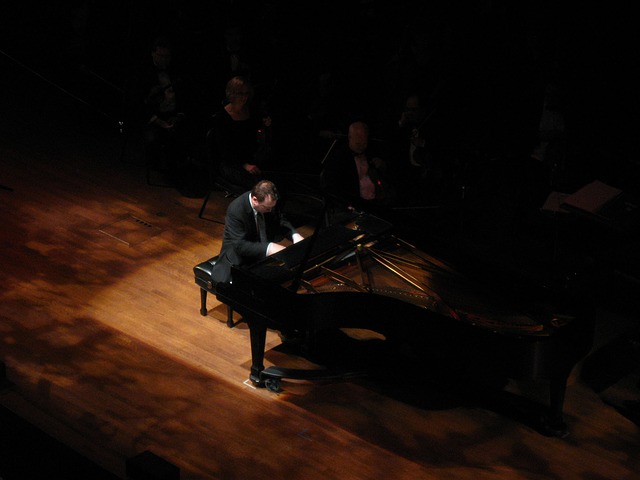
http://www.barnesandnoble.com/w/waging-business-warfare-lessons-from-the-military-masters-in-achieving-competetive-superiority-revised-edition-david-rogers/1119079991?ean=2940149284030


9 Comments

Filed under Artists, Becoming an Artist, Creativity Self-Improvement, Dancers, Developing Talent, Human Potential and Achievement, Expectations, Goals and Purposes, Motivation, Writers

Tidy, Productive Lives and Messy, Creative Lives

dandelion-6296_640Swedes use the term “Dandelion Children” to describe children who thrive in any kind of environment under any conditions in the same way dandelions thrive regardless of soil, drought, sun, or rain. This is a post about dandelion children who grow up to be remarkable.

Tidy, Productive Lives

“The vast majority of individuals whose adult lives have been unusually creative or productive, or who have been unusually capable within various fields of expertise, have been people whose early years have been stimulating ones, characterized by plenty of opportunities to learn and plenty of guidance and encouragement, of one or both parents.” (Michael J.A Howe, The Psychology of High Abilities)

The influential study described in Developing Talent in Young People laid out a process that was generally followed in homes of people who were studied. The parents strongly encouraged development of the children’s talent in a particular area in preference to others, went to extreme lengths to help the child to do well, were always willing to devote their time and energy to the children–playing games, reading to them, or teaching them in one way or another. Parents showed interest in their children’s activities and encouraged them to do their best. Not one of the children reached their potential without strong support and training. Parents would move heaven and earth to give their children rich educational opportunities, finding for them the best teachers and advisors, sparing no expense.

Those paragraphs—those ideas, those luxuries, usually of middle or upper middle-class, highly-educated affluent parents and their privileged children–are the kind psychologists love to write about neat and tidy, ideal upbringings. But even as you read them you’re thinking:

“Who are they talking about? They’re certainly not talking about me!”

Messy, Creative Lives

There’s an alternative point of view:

“When you read the lives of various great men (and women)-of all great men, perhaps, if the account is truthful–you will notice that the conditions of their childhood, their education, or their profession did not predispose them to what they ultimately accomplished. It is not because of their education, it is often in spite of it that they were able to develop. This man grew up without books; that man had to study secretly. It makes you wonder what the word ‘advantages’ really means, what parents mean when they say they want their children to have all the advantages they themselves did not have…Is not the lack of something often more helpful? For the lack of an external thing arouses an inner impulse that replaces it; the ‘I,’ the individual’s native gift is substituted…So you need never pity people who complain that they lack this or that, provided they have pledged themselves to reach their goal.” (Jean Guitton, A Student’s Guide to Intellectual Work)

Popular American author William Saroyan wrote, “I must make it known that I do not believe it is required of art, science, religion, philosophy or family to assure every man born into this life, a secure childhood, in which a child knows only love and harmony…The supplying of such a childhood to a child… may not even be desirable. It may create a nonentity.” Playwright/novelist Gore Vidal wrote, “The protective love of two devoted parents can absolutely destroy an artist.” Creative attainment does not depend on coming from an intact family.

Cradles of Eminence

In a biographical survey of the family backgrounds of 400 eminent people of the twentieth century that included novelists, poets, actors, musicians, opera singers, composers, movie directors, painters, playwrights, dancers, and architects, 85 % had come from troubled homes with very little attachment, warmth, affection, or closeness.

American novelist Willa Cather and her mother arranged their lives so that their contacts with each other were minimal and Willa and her brother were left alone. In Cradles of Eminence the authors who conducted the survey say, “Contentment and creativity do not ordinarily go hand in hand in the homes that cradle eminence.” As children 75% were troubled by a variety of problems such as poverty, and “by rejecting, over-possessive, estranged, or dominating parents; by financial ups and downs; by physical handicaps; or by parental dissatisfaction over the children’s school failures or vocational choice.”

ernest-hemingway-401493_640The great majority of writers of fiction or drama, and a number of poets, came from families where there were tense conflicts between the parents. Sixty percent were dissatisfied with school. Nobel Prize winning author Ernest Hemingway grew up in a dysfunctional home and was convinced his mother’s constant badgering of his father led to his father’s to suicide.

Prolific 19th century English novelist Anthony Trollope achieved fame, fortune, and popularity, and knew many of the rich and the accomplished of his era. But in school he “suffered horribly! I could make no stand against it. I had no friend to whom I could pour out my sorrows. I was big, and awkward, and ugly. How well I recall all the agonies of my young heart: how I considered whether I should always be alone; whether I could not find my way up to the top of that college tower, and from thence put an end to everything…Something of the disgrace of my school-days has clung to me all though life….I feel convinced in my mind that I have been flogged oftener than any human being alive…These were twelve years of tuition in which I do not remember that I even knew a lesson!”

As twelve year old celebrated English novelist Charles Dickens suffered in poverty and was forced to live alone, away from his family, while working many hours a day in a rat-infested factory pasting labels on pots while his father rotted in debtor’s prison. When his father was released, Charles’ mother wanted her son to stay on at that miserable factory. Later Dickens wrote: “I never afterwards forgot, I shall never forget, I never can forget, that my mother was warm for my being sent back…Even now, famous and caressed and happy, I often forget in my dream that I have a dear wife and children; even that I am a man; and I wander desolately back to that time in my life.”

Cradles Of Eminence concludes that contributions to the arts and other fields are likely to be made by the person whose childhood was not trouble-free and who was not an all-round good student, and whose parents were a problem to themselves and the child. In many autobiographies of eminent artists there are frequent references to the positive motivating effects adverse circumstances had on them.

jazz-63212_640Famous jazz musician Louis “Satchmo” Armstrong’s father deserted the family, and his mother was “out on the town.” Louis was committed to an institution for delinquent boys where he learned to play musical instruments and became a band leader. He said, “All in all I am very proud of the days I spent at the Colored Waifs Home for Boys.”

Stephen Crane, Eugene O’Neill, William Faulkner, and F. Scott Fitzgerald were just a few writers of many artists who failed in college. Many, like Hemingway, had no interest at all in going to a college. Pablo Picasso failed at elementary school because he refused to do anything other than paint. Even as a child of nine he would duck out of class and wander the streets of Madrid, painting and sketching.

Psychologist E. Paul Torrance found that 70% of the children who rated high in creativity would not be selected to be members of a special class for intellectually gifted children. High IQ students are likely to prefer conventional occupations–doctor, lawyer, and engineer. Highly creative students find unconventional careers like writer more appealing. Few of the subjects in Lewis Terman’s high IQ study—the “Genius Study”– went on to excel in the fine arts, music, and literature. The group produced many successful people, but not one creative artist.

Boys and girls who’ll become famous are not often ‘all around” competent, conforming students. Creative people are not distinguished by high grades at school. Fathers who were abject failures are common in the lives of great artists and in the lives of eminent people in almost all fields. Writers and actors lived in particularly turbulent homes.

“Ironically the child that grows up with many privileges may have much less opportunity for her or his creativity than the child growing up in the slums. If everything is done for the child, and the child has little opportunity to show initiative, then whatever latent potentials there are for creative work may be suppressed because there is no need to develop these potentials.” Robert J. Sternberg and James C. Kaufman, “Constraints on Creativity.”

I’m betting that the majority of people reading this post, many of them artists, didn’t follow the psychologist’s “tidy” path to their current creative lives, but became successful in spite of—or because of–a “messy” childhood.

© 2014 David J. Rogers

For my interview from the international teleconference with Ben Dean about Fighting to Win, click on the following link:

www.mentorcoach.com/rogershttp://www.mentorcoach.com/positive-psychology-coaching/interviews/interview-david-j-rogers/

Order Fighting to Win: Samurai Techniques for Your Work and Life eBook by David J. Rogers

Fighting to win Amazon

Click on book image to order from Amazon.com

or

http://www.barnesandnoble.com/w/fighting-to-win-samurai-techniques-for-your-work-and-life-david-rogers/1119303640?ean=2940149174379


Order Waging Business Warfare: Lessons From the Military Masters in Achieving Competitive Superiority

Waging Business Warfare812sCY9edLL._SL1500_

Click on book image to order from Amazon.com

or

http://www.barnesandnoble.com/w/waging-business-warfare-lessons-from-the-military-masters-in-achieving-competetive-superiority-revised-edition-david-rogers/1119079991?ean=2940149284030


5 Comments

Filed under Artists, Becoming an Artist, Developing Talent, Human Potential and Achievement, Writers