Tag Archives: inner opponents

Self-Confidence of Artists and Writers

I went with my wife to a poetry reading to read poems I’d written, and before starting, talked with other people who were there to read theirs. I’d never spent much time with poets, but before beginning the readings there was wine and cheese and I talked with some of the others. As my wife and I found seats, I asked her, “Do you think all poets are as meek as these poets?” I had the same impression during the readings. So many seemed to lack confidence. The lack of confidence is very hard to hide

I wondered if they also lacked confidence when they were writing and how that affected the quality of their work. Then I thought of all the many talented writers, painters, dancers, and actors I’ve known, some of them very close to me, who also lacked confidence or who once had confidence and lost it, and because of that ended their artistic careers prematurely. So I thought this blog post might encourage an artist or two to have confidence and persevere.

This post says, “Take heart”:

ballerina-534356_640_copy2You must never lose the faith that you have the ability to produce quality art successfully and consistently. The desire to succeed and the confidence that you can, along with skill and the ability to overcome obstacles are the most important indicators of eventual success in art.

Artists fail because (a) they lack the necessary skill or (b) they have the skill but don’t have the confidence to use that skill well. If you have confidence and faith in yourself, you’ll reach higher levels of success than other writers, painters, dancers, actors, and performers of equal ability who lack them.

Artists who are sure of their abilities, sure of themselves, intensify their efforts when they fail to achieve their goal, and persist until they achieve it. Self-confidence is the ultimate source of an artist’s motivation.

All great artists of the past were confident.

The will of a successful artist must be indestructible.

 Learned Helplessness

“Learned helplessness” has destroyed the careers of many artists who had all the potential they needed to excel. They met failure and they never recovered. Failure is a necessary part of an artist’s life, bringing with it growth and new learnings, and sometimes sudden leaps in performance. No one met more failures and took more wrong turns and was more average than Walt Whitman until suddenly, seemingly without any preparation, he wrote Leaves of Grass and established himself as America’s greatest poet—ever. If you’re not failing some of the time, you’re not aiming high enough.

Helpless artists believe that no matter what they do, their actions will not lead to success. Consequently, they give up. Learned helplessness was first observed among young animals which had been placed in a situation in which they received inescapable electric shocks. When placed in a different situation, they made no attempt to escape or avoid the shock—they had learned to be helpless. Like those animals, when people believe that their actions will have no effect on what happens to them, they also become passive.

Helpless-oriented artists attribute their failures to personal inadequacies—they’re think they’re not smart enough, or not talented. Their thinking is self-defeating. Their expectations are negative—“I won’t succeed. This problem is too much for me.” The act of painting/dancing/ writing becomes unpleasant, even painful, an activity to be avoided. Helpless artists lose focus and can’t concentrate. They worry, continually question their worth as artists, and begin to put out less and less effort. Good work habits disappear. They avoid challenges and risks. Their performance declines.

 Disappointment Needn’t Lead to Discouragement

You’re an artist; you know what it is to be discouraged. When you’re deeply discouraged you’re weak and vulnerable. You’ve been deprived of confidence, hope, and spirit. Your courage and strength abandon you. If you’re to succeed you must get them back right away, taking immediate action with strong determination. Lay the discouragement aside as though putting it in a drawer. Get back to your work. The will of a successful artist needs to be indestructible.

Rather than conceiving of yourself as a beaten person, hold a completely different view: you are a person who has been set back—as happens–but yet a person with important accomplishments ahead and a rich life of creativity to lead, a decisive, courageous, fearless person.

sisters-74069_640Self-doubt and self-confidence are affected by the comments of other people. Someone saying, “You can do it; don’t give up” can save a career. Seek out encouraging, supportive people. When Impressionism was beginning in Paris in the nineteenth century, and the Impressionists were being attacked on all sides by critics, other artists, and the public, they banded together and met frequently in their homes and cafes. Their mutual support strengthened them all. Today artists and writers living great distances apart, strangers to each other, support and encourage one another via networks of blogs.

Accepting setbacks as an unavoidable part of the artist’s life is essential for maintaining an unshakeable motivation and the high spirits needed to do good work. Look for what caused the discouragement and make decisions as to how to move forward now. Maintain a sense of proportion—“It’s bad, but it’s not that bad.”

James Joyce’s Dubliners was one of literature’s landmark collections of short stories. It was rejected by twenty-two publishers, but Joyce never lost confidence in himself or faith that it would be published. Jack London’s stories were rejected 600 times before the first one was published, but within two years after that first success he was one of the most popular novelists in the world. Publisher after publisher rejected e.e. cummings’ first book of poetry, but he wasn’t deterred and continued writing. When it was finally published, he included a dedication which read, “With no thanks to…” followed by the long list of publishers who had turned it down.
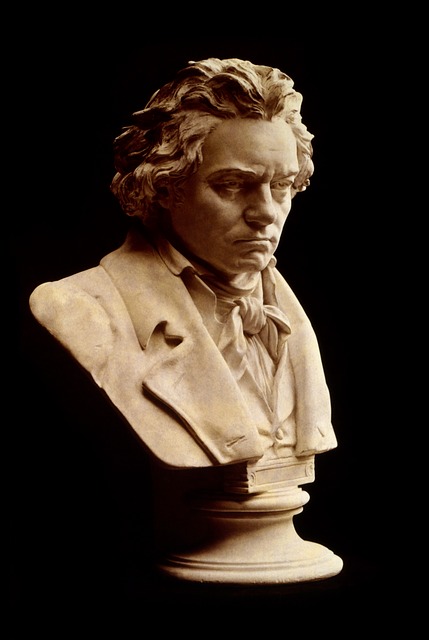
ludwig-van-beethoven-62844_640(1)Resilient artists adapt. What could be more discouraging for a composer than losing his hearing and being unable to hear the music he was creating? At 51 Beethoven was deaf. As a substitute for hearing the actual sounds, he removed the legs of his piano and placed it on the floor so he could feel the vibrations of the music.

Discouragement is so much a part of the creative person’s existence that if you don’t develop the resiliency and energy to recover from it, you will have difficulty surviving.

 Confidence and Faith

Maintain an optimistic frame of mind: “I’m in a funk, nothing clicking, the ideas not coming. Discouraged. But I’ve come out of this kind of thing before and I will again. I am (your name), the same person who… (wrote, painted, won, achieved…) and I can again.” Persist.

Look to your past successes. Past success is the most powerful and direct basis for confidence. If you have proof that you have the ability to achieve what you want to achieve—the skills, motivation, and know-how– because you’ve succeeded in the past, you will try to achieve it again. If you feel that way, you’ll be confident and will not likely be stopped by self-doubt, an artist’s main psychological obstacle. You’ll have high expectations of success. You won’t dwell on past failures; you’ll think about them not as true failures, but as temporary conditions and useful lessons, bumps in the road, not the end of the road. You’ll dwell on past successes. Even the most self-doubting artist has had past successes to reflect on. There is always something positive to fasten onto during periods of doubt.

Develop your skills. As your skills improve, your self-doubt fades and is replaced by confidence.

Don’t be intimidated by difficulty; don’t hide from challenges. Rather, seek them out, welcome them. You progress by tackling increasingly difficult challenges. Two artists may be equally competent. The one who has an effort-will-win-out-and-my-skills-can-improve orientation will not be discouraged by initial difficulty. But the “helpless” artist will immediately lose confidence and may not recover.

Recover quickly. Temporary self-doubt after a setback is a natural reaction. What matters most is how quickly you take action and regain your confidence.

Bearing this post in mind and practicing these prescriptions should increase your confidence, and that should be reflected in your perseverance and the success of your work.

© 2015 David J. Rogers

For my interview from the international teleconference with Ben Dean about Fighting to Win, click on the following link:

www.mentorcoach.com/rogershttp://www.mentorcoach.com/positive-psychology-coaching/interviews/interview-david-j-rogers/

Order Fighting to Win: Samurai Techniques for Your Work and Life eBook by David J. Rogers
Fighting to win Amazon

Click on book image to order from Amazon.com

or

http://www.barnesandnoble.com/w/fighting-to-win-samurai-techniques-for-your-work-and-life-david-rogers/1119303640?ean=2940149174379


Order Waging Business Warfare: Lessons From the Military Masters in Achieving Competitive Superiority

Waging Business Warfare812sCY9edLL._SL1500_

Click on book image to order from Amazon.com

or
http://www.barnesandnoble.com/w/waging-business-warfare-lessons-from-the-military-masters-in-achieving-competetive-superiority-revised-edition-david-rogers/1119079991?ean=2940149284030


9 Comments

Filed under Actors and Directors, Artists, Blocks to Action, Creativity Self-Improvement, Dancers, Developing Talent, Human Potential and Achievement, Expectations, Motivation, Writers

Vivekananda: Practical Thoughts of an Exceptional Man

(Born 152 Years ago today, January 12, 2015)

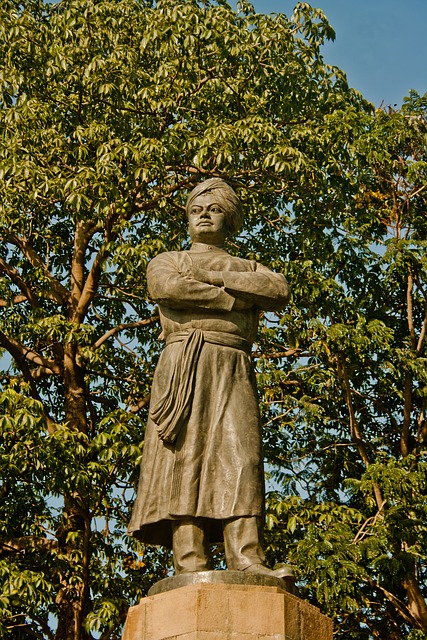
swami-vivekanand-390778_640

 Focus

“Take up one idea. Make that one idea your life; think of it; dream of it; live on that one idea. Let the brain, muscles, nerves, every part of your body be full of that idea, and just leave every other idea alone. This is the way to success. Hold to the ideal a thousand times, and if you fail a thousand times, make the attempt once more.”

Adversity

“Blows are what awaken us. In the majority of cases it is misery that teaches more than happiness. It is the heroic endeavor to subdue adverse circumstances that carries our spirit upward.”

Joy

“This world is just a gymnasium in which we play; our life is an eternal holiday.”

Fearlessness

“The whole secret of existence is to have no fear. Never fear what will become of you.”

Strength

“This is the question I put to every man, woman or child: Are you strong? Do you feel strong? Are you getting stronger? We suffer because we are weak.”

Freedom

“Man has freedom already; but he will have to discover it. He has it but every moment he forgets it.”

My admiration for Vivekananda (1863-1902) began many years ago with my reading a tiny paperback booklet on his teachings that I happened to pick up while in a used bookstore somewhere in the Dakotas desperately searching for something—anything—to read between flights. At that time I was experiencing great outward success in every material way, but was dissatisfied and did not know why. That magical little booklet came to mean a great deal to me, and from it I progressed to a reading of all the hundreds and hundreds of thousands of words spoken by this mesmerizing orator with a gleam in his eye who possessed “a quiet but assured air of command.”

When I find myself going astray (as I too often do) and wandering away from the deep down fundamental things, his words come to mind to rescue me, particularly, be fearless; have no fear, and “Go beyond the trifles of the world. Know that nothing can affect you. It is liberty to be affected by nothing. Be perfectly resigned, perfectly unconcerned.” In other words—if other words are needed—keep your bearings; don’t lose yourself craving what is inessential to you; don’t let superficial things and pettiness touch you; find that your life is more composed of meaningless nonsense than you have ever imagined. I think that if truly understood and taken to heart, these are among the most profound and therapeutic words ever spoken. If you and I were to “go beyond the trifles of the world” most of our worries, anxieties, fears, and doubts would fly out the window. So when things are pressing in on you from all sides and you wish them to stop, say to yourself, “Go beyond the trifles of the world” and watch what happens.

Unlike his mentor Ramakrishna, Vivekananda (born Narendranath Datta in Calcutta, India) was not a mystic. He was a spiritual man and fundamentally a teacher of how to live sincerely and honestly in this real world of work and family without losing sight our spiritual nature. The prophet of self-reliance, he was a person whose words expressed exactly who he was without phoniness, fakery, or pretense. When he died at the age of thirty-nine, the world from beggars to statesmen mourned.

“By means of the constant effort to do good to others we are trying to forget ourselves; this forgetfulness of self is the one great lesson we have to learn in life. Every act of charity, every thought of sympathy, every action of help, every good deed, is taking so much of self-importance away from our little selves.”

”Always keep your mind joyful; if melancholy thoughts come, kick them out.”

“We are responsible for what we are; and whatever we wish ourselves to be we have the power to make ourselves.”

“It is selfishness we should eliminate. I find that whenever I made a mistake in my life, it has always been because self entered into the calculation. Where self has not been involved, my judgment has gone straight to the mark.”

“It is thought which is the propelling force in us. Fill the mind with the highest thoughts, hear them day after day, think them month after month. Never mind failures…they are the beauty of life, these failures.”

“The one way out is through ourselves.

“Almost all suffering is caused by our not having the power of detachment. We must learn not only to attach the mind to one thing exclusively, but also to detach it at a moment’s notice.”

“In all these little roughnesses that we meet with in life, the highest expression of freedom is to forbear.”

“The goal of all nature is freedom and freedom is to be attained only by perfect unselfishness: every thought, word, or deed, takes us toward the goal. Have no thought for yourself, no word for yourself”

“There is no limit to the powers of the human mind. The more concentrated it is, the more power is brought to bear on one point; that is the secret. In making money, or in worshiping God, or in doing anything, the stronger the power of concentration, the better will that thing be done.”


Vivekananda was little known outside a small circle in India when he appeared at the Parliament of Religions in Chicago in 1893—the first time the leaders of all the world’s major religions were brought together to talk to the public about their religions. Vivekananda had a handsome face and striking appearance and drew attention the morning before he was to speak for the first time. His turn to speak came, but he excused himself and asked for more time. Later he confessed that he had stage fright: the other speakers were prestigious religious leaders who had come prepared. He had arrived with no formal credentials, unknown, with no money, no resources, no place to stay, and hadn’t prepared a speech.

Such was the overwhelming impact of his mere presence on an audience that when in the afternoon he rose to his feet at the podium and began speaking with that extraordinarily deep bell-like voice, saying “Sisters and Brothers of America,” the reaction was astonishing. Instantly the entire audience—many hundreds of people— clapped and cheered wildly. Nothing like that had occurred at the conference though all the other speakers were better known. The audience must have sensed they were about to hear the most valuable words of a most exceptional human being.

© 2015 David J. Rogers

For my interview from the international teleconference with Ben Dean about Fighting to Win, click on the following link:

www.mentorcoach.com/rogershttp://www.mentorcoach.com/positive-psychology-coaching/interviews/interview-david-j-rogers/

Order Fighting to Win: Samurai Techniques for Your Work and Life eBook by David J. Rogers

Fighting to win Amazon

Click on book image to order from Amazon.com

or

http://www.barnesandnoble.com/w/fighting-to-win-samurai-techniques-for-your-work-and-life-david-rogers/1119303640?ean=2940149174379


Order Waging Business Warfare: Lessons From the Military Masters in Achieving Competitive Superiority

Waging Business Warfare812sCY9edLL._SL1500_

Click on book image to order from Amazon.com

or

http://www.barnesandnoble.com/w/waging-business-warfare-lessons-from-the-military-masters-in-achieving-competetive-superiority-revised-edition-david-rogers/1119079991?ean=2940149284030


6 Comments

Filed under Creativity Self-Improvement, Developing Talent, Human Potential and Achievement, Eastern Philosophy

The Artist as Warrior

“The tramp of warriors sounded like a thousand convulsions of the earth. The shouts of warriors, the whistling of arrows, the thunder of the feet of foot soldiers and the hooves of chargers did not cease.”

“Fear is the true enemy, the only enemy.”

“When all psychological blocks are removed the swordsman will move without conscious effort.”

“The meaning of all things is within, in your mind, not something that exists ‘out there.’”
(From the Samurai Way)

martial-arts-291051_640Each time I visited a successful painter friend of mine I saw the same unfinished painting on the easel. Nothing about it changed month after month. Not a single new brush stroke touched the canvas. Then she moved away and I didn’t see her for a number of years. When we got together again I asked, “Whatever happened to that green pastel that was on your easel so long?”

She said, “I never finished it.”

I said, “You were afraid.”

She said, “I was terrified of it.”

I know a talented young writer who contacted 100 agents in hopes of getting his first book published. He had worked extremely hard on the book and it was very good. He thought of making it a trilogy, and had mapped out the next five years of writing. One agent showed interest and the writer was hopeful, but then the agent lost interest. Discouraged, doubting himself, having lost confidence, not wishing to be so disappointed again the writer stopped writing creatively and devoted himself to his teaching career.

I know an opera singer who has had a successful career, but suddenly and inexplicably after five years developed a fear of performing and for two years retired from the stage. She’s performing again but doesn’t know if that debilitating fear will ever return.

Each early morning I go into my work room upstairs and settle down to write. Now I’m in my element–confident, contented, primed and ready to work. I’ve been writing so long and have produced so many words. Generating text is second nature to me—easy, effortless, without strain. Yet, there is another emotion that is there with me some days. I pause, fold my hands in my lap, and ask myself, “What are you feeling now? Why are you hesitating?” And I answer, “I am feeling fear.”

paintings-316440_640“What are you afraid of?”

“I don’t know. Possibly that I won’t have my skills today; that I won’t be successful; that I’ll let myself down. I really don’t know.”

“Is that so important? Writing is such a small part of life.”

“Right now it is the most important thing possible.”

Bear in mind that I’ve had success writing. Also, I am no coward. I rescued a woman from a would-be rapist–chased him, caught him, fought with him, wrestled him to the ground, and held him till the police came. Yet when I sit at the computer to do the thing I do better than anything else sometimes I’m scared.

We speak of writer’s block, but that’s too narrow. There are sculptors’ blocks and actors’ blocks and ballet dancers’ blocks—the drawing back (intimidated, helpless) from the art we love and have performed many times before–being stopped by some powerful obstacle or set of obstacles that are not out there in the world, not visible to the eye, but are inside us.

The Samurai

The samurai–the finest warriors ever to walk this earth– were ordinary men and women who were trained to perform extraordinary feats of courage. Just as writers, artists, dancers, or actors face internal obstacles that interfere with their work, so did the samurai. The bulk of his or her training (there were women samurai) was devoted to overcoming those inner obstacles that are no different than the obstacles artists of all descriptions face—anxiety, procrastination, self-doubt, hesitation, fear of taking risks, discouragement, over-analysis, depression, apprehension, impatience, and more.

target-211225_640The release of the arrow is the most difficult problem archers face; they think too much, as often do artists, explaining the sudden loss of spontaneity, the sudden loss of skill. Fear is a dragon that often keeps us from success. The samurai was taught: “Strike through the dragon’s mask.”

The samurai’s mind was trained to be fudoshin—to be “immovable,” to never budge from the main goal (for the artist, to get the work done.) They were taught that when your thoughts get “caught” (toroware), or “stopped” (tomaru) on internal obstacles, you will have trouble executing any action—when your mind gets “hooked” or “snagged,” the way the opera singer’s mind was snagged for two years. Better to acquire tomaranu kokoro, “a mind that knows no stopping,” that flows smoothly from idea to idea without being stopped.

What I did in my book Fighting to Win: Samurai Techniques for Your Work and Life was to pluck the wisdom of the samurai off the battlefield and apply it to everyday modern life producing a book of musha-shugyo, “training in warriorship” so that people might overcome the internal obstacles that are troubling them.

Zen and the Samurai

The warrior class was the first segment of Japanese society to embrace Zen. From the twelfth-century on Zen became known as the religion of the samurai. What explains the fit between these two apparently different approaches to life?

Zen is many things—a religion, a philosophy, a life-style. It is also a psychology, a psychology of action, grounded on decisiveness, spontaneity, strength of will, adaptability, courage, and bravery. It was this psychological aspect of Zen which appealed most to the samurai, for to rush forward to face the enemy even if only death awaited him, he needed what Zen taught—to act without hanging back, without reservations, and with total commitment.

Warrior Artists

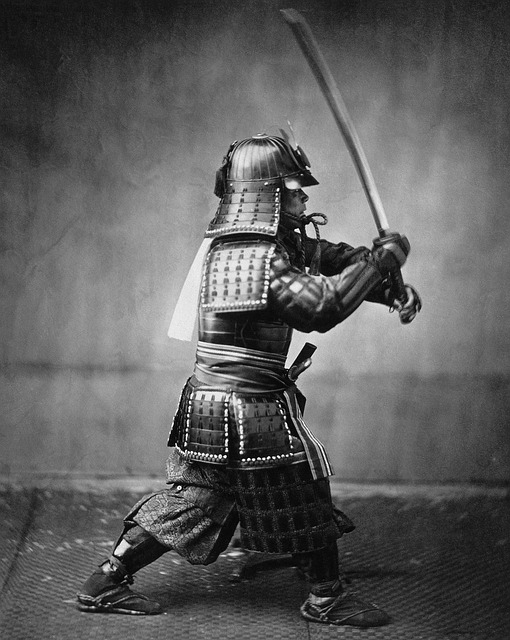
samurai-67662_640The elite samurai were members of the cultured, aristocratic upper classes—the daimyos, the lords. Bunbu ryodo “The united Ways of the pen and the sword” refers to the tradition of the warrior artist, master swordsmen who were also poets, calligraphers, and painters. The famed Miyamoto Musashi is considered the greatest samurai swordsman who ever lived. He was also one of Japan’s foremost artists whose work today has a place in Japan’s national art museum.

Samurai Maxims

“A warrior must only take care that his spirit is never broken.”

“Success will always come if your heart is without disturbance.”

“Let your mind be free to function according to its own nature.”

“Stick to the larger view of things. If your vision is narrow your spirit will be narrow.”

“Adversity in life is essential to training.”

“The end of our Way of the sword is to be fearless when confronting our inner enemies and our outer enemies.”

“If you walk, just walk. If you sit, just sit. But whatever you do, don’t wobble.”

You needn’t look too far or too hard to see that these maxims and the inner training of the samurai Way apply to the artist’s life. Like the warrior, if the artist is to grow, it will be from within. The artist’s work, like a warrior releasing an arrow, should be like a drop of dew falling from a leaf or a fruit falling when it’s ripe.

© 2015 David J. Rogers

For my interview from the international teleconference with Ben Dean about Fighting to Win, click on the following link:

www.mentorcoach.com/rogershttp://www.mentorcoach.com/positive-psychology-coaching/interviews/interview-david-j-rogers/

Order Fighting to Win: Samurai Techniques for Your Work and Life eBook by David J. Rogers

Fighting to win Amazon

Click on book image to order from Amazon.com

or

http://www.barnesandnoble.com/w/fighting-to-win-samurai-techniques-for-your-work-and-life-david-rogers/1119303640?ean=2940149174379


Order Waging Business Warfare: Lessons From the Military Masters in Achieving Competitive Superiority

Waging Business Warfare812sCY9edLL._SL1500_

Click on book image to order from Amazon.com

or
http://www.barnesandnoble.com/w/waging-business-warfare-lessons-from-the-military-masters-in-achieving-competetive-superiority-revised-edition-david-rogers/1119079991?ean=2940149284030


17 Comments

Filed under Artists, Becoming an Artist, Blocks to Action, Creativity Self-Improvement, Eastern Philosophy, Samurai Techniques, Writers

To Think, To Decide, To Act: Trust Only Movement

Living at White Heat

highway-393492_640“A motto for man: to do and through doing to ‘do’ himself
and be nothing but what he has made of himself.” Jean Paul Sartre


Katherine is such a good woman, a kind-hearted woman, obviously very bright, and likable, friendly, and generous to a fault. There is so much to her, so many gifts, so much to offer, so much promise, but she’s snagged, she’s caught, she’s trapped, and she is not looking for a way to escape. And the days pass.

Someone asked her if she’s happy and she said she is. But the next morning she thought about it and realized she isn’t. It’s no mystery to her why. She knows she’s not nearly as ambitious as she might be, and hasn’t found a heartfelt purpose to get up for in the morning. And she’s in a job she doesn’t like, but makes no attempt to find anything more suitable. Her partner abruptly ended their long relationship, and she’s lonely. But she’s made no effort to find someone else or to look for an activity she would enjoy and would divert her attention from her loneliness. She has friends, but none of them close.

Her life has settled into a tedious routine. From her building’s elevator over to the garage, the mile to the office, lunch at the Greek restaurant, the mile home, and the elevator. Laundry Wednesday night about seven and shopping on Saturday morning, the newspaper on Sunday, and on Monday at 8:30 her favorite TV show.

She looks in the mirror twice a day and sees she’s gaining weight around the middle, and doesn’t like that, but doesn’t do anything about it. No different from a billion other people, she never stops to ask herself, “Why am I living this life when I could always a live another.” She could be leading a better life, a life with meaning, if she made new decisions and followed through on them, no more apathy and no excuses.

To think, to decide, to act, to do something, to get things done, to attend to what needs attention, to reduce the distance between where you are now and where you want to be in life–that’s a human being’s inherent nature. You were not created to be stationary, to be limp and weak and unmoving, but were brought into this world with movement in mind. Action is your natural inclination, a fulfilling life your true destiny. It’s what you’re body and mind are designed for: to make choices and changes, take risks, accept responsibility, exert energy, and achieve purposes. You only reveal the person you truly are in decisive action. Only then do you reach your enormous possibilities. But you must trust only movement.

If we cast a glance at people in general we find the opposite of a continuous advance toward a better life. Standing still in life and doing nothing is plainly the common condition, resisting change even if one’s life is quietly unbearable. Letting opportunities to explore new ways of being and discover new strengths, new people, and new pleasures slip away, and slip away again.

 Recognize the Clues

No one has to tell you there’s a discrepancy between the life you’re leading and the better one you have the potentials to be leading. You know something is wrong before anyone else, and you know it better than anyone else. And if you are intelligent and aware, that knowledge never leaves you alone. Some people intend to change their life, and may swear to others they will. “Someday,” they say, “I’ll do this and then I’ll do that and things will get better.” But when they cast an honest eye on their life in progress they see certain indications that their life is going wrong, certain clues.

An Inappropriate life

There comes a moment when you realize that you could have just as well have lived a thousand different lives but have lived this one, that you could just as well have taken a thousand different paths but took this one; that perhaps they are the wrong life and the wrong path.

Running Out of Time

From time to time you have to ask yourself if you’ve have made the most of your limited time here on earth. Then in a moment of quiet panic some people realize they haven’t. Entering the Garden of Eden, God called to Adam, “Where art thou.” He was asking Adam to account for himself. We all have to account for ourselves. X days and years of the time allotted to you have passed. How far have you gotten?

Hideouts and Cover Stories

People often go to extreme lengths to fabricate a cover story to explain why they’re not making the most of their lives. They hide out. You know people who are hiding out. You can even recite their cover stories, you’ve heard them so often: “This didn’t work out and that didn’t work out. My luck was bad, and things were so dead set against me. I’m as smart as anyone else, but I didn’t get the breaks.” During moments of clarity they become aware that the best part of themselves has never come out of hiding. They cower behind the cover stories they invented and escape to hideouts. You want to say, “Wake up! Stop hiding. Don’t settle for a crummy life.”

Cancelled Dreams

At some point some people give up and abandon their dreams. They continue the rest of their days recalling how pleasant their dreams once had been. Dreams are frail things that disappear if they aren’t turned to reality.

Inaction

You may be a person of action. If you are, when there’s something to be done, you do it. Hard work is necessary if you are to have the life you deserve, so you work hard. You have purposes to attend to and you attend to them. There are obstacles to conquer, so you conquer them. But this man is paralyzed by inaction. He doubts himself and is afraid. He doesn’t do what’s necessary to improve his life. When he is set back he gives up trying and doesn’t bother anymore. His determination withers away. He can follow routines–up at six, home at six–because routines require no imagination or initiative; no risks, no commitments. But when it comes to stepping out of the familiar stream of daily routine and taking action to make more of his life–changing careers, starting a business, leaving a disappointing life behind, moving to a different place, for example– he’s in over his head, he’s helpless There’s procrastinating over the small things–failing to return a library book on time–and there is procrastinating over the big things–failing to make important life-changing decisions and take action, procrastinating your existence into oblivion.

Disillusionment

There’s supposed to be some vital meaning to our lives. But there comes a time when some people are forced to ask, “Is this all there is?” They realize that their lives have little meaning, and without meaning there isn’t much to life. They long to be breathless with desire for–something, anything.

 Unfulfilled Promise

In high school Kim was somebody. But now she realizes that something somehow happened, and she’s been left behind. She’s nowhere near the bright future that once seemed so clearly, like a beacon, to lie ahead. She can’t shake that off. She lives in the past, in her glory years. She’s snagged; she’s stuck. She makes no progress.

A Mechanical Existence

There’s a saying: “Be sure you’re riding the horse and the horse isn’t riding you.” Some people choose to be ridden by the horse. They’re living all right–their heart is beating and they breathe– but they’re not leading their life at all, but are being led. Their lives are too easy, too predictable, and too uneventful, and are headed nowhere. There’s nothing in store, no excitement, no surprises.

A Phony Life

Many people live one way while their true self urges them to live a truer, more authentic, more suitable way. They often stay busy in a whirlwind of activity that unbeknownst to them is designed to allow no time to stop and ask, “Am I doing the best I can, am I going right, or have I just gotten good at leading a phony existence?”

 Living with White Heat

When you put behind you an inappropriate life, hideouts and cover stories, cancelled dreams, inaction, unfulfilled promise, a mechanical existence, and a phony life and disillusionment and choose to live a decisive style of life, you become committed to your actions with your whole person. You live with white heat. When you decide with your whole being, all that you are and all that you can be and hope to be are right there with you. You throw yourself completely into the decision. You’re in this thing to the end and your commitment knows no bounds. You focus, you bear down. There’s something out of the ordinary about you that people recognize, a seriousness of intent, a rare intensity. You’re not fooling around, you’re deadly serious about your life and its goals, and you’re not run of the mill. You’re a different breed of man, a different breed of woman, and that’s obvious. Your determination is as hard as granite. You’re unbendable. You never deviate from your decisiveness.

We’re born and hurled into the future. What’s unique about you sets you apart and launches you in a direction. Always follow where your gifts, your talents, and your intelligence lead you. You were meant to let yourself be drawn in that direction. Why resist?

A man was curious and attended an art show to ask a famous sculptor if he had advice for his son John, a sculptor who was just beginning. The sculptor said, “Yes I do have advice. It’s very simple. You tell John to pick up his mallet and his chisel and make chips.”

We’d be better off, you and I, if like a sculptor sculpting our own lives, we too made a decision to make chips.

© 2014 David J. Rogers

For my interview from the international teleconference with Ben Dean about Fighting to Win, click on the following link:

www.mentorcoach.com/rogershttp://www.mentorcoach.com/positive-psychology-coaching/interviews/interview-david-j-rogers/

Order Fighting to Win: Samurai Techniques for Your Work and Life eBook by David J. Rogers

Fighting to win Amazon

Click on book image to order from Amazon.com

or

http://www.barnesandnoble.com/w/fighting-to-win-samurai-techniques-for-your-work-and-life-david-rogers/1119303640?ean=2940149174379


Order Waging Business Warfare: Lessons From the Military Masters in Achieving Competitive Superiority

Waging Business Warfare812sCY9edLL._SL1500_

Click on book image to order from Amazon.com

or

http://www.barnesandnoble.com/w/waging-business-warfare-lessons-from-the-military-masters-in-achieving-competetive-superiority-revised-edition-david-rogers/1119079991?ean=2940149284030


Leave a comment

Filed under Blocks to Action, Developing Talent, Human Potential and Achievement, Goals and Purposes, Motivation

Expectations and Success Part I

“Expect: to look forward to the probable occurrence or appearance.”       American Heritage Dictionary                                          thumb-up-153290_150

We will be talking about the tremendous impact your expectations have on your life in three parts. This is Part I. It discusses very briefly the effects of negative or positive expectations as they apply to any kind of performance, whether sitting down to start a novel (your first or your twentieth), making a speech, performing onstage, engaging in social networking, becoming popular, recovering from an illness, going on a diet, or making progress in your career. You’ll see in Parts I, II, and III together that your expectations affect most every aspect of your life. Knowing the mechanics of expectations, you can turn yours to your advantage.

We tend to act in ways that conform to our expectations. Your expectation–positive on the one hand or negative on the other–releases performance and sets it on a track of success or failure. One experience after another confirms this.

The Journalist

I was to be interviewed by a woman journalist. I knew nothing about her, so I asked a man who had met her. “Oh, her, she’s a real bitch,” he said. “She’s just out to nail the people she interviews.” So there they were: my expectations. I went to her office expecting trouble. I was tight-lipped and curt and kept looking for any sign of nastiness. I was having a terrible time, and I could see that she was too. It was going all wrong. I asked if we could take a short break while I made an important phone call, and I went to the cafeteria and adjusted my expectations from harmful to helpful. I went back to her office and behaved accordingly. This time I acted as if she and I would get along exceedingly well. I started all over. I smiled, relaxed, shook her hand, thanked her for having me, and showed an interest in her work. Suddenly she was friendly, smiling, at ease, complimentary. We laughed. She was a nice person. I liked her and she liked me. It was not only an enjoyable interview, but a friendship resulted from my having friendly expectations and my behaving accordingly.

Here was an application of The Law of Positive Expectation and The Law of Social Reciprocation. Your expectations, positive or negative, tend to come true, and give people something of value to them, and if they are like most people they will give you something of value in return. What do people generally want in any human interaction? Respect, recognition, individual attention, to be liked, to be listened to. Always give them what they want, and ordinarily they will give you the same in return.

A researcher asked subjects in an experiment to judge in advance of meeting another person whether they would be popular or unpopular with the other person. The subjects were right almost every time. Those who expected to be unpopular were, and those who expected to be popular were. If you expect to fail socially you probably will, but if you expect the opposite, it’s a good bet you’ll succeed. That’s because our behavior conforms to our expectations. Then through our behavior we tend to influence the other person to produce attitudes that fit those expectations, even without being aware that in fact that’s what we’re doing.

 Robert and Pete

 I have two friends, Robert and Pete. They are the same age, almost to the day. They attended the same schools from kindergarten on. They graduated from the same university in the same major on the same day, and entered the same career, and live in the same neighborhood of the same city. One seems to be about as intelligent as the other, which is quite intelligent. Robert expects to do well whatever he tackles, from repairing a garage door to getting paid well, and does. He has one success after another. Ask him and he will tell you that he is very happy with his life. On the other hand, Pete will tell you, “Everything I touch turns to…” You know what it turns to. And because he expects it to, it does.

 The Effects of Expectations on Your Health

 The impact of the mind on health has been widely documented. The field of psychoneuroimmunology explores the connection between mind and body regarding the immune system. One finding that has emerged clearly from the growing number of studies and anecdotal accounts going all the way back to the time of Hippocrates, is that psychological factors such as the patient’s and doctor’s expectations can influence the immune system and thus have an impact on the outcome of diseases.

Physicians will tell you it is very common that one patient who is not gravely ill but expects to die enters the hospital and dies, and another who is at death’s door and shouldn’t live much longer, says, “Don’t worry, I’m going to walk out of this place,” and does.

When patients given placebos in medical experiments get better, the experimenters and doctors dismiss it. They say, “That’s just the placebo effect.” But the placebo effect is the most astounding thing about the experiment–people getting better without medical treatment because they expect to get better!

There have been thousands of scientifically-conducted studies of the effects of placebos. In one study, patients who had bleeding ulcers were divided into two groups. Group I was told they were being given a powerful new drug that without a doubt would relieve the symptoms. Group II was told they were being given a new experimental drug that little was known about. Twenty-five percent of Group II found relief from their symptoms, but seventy percent of Group I, the people who expected their health to improve, experienced “significant improvement.” In fact both groups had been given the same “medicine” that wasn’t a medicine at all, but a placebo.

 Expectations of Failure

Many people are dominated all their lives by a fear of failing. But the term is a misnomer; they not only fear they will fail, they expect to, so they are dominated by the EXPECTATION of failure and avoid risks. They may take a stab at solving a problem or even at a better life, but if they fail they may never try again. And if they do succeed they may experience “encore anxiety,” the nagging sense that success was just a fluke, and their expectation is that they won’t be able to duplicate their success. On the other hand, there are people who expect to succeed in almost everything they attempt, and having succeeded once, expect to succeed again. If they fail, they consider that a fluke. Even when things repeatedly do not work out, they still expect success to come.

Our expectations affect the smallest things, even the search for ketchup. I’ve often found that when I expect not to be able to find something—a set of notes somewhere in the office or the ketchup in the refrigerator, I tend to be unable to find them. I overlook them even though they are right there. But when I tell myself that they’re here somewhere and expect to find them, they turn up.

 Self-Confidence

Powerful positive expectations propel you confidently into action. Supremely self-confident people approach their endeavors in the same way: as if it’s impossible for them to fail. Suggest to them that in hindsight it was possible that they might have failed, and they will cock their heads a little and get a surprised look in their eyes, and will say these words: “That never occurred to me.”

Whole nations can have such confident expectations. I’ve talked with many Americans who lived during World War II. The most striking similarity is that it never once occurred to any one of them that we might have lost the war, not a single one. They expected total victory.

 Next Time

In the second post on expectations we will look at how expectations affect your motivation, personal relationships, persuasiveness, popularity, learning ability, and more. We will see that our habitual expectations hypnotize us into believing they’re factual when they’re completely fictional. We’ve made them up, but we act “as if” they are true. And so, whether they are positive or negative, they are completely under our control and can be changed from negative to positive.

That makes all the difference.

© 2014 David J. Rogers

David J. Rogers is the author of  eBooks Fighting to Win: Samurai Techniques for Your Work and Life and Waging Business Warfare: Lessons from the Military Masters in Achieving Competitive Superiority.

For my interview from the international teleconference with Ben Dean about Fighting to Win, click on the following link:

www.mentorcoach.com/rogershttp://www.mentorcoach.com/positive-psychology-coaching/interviews/interview-david-j-rogers/

Order Fighting to Win: Samurai Techniques for Your Work and Life eBook by David J. Rogers

Fighting to win Amazon

Click on book image to order from Amazon.com

or

http://www.barnesandnoble.com/w/fighting-to-win-samurai-techniques-for-your-work-and-life-david-rogers/1119303640?ean=2940149174379


Order Waging Business Warfare: Lessons From the Military Masters in Achieving Competitive Superiority

Waging Business Warfare812sCY9edLL._SL1500_

Click on book image to order from Amazon.com

or

http://www.barnesandnoble.com/w/waging-business-warfare-lessons-from-the-military-masters-in-achieving-competetive-superiority-revised-edition-david-rogers/1119079991?ean=2940149284030


1 Comment

Filed under Developing Talent, Human Potential and Achievement, Expectations

First Crisis, Then Recovery

Man sitting on a bench looking at the waterWhen crossing marshes, your only concern should be to get over them quickly, without delay”.                                 (Sonshi/Sun Tzu)

I was cheated out of a great deal of money in business by people I had trusted.

I had worked hard an entire year on a handshake, and now I had nothing to show for it. I had a wife and four children to support, and now there was no money with which to pay the bills. Devastated, I quickly fell into a depression; it was almost impossible for me to get up in the morning and I couldn’t sleep at night. I had not only lost the money, I had lost my faith in mankind. Is man’s greed so complete and is he so hopelessly selfish and that he will take the food out of another man’s mouth? I could not fathom such cruelty.

In that dark mood those dreary days, I could not make myself spend time with the family I love so much, didn’t feel like seeing friends, didn’t feel like leaving the house at all, didn’t want to talk, didn’t want to walk my dear dog, didn’t want to water my plants, didn’t  feel like getting dressed.

I am a reader, so one day I left the house and went searching for a book that would help me resurrect my damaged spirit and get me back on my feet and fully functioning again. All my life I have had what I call my “Research Angel”–some unknown factor that I trust to guide me to the solutions to my problems. When I need something, my Research Angel takes me to it.

I went downtown to a book store where I had once been a sales clerk and walked around from floor to floor, looking at book covers, reading titles, and thumbing through book after book until I found one that seemed almost to glow with a bright light there on the shelf. I picked it up and it seems to me now that simply holding it was the start of a new energy, a new focus, a new purpose.

I bought it, took it home, went upstairs to my office, turned on the desk light, and read it. Immediately I knew that book would lead me to writing the book I had been dreaming of writing for some time but could not clearly conceptualize in my mind–and it was.

I have written about how my sister Sharon’s death fueled my purpose and made me indefatigable until I had achieved it.

I wrote my book–Fighting to Win–and it changed everything about my life. After its success a major publisher told me, “We will give you a contract to write your next book.”

I asked, “What do you want me to write about?” and I heard the words every author dreams of hearing: “Write about anything you want to write about.”

And so I wrote another book that became popular: Waging Business Warfare.

That led to public speaking engagements in North America and Europe–and the realization that standing at a podium speaking to a thousand people or two or three thousand or five had been my destiny–shinjin in Japanese–the real me, the true person.

So you see, if I hadn’t been cheated by unscrupulous men I might never have gotten on the path that I was designed to follow all along.

The Research Angel

I think many people have discovered during their lives—particularly when going through tough, discouraging times–that they too have a Research Angel, whatever they call it.  A Research Angel is, I think, a powerful and undeniable intuition, a kind of unshakable knowing what’s best for you–most healthy for you–that comes from within, and an internal compass leading you over, around, or through obstacles, and out of difficulty. All that’s necessary is to relax and free your mind and have trust in your Research Angel. And to follow where it leads.

Two Questions for You

Do you have some kind of what I call a Research Angel that helps you out of crises? What difficulties has it led you out of? I would love to hear your story.

© 2014 David J. Rogers


Please follow this “Starting Your Life Fresh” blog. It will feature topics I think will be of value to you.

For my interview from the international teleconference with Ben Dean about Fighting to Win, click on the following link:

www.mentorcoach.com/rogershttp://www.mentorcoach.com/positive-psychology-coaching/interviews/interview-david-j-rogers/


How to Get The Books

Order Fighting to Win: Samurai Techniques for Your Work and Life eBook by David J. Rogers

Fighting to win Amazon

Click on book image to order from Amazon.com

or

http://www.barnesandnoble.com/w/fighting-to-win-samurai-techniques-for-your-work-and-life-david-rogers/1119303640?ean=2940149174379


Order Waging Business Warfare: Lessons From the Military Masters in Achieving Competitive Superiority

Waging Business Warfare812sCY9edLL._SL1500_

Click on book image to order from Amazon.com

or

http://www.barnesandnoble.com/w/waging-business-warfare-lessons-from-the-military-masters-in-achieving-competetive-superiority-revised-edition-david-rogers/1119079991?ean=2940149284030


or

http://www.barnesandnoble.com/w/waging-business-warfare-lessons-from-the-military-masters-in-achieving-competetive-superiority-revised-edition-david-rogers/1119079991?ean=2940149284030


4 Comments

Filed under Becoming an Artist, Developing Talent, Human Potential and Achievement, Goals and Purposes, Personal Stories

Doubting Yourself/Losing Confidence

Caution sign-44463_640To be a successful samurai required tremendous self-confidence. He/she was taught, “To defeat the enemy who comes leaping at you, your spirit must be perfectly poised.” Such confidence can be learned.

 A very intelligent, very talented woman told me her story one quiet, warm summer evening as we walked along a beach and watched the gulls. Since childhood she had imagined writing novels that she would then see on shelves in book stores and libraries wherever she went. “But,” she said almost apologetically, “that was long ago and I gave that up.” Then she picked up a stone off the sand and tossed it in the lake with a plunk. “Though now and then,” she said wistfully, touching my hand, “I do wonder what might have happened if I hadn’t given up?”

I asked her, “Why did you give up?”

“Oh, I’d heard it was impossible to get a book published—told that I was dreaming. And I didn’t want to spend two years or three years or five years writing long hours, sacrificing, spending less time with my family and friends, only to be told, ‘Sorry, you’re not good enough.’ That would have hurt me very much and I didn’t want to go through that.”

I think there are masterpieces that are never written because the would-be author doubted himself or herself and so, didn’t even attempt to write the book that would have become a masterpiece. They are extremely talented. They are extremely intelligent. Their idea for the book is fantastic. But they doubt themselves and don’t try or give up at the first sign of failure, and so there is not the slightest chance the masterpiece will ever be written

Some years ago I wrote a little how-to book on job-hunting for a client running a job placement agency—really just knocked it off. One day at lunch I was in a bookstore in Chicago’s Loop and thumbed through a few best-selling books on the same subject only to conclude “Mine is better.”

That filled me with confidence, and that’s when I made a decision to actually become what I had wanted to be since the third grade when my teacher, Miss Gross, read a story I’d written to the whole class. She was at the front of the room and had quieted us all down. She read the story, and the story was mine. When she finished she said, “Isn’t that a wonderful story David has written?” It was about a time in a football game when I had been tackled. Miss Gross said that when I wrote, “Then I fell to the ground like a blob of jelly coming out of a jar” that was a simile–that was poetic. “So,” I thought, “I’ve written a simile.” I decided then, that day, that moment, sitting at that desk that I wanted to be an author and I have never wanted to do anything else. From that day on I expected to be an author.

The Dreaded “Who Am I, Little Old Me, To Attempt That”

All you need do is think of your own experiences to know this: People shrink from any effort in which they don’t foresee success. They will do what they believe they are capable of succeeding at and avoid it if they doubt–like our would-be writers of masterpieces doubt–that they will succeed. That’s true even if what they avoid is of major value to them, and even if, were they not to doubt themselves, they could do, and perhaps do quite well.

Self-doubt is a thinking-too-much, cowardice creating problem. It begins the moment that nagging little stress-filled inner voice starts whispering “Maybe I’m not good enough.” “Maybe I’m not ready.” “I wish to hell I was somewhere else.” “I will not succeed.”

Even the most confident people–the Abraham Lincoln’s, the Winston Churchill’s, world-class athletes, great actors–experience periods of severe self-doubt. But they come out of it. They shake it off. They recover.

If you doubt yourself often, your major goals and purposes are in jeopardy because self-doubters don’t set their goals high. They avoid difficult tasks.

Self-doubters may avoid a career in which, were they confident, they might excel.

“Go to the battlefield firmly confident of victory and you will come home with no wounds whatsoever.” Samurai general Kenshin Uyesugi (1530-1578)

In an experiment, adults were given the same ten puzzles to solve. When they were done working on them, half were told they had done well, seven out of ten right, and the other half were told they had done poorly, seven out of ten wrong. In fact what they were told was completely fictitious. Then all were given another ten puzzles to solve, the same for each person. Then their efforts were actually graded. The half who had been told they had done well in the first round and so expected to do well again actually did better in the second, while the other half, with self-doubting expectations, did worse.

 Expect Success

“How should a samurai behave in battle?”

“Go straight ahead, wielding your sword.”

                                                                     14th century advice to a reluctant warrior

 The key to all successes is to be found in your own mind, in what you think. The Dhammapada of Buddhism says, “All you are is the result of what you have thought.” Most of the time the lives we lead are a reflection of our expectations

More than 100 studies of 15,000 people show that those who expect to succeed are happier, healthier, and more successful.

Positive expectation people overcome obstacles/blocks and aren’t deterred. They expect to be able to handle difficulties and to succeed in spite of them. When setting a goal they consider the probability of success rather than the probability of failure. “The chances are good I’ll succeed. I can accomplish this if I work hard enough.” “This is going to work out really well for me, and I’m going to be happy.”

Failure-motivated, self-doubting people have the opposite expectations: “I’ll never be able to do it. I’ll give it a try, but it probably won’t work out.”

So reject self-doubt and choose new and more fruitful expectations.

Form a pact with someone at home and at work. Whenever they hear you doubting yourself, they are to say, “Have confidence. Be of good cheer. You’re a very capable person and never forget that. Think of how good things will be when you succeed.”

Before the job interview or sales presentation or settling down to start that book or that painting, go off by yourself. For every self-doubt you have, fill your mind with five expectations of success, five affirmations of your confidence in yourself. And do that immediately upon thinking, “Who am I, little old me…” And time and time again until it becomes a wonderful habit.

Persevere and Succeed

Do not—do not–avoid difficulty. To reduce self-doubt and gain self-confidence requires experiences of mastering difficulty through perseverance. Now, if you set your sights low and experience only easy successes, you come to expect quick and easy results, and your sense of confidence may be shattered if you do not succeed. But blocks, dragons, difficulties, and setbacks serve a useful purpose. They teach you that success usually requires sustained effort. An author may revise a short story, novel, or essay she finds difficult 75 times before she’s satisfied. A ballet dancer intent on a beautiful performance may practice turning her ankle in a particular way a thousand times.

Once you become convinced that you have what it takes to succeed, you persevere in the face of adversity and quickly rebound from failure.

And once you succeed in achieving one goal you will tend to set higher goals.

You needn’t be victimized by your thoughts, your expectations. They’re under your control. You can choose your expectations as easily as you pick a rose from a bush, and in doing that, you are choosing your success.

© 2014 David J. Rogers

For my interview from the international teleconference with Ben Dean about Fighting to Win, click on the following link:

www.mentorcoach.com/rogershttp://www.mentorcoach.com/positive-psychology-coaching/interviews/interview-david-j-rogers/

How to Get The Book

Order Fighting to Win: Samurai Techniques for Your Work and Life eBook by David J. Rogers

Fighting to win Amazon

Click on book image to order from Amazon.com

or

http://www.barnesandnoble.com/w/fighting-to-win-samurai-techniques-for-your-work-and-life-david-rogers/1119303640?ean=2940149174379


Please follow this “Starting Your Life Fresh” blog. It will feature topics I think will be of value to you.

Leave a comment

Filed under Blocks to Action, Developing Talent, Human Potential and Achievement, Expectations, Motivation

Thinking Too Much

Man thinking-23838_640The Happiest People in the World Are Those Who Have Made up Their Mind

But The Following People Are Stopped

I have a friend who visited Hawaii many years ago. Stepping onto Hawaiian soil, he thought, “This is the place where I was meant to live. It is the most beautiful place on earth. I should move here.” Hundreds of times over the years he has talked about doing that, and of how his life would be improved if he did. He is unhappy with his current life and has been as long as I’ve known him, and he himself says that there is nothing holding him back. So why doesn’t he move? He is suffering from an inner block. He goes back and forth endlessly about the need to get a fresh start—“I really should go,” “Yes, I really should go,” “One day I’ll go” and here it is thirty years later, and after so many conversations with so many people he is no closer to moving to Hawaii than he was all those years ago. Something stops him.

It is no secret that many people are extremely dissatisfied with their jobs and like my friend talk again and again about doing something about it. But something stops them and they feel helpless and so they complain, they gripe. Griping is their substitute for taking constructive action. They are jealous of people who are happy with their jobs, their lives. They continue talking and something continues to stop them.

I know of a woman who when she was a schoolgirl was ridiculed cruelly again and again by a thoughtless teacher for not being able to master arithmetic. She was made to stand up in front of the class and was told, “You are stupid,” and she came to believe she was stupid. She has never recovered. Now grown up, she has virtually no self-confidence and thinks, “I am stupid.” Something stops her from getting rid of that thought. Many people are being stopped because long ago someone hurt them and they have not been able to get that hurt out of their mind.

I’ve met many, many people who find out that I have written books and say that one day they will write a novel. But they don’t. How many have you met? Probably as many as I have. But the novel is never written. They keep saying, “One day…Just wait and see.” Something stops them.

And how many people have you met who said many times that one day they would quit their jobs and start a business? As many as I? But they didn’t. Something stopped them.

The Release of the Arrow

The samurai of Japan were professional soldiers in the service of a Lord for the thousand years between the 9th and 19th centuries. They were like our soldiers in Afghanistan in the service of our country. Before the sword became the samurai’s principal weapon, the bow and arrow were. It was said that Yoshiie Minamoto (1041-1108) “shot arrows from horseback like a god. He galloped like the wind.” Tametomo Minamoto was such a strong archer that, attacked by two men in battle and finding himself with but one arrow remaining, he shot it completely through the first man and into the second. A valuable bird belonging to the shogun Yoritsune escaped from its cage. A bowman quickly fired an arrow which gently grazed the bird, bringing it fluttering to earth without even one damaged feather.

The release of the arrow is the most difficult problem which archers face. It is said that there has never been a perfect release. Archers—practitioners of the art of the bow called kyudo–were trained, and are trained today, not to think about the release. Not to analyze, not to think, “Okay hand, let the arrow go,” but to release it with “no thought” as unconsciously and effortlessly as “a drop of dew falling from a leaf. “

Thinking Too Much Makes Us Cowards: The Awful “What Ifs”

The Chinese character for “cowardice” is composed of two symbols, “meaning” and “mind.” The coward is one who finds too much meaning in things. He or she thinks too much. If you’re thinking too much like my friend and the unhappy workers and the woman who thinks she’s stupid and the others, and it’s making you a coward–driving you away from taking constructive action to better your life rather than to action–this could be a block you’ll want to conquer. You’re thinking yourself into inaction, and that must stop.

You’re thinking too much when you spend an inordinate amount of time anticipating what could go wrong. Then your mind doesn’t flow from one thought to another, but gets caught or snagged (toraware in Japanese) or stopped (tomaru).

You can’t get out of your mind the awful “what-ifs”– “What if something happens?” “What if I blow it?” “What if I lose?” “What if I get hurt again?” or for that woman who has been stopped since childhood, “What if I look stupid?”

All the people above—the would-be novelists and business starters, my friend, the unhappy workers, the woman without self-confidence–all except the archers, are being caught, snagged, or stopped time and again, and that is interfering with their lives.

To avoid getting snagged you need “a mind that knows no stopping” (tomaranu kokoro ), but that flows smoothly from one thought to the next, like the mind of the archer.

Whenever you find your thoughts getting caught, snagged, or stopped, tell yourself to get back to tomaranu kokoro, “a mind that knows no stopping.” For your own good and peace of mind, stop that endless analysis, that incessant mental chatter. Put an end to “What ifs” and DO something. Be like the archer releasing the arrow with ease and self-assurance.

A Decisive Style of Life

What I am after is a decisive style of life. Two things are necessary if you are to reach your Hawaii, to start your business, to write your novel. One is decisiveness. The other is the ability to take the action necessary to implement your decision. A decision without action doesn’t count. You get no credit. You can’t have action without a decision. The decision should move smoothly into action. They should be one thing—decision & action, decision & action, decision & action.

It is good to think, it is good to solve problems, and it is good to anticipate the future and consider the probabilities and make plans. It is natural to worry and fret. But for action-oriented people deciding is not usually a long period of reflection. They tend to do things not hastily, not recklessly, but fast. At some point, either you are going to write your novel or you aren’t. All your analysis and all the fretting and all the going back and forth must end– and you must throw a stake in the ground and say, “This is what I’m going to do. No two ways about it. No more conversations. No more back and forth. No more delays.”

And then release your arrow with ease, like a drop of dew.

© 2014 David J. Rogers

For my interview from the international teleconference with Ben Dean about Fighting to Win, click on the following link:

www.mentorcoach.com/rogershttp://www.mentorcoach.com/positive-psychology-coaching/interviews/interview-david-j-rogers/

How to Get The Books

Order Fighting to Win: Samurai Techniques for Your Work and Life eBook by David J. Rogers

Fighting to win Amazon

Click on book image to order from Amazon.com

or

http://www.barnesandnoble.com/w/fighting-to-win-samurai-techniques-for-your-work-and-life-david-rogers/1119303640?ean=2940149174379


Order Waging Business Warfare: Lessons From the Military Masters in Achieving Competitive Superiority

Waging Business Warfare812sCY9edLL._SL1500_

Click on book image to order from Amazon.com

or

http://www.barnesandnoble.com/w/waging-business-warfare-lessons-from-the-military-masters-in-achieving-competetive-superiority-revised-edition-david-rogers/1119079991?ean=2940149284030


Please follow this “Starting Your Life Fresh” blog. It will feature topics I think will be of value to you.

 Let Me Know

Tell me about the obstacles you’re facing.  Is thinking too much interfering with your life?


4 Comments

Filed under Blocks to Action, Creativity Self-Improvement, Developing Talent, Human Potential and Achievement

Face Up to the Truth; You’ll Be Better Off


You Want Above All to See the “Suchness” of Things. That May Be “Dangerous,” But Beneficial

truth-257159_640Now you’re taking action and getting rid of blocks—opponents, dragons. The first step in conquering both inner and outer opponents/blocks is acknowledging if and when you have a fight–a block you want to get rid of–on your hands. Sounds simple, right? Well, it is not so simple for many people–maybe most people.

I know a man who is extremely wealthy. I was going to use the word “rich” rather than “wealthy,” but decided against it because his life is not rich. He is unhappy, but he refuses to (1) admit that to himself and (2) to take steps to change his life so he will be happier. He refuses to “see” the real reasons for his unhappiness.

Not a single skill is more important than seeing. The samurai is taught ichi-gan, “first eyes.” The samurai “two eyesights” is kan-ken. Ken is looking; kan is “seeing into.” Everyone looks. The fighter sees into, even if what is seen isn’t pretty. See your opponent–your blocks and shortcomings in yourself–and you’ve got a chance to make improvements in your life. Being blind to them, you will probably never improve it.

The goal we should be seeking is to have no illusions—no illusions about the world, about others, especially about ourselves. Illusions are called gen in Japanese. Gen seeing is the worst kind of seeing it is possible to do.

The best seeing is simply applying the art of not kidding yourself—and it may be “dangerous” because when you see without illusions you may have to face the startling fact that after years of deceiving yourself or ignoring the truth, now it becomes apparent that many of your troubles and disappointments were your own doing–no one else’s.

An Experiment

An interesting laboratory experiment was conducted on responses to stress situations. All the subjects were told that they were about to receive a painful electric shock. Some of them tried to deny the shock by thinking or fantasizing about something else.

Others chose to confront the shock. They wanted to get it over with, and felt they could do something about it, if only by getting themselves ready. Instead of choosing to remove their attention from the impending shock as the others did, these individuals chose to concentrate specifically on what was going on in the laboratory or on preparing their bodies for the electrical charge. The deniers not only felt helpless, but their heart rate measurements showed that they actually experienced much more stress than the confronters.

Life is like that—full of shocks that you have the power to confront if you want, and if you do you will experience less pain in the long run.

So that’s where you begin—facing up to the truth, whatever the truth may be and however difficult it is to face. But some people learned as children to run from the truth, and have been running from it all their lives. They have become sprinters from the truth.

  Guidelines

  • Whenever you’re up against an inner or outer opponent, confront it. If you are afraid or self-doubting face them. Are they so terrifying? When a dragon is stopping you, reflect on it. Ask, “Why am I being blocked? Why am I afraid to speak up? Why do I feel so miserable right now? What is it exactly that’s stopping me?” “I’m wealthy, so why am I so unhappy?” The dragon may have been stopping you for many, many years, possibly most of your life. And it will persist unless you start facing it.
  •  Don’t try to kid yourself and others by saying, “I don’t know what’s blocking me.” You always know.  You don’t have to go up  to a mountain top and reflect. You know right now. All it takes is admitting it to yourself in an honest, forthright way. It is extremely difficult to say, “Thus far my life has been pretty much of a failure and it is the result of what I have done.” Yet, that realization may be the beginning of a new life. Think of the illusions you are hiding behind.
  • Talk with a trusted friend–an honest friend. Most people avoid hurting a friend’s feelings by avoiding telling him/her the truth about shortcomings they see. You share in his or her illusions. But a real friend is one who will help you see clearly, without illusions, and will kick you in the teeth CONSTRUCTIVELY.
  • Never ignore a block. If you drink, eat, quarrel, lose, spend etc. too much you’ll have a tough time getting things under control unless you see  the suchness of the situation. Never let an illusion control your life, not even for a moment.
  • Detach yourself slightly. Whenever you confront an opponent, a block of any kind, inner or outer, don’t see it as your opponent, only an opponent. It’ not your problem, it is a problem.  Look at the block dispassionately and as objectively as you’re able.

It is only then–when you are seeing properly–that you can apply techniques to conquer blocks that we will be talking about in the future.

LET ME KNOW

What are the blocks you need to face without illusion if you are to lead a better life? What dragons have you faced and conquered?

Please join the discussion and subscribe to this davidjrogersftw.com blog. It will feature topics that I think will be of value to you.

© 2014 David J. Rogers

For my interview from the international teleconference with Ben Dean about Fighting to Win, click on the following link:

www.mentorcoach.com/rogershttp://www.mentorcoach.com/positive-psychology-coaching/interviews/interview-david-j-rogers/

How to Get the Books

Order Fighting to Win: Samurai Techniques for Your Work and Life eBook by David J. Rogers

Fighting to win Amazon

Click on book image to order from Amazon.com

or

http://www.barnesandnoble.com/w/fighting-to-win-samurai-techniques-for-your-work-and-life-david-rogers/1119303640?ean=2940149174379


Order Waging Business Warfare: Lessons From the Military Masters in Achieving Competitive Superiority

Waging Business Warfare812sCY9edLL._SL1500_

Click on book image to order from Amazon.com

or

http://www.barnesandnoble.com/w/waging-business-warfare-lessons-from-the-military-masters-in-achieving-competetive-superiority-revised-edition-david-rogers/1119079991?ean=2940149284030


Leave a comment

Filed under Blocks to Action, Developing Talent, Human Potential and Achievement, Motivation

Overcoming Obstacles


mount-50920_640Fear, as we’ve said, is the dragon of dragons, the block of blocks that stops people again and again from a better life–fear of being wrong, fear of looking foolish, fear of speaking up, fear of public speaking, fear of what tomorrow will bring, etc. But there are other major dragons preventing people from achieving their goals and purposes and reaching their long-held dreams. Among them is:

Being Afraid to Take Risks

One of the more powerful blocks to committed action in personal and work life is the desire for certainty, the sure thing. In short, the desire for the impossible.

My Uncle Fred

My uncle Fred set out to invent a new type of nozzle. He rented space in a factory where my father worked, and my father would watch Fred working long hours in hip boots in vats of water trying to perfect his nozzle. My father would come home from work and say, “Poor Fred, splashing around night and day with his nozzles. I feel sorry for the guy. It’ll never work out.”

Uncle Fred had a wife and three children, but no income. He was staking everything that one day he would invent that revolutionary nozzle and would make millions. He had the idea and the design, but needed a machinist to shape the nozzles he was working with, and so he offered a share of the business to my father, a machinist, if he would work with him at nights and on weekends without pay until the business was making money. Though we never had enough money, my father was never one to take risks and he turned down the offer.

Did Fred succeed? Yes, he did. The nozzle he invented was revolutionary, and he did make many millions from his patent and his manufacturing company, and he bought an estate in the country with stables and horses, and a BIG house with art works from around the world, and another big house for the servants. My father scratched around for nickels all his life.

Night School Students

I taught a graduate college class at night to students who worked during the day. I would guess they ranged in age from twenty-five to fifty-five. Every semester I would conduct a survey by asking the class, “If you could do it over, would you go into the career you are in now?” What do you think they said?

You’re right. The great majority said emphatically “NO” or more often, “NO WAY.” They “should have been” an animator. They “should have been” an engineer, or an attorney, or a novelist.

Then I asked them, “Then why don’t you go into something you would like more?”

Whatever they answered—“I make a lot of money now and might not make as much in another career”—“I would have to get another degree”—“I’m too old to start over”—were various ways of saying, “I’m afraid to take risks.”

Bill the Executive and Herman the Runner

When I first met Bill, he was second in command of an organization with a work force of approximately three thousand people. His boss told me that Bill actually ran things. I felt it would certainly help my consulting with the organization if I learned what decisions Bill was contemplating. But when I asked him he snapped, “Decisions! I’m not making any decisions. I made that mistake last year.” Here was a man three thousand employees looked to for direction and job security, and he didn’t intend to make any decisions!

I had run across another Bill years before. His name was Herman. I had one season of high school track under my belt when Herman tried out for the team and made it as a 400 meter runner. He was a decent runner who worked very hard. The day of his first meet came and since his event was coming up, the coach looked around for Herman, but he was nowhere in sight. Eventually, though, the coach found him hiding in a washroom, his legs shaking, his face pale with fright. I’ll never forget coach putting his arm around Herman’s shoulder and walking him to the track, then saying only one short sentence, very softly, very kindly: “Herman, it’s time to get your feet wet.”

Let’s not be too hard on Bill, Herman, my students, and my father. They’re just examples of what is in fact the most popular approach to living and working: trying to avoid taking risks. Don’t run and you can’t lose the race; don’t make decisions and you can’t make bad ones. Don’t gamble on nozzles; don’t change you career in mid-stream. But on the other hand, don’t help Uncle Fred and you’ll never be rich, and don’t change your career and you’ll never know how happy you might have been in that other career. Don’t run the race and you cannot feel the thrill of victory. Don’t make decisions and you can’t make glorious decisions that will change your life and possibly the lives of those you love.

It could be that right now you too are hanging back from a decision or from taking decisive action in your own work or personal life. You might be shying away from potentially rewarding, exciting, and incredibly gratifying experiences because you want to avoid the disappointment or pain that might occur if things don’t work out. Like Herman, the runner, you want to keep your feet bone-dry.

The Search for Guarantees Will Get You Exactly Nowhere

Searching for guarantees in life and work is looking at them from the wrong end of the telescope, looking at them ass-backwards. The purpose of work and everyday life is not to avoid risk, quiet as that’s kept, but to maximize opportunity. And where do the richest opportunities lie? Exactly where the dangers are greatest. The best chance for total victory are to be found where? Where your chances of losing are also great.

Regret

A survey was done of 300 adults who were asked to reflect on their lives, their happiness and their regrets. Who were the most dissatisfied with their lives? Those who regretted not taking more risks.

The one constant factor in life is uncertainty. Half the things we try to do are affected by it. Wherever there is risk there is danger and there is fear. But risk and danger and fear needn’t stop us. In samurai swordsmanship there is a daring move that requires you to take two leaping steps forward and to come within a hairsbreadth of your opponent’s sword. It is not a difficult move and can bring quick and total victory, but it is rarely used. Why, when you can win so easily? Because taking the risk of coming so close to the foes blade terrifies most swordsmen. In life as with that sword move, it is often only by edging yourself in close to defeat that you also approach great success. Uncle Fred knew that, but Bill didn’t. Herman didn’t, many of my students didn’t, and my father certainly didn’t.

We-jei, the Chinese character, is made up of two symbols. One is “danger;” the other is “opportunity.” Danger—the danger of taking risks– offers us the opportunity to expand, to grow, to show courage, to become stronger, to start fresh on a more fulfilling course,

When you find yourself shying away, tell yourself, “I’ve got to edge in. I’ve got to play it closer to the sword blade.”

Take a coin and flip it. Whatever you do, don’t call “danger” and once again refuse to take a necessary risk—and make no progress. Make another choice. Call “opportunity” and be on your way.

TELL ME WHAT YOU’RE THINKING

What risks have you been afraid to take? How did you succeed in overcoming your fear?

© 2014 David J. Rogers

For my interview from the international teleconference with Ben Dean about Fighting to Win, click on the following link:

www.mentorcoach.com/rogershttp://www.mentorcoach.com/positive-psychology-coaching/interviews/interview-david-j-rogers/

HOW TO GET THE BOOK THAT SHOWS YOU HOW TO OVERCOME OBSTACLES

Order Fighting to Win: Samurai Techniques for Your Work and Life eBook by David J. Rogers

Fighting to win Amazon

Click on book image to order from Amazon.com

or

http://www.barnesandnoble.com/w/fighting-to-win-samurai-techniques-for-your-work-and-life-david-rogers/1119303640?ean=2940149174379

Please follow this “Starting Your Life Fresh” blog. It will feature topics I think will be of value to you.

4 Comments

Filed under Blocks to Action, Developing Talent, Human Potential and Achievement