Be a Quiet Hero

“When something rotten like this happens you have no choice. You start to be really alive, or you start to die. That’s all” (James Agee).

Miche Watkins 1

“Should I Stay or Should I Go” by Miche Watkins http://www.michewatkins.com/

Has there ever been a person in all of history who hasn’t suffered?  A thing always alternates with its opposite. On the one hand we fall in love. On the other hand at some time our hearts are broken. Maybe more than once. There’s a time to be born and a time to die, a time to be healthy and a time to be sick. A time to succeed, a time to fail. A time to win and a time to lose. Joy comes into your life, and then sorrow arrives, at times with what seems an unbearable weight.

Then we must remake ourselves as heroes. Most of us have neglected the necessity of heroism in our daily lives. We think of heroism as an attribute solely of soldiers, adventurers, mountaineers, first responders, and the like–people who perform great dramatic deeds. Heroes take dark and dangerous journeys. They transform themselves into something that matters and makes a difference by overcoming trials and ordeals.

We have our own journeys and trials, and our own deeds to perform, which, though small, still have a tinge of greatness about them. We can be heroes every day, even with regard to small things, and being heroic in small everyday things, we can prepare ourselves for being heroic when misfortunes and disappointments strike. We forget almost everyone else, but the quiet heroes we’ve known in our lives are the people we will never forget.

Recently I attended a wheelchair basketball game. The players in wheelchairs passed the ball, took shots, got back on defense, scored, and worked hard. And wheelchairs-79604_640they laughed and the spectators cheered for them. When they collided and their chair was knocked over they righted it and settled back into the game. They were disabled and would never walk again. But they loved playing basketball and refused to stop playing just because of their disability. They were heroes. They never gave in. Some limitations we will never be able to change. But we can still refuse to be stopped by them, can still overcome them. The path to our major life purposes and fulfillment almost never lies in a straight line.

Many experts and music lovers consider Beethoven the greatest composer. He became aware that he was losing what he called his “noblest faculty,” his hearing, at the age of twenty-eight. Eventually he was completely deaf. He wrote, “I have avoided almost all social gatherings because it is impossible for me to say to people: I am deaf.” His battle with himself in facing up to the loss of that sense that should have been more acute in a composer than in others, and conquering it by continuing to live and work in spite of it is to be heard in the power and grandeur of the music he wrote, but could not hear.

At times living in a world without sound he was driven to despair and thoughts of suicide. But his commitment to his music kept him alive: “I would have ended my life. It was only my art that held me back. Ah, it seemed to me beethoven-1296374_640impossible to leave the world until I had brought forth all that I felt was in me.” That was his greatest triumph. When with all his strength and courage he had been reduced to despair and his deafness had cut him off from other people and driven him to terrible loneliness, he reached a turning point. He accepted deafness as a necessary condition of his life, and continued working in a frenzy in spite of it. He didn’t surrender to his suffering, but found in it the power to endure. “I am resolved, “he wrote, “to rise superior to every obstacle…I will take fate by the throat; it shall not wholly overcome me. Oh, it is so beautiful to live.” And the music this hero of the arts produced while totally deaf and suffering was magnificent.

Often the difference between a person who overcomes great obstacles and one who doesn’t isn’t that one is more intelligent than the other, or more gifted, or physically stronger–those things don’t matter very much to the everyday hero. But the one who has a powerful inner strength that is like a burning flame that nothing will ever be able to extinguish.  Even the meek can become heroes. There are situations every day that the timid and downtrodden rise up to meet.

You pass heroes every day on the street without realizing it. You glance at them, but don’t really see them. Who knows what they’re going through right walking-69708_640then as you look at them or how brave they’re being? You’re in a meeting and someone stands up and firmly says what everyone present knows is true but lacks the gumption to say. There is a hero. Whenever you face up to what you would rather hide from or ignore, you’re a quiet, unheralded hero. Homemakers are heroes at times, and at times workers are heroes, and a little child who is afraid of going to school but goes anyway is a hero. To face the truth about ourselves, to own up to our imperfections, takes a quiet and unobtrusive heroism. To lead our lives in an ethical way we must be heroes.

There come certain critical moments in your life when you’re at a crossroad: to be courageous or to be cowardly.  The moment of courage is the moment you plunge straight ahead with dignity and strength in spite of fears, ordeals, and adversities. At that point you transform your ordeal into a new power. Courage is what we do about our fears.

There’s no more important word in your language and mine than courage. You need courage even to love. The English word “courage” is from the Latin cor and the French word coeur“ heart.”  Courage is a thing of the heart.  It means never surrendering, never giving in, never giving up whether you’re in a hospital bed, or facing a devastating problem, or are discouraged. Whenever misfortune knocks you down, you get up. Your mind tells you that after failing three or four times you’d better give up. But your heart tells you that you must get up one more time. You know you will because your heart tells you that you will. You are knocked down seven times, so of course you get up eight.  It’s easy to keep going when nothing stands in your way. But when nothing stands in your way the prize at the end is usually nothing much to speak of.

We have to achieve our destiny whatever our circumstances. We all know at least one person who despite failed health or despite other misfortunes left his/her mark more decisively than others suffering under virtually no hardships and in perfect health.  The chief characteristic of Beethoven’s attitude toward life, and of courageous people today, is the learning that some suffering can’t be avoided. And in the realization of the heroism of continuing bravely on and reaching their purposes in spite of every obstacle.

We should let go of fear and self-pity and maintain the confidence that most things will turn out well after all. No matter what, we have to do the best we can, never losing faith in ourselves and the belief that life is more on our side than against us. In this life as it really is and not as we wish it were, something must always be left to chance.

But we have to go on go on living as well as we can, have to function in any case. If we can’t plow our way through hardships, limitations, and setbacks, we tree-240802_640can find ways to go around them and reach our purposes by other routes. We should save ourselves the unnecessary pain that comes from wishing unchangeable things to be any different than they are. There are at least a dozen things you regret and bemoan you did in your life, and many things that have happened to you that you wish hadn’t. But you can’t change them now and you have to go on living fruitfully with zest nevertheless.

When you’re brave you grow in stature. You’re a remarkable human being. You’re someone to take note of. Someone to admire. All people who stand up to misfortune unflinchingly are heroes. The misfortune has come uninvited and is unwanted. We would rather not confront it. But there it is, large as life or larger than life, and if we’re everyday heroes we face up to it. Everyday heroism requires an indestructible faith that if you stay psychologically and spiritually strong and have determination and persistence that can’t be exhausted, you will come out whole on the other side of this misfortune, stronger than you were before misfortune struck.

© 2016 David J. Rogers

For my interview from the international teleconference with Ben Dean about Fighting to Win, click on the following link:

www.mentorcoach.com/rogershttp://www.mentorcoach.com/positive-psychology-coaching/interviews/interview-david-j-rogers/

Order Fighting to Win: Samurai Techniques for Your Work and Life eBook by David J. Rogers

Fighting to win Amazon

Click on book image to order from Amazon.com

or

http://www.barnesandnoble.com/w/fighting-to-win-samurai-techniques-for-your-work-and-life-david-rogers/1119303640?ean=2940149174379

Order Waging Business Warfare: Lessons From the Military Masters in Achieving Competitive Superiority

Waging Business Warfare812sCY9edLL._SL1500_

Click on book image to order from Amazon.com

or

http://www.barnesandnoble.com/w/waging-business-warfare-lessons-from-the-military-masters-in-achieving-competetive-superiority-revised-edition-david-rogers/1119079991?ean=2940149284030

9 Comments

Filed under Blocks to Action, Conquering Blocks, Courage, Heroes, Inner Skills, Overcoming Misfortune

Overcome Your Inner Blocks

“How easy it is to obliterate and wipe away every thought which is troublesome or unsuitable, and immediately to be in complete tranquility” (Roman Emperor Marcus Aurelius).

I’m best known for my book Fighting to Win: Samurai Techniques for Your Work and Life. In it I point out that the majority of our problems are not caused by anything outside us out there in the world as most people seem to believe, but by our own inner psychological blocks that it’s our lifelong job to overcome.

When painters are painting and writers are writing and actors acting—inventors inventing, sprinters sprinting–their mood almost always improves painting-1380016_640however poorly they were feeling before they started and whatever inner blocks they were facing. Why is that?  Because whatever they were thinking before, however dismal, however anxious or troubled, now they’re thinking, “At this moment I am doing what I love. I’m at my best.” And their mood brightens and blocks disappear from their mind. This example illustrates what happens to you and me many times every day.

  1. Something happens to you–a situation.
  2. You feel something about it–an emotion.

But something is missing. Something happens between the situation and the emotion. What is it? YOU THINK. You form an opinion of the situation.

So it really works like this:

  1. There’s a situation.
  2. You think, forming an opinion of the situation.
  3. You feel an emotion.

Emotions don’t just happen willy-nilly and they aren’t caused by situations. They’re caused by your reactions to situations, by your opinion of situations. One person jumps at the opportunity to write an important essay, enjoys writing, is very good at writing, and is thrilled about it. Another dreads it and is afraid she won’t do a good job. Objectively the situation– writing an essay– is the same for both. But their opinions are very different. And because they are, the emotions they feel are very different. One is confident and happy. But the other is up against an inner psychological block.  For him the situation is fraught with danger:

The situation: writing an important essay.

His opinion: “I’m afraid I’ll do a bad job.”

His opinion results in blocks: self-doubt and the fear of failing.

The transition from situation to emotion is a quick leap. It occurs instantaneously. There doesn’t seem to be any middle stage at all. But if you could replay your thoughts and slow them down, you’d find them interpreting the situation, resulting in an emotion. When Wally is cut off in traffic he gets very angry and pounds the steering wheel. But his wife sitting next to him doesn’t get mad at all. You look at her and it’s as if absolutely nothing has happened. They are both in the same car that has been cut off, but he thinks, “That bastard. Who does he think he is?” and she thinks, “He’s probably in a hurry to get home and see his family.” Wally’s mad and has lost his composure. His heart rate is soaring. His wife is settled and calm.

Almost invariably whenever the same thing happens again we think the same things about it. That’s how we create the same inner blocks again and again. We get stuck in emotional ruts because our thoughts are in a rut. We’re in the habit of interpreting the situation the same way, so much so that we think we have to feel that way when in reality we don’t.

The insight that emotions are not in what happens to us but in our opinions is the basis of cognitive psychology. But there’s nothing new about the idea. It appeared in the third century B.C. in the Buddhist Dhammapada: All you are is the result of what you’ve thought. And it was the cornerstone of Stoic philosophy of classical Greece of 2,500 years ago.

There were two great Stoic philosophers, Marcus Aurelius, an emperor, and Epictetus, a slave. Epictetus wrote, “Men are disturbed not by things that happen, but by their opinions of the things that happen.” In his Meditations Aurelius wrote, “It is in our power to refrain from any opinion about things and not to be disturbed in our souls; for things in themselves have no natural power to force our judgments;” and “Today I have got out of all trouble, or rather I have cast out all trouble, for it is not outside, but within, in my opinions,” and, “Consider that everything is opinion, and opinion is in your power.” Philosopher/ theologian Martin Buber wrote, “Whatever one thinks, therein one is, one’s soul is wholly and utterly in what one thinks.”

What you think is both a source of inner psychological blocks and a way of pensive-female-580611_640conquering them. We are sometimes victims and sometimes beneficiaries of our thoughts. They can be our jailers or our liberators. You have the ability to completely change the contents of your mind.

It’s one short step from “I feel what I think” to, “Since what I think determines how I feel, I can change how I feel by changing what I think.” When you consciously change what you think in order to change what you feel, you aren’t denying reality as it is–you’ve still been cut off in traffic, or you still have an essay to write. No, you simply reinterpret reality. You make the choice to evaluate it differently than you normally do so that you feel differently than you normally do.

The only way to drive out an undesirable thought is by substituting a powerful desirable thought. By thinking differently, you can replace self-doubt and discouragement with self-confidence, fear with courage, boredom with interest, pessimism with optimism. You’re able to rid yourself of the thoughts that are creating inner blocks and substitute opposite thoughts that conquer them.

You can manufacture emotions at will. If you want to see how easy it is to create an emotion like fear, some time when you’re not afraid repeat fear-producing thoughts–“What if something terrible happens to me,” “What if I die,” or “What if my book is rejected by the publisher” or “He seemed cold; maybe he’s stopped loving me,” or “What if I’m never able to solve this problem?” Now dispel them by thinking courage-producing thoughts: “There’s absolutely nothing to be afraid of. I can deal with this” and keep repeating such thoughts.

Create Your Happiness by What You Choose to Think

What is happiness but a state of mind?  It doesn’t lie in situations. Situations are evaluated differently by different people. Parties make some people happy, but other people hate them. Some people find happiness working hard at their goals. But others don’t. Surely happiness isn’t in things, not even in great achievements. We can be accomplished and famous, and rich, beautiful, and gifted—and very unhappy. Or we can go about our everyday lives not particularly famous, not rich, nor beautiful, nor especially gifted, and find happiness every day.

That happiness can be cultivated by deliberately controlling what we think strikes some people as incredible. But not only can it be done; it’s one of the girl-358770_640only ways it can be. When you think happily your senses sharpen. You see, smell, taste, and hear better. And your memory improves. When we think happily and optimistically we are happy. We’re at liberty to choose to think happily any time we want, and whatever is happening outside us, at times in spite of what’s happening outside us. That’s what happy people do

A Crucial Strategy

  1. List the three inner blocks that trouble you most.
  2. Write out your thoughts that create the blocks. People who are trying to create something original are often discouraged. For the discouragement block you might write down–“I’ve tried so many times, and every time I couldn’t make it and I feel miserable about it. I’d be better off if I just stopped trying. I’m giving up.”
  3. Choose how you would like to feel, such as happy instead of unhappy, bold rather than cowardly; absorbed instead of bored, confident and not shy, etc. Write it down in sentence form.
  4. Write out more useful thoughts you will choose to think to defeat the blocks and create emotions you want: “When I face a problem, instead of thinking, ‘I’ll never be able to solve this,’ I’ll think, ‘I’m not going to let it get the better of me. I’ll just find a way to solve the problem that I haven’t thought of before.” Discouraged? Think, “I’ve found that no matter what it is, there is hardly anything I cannot do if I apply myself.” Afraid of failing? Write, “There’s no way I can’t succeed.”
  5. Rehearse using the thoughts you’ve written until they’re second nature. Say to yourself, “Whenever I’m running up against X block I’ll think…” Then practice thinking it.
  6. When the block appears think what you’ve written and create the emotions you want. The block will appear. But you’ll be prepared. You’ll think what you’ve written out and rehearsed.
  7. Be consistent. Make certain you think in the way you want every time the inner block appears. Selecting what you will think in order to conquer your blocks is one of the easiest things in the world NOT to do.

runner-802912_640It takes discipline to train yourself to run a marathon. It takes discipline to paint expertly or write expertly or act expertly. It takes discipline to train yourself to think a new way. What you need if you are to conquer a deeply entrenched inner block is the repetition of new thoughts. Mastery of anything takes repetition upon repetition upon repetition. If you do something a hundred times you should be good at it. Do it a thousand times and you’ll be better.

Four Reminders

  1. Remember that you have to change your opinions if you are to overcome inner blocks. You can always change your mind; can always change your opinions. And doing that, can always change your life.
  2. Think differently. If you’re accustomed to thinking in a way that creates inner blocks, develop new opposite thought habits. Inner blocks originate in your mind. They’re caused by thinking incorrectly. To conquer a self-doubt block repeat the thought, “I can do this thing. I will do it. I can do this thing. I will do it, “and take action. There’s a stubborn block standing in your way. To defeat it think over and over, “The best way out is always through.” Adversity strikes. Instead of letting it stop you, change your opinion. Think, “It’s only a temporary setback. I can overcome it if I keep moving forward in spite of it. Be strong.”
  3. Clarify what you really mean. Instead of blaming yourself with, “I didn’t get the commission for the painting. I’m a failure,” think, “What I really mean is that I wish I’d gotten the commission. But in no way does that make me a failure.” You’re giving a speech. You stumble over your words. Instead of, “I’m a lousy speaker” and losing confidence, stop yourself and say, “No, I’m not saying I’m a bad speaker or that I could never be a great speaker. All I’m saying is I’m human and like any human might do, I made a mistake. Big deal.”
  4. Be a fish. When your mind drifts back to your old blocks-producing ways of thinking, be a fish. Swish your tail, flick your fins, and change directions.

fish-582695_640


© 2016 David J. Rogers

For my interview from the international teleconference with Ben Dean about Fighting to Win, click on the following link:

www.mentorcoach.com/rogershttp://www.mentorcoach.com/positive-psychology-coaching/interviews/interview-david-j-rogers/

Order Fighting to Win: Samurai Techniques for Your Work and Life eBook by David J. Rogers

Fighting to win Amazon

Click on book image to order from Amazon.com

or

http://www.barnesandnoble.com/w/fighting-to-win-samurai-techniques-for-your-work-and-life-david-rogers/1119303640?ean=2940149174379

Order Waging Business Warfare: Lessons From the Military Masters in Achieving Competitive Superiority

Waging Business Warfare812sCY9edLL._SL1500_

Click on book image to order from Amazon.com

or

http://www.barnesandnoble.com/w/waging-business-warfare-lessons-from-the-military-masters-in-achieving-competetive-superiority-revised-edition-david-rogers/1119079991?ean=2940149284030


6 Comments

Filed under Artists, Conquering Blocks, Inner Skills, Moods, Self-Confidence

15 Ways to Overcome Fear of Failure

When most creative people pursue their goals they imagine what it would be like to reach them (Hope of Success). And they also worry that the goal will not mountain -seabe reached (Fear of Failure). Those two emotions go together and are reverse sides of the same coin. That creators’ fear of failure is perfectly natural and is to be expected whenever you’re facing a difficult, challenging task, such as a writer crafting a play if she’s never written one before, or a lithographer preparing a work for an important contest.

But at times the fear of failing becomes a major psychological obstacle that keeps creators from reaching the success and satisfaction they’ve been hoping for. Creators who are dominated by the fear of not succeeding, but failing have developed—often without realizing it–characteristic tactics for protecting themselves from enduring what often is not just a fear of failing, but a much more dreadful terror of failing. Ironically, those tactics do more to contribute to failure than to prevent it.  It’s worthwhile looking at those tactics that you might recognize in yourself so that something might be done about them.

Rather than enduring the misery of experiencing that terror of failing the person harried by it may:

  • Avoid competing with others of comparable ability. They prefer being the big fish in the little pond.
  • Be perfectionists. They don’t attempt things in which they won’t be able to attain perfection or near perfection. The tactic here is to carve out a very narrow area of competence in which they excel and can approximate perfection.
  • Prefer very easy or very difficult tasks, nothing in the middle. In contrast, most high achievers generally pursue tasks and goals they have a one in three or two in three chance of succeeding at. Not a sure thing and not an impossible thing.
  • Avoid displaying their abilities in public. A pianist may be able to perform beautifully in private, but shy away from performing in front of people.
  • Avoid attempting anything important. The more important the activity, the more they avoid it. A writer may avoid trying to get his work published even though publication is the logical outcome of the writing process.
  • Avoid taking risks. Most creators who become eminent experience turning points at which they take a risk which their less eminent contemporaries are too timid to take. Fear of taking chances melts in the face of a strong and urgent purpose and self-confidence (If you’ve been reading my posts you can’t have helped but notice I’m enamored with self-confidence because it, along with skill, is the antidote to most creator’s main problems, including self-doubt and discouragement).
  • Have trouble performing under time pressure. They panic as they approach the deadline. Even the word “deadline’ scares them. They delay. They give up. They shut down. More confident creators are challenged by a race against time and are often the most excited and highly focused and at the height of their skills when the clock is ticking. The best tactic is to forget about the deadline completely and focus totally on the task.
  • Prefer practice and games rather than the real thing.
  • Seek social support. People who fail tend to have as friends others who fail.
  • Have unrealistic expectations–oddly enough, on the high side. Asked to estimate how well they’ll do at achieving a goal they will say they’ll do far better than they actually will. I had an egotistical friend in college who wrote a paper for English in which he said he was brilliant, a great lover women couldn’t resist, handsome, a wonderful athlete, and a conversationalist who could charm birds out of trees. The professor returned his paper with the comment scrawled on it: “It’s a shame you can’t add a command of the English language to the list of your other accomplishments.”
  • Misjudge past performance. They also exaggerate how well they did in the past.
  • Reject the measure of a skill. For example, the student who doesn’t do well and says, “Getting good grades doesn’t mean a thing.”
  • Avoid measurements of their performance. They don’t want to know how well or poorly they’re doing, for if they knew they might have to admit they failed. Without contrary information they can always say, “I’m doing pretty well.” At work, they are the employees who dread performance evaluations. They might even arrange to stay home on the day of the evaluation. The best writers, best painters and actors are just the opposite. They want to know if they’re doing well or poorly. They welcome feedback, and actively seek it, feedback that is rapid, specific, and helpful. They are always asking about their work, “Well, what d’ya think of it?” Studies of highly creative people show that they accept helpful guidance and have “an openness to advice.”
  • Not try. A fear that dominates many creators and makes them quit trying to succeed is the fear of failing to reach financial success, or just break even. Writer Francois Voltaire and painter Claude Monet won Money treefortunes in government lotteries and were able to devote themselves completely to their work. But Nobel Prize winner William Faulkner spent most of his writing life in virtual poverty. When his picture appeared on the cover of Time magazine he couldn’t  pay his electric bill of $35. He wrote: “People are afraid to find out how much hardship and poverty they can stand. They are afraid to find out how tough they are.” But financial risk is part of the creator’s life style and for many writers the fear of being broke can be exhilarating, a source of creative energy. Most creators perform better under some amount of financial pressure. Sherwood Anderson’s publisher thought financial security would help him produce more and sent him a weekly stipend. But that made him less productive, and Anderson asked them not to send it anymore: “It’s no use. I find it impossible to work with security staring me in the face.” In The Courage to Write Ralph Keyes says, “Knowing that there is a direct line between putting words on a page and food on the table keeps me focused.” Picasso said he was rich but tried to work as though he was poor.
  • Reject responsibility for their failures. If you wipe your hands of responsibility, all pressure is off and all fear of failing disappears. You might know creators who go to great lengths to avoid responsibility. They concoct elaborate excuses for their failures.

symphony-hall-893342_640A not uncommon fear of failure among creators takes the form of “encore anxiety.” It is the fear after producing a successful first work that no matter what you do you won’t be able to produce a second work that’s as good or as successful.


To overcome fear of failure, go down the above list and develop counter-tactics. For example:

  1. Always try; don’t not try.
  2. Be interested in measurements of your performance; don’t avoid them.
  3. Consider your past achievements dispassionately; put your ego aside.
  4. Associate with other successful creators of comparable ability, not failures with less ability.
  5. Pursue goals that aren’t easy, goals that are a little out of reach.
  6. Open yourself up to areas in which you haven’t yet mastered perfection
  7. Take more chances; that shouldn’t he hard because creators are attracted by risks.
  8. Have realistic, not unrealistic, expectations.
  9. Judge your performance as accurately as you can.
  10. Actively seek feedback on your performance; don’t avoid it.
  11. Have no fear of financial pressures; let them motivate you.
  12. Be confident that you will succeed again.
  13. Don’t be intimidated by deadlines and time pressures; they help you perform better.
  14. Don’t fear competition. It may bring out the best in you and help you reach a level of success in your craft you’ve never dreamed of.
  15. Accept responsibility for failures.

success-620300_640All creators are capable of overcoming fears of failing, and when they aren’t extreme and debilitating, those fears can be positive—a push, an incentive– and have helped many creative people reach success.


© 2016 David J. Rogers

For my interview from the international teleconference with Ben Dean about Fighting to Win, click on the following link:

www.mentorcoach.com/rogershttp://www.mentorcoach.com/positive-psychology-coaching/interviews/interview-david-j-rogers/

Order Fighting to Win: Samurai Techniques for Your Work and Life eBook by David J. Rogers

Fighting to win Amazon

Click on book image to order from Amazon.com

or

http://www.barnesandnoble.com/w/fighting-to-win-samurai-techniques-for-your-work-and-life-david-rogers/1119303640?ean=2940149174379

Order Waging Business Warfare: Lessons From the Military Masters in Achieving Competitive Superiority

Waging Business Warfare812sCY9edLL._SL1500_

Click on book image to order from Amazon.com

or

http://www.barnesandnoble.com/w/waging-business-warfare-lessons-from-the-military-masters-in-achieving-competetive-superiority-revised-edition-david-rogers/1119079991?ean=2940149284030


6 Comments

Filed under Artists, Becoming an Artist, Blocks to Action, Conquering Blocks, Creativity Self-Improvement, Developing Talent, Human Potential and Achievement, Expectations, Faulkner, Fear of Failure, Feedback, Goals and Purposes, High Achievement, Inner Skills, Motivation, Picasso, Publishing, Self-Confidence, Success, The Writer's Path, Writers

Extraordinary Creative Outliers

I think all creative people are extraordinary. You’re extraordinary. I’m extraordinary too. We’ve been extraordinary all our lives and one day at the age of six or eleven or twenty-one or fifty-seven something remarkable happened and we discovered we were, and then a corner was turned.

But a separate breed of outlier creator is so extraordinary and so driven and capable of such incredible creative feats and leads such an extreme existence of sacrifice that we wonder what there is about them that inspires them so. What sustains them and equips them so perfectly to produce such exceptional work? Theirs isn’t the only path to creative achievements—most creators lead more moderate lives. But it’s a path extraordinary creative outliers often choose.

Creative outliers are so absorbed in facing challenges and solving creative problems that they have almost no interest in anything else. Nobel Prize winner Saul Bellow—the premier American writer of the second half of the 20th century– said, “I have always put the requirements of what I was writing first—before jobs, before children, before any material or practical interest, and if I discover that anything interferes with what I’m doing, I chuck it. Perhaps this is foolish, but it has been the case with me.” He was married five times.

Novelist Jane Smiley wrote, “Even if my marriage is falling apart and my children are unhappy, there is still a part of me that says, ‘God! This is fascinating.’” Ernest Hemingway lived in poverty early in his career and sometimes stole food and said a writer’s perceptions are sharper when he’s “belly-empty, hollow hungry,” that “hunger is good discipline and you can ballerina-534356_640_copy2learn from it.” Before taking the literary world by storm late-blooming novelist/essayist Henry Miller lived in poverty too. He once said, “I have no money, no resources, no hope. I am the happiest man alive.” Emily Dickinson, the greatest American woman poet, author of 1,775 poems, said that if she felt physically as if the top of her head was taken off, she knew that was poetry. Ballerinas—artistes of artistes–may practice until their muscles scream and their feet bleed.

We look at these creative outliers and we marvel and are impressed or appalled or shocked, and often ask ourselves “Could I live an unusual life like sunflower-395026_640that? Am I willing to sacrifice so much for my art and suffer so much and risk so much?  Is that possible for me? How much of my normal life am I willing to give up? If I sacrificed more could I be great too?” And ordinarily decide it isn’t possible at all and we’re not willing to sacrifice in that way, nor suffer, nor risk all that. We couldn’t because a life like theirs asks too much. We draw a line and dare not cross it.

All creative people are obsessed to some extent or another, from mildly to ferociously, so much so that when we obsessed-but-less-obsessed creators hear about these outlier creators we have no problems understanding them since they’re only different from us in degree.

What humans in their craft can accomplish extraordinary outlier creators are willing to push themselves upward toward.  They have a genius.  They’re self-absorbed. They’re determined. They’re completely taken by a way that’s too demanding for the ordinary run of women and men. But for a select few like these outliers their craft becomes a way of life, a journey, a goal, an inevitable struggle of someone rare who’s capable of achieving the impossible.

Creative outliers pour themselves heart and soul and muscle and blood into their work. They work and they work and they work repetitively, and think bird-226700_640about their art or their writing, acting, or dancing continually, and have a monumental amount of confidence. Any time they’re not working they’re making plans for improvement because they know no matter how good you are and what you’ve accomplished you can always be better.

The fundamental role of all creators without exception is to create—to produce works–and they do with a vengeance. Pablo Picasso produced 50,000 works—1,885 paintings ,1,228 sculptures, 2,800 ceramics, 12,000 drawings, thousands of prints, and tapestries and rugs.

There wasn’t a moment of his waking day all his career that Nobel Prize dramatist Eugene O’Neill wasn’t thinking about writing.  He produced 35 full-length plays and 17 one act plays and revolutionized American theater. Writing  long hours, English novelist Charles Dickens—the most popular writer in the world at the time– would sometimes put his head into a bucket of cold water, dry his hair with a towel, and then go on writing.

Creative outliers learn—often at an early age–that they will achieve more if they concentrate their efforts in one area. They are aware only of the work before them, and let nothing divert them from it. French novelist Gustave Flaubert said that only writing mattered to him, and that he kept all his other passions locked up in a cage, visiting them now and then for diversion. He said too, “Sometimes I don’t understand why my arms don’t drop from my body with fatigue, why my brains don’t melt away. I am leading a stern existence, stripped of all external pleasure, and am sustained only by a kind of permanent rage, which sometimes makes me weep tears of impotence but which never abates.”

French novelist/poet/dramatist Victor Hugo started his day by handing his clothes to his servant with strict orders to return them only after Hugo had finished a day’s work of seven hours. Composer Igor Stravinsky and novelist Thomas Wolfe worked all their lives in a frenzy—Wolfe in a “wild ecstasy” at top speed, never hesitating for a word, as though he were taking dictation.

You can’t measure intensity and a person’s pure life force. But the energy pouring out of outliers like Vincent van Gogh would bowl you over. Van Gogh vincent-van-gogh-starry-night-1889worked  furiously at a fever pitch, gathering up the colors as though with a shovel, throwing them on canvas with rage, globs of paint covering the length of the paint brush, sticking to his fingers. Goethe called such super-charged outliers “demoniacs”–people with a super-abundance of vitality, “something that escapes analysis, reason, and comprehension.” Goethe was aware of this power in himself.

Russian Anton Chekhov wrote 10,000 pages of short stories, and also produced great plays like The Cherry Orchard, The Seagull, and Uncle Vanya, and was a practicing physician too. Noted architect and futurist Buckminster Fuller was often unable to stop working until he dropped from exhaustion. Isaac Asimov, author or editor of more than 500 books, said he wrote for the same reason he breathed—because if he didn’t, he would die.

Extraordinary creative outliers are guided by an ambition, a notion so bold that it’s almost outlandish:  that you’re born with a certain aptitude and with direction, discipline, and sacrifice you can transform yourself into something magnificent. Their focus is maniacal—all day long every day. When they’re away from their work they long for it.

Nobel novelist Toni Morrison said, “But the important thing is that I don’t do anything else. I avoid the social life normally associated with publishing. I Toni Morrisondon’t go to cocktail parties. I don’t give or go to dinner parties. I need that time in the evening because I can do a tremendous amount of work then. And I can concentrate.” Outlier novelist Philip Roth said, “My schedule is absolutely my own. Usually, I write all day but if I want to go back to the studio in the evening, after dinner, I don’t have to sit in the living room because someone else has been alone all day. I don’t have to sit there and be entertaining or amusing. I go back out and I work for two or three more hours.” American William Faulkner said jokingly, “If a writer has to rob his mother, he will not hesitate: the ‘Ode on a Grecian Urn’ is worth any number of old ladies.”

We live in a world where everyone is selling something. Everyone has an ulterior motive. They want to be a brand. But these outliers only want one goal: to reach the highest heights they can. That’s it. There’s nothing else.

You look at Picasso and Faulkner and say, “Oh, that’s why painting and writing were invented. As if the gods of the arts declared, ‘To show you others how it should be done we’re going to make a person to represent perfection’.”

They have bad days, difficulties, and setbacks, and still believe in themselves. Andre Gide said, “The great artist is one …for whom the obstacle is a springboard.”   They know that effort is more important than talent. And if you say to them, “You’re just so gifted” they’ll stop you and say, “No, I’m no more talented than anyone else, no more talented than you, but I work much harder” and tell you and me, “If you want to excel you’ll have to overcome the notion that it’s easy.”

They’re a psychologically phenomenal combination of purity of focus and energy-1101474_640purity of discipline and purity of energy. Their creative lives are both comfortable and disciplined.  Even when they’re miserable they’re happy. Age has little effect on their skills except to improve them. They’re never happier and more at ease than when under pressure. They have a sense of being destined for something that very few other people are fitted for. But they are and they know they are.

They have a supreme care about their craft, and they never forget their failures. Their craft is their sanctuary. They’re never better than when doing their craft.

Outlier playwright George Bernard Shaw said, “I am of the opinion that my life sparks-142486_640belongs to the whole community and as long as I live it is my privilege to do for it whatever I can. I want to be thoroughly used up when I die. For the harder I work the more I live. I rejoice in life for its own sake. Life is no brief candle to me. It’s a sort of splendid torch which I’ve got to hold up for the moment and I want to make it burn as brightly as possible…”


© 2016 David J. Rogers

For my interview from the international teleconference with Ben Dean about Fighting to Win, click on the following link:

www.mentorcoach.com/rogershttp://www.mentorcoach.com/positive-psychology-coaching/interviews/interview-david-j-rogers/

Order Fighting to Win: Samurai Techniques for Your Work and Life eBook by David J. Rogers

Fighting to win Amazon

Click on book image to order from Amazon.com

or

http://www.barnesandnoble.com/w/fighting-to-win-samurai-techniques-for-your-work-and-life-david-rogers/1119303640?ean=2940149174379

Order Waging Business Warfare: Lessons From the Military Masters in Achieving Competitive Superiority

Waging Business Warfare812sCY9edLL._SL1500_

Click on book image to order from Amazon.com

or

http://www.barnesandnoble.com/w/waging-business-warfare-lessons-from-the-military-masters-in-achieving-competetive-superiority-revised-edition-david-rogers/1119079991?ean=2940149284030


8 Comments

Filed under Artistic Perfection, Artists, Becoming an Artist, Creativity Self-Improvement, Dancers, Developing Talent, Human Potential and Achievement, Emily Dickinson, Ernest Hemingway, Faulkner, George Bernard Shaw, Goals and Purposes, High Achievement, Literature, Motivation, Outliers, Picasso, Poetry, Preparation, Self-Confidence, Self-Direction, Stamina, Success, The Writer's Path, Thomas Wolfe, Vincent van Gogh, Work Production, Writers

20 Tips on Writing Like a Nobel Prize Winner

Writer Flannery O’Connor thought that any idiot with some talent can be taught to write a competent story, and something on that order may be true of all the arts. But a quest all creators aiming beyond mere competence are engaged in—writers, artists, actors, architects, dancers– or should be engaged in is discovering and refining a style which expresses exactly their unique vision and their unique skills and their unique selves.

old-1130735_640When they settle on that style their work leaps up in quality and they are whole.  But until they find it–it may take years– they cannot possibly come into their own and fully bloom and realize their highest creative potential. Style is the constant form in the creator’s work, the never-changing elements or qualities and expression of the person—his or her manner of communicating what is communicated.

Finding THE style that suits you supremely well is no small matter. A distinctive style that’s your own is the first sign of artistic greatness. There are styles that are okay for you and more styles that are wrong for you. And one style that is best. And the best may not be the style you’re writing in currently.

Nobel Prize winning writer Toni Morrison wrote that “getting a style is about all there is to writing fiction.”  And the most influential literary stylist on earth in the last 100 years was American Ernest Hemingway whose Nobel Prize citation reads, “For his mastery of the art of narrative…and for the influence he has exerted on contemporary style.” Hemingway’s techniques “have profoundly influenced generations of writers across all boundaries of nationality, gender, race, ideology, sexual orientation, class, religion, and artistic temperament” (Robert Paul Lamb). Critic Alfred Kazin:  Hemingway “gave a whole new dimension to English prose by making it almost as exact as poetry.” Joan Didion said about Hemingway’s style: “I mean they’re perfect sentences.”

ernest-hemingway-401493_640Probably no fiction writer before or since worked so hard for so long or prepared so thoroughly to create a personal manner of writing that was so perfectly suited to the writing he wanted to do. If you’re looking for a model of how a writer should develop skills you can do no better than hard-working Hemingway.

“In the late summer of that year we lived in a house in a village that looked across the river and the plain to the mountains. In the bed of the river there were pebbles and boulders, dry and white in the sun, and the water was clear and swiftly moving and blue in the channels. Troops went by the house and down the road and the dust they raised powdered the leaves of the trees. The trunks of the trees too were dusty and the leaves fell early that year and  we saw the troops marching along the road and the dust rising and leaves, stirred by the breeze, falling and the soldiers marching and afterward the road bare and white except for the leaves” (First paragraph of A Farewell to Arms).

Until you perfect your own style and are satisfied with it, you may wish to pick out from the style of Ernest Hemingway whatever might be useful to you. If you want to improve your writing by learning from the master—and what serious writer wouldn’t–here are 20 practical tips on writing like a Nobel Prize winner:

* To cause the most powerful emotional responses in the reader always understate, never overstate. Don’t lay it on thick. Write prose that’s always less emotional than the events seem to call for. No emotional excess. Reject sentimentality. Hemingway doesn’t state characters’ emotional responses at all except in the simplest way. He might say the character “felt lousy” or felt “bad.” The more emotionally charged a situation, the more emotional restraint you should use in writing about it. And then the result will be emotionally powerful. Flannery O’ Connor said the fiction writer has to realize that he can’t create emotions with emotion. If you want the reader to feel pity, be somewhat cold. Write in a subdued, unemotional voice. Make your prose cool and dispassionate.

* Don’t make the reader aware of your style. When you’re reading Hemingway you’re reading an extraordinary style. But you’re unaware of it.

* Have an intense awareness of the world of the senses. No one renders the physical world with more vividness than Hemingway. His descriptions of mountains, hills, plains, and valleys are beautiful and unrivaled.

* Base your paragraphs on simple sequences—the Hemingway character does this, then does that, then does something else—gets up from the table, crosses the room, goes down the stairs, and  then steps outside where the sun is shining and the flowers are red and yellow.

* Avoid describing the mental state of characters. Show it in the action.

* Simplify in every way you can.  Willa Cather said, “The higher processes of art are all processes of simplification.” “To write simply is as difficult as to be good” (Somerset Maugham). Fiction these days has shifted more and more toward greater conciseness and simplicity.

* Be completely objective. The more objective you are the stronger will be the impression your writing will make on the reader. State the facts.

* Tell the truth.  “A writer’s job is to tell the truth…Do not describe scenes you have not witnessed yourself” (Hemingway). Write down what you see and feel in the simplest way you can. Anton Chekhov: “One must never lie. Art has this great specification: it simply does not tolerate falsehood…there is absolutely no lying in art.” Hemingway’s works are generally autobiographical and stamped with authenticity.  He never wrote about anything he hadn’t first experienced himself.  He said, “I can only write from memory.” That creates trust in the reader.

* Show absolute sincerity. The particularly effective writer will develop a relationship with readers that goes beyond liking to intimacy, and that comes from above all else the sincerity the reader finds in the work. Hemingway is the sincerest of writers.

* Do no moralizing, no moral judgments—have no “messages.” Don’t preach.

* Eliminate long words or use them sparingly. But always use the mot just, the single best and most accurate word to convey exactly what you’re trying to say.  “I have never used a word without first considering if it is replaceable” (Hemingway). Put the right words in the right order to do the subject the most justice.

* When writing short stories make the stories simple—simple plots. The more elaborate the plot of a short story, the less effective as a work of art it tends to be. In many Hemingway stories very little happens.  In fact some of them aren’t even stories, but sketches that are only a few pages long. The same is true of Chekhov, and he and Hemingway, along with Guy de Maupassant, were the three greatest short story writers in the history of literature.

* Be brief, condensed, maximally concise. Not a single word should be unnecessary or superfluous.  A minimum number of words selected with care.

* Provide few details and make them precise and concrete. Too much detail exhausts the readers and takes their mind off the action—and that’s where it should always be.

* Stress clarity at all times.

* It’s not necessary to state everything. Rely on suggestion.  Leave some things for the reader to figure out.

* Write in a style that’s easy and flowing and has simple rhythms—a tremendously appealing sensual style.

* Keep sentences short and simple–a series of short declarative simple sentences, generally not complex or compound. No ornamental rhetoric. Write forceful and direct prose. There is hardly a single simile or metaphor in all the works of Hemingway. Dialogue sentences especially should be short.

* Severely limit adjectives and adverbs. Emphasize nouns and verbs. If Hemingway used adjectives they were inexact and common—“The trees were big and the foliage thick, but it was not gloomy.”  The colors were “bright.” “Hemingway certainly helped bury the notion…that the more you pile on the adjectives the closer you get to describing the thing” (Tom Stoppard).

* Cut exposition to an absolute minimum.  No explanations, discussion, analysis, and comments. Eliminate the frame. It’s not necessary. Jump right into the action.

stockholm-952497_640Having found your right style you’ll be equipped to achieve the writer’s objective “to convey everything, every sensation, sight, feeling, place and emotion to the reader” (Hemingway). Everything with brevity, economy, simplicity, intensity. It isn’t possible to overstate the influence of Hemingway on the way Americans speak or on how writers everywhere write fiction.


© 2016 David J. Rogers

For my interview from the international teleconference with Ben Dean about Fighting to Win, click on the following link:

www.mentorcoach.com/rogershttp://www.mentorcoach.com/positive-psychology-coaching/interviews/interview-david-j-rogers/

Order Fighting to Win: Samurai Techniques for Your Work and Life eBook by David J. Rogers

Fighting to win Amazon

Click on book image to order from Amazon.com

or

http://www.barnesandnoble.com/w/fighting-to-win-samurai-techniques-for-your-work-and-life-david-rogers/1119303640?ean=2940149174379

Order Waging Business Warfare: Lessons From the Military Masters in Achieving Competitive Superiority

Waging Business Warfare812sCY9edLL._SL1500_

Click on book image to order from Amazon.com

or

http://www.barnesandnoble.com/w/waging-business-warfare-lessons-from-the-military-masters-in-achieving-competetive-superiority-revised-edition-david-rogers/1119079991?ean=2940149284030

12 Comments

Filed under Artistic Perfection, Artists, Becoming an Artist, Creativity Self-Improvement, Developing Talent, Human Potential and Achievement, Ernest Hemingway, Fiction, Goals and Purposes, High Achievement, Literature, Motivation, Preparation, The Writer's Path, Work Production, Writers, Writing Style

Why Do Creative People Write Blogs?

Until I started writing a blog I’d never read one. And one thing that surprised me right away was how so many talented, creative people writing them were woman-865111_640talking so freely, so honestly, and so candidly—so confidentially–about their work in progress. And knowing that hardly anyone does anything without expecting something in return, I wondered why they were doing that. What were they gaining? And were they losing something by doing it as I had been led to believe a creator who did that would? Now I can see that they are gaining something of immeasurable benefit.

I cannot imagine myself showing work in progress I’m serious about or discussing it with anyone until I think it’s finished and that I’ve done the best I can. To get that feeling about the work I’m serious about such as a book or a literary sketch, I might make major changes in it 70 or 75 times before anyone else knows about it. When I was writing what was to become my most popular book, an award-winning poet/professor of literature friend and I would get together every two or three weeks and talk  intensely for hours about writers and writing (and jazz, and the price of apples—that kind of thing–etc.).

And for two years I never once mentioned the book I was spending 18 or 20 hours a day writing. I told him about it when I gave him the date it would be typing-849807_640hitting the book stores.  He said “What the hell?” I didn’t show him. I didn’t show my wife. I didn’t show other friends. I didn’t show anyone because I didn’t want to hear anything that might affect my vision of the work, my plans for it, or my enthusiasm for it. And I believed that if you talked about your work in progress you’d dissipate the drive and energy you should be using to write it. I was very happy with my editor who didn’t give me a word of advice except to say, “An introduction would be a good idea,” and then as I turned chapters in said simply, “It’s really very good.”

But once the work in my mind is done I want to hear the frankest and most direct criticism, the kind a creator gains the most from—if it’s from someone who knows what they’re talking about.  A teacher in college said to me, “A good friend is one who’ll kick you in the teeth constructively” and that has always stayed with me. Without adequate feedback, effective learning is impossible and performance improvements only minimal, even for the most highly gifted artists or writers.

You need to have a good sense of your strengths and weaknesses as a creator. Often the best route to that kind of self-understanding is via constructive feedback and help from other people who won’t know about you unless you tell them the way bloggers tell you, “Here I am in England, Russia, Paraguay, Australia, Oman, etc., and I’m working hard.”

Getting help, support, and feedback is a major strategy for reaching creative excellence.  Without any doubt at all, performance feedback, support, high blogging-15968_640motivation, and writing success go hand in hand despite what anyone says to the contrary. Being deprived of support and positive feedback is a big reason why so many thousands of creators give up their craft altogether and   turn to other pursuits, hoping to find fulfillment there. And maybe finding it, maybe not.

I suppose I was thinking along the lines of William Faulkner who said, “The good artist believes that nobody is good enough to give him advice. He has supreme vanity.”  Or Truman Capote who said, “I never show anybody a single thing I write…I write it and finish it and this is the way it’s going to be.” Or Hans Koning, author of 40 books who wrote, “You don’t worry about what editors or reviewers may like or not like. (That comes afterward.) You don’t write…in order to get an independent judgment. Your own judgment is independent. You don’t accept any suggested changes except where you made a factual or grammatical mistake. My motto has been through all these years: Not a comma.” (And I once had an editor who told me she was so depressed because she’d argued for an hour with a writer about a comma.)

Ernest Hemingway believed talking about your work was bad luck and that writers should work in disciplined isolation, and “should see each other only after their work is done, and not too often then.” Otherwise they become “like writers in New York.” He thought that giving a public reading of your work in progress was “the lowest thing a writer can do” and was “dangerous” for the writer. If people liked the writing and said, “It’s great Ernest,” he would think, “If these bastards like it what is wrong with it?” “It made me feel sick for people to talk about my writing to my face.”

When I ask myself why I’m so private about my work until in my mind it’s finished (at that point I’d like every person on earth to read it) my theory is it’s because growing up we did not talk openly about personal things that were important to us and were taught not to blow our own horn, not to be showy in any way, and that has had a lasting effect on me. Not showing off is a value I think of all born and bred bona fide American Middle Westerners. Even now when I find myself showing off in my writing I say to myself, “Cut it out.”

I’ve often thought about there being so many women artist and writer bloggers and so few men and such strong relationships between the women. It’s kind of woman-69531_640lonely for me. But I sit back and read what creative women say to each other and just as often have thought, “There’s something very special, very wonderful going on. Look how they understand each other, how they comprehend each other’s meanings, the nuances and subtleties. And how they raise each others’ confidence.”

When I look at the comments such forthright writer and artist bloggers receive about their experiences with their works in progress, what strikes me is that what they receive mainly is not technical information. There’s very little discussion of that at all, or it’s superficial—a few positive words. No, they talk about what they’re going through—their difficulties, successes, failures, setbacks, fears, and hopes, the balance they’re trying so hard to strike between their creative life and their family and work lives. And that’s exactly what readers want more than anything to hear about and what they respond to.

Before I’d thought of writing a blog and I don’t think knew what a blog was, my son Eli, a writer himself, told me I should write one.  “Me?” I said. And he said, “Yes.” He said I was writing every day for hours and producing volumes of work, and that I should share it with other people and receive feedback from them.

How I love now to wake in the morning and still drowsy-eyed go upstairs to my work room, and there on the screen see that I’d been visited overnight by viewers from the world’s capitals and desert villages, remote South Sea and map-221210_640Atlantic islands, and African mountain kingdoms accessible only by horseback–Lesotho, Sri Lanka, Somalia–and to hear from them that they like what I’m doing and look forward to it. What a joy to hear from bloggers from everywhere who’ve become my friends, whose work I admire, to hear the stories of the lives they’re leading and to care about them and about hard they’re trying and  to think about them.

What honest bloggers receive in return for their blogging is what every creative person hungers for—companionship, friendship, kindness, generosity, and words of blessed encouragement.  To “discourage” someone is to steal their courage away from them, but to “encourage” them is to give them courage. When we’re deeply discouraged –and that is so often in the arts–our courage abandons us and one way or another we must retrieve it or we will perish creatively. The main thing a writer or artist–or actor or dancer–has to overcome is getting discouraged.

Even the smallest encouragement during difficult times bolsters a person’s spirits. Someone, anyone, saying, “Just hang in there, my friend, a little longer.”


© 2016 David J. Rogers

For my interview from the international teleconference with Ben Dean about Fighting to Win, click on the following link:

www.mentorcoach.com/rogershttp://www.mentorcoach.com/positive-psychology-coaching/interviews/interview-david-j-rogers/

Order Fighting to Win: Samurai Techniques for Your Work and Life eBook by David J. Rogers

Fighting to win Amazon

Click on book image to order from Amazon.com

or

http://www.barnesandnoble.com/w/fighting-to-win-samurai-techniques-for-your-work-and-life-david-rogers/1119303640?ean=2940149174379

Order Waging Business Warfare: Lessons From the Military Masters in Achieving Competitive Superiority

Waging Business Warfare812sCY9edLL._SL1500_

Click on book image to order from Amazon.com

or

http://www.barnesandnoble.com/w/waging-business-warfare-lessons-from-the-military-masters-in-achieving-competetive-superiority-revised-edition-david-rogers/1119079991?ean=2940149284030


21 Comments

Filed under Actors and Directors, Artistic Perfection, Artistic Relationships, Artists, Becoming an Artist, Bloggng, Creativity Self-Improvement, Dancers, Developing Talent, Human Potential and Achievement, Encouragement, Feedback, Goals and Purposes, Inner Skills, Literature, Motivation, Rituals and Habits, Self-Confidence, The Writer's Path, Writers

Woman with a Broken Heart

This is different from the kind of posts I normally write, but I discovered it and I wanted you to see it.

George Voyajolu (2)

Storm By The Gulf by George Voyajolu

There are many reasons why this strange mesmerizing work has such a powerful effect on so many people. One is its economy—the writer’s rarely-achieved ideal of not a single unnecessary word. Others are its lyricism and its evocative imagery, its haunting non-metrical rhythms, and its repetitions and grammatical strangeness that lead at the poem’s end to an almost unbearable emotion.

The poem’s uniqueness is struck right away in the opening line by the mixed tenses—“It is” (present tense) is matched with “last night …was speaking of you” (past tense). The “correct” tenses would be far less effective in portraying the feelings of this woman.

It was written by an anonymous 8th-century Irish poet and translated into English by Lady Augusta Gregory (1852-1932). It’s titled “Donal Og,” “Young Donal.”

Read it out loud to yourself.


It is late last night the dog was speaking of you;
the snipe was speaking of you in her deep marsh.
It is you are the lonely bird through the woods;
and that you may be without a mate until you find me.

You promised me, and you said a lie to me,
that you would be before me where the sheep are flocked;
I gave a whistle and three hundred cries to you,
and I found nothing there but a bleating lamb.

You promised me a thing that was hard for you,
a ship of gold under a silver mast;
twelve towns with a market in all of them,
and a fine white court by the side of the sea.

You promised me a thing that is not possible,
that you would give me gloves of the skin of a fish;
that you would give me shoes of the skin of a bird;
and a suit of the dearest silk in Ireland.

When I go by myself to the Well of Loneliness,
I sit down and I go through my trouble;
when I see the world and do not see my boy,
he that has an amber shade in his hair.

It was on that Sunday I gave my love to you;
the Sunday that is last before Easter Sunday
and myself on my knees reading the Passion;
and my two eyes giving love to you forever.

My mother has said to me not to be talking with you today,
or tomorrow, or on the Sunday;
it was a bad time she took for telling me that;
it was shutting the door after the house was robbed.

My heart is as black as the blackness of the sloe,
or as the black coal that is on the smith’s forge;
or as the sole of a shoe left in white halls;
it was you put that darkness over my life.

You have taken the east from me, you have taken the west from me;
you have taken what is before me and what is behind me;
you have taken the moon, you have taken the sun from me;
and my fear is great that you have taken God from me.


The poem is rich in exotic descriptive detail along with great simplicity and lack of straining for effect—qualities of all true art. The imaginative phrases as well as the rustic setting blend with the lonely speaker’s sad lament, contributing to the reader’s compassion and the poem’s powerful effect.


© 2016 David J. Rogers

For my interview from the international teleconference with Ben Dean about Fighting to Win, click on the following link:

www.mentorcoach.com/rogershttp://www.mentorcoach.com/positive-psychology-coaching/interviews/interview-david-j-rogers/

Order Fighting to Win: Samurai Techniques for Your Work and Life eBook by David J. Rogers

Fighting to win Amazon

Click on book image to order from Amazon.com

or

http://www.barnesandnoble.com/w/fighting-to-win-samurai-techniques-for-your-work-and-life-david-rogers/1119303640?ean=2940149174379

Order Waging Business Warfare: Lessons From the Military Masters in Achieving Competitive Superiority

Waging Business Warfare812sCY9edLL._SL1500_

Click on book image to order from Amazon.com

or

http://www.barnesandnoble.com/w/waging-business-warfare-lessons-from-the-military-masters-in-achieving-competetive-superiority-revised-edition-david-rogers/1119079991?ean=2940149284030

6 Comments

Filed under Artistic Perfection, Artists, Donal Og, Irish poetry, Literature, Poetry, Writers

Preparation and Creative Success

A young recent college graduate found out I was an experienced often-published writer and came over and asked me if we could get together to talk about writing. And so we went to a restaurant and talked for an hour and a half.

writing-828911_640She wants to be a poet. She’s started reading poetry but isn’t trained in it. She’s a fledgling poet, a poet in the making. She showed me samples of her work and I liked it and could see what she’s trying to get at. I encouraged her. As we were finishing up she mentioned magazines and poetry journals she was going to send her poems to. They included the New Yorker and Poetry and other of the most prestigious publications in the country.

I went home thinking, “I hope she doesn’t get too disappointed if her poems are rejected. They probably will be. She doesn’t yet realize how competitive publishing is. She’s thinking only of the gift she senses in herself. But there are whole armies of other gifted people everywhere in the world. There’s no premium on giftedness among creative people. They’re all gifted.”

And I thought, “There are a million poets nowadays, just as there are two million novelists and three million artists, some of them extremely well-trained in their craft and who have long experience. And every poet, novelist, and artist would like to be extraordinarily successful.” But why would I of all people discourage her? She’ll find out for herself. Then we’ll see what she’s made of. Will she still be writing and still be as enthusiastic in five years? Ten years? Fifteen?

Then I received an email from a graduate student in Texas who’d heard me speak. He wanted to know if I could refer him to an agent and publisher he could contact after he started writing. He hadn’t started writing yet.

I replied in my email, “I think the most important task for you now is to focus on writing, writing, and more writing. And reading good writers who are writing the kinds of things you want to write—write and study how to write. Learn bestsellers-67048_640and learn more. Read because people you read about are people who’ve spent their entire lives reading. Develop your abilities. Getting an agent, getting a publisher are separate activities from writing and should be kept separate. After you’ve gotten good at writing, then it’s time to start thinking about getting your work published. First get good.”

What I was saying was that success–particularly in the arts–is difficult, and that preparation is the key. And is the key to success in everything. And that if you lack the skill to reach a goal you will not reach it. You will not reach the goal pen-27043_640until you have the necessary skill. There has to be a perfect match between goals on the one hand and skills on the other.

The main reason most artists and writers fail is because they haven’t developed the skills they should have developed, but neglected to. The need is to develop an expertise not in every skill but in especially the key skills a person in that field must excel in if they are to be as successful as they could be. If you don’t have the skills, if you’re to succeed you’ll have to acquire them. If, for example, a fiction writer isn’t strong in the skill of characterization she’ll have problems because characterization is an essential skill. Many say more essential than every other writer’s skill. So a writer better focus on developing that skill.

You can take a flyer and try—nothing ventured nothing gained. And if you fail, you fail, so what? But something unfortunate often happens to artists and writers (and actors, etc.) with high hopes who, because they’re unprepared, fail and fail again, and again, and again. They may never succeed and never know why they don’t. Their beginner’s confidence, once so strong, now flies out the window. They become deeply discouraged and may quit, and that’s it. Their career, once so hopeful, is over.

Their dreams of being creative all the time and living the life of a writer, painter, or actor, or dancer dissolve. Why? Because they’d been so hungry to succeed fast they’d neglected their preparation. And preparation is what they should have been doing—slowly, patiently learning, learning more, overcoming their weaknesses, and building up their strengths.

I can’t possibly tell you how many promising writers and artists—talented, impressive people–I’ve known who failed pencil-1203980_640and gave up and never reached their peak. All professional writers and artists have encountered more than a dozen more talented writers and artists than themselves who no longer write or paint at all. Who knows what they might have accomplished? How much better it would have been for them if instead of thinking, “I’m not good enough” they’d thought, “I’m not YET good enough, but one day I will be if I commit myself to getting good, very good.”

A theme of mine is that it’s always best to face reality, however harsh and however much at times we want to hide from it. Face reality head-on and don’t lead a life of illusions. Never hide. And a reality that a creator has to face head-on and not hide from is that it takes a long time—usually many years–and a lot of patience and an almost unbelievable amount of work to become what I call a REAL painter, or REAL writer, or REAL actor, or REAL dancer who has what Nobel Prize winner Ernest Hemingway called “seriousness.” And there are no exceptions.

According to the research on the development of expertise in any field thousands of hours of application have to be put in if your aim is to excel or even be competent. No outstanding creative achievement has ever been produced without that much work on the part of the creator, however much natural ability he or she possesses. Some degree of that mysterious stuff called talent is necessary. But it’s far from everything. Talented people are a dime a dozen. The poet Hesiod who lived hundreds of years before Plato wrote, “Before the Gates of Excellence the high gods have placed sweat.” Sweat becomes part of the real creator’s everyday life.

The expert makes the performance look easy and we’re seduced: “I can do that.” But we have to look past the ease of the expert and realize creating is fun, it’s a gas, it’s fulfilling, and nothing else in your life compares with it. But succeeding at it at a high level is exceedingly tough. But many people have acquired a TV-ratings kind of mentality. It’s either quick results or cancellation.

It’s the same in the arts. A couple of tries without reaching success and it’s ratings time: “Who needs this? It’s harder to succeed than I thought. I’ll go into something else.” Then if you quit, nothing will be gained and many perfectly good years will have been wasted. But when we look at creative people who’ve “made it” we invariably find beings who have (1) persevered through setbacks (2) been devoted to developing to a high level the specific skills that made their high performance possible, and (3) had a thirst that can’t possibly be quenched to get better and better still.

So it’s wise to ask yourself as you work, “Am I really ready? Am I sufficiently prepared?” Lay your ego aside. If your answer is an honest “No, I can see I’m not,” go back, be patient, and focus harder on preparation.

Feel your expertise growing, your unique creative voice becoming clearer, your skills being refined before your eyes. For backdrop-772520_640a while don’t concern yourself at all with appearing on The New York Times best-seller list or any best-seller list. The hunger to see your name on these lists is the bane of writers. Don’t worry about having your work shown in the fanciest galleries.

When you’re prepared and your skills are strong enough that well may happen. But not until. But whatever you do, don’t quit till you’ve seen how high the skills you’ve so conscientiously developed will take you.

Sometimes I see the young poet on the street and I ask her, “Are you working?” And she smiles and says she is.


© 2016 David J. Rogers

For my interview from the international teleconference with Ben Dean about Fighting to Win, click on the following link:

www.mentorcoach.com/rogershttp://www.mentorcoach.com/positive-psychology-coaching/interviews/interview-david-j-rogers/

Order Fighting to Win: Samurai Techniques for Your Work and Life eBook by David J. Rogers

Fighting to win Amazon

Click on book image to order from Amazon.com

or

http://www.barnesandnoble.com/w/fighting-to-win-samurai-techniques-for-your-work-and-life-david-rogers/1119303640?ean=2940149174379

Order Waging Business Warfare: Lessons From the Military Masters in Achieving Competitive Superiority

Waging Business Warfare812sCY9edLL._SL1500_

Click on book image to order from Amazon.com

or

http://www.barnesandnoble.com/w/waging-business-warfare-lessons-from-the-military-masters-in-achieving-competetive-superiority-revised-edition-david-rogers/1119079991?ean=2940149284030

22 Comments

Filed under Artistic Perfection, Artists, Becoming an Artist, Creativity Self-Improvement, Dancers, Developing Talent, Human Potential and Achievement, Goals and Purposes, High Achievement, Inspiring Young People, Motivation, Preparation, Publishing, Self-Confidence, Success, The Writer's Path, Work Production, Writers

6 Keys to High Performance

The other day I was talking to a novelist and she said, “In the next ten months I want to accomplish five things. First I will…Then…And also…” She was clear and confident about her goals and I was shocked because many writers, like many  artists, dancers, actors, composers, and other creative people—probably most, and probably most people, creative or not–don’t give their goals enough thought. (You’ve heard that from me before and no doubt you will again.) Only a minority of people do. And if they do, many aren’t willing to put out the effort necessary to reach their goals. Yet everyone knows–or should know—that reaching important goals takes lots of effort and there’s no way around that.

But if we cast a glance at people in general, standing still in life and doing nothing is the common condition, taking decisive action a rarity. The majority of people anywhere on earth are content to wait for things to happen to them. Only a small minority make things happen. The latter tend to excel and to be the people we hear about.

And many people haven’t the vaguest notion of the causes of success or failure or how to achieve their goals—the means that have to be involved. But successful people in every pursuit reflect on themselves, their performance, their careers, and their lives, and develop clear ideas of what will lead them to their high performance and a sense of fulfillment.

They follow these six crucial keys:

1. Be powerfully motivated to succeed. Drive, determination, and commitment are evident in the people who become successful. The passion and intensity archery-782503_640some people direct toward their goals is remarkable, bordering on the maximum possible for a human being. There’s probably never been a great writer or painter, athlete, social worker, or entrepreneur who didn’t have a strong sense of single-mindedness and an ability to face difficulties and concentrate on reaching his or her goals while resisting distractions and wandering off on unimportant tangents.

An interesting question is, “Why do some people but not others possess those qualities, and why do almost all creative people?”

2. Believe you’re doing well. Researchers studying motivation find that the prime factor is the self-perception among motivated people that they are in fact doing well. Whether they are or not by any objective measure doesn’t matter.

3. Have the ability to focus your attention for a long time. To reach high performance necessitates that the person possess many other skills in addition to technical knowledge. High-powered focused attention for days, months, and years is also needed, the ability to be absorbed, caught up in and wholly involved, body and mind.

Most people find it very hard to keep concentrating on one goal, one project, and one activity for a long time. But creative people in every occupation—almost miraculously—do possess it, as though high ability and focus have come out of the same womb. Not just some, but virtually all high performers are capable of sustained, focused, ferocious concentration, conscious only of the task in front of them. A surgeon performing a long, difficult surgery was so focused that he was completely unaware that during the surgery big chunks of the ceiling had broken off and crashed to the floor all around him.

4. Have unbreakable confidence that you’ll succeed, if not now, eventually. To succeed requires qualities that aren’t typical. One is supreme confidence. I was watching hockey’s Stanley Cup finals and was struck by how often during the series the commentators talked about the goalies’ confidence: “He looks confident tonight,” or “I think he’s going to have a tough time; he’s not confident.” “He wasn’t confident in the last game, but he’s very confident tonight.” The announcer, a former player, said, “When I was playing I lost my confidence for eleven years.” And then I was watching tennis’s Wimbledon championships and a track meet and a baseball game and realized how important confidence is in all sports. If athletes are confident you can tell that right away—you see it reflected in the way they stand, the way they move, a look in their eyes.

People in every occupation need that kind of total confidence too—confidence in themselves and confidence in their work–and I’m convinced that in a writer’s texts or artist’s work and a salesman’s presentation you’ll find evidence of his confidence or the lack of it. Never for a minute lose the confidence that you have what it takes. If you have faith in yourself you’ll reach higher levels of success than other people of equal ability who lack it. Past success is the most powerful and direct basis for confidence. Since you’ve succeeded in the past, why shouldn’t you be able to succeed again?

5. Possess all the skills you need to reach your goals. Since time immemorial people have wanted badly to know how to acquire expertise and reach their pianist-1149172_640highest possible performance. Lengthy training to develop skills is nearly always the reason for superior performance.

Ask yourself if your skills as they stand right now are adequate and highly developed enough to carry you to noteworthy performance. It’s just silly to ask yourself to try reach goals you lack the skills to reach. If the demands of your goals are higher than your skills, you won’t achieve the goals. And you’ll feel frustrated, disappointed, and anxious. If your goals are considerably less than your skills and success is guaranteed, you’ll be bored.

So to reach high performance, your skills must perfectly match the goals you’re aiming to reach. The skills are exactly what’s needed to achieve the goals. No skill is missing. You begin with an understanding of the skills you need. If you lack a necessary skill, develop it, simple as that. If there’s one quality that all successful people have in common, whatever the field, it’s that they all work very hard developing their abilities. That along with confidence, is a foundation of their success.

Think now of the five most vital skills needed to succeed in your field:

1.
2.
3.
4.
5.

Do you possess them now or should you develop them?

6. Persist. If you can learn to persist, everything else will fall into place. Potential combined with a focused and tenacious pursuit of important goals is weights-869225_640the hallmark of high achievement. People who have self-confidence and are sure of themselves intensify their efforts when they don’t reach their goal and persist until they do reach it. “The years of silence” refers to the period of hard work and skill development when there aren’t any tangible positive results. But your persistence will pay off. The years of silence are followed by a long period of productivity. American Novelist Philip Roth said, “I work all day, morning and afternoon just about every day. If I sit there like that two or three years, at the end I have a book.”

Are your motivations to succeed powerful?

Do you believe you’re doing well?

Are you able to focus for months and years?

Are you strongly confident you’ll succeed?

Do you have all the skills you’ll need, or if not are you developing them?

Are you persistent? Is the statement, “I’m willing to work hard for a long time to achieve important goals” very much like you? Or is it somewhat like you, not much like you, or not like you at all?


© 2016 David J. Rogers

For my interview from the international teleconference with Ben Dean about Fighting to Win, click on the following link:

www.mentorcoach.com/rogershttp://www.mentorcoach.com/positive-psychology-coaching/interviews/interview-david-j-rogers/


Order Fighting to Win: Samurai Techniques for Your Work and Life eBook by David J. Rogers

Fighting to win Amazon

Click on book image to order from Amazon.com

or
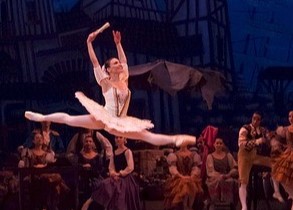
http://www.barnesandnoble.com/w/fighting-to-win-samurai-techniques-for-your-work-and-life-david-rogers/1119303640?ean=2940149174379

Order Waging Business Warfare: Lessons From the Military Masters in Achieving Competitive Superiority

Waging Business Warfare812sCY9edLL._SL1500_

Click on book image to order from Amazon.com

or

http://www.barnesandnoble.com/w/waging-business-warfare-lessons-from-the-military-masters-in-achieving-competetive-superiority-revised-edition-david-rogers/1119079991?ean=2940149284030


4 Comments

Filed under Artists, Becoming an Artist, Creativity Self-Improvement, Developing Talent, Human Potential and Achievement, Expectations, Goals and Purposes, High Achievement, Inner Skills, Motivation, Self-Confidence, Self-Direction, Stamina, Success, The Writer's Path

Conquering Blocks to Achievement

My book Fighting To Win: Samurai Techniques for Your Work and Life shows you an intelligent program for overcoming your internal blocks to reaching your highest achievements. All people everywhere on earth have an Every living thingurge to bloom, to blossom, to reach their fullest potential, but most aren’t able to because their inner blocks stop them time and again. They give up. They settle for lesser lives, and there’s no need for that.

There are a thousand blocks, but the main inner blocks you face are these:

Fear

Being afraid to take risks

Thinking too much

Doubting yourself

Hesitating

Fear:  Fear is the internal block of blocks, the obstacle of obstacles. The whole raven-1002849_640secret of existence is to be free of fear. When fear is conquered  your life begins fresh.

Being afraid of taking risks: How mediocre our lives would be if they consisted solely of avoiding risks. A survey was done of 300 adults who were asked to reflect on their lives, their happiness and their regrets. Who were the most dissatisfied with their lives? Those people who regretted not taking more risks.

Thinking too much: The Chinese character for “cowardice” is composed of two symbols, “meaning” and “mind.” The coward is one who finds too much person-690231_640meaning in things. He or she thinks too much. You’re thinking too much and becoming a coward when you spend an inordinate amount of time anticipating what could go wrong. Thinking that way you won’t start that business and won’t change your career though you’re unhappy, and won’t write that novel, and the rest of your life wish you had.

Doubting yourself: All people but fools doubt themselves sometimes. For most people, self-doubt is a fleeting and not-so-serious thing. But it dominates the lives of others and is their most serious block. They experienced doubt when they were children, and they still experience it as adults, and if nothing is done about it they will experience it the rest of their lives. What differentiates people who are confident from those in the habit of doubting themselves is not necessarily ability. People who doubt themselves may have as much ability or more ability, or much more ability than their confident counterpart who’s far less gifted but much more successful.

girl-1031309_640Hesitating: If you often find yourself waiting (for your lover to call you up, for that “just right” feeling before you act or for the “right” moment to start your life’s big enterprise) you might be on your way to becoming a hesitator. What you need now is a life of decisive choices. Throw a stake in the ground and say, “No hesitations anymore.”

REMEDIES

Practice the Skill of Making Your Body Obey Your Mind

The samurai skill of making your body obey your mind is this: going into action and getting done what needs to be done in your life in spite of your blocks. Not letting them stop you. You needn’t go off to a sanctuary on the top of a mountain to conquer your fear of whatever. You can say, “OK fear, come along if you want but THOUGH I’M TERRIFIED I’ve got a speech to give. Self-doubt, hesitation, thinking too much—you can’t stop me.”

Every day in offices, streets, art studios, and living rooms people are thinking: “In order to do it (whatever it is) I’ve got to first overcome my problem—my fear (or shyness, lack of self-confidence, bad habits, indecisiveness, etc.). Once I get rid of that baby, I’ll be all right. Then I’ll be able to sell, or lead company staff, make a speech in the town hall, go on a diet, etc.

The real problem isn’t what they think it is. It’s not the fear or lack of confidence or doubt. It’s their belief that the fear and doubt have the power to prevent them from doing the “it.” If you forget about yourself and your blocks completely and focus only on adapting to what life requires of you, no block will ever stop you.  Say to yourself, “THIS BLOCK HAS NO RIGHT TO STOP ME.” Keep your mind focused only on the task; forget about your emotions. PUT EMOTIONS OUT OF THE EQUATION.

So the next time a block is threatening to stop you, just have your body obey your mind.

Be Bold

The argument can easily be made that boldness and daring in and of themselves are what bring success in life. Boldness is the power to let go of the familiar and the secure. It isn’t something you save for when your life, your work, is going well. It’s precisely when things are going badly that you should be boldest. When things look particularly grim and you’re most discouraged, increase your determination and go forward confidently.

People are curious and want to know more about boldness because they know how important it is. I was asked to write an article on the subject for Success magazine and the article received one of the magazine’s highest readership scores ever in their history.

I know a painter. The best teacher she ever had gave her the best advice she ever received. He looked at her as she painted and said, “You’re being too careful. Make bolder strokes.” He went away. She followed his advice. He came paint-33883_1280back and studied her work. He raised his voice and said, “Bolder.” Later he came back again and said, even louder, “Bolder! What are you afraid of?” ”

It’s worthwhile to ask yourself when you discover yourself being stopped by blocks: “Bolder! What am I afraid of?”

Be Committed To A Life With Purposes

The samurai was taught, “Focus on your purpose.” When you discover what you must accomplish with your life, and moments in it, there comes something new and remarkable into your existence. You become inspired and mighty. You’re electric with that rarest of qualities possessed by so few—INTENSITY. Then your every act takes on a power strong enough to bring down a wall of iron. All hesitations and all fears and doubts fall away. You feel a zest, a tingle. Your imagination is on fire. It’s strength to be of one mind, complete and undivided, fully committed to a life with purpose.

Purposes are far more powerful than blocks. In the face of a powerful purpose, blocks dissolve and disappear. They can no longer stop you.

It’s never justified to say you can’t find a purpose. Purposes lie all around you like glittering jewels. Make whatever you’re doing your purpose of the moment, from the smallest thing to the biggest. Give what you’re doing stature, however insignificant it may seem. Then you’ll have intensity.

For a shy woman to conquer her shyness and go to a party alone is a major purpose. She’ll need a strong will and great courage. To take a second job for your family is a purpose. To be an attentive parent is a purpose. To start out on a new career is a purpose. To save a rain forest is a purpose.

Feather-60552_640When you make a purpose out of what a moment before was merely a responsibility, or a chore, or a duty by thinking, “This, what I’m doing now is my purpose” extraordinary achievements become possible. Obligations, once a heavy burden, now become light as feathers. Your life becomes tinged with a kind of glory. You become tinged with glory, and there is hardly an obstacle you can’t overcome, no obstacle out in the world, and no obstacle in you.

So, begin every day and every act of every day with a powerful purpose in mind.


For my interview from the international teleconference with Ben Dean about Fighting to Win, click on the following link:

www.mentorcoach.com/rogershttp://www.mentorcoach.com/positive-psychology-coaching/interviews/interview-david-j-rogers/


© 2016 David J. Rogers

Order Fighting to Win: Samurai Techniques for Your Work and Life eBook by David J. Rogers

Fighting to win Amazon

Click on book image to order from Amazon.com

or

http://www.barnesandnoble.com/w/fighting-to-win-samurai-techniques-for-your-work-and-life-david-rogers/1119303640?ean=2940149174379

Order Waging Business Warfare: Lessons From the Military Masters in Achieving Competitive Superiority

Waging Business Warfare812sCY9edLL._SL1500_

Click on book image to order from Amazon.com

or

http://www.barnesandnoble.com/w/waging-business-warfare-lessons-from-the-military-masters-in-achieving-competetive-superiority-revised-edition-david-rogers/1119079991?ean=2940149284030


5 Comments

Filed under Blocks to Action, Boldness, Conquering Blocks, Creativity Self-Improvement, Developing Talent, Human Potential and Achievement, Goals and Purposes, High Achievement, Inner Skills, Motivation, Self-Confidence, Success, Uncategorized