Category Archives: Self-Confidence

Two Success Stories for Creative People

Why are so many writers and artists so scared? This morning I started reading the Weekly Digests of some of the blogs I subscribe to and decided this post I’m about to laptop-820274_640write needed to be written–and fast– because so many writers and artists seem to be living in fear and intimidation, and they needn’t. There is no reason that the processes that come after the exhilarating execution of the work—dealing with “gatekeepers”– agents and publishers, clients and galleries—need be dreadful.

The gist of many of the posts written by the more experienced writers in particular to less experienced writers is: “Here’s how to get your book published. I will be your wise guide.” I will not give you any advice like that today, but only tell you about my experiences and that of a friend in breaking into “big time” publishing. My experiences were quite different from what you find described in many intimidating blogs. I hope my experiences make you confident and sure of yourself, less fearful, and less intimidated. And bolder.

I’ll be talking about writing professionally in this post because writing professionally is what I’ve been doing—and thinking about– for the last few decades. But I’m sure there are painters, sculptors, actors, dancers—artists generally—who could tell the same story of how breaking into their field wasn’t as awful as they were told it would be, and in fact found it painless, exciting fun.

I had an idea for what I thought could be a really successful nonfiction book, just as you think your idea would make a successful book. Nothing like my book had ever been written before and it had potential, so I was confident that I had something. But I knew nothing about publishing. Oh, of course I’d heard the horror stories about the tremendous odds against getting any book published. Everybody on earth knows that—especially a first book, odds of five thousand to one and so forth.

But my exact thinking went like this: “Thousands of books are being published every year and I’m betting I’m more books-535352_640skilled than most authors of them (after all, in college a famous creative writing teacher had said teachers like her wait their “entire career for someone who can write like you.” And hadn’t I had a story published in a prestigious literary journal while just a student?) So why shouldn’t my book be published?”

Then I learned that you had to write a persuasive book proposal and get an agent who would contact editors on your behalf. I had written many, many proposals in business and so I wrote a six page double-spaced book proposal—a short proposal, not a long one, a plain, simple one, not a complex, elaborate, fancy one: short and I hoped, sweet.

I hadn’t written a sample of my writing other than the proposal itself and a cover letter that talked about my unique qualifications to write the book or a refined table of contents because I hadn’t completely fleshed out the book in my mind. (In fact, I wouldn’t know what I was really trying to write until I had been working on the book for 1300 hours. Then it hit me!) I just had this good idea for what I thought would be an exciting, profitable book someone would want to publish.

Now I needed an agent to send the proposal to. I looked at a directory of agents and sent the proposal to the first name on the agent’s list. Then if he didn’t pan out I would send the proposal to the second name on the list and work my way down. I wasn’t experienced enough to know then that some writers send their proposals out in batches to twenty or thirty agents at a time. I would send off my stuff to one agent at a time and wait to see what happened. I had no idea then that the agent I sent my little proposal to was one of the most highly regarded agents in the literary world—serendipity at work. (A reminder that a good amount of luck is involved in a writer’s life and you don’t want just any agent working for you, but a good one with a reputation above reproach whose tastes and judgment of talent editors respect very highly.)

Within three days he called me on the phone to tell me he would like to handle the book—he thought it was incredibly timely and he liked the way I wrote. And he liked short, sweet proposals. So now I had an agent. He pitched the book right away (a man of action; my kind of guy) to an editor he thought could very well be interested. And in a week and a half I had a publisher who was eager to put out the book—a top quality publisher. The advance I received was a good one, much better than I’d expected. I wrote the book in twelve grueling months as I was contracted for (be sure to establish a reputation for never exceeding a deadline) and then months passed while the book was being edited and published.

The pub date came and the book was given a promotional budget but not a big one—I was “unproven.” I appeared on a newspapers-33946_640few radio and TV shows, and then two important things happened: a freelance journalist fell in love with the book—Fighting to Win— and wrote a superb and flattering full page, multi-column piece on it in The Washington Post that drew a lot of attention, and the publisher’s sales rep in Chicago fell in love with it too and promoted it with book stores in Chicago’s large, good book-buying market and with the publisher’s other sales people working in other cities and marketing staff decision-makers. And the book became a best seller in Chicago and Washington. Then in San Francisco and Las Angeles and other cities.

Other syndicated journalists liked the book and started writing about it—articles appeared everywhere. It began popping up on college reading lists, and now there were foreign editions that were doing very well. There was a buzz about the book and I was sent off to other major cities for more interviews on bigger shows. I got to enjoying publicizing the book so much that I decided I would rather promote books than write them. In fact, the publisher asked me jokingly if I would go on shows and promote other of their books too.

I had a hit that went through ten printings. With each new printing the book’s cover price rose one dollar, so my royalties were climbing. Now I was no longer unproven and had a track record, and my proposal for my next book consisted of a total of four sentences spoken over coffee to the publisher. The advance for it was substantial. When that book was published the publisher said they would like another book from me. I asked what they wanted me to write about and they said, “Whatever you want.”

I know a man who wrote a book he thought had the potential to be published and be popular. His expectations high, he contacted a great number of agents and no one was interested in handling his book, telling him that in their judgment unfortunately it would be impossible for it to find a public. The agents’ tastes ran in other directions and based on their professional experiences over many years with many books they felt that this one just didn’t have that—that whatever it takes for people to want to buy a book.

He didn’t give up after he had exhausted his long list of agents, but contacted publisher after publisher himself, writing them, sending his manuscript, calling them up, making appointments, pitching the book on the phone and in their Being courageousoffices, expecting all the time that eventually he would succeed. He met nothing but failure—no one thought anything of the book—but he still believed in it and in himself. He still expected the book to be published and be successful. He had faith that one day he would see it in book store display windows.

Then an editor of a small specialty publisher he had contacted called him to come down and talk. When my friend entered the office his manuscript was spread out on the editor’s desk and the editor was bent over it, reading. The editor looked up and said, “Oh, good, you’re here” and with a smile on his face added, “I think your book will be the number one best seller in the country.”

That book became a publishing phenomenon—a cultural phenomenon–and sold an astonishing 25,000,000 copies in paperback alone. It became America’s—and the world’s–number one best seller. Within two months the author was famous and pretty soon he was rich. The book was When Bad Things Happen to Good People and the author was Harold Kushner.

Writers and artists who harbor deep and prolonged doubts about their capabilities are easily set back by obstacles and failures. But when confident self-directed  writers and artists encounter daunting obstacles, disappointments, and failures, they show courage, rally, and make a comeback, intensifying their efforts and persisting until they succeed.

So I’m saying what all my blogs say—be supremely confident, be non-attached and fearless. Don’t be scared. Persevere. Be indefatigable. Be committed to your work every moment of the day. Never let discouragement and negativity penetrate to your depths. No matter what happens, good fortune, bad fortune, keep your spirit light as a feather. Develop your skills to the highest possible level and become what I admire most—not just a writer, but a REAL writer; not just an artist, but a REAL artist.

© 2015 David J. Rogers

For my interview from the international teleconference with Ben Dean about Fighting to Win, click on the following link:

www.mentorcoach.com/rogershttp://www.mentorcoach.com/positive-psychology-coaching/interviews/interview-david-j-rogers/

Order Fighting to Win: Samurai Techniques for Your Work and Life eBook by David J. Rogers
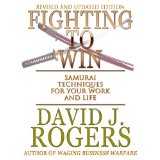
Fighting to win Amazon

Click on book image to order from Amazon.com

or

http://www.barnesandnoble.com/w/fighting-to-win-samurai-techniques-for-your-work-and-life-david-rogers/1119303640?ean=2940149174379

Order Waging Business Warfare: Lessons From the Military Masters in Achieving Competitive Superiority

Waging Business Warfare812sCY9edLL._SL1500_

Click on book image to order from Amazon.com

or

http://www.barnesandnoble.com/w/waging-business-warfare-lessons-from-the-military-masters-in-achieving-competetive-superiority-revised-edition-david-rogers/1119079991?ean=2940149284030


4 Comments

Filed under Artists, Becoming an Artist, Boldness, Developing Talent, Human Potential and Achievement, Expectations, Goals and Purposes, High Achievement, Inner Skills, Motivation, Personal Stories, Publishing, Self-Confidence, Success, The Writer's Path, Writers

Programming Success in Writing and Art

Theresa

I was in a Target store café where my wife had parked me so I wouldn’t get in her way while she shopped, and the pen-994464_640woman who waited on me said, “I see you come in here and write at one of our tables. Are you a writer?” I said I was and she said, “I thought so.” She then said, “I’ve got a book in me, but I just can’t find the time to write it.” She said, “Do you ever have that problem?” And I said, “No I don’t because writing is second nature to me, but it wasn’t always.” She said, “Oh, what do you think I should do?”

Her name is Theresa, and she is an exuberant woman who bristles with energy and has dark curious eyes that are always moving. There is a sweetness about her, a kind of goodwill, innocence, openness, and charm. Her body is thin and strong, her gestures lively. She is one of those brave people who are not afraid of saying, “I need help. Will you help me?” I like her.

I want Theresa to be a writer who’s confident and strong and not to doubt herself. I want that because in writing, as in any other field, the constant, never-tiring, never-ending desire to succeed and the confidence that you will—if not now, eventually–along with skill, is the most important indicator of future success. If you have confidence and faith in yourself, you’ll reach higher levels of achievement than other writers, painters, dancers, and actors of equal ability who lack them. Confidence precedes success.

I said to her. “Do you like sentences?” and she said she did, so I knew she had something.

Programmed Activities Force Out Un-Programmed Activities

I ran into a man in a Costco dining area where my wife had parked me who also had a book in him and asked me the laptop-820274_640same thing. I’ve run into writers and artists who tell me they wish they could get themselves to work more regularly. I’ve run into so many people who tell me things like that that I can almost give my remedy in my sleep, my saying, “The main goal of all creative people is to be productive—to produce works–and if they want to produce a continuous flow of works what they need to know is that programmed activities force out un-programmed activities.” That’s the principle they need to repeat to themselves and take to heart: “Programmed activities force out un-programmed activities.” Something extremely good happens to you when that insight lodges itself in your brain. Some writers and artists are 10, 15, 25 times more productive than others. The entire existence of some creative people is organized completely around their work, and their ability to produce it is staggering.

Two and A Half Million Artists

It appears to me the “I have a book I really should write but somehow don’t seem able to get myself to write it” syndrome is a widespread major writers’ problem. Or, “One day I swear I’ll become a painter.” Your aunt is dying to write a novel and your butcher wants to paint landscapes. Ask people on a crowded city bus how many would like to be a writer or painter and 30 % will thrust their hand in the air.

Paul Pulszartti 3 (4)

Painting by Paul Pulszartti

There are 2,500, 000 people in the U.S who consider themselves some sort of artist. And probably another 3,000,000 who’d like to be one. I’d bet that not many of those who would like to be are doing a single thing to make that happen. And many of those doing nothing statistically have to be more talented and potentially more successful than many writers who write for hours every day and painters who paint every day. There may be two or three Jackson Pollocks or Ernest Hemingways in Idaho or Maine who can’t get started.

It isn’t enough to say you’ll go running to improve your health. If you’re really serious you’ll intelligently plan and program your running. You’ll decide how often you’ll run, when you will, where you will, with whom you will, and how far you will. Then you’ll run according to your plan, and your health will improve.

If you’re serious about achieving greater artistic success, you’ll program that too. You’ll say, “I am a person bursting with unrealized potential,” and then you will intelligently develop an improvement plan and plan step 1, then step 2, and then 3, and so on—the steps being rungs of a creative ladder leading you to high skill, success, and satisfaction. Then you’ll stick to your plan and work hard as all real creative people do, and if everything goes according to the plan—and there’s no reason it shouldn’t–you’ll become more skilled, more successful, and more content.

Learning How To Excel and Plateauing

Another problem is learning how to excel. How many writers or artists would ever say, “My goal is to be mediocre” but yet are satisfied to be mediocre. Your climb to excellence has to be attended to. After looking for a long time into what runner-942109_640brings creative success I’ve come to the conclusion that to excel as a writer or artist or to excel in any occupation of any kind and have a long and fulfilling career, you must be pursuing intelligently a small number of certain types of goals. And each goal must be ambitious and each must be concrete because most artists and writers aim much too low and their goals are vague, and vague goals are useless.

Another major problem you see everywhere is plateauing—never getting better but staying at the same skill level and not having increasingly greater success, which you would think would not happen if you’re really learning. So possibly you’re not learning and don’t know any more about how to write or paint and how to motivate yourself and have self-confidence than you did five years ago. You’re working extremely hard, but you’re not progressing. You might be making the same mistakes over and over. You’ve stopped growing.

Something must be done—you need new inputs, new information, new insights, and new work habits. So you must become an athlete of the arts, a champion of writing or painting, and train yourself to run faster and jump higher.

The way to master a creator’s skills is to learn how to do them supremely well and practice them ten times, a hundred times, a thousand, getting constructive feedback along the way, making corrections, and experiencing a series of successes as your performance improves. Most often the reason a writer or artist is not yet accomplished is not because she’s unintelligent or not talented but because she isn’t knowledgeable enough yet of her craft.

Not Screwing Around Anymore

Theresa and the Costco man tell me they want very badly to be as excellent writers as they can be, and I believe them. Chances are you and I have never met and haven’t had a chance to talk, and it would be nice if someday we do. But I’m assuming that you’ve reached a state of being when you can say, “I want very much to be the most highly skilled, successful, and satisfied writer or artist I can be. That’s what I think about and that’s why I’m reading this blog. I’m not screwing around anymore.”

Theresa’s Programmed Activity

But many writers and artists—even those who claim that work is tremendously important to them–are lucky if they slice out an hour a day, or thirty minutes, one-forty-eighth of a day, to work on their craft. Creating isn’t all you do. You goal-976853_640have other important roles and responsibilities you must find ways of incorporating into your work schedule as depicted in this comment from writer Lois Duncan:

“Now I keep a typewriter with a sheet of paper in it on the end of the kitchen table. When I have a five-minute lull and the children are playing quietly I sit down and knock out a paragraph. I have learned that I can write, if necessary, with a TV blaring on one side of me and a child banging a toy piano on the other. I have even typed out a story with a colicky baby draped across my lap. It is not ideal—but it is possible.”

Expert writers and artists almost always structure their work time and environment carefully. I told Theresa that she had to commit to me that she would write thirty minutes every day without exception except for real emergencies—could she do that? Yes, she said, she could. I asked her the time she would write: “First thing before I go to work. I’ll get up a half hour early, shower, get dressed, and then I’ll sit down and write for a half hour.”

I thought of author Hope Dahle Jordan who said, “My personal, elementary rule sounds ludicrous even to me. Nevertheless, I am deadly serious when I insist it is the only one I conscientiously adhere to: I don’t dress for the day until two pages (500 words) are written, and acceptable to me. That is the only way I get a book finished. For as long as I stay in my blue bathrobe I stay at my typewriter.” Harry Crews said, “ I get up in the morning, that’s one of the hard parts, drag myself over to the old typewriter and sit down—that’s even harder—and then tell the Lord, ‘I ain’t greedy Lord, give me the next 500 words.’”

I told her that like artists, writers must guard again a two-pronged problem: avoiding work and quitting too soon.

I told Theresa not to be jealous of writers who have the luxury of being able to write as often as they want and as many minutes or hours as they want. I told her that doesn’t mean they’re the most productive writers or artists or that they’re writing-828911_640productive at all. It just means that the amount of time most writers and artists would give an arm and a leg to have is available to them. But I assured her that she would find that a focused half-hour’s work with a concrete goal clearly in mind is the equivalent of three unfocused hours.

I told Theresa that later on we can talk about how in addition to spending time writing she can increase her writing skills in other ways. In the future we will set goals to increase her abilities. And I told her one day we will talk about the Inner Skills of writers and artists, such as the need for courage, and that she should be completely indifferent to everything but the quality of her work.

I told her, “If you want to be read widely, read widely. Reading good writing with the intention of learning specific lessons from it is the best way to learn to write well. Good artists learn by going to museums, taking out a sketch pad, and copying masterpieces. To be able to say, ‘I learned that from so-and-so and borrowed that from what’s-her-name.’” Theresa should also learn about the way of life of a writer, which is different from a social worker’s way of life or a businessman’s or even a painter’s.

Then I said I wanted Theresa to jot down in a log a few quick sentences about each day’s writing: how it went, what journal-155431_640problems she had and how she solved them, and most important, what she’s learning about writing and about herself. What comes easily for her; what is hard? Writers and artists who set ambitious goals and keep records of their performance are considerably more effective than writers and artists who don’t.

I asked Theresa to have a very specific goal in mind whenever she sits down to work: what is she aiming to accomplish in the next half hour, the way a painter says, “By the time I finish today I will have finished the upper right corner of the canvas.” I told her that now that she’ll be getting up a half hour early she should go to bed a half hour earlier because when you’re tired you’re not ambitious and your writing or art goals won’t be ambitious either.

Talent and Many Truths to Tell

I feel that Theresa has a talent for writing because it has been said by those who study the development of high expertise that if you have an intense interest in a creative field, that is almost always a sure sign that you have a talent for it. I have faith in Theresa. When I think about her, I think about writer Louise Nevelson’s theory that “when we come on this earth, many of us are ready-made. Some of us—most of us—have genes that are ready for certain performances. Nature gives you these gifts…There’s nobody that’s common. I think that in every human being there is greatness.”

I tell her not be afraid to be bold and that truth is everything in art, and that when readers open her books one day they will ask themselves, “Am I going to find the truth in here?”

I don’t think she will become a writer who doesn’t write or who will give up before she succeeds. I have a sense that she may have the makings of a REAL writer and that writing may become an essential part of her identity. I hope she soon sees that a writer’s life is wonderful and worth sacrificing for: “I did not choose this vocation, and if I had any say in the matter, I would not have chosen it…Yet for this vocation I was and am willing to live and die, and I consider very few other things of the slightest importance” (Katherine Anne Porter). I tell her that nothing can compare with, nothing can replace the joy during the act of creating. American poet Robert Frost said that once a man has known the pleasure of making a metaphor he is unfit for ordinary work.

sunrise-580379_640At the crack of dawn almost every day Theresa is writing. Writing is becoming second nature to her. Her book is taking shape day by day. My wife is shopping over there and I’m at a table in Theresa’s store now and I’m thinking that if I’m right about Theresa soon the creator’s hunger to produce will take over and she will start writing during her breaks and lunch hours too.


© 2015 David J. Rogers

For my interview from the international teleconference with Ben Dean about Fighting to Win, click on the following link:

www.mentorcoach.com/rogershttp://www.mentorcoach.com/positive-psychology-coaching/interviews/interview-david-j-rogers/

Order Fighting to Win: Samurai Techniques for Your Work and Life eBook by David J. Rogers

Fighting to win Amazon

Click on book image to order from Amazon.com

or

http://www.barnesandnoble.com/w/fighting-to-win-samurai-techniques-for-your-work-and-life-david-rogers/1119303640?ean=2940149174379

Order Waging Business Warfare: Lessons From the Military Masters in Achieving Competitive Superiority

Waging Business Warfare812sCY9edLL._SL1500_

Click on book image to order from Amazon.com

or

http://www.barnesandnoble.com/w/waging-business-warfare-lessons-from-the-military-masters-in-achieving-competetive-superiority-revised-edition-david-rogers/1119079991?ean=2940149284030

10 Comments

Filed under Artists, Becoming an Artist, Creativity Self-Improvement, Developing Talent, Human Potential and Achievement, Goals and Purposes, High Achievement, Inner Skills, Motivation, Personal Stories, Programmed Activity, Self-Confidence, Self-Direction, Success, The Writer's Path, Work Production, Writers

Artists Aim for Perfection

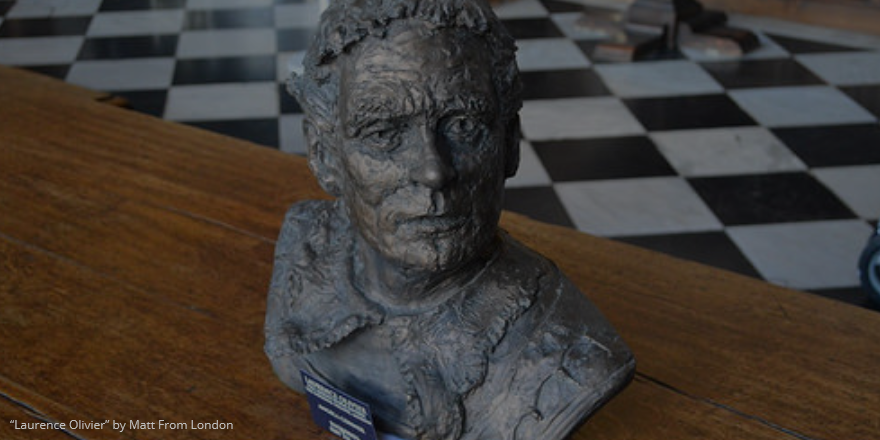
Artists develop notions of something greater than competence, greater than excellence, and become intoxicated with Laurence Olivierperfection of their craft, perfection of their technique, and perfection of their repertoire of skills culminating in what they hope will one day be the perfect story, perfect poem, perfect painting, or perfect performance. Once in his career Laurence Olivier, the greatest actor of the 20th century, gave what he knew and everyone knew who was present that night was a perfect performance of Hamlet. “My God,” he wondered, “How did I do it and how will I ever be able to do it again?”

All artists want to “get better” and to “get it right.” They devote their entire careers to getting better and getting it right. The development of expertise is the artist’s most crucial task. If there is one thing that all successful creative people have in common it’s that they all work hard developing their skills, the foundation of their success.

To strive to improve one’s performance continually and to more and more often get it right, requires qualities that are not common. One is self-confidence; another is an objectivity about one’s artistic and sometimes personal shortcomings and limitations—a capacity for stern, dispassionate self-criticism. If an artist shows  you his work and you don’t notice the flaws in it that are so apparent to him, he will doubt your critical judgment and may not ask you again. Tell a ballerina her performance was breathtaking and she will say, “I missed a beat and my right foot wasn’t arched properly. “

The most difficult task for artists is to find and put into their work the right voice, the presence of the artist in the work. E.L Doctorow said, “I wait until I find a narrative voice. Then I listen to that and start writing.” John Updike wrote, “I notice that as I write it comes out as a sort of Updike prose. I sit down in such different moods, wearing such different clothes, and out this comes—like a kind of handwriting. It’s always mine, and there’s no way I can seem to get around it. Isn’t it funny you have only one voice?”

cream-rose-272946_640Artists may have to spend many years finding what their proper subject matter and voice may be. When they do find it, everything suddenly comes out into the clear light of day: “Now I know how to say what I’ve been trying to say.” At times—sometimes in mid-career—they discover that what they have been doing has been all wrong. The work doesn’t express them. When halfway through her life painter Mary Cassatt discovered her true subject—mothers with their children—and the right style, she destroyed all but a few of her previous works, signifying a new beginning. In mid-career painter Georgia O’Keefe decided her art was too influenced by other people and set out in a new direction.

Every art is physically and mentally exhausting. When they finish a day’s work, artists feel they have lifted a thousand pounds. They have a compulsion to work. The reason artists, like experts in all other fields, most often cite for their enormous energy, commitment, and focus necessary to excel is their motivation to concentrate on the task and put out effort to improve their performance.

Non-artists cannot be motivated or even forced to work at an artistic task to the extent that a person with an intense interest does willingly. There has probably never been a great artist who didn’t have a strong sense of single-mindedness and an ability to persevere, overcome difficulties, and concentrate on reaching his goals while resisting distractions. An interesting question is, “Why do some people but not others possess those qualities, and why do virtually all creative people?”

The artist’s main goal is production. When they have not worked at their craft for 48 hours, or 24 hours, or one hour, they get uneasy. When they are away from their work without a brush in their hand or something to write with or dancing slippers on their feet they are completely out of their element.

You cannot distinguish between true artists and their work. They are exactly what they do. A composer is his music, a writer his language. Every molecule in their body is the molecule of an artist. A director is one who directs; an actor acts. That’s what they do and that’s all there is to it. Their work is on their mind almost every waking moment.

mountain-299009_640Artists grow accustomed to loneliness. Even as children they spent much of their time alone. The common notion that artists are different and have different points of view, habits, personalities, and preoccupations than the majority of humankind is correct. There is often a distance, a gap, between them and their neighbors, even other members of their family, even their lovers and spouses who are not involved themselves in art.

They must incorporate the other person in their work or find a way of coping with that distance, or those sharing their lives must find a way. That may not be possible. Nobel Prize winning author Saul Bellow said, “I have always put the requirements of what I was writing first—before jobs, before children, before any material or practical interest, and if I discover that anything interferes with what I’m doing, I chuck it. Perhaps this is foolish, but it has been the case with me.” Bellow was married five times.

The artist, realizing that she’s looking at the world from a vantage point that’s not available to everyone, can say, “I am different. I see things differently. I value different things.” Everyone else wants to be rich. The artist wants fulfillment.

If they are truly artists, they are especially equipped and seem to have been born with not only magical “creative stuff” but with tenacity, strength, powerful will, and patience. In the achievements of successful artists you always see gifts coupled with extraordinary application, the former meaningless without the latter. A man I know was curious and attended an art show to ask a famous sculptor if he had advice for his son John, a sculptor who was just beginning. The sculptor said, “Yes I do have advice. It’s very simple. You tell John to pick up his mallet and his chisel and make chips.” A poet who lived several hundred years before Plato wrote, “Before the Gates of Excellence the high Gods have placed sweat.” Artists are great believers in sweat and making chips.

georgia-okeefe-396957_640Who sets the standard for perfection that all artists measure themselves against? The work of everyone is compared with the virtuoso. Miles Davis in jazz. Arthur Rubenstein playing Chopin. A novel by Faulkner.

French philosopher-playwright Jean Paul Sartre wrote that man exists first and only afterwards defines himself. He is what “he will have planned to be; he is what he conceives himself to be.” Artists may not talk much about being artists, preferring if they are any good, working to talking about working. But they conceive themselves to be artists. They have planned to be artists. They are creative in the grandest sense of creating themselves from scratch.

Henry David Thoreau, as great a clear-thinking artist as there ever was, wrote, “I know of no more encouraging fact than the unquestionable ability of man to elevate his life by conscious endeavor.” The Japanese say, “Irrigators guide water, fletchers straighten arrows, and as for wise people, they shape themselves.” Artists are shaping themselves from their first exposure to their art.

A cat becomes all the cat it will ever be without having to think about it. All that’s necessary is to be born a cat. But people who aspire to be artists have considerably more work to do than cats. The highest development of an artist’s capabilities to aim for and reach perfection is worth giving up almost everything for.


© 2015 David J. Rogers


For my interview from the international teleconference with Ben Dean about Fighting to Win, click on the following link:

www.mentorcoach.com/rogershttp://www.mentorcoach.com/positive-psychology-coaching/interviews/interview-david-j-rogers/

Order Fighting to Win: Samurai Techniques for Your Work and Life eBook by David J. Rogers

Fighting to win Amazon

Click on book image to order from Amazon.com

or

http://www.barnesandnoble.com/w/fighting-to-win-samurai-techniques-for-your-work-and-life-david-rogers/1119303640?ean=2940149174379

Order Waging Business Warfare: Lessons From the Military Masters in Achieving Competitive Superiority

Waging Business Warfare812sCY9edLL._SL1500_

Click on book image to order from Amazon.com

or

http://www.barnesandnoble.com/w/waging-business-warfare-lessons-from-the-military-masters-in-achieving-competetive-superiority-revised-edition-david-rogers/1119079991?ean=2940149284030

13 Comments

Filed under Actors and Directors, Artistic Perfection, Artists, Becoming an Artist, Creativity Self-Improvement, Dancers, Developing Talent, Human Potential and Achievement, Goals and Purposes, High Achievement, Inner Skills, Motivation, Self-Confidence, Success, Work Production, Writers

The Inner Skills of Creative People

I’ve been writing blog posts for writers and artists for sixteen months and over that time have published about 120,000 words. And though I’ve been a professional writer for many years, have written national and international best-sellers, startup-594126_640 (1)been contributing editor to popular magazines, have had published non-fiction, poetry, and prose, have advanced degrees, have taught in graduate schools, and have been studying, reading, and researching about the arts all my adult life, very rarely will you find me writing anything about how to write or paint better because that is not my main interest.

I will not tell a painter how to paint because I don’t know enough about that. But even if I did I probably wouldn’t talk about good technique or good use of color except to say I recognize them when I see them. I will talk about what made great artists tick and why they’re so special. And I will say that people who do great things are great in themselves.

I know enough about writing to have taught serious writers and found great pleasure in that and discovered I have a lot to say. I’ve written about extraordinary writers—the most extraordinary ever to write. But you won’t hear from me these days anything about developing characters, scenes, conflicts, and episodes, or how to write dialogue, or generate a mood, or structure a plot, or that kind of thing. There’re plenty of books, magazines, web sites, classes, and blogs for that. People have been writing about those things for 2,000 years.

My interest—the territory I have staked out for myself—are The Inner Skills of Creative People, for there, I think, inside, in your spirit, will be found the magical difference between adequate creators and great ones.

ballerina-534356_640_copy2I write freely, unabashedly, happily of human qualities that distinguish one creative person from another such as strength (suggesting that every day it’s worth a creator asking, “Am I strong today? Will I be strong?”) And I write about courage, persistence, tenacity, will power, commitment, empowerment, sense of purpose, discipline, good writing moods and bad writing mood, and ideal writing moods. And self-resilience, enthusiasm, guts, self-motivation, energy and your capacity for work, sacrificing for the sake of your craft, boldness, doggedness, adaptability, endurance, resilience, maintaining at all times a high hope of succeeding, and other spiritual dimensions of you. I teach Buddhist and Hindu non-attachment so that the writer or artist might become selfless and dispassionate, and free himself from debilitating envy and worry that so recklessly destroy talented people.

I write about self-doubt, the creator’s curse, and I write about creator’s confidence because confidence may be the most important factor of all. Creative people fail because: (a) they lack the necessary skill, or (b) they have the skill but don’t have the confidence to use that skill well. More fail because they lack the confidence and not because they lack the skill. If you have confidence and faith in yourself you’ll reach higher levels of success than other creators of equal ability who lack them. So much of realizing your long-held hopes—possibly you’ve had them since childhood–is a result of knowing exactly what they are, wanting badly to achieve them, and believing that you can. Confidence precedes success. All great creators are confident.

A poet who lived several hundred years before Plato wrote, “Before the Gates of Excellence the high Gods have placed sweat.” No outstanding creative achievement has ever been produced without a lot of effort on the part of the creator, however much natural ability or how many technical skills he/she possesses. So I write about sweat.

I write about creative patience because patience makes artists and writers more successful.

martial-arts-291051_640I write about warrior artists and writers—and warrior actors and ballet dancers—because warriors know things and possess skills that enable them to go through life 18 inches off the ground and to move faster and live more intensely, with stronger commitments and greater seriousness, than everyone else.

I write about production because to produce a work—a painting a sculpture, a poem, a stage performance—is the reason for being of a creator. Everything—all the creator’s training and education, habits and routines, dreams and hopes—are aimed at that central goal: no matter what is happening around you, to get the work out. Some writers and some artists are 25 times more productive than others.

Out of the mass of experiences of a life, you (1) must somehow or other settle on the creator’s way of life, which is a distinct way of being; (2) must have the personal makeup necessary to excel as a creator; must possess the (3) knowledge, (4) persistence, (5) confidence, and (6) complement of skills necessary to excel, and must (7) minimize your weaknesses and develop your strengths.

The creator who has technical skills, but lacks these spiritual inner skills will not go as far as he could, or may not go far at all. What you are—what you are made of, what constitutes you, what you stand for—is so important.

Your technique and your spirit must be united. Creators grow from within.

© 2015 David J. Rogers

For my interview from the international teleconference with Ben Dean about Fighting to Win, click on the following link:

www.mentorcoach.com/rogershttp://www.mentorcoach.com/positive-psychology-coaching/interviews/interview-david-j-rogers/

Order Fighting to Win: Samurai Techniques for Your Work and Life eBook by David J. Rogers

Fighting to win Amazon

Click on book image to order from Amazon.com

or

http://www.barnesandnoble.com/w/fighting-to-win-samurai-techniques-for-your-work-and-life-david-rogers/1119303640?ean=2940149174379

Order Waging Business Warfare: Lessons From the Military Masters in Achieving Competitive Superiority

Waging Business Warfare812sCY9edLL._SL1500_

Click on book image to order from Amazon.com

or

http://www.barnesandnoble.com/w/waging-business-warfare-lessons-from-the-military-masters-in-achieving-competetive-superiority-revised-edition-david-rogers/1119079991?ean=2940149284030


6 Comments

Filed under Artists, Becoming an Artist, Creativity Self-Improvement, Dancers, Developing Talent, Human Potential and Achievement, Eastern Philosophy, Goals and Purposes, Inner Skills, Motivation, Samurai Techniques, Self-Confidence, The Writer's Path, Warriors, Writers