Category Archives: Becoming an Artist

Advice to Young Writers

I was asked by an administrator of a middle school in my county (grades seven and eight) if I would speak at their Career Day. Adults from about 50 careers from soldiering to farming would speak that day about their careers for twenty minutes each to five classes of students thirteen and fourteen years old. I would be the writer. I was told by a very sincere and enthusiastic woman that it would be fun and rewarding. My first thought, as would be the first classroom-510228_640thought of any conscientious writer, was, “It would mean giving up an entire day of writing,” so I said I’d have to think it over. My wife is a writing teacher/tutor of some reputation, so she said what I knew she would: “You should really do it, you know,” and of course I knew I should—it’s important to nurture the young—I know that. (I have two adult sons who write and I nurtured them, didn’t I?)–and if your wife’s tone says, “How can you not think of doing it; what kind of man are you?”–the issue is more or less settled. So I did research and wrote notes (sacrificing another half day), and rehearsed my talk (another two hours), and a few weeks later appeared at Career Day.

I opened by asking if they knew what the author of a book means by royalties, and they knew. I talked about “The opportunities available for a person who wants to make a living writing” and gave them figures on writer’s incomes and the demand for writers, telling them that opportunities are good and that there are writers who own private jets and others who have a hard time making a living, and that the quality of the actual writing sometimes (but not always) has an inverse relationship to the income—writers of trash who own the jets and authors of masterpieces who have the tough times. (At the same time Nobel Prize novelist William Faulkner’s picture appeared on the cover of Time magazine, he couldn’t afford to pay his electric bill, while every atrociously written (but exciting) thing Mickey Spillane wrote about his rugged gumshoe Mike Hammer topped the best seller lists). But that statistically, on average, professional writers, including freelancers, can make a decent living. They didn’t have much faith in statistics and wanted to know how much dough I made.

Even the students who were not especially interested in becoming writers were kind of curious because the life of a writer is romantic to most people, including the young. When I was a boy planning on being a writer, I thought all male novelists—the only kind of writer I thought at the time a man should be—wore cool green corduroy sport coats with leather patches on the elbows, were automatically remarkably handsome, and beautiful women with long legs and dangling earrings that glittered thought them uncommonly sensual, and couldn’t help themselves, and fell in love with them right and left. Popular novelist of the fifties John O’Hara wrote, “How nice, people say, to be a writer and be your own boss, work when you please and don’t have to punch a time clock, knock off whenever you feel like it, and go to Sun Valley or Hobe Sound or Placid or Bermuda” and later said, “I’m afraid that one illusion is responsible for more brief writing careers than any other single factor.” But I told them Flaubert, who sweated and moaned over every word and comma, said “It is a delicious thing to write.”

hand-299675_640(1)They found it appealing that if you write at home, as many writers do, you have tremendous freedom, can break for lunch whenever you want,( but, I cautioned, need equally tremendous discipline so as not to slough off and miss deadlines and get editors furious with you), and can work in your underwear if you’re in an underwear sort of mood. And if you’re a man, since you’re not planning to see anyone, you don’t have to shave every day if you’re not inclined to, which the average nine-to-five man would give an arm and a leg not to have to do.

They asked was I famous, and that gave me a chance to tell my famous story. Someone in a Canada was trying to get hold of me and didn’t have my phone number, but knew I lived in Chicago, a city of three and a half million. So they called Chicago Directory Assistance and asked for the number of David J. Rogers. Now there are scores of David J, Rogers in Chicago. Rogers is the seventeenth most common name in the U.S. But without a moment’s hesitation the operator said casually, “You must mean the author” and put them right through to me. The Canadian said to me, “Wow, you must really be famous” and I thought, “Somewhere here in this city is at least one operator who read my book.”

Then we got into:

What the life of a professional writer is like; what a professional writer is like

What a professional writer does

The skills and abilities a writer needs

How a writer prepares for a writing career

I told them that “all writers take pride in their writing and are always trying to get better. It’s important to them to improve and that happens the more you write and the more you study how to write. Making it a point to improve your writing all the time is important. Ask yourself today, “Am I improving,” and tomorrow and the next day ask, “Am I improving?” You are learning how to write here and will in high school and college, if you choose to go there. There are many books and magazines and web sites about how to get better. Just try to get better and better and learn as much as you can about writing. Many famous writers were more or less self-made and pretty much self-taught. Good writers are reading and learning all the time because who knows what they might have to write about? Writers are craftsman. Words and language are their tools—the sounds of language, the rhythms of language, the meanings. Words are at the center of a writer’s existence. Writers have the strongest appreciation of words, the largest vocabularies, and a highly sensitive ear for speech. Build up your vocabulary every day. not to impress people—who cares about that–but because the more words you know, the more you can express, and a goal of a good writer is to be able to express anything he/she has ever experienced or can imagine.”

When I was in business I hired only English majors not business majors because English majors can express themselves and they can also think clearly. If you can’t think clearly, you can’t write clearly. To me, clarity is the most important thing. And I believe it is to the reader too.”

“Also, you’d better like working alone in solitude at least a few hours every day. If you like working with other people go into sales or acting.”

The day ended. I was exhausted. I thought, “How do teachers do it?”

A Writer’s Cork Board of Inspiration

A girl named Hannah in one of the classes whose ambition was to be a writer sent me some quotes by writers about Girl writingwriting (she could tell I loved writer’s quotes), and I sent her a letter thanking her. She wrote me another letter thanking me for what I had said in my letter. I had merely asked her what kind of writer she would be: “Will you be writing novels?” She wrote: “I really enjoyed writing those quotes and I’m glad you like them. It’s really inspiring to hear them and think how true they are. The quotes, along with the letter I have received from you are going on my cork board of inspiration. I’ll have it in front of my desk to motivate me and spark my imagination.”

What had happened I could see was that I had taken her seriously–possibly in a way no one else had yet–and given her a vote of confidence. I just assumed that what she wanted to have happen would in fact happen: sure as I’d followed the writer’s path, one day she would follow it—and in fact was already following it. I was acknowledging that, and that acknowledgement in that one sentence of my letter—“Will you be writing novels?”—would be on her cork board of inspiration and would be there for her to see and gain encouragement from every day. How glorious that made me feel.

Who knows what treasures one day Hannah will write?

© 2015 David J. Rogers

For my interview from the international teleconference with Ben Dean about Fighting to Win, click on the following link:

www.mentorcoach.com/rogershttp://www.mentorcoach.com/positive-psychology-coaching/interviews/interview-david-j-rogers/

Order Fighting to Win: Samurai Techniques for Your Work and Life eBook by David J. Rogers

Fighting to win Amazon

Click on book image to order from Amazon.com

or

http://www.barnesandnoble.com/w/fighting-to-win-samurai-techniques-for-your-work-and-life-david-rogers/1119303640?ean=2940149174379

Order Waging Business Warfare: Lessons From the Military Masters in Achieving Competitive Superiority

Waging Business Warfare812sCY9edLL._SL1500_

Click on book image to order from Amazon.com

or

http://www.barnesandnoble.com/w/waging-business-warfare-lessons-from-the-military-masters-in-achieving-competetive-superiority-revised-edition-david-rogers/1119079991?ean=2940149284030


9 Comments

Filed under Becoming an Artist, Creativity Self-Improvement, Developing Talent, Human Potential and Achievement, Expectations, Goals and Purposes, Inspiring Young People, Motivation, Personal Stories, The Writer's Path, Writers

Writer and Artist Warriors

sunset-190922_640My younger sister Sharon died of bone cancer at the age of thirty-seven in a hospital in Honolulu, where she lived. She was a small, delicate woman who had the will of a warrior. When a doctor came to see her as she lay in her bed, he jumped back as though he had been pushed. He said to her, “I feel your power coming out to me.” But she was dying. There was no hope. Once she had been beautiful. I prayed, “Dear God, give me her pain so she will be free of it.”

I told her that I’d had writing a book in mind for a long time, but that I was very busy running the business I had started and really had no time, and that even if I did write it, it would take years to research and more years to write, and I wasn’t sure it would ever be published—the odds were against that as they are against any book being published–and I had a wife and four children to support and couldn’t afford to take a chance. And I was afraid I wouldn’t succeed, that I didn’t have what it took. But I didn’t tell her that.

She was in such pain that even the slightest, even the lightest, touch of another person on her was agony. So when I left to fly back home, knowing I would never see her again, I couldn’t kiss her. The pressure of my lips would bring her pain. I leaned over her and rested my head next to hers on the pillow. She whispered in my ear, “Dave, you write that book. I have faith in you. Write it for me.”

I returned home and organized my work space and set to work, thinking of her “Write it for me.” I told my wife, “I’ll close the business and I’ll finish the book in one year, and during that year we will have no income.” My wife said, “I understand. Go ahead. It’s important.” Nothing could stop me. What before had been a vague dream now became a purpose to devote myself to, to write a book, a good book for my little sister. It became my wife’s purpose and my children’s too. Whenever I was discouraged that purpose made me return to the book and to work till dawn, to sleep a few hours and get back to work for a year until the book was done. While I was working on it I thought, “I’m making a book Sharon would be proud of.”

I dedicated it to her with the inscription: “In memory of my sister Sharon. Just one word—courage,” and that word meant a lot to me because in this life everyday courage is so important.

Fighting to win Amazon

My book Fighting to Win: Samurai Techniques for Your Work and Life came out and has been called “an underground bestseller” because with almost no advertising it swept the country and my life was changed in so many ways. The book became known in my family as FTW. It went through multiple printings, and appeared on bestseller lists; the cover price rose and rose. FTW discussion groups took shape in big cities and remote towns in America and Europe. Articles about this strange book with the Japanese symbol “spirit” on its cover appeared in scholarly journals and popular magazines alike. The book was read by generals, governors, and dancers, writers, artists, and riveters, heart surgeons, business executives, retirees, and sales clerks. It began being included on university required reading lists. It was not about Anthropology, Physics, or Botany, but about how to live. This little book is about musha-shugyo, “training in warriorship.” It teaches the skills and passes on the insights of samurai warriors adapted to everyday life.

It is an optimistic and encouraging book. That’s how I intended it. It is full of promise, full of hope. It teaches strength and makes you strong. It says we have but one life, but this one life can be changed in an instant. It can become two lives. The life before the changes and the richer, more fulfilled and stunning life after them. We can renew ourselves and start fresh at will on a new creative course, a more fruitful course, a better course any moment we wish, putting aside disappointments, discouragements, false starts, and failures and emerging as full-blown, skilled, exceptional artists or writers. Every living thing, every artist, every writer, has an urge to grow, to realize its full potential. My life tells me that. I believe it more every day.

Warrior symbol

“Warrior” by tiseb

The book teaches us to persevere, to be brave and not hide from difficulties, but to race forward to meet them so we may overcome them all the more quickly, maintaining high spirits and complete faith in ourselves. It teaches that we must never be stationary, but must be always moving at a good clip toward a better life, never slowing down because we’re too lazy, or afraid, or self-doubting, or discouraged, or have been set back by circumstances. “When you meet calamities and rough situations, it isn’t enough simply to say you’re not flustered. Whenever you meet difficult situations dash forward bravely and joyfully.”

Readers started contacting me, and I was happy to get to know them and listen to the stories they told me. In the revised E-book edition I mention a few of their stories.

A Hollywood movie director called me and said he felt that people in that aggressive film industry had been “eating him alive.” A successful opera singer wrote me and told me she had been overwhelmed by a sudden and inexplicable fear of performing. She felt helpless. She didn’t know what to do and stopped singing. They read FTW. He became more assertive, self-confident, and successful; she overcame her fear and went back on stage and resumed her career.

A newspaper was having serious financial problems. Its existence was in jeopardy. And so the publisher was going to launch a five-day intense telephone subscription sales campaign using 100 sales people. The publisher, who was also a playwright, was confident that exposure to FTW ideas would inspire them, and had me speak to them for an hour. Following the campaign, he called me and said that the campaign had been a huge success–the staff was fired up and the result was thousands of new subscriptions. He said, “You and FTW saved the paper.”

The book teaches us the samurai concept of mo chih ch’u, “going ahead without hesitation.” It’s not looking back once you have decided on your course of action. Once you can say to yourself “This is what I want to do”—“Write the novel I’ve been talking about so long;” “Rent a studio;” “Move”– then be on your way immediately, mo chih ch ’u. Why delay when life is so brief and the most important time of your entire life is this present moment?

I shouldn’t have to ask where you intend to go in your career. I should be able to tell by watching you and hearing and reading about you. Your undeviating aim should be to reach the fulfillment of the creator’s life you can envision, letting no impediments keep you from it. You know that in this life you’ve chosen rather than the other 5,000 easier lives you could have chosen, courage is a necessity, that there really is nothing to be afraid of and no reason to hold anything back in reserve, and that the whole secret of existence is to have no fear. Getting closer each day to a more fulfilled creator’s life, becoming extraordinary, your energy and strength will be boundless. Others will let go of their dreams, but you never will. You’ll draw from deeper inside and be willing to exhaust yourself for the sake of your happiness.

You must never lose the expectation that no matter what, you will succeed. Your art will work out. Your book will be published. Your skills will get better and better, equipping you for your craft in ways you haven’t dreamed of yet. Knocked down, maintain your confidence that all will go well as long as you get up. Knocked down seven times, get up eight. For that is how a better creator’s life is reached. Like a warrior, you must only “take care that your spirit is never broken.” Never let disappointment and discouragement “penetrate to the depths.” “Wear your existence light as a feather.”

The samurai warrior spoke of internal “dragons” and “striking through the dragon’s mask.” The samurai was taught what we should take to heart: “When all psychological blocks are removed the swordsman will move without conscious effort.” When your blocks are removed you will write, paint, sculpt, or perform without conscious effort. “Success will always come if your heart is without disturbance.”The meaning of all things is within, in your mind, not something that exists ‘out there.’” After reading the book people ask themselves, or ask their friends, “What is holding me back? What are my dragons? How can I overcome them?”

dragon-149393_150Ask any small child what a dragon is and you’ll get an earful of terror and horror. You and I both believed in fire-breathing dragons until we discovered that the only place they existed was in our minds, that they were merely products of our imagination. They only “lived” and had the power to frighten us because we granted them license to. They died and no longer troubled us when we revoked their license. All obstacles inside us—in our minds–are dragons. They are no longer of the fire-breathing variety. They are now a different species entirely. But the effect of scaring us and making us draw back in horror is precisely the same. The goal of the warrior writer and artist is to strike through dragon’s masks and free himself/herself of obstacles so the mind is “free to function according to its own true nature.”

The five most powerful dragons samurai—there were women samurai too–were trained to strike through, and artists, writers and performers must train themselves to strike through, are any kind of fear, the fear of taking risks, thinking too much of what might go wrong, doubting yourself, and hesitating, particularly when that golden but fleeting opportunity appears. If the samurai was afraid, didn’t take risks, thought too much, doubted himself, or hesitated, he would lose—possibly his life–because of fear most of all. A creative person must be bold; fear cripples her: “Fear is the true enemy, the only enemy. Overcome fear and nothing can stop you.”

The one constant factor in warfare as well as a writer’s and artist’s life is uncertainty. Half the things you try to accomplish are obscured by it. Risk and danger and fear and self-doubt are always partners. You do not go into the arts if you want a secure, uneventful life of ease. In samurai swordsmanship there is a move that requires you to take two leaping steps forward and to come within a hairsbreadth of your opponent’s sword. It is not a difficult move and can bring quick and total victory, but it is rarely used. Why? Because taking the risk of coming so close to the foes blade terrifies most swordsmen. In a creator’s life, as with that sword move, it is only by edging yourself in close to danger and living more dangerously that you approach great success. Who are those artists and writers who are least satisfied with their lives? Precisely those gloomy writers and artists—and actors and dancers– who regret, now when it’s too late, being timid and playing it safe all their lives.

bird-226700_640As an artist or writer, you must have an immovable mind—a mind totally committed to facing with calmness and composure any fate, circumstance, or challenge a creator’s life throws at you. An artist’s or writer’s life is often filled with troubles. But you must never let them disable you: “Forget about death, forget about the enemy, forget about yourself, keep your thoughts motionless.” Then you will “flow with whatever may happen.” Then your craft will blossom and you will reach your destiny.

Unless you have mastered your mind and body, you cannot beat your enemies on the battlefield.” Take up one idea. Make that idea your life, recalling,  “No matter what it is, there is no hardship you can’t overcome.” Like a warrior “When crossing marshes, your only concern should be to get over them quickly.”

© 2015 David J. Rogers

For my interview from the international teleconference with Ben Dean about Fighting to Win, click on the following link:

www.mentorcoach.com/rogershttp://www.mentorcoach.com/positive-psychology-coaching/interviews/interview-david-j-rogers/

Order Fighting to Win: Samurai Techniques for Your Work and Life eBook by David J. Rogers

Fighting to win Amazon

Click on book image to order from Amazon.com

or

http://www.barnesandnoble.com/w/fighting-to-win-samurai-techniques-for-your-work-and-life-david-rogers/1119303640?ean=2940149174379

Order Waging Business Warfare: Lessons From the Military Masters in Achieving Competitive Superiority

Waging Business Warfare812sCY9edLL._SL1500_

Click on book image to order from Amazon.com

or

http://www.barnesandnoble.com/w/waging-business-warfare-lessons-from-the-military-masters-in-achieving-competetive-superiority-revised-edition-david-rogers/1119079991?ean=2940149284030


8 Comments

Filed under Artists, Becoming an Artist, Blocks to Action, Boldness, Creativity Self-Improvement, Developing Talent, Human Potential and Achievement, Eastern Philosophy, Goals and Purposes, Motivation, Personal Stories, Samurai Techniques, Success, Warriors, Work Production, Writers

13 High Achievement Skills for Artists and Writers

Part I

I’m writing a book that says high achievement for artists and writers is within reach. It describes eight qualities creators need if they are to excel. If even one quality is missing, they will not excel. Day after day for a week I made no progress on one section. I would sit down to work at the computer and find myself fiddling around mindlessly for a few hours, then going down to the kitchen for a snack or looking around for someone to talk to, or I’d do laundry or something and after a while would go back upstairs to the computer with every intention of working on that section only to find myself Laundrychecking the sports scores. Then I’d quit for the day and feel that nagging dissatisfaction with myself that writers and artists so often feel. Finally I sat down on my recliner to try to get to the bottom of this and asked myself, “What’s the problem?” and I immediately answered, “That section is too easy for me.”

Most people in the world can be divided psychologically into two broad groups. Probably you are in one group, just as I am. There is the minority who set and pursue challenges for themselves and are willing to work hard to achieve something, and then the majority who don’t care about challenges all that much and don’t work hard. Those two groups are to be found among artists and writers everywhere in the world, just as they can be found among students, accountants, businessmen and women, athletes, and people in any other field. Mozart was a tremendous worker who practiced, performed, and gripped a quill pen to compose so many hours that by the age of 26 his hands were deformed.

The first group that sets out in pursuit of challenges possesses a distinct kind of motivation, a specific kind of measurable psychological need that the group that is indifferent to challenges lacks. That need is called Achievement Motivation, Success Motivation, or The Need to Achieve, and the people who have it are those who reach higher achievements than most other people, certainly higher than those who don’t care. (Much of the initial work on race-695303_640Achievement Motivation was done by psychologist David C. McClelland). The achievers are more successful artists and writers, just they are more successful students, physicians, athletes, salespeople and business executives. It is naïve of a creator to think talent alone will take a person to great heights. Most teachers of writers and artists will tell you that it is rarely the most talented pupil who dazzled the class that they hear and read about later. They hear about the one who was the most determined to succeed and the most dogged—a member of the first group.

So it seems to me extremely important if you want to enjoy more success, however you define success, to understand what high success people are like, so if you wish, you can become more like them and achieve more creatively and find more fulfillment. If they are in the business world, achievement motivated men and women have high career aspirations just as achievement motivated writers and artists are ambitious and have high career aspirations. Author Ernest Hemingway was as ambitious as anyone. An unbelievably hard worker, he wanted nothing less than to be the world’s greatest writer. And in 1954 when he was awarded the Nobel Prize, he was. Vincent van Gogh said that while he wasn’t successful during his life—he sold only one painting in his lifetime and traded another for brushes–one day he would take his place among the immortals. In the work world achievement motivated people get more raises and are promoted rapidly. If they are unemployed they get new jobs more quickly than less motivated people. Companies that employ a lot of them prosper.

If you are in the first group—achievers—I know you very well. I know how you think. I know how you act. I know your values. I know something about how your parents reared you. I know what color clothes you prefer to wear.

man-73318_150First of all, you are definitely goal-directed, and it’s no secret to you that achieving goals will require that you follow a linked series of steps over an often long period of months or years as you progress from beginner to expert, and sometimes amateur to professional. P.G. Wodehouse said, “Success comes to a writer, as a rule, so gradually that it is always something of a shock to him to look back and realize the heights to which he has climbed.”

From the start you exert yourself and mobilize more energy to reach your goals than other people. And you are able to persist steadily without interruption whereas poorly motivated writers and artists have low energy and will interrupt their work more often and not engage in it for long periods, even years. That can have a detrimental effect: if you neglect an activity for just 48 hours you function much less effectively when you resume the activity. While achievement people are hard persistent workers, they need not fill their entire day with work and are able to cut out and enjoy leisure time. At least in America most people work at least 7 hour days and must travel to and from work, but professional writers usually work at home about four hours, 16.7 % of the day, leaving 20 hours for other things (though some, like prolific novelist Philip Roth, work all the time).

paintings-316440_640A long gestation period is required before artists and writers are fully developed and performing at their peak, and during that period you spend your time actively thinking about how to do things better. You constantly talk about doing things better. You’re concerned with getting better all the time. You take classes, you study, you read, you learn. In other words, you are dominated by what is called An Urge to Improve. It’s not difficult to understand why people who constantly think about doing better:

  1. Are apt to do better at what they’re interesting in doing better
  2. Prefer working in situations where they can tell easily if they are improving or aren’t
  3. Keep track of their performance so they can tell if they’re in fact doing better

If you are an achiever, the goals you set are one or more of four types:

One, you compete with yourself, trying to achieve more in the future than you’ve achieved in the past. Is this true of you? If it is, you stay interested by aiming higher and higher. Once you’ve achieved a goal, the goal loses its luster and you now want something more. You had an essay published. That’s over and done; now you’ll write a book.

Two, you compete with others. You may not like it, but unless you do your creative work solely for the joy of it, you have to compete. Hundreds of writers, possibly thousands, are trying to get their stories in the same magazines as you and as many artists are trying to get their work shown in the same galleries. As novelist Doris Lessing said: “You have to remember that nobody ever wants a new writer. You have to create your own demand.” No one wants a new painter either. And so to draw attention to yourself in a cluttered field of one talented person among many talented people, you must develop the competitive survival skills of the showman and self-promoter.

The necessity of competing needn’t cause anxiety if you learn to be dispassionate and non-attach. Then you see competing as just another challenge and role, the role of the marketer of your work, a set of skills that can be learned, the logical conclusion of all your development and all your work.

Three, you engage in a long-term involvement over the long haul, and four, you pursue unique accomplishments–definitions of the work of writers and artists.

painting-316135_640You have sub-goals which will lead in an orderly way to the achievement of your major goals. For example, you know that to do as well as you hope, you’ll need to acquire more and more knowledge of your craft throughout your career. Knowledge is not quite everything, but almost. Writers and artists of all kinds draw from all the cumulative knowledge they’ve acquired. They do that sometimes consciously, sometimes spontaneously. What they know is reflected in their every word, every turn of phrase, every image, every idea, and every choice of color and perspective and every brush stroke. So it is incumbent on them if they are to excel to learn more and more about their craft, including how it’s done and how others have done it.

You take a futuristic view and are a long-range planner who keeps his/her goals in mind continually. They are never out of your mind very long. (In itself, this makes you exceptional because most people have very little idea of what their goals are and don’t think of them often.) The more important the goal is to a low-motivated person, the less interested in it he becomes. He loses focus on what’s important. But the more important it is to you, the achiever, the more challenging and therefore the more interesting to you it is. As it becomes ever more important it becomes ever more challenging and ever more interesting.

It’s worth remembering that to an achievement motivated person like yourself failure to achieve a goal makes the goal more attractive, not less. Failure doesn’t devastate you, but pushes you to greater effort because now it is even more of a challenge, and you thrive on challenges. You try again. And then again and again tenaciously until you succeed, whereas a less strongly motivated writer or artist may not try a second time and never reach success.

You are aware that reaching your goals depends on how difficult they are in relation to your capabilities. The ideal you’re trying for is to match your abilities perfectly with your goals, your abilities equipping you to achieve them all. If you lack the ability, you cannot reach the goal. Simple tasks and very difficult tasks are interesting to people with low motivation, but not to those with achievement motivation like yourself. You’re drawn to goals that are moderately difficult—not too easy; not too hard, but a little out of reach. Goals like that motivate you the most.

It’s been said that if writers were good businessmen, they’d have too much sense to be writers, and John Steinbeck said the profession of book writing makes horse racing seem like a solid, stable business, and the same is true of painting, dancing, and acting. If you’re an achievement motivated writer or artist you won’t even try to reach goals that in your judgment of your own capabilities you don’t have at least a 30% chance of reaching. I submitted a manuscript to a publisher with the odds of publication statistically about 3,000 to 1 against. But I was confident and thought I had a 30% chance. I was right and the book was published.

joshua-tree-5104_640You will not pursue goals that aren’t challenging enough. Sure things hold no excitement for you. They’re not interesting, just as the section of the book I’m writing is too easy for me. So you spice things up to make the goals more challenging, sometimes making the sculpture or the novel you’re working on more complicated, more ambitious, something, you’ve never tried before, for example. If something is important to the achiever, she will sometimes work days or weeks non-stop. But if it isn’t, she’ll avoid work. She’ll go fishing.

Think about your three main writing/art goals at this time. Your crucial goals should always be held clearly in mind so that if I asked you could quickly say…

“No doubt about it, my major overriding goal now is…

“My second most important goal is…

“Also very important is…

Do you feel all in all you have a 30%-65% chance of reaching them? (I’m asking you if they are moderately difficult goals, the achiever’s aim.)


Part II

 You work in intense, concentrated spurts (which studies find now is the most effective way to work). Other people often marvel at your capacity for sustained effort. They ask, “What do you have going for you that you can stick to it and never seem to tire?” It’s because you are achievement motivated. But when the work is done, you put it completely out of mind and want nothing more to do with it. You want to go on right away to the next moderately difficult project, or you want to go to the beach and forget all about your work. The change from hard work to a total disinterest in work is so extreme at times that your significant other will say to you, “One minute you’re a ball of fire, the next I can’t get you to do a thing.” A research study found that professional writers couldn’t remember what they had just written, but amateurs could remember very clearly what they had written.

You consider your goals very carefully if you are achievement motivated. You “research the environment,” gathering information wherever you can and consider the probability of success of a variety of alternatives and try to find goals and tasks that will excite you. Should you continue working on the project you’ve started or stop and begin something else? One thing experienced creative people are good at is knowing when something is not going to work out, and if it isn’t, they don’t hesitate to junk it. Writers have been known to write an entire book, then decide they don’t like it and put it in a drawer and forget about it. Should you get help? Getting help is a sign in itself that you’re trying to reach the goal. Should you try something completely different such as a new style, a new technique, a new market for your work? You take time to reflect on your career, your strengths, your weaknesses, your ambitions, and your possible future continually.

When you set goals you spend more time thinking about what it would be like to succeed than what it would be like to fail. You don’t dwell on failure, only on success. And what is success to you? It is reaching excellence. Producing excellent work is far more important to you than prestige. But prestige is more important than excellence to those whose motivation is low, and they dwell on the possibility of failure.

When working in a group setting and asked to pick someone to help them solve a problem, low motivated people will tend to choose friends, but the most highly motivated will choose for a partner someone who’s more able than they are, friend or no friend.

You are task-oriented, a hard-worker no matter what the situation is—writing, painting, doing chores, planning a novel, assembling a dresser. The low-motivated writer or artist avoids working hard whenever he can. Also, highly motivated people, surprisingly, are better able to recall tasks they didn’t finish. And if they’re given a chance, they will return and compete those tasks. Even tasks that were interrupted many years before—the so-called Zeigarnik Effect. Achievers are not comfortable with unfinished business.

You prefer to take personal responsibility for outcomes rather than to leave the outcome to chance. You want outcomes to be the result of your own efforts and your own skills. You are not a gambler if no personal skills are involved and if winning and losing is a matter of luck and not of skill. Lotteries and slot-machines aren’t appealing because no skill is involved. If you were able to throw dice with a 1 in 3 chance of success or work on a problem with the same odds, you will choose to work on the problem because the result would be dependent on your abilities rather than chance.

Since achievement motivated people are always interested in improving their performance, they crave feedback on how well they are doing. The feedback must be (1) rapid and (2) specific. They want to know now and they want to know why. They are writers and artists who want constructive criticism.

So if you wish to be more of an achieving writer and artist:

  1. Pursue moderately difficult goals that require: a) doing better, b) competing for success, and c) engaging in projects that need long-term involvement and unique accomplishments.
  2. Get in the habit of researching your environment, looking for many sources of useful information you’ll need to set reasonable and attractive goals.
  3. Don’t dwell on failure; dwell on success. Think of what it will be like when you’ve succeeded.
  4. Be always expanding your knowledge. Set knowledge development learning goals.
  5. Take a long-term view of your writing, your painting, your sculpting.
  6. Be interested in excellence for its own sake.
  7. Work intensely in spurts and persist in the face of failure.
  8. Carefully consider the probability of success achieving each of your goals.
  9. Take personal responsibility for your work and your career.
  10. Get rapid and specific feedback on your efforts continually.
  11. Get help
  12. Be thinking all the time of how to do things better.
  13. Place your confidence in your own abilities and your own hard work.

I’ll have to find a way to make writing that section of the artist’s and writer’s book more interesting—more moderately difficult–so I can work harder and finish it. We’ll see what happens.

© 2015 David J. Rogers

For my interview from the international teleconference with Ben Dean about Fighting to Win, click on the following link:

www.mentorcoach.com/rogershttp://www.mentorcoach.com/positive-psychology-coaching/interviews/interview-david-j-rogers/

Order Fighting to Win: Samurai Techniques for Your Work and Life eBook by David J. Rogers

Fighting to win Amazon

Click on book image to order from Amazon.com

or

http://www.barnesandnoble.com/w/fighting-to-win-samurai-techniques-for-your-work-and-life-david-rogers/1119303640?ean=2940149174379

Order Waging Business Warfare: Lessons From the Military Masters in Achieving Competitive Superiority

Waging Business Warfare812sCY9edLL._SL1500_

Click on book image to order from Amazon.com

or

http://www.barnesandnoble.com/w/waging-business-warfare-lessons-from-the-military-masters-in-achieving-competetive-superiority-revised-edition-david-rogers/1119079991?ean=2940149284030


10 Comments

Filed under Artists, Becoming an Artist, Creativity Self-Improvement, Developing Talent, Human Potential and Achievement, Goals and Purposes, High Achievement, Motivation, Success, Work Production, Writers

Imagination and Creative Success

The mind imitates what it first imagines.

Writers and artists often reflect on their careers and wish they were doing better—were more skilled, had made more progress, and were experiencing important successes more often. All the while they are wishing, they are in possession of a highly refined ability that may hold the answer to their wishes. When we possess the potential to perform something, if we vividly and in detail imagine ourselves performing it successfully, our potential will be released and we will perform nearly the same way during the actual performance as we did in our imagined performance. This insight—this technique—can help a writer or artist achieve greater success.

Nadejda Sarbatova2

Painting by Nadejda Sarbatova

If there is one unique skill writers and artists possess in abundance, it is making vivid visual images. Images are the basis of the writer’s and artist’s work. They think in images, and the central problem is how to put the image of the thing—the poem, the book, the play, the painting, the sculpture, the building—into a tangible form that satisfies the creator and also appeals to an audience. Can you write a description of a character’s face or of the leaves on a tree or paint them without the ability to visualize images of them in your mind and then to make facsimiles of those images in words and pigments, words and pigments that will recreate for the reader and viewer the very images you had salvador-dali-32079_640imagined? Surrealist Salvador Dali liked to use in his work images that came to him when he fell asleep—you can understand why–so he would sit at a table while sleepy, prop his chin with a spoon, and then wait to be awakened when he fell asleep and the spoon fell.

Images also affect the writer’s audience because the audience thinks in images too. Even the smallest image is like a photograph the audience mentally sees. In poetry the just right image can make a poem, but just one wrong image can ruin it—that’s how sensitive readers are to images. In her book, The Creative Habit, dancer/choreographer Twyla Tharp tells the story of the difficulty director Mike Nichols was having getting Annie ready for Broadway. A scene that was supposed to get laughs was failing, so Nichols asked famed choreographer Jerome Robbins to fix the scene. Robbins looked at the stage and pointed to a towel hanging at the back of the set. He said, “That towel should be yellow.” The change was made and thereafter the audience laughed at the scene.

Remembering is at the core of a writer’s repertoire of skills, the writer’s stock in trade. And it is composed of images—remembrance of things past. Artists who paint in studios paint from memory of the landscape, the sunset, the garden. Images, imagination, and intuition go hand in hand. Novelist Thomas Wolfe’s ambition was to turn even the most minor experience he had ever had in life and every image he remembered into words—“those thousands of things which all of us have seen for just a flash…which seem to be of no consequence…which live in our minds and hearts forever.”

table-92514_640So it should not be difficult for you to use your highly-developed image-creating and image-remembering powers to help you achieve your goals—to visualize yourself working diligently to achieve them, and then achieving them with great success. What first occurs in your imagination is a rehearsal for reality. Turn that to your advantage.

The research and practical experience showing that imaginative practice—mentally visualizing performing an action the way you wish to perform it—can actually improve performance—and substantially–is overwhelming. That your mental images can do that is a stunning insight. I can vividly imagine myself running a mile in 3:47, but I will never be able to do it, nor will I ever sing a Puccini aria on the stage of the Metropolitan Opera though I can picture that too. They are beyond my physical capabilities. But when something is within the range of our capabilities–and that range is much broader than we usually believe it to be–the images we hold can have a startling effect on actual performance such as becoming a better and more financially successful writer and artist.

There’s no arena in which the effects of inner images on performance is as widely recognized as athletics. In one landmark study that looked at the effects of imaginative practice on actual performance, basketball free throw shooting was looked at. Participants were divided into three groups. The performance of each participant was measured on the first and last days to see if the experiment led to any improvement. One group practiced shooting for twenty minutes each day for twenty days. A second group didn’t practice at all. The third group spent twenty minutes a day not actually shooting–not touching a basketball at all–but just imagining themselves shooting free throws successfully; standing at the free throw line, looking at the rim, bending their knees, etc. When they “saw” themselves missing, they imaginatively corrected their aim. The group that practiced actually shooting improved their performance by 24% over the twenty days. Not surprisingly, the second group that hadn’t practiced at all didn’t improve at all. But the group that hadn’t actually shot one ball, but practiced in their imagination alone, improved in scoring almost as much as those who actually shot the ball—23%.

golf-163637_640(1)Golfers were divided into three groups. Before putting, Group I imagined the ball rolling into the cup. Group II practiced every day, but made no use of imaginative practice. Group III imagined the ball missing the cup. The performance of the group using imaginative practice of the ball rolling into the cup improved 30% between day one and day six. The group that practiced every day, but made no use of imaginative practice also improved, but only 10%. The group that imagined the ball missing the cup showed a decrease of 21% over the six days. These experiments weren’t really “about” free throw shooting or sinking putts at all. They were about the impact of practicing in your mind on your actual performance.

Mental patients have improved their condition by imagining that they are perfectly normal and then behaving in exactly the way they imagine. Hospitalized patients took a personality test. Then they took the same test a second time. The second time they were instructed to answer the questions not as they normally would, but as they would were they a typical, well-adjusted person on the outside. To do that they had to form and hold in mind an image of how a well-adjusted person would act. Seventy-five percent showed improved test performance. Some of the improvements were dramatic. Imagining how a normal person would act, many began to act like, and feel like, a well-adjusted person functioning in the outside world. That affected their recovery.

The famous concert pianist Arthur Schnabel took lesson for only seven years compared to the twenty or twenty five years many pianists take. And while even the most successful concert pianists generally spend hours every day piano-302122_640practicing, Schnabel hated practice and spent little time on it. He was asked how he could practice so little and be so great. “I practice in my head,” he said. Mozart made very few corrections on his compositions. Before he began to put notes on paper he already had a complete mental picture of what they would be. He wrote:

…provided I am not disturbed, my subject enlarges itself, becomes methodized and defined, and the whole, though it be long, stands almost complete and finished in my mind, so that I can survey it, like a fine picture or a beautiful statue, at a glance.

  • Hold clearly and steadily in mind throughout the year, throughout the day, images of what you aspire to—the writer or artist you wish to be; to produce exceptional work, to write beautiful or persuasive or moving text, to draw or paint more skillfully than ever. It is first in your imagination that you launch yourself toward your highest aspirations. Decide what they are, and then vividly imagine what you want to have happen. Then pursue them with determination in the way you have vividly imagined them.
  • Regularly, for fifteen minutes every day (weekends included) imagine the actions you want to take:

Vividly

In specific detail

Step by step

Over and over.

Repetition fixes an image of the ideal performance in your mind.

  • Imagine that writing or painting come easily to you—the ideas are clear, the words and brushstrokes come out of you without effort, fluently, as if on their own. Now there they are on the page and canvas exactly as you want them.
  • Imagine you’ve found the solutions to artistic problems that till now you haven’t been able to solve. Imagine that you have overcome obstacles that have been blocking you.
  • Delete from your mind every image of failure such as imagining yourself receiving a rejection from an editor or gallery and add only images of success. Do that continually and relentlessly. Get rid of images of yourself as a failure, not competent, not up to the writer’s or artist’s tasks—discouraged, disappointed, weak.
  • When an image of failure enters your mind—as it will (you are human)–replace it with a more optimistic image of success. If you visualize yourself failing, you sabotage yourself and increase your chances of doing that, just as putters who visualize themselves missing the hole are prone to missing the hole. You are actually practicing failure.
  • It isn’t necessary to be relaxed when you’re visualizing. In fact, some tension, some excitement, makes you more alert and focused.
  • Visualize yourself working as skillfully as you would like in the ideal work setting you would like, during the hours you would like, for the length of time you would like.
  • Then, focus your mind on the task ahead of you often. Think of it again and again. Then, immediately before you perform it, clearly visualize yourself performing the action perfectly—the right words, the right imagery, the right form and technique, right style, the meanings you intend.
  • Do it–whatever it is—precisely the way you have imagined doing it. Images, no matter how vivid, will come to nothing unless you translate them into actions that conform to the images, so let the images guide you.
  • Be enthusiastic and confident. Enthusiasm and confidence add zest to your images.
  • Combine your images with thinking aloud. For example saying aloud as you are visualizing, “I will work smoothly and efficiently. Everything will go well. I don’t anticipate problems, but if there are any, I’ll be able to solve them.”

Add Feelings

youth-570881_640The technique of adding feelings is adding emotions of successful achievement to what you have visualized as though you’ve already succeeded. This is a very effective motivational technique. You’re not interested now in the mental images of the way you will achieve the goal. Rather you’re letting yourself feel what you will feel when you have reached the goal—or solved writing or artistic problems or made progress. Having done those things you’ll feel satisfaction, pleasure, pride, a sense of accomplishment and self-confidence; you’ll feel relieved, and possibly excited, overjoyed, elated, and thrilled. Whatever you imagine you will feel then, feel it now in anticipation. Don’t wish and hope you’ll succeed, but treat success as an accomplished fact. It’s done, and you have already succeeded and are glowing with positive emotions. Feel the physical sensations of that glow, that sense of warmth, the excitement, the energy, the heightened perception, the sharpness. Imagining what you will feel when you succeed fuels your motivation to succeed because that is how you want to feel. Congratulate yourself: YOU DID IT and now you are enjoying the feelings.

Every day—once, twice, three times, four times — let yourself feel the strong emotions you’ll feel when you’ve succeeded.

© 2015 David J. Rogers

For my interview from the international teleconference with Ben Dean about Fighting to Win, click on the following link:

www.mentorcoach.com/rogershttp://www.mentorcoach.com/positive-psychology-coaching/interviews/interview-david-j-rogers/

Order Fighting to Win: Samurai Techniques for Your Work and Life eBook by David J. Rogers

Fighting to win Amazon

Click on book image to order from Amazon.com

or

http://www.barnesandnoble.com/w/fighting-to-win-samurai-techniques-for-your-work-and-life-david-rogers/1119303640?ean=2940149174379


Order Waging Business Warfare: Lessons From the Military Masters in Achieving Competitive Superiority

Waging Business Warfare812sCY9edLL._SL1500_

Click on book image to order from Amazon.com

or

http://www.barnesandnoble.com/w/waging-business-warfare-lessons-from-the-military-masters-in-achieving-competetive-superiority-revised-edition-david-rogers/1119079991?ean=2940149284030


3 Comments

Filed under Artists, Becoming an Artist, Creativity Self-Improvement, Developing Talent, Human Potential and Achievement, Expectations, Goals and Purposes, Motivation, Success, Writers

Patience: A Path to Creative Success

This is a post about the importance of CREATIVE WAITING and shows a specific scientifically-tested method for improving the quality of your artistic work and at the same time reaching a higher level of lasting success.

“Darby”

woman-716592_640For five or six years I’ve been thinking about a story I’m sure I’ll write eventually. It’ll be called “Darby” after the main character, a lonely woman who doesn’t love her husband and probably never has and is looking for a man to be in love with. When I write “Darby” I’ll be influenced by four particular stories: Chekov’s “About Love,” “Three Years,” and “The Lady and the Dog,” and James Joyce’s “Eveline.” And of course coming into the mix is, “Does this fit the real Darby, the actual woman I’m thinking about?” I’m not one to range very far from the truth of what really happened.

Chekov and Joyce often wrote about people who want to escape but can’t. In “Darby” there will be images of being in a box, being trapped, like a woman I’ve written about before. It will end with an ironic twist. I have a file called “Darby” to which I add notes that come to mind from time to time—just a word or phrase here and there. The last sentence of “Darby” will be, “A very good looking older man.” I’m confident it will be a very good story, but it’s not ready to be written, and so although I’m dying to write it, I’ll have to be patient and wait till I get a fix on it that I’m convinced will lead me in the most fruitful direction.

Thirty-One Artists and Twenty-Seven Objects

Thirty-one graduate students in a prestigious art school in the United States were asked to participate in an experiment to look in a systematic way at how a work of art is produced. Twenty-seven objects of the sort artists use to construct a still-life were placed on one table, among them a small manikin, a bunch of grapes, a steel gearshift, a woman’s velvet hat, a brass horn, an antique book, and a glass prism. A second table was empty except for art materials the students would use to draw. The students were told to choose objects from the table they would use to stimulate their imagination and arrange them in any way that pleased them on the second table. They could choose as many objects as they wanted and spend as much time as they wanted selecting the objects and making a drawing from them. They were told, “The important thing is that the drawing should be pleasing to you. You may take five minutes or five hours, as long as the result is pleasing to you.” (In Jacob W. Getzels and Mihaly Csikszentmihalyi, The Creative Vision: A Longitudinal Study of Problem-Finding in Art.)

butterfly-744115_640When the students were ready, an observer began to keep a record of their behavior such as the number, kind, and sequence of objects handled or manipulated (e.g. feeling the texture and weight of the of the objects, moving their parts, changing their shape, etc.); the number and kinds of objects finally selected; procedures used in organizing the selected objects; behavior during drawing (e.g. changes in the type of media, rearrangement of objects, etc.); and the amount of time everything took. In addition, photos were taken three, six, and nine minutes after drawing was begun and at six minute intervals thereafter until the drawing was completed. The photos would reveal how the drawing was progressing.

The Skill You Need of Finding the Right Problems to Solve

The stage most important in this study was formulating a problem to work on, which they called PROBLEM-FINDING, a stage that precedes problem-solving. They wanted to find if there was a correlation between what happened during the first stage of problem-finding and the quality of the finished drawings. From the time artists begin to draw, paint, sculpt, etc., or writers begin to write the text, they are involved in the solution to the problem they have posed for themselves. When you’re a writer who is problem-solving, you have an idea how to get going and are assembling words, reviewing and evaluating how you’re progressing, and deciding what you will say next and how you’ll say it. With “Darby” I’m not there yet. I am still problem-finding—trying to define exactly what I’ll be trying to say and what I’m trying to create.

laser-737434_640Every writer, artist, and composer has to first problem-find, and what happens at that stage makes a tremendous difference because what you do before starting to paint or write determines to a large extent what will happen after you start. The painting or story may be changed later and its form altered beyond recognition, but the starting point is the selection of the material and arrangement of it made during the stage when you’re formulating the problem. I have Darby and she is trapped—that I’m certain won’t change. The problem is what I will do with those central facts.

Einstein believed and many other knowledgeable people also believe that problem-finding is a more crucial skill than problem-solving, because focusing on trying to solve the wrong problem, the inessential problem, doesn’t solve the real problem.

The problems you as an artist or writer must find and solve are unstructured, and the special difficulty with unstructured problems—as you’ve already found many times–is that the more unstructured they are the more directions you can take, and most will be the wrong direction creatively. It’s not unusual for even the greatest writers and artists to work on something for a long time only to realize that it was the wrong thing to work on. Authors have been known to complete a book only to throw it away because they had selected the wrong problem to solve. Under many painting masterpieces are other paintings the artist wasn’t satisfied with and simply painted over. I’m being careful not to have my story go off in a wrong direction.

Problem-finding is anything but restful. When you’re doing it, your mind, sorting things out, is as active, or more active, than it is when you’re executing the work.

rose-140446_640The right problem and right solutions to it often appear on their own, unfolding effortlessly, and agitate the creator until in a sudden recognition she understands them and uses her skills to shape them into expression, possibly never knowing where the problem or solution came from, and not knowing quite where she’s going and what the final work will look like until she gets there. Yet she is confident all the way through that in fact she will get there: “Undoubtedly, if I knew exactly what I was doing, things would go faster, but if I saw the whole unwritten novel stretching out before me, chapter by chapter, like a landscape, I know I would put it aside in favor of something more uncertain—material that had a natural form that it was up to me to discover.” (William Maxwell)

 The Length of Time Spent Problem-Finding Is a Key

The length of time the problem was kept open for alteration varied from artist to artist in the study. For some all the structures and elements were present after as few as six minutes. But one worked 49 minutes and it wasn’t until the 36th minute (74% of the total working time), that the final drawing was in evidence. With that artist, the problem remained open almost to the end.

Six years later there was a follow-up to see how successful the students had become in the art world. The main findings were striking and contain lessons for practicing writers and artists:

(1)Those in the study who approached their work by keeping the problem-finding stage wide open for a long time before ending it went on in their careers to produce higher quality work. Those who went on to become less successful were the same people who during the study were anxious to begin and started drawing more quickly. Apparently they never got out of that let’s-get-started habit and their work suffered. And one reason why that happens is because while effective problem-finders can live with ambiguity, poor problem-finders are uncomfortable with it and wish to put an end to it as quickly as possible.

IF YOU WANT TO IMRPOVE THE QUALITY OF YOUR WORK, SPEND A LOT OF TIME PATIENTLY PROBLEM-FINDING.

Serious writers and artists may spend many hours or months or longer thinking, mulling over, guessing, sketching, trying this, trying that. The better artists in the study dawdled and played with the objects they were going to draw, touching them, turning them, trying this angle and that for considerable time before getting down to the final drawing, just as better writers fiddle around with their material till something clicks. Poet Denise Levertov said, “If…somewhere in the vicinity there is a poem then, no, I don’t do anything about it, I wait.” Author Anne Dillard said, “I usually get my ideas in November and I start writing in February. I’m waiting.”

(2)The best problem-finders in the study, not coincidentally, went on years later to become the most materially successful artists of the thirty-one. Some became known in the art world while many poorer problem-finders disappeared completely from it.

IF YOU WANT TO REACH LASTING CAREER SUCCESS AND APPEAL TO AN AUDIENCE, BE SURE TO DEVELOP THE SKILL OF EFFECTIVE PROBLEM-FINDING.

surfer-13415_640

The skill of waiting and holding in check the urge to rush prematurely to solutions is almost always overlooked, yet it is crucial. Training yourself to acquire this skill will take you far and take your artistic work to higher excellence. Be like a surfer: wait for the perfect wave to take you in.

I’ve been thinking more about Darby. I have a hunch she might never escape, but maybe she will. I’ll have to wait and see.


© 2015 David J. Rogers

For my interview from the international teleconference with Ben Dean about Fighting to Win, click on the following link:

www.mentorcoach.com/rogershttp://www.mentorcoach.com/positive-psychology-coaching/interviews/interview-david-j-rogers/

Order Fighting to Win: Samurai Techniques for Your Work and Life eBook by David J. Rogers

Fighting to win Amazon

Click on book image to order from Amazon.com

or

http://www.barnesandnoble.com/w/fighting-to-win-samurai-techniques-for-your-work-and-life-david-rogers/1119303640?ean=2940149174379


Order Waging Business Warfare: Lessons From the Military Masters in Achieving Competitive Superiority

Waging Business Warfare812sCY9edLL._SL1500_

Click on book image to order from Amazon.com

or

http://www.barnesandnoble.com/w/waging-business-warfare-lessons-from-the-military-masters-in-achieving-competetive-superiority-revised-edition-david-rogers/1119079991?ean=2940149284030


16 Comments

Filed under Artists, Becoming an Artist, Creativity Self-Improvement, Developing Talent, Human Potential and Achievement, Success, Writers

Luck: How Artists, Writers, and Other Creative People Can Get It

In the arts here in America and everywhere else, the causes of success are ability, confidence, persistence, resilience—and good luck. A guarantee: with high ability, high confidence, high persistence, high resilience, and enough good luck, you will achieve your artistic goals, whatever they may be. Let’s have a look at luck, the most difficult cause to account for.

painting-284546_640An artist’s and writer’s career may take shape over a long period of time—ten years, fifty years–and incidence of good or bad luck occurs many, many times. In 1921, in New York, a good friend introduced William Faulkner, 24, to Elizabeth Prall, manager of the Doubleday book store, and she hired Faulkner as a clerk—a stroke of good luck for Faulkner because Prall married Sherwood Anderson, one of the most popular authors in the country. Elizabeth invited Faulkner to dinner (good luck) and he and Anderson liked each other (good luck) from the start and spent many hours together, talking and drinking, and Anderson became Faulkner’s mentor (good luck). Mrs. Anderson asked her husband if he would recommend Faulkner’s book to his publisher, and Anderson said he would (good luck) as long as he didn’t have to read it. He did, and his publisher did put out the book (good luck), and Faulkner’s career was on its way, a Nobel Prize in store for him twenty-eight years later.

Chance shapes your life throughout your life, affecting the career you settle into, who your friends are, who your life partner is, where you live, the school you attend and education your receive, your genes and personality–the very fabric and quality of your existence. Some episodes in your career were extremely lucky, but other episodes couldn’t have been unluckier. The Academy award winning actor, the late Philip Seymour Hoffman, went into theatre in high school because the girls happened to be so good looking. What if they hadn’t been? Would he have become an accountant?

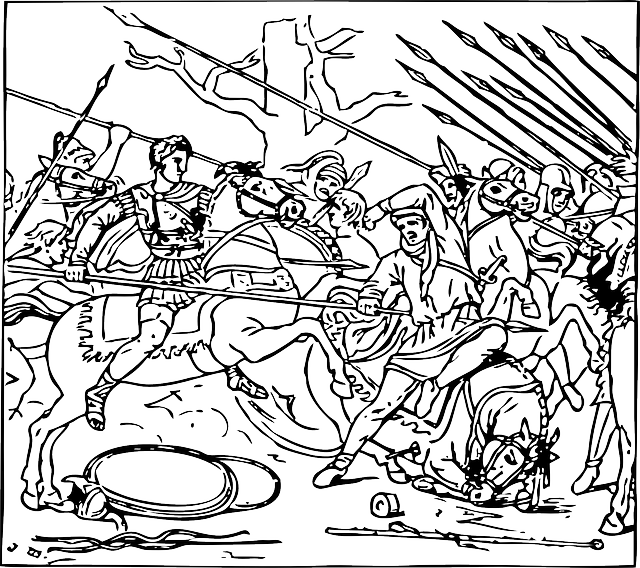
alexander-the-great-35767_640Gamblers speak of people who are lucky and those who aren’t, and consider luck to be in the person: “She’s lucky but he isn’t.” And so do military people. Even the most scholarly and erudite studies of warfare usually discuss luck. The Macedonian Alexander the Great referred to his good luck as a “star” that guided him to great victories. I suppose it did. He conquered most of the known world before the age of thirty.

The book Creativity by psychologist Mihaly Czikszentmihalyi describes how much good luck figured in the career of a successful (and fortunate) artist “whose work sells well and hangs in the best museums and who can afford a large estate with horses and a swimming pool.” The artist “once admitted ruefully that there could be at least a thousand artists as good as he—yet they are unknown and their work is unappreciated. The one difference between him and the rest, he said, was that years back he met at a party a man with whom he had a few drinks. They hit it off and became friends. The man eventually became a successful art dealer who did his best to push his friend’s work. One thing led to another. A rich collector began to buy the artist’s work, critics started paying attention, a large museum added one of his works to its permanent collection.” His career was made.

When I wrote Fighting to Win about how people today could achieve fulfillment by applying the wisdom of ancient Japanese warriors, my timing could not have been luckier. At the precise time it came out Americans were infatuated with and trying hard to learn more about the Japanese culture, and the book took off.

In college I read Englisman Gerard Manley Hopkins’ poem “God’s Grandeur,” and was impressed with its beautiful language. For some reason years later (before Amazon.com and before the internet) I suddenly had the urge to read a book studying Hopkins’ imagery so that it might affect my imagery. Wherever I traveled across the world—and I did extensively–I visited new and used bookstores, and in every bookstore I browsed for such a book, but never found it. Once I was to give a speech in Rock Island, Illinois. It’s a small city in the western part of the state that I had never visited before. I discovered that the hotel I was to stay in had just been built and had opened its doors only a few days before. It had hosted a conference for fire fighters–its first guests. They had left just the day before. I arrived very late at night and was given the only available room. I entered the room, laid my bags on the bed, and then noticed something in the trash basket. Apparently it had been left by one of the firefighters and the maid had overlooked it when she cleaned the room. There it was: fifteen years after I’d read him: a full-length book on the imagery of Gerard Manley Hopkins—a lucky break, a book that helped me.

books-683901_640Another time, I’d been writing and researching fifteen or sixteen hours a day on fifteen or twenty cups of black coffee for many months to meet a book deadline, neglecting my wife, neglecting my children, concerned only with putting enough words on a page every day to satisfy me—words, words, words, words–an abstract existence. That night I’d had it; I couldn’t work another minute; couldn’t drag from my agonized brain another word. I quietly left my home at about 3:00 a.m. and walked the streets trying to decide if I wanted to continue leading a grueling, neglectful life like that or follow a more conventional life, committing myself to “a regular nine-to-five job.”

It was a cool pleasant night—very dark—with a filmy mist in the air. Should I continue a writer’s life, or shouldn’t I? Should I just finish this book and then give it all up? Then I noticed ahead of me something lying on the sidewalk precisely in the middle of a pool of bright white light cast by a street lamp as though that object lying there had been placed there very carefully for me and me alone to see. I went to it and bent down and picked it up. It was a book—of all things a book. You see: I could not get away from the written word. I took this as a sign that, like it or not, a writer’s life—imperfect, isolated, much too demanding–was my destiny and that it was futile for me to think it would ever not be at the center of my existence. That I could ever get away from it. That was another lucky break because writing and reading has brought me so much fulfillment.

lantern-451233_640I have what I call my “Research Angel” which I rely on. I am writing and researching for hours every day and have been for many years, but my research is totally unsystematic. I begin with no notion whatever of where I am going but go ahead anyway as though quite content to wander on and on in a deep forest without worrying about how—or if ever– I’ll get back home. I’m trusting my Research Angel—based completely on a confidence in good luck—to steer me to the information I’ll need. The Research Angel has never failed me, and has taken me to unexpected discoveries and new directions in my life, just as it led me to the Hopkin’s book and the book lying in that pool of white light at four that early misty morning.

In Chases, Chance and Creativity medical researcher James Austin identifies four kinds of chance that affect creative activity:

  • Blind luck that doesn’t depend on any personal characteristics of the creator
  • The good luck that follows “persistence, willingness to experiment and explore”
  • Chance that allows the creator because of his training to grasp the significance of something overlooked by everyone else.
  • Serendipity

Lucky people—lucky artists and writers, lucky actors and dancers—-follow certain principles. They:

  • Are good at creating and noticing chance opportunities. They are relaxed, not anxious, people who are aware of their surroundings. Anxiety makes you blind to opportunities. Lucky people’s perceptions are sharper than unlucky people’s. They see opportunities the unlucky person doesn’t notice.
  • Are intuitive and respect hunches. Artists are on intimate terms with intuition. Half the decisions artists and writers make are intuitive—to use that color rather than this; that word rather than another.
  • Are open-minded and flexible in their thinking. Another characteristic of creative people.
  • Have optimistic expectations. They don’t just hope to be lucky; they expect to be. They are confident they’ll be lucky again. Positive expectations create lucky events. Good things happen to people with optimistic expectations. People with optimistic expectations are happier and healthier.
  • Are extremely resilient and able to quickly recover from bad luck. They see the positive side of bad fortune: “I fell down the stairs and broke my foot. It could have been my neck.” “I failed that time and it was very painful for me, but I learned so much that helped me succeed the next time.”

Be ready to take advantage of good luck, and when your luck is bad don’t let it get the better of you, but be aware that bad luck can change to good luck, and may in the blink of an eye. Be alert, strong, and opportunistic whatever may happen. Think strategically. Be ready. Be able to say, “This now that is happening to me is good luck and it may change my life.”

fish-582695_640Create the conditions for good luck to occur—set the stage. Be like a swimming fish waving its tail and stirring up the sand at the bottom of the tank. Get out, be spontaneous, meet new people, make contacts and seek people out. Form friendships. Do things you’ve never done before. Break away from your routines. Take chances you wouldn’t usually take. Don’t resist, don’t be afraid. Be bold, not timid. Experiment, explore. Be intuitive and pro-active and look for opportunities. Let good luck happen to you. Then chase the opportunities where they lead.

On a scale of 1 to 100, how lucky a writer or artist would you say you are?

Not Lucky                                                 Pretty Lucky                                       Very Lucky

1                                                               50                                                      100

Ask yourself, “In what areas of my creative life would I like to be luckier?”

What will you do now to make yourself lucky?

I will:

1.

2.

3.

4.

5.

Napoleon was looking for a subordinate to add to his staff. One after another his high-ranking officers described a particular candidate whom they talked glowingly about at length. Impatiently, Napoleon said, “Yes, yes, I know he is brilliant, but is he lucky?”

Yes, yes, I know you’re brilliant too, and prodigiously talented, but are you lucky? Do you behave like a lucky person? Do you foster good luck? Do you have the mind and expectations of a lucky person?


© 2015 David J. Rogers

For my interview from the international teleconference with Ben Dean about Fighting to Win, click on the following link:

www.mentorcoach.com/rogershttp://www.mentorcoach.com/positive-psychology-coaching/interviews/interview-david-j-rogers/

Order Fighting to Win: Samurai Techniques for Your Work and Life eBook by David J. Rogers

Fighting to win Amazon

Click on book image to order from Amazon.com

or

http://www.barnesandnoble.com/w/fighting-to-win-samurai-techniques-for-your-work-and-life-david-rogers/1119303640?ean=2940149174379


Order Waging Business Warfare: Lessons From the Military Masters in Achieving Competitive Superiority

Waging Business Warfare812sCY9edLL._SL1500_

Click on book image to order from Amazon.com

or

http://www.barnesandnoble.com/w/waging-business-warfare-lessons-from-the-military-masters-in-achieving-competetive-superiority-revised-edition-david-rogers/1119079991?ean=2940149284030


6 Comments

Filed under Artists, Becoming an Artist, Blocks to Action, Boldness, Creativity Self-Improvement, Dancers, Developing Talent, Human Potential and Achievement, Expectations, Goals and Purposes, Motivation, Success, Writers

The Life Path of Artists and Writers

path and sunlight-166733_640Who are you? Where are you going? Where have you been?

As a boy I realized that Socrates’ advice that everyone in the Western world has heard at least five or six times–“Know thyself”–was no less difficult than to walk from my porch to the moon. But I know now that if we look carefully at where we have been, who we have known, what our life’s events from the earliest days have meant to us, and where we are going, we can in fact satisfy Socrates and know ourselves. This is a goal that is particularly important to creative people because their work is an exact reflection of the remarkable men and women their lives have made them.

 Your Ground Plan

It is a biological concept that applies very much to artists and artists’ development: everything that grows—a rose, an eagle, a human being– has a life plan, a ground plan, and a life structure. All parts of this structure have a time to emerge that when complete form a unified identity, in our case, they come together to form the identity “artist,” and more specifically a type of artist: novelist, violinist, classical pianist, jazz pianist, movie composer, stage actor, ballet dancer, modern dancer, etc. That ground plan leads either directly in a straight line or in a roundabout helter-skelter way to that identity, but lead to it, it does. There is an order to our past, present, and future lives, however disorderly and unconnected they may seem.

frank-lloyd-wright-396991_640(1)

Frank LLoyd Wright

Frank Lloyd Wright, America’s most renowned architect, knew from his earliest days that he would be an architect. When he was a child his mother told him he would, considering architecture man’s crowning achievement, and began to mold him to that art by placing illustrations of architectural masterpieces on his bedroom walls and encouraging him. And prodigies, Mozart, dancer Vaslav Nijinsky, Broadway composers Marvin Hamlisch and George Gershwin, and trumpeter Miles Davis among innumerable other artists followed a “neat and tidy” development, and knew as children precisely what their adult life’s pursuit would be. There could be no doubt. Novelist Henry James and his philosopher/psychologist brother William were raised with one objective in mind: to make them creative geniuses, and that’s what they became.

However, many successful artist’s ground plans follow a less neat and tidy, “messy,” meandering path, as in the cases of painters Vincent van Gogh (failed teacher, failed preacher, failed everything who yearned to find his true calling—and did at thirty-three when he was told he was starting too late), and Paul Gauguin (former affluent stock broker who abandoned his family to paint), and novelists Sherwood Anderson (successful business owner who also abandoned his business and family to write),Joseph Conrad (sea captain), and Henry Miller (telegraph office worker), and playwright Eugene O’ Neill (ship’s deck hand, grave digger, and aimless ne’r-do-well). The meandering path is typical of many artists as they experience hits and misses, successes and failures, victories and defeats, false starts and detours over and over. Straight or roundabout, tidy or messy, the artist’s ground plan is in effect and leads to his/ her being an artist and being recognized as such. There is not one best way to become a successful artist—writer—performer, etc. But there are any number of perfectly fine ways.

Has your creative ground plan been tidy or has it been messy?

La Grande Ligne

Out of the mass of experiences of his life, the artist (1) must somehow or other settle on an art and way of life that fits him; (2) must have the personal makeup necessary to excel in the art; must possess the (3) knowledge, (4) drive and persistence, (5)  confidence and (6) complement of skills necessary to excel, and must (7) further develop strengths along certain clear lines.

music-7971_640La grande ligne (“the long line”) is a term in music that means simply that every good piece of music gives the audience a sense of flow, of continuity from the first note to the last. That continuity and flow is the challenge and be-all and end-all of every composer’s existence. Every artist’s life—every painter, writer, actor, dancer–whatever his/her chosen art, has a grande ligne, a flow from beginning to end. All of the artist’s choices and goals should be understood as relating to their ground plan, whether the artist is or isn’t aware of that fact.

A number of components must come into alignment to result in a unity of direction and purpose of a person’s life, and certain steps must be followed. The components making a business woman are different from the components that work together to make a diplomat or a baker. Artists have alignments of components of a certain characteristic type–many personal qualities, interests, motivations, values, abilities, experiences, and other components. If just one component is missing, you no longer have a painter, sculptor, writer, or dancer. Everything must be present.

Life History Process

A way to acquire a clear view of your life’s “long line” is to come to understand: yourself as you are at this moment; the relationship between the person you are now and the days and years of your past life; how you conceive of your whole life; what happened in your life—what events meant to you and what they mean to you now. And to answer the question, “What am I trying to do as a human being, and as a creative person?”

  • Divide your life into periods, such as:

++++ Birth-15 years

++++ 15-25

++++ 25-45

++++ 45-65

++++ 65-

  • Recall key EPISODES from those periods, period by period—“When I was six this happened to me. It was very important because it introduced me to music…” “At twenty-three I had a gig at a local bar and met an agent at a party…” “At thirty I started to dabble with bright colors…” Very often an episode occurs when the artist’s existence seems to be organized and focused toward the art and he has a premonition that from that point forward the art will be prominent in his life. Your entire life is a drama composed of the total number of significant episodes. Looked at closely and objectively, they reveal larger plots and themes. Right now, even without much thought, what particularly meaningful episodes come quickly to mind?

++++ Episode 1

++++ Episode 2

++++ Episode 3

++++ Episode 4

Methods that can be used to help you recall key episodes include discussions with relatives and friends, looking at report cards, documents, and records, and at your products—stories, drawings, compositions, paintings, performances. Photo-history is a method that involves looking at photographs to stimulate your memory. Assemble photographs from your life. Put the photos in chronological order; look at one at a time; ask about the photos—when was it, where was I, who are those people, what was happening?

Looking closely at individual episodes, ask: “What was I trying to do?” “Who was I?” “What was I learning?” “How was I changing?” “Was something leading me in the direction of my future work—an experience, a teacher, a success, a failure?” How did everything contribute to your becoming who you are? When did your artist’s, writer’s, or actor’s ground plan start taking shape? How did it begin? Through what ups and downs did it lead you then?

You may wish to write an autobiographical narrative about important episodes as I do with my “Growing Up” stories—direct statements of what happened when. When you do, memories buried deep in your mind will come flooding back, and you will remember what was happening and how you were feeling. Memories—particularly of childhood–are a main source of a creator’s inspiration. Author Thomas Wolfe’s ambition was to describe everything he had ever experienced. Author John Updike said that nothing that happens to you after the age of twenty is worth writing about. Personal motifs begun earlier in life stay with the artist throughout life and are reflected again and again in everything he or she produces. These themes cannot be avoided; they are the artist’s DNA. Artists accumulate experiences, people, places, key episodes, and ideas which they will draw on the rest of their lives, endlessly recapitulating them in their work. He/she never forgets them. These are the origins—and the content– of their craft.

  • When reflecting on episodes think about:

++++ Your characteristics; your personality at the time

++++ Your abilities

++++ Your needs

++++ Your ambitions and dreams

  • Look at the episodes for times in your life of shifts and changes of direction—crises, periods of trouble and distress, great pleasure, and achievements. Look for the choices you made and how you dealt with their consequences. What did the choices mean to your life?
  • Sift through episodes for MAJOR THEMES. Your life has been a route of recurring themes, like those in a musical composition or a novel. For author Ernest Hemingway the themes of danger, of war, of adventure. Chagall’s Hasidism. Themes help explain many events in a person’s life and show continuity. Themes are groups of episodes that fall into a type.

What do you think right now, without much reflection, are your significant life’s themes?

My major themes are childhood, family, the place where I grew up, growing in understanding.

++++ Theme 1

++++ Theme 2

++++ Theme 3

++++ Theme 4

Bearing the major themes you’ve found in mind, ask yourself:

“Where do I seem to be headed? Where does it appear my grande ligne will lead me now?”

“What have I learned about myself from reflecting on my life and my artistic career?”

“What more do I want out of my painting, my dancing, my writing, my acting? What more can I give to it?

“Where do I want to be headed from this day on?”


© 2015 David J. Rogers

For my interview from the international teleconference with Ben Dean about Fighting to Win, click on the following link:

www.mentorcoach.com/rogershttp://www.mentorcoach.com/positive-psychology-coaching/interviews/interview-david-j-rogers/

Order Fighting to Win: Samurai Techniques for Your Work and Life eBook by David J. Rogers

Fighting to win Amazon

Click on book image to order from Amazon.com

or

http://www.barnesandnoble.com/w/fighting-to-win-samurai-techniques-for-your-work-and-life-david-rogers/1119303640?ean=2940149174379


Order Waging Business Warfare: Lessons From the Military Masters in Achieving Competitive Superiority

Waging Business Warfare812sCY9edLL._SL1500_

Click on book image to order from Amazon.com

or

http://www.barnesandnoble.com/w/waging-business-warfare-lessons-from-the-military-masters-in-achieving-competetive-superiority-revised-edition-david-rogers/1119079991?ean=2940149284030


8 Comments

Filed under Artists, Becoming an Artist, Creativity Self-Improvement, Developing Talent, Human Potential and Achievement, Goals and Purposes, Life History Study, Success, Writers

Non-Attachment: The Solution to an Artist’s or Writer’s Problem

It’s a paradox that when we detach ourselves from thoughts of ourselves and how we’re coming across and do with concentration solely what’s necessary to do to create good art, many obstacles disappear and no longer trouble us. Then the work we do is infinitely better and the artist’s life we lead is infinitely happier. We just do our work as well as we can and live our life as well as we can because that’s how work should be done and an artist’s life should be lived.

“Victory goes to the one who has no thought of himself.” (Chozan Shissai, The Way of the Sword)

 Archers and Artists

bows-and-arrows-650474_640(1)Two thousand years ago Chuang Tzu wrote a description of a situation so relevant to painters, writers, dancers, and other artists of today that he could have written it this morning. He wrote that when an archer is shooting and no external prize is at stake he possesses all his skill. The moment a prize is riding on the shot, even a brass buckle, the archer becomes nervous and loses confidence. If the prize is more valuable, as a quantity of gold, “he shoots as if he were blind.”

Describe that situation to archers today and they will tell you what they tell me: “That’s exactly what happens.”

The archer’s skill hasn’t changed, but the importance the archer has attached to the prize has made him care too much. Because he is thinking more about winning the prize than simply shooting the arrow he becomes anxious and his performance suffers.

When realizing that a critic, an editor, an agent, a reviewer, a gallery owner, a potential buyer, an audience will soon be evaluating the work, for most artists, even the best and most highly regarded, the self-conscious uneasiness begins.

Crippling self-doubt and fear of not succeeding and falling in someone’s estimation are not only the archer’s, but the artist’s, major internal obstacles, haunting many artists, writers, composers, and performers, replacing self-confidence with discouragement at the first hint of possible failure, and making many magnificently talented people give up and quit their art rather than endure them.

So the question is: How can artists keep from going blind?

 What is Non-Attachment?

On the one hand, making a painting or story should be its own reward. The artist should be happy just because of the fulfillment inherent in the artistic work itself. He shouldn’t care whether the work will be liked by others, or whether he will receive public recognition and possibly wealth. But he does care, and the conflicting motivations of art for its own sake on the one hand and art for profit or other external signs of success on the other put the artist in a quandary, particularly if to achieve success he is asked to make compromises and do things he does not want to do. Is there a way to solve this quandary?

misty-364498_640To non-attach means to be totally engrossed, completely absorbed in the fulfillment of the task before you, whatever it is, and the full realization of your art and your potential, giving everything to them and nothing but them, forgetting everything else. Bullfighter Juan Belmonte, the greatest torero of his era, an artist of the bullring, wrote, “I forget the public, the bullfighters, myself, even the bull.” Japanese samurai, the most action-oriented and decisive people ever to live, were advised that to be effective in action they must “forget life in the face of an opponent, forget death, forget the enemy, forget yourself.” Free yourself from any preoccupation with yourself—your fame, your wealth– and you’ll overcome impediments to your best work because your focus will be on the work 100%, nothing left over for anything else. All your attention will be brought to bear on the one thing to be written, painted, composed, or performed.

The non-attached artist is the most conscientious of people. All actions are equally important to him or her. Non-attachment doesn’t mean to be indifferent to the results of your efforts, or not to be ambitious. Be active, be industrious, like a sculptor, make chips, be ambitious, accomplish goals, emphasize actions, get things done.

If fame or fortune, success, honors, and achievement come your way, that’s fine, that’s wonderful, that’s something to be happy about. But the mistake we make is getting caught up in them, hungering for them, clinging to them, needing them desperately and, measuring our self-worth against our ability to achieve them. If we make that mistake and don’t achieve them, we’ll feel we’re failures. Just put your mind, your spirit, your energy–your whole being–into the action at hand, the person at hand, the life at hand, the writing or painting or dancing at hand, and forget everything else.

 The Woodworker and “Outward Considerations”

woodwork-166695_640There was a master woodworker who made such beautiful works that the king himself demanded to know the secret of his art.

“Your highness,” said the woodworker, “there is no secret. It’s all very simple. When I set out to make a chair I enter the forest and look for the right tree, the tree that is waiting there to become my chair. I cut it down and set to work. I clear my mind of everything else. I become oblivious to any reward to be gained or fame I might acquire. When I’m free from such outward considerations I just do exactly what I have to do, using all my skill.”

When you free yourself from everything else, and again and again bring your concentration back to what you have yet to do, you’re at your best. The woodworker produced masterpieces, but didn’t worry about producing a masterpiece. The highest performers in field after field—business and industry and the arts–are motivated by the work itself—to do the best job possible–and not by external rewards. Even though they are more successful and receive those rewards more than other people, they aren’t driven by them.

When you work best you accept yourself with no strings attached. Finally, at last, you don’t have to prove yourself. You just do whatever is there for you to do. If you’re a woodworker you absorb yourself in creating the finest chair you can, never stopping to think of what glories will be yours when you produce a masterpiece. If you’re a baseball player you don’t worry about how cheered you’ll be if you get a hit, or what a goat you’ll be if you don’t. You just step up to the plate, keep your eye on the ball, and when it gets close you swing the bat. If you step to the podium and worry about what the audience is thinking of you, you won’t be totally focused on what you have to say, and you’ll fumble and stumble. But if you just concentrate on the words you’re speaking and speak with sincerity, you should do well.

cabbage-flower-204087_640Philosopher and mathematician Bertrand Russell, a Nobel Prize winner, wrote, “I was not born happy….In adolescence, I hated my life and was continually on the verge of suicide, from which, however, I was restrained by the desire to know more about mathematics. Now, on the contrary, I enjoy life; I might almost say that with every year that passes I enjoy it more. Very largely it is due to diminishing the preoccupation with myself.”

 The Process of Brushing Off

One person may be 25% taller than another or 25% more intelligent. We think that’s pretty significant. Yet some people are 50 or 100 times more creative than others. Creative artists are the best workers in the world. They are models of human motivation and productivity. They will work alone long hours for years, without feedback, without recognition, without praise, overcoming hardships and setbacks without flinching, always returning with high energy to the work which life has equipped them with a talent for, often producing a vast output. Yet they often meet hostility from critics of all sorts unparalleled in other fields.

English writer Rudyard Kipling would go on to establish himself as a master stylist with a staggering ability with words and to win the Nobel Prize in Literature. But early in his career a publisher wrote him: “I’m sorry, but you just don’t know how to use the English language.” Vladimir Nabokov, also a dazzling stylist, received this message from a publisher in response to Lolita: “I recommend that you bury this under a stone for a thousand years.” Many successful writers, artists, and actors, like painter Jackson Pollock, who revolutionized painting, have been told, “You haven’t an ounce of talent.”

When you non-attach you brush off such attacks, insults, and unfair criticisms because you’re not seeking anyone’s approval. If there is one thing famous artists will tell you it is that you work best and are most powerfully motivated to create and will surmount even major obstacles when you’re not thinking of anyone’s liking but your own.

Such a confident attitude gives you courage. In response to so many heartless rejection letters from editors, novelist Henry Miller, who was not one to suffer fools, said, “Who are these shits? Where do they get off telling me these things?” It is often the artist who’s not seeking approval who receives it.

 Not So Eccentric After All

Many creative people are considered eccentric when they aren’t eccentric at all. They just non-attach and are less at the mercy of people’s opinions. They genuinely don’t give a hoot what others think. Independence is a cornerstone of the creator’s personality.

Composer Igor Stravinsky was doted on by people who knew of his greatness. But he enjoyed himself more when in the company of people who’d never heard of him. Maurice Ravel, possibly the greatest piano composer of the twentieth century, was always averse to writing and talking about himself. When complimented for his creative ideas, Thomas Edison, as creative a human being as ever lived, declined credit. He said that ideas were “in the air,” and that if he hadn’t discovered them someone else would have. Of the handful of Emily Dickinson’s poems published in her lifetime, not one bore her name.

 Strategies

Practice letting go of any preoccupation with yourself. Nudge your attention away from yourself and back to the work at hand and the actions the art calls on you to perform, and you will excel. Just render the drawing; just write the novel, just perform the dance, just market your work.

  • Whatever task you’re performing say to yourself, “This one thing I’m going to do as well as I’m able. I am not concerned with myself. I am indifferent to everything but the quality of my work.”
  • Refuse to frighten yourself with anxious thoughts of all that’s riding on your success, of the honors that may be yours if you succeed, or of the horrors if you fail. Just bring your focus back to the objective at hand and watch obstacles dissolve. If wealth, fame, or accolades come your way, they will without your worrying about them.
  • Be bold in the face of harsh criticism. If you believe you’re right, stand your ground. Be unruffled under fire—cool and calm, unintimidated. Never let undeserved criticism weaken your confidence. They are wrong; you are right! We remember Rembrandt and Michelangelo; no one remembers their critics. You must never lose unshakeable confidence that you have the ability to produce quality art and will succeed sooner or later.
  • Always try to improve, but never dwell on your imperfections.
  • Place your emphasis on developing your skills to the highest possible level above everything else. The higher your skills, the higher the goals you’ll achieve and the more clearly you’ll express yourself, your vision, your voice.
  • Do what your life calls on you to do for its own sake. Engross yourself in it–big job or small job, important or unimportant, praiseworthy or not, paid or unpaid. Give freely of your talent without expecting anything in return.

CalderArtist Alexander Calder was asked why sculptors like to produce large works. He answered, “It’s more exhilarating…and then one can think he’s a big shot.” Rare are the people who can live five days without getting caught up in themselves–or five minutes. Ninety percent of what we talk about is ourselves and 95% of what we think about is ourselves. Our preoccupation with ourselves creates many of our miseries.

But when we become non-attached and focus on our work and the steady development of our talents to the exclusion of every other concern, we stop worrying about being big shots and talking and thinking so much about ourselves.

Then our work leaps up and becomes exceptional.

© 2015 David J. Rogers

For my interview from the international teleconference with Ben Dean about Fighting to Win, click on the following link:

www.mentorcoach.com/rogershttp://www.mentorcoach.com/positive-psychology-coaching/interviews/interview-david-j-rogers/

Order Fighting to Win: Samurai Techniques for Your Work and Life eBook by David J. Rogers

Fighting to win Amazon

Click on book image to order from Amazon.com

or
http://www.barnesandnoble.com/w/fighting-to-win-samurai-techniques-for-your-work-and-life-david-rogers/1119303640?ean=2940149174379


Order Waging Business Warfare: Lessons From the Military Masters in Achieving Competitive Superiority

Waging Business Warfare812sCY9edLL._SL1500_

Click on book image to order from Amazon.com

or

http://www.barnesandnoble.com/w/waging-business-warfare-lessons-from-the-military-masters-in-achieving-competetive-superiority-revised-edition-david-rogers/1119079991?ean=2940149284030


14 Comments

Filed under Artists, Becoming an Artist, Blocks to Action, Creativity Self-Improvement, Developing Talent, Human Potential and Achievement, Eastern Philosophy, Goals and Purposes, Motivation, Samurai Techniques, Writers

Setting Your Artistic Potential Free

 “Think differently about yourself today than you did yesterday.”

“We should weave more of the actor into our lives.”

tool-210385_640A sculptor told me that for most of her life she considered herself average in every way. She was never the worst in anything, and never the best either. But when she stopped conceiving of herself as an average sculptor and conceived of herself as exceptional, she became exceptional and met one goal after another and had success after success. No longer considering herself average, she did what exceptional artists do–she took her art more seriously, became more ambitious and more conscientious, worked harder and learned all she could about sculpting and sculptors—took more classes, went to workshops, read. She made it a point to develop relationships with other artists and people in the field. And no longer average, her art quickly became less inhibited and freer and bolder. Her confidence grew every day, and her art came out of her more effortlessly and was of a higher quality. She gained the reputation as the hardest worker among her artist friends, and as a very bright and determined, successful woman. No one thinks of her as average.

When I was a business consultant, I once consulted with a company that had a rule that no one from one unit was to visit another unit during working hours. Signs to that effect were posted everywhere. Faced with such a ridiculous rule, the first thing people with any imagination will do is what you would do if you are an artist—they break it. But in this company you had to be very careful. Wherever you went you heard people whispering, “Whatever you do, don’t get caught out of your unit.”

Your self-concept is lot like that rule. It is like a miniature judge sitting vigilantly and unforgivingly on your shoulder, its eyes wide open, continually telling you like that company rule: “Be careful. Don’t get caught out of my definition of the kind of person you are, the kind of artist or writer you are, and of what you’re capable of and what you aren’t.” If you’re living inside a self-concept that limits your art because it is the wrong self-concept (“you’re average, not exceptional”), you’re up against a major inner obstacle that directly affects the quality of your work—your paintings, your stories, your poetry–and your ability to produce it. When you rid yourself of a limiting self-concept you’ll see other obstacles in you disappear. They will melt away.

We don’t just hold our inner views of ourselves in our mind as if they are some kind of internal ornament. No, we act as if they really are not just an opinion we’ve formed of ourselves, but the Gods-honest truth, as if they are accurate representations of ourselves. That’s the law of consistency–our self-concept and our actions are ordinarily consistent. All of your actions, and even your abilities in any area, including your art, tend to be consistent with it. We do what it tells us we can do, and shy away from what it tells us we can’t. The sculptor fashioned a new “exceptional” concept of herself and her exceptional actions became consistent with it.

The Ubiquitous “I Ams,” “I’m Nots,” and “I Can’ts”

You create and then maintain your self-concept by characterizing yourself in particular ways. You do that in the “I ams” you use when thinking or talking about yourself–“I am a generous person,’ or “I am clumsy.” And you shape it also by the “I am nots” you habitually use: “I’m not an affectionate person.” And there are “I cans” that you use when thinking or talking about your capabilities: “I can ride a bike, drive a car, and draw a lovely landscape.”

“I’m nots” lead to “I can’ts.” “Since I’m not A, I’ll never be able to do B.” “Since I’m not X, naturally I can’t do Y.” “I’m not a person who’s good with numbers, so I can’t help my daughter with her math.”

De-hypnotize Yourself

oil-painting-571164_640When under hypnosis, a timid man who’s afraid of public speaking is told and believes that he’s a confident public speaker, he is changed instantly. He speaks like an orator. He becomes what he’s told he is. His “I can’ts” disappear. Now he can. Under hypnosis we can do amazing things. We can become convinced we’re powerful and strong. Then we are able to lift heavy objects that we normally couldn’t lift. But what has really happened? Our physical strength hasn’t increased. We have merely lifted the limits we had been placing on that ability. In essence the hypnosis did not take place when we were told we could do things we didn’t believe we could. The hypnosis was taking place all the time that we believed that we did not have these abilities.

We have hypnotized ourselves into believing our self-concept—this inaudible voice in us–is reality. We’ve hypnotized ourselves into believing that we are like this when we could have been something else all along, could have been a thousand other types of persons all along, had we hypnotized ourselves differently. We created a fictional idea of ourselves, and then came to believe that idea, and then acted as if it were true when all along it was just an idea, just a notion. If we’ve hypnotized ourselves into a limiting self-concept, it’s our job now is to de-hypnotize ourselves. And that we can do.

The moment you de-hypnotize yourself and think of yourself as being something else is the moment you’re on your way to being it. A woman I know never thought of herself as a particularly good mother, but one day at the playground a woman she didn’t know said to her, “I’ve been watching you playing with your children these last weeks and wanted to tell you what a perfect mother you are.” That changed her concept of herself; “I am a good mother after all.”

Research demonstrates that as soon as people start thinking, “I am creative” instead of “I’m not creative” their creativity increases, even in a matter of minutes, and sometimes phenomenally. I’ve seen that happen hundreds of times with people of all ages from all walks of life. A group of people are given a problem to solve. They are graded and the person who graded them expresses disappointment, and says, “I really thought you’d come up with more creative solutions because I know you are very, very creative people.” Then they are asked to work on the problem again, this time developing solutions that are creative, being reminded that “My expectations of you are high because you are very creative people.”

A few minutes later they turn in their solutions and the solutions are more creative. Something miraculous has happened. The problem-solvers have abandoned their old self-concept that they hypnotized themselves into believing and have taken another which they needed in order to solve the problem creatively. The creativity that was in them all along waiting to be ignited shined through once they changed their self-concept. They have learned that they are creative after all. When an artist reaches a plateau, and doesn’t progress, it may be because his self-concept needs to be changed.

Two Strategies for Overcoming a Limiting Self-Concept

There are two methods you can use to free yourself from a limiting self-concept. One, you can change it. You can do that by trading it for another that you intentionally create that’s more beneficial, more to your liking, and that serves you better. Or, two, you can do without any self-concept at all. You do that by attending solely to the actions that life presents to you which are right there, right in front of you at every moment that need attending to. You pay no attention to this concept of yourself or that one. You pay no attention to yourself at all, but only to what needs to be done right now.

 Strategy I–The Storekeeper and the Thief: Trading in your Old Self-Concept

samurai-41200_640In Japan in the nineteenth century, storekeepers were considered lily-livered cowards and weaklings. One storekeeper became sick and tired of that reputation. To prove that it was totally false he took lessons at a martial arts dojo. He devoted himself religiously and after some years he became an expert.

After closing his shop late one night, the storekeeper and his wife started home down the dark streets. They had just turned a corner when a man holding a knife stepped out of the shadows and ordered the storekeeper to hand over his money.

At first he refused, but when the thief charged him, growling, “You miserable merchant, I’ll cut you to pieces,” the storekeeper lost his courage, fell to his knees, and began to tremble with fear.

Suddenly his wife cried out, “You’re not a storekeeper, you’re an expert in the martial arts.”

The storekeeper turned his head and looked at his wife. “Yes,” he said, “I am.”

He stood, a warrior now, totally fearless, completely calm. He let out a powerful katzu, “battle shout,” and leaped at the thief. He defeated him easily in a matter of seconds.

 Strategy II–The Teaman and the Ronin: Doing Without a Self-Concept

In feudal Japan, a servant, a poor practitioner of chado, the Way of tea, unwittingly insulted a ronin, a masterless samurai. Outraged, the ronin challenged the servant to a duel.

“I’m not a warrior,” the teaman said, “and I’m very sorry if I offended you. I certainly didn’t mean to. Please accept my apology.”

But the ronin would have none of it. “We meet at dawn tomorrow,” he said, and as was customary he handed the terrified teaman a sword. “Go practice,” said the ronin.

The teaman ran to the home of a famous sword master and told him the terrible thing that had happened.

“A unique situation,” the sword master said. “For you will surely die. The thing I might be able to help you with is isagi-yoku, the art of dying well.”

While they talked, the teaman prepared and poured tea. The masterful way he did it caught the eye of the sword master. He slapped his knee and said, “Forget what I just told you. Put yourself into the state of mind you were in as you prepared the tea and you can win this fight.”

The teaman was shocked. The sword the ronin had given him was the first he had ever held. “What state of mind?”

“Were you thinking ‘I’m a teaman?’ ” asked the master.

“No. I wasn’t thinking at all.”

“That’s it!” The sword master laughed. “Tomorrow draw your sword and hold it high over your head, ready to cut your opponent down. Don’t think you’re a teaman or that you’re a swordsman. Just listen. When you hear him shout, strike him down.”

The next morning the ronin appeared on the field and the teaman immediately raised his sword overhead, his eyes on the ronin, his ears waiting for the battle cry.

The ronin too raised his sword and stood staring at the teaman. Then he saw the determination in the teaman’s eyes and said, “I cannot beat you.” He sheathed his sword and walked away.

The teaman had taken an alternative to changing his self-concept. He didn’t exchange one concept of himself for another. He didn’t change, “I’m just a teaman and not a warrior, so how can I hope to beat this trained ronin?” to “I am a good fighter.” He forgot about having any self-concept at all. He just did what life called on him to do—be prepared to strike the ronin down.

If I am a painter applying Strategy II, I do not replace the thought, “I’m an average painter” with “I’m a great painter.” I just pick up the brush and without any self-concept at all, just use all my skill and paint.

Strategies: Change or Do Without

  • Define your artist or writer current self-concept. What is it? It’s helpful to write an essay titled, “My Current Self-Concept.” It can be a paragraph or twenty or more pages–as long as you want. What do you say and think about yourself that begins, “I am,” “I’m not,” “I can,” and “I can’t”?
  • Design a more beneficial self-concept to your own specifications. Describe in writing what you want it to be. If you want to change it you should have in mind what you want to change it to.
  • Start with the realization that you don’t have to be any particular way. You don’t have to have the opinion of yourself that you do now. You can change it, and by changing it you will change your entire life. Or you can force it to change by stepping out of it and acting differently, even in a way it would never expect you to.
  • Wholeheartedly believe in your new opinion of yourself. As soon as you see yourself in a different light and believe completely what you now see, you instantly change.
  • Remember that all behavior is an act, a performance, and you can learn to be a good actor. You can author a new play with a new part for yourself. The first part of the word “action” is “act.” We should weave more of the actor into our lives. Act as if you can and you are when you feel you can’t and you’re not. Do that for an “I can’t” and “I’m not” and you’ll prove to yourself that you can and you are. Do that time and again.
  • Be careful what you say to yourself. You are what you are because you keep telling yourself you are. When you stop telling yourself you are, you change.
  • Replace every “I just can’t” that is holding you back with a determined, “I can.” Stop telling yourself nonsense. Don’t tell yourself that you’re fated to be in the future what you’ve been in the past. Don’t think so much and tell yourself that there are forty-four things–or one hundred and forty- four things– that could go wrong. Think differently about yourself today than you did yesterday.

lotus-214619_640Strategy II

  • Do what you want to do without any self-concept at all. Just turn your attention outward. Act as if you already are the way you want to be. Act as if you’re brave and you are brave, act as if you are a person of action and you are, act decisively and you are, act confidently and you’re confident, etc. Act that way consistently, at every opportunity, without any exceptions, moment by moment. Become what you want to be.
  • Absorb yourself in the action and not in yourself. Don’t think of anything else but the action. Don’t say to yourself that you are one way or the other, a good artist or a bad artist, courageous when facing life’s setbacks or cowardly, shy or outgoing, self-doubting or confident, happy or unhappy, discouraged or confident. Just put all concepts of yourself aside with no thoughts whatsoever of yourself and do what at every moment is right there in front of you to be done. Let no inner view of yourself get in the way.
  • Take no thought of any “I am,” or “I cant’s,” or “I’m nots,” and don’t concern yourself with “What great things will happen if I succeed,” or worry about, “What bad things will happen if I fail.” Don’t worry about anything. Don’t struggle to protect your inner view of yourself: “Oh, no, I could never do that. I’m not good at that kind of thing. I would be embarrassed if I tried and failed.” Every moment and every day and all lifelong just turn your thoughts away from yourself and back to the matter at hand.
  • Bloom like a flower. A flower is not a flower all its life. It starts as a seed and becomes a flower. Every moment affords you the opportunity to set your life out in a new direction and grow into the artist you have the potential to be.

© 2015 David J. Rogers

For my interview from the international teleconference with Ben Dean about Fighting to Win, click on the following link:

www.mentorcoach.com/rogershttp://www.mentorcoach.com/positive-psychology-coaching/interviews/interview-david-j-rogers/

Order Fighting to Win: Samurai Techniques for Your Work and Life eBook by David J. Rogers

Fighting to win Amazon

Click on book image to order from Amazon.com

or

http://www.barnesandnoble.com/w/fighting-to-win-samurai-techniques-for-your-work-and-life-david-rogers/1119303640?ean=2940149174379


4 Comments

Filed under Artists, Becoming an Artist, Blocks to Action, Creativity Self-Improvement, Developing Talent, Human Potential and Achievement, Eastern Philosophy, Samurai Techniques, Writers

Artists and Writers in Ecstasy

It’s not unusual for artists–painters, sculptors, writers, dancers, musicians–who are at work to be in a state of bliss, a state of ecstasy. Their enjoyment is deep, their focus uncommon, intense, and virtually super-human. Time means nothing at all and self-consciousness and self-awareness disappear. Every thought is solely of the task at hand. They have no attention left to think of anything else. There is only they and the work; all distractions, all worries, all fears, all self-doubts, and all impediments are gone—an extraordinary state of existence.

sunset-100367_640Fully absorbed, there is a rightness about everything they do; their every action is sure. The possibility of failure is of no concern. They need nothing more than the brush in their hand, their fingers on the keyboard, dancing slippers on their feet. There is nothing else—no other pleasure, no other enjoyment–that is more meaningful and brings such rewards. It is as though they are thinking:

This thing that I am doing is essential to my fulfillment and well-being. I will be tenacious; I will persist for long periods of time, not being diverted, and try to make this work I am doing exceptional, applying all the skills I’ve developed. I am finding that my skills are all that I’ve wished for and just right for this work. My mind will be sharp, my energy unstoppable. I will be relaxed and alert too—confident, in balance; in control of all my faculties. I am willing to sacrifice. At times I will forget to eat, forget to sleep. I will block out distractions as best I can. When I reach an impasse, I will ask for help. I will arrange a life-style and personal habits and routines to accommodate my work and will find the time.

 Seeking a Perfect Match of Goals and Skills

Artists begin with a vision of what at last they could become. That is the basis of their goals–a guiding vision. The major factors in achieving creative ecstasy are: being powerfully motivated to succeed, (so powerfully that it is almost impossible to keep you from your work); having the confidence that you will succeed, (if not now, eventually); making decisive choices and pursuing goals that are personally extremely meaningful (few things in your life are as important, possibly nothing is as important); receiving immediate feedback on performance every step of the way (performance feedback and high motivation go hand in hand); and possessing all the skills required to perform the task (no skill is lacking).

Often feedback comes from an external source—a teacher, for example, or mentor, the audience the artist is aiming to please, or in the case of a writer, an editor. But experienced artists have internalized the “rules” of the art and know good work from bad work so well that their most useful feedback comes from themselves. They don’t have to wait for feedback from the outside.

sisters-74069_640Many writers, painters, and dancers—possibly most; possibly most people– don’t give their goals much thought and don’t care if they achieve them. Only a minority do. And if they do care, many aren’t willing to put out the effort to reach them. Research shows that 85% of Americans wait for things to happen. Only 15% are proactive and make things happen. Many people don’t have the first notion of the causes of success or failure or how to achieve their goals—the means that must be involved. But artists in ecstasy are clear and their motivation knows no bounds.

Of special importance to ecstasy and bliss, it seems to me, is the ideal state when the artists’ skills perfectly match the goals the artists aim to achieve. The skills are exactly what’s needed to reach the goals. That means that artists should pursue goals that are not too easy, but not too difficult, based on their assessment of their skills.

 The Alternatives

If your goals are higher than your skills, you won’t achieve the goals and will feel frustration, disappointment, stress, and anxiety.

If the goals are considerably less than your skills and success is guaranteed, you’ll be bored.

Anxiety and boredom alike interfere with work and are signals that your goals need to be changed.

But if you don’t care whether you reach the goal you’ll be indifferent and apathetic.

So if you’re meeting only frustration, disappointment, and worry, you may continually be aiming too high and should lower your sights, not permanently, but until you develop your skills further and are in a better position to reach the goals. Make developing your skills to the highest level your priority, principally through deliberate practice,

And if you’re often bored, set higher goals, you’re aiming too low.

If you’re apathetic, pursue only goals that mean something to you. (I realize this isn’t always possible, such as when you’ve been given an assignment that you dislike but have no choice. But in that case find ways of making the goal more interesting, such as making it a game, as how quickly you can finish the work while still doing a good job).

If you’re often in ecstasy—some artists are every day–the balance between the difficulty of the goal and your skills is perfect.

Things That Are a Little Out of Reach

piano-302122_640The most challenging goals—and those leading to the best benefits–are those that you’re most interested in, are not completely certain you can reach, and will get the greatest satisfaction from when you achieve them. We work harder to get what is a little out of reach—but not too far. When the goals you set are difficult but achievable you’ll have no problem persisting until you achieve them. That happens automatically. If you come up short, all is not lost. Every failure is valuable feedback indicating what needs to be improved.

As your capabilities develop, as they will if you apply yourself, you will have a natural urge to seek increasingly greater challenges, higher performance, and higher achievements. As your skill level rises, so do your ambitions, and a goal that was once powerfully motivating becomes less powerful and needs to be replaced by a more difficult one. You wanted to have your artwork displayed in a gallery. Now it has been, so you want to see it in a more prestigious gallery. Your short story was published and was highly thought of; now you’re aiming for a novel. Your songs are popular, so now you will write a musical.

Setting difficult goals that require considerable work can significantly increase an artist’s motivation and at the same time, his/her performance. Difficult goals are motivating in and of themselves and build a strong sense of self-confidence. You’ll work harder to reach them. Attainable doesn’t in any sense mean easy. To write a good book may take an almost unbelievable amount of effort and persistence. Harder goals will take you to higher levels of performance than easy goals provided you’ve chosen the goals voluntarily and have or can develop the necessary skills.

People put out more effort if they consider the goals difficult, but not so difficult as to be unachievable. Yet, the creative person must also be willing to work hard and long on ambitious projects that verge on the impossible—an epic novel, an opera, a symphony.

The Definition of “Difficulty” All Depends

vincent-van-gogh-85799_640(1)Now the definition of what is a difficult or easy goal depends totally on who you are. For example, a goal that may be impossible for me may be perfectly reasonable for you. Whenever I hear someone say, “The odds of succeeding are one in ten,” I think, What you’re saying is that you think they are one in ten for you. However, they may be one in five for me. I’m going ahead with it because I think one in five is very attainable.

A Little Quiz

A goal is more difficult—and possibly impossible– to reach if you aren’t a hard worker. It’s particularly difficult if you’re lazy. Ask yourself, “How hard a worker am I?” Rate yourself on a scale of one to ten, one being “Not a very hard worker” and ten being “An exceptionally hard worker. I’m inexhaustible.”

Are you a one, a seven, or a ten? It is hard to imagine artists who have reached high levels being anything but tens. They pour tremendous stores of energy into their work. If they are separated from their painting, their writing, their music for more than 24 hours they get nervous; any longer, they get depressed. Artists who are not hard workers are in trouble.

Do you know what the causes are of success or failure in reaching goals?

Do you set artistic goals?

If so, what are they?

Are they clear? Some artists are not any more talented or intelligent than others, but they are far more successful because they have not a single doubt about what specifically they are attempting to accomplish. They are single-minded, with only that supreme goal in mind.

Do your goals match your skills or are they too high or too low?

If they are too high, how will you change them to better match your skills?

Are they a little out of reach? (If yes, that’s good.)

If they are too low, what will you do to make them more ambitious?

How important are they to you?

Not very important

Kind of important

Couldn’t possibly be more important

How do you plan to attain them?

Often when their goals are not properly matched with skills and artists are enduring periods of anxiety, disappointment, or boredom, they try to force themselves, and the work product is usually not up to the artists’ standards. But when in ecstasy and everything is aligned, they are fully functioning and can do no better.

© 2015 David J. Rogers

For my interview from the international teleconference with Ben Dean about Fighting to Win, click on the following link:

www.mentorcoach.com/rogershttp://www.mentorcoach.com/positive-psychology-coaching/interviews/interview-david-j-rogers/

Order Fighting to Win: Samurai Techniques for Your Work and Life eBook by David J. Rogers

Fighting to win Amazon

Click on book image to order from Amazon.com

or

http://www.barnesandnoble.com/w/fighting-to-win-samurai-techniques-for-your-work-and-life-david-rogers/1119303640?ean=2940149174379


Order Waging Business Warfare: Lessons From the Military Masters in Achieving Competitive Superiority

Waging Business Warfare812sCY9edLL._SL1500_

Click on book image to order from Amazon.com

or

http://www.barnesandnoble.com/w/waging-business-warfare-lessons-from-the-military-masters-in-achieving-competetive-superiority-revised-edition-david-rogers/1119079991?ean=2940149284030


14 Comments

Filed under Artists, Becoming an Artist, Creativity Self-Improvement, Developing Talent, Human Potential and Achievement, Goals and Purposes, Motivation, Writers