Tag Archives: self-confidence

Self-Confidence of Artists and Writers

I went with my wife to a poetry reading to read poems I’d written, and before starting, talked with other people who were there to read theirs. I’d never spent much time with poets, but before beginning the readings there was wine and cheese and I talked with some of the others. As my wife and I found seats, I asked her, “Do you think all poets are as meek as these poets?” I had the same impression during the readings. So many seemed to lack confidence. The lack of confidence is very hard to hide

I wondered if they also lacked confidence when they were writing and how that affected the quality of their work. Then I thought of all the many talented writers, painters, dancers, and actors I’ve known, some of them very close to me, who also lacked confidence or who once had confidence and lost it, and because of that ended their artistic careers prematurely. So I thought this blog post might encourage an artist or two to have confidence and persevere.

This post says, “Take heart”:

ballerina-534356_640_copy2You must never lose the faith that you have the ability to produce quality art successfully and consistently. The desire to succeed and the confidence that you can, along with skill and the ability to overcome obstacles are the most important indicators of eventual success in art.

Artists fail because (a) they lack the necessary skill or (b) they have the skill but don’t have the confidence to use that skill well. If you have confidence and faith in yourself, you’ll reach higher levels of success than other writers, painters, dancers, actors, and performers of equal ability who lack them.

Artists who are sure of their abilities, sure of themselves, intensify their efforts when they fail to achieve their goal, and persist until they achieve it. Self-confidence is the ultimate source of an artist’s motivation.

All great artists of the past were confident.

The will of a successful artist must be indestructible.

 Learned Helplessness

“Learned helplessness” has destroyed the careers of many artists who had all the potential they needed to excel. They met failure and they never recovered. Failure is a necessary part of an artist’s life, bringing with it growth and new learnings, and sometimes sudden leaps in performance. No one met more failures and took more wrong turns and was more average than Walt Whitman until suddenly, seemingly without any preparation, he wrote Leaves of Grass and established himself as America’s greatest poet—ever. If you’re not failing some of the time, you’re not aiming high enough.

Helpless artists believe that no matter what they do, their actions will not lead to success. Consequently, they give up. Learned helplessness was first observed among young animals which had been placed in a situation in which they received inescapable electric shocks. When placed in a different situation, they made no attempt to escape or avoid the shock—they had learned to be helpless. Like those animals, when people believe that their actions will have no effect on what happens to them, they also become passive.

Helpless-oriented artists attribute their failures to personal inadequacies—they’re think they’re not smart enough, or not talented. Their thinking is self-defeating. Their expectations are negative—“I won’t succeed. This problem is too much for me.” The act of painting/dancing/ writing becomes unpleasant, even painful, an activity to be avoided. Helpless artists lose focus and can’t concentrate. They worry, continually question their worth as artists, and begin to put out less and less effort. Good work habits disappear. They avoid challenges and risks. Their performance declines.

 Disappointment Needn’t Lead to Discouragement

You’re an artist; you know what it is to be discouraged. When you’re deeply discouraged you’re weak and vulnerable. You’ve been deprived of confidence, hope, and spirit. Your courage and strength abandon you. If you’re to succeed you must get them back right away, taking immediate action with strong determination. Lay the discouragement aside as though putting it in a drawer. Get back to your work. The will of a successful artist needs to be indestructible.

Rather than conceiving of yourself as a beaten person, hold a completely different view: you are a person who has been set back—as happens–but yet a person with important accomplishments ahead and a rich life of creativity to lead, a decisive, courageous, fearless person.

sisters-74069_640Self-doubt and self-confidence are affected by the comments of other people. Someone saying, “You can do it; don’t give up” can save a career. Seek out encouraging, supportive people. When Impressionism was beginning in Paris in the nineteenth century, and the Impressionists were being attacked on all sides by critics, other artists, and the public, they banded together and met frequently in their homes and cafes. Their mutual support strengthened them all. Today artists and writers living great distances apart, strangers to each other, support and encourage one another via networks of blogs.

Accepting setbacks as an unavoidable part of the artist’s life is essential for maintaining an unshakeable motivation and the high spirits needed to do good work. Look for what caused the discouragement and make decisions as to how to move forward now. Maintain a sense of proportion—“It’s bad, but it’s not that bad.”

James Joyce’s Dubliners was one of literature’s landmark collections of short stories. It was rejected by twenty-two publishers, but Joyce never lost confidence in himself or faith that it would be published. Jack London’s stories were rejected 600 times before the first one was published, but within two years after that first success he was one of the most popular novelists in the world. Publisher after publisher rejected e.e. cummings’ first book of poetry, but he wasn’t deterred and continued writing. When it was finally published, he included a dedication which read, “With no thanks to…” followed by the long list of publishers who had turned it down.

ludwig-van-beethoven-62844_640(1)Resilient artists adapt. What could be more discouraging for a composer than losing his hearing and being unable to hear the music he was creating? At 51 Beethoven was deaf. As a substitute for hearing the actual sounds, he removed the legs of his piano and placed it on the floor so he could feel the vibrations of the music.

Discouragement is so much a part of the creative person’s existence that if you don’t develop the resiliency and energy to recover from it, you will have difficulty surviving.

 Confidence and Faith

Maintain an optimistic frame of mind: “I’m in a funk, nothing clicking, the ideas not coming. Discouraged. But I’ve come out of this kind of thing before and I will again. I am (your name), the same person who… (wrote, painted, won, achieved…) and I can again.” Persist.

Look to your past successes. Past success is the most powerful and direct basis for confidence. If you have proof that you have the ability to achieve what you want to achieve—the skills, motivation, and know-how– because you’ve succeeded in the past, you will try to achieve it again. If you feel that way, you’ll be confident and will not likely be stopped by self-doubt, an artist’s main psychological obstacle. You’ll have high expectations of success. You won’t dwell on past failures; you’ll think about them not as true failures, but as temporary conditions and useful lessons, bumps in the road, not the end of the road. You’ll dwell on past successes. Even the most self-doubting artist has had past successes to reflect on. There is always something positive to fasten onto during periods of doubt.

Develop your skills. As your skills improve, your self-doubt fades and is replaced by confidence.

Don’t be intimidated by difficulty; don’t hide from challenges. Rather, seek them out, welcome them. You progress by tackling increasingly difficult challenges. Two artists may be equally competent. The one who has an effort-will-win-out-and-my-skills-can-improve orientation will not be discouraged by initial difficulty. But the “helpless” artist will immediately lose confidence and may not recover.

Recover quickly. Temporary self-doubt after a setback is a natural reaction. What matters most is how quickly you take action and regain your confidence.

Bearing this post in mind and practicing these prescriptions should increase your confidence, and that should be reflected in your perseverance and the success of your work.

© 2015 David J. Rogers

For my interview from the international teleconference with Ben Dean about Fighting to Win, click on the following link:

www.mentorcoach.com/rogershttp://www.mentorcoach.com/positive-psychology-coaching/interviews/interview-david-j-rogers/

Order Fighting to Win: Samurai Techniques for Your Work and Life eBook by David J. Rogers

Fighting to win Amazon

Click on book image to order from Amazon.com

or

http://www.barnesandnoble.com/w/fighting-to-win-samurai-techniques-for-your-work-and-life-david-rogers/1119303640?ean=2940149174379


Order Waging Business Warfare: Lessons From the Military Masters in Achieving Competitive Superiority

Waging Business Warfare812sCY9edLL._SL1500_

Click on book image to order from Amazon.com

or

http://www.barnesandnoble.com/w/waging-business-warfare-lessons-from-the-military-masters-in-achieving-competetive-superiority-revised-edition-david-rogers/1119079991?ean=2940149284030


9 Comments

Filed under Actors and Directors, Artists, Blocks to Action, Creativity Self-Improvement, Dancers, Developing Talent, Human Potential and Achievement, Expectations, Motivation, Writers

The Artist as Warrior

“The tramp of warriors sounded like a thousand convulsions of the earth. The shouts of warriors, the whistling of arrows, the thunder of the feet of foot soldiers and the hooves of chargers did not cease.”

“Fear is the true enemy, the only enemy.”

“When all psychological blocks are removed the swordsman will move without conscious effort.”

“The meaning of all things is within, in your mind, not something that exists ‘out there.’”
(From the Samurai Way)

martial-arts-291051_640Each time I visited a successful painter friend of mine I saw the same unfinished painting on the easel. Nothing about it changed month after month. Not a single new brush stroke touched the canvas. Then she moved away and I didn’t see her for a number of years. When we got together again I asked, “Whatever happened to that green pastel that was on your easel so long?”

She said, “I never finished it.”

I said, “You were afraid.”

She said, “I was terrified of it.”

I know a talented young writer who contacted 100 agents in hopes of getting his first book published. He had worked extremely hard on the book and it was very good. He thought of making it a trilogy, and had mapped out the next five years of writing. One agent showed interest and the writer was hopeful, but then the agent lost interest. Discouraged, doubting himself, having lost confidence, not wishing to be so disappointed again the writer stopped writing creatively and devoted himself to his teaching career.

I know an opera singer who has had a successful career, but suddenly and inexplicably after five years developed a fear of performing and for two years retired from the stage. She’s performing again but doesn’t know if that debilitating fear will ever return.

Each early morning I go into my work room upstairs and settle down to write. Now I’m in my element–confident, contented, primed and ready to work. I’ve been writing so long and have produced so many words. Generating text is second nature to me—easy, effortless, without strain. Yet, there is another emotion that is there with me some days. I pause, fold my hands in my lap, and ask myself, “What are you feeling now? Why are you hesitating?” And I answer, “I am feeling fear.”

paintings-316440_640“What are you afraid of?”

“I don’t know. Possibly that I won’t have my skills today; that I won’t be successful; that I’ll let myself down. I really don’t know.”

“Is that so important? Writing is such a small part of life.”

“Right now it is the most important thing possible.”

Bear in mind that I’ve had success writing. Also, I am no coward. I rescued a woman from a would-be rapist–chased him, caught him, fought with him, wrestled him to the ground, and held him till the police came. Yet when I sit at the computer to do the thing I do better than anything else sometimes I’m scared.

We speak of writer’s block, but that’s too narrow. There are sculptors’ blocks and actors’ blocks and ballet dancers’ blocks—the drawing back (intimidated, helpless) from the art we love and have performed many times before–being stopped by some powerful obstacle or set of obstacles that are not out there in the world, not visible to the eye, but are inside us.

The Samurai

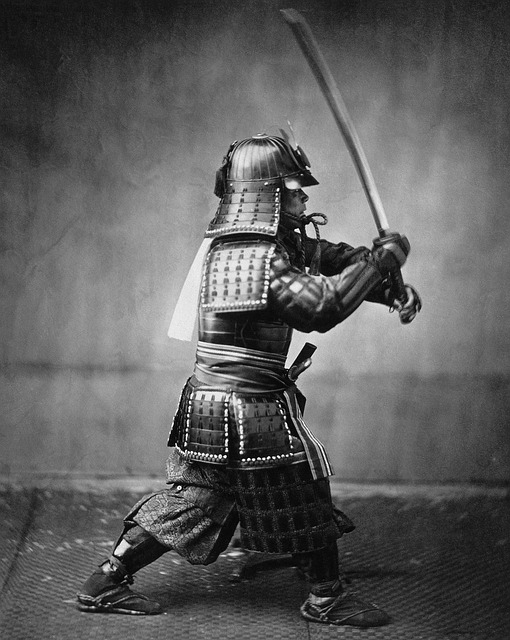
The samurai–the finest warriors ever to walk this earth– were ordinary men and women who were trained to perform extraordinary feats of courage. Just as writers, artists, dancers, or actors face internal obstacles that interfere with their work, so did the samurai. The bulk of his or her training (there were women samurai) was devoted to overcoming those inner obstacles that are no different than the obstacles artists of all descriptions face—anxiety, procrastination, self-doubt, hesitation, fear of taking risks, discouragement, over-analysis, depression, apprehension, impatience, and more.

target-211225_640The release of the arrow is the most difficult problem archers face; they think too much, as often do artists, explaining the sudden loss of spontaneity, the sudden loss of skill. Fear is a dragon that often keeps us from success. The samurai was taught: “Strike through the dragon’s mask.”

The samurai’s mind was trained to be fudoshin—to be “immovable,” to never budge from the main goal (for the artist, to get the work done.) They were taught that when your thoughts get “caught” (toroware), or “stopped” (tomaru) on internal obstacles, you will have trouble executing any action—when your mind gets “hooked” or “snagged,” the way the opera singer’s mind was snagged for two years. Better to acquire tomaranu kokoro, “a mind that knows no stopping,” that flows smoothly from idea to idea without being stopped.

What I did in my book Fighting to Win: Samurai Techniques for Your Work and Life was to pluck the wisdom of the samurai off the battlefield and apply it to everyday modern life producing a book of musha-shugyo, “training in warriorship” so that people might overcome the internal obstacles that are troubling them.

Zen and the Samurai

The warrior class was the first segment of Japanese society to embrace Zen. From the twelfth-century on Zen became known as the religion of the samurai. What explains the fit between these two apparently different approaches to life?

Zen is many things—a religion, a philosophy, a life-style. It is also a psychology, a psychology of action, grounded on decisiveness, spontaneity, strength of will, adaptability, courage, and bravery. It was this psychological aspect of Zen which appealed most to the samurai, for to rush forward to face the enemy even if only death awaited him, he needed what Zen taught—to act without hanging back, without reservations, and with total commitment.

Warrior Artists

samurai-67662_640The elite samurai were members of the cultured, aristocratic upper classes—the daimyos, the lords. Bunbu ryodo “The united Ways of the pen and the sword” refers to the tradition of the warrior artist, master swordsmen who were also poets, calligraphers, and painters. The famed Miyamoto Musashi is considered the greatest samurai swordsman who ever lived. He was also one of Japan’s foremost artists whose work today has a place in Japan’s national art museum.

Samurai Maxims

“A warrior must only take care that his spirit is never broken.”

“Success will always come if your heart is without disturbance.”

“Let your mind be free to function according to its own nature.”

“Stick to the larger view of things. If your vision is narrow your spirit will be narrow.”

“Adversity in life is essential to training.”

“The end of our Way of the sword is to be fearless when confronting our inner enemies and our outer enemies.”

“If you walk, just walk. If you sit, just sit. But whatever you do, don’t wobble.”

You needn’t look too far or too hard to see that these maxims and the inner training of the samurai Way apply to the artist’s life. Like the warrior, if the artist is to grow, it will be from within. The artist’s work, like a warrior releasing an arrow, should be like a drop of dew falling from a leaf or a fruit falling when it’s ripe.

© 2015 David J. Rogers

For my interview from the international teleconference with Ben Dean about Fighting to Win, click on the following link:

www.mentorcoach.com/rogershttp://www.mentorcoach.com/positive-psychology-coaching/interviews/interview-david-j-rogers/

Order Fighting to Win: Samurai Techniques for Your Work and Life eBook by David J. Rogers

Fighting to win Amazon

Click on book image to order from Amazon.com

or

http://www.barnesandnoble.com/w/fighting-to-win-samurai-techniques-for-your-work-and-life-david-rogers/1119303640?ean=2940149174379


Order Waging Business Warfare: Lessons From the Military Masters in Achieving Competitive Superiority

Waging Business Warfare812sCY9edLL._SL1500_

Click on book image to order from Amazon.com

or

http://www.barnesandnoble.com/w/waging-business-warfare-lessons-from-the-military-masters-in-achieving-competetive-superiority-revised-edition-david-rogers/1119079991?ean=2940149284030


17 Comments

Filed under Artists, Becoming an Artist, Blocks to Action, Creativity Self-Improvement, Eastern Philosophy, Samurai Techniques, Writers

A Vision Of What At Last You Could Be

frosty-472871_640Creative people in the arts and every other field are in the habit of reflecting a great deal on their goals, their success in reaching them, and the lessons they’ve learned from efforts that didn’t work out. They continually analyze what they do well and what they do not do well, and then exploit their strengths as far as they can and work to develop themselves in areas where they’re not as gifted.

And they have a particular way of dealing with apparent failures or defeats: they treat them as prods to even greater achievements and opportunities to learn lessons that are of value to their careers. People who have achieved a high level of excellence have not done so by accident and are not satisfied to reach merely an acceptable level of performance, but have much higher ambitions.

Possible Selves/Visions of the Future.

When you say “I’m a good person;” “I’m an ideal parent;” “I’m a poor public speaker;” “I’m very lazy” your self-concept is speaking. Your self-concept is the view you hold of yourself, your opinion of the kind of person you are and are not at the present time. The current self is the one we’re most familiar with. But we have other selves too, such as the selves we could be in the future. Those are our Possible Selves. One type of possible self is the ideal you’d very much like to become—a famous athlete or painter or writer, for example. There are also other selves you could become, as well as those you’re afraid of or dread becoming.

The possible selves you may hope for may include the happy self, the creative self, the wealthy self, the physically fit self, and the successful self. The dreaded possible selves could be the lonely self, the incompetent self, the drug addict self, the unhappily married self, the bag lady self. There is your good self that you’re proud of, and the bad or the guilty one that you’re ashamed of and prefer never to think or talk to anyone about.

A vision of the future and a possible self guided your decisions to choose to go to college and to take one job rather than another. A young girl sees a painting in a museum that moves her and decides on the spot on a possible self and a vision of the future: she will become a painter. She will go to art school and study.

When we think of possible selves and visions of the future that are positive and appealing we’re strong with hope. We’re liberated and set free because we realize that the present is not unchangeable. We never have to be a self we don’t wish to be, but can create a different self, a different future.

You’re free at every moment to create any variety of possible selves and visions of the future. Your life may not be going well—may be going all wrong in every way–but your positive possible future holds the promise of better days. But negative visions of the future make us unhappy and afraid. They can imprison us because they may cause hopelessness—the would-be dancer who thinks, “Day after day I don’t make progress. Nothing clicks. It’s probably foolish of me to think I could be a ballerina.”

The Impact of Possible Selves On Our Lives

ballet-542170_640Possible selves form the basis for personal growth and change. It becomes clearer to you every passing day that the main cause of personal success isn’t something that comes like a generous gift from the outside, but is your own conception of yourself and the development of your capabilities, that all real growth comes from within.

A clear view of what we could become sets our motivation in motion. No two ways about it: we must have a vision of the future to be committed to the goals we’ll need to reach the future we hope for. Day-dream, because it’s often in daydreams that our visions of the future are born.

When I was in the third grade the teacher read to the class a theme I’d written in which I wrote that playing football I was tackled and “fell to the ground like a blob of jelly coming out of a jar” and the teacher said “That is poetic language. That is a simile. David has made a simile.” Walking home after school, I decided that if I became a writer I’d get to write similes the rest of my life. Everything after that was aimed in that direction. That was my possible self that became my actual self.

In my freshman year of high school I made the track team as a middle-distance runner. One day I was getting dressed in the locker room. A senior middle distance runner—the reigning Chicago city champ –sat down beside me on the bench. That surprised me because we’d never spoken before. He said, “I’ve been watching you. You’re very good. You have more potential than you probably realize, but you’re very shy and I can see you don’t have confidence. You don’t have a conception of what you could be. Pick up your head, be strong, and say to yourself over and over, ‘I could be the best. I could be the fastest runner in the city.’ Work hard.” It meant so much to me that he cared and had taken the time to share that with me, and I took it to heart. So now I had a new ambition, a new vision of the future that right then I vowed to devote myself to, and a new possible self, a new identity that I would become. I began to study innovative training methods and to apply myself and worked very hard.

The First Step

berries-302341_640A vision of the future of yourself as a highly successful artist or athlete or effective business person self is the first step in achieving that future. It will not only guide your decisions, but will immediately set planning in motion. It will help you focus on goals, and keep you from needless distractions.

What if right now you were to forget about the past, wipe the slate clean of failures and false starts, and start fresh, setting the goal of becoming as successful an artist, writer, sales woman or whatever as you could possibly be—to buckle down? Is that goal appealing, or don’t you much care? How would you go about achieving that goal? What would you do? Where would you start? Where would the goal take you? What would your life be like were you to achieve that goal? What would be the link between the actions you would engage in now at the present time—and in the next six months, and the next year and years beyond that– and the attainment of the future you envision?

Set short-term and long-term goals and reach them, one after another, overcoming impediments as they appear. You must have positive images of the person you’re aiming to become and negative images of the person you want to avoid becoming. Other people can serve as models—pro and con–and so can your past.

Think of your prior successes and of what steps were needed for you to succeed then and repeat the same again. Past success is the most powerful and direct basis for judging if you will succeed in achieving a new goal. If you believe you have the ability—the skills, motivation, and know-how–to achieve what you want to achieve and have done so in the past, you will try to achieve it. If you feel that way, you’ll be confident and will not likely to be haunted by self-doubt, possibly a person’s main internal obstacle. You’ll have high expectations of future success. You’ll think about past failures as useful lessons.

Share your vision with other people: talk about it; be confident. But stating an ideal possible self isn’t enough to produce sustained effort and changes in behavior. For that to occur, your goal needs to be linked with specific strategies, concrete behaviors such as an artist working with an excellent and more experienced artist, increasing your knowledge of your field, sticking firmly to a regular work schedule, and developing the skills essential to your work. Strategies help to focus on goals while also anticipating and planning how you’ll handle setbacks by developing plans of action and contingency plans. Most successful people in every field point to strategies as the main cause of their success.

Some of your goals—the important ones—won’t be easy. You’ll have to acquire new capabilities. A defeat, setback, or loss or lapse of commitment can have a devastating effect on a possible self, so be prepared. An agent’s cruel reply to an inexperienced writer’s submission can destroy the writer’s possible author self—she may quit– or a businessman’s blunder resulting in the loss of a major contract, or a field goal kicker missing the kick that would have won the game.

When you’re discouraged the hoped-for self is replaced by a weakened, vulnerable one. But even the smallest encouragement has the effect of bolstering your spirits. Being resilient and accepting setbacks as an unavoidable part of work life that even the greatest in any field can’t avoid is essential for maintaining a firm, unshakeable motivation.

It may seem illogical to think of anything negative and seem better to block all negatives out and think only of positive possibilities. But a balanced view—thinking of both positive and negative possibilities–has been shown to improve focus and to lead to important self-improvements and good results. The fear of not succeeding drives many people to unexpected success.

Having both positive and negative images in mind serves as a carrot and a stick both, reminding you of what glorious things may happen if you stay on track, as well as what may happen if you lose your commitment and fail to follow-through effective strategies: if you don’t develop your skills to a high level you will not improve.

Figuring out how you’ll become your desired self and avoid becoming your undesired self can lead to tremendous, life-changing results. Action is a necessity.

© 2014 David J. Rogers

For my interview from the international teleconference with Ben Dean about Fighting to Win, click on the following link:

www.mentorcoach.com/rogershttp://www.mentorcoach.com/positive-psychology-coaching/interviews/interview-david-j-rogers/

Order Fighting to Win: Samurai Techniques for Your Work and Life eBook by David J. Rogers

Fighting to win Amazon

Click on book image to order from Amazon.com

or
http://www.barnesandnoble.com/w/fighting-to-win-samurai-techniques-for-your-work-and-life-david-rogers/1119303640?ean=2940149174379


Order Waging Business Warfare: Lessons From the Military Masters in Achieving Competitive Superiority

Waging Business Warfare812sCY9edLL._SL1500_

Click on book image to order from Amazon.com

or

http://www.barnesandnoble.com/w/waging-business-warfare-lessons-from-the-military-masters-in-achieving-competetive-superiority-revised-edition-david-rogers/1119079991?ean=2940149284030


9 Comments

Filed under Artists, Becoming an Artist, Creativity Self-Improvement, Dancers, Developing Talent, Human Potential and Achievement, Expectations, Goals and Purposes, Motivation, Writers

Decisive Choices

“We have to learn to pay close attention to our lives right now, not just tomorrow or next week or next year–or even in an hour.”

Moments of Decisive Choice

cliffsDuring the Nazi occupation of Europe there were rescuers and bystanders. The majority were bystanders. They stood by. Rescuers helped people who were being hunted. They hid them; they fed them; they helped them get away.

Bystanders claimed they had no choice because the penalty for harboring fugitives was death. Rescuers said they had no choice but to risk death because they were doing the right thing. But each did have a choice. The rescuers could have said, “I won’t help,” and the bystanders could have said, “I will.” They each made a decisive choice.

We make decisive choices all our lives. At one time or another we’ve chosen to be brave or cowardly, to be happy or not, to fall in love or not, to shirk our responsibilities or live up to them. You make a decisive choice to take a risk to start a new career, to face up to a serious problem, to end something or start something, or to get yourself out of a miserable predicament.

We fell in love with freedom as children and have been trying all of our adult lives to have more of it. During moments of decisive choice you’re as free as you’ll ever be. You come to an impasse, then say, “I’ve had enough of this routine, of this style of life, of these habits, of thinking the same old shop-worn thoughts, of this place, of these people. It’s time to change.” You’re bold. You declare yourself: “This is what I believe and this is what I’ll do.” The happiest people in the world are the ones that have made up their mind. Then you set sail; you catch the wind.

Moments of No Choice

Just as there are moments when you make a decisive choice, there are moments when you should make a decisive choice, but don’t. Moments of no choice are moments when you would be happiest leading one kind of life or another, but lazily or fearfully you follow the course already set.

You would think that being in a bad situation, people would want to find a way out. Lizzie would start a better life as soon as she leaves Ted, and she knows that. No one has to tell her Ted is no good for her; that her life is being ruined. But months pass and she makes no choice. Lizzie never leaves him and her life stays the same. People look at her and say, “What a shame. What a wasted life.”

Burt makes no choice, permitting his loneliness to continue, coming home from work, switching on the light, and as he does every other night sits down on the edge of the bed to wonder wearily what the rest of the world is doing. Many people moan about their troubles, but do nothing to get rid of them.

Have you noticed how many people who make no choice are leading lives that are beneath them? How many can’t seem to imagine a better life? How many doubt themselves and lack confidence?

 Choice-Point Living

sunrise-165094_640We have the freedom at any point to freeze the action of our lives, take a step back, and decide to continue as we are or to start out in a more promising direction. At any moment you’re at liberty to:

1. Stop the action, reflect, and make an honest appraisal of your life as it stands. Is it progressing the way you want?

  1. Will you continue it as it is, or will you change its direction? You don’t have to wait until next week or next month, or until you feel completely up to it. Right now as you read this you can stop the action, look up from the screen, and ask, “Do I really want to continue my life as is, or should I change it?”
  1. Plan the changes you’ll make. Set goals because if you have goals clearly in mind you will be motivated to achieve them, be more persistent in pursuing them, more self-confident, better able to overcome obstacles, and more successful.
  1. Take decisive action and do what you’ve decided to do.

That’s intentional Choice Point Living–purposely stopping, appraising, deciding, and acting. It may start when you find yourself thinking, “Everything is fine—I’m leading a good life and have so much to be content with. But yet, yet, I can actually feel in my gut, feel physically, that something isn’t right, something is seriously wrong somewhere, and something should be done.”

 Points of No Return/No Retreat Societies

In your life there have been and will be again points of no return, periods of total commitment. Now you’re fully mobilized for action. There is no longer any other choice to be made, no “should I do this or should I do that?” or “Should I wait?” There’s no stopping you from the direction you’ve consciously chosen. Now there is no time for second thoughts. Everything is clear to you. Everything is perfect. You can remember some of your points of no return and how glorious you felt making up your mind and committing yourself.

Among Native American warriors there were “no retreat societies.” These warriors declared themselves. They were in the fight to the finish, and there was no going back, no retreating. Your points of no return have been like that. They’ve been some of the happiest times of your life. Once you were decided you were in it straight to the end.

What points of no return do you remember best?

Is it time for another?

The Single Purpose of This Present Moment

japanese-cherry-trees-324175_640We’re accustomed to thinking of broad vistas–of where we will stand in life and how well we will be doing in six months or five years or ten or twenty. We neglect to notice how uncertain life is and how time is racing, how our lives once gone are gone forever. We’re no different than cherry blossoms that don’t last long in the wind that blows them from the tree. All we remember is how beautiful they were. Our lives are five minutes long.

We have to learn to pay close attention to our lives right now, not just tomorrow or next week or next year–or even in an hour. Why concern yourself with how you’ll feel a day from now, or in a minute, or what may happen, when far more important is what needs to be done right now, this present moment.

Gather your strength, or courage, or defiance into a decisive choice. Come to life.


Moments of Decisive Choice—Strength, Freedom

Moments of No Choice—Lack of Confidence, No Change

Choice Point Living—Conscious Change, New Goals, Setting Sail

Points of No Return—Total Commitment, Strength

No Retreat Societies—No Going Back, Happiness

The Single Purpose of This Present Moment—Awareness, Confidence, Focus


© 2014 David J. Rogers

For my interview from the international teleconference with Ben Dean about Fighting to Win, click on the following link:

www.mentorcoach.com/rogershttp://www.mentorcoach.com/positive-psychology-coaching/interviews/interview-david-j-rogers/

Order Fighting to Win: Samurai Techniques for Your Work and Life eBook by David J. Rogers

Fighting to win Amazon

Click on book image to order from Amazon.com

or

http://www.barnesandnoble.com/w/fighting-to-win-samurai-techniques-for-your-work-and-life-david-rogers/1119303640?ean=2940149174379


Order Waging Business Warfare: Lessons From the Military Masters in Achieving Competitive Superiority

Waging Business Warfare812sCY9edLL._SL1500_

Click on book image to order from Amazon.com

or

http://www.barnesandnoble.com/w/waging-business-warfare-lessons-from-the-military-masters-in-achieving-competetive-superiority-revised-edition-david-rogers/1119079991?ean=2940149284030


3 Comments

Filed under Blocks to Action, Developing Talent, Human Potential and Achievement, Goals and Purposes, Motivation

The Characteristics of Creative People: What We Learn from Writers, Artists, Dancers, Musicians, and Actors

Artists Starting The Day

fountain-pen-297440_640A novelist sits down at the computer to begin the day with an idea in mind, and a painter organizes her brushes before she begins. An actor is in a theater lobby trying to understand how she will play a complicated new role, and a ballet dancer is on a bus on his way to ten o’clock practice. He has worked so hard so long—since childhood—that his feet throb day and night.

They might be anyone, but they’re not. They are artists and they are different and they know they are, and have always known. They have different points of view, habits, values, routines, and preoccupations than even the people closest to them, and as they perform their art today, carrying out their chosen roles, they will exercise talents that not everyone possesses. All the skills they’ve struggled to develop, and all the hopes and ambitions guiding them, and their entire being, will be brought to bear today.

 To Be an Artist

Artists possess traits and qualities that equip them for the artist’s creative life. Whether you find them in big cities or remote jungles or on farms or in desert tents, in any of the four hemispheres, you will also find them generally to be quite similar: to have varied interests and to be persistent in the face of obstacles and disappointments. They are dogged, determined, resourceful, open-minded, undeviating, tolerant of ambiguity and novelty, tenacious, and tremendously independent and self-reliant. And they are also self-confident, resilient risk-takers with good memories, and the hardest workers on this globe and almost as self-sacrificing and self-demanding as Saint Francis of Assisi. They are complex thinking and feeling people who seek out complexity and who:

ballerina-534356_640_copy2Possess extraordinary energy and an addiction to work (A characteristic of artists that distinguish them from others is their capacity for hard sustained effort. No outstanding creative achievement has ever been produced without a great deal of conscious work on the part of the creator. When artists are fully functioning they work at white heat for an hour, a day, a week, or months or years.)

Can produce tremendous volumes of work (Balzac wrote 95 novels before his death at 51. Picasso produced a quarter million works of art. Novelist Thomas Wolfe sometimes wrote 5,000 words in a night. Not always, but usually, the greatest artists are also the most prolific.)

Are willing to sacrifice for the sake of their art without hesitation (American Impressionist Mary Cassatt, possibly the greatest woman painter of the nineteenth century, kept royalty waiting until she had finished her day’s work. Hemingway said he had to ease off making love when he was writing hard because the two things were “run by the same motor.” Nobel Prize novelist Toni Morrison said, “The important thing is that I don’t do anything else.” Another Nobel novelist, Saul Bellow, said writing was more important to him than anything, including his family.)

Value authenticity, integrity, and sincerity (How many other occupations involve a quest for truth?)

wells-theatre-210914_640Are oriented to the fullest development of their skills (You must never lose the belief that you have the ability to carry out skills needed to produce quality art successfully. Developing skills leads to competency, then to expertise, then excellence, then greatness. If you feel you have the skills you are less likely to be haunted by self-doubt, and your art flows more freely. If you ask yourself “Do I have the skill?” and you answer “No I don’t,” you’ll have to learn the skill. There are any number of ways to accomplish that.)

 Are preoccupied with technique and style (The public isn’t meant to notice an artist’s technique, but other artists are aware of it immediately. The first thing you notice about a great artist is a distinctive style.)

Are ambitious and competitive (Art is as competitive as a Yankees-Red Sox game.)

Are resilient and able to overcome obstacles and persevere (Artists persist doggedly, however difficult or frustrating the physical and mental effort of pursuing their goal might be. After a success, your expectations of future success rise. When you see you are overcoming obstacles and making steady progress and reaching your goals, your confidence increases, sometimes phenomenally.)

Value originality (A work must be original if it’s to be considered artistic.)

Must have the ability to establish rapport with and hold an audience (To succeed, all works of art need a theatrical element.)

Must have a business sense (Artists have a career to manage, and responsibilities and expenses, and intangible rewards are not the only rewards. When you receive rewards your sense of well-being and hopefulness rise. All arts involve salesmanship.)

violin-374096_640Have a practical, problem-solving intelligence (Each day every artist on earth solves a hundred complex problems. Artists do not spend their days working on easy problems; they work on problems that are hard for them. That’s how they create work that has never been seen before and continue to expand their abilities at the same time.)

Have an artistic vision and heightened perception (To the artist the world is inexhaustibly rich with aesthetic potential. To painters and photographers a leaf is much more than a leaf; an actor’s frown signifies more than a frown; a single word, a single syllable, holds untold riches for a poet.)

Have a capacity for self-criticism and objectivity about their work and their abilities (Artists learn to lay their egos aside as they would any other impediment.)

Are sensitive to life and open to experience (Curious, they plumb what is outside them in the world and their own thoughts, feelings, and emotions. Whatever happens to them, they never forget it.)

Strive for competence and constant improvement (An artist is never content very long.)

Value independence (All artists must be allowed to move in their own direction under their own power.)

Are more self-confident, rebellious, bold, and daring than the vast majority of people (If you lose those things, you lose your talent as well.)

Have the ability to focus (Artists are capable of ferocious concentration, losing all sense of time and place, conscious only of the work before them.)

Are playful and value the simple and the unaffected (Artists are in love with simplicity.)

Have an abundance of physical strength and stamina (Architect Buckminster Fuller was often unable to stop working until he dropped from exhaustion. Work poured out of Da Vinci in a torrent. Often it is the end of the artist’s endurance that stops his working day.)

Are far more self-disciplined in matters concerning work than most people in other fields

vincent-van-gogh-86742_640(1)Are able to adapt and make adjustments (An experienced artist has learned when to stop and begin again when something isn’t working.)

Are studious in the sense of studying to develop their craft (All artists study and all are self-taught to a greater or lesser degree.)

Take luck, the breaks, and good or bad fortune into account (Good luck often follows persistence. A failure or wrong direction or bad luck may lead to something fruitful later on. A “wrong” word in a sentence may prove to be the perfect word.)

Must be patient, because all artists who reach high excellence will have done so via a long period of learning and application while pushing themselves upward to it.

Have a strong belief in, and respect and enthusiasm for their art

Are deep-feeling, emotionally rich

The writer at the computer, the painter sorting brushes, the actor in the lobby, and the dancer with sore feet needn’t feel lonely as they start the day because possibly very near are others who lead similar lives and are very much like them.

© 2014 David J. Rogers

For my interview from the international teleconference with Ben Dean about Fighting to Win, click on the following link:

www.mentorcoach.com/rogershttp://www.mentorcoach.com/positive-psychology-coaching/interviews/interview-david-j-rogers/

Order Fighting to Win: Samurai Techniques for Your Work and Life eBook by David J. Rogers

Fighting to win Amazon

Click on book image to order from Amazon.com

or

http://www.barnesandnoble.com/w/fighting-to-win-samurai-techniques-for-your-work-and-life-david-rogers/1119303640?ean=2940149174379


Order Waging Business Warfare: Lessons From the Military Masters in Achieving Competitive Superiority

Waging Business Warfare812sCY9edLL._SL1500_

Click on book image to order from Amazon.com

or

http://www.barnesandnoble.com/w/waging-business-warfare-lessons-from-the-military-masters-in-achieving-competetive-superiority-revised-edition-david-rogers/1119079991?ean=2940149284030


29 Comments

Filed under Actors and Directors, Artists, Becoming an Artist, Creativity Self-Improvement, Dancers, Developing Talent, Human Potential and Achievement, Expectations, Goals and Purposes, Motivation, Writers

The Doctrine of Ki, Part II: Clearing Your Mind, Increasing Your Strength

“If your mind is preoccupied, your ki tenses, and you become awkward.”

“Form follows ki, and ki follows the mind.”

(Adapted from the eBook Fighting to Win: Samurai Techniques for Your Work and Life, David J. Rogers, Crossroad Press, 2014)

Shin is your frame of mind, ki is your vital energy, and ryoku is your power. They always go together, and they may fill you with strength or with weakness. In this post we’ll look at shin and whether it is yielding strength or weakness.

A Common Tale

I have two friends, Jack and Bob, who seem to me to be similar in many ways. However, in spite of their similarities, they’re very different. Jack is discouraged and depressed easily, and sees work life (and personal life too) as a burden full of trouble that one has to suffer through.

Bob, on the other hand, is buoyant, energetic and optimistic. Both men have suffered setbacks in business and outside it, but they react to them very differently. Jack dwells on his. He moans and becomes grumpy and irritable. Bob picks himself up and reenters the stream of life eager to see what lies ahead.

Jack endures his job the way one endures a dreaded disease. He has told me more than once that whatever he touches turns to shit. Bob moves quickly from one success to another.

A major difference between these two otherwise similar men is the difference in their frame of mind, their shin. Because their shin is very different, so are their ki and ryoku. Bob’s ki is positive and his power of action is all right there, 100 percent. Jack’s ki is negative and his power is almost nonexistent. Their shin is a difference that makes all the difference.

Olympic Athletes and You

What separates winners from losers? What differentiates Olympic athletes from other world-class competitors? According to a group of researchers who studied America’s top wrestlers, the difference is not in physical ability. And it’s not in training methods: they’re pretty standard. The difference is in the athletes’ frame of mind, their shin—in what they think.

Men who were eliminated in U.S. Olympic trials tended to be more confused or depressed before the match—that’s very bad shin— while the winners were positive and relaxed, which is very good shin. Those who made the Olympic team were more in control of their reactions than the losers, who were more likely to become upset emotionally.

Without seeing even one wrestling match, the researchers were able to predict 92% of the winners by using profiles of the athletes.

Feeling free and easy, being relaxed and calm, not being caught up in problems or worries, thinking positively and optimistically, expecting to do well, being committed to what you’re doing, not being grumpy or irritable, feeling fearless, buoyant and confident … all these are positive shin, positive ki, ryoku power-producers.

Experiencing worry, anger or hostility, losing heart, being afraid of something lying ahead of you, worrying, expecting defeat, holding a grudge, feeling timid or uneasy and being confused in action . . . these are examples of negative shin, negative ki, power-depleters.

Exercises for Transmitting Your Ki

  • Reflect on your thought habits and change negative to positive. Many people, possibly most, simply don’t realize how much negative ki they’re creating. To find out for yourself, a useful technique is to stop the action for five minutes once a day and write down your thoughts as they pop into your head. After you’ve filled a few sheets of paper put a plus sign after each positive ki thought and a minus sign after each negative thought you’ve listed. Any thought that creates power, good chemistry with others, optimism or forward movement gets a plus; and any thought that diminishes your power, creates bad chemistry, is pessimistic or prevents you from moving forward toward your goals and responsibilities gets a minus.Ask yourself, “Which predominates, positive or negative?”
  • Reject negative shin thoughts and replace them with positive, power-producing thoughts. Do this whenever a negative thought appears in your mind. Whenever your thoughts drift off to the negative, stop them, then substitute positive shin thoughts—“I like this person.” “I’m having a good time.” “We can work this out.” “I’m happy.” “I’m going to succeed.” Always reject negative ki and consciously replace it with positive.
  • Spit. To add determination to your rejection of negative thoughts, spit out the troublesome thought. Go “thoo” and spit out the thought.
  • Pay special attention to “red alert,” negative ki thoughts. Whenever you feel any of the following–afraid, scared; confused, indecisive; distracted, upset; depressed, sad or miserable; worried, nervous, anxious, upset, tense, pressured; beaten down, defeated, your spirits sagging; listless, unmotivated and bored; shy, non-assertive, timid; defensive, ready to hit back, bitter; guilty–your ki is negative, your ryoku power is weak. Right away, remind yourself of shin-ki-ryoku. Tell yourself, “Remember, make your thoughts pure and transmit your ki.”
  • Control your expectations. Negative-expectations, negative-ki people are that way only out of habit. By developing new, more positive shin thought habits you condition yourself to have positive expectations and you put more power into your actions. More than 100 studies of 15,000 people show that those who expect to succeed are happier, healthier, and more successful. Always jump to the positive. Be like a fish that is swimming in one direction, but can quickly turn and go in the opposite.
  • Constantly remind yourself of the importance of positive shin, positive ki. Make a pact with someone. If one of you is becoming tight, irritable or gloomy, the other is to say, “C’mon now. Don’t forget. Transmit your ki.
  • Write out reminders on three-by-five index cards and put them in prominent places around your house and office. “Plus creates plus.” “Good shin creates good ki creates power.” Read them aloud, and with feeling, from time to time. On each card draw a large minus sign and a large plus sign. Draw an arrow from the minus to the plus to remind yourself to move your negative thoughts to positive.(Martial artist Bruce Lee visualized his negative thoughts written on a piece of paper, then saw himself wadding the paper into a ball, lighting it with a match and watching it burn to a crisp. He said the thoughts never returned to disturb him.)
  • Draw a ring of harmony around yourself wherever you are. You can generate goodwill and cooperation by imagining a yellow ring of harmony around you constantly. Make the ring red or blue if you like—the color doesn’t matter. All that matters is your imagining the ring around yourself and making certain that whenever another person passes into it, there is cooperation and harmony between you.
  • Stop judging others negatively. People can pick up very quickly if you’re thinking they’re dumb, nasty, unpleasant, overly talkative, ugly, poorly dressed, too highly paid for what they do, etc. If they sense that you don’t like them, they won’t like you. So instead, like them, respect them, find real value in them, even if you have to work hard at it.
  • Be generous with your feelings. If you like people, let them know about it. Transmit your ki to them. Much of the negative ki in business is caused by the supervisor who always criticizes and never praises. Parents often do the same with their children. Simply let people know you appreciate what they’re doing and morale will improve immediately—in business and in the home.
  • See your positive ki being passed from you to others. See it as a ray of white light being transmitted by you to another person or a whole group of people. Actually visualize it moving from you to them under the direction of your mind.
  • Maintain your ki even in defeat. Everyone gets beaten. The question is not whether you’ll experience defeat, but how you’ll handle it when you do. When you’re beaten—by another person, an event, a situation—keep your ki positive and strong. Never let the defeat “penetrate your depths,” never let it get to your shin. When you havc a crisis, positive shin can rescue you. Be able to say, “I lost this one (job, person, disagreement, etc.) but I’m not defeated. I’ve failed, but I’m not a failure. I’ve still got the only solution I need—me. ” Even in defeat—especially in defeat—keep your ki going full blast.

You can choose how much power you will have by choosing what to think.

© 2014 David J. Rogers

The Next Post

The next post will show that “the way to draw the power of ki is very easy,” and that “If your ki is settled, your actions will flow.”

For my interview from the international teleconference with Ben Dean about Fighting to Win, click on the following link:

www.mentorcoach.com/rogershttp://www.mentorcoach.com/positive-psychology-coaching/interviews/interview-david-j-rogers/


How to Get The Book

Order Fighting to Win: Samurai Techniques for Your Work and Life eBook by David J. Rogers

Fighting to win Amazon

Click on book image to order from Amazon.com

or

http://www.barnesandnoble.com/w/fighting-to-win-samurai-techniques-for-your-work-and-life-david-rogers/1119303640?ean=2940149174379


Leave a comment

Filed under Developing Talent, Human Potential and Achievement, Eastern Philosophy, Expectations, Samurai Techniques

Part III Expectations, with a List of Six Steps Leading to Success

Prescriptions for Action

wellness-155162_150Your expectations can determine whether you will succeed or fail in so many things —successfully starting a business (finally, after talking about it for years), or changing your career (after talking about it for years), or dieting (after failing so many times), going back to school, and dating, staying healthy, giving a speech to 300 people or 6,000 (after thinking all your life you could not possibly do that), or acting in a play the way you’ve always wanted, writing the novel or the song you’ve been thinking about, or inventing that product. On and on.

Since expectations can affect your life so deeply—can change failures to successes– it is worth knowing their secret.

Act “As If”

In an experiment adults were given the same ten puzzles to solve. When they were done working on them, half were told they had done well, seven out of ten right, and the other half were told they had done poorly, seven out of ten wrong. In fact what they were told was completely fictitious.

Then all were given another ten puzzles to solve, the same for each person. Then their efforts were actually graded. The half who had been told they had done well in the first round had self-confidence and so expected to do well again actually did better in the second, while the other half, with self-doubting expectations, did worse.

In that experiment so-called “high performers” in the first round may have in fact been low-performers. On the other hand, the people who were told they were low performers might actually have been very high performers. But that didn’t matter. What is significant is that everyone believed what they had been told and acted “as if” their expectations were factual.

In the same way, we go through life believing the expectations we hold about our chances of reaching success in anything, and we tend to act as if they are perfectly true and accurate. There are habitual-high-expectations people who expect to succeed in most everything they attempt, and habitual-negative-expectations people who expect to fail.

Self-Hypnosis

In the classic self-help book Psycho-Cybernetics, Maxwell Maltz points out that with hypnosis, people can be made to do things which they did not think it possible for them to do. For example, they might lift a very heavy object. Has hypnosis changed the person’s physical strength? Not at all. What has changed is the person’s belief or expectation of what is possible.

In fact, Maltz points out, the person has not actually been hypnotized but dehynotized from the limiting expectations he or she lived with. All life long we have hypnotized ourselves into believing that certain things are impossible. Lifting a car, for example. Yet in emergencies people with average strength have been able to do just that. Again, the person’s physical strength has not suddenly changed. What has changed is that they have broken through that self-hypnosis that we all live with. If we hold negative or limiting beliefs and expectations of our capabilities, we are hypnotizing ourselves into believing these limitations are true and accurate when they are not.

One way to change the false and limiting expectations we constantly place on ourselves is by using the technique of acting “as if” to our advantage. We can act “as if” in a positive and life-changing way. If you expect not to be able to reach success in some endeavor, or even a better life, you will probably be proven right because you will tend to act accordingly, “as if” success and a better life really are impossible for you.

But you can reverse that. You can expect to reach success by acting “as if” more positive and optimistic expectations are true. But expectations without decisions and action will lead you nowhere. You have to behave in a way that is commensurate with your expectations. It’s ridiculous to say, “I expect my book to be published one day” and not working hard to make that happen.

Six Prescriptions Leading to Success

1. Put failure completely out of your mind.

2. Remember that people with high expectations are better able to recover from setbacks. When you meet adversity and are thrown back, then more than ever you must have strong expectations that you will come out whole and happy on the other side of this misfortune. You must see the setback as only a temporary situation, and not a permanent condition. Then you must return to action more determined than ever.

3. Replace any expectations that are holding you back. All that’s needed now is to identify those expectations, and then consciously and deliberately change them into fruitful ones that facilitate success. Writing out your new expectations and rehearsing them is a good idea.

4. Act “as if” your positive expectations are true and accurate. Have confidence and boldly carry out your new expectations. You’ll meet with extraordinary success if you always put your faith in positive expectations and decisive action.

5. Surround yourself with people with high, favorable expectations of you. Avoid cynical people whose expectations of you are low–expectations that discourage, defeat, or underestimate you. A good companion is one who expects a great deal of you.

6. Have strong expectations, not weak ones. There are expectations, and then there are EXPECTATIONS! Your motivation to perform well, to achieve your purposes, to reach a better life depends not only on the attractiveness of what you’re seeking, but on the sheer strength—the power– of your expectations of succeeding. Limp, weak, non-committal, namby-pamby expectations are little better than no expectations at all. What you want are expectations that have a charge in them, that are so powerful that they will find a way through any impediment–not “I can succeed” but “I will.”

You’ll find that’s the way to succeed.

 Let Me Know

Tell me about your experiences with expectations and how they affected your life positively or negatively. I’d like to hear from you.

Please follow this “Starting Your Life Fresh” blog. It will feature topics I think will be of value to you.

The Next Post

From the next post, coming soon,  “Burn Up Your Energy in Action:”

“You must push yourself beyond your limits all the time, without reservation. Then you create new limits which, in turn, you will surpass. You can get closer to a better life today than you were yesterday if you are single-minded and burn your energy. “

© 2014 David J. Rogers

For my interview from the international teleconference with Ben Dean about Fighting to Win, click on the following link:

www.mentorcoach.com/rogershttp://www.mentorcoach.com/positive-psychology-coaching/interviews/interview-david-j-rogers/


How to Get The Book

Order Fighting to Win: Samurai Techniques for Your Work and Life eBook by David J. Rogers

Fighting to win Amazon

Click on book image to order from Amazon.com

or

http://www.barnesandnoble.com/w/fighting-to-win-samurai-techniques-for-your-work-and-life-david-rogers/1119303640?ean=2940149174379


Order Waging Business Warfare: Lessons From the Military Masters in Achieving Competitive Superiority

Waging Business Warfare812sCY9edLL._SL1500_

Click on book image to order from Amazon.com

or

http://www.barnesandnoble.com/w/waging-business-warfare-lessons-from-the-military-masters-in-achieving-competetive-superiority-revised-edition-david-rogers/1119079991?ean=2940149284030


Leave a comment

Filed under Developing Talent, Human Potential and Achievement

Part II, Expectations and Success

A Persistent Author with High Expectations

man-73318_150(1)I know an author who wrote a book that he thought had the potential to be published and sell well. His expectations high, he contacted any number of literary agents and not one was interested in handling his book, telling him that it would be impossible for it to find a public. It just didn’t have that—that whatever it takes for people to want to buy a book.

He did not give up after he had exhausted his long list of agents, but contacted publisher after publisher himself, calling them up, making appointments, pitching the book in their offices, expecting all the time that eventually he would succeed. He met nothing but failure, but still believed in his book and expected it to be published one day.

Then an editor of a small publisher called him to come down and talk. When my friend entered the office his manuscript was spread out on the editor’s desk and the editor was bent over it, reading it. The editor said, “Oh, good, you’re here” and looked up at him with a smile on his face and said, “Your book is going to be the number one best seller in the country.”

That book that he was told by experts could not possibly find a public became a publishing phenomenon and sold an astonishing twenty-five million copies in paperback alone. It became the number one best seller in the world.

Now what would have happened if my friend’s expectations of success had not been strong enough to sustain him through the many disappointments and discouragement, not powerful enough to make him persist?

The book would not have been published.

He would not have become famous. He would not have become rich.

 The Impact of Your Expectations

In Part I of this three-part article on expectations of success, we dealt with expectations as they affected any type of performance.

Persuasive people expect to be persuasive. That’s one of the major differences between them and people who are not persuasive. Talk show hosts expect to be interesting, good writers expect to write skillfully, the best students expect to get an A, effective executives expect to manage well, and the best comedians expect to be funny.

There is hardly an aspect of your life that is not affected by your expectations.

People who expect to live a satisfying life are healthier, report fewer physical symptoms, have a greater sense of well-being, and are more successful and happier. They feel less stress than people who expect the worst.

People with high positive expectations are resilient because of their expectations. They overcome obstacles and aren’t deterred. They expect to be able to handle difficulties and to succeed in spite of them. When setting a goal they consider the probability of success rather than the probability of failure. “The chances are good I’ll succeed. I can accomplish this if I work hard enough.” “This is going to work out really well for me, and I’m going to be happy.” Failure-motivated people have the opposite expectations: “I’ll never be able to do it. I’ll give it a try, but it probably won’t work out.”

 Artists’ Lives

Artists generally are “intrinsically” motivated. That is, they are motivated to persevere–often working hard, toiling long hours, and sacrificing–by the creative side, the work itself. But they often abhor the business side—the “sales” side–particularly because that’s the side that often involves their work being rejected.

When they are working at their craft, they experience an underlying expectation of success that goes unchallenged. But then they shift to the selling of their work in the marketplace, and after enduring repeated rejections—twenty, thirty, forty, or a hundred–all but those with the strongest and most powerful optimistic expectations lose their confidence and may begin to expect future failure. They may stop submitting the work, sometimes even resigning from an artist’s life, giving it up or doing it no longer as a profession, but as a hobby. I’m sure there have been many potentially superb artists who lost the expectation of eventual success and simply quit.

 Social Relationships

I have a friend John I marvel at. He has a wonderful social manner; he has that knack for making friends. He never expects anything but that he is going to like the person he is talking to, and everyone likes him. It’s something to behold.

It is often through our relationships that we reach a richer, fuller life, and our expectations directly affect the quality of those relationships. It makes not one iota of difference if the other person is a total stranger at a party, a new manager of your department, a sales prospect, or two thousand people sitting in an auditorium to hear you speak–if you expect them to like you and you behave accordingly, you will be proven right in almost every instance.

That’s true even if the other person has a reputation for being hard to get along with or the audience is a tough one. But if your expectations are the opposite, they work against you just as powerfully. If you expect a person not to like you and you behave as if that’s the case, you’ll be proven right in almost every instance, even if the person has the reputation of being very friendly and easy to get along with.

Human Motivation

The primary factor in human motivation is the self-perception of highly motivated people that they are doing well. Past success leads to self-confidence and higher expectations, higher motivation, greater persistence, and the drive to do even better. But of course the same holds true for expectations of failure. Expect to fail, fail, expect to fail the next time, fail, and on and on.


Let’s say you’re given an assignment at work. If you expect to do well you will work harder and increase your chances of actually doing well. Then, having done well will increase your expectations of doing well the next time. And those favorable expectations, in turn, will increase your chances of doing well again, and on it will go–high expectation-high performance, high expectation-high performance, etc.

 Expectations of Others

We hold expectations of others, and they hold expectations of us. And their expectations of us affect whether or not we succeed. Many a person is being lifted to the heights of that better life on the encouraging expectations of people around him or her, and just as many are being kept from a better life by the low expectations of others.

Parents of highly-motivated people have been shown to have a distinctive style of child-rearing. They are warm, nurturing, physically affectionate, and have high but reasonable expectations of their children. Managers of high-productivity units tend to have higher expectations of their personnel and set higher goals than managers of less productive units–and their personnel tend to live up or down to those expectations, as the case may be.

Parents’ expectations of their children’s success in math have proven to be more accurate predictors of actual performance than aptitude tests. The tests say the children shouldn’t do well, but the parents say they will, and they do. But the reverse is also true. Tests show that they have the aptitude and should do well, but if the parents expect them not to, they tend not to.

Importance in Any Walk of Life

To be successful in any demanding walk of life–and in life generally–requires a common cluster of essential attributes: intelligence, enthusiasm, drive, commitment, persistence, hard work. And high expectations

 If You Really Know It You Can Do It

In the next post–Part III Expectations and Success—we’ll look at turning factual information we have been discussing into prescriptions for action. And action, after all, is the whole idea.

© 2014 David J. Rogers


The Author

 David J Rogers is the published author of non-fiction, fiction, and poetry. His current eBooks are Fighting to Win: Samurai Techniques for Your Work and Life, and Waging Business Warfare: Lessons from the Military Masters in Achieving Competitive Superiority.

The former has been called the best self-improvement motivational book ever written. The latter has been called “a business masterpiece.”

For my interview from the international teleconference with Ben Dean about Fighting to Win, click on the following link:

www.mentorcoach.com/rogershttp://www.mentorcoach.com/positive-psychology-coaching/interviews/interview-david-j-rogers/

Order Fighting to Win: Samurai Techniques for Your Work and Life eBook by David J. Rogers

Fighting to win Amazon

Click on book image to order from Amazon.com

or

http://www.barnesandnoble.com/w/fighting-to-win-samurai-techniques-for-your-work-and-life-david-rogers/1119303640?ean=2940149174379


Order Waging Business Warfare: Lessons From the Military Masters in Achieving Competitive Superiority

Waging Business Warfare812sCY9edLL._SL1500_

Click on book image to order from Amazon.com

or

http://www.barnesandnoble.com/w/waging-business-warfare-lessons-from-the-military-masters-in-achieving-competetive-superiority-revised-edition-david-rogers/1119079991?ean=2940149284030

Leave a comment

Filed under Becoming an Artist, Creativity Self-Improvement, Developing Talent, Human Potential and Achievement, Expectations

Expectations and Success Part I

“Expect: to look forward to the probable occurrence or appearance.”       American Heritage Dictionary                                          thumb-up-153290_150

We will be talking about the tremendous impact your expectations have on your life in three parts. This is Part I. It discusses very briefly the effects of negative or positive expectations as they apply to any kind of performance, whether sitting down to start a novel (your first or your twentieth), making a speech, performing onstage, engaging in social networking, becoming popular, recovering from an illness, going on a diet, or making progress in your career. You’ll see in Parts I, II, and III together that your expectations affect most every aspect of your life. Knowing the mechanics of expectations, you can turn yours to your advantage.

We tend to act in ways that conform to our expectations. Your expectation–positive on the one hand or negative on the other–releases performance and sets it on a track of success or failure. One experience after another confirms this.

The Journalist

I was to be interviewed by a woman journalist. I knew nothing about her, so I asked a man who had met her. “Oh, her, she’s a real bitch,” he said. “She’s just out to nail the people she interviews.” So there they were: my expectations. I went to her office expecting trouble. I was tight-lipped and curt and kept looking for any sign of nastiness. I was having a terrible time, and I could see that she was too. It was going all wrong. I asked if we could take a short break while I made an important phone call, and I went to the cafeteria and adjusted my expectations from harmful to helpful. I went back to her office and behaved accordingly. This time I acted as if she and I would get along exceedingly well. I started all over. I smiled, relaxed, shook her hand, thanked her for having me, and showed an interest in her work. Suddenly she was friendly, smiling, at ease, complimentary. We laughed. She was a nice person. I liked her and she liked me. It was not only an enjoyable interview, but a friendship resulted from my having friendly expectations and my behaving accordingly.

Here was an application of The Law of Positive Expectation and The Law of Social Reciprocation. Your expectations, positive or negative, tend to come true, and give people something of value to them, and if they are like most people they will give you something of value in return. What do people generally want in any human interaction? Respect, recognition, individual attention, to be liked, to be listened to. Always give them what they want, and ordinarily they will give you the same in return.

A researcher asked subjects in an experiment to judge in advance of meeting another person whether they would be popular or unpopular with the other person. The subjects were right almost every time. Those who expected to be unpopular were, and those who expected to be popular were. If you expect to fail socially you probably will, but if you expect the opposite, it’s a good bet you’ll succeed. That’s because our behavior conforms to our expectations. Then through our behavior we tend to influence the other person to produce attitudes that fit those expectations, even without being aware that in fact that’s what we’re doing.

 Robert and Pete

 I have two friends, Robert and Pete. They are the same age, almost to the day. They attended the same schools from kindergarten on. They graduated from the same university in the same major on the same day, and entered the same career, and live in the same neighborhood of the same city. One seems to be about as intelligent as the other, which is quite intelligent. Robert expects to do well whatever he tackles, from repairing a garage door to getting paid well, and does. He has one success after another. Ask him and he will tell you that he is very happy with his life. On the other hand, Pete will tell you, “Everything I touch turns to…” You know what it turns to. And because he expects it to, it does.

 The Effects of Expectations on Your Health

 The impact of the mind on health has been widely documented. The field of psychoneuroimmunology explores the connection between mind and body regarding the immune system. One finding that has emerged clearly from the growing number of studies and anecdotal accounts going all the way back to the time of Hippocrates, is that psychological factors such as the patient’s and doctor’s expectations can influence the immune system and thus have an impact on the outcome of diseases.

Physicians will tell you it is very common that one patient who is not gravely ill but expects to die enters the hospital and dies, and another who is at death’s door and shouldn’t live much longer, says, “Don’t worry, I’m going to walk out of this place,” and does.

When patients given placebos in medical experiments get better, the experimenters and doctors dismiss it. They say, “That’s just the placebo effect.” But the placebo effect is the most astounding thing about the experiment–people getting better without medical treatment because they expect to get better!

There have been thousands of scientifically-conducted studies of the effects of placebos. In one study, patients who had bleeding ulcers were divided into two groups. Group I was told they were being given a powerful new drug that without a doubt would relieve the symptoms. Group II was told they were being given a new experimental drug that little was known about. Twenty-five percent of Group II found relief from their symptoms, but seventy percent of Group I, the people who expected their health to improve, experienced “significant improvement.” In fact both groups had been given the same “medicine” that wasn’t a medicine at all, but a placebo.

 Expectations of Failure

Many people are dominated all their lives by a fear of failing. But the term is a misnomer; they not only fear they will fail, they expect to, so they are dominated by the EXPECTATION of failure and avoid risks. They may take a stab at solving a problem or even at a better life, but if they fail they may never try again. And if they do succeed they may experience “encore anxiety,” the nagging sense that success was just a fluke, and their expectation is that they won’t be able to duplicate their success. On the other hand, there are people who expect to succeed in almost everything they attempt, and having succeeded once, expect to succeed again. If they fail, they consider that a fluke. Even when things repeatedly do not work out, they still expect success to come.

Our expectations affect the smallest things, even the search for ketchup. I’ve often found that when I expect not to be able to find something—a set of notes somewhere in the office or the ketchup in the refrigerator, I tend to be unable to find them. I overlook them even though they are right there. But when I tell myself that they’re here somewhere and expect to find them, they turn up.

 Self-Confidence

Powerful positive expectations propel you confidently into action. Supremely self-confident people approach their endeavors in the same way: as if it’s impossible for them to fail. Suggest to them that in hindsight it was possible that they might have failed, and they will cock their heads a little and get a surprised look in their eyes, and will say these words: “That never occurred to me.”

Whole nations can have such confident expectations. I’ve talked with many Americans who lived during World War II. The most striking similarity is that it never once occurred to any one of them that we might have lost the war, not a single one. They expected total victory.

 Next Time

In the second post on expectations we will look at how expectations affect your motivation, personal relationships, persuasiveness, popularity, learning ability, and more. We will see that our habitual expectations hypnotize us into believing they’re factual when they’re completely fictional. We’ve made them up, but we act “as if” they are true. And so, whether they are positive or negative, they are completely under our control and can be changed from negative to positive.

That makes all the difference.

© 2014 David J. Rogers

David J. Rogers is the author of  eBooks Fighting to Win: Samurai Techniques for Your Work and Life and Waging Business Warfare: Lessons from the Military Masters in Achieving Competitive Superiority.

For my interview from the international teleconference with Ben Dean about Fighting to Win, click on the following link:

www.mentorcoach.com/rogershttp://www.mentorcoach.com/positive-psychology-coaching/interviews/interview-david-j-rogers/

Order Fighting to Win: Samurai Techniques for Your Work and Life eBook by David J. Rogers

Fighting to win Amazon

Click on book image to order from Amazon.com

or

http://www.barnesandnoble.com/w/fighting-to-win-samurai-techniques-for-your-work-and-life-david-rogers/1119303640?ean=2940149174379


Order Waging Business Warfare: Lessons From the Military Masters in Achieving Competitive Superiority

Waging Business Warfare812sCY9edLL._SL1500_

Click on book image to order from Amazon.com

or

http://www.barnesandnoble.com/w/waging-business-warfare-lessons-from-the-military-masters-in-achieving-competetive-superiority-revised-edition-david-rogers/1119079991?ean=2940149284030


1 Comment

Filed under Developing Talent, Human Potential and Achievement, Expectations

Doubting Yourself/Losing Confidence

Caution sign-44463_640To be a successful samurai required tremendous self-confidence. He/she was taught, “To defeat the enemy who comes leaping at you, your spirit must be perfectly poised.” Such confidence can be learned.

 A very intelligent, very talented woman told me her story one quiet, warm summer evening as we walked along a beach and watched the gulls. Since childhood she had imagined writing novels that she would then see on shelves in book stores and libraries wherever she went. “But,” she said almost apologetically, “that was long ago and I gave that up.” Then she picked up a stone off the sand and tossed it in the lake with a plunk. “Though now and then,” she said wistfully, touching my hand, “I do wonder what might have happened if I hadn’t given up?”

I asked her, “Why did you give up?”

“Oh, I’d heard it was impossible to get a book published—told that I was dreaming. And I didn’t want to spend two years or three years or five years writing long hours, sacrificing, spending less time with my family and friends, only to be told, ‘Sorry, you’re not good enough.’ That would have hurt me very much and I didn’t want to go through that.”

I think there are masterpieces that are never written because the would-be author doubted himself or herself and so, didn’t even attempt to write the book that would have become a masterpiece. They are extremely talented. They are extremely intelligent. Their idea for the book is fantastic. But they doubt themselves and don’t try or give up at the first sign of failure, and so there is not the slightest chance the masterpiece will ever be written

Some years ago I wrote a little how-to book on job-hunting for a client running a job placement agency—really just knocked it off. One day at lunch I was in a bookstore in Chicago’s Loop and thumbed through a few best-selling books on the same subject only to conclude “Mine is better.”

That filled me with confidence, and that’s when I made a decision to actually become what I had wanted to be since the third grade when my teacher, Miss Gross, read a story I’d written to the whole class. She was at the front of the room and had quieted us all down. She read the story, and the story was mine. When she finished she said, “Isn’t that a wonderful story David has written?” It was about a time in a football game when I had been tackled. Miss Gross said that when I wrote, “Then I fell to the ground like a blob of jelly coming out of a jar” that was a simile–that was poetic. “So,” I thought, “I’ve written a simile.” I decided then, that day, that moment, sitting at that desk that I wanted to be an author and I have never wanted to do anything else. From that day on I expected to be an author.

The Dreaded “Who Am I, Little Old Me, To Attempt That”

All you need do is think of your own experiences to know this: People shrink from any effort in which they don’t foresee success. They will do what they believe they are capable of succeeding at and avoid it if they doubt–like our would-be writers of masterpieces doubt–that they will succeed. That’s true even if what they avoid is of major value to them, and even if, were they not to doubt themselves, they could do, and perhaps do quite well.

Self-doubt is a thinking-too-much, cowardice creating problem. It begins the moment that nagging little stress-filled inner voice starts whispering “Maybe I’m not good enough.” “Maybe I’m not ready.” “I wish to hell I was somewhere else.” “I will not succeed.”

Even the most confident people–the Abraham Lincoln’s, the Winston Churchill’s, world-class athletes, great actors–experience periods of severe self-doubt. But they come out of it. They shake it off. They recover.

If you doubt yourself often, your major goals and purposes are in jeopardy because self-doubters don’t set their goals high. They avoid difficult tasks.

Self-doubters may avoid a career in which, were they confident, they might excel.

“Go to the battlefield firmly confident of victory and you will come home with no wounds whatsoever.” Samurai general Kenshin Uyesugi (1530-1578)

In an experiment, adults were given the same ten puzzles to solve. When they were done working on them, half were told they had done well, seven out of ten right, and the other half were told they had done poorly, seven out of ten wrong. In fact what they were told was completely fictitious. Then all were given another ten puzzles to solve, the same for each person. Then their efforts were actually graded. The half who had been told they had done well in the first round and so expected to do well again actually did better in the second, while the other half, with self-doubting expectations, did worse.

 Expect Success

“How should a samurai behave in battle?”

“Go straight ahead, wielding your sword.”

                                                                     14th century advice to a reluctant warrior

 The key to all successes is to be found in your own mind, in what you think. The Dhammapada of Buddhism says, “All you are is the result of what you have thought.” Most of the time the lives we lead are a reflection of our expectations

More than 100 studies of 15,000 people show that those who expect to succeed are happier, healthier, and more successful.

Positive expectation people overcome obstacles/blocks and aren’t deterred. They expect to be able to handle difficulties and to succeed in spite of them. When setting a goal they consider the probability of success rather than the probability of failure. “The chances are good I’ll succeed. I can accomplish this if I work hard enough.” “This is going to work out really well for me, and I’m going to be happy.”

Failure-motivated, self-doubting people have the opposite expectations: “I’ll never be able to do it. I’ll give it a try, but it probably won’t work out.”

So reject self-doubt and choose new and more fruitful expectations.

Form a pact with someone at home and at work. Whenever they hear you doubting yourself, they are to say, “Have confidence. Be of good cheer. You’re a very capable person and never forget that. Think of how good things will be when you succeed.”

Before the job interview or sales presentation or settling down to start that book or that painting, go off by yourself. For every self-doubt you have, fill your mind with five expectations of success, five affirmations of your confidence in yourself. And do that immediately upon thinking, “Who am I, little old me…” And time and time again until it becomes a wonderful habit.

Persevere and Succeed

Do not—do not–avoid difficulty. To reduce self-doubt and gain self-confidence requires experiences of mastering difficulty through perseverance. Now, if you set your sights low and experience only easy successes, you come to expect quick and easy results, and your sense of confidence may be shattered if you do not succeed. But blocks, dragons, difficulties, and setbacks serve a useful purpose. They teach you that success usually requires sustained effort. An author may revise a short story, novel, or essay she finds difficult 75 times before she’s satisfied. A ballet dancer intent on a beautiful performance may practice turning her ankle in a particular way a thousand times.

Once you become convinced that you have what it takes to succeed, you persevere in the face of adversity and quickly rebound from failure.

And once you succeed in achieving one goal you will tend to set higher goals.

You needn’t be victimized by your thoughts, your expectations. They’re under your control. You can choose your expectations as easily as you pick a rose from a bush, and in doing that, you are choosing your success.

© 2014 David J. Rogers

For my interview from the international teleconference with Ben Dean about Fighting to Win, click on the following link:

www.mentorcoach.com/rogershttp://www.mentorcoach.com/positive-psychology-coaching/interviews/interview-david-j-rogers/

How to Get The Book

Order Fighting to Win: Samurai Techniques for Your Work and Life eBook by David J. Rogers

Fighting to win Amazon

Click on book image to order from Amazon.com

or

http://www.barnesandnoble.com/w/fighting-to-win-samurai-techniques-for-your-work-and-life-david-rogers/1119303640?ean=2940149174379


Please follow this “Starting Your Life Fresh” blog. It will feature topics I think will be of value to you.

Leave a comment

Filed under Blocks to Action, Developing Talent, Human Potential and Achievement, Expectations, Motivation