Tag Archives: personal stories

More Gentle Poems by David J. Rogers

Here are a few of my recent poems on the theme of gentle poems in a troubled world.


Moonlight and Ice

Driving alone, not feeling lonely, I thought of the
Obligations fathers and their children have to each other.
I thought of the Japanese word On, meaning our duty,
What we owe. I was headed to the Mississippi River
Before dawn on a cold December day. Along the road
Were patches of ice, dark farm houses–everyone
Sleeping–frozen lakes, and small icy ponds.
Walking out on the sheet of ice that the Mississippi
Had become I reached a place visible in the moonlight that
I thought was right and I kicked a hole in the ice for the ashes.
No one in sight, I said a prayer aloud for my father.
How grief blurs one’s eyes and clutches one’s throat.
The sun came up as if it had risen like a golden flower from
Out of the earth. Then the landscape grew bright, ice glittering
In sunlight.


Pitch Black Nights

There are nights so dark
Out here on this mountain top
I can’t see anything.
But the air is alive with
Sounds I lie back, listen to, and try to identify.


One Day’s Peace of Mind and Heart

Could I have but one day’s peace of mind and heart
I would choose this lovely fall day with Diana.
The colors of the crowns of autumn’s trees
Are so brilliant today as to open our eyes from sleep.
As light in weight as a maple leaf a south wind
Brushes across the surface of the lake we played in
As children, rippling the water, ringing a red
Sailboat’s bell. Over us now fly six gulls
White as lilies. Their shadows cross Diana’s face.
Everyone agrees her face is beautiful,
And her gray-white-silver hair is beautiful, and
Green eyes, and the appeal of her voice, so soft,
The appeal of her kind, endearing thoughts, the appeal
Of her every quality–these things overwhelm me.


Images of Natural Life While Walking Through a Forest with a Friend

In the underbrush along the path we followed grew
Morning glories, wild flowers, lilies of the valley, azaleas, and
Asters. In the trees above, squirrels preened on their hind legs,
Then sprang and leaped from branch to branch. A nervous chipmunk
Made its departure into the lush chipmunk world.
A small female white-tail deer waited courteously for us to pass,
A puzzled expression in her bulging eyes, and then bounded
Free as a wind across the path. We were so close we could touch her.
Then a full-grown, majestic male with more serious eyes appeared,
Strutting across the path as though a banker.
Grasshoppers still damp with morning dew dried themselves
In the sunlight and we took care to step around them.
A yellow finch, its head bobbing, chirped sweetly. Insects
Squabbled in the air. The fragrance of clover
Was everywhere.  A wind swept across the river in front of us.
The leaves of the trees seemed to whisper.


Going Home the Last Time

I will go back now to where I grew up,
The place and the people,
Arriving as the sun
Sets in a perfect pink and orange sky
Above the church where my father sang.
I will smell working-class six o’clock meat and potato dinners
Down the streets and pause to watch hawks circle above
The chimney of my house
Just as another generation of hawks did in my youth.
Neighbors will trudge home from work, in no hurry, quiet,
Alone or in twos and threes with their
Crumpled lunch bags folded in their hand.
Then before leaving forever, I will sit on the stairs
Of my long-ago home listening to crickets in the hedges
Chirping their praise of summer nights.


© 2025 David J. Rogers

For my interview from the international teleconference with Ben Dean about Fighting to Win, click the following link:

Interview with David J. Rogers


Order Fighting to Win: Samurai Techniques for Your Work and Life eBook by David J. Rogers

Fighting to win Amazon

Click on book image to order from Amazon.com

or

http://www.barnesandnoble.com/w/fighting-to-win-samurai-techniques-for-your-work-and-life-david-rogers/1119303640?ean=2940149174379


Order Waging Business Warfare: Lessons From the Military Masters in Achieving Competitive Superiority

Waging Business Warfare812sCY9edLL._SL1500_

Click on book image to order from Amazon.com

or

http://www.barnesandnoble.com/w/waging-business-warfare-lessons-from-the-military-masters-in-achieving-competetive-superiority-revised-edition-david-rogers/1119079991?ean=2940149284030


Follow my blog with Bloglovin


6 Comments

Filed under Personal Stories, Poetry

Writers Write About Things that Happen to Them

Hourglass in front of orange cloudsGiven the gift of exceptional powers of memory, writers never forget so that they might write years later about events that compose their lives.


My Youth:

The Night Racer of My Childhood

I have not forgotten a strange boy who on summer nights
Appeared standing tall and stiff on the pedals
Of his bicycle and silently raced up and down the street
Where I lived, a puppy in a paper bag in the basket yapping.
As he rode the street an eerie train whistle blew plaintively
Although there were no tracks and no trains anywhere near.
The superstitious thought the whistle the cry of archangels.


Ice Cream Man

A bevy of children
Proffering handfuls
Of nickels and dimes
To the wizened Ice Cream
Man in exchange for
A delicious bar thickly crusted with
Brittle dark chocolate
Or nuts,
Or both.


Giant

Giants are heroes of children.
Every child would like to have
Their own giant, one who drives a car
From the back seat,
Long arms holding the steering wheel,
Long legs reaching the pedals–
A substantial giant.

When I was a boy in Chicago a giant
Sat in the seat next to mine in church
And we talked and I liked him.
He is cited in
The Guinness Book of World Records
As earth’s tallest person.

There is a replica of him
In the wax Museum in London
That I visited, and when I stood
Close to it, I seemed back years before
In church with Mr. Koehler
Towering eight feet two inches.


Childhood: A Period of Summer, Sunlight, Flowers

Morning Glories

Sitting on the window sill
Watching people
Exchanging stories
Over white and purple
Morning glories
Growing wild among clover
On the flanks of the hill


Jobs:

Public Speaker: Trippingly off the Tongue

I have come far from high school
When I was terrified to give a speech–
So full of fear.
Now I speak to audiences of thousands–
Eight thousand in Paris–and when I finish
They stand and applaud, a shy
Boy who now, a man, has no fear of public
Speaking whatsoever–no nerves –only pleasure, joy
Speaking artfully and addressing audiences that want
To know what I am thinking.
I feel I have accomplished something.


Professional Writer:

The Object in the Streetlight: A Writer’s Birth

Working so hard on abstract
Problems–being so sick of them that
My brain ached, I, troubled, anxious, going out
For a walk alone, without my lady love,
Hoping that the cool late night air
Might be therapeutic and could clear
My thinking so that I might decide
Calmly if a writer’s life could provide happiness.
Near the beds of flowers, flat on the pavement–showered
In the white light of a street lamp–was a single
Object which I picked up from the ground:
A book–of all things a book–
The symbol of the life I had been avoiding. I had to laugh.

I then felt this book I had found, which some person had lost
Or angrily thrown to the ground,
Had been purposefully intended for me
By the ineffable wisdom of the stars, by good fortune,
As a sign, a portent, a clue, a key.
And that what this epiphany of the book
Meant was that I could not escape my pre-
Appointed destiny that suited the architecture
Of my genes, the juncture of talents, gifts, desires, qualities–
Not striving to become any of the five thousand entities
Others are suited to be, but that are alien to me,
Becoming thereafter one thing alone–a being gluttonous of words,
A writer-poet-orator-essayist-teacher–a fish content,
Self-possessed, without further anguish,
Swimming in seas of language.


Business Traveler: People You Meet When You Travel For Work

Woman of the Night

If I tell you that in the hotel elevator
At two a.m. she touched my arm and said,
“I’ve been looking for you all night”
In a sweet voice and with a friendly face
You would have an idea of her lonely
Profession, but no idea what kind of
Woman she was, nor how pretty.


Flight Through a Storm

The plane seated only four passengers,
Two businessmen, a writer, and a nun.
Before we left the ground
I asked the pilot how it was “up there”
And he said “The winds are very bad”
And I knew I was being a fool and
I shouldn’t fly that day. But I was in
A hurry to get home. The plane was
Thrown about in the wind like a toy and
We were all scared. The nun was clutching
A crucifix and whispering prayers. She asked
Would I please hold her hand and promise her that
We were not going to crash. I took her hand
And promised. The winds soon died as though
They were exhausted, and we four–friends now–
Left the plane in good cheer.


Soldier: The Trains of Fort Jackson, 1965

There were long trains and some days and some hours longer still.
They came into U.S Army Fort Jackson, South Carolina round the clock,
Carrying young soldiers who were sent there to learn to fight
In the jungles of Viet Nam.  Their families lay behind them
In the cities, farms, and towns of the South. They stood at the open
Windows of the trains, the wind troubling their hair, their eyes large
With astonishment, trying to comprehend the enormity of
What they were about to face.


Family Life: Children and Their Fathers

I thought as all children think of their fathers
At that age that he was a great man. He had
Made a life out of little achievements that
Were magnificent to me–had made a paper
Weight, had painted a wagon, could change a tire.
Then he felt he had done something, and so did I,
A man who would live in anonymity, do the best he
Could, be remembered a little while and forgotten,
A father like every other.


Grocery store clerk at twelve: Lyric for Angela

At seventy-five cents per hour
I am a twelve year old
Professional bagger of cans
Of pineapples and tomatoes,
Weigher of potatoes,
Stocker of shelves
So the labels artfully frame
For the customers’ eyes
The Gerber baby,
The Scott tissues,
The orange carrots,
The vivid green peas.
When I am near Angela,
The dark-eyed store owner
Who favors me
My heart beats faster.
I cannot breathe
When I am near Angela.
As she works she sings.

Her spirit enfolds and singes me
As with hot tongs.
She smiles with
Such sweetness, gentleness,
And goodness she breaks my heart.
Her hair, her voice, her hands, her
Presence bring
A quality into my life
Which I know to be love.
My youth is purer,
My memories more
Lasting because of her.

Angela’s husband is awful
To her and treats
Her cruelly.
I vow that one day I will
Whisper to Angela,
“Why don’t you run away?”
But I fear she will not
And that after I have gone
To high school and college
And am grown up
She will still be heard
Singing in the aisles
Of this little store
Like a bird in its cage.


Adolescence: Racers

My father drives the family
To the beach, parks, and then
Says “Go,” and he and I race.
We race from the car to the sand
Where the family will happily
Spend the afternoon in the sun.
He always wins the race because
He is a racer and much older and
Stronger and faster than his son.

But I am a racer too, and through
Those years of finishing second I
Am growing stronger and faster,
And when I am fourteen I beat him.
Running that race we are even
And then I pull ahead. A strange thing
Happens:  as I approach the
Sand, I don’t want to win. I don’t want
To beat him. I slow down so that he will win again.

When we stop he says, “You needn’t slow down, son.
You are a faster racer than I am now.”
I never forget those words or that race.
I go on to win many races and set
Records, win trophies, medals, and ribbons.
I achieve more in racing than he ever did, and
Perhaps more in life than he did, but in
His prime and my youth he was
A racer who could beat me.


At the age of Seventeen riding freight trains across America with a friend for six months and writing about our adventures.

Setting Out

Nothing in this world will burden me.
Fields of crops out to the horizon.
Breathing in winds that rejuvenate like milk.
Waving to hikers come out from the city.
We can go east or west, south or north,
Not caring in the least where we are or where we are bound,
Through experiences we are not accustomed to, some dangerous,
Discovering what we are made of. We will climb onto boxcars
And jump off a thousand miles away and ride the lines with
Strangers with their lives to tell us about, relying on luck to take us
On adventures we will remember forever.


Shot at, Chased by Dogs

When our freight train reaches Longview-Kelso,
The railroad police are waiting,
Holding the leash of a German shepherd
In one hand, waving a gun in the other.
Shouting and running, we youngest, running fastest,
Hobos leap or fall from the cars and dash
In every direction, chased by the cops.
As Nick and I run we laugh at how out
Of our element we are and how ludicrous
The whole scene must appear–a hundred
Running hobos and bulls, men firing revolvers,
Other men praying not to be shot,
Ferocious dogs snapping at our heels.


Family Life: The Death of My Young Sister

Until I die I will feel the immense weight
Of grief for you, and now you are gone
I ask your forgiveness for any sadness
I ever caused through thoughtlessness or selfishness;
And wish you to know that I intended
No harm and am so terribly sorry.


Late Middle Age: Age: Going Home After Long Absence

I will go now where I grew up and visit
The people I miss the most–
My sister Sharon, my parents,
A few friends, all gone now.
I will arrive in the evening as the sun

Begins to set at the end of the street
Above the church where my father sang.
I will smell working class dinners and
Watch the night hawks circle above our chimney.
Neighbors will come home from work.
Children will put their bikes away.
I will remember my younger self running a race
To the corner by the mailbox and back.
(Whenever was I not running?)
Then I will sit on the stairs and listen
To crickets in the hedge chirping
Their praise of summer nights.


Romance, Love

“Meeting Diana”, Knowing in an Instant I Would Marry Her
I saw her across the room
And put down my book and went to meet her.
Her name, my name.
Black hair. Green eyes.
Elegant. Exquisite. Young.
The most beautiful woman on earth.


Lady With No Needs

D’elia–the self-sufficient
Lady of twenty-five–my age too–
Who has no desire for wealth
Though she is not rich,
And although the most pleasing
Rendition of a beautiful woman–
The eyes, hair, breasts, and face of a beautiful woman–
The mystic bearing and mood of a haunting woman,
Her skin’s softness and its shades, her lingering perfumes
She has no interest in applause, the stage, or film,
Which might be her professions had she wished,
But prefers a life untainted by fame,
And has:
No need of friends. Without friends she is not unhappy.
No need of a father at home in Dallas who disparages her,
No need of a husband she has no feelings for,
No need of anyone, but has never felt lonely.
She has no need of me,
But when I leave her, her lips tremble.


Greenwich Village

I saw you
Looking at me
Knowing I had
Looked at you,
No chance ever
To see you again
Or you to
Look at me again
With your enticing eyes,
You who had I
Known long ago
I would have run
My finger over
So carefully
And cupped
In my hand
Like an orchid.

Beauty Beyond Words

Whenever I see Sidney she
Steals my breath. Walking,
Her lithe body sways and
The sun shines bright on her wild, black,
Stormy-looking hair, engendering in me
A sense of her sophistication, and not coldness,
But rather inaccessibility, delicacy, refinement,
And intelligence. For that’s the impression
Women whose beauty is beyond words make
Upon me.

Unfathomable, Troubled
Unfathomable,
Troubled,
She entered
My life so
Suddenly
And I hers
That
Neither was prepared.
Three unexpected
Years together
Seemed a moment.


Pretty Ballerina

You danced
For me alone
So beautifully
Pretty ballerina.
Would you
Dance for me
Again
Were I to ask?


In the Company of the Most Beautiful Girl

We stopped for coffee one night in a little café
Up in North Platte, Nebraska. Outside it was
Cold and gray. We went inside, out of the rain,
And sat at the counter and waited for service. In a few minutes
We saw the kitchen door swing open and a waitress
About our age come out. She poured our coffee
Carefully, biting her lower lip, her finger on the top
Of the pot, not looking at us, and our eyes large,
We watched her closely. She had long, lovely-shaded
Amber-colored hair that flowed like oil and tossed from
Side to side. She smiled so gently, so exquisitely, that
I was numb. It was my opinion that she was the most
Beautiful girl we had ever seen in our lives and Nick
Agreed.

We stayed as long as we could just to look at her and
Be around her. When we paid up and left at closing time
We said goodbye to her, regretting we would never see
Her again, and she blushed and smiled at us in a friendly
Way, her eyes bright. We were warmed by the sincerity
With which she said, “Good luck, boys.” The thought of
Her would make us happy for a long time.


© 2024 David J. Rogers

For my interview from the international teleconference with Ben Dean about Fighting to Win, click the following link:

Interview with David J. Rogers


Order Fighting to Win: Samurai Techniques for Your Work and Life eBook by David J. Rogers

Fighting to win Amazon

Click on book image to order from Amazon.com

or

http://www.barnesandnoble.com/w/fighting-to-win-samurai-techniques-for-your-work-and-life-david-rogers/1119303640?ean=2940149174379


Order Waging Business Warfare: Lessons From the Military Masters in Achieving Competitive Superiority

Waging Business Warfare812sCY9edLL._SL1500_

Click on book image to order from Amazon.com

or

http://www.barnesandnoble.com/w/waging-business-warfare-lessons-from-the-military-masters-in-achieving-competetive-superiority-revised-edition-david-rogers/1119079991?ean=2940149284030


Follow my blog with Bloglovin

5 Comments

Filed under Memoir Writing, Personal Stories, Poetry, Writers' Life

Gentle Poems in a Troubled World

by David J. Rogers


A Writer Loves to Work:

What has night to do with sleep
When you are a writer?


As I Lie in Bed at Night

I lie in bed listening.
Soon the sounds
White and blue coffee cup and saucer near a windowOf spoons against coffee cups
And the low drone of speech
From the kitchen cease
And my parents go to bed.
I hear the whisper of
Their slippers in the hall.

Of my family I think in my child’s
Way they are all of them–each of
Them–good people, devoid
Of malice, and I am fortunate to be
Among them.
Why have I been so favored?

“Whoever you are please treat us kindly.
Spare us please from pain or
If sparing us is not possible so apportion
Suffering so that none of us is asked to bear
More than we should be required to.”
I fall to sleep. I dream.


Swimming in Space

Nightly, I have been swimming in space,
The safest, serenest place,
Stroking through eternity
Gracefully, smoothly, effortlessly,
Since childhood.

Alone,
Far beneath what’s above,
High over what’s below–
Towers and cities and rivers and seas–
Gusts of silver wind I breathe.

Content, blissful,
I leave my body behind
And float as aimlessly as air
I am the air,
No destination in mind.

I am as free as I think
It is possible for me to be.
I am immortal.
I am beautiful.
I will pass this way again.


Butterflies, Flowers, and Lovers

Green and brown butterfly on a leafButterflies, you and I,
Fluttering over gardens–
Our little world–
From flower to flower
In search of that one who is to us,
Though perhaps to no one else,
The loveliest flower,
And when we find that lovely flower,
Then we are content forever.


One Dog, Two Cats, a Squirrel

My dog and cats are dead now
But the squirrel who loved them
Comes every morning to sit on the fence,
Expecting them.


Night to Day

The solitary moon glows,
The glittering stars glow.
The sun rises daily over city lawns–
The pallor of dawn.
So my life passes into and
Out of my thoughts.


Waiting For a Bus on Christmas Eve

I am ten, my little sister eight.
Excited, we are looking out
The living room window.
Slush
On the street,
Soft and hushed.

Down the street,
Before the red brick fire
House, clanking chains lashed
Around softly humming tires
Splash past.

A warm Christmas Eve,
End of day.
Grandma and Grandpa
With gifts
On their way.

Look, there they are
What do they have
In the red and yellow bags?

A doll with golden hair.
A Louisville Slugger.
Books.


Midwest Winters

In late October among clouds in the shapes of bells
Withered leaves spread out on dying grass
In the sorrow of fading light
Unwelcome memories fill a Midwesterner’s thoughts
With premonitions of gray, raw, implacable winter.

Too soon cruel, inevitable
North and West winter winds apply their treachery
To frigid fingers, feet, and faces.
Eyeballs freeze in their sockets.
Wailing medieval demons of winds howl
Across cities, towns, fields, silos, prairies.

Laarge snow-covered tree at the side of a snowy expanseSnow drifts smother every highway,
Street, river, and stream.
Everything everywhere sparkles with frost.
In a weary succession of cold monotonous days
Citizens beat a path from home to work to home,
Hungry for warmth, pleading to see any color
But the white of snow.

There is no more hateful damnable
Rapacious ferocious and treacherous
Winter than right here in the Midwest.
Where winter punishes us for adoring summer.


Summer Evening

After dinner when the weather was good, the fathers,
Some in gaudy suspenders, to a man seeking peace,
Left their families and went alone outside in the yard to smoke.
The glowing tips of their cigarettes or bowls of their pipes
Hovered like red ornaments suspended from invisible strings
In the darkness. The men nodded cordially to one another,
But only rarely went to their fences to speak. They stood
Stationary and solitary in the middle of the yard gazing
Up at the field of glinting stars, being reminded of
Their own inadequacy, their own insignificance,
Feeling in their souls the overwhelming rapture
And wonderment of being alive on this earth. In a little
They shredded their cigarettes or tapped out their pipes
On the soles of their shoes and watched the embers
Drift into the grass.


My Mother Doing the Laundry

Monarch of the
clothes pin,

servant of the
breeze;

white sheets
muttering,

white shirts
fluttering

on the
line.

Mother at her
loveliest

on the gray creaking
porch

on a sunfresh
afternoon.


Memories

Flickering portions of you
That accompany the people who love you,
Fastened around their heart
Forever.


Cool Wind

And I thought how lovely
It was to feel
Through an open window
A cool wind on a hot night
Such as this
And to see let in
Between the window shade
And the window sill
Leaves’ shadows dancing on
A midnight floor


Disguises

We are all so complicated and sealed up
In the disguises we wear
That we can know intimately in one lifetime
Only a person or two, and they not always,
But only in momentary bursts of understanding.
All the others we reduce to a few strokes:
That woman in the garden is lovely,
Has a lovely smile,
Owns a lovely dog.


The Death of a Loved One

Death leaves nothing when it departs
But still another vacancy in the heart.


Mushrooms White and Brown

At the base of this tree–sycamore I think–
Maple? (I don’t know) grow
Mushrooms–little umbrellas
White and brown.


Wind at the Beach

Suddenly a wind strikes up.
Into the air ascend three hundred white gulls.
Waves rise up from the lake,
Lunge and plunge like a field of gray-green
Wheat that then collapses on the shore,
Splaying into streams that sink into the sand
Slowly, as though unwilling to disappear.


© 2024 David J. Rogers

For my interview from the international teleconference with Ben Dean about Fighting to Win, click the following link:

Interview with David J. Rogers


Order Fighting to Win: Samurai Techniques for Your Work and Life eBook by David J. Rogers

Fighting to win Amazon

Click on book image to order from Amazon.com

or

http://www.barnesandnoble.com/w/fighting-to-win-samurai-techniques-for-your-work-and-life-david-rogers/1119303640?ean=2940149174379


Order Waging Business Warfare: Lessons From the Military Masters in Achieving Competitive Superiority

Waging Business Warfare812sCY9edLL._SL1500_

Click on book image to order from Amazon.com

or

http://www.barnesandnoble.com/w/waging-business-warfare-lessons-from-the-military-masters-in-achieving-competetive-superiority-revised-edition-david-rogers/1119079991?ean=2940149284030


Follow my blog with Bloglovin

10 Comments

Filed under Memory, Personal Stories, Poetry

New and Revised Poems by David J. Rogers

DELIA POEMS


She and I (In the Manner of Catullus 84-54 B.C.)

If ever there was a young woman who is self-sufficient and
Requires nothing beyond herself
And has a heart that like stone will never break
It is Delia. While she likes me and I like her and we are content together,
It is apparent that she doesn’t need me any more than I need her.
She calls her other affairs “flings” and when they
End they end. They are brief, none intense.
She says she feels more deeply about me than she is
Capable of feeling about anyone else, yet
For her and for me love is as elusive as a bumble bee.

Watercolor of woman's face with paint dripping in pink, yellow, blue and green

The Difficulty of Recalling a Past Romance`

Why when we gave ourselves to them
So passionately, tenderly, proudly
And for that period with them
Thought only of them and they committed
Themselves to us can we not now recall
Through memory’s thick gray mist what
They were like?


An Affair Begins and Ends

Unfathomable,
Troubled,
Delia entered
My life so
Suddenly
And I hers
Neither was prepared.
Three unexpected
Years together
Seemed a moment
Yet ended
Abruptly
With her flowing tears.


Goodbye

But that last night I was firm and told Delia
That I must be leaving forever
In a few minutes.
She was surprised and did not
Understand what had happened
Between Friday and Monday
That from now on the woman
On my mind would be someone else,
And that shortly I would be gone entirely
From her life.


Meeting Diana

I saw her across the college cafeteria
And put down my book and went to meet her.
Her name, my name.
Black hair. Green eyes.
Elegant. Exquisite.  Young.
The most beautiful woman on earth.


GOING HOME AND OTHER POEMS

Going Home

I will go back where I grew up and visit
The people I miss the most–
My sister Sharon, my parents,
A few friends, all gone now.
Colorful drawing of a city residential neighboorhood I will arrive in the evening as the sun
Begins to set at the end of the street
Above the church where my father sang.
I will smell three hundred six o’clock dinners and
Watch the night hawks circle our chimney,
Neighbors coming home from work,
Children putting their bikes away.
I will watch my younger self run a race
To the corner and back.
Then I will sit on the stairs listening
To crickets in the hedge chirping
Their praise of summer nights.


Awaiting the Arrival of Dawn

I relish waking early
And feeling that tingle in my waking body,
The chilly air lying so comfortably on my skin,
The enchantment that only a five in the
Morning holds for me.
I feel the growing anticipation
Of a remarkable day waiting ahead, of a
Remarkable life thronging with possibilities.
The knowledge doesn’t frighten me that
We are all marionettes dangling
Between the vast and sacred past and the vast
And sacred future.
I delight in darkness and know that a bond
Intertwines me with everyone who exists
Or ever has or will; and know too that some
Yet unknown purpose to my life beckons fondly
And that one day I will discover it.
So I dream of splendid things through
The seasons as they measure out my life.
I welcome the luminous skies and the
Magnificence of morning–
And I will all my life
While awaiting the arrival of dawn.


The Printers

The one skill they all shared
Was that they were masters
Of the big presses–
Rough good-hearted men
Who lived like vagabonds
Leading solitary lives in Chicago
Boarding houses with broken
Chairs and tables and nine or ten
Paperbacks with crimped pages.
The soft-spoken one named Aaron
Had made and lost fortunes
In investments many times
And currently was penniless.
He worked in monogrammed
Pink, blue, or gray shirts with stiff collars
And French cuffs and
Never spilled a drop of ink on them.


A President’s Death

Poor Professor Johnson,
I pitied him–his deep feelings.
A dignified man, a scholar,
Teacher of eighteenth
Century British poetry,
Couldn’t speak but to
Say go home, there would
Be no class today.
On the subway someone
Had a portable radio.
No passenger speaking,
Everyone listening in shock,
The tinny, crackling
Radio voice telling us over
And over as though we
Wouldn’t believe him, that
The President I felt I knew
Though he was rich and I
A student struggling with
Illness and poverty,
Had been shot.  Professor
Johnson went home and read
Alexander Pope’s masterful
Couplets through tears.


Her Yellow Bathing Suit

With rapturous eyes and golden tan
She was the loveliest girl
In the neighborhood.
She had freckles, was Irish,
Had an Irish name–McGuire.

She liked me.  At her door
She took my hand.
As we walked to the beach–
Her hand so soft–
We sang of happy things.

Her hair was parted
And drawn back with
Thin red ribbons
Except when she swam and let her
Long hair free to float as it wished.

I can’t forget her face
Which made everyone stare as she approached and
Still after she had passed, and that
Rendered plain every other girl who,
Jubilant, dove headlong into the frothing waves.

When she turned her head
She did so gracefully, like a
Bashful doe hiding in a thicket. That day
She was wearing a
Gold necklace with tiny links.

Everything she did; everything she said,
Her every feature, enchants my memory,
Particularly the yellow, yellow,
Yellow of her yellow bathing suit,
The only yellow on the crowded beach.


A Writer’s Epiphany: The Object in the White Light

A lighted lantern in front of a tree at nightWorking so hard on abstract
Problems–being so sick of them that
My brain ached. Troubled, anxious,
Confused, sleepless, I went out for a walk
Hoping that the cool late night air
Might be therapeutic and might clear
My thinking so that I could decide
Calmly if such a life would provide happiness
Or if I should choose a style of life
More conducive to peace of mind.
The dim streets empty, restful, a light rain,
The whistle of a distant train,
The bell on a boat ringing,
A woman on the boat singing.
Near the beds of flowers, on the pavement–showered
In the white light of a street lamp–a single object:
A book.
Perhaps this book I had found, which a scholar may have lost
Or angrily thrown to the ground,
Had been purposefully intended for me
By the ineffable wisdom of the stars, by good fortune,
As a sign, a portent, a clue, a key.
And that what this epiphany of the book
In the pure white light in the rain
And the shrill whistle of the far-off train
Meant was that I could not escape my pre-
Ordained destiny that suited the architecture of my genes,
The juncture of talents, gifts, desires, qualities–
Not striving to become any of the thousand entities
Others are suited to be, but that are alien to me,
Becoming thereafter one thing alone:
A being gluttonous of words, a fish content and
Self-possessed, free of anguish,
Swimming in seas of language.


The Fathers in My Youth

After dinner, when the weather was good, the fathers–
Some in gaudy suspenders, to a man seeking peace–
Went alone outside in the yard to smoke.
They stood stationary and solitary in the middle of the yard,
Gazing up at the dazzling field of glinting stars,
Being reminded of their own inadequacy, their own insignificance,
Feeling in themselves the overwhelming rapture and wonderment
Of being alive on this earth on this night.


Long Day

I’m still at work though it’s getting late.
I’m using an orange as a paper weight.


The Memory of Pain After a Long Illness

There is no memory
Like that of pain–
Impossible to share
And futile to compare.
There is no memory
Comparable to that of pain.


SIX MONTHS RIDING FREIGHT TRAINS ACROSS AMERICA WITH A FRIEND


Overview

We zigzagged back and forth across the country.
We heard the cries of hawks echoing through canyons and watched
Eagles circling like feathery kites above the great, austere
Shapes of mountain peaks. And always in the background
We heard the unceasing clackety-clack of the swaying trains.
We prowled train yards and for many hours
We sat on box cars, our legs dangling,
Gleaming railroad tracks under us.
And we felt deeply the fearful stillness of big cities
In darkness–their gloomy late nights. We saw
Women selling stuffed armadillos, a beautiful woman
Eating apricots at a picnic table, and evening after evening
Saw the sunlight fade.


A Place to Sleep

We slept on box cars and flat cars,
On benches in parks and playgrounds,
And in laundromats and on motel lawns,
Railroad box cars in alternating orange and yellowThe gaudy, intermittently-flashing lights of the vacancy
Signs keeping us awake. We slept without bedding
On creaking bed springs that cut your back torturously
Like knives in foul-smelling small-town two-bit jails that
Put us up for the night and fed us along with the prisoners.


Crossing a River in a Boxcar on a Rainy Night

A downpour had struck up suddenly and surprisingly
As our freight train was pulling in. Waves of cold rain rushed
In one side of the boxcar and out the other sheet after
Sheet. Flashes of lightning illuminated the entire sky
And cracked like gun shots in a shooting gallery.

Then the rain stopped just as
Suddenly, the lightning ceased, and the wind died. The
Sky had already cleared then and was tinged with a mellow
Violet at its edges. A wind, warm and refreshing in the cool
Night had come up from the south. We had
Crossed the Mighty Mississippi on a
Shaking railroad bridge that early September night.


Thoughts of Home

Often toward evening under skies appearing low enough to touch,
I thought of Chicago: the beaches, Sheridan Road, night falling, city
Lights starting to glitter, the people I loved.


A BOY’S ADOLESCENCE


Grocery Store Clerk/Delivery Boy

How I loved being twelve and
Out on a grocery delivery to an old
Neighborhood widow on streets whose every bump,
Hill, and crack my wagon was friends with–
No one with me to boss me, no problems to concern me,
And there feeling I was in a garden
Delighting in the air, golden
Sunlight, and glorious shades and shapes of
That tiny patch of the earth that fortune
Had so generously allocated to me for my pleasure,
And sounds beyond number that sang in my young ears.


Lyric for Angela

At seventy-five cents per hour
I am a twelve year old
Professional bagger of cans
Of pineapples and tomatoes,
Weigher of potatoes,
Stocker of shelves
So the labels artfully frame
For the customers’ eyes
The Gerber baby,
The Scott tissues,
The orange carrots,
The vivid green peas.
When I am near Angela,
The dark-eyed store owner
Who favors me
My heart beats faster.
I cannot breathe
When I am near Angela.
As she works she sings.

Her spirit enfolds and singes me
As with hot tongs.
She smiles with
Such sweetness, gentleness,
And goodness she breaks my heart.
Her hair, her voice, her hands, her
Presence bring
A quality into my life
Which I know to be love.
My youth is purer,
My memories more
Lasting because of her.

Angela’s husband is awful
To her and treats
Her cruelly.
I vow that one day I will
Whisper to Angela,
“Why don’t you run away?”
But I fear she will not
And that after I have gone
To high school and college
And am grown up
She will still be heard
Singing in the aisles
Of this little store
Like a bird in its cage.


© 2024 David J. Rogers

For my interview from the international teleconference with Ben Dean about Fighting to Win, click the following link:

Interview with David J. Rogers


Order Fighting to Win: Samurai Techniques for Your Work and Life eBook by David J. Rogers

Fighting to win Amazon

Click on book image to order from Amazon.com

or

http://www.barnesandnoble.com/w/fighting-to-win-samurai-techniques-for-your-work-and-life-david-rogers/1119303640?ean=2940149174379


Order Waging Business Warfare: Lessons From the Military Masters in Achieving Competitive Superiority

Waging Business Warfare812sCY9edLL._SL1500_

Click on book image to order from Amazon.com

or

http://www.barnesandnoble.com/w/waging-business-warfare-lessons-from-the-military-masters-in-achieving-competetive-superiority-revised-edition-david-rogers/1119079991?ean=2940149284030


Follow my blog with Bloglovin


8 Comments

Filed under Personal Stories, Poetry

A Book of Spiritual Wisdom To Help Discouraged People

Face of a sad-looking light brown and white puppyThink of the last time you were discouraged. You were knocked off balance and became weakened and vulnerable. Possibly something you longed to happen did not happen, or something you dreaded happening did happen. Then you were discouraged. Courage is a thing of the heart. The word “courage” derives from couer,” the French for heart. To be “dis” couraged is to lose heart. You were never too young and will never be too old be to be discouraged. You don’t outgrow discouragement.

 Bordeaux Mastiff dog happily running through waterAction is the most effective antidote to discouragement To rid yourself of being discouraged strive to be a person of action. The happiest and most courageous people in the world have a preference for action. Rarely are they discouraged. They are too busy to be. In high spirits they persist through difficulties, overcoming setbacks, resisting gloomy moods, never losing hope. That is why they are so happy. The samurai of ancient Japan were the most action-obsessed men and women who ever lived.

 

An Example of What Happens When You Are Discouraged

Good things can come out of bad things. So life taught me.

When you are cheated out of money, it is usually because you were too trusting, and I was to the tune of a sixty thousand dollar loss at a time when sixty thousand dollars might just as we’ll have been six million. I had a wife and four children and I was not rich. I had performed work in good faith, and then did not get paid. My spirit was taken out of me, my once firm faith in peoples’ decency was now shaken, and I couldn’t find Library with shelves full of bookspeace. So I began to search for solace and wisdom.
I had to think. I had to decide what to do now. I was so miserable and angry that I decided, being a writer, to put together a research-based book that would help me recover and would also appeal to other people who were battling the pains of discouragement.

The product of what I thought would be a one year creative venture was to be a book about which people would say, “It saved me from despair. It gave me hope. Once I was discouraged, but now I’m not.” In the book there would be no anger, bitterness, or vengefulness toward anyone, even the two evil men who had taken food out of my children’s mouths. Just good sense, good feelings, and good writing.

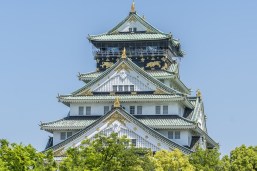
White and grey Japanese pagoda style building with blue sky and green treetopsI chose as the basis of the book the spiritual insights of samurai warriors of ancient Japan. It may seem that the psychology of people like that who lived four centuries ago  in a foreign country would have little to say to you, yet if you are interested in ways to strengthen yourself spiritually, that is the place and era to look for information. Samurai had introduced the teachings of Zen into the Japanese culture. Zen was “the religion of the samurai.”  Many samurai were poets.
Were you to acquire the skills of the samurai that the book I wrote is concerned with, the following benefits–the changes in their lives readers told me about–would occur:

Your resilience in recovering from discouragement and other setbacks would be remarkable

Your commitment to your major life’s purposes would be miraculous

Your powers of concentration would be exceptional

You would be afraid less often; old fears would disappear


Committing Yourself to Action

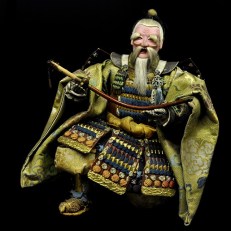
Puppet or doll of saurai warriorSamurai were models of action-oriented people. The essential feature of the samurai “Way” (way of life) is action. (That a discipline is a Way is indicated by the suffix “do.” The samurai Way is “bushido). All samurai spiritual insights and training were designed for one reason: to equip the person (a samurai or you) to make up their mind quickly and firmly and to go into action confidently.

Samurai were consumed by making a decision and taking steps to achieve their goals, and doing so with little time between the urge to action and the action itself, just as the flame appears immediately when you strike a match. A text that guided samurai says, “The Way of the samurai is immediacy. It is doing things NOW.” Another says, “When things are done slowly seven of ten turn out poorly.”

You will have ideal results if like a samurai you commit your entire being when you take action, putting all of your physical, spiritual, and psychological strength into the acts your life requires you to perform– an author writing a book, a sales person making a pitch, a public speaker addressing an audience, a parent listening to a little child as she speaks to you, etc.

Hold nothing back in reserve. Clear your mind of all distractions. Forget everything else. Forget yourself. Forget the impression you are making.  Forget winning or losing. Forget fame and wealth.  Forget setbacks. Concentrate solely on performing the action beautifully. Behave as though your every act is the last of your life.  Behave as though this is what you will be remembered for.

Are you a person of action or are you waiting for someone to save you?


Writing a Successful Book

Clickable (to Amazon page) image of cover of Kindle edition of Fighting to Win: Samurai Techniques for Your Work and LifeI was fortunate to find a good agent who had faith in the project and in me, and we proposed the book to a publisher who accepted it. There would be an advance in two payments. That was good; I needed the money. I laid everything else aside,  not having time to waste, and was excited by the process I loved–studying, reading, writing, revising, using my brain, having insights, then “aha” revelations.  I found that the sections that gave me the most trouble  and took the most time invariably proved to be the most popular when the book was published. That was a profound learning, I worked twelve to fifteen hours a day for two years to finish Fighting to Win: Samurai Techniques for Your Work and Life.

Fighting to Win’s popularity began slowly. There was a minimum of initial publicity. But then the book found its market–men and women looking for strength, a new beginning, and an escape from discouragement. It caught fire in one city after another, racking up sales in the United States, Japan, and Europe. When my article “Fighting to Win” appeared in Success Magazine it was the most read feature Success ever published.


Being Discouraged Is Contrary to Good Mental Health

Smiling, happy-looking young woman with short blond hair and sunglasses with yellow and white tulipsEvery day’s goal of healthy people is to be happy, to love and be loved, and not to be discouraged. But there are many impediments–opponents. In the arts among artists and writers I know so well, and in everyday work and personal life, like a samurai in battle, everyone encounters those opponents. Some are outer opponents–an outrageous person who’s hard to get along with (a harsh critic of your writing or painting, for example if you are in the arts), personal crises, setbacks, failures, Etc. People who steal from you.

But most opponents are inner psychological “dragons” in the samurai vocabulary, powerful opponents such as obsessions, anxieties, fears, and worries. Usually the inner spiritual opponents are the most dreadful. Every person has talents. If you surrender to dragons it makes full realization of those talents impossible. You won’t become the person you had the potential to be.

Golden-colored dragan headAll samurai training was designed to overcome those dragons so that in your everyday life you will progress smoothly from experience to experience, challenge to challenge, achievement to achievement, happiness to happiness.

 

Be Ready for These Five Dragons

Samurai were trained to overcome five universal spiritual blocks to action, and developed many methods for doing so, as Fighting to Win prescribes. If left alone without dealing with them, these blocks will fester and lead some people to discouragement. Those main inner opponent dragons are described in Chapter Two of Fighting to Win. They are:

  • Fear–of any kind (Everyone is afraid of at least one thing every day)
  • Being afraid to take risks. (That fear makes people timid and cowardly)
  • Thinking too much and not acting at all, or not quickly enough
  • Doubting yourself (the main dragon of many people, particularly people in the arts.)
  • Hesitating

Deep pink and white lotus blossom on dark backgroundAcquiring wisdom from the samurai Way suits people who wish to overcome discouragement and are able to make use of insights and techniques from any era or culture that will help them. What strikes me is the ease with which readers of the book adapt those insights from centuries ago to their current everyday living.


Writing is said to be therapeutic, and that was certainly true of my experience writing Fighting to Win. I overcame my deep discouragement and was happy to find that the book helped many people overcome theirs.


© 2023 David J. Rogers

For my interview from the international teleconference with Ben Dean about Fighting to Win, click the following link:

Interview with David J. Rogers


Order Fighting to Win: Samurai Techniques for Your Work and Life eBook by David J. Rogers

Fighting to win Amazon

Click on book image to order from Amazon.com

or

http://www.barnesandnoble.com/w/fighting-to-win-samurai-techniques-for-your-work-and-life-david-rogers/1119303640?ean=2940149174379


Order Waging Business Warfare: Lessons From the Military Masters in Achieving Competitive Superiority

Waging Business Warfare812sCY9edLL._SL1500_

Click on book image to order from Amazon.com

or

http://www.barnesandnoble.com/w/waging-business-warfare-lessons-from-the-military-masters-in-achieving-competetive-superiority-revised-edition-david-rogers/1119079991?ean=2940149284030


Follow my blog with Bloglovin


22 Comments

Filed under Blocks to Action, Conquering Blocks, Eastern Philosophy, Encouragement, Fighting to Win, Overcoming Misfortune, Personal Stories, Samurai Techniques

Art and Memory

“A man’s work is nothing but the slow trek to rediscover, through the detours of art, those two or three great and simple images in whose presence his heart first opened “(Albert Camus).

I

I’m now well, but for years I wasn’t. I lay in bed day and night in an upstairs room in a silent house alone but for my son’s cat Monty beside me to my left cat-114629_640and my dog Jack to my right: my beloved companions. I watched no TV, listened to no radio, read no newspapers, and heard no music.

From that bed I could see out the bedroom windows the crowns of a grove of tall, flourishing trees.  I watched on the trees the seasons change, the leaves brilliant, blinding green in spring, crimson and gold in autumn, brittle and curled when they came to rest on my window sill. Some winters there was more snow there on the branches of those trees than other winters.

Unable to write anymore or to read the books I loved or live a physical life. I decided I would not waste time wondering why what had happened to me had winter-1153669_640happened.  I would have to stay alert and live a life of the mind, and I set a project for myself. I would reconstruct my life to date through my memory. From that bed I would flee into solitude and journey backwards in time.

We set the dead aside as though we have no need of them. But I wanted to pluck out of the long ago the people who had populated my world when I was growing up. I had lived among them and knew their gestures. I had heard them speak so many times, and wondered greatly about them. But I didn’t know who they really were, didn’t know what their days and nights had been like. I realized that if I wanted to be with them, though most had died, I would have to discover them in myself where they all still lived.

I was growing older. My children were gone now—my daughters Stephanie and Alice and my sons Evan and Eli. Their laughter no longer brightened the house. I didn’t know what would become of me. But I wanted to see things as they were before forgetfulness mounted and memories faded and were lost or my life ended and the memories I had assembled ended with me.

I longed to walk through the house where I had grown up and to look out on the street and see the wealth of familiar things that were before me every day days-and-nights-pic_copyin my youth, no sights as dear to me as what I saw from the kingdom of my porch. I wanted to hold my father’s hand again and look into his kind eyes. I wanted to revel in everything–the hum of voices, the smells of night air, those early-evening hawks floating above my house and tucking their wings in to their bodies and diving like falling kites, the taste of my mother’s dinner in my mouth, the sight of her trying on a new hat, and of my younger sister Sharon—my pal–who died so young as a little girl coming up the stairs in her favorite beige coat with a fur collar as I remembered her.

I decided I would try to remember accurately and when I was able to write again, if ever, I wouldn’t lie about what I had discovered because in writing or painting—or acting–one should never lie.  Russian Anton Chekhov said, “Art has this great specification: it simply does not tolerate falsehood.”

And so hour after hour, again and again in my search for truth I burrowed back into myself and evoked the days and nights of my childhood. I notebook-86792_640remembered as well as I could what I had experienced myself and what had been told to me. When there in that room  I came upon something that didn’t make sense to me, and I couldn’t explain, or didn’t remember clearly, or couldn’t possibly know, I relied on my imagination.

My father’s brother died tragically and violently, and my great uncle was a war hero under enemy fire–a rescuer of wounded men–and too, died tragically. I thought about them so many times—of the stories of them I’d been told–and decided that what I’d been told must be incomplete. So I inferred what their real stories were that I hadn’t been told. I concluded that my uncle, that troubled and most charming man we all loved, must have let himself be murdered.

Loneliness, solitude, and isolation are at the core of a creator’s life as they are of a sick person’s life. I learned to adjust to them because I had no choice. I became an expert on despair and pain during that period—despair that is beyond despair, pain beyond pain.

II

At first my remembering was over in a few minutes and was very general and unclear. Memories were there in my mind and then slipped away. I might be distracted by a sound: a storm wind blowing wildly through my trees, or a siren. But then I slowed down and focused intently and remembered in finer and finer detail.  At first I might remember being six and feeling again that tingle of anticipation—of joy– I always felt in my boy’s strong body–my arms, handsmy legs, my fingers–and climbing flights of thickly carpeted stairs with my family—my father in front of me, my brother John behind–and entering an apartment. Then I would remember a hallway; then in a glass case that was taller than a man my Aunt Sarah’s menagerie of little colored glass animals, a rearing white unicorn, a red deer. Then the smell of turkey. It was a holiday. We were all happy.

Detail is the secret of remembering, I discovered–details and details of details, a multiplicity of details, as it is the secret of all the arts when they are done beautifully, a preciseness of vision. That was an important revelation. “Thus the greatest poets are those with memories so great that they extend beyond their strongest experiences to their minutest observations of people and things” (English poet Stephen Spender).

III

My life, like yours, has been carried away by passing days. But time doesn’t disappear absolutely, gone forever, but remains inside—every image and horizon-768759_640impression once experienced is waiting patiently to be retrieved—“those thousands of things which all of us have seen for just a flash…which seem to be of no consequence…which live in our minds and hearts forever” (American novelist Thomas Wolfe).

Over and over, hour after hour, day after day I was moving in closer, backing up and rethinking until I was satisfied and could say, “Yes, yes, that is how it was when I was a boy. I’ve gotten it right.” I did that carefully. I had all the time in the world because I didn’t know if I’d ever be well and wasn’t in a hurry.  I didn’t know if I’d have what it takes to transform memories into meaningful images and words, into art. But I was growing more confident now that one day I would.

Night would be falling before I heard footsteps on the stairs and a door opened and I could answer the question I’d waited so eagerly for all day: “Hello, dear, what did you remember today?”

Time passed and I was well again. Then I left that room.


© 2016 David J. Rogers

For my interview from the international teleconference with Ben Dean about Fighting to Win, click on the following link:

www.mentorcoach.com/rogershttp://www.mentorcoach.com/positive-psychology-coaching/interviews/interview-david-j-rogers/

Order Fighting to Win: Samurai Techniques for Your Work and Life eBook by David J. Rogers

Fighting to win Amazon

Click on book image to order from Amazon.com

or

http://www.barnesandnoble.com/w/fighting-to-win-samurai-techniques-for-your-work-and-life-david-rogers/1119303640?ean=2940149174379

Order Waging Business Warfare: Lessons From the Military Masters in Achieving Competitive Superiority

Waging Business Warfare812sCY9edLL._SL1500_

Click on book image to order from Amazon.com

or

http://www.barnesandnoble.com/w/waging-business-warfare-lessons-from-the-military-masters-in-achieving-competetive-superiority-revised-edition-david-rogers/1119079991?ean=2940149284030


15 Comments

Filed under Artistic Integrity, Artists, Growing Up Stories, Memory, Personal Stories, Writers

Joys Of A Workaholic Writer Wasting Time

I’ve been trumpeting to anyone within ear shot that workaholic artistic people frog-1339897_640with their powerful and constant and sometimes obsessive need to work at their craft so they might improve and be more successful are the hardest working and most productive individuals on this planet.

That’s all true, but today my plan is to not produce a thing.

Today I will explore the joys of wasting time.

When I was a business consultant giving presentations to executives I’d say “Ladies and gentlemen I have utmost respect for your capacity for work, and I know you think you’re a hard worker. But you should spend a day with a ballerina. Then you’ll see what it means to work hard.” I’d ask, “For example, how many of you feel so strongly about reaching excellence that you’d practice till your poor muscles screamed and your feet bled?”

But I’m going to waste time all day. I’ll just see what happens.

A number of studies comparing novices with experts in most fields support the idea that because of their great knowledge and skill, experts are able to accomplish with almost no effort what non-experts can accomplish only with difficulty or can’t accomplish at all. That’s just common sense, isn’t it?

But common sense or not, that’s not true of artistic work. In fact, the opposite is true. Expert artists of all sorts—you very well may be one–work harder, not less hard than non-experts.  So:

THE BETTER SCULPTOR, PAINTER, NOVELIST, ACTOR, OR POET WORKS HARDER.

But I’ve taken this Wednesday in August off and I’m not thinking of anything like that because rarity of rarities I don’t feel a bit like working and have frog-914522_640decided to play hooky. I’m playing over again and again Simply Red singing the exciting “Fairground” and I feel terrific.  I’m writing this and don’t have the faintest idea where I’m going with it, and that feels great. I feel free, as if I’m in a forest as the Zen people say sitting quietly under a tree, doing nothing, while the roses grow by themselves.

At the moment it’s 2:10 p.m. In a few hours my wife Diana will be coming home and we’ll go out to eat. But first I want to finish this, wherever it’s taking me.

My “Let’s accomplish absolutely nothing today” rebellious mood began this morning when I woke up in yesterday’s street clothes on the couch at five according to the TV I’d left on all night. I just lay there and thought of my goals for the day, the way I start every day—take a look at the long email an editor sent and write a response thanking him, and continue finishing up my book I’ve designed for those whom I call “Stage Three Creators” who are not Stage One or Stage Two creators.

(If you’re curious, according to me:

Stage I creators don’t know the first thing about their craft, but don’t know they don’t know

Stage II creators realize they don’t know the first thing about their craft. So they try to learn as much as they can about their craft

Stage III creators realize there’s a lot more to know about their craft than anyone told them)

But I could tell my goal-setting mind and my I’m-all-set-to- work-let’s-get-the-show-on-the-road mind weren’t synchronized today. So my normal write-read-study daily schedule was tossed out the window and I thought, “For today at least, good riddance.  I think I’ll just putter around the house without feeling guilty.”

I can’t be away from written words for more than a few hours. So I went downstairs to my bookcases and tried to find something that would make me

booksfeel I’d gotten something out of the day even if I didn’t write a word. I passed up Chekhov, Virginia Woolf, Ernest Hemingway’s Death in The Afternoon, which I’d never read, and Flannery O’Connor whom I’ve never read, and John Cheever’s collected stories and Raymond Carver’s Cathedral, and so forth.

And there packed in among all my so-many books I saw that little paperback my father had bought me that early autumn afternoon he’d taken my older brother John and me for a commercial boat ride on Lake Michigan when I was eight or nine, I think—The Great Short Stories of Robert Louis Stevenson. Ten brilliant tales by the best-loved storyteller of all time, the book says. Dad had taken us to a book store in Chicago’s downtown (which we Chicagoans call The Loop) before the boat ride and told us completely by surprise that we could each pick out any book we wanted and he would give it to us. We weren’t rich. What a luxury for me to have my own book.

It was the first book I’d ever owned, that I’d taken my time going through the store and picked out myself. I can remember as though it is happening now looking over the racks for the right book—will it be this one or that one? I looked at the book’s price this morning—35 cents—and at the copyright date—so long ago. The pages are brown and the paper is brittle. The cover is bent but not torn. Through the years I’ve taken good care of it. Wherever I’ve moved, whatever heaven or hell I was going through, it’s come along. How could I possibly be without it?

What pleasure it gives me to see that little book again and to hold it in my hands. It meant so much to me that day. During the boat ride (the boat was named The Blue Dog) I remember that I could hardly take my eyes off the book though it was a lovely day, the sunlight reflected so brightly off the towering buildings along Chicago’s luscious skyline, the surface of the lake blue-gray and green. But it was my book, the first book that I alone had picked out and now could read as many times as I wanted and could keep.

It’s back to work tomorrow for me, but now I’m thinking I don’t know if my father giving me that book was in any way instrumental in setting me off in the direction of a writer’s life. But here I am thoroughly, completely, and irrevocably a writer. And I’ve never since childhood wanted to be anything but.

Writer's Block


© 2016 David J. Rogers

For my interview from the international teleconference with Ben Dean about Fighting to Win, click on the following link:

www.mentorcoach.com/rogershttp://www.mentorcoach.com/positive-psychology-coaching/interviews/interview-david-j-rogers/

Order Fighting to Win: Samurai Techniques for Your Work and Life eBook by David J. Rogers

Fighting to win Amazon

Click on book image to order from Amazon.com

or

http://www.barnesandnoble.com/w/fighting-to-win-samurai-techniques-for-your-work-and-life-david-rogers/1119303640?ean=2940149174379

Order Waging Business Warfare: Lessons From the Military Masters in Achieving Competitive Superiority

Waging Business Warfare812sCY9edLL._SL1500_

Click on book image to order from Amazon.com

or

http://www.barnesandnoble.com/w/waging-business-warfare-lessons-from-the-military-masters-in-achieving-competetive-superiority-revised-edition-david-rogers/1119079991?ean=2940149284030

9 Comments

Filed under Artists, Goals and Purposes, Personal Stories, Wasting Time, Work Production, Workaholic, Writers

Awakened to a Waiting Destiny

Throughout all my grade school and high school years the only things I could think of that distinguished me in any way at all from my classmates was my David youngability to write a decent composition and to run faster than all but  one other boy my age in the city of Chicago. I realized those abilities weren’t in the grand scope of life all that earth-shaking. In most other areas I was about average or a little above or a little below. I was shyer than most and much less inclined to study than most. My report cards usually said, “Needs to apply himself.”

Yet I remember that one day in the fourth grade as I was standing in line the thought came to me forcefully and abruptly that something quite possibly extraordinary was up ahead for me in my life. I was stunned. After all, I wasn’t much to speak of. So why was I being singled out like that?  But BOOM, there it was, a secret promise life was making to me–a pact was being made, a deal struck, a bargain arranged between an eight year old and the life he would later lead, a waiting destiny. I knew I should keep the experience to myself and not divulge it to any living person lest they think I was crazy, or a braggart, or most reprehensible of all, that I’d gotten too big for my britches.

I managed to keep this strange experience to myself for more than thirty years, never telling a soul, but never forgetting it. By accident it popped out of my mouth one night while I was speaking to a large audience. I’d been excited. I’d been in a groove. My spoken words had gotten ahead of my thoughts. As soon as it registered on me that I’d just divulged my secret experience I felt embarrassed. I was a professional, but I’d gotten off the topic and I wasn’t supposed to do that. Who was I to think that what had happened to me would be of interest to 6,000 strangers? I wasn’t that important.

But all around the auditorium—to my left, to my right, in front of me–I could see people smiling and nodding. Some had tears in their eyes. While describing people-545549_640my hidden childhood revelation I’d been describing theirs too! The cat they too had been holding in secret was finally out of the bag, and they were relieved to find they weren’t alone. We talked into the night, men and women, some young, some older, some confident, some timid telling their story as I’d told mine, often for the first time.  We were good friends now.  We had a lot in common. What a night.

Since that day I’ve often described my premonition to audiences large and small to see if anything similar had ever happened to any of them. So many people confess to having had that same sudden and overwhelming sensation of being selected for something specific that’s going to happen and will benefit them and perhaps many other people too in important ways. I’ve always suspected that for every person in the audiences who has the courage to raise a hand and admit to having had the identical experience, there are others who have reservations about appearing too big for their britches or divulging such secrets.

So what I realize now is that at some point in many lives there’s an experience foreshadowing a destiny that’s waiting and calling for us. We’d been selected highway-498304_640for a particularly exceptional undertaking and are being told about it—given hints and notifications that life is holding fruition in reserve, and that something worthwhile and wonderful in the swift flow of time is in store for us. It is not wishful thinking. It is not a fantasy or an empty dream, not mystical, not otherworldly, but a fact as real and as solid as any other fact. A hard and fast promise of what at last we really will become.

However modest and self-effacing you are I think you have the feeling that you are special and that you’re supposed to enjoy a life that’s also special. You know with no doubts whatsoever that you’re intended to lead a life that has meaning and to do significant things. You realize that you must hold steady to that goal, undeviating, even if you haven’t achieved it yet and don’t know exactly what it is, or when it will appear, even if from time to time you’re afraid you’ll never achieve it.  When this awareness of a waiting destiny strikes you it’s an intimation of things that surely will come.

Even as a boy I knew that.


© 2016 David J. Rogers

For my interview from the international teleconference with Ben Dean about Fighting to Win, click on the following link:

www.mentorcoach.com/rogershttp://www.mentorcoach.com/positive-psychology-coaching/interviews/interview-david-j-rogers/

Order Fighting to Win: Samurai Techniques for Your Work and Life eBook by David J. Rogers

Fighting to win Amazon

Click on book image to order from Amazon.com

or

http://www.barnesandnoble.com/w/fighting-to-win-samurai-techniques-for-your-work-and-life-david-rogers/1119303640?ean=2940149174379

Order Waging Business Warfare: Lessons From the Military Masters in Achieving Competitive Superiority

Waging Business Warfare812sCY9edLL._SL1500_

Click on book image to order from Amazon.com

or

http://www.barnesandnoble.com/w/waging-business-warfare-lessons-from-the-military-masters-in-achieving-competetive-superiority-revised-edition-david-rogers/1119079991?ean=2940149284030

13 Comments

Filed under Expectations, Goals and Purposes, Personal Destiny, Personal Stories

Models for Peak Creative Performance

An important way to reach peak creative performance, the ultimate goal of all creators, or peak performance in riveting or cooking or anything else is by observing models—highly skilled people in the field whose work you admire, for example. For me the model for my writing without doubt is Ernest Hemingway’s writing, as it’s been for many thousands of others. He’s been called the most influential writer across the world with the most influential style in the last hundred years. I’ve read and mulled over his novel The Sun Also Rises and the short story “Indian Camp” (his best story) probably twenty times. And read many biographies and scrutinized studies of his writing.

I’ve a fondness for Hemingway’s writing that goes back to my childhood. He was born and grew up in Oak Park, Illinois, a suburb of Chicago where my parents and their families also lived and where I spent many hours over the years. He was on the school newspaper at Oak Park High. My great uncle was on the paper too and was his best friend. Hemingway once said my uncle was a better writer. I asked my uncle if he was, and he blushed and said, “I don’t know. Ernie was damned good.” When I was in high school I told my friends one day Scribner’s, Hemingway’s publisher, would publish a book by me. I wrote a book that a number of publishers bid on. I picked Scribner’s.

Diana Voyajolu (2)

Sunset Fantasy by Diana Voyajolu

In the past I’ve written about artists’ and writers’ preoccupation with style and technique—a characteristic of most of them. I look at pieces I write and if you were curious and asked I could tell you, “See the minimal use of adjectives and adverbs. I learned that from Hemingway.” “Everything understated, nothing exaggerated, a calm style—that’s Hemingway.” And the attention to detail and my need to tell the truth. (Hemingway’s “A writer must always tell the truth.”) The simple sentences. Language pared down. A serviceable vocabulary. Never showing off. And my emphasis on high productivity. (Hemingway’s “Anyone who says he wants to be a writer and isn’t writing, doesn’t.”)

When you observe a model with high standards like perfectionist Hemingway, you’re more inclined to adopt high standards yourself. It’s contagious. Modeling yourself after a successful writer or artist (pianist, ballet dancer, architect, etc.) enhances your self-confidence, which increases your persistence, which positively affects your achievements. It makes it more likely that the skills they possess will be skills you come to possess and you’ll be surer of yourself. You can see how important models can be, how related to a creator’s success they can be.

Most of what you and I have learned we’ve learned from models– observing them, reading about them, or hearing about them from parents, teachers, or peers. We copy and emulate them. When you feel you can perform a skill you’ll be more motivated to succeed, and an important way to internalize a skill and your approach to writing—the strategies you’ll use–is by observing how models performed tasks you’re interested in and comparing yourself to those models. Making changes, improving, learning.

When you learn how a writer, or painter, or actor succeeded in a difficult situation, you’re more likely to believe you can do the same. Often classes or workshops in the arts are taught by more experienced artists who discuss how they solve problems students are facing. Effective models reveal the strategies they use, provide detail, answer your questions, and clarify issues.

Who would you most like to be influenced by?

Who have you been most influenced by (Who’s your Hemingway?)

Who inspires you most? Whose work do you admire?

Who would you most like to be like?

What qualities do they (did they) have that you would like to have too?

Observing what’s called a mastery model is observing someone who has mastered the skill you’re interested in acquiring, like Hemingway for me, and someone for you. Mastery models demonstrate a high level of both skill and confidence: “I’m good at this. It used to be hard for me, but now it’s easy.” Notice how persistent the model is or was as he or she solves problems. That’ll affect your persistence.

By “observing” a model I don’t necessarily mean sitting in the same room and watching, though a lot can be learned that way. You can “observe” by reading or hearing about how a writer or artist solved a problem you’re facing or learned a skill.

ernest-hemingway-401493_640Mastery models in your life should discuss ways in which their confidence in themselves helped them to achieve their desired goals, and their errors and failures they had before eventually performing at a mastery level, and the work they put in to reach success. Ideally, the mastery model will be a warm, enthusiastic, and encouraging person who is trying to help someone else learn new behaviors after possible years doing things in a different, less productive way.

Observing a peer model is different. It’s watching someone who is at about the same skill level as you and who doesn’t perform the skill as expertly as the mastery model. He has difficulties and makes mistakes and has to correct them while you compare yourself with the model and learn from those difficulties and mistakes. Someone in your artists’ or writers’ group, for example.

“Think aloud” strategies involve the model describing thoughts and thought processes aloud while performing a task you’re interested in: “The reason I did that is because I think you should start everything with a strong, simple declarative sentence.” Ask the model about particular problems: “How did you handle that? What did you do first; then what did you do? What were you thinking? What decisions were you making?”

To get best results tell the model you’re asking for help:

“Say whatever’s on your mind. Don’t hold back hunches, guesses, images, and wild ideas.”

“Speak as continuously as possible.”

“Don’t worry about complete sentences and being eloquent.”

“Just say what you’re thinking and don’t think for a while and then describe your thoughts.” (D.N. Perkins, The Mind’s Best Work, p 33)

Using models will pay dividends. Simply put: people who study models perform better than “no-model” people.

© 2016 David J. Rogers

For my interview from the international teleconference with Ben Dean about Fighting to Win, click on the following link:

www.mentorcoach.com/rogershttp://www.mentorcoach.com/positive-psychology-coaching/interviews/interview-david-j-rogers/


Order Fighting to Win: Samurai Techniques for Your Work and Life eBook by David J. Rogers

Fighting to win Amazon

Click on book image to order from Amazon.com

or

http://www.barnesandnoble.com/w/fighting-to-win-samurai-techniques-for-your-work-and-life-david-rogers/1119303640?ean=2940149174379

Order Waging Business Warfare: Lessons From the Military Masters in Achieving Competitive Superiority

Waging Business Warfare812sCY9edLL._SL1500_

Click on book image to order from Amazon.com

or

http://www.barnesandnoble.com/w/waging-business-warfare-lessons-from-the-military-masters-in-achieving-competetive-superiority-revised-edition-david-rogers/1119079991?ean=2940149284030

2 Comments

Filed under Artistic Perfection, Artists, Creativity Self-Improvement, Developing Talent, Human Potential and Achievement, Ernest Hemingway, Literature, Motivation, Personal Stories, Self-Confidence, Self-Direction, Success, The Writer's Path, Work Production, Writers

Stamina: The Creative Person’s Hidden Power

Middle distance runners are deep and analytical, contemplative, aware of the slightest changes in their body and mind. I ran fastest at three in the afternoon when the temperature was 88 degrees and my mind was clear. Creative people are also deep and analytical, contemplative, aware of the slightest changes in their body and mind.

I was in training for my event, the 800 meters. That workout I decided I’d run as many laps around the quarter mile athletics-229808_640(1)track as I could at three-quarters speed. After a few laps the pain I was so familiar with began gradually to set in. And the difficulty breathing. Then with each lap the pain in my legs, my arms, my chest—my entire body–became more severe, breathing even more difficult. And I thought about quitting. How easy that would be. Just step off the track and the pain would cease and I wouldn’t have to go through this anymore. I thought, “No one is making me run but myself.” The thought of stopping was very powerful and I had to fight it.

But I didn’t stop, I didn’t slow down. I increased my speed (I would show this pain) and the pain was much worse. I thought, “How long can a person endure this?” Then I thought, “I am a middle distance runner. Middle distance runners can bear pain.”

But then, after I had pushed myself as hard as I could and suffered that pain longer than I thought possible but continued to run, I passed into a new and miraculous state of being. One moment I was in agony; the next I wasn’t. I had entered a place, a garden, where pain couldn’t exist. All pain and exhaustion were lifted out of my body and I could breathe easily again. The running suddenly was smooth, effortless, and strong, my form perfect.

runner-728219_640That afternoon, one of my teammates after another quit his training and left for home. But I ran lap after lap far into the night. I had the feeling I could run forever.

That experience has become a metaphor for me. I go back to it in my mind time and again. It inspires me and I am a hard worker and have stamina.

Nobel Prize winner Saul Bellow said, “For the artist work is the main thing and always comes first.” Psychologist Howard Gardner writes about high-excelling creative people. He says, “Individuals whose stock in trade is to do things which are novel, are people who’ve got to have a pretty good command of how they work.” Some writers and artists produce 10, 15, 25 times more work than others and those most productive usually rise higher in their field and find a greater sense of accomplishment. The more work you produce the higher quality your work will tend to be because the more you do something, the better you get.

There’s a lot to be said for the benefits of prolonged, intense working spurts, for in a study of writers, writers who achieve the most are those who wrote:

…THE MOST INTENSELY

…FOR THE LONGEST AMOUNT OF TIME

…OVER THE LONGEST TIME SPAN

High achieving writers and artists, like athletes in training, exert more energy from the start of a project and work steadily without long interruptions for a much longer period than the majority of writers and artists–for days, months, lyrics-710329_640years if necessary, often producing staggering amounts of work. What enables them—what enables you– to operate continually at a higher level of stamina?

It’s excitement or necessity or both, excitement over the production of a work or the necessity of overcoming obstacles to produce it—and the habit they’ve developed of working through tiredness. Creative people will push themselves to an extreme day after day and overcome impediments when they are on fire with the excitement of creating.

But many artists and writers produce very little because they stop working at the first sign of fatigue. They’re in the habit of quitting when tired. Better to ratchet up and exert more effort then, not less. Then you acquire the ability to not tire easily, a creator’s and athlete’s major skill in itself, and your work production rises, and with it, its quality.

If you quit at the first sign of tiredness, you develop the habit you don’t want of tiring quickly and giving up. Every time you reach the point when you seem to have no energy left, yet push yourself a little further, you train yourself to draw from deeper into your energy reserves at will. If you push yourself on then—painting another hour, finishing the chapter–the tiredness gets worse, but only up to a point. Then it reaches a peak and fades away as my running pain faded. You know that from our own experience. Then you’re fired up by a sense that you can go on creating much longer than you’ve realized. Fatigue is replaced by an explosive surge.

Focus on your goal of finishing this work on your easel, on your computer screen. Let your urge to reach high levels of excellence in your craft consume you. The result will be a new freedom, new stamina, and new creative power.


© 2015 David J. Rogers

For my interview from the international teleconference with Ben Dean about Fighting to Win, click on the following link:

www.mentorcoach.com/rogershttp://www.mentorcoach.com/positive-psychology-coaching/interviews/interview-david-j-rogers/

Order Fighting to Win: Samurai Techniques for Your Work and Life eBook by David J. Rogers

Fighting to win Amazon

Click on book image to order from Amazon.com

or

http://www.barnesandnoble.com/w/fighting-to-win-samurai-techniques-for-your-work-and-life-david-rogers/1119303640?ean=2940149174379

Order Waging Business Warfare: Lessons From the Military Masters in Achieving Competitive Superiority

Waging Business Warfare812sCY9edLL._SL1500_

Click on book image to order from Amazon.com

or

http://www.barnesandnoble.com/w/waging-business-warfare-lessons-from-the-military-masters-in-achieving-competetive-superiority-revised-edition-david-rogers/1119079991?ean=2940149284030


Leave a comment

Filed under Artists, Becoming an Artist, Creativity Self-Improvement, Developing Talent, Human Potential and Achievement, Goals and Purposes, High Achievement, Inner Skills, Motivation, Personal Stories, Stamina, The Writer's Path, Work Production, Writers