Category Archives: Becoming an Artist

Steps to Becoming a Successful Artist and Writer

You can develop as an artist any way you wish. This post lays out a process of development that is generally, in one way or another, followed by successful artists. The steps are not necessarily linear, occurring one after another in a strict order, but they are usually present in the lives of writers and artists of all kinds. I’ll be curious to hear from you about your own development. Did it follow a direct path or was it roundabout? What steps were involved? How difficult was it? What did you learn from it?

My life of devotion to writing and studying the arts and the artist’s life—setting writing as a high priority in my life; thinking of it all the time; sacrificing for it—were shaped by these experiences:

classroom-510228_640In the third grade the teacher read to the class my theme in which I’d used poetic language (I’d written a simile), and I decided I would become a writer and write similes as often as I wanted the rest of my life.

At eight or nine I saw Laurence Olivier, the world’s greatest actor, in a movie on TV and decided that I wanted one day to be able to affect people the way his performance had affected me—he had made me gasp. Even as children we are able to recognize art at its highest and wish to know more about it and about artists who are such extraordinarily talented beings.

A major event for me in college involved another teacher, a well-known teacher of writing who one day read to the class a piece I’d written about my childhood. When she finished reading, she said, “A teacher waits her entire career for a student who can write like this.”

Very quickly after that, while still in college, I wrote a story that was published in a prestigious literary journal.

Then came the education, the writing jobs, the artistic friends, the teachers, the ambitions and goals, the teaching of others, and the hard work.

I entered the writer’s milieu—publishers, agents, best seller lists, book tours, foreign editions, television, radio, newspapers, magazines, reviews, public recognition—success.

Then I took off years reading, researching, and experimenting.

Next, while continuing to research especially on artists, I began writing blog posts.

At every turn there was positive feedback, reinforcement, and encouragement.

 Steps

stairs-315952_640I’ve talked to many artists of all kinds and studied the lives of artists of every variety looking for patterns in their development: how did they become artists? In most instances the process of developing and perfecting an artist’s talent involves:

First signs of talent and interest: It may happen at any age–prodigies at three; painter Grandma Moses in her eighties. A child’s interest often follows an interest of a parent, and that parent often followed an interest of their parent. What is most amazing about young prodigies is that they are “pretuned”—they know the rules of their area of talent before being taught them. Few artists are prodigies, and in the overwhelming majority of cases later in life the artist who was not a prodigy–and often showed no particular talent in youth–surpasses the prodigy in achievements.

Some artists take to the art as a second career that may become a primary career, or they excel in both careers. Composer Charles Ives and poet Wallace Stevens were both also successful insurance executives. Award-winning American poet William Carlos Williams was a pediatrician. Prolific novelist Anthony Trollope was a British post office employee. Painter Henri Rousseau was a tax collector in Paris.

Interest aroused: There is almost always a moment in a talented person’s life when he/she became enamored of a particular art. There was a connection, a suitability, a symbiosis: the to-be-composer George Gershwin as a boy sitting on the curb outside his friend’s lower east side New York apartment and hearing him play the piano.

Trying it out/taking a stab: This often has a lasting effect, overcoming hesitation, shyness, reluctance, embarrassment, and fear.

Tentative commitment: “Okay, Mom, I’ll take lessons. I’ll see if I like it.”

crystal-439297_640A crystallizing experience: Often a moment occurs when the person’s existence seems to be organized and focused toward the art, a premonition that from that point forward the art will be prominent in his/her life.

Discovery of aptitude, Inclination, potential: Reinforcement comes from the outside–approval/ support/ applause/ a successful recital or performance in a play. You will not go terribly far in the art if your personality and skills are not synchronized, harmonized, and matched with those required to excel in the art.

Awakening of desire: “This is the right thing for me to do. I like this. I’m good at it. I want more of this. I will work at this.”

Establishment of “themes” important to the artist: Personal motifs begun earlier in life, often childhood, stay with the artist throughout life and are reflected again and again in everything the artist produces. These themes cannot be avoided; they are the artist’s “fingerprints.” Artists accumulate experiences, people, places, key episodes, and ideas which they will draw on the rest of their lives, endlessly recapitulating them in their work. These are the origins of their craft. Anyone who knows an artist’s work well is able to identify the artist’s recurring themes and subjects. His/her preoccupations are everywhere in the work.

Increased effort: Willingness to devote more energy to the art develops. What is often so impressive is how quickly some artists move from a first exposure to this level.

Self-confidence builds: The desire to succeed and the confidence that they can—along with skill and resilience—bring artists success. Those who are sure of themselves intensify their efforts when they don’t reach their goal and persist until they reach it.

Jelling: Everything starts to come together–ambitions, skills, progress, and success.

Deepening of desire: Stronger feelings toward the art increase; ambitions are raised.

Instruction, learning, knowledge, talent development: The specialized knowledge you accumulate through practicing your craft and receiving instruction, including self-instruction, is the most important factor in reaching exceptionally high levels of skills, possibly of greater importance than talent. The excellent writer or artist has acquired more sheer knowledge of the art and how to create it than the less excellent writer or artist.

All artists are to some extent studious and have the ability to apply themselves and to learn quickly; they are teachable. The need is for effective teachers. A poor teacher is as harmful, or is more harmful, than no teacher; the student of a bad teacher acquires bad habits. Being a stellar student in school is certainly not a prerequisite for artists. However, specialized training in certain arts such as painting and composing is often crucial.

Mentoring, coaching, modeling, guiding: No artists—no human beings–reach their goals and achieve success without help. The older generation passes on knowledge, styles, and techniques to the younger who emulate the older. Mentoring often plays an inestimable role in artistic development, as the mentoring that Gertrude Stein and Ezra Pound provided to a young Ernest Hemingway, helping to shape his revolutionary writing style, or that Sherwood Anderson gave William Faulkner, starting him off on his professional literary career, by asking his own publisher if they would publish his protégé’s first novel.

Close personal support, encouragement: Many benefit from connectedness to others such as writers’ or artists’ groups and at times in the relationship with one other person as lovers, husbands and wives, siblings, or close friends: Frederick Chopin/George Sand, Jackson Pollock/Lee Krasner, Jean Paul Sartre/Simone De Beauvoir, Henry Miller/Anais Nin, Virginia Woolf/Leonard Woolf, Salvador Dali/Gala, Thomas Wolfe/Maxwell Perkins, George Gershwin/Ira Gershwin. Most artists form a set of personal and professional relationships in the field that support them, find them opportunities, and rally them when they’re discouraged. The partner/mate of the artist often takes pressure off the artist, freeing him to focus on his work, as with novelist Joseph Conrad and his wife Jessie George.

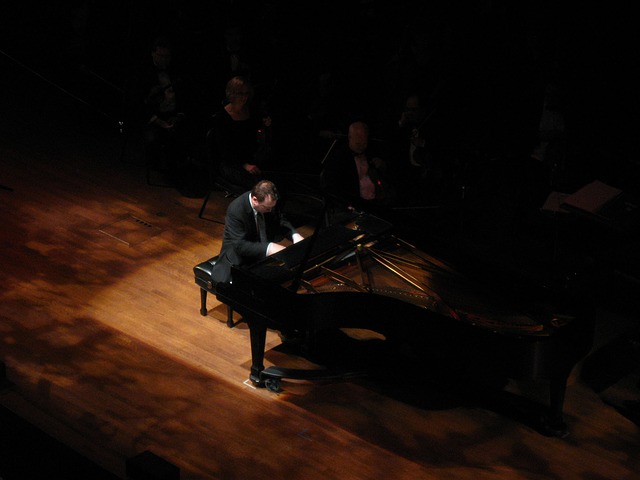
piano-233715_640Sustained deliberate practice: Months and years of work and improvements pass. The “ten year rule” (although it has notable exceptions) states that to progress from a novice to high expertise requires ten years of focused effort. That involves developing skills through intensive—often lonely–practice leading to competence, then to expertise, then excellence, then greatness. Even this process—tedious, boring, demanding—is a pleasure to the artist. Long periods of dogged hard work are nearly always the reason for superior artistic performance.

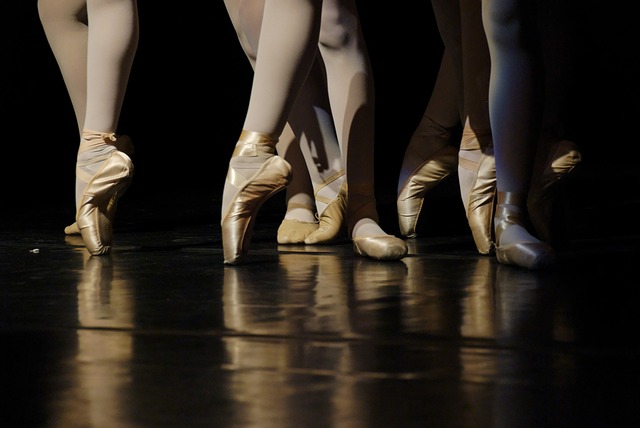
More focused effort: Realizing that artistic success is feasible, the artist buckles down with stronger motivation, drive, persistence, perseverance. Expectations rise. Picasso said, “Everybody has the same energy potential. The average person wastes his in a dozen little ways. I bring more to bear in one thing only: my painting, and everything else is sacrificed to it…myself included.” Some ballet dancers with an eye to excellence practice until their feet bleed.

Experimentation: William Faulkner, Ernest Hemingway, and Eugene O’Neill began as poets, then switched to short stories and novels, or plays. Later in life short story master Anton Chekhov (the best there has ever been) began writing plays as well and discovered he could write masterpieces. A multi-talented man, Chekhov was also a practicing physician.

Narrowing down, specialization, development of a dominant style: As a result of experimentation and the clearer understanding of his strengths, weaknesses, and preferences, the artist defines himself more specifically: “I am a portrait painter.” “I paint skies.” A distinctive style (that develops over time) is the first sign of an artist’s high expertise. When I told that to the late composer/conductor Marvin Hamlisch, the composer of “The Way We Were,” and A Chorus Line, he asked, “Is that true?” and I said, “Marvin, you can’t write anything without my knowing it’s you.”

Breakthroughs: Often there are “years of silence” when the artist is working hard but has no tangible successes to show until the first successes which often then come in a flurry—novelists Jack London and William Saroyan received hundreds of rejections before their first success. Thereafter, everything they wrote was published.

Application, Working Harder: The taste of success creates a hunger for more success, which inspires more rigorous application and harder work.

Self-Education, self-determination: Every artist to one extent or another is an autodidact, a self-teacher. Some, like painter Vincent van Gogh and American poet Walt Whitman, were almost completely self-taught. Other famous painters studied with masters, but van Gogh and Henri Rousseau were exceptions. Writers are more likely than other artists to be self-taught. Most composers are taught by masters, and must have high potential to even be accepted as a student by the master. But classical composers Russian Alexander Borodin (also a chemist and physician) and Englishman Edward Elgar were essentially self-taught.

Settling on a Working Philosophy, Work Habits/ Tempo: Everyone working at an art develops his or her own work pace and philosophy of working. Van Gogh always painted at high pressure and at a feverish pitch, gathering up the colors as though with a shovel, throwing them on the canvas with rage, globs of paint covering the length of the paint brush and sticking to his fingers. He had no hesitations and no doubts. Cezanne didn’t understand van Gogh and told him, “Your methods lead to confusion. You don’t work in the manner of our ancestors.” American novelist Thomas Wolfe, a huge man with an equally huge capacity for work, wrote in a frenzy in clouds of cigarette smoke at lightning speed. Gustave Flaubert, on the other hand, worked meticulously, agonizing over every word in every sentence. Some film directors re-shoot a scene thirty times; others rarely more than once or twice.

Noticeable Improvement, refinement of skill, maturity: An evolution often occurs when the artist finds his “voice” as a result of long experience and reflection. Novelist Henry Miller: “It was at that point…that I really began to write… Immediately I heard my own voice…the fact that I was a separate, distinct, unique voice sustained me…My life itself became a work of art. I had found a voice. I was whole again.”

Greater reach, sudden growth spurts: At times, almost unaccountably, an artist experiences a leap in performance. The best example is Walt Whitman. In a short period he transformed himself from a below-average scribbler to America’s greatest poet.

Setbacks, obstacles, and Impediments: Artists often lead troubled, unconventional lives. Almost all go through fallow periods when success seems unattainable, but their recuperative powers seem inexhaustible and they work on, developing the resilience to rebound from setbacks. The incidence of addictions, mental illness (particularly bi-polar disorder), and suicide is considerably higher than that of the general population. Self-destructive American painter Jackson Pollack, American writer Ernest Hemingway, and too many poets to mention are examples. That, to me, makes artists even more remarkable, for often in spite of enormous personal problems that would debilitate most people, they still manage to produce tremendous volumes of artistic work of the highest quality. It is as though when they are focused on their craft all obstacles wither and disappear. Writer, poet, and essayist D.H. Lawrence wrote, “One sheds one’s sickness in books.”

new-york-115629_640Increased satisfaction, rewards, a way of life: Artists differ from one another in a variety of ways, but are unanimous in this way: they all love what they do. Their art provides a source of challenges, fulfillments, and opportunities for self-exploration and self-expression. The artist experiences the intrinsic satisfaction of continuous enjoyment from the art and the extrinsic benefits of success—particularly respect and praise—even adoration–and material rewards.

You want to continue to make regular use of your principal artistic strengths–your main aptitudes, talents, gifts, personal qualities, and capabilities, to do so freely, without inhibition, without conflicts, and without being interfered with, and to be in a position to say every day, “Now, at this moment, I’m doing what I do especially well. I love it. It makes me happy.” Once you know you’re moving in the right artistic direction and feel strongly about it you fly through your days aflame with energy and determination. To become clear as to what your intended destiny is and to say to it, “I devote myself to you” is to feel an unstoppable drive toward its due fulfillment and to spring to life.

One after another, you overcome obstacles that are conspiring to keep you from your intended destiny, and now you are an artist.

© 2015 David J. Rogers

For my interview from the international teleconference with Ben Dean about Fighting to Win, click on the following link:

www.mentorcoach.com/rogershttp://www.mentorcoach.com/positive-psychology-coaching/interviews/interview-david-j-rogers/

Order Fighting to Win: Samurai Techniques for Your Work and Life eBook by David J. Rogers
Fighting to win Amazon

Click on book image to order from Amazon.com

or

http://www.barnesandnoble.com/w/fighting-to-win-samurai-techniques-for-your-work-and-life-david-rogers/1119303640?ean=2940149174379


Order Waging Business Warfare: Lessons From the Military Masters in Achieving Competitive Superiority
Waging Business Warfare812sCY9edLL._SL1500_

Click on book image to order from Amazon.com

or

http://www.barnesandnoble.com/w/waging-business-warfare-lessons-from-the-military-masters-in-achieving-competetive-superiority-revised-edition-david-rogers/1119079991?ean=2940149284030


17 Comments

Filed under Artists, Becoming an Artist, Creativity Self-Improvement, Developing Talent, Human Potential and Achievement, Goals and Purposes, Motivation, Writers

The Artist as Warrior

“The tramp of warriors sounded like a thousand convulsions of the earth. The shouts of warriors, the whistling of arrows, the thunder of the feet of foot soldiers and the hooves of chargers did not cease.”

“Fear is the true enemy, the only enemy.”

“When all psychological blocks are removed the swordsman will move without conscious effort.”

“The meaning of all things is within, in your mind, not something that exists ‘out there.’”
(From the Samurai Way)

martial-arts-291051_640Each time I visited a successful painter friend of mine I saw the same unfinished painting on the easel. Nothing about it changed month after month. Not a single new brush stroke touched the canvas. Then she moved away and I didn’t see her for a number of years. When we got together again I asked, “Whatever happened to that green pastel that was on your easel so long?”

She said, “I never finished it.”

I said, “You were afraid.”

She said, “I was terrified of it.”

I know a talented young writer who contacted 100 agents in hopes of getting his first book published. He had worked extremely hard on the book and it was very good. He thought of making it a trilogy, and had mapped out the next five years of writing. One agent showed interest and the writer was hopeful, but then the agent lost interest. Discouraged, doubting himself, having lost confidence, not wishing to be so disappointed again the writer stopped writing creatively and devoted himself to his teaching career.

I know an opera singer who has had a successful career, but suddenly and inexplicably after five years developed a fear of performing and for two years retired from the stage. She’s performing again but doesn’t know if that debilitating fear will ever return.

Each early morning I go into my work room upstairs and settle down to write. Now I’m in my element–confident, contented, primed and ready to work. I’ve been writing so long and have produced so many words. Generating text is second nature to me—easy, effortless, without strain. Yet, there is another emotion that is there with me some days. I pause, fold my hands in my lap, and ask myself, “What are you feeling now? Why are you hesitating?” And I answer, “I am feeling fear.”

paintings-316440_640“What are you afraid of?”

“I don’t know. Possibly that I won’t have my skills today; that I won’t be successful; that I’ll let myself down. I really don’t know.”

“Is that so important? Writing is such a small part of life.”

“Right now it is the most important thing possible.”

Bear in mind that I’ve had success writing. Also, I am no coward. I rescued a woman from a would-be rapist–chased him, caught him, fought with him, wrestled him to the ground, and held him till the police came. Yet when I sit at the computer to do the thing I do better than anything else sometimes I’m scared.

We speak of writer’s block, but that’s too narrow. There are sculptors’ blocks and actors’ blocks and ballet dancers’ blocks—the drawing back (intimidated, helpless) from the art we love and have performed many times before–being stopped by some powerful obstacle or set of obstacles that are not out there in the world, not visible to the eye, but are inside us.

The Samurai

The samurai–the finest warriors ever to walk this earth– were ordinary men and women who were trained to perform extraordinary feats of courage. Just as writers, artists, dancers, or actors face internal obstacles that interfere with their work, so did the samurai. The bulk of his or her training (there were women samurai) was devoted to overcoming those inner obstacles that are no different than the obstacles artists of all descriptions face—anxiety, procrastination, self-doubt, hesitation, fear of taking risks, discouragement, over-analysis, depression, apprehension, impatience, and more.

target-211225_640The release of the arrow is the most difficult problem archers face; they think too much, as often do artists, explaining the sudden loss of spontaneity, the sudden loss of skill. Fear is a dragon that often keeps us from success. The samurai was taught: “Strike through the dragon’s mask.”

The samurai’s mind was trained to be fudoshin—to be “immovable,” to never budge from the main goal (for the artist, to get the work done.) They were taught that when your thoughts get “caught” (toroware), or “stopped” (tomaru) on internal obstacles, you will have trouble executing any action—when your mind gets “hooked” or “snagged,” the way the opera singer’s mind was snagged for two years. Better to acquire tomaranu kokoro, “a mind that knows no stopping,” that flows smoothly from idea to idea without being stopped.

What I did in my book Fighting to Win: Samurai Techniques for Your Work and Life was to pluck the wisdom of the samurai off the battlefield and apply it to everyday modern life producing a book of musha-shugyo, “training in warriorship” so that people might overcome the internal obstacles that are troubling them.

Zen and the Samurai

The warrior class was the first segment of Japanese society to embrace Zen. From the twelfth-century on Zen became known as the religion of the samurai. What explains the fit between these two apparently different approaches to life?

Zen is many things—a religion, a philosophy, a life-style. It is also a psychology, a psychology of action, grounded on decisiveness, spontaneity, strength of will, adaptability, courage, and bravery. It was this psychological aspect of Zen which appealed most to the samurai, for to rush forward to face the enemy even if only death awaited him, he needed what Zen taught—to act without hanging back, without reservations, and with total commitment.

Warrior Artists

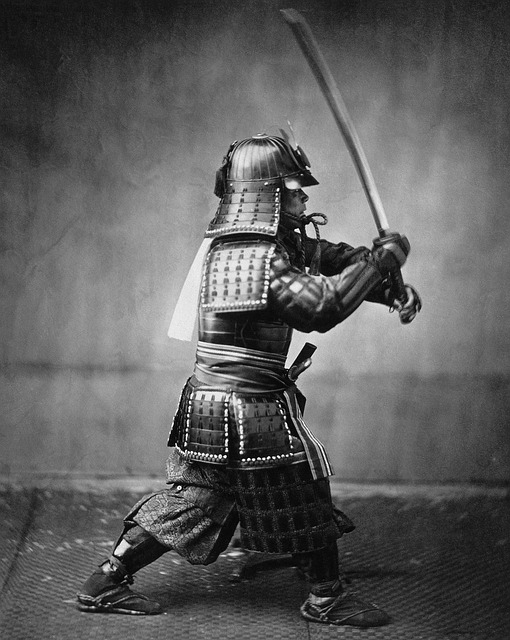
samurai-67662_640The elite samurai were members of the cultured, aristocratic upper classes—the daimyos, the lords. Bunbu ryodo “The united Ways of the pen and the sword” refers to the tradition of the warrior artist, master swordsmen who were also poets, calligraphers, and painters. The famed Miyamoto Musashi is considered the greatest samurai swordsman who ever lived. He was also one of Japan’s foremost artists whose work today has a place in Japan’s national art museum.

Samurai Maxims

“A warrior must only take care that his spirit is never broken.”

“Success will always come if your heart is without disturbance.”

“Let your mind be free to function according to its own nature.”

“Stick to the larger view of things. If your vision is narrow your spirit will be narrow.”

“Adversity in life is essential to training.”

“The end of our Way of the sword is to be fearless when confronting our inner enemies and our outer enemies.”

“If you walk, just walk. If you sit, just sit. But whatever you do, don’t wobble.”

You needn’t look too far or too hard to see that these maxims and the inner training of the samurai Way apply to the artist’s life. Like the warrior, if the artist is to grow, it will be from within. The artist’s work, like a warrior releasing an arrow, should be like a drop of dew falling from a leaf or a fruit falling when it’s ripe.

© 2015 David J. Rogers

For my interview from the international teleconference with Ben Dean about Fighting to Win, click on the following link:

www.mentorcoach.com/rogershttp://www.mentorcoach.com/positive-psychology-coaching/interviews/interview-david-j-rogers/

Order Fighting to Win: Samurai Techniques for Your Work and Life eBook by David J. Rogers

Fighting to win Amazon

Click on book image to order from Amazon.com

or

http://www.barnesandnoble.com/w/fighting-to-win-samurai-techniques-for-your-work-and-life-david-rogers/1119303640?ean=2940149174379


Order Waging Business Warfare: Lessons From the Military Masters in Achieving Competitive Superiority

Waging Business Warfare812sCY9edLL._SL1500_

Click on book image to order from Amazon.com

or

http://www.barnesandnoble.com/w/waging-business-warfare-lessons-from-the-military-masters-in-achieving-competetive-superiority-revised-edition-david-rogers/1119079991?ean=2940149284030


17 Comments

Filed under Artists, Becoming an Artist, Blocks to Action, Creativity Self-Improvement, Eastern Philosophy, Samurai Techniques, Writers

A Vision Of What At Last You Could Be

frosty-472871_640Creative people in the arts and every other field are in the habit of reflecting a great deal on their goals, their success in reaching them, and the lessons they’ve learned from efforts that didn’t work out. They continually analyze what they do well and what they do not do well, and then exploit their strengths as far as they can and work to develop themselves in areas where they’re not as gifted.

And they have a particular way of dealing with apparent failures or defeats: they treat them as prods to even greater achievements and opportunities to learn lessons that are of value to their careers. People who have achieved a high level of excellence have not done so by accident and are not satisfied to reach merely an acceptable level of performance, but have much higher ambitions.

Possible Selves/Visions of the Future.

When you say “I’m a good person;” “I’m an ideal parent;” “I’m a poor public speaker;” “I’m very lazy” your self-concept is speaking. Your self-concept is the view you hold of yourself, your opinion of the kind of person you are and are not at the present time. The current self is the one we’re most familiar with. But we have other selves too, such as the selves we could be in the future. Those are our Possible Selves. One type of possible self is the ideal you’d very much like to become—a famous athlete or painter or writer, for example. There are also other selves you could become, as well as those you’re afraid of or dread becoming.

The possible selves you may hope for may include the happy self, the creative self, the wealthy self, the physically fit self, and the successful self. The dreaded possible selves could be the lonely self, the incompetent self, the drug addict self, the unhappily married self, the bag lady self. There is your good self that you’re proud of, and the bad or the guilty one that you’re ashamed of and prefer never to think or talk to anyone about.

A vision of the future and a possible self guided your decisions to choose to go to college and to take one job rather than another. A young girl sees a painting in a museum that moves her and decides on the spot on a possible self and a vision of the future: she will become a painter. She will go to art school and study.

When we think of possible selves and visions of the future that are positive and appealing we’re strong with hope. We’re liberated and set free because we realize that the present is not unchangeable. We never have to be a self we don’t wish to be, but can create a different self, a different future.

You’re free at every moment to create any variety of possible selves and visions of the future. Your life may not be going well—may be going all wrong in every way–but your positive possible future holds the promise of better days. But negative visions of the future make us unhappy and afraid. They can imprison us because they may cause hopelessness—the would-be dancer who thinks, “Day after day I don’t make progress. Nothing clicks. It’s probably foolish of me to think I could be a ballerina.”

The Impact of Possible Selves On Our Lives

ballet-542170_640Possible selves form the basis for personal growth and change. It becomes clearer to you every passing day that the main cause of personal success isn’t something that comes like a generous gift from the outside, but is your own conception of yourself and the development of your capabilities, that all real growth comes from within.

A clear view of what we could become sets our motivation in motion. No two ways about it: we must have a vision of the future to be committed to the goals we’ll need to reach the future we hope for. Day-dream, because it’s often in daydreams that our visions of the future are born.

When I was in the third grade the teacher read to the class a theme I’d written in which I wrote that playing football I was tackled and “fell to the ground like a blob of jelly coming out of a jar” and the teacher said “That is poetic language. That is a simile. David has made a simile.” Walking home after school, I decided that if I became a writer I’d get to write similes the rest of my life. Everything after that was aimed in that direction. That was my possible self that became my actual self.

In my freshman year of high school I made the track team as a middle-distance runner. One day I was getting dressed in the locker room. A senior middle distance runner—the reigning Chicago city champ –sat down beside me on the bench. That surprised me because we’d never spoken before. He said, “I’ve been watching you. You’re very good. You have more potential than you probably realize, but you’re very shy and I can see you don’t have confidence. You don’t have a conception of what you could be. Pick up your head, be strong, and say to yourself over and over, ‘I could be the best. I could be the fastest runner in the city.’ Work hard.” It meant so much to me that he cared and had taken the time to share that with me, and I took it to heart. So now I had a new ambition, a new vision of the future that right then I vowed to devote myself to, and a new possible self, a new identity that I would become. I began to study innovative training methods and to apply myself and worked very hard.

The First Step

berries-302341_640A vision of the future of yourself as a highly successful artist or athlete or effective business person self is the first step in achieving that future. It will not only guide your decisions, but will immediately set planning in motion. It will help you focus on goals, and keep you from needless distractions.

What if right now you were to forget about the past, wipe the slate clean of failures and false starts, and start fresh, setting the goal of becoming as successful an artist, writer, sales woman or whatever as you could possibly be—to buckle down? Is that goal appealing, or don’t you much care? How would you go about achieving that goal? What would you do? Where would you start? Where would the goal take you? What would your life be like were you to achieve that goal? What would be the link between the actions you would engage in now at the present time—and in the next six months, and the next year and years beyond that– and the attainment of the future you envision?

Set short-term and long-term goals and reach them, one after another, overcoming impediments as they appear. You must have positive images of the person you’re aiming to become and negative images of the person you want to avoid becoming. Other people can serve as models—pro and con–and so can your past.

Think of your prior successes and of what steps were needed for you to succeed then and repeat the same again. Past success is the most powerful and direct basis for judging if you will succeed in achieving a new goal. If you believe you have the ability—the skills, motivation, and know-how–to achieve what you want to achieve and have done so in the past, you will try to achieve it. If you feel that way, you’ll be confident and will not likely to be haunted by self-doubt, possibly a person’s main internal obstacle. You’ll have high expectations of future success. You’ll think about past failures as useful lessons.

Share your vision with other people: talk about it; be confident. But stating an ideal possible self isn’t enough to produce sustained effort and changes in behavior. For that to occur, your goal needs to be linked with specific strategies, concrete behaviors such as an artist working with an excellent and more experienced artist, increasing your knowledge of your field, sticking firmly to a regular work schedule, and developing the skills essential to your work. Strategies help to focus on goals while also anticipating and planning how you’ll handle setbacks by developing plans of action and contingency plans. Most successful people in every field point to strategies as the main cause of their success.

Some of your goals—the important ones—won’t be easy. You’ll have to acquire new capabilities. A defeat, setback, or loss or lapse of commitment can have a devastating effect on a possible self, so be prepared. An agent’s cruel reply to an inexperienced writer’s submission can destroy the writer’s possible author self—she may quit– or a businessman’s blunder resulting in the loss of a major contract, or a field goal kicker missing the kick that would have won the game.

When you’re discouraged the hoped-for self is replaced by a weakened, vulnerable one. But even the smallest encouragement has the effect of bolstering your spirits. Being resilient and accepting setbacks as an unavoidable part of work life that even the greatest in any field can’t avoid is essential for maintaining a firm, unshakeable motivation.

It may seem illogical to think of anything negative and seem better to block all negatives out and think only of positive possibilities. But a balanced view—thinking of both positive and negative possibilities–has been shown to improve focus and to lead to important self-improvements and good results. The fear of not succeeding drives many people to unexpected success.

Having both positive and negative images in mind serves as a carrot and a stick both, reminding you of what glorious things may happen if you stay on track, as well as what may happen if you lose your commitment and fail to follow-through effective strategies: if you don’t develop your skills to a high level you will not improve.

Figuring out how you’ll become your desired self and avoid becoming your undesired self can lead to tremendous, life-changing results. Action is a necessity.

© 2014 David J. Rogers

For my interview from the international teleconference with Ben Dean about Fighting to Win, click on the following link:

www.mentorcoach.com/rogershttp://www.mentorcoach.com/positive-psychology-coaching/interviews/interview-david-j-rogers/

Order Fighting to Win: Samurai Techniques for Your Work and Life eBook by David J. Rogers

Fighting to win Amazon

Click on book image to order from Amazon.com

or

http://www.barnesandnoble.com/w/fighting-to-win-samurai-techniques-for-your-work-and-life-david-rogers/1119303640?ean=2940149174379


Order Waging Business Warfare: Lessons From the Military Masters in Achieving Competitive Superiority

Waging Business Warfare812sCY9edLL._SL1500_

Click on book image to order from Amazon.com

or
http://www.barnesandnoble.com/w/waging-business-warfare-lessons-from-the-military-masters-in-achieving-competetive-superiority-revised-edition-david-rogers/1119079991?ean=2940149284030


9 Comments

Filed under Artists, Becoming an Artist, Creativity Self-Improvement, Dancers, Developing Talent, Human Potential and Achievement, Expectations, Goals and Purposes, Motivation, Writers

Tidy, Productive Lives and Messy, Creative Lives

dandelion-6296_640Swedes use the term “Dandelion Children” to describe children who thrive in any kind of environment under any conditions in the same way dandelions thrive regardless of soil, drought, sun, or rain. This is a post about dandelion children who grow up to be remarkable.

Tidy, Productive Lives

“The vast majority of individuals whose adult lives have been unusually creative or productive, or who have been unusually capable within various fields of expertise, have been people whose early years have been stimulating ones, characterized by plenty of opportunities to learn and plenty of guidance and encouragement, of one or both parents.” (Michael J.A Howe, The Psychology of High Abilities)

The influential study described in Developing Talent in Young People laid out a process that was generally followed in homes of people who were studied. The parents strongly encouraged development of the children’s talent in a particular area in preference to others, went to extreme lengths to help the child to do well, were always willing to devote their time and energy to the children–playing games, reading to them, or teaching them in one way or another. Parents showed interest in their children’s activities and encouraged them to do their best. Not one of the children reached their potential without strong support and training. Parents would move heaven and earth to give their children rich educational opportunities, finding for them the best teachers and advisors, sparing no expense.

Those paragraphs—those ideas, those luxuries, usually of middle or upper middle-class, highly-educated affluent parents and their privileged children–are the kind psychologists love to write about neat and tidy, ideal upbringings. But even as you read them you’re thinking:

“Who are they talking about? They’re certainly not talking about me!”

Messy, Creative Lives

There’s an alternative point of view:

“When you read the lives of various great men (and women)-of all great men, perhaps, if the account is truthful–you will notice that the conditions of their childhood, their education, or their profession did not predispose them to what they ultimately accomplished. It is not because of their education, it is often in spite of it that they were able to develop. This man grew up without books; that man had to study secretly. It makes you wonder what the word ‘advantages’ really means, what parents mean when they say they want their children to have all the advantages they themselves did not have…Is not the lack of something often more helpful? For the lack of an external thing arouses an inner impulse that replaces it; the ‘I,’ the individual’s native gift is substituted…So you need never pity people who complain that they lack this or that, provided they have pledged themselves to reach their goal.” (Jean Guitton, A Student’s Guide to Intellectual Work)

Popular American author William Saroyan wrote, “I must make it known that I do not believe it is required of art, science, religion, philosophy or family to assure every man born into this life, a secure childhood, in which a child knows only love and harmony…The supplying of such a childhood to a child… may not even be desirable. It may create a nonentity.” Playwright/novelist Gore Vidal wrote, “The protective love of two devoted parents can absolutely destroy an artist.” Creative attainment does not depend on coming from an intact family.

Cradles of Eminence

In a biographical survey of the family backgrounds of 400 eminent people of the twentieth century that included novelists, poets, actors, musicians, opera singers, composers, movie directors, painters, playwrights, dancers, and architects, 85 % had come from troubled homes with very little attachment, warmth, affection, or closeness.

American novelist Willa Cather and her mother arranged their lives so that their contacts with each other were minimal and Willa and her brother were left alone. In Cradles of Eminence the authors who conducted the survey say, “Contentment and creativity do not ordinarily go hand in hand in the homes that cradle eminence.” As children 75% were troubled by a variety of problems such as poverty, and “by rejecting, over-possessive, estranged, or dominating parents; by financial ups and downs; by physical handicaps; or by parental dissatisfaction over the children’s school failures or vocational choice.”

ernest-hemingway-401493_640The great majority of writers of fiction or drama, and a number of poets, came from families where there were tense conflicts between the parents. Sixty percent were dissatisfied with school. Nobel Prize winning author Ernest Hemingway grew up in a dysfunctional home and was convinced his mother’s constant badgering of his father led to his father’s to suicide.

Prolific 19th century English novelist Anthony Trollope achieved fame, fortune, and popularity, and knew many of the rich and the accomplished of his era. But in school he “suffered horribly! I could make no stand against it. I had no friend to whom I could pour out my sorrows. I was big, and awkward, and ugly. How well I recall all the agonies of my young heart: how I considered whether I should always be alone; whether I could not find my way up to the top of that college tower, and from thence put an end to everything…Something of the disgrace of my school-days has clung to me all though life….I feel convinced in my mind that I have been flogged oftener than any human being alive…These were twelve years of tuition in which I do not remember that I even knew a lesson!”

As twelve year old celebrated English novelist Charles Dickens suffered in poverty and was forced to live alone, away from his family, while working many hours a day in a rat-infested factory pasting labels on pots while his father rotted in debtor’s prison. When his father was released, Charles’ mother wanted her son to stay on at that miserable factory. Later Dickens wrote: “I never afterwards forgot, I shall never forget, I never can forget, that my mother was warm for my being sent back…Even now, famous and caressed and happy, I often forget in my dream that I have a dear wife and children; even that I am a man; and I wander desolately back to that time in my life.”

Cradles Of Eminence concludes that contributions to the arts and other fields are likely to be made by the person whose childhood was not trouble-free and who was not an all-round good student, and whose parents were a problem to themselves and the child. In many autobiographies of eminent artists there are frequent references to the positive motivating effects adverse circumstances had on them.

jazz-63212_640Famous jazz musician Louis “Satchmo” Armstrong’s father deserted the family, and his mother was “out on the town.” Louis was committed to an institution for delinquent boys where he learned to play musical instruments and became a band leader. He said, “All in all I am very proud of the days I spent at the Colored Waifs Home for Boys.”

Stephen Crane, Eugene O’Neill, William Faulkner, and F. Scott Fitzgerald were just a few writers of many artists who failed in college. Many, like Hemingway, had no interest at all in going to a college. Pablo Picasso failed at elementary school because he refused to do anything other than paint. Even as a child of nine he would duck out of class and wander the streets of Madrid, painting and sketching.

Psychologist E. Paul Torrance found that 70% of the children who rated high in creativity would not be selected to be members of a special class for intellectually gifted children. High IQ students are likely to prefer conventional occupations–doctor, lawyer, and engineer. Highly creative students find unconventional careers like writer more appealing. Few of the subjects in Lewis Terman’s high IQ study—the “Genius Study”– went on to excel in the fine arts, music, and literature. The group produced many successful people, but not one creative artist.

Boys and girls who’ll become famous are not often ‘all around” competent, conforming students. Creative people are not distinguished by high grades at school. Fathers who were abject failures are common in the lives of great artists and in the lives of eminent people in almost all fields. Writers and actors lived in particularly turbulent homes.

“Ironically the child that grows up with many privileges may have much less opportunity for her or his creativity than the child growing up in the slums. If everything is done for the child, and the child has little opportunity to show initiative, then whatever latent potentials there are for creative work may be suppressed because there is no need to develop these potentials.” Robert J. Sternberg and James C. Kaufman, “Constraints on Creativity.”

I’m betting that the majority of people reading this post, many of them artists, didn’t follow the psychologist’s “tidy” path to their current creative lives, but became successful in spite of—or because of–a “messy” childhood.

© 2014 David J. Rogers

For my interview from the international teleconference with Ben Dean about Fighting to Win, click on the following link:

www.mentorcoach.com/rogershttp://www.mentorcoach.com/positive-psychology-coaching/interviews/interview-david-j-rogers/

Order Fighting to Win: Samurai Techniques for Your Work and Life eBook by David J. Rogers

Fighting to win Amazon

Click on book image to order from Amazon.com

or

http://www.barnesandnoble.com/w/fighting-to-win-samurai-techniques-for-your-work-and-life-david-rogers/1119303640?ean=2940149174379


Order Waging Business Warfare: Lessons From the Military Masters in Achieving Competitive Superiority

Waging Business Warfare812sCY9edLL._SL1500_

Click on book image to order from Amazon.com

or

http://www.barnesandnoble.com/w/waging-business-warfare-lessons-from-the-military-masters-in-achieving-competetive-superiority-revised-edition-david-rogers/1119079991?ean=2940149284030


5 Comments

Filed under Artists, Becoming an Artist, Developing Talent, Human Potential and Achievement, Writers

Do You Dance For Me Or Yourself?

Artists’ Intensity, Obsessions, and Will

yoga-366093_640To say that artistic work is often difficult and artists must be highly motivated if they are to produce it is to say the surface of the sun is quite hot. The artist must not only have that motivation, but must also sustain it, often over a long period of many years. Among the personal qualities that cause motivation that is strong are not luxuries but virtual necessities for any artist: passion, restlessness, intensity, obsessiveness, will, and persistence. It’s not hard at all to look at an artist and say, “That man (or woman) is driven.”

French author Gustave Flaubert called his motivation rage: “Sometimes I don’t understand why my arms don’t drop from my body with fatigue, why my brains don’t melt away. I am leading a stern existence, stripped of all external pleasure, and am sustained only by a kind of permanent rage, which sometimes makes me weep tears of impotence but which never abates.”

“While the daily life of every [ballet] dancer is a full-time struggle against fatigue, strain, natural physical limitations and those due to injuries (which are inevitable), dance itself is an enactment of an energy which must seem, in all respects, untrammeled, effortless, at every moment fully mastered.” The dancer’s performance smile is “a categorical denial of what he or she is actually experiencing–for there is some discomfort, and often pain, in every major stint of performing [–and we might add, practicing]. (Susan Sontag. American writer, teacher, and film-maker)

But artists seem to develop tremendous recuperative powers and verge on the inexhaustible. Flaubert went back for more every day and dancers continue to smile while in pain. Picasso, who worked incessantly from childhood and produced a quarter million works, claimed never to have felt tired, never to have felt the slightest fatigue. He said, “When I work I leave my body outside the door.”

 If There Is One Thing Famous Artists Will Tell You

Freud thought that artists are actually seeking wealth and power, but being unable to secure them directly find satisfaction in creative activities. Whether that is true or it isn’t, if there is one thing famous artists will tell you it is that you work best and are most powerfully motivated to create and will work long, often tedious, hours and endure a great deal and surmount even major obstacles when you’re not thinking of anyone’s liking but your own.

It may take years to come to that conclusion, but come to it many do. “I alone here, on my inch of earth, paint this thing for my own sole joy, and according to my own sole mind. So I should paint it, if no other human being existed but myself. Let who will get good or ill from this–I am not concerned therewith. Thus I must do it, for thus I see it, and thus I like it, woe be to me if I paint as other people see or like.”(Art Critic John Ruskin)

At the time American novelist William Faulkner’s picture appeared on the cover of Time magazine he couldn’t afford to pay his electric bill. As soon as he resigned himself to the fact that his unique vision and natural complex and rhetorical style and particular subject matter were not those of a commercially-popular author, he immediately entered a period of sustained creative energy that produced in quick succession one masterpiece after another. Making the decisions not to seek fame or wealth, he embarked on a path that would lead ironically to eventual world fame, financial security, and celebrity, culminating in the Nobel Prize.

He turned inward and decided to write for himself: “One day I seemed to shut a door between me and all publishers. I said to myself, ‘Now I can write.’“ He started working on what would be the innovative The Sound and the Fury–“thinking of books, publication, only in the sense in saying to myself, I wont [sic] have to worry about publishers liking or not liking this at all.”

The Awareness of Being Judged

When an artist is hard at work, work is center stage and doing it as skillfully as possible and enjoying it for its own sake are the strongest driving forces. The standard against which artists measure themselves is making use of their capabilities to the fullest each time they set to work—a notion of personal perfection, as in ballet, perfect expression and perfect technique.

But from time to time the thought that the work is going to be judged by someone else enters the artist’s mind. When thinking that a critic, an editor, an agent, a reviewer, a potential buyer, an audience will soon be evaluating the work, for most artists, even the best and most highly regarded, the self-conscious nervousness begins. Prolific nineteenth century English novelist Anthony Trollope said that an author should let criticism fall on him as “dew or hail from heaven,” and accept it as fate. But even the most renowned artists worry about the reception their work will receive and cannot help but to bear that in mind during the creative process.

Psychologist Teresa M. Amabile staked her whole reputation on proving that creative solutions to problems occur more frequently when people engage in the activity for the sheer pleasure it offers, and less frequently when their creativity is being judged. When we are not being evaluated, our creativity is liberated and free, but is inhibited when we are.  Amabile tested a wide range of subjects. No matter what the reward was or when it was given, if the subjects thought they were working for external remuneration, they became less creative. But when they were playing, they were creative. A playful approach to the task increases the likelihood of producing creative results.

Another experiment showed that even the hint that an external reward was riding on performance was sufficient to make the subject lose interest. The same happens to chimps. Given paint and canvas chimpanzees become so absorbed in painting that they show little interest in sex or food. But if the chimps are extrinsically rewarded for their painting, the quantity and quality of their painting declines. They do only well enough to get the reward. Chimps, like many humans, are more likely to be creative when no expectations of external reward are contingent on their performance.  Then it’s fun. But even  thinking about external rewards reduces creativity among many people.

The Thought of Failing

With every performance an actor, violinist, singer, or dancer gives, and every work a painter, writer, or composer begins, the slate is wiped clean. Past successes mean nothing, and there is a new opportunity to please other people, true, but also the possibility of disappointing them and having to suffer the devastating thought, “I failed,” and possibly the loss of reputation and income. More than one performer has vomited before going on, fearing the unfavorable opinion of the people filling the theater and critics out there jotting notes on their pads.

All artists go through fallow periods when success seems unattainable. Hemingway’s career consisted of alternating decades of critical success and failure. I have a friend who won a prestigious national literary award, but couldn’t find a single publisher who would publish his next book.

 Artists Deprived of Success

Deprived of favorable outward success and validation, some artists experience hopelessness and simply give up. But others continue to work at their craft without external feedback on the strong basis of their self-confidence or unflagging hope or sheer love of their art. (Creativity is addictive.) Jack London received 600 rejection letters before selling his first story. But within two years of that he was one of the most famous writers in the world. 85% of Equity (union) actors are unemployed at any one time, but survive as best they can, and refuse to give up their art.

An ideal world for artists would be one in which the work sold itself. Van Gogh wrote, “My opinion is that the best thing would be to work on till art lovers feel drawn toward it (his work) of their own accord, instead of having to praise or explain it.” I can hardly think of anyone who doesn’t believe their art would be better quality if they didn’t have to worry about making it saleable—possibly producing a more extreme, more original, more daring, and more outrageous art out of the commercial mainstream that is less compromised and truer to the artist’s individuality.

Artists would prefer not to be dependent on the opinion of others at all, and must decide, as you must, whose liking their art is for; if they dance for me or themselves.

© 2014 David J. Rogers

For my interview from the international teleconference with Ben Dean about Fighting to Win, click on the following link:

www.mentorcoach.com/rogershttp://www.mentorcoach.com/positive-psychology-coaching/interviews/interview-david-j-rogers/

Order Fighting to Win: Samurai Techniques for Your Work and Life eBook by David J. Rogers

Fighting to win Amazon

Click on book image to order from Amazon.com

or

http://www.barnesandnoble.com/w/fighting-to-win-samurai-techniques-for-your-work-and-life-david-rogers/1119303640?ean=2940149174379


Order Waging Business Warfare: Lessons From the Military Masters in Achieving Competitive Superiority

Waging Business Warfare812sCY9edLL._SL1500_

Click on book image to order from Amazon.com

or
http://www.barnesandnoble.com/w/waging-business-warfare-lessons-from-the-military-masters-in-achieving-competetive-superiority-revised-edition-david-rogers/1119079991?ean=2940149284030


6 Comments

Filed under Actors and Directors, Artists, Becoming an Artist, Creativity Self-Improvement, Dancers, Developing Talent, Human Potential and Achievement, Goals and Purposes, Motivation, Writers

The Characteristics of Creative People: What We Learn from Writers, Artists, Dancers, Musicians, and Actors

Artists Starting The Day

fountain-pen-297440_640A novelist sits down at the computer to begin the day with an idea in mind, and a painter organizes her brushes before she begins. An actor is in a theater lobby trying to understand how she will play a complicated new role, and a ballet dancer is on a bus on his way to ten o’clock practice. He has worked so hard so long—since childhood—that his feet throb day and night.

They might be anyone, but they’re not. They are artists and they are different and they know they are, and have always known. They have different points of view, habits, values, routines, and preoccupations than even the people closest to them, and as they perform their art today, carrying out their chosen roles, they will exercise talents that not everyone possesses. All the skills they’ve struggled to develop, and all the hopes and ambitions guiding them, and their entire being, will be brought to bear today.

 To Be an Artist

Artists possess traits and qualities that equip them for the artist’s creative life. Whether you find them in big cities or remote jungles or on farms or in desert tents, in any of the four hemispheres, you will also find them generally to be quite similar: to have varied interests and to be persistent in the face of obstacles and disappointments. They are dogged, determined, resourceful, open-minded, undeviating, tolerant of ambiguity and novelty, tenacious, and tremendously independent and self-reliant. And they are also self-confident, resilient risk-takers with good memories, and the hardest workers on this globe and almost as self-sacrificing and self-demanding as Saint Francis of Assisi. They are complex thinking and feeling people who seek out complexity and who:

ballerina-534356_640_copy2Possess extraordinary energy and an addiction to work (A characteristic of artists that distinguish them from others is their capacity for hard sustained effort. No outstanding creative achievement has ever been produced without a great deal of conscious work on the part of the creator. When artists are fully functioning they work at white heat for an hour, a day, a week, or months or years.)

Can produce tremendous volumes of work (Balzac wrote 95 novels before his death at 51. Picasso produced a quarter million works of art. Novelist Thomas Wolfe sometimes wrote 5,000 words in a night. Not always, but usually, the greatest artists are also the most prolific.)

Are willing to sacrifice for the sake of their art without hesitation (American Impressionist Mary Cassatt, possibly the greatest woman painter of the nineteenth century, kept royalty waiting until she had finished her day’s work. Hemingway said he had to ease off making love when he was writing hard because the two things were “run by the same motor.” Nobel Prize novelist Toni Morrison said, “The important thing is that I don’t do anything else.” Another Nobel novelist, Saul Bellow, said writing was more important to him than anything, including his family.)

Value authenticity, integrity, and sincerity (How many other occupations involve a quest for truth?)

wells-theatre-210914_640Are oriented to the fullest development of their skills (You must never lose the belief that you have the ability to carry out skills needed to produce quality art successfully. Developing skills leads to competency, then to expertise, then excellence, then greatness. If you feel you have the skills you are less likely to be haunted by self-doubt, and your art flows more freely. If you ask yourself “Do I have the skill?” and you answer “No I don’t,” you’ll have to learn the skill. There are any number of ways to accomplish that.)

 Are preoccupied with technique and style (The public isn’t meant to notice an artist’s technique, but other artists are aware of it immediately. The first thing you notice about a great artist is a distinctive style.)

Are ambitious and competitive (Art is as competitive as a Yankees-Red Sox game.)

Are resilient and able to overcome obstacles and persevere (Artists persist doggedly, however difficult or frustrating the physical and mental effort of pursuing their goal might be. After a success, your expectations of future success rise. When you see you are overcoming obstacles and making steady progress and reaching your goals, your confidence increases, sometimes phenomenally.)

Value originality (A work must be original if it’s to be considered artistic.)

Must have the ability to establish rapport with and hold an audience (To succeed, all works of art need a theatrical element.)

Must have a business sense (Artists have a career to manage, and responsibilities and expenses, and intangible rewards are not the only rewards. When you receive rewards your sense of well-being and hopefulness rise. All arts involve salesmanship.)

violin-374096_640Have a practical, problem-solving intelligence (Each day every artist on earth solves a hundred complex problems. Artists do not spend their days working on easy problems; they work on problems that are hard for them. That’s how they create work that has never been seen before and continue to expand their abilities at the same time.)

Have an artistic vision and heightened perception (To the artist the world is inexhaustibly rich with aesthetic potential. To painters and photographers a leaf is much more than a leaf; an actor’s frown signifies more than a frown; a single word, a single syllable, holds untold riches for a poet.)

Have a capacity for self-criticism and objectivity about their work and their abilities (Artists learn to lay their egos aside as they would any other impediment.)

Are sensitive to life and open to experience (Curious, they plumb what is outside them in the world and their own thoughts, feelings, and emotions. Whatever happens to them, they never forget it.)

Strive for competence and constant improvement (An artist is never content very long.)

Value independence (All artists must be allowed to move in their own direction under their own power.)

Are more self-confident, rebellious, bold, and daring than the vast majority of people (If you lose those things, you lose your talent as well.)

Have the ability to focus (Artists are capable of ferocious concentration, losing all sense of time and place, conscious only of the work before them.)

Are playful and value the simple and the unaffected (Artists are in love with simplicity.)

Have an abundance of physical strength and stamina (Architect Buckminster Fuller was often unable to stop working until he dropped from exhaustion. Work poured out of Da Vinci in a torrent. Often it is the end of the artist’s endurance that stops his working day.)

Are far more self-disciplined in matters concerning work than most people in other fields

vincent-van-gogh-86742_640(1)Are able to adapt and make adjustments (An experienced artist has learned when to stop and begin again when something isn’t working.)

Are studious in the sense of studying to develop their craft (All artists study and all are self-taught to a greater or lesser degree.)

Take luck, the breaks, and good or bad fortune into account (Good luck often follows persistence. A failure or wrong direction or bad luck may lead to something fruitful later on. A “wrong” word in a sentence may prove to be the perfect word.)

Must be patient, because all artists who reach high excellence will have done so via a long period of learning and application while pushing themselves upward to it.

Have a strong belief in, and respect and enthusiasm for their art

Are deep-feeling, emotionally rich

The writer at the computer, the painter sorting brushes, the actor in the lobby, and the dancer with sore feet needn’t feel lonely as they start the day because possibly very near are others who lead similar lives and are very much like them.

© 2014 David J. Rogers

For my interview from the international teleconference with Ben Dean about Fighting to Win, click on the following link:

www.mentorcoach.com/rogershttp://www.mentorcoach.com/positive-psychology-coaching/interviews/interview-david-j-rogers/

Order Fighting to Win: Samurai Techniques for Your Work and Life eBook by David J. Rogers

Fighting to win Amazon

Click on book image to order from Amazon.com

or

http://www.barnesandnoble.com/w/fighting-to-win-samurai-techniques-for-your-work-and-life-david-rogers/1119303640?ean=2940149174379


Order Waging Business Warfare: Lessons From the Military Masters in Achieving Competitive Superiority

Waging Business Warfare812sCY9edLL._SL1500_

Click on book image to order from Amazon.com

or

http://www.barnesandnoble.com/w/waging-business-warfare-lessons-from-the-military-masters-in-achieving-competetive-superiority-revised-edition-david-rogers/1119079991?ean=2940149284030


29 Comments

Filed under Actors and Directors, Artists, Becoming an Artist, Creativity Self-Improvement, Dancers, Developing Talent, Human Potential and Achievement, Expectations, Goals and Purposes, Motivation, Writers

Writers, Dancers, Actors, and Artists: How to Excel

The information in this post is applicable not only to artists, but to people working in any occupation.

 A Friend Was in Town

lavender-21357_640A friend was in town and we went out and had a few laughs, and told a few lies, and he reflected on his career. He said, “I knew when I started out there were an awful lot of writers who were more gifted and more intelligent and went to fancier schools and got better grades. So I decided then and there that to survive competitively I had no choice: I would have to buckle down and out-work the others, and that’s what I’ve done. Now I’m a popular author and I’ve never heard anything more about them.”

Every artist, every person, who reaches high expertise in a field—a “domain”—will have done so via a long period of learning and application while pushing themselves upward to excellence.

Lengthy training is nearly always the reason for superior performance.

The best way to improve your abilities is to deliberately practice, even if you have no interest in becoming one of the greats, or any more proficient in your art than being excellent, or “pretty good,” or “not bad.”

One sign of prodigies is that you can’t keep them from practicing. That’s all they want to do and they find it exciting. But many people, I’m told, find practicing drudgery. I’ve never found drudgery a problem. I don’t mind drudgery. But drudgery or not, if you want to excel, it’s got to be done.

Good artists manufacture themselves.

The enlightened artist begins with the knowledge that an art is a learnable performance made up of a number of separate skills, each of which can be learned, developed, refined, and put together with others.

Dancers who practice until their feet bleed so their performance is all it could be are developing and increasing talent. Writers, actors, composers, and artists who go over and over and over their work until it is as perfect as they want are developing and increasing talent.

You don’t have to be born exceptional to achieve exceptional things as an adult.

 The Deliberate Practice (DP) School of Development

While looking closely at the superior achievements of great artists like Faulkner, Shakespeare, or Picasso, we are strongly tempted to believe that the rules and principles determining the development of abilities simply don’t apply to rare individuals the way they do to us who have not written The Sound and the Fury, or Hamlet, or painted Guernica.

But according to what I call the Deliberate Practice (DP) School of expertise development the ways in which famous artists develop exceptional capabilities are quite similar to how everyone else develops their abilities; that if certain procedures are followed high artistic performance is a more realistic goal than might be expected.

Every artist, every person, who reaches high expertise in a field—the “domain”—will have done so via a long period of learning and application while pushing themselves upward to excellence. Lengthy training is nearly always the reason for superior performance.

The Amount of Time Devoted to Deliberate Practice is the Best Predictor of Your Attainments

ernest-hemingway-401493_640It is generally believed now according to “The 10 Year Rule of Necessary Preparation” that to reach peak performance in most domains ten years and 10,000 hours of application are required, a sizable portion of that time devoted to sustained, focused “deliberate practice.” Ten years and 10,000 hours sounds intimidating, but if you stop to think about your own artistic career, you’ll see it’s not so intimidating after all. And there are many exceptions to the ten-year rule.

Studies of piano students show a very precise correlation between the number of practice hours and the student’s proficiency. The best students practice substantially more hours than students at a mid-level of proficiency, who in turn, practice considerably more hours than poorer performers.

When I was an 800 meter runner on the track team, a few of us spent more hours than others on the team practicing and even sent away for information on the world’s most innovative training methods, and trained year round. Our goal was to develop our abilities as high as we could so that we might win races. We consistently lowered our times and won more often than not. But some of our teammates were satisfied to come in third, fourth, or fifth, and left practice well before we did, didn’t study training methods, and worked out only during track season.

I notice the same in writing groups. It’s obvious that certain hard workers really want to write a better poem this time than they did last time, want eventually to write supremely well, and that others in the group have much lower ambitions. They reach a certain level of ability they’re satisfied with, and there they stay.

If your ambitions for your art are high, practice more hours; if not high, you needn’t spend as much time practicing.

The Rule Is Not A Rule

More recently, research has shown that the ten year rule is not a “rule” after all. Some artists require even more time. Generally the number of years from a pianist’s first lesson to a major concert performance is seventeen years. And some artists require less than ten years and 10,000 hours. In fact, the people who will become the best in a domain ordinarily require less time than others to reach high expertise. They get there quicker and they are better. They also produce more volume of work and more high quality work in their career than others in the domain. Very tall professional basketball player—seven feet—become very proficient after six or seven years.

What is Deliberate Practice?

The best way to improve your abilities is to deliberately practice, even if you have no interest in becoming one of the greats, or any more proficient in your art than being excellent, or “pretty good,” or “not bad.”

To deliberately practice is to set out and conscientiously follow a specific program to improve your performance, including increasing your knowledge because a major way of leaping up in performance–and possibly the most significant way–is through the acquisition of knowledge about your domain.

Being intelligent explains many successes, but the best chess player, the best athlete, the best creative artist, the best business person, is not necessarily the most intelligent, but has acquired more sheer knowledge of the domain than others in the field. He or she has a higher number of patterns–“chunks” of knowledge–in their memories to draw on and apply to solving the problems at hand—possibly a few million chunks.

Acquiring more and more chunks is what you’re doing all the time you’re working at your craft, talking about your craft, studying it, and practicing. Major artists are immersed in their art—they breathe it; they dream of it.

The knowledge of the domain you possess also depends on your motivation to learn. Some artists—some people in general–have an insatiable appetite for new information; others have virtually no appetite. (Research show that more than 50% of college graduates never read a book again after graduation.) But since the best artists are also the most knowledgeable, it’s clear that studiousness is a characteristic of the best.

One sign of prodigies is that you can’t keep them from practicing. That’s all they want to do and they find it exciting. But many people, I’m told, find practicing drudgery. I’ve never found drudgery a problem. I don’t mind drudgery. But drudgery or not, if you want to excel, it’s got to be done.

A Useful DP Program

ballet-335493_640(1)DP should really be called “Sustained, Private Deliberate Practice” because to be maximally effective it should continue over time and is usually carried out in private. A violinist who practices four hours every morning needn’t have a teacher with him all the time. (Though children taking music lessons are more likely to want to continue practicing if parents stay with them.)

Deliberate efforts to improve performance beyond its current level require concentration, problem-solving, and a continuous striving to find better methods for performing the artist’s tasks. The primary prerequisite is always bearing in mind and never forgetting what the goal is—concentrating on improving some specific aspect of performance.

For example, in practicing a piece, a less experienced pianist will play the entire piece, but the more experienced pianist will concentrate repeatedly on a particular passage or small set of notes that she is weak on and needs to play better. You stunt your artistic growth when you practice what you’re already good at and neglect what needs more work.

The enlightened artist begins with the knowledge that an art is a learnable performance made up of a number of separate skills, each of which can be learned, developed, refined, and put together with others. He analyzes his performance as objectively as possible, particularly strengths and weaknesses, and sets realistic (not unrealistic) performance-improvement goals, sets aside specific and regular practice hours (when and where it will be done), practices conscientiously and hard (but takes regular breaks, gets sufficient sleep and rest, and takes naps), coordinates practice with instruction (which may be self-instruction), seeks feedback, seeks help when needed (consulting, mentoring, advising), focuses more on weaknesses than strengths (that’s important to do), and keeps track of and evaluates improvements over time.

Focus on a Small Set of Crucial Tasks

It is important to identify and focus on developing expertise in the most crucial tasks in your art (and your style and technique)—those tasks that occur often and that capture the essence of high performance in your domain. Very important to me are the rhythm, the “sound,” the “flow” of the words, and refining that ability is important to me.

All artists are trying to establish a relationship with an audience. Poets are particularly interested in doing so through imagery, size and scope of vocabulary, particularly concrete language, fluency, and succinctness; dramatists in crisp dialogue; non-fiction writers in conveying complex information clearly and simply; dancers in physical preparation, strength, balance, elevation, control, and the ability to imitate movements; actors in improving their ability to memorize lines and to assimilate information quickly; fine artists to convey in colors, shapes, and perspectives a very direct form of self-expression.

Right now, what would you say are the crucial tasks you should focus on?

List them: 1,2,3,4 and set up your goals and your schedule.

Is Talent Important? Does it Even Exist?

The DP School doesn’t buy the notion that people, in our case, artists, are born with innate talents that are the causes of one artist being a better artist than another one, or that explains why artists seem naturally equipped for artistic performances. They would reject the notion that Hemingway was born with more “creative stuff” than the other writers of his era. The Talent (T) School agrees that practice is essential, but believes that if you don’t have the sheer talent—that “creative stuff”– you’re at a serious disadvantage.

THE DT School points to other causes than innate talent to explain remarkability, particularly effort and the amount of time spent on improvement. The T School maintains that some people will never become experts no matter how hard they apply themselves because they lack the necessary talents that would equip them to excel. A well-known acting teacher wrote, “the overwhelming majority of trained actors who have more than fulfilled the 10-year/10,000- requirement proposed by the strict deliberate practice view” seem to be missing the ability to rise above the competition, but “superior talent does eventually get noticed”

An orchestral violinist said on hearing a brilliant eleven year old violin prodigy: “I was so overcome by what she did in rehearsal…If I practiced for three thousand years I couldn’t play like that. None of us could.”

The Middle Way

drama-312318_640My Middle Way philosophy which avoids extremes tells me that innate talent and basic abilities do exist and that to disbelieve that is contrary to everyday experience. You know that from your own life. Since your earliest days you were always the best writer, or best painter or dancer, and you knew that even as a child and everyone knew that and you didn’t know how you got that way: you just were. Deliberate Practice is not the only cause of excellence in the arts or any other domain.

My friend, the late composer/performer/conductor Marvin Hamlisch, was a creative genius who showed exceptional musical ability at three and auditioned for and was accepted into the Julliard School of Music, the world’s finest music school, at seven. Marvin went on to win many awards, including a Pulitzer Prize, and was a tremendously hard worker. But unlike Marvin, most prodigies are not exceptional as adults. Other people who were not as advantaged in childhood surpassed them just as you and I have surpassed others who were born with more talent.

Artist’s life after artist’s life show us that talent is not a hard and fast commodity that some people possess and will always possess, but that talent is malleable and changeable, and something you develop through devoted effort and persistence. Good artists manufacture themselves. You don’t have to be born exceptional to achieve exceptional things as an adult.

Dancers who practice until their feet bleed so their performance is all it could be are developing and increasing talent. Writers, actors, composers, and artists who go over and over and over their work until it is as perfect as they want are developing and increasing talent. Self-taught autodidacts like poet Walt Whitman who begin their careers with no discernible talent at all and become the most talented artists of their age intrigue me very much.

Long hours of hard work painting, writing, dancing, and acting, combined with a sustained schedule of deliberate practice and deepening of knowledge, and the talent you know you possess and have known for a long time you do will go a long way, and can lead to undreamed of satisfaction, rich experiences, new talents, meaningful friendships, and success, profit, and recognition.

© 2014 David J. Rogers

For my interview from the international teleconference with Ben Dean about Fighting to Win, click on the following link:

www.mentorcoach.com/rogershttp://www.mentorcoach.com/positive-psychology-coaching/interviews/interview-david-j-rogers/

Order Fighting to Win: Samurai Techniques for Your Work and Life eBook by David J. Rogers

Fighting to win Amazon

Click on book image to order from Amazon.com

or

http://www.barnesandnoble.com/w/fighting-to-win-samurai-techniques-for-your-work-and-life-david-rogers/1119303640?ean=2940149174379


Order Waging Business Warfare: Lessons From the Military Masters in Achieving Competitive Superiority

Waging Business Warfare812sCY9edLL._SL1500_

Click on book image to order from Amazon.com

or

http://www.barnesandnoble.com/w/waging-business-warfare-lessons-from-the-military-masters-in-achieving-competetive-superiority-revised-edition-david-rogers/1119079991?ean=2940149284030


10 Comments

Filed under Actors and Directors, Artists, Becoming an Artist, Creativity Self-Improvement, Dancers, Developing Talent, Human Potential and Achievement, Goals and Purposes, Motivation, Writers

Aligning Your Past, Present, and Future

eiffel-tower-417962_640Even at the age of eight Sarah dreamed of visiting far-away places. She would lie in bed and imagine lush, exotic islands, and grand cities with great cathedrals and towering spires. Her favorite subject in school was world geography, and she would press the pages of her texts open and study the pictures of nomadic Laplanders, ocean-liners, snow-capped mountains, and South Sea Islands. She would stand in front of the family globe, and spinning it, would watch the world race by.

After working in a large department store until she was twenty-two she married and in ten years had four children, two boys and two girls. She was a stay-at-home mother, and was wonderful at raising the children who loved her dearly. For the first twenty-five years of her marriage she was never gainfully employed outside the house. She and her husband were never able to save enough money to travel very far, as she still dreamed of one day doing. She came into her own and found fulfillment as a wife and mother, but when the youngest child reached his teens she realized it was time to change her life and venture outside the home to start a career.

She suffered the same fears and insecurities most people would who had been out of the job market for a quarter of a century, and didn’t know what to do to find a job. One day, on a whim, while passing a travel agency she had driven past hundreds of times on the way to and from errands, she went in and applied for a job. She was hired and now, in her late-forties organizes and accompanies group tours to Europe, Asia, and the South Pacific. She is doing what she dreamed of as a child, and is happy. Life offered her the opportunity for a fresh start, a new life path, a second birth, and she took it.

aircraft-74020_640The Wright brothers–Wilbur and Orville–were the first to demonstrate controlled, mechanical flight. But their insatiable interest in building a machine that flew began when they were children. Their father, Wilton, went on frequent business trips, and made it a point to bring home from each trip something for his children. He brought home from one trip–when Wilbur was eleven and Orville seven–a small toy helicopter made from bamboo paddles and a rubber band that when the rubber band was wound and released could lift off the ground. The brothers fell in love with the toy and played with it constantly, until it broke.

Then they disassembled it to see how it was made, and then built endless copies of it, even getting in trouble in school for playing with them. The toy made an indelible mark on them, got them started on aeronautical design, and they never forgot it. Even as older men, long after they had invented the flying machine and were world renowned, they would make helicopter toys for their nieces and nephews.

I asked my nurse in the hospital why she had gone into nursing and she said, “When I was a young girl I was sickly and I had to have a nurse. We were together night and day, and she was a good woman who seemed very happy. We became close, and it was then I decided that when I grew up I would be a nurse too. I’ve had such a wonderful life, and nursing has been so rewarding, that I’ve never regretted that decision.”

When Harry Truman was a boy, while he and his father worked together in the corn fields of Missouri, his father entertained him with exciting stories of the great ancient Greek and Roman orators and statesman, stories which Harry vividly recalled when he went into politics and when he had to make critical war-time decisions as President of the United States. Many times he called those stories his father told the most beneficial education he had ever received and an important reason he pursued the career he did.

woman-304812_640When my friend Rebecca was a young girl she would play “office.” She would pretend to be the president of a company and would have her younger brother play her assistant. She would spread papers every which way in front of her on the kitchen table as if it were her desk and she was very busy. She would call to her assistant-brother, “Bring me my pen” and he would bring it and she would then scribble her signature on papers. In her mid-thirties she founded and is president of what is now one of the most successful mid-size advertising agencies in the Midwest. She still signs papers all day long.

They are professional guitarists who as children were given an old battered guitar by an uncle and taught themselves to play. Or they are accountants who have always loved working with numbers, or a movie director whose parents loved movies and took their child to the show along with them, or a car dealer whose parents owned a dealership.

Innumerable artists–writers, musicians, composers, dancers, painters, architects, performers, and professional people, particularly engineers and physicians–became seriously interested in what would be their adult pursuit as young children.

 Foreshadowing

A distinctive quality of many people leading fulfilled lives is that quite early in life they became interested in the subject matter they later pursued as a vocation. The continual deepening of their interest and the development of appropriate skills was what guided them to their careers and that largely accounts for their success. They find their greatest achievements in occupations which build on their childhood interests.

From the earliest years on, patterns of choices show remarkable consistency, even over long periods of many years. Our lives of today often were foreshadowed and our intended destiny laid out for us years ago. Foreshadowing is a clue to our life’s most important purposes, though at times the path to fulfillment is not direct, but roundabout, with many side-trips, delays, and false starts.

Many highly accomplished people in varied fields find fulfillment pursuing their childhood interests in avocations–parallel careers.

A strategy when you are confused and don’t know which career direction to go in is to remember what excited you as a child, for it may be that in what comes to mind then is the most promising and most fulfilling direction.

********

One warm afternoon when I was five or six I was playing on the floor in front of the television that my mother had left on while she went away to vacuum in another room. I was playing with my fleet of toy trucks, and as poet Dylan Thomas would say, I was “As happy as the day is long.”

But from time to time I found myself glancing up at the screen and then after while found myself putting my trucks aside completely and getting closer to the screen and folding my arms in front of me and watching an old black and white movie very intently. I realize now that the semi-strange language the actors were speaking was British English.

One person in particular on that screen mesmerized me. I wanted to watch him and listen forever—the way he moved, the way he spoke, his voice, how he gestured, everything about him. What was happening to me was beyond me to describe. I was young; I didn’t have the vocabulary. But I still do not have the vocabulary, not because my vocabulary is deficient, but because when you see or read or hear something that is so out of the ordinary, you are unprepared for it and no words in all the lexicons, even the most expressive, are sufficient. You are mute.

All you know is that what you are feeling is jubilation; is joy. In my little child’s way I knew that on that screen before my eyes a performance that was not commonplace, but extraordinary was occurring, and it was because of that man’s skills and his presence, his being. My mother walked by and I touched the screen with my finger and said, “Who is that man?” And she answered. “That is Laurence Olivier. He’s the greatest actor in the world.”

How did I know that? How could I tell? What in my little boy’s mind was responding to an artistic achievement of the very best? I was so young. But even when you are so little, true art has a way of breaking through to you and declaring its power, and as you can see, you remember it all your life and cannot forget.

 ********

One day in the third grade my favorite teacher (at any level), Miss Gross, standing in the front of the room, started reading aloud an essay I had written. She had had us describe something that had happened to us, and because I loved to run and could run like the wind and ran whenever I could, I wrote about running while playing football.

I heard her read (very dramatically as only Miss Gross could) my words: “The boys tackled me and I fell to the ground like a blob of jelly coming out of a jar.” Then I heard Miss Gross say, “That is poetic language. That is an image. David has made a simile.”

So, I’ve made a simile, I thought. Isn’t that something?

Then running home under the maple trees after school, I got to thinking that if I wanted I could make similes all the rest of my life. So, why do I write, and why do I try so hard, and why have I been doing it with extreme passion and happiness and commitment these years, and why do I find that there is nothing I would rather do than study and learn and write about artists—Debussy, Cassatt, Faulkner, Graham, Baryshnikov, Hepburn Gershwin, Stravinsky, Wright, the Beatles, Satie, Calder, O’Neill, Chekhov, Chagall–any artists at all, and fill my life with their desires and aspirations, their capacity for hard, sustained work, their sacrifices, their single-mindedness and persistence, their devastating setbacks and colossal achievements, their strengths as human beings, and their frailties that all contributed and made possible works that I can actually hear, and look at, and read, and touch?

Because, you see, the glorious experience of that pleasant afternoon in front of that screen—the finest actor of his era and I alone together in my living room–had somehow made a tribute to other creators of such beauty seem necessary and inevitable. And because of my need to make similes, I can’t help myself.

 Let Me Know

These are childhood stories of human destinies being set in motion—a direction, a future–taking shape. I would like to hear your story. I would like to know about the experiences that set you on the right course and led you to what has consumed you most. What key events from your youth led you to becoming what you’ve become?

© 2014 David J. Rogers

For my interview from the international teleconference with Ben Dean about Fighting to Win, click on the following link:

www.mentorcoach.com/rogershttp://www.mentorcoach.com/positive-psychology-coaching/interviews/interview-david-j-rogers/

Order Fighting to Win: Samurai Techniques for Your Work and Life eBook by David J. Rogers

Fighting to win Amazon

Click on book image to order from Amazon.com

or

http://www.barnesandnoble.com/w/fighting-to-win-samurai-techniques-for-your-work-and-life-david-rogers/1119303640?ean=2940149174379


Order Waging Business Warfare: Lessons From the Military Masters in Achieving Competitive Superiority

Waging Business Warfare812sCY9edLL._SL1500_

Click on book image to order from Amazon.com

or
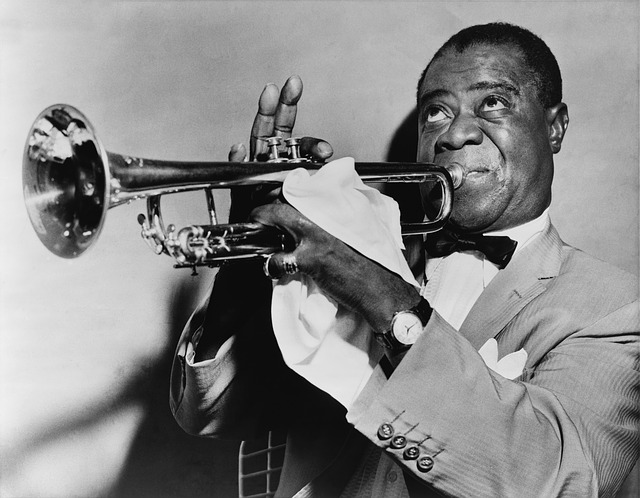
http://www.barnesandnoble.com/w/waging-business-warfare-lessons-from-the-military-masters-in-achieving-competetive-superiority-revised-edition-david-rogers/1119079991?ean=2940149284030


Leave a comment

Filed under Artists, Becoming an Artist, Creativity Self-Improvement, Developing Talent, Human Potential and Achievement, Goals and Purposes, Personal Stories, Writers

The Writer’s, Artist’s, and Actor’s Quest for Truth

Painting by Urwana DeBoulans

With kind permission of artist Urwana DeBouclans

An actor in teacher-actor-director Konstantin Stanislavski’s Moscow Art Theatre Company owned a dog that she brought to rehearsal, and it slept all day while the company rehearsed. Inexplicably, every night just before the actors were to end the rehearsal the dog got up and went to the door with its leash in its mouth, ready to be taken home. It puzzled Stanislavski why the dog trotted to the door several minutes before his master called him, just as rehearsal ended. How did the dog know that rehearsal had ended before anyone went to the door?

Eventually Stanislavski figured it out. The dog could hear from the voices when the actors started talking like normal people again. It could tell the difference between the fake and the real. If a dog could, certainly an audience could, and the fake is repulsive in an actor. As the best actors tell each other, “When you are on stage or before the camera, remember not to act. People can tell when you’re acting.”

The Actor’s Truth

Stanislavsky was the most significant figure in the history of actor training. When he used the word “art” it meant “life” to him, and life meant the truthful, the real, the authentic, the genuine.

“Life” is all he wanted, and life is what he struggled to get to flow through the actor, and between the actors, and between the actors and the audience. Everything in the work of art must be convincing for the artist as well as for the audience. Actors should behave as though the character is real and what he is doing is real, as though the conditions and circumstances of the character’s life are real. That the dagger Othello stabs himself with is real. That everything is real. Stanislavsky said that the judge of the truthfulness of a performance is not the actor or the audience, but the actor’s fellow actors on stage with him. If you have an effect on your fellow actor; if he believes in the truth of your performance, you’ve reached your creative goal: truth.

Many Paths

A household name in his time, John Ruskin was a 19th century English art and architecture critic and wonderful stylist whose beauty of expression ignited the creativity of Marcel Proust. Ruskin believed that what distinguishes great artists from weak ones is first their sensibility, second, their imagination, and third, their appetite for hard work. He might just as well have added a fourth, their quest for truth. All great artists in every art are aiming and have always aimed to achieve that object of their quest. What that truth is to them—how they conceive of it—varies from artist to artist, and is the basis of their distinctive work. A Zen adage reads: “There are many paths to the top of the mountain. “ There are also many paths, many routes, to artistic truth. You are on a path.

To Ruskin the artist’s truth lay in his/her self-expression, the revelation of the artist’s being, such as the painter’s special talent to convey every shadow, every hue, every line, every impression of “visible things around him ” and secondly his ability to communicate his every emotion. Painter and print maker Edward Hopper too believed that the aim of great painters was to attempt “to force the unwilling medium of paint” into a record of their emotions. A skilled writer, a skilled dancer, a skilled sculptor works an entire career to express every shadow and every emotion—in words, in motion, in an object.

Truth and the Artist’s Vision

In Fire in the Crucible: The Alchemy of Creative Genius, John Briggs sees the artist’s quest for truth and beauty as the artist’s important motivation to communicate his/her vision. That vision is based on “themes” which are the artist’s “fingerprints.” The vision is a strong part of the artist’s identity and may well have become a part of him in childhood, and may well too, be reflected in his work all his future life. In early life future artists accumulate experiences, people, places, key episodes, and ideas which they will draw on the rest of their lives, endlessly recapitulating them in their work. These are the origins of their craft. Anyone who knows an artist’s work well is able to identify the artist’s recurring themes and subjects—his preoccupations that are everywhere in the work.

Your work has themes in it that are inseparable from your personality and creative spirit and life. Those themes and that vision affect everything about your work down to its smallest detail. Every part of the artist is revealed in his/her art and cannot be hidden. And if it is really art, its truth is that it is in close partnership with the whole being of the audience that the artist is trying to reach, the beauty and truth in the work resonating in the sensitivity to truth and beauty in the audience.

Hemingway’s Truth

No artist talked about or wrote about or was more consumed with the quest for truth than Ernest Hemingway. The writer’s job, he said, is quite simply “to tell the truth,” to speak truly. To tell the truth was to tell about what he had personally experienced, or what he knew from going through something similar. Most artists are concerned with subjective truth more than literal truth, but Hemingway used no other information from any sources than what had happened to him, not literary sources, not academic. Truth was transcribing accurately and simply for the reader “the way it was,” and “the real thing,” putting down what he saw and felt in the simplest way he could. He could invent and elaborate as any artist does, but he elaborated from the reality of what he actually knew from having been there. He said that a writer’s “gift” was a conscience, a “built-in, shockproof bull shit detector” the “writer’s radar” that went off in his mind when the writer was not telling the truth, but “faking.”

Hemingway wrote in Death in the Afternoon:

“I was trying to write then and I found the greatest difficulty, aside from knowing truly what you really felt, rather than what you were supposed to feel, was to put down what really happened in action: what the actual things were which produced the emotion that you experienced…the real thing, the sequence of motion and fact which made the emotion and which would be as valid in a year or in ten years or, with luck, and if you stated it purely enough, always.”

Similar to Hemingway, many painters paint only what is before them and is true and visible, and refuse to paint from memory. Are you an artist who sticks to “the way it was” and “the real thing”?

Henry Miller/ Gertrude Stein/ Paul Cezanne

Novelist and essayist Henry Miller felt that the artist’s truth lies in finding a “voice,” and that the discovery of one’s true voice doesn’t happen easily, but requires boldness. Miller imitated every style in hopes of finding the clue to the gnawing secret of how to write. Then:

“Finally I came to a dead-end, to a despair and desperation which few men have known because there was no divorce between myself as a writer and myself as a man: to fail as a writer meant to fail as a man…It was at that point…that I really began to write. I began from scratch, throwing everything overboard, even those I loved. Immediately I heard my own voice…the fact that I was a separate, distinct, unique voice sustained me. It didn’t matter to me if what I wrote should be considered bad. Good and bad had dropped out of my vocabulary…My life itself became a work of art. I had found a voice. I was whole again.” (Henry Miller, Reflections on Writing)

Gertrude Stein also found truth and beauty coming out of the artist’s spontaneity: You “have to know what you want to get; but when you know that, let it take you and if it seems to take you off the track don’t hold back, because that is perhaps where instinctively you want to be and if you hold back and try to be always where you have been before, you will go dry.”

Truth doesn’t lie in “careful thinking,” But “It will come if it is there and if you will let it come, and if you have anything you will get a sudden creative recognition.” It “will be a creation if it came out of the pen and out of you and not out of an architectural drawing of the thing you are doing.” (John Hyde Preston, “A Conversation with Gertrude Stein”). In the same way, 19th century landscape painter George Inness found that the truth of art is the artist’s “personal vital force” that if left alone comes out of the artist spontaneously without fear or hesitation.

A creator must necessary possess tremendous drive, determination, and persistence because exceptional creativity requires a tremendous amount of effort. Paul Cezanne’s truth was the perfection of his craft in a lifetime’s work: “I could paint for a hundred years, a thousand years without stopping, and it would still seem to me as if I knew nothing…I consume myself, kill myself, to cover fifty centimeters of canvas…I want to die painting…” All great artists are spurned on by a single-mindedness, but few can match Cezanne in that regard.

An Architect’s Truth

new-york-115629_640Frank Lloyd Wright was America’s greatest architect. Not one given to easy goals, Wright’s architectural goals were , he stated, “the rejuvenation of architecture, the creation of indigenous forms to express and suit life in the United States, and the destruction of Fakery and Sham (that) rule the day.” To Wright, truth didn’t lie on the surface of things. Surfaces were deception. Truth was hidden and capable of being discovered only by probing deeply. “For the architect the patient analysis of nature would reveal the true meaning of functional structures.” Wright found in nature and the machine the two inseparable cornerstones of his search for truth. (Robert C. Twombly, Frank Lloyd Wright: His Life and His Architecture.)

A Dancer’s Truth

Isadora Duncan’s quest for a dancer’s truth was lifelong and intense. “My art is just an effort to express the truth of my Being in gesture and movement. It has taken me long years to find even one true movement…I spent long days and nights in the studio seeking that dance might be the divine expression of the human spirit through the medium of the body’s movement…I was seeking and finally discovered the central spring of all movement, the center of motor power, the unity from which all diversities of movement are born, the mirror of the vision for the creation of the dance—it was from that discovery that was born the theory on which I founded my school.” (Isadora Duncan, Autobiography)

Commitment and Sacrifice as Truth

Artists exhibit ferocious concentration on the task to be accomplished and will let nothing divert them from accomplishing it.

“I have always put the requirement of what I was writing first–before jobs, before children, before any material or practical interest, and if I discover that anything interferes with what I’m doing, I chuck it. Perhaps this is foolish, but it has always been the case with me.” (Saul Bellow)

“What one bestows on private life—in conversations, however refined it may be…is the product of a quite superficial self, not of the innermost self which one can only recover by putting aside the world and the self that frequents the world.” (Novelist V.S. Naipaul)

“Sometimes I don’t understand why my arms don’t drop from my body with fatigue, why my brain doesn’t melt away. I am leading an austere life, stripped of all external pleasure, and am sustained only by a kind of permanent frenzy, which sometimes makes me weep tears of impotence but never abates.” (Gustave Flaubert)

Your Artist’s Credo

It should be apparent from what you’ve just read that great artists are precise and clear and quite serious about what they are striving to accomplish—what truth they’re seeking–and can describe it succinctly in a paragraph or two.

How would you describe your overall artistic vision, the truths you are trying to express in work after work? And what are the handful of most important recurring themes that are so much a part of you?

“What I’m trying to get across is…”

“In all my works I find these themes again and again…”

You might ask people who know your work well their opinion. Put the answers down in writing, a statement of your artist’s credo.

Let me know by leaving a comment about the truth you are seeking, your artistic vision, and the themes in your work. I’m writing a book about art and artists of all kinds and want to see what your thinking is. If you are not an artist but are interested in the subject, I would like to hear your opinions too.

© 2014 David J. Rogers

For my interview from the international teleconference with Ben Dean about Fighting to Win, click on the following link:

www.mentorcoach.com/rogershttp://www.mentorcoach.com/positive-psychology-coaching/interviews/interview-david-j-rogers/

Order Fighting to Win: Samurai Techniques for Your Work and Life eBook by David J. Rogers

Fighting to win Amazon

Click on book image to order from Amazon.com

or

http://www.barnesandnoble.com/w/fighting-to-win-samurai-techniques-for-your-work-and-life-david-rogers/1119303640?ean=2940149174379


Order Waging Business Warfare: Lessons From the Military Masters in Achieving Competitive Superiority

Waging Business Warfare812sCY9edLL._SL1500_

Click on book image to order from Amazon.com

or

http://www.barnesandnoble.com/w/waging-business-warfare-lessons-from-the-military-masters-in-achieving-competetive-superiority-revised-edition-david-rogers/1119079991?ean=2940149284030


15 Comments

Filed under Actors and Directors, Artists, Becoming an Artist, Creativity Self-Improvement, Dancers, Developing Talent, Human Potential and Achievement, Goals and Purposes, Writers

Finding a Creative Second Life: Parallel Careers

rails-407242_640This post is about realizing what marvelous talents and gifts you may possess and may not yet be fully using, but may wish to. It tells the stories of people who felt the same.

People from many countries will read this post and there is no doubt in my mind that they will think of similar examples from their own countries. I’d be interested in learning about them.

 George Bernard Shaw

Before settling down to a playwright’s life and eventually being awarded the Nobel Prize in literature, Irishman George Bernard Shaw drifted aimlessly and unhappily from one occupation to another, including selling men’s clothes in a shop. He thought of becoming a novelist, so dutifully while selling real estate, he wrote one novel each year for five years and submitted the manuscripts to a publisher. Each was rejected, and he was discouraged.

Finally a sympathetic editor accompanied a rejected manuscript with a note stating that while the publishing house would have to turn down this manuscript too, the dialogue was superb. The editor asked, “Did you ever think of writing plays?” Shaw had written little plays as a boy that he and his friends would perform to entertain his family, but he hadn’t written one since.

Encouraged now, immediately he turned to using his strength–writing dialogue. He wasn’t meant to sell men’s shirts or real estate. He wasn’t even meant to write novels. He wasn’t meant for a thousand things. He was meant to write plays. (In my language, that was his intended destiny.) That’s what he was best equipped to do, just as you are best equipped for certain undertakings.

Core Strengths

An important way to find fulfillment in life and perhaps stumble upon a new identity is by making regular use of your principal strengths–your main aptitudes, talents, gifts, personal qualities, and capabilities, and doing so freely, without inhibition, without conflicts, without being interfered with.

Your strengths are what, in particular, out of all you’re capable of, you do better than anything else, and perhaps are happier doing than anything else. They are whatever you’re doing when you feel deep down, “Now, at this moment, I’m doing what I do especially well. I love it. It makes me happy.”

You have many strengths, but one is dominant. It is your main strength, your core strength. You’re at your best when you’re making use of your core strength in an occupation, or while pursuing a purpose that is important to you, or in an abiding interest, all of which bring fulfillment.

From your earliest years you have gravitated toward activities that enabled you to make use of your core strength. As a child you enjoyed building bridges with blocks. You never forgot the joy you felt. You became an engineer so that you could feel that the rest of your life. Or you liked to paint; or liked sports; or liked to sing; you liked to play in the garden; you enjoyed being with friends and showing them your poems. You were particularly good at math.

The life pursuits of people who excel were often foreshadowed by what deeply interested them as children. A chord was struck; something crystalized; a future was laid out. At times, like Shaw, they drift from one field, one occupation, to another, experiencing dead-ends and false starts, and only later return to that earlier interest, and then feel, “This is what I should have been doing all along.” So it is a good idea to never forget what your heart was once drawn to, but to keep it in mind whatever else you might be doing in your life.

In a previous blog I described the Zeigarnik Effect (named after Russian psychologist Bluma Zeigarnik, the first person to study it): you don’t forget important things you started even long ago, but did not complete. They linger in your mind, reappearing from time to time, and in fact you remember them better than you do completed tasks. You have a strong desire to finally complete them, and you may do so many years later. That people have a need to finish what they start is true especially of the most highly motivated people.

As a boy, my friend loved to listen to his father tell stories of significant events in history and great people who did great things. He would then tell his friends the stories his father had told him. He worked hard and became a top executive with one of the world’s largest retailers. But he found that something was missing–the stories his father had told him and that he had loved. So while working at his job during the day, he earned a PhD in history at night, a subject which he now teaches at a university after work. Now he can tell his father’s stories again.

Putting yourself in a position to return to your past interests and make use of your core strength, if you aren’t already, is a strategy for bringing about positive change in your life and lifting up your spirits to new heights.

 A Parallel Career

The majority of people across the world are bursting with talents and gifts they are longing to make use of. Most people are far greater than their jobs no matter how excellent that job is. They usually have valuable qualities that are never called upon. They possess more intelligence, energy, motivation, imagination, and creativity than their jobs will ever require of them, and their core strength may go unused. So while working their entire career in one occupation that is otherwise perfectly fine and brings them satisfaction, they find more creative outlets to express themselves further and to make use of their core strength and find still more satisfaction. And sometimes the parallel career consumes them and they achieve extraordinary accomplishments and make names for themselves.

Robert Ardrey was a Hollywood screenwriter in high demand and a playwright who had two plays on Broadway at the same time. But he loved anthropology and the behavioral sciences and studied them on the side. He popularized the concept of “the territorial imperative” which asserts that living creatures, including human beings, instinctively protect their territory. (The farther away from the center of it you stay, the less interested in you they are. But step into their territory and the more aggressive they become.) Ardrey became a renowned paleoanthropologist and wrote the best seller African Genesis.

Busy housewife and mother Anne Sexton watched a PBS show on “How to Write a Sonnet” and sat down and wrote one. That first exposure to creative writing ignited an interest, revealed a core strength, and started her on the path to a parallel career. She never attended college. Her only formal education consisted of sporadic adult education classes at a handful of Boston-area colleges. Yet her poems won immediate attention through their appearance in literary magazines and newspapers. A stream of awards and grants followed the release of each of her first three books. Her fourth, Live or Die, won the Pulitzer Prize. She said, “Until I was twenty-eight I had a kind of buried self who didn’t know she could do anything but make white sauce and diaper babies. I didn’t know I had any creative depths.”

Charles Ives—“an American original,” was one of the first American composers to receive renown internationally. He worked during the day as an insurance company executive, as did poet Wallace Stevens, who received the Pulitzer Prize and twice won the National Book Award. American influential and innovative poet William Carlos Williams and Anton Chekov, Russia’s finest playwright and the world’s best short story writer ever, were both practicing physicians. Franz Kafka was a government bureaucrat during the day. Twentieth century English novelist Henry Green, called “the most original…the best writer of his time,” was born into a wealthy family and was the managing director of its bottling business.

Henri Rousseau, a self-taught French post-impressionistic, though busy at work and with a family, started drawing and painting seriously in his forties. Although untutored, he influenced many painters, especially Pablo Picasso. Rousseau worked as a customs official, and was known as Le Douanier, “the customs officer.” Herman Melville, author of Moby Dick and Billy Budd, was also a customs official– at the New York Port Authority.

Englishman Anthony Trollope was one of the most prolific, respected, and successful writers of the Victorian Era. Not much of a believer in art-for-arts-sake, he wrote that all “material progress has come from man’s desire to do the best he can for himself and those about him.,” and stated that what motivated him was what motivates lawyers and bakers—“to make an income on which I and those belonging to me might live in comfort.” He was a career post office employee who wrote his 47 novels and dozens of short stories and travel books while on trains to and from assignments. He claimed that he wasn’t extraordinary, but that any writer could be as prolific if he just budgeted his time efficiently.

Benjamin Lee Whorf, one of history’s foremost linguists, was by profession a chemical engineer and fire prevention inspector. He studied linguistics as a hobby. Truly a towering figure in sociology, Herbert Spencer was also an anthropologist and political theorist, and made a separate reputation in biology.

William Herschel discovered the planet Uranus; in fact it was called Herschel until Uranus was universally accepted. By profession he was an orchestra conductor and a composer known for his twenty-four symphonies.

Colorful novelist and art critic Andre Malraux, called by Jacqueline Kennedy, “the most fascinating man I ever talked to,” was a statesman, the French Minister for Cultural Affairs. Popular novelist Tom Clancy worked as an insurance salesman. Another Nobel Laureate, poet and literary critic T.S Eliot, worked full-time as a banker and then as a chief executive in a publishing company. The author of Alice in Wonderland, Lewis Carroll, was a professional mathematician, and noted photographer.

Samuel F.B. Morse was a prominent American portrait painter. He received a message that his wife Susan, age 25, was seriously ill. He rushed from Washington to his home in New Haven to find that she had died while he was returning. Devastated by his failure to reach her in time and the inability of the current message technology to get the news to him faster, he set out to develop a more effective system of long-distance communication. He then invented the telegraph and the Morse code that achieved that goal, connecting all four corners of the globe.

Follow Where Your Core Strength Leads You

Which of your many strengths is your core strength, not your second strength, or third, or fourth? What do you do especially well and continually gravitate toward? What are you doing when you don’t want to quit? What are you doing when you feel most fulfilled and can say, “This is me at my best. There is nothing else like this.”

The goal is to be able to make full use of your core strength freely, without inhibition, without conflicts, without being interfered with.

Possibly in a parallel career.

© 2014 David J. Rogers

For my interview from the international teleconference with Ben Dean about Fighting to Win, click on the following link:

www.mentorcoach.com/rogershttp://www.mentorcoach.com/positive-psychology-coaching/interviews/interview-david-j-rogers/

Order Fighting to Win: Samurai Techniques for Your Work and Life eBook by David J. Rogers

Fighting to win Amazon

Click on book image to order from Amazon.com

or

http://www.barnesandnoble.com/w/fighting-to-win-samurai-techniques-for-your-work-and-life-david-rogers/1119303640?ean=2940149174379


Order Waging Business Warfare: Lessons From the Military Masters in Achieving Competitive Superiority

Waging Business Warfare812sCY9edLL._SL1500_

Click on book image to order from Amazon.com

or

http://www.barnesandnoble.com/w/waging-business-warfare-lessons-from-the-military-masters-in-achieving-competetive-superiority-revised-edition-david-rogers/1119079991?ean=2940149284030


9 Comments

Filed under Becoming an Artist, Creativity Self-Improvement, Developing Talent, Human Potential and Achievement, Goals and Purposes, Motivation