A serious writer has the identity of a writer, emphasizes the production of works, and is a skilled craftsman.
Serious Writers Have a Writer’s Identity
 Sometimes a person who one day will become a serious writer doesn’t know herself what she might do with her life. But she feels instinctively that she’s good for something and has some reason for existing. She has a hunch that there is something important in her that’s worth pursuing further. She finds that something in words. She makes herself into a writer–an expert in expressing herself via written language. At times, with some people, writing becomes the center of their identity, and they become another Saul Bellow who said that when he wrote he felt like an artist, but when he was not writing he didn’t feel like anything.
As a writer you’re specially endowed with (and may have been born with) not only “creative stuff” but with an assortment of personality qualities that equip you specifically for the writer’s role. And it’s that identity that gives you the sense that you’re a person with a definite life task—to write, to create. Whether you find writers in big cities or in remote jungles or rain forests and deserts you will also find them generally to be quite similar. Writers who succeed have a combination of such inner qualities as curiosity, obsessiveness, doggedness, and endurance. They’re playful, sensitive to life, open to experience, and have an abundance of physical strength, energy, and stamina. Often it’s the end of the writer’s endurance that stops her work day. They have a much higher tolerance for ambiguity than the great majority of people—one reason they’re usually such good problem-solvers.
Your everyday identity isn’t the same as your writer identity. The “you” that shines through a novel you’ve written isn’t the same person your neighbors know. It’s a version of you, but yet it’s different. As a writer you’ve a sensitivity to language which a person either possesses or does not possess.
Language—for a writer shaping it into phrases, sentences, and paragraphs–is delightful. Amy Tan wrote, “I am a writer. And by definition, I am someone who has always loved language. I am fascinated by language in daily life. I spend a great deal of my time thinking about the power of language.”
You know the basics of grammar (know a noun, a verb, and a preposition when you see them), and have the biggest vocabulary and highest appreciation of words, the greatest skill in using them, and the best ear for them. Most writers are able to produce large volumes of work. But that’s just the tip of the characteristics writers have in common and which make up the identity of serious writer.
Serious Writers Emphasize Production of Works
 A main goal of writers and all other creative people is to produce works. Writers make the structure of their creative lives by means of their work. If they are unable to work or the work doesn’t go well, they suffer. The writer–the artist, whatever the art–uses the art to express emotion and when they are denied that expression they feel tension and conflict.
Always have your production goals in mind: “The only certainty about writing and trying to be a writer is that it has to be done, not dreamed of or planned and never written, or talked about…but simply written” (Janet Frame). Saul Bellow said, “For the artist work is the main thing and always comes first.” Psychologist Howard Gardner writes about high-excelling creative people. He says, “Individuals whose stock in trade is to do things which are novel, are people who’ve got to have a pretty good command of how they work.” Psychologist Abraham Maslow said, “The fact that people who create are good workers tends to be lost.” The inventor, whether artist or thinker, creates the structure of his psychic life by means of his work…It is only as the work is done that the meaning of the creative effort can appear and that the development of the artist…is attained” (Brewster Ghiselin.)
In Art & Fear, authors David Bayles and Ted Orland write about what happens in a ceramics class that I’ve found also happens in a class of writers. You could take two imaginary groups of writers in a class—those on the left side of the room would be graded solely on the quantity of the work they produced. Those on the right side would be graded only on the work’s quality. On the final day of the class the teacher would measure the amount of work of the quantity group—500 pages an A, 350 pages a B, and so forth. Those the teacher graded on quality would have to produce only one story, but it would have to be perfect to justify an A.
A curious thing would happen. The quantity group would also produce the highest quality work. The quantity group would churn out streams of work and learn from their many mistakes and develop a wide variety of skills. But the quality group would get caught in the elusive concept of perfection and grandiose dreams and would become paralyzed. Some writers produce 10, 15, or 25 times more writing than others and those most productive usually rise higher, do better work, and find a greater sense of accomplishment.
Experienced writers almost always structure their work time and environment carefully. A perfect work place and good production routines and rituals are to be treasured. Simply by being there, ready to work repetitively the same time day after day, the power of good habits goes into effect. Some writer’s production habits will strike you as strange. The poet H.D. (Hilda Doolittle) splashed ink on her clothes to give her a feeling of freedom when she wrote. Hard-boiled detective writer Raymond Chandler could only write when he was drunk, and poet A.E. Housman rarely wrote unless he was sick. Voltaire wrote love poems in bed using his mistress’ back as a desk. I’m sure you have your own peccadillos too, and if we ever meet you can tell me about them. I’ll tell you about mine.
Writers’ production ebbs and flows. Some periods the words come out of you in torrents. You’re in overdrive–700 words a day, a thousand, 1,500, and every word is perfect. Other days they wouldn’t come out were you to use blasting powder. Some writers—most—find it easy to be distracted. Beth Henley, Pulitzer Prize winning playwright at 28, said, “I love to work, although sometimes I spend whole days doing nothing more than picking the lint off the carpet and talking to my mother on the phone.” Joyce Carol Oates says she squanders as much as 90% of her time writing letters—e-mails—to authors, her writer friends. “The problem is that they write back, and so do I. And suddenly the morning has vanished irretrievably.”
There isn’t one universal work/production program that suits all writers. A production program won’t work if it’s imposed on you. Your program will have to be custom-designed by yourself for yourself. To find the ways and means to improve your production should be a major aim.
If as a writer you’re productive, you’re happy. If you’re not, you’re unhappy. Ernest Hemingway, as hard a working and production-minded writer as there’s ever been, said that for him, “Work could cure almost anything.” But many writers aren’t successful because they haven’t figured out the best work/production program that equips them to:
- Focus on the work for desired periods of time
- Abandon what isn’t working, putting aside futile problems that will lead to dead-ends
- Free themselves from distractions and time-wasters
- Persist in the midst of obstacles and setbacks
- Maintain their energy
- Achieve a desirable level of output
Serious Writers Are Craftsmen
 The sciences and anything involving a machine are mysteries to me. I have no aptitude for them. Once I got hold of an old used paperback on how to become handy around the house and did some wiring and put in a light switch in the children’s bedroom without burning the house down. My children watched me and marveled. I swelled with pride. I felt I’d really accomplished something. I’d say to guests, “come upstairs for a second” and show them the light switch and brag, “I put that in.” A very unusual accomplishment for me. But writing I understand and am good at. I’m confident about it. It’s my best craft.
Writers are talented people who have open to them many routes that could enable them to express themselves. But they focus on writing. Everyone has one dominant ability, and writing may well be yours. Ernest Hemingway could have been a professional big-game hunter or deep-sea fisherman—he was that versatile. He said, “I like to do and can do many things better than I can write, but when I don’t write I feel like shit.” William Faulkner could have made it as a painter.
The craft you choose to try to excel in has to be appropriate and can’t be simply wishful thinking. A moment comes—an experience occurs—and you become aware that writing, not something else, is the direction that suits you best and will lead to a fulfillment you might not reach if you follow another route to another craft—the craft of the engineer, the attorney, the athlete, etc., for example.
Your aptitudes, personality, abilities, capabilities, temperaments, tastes, strengths, weaknesses, and interests are matched up first of all with a writing career and then with the kind of writing you wish to do. Will you specialize in fiction or non-fiction, drama, or poetry, novels or short stories, comedies or tragedies, or will you be a jack of all trades and write more than one? What you choose becomes the craft that’s your own.
Awakening to the realization that the writing craft is appropriate to you and you to it can strike at any time in a person’s life. Harriet Doerr finished her degree at 67 and won the National Book Award at 73. Englishman Thomas Chatterton was a mature poet by the age of sixteen. Poets, like mathematicians, mature very young. Dylan Thomas was at his most talented at nineteen.
A serious writer’s identity, production, and craftsmanship are three pillars of a structure of writing excellence.
© 2024 David J. Rogers
For my interview from the international teleconference with Ben Dean about Fighting to Win, click the following link:
Order Fighting to Win: Samurai Techniques for Your Work and Life eBook by David J. Rogers
Click on book image to order from Amazon.com
or
Order Waging Business Warfare: Lessons From the Military Masters in Achieving Competitive Superiority
Click on book image to order from Amazon.com
or
 Writing is a time-consuming process of self-discovery, self-awareness, and self-expression that may satisfy a writer’s deepest needs. Some writers find that nothing can compete with, nothing can replace, the writer’s joy of creating. Many writers so saturate themselves with their work that it becomes a need as strong as sleep, sometimes stronger. Many writers think, “This writing that I am doing is essential to my fulfillment and well-being. At times I may be so involved I will forget to eat. I will forget to make love. I will block out distractions. I will arrange a life-style and personal habits and routines to accommodate my writing.”
 Some writers do consider writing the most important role in their life and give other roles short shrift. Many writers would agree with Katherine Anne Porter who said that the “thing” between her and writing was the strongest bond she had ever had—stronger than any bond she had ever had with any person or activity.
  Here it seems appropriate to talk about my Law of Give Up to Get. The Law of Give Up to Get means simply that to get something important in life, you must give up something else. Gripe all you want, rail at the gods, and wish it weren’t so, but you have no choice. In the long run, perhaps you can have everything you desire. But at any one time, to get A you’ll have to give up B. To get X you must give up Y, and maybe you might have to give up Z too. To write, you have no choice but to give up something else—maybe more than one thing. That’s a law, the way life works: to achieve this, you’ll have to give up that—time, energy and other resources spent doing other things, attaining other satisfactions.
 Are there any roles in your life that can be supported with a smaller investment of time, energy, and other resources so that you can devote more time to writing? Are there any roles currently in your life you might dispense with?
 have finished a painting that in your judgment is excellent in every respect. Like Ariel you are trained and educated in your craft and recognize your paintings’ consistently high quality and dazzling originality. You know you can’t do better. You feel that no one but you could have executed this project. It required blending many abilities not every painter possesses. You see in your painting, as Ariel saw in hers, something especially flamboyant and fetching. Your hopes for its artistic and financial success are high.
 your book. She recognizes its significant sales potential. She calls you In Chicago from New York and says that your book is one of the two or three best books of any type she has ever read. She is entranced with the book and pledges to you to commit to “putting it over” whatever resources are necessary to make it the country’s top best seller (The book is topical and has that kind of potential.) You call your agent and ask him about the publisher reputation and he tells you that they are known for selecting one of their titles each year and making it the kind of best seller the publisher described.
 resilient means first of all accepting such adversities and those you have experienced yourself as an unavoidable part of the writer’s and artist’s life. That insight deeply-felt and never forgotten is essential for maintaining a firm, unshakeable spirit.
 period the body-builder rests, those muscles are rebuilt, but bigger and stronger than they had been. Don’t be so afraid of hardships, stresses, difficulties, and crises. They strengthen you emotionally, spiritually, and mentally.
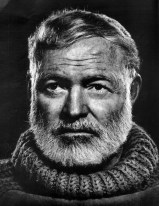 working, as confident as van Gogh and became one of the most popular American writers of his era. Ernest Hemingway said that at the beginning of his career every day “the rejected manuscripts would come through the slot in the door…I’d sit at that old wooden table and read one of those cold slips that had been attached to a story I had loved and worked on very hard and believed in, and I couldn’t help crying.” But he had faith that eventually his work would be in demand and never stopped working. The crowning achievement was the Nobel Prize in Literature.
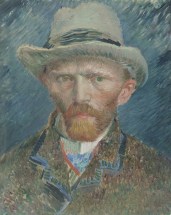 Vincent van Gogh spent a short, intense five-year career producing an astonishing three thousand masterpieces that are now auctioned for many millions of dollars, but in his lifetime sold only one painting, and that was for a few brushes and paints. But he continued working confidently and never doubted that in the future his talents would be recognized
 In every era, in creative after creative, three empowering qualities like three ingredients of a potent formula have proven to help writers and artists not to give up when they fail. Those qualities are being resilient, being persistent, and having faith in yourself. Resilient, persistent writers and artists with strong faith in themselves never give up.
 Faith in yourself touches every facet of your being–whether you think about your prospects positively or in a self-defeating way, how strongly you motivate yourself, your susceptibility to self-doubt and discouragement, and the positive changes you will be able to make in your life.
 successful. Catherine Cox studied greatness and disagreed. She found that persistence is a key. Persistence is so important in almost every endeavor that it compensates for lesser intelligence. Cox concluded: “High but not the highest intelligence, combined with the greatest degree of persistence will achieve greater eminence than the highest degree of intelligence with somewhat less persistence. “
 I think of the famous Michael Jordan “flu game” when he had to be carried off the floor after the game with the flu by a teammate, yet scored 38 points and led the Bulls to victory. “Probably the most difficult thing I have ever done,” said Jordan.
 would prefer to be cheerful and happy, but as far as creative work is concerned, how you feel is secondary. What matters most are the requirements of the craft you have committed yourself to, and one requirement is day after day to put out effort to achieve your creative goals. It seems to me that one constant goal that is shared by most people in the arts is to develop your in-born talents to the fullest and that another requirement is to
  corresponded about. Nurturing depression in and out of psychiatric hospitals, some of them committed suicide including John Berryman and Randall Jarrell. Poets Sylvia Plath and Ann Sexton were friends and felt the same. They talked to each other often, and also committed suicide.
 Whatever has been said about the relationship between creatives’ state of mind and their performance, writers and painters I know or have read or heard about have found writing or painting the most fulfilling and blissful thing they do.
 had the same view of the function of writers and artists. Ruskin: “The whole function of the artist in the world is to be a seeing and feeling creature.”
 Painter Edouard Manet thought the urge to create is a simple reflex that doesn’t require thought: “There is only one true thing: instantly paint what you see. When you’ve got it, you’ve got it. When you haven’t, you begin again.”
 Creatives have complex memories from which their art derives: “The essential factor of development of expertise is the accumulation of increasingly complex patterns in memory” (Andreas Lehmann).
 Since the earliest civilizations people have been theorizing about creatives among them and the creative process. The first question was: is creative ability a gift from the gods?
 The best writing resists critical explanation: “In truly good writing no matter how many times you read it you do not know how it is done. That is because there is a mystery in all great writing and the mystery does not dissect out” (Ernest Hemingway).
 focus on a system to improve your creative performance is to be aware of what you are trying to accomplish–with your life, and in this year, this day, this moment. When you acquire the habit of saying to yourself often in your daily life–morning, noon, and night–“Focus on your purpose,” those words become a hypnotic motto that stirs your muscles and mind to action. Then your life takes on a quality that is now becoming rare even among gifted creators–vital intensity that facilitates the production of works that can be pointed to and admired. That single goal–producing works as a result of talent combined with discipline–is more powerful than all other creative goals.
 that specialty. And you must
  free of suffering are the goal in Buddhism. The Buddhist Eightfold Path consists of eight ideals that when practiced bring an upright and happy life. They are eight prescriptive “rights,” including right association–being careful about associating with good, wholesome, even holy people; right intent–making up your mind as to the one main purpose in life you really want to pursue; right speech–no lying, backbiting, or slander; right thoughts–thinking compassionately, generously, and with goodwill; right conduct–not killing, stealing, or lying; right effort–using your will power and taking action to achieve a good life; right concentration–the use of techniques to enhance concentration and enlightenment. And there is right livelihood–doing what you’re best suited to do in an honest occupation that harms no one.
 Success in a creative field (in fact success in any field) is not attributable to one thing alone such as talent or IQ as many people believe, or three or four things. I believe there are eight components. It’s important to understand what the eight components are and the questions they will answer:
 their creative lives by means of the work they do. If they are unable to work or the work is poor quality or is stopped-up and doesn’t go well, they suffer. Regarding the necessity of a creator to
  There isn’t one universal work/production program that suits all creators. A production program won’t work if it’s imposed. Each creator’s program will have to be idiosyncratic–custom-designed by yourself for yourself. To find the ways and means to improve the quantity and quality of your production, you should experiment and try out different approaches until the best work/production program suited to yourself is found.
 For high quality uninterrupted work to happen, not all, but most creators need isolation and solitude. “The concentration of writing requires silence. For me, large blocks of silence. It’s like hearing a faint Morse code…a faint signal is being given and I need quiet to pick it up” (Philip Roth). Some creators prefer noisy environments. But even the feeling that you might be interrupted interferes with creative thought.
 production goals continuously in mind. Production ebbs and flows. Some days work comes out of you in torrents. You’re in overdrive. But other days–nothing. But one way or another,
  A curious thing would happen. The quantity group would also produce the highest quality work. The quantity group would churn out streams of work and learn from their many mistakes and develop wide assortment of skills. But the quality group would get caught up the elusive concept of perfection and grandiose dreams and would become paralyzed. Some creators produce 10, 15, or 25 times more works than other creators. Those who produce the most works usually rise higher, do better work, and find a greater sense of accomplishment.
 If you neglect an activity for just two days you’ll function much less effectively when you resume work. In writing and painting, as in everything else, inactivity leads to the atrophy of abilities. Your level of motivation affects your willingness to work. The quantity of your production is in direct proportion to the intensity of your
 If you want to be successful in the arts, be older rather than younger. Older is better because most outstanding contributions to the arts are not made by people in their teens, 20s, 30s, or 40s, but in their 50s, 60s, and 70s. Why is that so? The main reason why, artistically, older is better than younger is that to have the ability to do artistic work expertly and do increasingly superior work, the main factor is the artist’s KNOWLEDGE and its PRACTICAL APPLICATION over a period of time that is often long.
 No artist has ever lived –Shakespeare, Michelangelo, Proust, Picasso, Mozart–who had so much talent that they didn’t need considerable knowledge to excel at a high level. Talent is a blessing, but talent alone isn’t enough.
 In any field in which you are intensely engaged, such as serious writing or painting, the brain you feed with knowledge just goes on learning and learning and learning and your abilities grow and grow. The more knowledge you have, the faster you’ll recognize related information that’s relevant to solving problems you are facing. You’ll be able to say, quite quickly, “So-and-so handled the problem I’m now facing by…” Acquiring knowledge is what you are doing all the time you’re working at your craft, talking with others about your craft, studying it, taking classes, reading, and practicing to develop your skills.
 The more knowledge that is needed to excel in a field, the more
  Following in the footsteps of the greats is a vital route to writing knowledge, and knowledge leads to skills, and skills coupled with confidence lead to success. What helps is an aptitude for learning and learning fast, which I can hardly imagine a person in the arts not possessing.
 Let’s hope that your mind is a sponge sopping up knowledge because people in the arts who can acquire knowledge quickly and remember large amounts of it have an advantage when trying to create something original.
 Have a need for self-expression and self-disclosure. Good writers reveal themselves in their work. Readers want writers to reveal themselves. A novel, for example, enables authors to convey a wealth of information that expresses them. Your writing, even the way you turn a phrase and the metaphors you use (why did you use an image of a fish then instead of a train?) and your vocabulary and points of view, tell the reader what you’re like. Writers have a need to discover exactly what they are thinking by writing it out, and then to artfully communicate it to the reader who wants to know.
 Possess
  Have a strong concern for your
  Be able to muster an abundance of physical strength and stamina. Often it’s the end of writers’ endurance that stops their working day. Novelist Thomas Wolfe would turn in manuscripts a million words long . He claimed that the physical demands on the writer made the writer’s life seem to him to be the hardest life man has ever known.
 Have or develop a business sense. You have a career to manage and responsibilities and expenses. Study marketing and salesmanship–read. Take business classes.
 Gardner: “If the promising writer keeps on writing–writes day after day, month after month–and if he reads very carefully, he will begin to ‘catch on.’” Hemingway, convinced of the value of persistence, wrote, “Anyone who says he wants to be a writer and isn’t writing, doesn’t. Professionals
  Hemingway: “The hardest thing in the world is to write straight honest prose on human beings. First you have to know the subject; then you have to know how to write. Both take a lifetime to learn.” The vocabulary in a Hemingway work is simple, the sentences clear and uncomplicated. And short. The style is non-literary, and is colloquial American English. His rule was that his language must be readable, accurate, and economical.
 Andrea, a friend—“Andy”–seemed to reach her peak when she had two short stories published in prestigious literary journals at twenty-four and a novel that sold moderately well at twenty-eight. She didn’t think then it would be her peak, but assumed it was a preview of other successes soon to come. But they haven’t come and she’s been wondering what’s wrong with her.
 path to solving the problem by admitting she’s found herself on a performance plateau—in a performance rut.
 decides they are different. The earlier work was simpler and more heart-felt and sincere. She realizes that she has fallen into a trap of “showing off”–of trying to impress readers with what a good writer she is and how brilliant she is rather than in telling a story in a simple, direct, “Here’s my work, take it or leave it” style.
 She also plans to read biographies and autobiographies of writers living and dead who will inspire her.
 From childhood on, there have been moments in my life–and I think you have experienced this in your life too—when I’ve had to perform and no one could help me—not my mother, not my wife, not a friend.
 It’s very lonely knowing that whether or not you will succeed depends solely on your own skills, your own personality and character, your own preparation, and your own strengths. Then no one can help you, no one can write the novel for you, no one can paint the portrait for you today, or dance in your place, or perform your role in tonight’s play. You’re on your own, my friend. Will you be at the height of your talent today or won’t you? Will you have it? Will your work be good? Will you be satisfied?
 When you write, you’re asking yourself, “Does it sound right?” “Does it flow?” “Is it a good quality?” You’re also “self-instructing.” Self-instruction is talking to yourself to guide actions and telling yourself what strategies you should use. A writer may self-instruct to use more imagery in the story, and self-monitor to count the number of images or tell herself, “My mind is starting to wander. I should focus my attention better.”
 Boil your whole performance down to a few statements, words, phrases, or images:


 davidjrogersftw