Once you are a really good writer or artist, you enjoy many advantages. But beware because now you will also have new weaknesses.
 As a really good writer, painter, actor, architect, or composer you have the ability to generate the best solutions to creative problems. The solutions are much better than the solutions less capable creatives settle on. Your aesthetic judgment is better than theirs. You perceive features of the problems facing you and the solutions to them that lesser creatives don’t notice and can’t think of.
One reason why you are so capable is that if you are really good at your craft, you are able to keep huge amounts of useful information in your working memory, far more than less excellent writers, painters, etc. can keep in their minds. You can easily draw on that wealth of knowledge you’ve acquired about your art–its history, its techniques and artists, its methods leading to success and those that lead to failure or exasperation. Even genius, left alone with no help from extensive knowledge, is not strong.
As an example of the wealth of knowledge possessed by excellent creatives, let me cite multiple Academy Award-winning and Pulitzer Prize winning composer and song-writer Marvin Hamlisch.  He had a staggering knowledge of American songs. I knew Marvin and would do exhaustive research trying to stump him with the least known and most esoteric songs my research could find, asking him “Who wrote…?” and “Who wrote…?” However obscure the song and no matter how confidently I thought, “He will never know this one,” he always knew.
But you must guard against a common weakness of really good creatives: over-confidence in their artistic judgement. Capable as you may be, your judgment is not infallible, and sometimes it is wrong. For example, even a supremely talented writer, painter, or architect can waste months or years on an ill-advised project that looked promising but turned sour. Thomas Wolfe studied playwriting at Harvard and wrote bad plays for nine years before realizing, at the suggestion of his lover, that he had no future in playwriting, but was “meant” to write novels.
In another instance it took George Bernard Shaw five years of submitting to publishers one novel each year to realize the opposite: that he had no future writing novels, but could write plays masterfully. An editor who had turned down Shaw’s novels had said, “Unfortunately we must reject this novel too, but the dialogue was wonderful. Did you ever think of writing plays?’ That was all that was necessary for Shaw to turn the direction of his career.
Really good artists and writers are generally (though not always as in the cases of Wolfe and Shaw) good judges of their own abilities. They are self-critical and self-demanding to a very high degree. They are self-absorbed in a positive way and closely study themselves and their work, which they are obsessed with. They are motivated by a so-called “urge to improve,” and monitor themselves so that they are able to detect errors in their knowledge, technique, style, and skill, and do something to correct those errors.
 Unlike ordinary writers who might not be aware that their plots are not believable, a really good writer would be aware if theirs were not. Yet, in spite of being vividly aware and quite objective and accurate about their own work, expert artists and writers have the weakness of often being wrong in their predictions about the performance of novices they have been asked to evaluate. It is as though they are unable to recognize talent while it is still in a formative state. In fact, the greater their expertise, the more likely they are to be wrong in predicting the performance of novices.
Something very similar may happen in the field of professional editing–highly experienced editors not recognizing the promise of young writers. For example, when young English schoolteacher William Golding’s submission of his first book, Lord of the Flies, was being considered by Faber and Faber Publishers, the editors,  including the senior editor whose judgment was “always right” rejected it as impossible to understand. Only Charles Monteith, who had never edited a book before, argued angrily on behalf of the book he had fallen in love with despite its obvious flaws. Unlike the experts, he saw that good editing could remedy its weaknesses. Lord of the Flies, edited by Monteith, became an international best seller.
Golding went on to write many books, essays, and plays. Golding and Monteith became an example of a superb writer-editor-friends team working together in harmony for many years of productivity culminating In Golding’s Nobel Prize. So if you are a novice and are looking for objective and accurate appraisal of your ability, it may be a good idea not to ask an expert, but to go to a teacher and to hope the publisher’s editor assigned to you is as enthusiastic as Charles Monteith was and as willing to fight for your book.
To improve their artistic performance, really good artists and writers will be more opportunistic, making use of whatever sources of information they need to solve their creative problems. Just as stand-up comedians steal jokes from each other, artists and writers “borrow” insights and techniques from other artists in their own art and from other arts as well, and from any other field they are familiar with.
 Really good creatives are able to pull out of their minds–with ease–the insights they need. They are so able and accustomed to using the substantial skills they have developed, that they do so automatically, “without thought” as a Zen master would say. To them writing or painting is easy. Yet, at the same time, they may be victims of inflexibility in the face of new circumstances. At times they have trouble adjusting to situations confronting them.
For example, marvelous actor Charles Laughton was offered the starring role in the movie The Bridge on the River Kwai, but hard as he tried, he could not form a concept of the role sufficient for him to play it. He turned the role down. He said that he finally realized how it should be played when he saw Alec Guinness play in the movie the role he might have had. Was it an Academy Award winning role, whoever would have played it? Would Laughton have won the Oscar for best actor as Guinness did?
 Really good creatives spend considerable time analyzing the problems facing them while less accomplished creatives spend less time and are not as patient as the exceptional creatives. A study discovered that students in art school who would become the best and most financially successful after graduation took much longer to meditate on and plan their paintings, lithographs, and sculptures.
A weakness of many really good artists and writers is overlooking details that don’t seem to them to pertain to the problem, but do pertain to it. Highly talented people are notoriously blasé about details, don’t worry about them, and don’t like to bother with them. (For example, when F. Scott Fitzgerald submitted the manuscript for The Great Gatsby, it had more than 100 misspellings.) That can also be seen in areas other than the arts. People with extensive knowledge about a sport recall fewer details of a text about that sport than people with little knowledge of the sport.
 Genius in the arts or in any other pursuit is almost always specific to one art, one domain. Often it is assumed without too much thought that a person with a high level of skill in one area will almost automatically be skilled in another area or many other areas. That’s called “the halo effect.” Yet while there are exceptions, the halo effect is generally invalid. High-performing creators do not excel in areas where they have no expertise. But in a single domain they are on their home turf, and their work is really good.
© 2022 David J. Rogers
For my interview from the international teleconference with Ben Dean about Fighting to Win, click the following link:
Order Fighting to Win: Samurai Techniques for Your Work and Life eBook by David J. Rogers

Click on book image to order from Amazon.com
or
Order Waging Business Warfare: Lessons From the Military Masters in Achieving Competitive Superiority

Click on book image to order from Amazon.com
or
 focus on a system to improve your creative performance is to be aware of what you are trying to accomplish–with your life, and in this year, this day, this moment. When you acquire the habit of saying to yourself often in your daily life–morning, noon, and night–“Focus on your purpose,” those words become a hypnotic motto that stirs your muscles and mind to action. Then your life takes on a quality that is now becoming rare even among gifted creators–vital intensity that facilitates the production of works that can be pointed to and admired. That single goal–producing works as a result of talent combined with discipline–is more powerful than all other creative goals.
 that specialty. And you must
  free of suffering are the goal in Buddhism. The Buddhist Eightfold Path consists of eight ideals that when practiced bring an upright and happy life. They are eight prescriptive “rights,” including right association–being careful about associating with good, wholesome, even holy people; right intent–making up your mind as to the one main purpose in life you really want to pursue; right speech–no lying, backbiting, or slander; right thoughts–thinking compassionately, generously, and with goodwill; right conduct–not killing, stealing, or lying; right effort–using your will power and taking action to achieve a good life; right concentration–the use of techniques to enhance concentration and enlightenment. And there is right livelihood–doing what you’re best suited to do in an honest occupation that harms no one.
 Success in a creative field (in fact success in any field) is not attributable to one thing alone such as talent or IQ as many people believe, or three or four things. I believe there are eight components. It’s important to understand what the eight components are and the questions they will answer:
 their creative lives by means of the work they do. If they are unable to work or the work is poor quality or is stopped-up and doesn’t go well, they suffer. Regarding the necessity of a creator to
  There isn’t one universal work/production program that suits all creators. A production program won’t work if it’s imposed. Each creator’s program will have to be idiosyncratic–custom-designed by yourself for yourself. To find the ways and means to improve the quantity and quality of your production, you should experiment and try out different approaches until the best work/production program suited to yourself is found.
 For high quality uninterrupted work to happen, not all, but most creators need isolation and solitude. “The concentration of writing requires silence. For me, large blocks of silence. It’s like hearing a faint Morse code…a faint signal is being given and I need quiet to pick it up” (Philip Roth). Some creators prefer noisy environments. But even the feeling that you might be interrupted interferes with creative thought.
 production goals continuously in mind. Production ebbs and flows. Some days work comes out of you in torrents. You’re in overdrive. But other days–nothing. But one way or another,
  A curious thing would happen. The quantity group would also produce the highest quality work. The quantity group would churn out streams of work and learn from their many mistakes and develop wide assortment of skills. But the quality group would get caught up the elusive concept of perfection and grandiose dreams and would become paralyzed. Some creators produce 10, 15, or 25 times more works than other creators. Those who produce the most works usually rise higher, do better work, and find a greater sense of accomplishment.
 If you neglect an activity for just two days you’ll function much less effectively when you resume work. In writing and painting, as in everything else, inactivity leads to the atrophy of abilities. Your level of motivation affects your willingness to work. The quantity of your production is in direct proportion to the intensity of your
  A writer begins with a talent. Talent is the raw material from which a writer’s career is shaped. Doing well what others find difficult is talent. It is not possible to describe the complete, complex structure of knowledge and skills the talented writer has acquired. The best predictor of future success isn’t just time spent writing, but the amount of time devoted to improving not just this skill or that skill, but the specific skills which are the most essential if a person is to become excellent--those ten or so necessary abilities they must possess if they hope to excel. Developing those skills is the first focus of a person on the Writer’s Way. Skills are taught–by a teacher, or a mentor, or they are
  contentment. “There is a blessed peace in a retreat that happens to suit my fraught nature…I arrive in a heaven…and I sink immediately in a sort of peace from life that I don’t seem to be able to find anywhere else” (Lynn Freed).
 Then, possibly without being aware of how it happened, out of the act of writing more frequently, acquiring knowledge of effective writing, involving yourself in the writing world, enduring at times frustration, suffering, and pain you wouldn’t have had were you not a writer, and growing in
  Writing as a Way opens up new facets of your being that you might not be aware of. You write regularly over an extended period of time–one year, five, ten, thirty, or fifty. It’s writing that you think most about and talk with other writers about and possibly bore your loved ones speaking about. Writing as a Way becomes an indispensable part of your daily and weekly life.
 When you’re writing, you’re focused. Your mind is sharp, crisp. Your thoughts don’t wander. You’re not thinking of anything else. A headache disappears. Worry about the rent dissolves. You forget about yourself, almost as though you’ve stopped existing except in the words you’re putting so carefully on the screen before you. You may be working on four, five, or six projects simultaneously, moving from one to another as the mood strikes, each project requiring different talents. When people don’t recognize the value and quality of your writing, your faith in yourself helps you persist. Poet Stephen Spender said, “It is evident that faith in their work, mystical in intensity, sustains poets.”
 The most distinguishing quality of creative people is a persistent and enthusiastic absorption in their work, in spite of any frustration and suffering they may endure. Creative talent is indistinguishable from passion and intensity. You can hardly call yourself creative without them. One reason writers who are experts are more accomplished than writers who are very good but not great is that experts are more passionate about writing and spend more hours at it, working six hours while less capable writers work two hours. The only way you could keep some people from writing would be to break their fingers.
 It is not unusual for writers and other artists fully absorbed in their work to be for that time in a
  In the arts,
  Through writing you’re drawing out of yourself all that is in you–all the knowledge you’ve acquired, all the experiences you’ve lived through, what your emotions are, what skills you bring, and what you aspire to become. You gain meaning in life and a better understanding of who you are through performing writing. You have the sense that you are a person who is able to reveal important things. Delving deeply, expressing to the world what treasures you have found, you are now an artist, a remarkable status you have achieved by following the Way of the Writer.
 If you want to be successful in the arts, be older rather than younger. Older is better because most outstanding contributions to the arts are not made by people in their teens, 20s, 30s, or 40s, but in their 50s, 60s, and 70s. Why is that so? The main reason why, artistically, older is better than younger is that to have the ability to do artistic work expertly and do increasingly superior work, the main factor is the artist’s KNOWLEDGE and its PRACTICAL APPLICATION over a period of time that is often long.
 No artist has ever lived –Shakespeare, Michelangelo, Proust, Picasso, Mozart–who had so much talent that they didn’t need considerable knowledge to excel at a high level. Talent is a blessing, but talent alone isn’t enough.
 In any field in which you are intensely engaged, such as serious writing or painting, the brain you feed with knowledge just goes on learning and learning and learning and your abilities grow and grow. The more knowledge you have, the faster you’ll recognize related information that’s relevant to solving problems you are facing. You’ll be able to say, quite quickly, “So-and-so handled the problem I’m now facing by…” Acquiring knowledge is what you are doing all the time you’re working at your craft, talking with others about your craft, studying it, taking classes, reading, and practicing to develop your skills.
 The more knowledge that is needed to excel in a field, the more
  Following in the footsteps of the greats is a vital route to writing knowledge, and knowledge leads to skills, and skills coupled with confidence lead to success. What helps is an aptitude for learning and learning fast, which I can hardly imagine a person in the arts not possessing.
 Let’s hope that your mind is a sponge sopping up knowledge because people in the arts who can acquire knowledge quickly and remember large amounts of it have an advantage when trying to create something original.
 Although talent in the arts most often shows itself early, because it takes so many years to develop their talent and become highly proficient in the arts, people who will become expert musicians, painters, performers, and writers can expect to be late bloomers. Artists who perform at a high level do not demonstrate remarkable talent in short order. They are not usually in their twenties or thirties, but in their forties, fifties, and sixties. All spend many years developing the knowledge, attitudes, and skills that will eventually enable them to be recognized for their mastery. All arts involve learning form and the art’s devices, and the need for control, craft, revisions, and structure–time consuming efforts. All begin by imitating existing techniques they have studied.
 A survey of 47 outstanding instrumentalists found that their ability was first noticed on average at the age of four years and nine months. Then they began a very long and arduous period of development of their talent. Pianists work for about seventeen years from their first formal lessons to their first international recognition, involving many thousands of hours of intense practice. The fastest in one study was twelve years, and the slowest took twenty-five years. In other fields you may even be an early bloomer, but in the arts if your expertise is to be at a high level of mastery, unless you are a Dylan Thomas, a rarity who was at his peak at nineteen, you had best avoid discouragement and expect to bloom late.
 Novelist
  When the majority of their friends and associates are settled in a career and life style, late bloomers are not. Late bloomers may eventually reach the height of their achievements and fulfillment which I call “their true
  If you’re a late bloomer, you’ve made false starts. You haven’t peaked yet, haven’t reached your destiny yet, but you may be determined to bloom one day. Late bloomers are more willing than most to persevere and if need be to fail but try again and again until they reach a life they desire. If you are a late bloomer, more than most people you have the sense that you’re constructing yourself as you go along, even rejecting what other people may call golden opportunities if those opportunities don’t appear to lead you in the direction you desire most.
 with the goal in mind for me to have a national television talk show. It was an excellent opportunity and would have paid extremely well. But my wife and I talked it over and I decided that what I wanted to do with my life above all else was simply to sit at a computer in my upstairs work room while my four children played noisily downstairs and my wife came up once in a while to say hello, and produce artful paragraphs that reflected my years of hard work and training. To me that was blooming. I turned the opportunity down. Late bloomers often make similar very difficult decisions while they are constructing themselves.
 Most people–possibly all–who find fulfillment later in life find it in a mission, calling, or vocation. You cannot be dissatisfied when you’re doing the work for which you feel you were brought into the world, a thought that consoled
  Going back to school as a transition to another field is a strategy late bloomers find appealing, in essence ending one career and starting another.
 Have you bloomed? If you haven’t what are you going to do about that? People who aren’t leading satisfactory lives haven’t bloomed at all, and many are trying to, but many have never started trying, and just as many have given up. Better to start if you haven’t already, whatever your age or condition in life. You can always forget the past and start out again, making no excuses for starting out late. Experiment, follow your instincts, and assess yourself and your feelings about your life. Are you going right or are you going wrong?
 Gardner: “If the promising writer keeps on writing–writes day after day, month after month–and if he reads very carefully, he will begin to ‘catch on.’” Hemingway, convinced of the value of persistence, wrote, “Anyone who says he wants to be a writer and isn’t writing, doesn’t. Professionals
  Hemingway: “The hardest thing in the world is to write straight honest prose on human beings. First you have to know the subject; then you have to know how to write. Both take a lifetime to learn.” The vocabulary in a Hemingway work is simple, the sentences clear and uncomplicated. And short. The style is non-literary, and is colloquial American English. His rule was that his language must be readable, accurate, and economical.
 Andrea, a friend—“Andy”–seemed to reach her peak when she had two short stories published in prestigious literary journals at twenty-four and a novel that sold moderately well at twenty-eight. She didn’t think then it would be her peak, but assumed it was a preview of other successes soon to come. But they haven’t come and she’s been wondering what’s wrong with her.
 path to solving the problem by admitting she’s found herself on a performance plateau—in a performance rut.
 decides they are different. The earlier work was simpler and more heart-felt and sincere. She realizes that she has fallen into a trap of “showing off”–of trying to impress readers with what a good writer she is and how brilliant she is rather than in telling a story in a simple, direct, “Here’s my work, take it or leave it” style.
 She also plans to read biographies and autobiographies of writers living and dead who will inspire her.
 From childhood on, there have been moments in my life–and I think you have experienced this in your life too—when I’ve had to perform and no one could help me—not my mother, not my wife, not a friend.
 It’s very lonely knowing that whether or not you will succeed depends solely on your own skills, your own personality and character, your own preparation, and your own strengths. Then no one can help you, no one can write the novel for you, no one can paint the portrait for you today, or dance in your place, or perform your role in tonight’s play. You’re on your own, my friend. Will you be at the height of your talent today or won’t you? Will you have it? Will your work be good? Will you be satisfied?
 When you write, you’re asking yourself, “Does it sound right?” “Does it flow?” “Is it a good quality?” You’re also “self-instructing.” Self-instruction is talking to yourself to guide actions and telling yourself what strategies you should use. A writer may self-instruct to use more imagery in the story, and self-monitor to count the number of images or tell herself, “My mind is starting to wander. I should focus my attention better.”
 Boil your whole performance down to a few statements, words, phrases, or images:
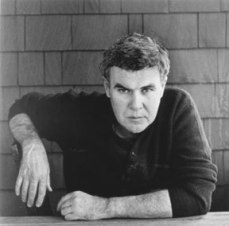 American Chekhov.” Another critic considered Carver “one of the greatest modern short story writers.” Poet Hayden Carruth wrote, “Among the great American writers of the 20th century, no question, Carver is the most endearing. He carries our humanity into the 21st.”
 college class at Chico State University by John Gardner (1933-1982). In years to come Gardner, then twenty-six, would become an important and influential person in American literature. Carver said that a good writing teacher is something like a literary conscience, a friendly critical voice in your ear, and that after being taught by Gardner, all his writing career he sensed him looking over his shoulder when he wrote, showing approval or disapproval over words, phrases, and strategies.
 Gardner thought that a novelist needed “an almost daemonic compulsiveness.” He was energetic and charismatic and his students responded. One student said “he was born with a quicker ratio to the passage of time than the rest of us.” Carver said that Gardner’s teaching “went right into my blood stream and changed the way I looked at things…He took my stories more seriously…I was completely unprepared for the kind of criticism I received from him.” He considered Gardner the teacher who first inspired him and intimidated him, teaching him to be tough on himself.

 Why what I’m going to say now is true, no one has been able to figure out, but almost all people relax their efforts when they get close to achieving even their most important goals. They struggle and struggle and then seem to get lazy and disinterested. They are like a sprinter who runs fast to the tape and slows down or stops. But good coaches advise runners to “run through the tape.” Whatever you do, don’t relax just when you’re getting close to success, but persist in applying your utmost energy
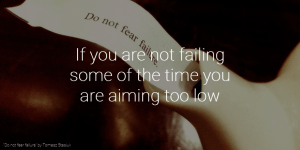 Why are you and I so afraid of failure? Many people live in terror of it and feel they must never fail, but always succeed, trailing clouds of glory. Yet failure can be a blessed life-changing event. If you experience only successes, you come to expect quick and easy results, and your sense of confidence is easily undermined if you suffer a setback. Setbacks and failures serve two useful purposes: Not only do they show us that we need to make changes and adjustments in order to gain the success we are seeking, but also they teach us that success usually requires confident, persistent, skilled, focused effort sustained over time. Once you set failures aside and become convinced that you have what it takes to succeed, you quickly rebound from failures. By having courage and sticking it out through tough times, you come out on the far side of failures with even greater confidence and commitment.
 The effect of
  Confidence is needed if you are to be successful as an artist. Make it a point to never lose confidence. If you find yourself losing it, use affirming statements, such as “I can do this; I believe in myself.’
 The most successful people have high career aspirations, are confident, and generally attribute their success to high effort and failure to lack of effort.
 Creative people who are the most likely to ask for help are those with a high opinion of themselves, while those with a low opinion of themselves are the least likely, although they may be the most in need of it and would profit from it. Asking for help shows that you’re serious about reaching your goals. Useful feedback can help you evolve and reach high levels of satisfaction and achievement.


 davidjrogersftw