Writers and Other Artists and Their Audience: A Very Personal Relationship

IMG_0240_David Pic copyEvery Tuesday or Wednesday I have lunch with a friend, a professor of philosophy, at a deli near my home and everything is fair game for our talks but sports. I am interested in sports, having grown up in Chicago—the slap-happiest sports town in the world. But he grew up somewhere else and thinks a basketball is something you hit with a bat.

A few weeks ago I mentioned that very important to my wife, who teaches writing, is the relationship the author establishes with the reader. I said I agree with her that the personality of the author shines all through the words and that as you read you respond to that personality, and that it accounts for much of the value we find in the work. Just as you make judgments about the work itself, such as to answer the question, “Do I like this and should I continue reading,” you also make judgments about the author such as, “Do I like and respect the person behind the words, and do I want to spend more time with him?” That happens whatever you’re reading—novel, blog, short story, play, poem, email, essay, memo, or letter.

And something similar happens whenever you look at a work of art, or see an actor act, or a dancer dance.

My friend said, “There is no relationship. There is no personality. There are only words.” Then I said, “I was reading a book recently and the information was useful—the author knew what he was talking about– but he was so arrogant and smug and self-satisfied that I couldn’t go on reading. But now James Agee, for example, is to me so likable and gentle and right-minded and has such compassion that I always enjoy his company.”

And then I thought: There are millions of people on earth who consider themselves serious writers, and many millions more who are engaged in other arts, and to whom the relationship between themselves and their audience has to be a major concern (2.5 million people in the U.S. alone consider themselves artists); so it would be worthwhile to give that relationship the attention it deserves.

The True Center

The true center of our experience with any kind of narrative writing in any language on earth is the sense that someone with a mind, a personality, and a background of experience is talking to us. That sense accounts—if it is favorable– for much of the pleasure we derive from reading, and it is that sense that a good writer will develop in the reader, consciously or not. What a writer is intellectually, spiritually, and emotionally radiates in the work and can’t be hidden from the discriminating reader.

Herman Melville said, “No man can read a fine author, and relish him to his very bones, while he reads, without subsequently“ forming “some ideal image of the man and his mind. And if you look…you’ll find the author has furnished you with his own picture.” Literary critic Georges Poulet wrote, “ (As I read) “I am aware of a rational being, of a consciousness, the consciousness of another opens to me, welcomes me, lets me deep inside itself, and even allows me, with unheard of license, to think what it thinks and feel what it feels. I am thinking the thought of another, but I am thinking it as my very own.”

Energy, Sincerity, and Other Qualities

The author’s qualities we connect with are those we respond to in any person we meet face to face. They include humor, energy, vitality, seriousness, playfulness, friendliness, originality, boldness, glibness, sensitivity, sensuality, elegance, flexibility of mind, intelligence, tenderness, objectivity, flippancy, etc. We become aware of the author’s interests, preoccupations, even obsessions, and how involved the author is in the subject, including her attitude toward her characters. Even the most objective and dispassionate writing, as in the short stories of Chekov, the master of understatement, conveys the personality of the author—his control and self-restraint.

We make judgments about the degree of ability the author has, and say, “That man is so skilled that he can do anything he wants with language. He’s so self-confident that he breaks the rules whenever he wants. He has courage; he takes chances.” We look at a great actor performing or Baryshnikov leaping and we say “Their skill is breathtaking; they are very disciplined and have worked hard to develop themselves.” It’s been said that painter and tortured genius Jackson Pollock had no natural talent. He was always aware that he was an artist that could not draw. But the guts he had appears in his every work, and in painting his groundbreaking way he changed the course of western art and the definition of what we mean by art.

A Distinctive Style

The first quality we notice about a master, or a truly excellent writer—or painter, or dancer, or actor, or any other artist– is a distinctive style. All great artists are concerned not only with communicating their vision and expressing their talent, but are preoccupied with the most effective way to do that. And style, which is anything but a minor afterthought, is the artist’s signature and as individual and as much a part of the writer’s, sculptor’s, actor’s, or architect’s, etc., personality and life experience as DNA. There was only one Marlon Brando and only one Frank Lloyd Wright.

Possibly the first requirement of a good style for a writer is the ability to put the reader into what is being written about and the writer’s presence right away, from the very beginning, and all the way through the work. Using a first-person “I” voice as in Hemingway’s autobiographical novel The Sun Also Rises invites the reader to share in the writer’s and narrator’s thoughts, feelings, and experiences, and can be tremendously effective. With the second person “you” the writer is addressing the reader directly, and that too, can have a strong effect.

How We Want To Be Treated

There is a sharp difference between authors who treat us as essentially their equals and those that (like political candidates) imply we’re their inferiors. That author I couldn’t stand and couldn’t go on reading had no respect for the reader. He had no concept of the fundamental truths that artists must have an understanding of their audience and what will please them, excite them, and hold their attention, and what will “lose” them, including the author’s own personality. Authors we have friendships with are those who share interests with us and respect us, never underestimating us, never talking down to us.

The Author’s Mind; the Artist’s Mind

We respond very much to the author’s mind in action, and whether we’ll go on reading or not and how attentive or respectful we’ll be depends on how interesting and stimulating we find that mind. I was reading a true story about a man who was having trouble getting to sleep, and his mind was so active trying to figure out how to do that that I just sat back and laughed and marveled at his ingenuity. We are involved with the author’s mind from the first word, and the skilled author will let you know immediately that his mind is active and sharp. Even a nice metaphor or a perfect sentence or clear writing give us the reality of entering the author’s mind.

We could just as easily be talking about the painter’s mind, or the ballet dancer’s mind, or the movie director’s mind. Whatever the art, the audience responds to that mind one way if it is interesting and another if it’s not.

Intimacy and Integrity

The particularly effective writer—the particularly effective artist of any kind—will develop a relationship that goes beyond liking and beyond friendship to intimacy, and that comes from above all else the sincerity we find in the work. Sincerity is what I sense in Agee, for example. Anyone who can write so beautifully and so sensitively, honestly, and intensely must be trying to communicate to me something that he cares deeply about. The intimate writer invites us in to his inner life and says “Here I am.” I sense utmost sincerity too in Whitman’s “Crossing Brooklyn Ferry”—a poem in which the writer actually speaks to the reader and tells us that as he is writing the poem he is thinking about us. And I find it in all the work of van Gogh, and some blogs I read. The artist is sincerely trying to connect with me and communicate something directly to me as well as he or she is able, and I respond.

Good writing has integrity—our being whole and authentic with no division between who we are and what we write, or paint, or how we perform on stage. We guarantee that we aren’t faking, or deceiving, or compromising. Hemingway referred to integrity as the built-in “bullshit detector” that every real artist possesses.

No Place to Hide

It is futile to think we can hide ourselves from an audience for very long or fool it into believing we’re something we’re not. The voice that comes through is not something that is imposed artificially from the outside, but is the genuine, the authentic, the true, the real person. Even when we write about a character that is nothing like us, the person we are—with our history and our points of view and our opinions comes through clearly. The very images we use and the very vocabulary tell a great deal about us.

Addition by Subtraction

An authentic voice is not achieved by adding something, but by the opposite process—by subtracting what is pretentious or not genuine. Every artist is unique and different from every other. There are no duplicates. But whatever she is like, we are trying to locate her and understand her.

Coming Out of the Shadows

So if we are looking for prescriptions, the first would be: “Whatever your art, come out of the shadows and reveal yourself. Let your true personality permeate all through your work—your sincerity, your honesty, your mind in action, your originality and uniqueness, the ‘I’ who you are–for it is that, above and beyond the other content, that your audience will respond to. Be interesting, be clever, be skilled, be alive, be true, and be authentic.

© 2014 David J. Rogers

For my interview from the international teleconference with Ben Dean about Fighting to Win, click on the following link:

www.mentorcoach.com/rogershttp://www.mentorcoach.com/positive-psychology-coaching/interviews/interview-david-j-rogers/

Order Fighting to Win: Samurai Techniques for Your Work and Life eBook by David J. Rogers

Fighting to win Amazon

Click on book image to order from Amazon.com

or

http://www.barnesandnoble.com/w/fighting-to-win-samurai-techniques-for-your-work-and-life-david-rogers/1119303640?ean=2940149174379


Order Waging Business Warfare: Lessons From the Military Masters in Achieving Competitive Superiority

Waging Business Warfare812sCY9edLL._SL1500_

Click on book image to order from Amazon.com

or

http://www.barnesandnoble.com/w/waging-business-warfare-lessons-from-the-military-masters-in-achieving-competetive-superiority-revised-edition-david-rogers/1119079991?ean=2940149284030


11 Comments

Filed under Becoming an Artist, Creativity Self-Improvement, Developing Talent, Human Potential and Achievement, Personal Stories

The Rabbit and the Fox, The Teacher and the Painter, and Other Lessons

Excerpts from Fighting to Win: Samurai Techniques for Your Work and Life


 Rabbits

rabbit-40646_640 A wise master and his student were walking through the countryside. The student pointed to a fox chasing a rabbit and said, “Oh, the poor rabbit.”

The master said, “The rabbit will elude the fox.”

The student was surprised. Maybe the old man’s mind wasn’t so sharp anymore. He said, “No, you see, the fox is faster.”

“The rabbit will get away,” repeated the master.

“What makes you think so?”

“Because the fox is running for his dinner, but the rabbit is running for his life.”

The first step is understanding we’re no different than rabbits.


Attention, Attention, Attention

 yoga-386611_640A layman asked a Zen master to write some words containing the greatest wisdom.

The master picked up his brush and wrote, “Attention.”

The layman was disappointed. He said, “I was hoping for something more.”

“More?” the master asked, picking up his brush and writing again— this time, “Attention. Attention.”

“That’s it?” asked the layman.

The master had been expecting that. This time he wrote it three times: “Attention, Attention, Attention.”

Your ability to choose how you will direct your attention–what you will think, how you will feel, and the best thing to do–is your most powerful skill.


Cherry Blossoms

cherry-blossom-254680_640The delicate cherry blossom has a very short life. It doesn’t last long in the wind that blows it from the tree. One minute it is there, then it is gone. All we have is a memory of how beautiful it was.

No getting around it: I’m a cherry blossom; you’re a cherry blossom.


 The Teacher and the Painter

paint-33883_1280My friend is a painter. The best teacher she ever had gave her the best advice she ever received. He looked at her as she painted and said, “You’re being too careful. Make bolder strokes.” He went away. She followed his advice. He came back and studied her work. He raised his voice and said, “Bolder.” Later he came back again and said, even louder, “Bolder! What are you afraid of?”

Our lives would change immensely if we said to ourselves most of the time, “Bolder! What are you afraid of?”

© 2014 David J. Rogers

For my interview from the international teleconference with Ben Dean about Fighting to Win, click on the following link:

www.mentorcoach.com/rogershttp://www.mentorcoach.com/positive-psychology-coaching/interviews/interview-david-j-rogers/

Order Fighting to Win: Samurai Techniques for Your Work and Life eBook by David J. Rogers

Fighting to win Amazon

Click on book image to order from Amazon.com

or

http://www.barnesandnoble.com/w/fighting-to-win-samurai-techniques-for-your-work-and-life-david-rogers/1119303640?ean=2940149174379


Order Waging Business Warfare: Lessons From the Military Masters in Achieving Competitive Superiority

Waging Business Warfare812sCY9edLL._SL1500_

Click on book image to order from Amazon.com

or

http://www.barnesandnoble.com/w/waging-business-warfare-lessons-from-the-military-masters-in-achieving-competetive-superiority-revised-edition-david-rogers/1119079991?ean=2940149284030


Leave a comment

Filed under Becoming an Artist, Creativity Self-Improvement, Developing Talent, Human Potential and Achievement, Eastern Philosophy, Samurai Techniques

Beware Of Becoming What You Weren’t Supposed To Be: Your Two Destinies

Tailors and Generals

road-220058_640The story goes that a man died and went to heaven. Meeting Saint Peter at the gates, watching the crowds of people passing through, he said, “Saint Peter, I’m curious. Point out to me the greatest general in history.” Saint Peter gazed into the mass of people, spotted the man he was looking for and pointing, said, “There he is, that one over there.” The man was shocked. He said, “That’s not a general. That’s just Harry, a tailor from my old neighborhood.”

Yes,” said Saint Peter, “you’re right, that is Harry the tailor. But had he been a soldier he would have been the greatest general in history.”

My question is, “Why are so many people leading a tailor’s life when they should be generals?”

 The Urge to Grow and Flourish

 In the title of a radio show I was a guest on was the word “destiny,” and I started by saying, “I couldn’t be on a more appropriate show. I’m a strong believer in destiny. Here’s what I mean…”

The word “destiny” has the same root as “destination.” It’s where you’re headed. Your destiny is not a pre-ordained life that you’re forced to lead because it’s been laid out before you in detail by some master planner who has absolute control over you. Your destiny depends more than anything on your own free will and it is as much a part of you as your ear.

Every living thing has an innate urge to grow, to flourish, to realize its full potential. A maple tree “wishes” to become all the maple tree it can be, an ear of corn, an ear of corn, a lilac a lilac, you an actor, to discover, develop, refine, and put to use your full talents in performances before an admiring public, and you, a painter, to see your works adorning walls.

This inner urge–this impulse–pushes all living things to strive to become what they are equipped for and have the potential to become, no matter how harsh or unaccommodating the environment. Composers and musical performers who, like Claude Debussy, grow up in unmusical families, and poets and other geniuses of the language whose parents are illiterate or who themselves quit school at twelve–Mark Twain, who claimed that he never let schooling interfere with his education–and Walt Whitman, one day to make himself through his own efforts, high ambitions, and self-teaching into, rather mysteriously, America’s best and most expressive poet.

Denied water, a tree will send out its roots long distances in search of it. Hidden in shadows, it will twist its branches until they reach sunlight. Some people too, will do whatever’s needed to reach sunlight.

 You Have Two Destinies

You have not one, but two, destinies. One is your INTENDED DESTINY and the other is your ACTUAL DESTINY. Your intended destiny is the life you are fully equipped with the talents, gifts, personality, and intelligence to have. The other, your actual destiny, is what you actually became and the life you’re actually living. You know people who have all that’s necessary to become A, and actually became A. But most people’s intended and actual destinies are different. They should have become A, and wanted to become A, but became B instead.

Gary has all that it takes to become a fine architect, but never finished school and settled for being a draftsman. Erin has musical talent and was intended to write popular songs, but works as a sales clerk in a novelty shop and never gets around to writing. Neither put themselves on the right course, or seeing they were on the wrong course, never took it on themselves to change course. They are intended generals who became actual tailors.

The Ideal Is Very Possible

 You’ve reached the ideal when your intended destiny is your actual destiny. Then you’re converting what you hold the promise of being into what you actually are. If you were equipped to be A, and not B, you would be A. Gary would be designing buildings; Erin would be producing songs.

Deep down you and I know that there is a most suitable life for us, more suitable than any other. We can feel that that it’s a specific life. Even if we don’t yet know exactly what it is we feel it and we spend part of our lives—possibly most of our lives—looking for it. To become clear as to what your intended destiny is and to say to it, “I devote myself to you,” is to feel an unstoppable drive toward its due fulfillment and to spring to life. Once you know you’re moving in the right direction and feel strongly about it you fly through your days aflame with energy and determination. If there are obstacles in your way you overcome them, particularly the fear of taking risks.

There’s a part of you that asks yourself, “Why are you here in life and not there? Account for yourself.” If you never start that novel or never start that business that you are equipped for, your conscience won’t let go. From time to time all your life you’ll think, “I should have written that book,” “I should have my own business” and you’ll feel regret, and you’ll never know what might have happened or what your life would have been like.

 The Need to Finish What You Start

Sometimes what we put aside a long time ago but haven’t forgotten is a clue to our true destiny. Russian psychologist Bluma Zeigarnik’s professor Kurt Lewin noticed that a waiter remembered orders only as long as the order was in the process of being served. When it was served, he forgot about it. From this, Zeigarnik developed the theory that people remember uncompleted or interrupted tasks better than they do completed tasks (now called “The Zeigarnik Effect”). People who suspend their work and get involved in unrelated activities (such as playing games) will remember material better than people who continue working without taking a break.

As applied to a lifetime it means that you will not forget important things you started even long ago, but did not complete—such as that painting in storage in your basement, or the project you intended to get back to, or the degree you started but never got. Not getting back to them causes a tension that brings repeated thoughts of the unfinished business that doesn’t end until the job is finished. It’s human nature to finish what we start and to feel uneasy until we do. As long as the task is uncompleted your mind continues to work on it, and it will not stop pestering you until you finish the task. I have a novel in a nice bright red binder that I started 35 years ago that has been on my mind ever since. What have you not forgotten that may indicate a direction you should follow?

It’s not unusual for people who distinguish themselves and feel fulfilled to discover the direction of achievements they will have later in life foreshadowed by the interests and preoccupations of their childhood. Quite early in life they became interested in an activity that they later pursued seriously, at times to the exclusion of almost everything else, and at times after pursuing other things that diverted them, often going down a fruitless path and coming to a dead end. The deepening of their interest over time became what guided them to their careers and largely determined their success. So, it could be a turning point when you feel yourself drifting away from your true destiny to ask what interested you when you were a child and haven’t forgotten: “When I was little, I liked especially….”

Timing

You may reach your intended destiny by a rapid jump, a quantum leap, even without any hints beforehand. It seems inconceivable that Joseph Conrad, born Jozef Konrad Korzeniowski, a Polish seaman who spent twenty years on ships and never took a writing class and didn’t learn English until he was in his twenties, should suddenly emerge as one of the greatest and most innovative stylists writing not in Polish, but English. He said later than when he started his first novel one day after breakfast, “I had written nothing but letters, and not very many of these. I never made a note of fact, of an impression or of an anecdote in my life.” His emerging full-blown into a master of the language is one of the puzzles of literary history and human development. But it happened.

You can never say that it’s too late to reach your intended destiny, however roundabout your journey to it has been, or however long it’s taken. Having set out in one direction, you are free to turn and set out in another like a fish in a stream that changes direction any time it wishes. When you overcome past mistakes, false starts, and failures and set out for your intended destiny you feel a sense of rightness, of confidence, of being in complete charge. You think, “This—this—finally is what my life was supposed to be.”

Your true destiny may appear at any time: in childhood, adolescence, adulthood, or late adulthood. Many people enter new paths later than others and they “catch up” quickly and often surpass the others. Duke Ellington’s career was undistinguished until he was forty. Authors Tolstoy, Turgenev, and William Faulkner showed little promise in their youth. They did their best work considerably later than others novelists. Paul Gauguin was a successful Parisian stock broker for years before he turned to art and became a great painter.

Jean Paul Sartre wrote that people exist first and only afterwards define themselves. “They are what they will have planned to be. They are what they conceive themselves to be.” A Japanese adage says, “Irrigators guide water, fletchers straighten arrows, carpenters bend wood, and as for wise people, they shape themselves.”

Shaping yourself into the person you conceive yourself to be—that’s what this post is about.

© 2014 David J. Rogers

For my interview from the international teleconference with Ben Dean about Fighting to Win, click on the following link:

www.mentorcoach.com/rogershttp://www.mentorcoach.com/positive-psychology-coaching/interviews/interview-david-j-rogers/

Order Fighting to Win: Samurai Techniques for Your Work and Life eBook by David J. Rogers

Fighting to win Amazon

Click on book image to order from Amazon.com

or

http://www.barnesandnoble.com/w/fighting-to-win-samurai-techniques-for-your-work-and-life-david-rogers/1119303640?ean=2940149174379


Order Waging Business Warfare: Lessons From the Military Masters in Achieving Competitive Superiority

Waging Business Warfare812sCY9edLL._SL1500_

Click on book image to order from Amazon.com

or

http://www.barnesandnoble.com/w/waging-business-warfare-lessons-from-the-military-masters-in-achieving-competetive-superiority-revised-edition-david-rogers/1119079991?ean=2940149284030


8 Comments

Filed under Creativity Self-Improvement, Developing Talent, Human Potential and Achievement, Goals and Purposes

A Centenarian—Most of the Time

headstone-312540_640I don’t remember ever coming across the ubiquitous Rayburn Stoddard’s name until five years ago last April, but a lot has happened to him since. Although as far as I know I have never met the man, I would certainly like to and have read or heard about him at intervals during the last half-decade in various cities I have visited on business, and now I feel familiar enough with him to call him by his Christian name. Rayburn has witnessed the cavalcade of American history, and in fact, as you’ll see, has been an active and significant part of it. The following is a record of what I currently know about the man. I’m hoping you can add to it.

I have made every effort to assemble as much pertinent information as I am aware of about this extraordinary man and to paint as complete picture of him as I am able. Although I have tried to eliminate any information of a dubious nature, unfortunately I cannot vouch for the veracity of my sources, their being newspaper features and television broadcasts which as you know tend to have a rather cavalier attitude toward factual truth and accuracy and are prone to pilfering stories from one another and then trying to top each other by puffing them up with embellishments so they have a more sensational ring to them. On average, a Rayburn Stoddard story in itself can be counted on to boost ratings or readership by four per cent.

Early that stormy spring evening five years ago, I was in Chicago’s O’Hare Airport browsing through the Chicago Tribune when I saw the following obituary:

Rayburn Stoddard–died peacefully in his sleep in his home in Skokie at the young age of 104. In perfect health at his untimely demise, Mr. Stoddard was seen racing a half block in just three and a half hours the day before on his way to a 7-Eleven for a pack of cigarettes. A bugle prodigy, Mr. Stoddard played that instrument at the inauguration of Warren G. Harding at the age of ten. He fought in many battles and distinguished himself as a tank commander under George S. Patton in World War II and found great enjoyment listening to Jack Benny on the radio some years ago. An amateur historian of note, Mr. Stoddard was awarded the Pulitzer Prize for what is universally considered the definitive biography of George Armstrong Custer called Wake Me Up In Time For The Attack. He is the same man who last winter at a youthful 103 was sighted in his yard tossing a snowball at his shadow.

Why this obituary struck me as remarkable I don’t know. But I had a hunch there was more to this story than meets the eye so I tore the clipping out, put it in my wallet, and boarded a flight to St. Louis. It seemed odd to me at the time that the following day as described in the St. Louis Post-Dispatch Rayburn–now a resident of Missouri–was alive again and had aged three years overnight.

 OLD MAN LAUGHS IT UP

Prize winning author Rayburn Stoddard, formerly of Skokie, Illinois, now a resident of University City in perfect health, celebrated his 107th birthday last night at a party given for him at the Improvisational Comedy Club in downtown St. Louis where he played “You’ve Lost that Loving Feeling” on the bugle and had an audience of well-wishers in stitches with his hilarious “Drunken Plumber on the Moon” comedy routine. Asked to what he attributed his longevity, he replied, “I like throwing snowballs a lot.” Mr. Stoddard fought in many famous WW I battles, and was present at the swearing in of President William McKinley. He fancied listening to The Shadow, a popular radio show some years ago.

Being an experienced business traveler who reads as many newspapers as menus, I was certainly not surprised by the obvious discrepancies between the two reports, although it seemed apparent to me that the man was either alive or dead, and was probably not 104 and 107 both.

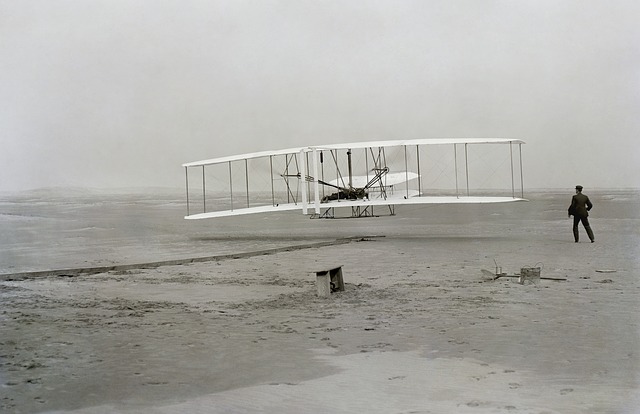
In the days to follow those news features would ring a bell, for some months later while lying in bed in a hotel room in Dayton, Ohio I watched a human interest story on the ten o’clock news about this same Rayburn Stoddard–although his name was given as Stoddard Rayburn. He was still alive, but was now a long-time resident of Dayton. More youthful now at 99, he was in robust health, vividly recalled attending the inaugurations of Woodrow Wilson, Abraham Lincoln, and Herbert Hoover, had helped out his Dayton buddies the Wright Brothers at Kitty Hawk, was a winner of the Congressional Medal of Honor and a literary prize, had commanded General George S. Patton in World War II, and spent countless hours running down streets, practicing his bugle, and tossing snowballs. For years he had worked with his friend Jack Benny on the radio and in vaudeville, and was the originator of the role of Lamont Cranston on The Shadow, a popular radio show some years ago, but now held a job at a 7-Eleven where he sold cigarettes.

Business was going well, and frankly, although my curiosity about Rayburn had been piqued, I was too busy to have much time for the media. I temporarily lost track of the man, but could only assume that he was alive and well in twenty-five or thirty other cities my travels would eventually take me to, and that as he approached 110 or 120 or stayed in his nineties or went back to his seventies or eighties I would have the great pleasure of coming across him again, unless, that is, he had passed from this earth again–and it turns out he had–at least temporarily.

I was on the west coast to attend a Laugh-A-Minute-Funny-Business-Sales-Seminar when I saw a feature on the morning Los Angeles news that caught my attention. It began, “Legendary movie producer, historian, musician, aviator, and former vaudevillian Rayburn Stoddard, one-time resident of Dayton, Ohio, died in Hollywood yesterday afternoon at the young age of one hundred and thirteen, and the film industry is in deep mourning. His companion, super-model Cinderella Baudelaire, was at his bedside.” It continued, “This close adviser to many presidents, and the producer of such gems as Gone with the Wind, The Maltese Falcon, Citizen Kane, and Zombies on Broadway was in perfect health at the time of his untimely passing.” The report was quite complete, referring to Rayburn’s renown as a snowball marksman, his having been present at the Little Big Horn with General George Armstrong Custer where he had died valiantly fighting off the Indians with his bugle, his other past deaths, and his famous, “Drunken Plumber on the Moon” comedy routine that he had performed for President Chester A. Arthur and all the crowned heads of Europe.

I was not saddened by the report since I had the feeling Rayburn would spring to life again in the foreseeable future. I was not, however, prepared for his next death which occurred in Virginia approximately a year later and was reported in all the major news services:

 WITNESS TO HISTORY LAID TO REST

Died peacefully in his home in Williamsburg, Virginia on Tuesday last, a youthful 427, Nobel Prize laureate Dr. Stoddard Rayburn (nee Rayburn Stoddard), the lone survivor of the Mayflower crossing. Dr. Rayburn was in perfect health at the time of his unfortunate demise. His mind, a rich storehouse of historical reminiscences, was sharp and clear to the end. After serving as governor of the Bay Colony, Dr. Rayburn next appeared as a delegate to the Continental Congress. As a personal favor to his boyhood chum, Thomas Jefferson, Dr. Rayburn provided leadership to the Lewis and Clark westward expedition. He was particularly handy with the tomahawk, which he invented, and taught that skill along with playing the bugle to the plains Indians. It was while on the Missouri River–which he nicknamed “Big Mo”–that Rayburn developed his side-splitting, “Drunken Plumber on the Moon” comedy routine that was a particular favorite of the Shoshone tribe. Following a stint as a Civil War cavalry major with his West Point roommate George Armstrong Custer,  Rayburn passed away at The Little Big Horn and then emigrated to New York City with his literary mentor Mark Twain at the turn of the twentieth century where he invented the movie projector, refined his proficiency with snowballs, authored the Encyclopedia Britannica, teamed with W.C. Fields in vaudeville’s Ziegfeld Follies, and like millions before and since disappeared into oblivion. When it was pointed out to him that he had lived a remarkably long life, Dr. Rayburn replied, “Methuselah was older.”

I was surprised that Rayburn had aged from 113 to 427 in a matter of months, and at first had doubts that such a feat was possible. 427 years old! How could a person possibly live to 427? But then it struck me that he would have to have been approximately 400 or he could not have arrived on the Mayflower, so I concluded that here was one newspaper report that was accurate.

Months of hard work passed and I lost track of Rayburn. Then while stopping for a cup of coffee at a diner in Cambridge, Massachusetts I saw in a Boston Globe article entitled “Celebrated Patriot Returns,” that this “well-traveled former super model, famed movie producer, historian, comedian, airplane pilot, and one-time resident of Skokie, Illinois, University City, Missouri, Dayton, Ohio, Beverly Hills, California, and the Bay Colony” had sprung to life again. He was in perfect health, this existence residing in a boarding house in East Patchogue, New York, but had been in town the day before to commemorate the Boston Tea Party which he had engineered and led. He was now a robust and more reasonable 275, having decreased in age by 150 years since his untimely Jamestown death. At the Boston commemorative ceremony he reportedly talked about his experiences with drunken plumbers and sang “You’ve Lost that Loving Feeling.” with the Righteous Brothers. He carried a tomahawk for the event and was dressed in the authentic Indian garb which he had worn in the raid of the colonists on the British tea ship, and which had hung in his closet in mothballs for more than two centuries.

The last I heard of Rayburn was a feature on Topeka, Kansas TV where it was stated that “a young 122 and in perfect health, this founder of the 7-Eleven convenience store empire” had left this life in a suburb of Kansas City, where he had long resided after relocating there from Skokie, Illinois where he worked as a plumber. He had also passed away three months earlier in Waco, Texas at a youthful 97 while in perfect health and on location producing a documentary film about the Lewis and Clark westward expedition. But judging from his history I am confident that Rayburn has not left this life permanently and irrevocably, but will reappear between the ages of 90 and 500 in some American city in the near future. All that we can say for certain is that we have seen the last of Mr. Rayburn Stoddard–Stoddard Rayburn–until he turns up again.

If you or a family member or acquaintance have news of other lives and deaths of this elusive man I would appreciate you contacting me care of this blog. I’m hopeful that in that way, working together, with contributors from across the globe, eventually we will be able to piece together a satisfying and complete biography of the man. I am particularly interested in learning about Rayburn’s first nine years on earth, about which at present I know zilch. And frankly I have my doubts that throwing snowballs increases longevity, although that’s what the man said. And who should know better than Rayburn?

© 2014 David J. Rogers


6 Comments

Filed under Fiction, Humor

Days End: A Story of Courage and Love

sunset-190922_640Far below me, a woman as tan as tree bark lay on her back on the sand. White-tipped frothing waves came in from the ocean, and life went on down there.

I was looking down from the high balcony of my sister Sharon’s hospital room. Sharon was in bed in the room behind me–not asleep, yet not fully awake, but in a dazed state between because of the morphine they gave her all through the day and when she called for it at night. Her pain was very bad.

I watched as a few hundred feet away people in white outfits played tennis on green courts on the roof of a tall pink hotel. I knew they should not be blamed for their happiness, any more than Sharon for her misery. But I was thinking that somehow it was unfair that they were running so, graceful and strong, close enough to wave and smile at me while her disease had spread through everything. Everything was gone.

I had seen on the floor of her kitchen the scale that was there to measure the dwindling of her existence, and sheets of paper on a clipboard hanging from a nail on the wall that recorded it: ninety-eight pounds, ninety, eighty-eight…, and a calendar that had Xs on days she wasn’t healthy enough to work that in recent months had become all Xs. Against a wall was a full-length gold-framed mirror that had once held her face and her shape as she turned to adjust a blouse or straighten a skirt. The mirror was dusty.

All that remained now was the steady withering of her small, faltering body, the daily indignities, the terror and inconceivable loneliness of dying, the sorrow of leaving this world. When I stood over her bed that late afternoon she looked at me with shamed eyes and said, “I’m a mess aren’t I,” and my heart broke. What could I do but tell her she was still beautiful? How will I ever remember without pain her looking up at me so gratefully and saying “Thank you brother,” as I handed her a glass of water?

Her mind was in a tangle because of the morphine–sensations and floating dreams blended together like a band of swallows swooping and falling and words from the voices of people slipping in sideways, echoes of words, as words spoken in a museum closed for the night might sound, or a murmur, or just splinters of sound descending like coins in a pool. Images were loose in her mind of such memories as that of an ironing board, a dress with a faded floral pattern, a photograph of her sitting at a desk smiling, then the suddenly remembered sensation in her finger tips of peeling an orange or pulling strands of hair out of a brush. And all the while she was a sponge soaked with emotion: love and despair and courage and fear.

At times she felt she was merely a body beyond repair, but there were moments of great clarity when she realized she was truly a person. Then she became suddenly proud and triumphant: “I am alive. I am a human being. I am still of value.” And then shortly the dreaded thought returned: It will end; soon it’ll end. It was all so sad, she thought: the sun would last, the earth would last, and there would always be stars, but not she. She was greedy for life–another day, another hour–but didn’t a person so young have a right to be? Only thirty-seven. There should be more shouldn’t there? Above all she mustn’t lapse into self-pity, mustn’t wail, “Help me please, I am suffering.” That was all there was to it, she thought, the only victory, as outside in the priceless world flamingo clouds drifted by.

The room was regaled in yellow chrysanthemums. Sunlight spread across the balcony and the warm breeze thronged in as visitors arrived to pay their respects. Sharon wasn’t resentful or jealous of their good health, that irresistible glow they had, that incandescence, and looked forward very much to their bringing their good cheer and love, smiling like children, she knew, to keep her spirits up. Someone told a joke that was followed by laughter. How hungrily a person’s thoughts swarm over joy among sorrow.

When visitors were talking among themselves she lay back, listened, and felt one of those hundreds of emotions for which there are no words. She knew some people thought compassion was a useless emotion, but she thought it the kindest. It didn’t alter the fact that soon her life would end, but yet there were glimmers of light just knowing that one person could care so much for another, asking nothing in return, opening a secret door and entering on the private island on which the other person lived, and then you and they weren’t so lonely, if only for that time. A nurse slid a thermometer between Sharon’s lips business-like, glanced at her briefly and impersonally and with cold, gray, restless eyes gazed out at the sky while she waited for the thermometer, took it out, looked at it, and said, “One o one, not bad at all.”

How do you explain life? What does a person live for? Sharon wondered as she was turned over, grimaced, and was sponged. You expected the answer to become clear if you lived long enough, and to be profound: the meaning of life was X or Y, perhaps Z. It was a question worth asking. It was probably joy. Yes, that was it all the time: the joy one feels. And she had known joy. No one could say she hadn’t known exquisite joy.

A doctor she didn’t know then came into the room to see her, and looked at her, looked at her eyes, and jumped back as though he had been punched, and said, “I feel your power coming out to me. You have a very strong will.”


It was the silence that settled as softly as pollen on the hospital room when toward evening everyone went home that I will recall. “I remember once when,” Sharon said, thumbing through her stack of memories. Suddenly she said, “Do you remember that summer day at the lake the wind was so wild and the waves were as tall as buildings, the library when I was looking for a book?”

That day when as children—she eight, I ten–we inhabited our bodies with inexpressible joy, she on the sand holding my hand, laughing. Suddenly a wind picked up and into the air flew a thousand birds. Clouds raced each other headlong across the black sky, and wave upon wave –a procession of liquid walls—rose and rose and rose majestically, ascending one after another like great hills of water that then lunged and plunged like a field of gray-green wheat bowing under the wind, shattering on the shore into a multitude of broken stars. Hills of water that seemed to pause for a long moment at their fullest height and then to crash to earth with the sound of artillery, our hearts beating with excitement, with awe, with fear, with terror. Just a moment before there had been not a breeze, not a breath of wind, but now all the wind in the world seemed to be concentrated on that strip of earth– a lion of a wind, unleashed, untamed, cool, cold, with a bite and sting, bringing–pouring in to us–the odors of water, of fish, and of the wind itself, the steady hoarse roar of the foaming waves filling the air like thunder, my losing then all sense of physical existence, being liberated and free. Behind us bathers took their children’s hands and dashed for the shelter of the beach house, and strong men dragged rowboats higher up onto the beach away from the surging water, leaving behind ruts in the sand. Nothing was the same; everything in motion, everything in flux, everything changing: wind, waves, sky, everything. That same day she stood on tip-toes on a stool down the aisle in the stacks at the library, reaching for Little Women, and watching her I realized in that instant that she was irreplaceable; I could not do without her.

How fast life goes” she whispered weakly. “It isn’t much longer than a mosquito’s life. Why does it go so fast?” The world is such a huge, well-traveled place; yet when the end of a life nears, all distances collapse and it comes to that: a little room, a little bed, a pair of eyes looking on, someone weeping.

The pain had flecked Sharon’s black hair with white and it was short from the treatment and no longer long and flowing. Her once-pretty face was gaunt, her cheeks gray, her body tired of suffering. Her long pianist’s fingers were so thin that her ring had slipped off and was lost. But there in her gray, lonely, fading beauty there was still about her that same gentleness you could ruffle with your breath, the same fury in her fierce eyes, the same poise, and the same mystical elegance.

Night came; the day was gone. Over the city shone a blue light and the chrysanthemums stood in a black vase on the table. Beyond the glass door and beyond the stars was darkness upon darkness. The faintest light lay on her face, and on that face was neither pain nor resignation nor fear nor sorrow, but peace. I placed my hand flat on her chest–she could feel pain no more–and she opened her eyes and looked into my face with a gentle sweetness. And then looked down at my hand and placed her left hand lovingly upon it.


I only regret that I was helpless to shape into words all that I was thinking of her and hoped she understood how I loved her and how I would carry with me and cherish the memories I have of her, that every year I would commemorate her birthday; that whether I am bending to tie my shoelace or asking for a fork she never leaves my thoughts. In my mind all my life I will see her long black hair flaring in the wind that day with the wild waves bursting, our lives passing, changing, and flowing like those waves; her dying young.

I felt such tenderness toward her that could I, I would have died for her and was so regretful that I could not suffer her pain for her, and was powerless to help her, and that she is now gone entirely from my life and from this world. Until I die I will feel the immense weight of grief for her and now I ask her forgiveness for any sadness I ever caused her through thoughtlessness or selfishness; and wish her somehow to know that I intended no harm and am so terribly sorry.


In the parking lot I saw Sharon’s favorite nurse and called to her and caught up with her and told her of my gratitude to her for the great gentleness and goodness she had shown my sister. I told her I would never forget her kindliness and thoughtfulness, and that I would think about her in the future and would never forget her. She told me what a good patient Sharon had been, how she had never complained and was always so nice and had good manners, and how it made her very sad to say goodbye to her.

I did not know as a boy that memories of that day at the lake, though intangible, would persist through all the successive years, nothing as real. Or that our lives would change so immeasurably as had those waves under that wind.

© 2014 David J. Rogers


11 Comments

Filed under Growing Up Stories, Personal Stories

Days and Nights of Youth: An evening in August, years ago

“And if I were standing in the middle of my people
Age would go from me and I would be young again.”
(Translated from the Irish by Lady Gregory)

Days and Nights pic_copyChicago’s Sheridan Road ran parallel to Lake Michigan, as it does today, and when you walked down it in those days you heard the sounds of the traffic mingling with the lapping of the waves on the beaches. From the beaches on clear days you could see on the horizon’s edge the western shore of Michigan to the east, and out on the lake low in the water turgidly-moving barges carrying loads of ore down from Minnesota to the steel mills of northern Indiana.

On certain afternoons in July and August the sun bore down on the sand so intensely that it was painful to walk on it, so men dashed to and from the tumbling waves carrying their squealing little children in their arms. One by one all the great industrialists’ mansions that lined the street were torn down and the beaches were filled in and replaced by closely-packed massive and towering apartment buildings with hundreds of verandas which were far more impressive architecturally, but far less beautiful.

Few people remember the mansions or the beaches, but most believe that the high-rises have stood there forever. Now when you walk down Sheridan Road, the traffic is so heavy and the water so far away behind the buildings that you can no longer hear the waves.

Three blocks to the west was Edgewater, a miniscule street slung like a hammock between a quiet street to the east and a busy street to the west. There I lived quite happily in a moderately dilapidated apartment which I shared with my parents, two sisters, one brother, two blue parakeets, and a dog.

Along the street stood nearly identical sturdy brown brick two and three-flats with large, clean lace-curtained windows in the front and small open porticos decorated with terra cotta flower pots of various sizes. Inside the apartments the ceilings were high and the rooms were laid out more or less the same as ours. Those buildings were interspersed with squat, frail but fearless homes of families of two, five, or eight children and were concealed from the late morning or afternoon sun by tall trees. In the back yards and on the front lawns stood shady poplars and towering American elms whose profusion of leaves, singed and curled by the blistering summer sun, hung parched and brittle, and shook like tinsel when the leaves fluttered in the wind.

The morning sun revealed rectangular lawns that, except when snow obscured them, were always closely cropped and tidily trimmed as though meticulous angels appeared every night to care for them. The hedges that hid modestly in the shadows were as neatly shorn as boys’ fresh haircuts, and the flowers in the beds were tall and brightly-colored. In late autumn the brilliant orange, crimson, and yellow leaves that had been liberated from the trees by westerly winds scampered wildly, crisply, and noisily along the pavement and adorned the lawns like jewels.

On no particular schedule—or none we were aware of—from down the alley emerged the gray rag man sitting high atop a complaining horse-drawn, creaking wagon, his voice preceding him as he called “Rags, old iron.” As the wagon neared, you heard, faintly at first, and then more purely, the rhythmic, hollow clomp, clomp, clomp, clomp of the shod hooves of the old gray horse whose head hung low and swayed slowly to the rhythm of its gait. Then you heard it snort as it struggled futilely with its bit, and saw its huge protruding brown eyes glazed with an expression of weariness and sorrow, and the sunlight shimmering off the sweat that coated its flanks.

In the early evenings as though all in unison, the regiments of gray, strong, working men, pensive, plain, godly men—the fathers—passed down the street in orderly array, returning to those of us whose entire universe extended no further than the ends of that block. After dinner when the weather was good the fathers–some in gaudy suspenders, to a man seeking peace–left their families and went alone outside in the yard to smoke. The glowing tips of their cigarettes or bowls of their pipes hovered like red ornaments suspended from invisible strings in the darkness. The men nodded cordially to one another, but only rarely went to their fences to speak.

They stood stationary and solitary in the middle of the yard gazing up at the dazzling field of glinting stars, being reminded of their own inadequacy, their own insignificance, feeling in themselves the overwhelming rapture and wonderment of being alive on this earth on this night that they would try to convey to another person, but would forever be unable to. After a little they shredded their cigarettes or tapped out their pipes on the soles of their shoes and watched the tiny embers drift to the ground. Then they went back inside where the light was bright and the rooms were noisy with happy children.

On especially sweltering summer nights one by one my family evacuated the stifling apartment and sat together in a little cluster on the wooden front stairs. There every summer evening without exception I fell under the spell of our little street. I watched the flight of night hawks circling high above chimneys and sweeping down like kites. My eyes settled too on the entwined strands of ivy on the trellis next door, on the blinking traffic lights and long beams of headlights spread like cream on Ridge Avenue, the yellow-glowing lamp lights in the windows of neighbors, and the demented boy who rode the street at nights with his little dog in a paper bag in the basket of his bicycle. And if our luck was good, down the street came what we were all wishing for: a breeze. Then the multitude of closely assembled leaves trembled on the trees that were tinged with moonlight.

The six of us were frugal with words on those evenings, parceling them out sparingly, as though they were precious things that needed protecting. When we spoke among ourselves it was not of topics momentous or memorable. Serious subjects were best saved for visits to our stairs of my father’s family–Welsh of course, with musical accents and exotic names, all of them worldly enough to speak on most any subject with some professed expertise. They always came bearing a vast stock of stories and bits of song and strong opinions that differed markedly from one another and were bickered over turbulently, but in a generally agreeable and forgiving manner. Sometimes too, other visitors came to sit with us.

Whenever anyone on those stairs spoke, I listened intently to the words, the silences, and the breaking of the silence, the short sentences and the longer, the soliloquies, the jokes, comments, stories, exaggerations and wild tales of utterly impossible events that there was an unspoken agreement to play along with but not for a minute believe. Sometimes I understood what was being discussed or commented on or observed, but often I did not. When I did not, my attention drifted and the words dissolved into a hum and became merely sounds.

Then I thought that perhaps when I was older and my time had come I would understand everything or most everything of which these people spoke, that meanings to which I, as a little child, was not privy, would then become clear to me, and I too would be able to speak fervently of them. At times the words the adults uttered came accompanied by a gravity or sadness that frightened me—talk of war and defeats and death and deepest sorrows. But soon someone usually said something that brought laughter all around, and I laughed with them, not knowing what brought them that flash of joy. But I shared in it, knowing that it was good and that when they were happy I was happy.

Too soon the deepest darkness arrived–imperceptibly, as if we had been inattentive and without our knowing it had descended stealthily from its source or risen from the earth to wrap itself around us. Street lights, old and sunken into the ground and standing precariously like drunken sentinels wearing metal caps, then lit and cast yellow cones all down the street. Swarms of flitting fireflies carrying their little lanterns behind them appeared and hovered like tiny intermittent airborne embers that speckled the night like the amber tips of matches. Once aloft on their nocturnal flight like winged magnets the fireflies drew their tormentors–my brother and other giddy children and me. Powerless against our quick hands, soon they were assembled like congregants in a glass jar which glowed like a church in the night.


The twilight sinks and the evening wanes and the intense heat cools and the street becomes warm and peaceful. Soon from our visitors emerge the end-of-evening yawns and “oh-my-goodness-how-time-flies,” and they pack up and leave for home. We say goodbye and they are gone. My family is alone now, all of us speaking in drowsy tones. We hear the nightly chants of the sleepless crickets from under the porch and in the hedges and see neighbors hurrying home. It is the end of this day.

My mother flutters her fingers and says, “Well, it’s getting late” with a sigh that conveys that she is weary, and my father says, “Now heed your mother children.” While still able to, I cast one last long look at the people who share this place with me. Somehow out of God’s grace and for reasons I will never fathom, they have been sent to dwell in this house for a time and to be the objects of my love forever. We children moan as pathetically as we can to be granted a few minutes more of wakefulness, but despite our protests we are ushered inside.

I lift the window shade slightly and see, overhead, a splinter of a moon and protective stars attending us. There with me in that bedroom is my brother sleeping, and there are my sisters sleeping. I am sheltered there in that sanctuary of my youth, safe in the protective hands of my parents and the Lord. My life will never be as free of complications and contradictions as then. There is no need yet to try to muddle through a life I do not fully understand.

It is now a time of resplendent picnics and sunny beaches, a blessed period of my life when pain is a stranger to me and I am immune from suffering. I lie remembering the day as I will remember it forever–a blistering journey to the cool of evening. And trying to peer forward into time and see how I will be as a man, I wonder what this life holds in store for me and if I will live mine creditably enough. I study my hand suspended in air like a gray and familiar bird. I whisper, “That is me, me,” and with that thought something stirs deeply in me that all my life will be inexpressible. And then I make a wish that things will never change, but will stay as they are forever.

 I am told that my mother and father are deathless, my brother and sisters are deathless, and that I am deathless too; that there really is no death and we endure everlastingly and that time is an illusion. But I know that my life as it is now will end. I know that we in my family are seeds that will be cast on separate earths, that we will be drawn apart to live our lives there to the end. And that too soon those people I intend well toward will pass away and leave no trace but in my memory. That the day will come when I will never again sit on those stairs with my beloved family on an evening in the heat of summer.

After a while the faint sounds of spoons against coffee cups and the low drone of speech floating from the kitchen cease and my parents go to bed. Of my family I think in my child’s way–they are all of them–each of them–good people, devoid of malice, and I am blessed to be among them. Why, I wonder, have I been so favored? “Dear Lord, keep these people safe, and please treat them kindly. Spare us please from pain or so apportion it so that none of us is asked to bear more than one should be required to.”

Silently I pray, as always fast, “God bless Mom and Dad and…” and I fall to sleep beseeching God. The day ends then, and I dream, and in a moment another dawn breaks.

© 2014 David J. Rogers


8 Comments

Filed under Growing Up Stories, Personal Stories

A Strange and Perplexing Disorder: My Mother and Emily Dickinson

MomScan_20140825 (3)Sometimes we are oblivious to the serious problems people we know are having. And when we learn about them sometimes we’re shocked. As shocked as some people reading this post, one of my growing up memories, will be.

In high school I won an award and there was an assembly. Sitting on the stage, I looked down at the faces in the audience and there in the third row was my mother. My eyes stung with tears, I was so touched by her being there. I thought of the courage it had taken for her to come alone. Under my breath I whispered, “Good going Mom.”

When you are an agoraphobic you are one of a minuscule portion of the world’s population, and you seem terribly odd because the simple act of leaving your home alone fills you with helpless terror and requires great bravery on your part. And so you are odd, and that is no secret to you. But you try to hide the fact.

You are a person of considerable mystery. Your problem is the least talked about and least understood psychiatric disorder. And the most difficult to treat.

“You’re afraid to leave the house? What do you mean?” (They are stupefied. You really can’t mean that.)“It is very hard for me.” (You are understating.)

“Yes, a person can get hit over the head or robbed these days.”

“Those things don’t scare me in the least. I can take care of myself.”

“Then what are you afraid of?”

“Do you really want to know?”

“Very much.” (Because it seems so weird to me.)

“Most of all of the space out there—the immensity of it.”

“But I’ve known you for years and I’ve seen you outside your house many times.”

“But have you noticed that I’m never alone?” (My husband is with me, or my wife, or a close friend—someone I can put all my trust in.)

When you are out alone in that immensity you sweat, you worry, you feel faint, and you have difficulty breathing. At times the tension builds and you feel that any moment you will scream. All that’s being asked of you is that you go alone down the familiar street to the familiar train station and catch a familiar train and go to the doctor, and then return home again in two hours. You go over and over meticulously in your mind the details—the steps–you must carry out before you can open your front door again and set foot into the sanctuary you feel you never should have left. First walk down the street to the station, (That’s not so bad, is it?), then sit in the waiting room (Be ready; you will be afraid), then sit in the train looking out the window, then…Then on the way back, everything in reverse.

The problem is the mind. The mind is the trap. How can you master the mind when there is nothing to master it with but that same mind that is not perfectly well?

It is now time to leave. The door opens—the assault of the open air–and you mutter to yourself, Be strong. Then, hours later when you have completed the dreaded journey and are safely home again, everything in that domain welcomes you back—the refrigerator, the dining room furniture, the light fixtures.

My mother never as an adult saw the interior of a grocery store or a butcher shop, but called in the family orders item by item and had everything delivered, did not shop for clothes for herself or us except by mail order, did not take her children to doctors or dentists, but had them go alone, never walked down one flight of stairs to do the laundry in the basement, avoided crowds and never went to circuses, zoos, ballparks, libraries, playgrounds, beaches, concerts, or museums, and avoided elevators and all other enclosed places.

When you are as she, you often say after sleepless nights of anticipating opening the door and leaving, “I would give anything not to have to go. Can you please come with me?”

“NO (a stern voice), you must go alone. You have to master this thing. You have to do what you don’t want to do. That’s the only solution, the lone treatment. Do what you don’t want to do.”

I’m sure my mother never realized she was sick. My father never expected her to be any different than she was, and never all his life mentioned her affliction, nor did she ever speak of it, nor did we, her children. It was no less a part of her than her arm, and if a person’s arm is deformed, you never bring it up. When my father took her outside and stayed close to her–as though they were attached by a string–no one would have known that were he to leave her side– absentmindedly in a parking lot, for example–she would to some extent have lost her mind.

Yet, she was in love with the world–the glitter of lights and the sunsets and the dawns; the shades and shapes. Her absence from it made it all the more beautiful to her. She marveled at people; how they seemed so blasé and reckless out on the streets–as impervious as rocks.

I think to her the apartment in which she sought refuge and dwelled so happily was a garden glittering with precious stones. In it, keeping her company when everyone was gone, might just as well have been hummingbirds and blue jays and lilies of the valley and Roses of Sharon– bird baths and white columns and caterpillars. Utensils were rubies, chairs diamonds, books emeralds, toys on the floor scattered sapphires.

In that tiny domain she darted like a thrush among the five rooms, lifting, sorting, storing, repairing, pushing, sweeping, mopping, cleaning, wiping, washing, drying, folding, spreading, fluffing, rushing, straightening, puttering, submerging dishes in bubbly water–working, working, working–confident, capable, efficient, masterful–the queen of our lives. She was the center of the family about whom everything orbited and whose sweetness, gentleness, caring, affection, and kindliness she shared equally among us, and which filled every crevice of our home.

Everything she needed to exist contentedly was within reach–a tiny, perfect world—we, her family, walking through rooms, or sitting, or coming in or going out the doors. It was clear that on certain days each moment in that apartment and whatever happened therein filled her with inestimable joy. Then she might have thought:

If all the griefs I am to have
Would only come today,
I am so happy I believe
They’d laugh and run away.

If all the joys I am to have
Would only come today
They could not be so big as this
That happens to me now.

It was very near her thirtieth year that Emily Dickinson deliberately decided never willingly to leave her home again. She had been a prolific letter-writer since childhood, but letters subsequent to that year became more important to her than they are to most people because they were her “letters to the world,” and the replies she received were her sole means of escape from the imprisonment she had chosen.

She was as out-of-touch with the world as my mother. The news from “out there” came second hand to them. It was not something they experienced directly. Dickinson had no interest in the Civil War—the period of her flowering– and no interest in contemporary writers. It is doubtful she read a single poem of the other living American poetic genius, Walt Whitman. Eventually, Dickinson refused to be in the same room as visitors, her isolation now complete.

Were my mother a poet, she too might have written:

The soul selects her own society.
Then shuts the door.

© 2014 David J. Rogers


13 Comments

Filed under Blocks to Action, Growing Up Stories, Personal Stories

The Power of Focus; the Power of Breath: The Doctrine of Ki, Part III

“When you’re afraid, tense the muscles of your stomach and the fear will disappear” Zen adage

(Adapted from Fighting to Win: Samurai Techniques for Your Work and Life by David J. Rogers (Crossroad Press, 2014)

 A Powerfully Built Man and a Little Man

To many Easterners the center of a person’s spirit and strength is a point within the abdominal cavity two inches below the navel. This special point is called the tai ten, tanden, tan-tien, tan, seika-tanden, or simply “the one point.” In addition to being your body’s center of gravity, the one point is also the center of kienergy, spirit, aura, vitality, life force, inner strength.

The one point can be compared to the boiler of a steam engine. When your mind is concentrated on it, energy is created and distributed throughout your body, and your body is able to move quickly and powerfully. Athletes, if they are not already, should be very interested in learning more about ki.

R. E. West, a powerfully built Western black belt judoka (practitioner of judo) who knew very little about ki and the one point, asked an old, 130-pound Japanese master for a demonstration of its power. The two men sat on their knees facing each other. Each placed his right hand on the other’s chest. Hard as West tried, he couldn’t budge the old man. Then the old man gave a slight push and West flew backward. The master then said it was only because of the power in his one point that he could knock West over.

Samurai men and women going into battle concentrated on the one point.

How to Draw the Power of Ki

The way to draw the power of ki is very easy. Just concentrate your mind fully on your one point. Look at your stomach and find the point two inches directly below your navel. Now press it hard with your finger. This will leave a residual feeling of where the one point is. Then simply visualize. Don’t look at it, just imagine it as a point, a dot, and concentrate on it.

Now that you’ve located the one point, practice beginning your everyday actions with your attention on it until it becomes second nature to you. Before starting any task, any task at all, first think of your one point—sitting down at your desk, starting a meeting, going to a party, entering a sales conference, starting a race—whatever. If you devote yourself to concentrating on your one point, it will gradually become a habit. Until it does you will have to remind yourself: “Hey, concentrate on your one point.”

When you’re able to remember to begin at least some of your acts from the one point, become a little more ambitious. Get in the habit of concentrating on the one point when you’re upset or irritated. You’ll find yourself becoming calm and tranquil and strong at the same time.

After you’ve started the habit of one-point concentration, begin to use it during times of more severe tension and nervousness. When you’re troubled and your thoughts and emotions are shooting around like rockets, or you are facing an inner or outer block, concentrate on your one point. When you’re discouraged and are thinking, “This time I’ve reached rock-bottom; everything is against me now,” simply concentrate on your one point. Don’t think of yourself as a discouraged person; think of yourself as a strong person with powerful ki.

Breathing

“If you know the art of breathing you have the strength, wisdom and courage of ten tigers.” Chinese adage

The psychotherapist Wilhelm Reich used the word “streamings” to describe energy in the human body. He said that at times streamings flow, and other times they’re dammed up. They flow when you’re optimistic, when you’re not tense or worried, when your expectations of success are high. When they flow you experience an inner glow. You have a completely new sense of courage and self-confidence. Reich’s concept, “streamings,” may seem strange to some people, but it certainly wouldn’t to the practitioners of ki breathing. He would call it ki and state that what Reich says it does, it does. And modern technology is helping to prove Reich was exactly right.

According to a research project undertaken by M.I.T., there actually is an electrical energy field around the human body, and it can be regulated in exactly the way Easterners regulate it—by breathing in a particular way.

Ki is very closely related to breathing, and that’s why it’s sometimes translated as “breath.” The M.I.T. research demonstrated that the breathing exercises in fact thicken the energy field. Everyone has a ki energy field around him or her, but martial arts practitioners using ki breathing techniques actually have a different kind of field than the average person. Using modern photographic processes, the field can even be seen!

In one of the most dramatic demonstrations of ki, Kirlian photography was used to film karateka Teruyuki Yamada breaking a one-inch board with a ki-powered blow. Now there’s nothing amazing about a punch breaking a board. But it is amazing that the punch never hit the board. Playing the film in very slow motion revealed that the board actually snapped when Yamada’s fist was still an inch away from it. What had shattered the wood was the pressurized force of the ki field between the board and the fist!

Ki is also curative. For centuries Chinese healers have used their knowledge of chi to manipulate its flow in sick patients. Physicians in various Western countries are using electrical energy stimulation to heal a variety of body injuries, often with extraordinary results. Russian sports scientists photograph streams of electrical energy in and around athletes’ bodies, then use lasers to stimulate its flow to heal injuries and treat fatigue and emotional disturbances, such as depression and anxiety.

Deep abdominal, diaphragmatic breathing has been shown to have particular health advantages over “high chest,” shallow breathing. Medical researchers estimate that up to 80 per cent of all diseases are attributable to nervous problems. Worry, nervousness, anxiety, anger, and stress narrow our capillaries and restrict the flow of blood carrying fresh oxygen. By breathing the right way, you can open your capillaries and send oxygen freely throughout your body. Diaphragmatic ki breathing also increases your physical strength. That’s another reason why people are so interested in sanchin, “breathing exercises.”

There is breathing high and breathing low. Westerners breathe high. We are taught “stomach in, chest out.” Our breathing is done high in our chest. Ki breathing is done low. It’s bringing the inhaled air far down in the lungs. In other words, as far as ki development is concerned we have learned to breathe wrong. Right breathing is “chest in, stomach out.” It’s breathing from the abdomen—it’s diaphragmatic breathing.

If you’re conscientious about practicing your ki breathing you may come to breathe this way all the time. Most people, however, even if they don’t forever after breathe in the ki way, use it as an alternative way of breathing. When confronted with disturbing situations, when in trouble or doubt, or when they’re in need of a pick-me-up, they simply drop their normal high chest breathing and launch into deep abdominal ki breathing.

Technique

To prepare yourself to use ki breathing whenever you wish:

-Get in a comfortable, relaxed position—your weight on your legs and feet, lying on your back, or sitting comfortably.

–Concentrate your attention on your one point. Remember it’s the center of gravity point located two inches below your navel. Throughout your ki breathing keep your mind on your one point. When your thoughts wander from it don’t fight them, just gently nudge your attention back to your one point.

–Get rid of the carbon dioxide in your lungs by opening your mouth and making a slow, steady “haaa” sound as you breathe out for ten seconds. When you think you’re out of breath make one last hard “ha.”

–Inhale slowly, evenly and deeply through your nose in one uninterrupted motion taking four or five seconds. Concentrate on bringing your breath far down. Imagine your diaphragm swelling out like a balloon and your breath pressing your one point from inside your stomach. Your breathing should be going on in your diaphragm and not in your chest. Your chest should be moving very little, if at all.

–Your attention still on your one point, and your breath pressing against it, hold your breath for five to ten seconds.

–Then exhale deeply, but slowly and evenly through your mouth. Pull in your abdominal muscle to force out as much carbon dioxide as possible. If you get out of breath just stop and breathe in your usual way for a few seconds. Then start your ki breathing again.

Try to practice this method of ki breathing at least five minutes twice each day. If you set aside time every day for ki breathing you’ll feel the effects of it not only when you’re actually doing it, but throughout the day.

If you’re like a lot of people and twice a day is asking a lot, at least learn how to do your breathing so you can launch into it when you’re upset or unsettled, or when you just feel like it.

It doesn’t take long to get the hang of it and once you do you can do it whenever you wish. When your ki is lively, you react confidently and quickly. If it’s clouded and negative, you hesitate and become awkward and indecisive. Therefore, keep your ki flowing all day long

After you have become accustomed to deep abdominal ki breathing you can do it anywhere—in a cab, on a train, at your desk, while walking down the street, in an elevator. Whenever you need ki simply breathe down to your one point.

Points to Remember Blog Posts I, II, and III: The Doctrine of Ki

–Remember to “Fill yourself with ki.” (Ki o mitasu) Do it as often as you can. In particular, do it to increase your expectations of success and whenever you experience defeat.

–Ki is energy, a frame of mind or attitude, and it’s a force that you communicate to other people.

–Positive ki creates positive power in your actions and positive responses in others. Negative ki creates negative actions and responses.

–Make certain you never forget the personal power formula of shinkiryoku (mind-energy-strength). Your frame of mind determines how much energy you have and the amount of power you live and work with. You can choose how much power you will communicate by choosing what you will think.

–To increase your ki and ryoku power: (1) transmit your ki, (2) concentrate on your one point two inches below your navel, and (3) breathe diaphragmatically.

–The time will come when you realize you have been neglecting your ki development. Whenever that happens, go back to these posts and refresh your memory of how you can increase your ki and ryoku power whenever you want.

© 2014 David J. Rogers

For my interview from the international teleconference with Ben Dean about Fighting to Win, click on the following link:

www.mentorcoach.com/rogershttp://www.mentorcoach.com/positive-psychology-coaching/interviews/interview-david-j-rogers/

Order Fighting to Win: Samurai Techniques for Your Work and Life eBook by David J. Rogers

Fighting to win Amazon

Click on book image to order from Amazon.com

or

http://www.barnesandnoble.com/w/fighting-to-win-samurai-techniques-for-your-work-and-life-david-rogers/1119303640?ean=2940149174379


Order Waging Business Warfare: Lessons From the Military Masters in Achieving Competitive Superiority

Waging Business Warfare812sCY9edLL._SL1500_

Click on book image to order from Amazon.com

or

http://www.barnesandnoble.com/w/waging-business-warfare-lessons-from-the-military-masters-in-achieving-competetive-superiority-revised-edition-david-rogers/1119079991?ean=2940149284030


Leave a comment

Filed under Developing Talent, Human Potential and Achievement, Eastern Philosophy, Samurai Techniques

The Doctrine of Ki, Part II: Clearing Your Mind, Increasing Your Strength

“If your mind is preoccupied, your ki tenses, and you become awkward.”

“Form follows ki, and ki follows the mind.”

(Adapted from the eBook Fighting to Win: Samurai Techniques for Your Work and Life, David J. Rogers, Crossroad Press, 2014)

Shin is your frame of mind, ki is your vital energy, and ryoku is your power. They always go together, and they may fill you with strength or with weakness. In this post we’ll look at shin and whether it is yielding strength or weakness.

A Common Tale

I have two friends, Jack and Bob, who seem to me to be similar in many ways. However, in spite of their similarities, they’re very different. Jack is discouraged and depressed easily, and sees work life (and personal life too) as a burden full of trouble that one has to suffer through.

Bob, on the other hand, is buoyant, energetic and optimistic. Both men have suffered setbacks in business and outside it, but they react to them very differently. Jack dwells on his. He moans and becomes grumpy and irritable. Bob picks himself up and reenters the stream of life eager to see what lies ahead.

Jack endures his job the way one endures a dreaded disease. He has told me more than once that whatever he touches turns to shit. Bob moves quickly from one success to another.

A major difference between these two otherwise similar men is the difference in their frame of mind, their shin. Because their shin is very different, so are their ki and ryoku. Bob’s ki is positive and his power of action is all right there, 100 percent. Jack’s ki is negative and his power is almost nonexistent. Their shin is a difference that makes all the difference.

Olympic Athletes and You

What separates winners from losers? What differentiates Olympic athletes from other world-class competitors? According to a group of researchers who studied America’s top wrestlers, the difference is not in physical ability. And it’s not in training methods: they’re pretty standard. The difference is in the athletes’ frame of mind, their shin—in what they think.

Men who were eliminated in U.S. Olympic trials tended to be more confused or depressed before the match—that’s very bad shin— while the winners were positive and relaxed, which is very good shin. Those who made the Olympic team were more in control of their reactions than the losers, who were more likely to become upset emotionally.

Without seeing even one wrestling match, the researchers were able to predict 92% of the winners by using profiles of the athletes.

Feeling free and easy, being relaxed and calm, not being caught up in problems or worries, thinking positively and optimistically, expecting to do well, being committed to what you’re doing, not being grumpy or irritable, feeling fearless, buoyant and confident … all these are positive shin, positive ki, ryoku power-producers.

Experiencing worry, anger or hostility, losing heart, being afraid of something lying ahead of you, worrying, expecting defeat, holding a grudge, feeling timid or uneasy and being confused in action . . . these are examples of negative shin, negative ki, power-depleters.

Exercises for Transmitting Your Ki

  • Reflect on your thought habits and change negative to positive. Many people, possibly most, simply don’t realize how much negative ki they’re creating. To find out for yourself, a useful technique is to stop the action for five minutes once a day and write down your thoughts as they pop into your head. After you’ve filled a few sheets of paper put a plus sign after each positive ki thought and a minus sign after each negative thought you’ve listed. Any thought that creates power, good chemistry with others, optimism or forward movement gets a plus; and any thought that diminishes your power, creates bad chemistry, is pessimistic or prevents you from moving forward toward your goals and responsibilities gets a minus.Ask yourself, “Which predominates, positive or negative?”
  • Reject negative shin thoughts and replace them with positive, power-producing thoughts. Do this whenever a negative thought appears in your mind. Whenever your thoughts drift off to the negative, stop them, then substitute positive shin thoughts—“I like this person.” “I’m having a good time.” “We can work this out.” “I’m happy.” “I’m going to succeed.” Always reject negative ki and consciously replace it with positive.
  • Spit. To add determination to your rejection of negative thoughts, spit out the troublesome thought. Go “thoo” and spit out the thought.
  • Pay special attention to “red alert,” negative ki thoughts. Whenever you feel any of the following–afraid, scared; confused, indecisive; distracted, upset; depressed, sad or miserable; worried, nervous, anxious, upset, tense, pressured; beaten down, defeated, your spirits sagging; listless, unmotivated and bored; shy, non-assertive, timid; defensive, ready to hit back, bitter; guilty–your ki is negative, your ryoku power is weak. Right away, remind yourself of shin-ki-ryoku. Tell yourself, “Remember, make your thoughts pure and transmit your ki.”
  • Control your expectations. Negative-expectations, negative-ki people are that way only out of habit. By developing new, more positive shin thought habits you condition yourself to have positive expectations and you put more power into your actions. More than 100 studies of 15,000 people show that those who expect to succeed are happier, healthier, and more successful. Always jump to the positive. Be like a fish that is swimming in one direction, but can quickly turn and go in the opposite.
  • Constantly remind yourself of the importance of positive shin, positive ki. Make a pact with someone. If one of you is becoming tight, irritable or gloomy, the other is to say, “C’mon now. Don’t forget. Transmit your ki.
  • Write out reminders on three-by-five index cards and put them in prominent places around your house and office. “Plus creates plus.” “Good shin creates good ki creates power.” Read them aloud, and with feeling, from time to time. On each card draw a large minus sign and a large plus sign. Draw an arrow from the minus to the plus to remind yourself to move your negative thoughts to positive.(Martial artist Bruce Lee visualized his negative thoughts written on a piece of paper, then saw himself wadding the paper into a ball, lighting it with a match and watching it burn to a crisp. He said the thoughts never returned to disturb him.)
  • Draw a ring of harmony around yourself wherever you are. You can generate goodwill and cooperation by imagining a yellow ring of harmony around you constantly. Make the ring red or blue if you like—the color doesn’t matter. All that matters is your imagining the ring around yourself and making certain that whenever another person passes into it, there is cooperation and harmony between you.
  • Stop judging others negatively. People can pick up very quickly if you’re thinking they’re dumb, nasty, unpleasant, overly talkative, ugly, poorly dressed, too highly paid for what they do, etc. If they sense that you don’t like them, they won’t like you. So instead, like them, respect them, find real value in them, even if you have to work hard at it.
  • Be generous with your feelings. If you like people, let them know about it. Transmit your ki to them. Much of the negative ki in business is caused by the supervisor who always criticizes and never praises. Parents often do the same with their children. Simply let people know you appreciate what they’re doing and morale will improve immediately—in business and in the home.
  • See your positive ki being passed from you to others. See it as a ray of white light being transmitted by you to another person or a whole group of people. Actually visualize it moving from you to them under the direction of your mind.
  • Maintain your ki even in defeat. Everyone gets beaten. The question is not whether you’ll experience defeat, but how you’ll handle it when you do. When you’re beaten—by another person, an event, a situation—keep your ki positive and strong. Never let the defeat “penetrate your depths,” never let it get to your shin. When you havc a crisis, positive shin can rescue you. Be able to say, “I lost this one (job, person, disagreement, etc.) but I’m not defeated. I’ve failed, but I’m not a failure. I’ve still got the only solution I need—me. ” Even in defeat—especially in defeat—keep your ki going full blast.

You can choose how much power you will have by choosing what to think.

© 2014 David J. Rogers

The Next Post

The next post will show that “the way to draw the power of ki is very easy,” and that “If your ki is settled, your actions will flow.”

For my interview from the international teleconference with Ben Dean about Fighting to Win, click on the following link:

www.mentorcoach.com/rogershttp://www.mentorcoach.com/positive-psychology-coaching/interviews/interview-david-j-rogers/


How to Get The Book

Order Fighting to Win: Samurai Techniques for Your Work and Life eBook by David J. Rogers

Fighting to win Amazon

Click on book image to order from Amazon.com

or

http://www.barnesandnoble.com/w/fighting-to-win-samurai-techniques-for-your-work-and-life-david-rogers/1119303640?ean=2940149174379


Leave a comment

Filed under Developing Talent, Human Potential and Achievement, Eastern Philosophy, Expectations, Samurai Techniques

The Doctrine of Ki, Part I: How To Acquire Charisma and a Powerful Spirit

(Adapted from the eBook Fighting to Win: Samurai Techniques for Your Work and Life, David J. Rogers, Crossroad Press, 2014)

“Fill yourself with ki” (Ki o mitasu)

An Extraordinary Form of Power

For centuries Eastern warriors have sought to cultivate an extraordinary form of personal power. It is called “ki” (pronounced “key”) in Japan, chi (“chee”) in China and prana in India. We really have no one word in English that adequately conveys the full meaning of ki. Approximations include energy, spirit, aura, vitality, vital spirit, breath, life force, and inner strength. It’s simply ki. The warrior doesn’t really care very much what something is called, but only if it actually works and, if it does, how to make it work.

Warriors are pragmatic people.

After learning how a person could generate ki through simple physical and mental exercises, one night I actually tried it. Then before boarding a commuter train to take me to a lecture I was to give, I tried it again. I felt as though I were floating two inches off the ground the whole day. I experienced an energy and power I had never known before. The day went beautifully, almost blissfully. Everything was absolutely right. It wasn’t only that my mind was sharp: the energy was simply phenomenal.

Some time after that I had breakfast with a friend. He told me that he had been “off” recently. He was going through a rough period He had a hell of a lot of work to do, hard decisions to make, and was operating under a lot of pressure. But try as he would, he simply could not get himself together, and the work was piling up.

All I did that morning in a short fifteen minutes was describe my experience with ki and suggest how he could develop his own if he wanted. Writing on a napkin, I outlined the steps he could follow. We paid the check, left, and that was that.

Two weeks later he telephoned to thank me.

“Thank me for what?” I asked.

“That ki business,” he said. He went on to tell me that since we had talked that morning he had experienced the most fruitful two weeks in his entire life. After our breakfast he had gone to his office and immediately taken out the napkin and followed the steps.

“I haven’t been the same since.” Decisions he couldn’t make before, he was now able to make easily. He had felt heavy and listless before; now he felt strong, buoyant, and energetic. What had seemed like insurmountable problems before suddenly had become mere stepping stones to progress.

You are more likely to overcome obstacles that have been stopping you and to achieve your purposes if you have a powerful spirit.

A journalist who only read what I wrote about ki in Fighting to Win because she was going to interview me said essentially the same thing. She got her start by doing her ki breathing while sitting in her tub! She said, “You know, it works and it’s amazing.”

Those experiences with ki taught me that even a minimum of information about this unusual form of power can lead to positive and sometimes extraordinary changes in a person’s life. It’s a learning that’s been confirmed many times since.

What my friend, the journalist, and I had experienced for ourselves were two features of naiki, the samurai “doctrine of ki:” energy and mental control. We had learned that if you use your mind and body in a certain way you can create an unusual form of energy field that can change your life.

 The Formula: Shin makes Ki makes Ryoku

 The samurai men and women were first and foremost superb warriors. That’s what they were trained for. That was their occupation. But they were something of psychologists too—psychologists of action. They knew that three things always go together:

1. Your frame of mind or attitude (shin)

2. Your vital energy (ki)

3. A force—a strength—coming out from you that affects other people, and sometimes very powerfully (ryoku).

 Shin makes ki makes ryoku

Shin is psychological; ki is psycho-physical; ryoku is physical.

Charisma is Powerful Ki

Some actors on the stage or in films possess charisma. Intuitively we all recognize charisma when we see it, and can identify who has it and who does not. Charismatic actors and other performers only have to make their entrance and the audience is in awe. Why? Because they are handsome or beautiful? Often they are not. Because of their voices? Their voice may not even pleasant. Because of their talent? It may, in fact, be almost non-existent.

That charm, that attraction caused by the performer’s whole being in which even faults are turned to advantage is not inexplicable as has been said. It is the direct effect of ki on an audience. And it can be cultivated. Charisma is accessible to everyone.

Speaker A at a conference may be extremely articulate and extremely bright and extremely knowledgeable—far more so than Speaker B. Yet Speaker B may be the one you are impressed with and will remember. That is not at all unusual. B is not as smart or as good a speaker or as knowledgeable, but she has powerful ki coming out of her. Why? Because her shin, ki, and ryoku are in order and are functioning full blast.

© 2014 David J. Rogers


In coming posts we will  be discussing naiki, the doctrine of ki. Or you may wish to refer to chapter four of Fighting to Win: Samurai Techniques for Your Work and Life.

Till then, remember: KEEP YOUR KI STRONG AND LIVELY.

For my interview from the international teleconference with Ben Dean about Fighting to Win, click on the following link:

www.mentorcoach.com/rogershttp://www.mentorcoach.com/positive-psychology-coaching/interviews/interview-david-j-rogers/

2 Comments

Filed under Developing Talent, Human Potential and Achievement, Eastern Philosophy, Samurai Techniques