Category Archives: Goals and Purposes

To Think, To Decide, To Act: Trust Only Movement

Living at White Heat

highway-393492_640“A motto for man: to do and through doing to ‘do’ himself
and be nothing but what he has made of himself.” Jean Paul Sartre


Katherine is such a good woman, a kind-hearted woman, obviously very bright, and likable, friendly, and generous to a fault. There is so much to her, so many gifts, so much to offer, so much promise, but she’s snagged, she’s caught, she’s trapped, and she is not looking for a way to escape. And the days pass.

Someone asked her if she’s happy and she said she is. But the next morning she thought about it and realized she isn’t. It’s no mystery to her why. She knows she’s not nearly as ambitious as she might be, and hasn’t found a heartfelt purpose to get up for in the morning. And she’s in a job she doesn’t like, but makes no attempt to find anything more suitable. Her partner abruptly ended their long relationship, and she’s lonely. But she’s made no effort to find someone else or to look for an activity she would enjoy and would divert her attention from her loneliness. She has friends, but none of them close.

Her life has settled into a tedious routine. From her building’s elevator over to the garage, the mile to the office, lunch at the Greek restaurant, the mile home, and the elevator. Laundry Wednesday night about seven and shopping on Saturday morning, the newspaper on Sunday, and on Monday at 8:30 her favorite TV show.

She looks in the mirror twice a day and sees she’s gaining weight around the middle, and doesn’t like that, but doesn’t do anything about it. No different from a billion other people, she never stops to ask herself, “Why am I living this life when I could always a live another.” She could be leading a better life, a life with meaning, if she made new decisions and followed through on them, no more apathy and no excuses.

To think, to decide, to act, to do something, to get things done, to attend to what needs attention, to reduce the distance between where you are now and where you want to be in life–that’s a human being’s inherent nature. You were not created to be stationary, to be limp and weak and unmoving, but were brought into this world with movement in mind. Action is your natural inclination, a fulfilling life your true destiny. It’s what you’re body and mind are designed for: to make choices and changes, take risks, accept responsibility, exert energy, and achieve purposes. You only reveal the person you truly are in decisive action. Only then do you reach your enormous possibilities. But you must trust only movement.

If we cast a glance at people in general we find the opposite of a continuous advance toward a better life. Standing still in life and doing nothing is plainly the common condition, resisting change even if one’s life is quietly unbearable. Letting opportunities to explore new ways of being and discover new strengths, new people, and new pleasures slip away, and slip away again.

 Recognize the Clues

No one has to tell you there’s a discrepancy between the life you’re leading and the better one you have the potentials to be leading. You know something is wrong before anyone else, and you know it better than anyone else. And if you are intelligent and aware, that knowledge never leaves you alone. Some people intend to change their life, and may swear to others they will. “Someday,” they say, “I’ll do this and then I’ll do that and things will get better.” But when they cast an honest eye on their life in progress they see certain indications that their life is going wrong, certain clues.

An Inappropriate life

There comes a moment when you realize that you could have just as well have lived a thousand different lives but have lived this one, that you could just as well have taken a thousand different paths but took this one; that perhaps they are the wrong life and the wrong path.

Running Out of Time

From time to time you have to ask yourself if you’ve have made the most of your limited time here on earth. Then in a moment of quiet panic some people realize they haven’t. Entering the Garden of Eden, God called to Adam, “Where art thou.” He was asking Adam to account for himself. We all have to account for ourselves. X days and years of the time allotted to you have passed. How far have you gotten?

Hideouts and Cover Stories

People often go to extreme lengths to fabricate a cover story to explain why they’re not making the most of their lives. They hide out. You know people who are hiding out. You can even recite their cover stories, you’ve heard them so often: “This didn’t work out and that didn’t work out. My luck was bad, and things were so dead set against me. I’m as smart as anyone else, but I didn’t get the breaks.” During moments of clarity they become aware that the best part of themselves has never come out of hiding. They cower behind the cover stories they invented and escape to hideouts. You want to say, “Wake up! Stop hiding. Don’t settle for a crummy life.”

Cancelled Dreams

At some point some people give up and abandon their dreams. They continue the rest of their days recalling how pleasant their dreams once had been. Dreams are frail things that disappear if they aren’t turned to reality.

Inaction

You may be a person of action. If you are, when there’s something to be done, you do it. Hard work is necessary if you are to have the life you deserve, so you work hard. You have purposes to attend to and you attend to them. There are obstacles to conquer, so you conquer them. But this man is paralyzed by inaction. He doubts himself and is afraid. He doesn’t do what’s necessary to improve his life. When he is set back he gives up trying and doesn’t bother anymore. His determination withers away. He can follow routines–up at six, home at six–because routines require no imagination or initiative; no risks, no commitments. But when it comes to stepping out of the familiar stream of daily routine and taking action to make more of his life–changing careers, starting a business, leaving a disappointing life behind, moving to a different place, for example– he’s in over his head, he’s helpless There’s procrastinating over the small things–failing to return a library book on time–and there is procrastinating over the big things–failing to make important life-changing decisions and take action, procrastinating your existence into oblivion.

Disillusionment

There’s supposed to be some vital meaning to our lives. But there comes a time when some people are forced to ask, “Is this all there is?” They realize that their lives have little meaning, and without meaning there isn’t much to life. They long to be breathless with desire for–something, anything.

 Unfulfilled Promise

In high school Kim was somebody. But now she realizes that something somehow happened, and she’s been left behind. She’s nowhere near the bright future that once seemed so clearly, like a beacon, to lie ahead. She can’t shake that off. She lives in the past, in her glory years. She’s snagged; she’s stuck. She makes no progress.

A Mechanical Existence

There’s a saying: “Be sure you’re riding the horse and the horse isn’t riding you.” Some people choose to be ridden by the horse. They’re living all right–their heart is beating and they breathe– but they’re not leading their life at all, but are being led. Their lives are too easy, too predictable, and too uneventful, and are headed nowhere. There’s nothing in store, no excitement, no surprises.

A Phony Life

Many people live one way while their true self urges them to live a truer, more authentic, more suitable way. They often stay busy in a whirlwind of activity that unbeknownst to them is designed to allow no time to stop and ask, “Am I doing the best I can, am I going right, or have I just gotten good at leading a phony existence?”

 Living with White Heat

When you put behind you an inappropriate life, hideouts and cover stories, cancelled dreams, inaction, unfulfilled promise, a mechanical existence, and a phony life and disillusionment and choose to live a decisive style of life, you become committed to your actions with your whole person. You live with white heat. When you decide with your whole being, all that you are and all that you can be and hope to be are right there with you. You throw yourself completely into the decision. You’re in this thing to the end and your commitment knows no bounds. You focus, you bear down. There’s something out of the ordinary about you that people recognize, a seriousness of intent, a rare intensity. You’re not fooling around, you’re deadly serious about your life and its goals, and you’re not run of the mill. You’re a different breed of man, a different breed of woman, and that’s obvious. Your determination is as hard as granite. You’re unbendable. You never deviate from your decisiveness.

We’re born and hurled into the future. What’s unique about you sets you apart and launches you in a direction. Always follow where your gifts, your talents, and your intelligence lead you. You were meant to let yourself be drawn in that direction. Why resist?

A man was curious and attended an art show to ask a famous sculptor if he had advice for his son John, a sculptor who was just beginning. The sculptor said, “Yes I do have advice. It’s very simple. You tell John to pick up his mallet and his chisel and make chips.”

We’d be better off, you and I, if like a sculptor sculpting our own lives, we too made a decision to make chips.

© 2014 David J. Rogers

For my interview from the international teleconference with Ben Dean about Fighting to Win, click on the following link:

www.mentorcoach.com/rogershttp://www.mentorcoach.com/positive-psychology-coaching/interviews/interview-david-j-rogers/

Order Fighting to Win: Samurai Techniques for Your Work and Life eBook by David J. Rogers
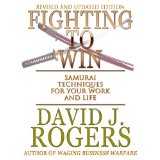
Fighting to win Amazon

Click on book image to order from Amazon.com

or

http://www.barnesandnoble.com/w/fighting-to-win-samurai-techniques-for-your-work-and-life-david-rogers/1119303640?ean=2940149174379


Order Waging Business Warfare: Lessons From the Military Masters in Achieving Competitive Superiority
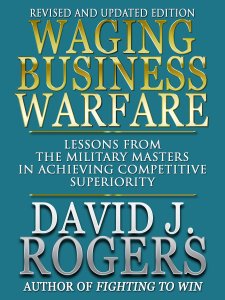
Waging Business Warfare812sCY9edLL._SL1500_

Click on book image to order from Amazon.com

or

http://www.barnesandnoble.com/w/waging-business-warfare-lessons-from-the-military-masters-in-achieving-competetive-superiority-revised-edition-david-rogers/1119079991?ean=2940149284030


Leave a comment

Filed under Blocks to Action, Developing Talent, Human Potential and Achievement, Goals and Purposes, Motivation

Finding a Creative Second Life: Parallel Careers

rails-407242_640This post is about realizing what marvelous talents and gifts you may possess and may not yet be fully using, but may wish to. It tells the stories of people who felt the same.

People from many countries will read this post and there is no doubt in my mind that they will think of similar examples from their own countries. I’d be interested in learning about them.

 George Bernard Shaw

Before settling down to a playwright’s life and eventually being awarded the Nobel Prize in literature, Irishman George Bernard Shaw drifted aimlessly and unhappily from one occupation to another, including selling men’s clothes in a shop. He thought of becoming a novelist, so dutifully while selling real estate, he wrote one novel each year for five years and submitted the manuscripts to a publisher. Each was rejected, and he was discouraged.

Finally a sympathetic editor accompanied a rejected manuscript with a note stating that while the publishing house would have to turn down this manuscript too, the dialogue was superb. The editor asked, “Did you ever think of writing plays?” Shaw had written little plays as a boy that he and his friends would perform to entertain his family, but he hadn’t written one since.

Encouraged now, immediately he turned to using his strength–writing dialogue. He wasn’t meant to sell men’s shirts or real estate. He wasn’t even meant to write novels. He wasn’t meant for a thousand things. He was meant to write plays. (In my language, that was his intended destiny.) That’s what he was best equipped to do, just as you are best equipped for certain undertakings.

Core Strengths

An important way to find fulfillment in life and perhaps stumble upon a new identity is by making regular use of your principal strengths–your main aptitudes, talents, gifts, personal qualities, and capabilities, and doing so freely, without inhibition, without conflicts, without being interfered with.

Your strengths are what, in particular, out of all you’re capable of, you do better than anything else, and perhaps are happier doing than anything else. They are whatever you’re doing when you feel deep down, “Now, at this moment, I’m doing what I do especially well. I love it. It makes me happy.”

You have many strengths, but one is dominant. It is your main strength, your core strength. You’re at your best when you’re making use of your core strength in an occupation, or while pursuing a purpose that is important to you, or in an abiding interest, all of which bring fulfillment.

From your earliest years you have gravitated toward activities that enabled you to make use of your core strength. As a child you enjoyed building bridges with blocks. You never forgot the joy you felt. You became an engineer so that you could feel that the rest of your life. Or you liked to paint; or liked sports; or liked to sing; you liked to play in the garden; you enjoyed being with friends and showing them your poems. You were particularly good at math.

The life pursuits of people who excel were often foreshadowed by what deeply interested them as children. A chord was struck; something crystalized; a future was laid out. At times, like Shaw, they drift from one field, one occupation, to another, experiencing dead-ends and false starts, and only later return to that earlier interest, and then feel, “This is what I should have been doing all along.” So it is a good idea to never forget what your heart was once drawn to, but to keep it in mind whatever else you might be doing in your life.

In a previous blog I described the Zeigarnik Effect (named after Russian psychologist Bluma Zeigarnik, the first person to study it): you don’t forget important things you started even long ago, but did not complete. They linger in your mind, reappearing from time to time, and in fact you remember them better than you do completed tasks. You have a strong desire to finally complete them, and you may do so many years later. That people have a need to finish what they start is true especially of the most highly motivated people.

As a boy, my friend loved to listen to his father tell stories of significant events in history and great people who did great things. He would then tell his friends the stories his father had told him. He worked hard and became a top executive with one of the world’s largest retailers. But he found that something was missing–the stories his father had told him and that he had loved. So while working at his job during the day, he earned a PhD in history at night, a subject which he now teaches at a university after work. Now he can tell his father’s stories again.

Putting yourself in a position to return to your past interests and make use of your core strength, if you aren’t already, is a strategy for bringing about positive change in your life and lifting up your spirits to new heights.

 A Parallel Career

The majority of people across the world are bursting with talents and gifts they are longing to make use of. Most people are far greater than their jobs no matter how excellent that job is. They usually have valuable qualities that are never called upon. They possess more intelligence, energy, motivation, imagination, and creativity than their jobs will ever require of them, and their core strength may go unused. So while working their entire career in one occupation that is otherwise perfectly fine and brings them satisfaction, they find more creative outlets to express themselves further and to make use of their core strength and find still more satisfaction. And sometimes the parallel career consumes them and they achieve extraordinary accomplishments and make names for themselves.

Robert Ardrey was a Hollywood screenwriter in high demand and a playwright who had two plays on Broadway at the same time. But he loved anthropology and the behavioral sciences and studied them on the side. He popularized the concept of “the territorial imperative” which asserts that living creatures, including human beings, instinctively protect their territory. (The farther away from the center of it you stay, the less interested in you they are. But step into their territory and the more aggressive they become.) Ardrey became a renowned paleoanthropologist and wrote the best seller African Genesis.

Busy housewife and mother Anne Sexton watched a PBS show on “How to Write a Sonnet” and sat down and wrote one. That first exposure to creative writing ignited an interest, revealed a core strength, and started her on the path to a parallel career. She never attended college. Her only formal education consisted of sporadic adult education classes at a handful of Boston-area colleges. Yet her poems won immediate attention through their appearance in literary magazines and newspapers. A stream of awards and grants followed the release of each of her first three books. Her fourth, Live or Die, won the Pulitzer Prize. She said, “Until I was twenty-eight I had a kind of buried self who didn’t know she could do anything but make white sauce and diaper babies. I didn’t know I had any creative depths.”

Charles Ives—“an American original,” was one of the first American composers to receive renown internationally. He worked during the day as an insurance company executive, as did poet Wallace Stevens, who received the Pulitzer Prize and twice won the National Book Award. American influential and innovative poet William Carlos Williams and Anton Chekov, Russia’s finest playwright and the world’s best short story writer ever, were both practicing physicians. Franz Kafka was a government bureaucrat during the day. Twentieth century English novelist Henry Green, called “the most original…the best writer of his time,” was born into a wealthy family and was the managing director of its bottling business.

Henri Rousseau, a self-taught French post-impressionistic, though busy at work and with a family, started drawing and painting seriously in his forties. Although untutored, he influenced many painters, especially Pablo Picasso. Rousseau worked as a customs official, and was known as Le Douanier, “the customs officer.” Herman Melville, author of Moby Dick and Billy Budd, was also a customs official– at the New York Port Authority.

Englishman Anthony Trollope was one of the most prolific, respected, and successful writers of the Victorian Era. Not much of a believer in art-for-arts-sake, he wrote that all “material progress has come from man’s desire to do the best he can for himself and those about him.,” and stated that what motivated him was what motivates lawyers and bakers—“to make an income on which I and those belonging to me might live in comfort.” He was a career post office employee who wrote his 47 novels and dozens of short stories and travel books while on trains to and from assignments. He claimed that he wasn’t extraordinary, but that any writer could be as prolific if he just budgeted his time efficiently.

Benjamin Lee Whorf, one of history’s foremost linguists, was by profession a chemical engineer and fire prevention inspector. He studied linguistics as a hobby. Truly a towering figure in sociology, Herbert Spencer was also an anthropologist and political theorist, and made a separate reputation in biology.

William Herschel discovered the planet Uranus; in fact it was called Herschel until Uranus was universally accepted. By profession he was an orchestra conductor and a composer known for his twenty-four symphonies.

Colorful novelist and art critic Andre Malraux, called by Jacqueline Kennedy, “the most fascinating man I ever talked to,” was a statesman, the French Minister for Cultural Affairs. Popular novelist Tom Clancy worked as an insurance salesman. Another Nobel Laureate, poet and literary critic T.S Eliot, worked full-time as a banker and then as a chief executive in a publishing company. The author of Alice in Wonderland, Lewis Carroll, was a professional mathematician, and noted photographer.

Samuel F.B. Morse was a prominent American portrait painter. He received a message that his wife Susan, age 25, was seriously ill. He rushed from Washington to his home in New Haven to find that she had died while he was returning. Devastated by his failure to reach her in time and the inability of the current message technology to get the news to him faster, he set out to develop a more effective system of long-distance communication. He then invented the telegraph and the Morse code that achieved that goal, connecting all four corners of the globe.

Follow Where Your Core Strength Leads You

Which of your many strengths is your core strength, not your second strength, or third, or fourth? What do you do especially well and continually gravitate toward? What are you doing when you don’t want to quit? What are you doing when you feel most fulfilled and can say, “This is me at my best. There is nothing else like this.”

The goal is to be able to make full use of your core strength freely, without inhibition, without conflicts, without being interfered with.

Possibly in a parallel career.

© 2014 David J. Rogers

For my interview from the international teleconference with Ben Dean about Fighting to Win, click on the following link:

www.mentorcoach.com/rogershttp://www.mentorcoach.com/positive-psychology-coaching/interviews/interview-david-j-rogers/

Order Fighting to Win: Samurai Techniques for Your Work and Life eBook by David J. Rogers

Fighting to win Amazon

Click on book image to order from Amazon.com

or

http://www.barnesandnoble.com/w/fighting-to-win-samurai-techniques-for-your-work-and-life-david-rogers/1119303640?ean=2940149174379


Order Waging Business Warfare: Lessons From the Military Masters in Achieving Competitive Superiority

Waging Business Warfare812sCY9edLL._SL1500_

Click on book image to order from Amazon.com

or

http://www.barnesandnoble.com/w/waging-business-warfare-lessons-from-the-military-masters-in-achieving-competetive-superiority-revised-edition-david-rogers/1119079991?ean=2940149284030


9 Comments

Filed under Becoming an Artist, Creativity Self-Improvement, Developing Talent, Human Potential and Achievement, Goals and Purposes, Motivation

Beware Of Becoming What You Weren’t Supposed To Be: Your Two Destinies

Tailors and Generals

road-220058_640The story goes that a man died and went to heaven. Meeting Saint Peter at the gates, watching the crowds of people passing through, he said, “Saint Peter, I’m curious. Point out to me the greatest general in history.” Saint Peter gazed into the mass of people, spotted the man he was looking for and pointing, said, “There he is, that one over there.” The man was shocked. He said, “That’s not a general. That’s just Harry, a tailor from my old neighborhood.”

Yes,” said Saint Peter, “you’re right, that is Harry the tailor. But had he been a soldier he would have been the greatest general in history.”

My question is, “Why are so many people leading a tailor’s life when they should be generals?”

 The Urge to Grow and Flourish

 In the title of a radio show I was a guest on was the word “destiny,” and I started by saying, “I couldn’t be on a more appropriate show. I’m a strong believer in destiny. Here’s what I mean…”

The word “destiny” has the same root as “destination.” It’s where you’re headed. Your destiny is not a pre-ordained life that you’re forced to lead because it’s been laid out before you in detail by some master planner who has absolute control over you. Your destiny depends more than anything on your own free will and it is as much a part of you as your ear.

Every living thing has an innate urge to grow, to flourish, to realize its full potential. A maple tree “wishes” to become all the maple tree it can be, an ear of corn, an ear of corn, a lilac a lilac, you an actor, to discover, develop, refine, and put to use your full talents in performances before an admiring public, and you, a painter, to see your works adorning walls.

This inner urge–this impulse–pushes all living things to strive to become what they are equipped for and have the potential to become, no matter how harsh or unaccommodating the environment. Composers and musical performers who, like Claude Debussy, grow up in unmusical families, and poets and other geniuses of the language whose parents are illiterate or who themselves quit school at twelve–Mark Twain, who claimed that he never let schooling interfere with his education–and Walt Whitman, one day to make himself through his own efforts, high ambitions, and self-teaching into, rather mysteriously, America’s best and most expressive poet.

Denied water, a tree will send out its roots long distances in search of it. Hidden in shadows, it will twist its branches until they reach sunlight. Some people too, will do whatever’s needed to reach sunlight.

 You Have Two Destinies

You have not one, but two, destinies. One is your INTENDED DESTINY and the other is your ACTUAL DESTINY. Your intended destiny is the life you are fully equipped with the talents, gifts, personality, and intelligence to have. The other, your actual destiny, is what you actually became and the life you’re actually living. You know people who have all that’s necessary to become A, and actually became A. But most people’s intended and actual destinies are different. They should have become A, and wanted to become A, but became B instead.

Gary has all that it takes to become a fine architect, but never finished school and settled for being a draftsman. Erin has musical talent and was intended to write popular songs, but works as a sales clerk in a novelty shop and never gets around to writing. Neither put themselves on the right course, or seeing they were on the wrong course, never took it on themselves to change course. They are intended generals who became actual tailors.

The Ideal Is Very Possible

 You’ve reached the ideal when your intended destiny is your actual destiny. Then you’re converting what you hold the promise of being into what you actually are. If you were equipped to be A, and not B, you would be A. Gary would be designing buildings; Erin would be producing songs.

Deep down you and I know that there is a most suitable life for us, more suitable than any other. We can feel that that it’s a specific life. Even if we don’t yet know exactly what it is we feel it and we spend part of our lives—possibly most of our lives—looking for it. To become clear as to what your intended destiny is and to say to it, “I devote myself to you,” is to feel an unstoppable drive toward its due fulfillment and to spring to life. Once you know you’re moving in the right direction and feel strongly about it you fly through your days aflame with energy and determination. If there are obstacles in your way you overcome them, particularly the fear of taking risks.

There’s a part of you that asks yourself, “Why are you here in life and not there? Account for yourself.” If you never start that novel or never start that business that you are equipped for, your conscience won’t let go. From time to time all your life you’ll think, “I should have written that book,” “I should have my own business” and you’ll feel regret, and you’ll never know what might have happened or what your life would have been like.

 The Need to Finish What You Start

Sometimes what we put aside a long time ago but haven’t forgotten is a clue to our true destiny. Russian psychologist Bluma Zeigarnik’s professor Kurt Lewin noticed that a waiter remembered orders only as long as the order was in the process of being served. When it was served, he forgot about it. From this, Zeigarnik developed the theory that people remember uncompleted or interrupted tasks better than they do completed tasks (now called “The Zeigarnik Effect”). People who suspend their work and get involved in unrelated activities (such as playing games) will remember material better than people who continue working without taking a break.

As applied to a lifetime it means that you will not forget important things you started even long ago, but did not complete—such as that painting in storage in your basement, or the project you intended to get back to, or the degree you started but never got. Not getting back to them causes a tension that brings repeated thoughts of the unfinished business that doesn’t end until the job is finished. It’s human nature to finish what we start and to feel uneasy until we do. As long as the task is uncompleted your mind continues to work on it, and it will not stop pestering you until you finish the task. I have a novel in a nice bright red binder that I started 35 years ago that has been on my mind ever since. What have you not forgotten that may indicate a direction you should follow?

It’s not unusual for people who distinguish themselves and feel fulfilled to discover the direction of achievements they will have later in life foreshadowed by the interests and preoccupations of their childhood. Quite early in life they became interested in an activity that they later pursued seriously, at times to the exclusion of almost everything else, and at times after pursuing other things that diverted them, often going down a fruitless path and coming to a dead end. The deepening of their interest over time became what guided them to their careers and largely determined their success. So, it could be a turning point when you feel yourself drifting away from your true destiny to ask what interested you when you were a child and haven’t forgotten: “When I was little, I liked especially….”

Timing

You may reach your intended destiny by a rapid jump, a quantum leap, even without any hints beforehand. It seems inconceivable that Joseph Conrad, born Jozef Konrad Korzeniowski, a Polish seaman who spent twenty years on ships and never took a writing class and didn’t learn English until he was in his twenties, should suddenly emerge as one of the greatest and most innovative stylists writing not in Polish, but English. He said later than when he started his first novel one day after breakfast, “I had written nothing but letters, and not very many of these. I never made a note of fact, of an impression or of an anecdote in my life.” His emerging full-blown into a master of the language is one of the puzzles of literary history and human development. But it happened.

You can never say that it’s too late to reach your intended destiny, however roundabout your journey to it has been, or however long it’s taken. Having set out in one direction, you are free to turn and set out in another like a fish in a stream that changes direction any time it wishes. When you overcome past mistakes, false starts, and failures and set out for your intended destiny you feel a sense of rightness, of confidence, of being in complete charge. You think, “This—this—finally is what my life was supposed to be.”

Your true destiny may appear at any time: in childhood, adolescence, adulthood, or late adulthood. Many people enter new paths later than others and they “catch up” quickly and often surpass the others. Duke Ellington’s career was undistinguished until he was forty. Authors Tolstoy, Turgenev, and William Faulkner showed little promise in their youth. They did their best work considerably later than others novelists. Paul Gauguin was a successful Parisian stock broker for years before he turned to art and became a great painter.

Jean Paul Sartre wrote that people exist first and only afterwards define themselves. “They are what they will have planned to be. They are what they conceive themselves to be.” A Japanese adage says, “Irrigators guide water, fletchers straighten arrows, carpenters bend wood, and as for wise people, they shape themselves.”

Shaping yourself into the person you conceive yourself to be—that’s what this post is about.

© 2014 David J. Rogers

For my interview from the international teleconference with Ben Dean about Fighting to Win, click on the following link:

www.mentorcoach.com/rogershttp://www.mentorcoach.com/positive-psychology-coaching/interviews/interview-david-j-rogers/

Order Fighting to Win: Samurai Techniques for Your Work and Life eBook by David J. Rogers

Fighting to win Amazon

Click on book image to order from Amazon.com

or

http://www.barnesandnoble.com/w/fighting-to-win-samurai-techniques-for-your-work-and-life-david-rogers/1119303640?ean=2940149174379


Order Waging Business Warfare: Lessons From the Military Masters in Achieving Competitive Superiority

Waging Business Warfare812sCY9edLL._SL1500_

Click on book image to order from Amazon.com

or

http://www.barnesandnoble.com/w/waging-business-warfare-lessons-from-the-military-masters-in-achieving-competetive-superiority-revised-edition-david-rogers/1119079991?ean=2940149284030


8 Comments

Filed under Creativity Self-Improvement, Developing Talent, Human Potential and Achievement, Goals and Purposes

Turn Your Energy into Great Achievements

running-294372_150Right now you have available to you a vast fund of energy. You have not just one level of it, but two, three, four, each deeper and more potent than the one before. Most people never get beyond the first level. How can they if they quit?

“The strong do not hesitate. They settle down, they sweat, they go to the end…The biggest ones are geniuses–the ones who toil eighteen hours a day without tiring.” Author Jules Renard

Living at White Heat

Some people go through life at a fast pace and have stamina. Others seem to be walking under water, existing in a kind of suspended animation. It’s as if all life long they’ve been storing up their energy for some momentous day, some fantastic day, some great event when they will somehow need all the energy they’ve been saving up all these years.

They act as if “energy conservation” refers not to electrical energy or gas or oil, but to their energy. Or that their energy is something they can deposit in a kind of life’s savings account, drawing on it at some indeterminate day in the future. They’re continually looking for ways to stop and rest–whether on the job or in personal life.

But our energy is meant to be consumed and not conserved, to be spent and not saved. It’s meant for us to throw into the actions that will lead us to the achievements we desire. That’s its purpose. That’s what it’s for. How can you get from here to there, taking action and making a more fulfilling life for yourself without consuming your energy?

Energy isn’t a dish of ice cream that once gone is gone forever. Energy replenishes itself. You have reserves of it. There’s plenty more. You feel a surge of energy when you’re doing what you should be doing with your life and are becoming what you should have been all along.

Inexhaustible, Mozart composed his three last great symphonies in eight weeks. Composer Igor Stravinsky worked all his life in a kind of frenzy. Noted architect and futurist Buckminster Fuller was often unable to stop working until he dropped from exhaustion. Shakespeare wrote an average of two plays a year–thirty six–many of the greatest pieces of literature in the world’s history. And he was also a poet, an actor, a family man, and a producer who had to attend to the practical concerns of mounting the plays’ performance. Leonardo da Vinci was a human volcano of work and ideas. His creative ideas came out of him in a torrent, ranging from painting the Mona Lisa to his famous drawings of flying machines and tanks.

A Runner in Training

I was in training for my event, the 800 meters. That workout I decided I would run as many laps as I could at three-quarters speed. After a few laps the pain I was so familiar with set in, and the difficulty breathing. Then the pain–that great obstacle for a runner–in my legs, my arms, my chest—my whole body–became more severe and I thought about quitting. How easy that would be: just step off the track and the pain would stop and I wouldn’t have to go through this anymore. “No one is making me run.”

But that day I didn’t stop, I didn’t slow down. I increased my speed and the pain was much worse. I thought, “How long can a person endure this?” Then I thought, “I am a middle-distance runner. Middle distance runners can bear a great deal of pain.”

But then, after I had pushed myself as hard as I could and suffered that pain longer than I thought possible but continued to run, I passed into a new and miraculous state of being. One moment I was in pain; the next I was not. I had entered a place, a garden, where pain could not exist. All pain was lifted out of my body and I could breathe easily again. The running suddenly was smooth and effortless and strong, my form perfect.

That afternoon, one runner after another quit his training and left for home. But I ran lap after lap far into the night. I realized that I could run forever.

High Performers

Some people produce five, ten, or fifteen times more than other people performing the same job. That’s true of every job. That’s true of yours. I’ve seen people—ordinary people–who are not Mozarts, Shakespeares, or da Vincis, but who live and work at white heat and achieve the almost miraculous. What drives a great athlete relentlessly to work hard? The thought that his/her competitor is working harder.

The majority of leading experts in the field of exceptionally high performance believe that the sheer number of hours the person devotes to his/her development is the main determinant of expertise, more important than talent. The expert devotes many more hours than the less successful person. And that translates into who consumes the most energy.

What has Tiredness to Do with Rest?

High achievers exert more energy from the start and work steadily without long interruptions for a much longer period than the majority of people–for days, months, years if necessary. What enables them to operate continually at a higher level of energy?

It’s excitement or necessity or both, excitement over purposes or the necessity of overcoming obstacles to achieve them. People will push themselves to an extreme day after day and overcome almost any impediments when they are on fire with excitement.

But many people achieve little because they stop working at the first sign of fatigue. They’re in the habit of quitting when tired. Better to ratchet up and exert more effort then, not less. Then you acquire the ability to not tire easily and you keep gaining ground on the achievements you’ve imagined.

If you quit at the first sign of tiredness, you develop the habit of tiring quickly and giving up.

Every time you reach the point at which you seem to have no energy left, yet push yourself still further, you train yourself to draw from deeper into your reserves at will. If you push yourself on then, the fatigue gets worse up to a point. Then it fades away and you are fired up by a sense that you can go on forever. Fatigue is replaced by a new explosive surge. The result is a new freedom, a new power.

Get regular exercise, maintain a healthful diet, alternate action and rest, don’t rest long (the busiest people need no more rest than the laziest), focus on your purpose, and let your powerful desire for achievements consume you.

A Life Learning

It’s a life learning that will never fail you: you must push yourself beyond your limits all the time, without reservation. Then you create new limits which, in turn, you will surpass. You can get closer to a better life today than you were yesterday if you are single-minded and burn—not conserve–your energy.

Please follow this  blog. It will feature topics I think will be of value to you.

© 2014 David J. Rogers

For my interview from the international teleconference with Ben Dean about Fighting to Win, click on the following link:

www.mentorcoach.com/rogershttp://www.mentorcoach.com/positive-psychology-coaching/interviews/interview-david-j-rogers/


How to Get The Book

Order Fighting to Win: Samurai Techniques for Your Work and Life eBook by David J. Rogers

Fighting to win Amazon

Click on book image to order from Amazon.com

or

http://www.barnesandnoble.com/w/fighting-to-win-samurai-techniques-for-your-work-and-life-david-rogers/1119303640?ean=2940149174379


Order Waging Business Warfare: Lessons From the Military Masters in Achieving Competitive Superiority

Waging Business Warfare812sCY9edLL._SL1500_

Click on book image to order from Amazon.com

or

http://www.barnesandnoble.com/w/waging-business-warfare-lessons-from-the-military-masters-in-achieving-competetive-superiority-revised-edition-david-rogers/1119079991?ean=2940149284030


Leave a comment

Filed under Developing Talent, Human Potential and Achievement, Goals and Purposes, Motivation

First Crisis, Then Recovery

Man sitting on a bench looking at the waterWhen crossing marshes, your only concern should be to get over them quickly, without delay”.                                 (Sonshi/Sun Tzu)

I was cheated out of a great deal of money in business by people I had trusted.

I had worked hard an entire year on a handshake, and now I had nothing to show for it. I had a wife and four children to support, and now there was no money with which to pay the bills. Devastated, I quickly fell into a depression; it was almost impossible for me to get up in the morning and I couldn’t sleep at night. I had not only lost the money, I had lost my faith in mankind. Is man’s greed so complete and is he so hopelessly selfish and that he will take the food out of another man’s mouth? I could not fathom such cruelty.

In that dark mood those dreary days, I could not make myself spend time with the family I love so much, didn’t feel like seeing friends, didn’t feel like leaving the house at all, didn’t want to talk, didn’t want to walk my dear dog, didn’t want to water my plants, didn’t  feel like getting dressed.

I am a reader, so one day I left the house and went searching for a book that would help me resurrect my damaged spirit and get me back on my feet and fully functioning again. All my life I have had what I call my “Research Angel”–some unknown factor that I trust to guide me to the solutions to my problems. When I need something, my Research Angel takes me to it.

I went downtown to a book store where I had once been a sales clerk and walked around from floor to floor, looking at book covers, reading titles, and thumbing through book after book until I found one that seemed almost to glow with a bright light there on the shelf. I picked it up and it seems to me now that simply holding it was the start of a new energy, a new focus, a new purpose.

I bought it, took it home, went upstairs to my office, turned on the desk light, and read it. Immediately I knew that book would lead me to writing the book I had been dreaming of writing for some time but could not clearly conceptualize in my mind–and it was.

I have written about how my sister Sharon’s death fueled my purpose and made me indefatigable until I had achieved it.

I wrote my book–Fighting to Win–and it changed everything about my life. After its success a major publisher told me, “We will give you a contract to write your next book.”

I asked, “What do you want me to write about?” and I heard the words every author dreams of hearing: “Write about anything you want to write about.”

And so I wrote another book that became popular: Waging Business Warfare.

That led to public speaking engagements in North America and Europe–and the realization that standing at a podium speaking to a thousand people or two or three thousand or five had been my destiny–shinjin in Japanese–the real me, the true person.

So you see, if I hadn’t been cheated by unscrupulous men I might never have gotten on the path that I was designed to follow all along.

The Research Angel

I think many people have discovered during their lives—particularly when going through tough, discouraging times–that they too have a Research Angel, whatever they call it.  A Research Angel is, I think, a powerful and undeniable intuition, a kind of unshakable knowing what’s best for you–most healthy for you–that comes from within, and an internal compass leading you over, around, or through obstacles, and out of difficulty. All that’s necessary is to relax and free your mind and have trust in your Research Angel. And to follow where it leads.

Two Questions for You

Do you have some kind of what I call a Research Angel that helps you out of crises? What difficulties has it led you out of? I would love to hear your story.

© 2014 David J. Rogers


Please follow this “Starting Your Life Fresh” blog. It will feature topics I think will be of value to you.

For my interview from the international teleconference with Ben Dean about Fighting to Win, click on the following link:

www.mentorcoach.com/rogershttp://www.mentorcoach.com/positive-psychology-coaching/interviews/interview-david-j-rogers/


How to Get The Books

Order Fighting to Win: Samurai Techniques for Your Work and Life eBook by David J. Rogers

Fighting to win Amazon

Click on book image to order from Amazon.com

or

http://www.barnesandnoble.com/w/fighting-to-win-samurai-techniques-for-your-work-and-life-david-rogers/1119303640?ean=2940149174379


Order Waging Business Warfare: Lessons From the Military Masters in Achieving Competitive Superiority

Waging Business Warfare812sCY9edLL._SL1500_

Click on book image to order from Amazon.com

or

http://www.barnesandnoble.com/w/waging-business-warfare-lessons-from-the-military-masters-in-achieving-competetive-superiority-revised-edition-david-rogers/1119079991?ean=2940149284030


or

http://www.barnesandnoble.com/w/waging-business-warfare-lessons-from-the-military-masters-in-achieving-competetive-superiority-revised-edition-david-rogers/1119079991?ean=2940149284030


4 Comments

Filed under Becoming an Artist, Developing Talent, Human Potential and Achievement, Goals and Purposes, Personal Stories

What Prevents People from Reaching Their Goals and Purposes

dragon-149393_150THE ABILITY TO FIGHT FOR A BETTER LIFE IS A NECESSARY SKILL

ALL GREAT PEOPLE, ALL THOSE WHO HAVE MADE THEIR MARK, HAVE BEEN FIGHTERS.

“I have the kind of life purposes you talk about, I have dreams and ambitions, I have major goals, but I’ve never been able to reach them the way I thought I would and I’m looking for an explanation.”

“Blocks are stopping you.”

“Blocks.”

“Yes, blocks, impediments, obstacles, some outside you, out in the world, but the most powerful are inside.”

“What do you mean?”

“Inside your spirit and mind.”

“What am I to do?”

“We say about a woman, ‘She’s very sick, but she’s a real fighter,’ and there is no higher compliment we can pay her—no higher compliment we can pay anyone. As long as she’s fighting there is hope. If you are as serious about a better life as you say you are you too would be willing to fight for that life. You would fight with all your might, wouldn’t you? How important can a life be if it isn’t worth fighting for? The ability to fight for a better life is a necessary skill. Some people possess it; many do not. But it can be learned. All people can be fighters. All great people, all those who have made their mark, have been fighters.

BLOCKS are your opponents. BLOCKS are what you’re fighting. BLOCKS are keeping people from a full life. So you must learn to be a fighter, and whatever your personality, that’s possible.”

BLOCKS PEOPLE FACE HOLD THEM BACK…

…hold them down, and keep them from the better life they deserve. Because of blocks, very few people are making full use of all the marvelous talents they possess. Their abilities go to waste. There are two types of opponents/blocks you run into all the time. I know without having met you that you are facing at least one of them as you read this—and maybe more than one. Maybe many.

OUTER opponents/blocks are any forces, hindrances, or obstacles in the external world outside of you that you will have to eliminate or overcome if you are to have a more fulfilling life and reach what you’re seeking—whatever that might be.  Anything out in the world standing between you and your peace, prosperity, and well-being is an outer opponent, outer block. Right now you can think of the life you envision and aspire to and see very clearly that there are blocks that stand between you and it.  People when they oppose you, problems, tough situations, setbacks, crises, disappointments, discouragements, past failures, and difficult tasks are a few outer blocks.

INNER BLOCKS are in the person, in you. You and I grew up believing–because that’s what we’ve been told–that the main blocks confronting us are outside us. But that’s not true and all you need do is to reflect on your own life to know that’s not true. The BIG BLOCKS are those blocks of the mind and spirit.  Lack of self-confidence and self-reliance, self-doubt, destructive habits, problems handling pressure, laziness, an explosive temper, procrastination, excessive worry, constant boredom, and living without strong commitments are a few inner obstacles. (I will talk about some of the most powerful and detrimental blocks in future posts.)

They may be daunting, they may be intimidating, they may have become such habits that you hardly know anymore that they exist. But they are there and again and again they are keeping you from a better life. So you must do something about them.

The samurai, the greatest fighters ever to walk this earth, the basis of my book Fighting to Win, called all opponents in our minds and spirits, “DRAGONS.” You and I believed in dragons when we were children. They were hideous and terrifying and we drew back in horror. Then we discovered that the only place they existed was in our minds. When we realized they were only figments of our imagination they vanished, never to return.

ALL INNER OPPONENTS/BLOCKS ARE DRAGONS. THEY ONLY LIVE BECAUSE WE GRANT THEM POWER TO. But when you “strike through the dragon’s mask,” conquering inner opponents, inner blocks, dragons disappear—like that. They only exist because we give them license to. When we revoke their license they are gone and we are free.

SEVENTY PER CENT OF YOUR BATTLES ARE WITH INNER BLOCKS

“So you’re saying that inner blocks, inner obstacles, dragons, are powerful.”

“Yes, extremely powerful, interfering with very simple acts to more complicated ones. Inner blocks can destroy lives—they are destroying lives this moment.He or she broke your heart, so you tell yourself, “I never again want a broken heart. I will never get seriously involved again.” And so you may never love or be loved again. That’s an inner block—that’s a dragon. Being afraid to give a speech in public is the number one fear in this country. People would rather fall out of an airplane. That’s an inner block. Wanting to start a business or write a novel or change your career at last but saying, “That is an enormous undertaking and full of risks,” and letting your constant fear of taking chances stop you is an inner opponent.

“Many people slow down or stop completely when they approach the achievement of their goals, even goals they have been striving for for years, and then may never achieve them. No one knows why this is true, but that tendency is a dragon that has to be struck through. Going back and forth on a decision for weeks, months, or years, and never making up your mind what to do is an inner opponent. Get with it. Stop wasting the one short life you have. Our lives are like cherry blossoms that don’t last long in the wind that blows them from the tree. You’ve got to make a decision. Inner blocks/dragons create very sad states of affairs, and how you can acquire the ability to overcome them is worth looking into.

“But no block is a fate, a destiny. You don’t have to continue being the way you have been. Personalities can change, habits can change. I’ve seen lives changed almost miraculously. We can start fresh this moment. That’s the whole point. A cat becomes all the cat it will ever be without having to think about it, but we’re not cats. We all have an urge to make full use of our talents and to live a life we are designed for. That was to be your destiny. But we are not served a fulfilling life on a platter. We have to work at becoming all that we hold the promise of being—no room in this life for laziness or apathy.”

FEAR IS THE BLOCK OF BLOCKS

The Whole Secret of Existence is to be Free of Fear

FEAR is the block of blocks, the main obstacle, the principal opponent, the most fearsome dragon. Fear is as much a part of living as breathing. You are afraid of at least one thing every day—small things, big things, happiness-threatening things. There are a thousand fears that dominate people and keep them from a better life. Fear creates anxiety. This is the age of anxiety. Fear creates failure.

All inner blocks, all dragons, are a result of fear. What is the whole secret of existence? It is to be free of fear. The samurai was told, “Be fearless, have no fear.” What the samurai learned and that made them exceptional—ordinary people who through training became extraordinary– we can learn.

START YOUR OWN LIST OF DRAGONS

Head a blank sheet of paper or go to the computer. Head a list “Inner Dragons.” Then jot down anything you can think of in you that’s keeping you from achieving greater success in any part of your life. See how easy that is to do? No one ever needs to tell you what your blocks are. Now you’re aware of the inner dragons you will have to conquer.

 THE SAMURAI

The Japanese samurai were soldiers in the service of a Lord, like our soldiers in Afghanistan in service to the country. Imagine a samurai warrior going into battle. Across the field is the enemy. To go into battle he—or she (there were women samurai)–had to overcome the identical emotions we encounter every day, the emotions we’ve been talking about. They had to conquer fear and the other dragons like self-doubt in themselves. If they didn’t overcome those blocks the consequences were serious, even fatal. They had to learn courage and bravery, for example—things of the heart–things we need every day, prerequisites of truly effective living.

So what did the samurai do? They did something astounding. They developed an entire complete system—called musha shugyo— to conquer their dragons—your dragons—the most effective, most unique, such system ever devised by man which Fighting to Win updates and applies to 21st century work and life. Said the samurai:

“The end of our way of the sword is to be fearless when confronting our inner enemies and our outer enemies.”

“When you meet calamities and rough situations it isn’t enough simply to say you’re not flustered. Whenever you meet difficult situations dash forward bravely and joyfully.”

“Go to the battlefield firmly confident of victory and you will come home with no wounds whatsoever.”

“The greatest warrior is the one who conquers himself.”

TO BE FILLED WITH POWER

“We give blocks too much power. We let them prevent us from leading the lives we dream of. So they have to be conquered. You have to get rid of them. And that can be done. When you live like that—focusing again and again on a better life, conquering one impediment after another—you are suddenly filled with tremendous power, and a bright light shines around you like a private sun.”

“I wish I could hire a samurai to help me.”

“Why? Be a samurai yourself.”

© 2014 David J. Rogers


Please subscribe to this blog. It will feature topics that I think will be of value to you. Let me know what you are interested in and what you’re thinking about.

For my interview from the international teleconference with Ben Dean about Fighting to Win, click on the following link:

www.mentorcoach.com/rogershttp://www.mentorcoach.com/positive-psychology-coaching/interviews/interview-david-j-rogers/


 HOW TO GET THE BOOKS

Order Fighting to Win: Samurai Techniques for Your Work and Life eBook by David J. Rogers

Fighting to win Amazon

Click on book image to order from Amazon.com

or

http://www.barnesandnoble.com/w/fighting-to-win-samurai-techniques-for-your-work-and-life-david-rogers/1119303640?ean=2940149174379


Order Waging Business Warfare: Lessons From the Military Masters in Achieving Competitive Superiority

Waging Business Warfare812sCY9edLL._SL1500_

Click on book image to order from Amazon.com

or

http://www.barnesandnoble.com/w/waging-business-warfare-lessons-from-the-military-masters-in-achieving-competetive-superiority-revised-edition-david-rogers/1119079991?ean=2940149284030


2 Comments

Filed under Goals and Purposes