Tag Archives: memories

Joys Of A Workaholic Writer Wasting Time

I’ve been trumpeting to anyone within ear shot that workaholic artistic people frog-1339897_640with their powerful and constant and sometimes obsessive need to work at their craft so they might improve and be more successful are the hardest working and most productive individuals on this planet.

That’s all true, but today my plan is to not produce a thing.

Today I will explore the joys of wasting time.

When I was a business consultant giving presentations to executives I’d say “Ladies and gentlemen I have utmost respect for your capacity for work, and I know you think you’re a hard worker. But you should spend a day with a ballerina. Then you’ll see what it means to work hard.” I’d ask, “For example, how many of you feel so strongly about reaching excellence that you’d practice till your poor muscles screamed and your feet bled?”

But I’m going to waste time all day. I’ll just see what happens.

A number of studies comparing novices with experts in most fields support the idea that because of their great knowledge and skill, experts are able to accomplish with almost no effort what non-experts can accomplish only with difficulty or can’t accomplish at all. That’s just common sense, isn’t it?

But common sense or not, that’s not true of artistic work. In fact, the opposite is true. Expert artists of all sorts—you very well may be one–work harder, not less hard than non-experts.  So:

THE BETTER SCULPTOR, PAINTER, NOVELIST, ACTOR, OR POET WORKS HARDER.

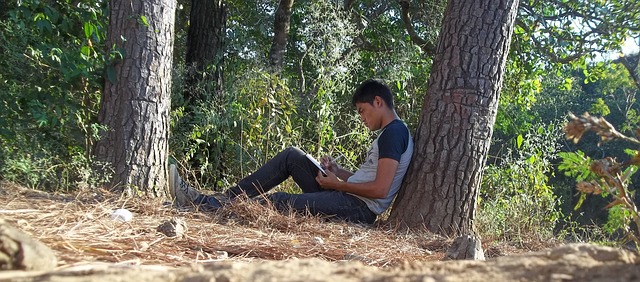
But I’ve taken this Wednesday in August off and I’m not thinking of anything like that because rarity of rarities I don’t feel a bit like working and have frog-914522_640decided to play hooky. I’m playing over again and again Simply Red singing the exciting “Fairground” and I feel terrific.  I’m writing this and don’t have the faintest idea where I’m going with it, and that feels great. I feel free, as if I’m in a forest as the Zen people say sitting quietly under a tree, doing nothing, while the roses grow by themselves.

At the moment it’s 2:10 p.m. In a few hours my wife Diana will be coming home and we’ll go out to eat. But first I want to finish this, wherever it’s taking me.

My “Let’s accomplish absolutely nothing today” rebellious mood began this morning when I woke up in yesterday’s street clothes on the couch at five according to the TV I’d left on all night. I just lay there and thought of my goals for the day, the way I start every day—take a look at the long email an editor sent and write a response thanking him, and continue finishing up my book I’ve designed for those whom I call “Stage Three Creators” who are not Stage One or Stage Two creators.

(If you’re curious, according to me:

Stage I creators don’t know the first thing about their craft, but don’t know they don’t know

Stage II creators realize they don’t know the first thing about their craft. So they try to learn as much as they can about their craft

Stage III creators realize there’s a lot more to know about their craft than anyone told them)

But I could tell my goal-setting mind and my I’m-all-set-to- work-let’s-get-the-show-on-the-road mind weren’t synchronized today. So my normal write-read-study daily schedule was tossed out the window and I thought, “For today at least, good riddance.  I think I’ll just putter around the house without feeling guilty.”

I can’t be away from written words for more than a few hours. So I went downstairs to my bookcases and tried to find something that would make me

booksfeel I’d gotten something out of the day even if I didn’t write a word. I passed up Chekhov, Virginia Woolf, Ernest Hemingway’s Death in The Afternoon, which I’d never read, and Flannery O’Connor whom I’ve never read, and John Cheever’s collected stories and Raymond Carver’s Cathedral, and so forth.

And there packed in among all my so-many books I saw that little paperback my father had bought me that early autumn afternoon he’d taken my older brother John and me for a commercial boat ride on Lake Michigan when I was eight or nine, I think—The Great Short Stories of Robert Louis Stevenson. Ten brilliant tales by the best-loved storyteller of all time, the book says. Dad had taken us to a book store in Chicago’s downtown (which we Chicagoans call The Loop) before the boat ride and told us completely by surprise that we could each pick out any book we wanted and he would give it to us. We weren’t rich. What a luxury for me to have my own book.

It was the first book I’d ever owned, that I’d taken my time going through the store and picked out myself. I can remember as though it is happening now looking over the racks for the right book—will it be this one or that one? I looked at the book’s price this morning—35 cents—and at the copyright date—so long ago. The pages are brown and the paper is brittle. The cover is bent but not torn. Through the years I’ve taken good care of it. Wherever I’ve moved, whatever heaven or hell I was going through, it’s come along. How could I possibly be without it?

What pleasure it gives me to see that little book again and to hold it in my hands. It meant so much to me that day. During the boat ride (the boat was named The Blue Dog) I remember that I could hardly take my eyes off the book though it was a lovely day, the sunlight reflected so brightly off the towering buildings along Chicago’s luscious skyline, the surface of the lake blue-gray and green. But it was my book, the first book that I alone had picked out and now could read as many times as I wanted and could keep.

It’s back to work tomorrow for me, but now I’m thinking I don’t know if my father giving me that book was in any way instrumental in setting me off in the direction of a writer’s life. But here I am thoroughly, completely, and irrevocably a writer. And I’ve never since childhood wanted to be anything but.

Writer's Block


© 2016 David J. Rogers

For my interview from the international teleconference with Ben Dean about Fighting to Win, click on the following link:

www.mentorcoach.com/rogershttp://www.mentorcoach.com/positive-psychology-coaching/interviews/interview-david-j-rogers/

Order Fighting to Win: Samurai Techniques for Your Work and Life eBook by David J. Rogers

Fighting to win Amazon

Click on book image to order from Amazon.com

or

http://www.barnesandnoble.com/w/fighting-to-win-samurai-techniques-for-your-work-and-life-david-rogers/1119303640?ean=2940149174379

Order Waging Business Warfare: Lessons From the Military Masters in Achieving Competitive Superiority

Waging Business Warfare812sCY9edLL._SL1500_

Click on book image to order from Amazon.com

or

http://www.barnesandnoble.com/w/waging-business-warfare-lessons-from-the-military-masters-in-achieving-competetive-superiority-revised-edition-david-rogers/1119079991?ean=2940149284030

9 Comments

Filed under Artists, Goals and Purposes, Personal Stories, Wasting Time, Work Production, Workaholic, Writers

Serendipity in a Creator’s Life

My journey on the life path of the writer (you may be on a creator’s life path too)–studying writers and the writer’s life, and writing and reading a great Road with the-sun-470317_640deal of my time, setting writing as a high priority in my life; thinking of it all the time; sacrificing for it—was shaped by serendipitous experiences which are probably not very different from yours.

In the third grade when I was seven, the teacher, Miss Gross, stood at the front of the room and read to the class my theme–I’d described playing football. I’d said when I was tackled “I fell to the ground like a blob of jelly coming out of a jar.” Miss Gross said to the class. “David has used poetic language. He’s written what’s called a simile.” That single little event—her saying that and showing admiration for those few words,  and making me feel that it was somehow worth commenting on—immediately sparked something in me, let something  break free in me.

David youngRunning home down the street after school feeling wonderful and liberated—when I was young I was almost always running–I decided I would become a writer if there were such people and make similes as often as I wanted all the rest of my life. Miss Gross then encouraged me and worked with me and nurtured me. She arranged for my stories and poems to be published in newspapers and magazines. She asked me to apply myself and work hard at the writer’s craft. I was awarded first prize in a regional essay contest.

What if there hadn’t been a generous, giving Miss Gross in my life? What if she hadn’t been that kind of extraordinary teacher who holds students in highest regard and inspires them to aim high? What if she hadn’t cared enough to help me?

At about the age of nine I happened to be playing in front of the TV instead of playing tag outside with my brother and sisters when an old black and white English movie came on.  I knew nothing about acting, but there was one actor Laurence Olivieron the screen who I could see was doing something remarkable. He was just different, unlike any of the other actors, though I couldn’t say how. But I could see that something right there on the screen. What he was doing, how he was acting, the impression he was making made me feel a sensation which I now know was awe. I realized I was watching some exceptional thing I had never seen in movies before, in my life before. I pointed to him and asked my mother who that was. She was a movie buff. She knew. “That’s Laurence Olivier. He’s the greatest actor in the world.” Even so young I had recognized supreme mastery, the highest attainment of an art.

I decided that I wanted one day to be able to affect people the way his performance had affected me—he had made me gasp. And I thought the best way to do that was to write things so beautiful that people would gasp too. A major event for me in college involved another teacher, Dr. Hunt, a well-known visiting professor of creative writing who one day read to the class a piece I’d written. (The assignment was to describe a person by describing a piece of clothing they were wearing, and I wrote “My Father’s Corduroy Jacket,” the best writing I’d done to date.)  When she finished reading, she said, “A teacher waits her entire career for a student who can write like this.”  She had me visit her in her office and helped get my work in a prestigious literary journal. So there was my second encouraging Miss Gross who happened to be on the faculty for one semester—the same semester it fit my schedule to take her class.

To create beauty—to write beautiful poems and stories—I decided depended on how moving the subject was and also the beauty it was expressed with, and Writing near a treeI placed a great deal of emphasis on the imagery in the writing.  In college I’d read Gerard Manley Hopkins’ “God’s Grandeur,” and was greatly impressed with its beautiful language. I never forgot Hopkins and years later (before Amazon.com or Barnes & Noble) I had the urge to read a book studying his imagery so that it might affect my imagery. Wherever I traveled—and I did extensively, big cities, small towns–I visited new and used bookstores and in every bookstore I browsed for such a book, but never found it.

Once I was to give a speech in Rock Island, Illinois. It’s a small city in the western part of the state that I had never visited before. I discovered that the hotel I was to stay in had just been built and had opened its doors only a few trash-25081_640days before. It had hosted a conference for fire fighters. The attendees had left just the day before. The event at which I was to speak came next. I arrived at midnight and was given the only available room. I laid my bags on the bed, and then noticed something in the trash basket. Apparently it had been left by one of the firefighters and the maid had overlooked it when she cleaned the room.  There it was: a full-length book on the imagery of Gerard Manley Hopkins—another serendipitous event, the only available room, a fire fighter who liked Hopkins too, and a maid who’d forgotten about a trash basket.

Years later I’d been writing and researching fifteen or sixteen hours a day for many months to meet a book deadline, neglecting my wife, neglecting my children, concerned only with putting enough words on a page to satisfy me—words, words, words, words, words–an abstract existence. Everything, every experience that would go into the book had to be translated into language.

That night I’d had it; I couldn’t work another minute, stoic though I am; could not pull from my agonized brain another word. I quietly so as not to wake anyone left my home at about 3:00 a.m. and walked the Chicago streets trying to decide if I wanted to continue leading a grueling, neglectful life like that or follow a more conventional life, committing myself to “a regular 9-5 job.” It was a cool, pleasant night—very dark—with a soft, filmy mist in the air. Should I continue a writer’s difficult life?  Should I just finish this book and give it all up?

Then I noticed ahead of me something on the sidewalk precisely in the middle of a pool of bright white light cast by a street lamp, as though it had somehow Spotlightbeen known that I would find my way to that little street, and that object—whatever it was–had been placed there as though in a spotlight very carefully for me and me alone to see. I went to it and bent down and picked it up. It was a book—of all things a book–not a glove someone had dropped, or a scarf, but a new, thick hard-cover book. You see: I could not get away from the written word. I took this as a serendipitous sign that like it or not a writer’s life—imperfect, isolated, and much too demanding–was my identity and that it was futile for me to think writing would ever not be at the center of my existence.

It was a waste of time to imagine that I could ever get away from a life that had been shaped by Miss Gross, Laurence Olivier, Dr. Hunt, a literary fire fighter and forgetful maid, and the lesson of that book left for me in the pool of white light late at night on a Chicago street.

I’m sure you’ve had similar serendipitous experiences steering you straight to the craft you love and will always love–your writing, painting, acting, dancing, singing. And if you have the time I’d love to hear about them.


© 2016 David J. Rogers

For my interview from the international teleconference with Ben Dean about Fighting to Win, click on the following link:

www.mentorcoach.com/rogershttp://www.mentorcoach.com/positive-psychology-coaching/interviews/interview-david-j-rogers/

Order Fighting to Win: Samurai Techniques for Your Work and Life eBook by David J. Rogers

Fighting to win Amazon

Click on book image to order from Amazon.com

or

http://www.barnesandnoble.com/w/fighting-to-win-samurai-techniques-for-your-work-and-life-david-rogers/1119303640?ean=2940149174379

Order Waging Business Warfare: Lessons From the Military Masters in Achieving Competitive Superiority

Waging Business Warfare812sCY9edLL._SL1500_

Click on book image to order from Amazon.com

or

http://www.barnesandnoble.com/w/waging-business-warfare-lessons-from-the-military-masters-in-achieving-competetive-superiority-revised-edition-david-rogers/1119079991?ean=2940149284030


18 Comments

Filed under Becoming an Artist, Developing Talent, Human Potential and Achievement, Goals and Purposes, Personal Destiny, Personal Stories, Self-Direction, Serendipity, The Writer's Path, Writers

Awakened to a Waiting Destiny

Throughout all my grade school and high school years the only things I could think of that distinguished me in any way at all from my classmates was my David youngability to write a decent composition and to run faster than all but  one other boy my age in the city of Chicago. I realized those abilities weren’t in the grand scope of life all that earth-shaking. In most other areas I was about average or a little above or a little below. I was shyer than most and much less inclined to study than most. My report cards usually said, “Needs to apply himself.”

Yet I remember that one day in the fourth grade as I was standing in line the thought came to me forcefully and abruptly that something quite possibly extraordinary was up ahead for me in my life. I was stunned. After all, I wasn’t much to speak of. So why was I being singled out like that?  But BOOM, there it was, a secret promise life was making to me–a pact was being made, a deal struck, a bargain arranged between an eight year old and the life he would later lead, a waiting destiny. I knew I should keep the experience to myself and not divulge it to any living person lest they think I was crazy, or a braggart, or most reprehensible of all, that I’d gotten too big for my britches.

I managed to keep this strange experience to myself for more than thirty years, never telling a soul, but never forgetting it. By accident it popped out of my mouth one night while I was speaking to a large audience. I’d been excited. I’d been in a groove. My spoken words had gotten ahead of my thoughts. As soon as it registered on me that I’d just divulged my secret experience I felt embarrassed. I was a professional, but I’d gotten off the topic and I wasn’t supposed to do that. Who was I to think that what had happened to me would be of interest to 6,000 strangers? I wasn’t that important.

But all around the auditorium—to my left, to my right, in front of me–I could see people smiling and nodding. Some had tears in their eyes. While describing people-545549_640my hidden childhood revelation I’d been describing theirs too! The cat they too had been holding in secret was finally out of the bag, and they were relieved to find they weren’t alone. We talked into the night, men and women, some young, some older, some confident, some timid telling their story as I’d told mine, often for the first time.  We were good friends now.  We had a lot in common. What a night.

Since that day I’ve often described my premonition to audiences large and small to see if anything similar had ever happened to any of them. So many people confess to having had that same sudden and overwhelming sensation of being selected for something specific that’s going to happen and will benefit them and perhaps many other people too in important ways. I’ve always suspected that for every person in the audiences who has the courage to raise a hand and admit to having had the identical experience, there are others who have reservations about appearing too big for their britches or divulging such secrets.

So what I realize now is that at some point in many lives there’s an experience foreshadowing a destiny that’s waiting and calling for us. We’d been selected highway-498304_640for a particularly exceptional undertaking and are being told about it—given hints and notifications that life is holding fruition in reserve, and that something worthwhile and wonderful in the swift flow of time is in store for us. It is not wishful thinking. It is not a fantasy or an empty dream, not mystical, not otherworldly, but a fact as real and as solid as any other fact. A hard and fast promise of what at last we really will become.

However modest and self-effacing you are I think you have the feeling that you are special and that you’re supposed to enjoy a life that’s also special. You know with no doubts whatsoever that you’re intended to lead a life that has meaning and to do significant things. You realize that you must hold steady to that goal, undeviating, even if you haven’t achieved it yet and don’t know exactly what it is, or when it will appear, even if from time to time you’re afraid you’ll never achieve it.  When this awareness of a waiting destiny strikes you it’s an intimation of things that surely will come.

Even as a boy I knew that.


© 2016 David J. Rogers

For my interview from the international teleconference with Ben Dean about Fighting to Win, click on the following link:

www.mentorcoach.com/rogershttp://www.mentorcoach.com/positive-psychology-coaching/interviews/interview-david-j-rogers/

Order Fighting to Win: Samurai Techniques for Your Work and Life eBook by David J. Rogers

Fighting to win Amazon

Click on book image to order from Amazon.com

or

http://www.barnesandnoble.com/w/fighting-to-win-samurai-techniques-for-your-work-and-life-david-rogers/1119303640?ean=2940149174379

Order Waging Business Warfare: Lessons From the Military Masters in Achieving Competitive Superiority

Waging Business Warfare812sCY9edLL._SL1500_

Click on book image to order from Amazon.com

or

http://www.barnesandnoble.com/w/waging-business-warfare-lessons-from-the-military-masters-in-achieving-competetive-superiority-revised-edition-david-rogers/1119079991?ean=2940149284030

13 Comments

Filed under Expectations, Goals and Purposes, Personal Destiny, Personal Stories

Imagination and Creative Success

The mind imitates what it first imagines.

Writers and artists often reflect on their careers and wish they were doing better—were more skilled, had made more progress, and were experiencing important successes more often. All the while they are wishing, they are in possession of a highly refined ability that may hold the answer to their wishes. When we possess the potential to perform something, if we vividly and in detail imagine ourselves performing it successfully, our potential will be released and we will perform nearly the same way during the actual performance as we did in our imagined performance. This insight—this technique—can help a writer or artist achieve greater success.

Nadejda Sarbatova2

Painting by Nadejda Sarbatova

If there is one unique skill writers and artists possess in abundance, it is making vivid visual images. Images are the basis of the writer’s and artist’s work. They think in images, and the central problem is how to put the image of the thing—the poem, the book, the play, the painting, the sculpture, the building—into a tangible form that satisfies the creator and also appeals to an audience. Can you write a description of a character’s face or of the leaves on a tree or paint them without the ability to visualize images of them in your mind and then to make facsimiles of those images in words and pigments, words and pigments that will recreate for the reader and viewer the very images you had salvador-dali-32079_640imagined? Surrealist Salvador Dali liked to use in his work images that came to him when he fell asleep—you can understand why–so he would sit at a table while sleepy, prop his chin with a spoon, and then wait to be awakened when he fell asleep and the spoon fell.

Images also affect the writer’s audience because the audience thinks in images too. Even the smallest image is like a photograph the audience mentally sees. In poetry the just right image can make a poem, but just one wrong image can ruin it—that’s how sensitive readers are to images. In her book, The Creative Habit, dancer/choreographer Twyla Tharp tells the story of the difficulty director Mike Nichols was having getting Annie ready for Broadway. A scene that was supposed to get laughs was failing, so Nichols asked famed choreographer Jerome Robbins to fix the scene. Robbins looked at the stage and pointed to a towel hanging at the back of the set. He said, “That towel should be yellow.” The change was made and thereafter the audience laughed at the scene.

Remembering is at the core of a writer’s repertoire of skills, the writer’s stock in trade. And it is composed of images—remembrance of things past. Artists who paint in studios paint from memory of the landscape, the sunset, the garden. Images, imagination, and intuition go hand in hand. Novelist Thomas Wolfe’s ambition was to turn even the most minor experience he had ever had in life and every image he remembered into words—“those thousands of things which all of us have seen for just a flash…which seem to be of no consequence…which live in our minds and hearts forever.”

table-92514_640So it should not be difficult for you to use your highly-developed image-creating and image-remembering powers to help you achieve your goals—to visualize yourself working diligently to achieve them, and then achieving them with great success. What first occurs in your imagination is a rehearsal for reality. Turn that to your advantage.

The research and practical experience showing that imaginative practice—mentally visualizing performing an action the way you wish to perform it—can actually improve performance—and substantially–is overwhelming. That your mental images can do that is a stunning insight. I can vividly imagine myself running a mile in 3:47, but I will never be able to do it, nor will I ever sing a Puccini aria on the stage of the Metropolitan Opera though I can picture that too. They are beyond my physical capabilities. But when something is within the range of our capabilities–and that range is much broader than we usually believe it to be–the images we hold can have a startling effect on actual performance such as becoming a better and more financially successful writer and artist.

There’s no arena in which the effects of inner images on performance is as widely recognized as athletics. In one landmark study that looked at the effects of imaginative practice on actual performance, basketball free throw shooting was looked at. Participants were divided into three groups. The performance of each participant was measured on the first and last days to see if the experiment led to any improvement. One group practiced shooting for twenty minutes each day for twenty days. A second group didn’t practice at all. The third group spent twenty minutes a day not actually shooting–not touching a basketball at all–but just imagining themselves shooting free throws successfully; standing at the free throw line, looking at the rim, bending their knees, etc. When they “saw” themselves missing, they imaginatively corrected their aim. The group that practiced actually shooting improved their performance by 24% over the twenty days. Not surprisingly, the second group that hadn’t practiced at all didn’t improve at all. But the group that hadn’t actually shot one ball, but practiced in their imagination alone, improved in scoring almost as much as those who actually shot the ball—23%.

golf-163637_640(1)Golfers were divided into three groups. Before putting, Group I imagined the ball rolling into the cup. Group II practiced every day, but made no use of imaginative practice. Group III imagined the ball missing the cup. The performance of the group using imaginative practice of the ball rolling into the cup improved 30% between day one and day six. The group that practiced every day, but made no use of imaginative practice also improved, but only 10%. The group that imagined the ball missing the cup showed a decrease of 21% over the six days. These experiments weren’t really “about” free throw shooting or sinking putts at all. They were about the impact of practicing in your mind on your actual performance.

Mental patients have improved their condition by imagining that they are perfectly normal and then behaving in exactly the way they imagine. Hospitalized patients took a personality test. Then they took the same test a second time. The second time they were instructed to answer the questions not as they normally would, but as they would were they a typical, well-adjusted person on the outside. To do that they had to form and hold in mind an image of how a well-adjusted person would act. Seventy-five percent showed improved test performance. Some of the improvements were dramatic. Imagining how a normal person would act, many began to act like, and feel like, a well-adjusted person functioning in the outside world. That affected their recovery.

The famous concert pianist Arthur Schnabel took lesson for only seven years compared to the twenty or twenty five years many pianists take. And while even the most successful concert pianists generally spend hours every day piano-302122_640practicing, Schnabel hated practice and spent little time on it. He was asked how he could practice so little and be so great. “I practice in my head,” he said. Mozart made very few corrections on his compositions. Before he began to put notes on paper he already had a complete mental picture of what they would be. He wrote:

…provided I am not disturbed, my subject enlarges itself, becomes methodized and defined, and the whole, though it be long, stands almost complete and finished in my mind, so that I can survey it, like a fine picture or a beautiful statue, at a glance.

  • Hold clearly and steadily in mind throughout the year, throughout the day, images of what you aspire to—the writer or artist you wish to be; to produce exceptional work, to write beautiful or persuasive or moving text, to draw or paint more skillfully than ever. It is first in your imagination that you launch yourself toward your highest aspirations. Decide what they are, and then vividly imagine what you want to have happen. Then pursue them with determination in the way you have vividly imagined them.
  • Regularly, for fifteen minutes every day (weekends included) imagine the actions you want to take:

Vividly

In specific detail

Step by step

Over and over.

Repetition fixes an image of the ideal performance in your mind.

  • Imagine that writing or painting come easily to you—the ideas are clear, the words and brushstrokes come out of you without effort, fluently, as if on their own. Now there they are on the page and canvas exactly as you want them.
  • Imagine you’ve found the solutions to artistic problems that till now you haven’t been able to solve. Imagine that you have overcome obstacles that have been blocking you.
  • Delete from your mind every image of failure such as imagining yourself receiving a rejection from an editor or gallery and add only images of success. Do that continually and relentlessly. Get rid of images of yourself as a failure, not competent, not up to the writer’s or artist’s tasks—discouraged, disappointed, weak.
  • When an image of failure enters your mind—as it will (you are human)–replace it with a more optimistic image of success. If you visualize yourself failing, you sabotage yourself and increase your chances of doing that, just as putters who visualize themselves missing the hole are prone to missing the hole. You are actually practicing failure.
  • It isn’t necessary to be relaxed when you’re visualizing. In fact, some tension, some excitement, makes you more alert and focused.
  • Visualize yourself working as skillfully as you would like in the ideal work setting you would like, during the hours you would like, for the length of time you would like.
  • Then, focus your mind on the task ahead of you often. Think of it again and again. Then, immediately before you perform it, clearly visualize yourself performing the action perfectly—the right words, the right imagery, the right form and technique, right style, the meanings you intend.
  • Do it–whatever it is—precisely the way you have imagined doing it. Images, no matter how vivid, will come to nothing unless you translate them into actions that conform to the images, so let the images guide you.
  • Be enthusiastic and confident. Enthusiasm and confidence add zest to your images.
  • Combine your images with thinking aloud. For example saying aloud as you are visualizing, “I will work smoothly and efficiently. Everything will go well. I don’t anticipate problems, but if there are any, I’ll be able to solve them.”

Add Feelings

youth-570881_640The technique of adding feelings is adding emotions of successful achievement to what you have visualized as though you’ve already succeeded. This is a very effective motivational technique. You’re not interested now in the mental images of the way you will achieve the goal. Rather you’re letting yourself feel what you will feel when you have reached the goal—or solved writing or artistic problems or made progress. Having done those things you’ll feel satisfaction, pleasure, pride, a sense of accomplishment and self-confidence; you’ll feel relieved, and possibly excited, overjoyed, elated, and thrilled. Whatever you imagine you will feel then, feel it now in anticipation. Don’t wish and hope you’ll succeed, but treat success as an accomplished fact. It’s done, and you have already succeeded and are glowing with positive emotions. Feel the physical sensations of that glow, that sense of warmth, the excitement, the energy, the heightened perception, the sharpness. Imagining what you will feel when you succeed fuels your motivation to succeed because that is how you want to feel. Congratulate yourself: YOU DID IT and now you are enjoying the feelings.

Every day—once, twice, three times, four times — let yourself feel the strong emotions you’ll feel when you’ve succeeded.

© 2015 David J. Rogers

For my interview from the international teleconference with Ben Dean about Fighting to Win, click on the following link:

www.mentorcoach.com/rogershttp://www.mentorcoach.com/positive-psychology-coaching/interviews/interview-david-j-rogers/

Order Fighting to Win: Samurai Techniques for Your Work and Life eBook by David J. Rogers

Fighting to win Amazon

Click on book image to order from Amazon.com

or

http://www.barnesandnoble.com/w/fighting-to-win-samurai-techniques-for-your-work-and-life-david-rogers/1119303640?ean=2940149174379


Order Waging Business Warfare: Lessons From the Military Masters in Achieving Competitive Superiority

Waging Business Warfare812sCY9edLL._SL1500_

Click on book image to order from Amazon.com

or

http://www.barnesandnoble.com/w/waging-business-warfare-lessons-from-the-military-masters-in-achieving-competetive-superiority-revised-edition-david-rogers/1119079991?ean=2940149284030


3 Comments

Filed under Artists, Becoming an Artist, Creativity Self-Improvement, Developing Talent, Human Potential and Achievement, Expectations, Goals and Purposes, Motivation, Success, Writers

The Life Path of Artists and Writers

path and sunlight-166733_640Who are you? Where are you going? Where have you been?

As a boy I realized that Socrates’ advice that everyone in the Western world has heard at least five or six times–“Know thyself”–was no less difficult than to walk from my porch to the moon. But I know now that if we look carefully at where we have been, who we have known, what our life’s events from the earliest days have meant to us, and where we are going, we can in fact satisfy Socrates and know ourselves. This is a goal that is particularly important to creative people because their work is an exact reflection of the remarkable men and women their lives have made them.

 Your Ground Plan

It is a biological concept that applies very much to artists and artists’ development: everything that grows—a rose, an eagle, a human being– has a life plan, a ground plan, and a life structure. All parts of this structure have a time to emerge that when complete form a unified identity, in our case, they come together to form the identity “artist,” and more specifically a type of artist: novelist, violinist, classical pianist, jazz pianist, movie composer, stage actor, ballet dancer, modern dancer, etc. That ground plan leads either directly in a straight line or in a roundabout helter-skelter way to that identity, but lead to it, it does. There is an order to our past, present, and future lives, however disorderly and unconnected they may seem.

frank-lloyd-wright-396991_640(1)

Frank LLoyd Wright

Frank Lloyd Wright, America’s most renowned architect, knew from his earliest days that he would be an architect. When he was a child his mother told him he would, considering architecture man’s crowning achievement, and began to mold him to that art by placing illustrations of architectural masterpieces on his bedroom walls and encouraging him. And prodigies, Mozart, dancer Vaslav Nijinsky, Broadway composers Marvin Hamlisch and George Gershwin, and trumpeter Miles Davis among innumerable other artists followed a “neat and tidy” development, and knew as children precisely what their adult life’s pursuit would be. There could be no doubt. Novelist Henry James and his philosopher/psychologist brother William were raised with one objective in mind: to make them creative geniuses, and that’s what they became.

However, many successful artist’s ground plans follow a less neat and tidy, “messy,” meandering path, as in the cases of painters Vincent van Gogh (failed teacher, failed preacher, failed everything who yearned to find his true calling—and did at thirty-three when he was told he was starting too late), and Paul Gauguin (former affluent stock broker who abandoned his family to paint), and novelists Sherwood Anderson (successful business owner who also abandoned his business and family to write),Joseph Conrad (sea captain), and Henry Miller (telegraph office worker), and playwright Eugene O’ Neill (ship’s deck hand, grave digger, and aimless ne’r-do-well). The meandering path is typical of many artists as they experience hits and misses, successes and failures, victories and defeats, false starts and detours over and over. Straight or roundabout, tidy or messy, the artist’s ground plan is in effect and leads to his/ her being an artist and being recognized as such. There is not one best way to become a successful artist—writer—performer, etc. But there are any number of perfectly fine ways.

Has your creative ground plan been tidy or has it been messy?

La Grande Ligne

Out of the mass of experiences of his life, the artist (1) must somehow or other settle on an art and way of life that fits him; (2) must have the personal makeup necessary to excel in the art; must possess the (3) knowledge, (4) drive and persistence, (5)  confidence and (6) complement of skills necessary to excel, and must (7) further develop strengths along certain clear lines.

music-7971_640La grande ligne (“the long line”) is a term in music that means simply that every good piece of music gives the audience a sense of flow, of continuity from the first note to the last. That continuity and flow is the challenge and be-all and end-all of every composer’s existence. Every artist’s life—every painter, writer, actor, dancer–whatever his/her chosen art, has a grande ligne, a flow from beginning to end. All of the artist’s choices and goals should be understood as relating to their ground plan, whether the artist is or isn’t aware of that fact.

A number of components must come into alignment to result in a unity of direction and purpose of a person’s life, and certain steps must be followed. The components making a business woman are different from the components that work together to make a diplomat or a baker. Artists have alignments of components of a certain characteristic type–many personal qualities, interests, motivations, values, abilities, experiences, and other components. If just one component is missing, you no longer have a painter, sculptor, writer, or dancer. Everything must be present.

Life History Process

A way to acquire a clear view of your life’s “long line” is to come to understand: yourself as you are at this moment; the relationship between the person you are now and the days and years of your past life; how you conceive of your whole life; what happened in your life—what events meant to you and what they mean to you now. And to answer the question, “What am I trying to do as a human being, and as a creative person?”

  • Divide your life into periods, such as:

++++ Birth-15 years

++++ 15-25

++++ 25-45

++++ 45-65

++++ 65-

  • Recall key EPISODES from those periods, period by period—“When I was six this happened to me. It was very important because it introduced me to music…” “At twenty-three I had a gig at a local bar and met an agent at a party…” “At thirty I started to dabble with bright colors…” Very often an episode occurs when the artist’s existence seems to be organized and focused toward the art and he has a premonition that from that point forward the art will be prominent in his life. Your entire life is a drama composed of the total number of significant episodes. Looked at closely and objectively, they reveal larger plots and themes. Right now, even without much thought, what particularly meaningful episodes come quickly to mind?

++++ Episode 1

++++ Episode 2

++++ Episode 3

++++ Episode 4

Methods that can be used to help you recall key episodes include discussions with relatives and friends, looking at report cards, documents, and records, and at your products—stories, drawings, compositions, paintings, performances. Photo-history is a method that involves looking at photographs to stimulate your memory. Assemble photographs from your life. Put the photos in chronological order; look at one at a time; ask about the photos—when was it, where was I, who are those people, what was happening?

Looking closely at individual episodes, ask: “What was I trying to do?” “Who was I?” “What was I learning?” “How was I changing?” “Was something leading me in the direction of my future work—an experience, a teacher, a success, a failure?” How did everything contribute to your becoming who you are? When did your artist’s, writer’s, or actor’s ground plan start taking shape? How did it begin? Through what ups and downs did it lead you then?

You may wish to write an autobiographical narrative about important episodes as I do with my “Growing Up” stories—direct statements of what happened when. When you do, memories buried deep in your mind will come flooding back, and you will remember what was happening and how you were feeling. Memories—particularly of childhood–are a main source of a creator’s inspiration. Author Thomas Wolfe’s ambition was to describe everything he had ever experienced. Author John Updike said that nothing that happens to you after the age of twenty is worth writing about. Personal motifs begun earlier in life stay with the artist throughout life and are reflected again and again in everything he or she produces. These themes cannot be avoided; they are the artist’s DNA. Artists accumulate experiences, people, places, key episodes, and ideas which they will draw on the rest of their lives, endlessly recapitulating them in their work. He/she never forgets them. These are the origins—and the content– of their craft.

  • When reflecting on episodes think about:

++++ Your characteristics; your personality at the time

++++ Your abilities

++++ Your needs

++++ Your ambitions and dreams

  • Look at the episodes for times in your life of shifts and changes of direction—crises, periods of trouble and distress, great pleasure, and achievements. Look for the choices you made and how you dealt with their consequences. What did the choices mean to your life?
  • Sift through episodes for MAJOR THEMES. Your life has been a route of recurring themes, like those in a musical composition or a novel. For author Ernest Hemingway the themes of danger, of war, of adventure. Chagall’s Hasidism. Themes help explain many events in a person’s life and show continuity. Themes are groups of episodes that fall into a type.

What do you think right now, without much reflection, are your significant life’s themes?

My major themes are childhood, family, the place where I grew up, growing in understanding.

++++ Theme 1

++++ Theme 2

++++ Theme 3

++++ Theme 4

Bearing the major themes you’ve found in mind, ask yourself:

“Where do I seem to be headed? Where does it appear my grande ligne will lead me now?”

“What have I learned about myself from reflecting on my life and my artistic career?”

“What more do I want out of my painting, my dancing, my writing, my acting? What more can I give to it?

“Where do I want to be headed from this day on?”


© 2015 David J. Rogers

For my interview from the international teleconference with Ben Dean about Fighting to Win, click on the following link:

www.mentorcoach.com/rogershttp://www.mentorcoach.com/positive-psychology-coaching/interviews/interview-david-j-rogers/

Order Fighting to Win: Samurai Techniques for Your Work and Life eBook by David J. Rogers

Fighting to win Amazon

Click on book image to order from Amazon.com

or

http://www.barnesandnoble.com/w/fighting-to-win-samurai-techniques-for-your-work-and-life-david-rogers/1119303640?ean=2940149174379


Order Waging Business Warfare: Lessons From the Military Masters in Achieving Competitive Superiority

Waging Business Warfare812sCY9edLL._SL1500_

Click on book image to order from Amazon.com

or

http://www.barnesandnoble.com/w/waging-business-warfare-lessons-from-the-military-masters-in-achieving-competetive-superiority-revised-edition-david-rogers/1119079991?ean=2940149284030


8 Comments

Filed under Artists, Becoming an Artist, Creativity Self-Improvement, Developing Talent, Human Potential and Achievement, Goals and Purposes, Life History Study, Success, Writers

Angie

woman-259004_640(Appeared previously under a different title in East on Central)

A few afternoons a week when I was twelve I performed odd jobs for a small neighborhood grocery store with a creaky wood floor and a big bay window called Angie’s.

When I had a delivery to make I brought my red, hand-painted-by-my-father wagon around front and put the load in. Then I would charge, bound straight for glory down the narrow little streets whose every bump my wagon was friends with and had crisscrossed a thousand times, until I had turned a corner or was otherwise out of sight of Angie’s husband Mr. Costello, who spied like a penitentiary guard from the top step of the store to see if I was slacking off.

I treasured my escapes to my happiest world that waited as loyally as a dog outside the store for me. I loved being out on the familiar streets alone, on my own, free, with no adults to burden or restrain me, and there like a person entering a garden after a long illness, relished being reunited with the hallowed fresh air and sunlight, the glorious shades and shapes that festooned this, the tiny patch of the earth that Fortune had so generously allocated to me, and the sights that pleased my eyes, and sounds beyond number that sang in the streets like minstrels.

Delivering groceries was my favorite chore because it liberated me from Mr. Costello, whom I considered diabolical. Otherwise I would have to sweep the floors or shelve cans while Mr. Costello hovered menacingly over me, scowling and cursing, “Don’t do it like that kid, damn it, do it like this,” or, “Boy, turn the friggin cans so the customer can see the nice picture of peas on the front.” I didn’t think Mr. Costello despised me any more than he did anyone else since he treated everyone so miserably, without discriminating, including Angie–especially Angie.

Almost all the people I delivered to were feeble old widows, worn to weariness by a long life and loneliness. They led quiet, solitary lives, having years before given up hope of leaving their apartment for fear of falling and being hospitalized and dying there alone. They had thin, emaciated hands with long fingers and translucent skin that was traversed by long knotted blue veins. They walked with backs bowed and in a slow shuffle—despondent women in perpetual mourning. Their slippers made shy whispering sounds on the carpet, and in the air about their apartments hung the stale and unmistakable odor of a human life approaching its end.

Most every afternoon Mr. Costello, who had committed so many wrongs that it was impossible to remember a fraction of them, would go into the bathroom in the rear by the freezer and come out gussied up in dark silk shirts and two-tone shoes and brilliant yellow or pink ties. Smelling of sweet cologne, he would leave the store, walking in an arrogant strut. Then I would stand behind the shelves and watch Angie—singing softly to herself, swaying, dancing–as she glided, a seraph, through the narrow aisles. She was young and lithe; Mr. Costello was so old.

Beautiful, Angie had such fire in her spirit that I felt it flaming out to me when I approached her. It singed me like molten tongs. She smiled with such sweetness, gentleness, guilessness, and goodness that it broke my heart. She was to me an Egyptian queen, and her hair, her voice, her hands, her presence, brought something into my life which I knew to be love.

Because of her my life was purer and more beautiful, and when I stood close to her I could not breathe. When I dreamed, it was of her. When she was left alone by her husband, those were her hours of splendor, when she was set free and her spirit soared and she became the woman she truly was. But when he returned at sundown the day seemed to die and she surrendered and was transformed into a captive again.

One afternoon after he had chastised me for being a dime short on a customer payment, and I had accepted his wrath wordlessly, terrified to speak, Mr. Costello left the store. Angie came down the stairs to the basement where I was weighing potatoes. In the dim half-light of the single overhead bulb, I looked at her lovely face and her large round breasts confined in a green cotton blouse.

“Don’t let him scare you,” she said.

I longed to ask, “Why don’t you run away?” and to thank her for her kindness. But being a child uncomfortable with both adults and words, I said nothing. She came close and held my face between her soft palms and kissed my lips. Then she touched my shoulder with her finger and turned and went upstairs. Soon I heard the little chime on the front door and Mr. Costello returning early and grousing that Angie had been sloughing off. The bread racks, the cases of produce, and soup cartons hadn’t been touched.

pull-25799_640Out on the street on a delivery one afternoon I met Red Martin. In the air was a hot, summery, sleepy, syrupy feeling. The cicadas were out in great, noisy numbers and the neighborhood panhandler dozed contentedly in the shadows in a doorway. Red was a tough boy with hair of fire. We stopped on the sidewalk for just a few minutes, maybe only seconds, only long enough for Red to say, “Going to the playground. Feel like coming along?” and for me to reply, “Gotta work.”

“See ya,” Red said, and hustled up the street, tossing a baseball in the air that he raced to catch in his mitt.

“See you, Red,” I called after him.

On the way back to the store after the delivery, my wagon rattling noisily without a load, I realized that what meant so much to me–Angie’s kiss–was meaningless to her. She would surely forget it as quickly and completely as she would had she petted a kitten.

I didn’t know then that my memory of that one moment would accompany me through all my life like a medallion that I would take out from time to time to admire, that once in a while something would remind me and I would wonder whatever had become of her, would wonder if we are ever granted a reprieve from our mistakes or must spend the rest of our lives paying for them.

Billy Henson came running down the street and stopped me just about where Red and I had talked ten minutes before.

“Did you hear what happened?” Billy said.

“What?”

“Red Martin died.”

“Red Martin,” I said. “I just talked to him. How could he be dead?”

“All I know is he started running out by the pitcher’s mound and fell down. His head hit a rock or something and he was dead. They say he died when he hit the ground. Anyway, he just died. He’s dead.”

Red Martin, I thought as I walked back to Angie’s, Red Martin. I had never really liked him that much, though I didn’t remember why. But I was remorseful and reproached myself now that he was dead. The realization that life was so uncertain and that for the first time death had come near to me and would again filled me with awe.

Somehow, I thought, approaching the store, a death should be a more momentous event, something should change as a result, something should be different; the world should take note. But everything in my world of those streets, those sounds, those sights, those people, was the way it had been before. Everything the same–except for Red.

Those same familiar streets shaded by the same cool poplars and elms, same cars slowly passing, same neighbors coming and going, same pungent smells of bubbling tar where muscular shirtless sweating workers with colorful bandanas toiled in the torrid sun, same red wagon buffeting noisily behind me; my returning again to Angie’s where cruel cologne-smelling Mr. Costello with his afternoon girlfriends and two-tone shoes and string ties would continue the daily torture of his wife. And where Angie would slowly metamorphose into one of the decrepit dying women I delivered to, and would sing gaily in the aisles of that little store like a bird lovely in its cage until the last end of her days came, as Red’s had come, and mine would come, and everyone’s would come.

© 2014 David J. Rogers

6 Comments

Filed under Growing Up Stories, Personal Stories

Aligning Your Past, Present, and Future

eiffel-tower-417962_640Even at the age of eight Sarah dreamed of visiting far-away places. She would lie in bed and imagine lush, exotic islands, and grand cities with great cathedrals and towering spires. Her favorite subject in school was world geography, and she would press the pages of her texts open and study the pictures of nomadic Laplanders, ocean-liners, snow-capped mountains, and South Sea Islands. She would stand in front of the family globe, and spinning it, would watch the world race by.

After working in a large department store until she was twenty-two she married and in ten years had four children, two boys and two girls. She was a stay-at-home mother, and was wonderful at raising the children who loved her dearly. For the first twenty-five years of her marriage she was never gainfully employed outside the house. She and her husband were never able to save enough money to travel very far, as she still dreamed of one day doing. She came into her own and found fulfillment as a wife and mother, but when the youngest child reached his teens she realized it was time to change her life and venture outside the home to start a career.

She suffered the same fears and insecurities most people would who had been out of the job market for a quarter of a century, and didn’t know what to do to find a job. One day, on a whim, while passing a travel agency she had driven past hundreds of times on the way to and from errands, she went in and applied for a job. She was hired and now, in her late-forties organizes and accompanies group tours to Europe, Asia, and the South Pacific. She is doing what she dreamed of as a child, and is happy. Life offered her the opportunity for a fresh start, a new life path, a second birth, and she took it.

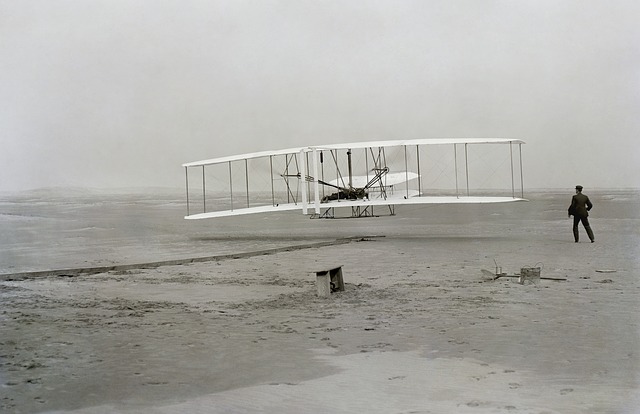
aircraft-74020_640The Wright brothers–Wilbur and Orville–were the first to demonstrate controlled, mechanical flight. But their insatiable interest in building a machine that flew began when they were children. Their father, Wilton, went on frequent business trips, and made it a point to bring home from each trip something for his children. He brought home from one trip–when Wilbur was eleven and Orville seven–a small toy helicopter made from bamboo paddles and a rubber band that when the rubber band was wound and released could lift off the ground. The brothers fell in love with the toy and played with it constantly, until it broke.

Then they disassembled it to see how it was made, and then built endless copies of it, even getting in trouble in school for playing with them. The toy made an indelible mark on them, got them started on aeronautical design, and they never forgot it. Even as older men, long after they had invented the flying machine and were world renowned, they would make helicopter toys for their nieces and nephews.

I asked my nurse in the hospital why she had gone into nursing and she said, “When I was a young girl I was sickly and I had to have a nurse. We were together night and day, and she was a good woman who seemed very happy. We became close, and it was then I decided that when I grew up I would be a nurse too. I’ve had such a wonderful life, and nursing has been so rewarding, that I’ve never regretted that decision.”

When Harry Truman was a boy, while he and his father worked together in the corn fields of Missouri, his father entertained him with exciting stories of the great ancient Greek and Roman orators and statesman, stories which Harry vividly recalled when he went into politics and when he had to make critical war-time decisions as President of the United States. Many times he called those stories his father told the most beneficial education he had ever received and an important reason he pursued the career he did.

woman-304812_640When my friend Rebecca was a young girl she would play “office.” She would pretend to be the president of a company and would have her younger brother play her assistant. She would spread papers every which way in front of her on the kitchen table as if it were her desk and she was very busy. She would call to her assistant-brother, “Bring me my pen” and he would bring it and she would then scribble her signature on papers. In her mid-thirties she founded and is president of what is now one of the most successful mid-size advertising agencies in the Midwest. She still signs papers all day long.

They are professional guitarists who as children were given an old battered guitar by an uncle and taught themselves to play. Or they are accountants who have always loved working with numbers, or a movie director whose parents loved movies and took their child to the show along with them, or a car dealer whose parents owned a dealership.

Innumerable artists–writers, musicians, composers, dancers, painters, architects, performers, and professional people, particularly engineers and physicians–became seriously interested in what would be their adult pursuit as young children.

 Foreshadowing

A distinctive quality of many people leading fulfilled lives is that quite early in life they became interested in the subject matter they later pursued as a vocation. The continual deepening of their interest and the development of appropriate skills was what guided them to their careers and that largely accounts for their success. They find their greatest achievements in occupations which build on their childhood interests.

From the earliest years on, patterns of choices show remarkable consistency, even over long periods of many years. Our lives of today often were foreshadowed and our intended destiny laid out for us years ago. Foreshadowing is a clue to our life’s most important purposes, though at times the path to fulfillment is not direct, but roundabout, with many side-trips, delays, and false starts.

Many highly accomplished people in varied fields find fulfillment pursuing their childhood interests in avocations–parallel careers.

A strategy when you are confused and don’t know which career direction to go in is to remember what excited you as a child, for it may be that in what comes to mind then is the most promising and most fulfilling direction.

********

One warm afternoon when I was five or six I was playing on the floor in front of the television that my mother had left on while she went away to vacuum in another room. I was playing with my fleet of toy trucks, and as poet Dylan Thomas would say, I was “As happy as the day is long.”

But from time to time I found myself glancing up at the screen and then after while found myself putting my trucks aside completely and getting closer to the screen and folding my arms in front of me and watching an old black and white movie very intently. I realize now that the semi-strange language the actors were speaking was British English.

One person in particular on that screen mesmerized me. I wanted to watch him and listen forever—the way he moved, the way he spoke, his voice, how he gestured, everything about him. What was happening to me was beyond me to describe. I was young; I didn’t have the vocabulary. But I still do not have the vocabulary, not because my vocabulary is deficient, but because when you see or read or hear something that is so out of the ordinary, you are unprepared for it and no words in all the lexicons, even the most expressive, are sufficient. You are mute.

All you know is that what you are feeling is jubilation; is joy. In my little child’s way I knew that on that screen before my eyes a performance that was not commonplace, but extraordinary was occurring, and it was because of that man’s skills and his presence, his being. My mother walked by and I touched the screen with my finger and said, “Who is that man?” And she answered. “That is Laurence Olivier. He’s the greatest actor in the world.”

How did I know that? How could I tell? What in my little boy’s mind was responding to an artistic achievement of the very best? I was so young. But even when you are so little, true art has a way of breaking through to you and declaring its power, and as you can see, you remember it all your life and cannot forget.

 ********

One day in the third grade my favorite teacher (at any level), Miss Gross, standing in the front of the room, started reading aloud an essay I had written. She had had us describe something that had happened to us, and because I loved to run and could run like the wind and ran whenever I could, I wrote about running while playing football.

I heard her read (very dramatically as only Miss Gross could) my words: “The boys tackled me and I fell to the ground like a blob of jelly coming out of a jar.” Then I heard Miss Gross say, “That is poetic language. That is an image. David has made a simile.”

So, I’ve made a simile, I thought. Isn’t that something?

Then running home under the maple trees after school, I got to thinking that if I wanted I could make similes all the rest of my life. So, why do I write, and why do I try so hard, and why have I been doing it with extreme passion and happiness and commitment these years, and why do I find that there is nothing I would rather do than study and learn and write about artists—Debussy, Cassatt, Faulkner, Graham, Baryshnikov, Hepburn Gershwin, Stravinsky, Wright, the Beatles, Satie, Calder, O’Neill, Chekhov, Chagall–any artists at all, and fill my life with their desires and aspirations, their capacity for hard, sustained work, their sacrifices, their single-mindedness and persistence, their devastating setbacks and colossal achievements, their strengths as human beings, and their frailties that all contributed and made possible works that I can actually hear, and look at, and read, and touch?

Because, you see, the glorious experience of that pleasant afternoon in front of that screen—the finest actor of his era and I alone together in my living room–had somehow made a tribute to other creators of such beauty seem necessary and inevitable. And because of my need to make similes, I can’t help myself.

 Let Me Know

These are childhood stories of human destinies being set in motion—a direction, a future–taking shape. I would like to hear your story. I would like to know about the experiences that set you on the right course and led you to what has consumed you most. What key events from your youth led you to becoming what you’ve become?

© 2014 David J. Rogers

For my interview from the international teleconference with Ben Dean about Fighting to Win, click on the following link:

www.mentorcoach.com/rogershttp://www.mentorcoach.com/positive-psychology-coaching/interviews/interview-david-j-rogers/

Order Fighting to Win: Samurai Techniques for Your Work and Life eBook by David J. Rogers

Fighting to win Amazon

Click on book image to order from Amazon.com

or

http://www.barnesandnoble.com/w/fighting-to-win-samurai-techniques-for-your-work-and-life-david-rogers/1119303640?ean=2940149174379


Order Waging Business Warfare: Lessons From the Military Masters in Achieving Competitive Superiority

Waging Business Warfare812sCY9edLL._SL1500_

Click on book image to order from Amazon.com

or

http://www.barnesandnoble.com/w/waging-business-warfare-lessons-from-the-military-masters-in-achieving-competetive-superiority-revised-edition-david-rogers/1119079991?ean=2940149284030


Leave a comment

Filed under Artists, Becoming an Artist, Creativity Self-Improvement, Developing Talent, Human Potential and Achievement, Goals and Purposes, Personal Stories, Writers

The Writer’s, Artist’s, and Actor’s Quest for Truth

Painting by Urwana DeBoulans

With kind permission of artist Urwana DeBouclans

An actor in teacher-actor-director Konstantin Stanislavski’s Moscow Art Theatre Company owned a dog that she brought to rehearsal, and it slept all day while the company rehearsed. Inexplicably, every night just before the actors were to end the rehearsal the dog got up and went to the door with its leash in its mouth, ready to be taken home. It puzzled Stanislavski why the dog trotted to the door several minutes before his master called him, just as rehearsal ended. How did the dog know that rehearsal had ended before anyone went to the door?

Eventually Stanislavski figured it out. The dog could hear from the voices when the actors started talking like normal people again. It could tell the difference between the fake and the real. If a dog could, certainly an audience could, and the fake is repulsive in an actor. As the best actors tell each other, “When you are on stage or before the camera, remember not to act. People can tell when you’re acting.”

The Actor’s Truth

Stanislavsky was the most significant figure in the history of actor training. When he used the word “art” it meant “life” to him, and life meant the truthful, the real, the authentic, the genuine.

“Life” is all he wanted, and life is what he struggled to get to flow through the actor, and between the actors, and between the actors and the audience. Everything in the work of art must be convincing for the artist as well as for the audience. Actors should behave as though the character is real and what he is doing is real, as though the conditions and circumstances of the character’s life are real. That the dagger Othello stabs himself with is real. That everything is real. Stanislavsky said that the judge of the truthfulness of a performance is not the actor or the audience, but the actor’s fellow actors on stage with him. If you have an effect on your fellow actor; if he believes in the truth of your performance, you’ve reached your creative goal: truth.

Many Paths

A household name in his time, John Ruskin was a 19th century English art and architecture critic and wonderful stylist whose beauty of expression ignited the creativity of Marcel Proust. Ruskin believed that what distinguishes great artists from weak ones is first their sensibility, second, their imagination, and third, their appetite for hard work. He might just as well have added a fourth, their quest for truth. All great artists in every art are aiming and have always aimed to achieve that object of their quest. What that truth is to them—how they conceive of it—varies from artist to artist, and is the basis of their distinctive work. A Zen adage reads: “There are many paths to the top of the mountain. “ There are also many paths, many routes, to artistic truth. You are on a path.

To Ruskin the artist’s truth lay in his/her self-expression, the revelation of the artist’s being, such as the painter’s special talent to convey every shadow, every hue, every line, every impression of “visible things around him ” and secondly his ability to communicate his every emotion. Painter and print maker Edward Hopper too believed that the aim of great painters was to attempt “to force the unwilling medium of paint” into a record of their emotions. A skilled writer, a skilled dancer, a skilled sculptor works an entire career to express every shadow and every emotion—in words, in motion, in an object.

Truth and the Artist’s Vision

In Fire in the Crucible: The Alchemy of Creative Genius, John Briggs sees the artist’s quest for truth and beauty as the artist’s important motivation to communicate his/her vision. That vision is based on “themes” which are the artist’s “fingerprints.” The vision is a strong part of the artist’s identity and may well have become a part of him in childhood, and may well too, be reflected in his work all his future life. In early life future artists accumulate experiences, people, places, key episodes, and ideas which they will draw on the rest of their lives, endlessly recapitulating them in their work. These are the origins of their craft. Anyone who knows an artist’s work well is able to identify the artist’s recurring themes and subjects—his preoccupations that are everywhere in the work.

Your work has themes in it that are inseparable from your personality and creative spirit and life. Those themes and that vision affect everything about your work down to its smallest detail. Every part of the artist is revealed in his/her art and cannot be hidden. And if it is really art, its truth is that it is in close partnership with the whole being of the audience that the artist is trying to reach, the beauty and truth in the work resonating in the sensitivity to truth and beauty in the audience.

Hemingway’s Truth

No artist talked about or wrote about or was more consumed with the quest for truth than Ernest Hemingway. The writer’s job, he said, is quite simply “to tell the truth,” to speak truly. To tell the truth was to tell about what he had personally experienced, or what he knew from going through something similar. Most artists are concerned with subjective truth more than literal truth, but Hemingway used no other information from any sources than what had happened to him, not literary sources, not academic. Truth was transcribing accurately and simply for the reader “the way it was,” and “the real thing,” putting down what he saw and felt in the simplest way he could. He could invent and elaborate as any artist does, but he elaborated from the reality of what he actually knew from having been there. He said that a writer’s “gift” was a conscience, a “built-in, shockproof bull shit detector” the “writer’s radar” that went off in his mind when the writer was not telling the truth, but “faking.”

Hemingway wrote in Death in the Afternoon:

“I was trying to write then and I found the greatest difficulty, aside from knowing truly what you really felt, rather than what you were supposed to feel, was to put down what really happened in action: what the actual things were which produced the emotion that you experienced…the real thing, the sequence of motion and fact which made the emotion and which would be as valid in a year or in ten years or, with luck, and if you stated it purely enough, always.”

Similar to Hemingway, many painters paint only what is before them and is true and visible, and refuse to paint from memory. Are you an artist who sticks to “the way it was” and “the real thing”?

Henry Miller/ Gertrude Stein/ Paul Cezanne

Novelist and essayist Henry Miller felt that the artist’s truth lies in finding a “voice,” and that the discovery of one’s true voice doesn’t happen easily, but requires boldness. Miller imitated every style in hopes of finding the clue to the gnawing secret of how to write. Then:

“Finally I came to a dead-end, to a despair and desperation which few men have known because there was no divorce between myself as a writer and myself as a man: to fail as a writer meant to fail as a man…It was at that point…that I really began to write. I began from scratch, throwing everything overboard, even those I loved. Immediately I heard my own voice…the fact that I was a separate, distinct, unique voice sustained me. It didn’t matter to me if what I wrote should be considered bad. Good and bad had dropped out of my vocabulary…My life itself became a work of art. I had found a voice. I was whole again.” (Henry Miller, Reflections on Writing)

Gertrude Stein also found truth and beauty coming out of the artist’s spontaneity: You “have to know what you want to get; but when you know that, let it take you and if it seems to take you off the track don’t hold back, because that is perhaps where instinctively you want to be and if you hold back and try to be always where you have been before, you will go dry.”

Truth doesn’t lie in “careful thinking,” But “It will come if it is there and if you will let it come, and if you have anything you will get a sudden creative recognition.” It “will be a creation if it came out of the pen and out of you and not out of an architectural drawing of the thing you are doing.” (John Hyde Preston, “A Conversation with Gertrude Stein”). In the same way, 19th century landscape painter George Inness found that the truth of art is the artist’s “personal vital force” that if left alone comes out of the artist spontaneously without fear or hesitation.

A creator must necessary possess tremendous drive, determination, and persistence because exceptional creativity requires a tremendous amount of effort. Paul Cezanne’s truth was the perfection of his craft in a lifetime’s work: “I could paint for a hundred years, a thousand years without stopping, and it would still seem to me as if I knew nothing…I consume myself, kill myself, to cover fifty centimeters of canvas…I want to die painting…” All great artists are spurned on by a single-mindedness, but few can match Cezanne in that regard.

An Architect’s Truth

new-york-115629_640Frank Lloyd Wright was America’s greatest architect. Not one given to easy goals, Wright’s architectural goals were , he stated, “the rejuvenation of architecture, the creation of indigenous forms to express and suit life in the United States, and the destruction of Fakery and Sham (that) rule the day.” To Wright, truth didn’t lie on the surface of things. Surfaces were deception. Truth was hidden and capable of being discovered only by probing deeply. “For the architect the patient analysis of nature would reveal the true meaning of functional structures.” Wright found in nature and the machine the two inseparable cornerstones of his search for truth. (Robert C. Twombly, Frank Lloyd Wright: His Life and His Architecture.)

A Dancer’s Truth

Isadora Duncan’s quest for a dancer’s truth was lifelong and intense. “My art is just an effort to express the truth of my Being in gesture and movement. It has taken me long years to find even one true movement…I spent long days and nights in the studio seeking that dance might be the divine expression of the human spirit through the medium of the body’s movement…I was seeking and finally discovered the central spring of all movement, the center of motor power, the unity from which all diversities of movement are born, the mirror of the vision for the creation of the dance—it was from that discovery that was born the theory on which I founded my school.” (Isadora Duncan, Autobiography)

Commitment and Sacrifice as Truth

Artists exhibit ferocious concentration on the task to be accomplished and will let nothing divert them from accomplishing it.

“I have always put the requirement of what I was writing first–before jobs, before children, before any material or practical interest, and if I discover that anything interferes with what I’m doing, I chuck it. Perhaps this is foolish, but it has always been the case with me.” (Saul Bellow)

“What one bestows on private life—in conversations, however refined it may be…is the product of a quite superficial self, not of the innermost self which one can only recover by putting aside the world and the self that frequents the world.” (Novelist V.S. Naipaul)

“Sometimes I don’t understand why my arms don’t drop from my body with fatigue, why my brain doesn’t melt away. I am leading an austere life, stripped of all external pleasure, and am sustained only by a kind of permanent frenzy, which sometimes makes me weep tears of impotence but never abates.” (Gustave Flaubert)

Your Artist’s Credo

It should be apparent from what you’ve just read that great artists are precise and clear and quite serious about what they are striving to accomplish—what truth they’re seeking–and can describe it succinctly in a paragraph or two.

How would you describe your overall artistic vision, the truths you are trying to express in work after work? And what are the handful of most important recurring themes that are so much a part of you?

“What I’m trying to get across is…”

“In all my works I find these themes again and again…”

You might ask people who know your work well their opinion. Put the answers down in writing, a statement of your artist’s credo.

Let me know by leaving a comment about the truth you are seeking, your artistic vision, and the themes in your work. I’m writing a book about art and artists of all kinds and want to see what your thinking is. If you are not an artist but are interested in the subject, I would like to hear your opinions too.

© 2014 David J. Rogers

For my interview from the international teleconference with Ben Dean about Fighting to Win, click on the following link:

www.mentorcoach.com/rogershttp://www.mentorcoach.com/positive-psychology-coaching/interviews/interview-david-j-rogers/

Order Fighting to Win: Samurai Techniques for Your Work and Life eBook by David J. Rogers

Fighting to win Amazon

Click on book image to order from Amazon.com

or

http://www.barnesandnoble.com/w/fighting-to-win-samurai-techniques-for-your-work-and-life-david-rogers/1119303640?ean=2940149174379


Order Waging Business Warfare: Lessons From the Military Masters in Achieving Competitive Superiority

Waging Business Warfare812sCY9edLL._SL1500_

Click on book image to order from Amazon.com

or

http://www.barnesandnoble.com/w/waging-business-warfare-lessons-from-the-military-masters-in-achieving-competetive-superiority-revised-edition-david-rogers/1119079991?ean=2940149284030


15 Comments

Filed under Actors and Directors, Artists, Becoming an Artist, Creativity Self-Improvement, Dancers, Developing Talent, Human Potential and Achievement, Goals and Purposes, Writers

Days End: A Story of Courage and Love

sunset-190922_640Far below me, a woman as tan as tree bark lay on her back on the sand. White-tipped frothing waves came in from the ocean, and life went on down there.

I was looking down from the high balcony of my sister Sharon’s hospital room. Sharon was in bed in the room behind me–not asleep, yet not fully awake, but in a dazed state between because of the morphine they gave her all through the day and when she called for it at night. Her pain was very bad.

I watched as a few hundred feet away people in white outfits played tennis on green courts on the roof of a tall pink hotel. I knew they should not be blamed for their happiness, any more than Sharon for her misery. But I was thinking that somehow it was unfair that they were running so, graceful and strong, close enough to wave and smile at me while her disease had spread through everything. Everything was gone.

I had seen on the floor of her kitchen the scale that was there to measure the dwindling of her existence, and sheets of paper on a clipboard hanging from a nail on the wall that recorded it: ninety-eight pounds, ninety, eighty-eight…, and a calendar that had Xs on days she wasn’t healthy enough to work that in recent months had become all Xs. Against a wall was a full-length gold-framed mirror that had once held her face and her shape as she turned to adjust a blouse or straighten a skirt. The mirror was dusty.

All that remained now was the steady withering of her small, faltering body, the daily indignities, the terror and inconceivable loneliness of dying, the sorrow of leaving this world. When I stood over her bed that late afternoon she looked at me with shamed eyes and said, “I’m a mess aren’t I,” and my heart broke. What could I do but tell her she was still beautiful? How will I ever remember without pain her looking up at me so gratefully and saying “Thank you brother,” as I handed her a glass of water?

Her mind was in a tangle because of the morphine–sensations and floating dreams blended together like a band of swallows swooping and falling and words from the voices of people slipping in sideways, echoes of words, as words spoken in a museum closed for the night might sound, or a murmur, or just splinters of sound descending like coins in a pool. Images were loose in her mind of such memories as that of an ironing board, a dress with a faded floral pattern, a photograph of her sitting at a desk smiling, then the suddenly remembered sensation in her finger tips of peeling an orange or pulling strands of hair out of a brush. And all the while she was a sponge soaked with emotion: love and despair and courage and fear.

At times she felt she was merely a body beyond repair, but there were moments of great clarity when she realized she was truly a person. Then she became suddenly proud and triumphant: “I am alive. I am a human being. I am still of value.” And then shortly the dreaded thought returned: It will end; soon it’ll end. It was all so sad, she thought: the sun would last, the earth would last, and there would always be stars, but not she. She was greedy for life–another day, another hour–but didn’t a person so young have a right to be? Only thirty-seven. There should be more shouldn’t there? Above all she mustn’t lapse into self-pity, mustn’t wail, “Help me please, I am suffering.” That was all there was to it, she thought, the only victory, as outside in the priceless world flamingo clouds drifted by.

The room was regaled in yellow chrysanthemums. Sunlight spread across the balcony and the warm breeze thronged in as visitors arrived to pay their respects. Sharon wasn’t resentful or jealous of their good health, that irresistible glow they had, that incandescence, and looked forward very much to their bringing their good cheer and love, smiling like children, she knew, to keep her spirits up. Someone told a joke that was followed by laughter. How hungrily a person’s thoughts swarm over joy among sorrow.

When visitors were talking among themselves she lay back, listened, and felt one of those hundreds of emotions for which there are no words. She knew some people thought compassion was a useless emotion, but she thought it the kindest. It didn’t alter the fact that soon her life would end, but yet there were glimmers of light just knowing that one person could care so much for another, asking nothing in return, opening a secret door and entering on the private island on which the other person lived, and then you and they weren’t so lonely, if only for that time. A nurse slid a thermometer between Sharon’s lips business-like, glanced at her briefly and impersonally and with cold, gray, restless eyes gazed out at the sky while she waited for the thermometer, took it out, looked at it, and said, “One o one, not bad at all.”

How do you explain life? What does a person live for? Sharon wondered as she was turned over, grimaced, and was sponged. You expected the answer to become clear if you lived long enough, and to be profound: the meaning of life was X or Y, perhaps Z. It was a question worth asking. It was probably joy. Yes, that was it all the time: the joy one feels. And she had known joy. No one could say she hadn’t known exquisite joy.

A doctor she didn’t know then came into the room to see her, and looked at her, looked at her eyes, and jumped back as though he had been punched, and said, “I feel your power coming out to me. You have a very strong will.”


It was the silence that settled as softly as pollen on the hospital room when toward evening everyone went home that I will recall. “I remember once when,” Sharon said, thumbing through her stack of memories. Suddenly she said, “Do you remember that summer day at the lake the wind was so wild and the waves were as tall as buildings, the library when I was looking for a book?”

That day when as children—she eight, I ten–we inhabited our bodies with inexpressible joy, she on the sand holding my hand, laughing. Suddenly a wind picked up and into the air flew a thousand birds. Clouds raced each other headlong across the black sky, and wave upon wave –a procession of liquid walls—rose and rose and rose majestically, ascending one after another like great hills of water that then lunged and plunged like a field of gray-green wheat bowing under the wind, shattering on the shore into a multitude of broken stars. Hills of water that seemed to pause for a long moment at their fullest height and then to crash to earth with the sound of artillery, our hearts beating with excitement, with awe, with fear, with terror. Just a moment before there had been not a breeze, not a breath of wind, but now all the wind in the world seemed to be concentrated on that strip of earth– a lion of a wind, unleashed, untamed, cool, cold, with a bite and sting, bringing–pouring in to us–the odors of water, of fish, and of the wind itself, the steady hoarse roar of the foaming waves filling the air like thunder, my losing then all sense of physical existence, being liberated and free. Behind us bathers took their children’s hands and dashed for the shelter of the beach house, and strong men dragged rowboats higher up onto the beach away from the surging water, leaving behind ruts in the sand. Nothing was the same; everything in motion, everything in flux, everything changing: wind, waves, sky, everything. That same day she stood on tip-toes on a stool down the aisle in the stacks at the library, reaching for Little Women, and watching her I realized in that instant that she was irreplaceable; I could not do without her.

How fast life goes” she whispered weakly. “It isn’t much longer than a mosquito’s life. Why does it go so fast?” The world is such a huge, well-traveled place; yet when the end of a life nears, all distances collapse and it comes to that: a little room, a little bed, a pair of eyes looking on, someone weeping.

The pain had flecked Sharon’s black hair with white and it was short from the treatment and no longer long and flowing. Her once-pretty face was gaunt, her cheeks gray, her body tired of suffering. Her long pianist’s fingers were so thin that her ring had slipped off and was lost. But there in her gray, lonely, fading beauty there was still about her that same gentleness you could ruffle with your breath, the same fury in her fierce eyes, the same poise, and the same mystical elegance.

Night came; the day was gone. Over the city shone a blue light and the chrysanthemums stood in a black vase on the table. Beyond the glass door and beyond the stars was darkness upon darkness. The faintest light lay on her face, and on that face was neither pain nor resignation nor fear nor sorrow, but peace. I placed my hand flat on her chest–she could feel pain no more–and she opened her eyes and looked into my face with a gentle sweetness. And then looked down at my hand and placed her left hand lovingly upon it.


I only regret that I was helpless to shape into words all that I was thinking of her and hoped she understood how I loved her and how I would carry with me and cherish the memories I have of her, that every year I would commemorate her birthday; that whether I am bending to tie my shoelace or asking for a fork she never leaves my thoughts. In my mind all my life I will see her long black hair flaring in the wind that day with the wild waves bursting, our lives passing, changing, and flowing like those waves; her dying young.

I felt such tenderness toward her that could I, I would have died for her and was so regretful that I could not suffer her pain for her, and was powerless to help her, and that she is now gone entirely from my life and from this world. Until I die I will feel the immense weight of grief for her and now I ask her forgiveness for any sadness I ever caused her through thoughtlessness or selfishness; and wish her somehow to know that I intended no harm and am so terribly sorry.


In the parking lot I saw Sharon’s favorite nurse and called to her and caught up with her and told her of my gratitude to her for the great gentleness and goodness she had shown my sister. I told her I would never forget her kindliness and thoughtfulness, and that I would think about her in the future and would never forget her. She told me what a good patient Sharon had been, how she had never complained and was always so nice and had good manners, and how it made her very sad to say goodbye to her.

I did not know as a boy that memories of that day at the lake, though intangible, would persist through all the successive years, nothing as real. Or that our lives would change so immeasurably as had those waves under that wind.

© 2014 David J. Rogers


11 Comments

Filed under Growing Up Stories, Personal Stories

Days and Nights of Youth: An evening in August, years ago

“And if I were standing in the middle of my people
Age would go from me and I would be young again.”
(Translated from the Irish by Lady Gregory)

Days and Nights pic_copyChicago’s Sheridan Road ran parallel to Lake Michigan, as it does today, and when you walked down it in those days you heard the sounds of the traffic mingling with the lapping of the waves on the beaches. From the beaches on clear days you could see on the horizon’s edge the western shore of Michigan to the east, and out on the lake low in the water turgidly-moving barges carrying loads of ore down from Minnesota to the steel mills of northern Indiana.

On certain afternoons in July and August the sun bore down on the sand so intensely that it was painful to walk on it, so men dashed to and from the tumbling waves carrying their squealing little children in their arms. One by one all the great industrialists’ mansions that lined the street were torn down and the beaches were filled in and replaced by closely-packed massive and towering apartment buildings with hundreds of verandas which were far more impressive architecturally, but far less beautiful.

Few people remember the mansions or the beaches, but most believe that the high-rises have stood there forever. Now when you walk down Sheridan Road, the traffic is so heavy and the water so far away behind the buildings that you can no longer hear the waves.

Three blocks to the west was Edgewater, a miniscule street slung like a hammock between a quiet street to the east and a busy street to the west. There I lived quite happily in a moderately dilapidated apartment which I shared with my parents, two sisters, one brother, two blue parakeets, and a dog.

Along the street stood nearly identical sturdy brown brick two and three-flats with large, clean lace-curtained windows in the front and small open porticos decorated with terra cotta flower pots of various sizes. Inside the apartments the ceilings were high and the rooms were laid out more or less the same as ours. Those buildings were interspersed with squat, frail but fearless homes of families of two, five, or eight children and were concealed from the late morning or afternoon sun by tall trees. In the back yards and on the front lawns stood shady poplars and towering American elms whose profusion of leaves, singed and curled by the blistering summer sun, hung parched and brittle, and shook like tinsel when the leaves fluttered in the wind.

The morning sun revealed rectangular lawns that, except when snow obscured them, were always closely cropped and tidily trimmed as though meticulous angels appeared every night to care for them. The hedges that hid modestly in the shadows were as neatly shorn as boys’ fresh haircuts, and the flowers in the beds were tall and brightly-colored. In late autumn the brilliant orange, crimson, and yellow leaves that had been liberated from the trees by westerly winds scampered wildly, crisply, and noisily along the pavement and adorned the lawns like jewels.

On no particular schedule—or none we were aware of—from down the alley emerged the gray rag man sitting high atop a complaining horse-drawn, creaking wagon, his voice preceding him as he called “Rags, old iron.” As the wagon neared, you heard, faintly at first, and then more purely, the rhythmic, hollow clomp, clomp, clomp, clomp of the shod hooves of the old gray horse whose head hung low and swayed slowly to the rhythm of its gait. Then you heard it snort as it struggled futilely with its bit, and saw its huge protruding brown eyes glazed with an expression of weariness and sorrow, and the sunlight shimmering off the sweat that coated its flanks.

In the early evenings as though all in unison, the regiments of gray, strong, working men, pensive, plain, godly men—the fathers—passed down the street in orderly array, returning to those of us whose entire universe extended no further than the ends of that block. After dinner when the weather was good the fathers–some in gaudy suspenders, to a man seeking peace–left their families and went alone outside in the yard to smoke. The glowing tips of their cigarettes or bowls of their pipes hovered like red ornaments suspended from invisible strings in the darkness. The men nodded cordially to one another, but only rarely went to their fences to speak.

They stood stationary and solitary in the middle of the yard gazing up at the dazzling field of glinting stars, being reminded of their own inadequacy, their own insignificance, feeling in themselves the overwhelming rapture and wonderment of being alive on this earth on this night that they would try to convey to another person, but would forever be unable to. After a little they shredded their cigarettes or tapped out their pipes on the soles of their shoes and watched the tiny embers drift to the ground. Then they went back inside where the light was bright and the rooms were noisy with happy children.

On especially sweltering summer nights one by one my family evacuated the stifling apartment and sat together in a little cluster on the wooden front stairs. There every summer evening without exception I fell under the spell of our little street. I watched the flight of night hawks circling high above chimneys and sweeping down like kites. My eyes settled too on the entwined strands of ivy on the trellis next door, on the blinking traffic lights and long beams of headlights spread like cream on Ridge Avenue, the yellow-glowing lamp lights in the windows of neighbors, and the demented boy who rode the street at nights with his little dog in a paper bag in the basket of his bicycle. And if our luck was good, down the street came what we were all wishing for: a breeze. Then the multitude of closely assembled leaves trembled on the trees that were tinged with moonlight.

The six of us were frugal with words on those evenings, parceling them out sparingly, as though they were precious things that needed protecting. When we spoke among ourselves it was not of topics momentous or memorable. Serious subjects were best saved for visits to our stairs of my father’s family–Welsh of course, with musical accents and exotic names, all of them worldly enough to speak on most any subject with some professed expertise. They always came bearing a vast stock of stories and bits of song and strong opinions that differed markedly from one another and were bickered over turbulently, but in a generally agreeable and forgiving manner. Sometimes too, other visitors came to sit with us.

Whenever anyone on those stairs spoke, I listened intently to the words, the silences, and the breaking of the silence, the short sentences and the longer, the soliloquies, the jokes, comments, stories, exaggerations and wild tales of utterly impossible events that there was an unspoken agreement to play along with but not for a minute believe. Sometimes I understood what was being discussed or commented on or observed, but often I did not. When I did not, my attention drifted and the words dissolved into a hum and became merely sounds.

Then I thought that perhaps when I was older and my time had come I would understand everything or most everything of which these people spoke, that meanings to which I, as a little child, was not privy, would then become clear to me, and I too would be able to speak fervently of them. At times the words the adults uttered came accompanied by a gravity or sadness that frightened me—talk of war and defeats and death and deepest sorrows. But soon someone usually said something that brought laughter all around, and I laughed with them, not knowing what brought them that flash of joy. But I shared in it, knowing that it was good and that when they were happy I was happy.

Too soon the deepest darkness arrived–imperceptibly, as if we had been inattentive and without our knowing it had descended stealthily from its source or risen from the earth to wrap itself around us. Street lights, old and sunken into the ground and standing precariously like drunken sentinels wearing metal caps, then lit and cast yellow cones all down the street. Swarms of flitting fireflies carrying their little lanterns behind them appeared and hovered like tiny intermittent airborne embers that speckled the night like the amber tips of matches. Once aloft on their nocturnal flight like winged magnets the fireflies drew their tormentors–my brother and other giddy children and me. Powerless against our quick hands, soon they were assembled like congregants in a glass jar which glowed like a church in the night.


The twilight sinks and the evening wanes and the intense heat cools and the street becomes warm and peaceful. Soon from our visitors emerge the end-of-evening yawns and “oh-my-goodness-how-time-flies,” and they pack up and leave for home. We say goodbye and they are gone. My family is alone now, all of us speaking in drowsy tones. We hear the nightly chants of the sleepless crickets from under the porch and in the hedges and see neighbors hurrying home. It is the end of this day.

My mother flutters her fingers and says, “Well, it’s getting late” with a sigh that conveys that she is weary, and my father says, “Now heed your mother children.” While still able to, I cast one last long look at the people who share this place with me. Somehow out of God’s grace and for reasons I will never fathom, they have been sent to dwell in this house for a time and to be the objects of my love forever. We children moan as pathetically as we can to be granted a few minutes more of wakefulness, but despite our protests we are ushered inside.

I lift the window shade slightly and see, overhead, a splinter of a moon and protective stars attending us. There with me in that bedroom is my brother sleeping, and there are my sisters sleeping. I am sheltered there in that sanctuary of my youth, safe in the protective hands of my parents and the Lord. My life will never be as free of complications and contradictions as then. There is no need yet to try to muddle through a life I do not fully understand.

It is now a time of resplendent picnics and sunny beaches, a blessed period of my life when pain is a stranger to me and I am immune from suffering. I lie remembering the day as I will remember it forever–a blistering journey to the cool of evening. And trying to peer forward into time and see how I will be as a man, I wonder what this life holds in store for me and if I will live mine creditably enough. I study my hand suspended in air like a gray and familiar bird. I whisper, “That is me, me,” and with that thought something stirs deeply in me that all my life will be inexpressible. And then I make a wish that things will never change, but will stay as they are forever.

 I am told that my mother and father are deathless, my brother and sisters are deathless, and that I am deathless too; that there really is no death and we endure everlastingly and that time is an illusion. But I know that my life as it is now will end. I know that we in my family are seeds that will be cast on separate earths, that we will be drawn apart to live our lives there to the end. And that too soon those people I intend well toward will pass away and leave no trace but in my memory. That the day will come when I will never again sit on those stairs with my beloved family on an evening in the heat of summer.

After a while the faint sounds of spoons against coffee cups and the low drone of speech floating from the kitchen cease and my parents go to bed. Of my family I think in my child’s way–they are all of them–each of them–good people, devoid of malice, and I am blessed to be among them. Why, I wonder, have I been so favored? “Dear Lord, keep these people safe, and please treat them kindly. Spare us please from pain or so apportion it so that none of us is asked to bear more than one should be required to.”

Silently I pray, as always fast, “God bless Mom and Dad and…” and I fall to sleep beseeching God. The day ends then, and I dream, and in a moment another dawn breaks.

© 2014 David J. Rogers


8 Comments

Filed under Growing Up Stories, Personal Stories