Tag Archives: Creativity

A Vision Of What At Last You Could Be

frosty-472871_640Creative people in the arts and every other field are in the habit of reflecting a great deal on their goals, their success in reaching them, and the lessons they’ve learned from efforts that didn’t work out. They continually analyze what they do well and what they do not do well, and then exploit their strengths as far as they can and work to develop themselves in areas where they’re not as gifted.

And they have a particular way of dealing with apparent failures or defeats: they treat them as prods to even greater achievements and opportunities to learn lessons that are of value to their careers. People who have achieved a high level of excellence have not done so by accident and are not satisfied to reach merely an acceptable level of performance, but have much higher ambitions.

Possible Selves/Visions of the Future.

When you say “I’m a good person;” “I’m an ideal parent;” “I’m a poor public speaker;” “I’m very lazy” your self-concept is speaking. Your self-concept is the view you hold of yourself, your opinion of the kind of person you are and are not at the present time. The current self is the one we’re most familiar with. But we have other selves too, such as the selves we could be in the future. Those are our Possible Selves. One type of possible self is the ideal you’d very much like to become—a famous athlete or painter or writer, for example. There are also other selves you could become, as well as those you’re afraid of or dread becoming.

The possible selves you may hope for may include the happy self, the creative self, the wealthy self, the physically fit self, and the successful self. The dreaded possible selves could be the lonely self, the incompetent self, the drug addict self, the unhappily married self, the bag lady self. There is your good self that you’re proud of, and the bad or the guilty one that you’re ashamed of and prefer never to think or talk to anyone about.

A vision of the future and a possible self guided your decisions to choose to go to college and to take one job rather than another. A young girl sees a painting in a museum that moves her and decides on the spot on a possible self and a vision of the future: she will become a painter. She will go to art school and study.

When we think of possible selves and visions of the future that are positive and appealing we’re strong with hope. We’re liberated and set free because we realize that the present is not unchangeable. We never have to be a self we don’t wish to be, but can create a different self, a different future.

You’re free at every moment to create any variety of possible selves and visions of the future. Your life may not be going well—may be going all wrong in every way–but your positive possible future holds the promise of better days. But negative visions of the future make us unhappy and afraid. They can imprison us because they may cause hopelessness—the would-be dancer who thinks, “Day after day I don’t make progress. Nothing clicks. It’s probably foolish of me to think I could be a ballerina.”

The Impact of Possible Selves On Our Lives

ballet-542170_640Possible selves form the basis for personal growth and change. It becomes clearer to you every passing day that the main cause of personal success isn’t something that comes like a generous gift from the outside, but is your own conception of yourself and the development of your capabilities, that all real growth comes from within.

A clear view of what we could become sets our motivation in motion. No two ways about it: we must have a vision of the future to be committed to the goals we’ll need to reach the future we hope for. Day-dream, because it’s often in daydreams that our visions of the future are born.

When I was in the third grade the teacher read to the class a theme I’d written in which I wrote that playing football I was tackled and “fell to the ground like a blob of jelly coming out of a jar” and the teacher said “That is poetic language. That is a simile. David has made a simile.” Walking home after school, I decided that if I became a writer I’d get to write similes the rest of my life. Everything after that was aimed in that direction. That was my possible self that became my actual self.

In my freshman year of high school I made the track team as a middle-distance runner. One day I was getting dressed in the locker room. A senior middle distance runner—the reigning Chicago city champ –sat down beside me on the bench. That surprised me because we’d never spoken before. He said, “I’ve been watching you. You’re very good. You have more potential than you probably realize, but you’re very shy and I can see you don’t have confidence. You don’t have a conception of what you could be. Pick up your head, be strong, and say to yourself over and over, ‘I could be the best. I could be the fastest runner in the city.’ Work hard.” It meant so much to me that he cared and had taken the time to share that with me, and I took it to heart. So now I had a new ambition, a new vision of the future that right then I vowed to devote myself to, and a new possible self, a new identity that I would become. I began to study innovative training methods and to apply myself and worked very hard.

The First Step

berries-302341_640A vision of the future of yourself as a highly successful artist or athlete or effective business person self is the first step in achieving that future. It will not only guide your decisions, but will immediately set planning in motion. It will help you focus on goals, and keep you from needless distractions.

What if right now you were to forget about the past, wipe the slate clean of failures and false starts, and start fresh, setting the goal of becoming as successful an artist, writer, sales woman or whatever as you could possibly be—to buckle down? Is that goal appealing, or don’t you much care? How would you go about achieving that goal? What would you do? Where would you start? Where would the goal take you? What would your life be like were you to achieve that goal? What would be the link between the actions you would engage in now at the present time—and in the next six months, and the next year and years beyond that– and the attainment of the future you envision?

Set short-term and long-term goals and reach them, one after another, overcoming impediments as they appear. You must have positive images of the person you’re aiming to become and negative images of the person you want to avoid becoming. Other people can serve as models—pro and con–and so can your past.

Think of your prior successes and of what steps were needed for you to succeed then and repeat the same again. Past success is the most powerful and direct basis for judging if you will succeed in achieving a new goal. If you believe you have the ability—the skills, motivation, and know-how–to achieve what you want to achieve and have done so in the past, you will try to achieve it. If you feel that way, you’ll be confident and will not likely to be haunted by self-doubt, possibly a person’s main internal obstacle. You’ll have high expectations of future success. You’ll think about past failures as useful lessons.

Share your vision with other people: talk about it; be confident. But stating an ideal possible self isn’t enough to produce sustained effort and changes in behavior. For that to occur, your goal needs to be linked with specific strategies, concrete behaviors such as an artist working with an excellent and more experienced artist, increasing your knowledge of your field, sticking firmly to a regular work schedule, and developing the skills essential to your work. Strategies help to focus on goals while also anticipating and planning how you’ll handle setbacks by developing plans of action and contingency plans. Most successful people in every field point to strategies as the main cause of their success.

Some of your goals—the important ones—won’t be easy. You’ll have to acquire new capabilities. A defeat, setback, or loss or lapse of commitment can have a devastating effect on a possible self, so be prepared. An agent’s cruel reply to an inexperienced writer’s submission can destroy the writer’s possible author self—she may quit– or a businessman’s blunder resulting in the loss of a major contract, or a field goal kicker missing the kick that would have won the game.

When you’re discouraged the hoped-for self is replaced by a weakened, vulnerable one. But even the smallest encouragement has the effect of bolstering your spirits. Being resilient and accepting setbacks as an unavoidable part of work life that even the greatest in any field can’t avoid is essential for maintaining a firm, unshakeable motivation.

It may seem illogical to think of anything negative and seem better to block all negatives out and think only of positive possibilities. But a balanced view—thinking of both positive and negative possibilities–has been shown to improve focus and to lead to important self-improvements and good results. The fear of not succeeding drives many people to unexpected success.

Having both positive and negative images in mind serves as a carrot and a stick both, reminding you of what glorious things may happen if you stay on track, as well as what may happen if you lose your commitment and fail to follow-through effective strategies: if you don’t develop your skills to a high level you will not improve.

Figuring out how you’ll become your desired self and avoid becoming your undesired self can lead to tremendous, life-changing results. Action is a necessity.

© 2014 David J. Rogers

For my interview from the international teleconference with Ben Dean about Fighting to Win, click on the following link:

www.mentorcoach.com/rogershttp://www.mentorcoach.com/positive-psychology-coaching/interviews/interview-david-j-rogers/

Order Fighting to Win: Samurai Techniques for Your Work and Life eBook by David J. Rogers

Fighting to win Amazon

Click on book image to order from Amazon.com

or

http://www.barnesandnoble.com/w/fighting-to-win-samurai-techniques-for-your-work-and-life-david-rogers/1119303640?ean=2940149174379


Order Waging Business Warfare: Lessons From the Military Masters in Achieving Competitive Superiority

Waging Business Warfare812sCY9edLL._SL1500_

Click on book image to order from Amazon.com

or

http://www.barnesandnoble.com/w/waging-business-warfare-lessons-from-the-military-masters-in-achieving-competetive-superiority-revised-edition-david-rogers/1119079991?ean=2940149284030


9 Comments

Filed under Artists, Becoming an Artist, Creativity Self-Improvement, Dancers, Developing Talent, Human Potential and Achievement, Expectations, Goals and Purposes, Motivation, Writers

Tidy, Productive Lives and Messy, Creative Lives

dandelion-6296_640Swedes use the term “Dandelion Children” to describe children who thrive in any kind of environment under any conditions in the same way dandelions thrive regardless of soil, drought, sun, or rain. This is a post about dandelion children who grow up to be remarkable.

Tidy, Productive Lives

“The vast majority of individuals whose adult lives have been unusually creative or productive, or who have been unusually capable within various fields of expertise, have been people whose early years have been stimulating ones, characterized by plenty of opportunities to learn and plenty of guidance and encouragement, of one or both parents.” (Michael J.A Howe, The Psychology of High Abilities)

The influential study described in Developing Talent in Young People laid out a process that was generally followed in homes of people who were studied. The parents strongly encouraged development of the children’s talent in a particular area in preference to others, went to extreme lengths to help the child to do well, were always willing to devote their time and energy to the children–playing games, reading to them, or teaching them in one way or another. Parents showed interest in their children’s activities and encouraged them to do their best. Not one of the children reached their potential without strong support and training. Parents would move heaven and earth to give their children rich educational opportunities, finding for them the best teachers and advisors, sparing no expense.

Those paragraphs—those ideas, those luxuries, usually of middle or upper middle-class, highly-educated affluent parents and their privileged children–are the kind psychologists love to write about neat and tidy, ideal upbringings. But even as you read them you’re thinking:

“Who are they talking about? They’re certainly not talking about me!”

Messy, Creative Lives

There’s an alternative point of view:

“When you read the lives of various great men (and women)-of all great men, perhaps, if the account is truthful–you will notice that the conditions of their childhood, their education, or their profession did not predispose them to what they ultimately accomplished. It is not because of their education, it is often in spite of it that they were able to develop. This man grew up without books; that man had to study secretly. It makes you wonder what the word ‘advantages’ really means, what parents mean when they say they want their children to have all the advantages they themselves did not have…Is not the lack of something often more helpful? For the lack of an external thing arouses an inner impulse that replaces it; the ‘I,’ the individual’s native gift is substituted…So you need never pity people who complain that they lack this or that, provided they have pledged themselves to reach their goal.” (Jean Guitton, A Student’s Guide to Intellectual Work)

Popular American author William Saroyan wrote, “I must make it known that I do not believe it is required of art, science, religion, philosophy or family to assure every man born into this life, a secure childhood, in which a child knows only love and harmony…The supplying of such a childhood to a child… may not even be desirable. It may create a nonentity.” Playwright/novelist Gore Vidal wrote, “The protective love of two devoted parents can absolutely destroy an artist.” Creative attainment does not depend on coming from an intact family.

Cradles of Eminence

In a biographical survey of the family backgrounds of 400 eminent people of the twentieth century that included novelists, poets, actors, musicians, opera singers, composers, movie directors, painters, playwrights, dancers, and architects, 85 % had come from troubled homes with very little attachment, warmth, affection, or closeness.

American novelist Willa Cather and her mother arranged their lives so that their contacts with each other were minimal and Willa and her brother were left alone. In Cradles of Eminence the authors who conducted the survey say, “Contentment and creativity do not ordinarily go hand in hand in the homes that cradle eminence.” As children 75% were troubled by a variety of problems such as poverty, and “by rejecting, over-possessive, estranged, or dominating parents; by financial ups and downs; by physical handicaps; or by parental dissatisfaction over the children’s school failures or vocational choice.”

ernest-hemingway-401493_640The great majority of writers of fiction or drama, and a number of poets, came from families where there were tense conflicts between the parents. Sixty percent were dissatisfied with school. Nobel Prize winning author Ernest Hemingway grew up in a dysfunctional home and was convinced his mother’s constant badgering of his father led to his father’s to suicide.

Prolific 19th century English novelist Anthony Trollope achieved fame, fortune, and popularity, and knew many of the rich and the accomplished of his era. But in school he “suffered horribly! I could make no stand against it. I had no friend to whom I could pour out my sorrows. I was big, and awkward, and ugly. How well I recall all the agonies of my young heart: how I considered whether I should always be alone; whether I could not find my way up to the top of that college tower, and from thence put an end to everything…Something of the disgrace of my school-days has clung to me all though life….I feel convinced in my mind that I have been flogged oftener than any human being alive…These were twelve years of tuition in which I do not remember that I even knew a lesson!”

As twelve year old celebrated English novelist Charles Dickens suffered in poverty and was forced to live alone, away from his family, while working many hours a day in a rat-infested factory pasting labels on pots while his father rotted in debtor’s prison. When his father was released, Charles’ mother wanted her son to stay on at that miserable factory. Later Dickens wrote: “I never afterwards forgot, I shall never forget, I never can forget, that my mother was warm for my being sent back…Even now, famous and caressed and happy, I often forget in my dream that I have a dear wife and children; even that I am a man; and I wander desolately back to that time in my life.”

Cradles Of Eminence concludes that contributions to the arts and other fields are likely to be made by the person whose childhood was not trouble-free and who was not an all-round good student, and whose parents were a problem to themselves and the child. In many autobiographies of eminent artists there are frequent references to the positive motivating effects adverse circumstances had on them.

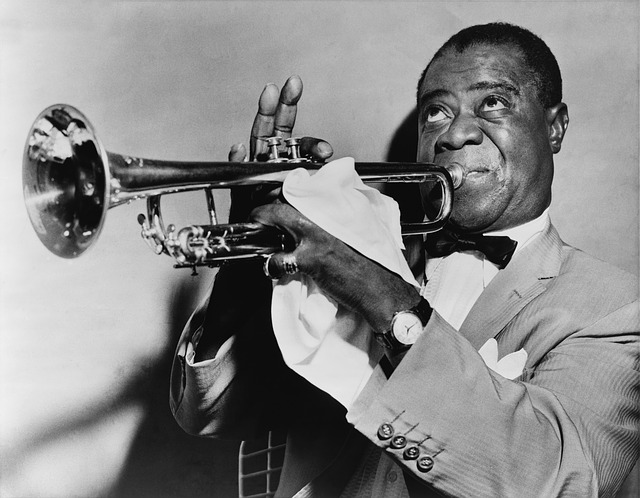
jazz-63212_640Famous jazz musician Louis “Satchmo” Armstrong’s father deserted the family, and his mother was “out on the town.” Louis was committed to an institution for delinquent boys where he learned to play musical instruments and became a band leader. He said, “All in all I am very proud of the days I spent at the Colored Waifs Home for Boys.”

Stephen Crane, Eugene O’Neill, William Faulkner, and F. Scott Fitzgerald were just a few writers of many artists who failed in college. Many, like Hemingway, had no interest at all in going to a college. Pablo Picasso failed at elementary school because he refused to do anything other than paint. Even as a child of nine he would duck out of class and wander the streets of Madrid, painting and sketching.

Psychologist E. Paul Torrance found that 70% of the children who rated high in creativity would not be selected to be members of a special class for intellectually gifted children. High IQ students are likely to prefer conventional occupations–doctor, lawyer, and engineer. Highly creative students find unconventional careers like writer more appealing. Few of the subjects in Lewis Terman’s high IQ study—the “Genius Study”– went on to excel in the fine arts, music, and literature. The group produced many successful people, but not one creative artist.

Boys and girls who’ll become famous are not often ‘all around” competent, conforming students. Creative people are not distinguished by high grades at school. Fathers who were abject failures are common in the lives of great artists and in the lives of eminent people in almost all fields. Writers and actors lived in particularly turbulent homes.

“Ironically the child that grows up with many privileges may have much less opportunity for her or his creativity than the child growing up in the slums. If everything is done for the child, and the child has little opportunity to show initiative, then whatever latent potentials there are for creative work may be suppressed because there is no need to develop these potentials.” Robert J. Sternberg and James C. Kaufman, “Constraints on Creativity.”

I’m betting that the majority of people reading this post, many of them artists, didn’t follow the psychologist’s “tidy” path to their current creative lives, but became successful in spite of—or because of–a “messy” childhood.

© 2014 David J. Rogers

For my interview from the international teleconference with Ben Dean about Fighting to Win, click on the following link:

www.mentorcoach.com/rogershttp://www.mentorcoach.com/positive-psychology-coaching/interviews/interview-david-j-rogers/

Order Fighting to Win: Samurai Techniques for Your Work and Life eBook by David J. Rogers

Fighting to win Amazon

Click on book image to order from Amazon.com

or

http://www.barnesandnoble.com/w/fighting-to-win-samurai-techniques-for-your-work-and-life-david-rogers/1119303640?ean=2940149174379


Order Waging Business Warfare: Lessons From the Military Masters in Achieving Competitive Superiority

Waging Business Warfare812sCY9edLL._SL1500_

Click on book image to order from Amazon.com

or
http://www.barnesandnoble.com/w/waging-business-warfare-lessons-from-the-military-masters-in-achieving-competetive-superiority-revised-edition-david-rogers/1119079991?ean=2940149284030


5 Comments

Filed under Artists, Becoming an Artist, Developing Talent, Human Potential and Achievement, Writers

The Characteristics of Creative People: What We Learn from Writers, Artists, Dancers, Musicians, and Actors

Artists Starting The Day

fountain-pen-297440_640A novelist sits down at the computer to begin the day with an idea in mind, and a painter organizes her brushes before she begins. An actor is in a theater lobby trying to understand how she will play a complicated new role, and a ballet dancer is on a bus on his way to ten o’clock practice. He has worked so hard so long—since childhood—that his feet throb day and night.

They might be anyone, but they’re not. They are artists and they are different and they know they are, and have always known. They have different points of view, habits, values, routines, and preoccupations than even the people closest to them, and as they perform their art today, carrying out their chosen roles, they will exercise talents that not everyone possesses. All the skills they’ve struggled to develop, and all the hopes and ambitions guiding them, and their entire being, will be brought to bear today.

 To Be an Artist

Artists possess traits and qualities that equip them for the artist’s creative life. Whether you find them in big cities or remote jungles or on farms or in desert tents, in any of the four hemispheres, you will also find them generally to be quite similar: to have varied interests and to be persistent in the face of obstacles and disappointments. They are dogged, determined, resourceful, open-minded, undeviating, tolerant of ambiguity and novelty, tenacious, and tremendously independent and self-reliant. And they are also self-confident, resilient risk-takers with good memories, and the hardest workers on this globe and almost as self-sacrificing and self-demanding as Saint Francis of Assisi. They are complex thinking and feeling people who seek out complexity and who:

ballerina-534356_640_copy2Possess extraordinary energy and an addiction to work (A characteristic of artists that distinguish them from others is their capacity for hard sustained effort. No outstanding creative achievement has ever been produced without a great deal of conscious work on the part of the creator. When artists are fully functioning they work at white heat for an hour, a day, a week, or months or years.)

Can produce tremendous volumes of work (Balzac wrote 95 novels before his death at 51. Picasso produced a quarter million works of art. Novelist Thomas Wolfe sometimes wrote 5,000 words in a night. Not always, but usually, the greatest artists are also the most prolific.)

Are willing to sacrifice for the sake of their art without hesitation (American Impressionist Mary Cassatt, possibly the greatest woman painter of the nineteenth century, kept royalty waiting until she had finished her day’s work. Hemingway said he had to ease off making love when he was writing hard because the two things were “run by the same motor.” Nobel Prize novelist Toni Morrison said, “The important thing is that I don’t do anything else.” Another Nobel novelist, Saul Bellow, said writing was more important to him than anything, including his family.)

Value authenticity, integrity, and sincerity (How many other occupations involve a quest for truth?)

wells-theatre-210914_640Are oriented to the fullest development of their skills (You must never lose the belief that you have the ability to carry out skills needed to produce quality art successfully. Developing skills leads to competency, then to expertise, then excellence, then greatness. If you feel you have the skills you are less likely to be haunted by self-doubt, and your art flows more freely. If you ask yourself “Do I have the skill?” and you answer “No I don’t,” you’ll have to learn the skill. There are any number of ways to accomplish that.)

 Are preoccupied with technique and style (The public isn’t meant to notice an artist’s technique, but other artists are aware of it immediately. The first thing you notice about a great artist is a distinctive style.)

Are ambitious and competitive (Art is as competitive as a Yankees-Red Sox game.)

Are resilient and able to overcome obstacles and persevere (Artists persist doggedly, however difficult or frustrating the physical and mental effort of pursuing their goal might be. After a success, your expectations of future success rise. When you see you are overcoming obstacles and making steady progress and reaching your goals, your confidence increases, sometimes phenomenally.)

Value originality (A work must be original if it’s to be considered artistic.)

Must have the ability to establish rapport with and hold an audience (To succeed, all works of art need a theatrical element.)

Must have a business sense (Artists have a career to manage, and responsibilities and expenses, and intangible rewards are not the only rewards. When you receive rewards your sense of well-being and hopefulness rise. All arts involve salesmanship.)

violin-374096_640Have a practical, problem-solving intelligence (Each day every artist on earth solves a hundred complex problems. Artists do not spend their days working on easy problems; they work on problems that are hard for them. That’s how they create work that has never been seen before and continue to expand their abilities at the same time.)

Have an artistic vision and heightened perception (To the artist the world is inexhaustibly rich with aesthetic potential. To painters and photographers a leaf is much more than a leaf; an actor’s frown signifies more than a frown; a single word, a single syllable, holds untold riches for a poet.)

Have a capacity for self-criticism and objectivity about their work and their abilities (Artists learn to lay their egos aside as they would any other impediment.)

Are sensitive to life and open to experience (Curious, they plumb what is outside them in the world and their own thoughts, feelings, and emotions. Whatever happens to them, they never forget it.)

Strive for competence and constant improvement (An artist is never content very long.)

Value independence (All artists must be allowed to move in their own direction under their own power.)

Are more self-confident, rebellious, bold, and daring than the vast majority of people (If you lose those things, you lose your talent as well.)

Have the ability to focus (Artists are capable of ferocious concentration, losing all sense of time and place, conscious only of the work before them.)

Are playful and value the simple and the unaffected (Artists are in love with simplicity.)

Have an abundance of physical strength and stamina (Architect Buckminster Fuller was often unable to stop working until he dropped from exhaustion. Work poured out of Da Vinci in a torrent. Often it is the end of the artist’s endurance that stops his working day.)

Are far more self-disciplined in matters concerning work than most people in other fields

vincent-van-gogh-86742_640(1)Are able to adapt and make adjustments (An experienced artist has learned when to stop and begin again when something isn’t working.)

Are studious in the sense of studying to develop their craft (All artists study and all are self-taught to a greater or lesser degree.)

Take luck, the breaks, and good or bad fortune into account (Good luck often follows persistence. A failure or wrong direction or bad luck may lead to something fruitful later on. A “wrong” word in a sentence may prove to be the perfect word.)

Must be patient, because all artists who reach high excellence will have done so via a long period of learning and application while pushing themselves upward to it.

Have a strong belief in, and respect and enthusiasm for their art

Are deep-feeling, emotionally rich

The writer at the computer, the painter sorting brushes, the actor in the lobby, and the dancer with sore feet needn’t feel lonely as they start the day because possibly very near are others who lead similar lives and are very much like them.

© 2014 David J. Rogers

For my interview from the international teleconference with Ben Dean about Fighting to Win, click on the following link:

www.mentorcoach.com/rogershttp://www.mentorcoach.com/positive-psychology-coaching/interviews/interview-david-j-rogers/

Order Fighting to Win: Samurai Techniques for Your Work and Life eBook by David J. Rogers

Fighting to win Amazon

Click on book image to order from Amazon.com

or

http://www.barnesandnoble.com/w/fighting-to-win-samurai-techniques-for-your-work-and-life-david-rogers/1119303640?ean=2940149174379


Order Waging Business Warfare: Lessons From the Military Masters in Achieving Competitive Superiority

Waging Business Warfare812sCY9edLL._SL1500_

Click on book image to order from Amazon.com

or

http://www.barnesandnoble.com/w/waging-business-warfare-lessons-from-the-military-masters-in-achieving-competetive-superiority-revised-edition-david-rogers/1119079991?ean=2940149284030


29 Comments

Filed under Actors and Directors, Artists, Becoming an Artist, Creativity Self-Improvement, Dancers, Developing Talent, Human Potential and Achievement, Expectations, Goals and Purposes, Motivation, Writers