Tag Archives: blocks

To Think, To Decide, To Act: Trust Only Movement

Living at White Heat

highway-393492_640“A motto for man: to do and through doing to ‘do’ himself
and be nothing but what he has made of himself.” Jean Paul Sartre


Katherine is such a good woman, a kind-hearted woman, obviously very bright, and likable, friendly, and generous to a fault. There is so much to her, so many gifts, so much to offer, so much promise, but she’s snagged, she’s caught, she’s trapped, and she is not looking for a way to escape. And the days pass.

Someone asked her if she’s happy and she said she is. But the next morning she thought about it and realized she isn’t. It’s no mystery to her why. She knows she’s not nearly as ambitious as she might be, and hasn’t found a heartfelt purpose to get up for in the morning. And she’s in a job she doesn’t like, but makes no attempt to find anything more suitable. Her partner abruptly ended their long relationship, and she’s lonely. But she’s made no effort to find someone else or to look for an activity she would enjoy and would divert her attention from her loneliness. She has friends, but none of them close.

Her life has settled into a tedious routine. From her building’s elevator over to the garage, the mile to the office, lunch at the Greek restaurant, the mile home, and the elevator. Laundry Wednesday night about seven and shopping on Saturday morning, the newspaper on Sunday, and on Monday at 8:30 her favorite TV show.

She looks in the mirror twice a day and sees she’s gaining weight around the middle, and doesn’t like that, but doesn’t do anything about it. No different from a billion other people, she never stops to ask herself, “Why am I living this life when I could always a live another.” She could be leading a better life, a life with meaning, if she made new decisions and followed through on them, no more apathy and no excuses.

To think, to decide, to act, to do something, to get things done, to attend to what needs attention, to reduce the distance between where you are now and where you want to be in life–that’s a human being’s inherent nature. You were not created to be stationary, to be limp and weak and unmoving, but were brought into this world with movement in mind. Action is your natural inclination, a fulfilling life your true destiny. It’s what you’re body and mind are designed for: to make choices and changes, take risks, accept responsibility, exert energy, and achieve purposes. You only reveal the person you truly are in decisive action. Only then do you reach your enormous possibilities. But you must trust only movement.

If we cast a glance at people in general we find the opposite of a continuous advance toward a better life. Standing still in life and doing nothing is plainly the common condition, resisting change even if one’s life is quietly unbearable. Letting opportunities to explore new ways of being and discover new strengths, new people, and new pleasures slip away, and slip away again.

 Recognize the Clues

No one has to tell you there’s a discrepancy between the life you’re leading and the better one you have the potentials to be leading. You know something is wrong before anyone else, and you know it better than anyone else. And if you are intelligent and aware, that knowledge never leaves you alone. Some people intend to change their life, and may swear to others they will. “Someday,” they say, “I’ll do this and then I’ll do that and things will get better.” But when they cast an honest eye on their life in progress they see certain indications that their life is going wrong, certain clues.

An Inappropriate life

There comes a moment when you realize that you could have just as well have lived a thousand different lives but have lived this one, that you could just as well have taken a thousand different paths but took this one; that perhaps they are the wrong life and the wrong path.

Running Out of Time

From time to time you have to ask yourself if you’ve have made the most of your limited time here on earth. Then in a moment of quiet panic some people realize they haven’t. Entering the Garden of Eden, God called to Adam, “Where art thou.” He was asking Adam to account for himself. We all have to account for ourselves. X days and years of the time allotted to you have passed. How far have you gotten?

Hideouts and Cover Stories

People often go to extreme lengths to fabricate a cover story to explain why they’re not making the most of their lives. They hide out. You know people who are hiding out. You can even recite their cover stories, you’ve heard them so often: “This didn’t work out and that didn’t work out. My luck was bad, and things were so dead set against me. I’m as smart as anyone else, but I didn’t get the breaks.” During moments of clarity they become aware that the best part of themselves has never come out of hiding. They cower behind the cover stories they invented and escape to hideouts. You want to say, “Wake up! Stop hiding. Don’t settle for a crummy life.”

Cancelled Dreams

At some point some people give up and abandon their dreams. They continue the rest of their days recalling how pleasant their dreams once had been. Dreams are frail things that disappear if they aren’t turned to reality.

Inaction

You may be a person of action. If you are, when there’s something to be done, you do it. Hard work is necessary if you are to have the life you deserve, so you work hard. You have purposes to attend to and you attend to them. There are obstacles to conquer, so you conquer them. But this man is paralyzed by inaction. He doubts himself and is afraid. He doesn’t do what’s necessary to improve his life. When he is set back he gives up trying and doesn’t bother anymore. His determination withers away. He can follow routines–up at six, home at six–because routines require no imagination or initiative; no risks, no commitments. But when it comes to stepping out of the familiar stream of daily routine and taking action to make more of his life–changing careers, starting a business, leaving a disappointing life behind, moving to a different place, for example– he’s in over his head, he’s helpless There’s procrastinating over the small things–failing to return a library book on time–and there is procrastinating over the big things–failing to make important life-changing decisions and take action, procrastinating your existence into oblivion.

Disillusionment

There’s supposed to be some vital meaning to our lives. But there comes a time when some people are forced to ask, “Is this all there is?” They realize that their lives have little meaning, and without meaning there isn’t much to life. They long to be breathless with desire for–something, anything.

 Unfulfilled Promise

In high school Kim was somebody. But now she realizes that something somehow happened, and she’s been left behind. She’s nowhere near the bright future that once seemed so clearly, like a beacon, to lie ahead. She can’t shake that off. She lives in the past, in her glory years. She’s snagged; she’s stuck. She makes no progress.

A Mechanical Existence

There’s a saying: “Be sure you’re riding the horse and the horse isn’t riding you.” Some people choose to be ridden by the horse. They’re living all right–their heart is beating and they breathe– but they’re not leading their life at all, but are being led. Their lives are too easy, too predictable, and too uneventful, and are headed nowhere. There’s nothing in store, no excitement, no surprises.

A Phony Life

Many people live one way while their true self urges them to live a truer, more authentic, more suitable way. They often stay busy in a whirlwind of activity that unbeknownst to them is designed to allow no time to stop and ask, “Am I doing the best I can, am I going right, or have I just gotten good at leading a phony existence?”

 Living with White Heat

When you put behind you an inappropriate life, hideouts and cover stories, cancelled dreams, inaction, unfulfilled promise, a mechanical existence, and a phony life and disillusionment and choose to live a decisive style of life, you become committed to your actions with your whole person. You live with white heat. When you decide with your whole being, all that you are and all that you can be and hope to be are right there with you. You throw yourself completely into the decision. You’re in this thing to the end and your commitment knows no bounds. You focus, you bear down. There’s something out of the ordinary about you that people recognize, a seriousness of intent, a rare intensity. You’re not fooling around, you’re deadly serious about your life and its goals, and you’re not run of the mill. You’re a different breed of man, a different breed of woman, and that’s obvious. Your determination is as hard as granite. You’re unbendable. You never deviate from your decisiveness.

We’re born and hurled into the future. What’s unique about you sets you apart and launches you in a direction. Always follow where your gifts, your talents, and your intelligence lead you. You were meant to let yourself be drawn in that direction. Why resist?

A man was curious and attended an art show to ask a famous sculptor if he had advice for his son John, a sculptor who was just beginning. The sculptor said, “Yes I do have advice. It’s very simple. You tell John to pick up his mallet and his chisel and make chips.”

We’d be better off, you and I, if like a sculptor sculpting our own lives, we too made a decision to make chips.

© 2014 David J. Rogers

For my interview from the international teleconference with Ben Dean about Fighting to Win, click on the following link:

www.mentorcoach.com/rogershttp://www.mentorcoach.com/positive-psychology-coaching/interviews/interview-david-j-rogers/

Order Fighting to Win: Samurai Techniques for Your Work and Life eBook by David J. Rogers
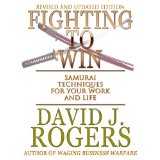
Fighting to win Amazon

Click on book image to order from Amazon.com

or

http://www.barnesandnoble.com/w/fighting-to-win-samurai-techniques-for-your-work-and-life-david-rogers/1119303640?ean=2940149174379


Order Waging Business Warfare: Lessons From the Military Masters in Achieving Competitive Superiority

Waging Business Warfare812sCY9edLL._SL1500_

Click on book image to order from Amazon.com

or

http://www.barnesandnoble.com/w/waging-business-warfare-lessons-from-the-military-masters-in-achieving-competetive-superiority-revised-edition-david-rogers/1119079991?ean=2940149284030


Leave a comment

Filed under Blocks to Action, Developing Talent, Human Potential and Achievement, Goals and Purposes, Motivation

A Strange and Perplexing Disorder: My Mother and Emily Dickinson

MomScan_20140825 (3)Sometimes we are oblivious to the serious problems people we know are having. And when we learn about them sometimes we’re shocked. As shocked as some people reading this post, one of my growing up memories, will be.

In high school I won an award and there was an assembly. Sitting on the stage, I looked down at the faces in the audience and there in the third row was my mother. My eyes stung with tears, I was so touched by her being there. I thought of the courage it had taken for her to come alone. Under my breath I whispered, “Good going Mom.”

When you are an agoraphobic you are one of a minuscule portion of the world’s population, and you seem terribly odd because the simple act of leaving your home alone fills you with helpless terror and requires great bravery on your part. And so you are odd, and that is no secret to you. But you try to hide the fact.

You are a person of considerable mystery. Your problem is the least talked about and least understood psychiatric disorder. And the most difficult to treat.

“You’re afraid to leave the house? What do you mean?” (They are stupefied. You really can’t mean that.)“It is very hard for me.” (You are understating.)

“Yes, a person can get hit over the head or robbed these days.”

“Those things don’t scare me in the least. I can take care of myself.”

“Then what are you afraid of?”

“Do you really want to know?”

“Very much.” (Because it seems so weird to me.)

“Most of all of the space out there—the immensity of it.”

“But I’ve known you for years and I’ve seen you outside your house many times.”

“But have you noticed that I’m never alone?” (My husband is with me, or my wife, or a close friend—someone I can put all my trust in.)

When you are out alone in that immensity you sweat, you worry, you feel faint, and you have difficulty breathing. At times the tension builds and you feel that any moment you will scream. All that’s being asked of you is that you go alone down the familiar street to the familiar train station and catch a familiar train and go to the doctor, and then return home again in two hours. You go over and over meticulously in your mind the details—the steps–you must carry out before you can open your front door again and set foot into the sanctuary you feel you never should have left. First walk down the street to the station, (That’s not so bad, is it?), then sit in the waiting room (Be ready; you will be afraid), then sit in the train looking out the window, then…Then on the way back, everything in reverse.

The problem is the mind. The mind is the trap. How can you master the mind when there is nothing to master it with but that same mind that is not perfectly well?

It is now time to leave. The door opens—the assault of the open air–and you mutter to yourself, Be strong. Then, hours later when you have completed the dreaded journey and are safely home again, everything in that domain welcomes you back—the refrigerator, the dining room furniture, the light fixtures.

My mother never as an adult saw the interior of a grocery store or a butcher shop, but called in the family orders item by item and had everything delivered, did not shop for clothes for herself or us except by mail order, did not take her children to doctors or dentists, but had them go alone, never walked down one flight of stairs to do the laundry in the basement, avoided crowds and never went to circuses, zoos, ballparks, libraries, playgrounds, beaches, concerts, or museums, and avoided elevators and all other enclosed places.

When you are as she, you often say after sleepless nights of anticipating opening the door and leaving, “I would give anything not to have to go. Can you please come with me?”

“NO (a stern voice), you must go alone. You have to master this thing. You have to do what you don’t want to do. That’s the only solution, the lone treatment. Do what you don’t want to do.”

I’m sure my mother never realized she was sick. My father never expected her to be any different than she was, and never all his life mentioned her affliction, nor did she ever speak of it, nor did we, her children. It was no less a part of her than her arm, and if a person’s arm is deformed, you never bring it up. When my father took her outside and stayed close to her–as though they were attached by a string–no one would have known that were he to leave her side– absentmindedly in a parking lot, for example–she would to some extent have lost her mind.

Yet, she was in love with the world–the glitter of lights and the sunsets and the dawns; the shades and shapes. Her absence from it made it all the more beautiful to her. She marveled at people; how they seemed so blasé and reckless out on the streets–as impervious as rocks.

I think to her the apartment in which she sought refuge and dwelled so happily was a garden glittering with precious stones. In it, keeping her company when everyone was gone, might just as well have been hummingbirds and blue jays and lilies of the valley and Roses of Sharon– bird baths and white columns and caterpillars. Utensils were rubies, chairs diamonds, books emeralds, toys on the floor scattered sapphires.

In that tiny domain she darted like a thrush among the five rooms, lifting, sorting, storing, repairing, pushing, sweeping, mopping, cleaning, wiping, washing, drying, folding, spreading, fluffing, rushing, straightening, puttering, submerging dishes in bubbly water–working, working, working–confident, capable, efficient, masterful–the queen of our lives. She was the center of the family about whom everything orbited and whose sweetness, gentleness, caring, affection, and kindliness she shared equally among us, and which filled every crevice of our home.

Everything she needed to exist contentedly was within reach–a tiny, perfect world—we, her family, walking through rooms, or sitting, or coming in or going out the doors. It was clear that on certain days each moment in that apartment and whatever happened therein filled her with inestimable joy. Then she might have thought:

If all the griefs I am to have
Would only come today,
I am so happy I believe
They’d laugh and run away.

If all the joys I am to have
Would only come today
They could not be so big as this
That happens to me now.

It was very near her thirtieth year that Emily Dickinson deliberately decided never willingly to leave her home again. She had been a prolific letter-writer since childhood, but letters subsequent to that year became more important to her than they are to most people because they were her “letters to the world,” and the replies she received were her sole means of escape from the imprisonment she had chosen.

She was as out-of-touch with the world as my mother. The news from “out there” came second hand to them. It was not something they experienced directly. Dickinson had no interest in the Civil War—the period of her flowering– and no interest in contemporary writers. It is doubtful she read a single poem of the other living American poetic genius, Walt Whitman. Eventually, Dickinson refused to be in the same room as visitors, her isolation now complete.

Were my mother a poet, she too might have written:

The soul selects her own society.
Then shuts the door.

© 2014 David J. Rogers


13 Comments

Filed under Blocks to Action, Growing Up Stories, Personal Stories

First Crisis, Then Recovery

Man sitting on a bench looking at the waterWhen crossing marshes, your only concern should be to get over them quickly, without delay”.                                 (Sonshi/Sun Tzu)

I was cheated out of a great deal of money in business by people I had trusted.

I had worked hard an entire year on a handshake, and now I had nothing to show for it. I had a wife and four children to support, and now there was no money with which to pay the bills. Devastated, I quickly fell into a depression; it was almost impossible for me to get up in the morning and I couldn’t sleep at night. I had not only lost the money, I had lost my faith in mankind. Is man’s greed so complete and is he so hopelessly selfish and that he will take the food out of another man’s mouth? I could not fathom such cruelty.

In that dark mood those dreary days, I could not make myself spend time with the family I love so much, didn’t feel like seeing friends, didn’t feel like leaving the house at all, didn’t want to talk, didn’t want to walk my dear dog, didn’t want to water my plants, didn’t  feel like getting dressed.

I am a reader, so one day I left the house and went searching for a book that would help me resurrect my damaged spirit and get me back on my feet and fully functioning again. All my life I have had what I call my “Research Angel”–some unknown factor that I trust to guide me to the solutions to my problems. When I need something, my Research Angel takes me to it.

I went downtown to a book store where I had once been a sales clerk and walked around from floor to floor, looking at book covers, reading titles, and thumbing through book after book until I found one that seemed almost to glow with a bright light there on the shelf. I picked it up and it seems to me now that simply holding it was the start of a new energy, a new focus, a new purpose.

I bought it, took it home, went upstairs to my office, turned on the desk light, and read it. Immediately I knew that book would lead me to writing the book I had been dreaming of writing for some time but could not clearly conceptualize in my mind–and it was.

I have written about how my sister Sharon’s death fueled my purpose and made me indefatigable until I had achieved it.

I wrote my book–Fighting to Win–and it changed everything about my life. After its success a major publisher told me, “We will give you a contract to write your next book.”

I asked, “What do you want me to write about?” and I heard the words every author dreams of hearing: “Write about anything you want to write about.”

And so I wrote another book that became popular: Waging Business Warfare.

That led to public speaking engagements in North America and Europe–and the realization that standing at a podium speaking to a thousand people or two or three thousand or five had been my destiny–shinjin in Japanese–the real me, the true person.

So you see, if I hadn’t been cheated by unscrupulous men I might never have gotten on the path that I was designed to follow all along.

The Research Angel

I think many people have discovered during their lives—particularly when going through tough, discouraging times–that they too have a Research Angel, whatever they call it.  A Research Angel is, I think, a powerful and undeniable intuition, a kind of unshakable knowing what’s best for you–most healthy for you–that comes from within, and an internal compass leading you over, around, or through obstacles, and out of difficulty. All that’s necessary is to relax and free your mind and have trust in your Research Angel. And to follow where it leads.

Two Questions for You

Do you have some kind of what I call a Research Angel that helps you out of crises? What difficulties has it led you out of? I would love to hear your story.

© 2014 David J. Rogers


Please follow this “Starting Your Life Fresh” blog. It will feature topics I think will be of value to you.

For my interview from the international teleconference with Ben Dean about Fighting to Win, click on the following link:

www.mentorcoach.com/rogershttp://www.mentorcoach.com/positive-psychology-coaching/interviews/interview-david-j-rogers/


How to Get The Books

Order Fighting to Win: Samurai Techniques for Your Work and Life eBook by David J. Rogers

Fighting to win Amazon

Click on book image to order from Amazon.com

or

http://www.barnesandnoble.com/w/fighting-to-win-samurai-techniques-for-your-work-and-life-david-rogers/1119303640?ean=2940149174379


Order Waging Business Warfare: Lessons From the Military Masters in Achieving Competitive Superiority

Waging Business Warfare812sCY9edLL._SL1500_

Click on book image to order from Amazon.com

or

http://www.barnesandnoble.com/w/waging-business-warfare-lessons-from-the-military-masters-in-achieving-competetive-superiority-revised-edition-david-rogers/1119079991?ean=2940149284030


or

http://www.barnesandnoble.com/w/waging-business-warfare-lessons-from-the-military-masters-in-achieving-competetive-superiority-revised-edition-david-rogers/1119079991?ean=2940149284030


4 Comments

Filed under Becoming an Artist, Developing Talent, Human Potential and Achievement, Goals and Purposes, Personal Stories

Doubting Yourself/Losing Confidence

Caution sign-44463_640To be a successful samurai required tremendous self-confidence. He/she was taught, “To defeat the enemy who comes leaping at you, your spirit must be perfectly poised.” Such confidence can be learned.

 A very intelligent, very talented woman told me her story one quiet, warm summer evening as we walked along a beach and watched the gulls. Since childhood she had imagined writing novels that she would then see on shelves in book stores and libraries wherever she went. “But,” she said almost apologetically, “that was long ago and I gave that up.” Then she picked up a stone off the sand and tossed it in the lake with a plunk. “Though now and then,” she said wistfully, touching my hand, “I do wonder what might have happened if I hadn’t given up?”

I asked her, “Why did you give up?”

“Oh, I’d heard it was impossible to get a book published—told that I was dreaming. And I didn’t want to spend two years or three years or five years writing long hours, sacrificing, spending less time with my family and friends, only to be told, ‘Sorry, you’re not good enough.’ That would have hurt me very much and I didn’t want to go through that.”

I think there are masterpieces that are never written because the would-be author doubted himself or herself and so, didn’t even attempt to write the book that would have become a masterpiece. They are extremely talented. They are extremely intelligent. Their idea for the book is fantastic. But they doubt themselves and don’t try or give up at the first sign of failure, and so there is not the slightest chance the masterpiece will ever be written

Some years ago I wrote a little how-to book on job-hunting for a client running a job placement agency—really just knocked it off. One day at lunch I was in a bookstore in Chicago’s Loop and thumbed through a few best-selling books on the same subject only to conclude “Mine is better.”

That filled me with confidence, and that’s when I made a decision to actually become what I had wanted to be since the third grade when my teacher, Miss Gross, read a story I’d written to the whole class. She was at the front of the room and had quieted us all down. She read the story, and the story was mine. When she finished she said, “Isn’t that a wonderful story David has written?” It was about a time in a football game when I had been tackled. Miss Gross said that when I wrote, “Then I fell to the ground like a blob of jelly coming out of a jar” that was a simile–that was poetic. “So,” I thought, “I’ve written a simile.” I decided then, that day, that moment, sitting at that desk that I wanted to be an author and I have never wanted to do anything else. From that day on I expected to be an author.

The Dreaded “Who Am I, Little Old Me, To Attempt That”

All you need do is think of your own experiences to know this: People shrink from any effort in which they don’t foresee success. They will do what they believe they are capable of succeeding at and avoid it if they doubt–like our would-be writers of masterpieces doubt–that they will succeed. That’s true even if what they avoid is of major value to them, and even if, were they not to doubt themselves, they could do, and perhaps do quite well.

Self-doubt is a thinking-too-much, cowardice creating problem. It begins the moment that nagging little stress-filled inner voice starts whispering “Maybe I’m not good enough.” “Maybe I’m not ready.” “I wish to hell I was somewhere else.” “I will not succeed.”

Even the most confident people–the Abraham Lincoln’s, the Winston Churchill’s, world-class athletes, great actors–experience periods of severe self-doubt. But they come out of it. They shake it off. They recover.

If you doubt yourself often, your major goals and purposes are in jeopardy because self-doubters don’t set their goals high. They avoid difficult tasks.

Self-doubters may avoid a career in which, were they confident, they might excel.

“Go to the battlefield firmly confident of victory and you will come home with no wounds whatsoever.” Samurai general Kenshin Uyesugi (1530-1578)

In an experiment, adults were given the same ten puzzles to solve. When they were done working on them, half were told they had done well, seven out of ten right, and the other half were told they had done poorly, seven out of ten wrong. In fact what they were told was completely fictitious. Then all were given another ten puzzles to solve, the same for each person. Then their efforts were actually graded. The half who had been told they had done well in the first round and so expected to do well again actually did better in the second, while the other half, with self-doubting expectations, did worse.

 Expect Success

“How should a samurai behave in battle?”

“Go straight ahead, wielding your sword.”

                                                                     14th century advice to a reluctant warrior

 The key to all successes is to be found in your own mind, in what you think. The Dhammapada of Buddhism says, “All you are is the result of what you have thought.” Most of the time the lives we lead are a reflection of our expectations

More than 100 studies of 15,000 people show that those who expect to succeed are happier, healthier, and more successful.

Positive expectation people overcome obstacles/blocks and aren’t deterred. They expect to be able to handle difficulties and to succeed in spite of them. When setting a goal they consider the probability of success rather than the probability of failure. “The chances are good I’ll succeed. I can accomplish this if I work hard enough.” “This is going to work out really well for me, and I’m going to be happy.”

Failure-motivated, self-doubting people have the opposite expectations: “I’ll never be able to do it. I’ll give it a try, but it probably won’t work out.”

So reject self-doubt and choose new and more fruitful expectations.

Form a pact with someone at home and at work. Whenever they hear you doubting yourself, they are to say, “Have confidence. Be of good cheer. You’re a very capable person and never forget that. Think of how good things will be when you succeed.”

Before the job interview or sales presentation or settling down to start that book or that painting, go off by yourself. For every self-doubt you have, fill your mind with five expectations of success, five affirmations of your confidence in yourself. And do that immediately upon thinking, “Who am I, little old me…” And time and time again until it becomes a wonderful habit.

Persevere and Succeed

Do not—do not–avoid difficulty. To reduce self-doubt and gain self-confidence requires experiences of mastering difficulty through perseverance. Now, if you set your sights low and experience only easy successes, you come to expect quick and easy results, and your sense of confidence may be shattered if you do not succeed. But blocks, dragons, difficulties, and setbacks serve a useful purpose. They teach you that success usually requires sustained effort. An author may revise a short story, novel, or essay she finds difficult 75 times before she’s satisfied. A ballet dancer intent on a beautiful performance may practice turning her ankle in a particular way a thousand times.

Once you become convinced that you have what it takes to succeed, you persevere in the face of adversity and quickly rebound from failure.

And once you succeed in achieving one goal you will tend to set higher goals.

You needn’t be victimized by your thoughts, your expectations. They’re under your control. You can choose your expectations as easily as you pick a rose from a bush, and in doing that, you are choosing your success.

© 2014 David J. Rogers

For my interview from the international teleconference with Ben Dean about Fighting to Win, click on the following link:

www.mentorcoach.com/rogershttp://www.mentorcoach.com/positive-psychology-coaching/interviews/interview-david-j-rogers/

How to Get The Book

Order Fighting to Win: Samurai Techniques for Your Work and Life eBook by David J. Rogers

Fighting to win Amazon

Click on book image to order from Amazon.com

or

http://www.barnesandnoble.com/w/fighting-to-win-samurai-techniques-for-your-work-and-life-david-rogers/1119303640?ean=2940149174379


Please follow this “Starting Your Life Fresh” blog. It will feature topics I think will be of value to you.

Leave a comment

Filed under Blocks to Action, Developing Talent, Human Potential and Achievement, Expectations, Motivation

Thinking Too Much

Man thinking-23838_640The Happiest People in the World Are Those Who Have Made up Their Mind

But The Following People Are Stopped

I have a friend who visited Hawaii many years ago. Stepping onto Hawaiian soil, he thought, “This is the place where I was meant to live. It is the most beautiful place on earth. I should move here.” Hundreds of times over the years he has talked about doing that, and of how his life would be improved if he did. He is unhappy with his current life and has been as long as I’ve known him, and he himself says that there is nothing holding him back. So why doesn’t he move? He is suffering from an inner block. He goes back and forth endlessly about the need to get a fresh start—“I really should go,” “Yes, I really should go,” “One day I’ll go” and here it is thirty years later, and after so many conversations with so many people he is no closer to moving to Hawaii than he was all those years ago. Something stops him.

It is no secret that many people are extremely dissatisfied with their jobs and like my friend talk again and again about doing something about it. But something stops them and they feel helpless and so they complain, they gripe. Griping is their substitute for taking constructive action. They are jealous of people who are happy with their jobs, their lives. They continue talking and something continues to stop them.

I know of a woman who when she was a schoolgirl was ridiculed cruelly again and again by a thoughtless teacher for not being able to master arithmetic. She was made to stand up in front of the class and was told, “You are stupid,” and she came to believe she was stupid. She has never recovered. Now grown up, she has virtually no self-confidence and thinks, “I am stupid.” Something stops her from getting rid of that thought. Many people are being stopped because long ago someone hurt them and they have not been able to get that hurt out of their mind.

I’ve met many, many people who find out that I have written books and say that one day they will write a novel. But they don’t. How many have you met? Probably as many as I have. But the novel is never written. They keep saying, “One day…Just wait and see.” Something stops them.

And how many people have you met who said many times that one day they would quit their jobs and start a business? As many as I? But they didn’t. Something stopped them.

The Release of the Arrow

The samurai of Japan were professional soldiers in the service of a Lord for the thousand years between the 9th and 19th centuries. They were like our soldiers in Afghanistan in the service of our country. Before the sword became the samurai’s principal weapon, the bow and arrow were. It was said that Yoshiie Minamoto (1041-1108) “shot arrows from horseback like a god. He galloped like the wind.” Tametomo Minamoto was such a strong archer that, attacked by two men in battle and finding himself with but one arrow remaining, he shot it completely through the first man and into the second. A valuable bird belonging to the shogun Yoritsune escaped from its cage. A bowman quickly fired an arrow which gently grazed the bird, bringing it fluttering to earth without even one damaged feather.

The release of the arrow is the most difficult problem which archers face. It is said that there has never been a perfect release. Archers—practitioners of the art of the bow called kyudo–were trained, and are trained today, not to think about the release. Not to analyze, not to think, “Okay hand, let the arrow go,” but to release it with “no thought” as unconsciously and effortlessly as “a drop of dew falling from a leaf. “

Thinking Too Much Makes Us Cowards: The Awful “What Ifs”

The Chinese character for “cowardice” is composed of two symbols, “meaning” and “mind.” The coward is one who finds too much meaning in things. He or she thinks too much. If you’re thinking too much like my friend and the unhappy workers and the woman who thinks she’s stupid and the others, and it’s making you a coward–driving you away from taking constructive action to better your life rather than to action–this could be a block you’ll want to conquer. You’re thinking yourself into inaction, and that must stop.

You’re thinking too much when you spend an inordinate amount of time anticipating what could go wrong. Then your mind doesn’t flow from one thought to another, but gets caught or snagged (toraware in Japanese) or stopped (tomaru).

You can’t get out of your mind the awful “what-ifs”– “What if something happens?” “What if I blow it?” “What if I lose?” “What if I get hurt again?” or for that woman who has been stopped since childhood, “What if I look stupid?”

All the people above—the would-be novelists and business starters, my friend, the unhappy workers, the woman without self-confidence–all except the archers, are being caught, snagged, or stopped time and again, and that is interfering with their lives.

To avoid getting snagged you need “a mind that knows no stopping” (tomaranu kokoro ), but that flows smoothly from one thought to the next, like the mind of the archer.

Whenever you find your thoughts getting caught, snagged, or stopped, tell yourself to get back to tomaranu kokoro, “a mind that knows no stopping.” For your own good and peace of mind, stop that endless analysis, that incessant mental chatter. Put an end to “What ifs” and DO something. Be like the archer releasing the arrow with ease and self-assurance.

A Decisive Style of Life

What I am after is a decisive style of life. Two things are necessary if you are to reach your Hawaii, to start your business, to write your novel. One is decisiveness. The other is the ability to take the action necessary to implement your decision. A decision without action doesn’t count. You get no credit. You can’t have action without a decision. The decision should move smoothly into action. They should be one thing—decision & action, decision & action, decision & action.

It is good to think, it is good to solve problems, and it is good to anticipate the future and consider the probabilities and make plans. It is natural to worry and fret. But for action-oriented people deciding is not usually a long period of reflection. They tend to do things not hastily, not recklessly, but fast. At some point, either you are going to write your novel or you aren’t. All your analysis and all the fretting and all the going back and forth must end– and you must throw a stake in the ground and say, “This is what I’m going to do. No two ways about it. No more conversations. No more back and forth. No more delays.”

And then release your arrow with ease, like a drop of dew.

© 2014 David J. Rogers

For my interview from the international teleconference with Ben Dean about Fighting to Win, click on the following link:

www.mentorcoach.com/rogershttp://www.mentorcoach.com/positive-psychology-coaching/interviews/interview-david-j-rogers/

How to Get The Books

Order Fighting to Win: Samurai Techniques for Your Work and Life eBook by David J. Rogers

Fighting to win Amazon

Click on book image to order from Amazon.com

or

http://www.barnesandnoble.com/w/fighting-to-win-samurai-techniques-for-your-work-and-life-david-rogers/1119303640?ean=2940149174379


Order Waging Business Warfare: Lessons From the Military Masters in Achieving Competitive Superiority

Waging Business Warfare812sCY9edLL._SL1500_

Click on book image to order from Amazon.com

or

http://www.barnesandnoble.com/w/waging-business-warfare-lessons-from-the-military-masters-in-achieving-competetive-superiority-revised-edition-david-rogers/1119079991?ean=2940149284030


Please follow this “Starting Your Life Fresh” blog. It will feature topics I think will be of value to you.

 Let Me Know

Tell me about the obstacles you’re facing.  Is thinking too much interfering with your life?


4 Comments

Filed under Blocks to Action, Creativity Self-Improvement, Developing Talent, Human Potential and Achievement

Face Up to the Truth; You’ll Be Better Off


You Want Above All to See the “Suchness” of Things. That May Be “Dangerous,” But Beneficial

truth-257159_640Now you’re taking action and getting rid of blocks—opponents, dragons. The first step in conquering both inner and outer opponents/blocks is acknowledging if and when you have a fight–a block you want to get rid of–on your hands. Sounds simple, right? Well, it is not so simple for many people–maybe most people.

I know a man who is extremely wealthy. I was going to use the word “rich” rather than “wealthy,” but decided against it because his life is not rich. He is unhappy, but he refuses to (1) admit that to himself and (2) to take steps to change his life so he will be happier. He refuses to “see” the real reasons for his unhappiness.

Not a single skill is more important than seeing. The samurai is taught ichi-gan, “first eyes.” The samurai “two eyesights” is kan-ken. Ken is looking; kan is “seeing into.” Everyone looks. The fighter sees into, even if what is seen isn’t pretty. See your opponent–your blocks and shortcomings in yourself–and you’ve got a chance to make improvements in your life. Being blind to them, you will probably never improve it.

The goal we should be seeking is to have no illusions—no illusions about the world, about others, especially about ourselves. Illusions are called gen in Japanese. Gen seeing is the worst kind of seeing it is possible to do.

The best seeing is simply applying the art of not kidding yourself—and it may be “dangerous” because when you see without illusions you may have to face the startling fact that after years of deceiving yourself or ignoring the truth, now it becomes apparent that many of your troubles and disappointments were your own doing–no one else’s.

An Experiment

An interesting laboratory experiment was conducted on responses to stress situations. All the subjects were told that they were about to receive a painful electric shock. Some of them tried to deny the shock by thinking or fantasizing about something else.

Others chose to confront the shock. They wanted to get it over with, and felt they could do something about it, if only by getting themselves ready. Instead of choosing to remove their attention from the impending shock as the others did, these individuals chose to concentrate specifically on what was going on in the laboratory or on preparing their bodies for the electrical charge. The deniers not only felt helpless, but their heart rate measurements showed that they actually experienced much more stress than the confronters.

Life is like that—full of shocks that you have the power to confront if you want, and if you do you will experience less pain in the long run.

So that’s where you begin—facing up to the truth, whatever the truth may be and however difficult it is to face. But some people learned as children to run from the truth, and have been running from it all their lives. They have become sprinters from the truth.

  Guidelines

  • Whenever you’re up against an inner or outer opponent, confront it. If you are afraid or self-doubting face them. Are they so terrifying? When a dragon is stopping you, reflect on it. Ask, “Why am I being blocked? Why am I afraid to speak up? Why do I feel so miserable right now? What is it exactly that’s stopping me?” “I’m wealthy, so why am I so unhappy?” The dragon may have been stopping you for many, many years, possibly most of your life. And it will persist unless you start facing it.
  •  Don’t try to kid yourself and others by saying, “I don’t know what’s blocking me.” You always know.  You don’t have to go up  to a mountain top and reflect. You know right now. All it takes is admitting it to yourself in an honest, forthright way. It is extremely difficult to say, “Thus far my life has been pretty much of a failure and it is the result of what I have done.” Yet, that realization may be the beginning of a new life. Think of the illusions you are hiding behind.
  • Talk with a trusted friend–an honest friend. Most people avoid hurting a friend’s feelings by avoiding telling him/her the truth about shortcomings they see. You share in his or her illusions. But a real friend is one who will help you see clearly, without illusions, and will kick you in the teeth CONSTRUCTIVELY.
  • Never ignore a block. If you drink, eat, quarrel, lose, spend etc. too much you’ll have a tough time getting things under control unless you see  the suchness of the situation. Never let an illusion control your life, not even for a moment.
  • Detach yourself slightly. Whenever you confront an opponent, a block of any kind, inner or outer, don’t see it as your opponent, only an opponent. It’ not your problem, it is a problem.  Look at the block dispassionately and as objectively as you’re able.

It is only then–when you are seeing properly–that you can apply techniques to conquer blocks that we will be talking about in the future.

LET ME KNOW

What are the blocks you need to face without illusion if you are to lead a better life? What dragons have you faced and conquered?

Please join the discussion and subscribe to this davidjrogersftw.com blog. It will feature topics that I think will be of value to you.

© 2014 David J. Rogers

For my interview from the international teleconference with Ben Dean about Fighting to Win, click on the following link:

www.mentorcoach.com/rogershttp://www.mentorcoach.com/positive-psychology-coaching/interviews/interview-david-j-rogers/

How to Get the Books

Order Fighting to Win: Samurai Techniques for Your Work and Life eBook by David J. Rogers

Fighting to win Amazon

Click on book image to order from Amazon.com

or

http://www.barnesandnoble.com/w/fighting-to-win-samurai-techniques-for-your-work-and-life-david-rogers/1119303640?ean=2940149174379


Order Waging Business Warfare: Lessons From the Military Masters in Achieving Competitive Superiority

Waging Business Warfare812sCY9edLL._SL1500_

Click on book image to order from Amazon.com

or

http://www.barnesandnoble.com/w/waging-business-warfare-lessons-from-the-military-masters-in-achieving-competetive-superiority-revised-edition-david-rogers/1119079991?ean=2940149284030


Leave a comment

Filed under Blocks to Action, Developing Talent, Human Potential and Achievement, Motivation

Overcoming Obstacles


mount-50920_640Fear, as we’ve said, is the dragon of dragons, the block of blocks that stops people again and again from a better life–fear of being wrong, fear of looking foolish, fear of speaking up, fear of public speaking, fear of what tomorrow will bring, etc. But there are other major dragons preventing people from achieving their goals and purposes and reaching their long-held dreams. Among them is:

Being Afraid to Take Risks

One of the more powerful blocks to committed action in personal and work life is the desire for certainty, the sure thing. In short, the desire for the impossible.

My Uncle Fred

My uncle Fred set out to invent a new type of nozzle. He rented space in a factory where my father worked, and my father would watch Fred working long hours in hip boots in vats of water trying to perfect his nozzle. My father would come home from work and say, “Poor Fred, splashing around night and day with his nozzles. I feel sorry for the guy. It’ll never work out.”

Uncle Fred had a wife and three children, but no income. He was staking everything that one day he would invent that revolutionary nozzle and would make millions. He had the idea and the design, but needed a machinist to shape the nozzles he was working with, and so he offered a share of the business to my father, a machinist, if he would work with him at nights and on weekends without pay until the business was making money. Though we never had enough money, my father was never one to take risks and he turned down the offer.

Did Fred succeed? Yes, he did. The nozzle he invented was revolutionary, and he did make many millions from his patent and his manufacturing company, and he bought an estate in the country with stables and horses, and a BIG house with art works from around the world, and another big house for the servants. My father scratched around for nickels all his life.

Night School Students

I taught a graduate college class at night to students who worked during the day. I would guess they ranged in age from twenty-five to fifty-five. Every semester I would conduct a survey by asking the class, “If you could do it over, would you go into the career you are in now?” What do you think they said?

You’re right. The great majority said emphatically “NO” or more often, “NO WAY.” They “should have been” an animator. They “should have been” an engineer, or an attorney, or a novelist.

Then I asked them, “Then why don’t you go into something you would like more?”

Whatever they answered—“I make a lot of money now and might not make as much in another career”—“I would have to get another degree”—“I’m too old to start over”—were various ways of saying, “I’m afraid to take risks.”

Bill the Executive and Herman the Runner

When I first met Bill, he was second in command of an organization with a work force of approximately three thousand people. His boss told me that Bill actually ran things. I felt it would certainly help my consulting with the organization if I learned what decisions Bill was contemplating. But when I asked him he snapped, “Decisions! I’m not making any decisions. I made that mistake last year.” Here was a man three thousand employees looked to for direction and job security, and he didn’t intend to make any decisions!

I had run across another Bill years before. His name was Herman. I had one season of high school track under my belt when Herman tried out for the team and made it as a 400 meter runner. He was a decent runner who worked very hard. The day of his first meet came and since his event was coming up, the coach looked around for Herman, but he was nowhere in sight. Eventually, though, the coach found him hiding in a washroom, his legs shaking, his face pale with fright. I’ll never forget coach putting his arm around Herman’s shoulder and walking him to the track, then saying only one short sentence, very softly, very kindly: “Herman, it’s time to get your feet wet.”

Let’s not be too hard on Bill, Herman, my students, and my father. They’re just examples of what is in fact the most popular approach to living and working: trying to avoid taking risks. Don’t run and you can’t lose the race; don’t make decisions and you can’t make bad ones. Don’t gamble on nozzles; don’t change you career in mid-stream. But on the other hand, don’t help Uncle Fred and you’ll never be rich, and don’t change your career and you’ll never know how happy you might have been in that other career. Don’t run the race and you cannot feel the thrill of victory. Don’t make decisions and you can’t make glorious decisions that will change your life and possibly the lives of those you love.

It could be that right now you too are hanging back from a decision or from taking decisive action in your own work or personal life. You might be shying away from potentially rewarding, exciting, and incredibly gratifying experiences because you want to avoid the disappointment or pain that might occur if things don’t work out. Like Herman, the runner, you want to keep your feet bone-dry.

The Search for Guarantees Will Get You Exactly Nowhere

Searching for guarantees in life and work is looking at them from the wrong end of the telescope, looking at them ass-backwards. The purpose of work and everyday life is not to avoid risk, quiet as that’s kept, but to maximize opportunity. And where do the richest opportunities lie? Exactly where the dangers are greatest. The best chance for total victory are to be found where? Where your chances of losing are also great.

Regret

A survey was done of 300 adults who were asked to reflect on their lives, their happiness and their regrets. Who were the most dissatisfied with their lives? Those who regretted not taking more risks.

The one constant factor in life is uncertainty. Half the things we try to do are affected by it. Wherever there is risk there is danger and there is fear. But risk and danger and fear needn’t stop us. In samurai swordsmanship there is a daring move that requires you to take two leaping steps forward and to come within a hairsbreadth of your opponent’s sword. It is not a difficult move and can bring quick and total victory, but it is rarely used. Why, when you can win so easily? Because taking the risk of coming so close to the foes blade terrifies most swordsmen. In life as with that sword move, it is often only by edging yourself in close to defeat that you also approach great success. Uncle Fred knew that, but Bill didn’t. Herman didn’t, many of my students didn’t, and my father certainly didn’t.

We-jei, the Chinese character, is made up of two symbols. One is “danger;” the other is “opportunity.” Danger—the danger of taking risks– offers us the opportunity to expand, to grow, to show courage, to become stronger, to start fresh on a more fulfilling course,

When you find yourself shying away, tell yourself, “I’ve got to edge in. I’ve got to play it closer to the sword blade.”

Take a coin and flip it. Whatever you do, don’t call “danger” and once again refuse to take a necessary risk—and make no progress. Make another choice. Call “opportunity” and be on your way.

TELL ME WHAT YOU’RE THINKING

What risks have you been afraid to take? How did you succeed in overcoming your fear?

© 2014 David J. Rogers

For my interview from the international teleconference with Ben Dean about Fighting to Win, click on the following link:

www.mentorcoach.com/rogershttp://www.mentorcoach.com/positive-psychology-coaching/interviews/interview-david-j-rogers/

HOW TO GET THE BOOK THAT SHOWS YOU HOW TO OVERCOME OBSTACLES

Order Fighting to Win: Samurai Techniques for Your Work and Life eBook by David J. Rogers

Fighting to win Amazon

Click on book image to order from Amazon.com

or

http://www.barnesandnoble.com/w/fighting-to-win-samurai-techniques-for-your-work-and-life-david-rogers/1119303640?ean=2940149174379

Please follow this “Starting Your Life Fresh” blog. It will feature topics I think will be of value to you.

4 Comments

Filed under Blocks to Action, Developing Talent, Human Potential and Achievement

What Prevents People from Reaching Their Goals and Purposes

dragon-149393_150THE ABILITY TO FIGHT FOR A BETTER LIFE IS A NECESSARY SKILL

ALL GREAT PEOPLE, ALL THOSE WHO HAVE MADE THEIR MARK, HAVE BEEN FIGHTERS.

“I have the kind of life purposes you talk about, I have dreams and ambitions, I have major goals, but I’ve never been able to reach them the way I thought I would and I’m looking for an explanation.”

“Blocks are stopping you.”

“Blocks.”

“Yes, blocks, impediments, obstacles, some outside you, out in the world, but the most powerful are inside.”

“What do you mean?”

“Inside your spirit and mind.”

“What am I to do?”

“We say about a woman, ‘She’s very sick, but she’s a real fighter,’ and there is no higher compliment we can pay her—no higher compliment we can pay anyone. As long as she’s fighting there is hope. If you are as serious about a better life as you say you are you too would be willing to fight for that life. You would fight with all your might, wouldn’t you? How important can a life be if it isn’t worth fighting for? The ability to fight for a better life is a necessary skill. Some people possess it; many do not. But it can be learned. All people can be fighters. All great people, all those who have made their mark, have been fighters.

BLOCKS are your opponents. BLOCKS are what you’re fighting. BLOCKS are keeping people from a full life. So you must learn to be a fighter, and whatever your personality, that’s possible.”

BLOCKS PEOPLE FACE HOLD THEM BACK…

…hold them down, and keep them from the better life they deserve. Because of blocks, very few people are making full use of all the marvelous talents they possess. Their abilities go to waste. There are two types of opponents/blocks you run into all the time. I know without having met you that you are facing at least one of them as you read this—and maybe more than one. Maybe many.

OUTER opponents/blocks are any forces, hindrances, or obstacles in the external world outside of you that you will have to eliminate or overcome if you are to have a more fulfilling life and reach what you’re seeking—whatever that might be.  Anything out in the world standing between you and your peace, prosperity, and well-being is an outer opponent, outer block. Right now you can think of the life you envision and aspire to and see very clearly that there are blocks that stand between you and it.  People when they oppose you, problems, tough situations, setbacks, crises, disappointments, discouragements, past failures, and difficult tasks are a few outer blocks.

INNER BLOCKS are in the person, in you. You and I grew up believing–because that’s what we’ve been told–that the main blocks confronting us are outside us. But that’s not true and all you need do is to reflect on your own life to know that’s not true. The BIG BLOCKS are those blocks of the mind and spirit.  Lack of self-confidence and self-reliance, self-doubt, destructive habits, problems handling pressure, laziness, an explosive temper, procrastination, excessive worry, constant boredom, and living without strong commitments are a few inner obstacles. (I will talk about some of the most powerful and detrimental blocks in future posts.)

They may be daunting, they may be intimidating, they may have become such habits that you hardly know anymore that they exist. But they are there and again and again they are keeping you from a better life. So you must do something about them.

The samurai, the greatest fighters ever to walk this earth, the basis of my book Fighting to Win, called all opponents in our minds and spirits, “DRAGONS.” You and I believed in dragons when we were children. They were hideous and terrifying and we drew back in horror. Then we discovered that the only place they existed was in our minds. When we realized they were only figments of our imagination they vanished, never to return.

ALL INNER OPPONENTS/BLOCKS ARE DRAGONS. THEY ONLY LIVE BECAUSE WE GRANT THEM POWER TO. But when you “strike through the dragon’s mask,” conquering inner opponents, inner blocks, dragons disappear—like that. They only exist because we give them license to. When we revoke their license they are gone and we are free.

SEVENTY PER CENT OF YOUR BATTLES ARE WITH INNER BLOCKS

“So you’re saying that inner blocks, inner obstacles, dragons, are powerful.”

“Yes, extremely powerful, interfering with very simple acts to more complicated ones. Inner blocks can destroy lives—they are destroying lives this moment.He or she broke your heart, so you tell yourself, “I never again want a broken heart. I will never get seriously involved again.” And so you may never love or be loved again. That’s an inner block—that’s a dragon. Being afraid to give a speech in public is the number one fear in this country. People would rather fall out of an airplane. That’s an inner block. Wanting to start a business or write a novel or change your career at last but saying, “That is an enormous undertaking and full of risks,” and letting your constant fear of taking chances stop you is an inner opponent.

“Many people slow down or stop completely when they approach the achievement of their goals, even goals they have been striving for for years, and then may never achieve them. No one knows why this is true, but that tendency is a dragon that has to be struck through. Going back and forth on a decision for weeks, months, or years, and never making up your mind what to do is an inner opponent. Get with it. Stop wasting the one short life you have. Our lives are like cherry blossoms that don’t last long in the wind that blows them from the tree. You’ve got to make a decision. Inner blocks/dragons create very sad states of affairs, and how you can acquire the ability to overcome them is worth looking into.

“But no block is a fate, a destiny. You don’t have to continue being the way you have been. Personalities can change, habits can change. I’ve seen lives changed almost miraculously. We can start fresh this moment. That’s the whole point. A cat becomes all the cat it will ever be without having to think about it, but we’re not cats. We all have an urge to make full use of our talents and to live a life we are designed for. That was to be your destiny. But we are not served a fulfilling life on a platter. We have to work at becoming all that we hold the promise of being—no room in this life for laziness or apathy.”

FEAR IS THE BLOCK OF BLOCKS

The Whole Secret of Existence is to be Free of Fear

FEAR is the block of blocks, the main obstacle, the principal opponent, the most fearsome dragon. Fear is as much a part of living as breathing. You are afraid of at least one thing every day—small things, big things, happiness-threatening things. There are a thousand fears that dominate people and keep them from a better life. Fear creates anxiety. This is the age of anxiety. Fear creates failure.

All inner blocks, all dragons, are a result of fear. What is the whole secret of existence? It is to be free of fear. The samurai was told, “Be fearless, have no fear.” What the samurai learned and that made them exceptional—ordinary people who through training became extraordinary– we can learn.

START YOUR OWN LIST OF DRAGONS

Head a blank sheet of paper or go to the computer. Head a list “Inner Dragons.” Then jot down anything you can think of in you that’s keeping you from achieving greater success in any part of your life. See how easy that is to do? No one ever needs to tell you what your blocks are. Now you’re aware of the inner dragons you will have to conquer.

 THE SAMURAI

The Japanese samurai were soldiers in the service of a Lord, like our soldiers in Afghanistan in service to the country. Imagine a samurai warrior going into battle. Across the field is the enemy. To go into battle he—or she (there were women samurai)–had to overcome the identical emotions we encounter every day, the emotions we’ve been talking about. They had to conquer fear and the other dragons like self-doubt in themselves. If they didn’t overcome those blocks the consequences were serious, even fatal. They had to learn courage and bravery, for example—things of the heart–things we need every day, prerequisites of truly effective living.

So what did the samurai do? They did something astounding. They developed an entire complete system—called musha shugyo— to conquer their dragons—your dragons—the most effective, most unique, such system ever devised by man which Fighting to Win updates and applies to 21st century work and life. Said the samurai:

“The end of our way of the sword is to be fearless when confronting our inner enemies and our outer enemies.”

“When you meet calamities and rough situations it isn’t enough simply to say you’re not flustered. Whenever you meet difficult situations dash forward bravely and joyfully.”

“Go to the battlefield firmly confident of victory and you will come home with no wounds whatsoever.”

“The greatest warrior is the one who conquers himself.”

TO BE FILLED WITH POWER

“We give blocks too much power. We let them prevent us from leading the lives we dream of. So they have to be conquered. You have to get rid of them. And that can be done. When you live like that—focusing again and again on a better life, conquering one impediment after another—you are suddenly filled with tremendous power, and a bright light shines around you like a private sun.”

“I wish I could hire a samurai to help me.”

“Why? Be a samurai yourself.”

© 2014 David J. Rogers


Please subscribe to this blog. It will feature topics that I think will be of value to you. Let me know what you are interested in and what you’re thinking about.

For my interview from the international teleconference with Ben Dean about Fighting to Win, click on the following link:

www.mentorcoach.com/rogershttp://www.mentorcoach.com/positive-psychology-coaching/interviews/interview-david-j-rogers/


 HOW TO GET THE BOOKS

Order Fighting to Win: Samurai Techniques for Your Work and Life eBook by David J. Rogers

Fighting to win Amazon

Click on book image to order from Amazon.com

or

http://www.barnesandnoble.com/w/fighting-to-win-samurai-techniques-for-your-work-and-life-david-rogers/1119303640?ean=2940149174379


Order Waging Business Warfare: Lessons From the Military Masters in Achieving Competitive Superiority

Waging Business Warfare812sCY9edLL._SL1500_

Click on book image to order from Amazon.com

or

http://www.barnesandnoble.com/w/waging-business-warfare-lessons-from-the-military-masters-in-achieving-competetive-superiority-revised-edition-david-rogers/1119079991?ean=2940149284030


2 Comments

Filed under Goals and Purposes