Category Archives: Thomas Wolfe

Fame is Fleeting:  Novelist Thomas Wolfe

Introducing Thomas Wolfe

Writers are always looking for material to write about. The right material is half the job. American writer six-foot-seven-inch Thomas Wolfe (1900-1938) wrote about himself. When he wrote he strove to use everything. He wanted to put all the experiences of his life into books. He might write thousands of words about a young man waiting for a train–just waiting as he recalled having once done. Every experience had to be used; nothing could be left out, a goal that was the source of his distinctive achievements and his greatest weakness, for the immensity of his goal was an impossible ambition.

Abstract painting like clouds in orange, gold and purpleAll writers are equipped with a good memories, but Thomas Wolfe’s memory was astonishing. Because of it he was able with ease to recall events, people, and places in stunning detail. That was his strength. His weakness was an inability to restrain the deluge of words that poured out of him from evening to dawn as he wrote, or when he spoke, and he simply, despite himself, had no ability to stay within the requirements of writing a saleable novel. He had no concept of how to write such a book and needed the help of his editor, the legendary Maxwell Perkins of Scribner’s, who at the same time was the editor of Ernest Hemingway and F. Scott Fitzgerald, two other difficult clients.

The manuscripts Wolfe turned in to Perkins were of enormous lengths, twice as long to War and Peace. They required tens of thousands of words–or hundreds of thousands–being cut. But Wolfe, being told to go home and cut fifteen thousand more words, might go home and add twenty or twenty-five thousand. Wolfe would sit looking at the manuscript with no idea of what to do to shape it into a novel that could be sold at a book store. The only way Perkins could get Wolfe to stop adding words was to take the book away from him and send it to the printer without Wolfe knowing.


A Sketch of Thomas Wolfe

Thomas Wolfe was the most naïve and trusting man on earth and wanted everyone to be his friend. His belief in hard work was almost holy. He wrote all night, each night producing thousands of words on large scrolls of newsprint that he dropped on the floor for an assistant to try to paginate.

He was a big man in many ways, not just in his physical size, but in terms of his ambitions, his memory, and the intensity of his emotions. To Wolfe, the need to write–to spare no effort, to exhaust himself writing–was paramount. Whenever he was distracted from working he would fall into a black mood; then he would brood, drink, and pace New York streets all night, telephoning his friends and accusing them of betraying him.  The next day he would call them and apologize abjectly. He was governed almost wholly by his insatiable need to write.

Wolfe inherited from his father the richness, rhetoric, and music of his prose and the gusto with which he lived. His vocabulary was immense, and his ability to select from it the right word, phrase or image was, and is, unrivaled by any other writer. From his mother he acquired his enormously retentive memory and his dogged attraction to long-sustained, exhausting work.


Wolfe’s Most Important Relationships

Three relationships were most important in Wolfe’s life: with his parents, his lover Aline Bernstein, and his editor Maxwell Perkins (considered the best editor any writer ever had). Aline Bernstein, a beautiful, brilliantly successful stage designer and one of the directors of the Neighborhood Playhouse, had more charm in her little finger than most people have in their whole body. Wolfe met her in September, 1925 when he was twenty-five. She was nineteen years older at forty-four and a married woman. He wrote about her that “that woman would become his heart’s centre.”  It was love at first sight for both of them. Wolfe had been involved with other women, but Bernstein was the one great love affair of his life, and the influence she had on him was incalculably great.

Without her unwavering belief and confidence in him and her substantial financial and emotional support, he could never have written Look Homeward Angel when he did. She made it possible materially and spiritually for him to write it while he taught English at NYU. For six years she guided and transformed his life until 1931 when their affair ended bitterly. Often Wolfe’s relationships ended bitterly, for example his working relationship with Perkins–editor, confidant, adviser, creditor, and friend, the most important relationship in Perkins’ life.


A Writer’s Life Becomes More Difficult with Each Succeeding Book

After having his first book (Look Homeward Angel) successfully published, Wolfe wrote about the difficulties of each succeeding work, the travails of the life of a creative person. He wrote that the writer is alone: “At that time, among the many other things I did not know, I did not know that for a man who wants to continue with the creative life, to keep on growing and developing, this cheerful idea of happy establishment, of continuing now as one has started, is nothing but a delusion and a snare. I did not know that if a man really has in him the desire and the capacity to create, the power of further growth and further development, there can be no such thing as an easy road. I did not know that so far from having found out about writing, I had really found out almost nothing … I had made a first and simple utterance; but I did not know that each succeeding one would not only be … more difficult than the last, but  would be completely different–that with each new effort would come new desperation, the new, and old, sense of having to begin from the beginning all over again; of being face to face again with the old naked facts of self and work; of realizing again that there is no help anywhere save the help and strength that one can find within himself.”


Fame is Fleeting

Boat at the horizon with red sky and gold waterNo writer in the nineteen thirties–or even now–could write with the beauty of Thomas Wolfe’s prose. His reputation after his death suffered because of the perceived formlessness and verbiage of his writing in an age when critics preferred tight structure and economy of language–short sentences and short episodes, and highly-focused scenes rather than the volume and torrents of Wolfe’s  language.  Once considered by Nobel Prize winners William Faulkner and Sinclair Lewis to be America’s finest writer, and in the past extremely popular with readers and critics, Wolfe is now almost never read–unfortunately in my opinion, if one is interested in being inspired by the brilliance of written expression. Hard as you look, you will not find Thomas Wolfe–once thought a towering genius–in current anthologies of American literature.


© 2025 David J. Rogers

For my interview from the international teleconference with Ben Dean about Fighting to Win, click the following link:

Interview with David J. Rogers


Order Fighting to Win: Samurai Techniques for Your Work and Life eBook by David J. Rogers
Fighting to win Amazon

Click on book image to order from Amazon.com

or

http://www.barnesandnoble.com/w/fighting-to-win-samurai-techniques-for-your-work-and-life-david-rogers/1119303640?ean=2940149174379


Order Waging Business Warfare: Lessons From the Military Masters in Achieving Competitive Superiority

Waging Business Warfare812sCY9edLL._SL1500_

Click on book image to order from Amazon.com

or

http://www.barnesandnoble.com/w/waging-business-warfare-lessons-from-the-military-masters-in-achieving-competetive-superiority-revised-edition-david-rogers/1119079991?ean=2940149284030


Follow my blog with Bloglovin

2 Comments

Filed under Biographies, Intensity, Thomas Wolfe, Writers

Good Writers Who Were Discovered by Agents and Publishers

Writers, are you having trouble getting published? I sympathize. Yet, be ready! In a month, week, or day or a few hours, or minutes, you may come in contact with that one editor, one agent you must have confidence exists here, there, somewhere, who will discover you, recognizing your potential, your craft, your genius the way young Faber & Faber editor Charles Monteith recognized novelist William Golding’s immense promise when no one else in the world did.


William Golding

Monteith was charming, witty, and sophisticated, qualities Golding did not possess. Golding’s novel Lord of the Flies was Monteith’s first editorial project; his first taste of an editor’s role. Some editors–very capable in other areas–are surprisingly poor at judging the work of beginning writers, but that was not the case with Monteith.

Old manuscript with stainsThe manuscript Golding submitted was worn, torn, and stained when Monteith first saw it. It had obviously been rejected by other publishers. Even Monteith agreed that this work of a public school teacher was over-written, disorganized, repetitive–a mess–and seemed never to get started. After many rejections Golding was losing hope of having the book published, of ever being published.

But Monteith saw “something” in the book, and in Golding –the work of a unique talent–and fought for it at editorial conferences, almost coming to blows with a senior editor who was known to have impeccable taste in picking properties that would succeed. Monteith prevailed, staking his young reputation on the book. Lord of the Flies was published, caught on, and was published in many languages.  Many Golding/Monteith novels followed. Monteith and Golding were editor and author friends the rest of their lives. William Golding was awarded the Nobel Prize in literature in 1983.

What might have happened had Golding’s beaten-up manuscript not caught the eye of the best possible editor for him? One day you may be fortunate: a Monteith may be excited by your work and discover you.


The Need to Be Discovered

The logical conclusion of the process of serious writing is to see the work published. Before writers get published they have to be discovered, to Hands typing on a laptop with a background of question marksbe recognized as a person with a talent that can generate revenue. When a writer is discovered by an agent or publisher, their life changes for the better. This post is about writers who were discovered, then published, and found success–perhaps more success than they expected. There are so many writers with all the talent in the world who are trying very hard to be discovered by an agent or publisher who is trying as hard to discover them. There is a good chance that many writers we read would never have been published had they not been discovered by the right agent and a right publisher.


Harold Kushner

A friend of mine was the late Rabbi Harold Kushner. He too was discovered by an editor with insight and moxie. Harold personally hand-carried his manuscript to publisher after publisher in New York and Boston.  Every publisher rejected When Bad Things Happen to Good People. Editors said the book couldn’t possibly succeed. For one thing it was “too Jewish.”

Two people shaking hands with a background of a city skylineFinally a small publisher picked it up. However, this editor who discovered the book, was different. He was enthusiastic and said to Harold, “Your book is going to be a best seller.” Finally what Harold had been hoping for: someone had faith in the book and its spiritual message. It became a phenomenal best -seller, the most popular book in the world, selling twenty -five million copies.


Thomas Wolfe

Scribner’s editor Maxwell Perkins discovered biographical novelist Thomas Wolfe. Wolfe was the most talented writer of his generation. His monumental goal was to convey in his writing every experience he had ever had. His vocabulary and expressiveness with language was so stunningly extraordinary that it didn’t take a genius to recognize that Wolfe was one. Wolfe wasted ten years trying to be a playwright until his married lover, patron, and muse Aline Bernstein told him, “You were not meant to be a dramatist. You should be writing novels.” The popularity of his first novel Look Homeward Angel marked him as a major talent, so much so that when fellow American Sinclair Lewis was awarded the Nobel Prize in Literature in November, 1930 Lewis praised Wolfe as the writer to be reckoned with in the future.

An open blank book floating above dark blue waves with a lighter blue sky Maxwell Perkins was the greatest American editor.  Editor of giants Wolfe, F. Scott Fitzgerald, and Ernest Hemingway at the same time, he tutored and guided Wolfe who never had a concept of “a publishable book.” Thousands of hand-written words poured out of high-energy Wolfe in a frenzy all night long. In the morning a woman picked the pages off the floor of his New York apartment, where Wolfe had thrown them, and typed them up. Perkins taught and tutored Wolfe literally daily. Each man considered their meeting and their relationship the most important event in their lives.  Perkins gave Wolfe assignments such as “You have to cut this episode by six thousand words,” and “Cut the book by 200, 000 words. I’ll help you.”


Jack London

Silhouette of a howling wolfPersistent and confident in spite of failures, Jack London submitted his manuscripts hundreds of times to publishers that rejected the work before an editor discovered him. But after that, within a single year London, a self-educated writer, took the literary world by storm and was the most popular, most critically and financially successful novelist/short story writer in the world.


Talented People Looking For a Break

I traveled extensively in North America and Europe during my career as author/public speaker and often after a work day and dinner would have a drink in the hotel lounge and enjoy the entertainment. Leaning brown tree limbs in front of green sunlit leaves and a serene pondInvariably I would think, “All these incredibly talented performers I see–artists who are looking for a big break and are dying to be discovered.”  Much like them, so many writers with so much talent also are trying very hard to be discovered. Without the people who discovered William Golding, Thomas Wolfe, Harold Kushner, or Jack London, would we have ever heard of those famous authors?


© 2023 David J. Rogers

For my interview from the international teleconference with Ben Dean about Fighting to Win, click the following link:

Interview with David J. Rogers


Order Fighting to Win: Samurai Techniques for Your Work and Life eBook by David J. Rogers

Fighting to win Amazon

Click on book image to order from Amazon.com

or

http://www.barnesandnoble.com/w/fighting-to-win-samurai-techniques-for-your-work-and-life-david-rogers/1119303640?ean=2940149174379


Order Waging Business Warfare: Lessons From the Military Masters in Achieving Competitive Superiority
Waging Business Warfare812sCY9edLL._SL1500_

Click on book image to order from Amazon.com

or

http://www.barnesandnoble.com/w/waging-business-warfare-lessons-from-the-military-masters-in-achieving-competetive-superiority-revised-edition-david-rogers/1119079991?ean=2940149284030


Follow my blog with Bloglovin


13 Comments

Filed under Adversity, Charles Monteith, Confidence, Developing Talent, Human Potential and Achievement, Editor, Goals and Purposes, Harold Kushner, Jack London, Maxwell Perkins, Publishing, Thomas Wolfe, William Golding, Writers

Fiction and Truth

I was in a writer’s group some years ago, an extraordinary group because except for me it was composed entirely of women–and they were elderly, seventy, eighty, ninety years old. At first I thought, “What am I doing with this bunch of old ladies?” But I quickly changed my tune.

They were tremendously talented and clever, sharp, and knowledgeable, and taken all together had hundreds of years of Typewriter, paper, glasses, pen, book on a wooden surfaceprofessional or amateur experience. It was a great, exciting group, the most pleasant and worthwhile I’ve known. The atmosphere every time was warm, radiant, cordial, and safe–a most productive creative environment. I often think of them fondly. At a session I read aloud a short story I’d written.  When I was reading I heard one woman–an award-winning journalist–say to her friend with a tone of discovery, “This really happened. You can tell.”

Well it had really happened. I hadn’t changed a single thing from the actual events and the actual setting and mood and people, except the names.  Even then I used their correct initials–“Wayne Collins” became “William Carruthers,” etc. In writing it I had to make everything accurate. If I wrote, “She had grey eyes,” I wouldn’t let myself get away with it. I just had to change it back to the real color, blue. Then the group turned to the question everyone seemed interested in that my reading had raised: “Can obviously autobiographical material–meaning it had really happened, the detail told you that–qualify as fiction?”

The eight people in the group were evenly divided. Four said, “Fiction is fiction and non-fiction is non-fiction. There’s a big difference.” I once asked my wife, an excellent writing teacher, “What is a short story these days,” and she replied “Currently, a short story is anything you want it to be.” That liberal view was basically the attitude of the other four members of the group, including me, so in our minds my strictly and admittedly autobiographical story more than held its own as fiction.

It goes without saying that when they are creating, all writers–all people in the arts–depend heavily on their own past experiences. But while most writers create characters and plots using their imagination as the dominant shaper of the work, some writers–such as those cited in this post–adhere slavishly to their own experiences and knowledge.

Truth is what the writer, painter, actor sincerely believes in his/her own heart. Everything in the work of art must be convincing for the artist and for the audience. The artist is often not striving for literal truth, but is inventing too, saying to the reader, “I’m trying to convince you that if this were happening, this is how it would be. If characters were people, this is how they would feel, talk, and behave.” But some writers invent far less than remember.

In college and in graduate school I was trained in “The New Criticism” that says all that matters when studying a literary work is the work itself: the author’s personality should not enter into it. I had a knack for sticking to the text and ferreting out patterns of images and symbols.

But I am a writer of fiction and poetry and I know from my own long experience and that of many other writers that the author’s personality and experiences are everywhere present in the creative process and permeate the content of everything the writer commits to the page, every feature, major or minor. Critics may not know that or may act as though they don’t, but every writer does. A writer can look at a passage in her work and say, “That character sounds so bitter because I had a bad tooth ache that day and so I was in the perfect mood to write that dialogue.”

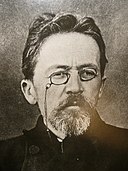
Anton Chekhov

Anton Chekhov

There is a long precedence for obviously autobiographical content being put into fictional form and being accepted as fiction even though it really happened. Short story master/playwright, Russian Anton Chekhov, said “Art has this one great specification: it simply does not tolerate falsehood…There is absolutely no lying in art,” and in a letter to his brother, “Don’t write about anything you haven’t experienced yourself.”

That’s much easier to do when you are writing about yourself because you know yourself better than you know any character you can imagine and you know better than anyone else what happened to you if you have a clear and accurate memory. Autobiographical fiction writers obviously need exceptional memories–and most have one. Their most important creative routine is to stimulate their memory. I may look at photo albums as a way of doing this.  I’ve said about myself–hopefully not bragging–that I can remember every blade of grass on the street I lived on when I was eight.

English poet Samuel Taylor Coleridge advised to “write from recollection; [but} trust more to your imagination than to your memory.” Most writers are liars–they invent. But some writers write their best fiction, poetry, drama, and screenplays when they are writing the literal truth–or almost the literal truth–and not lying.

American Nobel Prize winning playwright Eugene O’Neill, for example, said,  “I have never written anything which did not come directly or indirectly from some event or impression of my own,” and “I shall never be influenced by any consideration but one; Is it the truth as I know it, or better still, feel it,” and “I am a dramatist. What I see everywhere in life is drama. I just set down what I feel in terms of life and let the facts speak whatever language they may to an audience,” and “Writing plays was the easiest thing in the world for me. I wasn’t making anything up.”

Some famous autobiographical authors who could be obsessive about not lying or writing about things they hadn’t experienced themselves include:

Katherine Anne Porter

Saul Bellow

Ernest Hemingway

Sherwood Anderson

Marcel Proust

Thomas Wolfe

Eugene O’ Neill

Henry Miller

Anton Chekhov

James Joyce

D.H. Lawrence

Sylvia Plath

Malcolm Lowry

Scott Fitzgerald

Raymond Carver

Ernest Hemingway

Ernest Hemingway

Ernest Hemingway, another Nobel Prize winner, could invent with the best of imaginative writers, but was obsessed with telling the truth, the importance of telling the truth, in his words, “the straight statement without moralizing or elaborating or decoration”–what “is not messed with.” He was asked what the job of the artist is, and he said it is to put down what you see and what you feel in the best and simplest way you can. What he had personally done and knew most about was what he was interested in telling about. “His standard of truth-telling remained…so high and so rigorous that he was ordinarily unwilling to admit secondary evidence…picked up from other sources than his own experience” (Carlos Baker.) Whenever I read the wonderful Hemingway short story “Indian Camp” I know that boy sitting in the rowboat was once the real Hemingway and the man with him was his real father just as in the boy in the story I read to the group was my best recollection of how I was as a boy.

Thomas Wolfe had an enormously retentive memory, as autobiographical writers generally do, and engaged in exhausting, sustained, many-hours-long periods of writing. (Research shows that the most productive writers and painters usually work in long, protracted bouts of creation and not in brief, choppy spurts. For maximum effectiveness you would preferably have or develop the ability to concentrate your attention for long periods, and if possible, find long uninterrupted, unimpeded periods of time for work.)  The artist’s highest goal is to make conflict-free, habitual use of the urge to create that dominates him or her, with no one and nothing interfering. It is not just interference that so aggravates the creator, but even the threat of interference.

Wolfe’s aspiration was to put into his writing precise descriptions of every experience and every impression and every sight and sound he had ever known. He wanted to put all the experiences in his life into written language, and had every confidence that was possible. His life had to be “looted clean.” “Everything had to be used; nothing could be implied” (The Norton Anthology of American Literature).

Thomas Wolfe

Thomas Wolfe, Van Vechten Collection at Library of Congress

Like many creatives whether in the arts or the sciences, Wolfe was governed almost wholly by the compulsion to work, to be as productive as he could possibly be. Words came out of him straight from his memory as water comes from a spigot–hundreds of thousands of words, thousands every night, manuscripts of a million words, his never having any concept of the requirements of a publishable book. Whenever he was deterred from working, this tall, handsome, tremendously gifted man from North Carolina would fall into a black mood. Then he would brood, drink, and pace the streets all night until he was able to work again, starting in the evening and working past the break of dawn.

Malcolm Lowry was the English author of the wonderful virtuoso-performance novel Under the Volcano. It’s generally considered one of the great works of the twentieth century. It is possibly the most accurate description of a man’s alcoholism ever written. (He wrote, “One dreaded the arrival of anyone unless they were bringing alcohol.”). Lowry almost never tried to invent characters or events because he didn’t know enough about any other person to be able to do that. His subject was himself and he could not focus on anybody outside himself. When he tried to, the writing went flat. He didn’t know anything about world events or anything else either. Everything revolved around his thoughts.

James Joyce

James Joyce

James Joyce had such a need for authenticity and accuracy that he believed he didn’t possess an imagination at all: he couldn’t make things up. When writing Ulysses he sent a letter home to Dublin asking a friend to go see if it was possible for a man in average physical condition to jump from this place to another at a specific address, or was it impossible. He had to know or he couldn’t finish the book. He was depressed when after the book was published a retired sea captain wrote him telling there was a mistake in the book in that with wind blowing the way he described, the boat wouldn’t have behaved in the way he had it.

F. Scott Fitzgerald, along with Hemingway, is arguably the most dramatic example in American literary history of an author whose private life is reflected consciously or otherwise in virtually everything he wrote. Fitzgerald’s language, his prose, his voice, tell us what he was going through at any given moment in his career, from his early extraordinary successes through his crack-up. Saul Bellow’s fiction is strongly biographical fiction. Its focus on the workings of a brilliant mind help explain why his writings are in essence long monologues. Sylvia Plath’s novel The Bell Jar is also strongly autobiographical.

T.S. Eliot said, “We all have to choose whatever subject matter allows us the most powerful and most secret release; and that is a personal affair.” Literary critic Gilbert Murray wrote, “It seems to me that the writers who have the power of revelation are just those who, in some particular part of life, have seen or felt considerably more than the average run of intelligent beings.” It is not a random choice, but a discriminating, highly selective instinct, a particular order of things that has an outstanding appeal to that particular writer. Painter Julian Levi said, “It seems to me that almost every artist finds some subdivision of nature or experience more congenial to his temperament than any other.” The subject matter, the subdivision of experience that all these writers mentioned here found, and that autobiographical writers today find, is not what they can imagine, but themselves and the recollection of the lives they’ve lived.

It’s generally thought among critics that Joyce’s Ulysses and Marcel Proust’s Remembrance of Things Past were the two greatest novels of the twentieth century. The subject of Proust’s book was Proust as much as the subject of Lowry’s works was Lowry. Wolfe’s subject was Wolfe, Fitzgerald’s was Fitzgerald, Henry Miller’s Tropic of Cancer and Tropic of Capricorn, Henry Miller, Plath’s was Plath, Hemingway’s was Hemingway, etc.

The answer to the question, “Can a true story be communicated as fiction?” is “Of course.”


© 2017 David J. Rogers

For my interview from the international teleconference with Ben Dean about Fighting to Win, click on the following link:

Interview with David J. Rogers


Order Fighting to Win: Samurai Techniques for Your Work and Life eBook by David J. Rogers

Fighting to win Amazon

Click on book image to order from Amazon.com

or

http://www.barnesandnoble.com/w/fighting-to-win-samurai-techniques-for-your-work-and-life-david-rogers/1119303640?ean=2940149174379

Order Waging Business Warfare: Lessons From the Military Masters in Achieving Competitive Superiority

Waging Business Warfare812sCY9edLL._SL1500_

Click on book image to order from Amazon.com

or

http://www.barnesandnoble.com/w/waging-business-warfare-lessons-from-the-military-masters-in-achieving-competetive-superiority-revised-edition-david-rogers/1119079991?ean=2940149284030


16 Comments

Filed under Creativity, Ernest Hemingway, Fiction, Literature, Malcom Lowry, Memory, Thomas Wolfe, Work Production, Writers, Writing

Extraordinary Creative Outliers

I think all creative people are extraordinary. You’re extraordinary. I’m extraordinary too. We’ve been extraordinary all our lives and one day at the age of six or eleven or twenty-one or fifty-seven something remarkable happened and we discovered we were, and then a corner was turned.

But a separate breed of outlier creator is so extraordinary and so driven and capable of such incredible creative feats and leads such an extreme existence of sacrifice that we wonder what there is about them that inspires them so. What sustains them and equips them so perfectly to produce such exceptional work? Theirs isn’t the only path to creative achievements—most creators lead more moderate lives. But it’s a path extraordinary creative outliers often choose.

Creative outliers are so absorbed in facing challenges and solving creative problems that they have almost no interest in anything else. Nobel Prize winner Saul Bellow—the premier American writer of the second half of the 20th century– said, “I have always put the requirements of what I was writing first—before jobs, before children, before any material or practical interest, and if I discover that anything interferes with what I’m doing, I chuck it. Perhaps this is foolish, but it has been the case with me.” He was married five times.

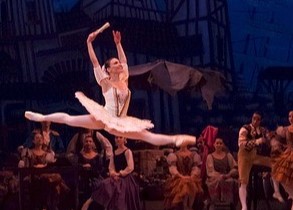
Novelist Jane Smiley wrote, “Even if my marriage is falling apart and my children are unhappy, there is still a part of me that says, ‘God! This is fascinating.’” Ernest Hemingway lived in poverty early in his career and sometimes stole food and said a writer’s perceptions are sharper when he’s “belly-empty, hollow hungry,” that “hunger is good discipline and you can ballerina-534356_640_copy2learn from it.” Before taking the literary world by storm late-blooming novelist/essayist Henry Miller lived in poverty too. He once said, “I have no money, no resources, no hope. I am the happiest man alive.” Emily Dickinson, the greatest American woman poet, author of 1,775 poems, said that if she felt physically as if the top of her head was taken off, she knew that was poetry. Ballerinas—artistes of artistes–may practice until their muscles scream and their feet bleed.

We look at these creative outliers and we marvel and are impressed or appalled or shocked, and often ask ourselves “Could I live an unusual life like sunflower-395026_640that? Am I willing to sacrifice so much for my art and suffer so much and risk so much?  Is that possible for me? How much of my normal life am I willing to give up? If I sacrificed more could I be great too?” And ordinarily decide it isn’t possible at all and we’re not willing to sacrifice in that way, nor suffer, nor risk all that. We couldn’t because a life like theirs asks too much. We draw a line and dare not cross it.

All creative people are obsessed to some extent or another, from mildly to ferociously, so much so that when we obsessed-but-less-obsessed creators hear about these outlier creators we have no problems understanding them since they’re only different from us in degree.

What humans in their craft can accomplish extraordinary outlier creators are willing to push themselves upward toward.  They have a genius.  They’re self-absorbed. They’re determined. They’re completely taken by a way that’s too demanding for the ordinary run of women and men. But for a select few like these outliers their craft becomes a way of life, a journey, a goal, an inevitable struggle of someone rare who’s capable of achieving the impossible.

Creative outliers pour themselves heart and soul and muscle and blood into their work. They work and they work and they work repetitively, and think bird-226700_640about their art or their writing, acting, or dancing continually, and have a monumental amount of confidence. Any time they’re not working they’re making plans for improvement because they know no matter how good you are and what you’ve accomplished you can always be better.

The fundamental role of all creators without exception is to create—to produce works–and they do with a vengeance. Pablo Picasso produced 50,000 works—1,885 paintings ,1,228 sculptures, 2,800 ceramics, 12,000 drawings, thousands of prints, and tapestries and rugs.

There wasn’t a moment of his waking day all his career that Nobel Prize dramatist Eugene O’Neill wasn’t thinking about writing.  He produced 35 full-length plays and 17 one act plays and revolutionized American theater. Writing  long hours, English novelist Charles Dickens—the most popular writer in the world at the time– would sometimes put his head into a bucket of cold water, dry his hair with a towel, and then go on writing.

Creative outliers learn—often at an early age–that they will achieve more if they concentrate their efforts in one area. They are aware only of the work before them, and let nothing divert them from it. French novelist Gustave Flaubert said that only writing mattered to him, and that he kept all his other passions locked up in a cage, visiting them now and then for diversion. He said too, “Sometimes I don’t understand why my arms don’t drop from my body with fatigue, why my brains don’t melt away. I am leading a stern existence, stripped of all external pleasure, and am sustained only by a kind of permanent rage, which sometimes makes me weep tears of impotence but which never abates.”

French novelist/poet/dramatist Victor Hugo started his day by handing his clothes to his servant with strict orders to return them only after Hugo had finished a day’s work of seven hours. Composer Igor Stravinsky and novelist Thomas Wolfe worked all their lives in a frenzy—Wolfe in a “wild ecstasy” at top speed, never hesitating for a word, as though he were taking dictation.

You can’t measure intensity and a person’s pure life force. But the energy pouring out of outliers like Vincent van Gogh would bowl you over. Van Gogh vincent-van-gogh-starry-night-1889worked  furiously at a fever pitch, gathering up the colors as though with a shovel, throwing them on canvas with rage, globs of paint covering the length of the paint brush, sticking to his fingers. Goethe called such super-charged outliers “demoniacs”–people with a super-abundance of vitality, “something that escapes analysis, reason, and comprehension.” Goethe was aware of this power in himself.

Russian Anton Chekhov wrote 10,000 pages of short stories, and also produced great plays like The Cherry Orchard, The Seagull, and Uncle Vanya, and was a practicing physician too. Noted architect and futurist Buckminster Fuller was often unable to stop working until he dropped from exhaustion. Isaac Asimov, author or editor of more than 500 books, said he wrote for the same reason he breathed—because if he didn’t, he would die.

Extraordinary creative outliers are guided by an ambition, a notion so bold that it’s almost outlandish:  that you’re born with a certain aptitude and with direction, discipline, and sacrifice you can transform yourself into something magnificent. Their focus is maniacal—all day long every day. When they’re away from their work they long for it.

Nobel novelist Toni Morrison said, “But the important thing is that I don’t do anything else. I avoid the social life normally associated with publishing. I Toni Morrisondon’t go to cocktail parties. I don’t give or go to dinner parties. I need that time in the evening because I can do a tremendous amount of work then. And I can concentrate.” Outlier novelist Philip Roth said, “My schedule is absolutely my own. Usually, I write all day but if I want to go back to the studio in the evening, after dinner, I don’t have to sit in the living room because someone else has been alone all day. I don’t have to sit there and be entertaining or amusing. I go back out and I work for two or three more hours.” American William Faulkner said jokingly, “If a writer has to rob his mother, he will not hesitate: the ‘Ode on a Grecian Urn’ is worth any number of old ladies.”

We live in a world where everyone is selling something. Everyone has an ulterior motive. They want to be a brand. But these outliers only want one goal: to reach the highest heights they can. That’s it. There’s nothing else.

You look at Picasso and Faulkner and say, “Oh, that’s why painting and writing were invented. As if the gods of the arts declared, ‘To show you others how it should be done we’re going to make a person to represent perfection’.”

They have bad days, difficulties, and setbacks, and still believe in themselves. Andre Gide said, “The great artist is one …for whom the obstacle is a springboard.”   They know that effort is more important than talent. And if you say to them, “You’re just so gifted” they’ll stop you and say, “No, I’m no more talented than anyone else, no more talented than you, but I work much harder” and tell you and me, “If you want to excel you’ll have to overcome the notion that it’s easy.”

They’re a psychologically phenomenal combination of purity of focus and energy-1101474_640purity of discipline and purity of energy. Their creative lives are both comfortable and disciplined.  Even when they’re miserable they’re happy. Age has little effect on their skills except to improve them. They’re never happier and more at ease than when under pressure. They have a sense of being destined for something that very few other people are fitted for. But they are and they know they are.

They have a supreme care about their craft, and they never forget their failures. Their craft is their sanctuary. They’re never better than when doing their craft.

Outlier playwright George Bernard Shaw said, “I am of the opinion that my life sparks-142486_640belongs to the whole community and as long as I live it is my privilege to do for it whatever I can. I want to be thoroughly used up when I die. For the harder I work the more I live. I rejoice in life for its own sake. Life is no brief candle to me. It’s a sort of splendid torch which I’ve got to hold up for the moment and I want to make it burn as brightly as possible…”


© 2016 David J. Rogers

For my interview from the international teleconference with Ben Dean about Fighting to Win, click on the following link:

www.mentorcoach.com/rogershttp://www.mentorcoach.com/positive-psychology-coaching/interviews/interview-david-j-rogers/

Order Fighting to Win: Samurai Techniques for Your Work and Life eBook by David J. Rogers

Fighting to win Amazon

Click on book image to order from Amazon.com

or

http://www.barnesandnoble.com/w/fighting-to-win-samurai-techniques-for-your-work-and-life-david-rogers/1119303640?ean=2940149174379

Order Waging Business Warfare: Lessons From the Military Masters in Achieving Competitive Superiority

Waging Business Warfare812sCY9edLL._SL1500_

Click on book image to order from Amazon.com

or

http://www.barnesandnoble.com/w/waging-business-warfare-lessons-from-the-military-masters-in-achieving-competetive-superiority-revised-edition-david-rogers/1119079991?ean=2940149284030


8 Comments

Filed under Artistic Perfection, Artists, Becoming an Artist, Creativity Self-Improvement, Dancers, Developing Talent, Human Potential and Achievement, Emily Dickinson, Ernest Hemingway, Faulkner, George Bernard Shaw, Goals and Purposes, High Achievement, Literature, Motivation, Outliers, Picasso, Poetry, Preparation, Self-Confidence, Self-Direction, Stamina, Success, The Writer's Path, Thomas Wolfe, Vincent van Gogh, Work Production, Writers

Feedback and Help for Creative Success

Without doubt, performance feedback and creative success go hand in hand. Useful feedback can help you evolve and reach high levels of satisfaction and achievement. But where are you to find the quality of feedback and help you need? Deprived of it, some artists and writers quit before they reach their peak. They bid their beloved craft adieu.

Something, for example, has gone out of publishing. Something is missing. No longer can you find the publisher’s textual editors who once existed who would work tirelessly with you, the author, suffer with you, and use their specialized skills to help you create the best you’re capable of. Creators are rare and exceptional human beings who are able to work alone in seclusion long hours without recognition, without praise, sacrificing, overcoming hardships without flinching, always returning with high energy to the work which they have a talent for. For a writer or artist who by necessity spends so much time alone, the insights of a close collaborator who cares as much about your work as you do can be a godsend.

hands-545394_640In a novel I wrote an episode in which a New York publisher’s editor came out here to the Midwest to spend a week in a cabin at a lake working intensely with a promising writer. I wrote this episode knowing very well that an actual editor would say, “Well, such a thing is simply not conceivable.” But I thought how wonderful if it were. I enjoyed writing that episode more than any other.

Maxwell Perkins was the most acclaimed book editor of the twentieth century and thus far in the twenty-first. During the 1920s and 30s his Scribner’s writers included the greatest and most gifted working with one editor in the history of American publishing. They included, in addition to his protégé Thomas Wolfe, Ernest Hemingway, F. Scott Fitzgerald, and Ring Lardner. Wolfe’s association with Perkins is the most celebrated author/editor relationship in American literature.

The day before Christmas, 1929 Wolfe wrote to Perkins: “One year ago I had little hope for my work, and I did not know you…. You are now mixed with my book in such a way that I can never separate the two of you. I can no longer think clearly of the time I wrote it, but rather of the time when you first talked to me about it, and when you worked upon it….You have done what I had ceased to believe that one person could do for another–you have created liberty and hope for me.” Wolfe wrote a note to Perkins: “In all my life, until I met you, I never had a friend.” Wolfe described Perkins as “a man of immense and patient wisdom and gentle but unyielding fortitude.”

Wolfe was immensely talented, but his main problems were his uncontrollable, obsessive verbosity and a chronic inability to cut that resulted in unedited manuscripts of fantastic lengths, three or four times longer than a publishable book could possibly be. Those problems in turn were caused by Wolfe’s difficulty making any kind of independent decisions. He didn’t know where or what to cut. He would stare for hours at the manuscript before eliminating a few sentences when his agreement with Perkins was that he would strike out tens of thousands–a hundred thousand—words. He would start by rereading the manuscript section by section, trying to find things that were unnecessary and could be omitted. But he was totally blind to them. He never in his entire career had a concept of a publishable book.

I am certainly no Thomas Wolfe, but my wife Diana is my Maxwell Perkins. She has been a highly-regarded writing teacher, tutor, and mentor for years, and I doubt her judgment and skill can be surpassed. She edits all my work, and over the years I’ve been prolific—well over a million words–and she’s been busy. I—we—have had published best-selling nonfiction, as well as fiction and poetry, many magazine and newspaper articles, and this blog.

But she is far more than a conventional editor, and in this post I’m holding her up as an ideal, one the likes of which every writer and artist should find, hold onto, and treasure. I heard a psychiatrist say, “Everyone could benefit from a therapist.” And every writer and artist could benefit from knowledgeable, frank criticism—sympathetic criticism of course, not thoughtless and cruel criticism. When tough, street-smart novelist Henry Miller found himself being abused by editor after editor he submitted work to, he snarled, “Who are these shits? Where do they get off saying such things to me?” If you are to survive in the arts, as in life, you must never be intimidated by anyone. I think the greats were all bold, all brave.

Diana and I have developed a harmonious division of labor. I create. She evaluates. I respect her talents and she respects mine. They are different talents, but are aimed at the same object: the quality of the work. I’m aware that she will be my first and most demanding audience. I’m always eager to hear what she has to say because her opinions will help me improve. And isn’t to improve, transforming a gift into an achievement, what every creative person wants most?

ernest-hemingway-401493_640The most important criticism a seasoned writer or artist receives is self-criticism. The standards of good writing, painting, or dancing, etc., are now a part of the writer or artist’s makeup. Yet, a creative person of any level of ability should ask, “Am I getting honest feedback regularly also from someone else whose judgment I trust? Have I made arrangements to do that? Am I receptive to constructive criticism? Am I confident enough for it? Can I be dispassionate about it? Can I be non-attached?”

We all wish to be lavished with praise for every work we produce. John Irving said that “Good job” is the only feedback a writer wants. But it’s much more beneficial to have a wife or friend or coach, editor, teacher, writer’s or artist’s group, etc. who’ll point out flaws and shortcomings before the work reaches agents, publishers, newspaper reviewers, and the final judge—the audience.

Some writers and artists and people in every other profession would prefer to not know how well or poorly they’re doing. Others very much want to know if knowledgeable people they trust think they’re doing okay, and possibly more importantly, if they’re doing poorly, and if they are, in what areas they might improve. They welcome feedback and actively seek it, feedback that is (1) timely, (2) specific, (3) well-meaning, and (4) helpful.

Ernest Hemingway, for example, didn’t become the most innovative literary stylist of the last 100 years without incorporating into his work the advice of his newspaper editors, and fellow writers Sherwood Anderson, Ezra Pound, Gertrude Stein, and F. Scott Fitzgerald who were generous enough to share their expertise with him

Diana advises me, consults with me, inspires me, encourages me, and criticizes every facet of my work—objectively I believe, and always fairly. She is not easy on me, but pushes me. Well, not “pushes.” Pushing isn’t in her nature. But from her commitment I feel myself gaining energy. She is to me what a real editor should be, though I know how trying writers can be. (I once called my publisher’s editor and she sounded demoralized. So I said, “What’s wrong, Kathy?” She said, “Oh, I just had an hour-long argument with one of my authors about a comma.”)

vincent-van-gogh-self-portrait-1887Many creative people benefit from close personal support and encouragement from one other person such as a lover, husband or wife, sibling, or close friend: Frederick Chopin/George Sand, Jackson Pollock/Lee Krasner, Jean Paul Sartre/Simone De Beauvoir, Henry Miller/Anais Nin, Vincent van Gogh/Theo van Gogh, Virginia Woolf/Leonard Woolf, Salvador Dali/Gala, and George Gershwin/Ira Gershwin.

It may not be the oddest phenomenon, but it is something of a phenomenon that as soon as a creator is in his judgment finished with a work, he immediately loses interest in it. He wants to go on to something else. A study found that professional writers couldn’t remember what they had just written. But amateurs could remember very clearly exactly what they had written. And writers, like artists, are often working on 3, 5, or 10 projects simultaneously, moving restlessly from one to another as the mood strikes. While at times I’ve forgotten about whole projects I’ve got going, Diana somehow remembers. She will say, “Whatever happened to…?”

I might work on a piece for a long time, turning down invitations to go to movies, visit friends, or take vacations. Poet John Milton said some people—like me–“scorn delights to live laborious lives.” But when I can say, “That’s it,” well, that’s it. It’s all done. Something shuts off. All responsibility for it disappears. My mind elsewhere now, I might say flippantly, “Well you take care of it from here. Just mop it up.” And Diana will say, “Oh, no, you’re the writer, not me. I won’t make a change without your approval. So let’s get going. Why in the fourth sentence do you say…?”

Diana doesn’t usually suggest subjects I should write about. I develop my own ideas. But once she gave me a subject and it will give you an idea of how we work. I’d never really written anything significant about the death of my sister Sharon who was very dear to me. Diana said I should. I wrote what I thought was a good piece and gave it to her. She didn’t like it. I said, “It’s perfectly fine. I’m done with it. I’m not doing anything more.” Her words in reply were “It is not up to your standards.” I liked the implication that I had high standards, and in the back of my mind I knew I wasn’t satisfied with it either. I redid it seven or eight times. It became “Days End.” When it was done, a critic said, “This is not just writing. This is literature.” If it is, it wouldn’t have been without Diana so persuasively prodding me.

I’ve learned more of what they call “classical restraint” from Diana. That that style appeals to her is not coincidental. It suits her. She is dignified and calm—classically restrained. Her favorite word in the English language is equanimity—composure, level-headedness. A writer’s most effective writing mood is important, and every writer has to find his/her own, just as painters and sculptors, etc., must find their most productive working mood.

Diana is able to find in my writing what I may not see. I asked her to go over some fiction of mine. As she read she stopped abruptly and said, “Hmmm, this passage right here is a poem.” She said, “Just read it. These lines here. It’s a really nice poem just as it is.” I put it verbatim in poem form without changing a word and it was published and won a contest. I hadn’t noticed my poem among the prose.

I’m currently writing a book that I believe has something original to say to writers who wish to achieve their writing goals, including becoming a higher quality writer and being successful in other ways too. I don’t let Diana or anyone else read anything I’m working on until in my judgment it’s pretty much done. I never tell anyone exactly what I’m doing. But she knows something about the book and the other day let slip the comment, “You should really make it applicable not just to writers, but to artists and actors, and so on.”

I’ve tried, but for the life of me I cannot get that sentence out of my mind. I wonder, “Should I do what she suggests? It would take more time, more work. It wouldn’t be easy, it would be tough. There are a hundred reason why I shouldn’t do it.”

But damned if I don’t have a hunch that once again she’s right.


© 2015 David J. Rogers

For my interview from the international teleconference with Ben Dean about Fighting to Win, click on the following link:

www.mentorcoach.com/rogershttp://www.mentorcoach.com/positive-psychology-coaching/interviews/interview-david-j-rogers/

Order Fighting to Win: Samurai Techniques for Your Work and Life eBook by David J. Rogers

Fighting to win Amazon

Click on book image to order from Amazon.com

or

http://www.barnesandnoble.com/w/fighting-to-win-samurai-techniques-for-your-work-and-life-david-rogers/1119303640?ean=2940149174379

Order Waging Business Warfare: Lessons From the Military Masters in Achieving Competitive Superiority

Waging Business Warfare812sCY9edLL._SL1500_

Click on book image to order from Amazon.com

or

http://www.barnesandnoble.com/w/waging-business-warfare-lessons-from-the-military-masters-in-achieving-competetive-superiority-revised-edition-david-rogers/1119079991?ean=2940149284030

14 Comments

Filed under Artistic Relationships, Artists, Creativity Self-Improvement, Developing Talent, Human Potential and Achievement, Editor, Feedback, Goals and Purposes, High Achievement, Personal Stories, Success, The Writer's Path, Thomas Wolfe, Work Production, Writers