Examples of a Writer’s and an Artist’s Adversity:
A Painter
You’re in the arts–you’re imaginative–so imagine that you are like an artist friend of mine named Ariel and you have worked very hard and  have finished a painting that in your judgment is excellent in every respect. Like Ariel you are trained and educated in your craft and recognize your paintings’ consistently high quality and dazzling originality. You know you can’t do better. You feel that no one but you could have executed this project. It required blending many abilities not every painter possesses. You see in your painting, as Ariel saw in hers, something especially flamboyant and fetching. Your hopes for its artistic and financial success are high.
But in the marketplace the work is ignored without a word. Paintings that you know are lower quality are praised and sold for impressive prices. Your work is considered a failure, your reputation tarnished. You are as discouraged as deeply as you have ever been, heart-broken, feeling cursed, dejected, doubting that the experience of being content–that glow of the heart–that conviction of strength you remember–will ever come back again. You lose your appetite for the artist’s life. You have had enough and like Ariel you give up.
Were you to enter Ariel’s apartment and walk down the hall you would find that painting on an easel in an unused bedroom close to the kitchen.
An Author
Now imagine that you are an author with a new contract with a big advance and the publisher–highly regarded in publishing–is ecstatic about  your book. She recognizes its significant sales potential. She calls you In Chicago from New York and says that your book is one of the two or three best books of any type she has ever read. She is entranced with the book and pledges to you to commit to “putting it over” whatever resources are necessary to make it the country’s top best seller (The book is topical and has that kind of potential.) You call your agent and ask him about the publisher reputation and he tells you that they are known for selecting one of their titles each year and making it the kind of best seller the publisher described.
Meetings are held, marketing plans laid, enthusiasm grows. But then like a curse you only read about, the very day–the very hour–you are scheduled to begin a long multi-city cross-country promotional tour to kick off the marketing campaign, you are called and told that the publishing house has been sold to a foreign-owned publisher who is not enthusiastic about your book and the marketing money and plan are abandoned. The cab to take you to the airport is outside waiting and you go out and cancel it.
All the plans are canceled and the dreams of being famous and rich are canceled too. You think, “It is no one’s fault. It could have happened to anyone.” But how dreary it is to fall unprepared from the heights of elation to the depths of sullen moods. (What you just read is not a case study I made up: it happened to me.)
Develop the Ability to “Spring Back”
During a career writers and artists who often are particularly sensitive people may encounter many adversities and hurtful failures. Being  resilient means first of all accepting such adversities and those you have experienced yourself as an unavoidable part of the writer’s and artist’s life. That insight deeply-felt and never forgotten is essential for maintaining a firm, unshakeable spirit.
The word “resilient” means “to spring back,” the way Ernest Hemingway was forced to spring back when his wife lost the only drafts of all his short stories on a train and he had to begin writing them all over again. A painter needs to “spring back” when a prospect turns down a high-priced painting they had expressed a very strong interest in, but inexplicably changed their mind.
If you are a writer or artist–actor, composer, ballet dancer, musician, etc.– you have the advantage of a much larger tolerance for suffering than the majority of people. Make use of that advantage. Hardships, though they are difficult to bear and may create many stresses, strengthen the development of resilience. Helen Keller was a disabilities rights activist, author, and lecturer who lived her life in total blindness. She said “character cannot be developed in ease and quiet. Only through experiences of trial and suffering can the soul be strengthened, ambition inspired, and success achieved.”
The lives of people in the arts aren’t easy. For example, their lives confront them with many competitions when they must prove their worth: will my manuscript have a chance among the thousands of others submitted to that publisher? Will my lithographs make an impression at the show? And when there are competitions the majority are going to fail. If you fail, will you make a comeback? Not everyone makes a comeback.
Metaphorically Be a Body-Builder
A body-builder’s goal is to build muscle. When heavy weights are being lifted, the fibers in the muscles are broken down. Then during the  period the body-builder rests, those muscles are rebuilt, but bigger and stronger than they had been. Don’t be so afraid of hardships, stresses, difficulties, and crises. They strengthen you emotionally, spiritually, and mentally.
A knowledge of yourself and willingness to experiment with life changes and new directions will enhance your resilience. Some writers and artists are innately resilient and psychologically strong; others are not. But less-resilient writers and artists can learn to be stronger and more resilient. Begin by being self-encouraging. Tell yourself, “Don’t weaken. Be strong. This all will pass.”
Poet John Berryman thought ordeals are very positive things. He said, “I do strongly feel that among the great pieces of luck for high achievement is ordeal. Certain great artists can make out without it…but mostly you need ordeal…Beethoven’s deafness, Goya’s deafness, Milton’s blindness, that kind of thing.” Harsh difficulties enhance your ability to thrive under stress. They can improve your performance, stamina, and mental health.
Adversities can be positive, leading to the discovery of unknown strengths. Crises can change a novelist or water- colorist for the better. Hope and optimism strengthen you. Deeply-held spiritual beliefs strengthen you. Making tough decisions under pressure also makes you stronger.
Another Painter and Three More Authors Who Failed But Did Not Give Up
Creative people are susceptible to trials and suffering. One especially trying period is getting recognized at the beginning of your career. William Saroyan received not just fifty or a few hundred rejection slips before his first story was published, but several thousand. But he continued 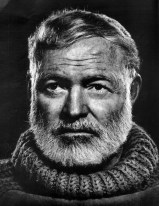 working, as confident as van Gogh and became one of the most popular American writers of his era. Ernest Hemingway said that at the beginning of his career every day “the rejected manuscripts would come through the slot in the door…I’d sit at that old wooden table and read one of those cold slips that had been attached to a story I had loved and worked on very hard and believed in, and I couldn’t help crying.” But he had faith that eventually his work would be in demand and never stopped working. The crowning achievement was the Nobel Prize in Literature.
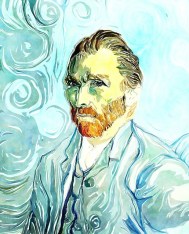
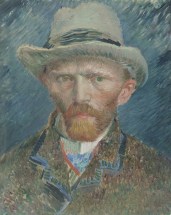 Vincent van Gogh spent a short, intense five-year career producing an astonishing three thousand masterpieces that are now auctioned for many millions of dollars, but in his lifetime sold only one painting, and that was for a few brushes and paints. But he continued working confidently and never doubted that in the future his talents would be recognized
The persistent hard work of an ever-confident van Gogh, a Saroyan, and a Hemingway and other writers and artists like them–the refusal to accept defeat–is an antidote to failures in the arts.
American Henry Miller lived the life of a homeless beggar on the streets of Paris while trying to learn to write professionally, artfully. He was penniless and had no permanent address, no possessions but a comb and hair brush, no successes, and no prospects. Yet he was optimistic. He said, “I have no money, no resources, and no hope. I am the happiest man alive.” He lived that way into his late forties before his genius was recognized and he took the literary world by storm, writing a new kind of fiction. He was tough and street-smart. Being abused by an editor he snarled, “Who are these shits? Where do they get off saying such things to me?”
Acquiring Needed Insights and Strategies
In spite of inequities among writers and artists (“Why is she so successful when I am not?”) and the emotions discouragement causes–the anger, the bitterness, the scourge of self-doubt and shattered confidence, the devastation of failure, the sense of inadequacy–some people in the arts such as van Gogh, Saroyan, Hemingway, and Miller take a deep breath, regain their composure, and imperturbable, resume their heroic efforts, trying again, following the philosophy of resilience, of being knocked down seven times but getting up eight. However, some other writers and artists who are just as intelligent, just as gifted, just as aspiring, but not as resilient are tormented and creatively disabled. They may never recover unless they acquire new insights and corrective strategies of the type I’m discussing.
The More Persistent You Are the Better Off You Will Be
 In every era, in creative after creative, three empowering qualities like three ingredients of a potent formula have proven to help writers and artists not to give up when they fail. Those qualities are being resilient, being persistent, and having faith in yourself. Resilient, persistent writers and artists with strong faith in themselves never give up.
Without a deep, enduring, never-defeated faith in yourself you may give up at the very moment you should brace yourself, focus more clearly, and work harder. Often unsuccessful people are those who have fallen just a little short of their goals because they failed to persist for three months longer, or two, or even a week. They lost faith in themselves when they met adversity and didn’t realize how close they were to success, acclaim, and satisfaction. Have you ever given up too soon? What if you hadn’t?
 Faith in yourself touches every facet of your being–whether you think about your prospects positively or in a self-defeating way, how strongly you motivate yourself, your susceptibility to self-doubt and discouragement, and the positive changes you will be able to make in your life.
You must always strive to overcome the paralyzing sense that your efforts are futile. You must have enduring faith in yourself and not permit anything to interfere with it. Having faith in yourself, being resilient, and being persistent are cornerstones of success and fulfillment whatever your art.
Make the word “Persist” your motto, your rallying word. Whenever you are thinking of giving up your work, your career, say the word “Persist.” Whenever you think “It’s just too much for me. I can’t continue,” say “Persist.” Say “Persist” if your submitted work is rejected. “Persist, don’t give up. Try again.” And when you are losing heart, losing confidence say, “I have faith in myself.” Persist and have faith in yourself. “I will persist and finish my novel, and it will be the best I can do.” Then you will be strong.
Many psychologists believe that whatever the field or the activity the most intelligent person–the person with the highest I. Q.–will be the most  successful. Catherine Cox studied greatness and disagreed. She found that persistence is a key. Persistence is so important in almost every endeavor that it compensates for lesser intelligence. Cox concluded: “High but not the highest intelligence, combined with the greatest degree of persistence will achieve greater eminence than the highest degree of intelligence with somewhat less persistence. “
Many writers, artists, composers, musicians, actors, ballet dancers, and other creatives have learned that their persistence has been more important than talent.
If you want a successful future in the arts, you will never think of yourself as a failure or give up if you don’t succeed. You will be level-headed and do your best to respond calmly with composure and confidence to setbacks, difficult periods, insults, abuses, deprivation and failures–bravely, with hope, courage, and positive thinking. In the most despairing moments of your career you will think, “It’s bad, but my goodness, it’s not that bad. I’m not dead and I’m still very talented.”
© 2022 David J. Rogers
For my interview from the international teleconference with Ben Dean about Fighting to Win, click the following link:
Interview with David J. Rogers
Order Fighting to Win: Samurai Techniques for Your Work and Life eBook by David J. Rogers

Click on book image to order from Amazon.com
or
http://www.barnesandnoble.com/w/fighting-to-win-samurai-techniques-for-your-work-and-life-david-rogers/1119303640?ean=2940149174379
Order Waging Business Warfare: Lessons From the Military Masters in Achieving Competitive Superiority

Click on book image to order from Amazon.com
or
http://www.barnesandnoble.com/w/waging-business-warfare-lessons-from-the-military-masters-in-achieving-competetive-superiority-revised-edition-david-rogers/1119079991?ean=2940149284030
Follow my blog with Bloglovin
 heart and they write about in one form or another time and again. What had occurred in the writer’s life before age twenty-one is the period of their life where most good writers find their richest material. Writer after writer reports that. Exceptional writers have exceptional memories. Their talent to evoke from their memories in exact detail written images of the places, people, and events they recall is remarkable. Artists too may have extraordinary memories and paint visual images of them.


 Psychologists classify people in categories according to their personality traits. Yet they cannot measure
  I was excited waking up at 3:00 A.M. yesterday, and I was not thinking of going back to sleep. I wanted to finish some poems where I had left off the night before. I thought, “Let my wife–a calmer, less excitable person–sleep; I
  Intense writers and artists do everything intensely–experiencing, feeling, thinking, and imagining. They are significantly different human beings from other writers and artists (and agents and family members and co-workers) who are not intense. They feel their emotions strongly. They soar high with elevated emotions, and they plunge into dark
  Intensity is a quality found in many creative people that facilitates artistic pursuits. Abbe Dimnet said that the creator’s intensity will be reflected in the quality of the work: “The experience of most artists is that the quality of their production is in keeping with the intensity of their wish.” Henry James wrote: “It is art that makes life, makes intensity, makes importance.” Horace said, “Painters and poets alike have always had license to dare anything.” It is their intensity that gives them strength. Keats said, “The excellency of every art is its intensity “ A problem every writer and artist faces is maintaining in every phase of their story or painting the intensity that keeps it going and energizes the creator’s every gesture and the work’s every detail. They must be able to generate and sustain intensity as they work.
 Who could be more intense than poet Walt Whitman who expressed a wish to have “one hour of madness and joy,” “to feed the remainder of life with one hour of fullness and freedom,” “To have the feeling today or any day I am sufficient as I am.” Who more intense than novelists Charles Dickens with his phenomenal storehouse of drive that enabled him to work on a multiplicity of books, speeches, plays, travels, and social projects at the same time without ever tiring?

 Monet was the most renowned and most influential pioneer of Impressionism–the giant of Impressionism. Painting out of doors, Monet devoted his life to creating new ways of capturing light’s changeable qualities on canvas. A 12:00 p.m. sunlight is not the same as a 4:00 p.m. sunlight, or even a 12:05 sunlight or 12:10 sunlight. Early evening sunlight is similar to but, different from morning sunlight. The suns of one month are different from the suns of every other month. Such facts filled Monet’s thoughts.


 Monet became obsessed with the sculptured shape of haystacks and with the dramatic contrasts of light and shade inherent in their form. The haystack paintings were a great success and led Monet to a more elaborate analysis of the effects of light on objects.
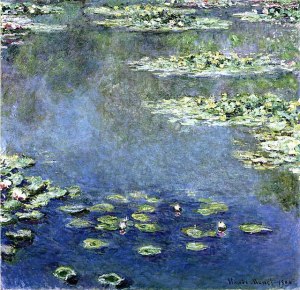 Monet gradually transformed his art from painting spontaneous approximations of the effects of light and atmosphere to an art of abstract surfaces existing for themselves. The focus of his art became the surface of pools and areas where the balance of water, light, air and the delicate substance of blossoms co-mingled, echoed each other, crossed on another’s boundaries, and blended together so that there was no difference between them. His last works were a series of large decorative panels in which the forms of nature are difficult to distinguish.
 If the water lilies are thought of as real-life water lilies they become a great disorderly mass of arbitrary color. But if the water lilies are considered abstract arrangements of color applied in careful strokes they coalesce meaningfully.
 Writers and artists throughout history have feared and hated rejections of their work.
 Each rejection compounds the effects of the previous rejections and can lead writers and artists from heights of blissful optimism to the total disappearance of confidence. Yet without
  respond when editors reject their work, and there it was, the questions “What is winning? Is winning the only thing that matters? Is getting published the only thing that matters? Is that the only credential that makes you a significant literary person?”
 I remember once learning that a publishing house I was interested in submitting to typically received 5,000 unsolicited manuscripts a year. Less than seventy would be published. What about those thousands of disappointed writers? I’m sure they had worked very hard and had high hopes. But their hopes would be shattered. Are they to conceive of themselves as failures? Are they supposed to give up hope of ever being successful?
 You are winning and not failing when you are persistent in spite of setbacks, are able to recover quickly, and are resilient.
 You are winning and not failing when you are
  Those are the ways you are really winning even during those times when it feels like you are not.
 Whether you find creative people in remote little mountain kingdoms accessible only by mule or in big, modern, cosmopolitan cities, you will discover that they are surprisingly alike. The many traits they share are not all favorable; some are obstacles. Yet those traits–the worst and the best together–prepare creative people for fascinating lives other people look at with admiration and envy.
 May be “overlooked” as school children. Their talents unrecognized, they may have undistinguished elementary and high school careers, only to be recognized for their significant achievements later in life to the surprise of everyone.
 Sadly, at times may be too emotionally ill to work, particularly poets and writers who may be victims of the high and inexplicable incidence of debilitating
  Have an insatiable need to
  “Know who they are.” Are marked by a clear, unambiguous sense of identity, as “I am an historical novelist specializing in women’s roles in England during the Victorian era.”
 Can be playful, child-like, humorous, silly, fun to be with, and seem younger than their age.
 Benefit from a rare a
 For survival must become skilled at overcoming obstacles, of which there are many in the arts.
 painter. The storm buffeting the windows and pelting them with hail and snow made impossible even the thought of digging cars out and driving home. But everyone was in a good mood, and the house was warm. We were happy being together again after being separated so long by COVID.
 accomplished people in the arts have wondered what they have that makes their creative work possible. The main quality anyone must possess if they are trying to be successful in anything, not just the arts, but certainly the arts, I feel, is energy.
  “Painters, writers, actors, and dancers enter the world talented. From the beginning of their lives they can draw better than other children or write more interesting compositions, act out scenes more skillfully, dance more gracefully. Just look at the lovely paintings some little children can paint and the poems they can write. Some children are too young to have learned to paint, yet they paint wonderfully and have technique. No one has taught them. They can paint superbly before being taught. When they are being taught they absorb information so quickly, it’s astonishing. That’s the definition of talent.
 “I think that
  The storm still didn’t look so good, so they stayed the night. In the morning Paul insisted on making breakfast. I made coffee. We vowed to get together again soon. Then in early afternoon a bright sun came out, the winds died, and they left for home where work and many challenges were waiting.


 davidjrogersftw