Examples of a Writer’s and an Artist’s Adversity:
A Painter
You’re in the arts–you’re imaginative–so imagine that you are like an artist friend of mine named Ariel and you have worked very hard and  have finished a painting that in your judgment is excellent in every respect. Like Ariel you are trained and educated in your craft and recognize your paintings’ consistently high quality and dazzling originality. You know you can’t do better. You feel that no one but you could have executed this project. It required blending many abilities not every painter possesses. You see in your painting, as Ariel saw in hers, something especially flamboyant and fetching. Your hopes for its artistic and financial success are high.
But in the marketplace the work is ignored without a word. Paintings that you know are lower quality are praised and sold for impressive prices. Your work is considered a failure, your reputation tarnished. You are as discouraged as deeply as you have ever been, heart-broken, feeling cursed, dejected, doubting that the experience of being content–that glow of the heart–that conviction of strength you remember–will ever come back again. You lose your appetite for the artist’s life. You have had enough and like Ariel you give up.
Were you to enter Ariel’s apartment and walk down the hall you would find that painting on an easel in an unused bedroom close to the kitchen.
An Author
Now imagine that you are an author with a new contract with a big advance and the publisher–highly regarded in publishing–is ecstatic about  your book. She recognizes its significant sales potential. She calls you In Chicago from New York and says that your book is one of the two or three best books of any type she has ever read. She is entranced with the book and pledges to you to commit to “putting it over” whatever resources are necessary to make it the country’s top best seller (The book is topical and has that kind of potential.) You call your agent and ask him about the publisher reputation and he tells you that they are known for selecting one of their titles each year and making it the kind of best seller the publisher described.
Meetings are held, marketing plans laid, enthusiasm grows. But then like a curse you only read about, the very day–the very hour–you are scheduled to begin a long multi-city cross-country promotional tour to kick off the marketing campaign, you are called and told that the publishing house has been sold to a foreign-owned publisher who is not enthusiastic about your book and the marketing money and plan are abandoned. The cab to take you to the airport is outside waiting and you go out and cancel it.
All the plans are canceled and the dreams of being famous and rich are canceled too. You think, “It is no one’s fault. It could have happened to anyone.” But how dreary it is to fall unprepared from the heights of elation to the depths of sullen moods. (What you just read is not a case study I made up: it happened to me.)
Develop the Ability to “Spring Back”
During a career writers and artists who often are particularly sensitive people may encounter many adversities and hurtful failures. Being  resilient means first of all accepting such adversities and those you have experienced yourself as an unavoidable part of the writer’s and artist’s life. That insight deeply-felt and never forgotten is essential for maintaining a firm, unshakeable spirit.
The word “resilient” means “to spring back,” the way Ernest Hemingway was forced to spring back when his wife lost the only drafts of all his short stories on a train and he had to begin writing them all over again. A painter needs to “spring back” when a prospect turns down a high-priced painting they had expressed a very strong interest in, but inexplicably changed their mind.
If you are a writer or artist–actor, composer, ballet dancer, musician, etc.– you have the advantage of a much larger tolerance for suffering than the majority of people. Make use of that advantage. Hardships, though they are difficult to bear and may create many stresses, strengthen the development of resilience. Helen Keller was a disabilities rights activist, author, and lecturer who lived her life in total blindness. She said “character cannot be developed in ease and quiet. Only through experiences of trial and suffering can the soul be strengthened, ambition inspired, and success achieved.”
The lives of people in the arts aren’t easy. For example, their lives confront them with many competitions when they must prove their worth: will my manuscript have a chance among the thousands of others submitted to that publisher? Will my lithographs make an impression at the show? And when there are competitions the majority are going to fail. If you fail, will you make a comeback? Not everyone makes a comeback.
Metaphorically Be a Body-Builder
A body-builder’s goal is to build muscle. When heavy weights are being lifted, the fibers in the muscles are broken down. Then during the  period the body-builder rests, those muscles are rebuilt, but bigger and stronger than they had been. Don’t be so afraid of hardships, stresses, difficulties, and crises. They strengthen you emotionally, spiritually, and mentally.
A knowledge of yourself and willingness to experiment with life changes and new directions will enhance your resilience. Some writers and artists are innately resilient and psychologically strong; others are not. But less-resilient writers and artists can learn to be stronger and more resilient. Begin by being self-encouraging. Tell yourself, “Don’t weaken. Be strong. This all will pass.”
Poet John Berryman thought ordeals are very positive things. He said, “I do strongly feel that among the great pieces of luck for high achievement is ordeal. Certain great artists can make out without it…but mostly you need ordeal…Beethoven’s deafness, Goya’s deafness, Milton’s blindness, that kind of thing.” Harsh difficulties enhance your ability to thrive under stress. They can improve your performance, stamina, and mental health.
Adversities can be positive, leading to the discovery of unknown strengths. Crises can change a novelist or water- colorist for the better. Hope and optimism strengthen you. Deeply-held spiritual beliefs strengthen you. Making tough decisions under pressure also makes you stronger.
Another Painter and Three More Authors Who Failed But Did Not Give Up
Creative people are susceptible to trials and suffering. One especially trying period is getting recognized at the beginning of your career. William Saroyan received not just fifty or a few hundred rejection slips before his first story was published, but several thousand. But he continued 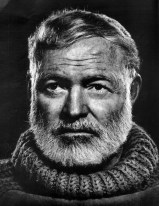 working, as confident as van Gogh and became one of the most popular American writers of his era. Ernest Hemingway said that at the beginning of his career every day “the rejected manuscripts would come through the slot in the door…I’d sit at that old wooden table and read one of those cold slips that had been attached to a story I had loved and worked on very hard and believed in, and I couldn’t help crying.” But he had faith that eventually his work would be in demand and never stopped working. The crowning achievement was the Nobel Prize in Literature.
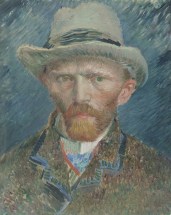 Vincent van Gogh spent a short, intense five-year career producing an astonishing three thousand masterpieces that are now auctioned for many millions of dollars, but in his lifetime sold only one painting, and that was for a few brushes and paints. But he continued working confidently and never doubted that in the future his talents would be recognized
The persistent hard work of an ever-confident van Gogh, a Saroyan, and a Hemingway and other writers and artists like them–the refusal to accept defeat–is an antidote to failures in the arts.
American Henry Miller lived the life of a homeless beggar on the streets of Paris while trying to learn to write professionally, artfully. He was penniless and had no permanent address, no possessions but a comb and hair brush, no successes, and no prospects. Yet he was optimistic. He said, “I have no money, no resources, and no hope. I am the happiest man alive.” He lived that way into his late forties before his genius was recognized and he took the literary world by storm, writing a new kind of fiction. He was tough and street-smart. Being abused by an editor he snarled, “Who are these shits? Where do they get off saying such things to me?”
Acquiring Needed Insights and Strategies
In spite of inequities among writers and artists (“Why is she so successful when I am not?”) and the emotions discouragement causes–the anger, the bitterness, the scourge of self-doubt and shattered confidence, the devastation of failure, the sense of inadequacy–some people in the arts such as van Gogh, Saroyan, Hemingway, and Miller take a deep breath, regain their composure, and imperturbable, resume their heroic efforts, trying again, following the philosophy of resilience, of being knocked down seven times but getting up eight. However, some other writers and artists who are just as intelligent, just as gifted, just as aspiring, but not as resilient are tormented and creatively disabled. They may never recover unless they acquire new insights and corrective strategies of the type I’m discussing.
The More Persistent You Are the Better Off You Will Be
 In every era, in creative after creative, three empowering qualities like three ingredients of a potent formula have proven to help writers and artists not to give up when they fail. Those qualities are being resilient, being persistent, and having faith in yourself. Resilient, persistent writers and artists with strong faith in themselves never give up.
Without a deep, enduring, never-defeated faith in yourself you may give up at the very moment you should brace yourself, focus more clearly, and work harder. Often unsuccessful people are those who have fallen just a little short of their goals because they failed to persist for three months longer, or two, or even a week. They lost faith in themselves when they met adversity and didn’t realize how close they were to success, acclaim, and satisfaction. Have you ever given up too soon? What if you hadn’t?
 Faith in yourself touches every facet of your being–whether you think about your prospects positively or in a self-defeating way, how strongly you motivate yourself, your susceptibility to self-doubt and discouragement, and the positive changes you will be able to make in your life.
You must always strive to overcome the paralyzing sense that your efforts are futile. You must have enduring faith in yourself and not permit anything to interfere with it. Having faith in yourself, being resilient, and being persistent are cornerstones of success and fulfillment whatever your art.
Make the word “Persist” your motto, your rallying word. Whenever you are thinking of giving up your work, your career, say the word “Persist.” Whenever you think “It’s just too much for me. I can’t continue,” say “Persist.” Say “Persist” if your submitted work is rejected. “Persist, don’t give up. Try again.” And when you are losing heart, losing confidence say, “I have faith in myself.” Persist and have faith in yourself. “I will persist and finish my novel, and it will be the best I can do.” Then you will be strong.
Many psychologists believe that whatever the field or the activity the most intelligent person–the person with the highest I. Q.–will be the most  successful. Catherine Cox studied greatness and disagreed. She found that persistence is a key. Persistence is so important in almost every endeavor that it compensates for lesser intelligence. Cox concluded: “High but not the highest intelligence, combined with the greatest degree of persistence will achieve greater eminence than the highest degree of intelligence with somewhat less persistence. “
Many writers, artists, composers, musicians, actors, ballet dancers, and other creatives have learned that their persistence has been more important than talent.
If you want a successful future in the arts, you will never think of yourself as a failure or give up if you don’t succeed. You will be level-headed and do your best to respond calmly with composure and confidence to setbacks, difficult periods, insults, abuses, deprivation and failures–bravely, with hope, courage, and positive thinking. In the most despairing moments of your career you will think, “It’s bad, but my goodness, it’s not that bad. I’m not dead and I’m still very talented.”
© 2022 David J. Rogers
For my interview from the international teleconference with Ben Dean about Fighting to Win, click the following link:
Order Fighting to Win: Samurai Techniques for Your Work and Life eBook by David J. Rogers

Click on book image to order from Amazon.com
or
Order Waging Business Warfare: Lessons From the Military Masters in Achieving Competitive Superiority

Click on book image to order from Amazon.com
or
 focus on a system to improve your creative performance is to be aware of what you are trying to accomplish–with your life, and in this year, this day, this moment. When you acquire the habit of saying to yourself often in your daily life–morning, noon, and night–“Focus on your purpose,” those words become a hypnotic motto that stirs your muscles and mind to action. Then your life takes on a quality that is now becoming rare even among gifted creators–vital intensity that facilitates the production of works that can be pointed to and admired. That single goal–producing works as a result of talent combined with discipline–is more powerful than all other creative goals.
 that specialty. And you must
  free of suffering are the goal in Buddhism. The Buddhist Eightfold Path consists of eight ideals that when practiced bring an upright and happy life. They are eight prescriptive “rights,” including right association–being careful about associating with good, wholesome, even holy people; right intent–making up your mind as to the one main purpose in life you really want to pursue; right speech–no lying, backbiting, or slander; right thoughts–thinking compassionately, generously, and with goodwill; right conduct–not killing, stealing, or lying; right effort–using your will power and taking action to achieve a good life; right concentration–the use of techniques to enhance concentration and enlightenment. And there is right livelihood–doing what you’re best suited to do in an honest occupation that harms no one.
 Success in a creative field (in fact success in any field) is not attributable to one thing alone such as talent or IQ as many people believe, or three or four things. I believe there are eight components. It’s important to understand what the eight components are and the questions they will answer:
 their creative lives by means of the work they do. If they are unable to work or the work is poor quality or is stopped-up and doesn’t go well, they suffer. Regarding the necessity of a creator to
  There isn’t one universal work/production program that suits all creators. A production program won’t work if it’s imposed. Each creator’s program will have to be idiosyncratic–custom-designed by yourself for yourself. To find the ways and means to improve the quantity and quality of your production, you should experiment and try out different approaches until the best work/production program suited to yourself is found.
 For high quality uninterrupted work to happen, not all, but most creators need isolation and solitude. “The concentration of writing requires silence. For me, large blocks of silence. It’s like hearing a faint Morse code…a faint signal is being given and I need quiet to pick it up” (Philip Roth). Some creators prefer noisy environments. But even the feeling that you might be interrupted interferes with creative thought.
 production goals continuously in mind. Production ebbs and flows. Some days work comes out of you in torrents. You’re in overdrive. But other days–nothing. But one way or another,
  A curious thing would happen. The quantity group would also produce the highest quality work. The quantity group would churn out streams of work and learn from their many mistakes and develop wide assortment of skills. But the quality group would get caught up the elusive concept of perfection and grandiose dreams and would become paralyzed. Some creators produce 10, 15, or 25 times more works than other creators. Those who produce the most works usually rise higher, do better work, and find a greater sense of accomplishment.
 If you neglect an activity for just two days you’ll function much less effectively when you resume work. In writing and painting, as in everything else, inactivity leads to the atrophy of abilities. Your level of motivation affects your willingness to work. The quantity of your production is in direct proportion to the intensity of your
  Buddhism sets up qualities a life must have if the person is to find fulfillment. One quality is “Right Livelihood:” To be most fulfilled the person must be in the occupation that most suits them and is most beneficial to them. My wife and I have four children. Each is very different than the others but is perfect for their occupation. The analytical one who loves mathematics is the director of revenue for a city. The organized one manages a number of people. The one who wants to help people is a therapist. The most sociable one is a real estate agent helping people find the home they will be most happy in.
 All necessary components have to be present if you are to excel at the writer’s craft. If just one component is missing, you no longer have an ideal writer. If you are to succeed in an art there must be a fit between the talent you possess and the talent necessary to participate with distinction in the art.
 Writers and other artists should be able to recall many thousands of detailed memories that form a basis of their writings–a gift to recall sensations and experiences from many years earlier and to reconstruct them in their original freshness and vividness.
 Good writers can do that, but not all writers can, even some writers who work very hard trying to learn how to. Think of any writer’s skill–some people will master it easily, some only with great difficulty, and some will never master it. Whatever they do, some writers’ scenes are not effective.
 A writer should have an insatiable passion to write and the skill of persistence. Joyce Carol Oates is a prolific author of fifty-eight novels for a reason. She has good writing practices, and finds no reason why one who professes to be a writer shouldn’t be writing all the time. She says, “When writing goes painfully, when it’s hideously difficult, and one feels real despair (ah, the despair, silly as it is, is real!)–then naturally one ought to continue with the work; it would be cowardly to retreat. But when writing goes smoothly–why then one certainly should keep on working, since it would be stupid to stop. Consequently one is always writing or should be writing.”














 davidjrogersftw