Tag Archives: Writing

Motivating Quotes for Writers and Artists


  • “Painters and poets alike have always had license to dare anything.” (Horace)
  • “The incurable itch of writing possesses many.” (Juvenal)
  • “He is the greatest artist who has embodied, in the sum of his work, the greatest number of the greatest ideas.” (John Ruskin.)
  • “The excellency of every art is its intensity.” (John Keats)
  • “Great artists need great clients.” (Artist I.M. Pei.)
  • “It seems to me that the writers who have the power of revelation are just those who, in some particular part of life, have seen or felt considerably more than the average run of intelligent beings…The great difference, intellectually speaking, between one man and another is simply the number of things they can see in a given cubic yard of the world.” (Gilbert Murray.)
  • “High but not the highest intelligence, combined with the greatest degree of persistence will achieve greater eminence than the highest degree of intelligence with somewhat less persistence.” (Catherine Cox.)
  • “I think if you’re going to write, you’re going to write and nothing will stop you.” (William Faulkner.)
  • “It is the nature of man to rise to greatness if greatness is expected of him.” (John Steinbeck.)
  • “The essential factor of development of expertise is the accumulation of increasingly complex patterns in memory.” (Andreas Lehman.}
  • “Gifts like genius, I often think, means only an infinite capacity for taking pains.” (Jane E. Hopkins)
  • “Writing a book is a horrible, exhausting struggle, like a long bout of some painful illness. One would never undertake such a thing if one were not driven on by some demon one can never resist or understand.” (George Orwell)
  • “It is through art and through art only, that we realize our perfection; through art and art only that we can shield ourselves from the sordid perils of actual existence.” (Oscar Wilde)
  • “If I set out to sculpt a standing man and it becomes a lying woman I know I am making art.” (Henry Moore.)
  • “The whole function of the artist in the world is to be a seeing and feeling creature; to be an instrument of such tenderness and sensitiveness, that no shadow, no hue, no line, no instantaneous and evanescent expression of the visible things around him, nor any of the emotions they are capable of conveying to the spirit which has been given him, shall either be left unrecorded, or fade…The work of his life is two-fold only; to see, to feel.” (John Ruskin.)
  • “I am just a man in the position of waiting to see what the imagination is going to do next.”(Saul Bellow.)

Rainbow in sky with clouds above a thick row of trees and water


© 2025 David J. Rogers

For my interview from the international teleconference with Ben Dean about Fighting to Win, click the following link:

Interview with David J. Rogers


Order Fighting to Win: Samurai Techniques for Your Work and Life eBook by David J. Rogers
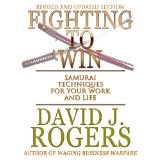
Fighting to win Amazon

Click on book image to order from Amazon.com

or

http://www.barnesandnoble.com/w/fighting-to-win-samurai-techniques-for-your-work-and-life-david-rogers/1119303640?ean=2940149174379


Order Waging Business Warfare: Lessons From the Military Masters in Achieving Competitive Superiority

Waging Business Warfare812sCY9edLL._SL1500_

Click on book image to order from Amazon.com

or

http://www.barnesandnoble.com/w/waging-business-warfare-lessons-from-the-military-masters-in-achieving-competetive-superiority-revised-edition-david-rogers/1119079991?ean=2940149284030


Follow my blog with Bloglovin


2 Comments

Filed under Artists, Creativity, Motivation, Quotations, Writers

Fame is Fleeting:  Novelist Thomas Wolfe

Introducing Thomas Wolfe

Writers are always looking for material to write about. The right material is half the job. American writer six-foot-seven-inch Thomas Wolfe (1900-1938) wrote about himself. When he wrote he strove to use everything. He wanted to put all the experiences of his life into books. He might write thousands of words about a young man waiting for a train–just waiting as he recalled having once done. Every experience had to be used; nothing could be left out, a goal that was the source of his distinctive achievements and his greatest weakness, for the immensity of his goal was an impossible ambition.

Abstract painting like clouds in orange, gold and purpleAll writers are equipped with a good memories, but Thomas Wolfe’s memory was astonishing. Because of it he was able with ease to recall events, people, and places in stunning detail. That was his strength. His weakness was an inability to restrain the deluge of words that poured out of him from evening to dawn as he wrote, or when he spoke, and he simply, despite himself, had no ability to stay within the requirements of writing a saleable novel. He had no concept of how to write such a book and needed the help of his editor, the legendary Maxwell Perkins of Scribner’s, who at the same time was the editor of Ernest Hemingway and F. Scott Fitzgerald, two other difficult clients.

The manuscripts Wolfe turned in to Perkins were of enormous lengths, twice as long to War and Peace. They required tens of thousands of words–or hundreds of thousands–being cut. But Wolfe, being told to go home and cut fifteen thousand more words, might go home and add twenty or twenty-five thousand. Wolfe would sit looking at the manuscript with no idea of what to do to shape it into a novel that could be sold at a book store. The only way Perkins could get Wolfe to stop adding words was to take the book away from him and send it to the printer without Wolfe knowing.


A Sketch of Thomas Wolfe

Thomas Wolfe was the most naïve and trusting man on earth and wanted everyone to be his friend. His belief in hard work was almost holy. He wrote all night, each night producing thousands of words on large scrolls of newsprint that he dropped on the floor for an assistant to try to paginate.

He was a big man in many ways, not just in his physical size, but in terms of his ambitions, his memory, and the intensity of his emotions. To Wolfe, the need to write–to spare no effort, to exhaust himself writing–was paramount. Whenever he was distracted from working he would fall into a black mood; then he would brood, drink, and pace New York streets all night, telephoning his friends and accusing them of betraying him.  The next day he would call them and apologize abjectly. He was governed almost wholly by his insatiable need to write.

Wolfe inherited from his father the richness, rhetoric, and music of his prose and the gusto with which he lived. His vocabulary was immense, and his ability to select from it the right word, phrase or image was, and is, unrivaled by any other writer. From his mother he acquired his enormously retentive memory and his dogged attraction to long-sustained, exhausting work.


Wolfe’s Most Important Relationships

Three relationships were most important in Wolfe’s life: with his parents, his lover Aline Bernstein, and his editor Maxwell Perkins (considered the best editor any writer ever had). Aline Bernstein, a beautiful, brilliantly successful stage designer and one of the directors of the Neighborhood Playhouse, had more charm in her little finger than most people have in their whole body. Wolfe met her in September, 1925 when he was twenty-five. She was nineteen years older at forty-four and a married woman. He wrote about her that “that woman would become his heart’s centre.”  It was love at first sight for both of them. Wolfe had been involved with other women, but Bernstein was the one great love affair of his life, and the influence she had on him was incalculably great.

Without her unwavering belief and confidence in him and her substantial financial and emotional support, he could never have written Look Homeward Angel when he did. She made it possible materially and spiritually for him to write it while he taught English at NYU. For six years she guided and transformed his life until 1931 when their affair ended bitterly. Often Wolfe’s relationships ended bitterly, for example his working relationship with Perkins–editor, confidant, adviser, creditor, and friend, the most important relationship in Perkins’ life.


A Writer’s Life Becomes More Difficult with Each Succeeding Book

After having his first book (Look Homeward Angel) successfully published, Wolfe wrote about the difficulties of each succeeding work, the travails of the life of a creative person. He wrote that the writer is alone: “At that time, among the many other things I did not know, I did not know that for a man who wants to continue with the creative life, to keep on growing and developing, this cheerful idea of happy establishment, of continuing now as one has started, is nothing but a delusion and a snare. I did not know that if a man really has in him the desire and the capacity to create, the power of further growth and further development, there can be no such thing as an easy road. I did not know that so far from having found out about writing, I had really found out almost nothing … I had made a first and simple utterance; but I did not know that each succeeding one would not only be … more difficult than the last, but  would be completely different–that with each new effort would come new desperation, the new, and old, sense of having to begin from the beginning all over again; of being face to face again with the old naked facts of self and work; of realizing again that there is no help anywhere save the help and strength that one can find within himself.”


Fame is Fleeting

Boat at the horizon with red sky and gold waterNo writer in the nineteen thirties–or even now–could write with the beauty of Thomas Wolfe’s prose. His reputation after his death suffered because of the perceived formlessness and verbiage of his writing in an age when critics preferred tight structure and economy of language–short sentences and short episodes, and highly-focused scenes rather than the volume and torrents of Wolfe’s  language.  Once considered by Nobel Prize winners William Faulkner and Sinclair Lewis to be America’s finest writer, and in the past extremely popular with readers and critics, Wolfe is now almost never read–unfortunately in my opinion, if one is interested in being inspired by the brilliance of written expression. Hard as you look, you will not find Thomas Wolfe–once thought a towering genius–in current anthologies of American literature.


© 2025 David J. Rogers

For my interview from the international teleconference with Ben Dean about Fighting to Win, click the following link:

Interview with David J. Rogers


Order Fighting to Win: Samurai Techniques for Your Work and Life eBook by David J. Rogers

Fighting to win Amazon

Click on book image to order from Amazon.com

or

http://www.barnesandnoble.com/w/fighting-to-win-samurai-techniques-for-your-work-and-life-david-rogers/1119303640?ean=2940149174379


Order Waging Business Warfare: Lessons From the Military Masters in Achieving Competitive Superiority

Waging Business Warfare812sCY9edLL._SL1500_

Click on book image to order from Amazon.com

or

http://www.barnesandnoble.com/w/waging-business-warfare-lessons-from-the-military-masters-in-achieving-competetive-superiority-revised-edition-david-rogers/1119079991?ean=2940149284030


Follow my blog with Bloglovin

2 Comments

Filed under Biographies, Intensity, Thomas Wolfe, Writers

Writers Write About Things that Happen to Them

Hourglass in front of orange cloudsGiven the gift of exceptional powers of memory, writers never forget so that they might write years later about events that compose their lives.


My Youth:

The Night Racer of My Childhood

I have not forgotten a strange boy who on summer nights
Appeared standing tall and stiff on the pedals
Of his bicycle and silently raced up and down the street
Where I lived, a puppy in a paper bag in the basket yapping.
As he rode the street an eerie train whistle blew plaintively
Although there were no tracks and no trains anywhere near.
The superstitious thought the whistle the cry of archangels.


Ice Cream Man

A bevy of children
Proffering handfuls
Of nickels and dimes
To the wizened Ice Cream
Man in exchange for
A delicious bar thickly crusted with
Brittle dark chocolate
Or nuts,
Or both.


Giant

Giants are heroes of children.
Every child would like to have
Their own giant, one who drives a car
From the back seat,
Long arms holding the steering wheel,
Long legs reaching the pedals–
A substantial giant.

When I was a boy in Chicago a giant
Sat in the seat next to mine in church
And we talked and I liked him.
He is cited in
The Guinness Book of World Records
As earth’s tallest person.

There is a replica of him
In the wax Museum in London
That I visited, and when I stood
Close to it, I seemed back years before
In church with Mr. Koehler
Towering eight feet two inches.


Childhood: A Period of Summer, Sunlight, Flowers

Morning Glories

Sitting on the window sill
Watching people
Exchanging stories
Over white and purple
Morning glories
Growing wild among clover
On the flanks of the hill


Jobs:

Public Speaker: Trippingly off the Tongue

I have come far from high school
When I was terrified to give a speech–
So full of fear.
Now I speak to audiences of thousands–
Eight thousand in Paris–and when I finish
They stand and applaud, a shy
Boy who now, a man, has no fear of public
Speaking whatsoever–no nerves –only pleasure, joy
Speaking artfully and addressing audiences that want
To know what I am thinking.
I feel I have accomplished something.


Professional Writer:

The Object in the Streetlight: A Writer’s Birth

Working so hard on abstract
Problems–being so sick of them that
My brain ached, I, troubled, anxious, going out
For a walk alone, without my lady love,
Hoping that the cool late night air
Might be therapeutic and could clear
My thinking so that I might decide
Calmly if a writer’s life could provide happiness.
Near the beds of flowers, flat on the pavement–showered
In the white light of a street lamp–was a single
Object which I picked up from the ground:
A book–of all things a book–
The symbol of the life I had been avoiding. I had to laugh.

I then felt this book I had found, which some person had lost
Or angrily thrown to the ground,
Had been purposefully intended for me
By the ineffable wisdom of the stars, by good fortune,
As a sign, a portent, a clue, a key.
And that what this epiphany of the book
Meant was that I could not escape my pre-
Appointed destiny that suited the architecture
Of my genes, the juncture of talents, gifts, desires, qualities–
Not striving to become any of the five thousand entities
Others are suited to be, but that are alien to me,
Becoming thereafter one thing alone–a being gluttonous of words,
A writer-poet-orator-essayist-teacher–a fish content,
Self-possessed, without further anguish,
Swimming in seas of language.


Business Traveler: People You Meet When You Travel For Work

Woman of the Night

If I tell you that in the hotel elevator
At two a.m. she touched my arm and said,
“I’ve been looking for you all night”
In a sweet voice and with a friendly face
You would have an idea of her lonely
Profession, but no idea what kind of
Woman she was, nor how pretty.


Flight Through a Storm

The plane seated only four passengers,
Two businessmen, a writer, and a nun.
Before we left the ground
I asked the pilot how it was “up there”
And he said “The winds are very bad”
And I knew I was being a fool and
I shouldn’t fly that day. But I was in
A hurry to get home. The plane was
Thrown about in the wind like a toy and
We were all scared. The nun was clutching
A crucifix and whispering prayers. She asked
Would I please hold her hand and promise her that
We were not going to crash. I took her hand
And promised. The winds soon died as though
They were exhausted, and we four–friends now–
Left the plane in good cheer.


Soldier: The Trains of Fort Jackson, 1965

There were long trains and some days and some hours longer still.
They came into U.S Army Fort Jackson, South Carolina round the clock,
Carrying young soldiers who were sent there to learn to fight
In the jungles of Viet Nam.  Their families lay behind them
In the cities, farms, and towns of the South. They stood at the open
Windows of the trains, the wind troubling their hair, their eyes large
With astonishment, trying to comprehend the enormity of
What they were about to face.


Family Life: Children and Their Fathers

I thought as all children think of their fathers
At that age that he was a great man. He had
Made a life out of little achievements that
Were magnificent to me–had made a paper
Weight, had painted a wagon, could change a tire.
Then he felt he had done something, and so did I,
A man who would live in anonymity, do the best he
Could, be remembered a little while and forgotten,
A father like every other.


Grocery store clerk at twelve: Lyric for Angela

At seventy-five cents per hour
I am a twelve year old
Professional bagger of cans
Of pineapples and tomatoes,
Weigher of potatoes,
Stocker of shelves
So the labels artfully frame
For the customers’ eyes
The Gerber baby,
The Scott tissues,
The orange carrots,
The vivid green peas.
When I am near Angela,
The dark-eyed store owner
Who favors me
My heart beats faster.
I cannot breathe
When I am near Angela.
As she works she sings.

Her spirit enfolds and singes me
As with hot tongs.
She smiles with
Such sweetness, gentleness,
And goodness she breaks my heart.
Her hair, her voice, her hands, her
Presence bring
A quality into my life
Which I know to be love.
My youth is purer,
My memories more
Lasting because of her.

Angela’s husband is awful
To her and treats
Her cruelly.
I vow that one day I will
Whisper to Angela,
“Why don’t you run away?”
But I fear she will not
And that after I have gone
To high school and college
And am grown up
She will still be heard
Singing in the aisles
Of this little store
Like a bird in its cage.


Adolescence: Racers

My father drives the family
To the beach, parks, and then
Says “Go,” and he and I race.
We race from the car to the sand
Where the family will happily
Spend the afternoon in the sun.
He always wins the race because
He is a racer and much older and
Stronger and faster than his son.

But I am a racer too, and through
Those years of finishing second I
Am growing stronger and faster,
And when I am fourteen I beat him.
Running that race we are even
And then I pull ahead. A strange thing
Happens:  as I approach the
Sand, I don’t want to win. I don’t want
To beat him. I slow down so that he will win again.

When we stop he says, “You needn’t slow down, son.
You are a faster racer than I am now.”
I never forget those words or that race.
I go on to win many races and set
Records, win trophies, medals, and ribbons.
I achieve more in racing than he ever did, and
Perhaps more in life than he did, but in
His prime and my youth he was
A racer who could beat me.


At the age of Seventeen riding freight trains across America with a friend for six months and writing about our adventures.

Setting Out

Nothing in this world will burden me.
Fields of crops out to the horizon.
Breathing in winds that rejuvenate like milk.
Waving to hikers come out from the city.
We can go east or west, south or north,
Not caring in the least where we are or where we are bound,
Through experiences we are not accustomed to, some dangerous,
Discovering what we are made of. We will climb onto boxcars
And jump off a thousand miles away and ride the lines with
Strangers with their lives to tell us about, relying on luck to take us
On adventures we will remember forever.


Shot at, Chased by Dogs

When our freight train reaches Longview-Kelso,
The railroad police are waiting,
Holding the leash of a German shepherd
In one hand, waving a gun in the other.
Shouting and running, we youngest, running fastest,
Hobos leap or fall from the cars and dash
In every direction, chased by the cops.
As Nick and I run we laugh at how out
Of our element we are and how ludicrous
The whole scene must appear–a hundred
Running hobos and bulls, men firing revolvers,
Other men praying not to be shot,
Ferocious dogs snapping at our heels.


Family Life: The Death of My Young Sister

Until I die I will feel the immense weight
Of grief for you, and now you are gone
I ask your forgiveness for any sadness
I ever caused through thoughtlessness or selfishness;
And wish you to know that I intended
No harm and am so terribly sorry.


Late Middle Age: Age: Going Home After Long Absence

I will go now where I grew up and visit
The people I miss the most–
My sister Sharon, my parents,
A few friends, all gone now.
I will arrive in the evening as the sun
Begins to set at the end of the street
Above the church where my father sang.
I will smell working class dinners and
Watch the night hawks circle above our chimney.
Neighbors will come home from work.
Children will put their bikes away.
I will remember my younger self running a race
To the corner by the mailbox and back.
(Whenever was I not running?)
Then I will sit on the stairs and listen
To crickets in the hedge chirping
Their praise of summer nights.


Romance, Love

“Meeting Diana”, Knowing in an Instant I Would Marry Her
I saw her across the room
And put down my book and went to meet her.
Her name, my name.
Black hair. Green eyes.
Elegant. Exquisite. Young.
The most beautiful woman on earth.


Lady With No Needs

D’elia–the self-sufficient
Lady of twenty-five–my age too–
Who has no desire for wealth
Though she is not rich,
And although the most pleasing
Rendition of a beautiful woman–
The eyes, hair, breasts, and face of a beautiful woman–
The mystic bearing and mood of a haunting woman,
Her skin’s softness and its shades, her lingering perfumes
She has no interest in applause, the stage, or film,
Which might be her professions had she wished,
But prefers a life untainted by fame,
And has:
No need of friends. Without friends she is not unhappy.
No need of a father at home in Dallas who disparages her,
No need of a husband she has no feelings for,
No need of anyone, but has never felt lonely.
She has no need of me,
But when I leave her, her lips tremble.


Greenwich Village

I saw you
Looking at me
Knowing I had
Looked at you,
No chance ever
To see you again
Or you to
Look at me again
With your enticing eyes,
You who had I
Known long ago
I would have run
My finger over
So carefully
And cupped
In my hand
Like an orchid.

Beauty Beyond Words

Whenever I see Sidney she
Steals my breath. Walking,
Her lithe body sways and
The sun shines bright on her wild, black,
Stormy-looking hair, engendering in me
A sense of her sophistication, and not coldness,
But rather inaccessibility, delicacy, refinement,
And intelligence. For that’s the impression
Women whose beauty is beyond words make
Upon me.

Unfathomable, Troubled
Unfathomable,
Troubled,
She entered
My life so
Suddenly
And I hers
That
Neither was prepared.
Three unexpected
Years together
Seemed a moment.


Pretty Ballerina

You danced
For me alone
So beautifully
Pretty ballerina.
Would you
Dance for me
Again
Were I to ask?


In the Company of the Most Beautiful Girl

We stopped for coffee one night in a little café
Up in North Platte, Nebraska. Outside it was
Cold and gray. We went inside, out of the rain,
And sat at the counter and waited for service. In a few minutes
We saw the kitchen door swing open and a waitress
About our age come out. She poured our coffee
Carefully, biting her lower lip, her finger on the top
Of the pot, not looking at us, and our eyes large,
We watched her closely. She had long, lovely-shaded
Amber-colored hair that flowed like oil and tossed from
Side to side. She smiled so gently, so exquisitely, that
I was numb. It was my opinion that she was the most
Beautiful girl we had ever seen in our lives and Nick
Agreed.

We stayed as long as we could just to look at her and
Be around her. When we paid up and left at closing time
We said goodbye to her, regretting we would never see
Her again, and she blushed and smiled at us in a friendly
Way, her eyes bright. We were warmed by the sincerity
With which she said, “Good luck, boys.” The thought of
Her would make us happy for a long time.


© 2024 David J. Rogers

For my interview from the international teleconference with Ben Dean about Fighting to Win, click the following link:

Interview with David J. Rogers


Order Fighting to Win: Samurai Techniques for Your Work and Life eBook by David J. Rogers

Fighting to win Amazon

Click on book image to order from Amazon.com

or

http://www.barnesandnoble.com/w/fighting-to-win-samurai-techniques-for-your-work-and-life-david-rogers/1119303640?ean=2940149174379


Order Waging Business Warfare: Lessons From the Military Masters in Achieving Competitive Superiority
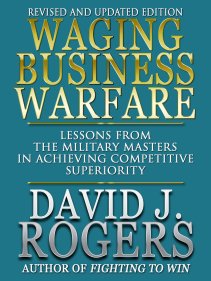
Waging Business Warfare812sCY9edLL._SL1500_

Click on book image to order from Amazon.com

or

http://www.barnesandnoble.com/w/waging-business-warfare-lessons-from-the-military-masters-in-achieving-competetive-superiority-revised-edition-david-rogers/1119079991?ean=2940149284030


Follow my blog with Bloglovin

5 Comments

Filed under Memoir Writing, Personal Stories, Poetry, Writers' Life

What is Image-Based Writing?

What is image-based writing and why is it effective?

With writing that is image-based the images in the narrative or poem have a starring role, and the chief skill of the writer is creating images. The writer needs a mind that thinks in images. Without vivid image-based writing, texts are lifeless, bland, dull. They don’t seem real and lack vitality. They seem to be business reports, not literature. With image-based writing, texts spring to life. Fill your writing with images.

Practice to develop the skill of image-making. With vivid image-based writing, readers believe that characters are made of flesh and blood and what they are doing really happened. The world of your physical descriptions is real and has three dimensions. That is what you are trying to have your readers believe–and you had better do it quickly, within the first paragraph.

Here are samples of image-based writing from David J. Rogers, author of the popular post “Imagery in the Arts.


Indian Summer Picnic

A sparrow flutters its wings just above the grass,
Squirrels shimmy up trees, a gopher pokes
Its head curiously out of a hole. The sunlight gives
The landscape a coppery hue. The sky grows dark
And threatening, and the clouds turn black.
The breeze has become surges of wind that spin leaves
In the air and drop them ten feet away. Everyone
Hurries to clear off the tables and take everything inside,
Everyone rushes around gleefully, pitching in, doing their share.

They snatch things up, and as they dash for the house
Raindrops the size of pebbles fall and soon the leaves on the
Ground are saturated. What an afternoon–
How fresh, as if floating on a pond–the dark sky,
The farm, the trees, and the people during the flight of
This passing moment.


Woman on a Hill Overlooking a Lake

As she walked
Her lithe body swayed and
The sun shone bright on her wild,
Stormy-looking hair, engendering in me
A sense of her sophistication, and not coldness,
But rather inaccessibility, delicacy, refinement,
And intelligence. For that’s the impression
Women whose beauty is beyond words make.


Welsh Men, English Woman

The men in that Welsh-American family smiled appropriately,
Frowned sympathetically, and looked as grave
As morticians at times, puckering their foreheads,
Pursing their lips, and pouting. Not for a single
Instant were they amazed, puzzled, or unsure
Of themselves, and their voices were firm.
They stood so erect, so confidently, as they talked
So earnestly, straight as if braced by rods, as though
What they were saying were unassailable truth
And could not be doubted but by a nitwit.

Or they stood nonchalantly and slack, their hips shifted to
The left or right, with nothing other between their
Hair and shoes than supreme, unshakeable
Self-assurance. But the English woman was alone against
A tree like a twig that could easily be broken in two or
An object on display to anyone who had a desire to
Stare–a scarecrow staked deep into the ground,
Impossible to budge.


Hints of Winter

The previous week’s frost wilted
And turned brown many of the flowers in the beds, but those
That are still alive are bright and straight. The farther back
You go in the yard, the stronger are the fragrances that
Come from all sides. Across the grass, close to the house,
A sprinkling of white and purple dresses the tops of
Oleander bushes.

The sun sheds light in patches on the grass.
Beside the barn, as if kneeling, is a gnarled and bent tree and
Farther away other straighter trees whose leaves are changing.
I can smell the green leaves and the dry leaves, the young
Leaves, and the old leaves that give hints of winter.


Then and Now

Chicago’s Sheridan Road ran parallel to Lake Michigan, as it does today, and when you walked down it in those days you heard the sounds of the traffic mingling with the lapping of the waves on the beaches. From the beaches on clear days you could see on the horizon’s edge the western shore of Michigan to the east, and out on the lake low in the water turgidly-moving barges carrying heavy loads of ore down from Minnesota to the steel mills of northern Indiana. On certain afternoons in July and August the sun bore down on the sand so intensely that it was painful to walk on it, so mothers and fathers with feet on fire dashed to and from the tumbling waves carrying their squealing children tight in their arms.

One by one the beaches were filled in and all the great industrialists’ mansions with ample lawns that lined the street were torn down and replaced by closely-packed towering apartment buildings with hundreds of balconies which were far more impressive architecturally, but far less beautiful. Few people remember the mansions or the beaches, but most believe that the high-rises have stood there forever. Now when you walk down Sheridan Road the traffic is so heavy and the water so far away behind the buildings that you can no longer hear the waves.


© 2024 David J. Rogers

For my interview from the international teleconference with Ben Dean about Fighting to Win, click the following link:

Interview with David J. Rogers


Order Fighting to Win: Samurai Techniques for Your Work and Life eBook by David J. Rogers

Fighting to win Amazon

Click on book image to order from Amazon.com

or

http://www.barnesandnoble.com/w/fighting-to-win-samurai-techniques-for-your-work-and-life-david-rogers/1119303640?ean=2940149174379


Order Waging Business Warfare: Lessons From the Military Masters in Achieving Competitive Superiority

Waging Business Warfare812sCY9edLL._SL1500_

Click on book image to order from Amazon.com

or

http://www.barnesandnoble.com/w/waging-business-warfare-lessons-from-the-military-masters-in-achieving-competetive-superiority-revised-edition-david-rogers/1119079991?ean=2940149284030


Follow my blog with Bloglovin

2 Comments

Filed under Creativity, Imagery in the Arts, Writing, Writing improvement, Writing models

Why Your Life as a Writer Creates Conflicts

Stick figure in black leaning on a desk stacked with books Writing is a time-consuming process of self-discovery, self-awareness, and self-expression that may satisfy a writer’s deepest needs. Some writers find that nothing can compete with, nothing can replace, the writer’s joy of creating.  Many writers so saturate themselves with their work that it becomes a need as strong as sleep, sometimes stronger. Many writers think, “This writing that I am doing is essential to my fulfillment and well-being. At times I may be so involved I will forget to eat. I will forget to make love. I will block out distractions. I will arrange a life-style and personal habits and routines to accommodate my writing.”

But writers have other roles too. And this fact creates conflicts. Psychiatrist Carl Gustav Jung thought that the artist’s life cannot be otherwise than full of conflicts because two forces are at war in them—on the one hand the normal human longing for happiness, satisfaction, and security, and on the other hand “a ruthless passion for creation which may go so far as to override every personal desire.” That passion for creation absorbs almost all the artist’s energy: “A special ability means a heavy expenditure of energy in a particular direction with a consequent drain from some other side of life.” The artist’s work “means more to him than his personal fate, whether he is aware of it or not. Being essentially the instrument for his work, he is subordinate to it.” (Carl Gustav Jung, “Psychology and Literature’ in Brewster Ghiselin, ed. The Creative Process).

In Silences, Tillie Olsen points out that delaying a focus on writing for a long time during a period in your life may become a habit: “The habits of a lifetime when everything else had to come before writing are not easily broken, even when circumstances now often make it possible for writing to be first; habits of years—response to others, distractibility, responsibility of daily matters—stay with you, mark you, become you” (Tillie Olsen, Silences, p. 38). If you desire to be a serious writer, these habits of letting other things come first create conflicts.

Open laptop with a plant, cup, and cellphone next to itSome writers do consider writing the most important role in their life and give other roles short shrift. Many writers would agree with Katherine Anne Porter who said that the “thing” between her and writing was the strongest bond she had ever had—stronger than any bond she had ever had with any person or activity. A survey showed that writers and poets are considered highly desirable occupations for a mate. But many are so consumed by writing, and work such long hours in such solitude, that they may make poor spouses. Nobel Prize winner Saul Bellow—married five times–said, “I have always put the requirements of what I was writing first—before jobs, before children, before any material or practical interest, and if I discover that anything interferes with what I’m doing, I chuck it. Perhaps this is foolish, but it has been the case with me.” (Saul Bellow in Conversations with Saul Bellow, p. 20)

Others consider writing enjoyable, but not nearly their most important role. Being an actively involved parent–a time-consuming function–can take precedence. Some writers think during the day about when they’ll have all the time to write whenever they want, but because they have other roles to fulfill, they consider themselves lucky if they can write at all. Married women writers especially testify to the difficulty of finding the time and support needed to have a successful writing career while also possibly holding another job and managing a family.

Hourglass next to a checklistHere it seems appropriate to talk about my Law of Give Up to Get. The Law of Give Up to Get means simply that to get something important in life, you must give up something else. Gripe all you want, rail at the gods, and wish it weren’t so, but you have no choice. In the long run, perhaps you can have everything you desire. But at any one time, to get A you’ll have to give up B. To get X you must give up Y,  and maybe you might have to give up Z too.  To write, you have no choice but to give up something else—maybe more than one thing. That’s a law, the way life works: to achieve this, you’ll have to give up that—time, energy and other resources spent doing other things, attaining other satisfactions.

 

Your Roles in Addition to Writing

Now I want you to identify four other roles you  have in addition to your role as a writer. Also think about how important each role is to you and your major responsibilities in that role. Rank them in a hierarchy from the most important  to the least important. (Include the role of a writer which may be number 1, number 5, or somewhere in between).

Where does your writing role fit on your hierarchy?

Now, answer the question: “What will I do to fulfill my role as a writer to the degree I want while also fulfilling the demands of other roles that I value highly?”

Brown silhouette of a woman showing her brain in yellow as she looks at laptop, cellphone, calculator, and other itemsAre there any roles in your life that can be supported with a smaller investment of time, energy, and other resources so that you can devote more time to writing? Are there any roles currently in your life you might dispense with?

You may have found that the life of a serious, hard-working writer is a difficult life. Yet in the midst of difficulties, writers from the Greeks and Romans to the present would agree with Henry Miller that writing is worth pursuing because, despite difficulties and disappointments, setbacks and trials, and the competition among your roles, writing is “a delectable thing.”


© 2023 David J. Rogers

For my interview from the international teleconference with Ben Dean about Fighting to Win, click the following link:

Interview with David J. Rogers


Order Fighting to Win: Samurai Techniques for Your Work and Life eBook by David J. Rogers

Fighting to win Amazon

Click on book image to order from Amazon.com

or

http://www.barnesandnoble.com/w/fighting-to-win-samurai-techniques-for-your-work-and-life-david-rogers/1119303640?ean=2940149174379


Order Waging Business Warfare: Lessons From the Military Masters in Achieving Competitive Superiority

Waging Business Warfare812sCY9edLL._SL1500_

Click on book image to order from Amazon.com

or

http://www.barnesandnoble.com/w/waging-business-warfare-lessons-from-the-military-masters-in-achieving-competetive-superiority-revised-edition-david-rogers/1119079991?ean=2940149284030


Follow my blog with Bloglovin


7 Comments

Filed under Advice, Creativity Self-Improvement, Developing Talent, Human Potential and Achievement, Goals and Purposes, Habits, Law of Give Up to Get, Writers, Writers' Life

Bring Your Memoir to Life: The Writer’s Skill of Evoking People and Places from the Past

A Talent That Is Remarkable

Exceptional writers have exceptional memories. Their talent to evoke in exact detail written images of the places, people, and events they recall is remarkable. Their writing is vivid and immensely readable.  It conveys the sense of ”What I am telling you really happened” that you and all  other  memoirists would like their work to convey.

Most good writers find their richest material  in their  past. Writer after writer reports that.  I believe it was John Updike who said he had all the material he would ever need by the age of twelve. No one knows why there is such a strong connection between breadth, depth, and accuracy of memory and writing skill.

A hand writing with a pen in a journalEvery memoirist, (as well as every writer of fiction and personal essays and every poet and playwright) should strive to make that attainable talent to evoke the past  a part of their repertoire of skills. They can then call on that talent every day as they compose, and it will bring their writing vividly to life.


Exemplar: Aunt Sarah’s Living Room in 1948 as I Remember It

Aunt Sarah’s 1948 living room was wonderfully cluttered. On a gorgeous filigreed silver tray– catching your eye first–was a herd of delicate colored glass figurines of unicorns, deer, bears, tigers and leopards–red, pink, orange, green, and blue that stood in mute silence on glass shelves in a five-foot tall unbalanced glass case that rattled when anyone came too close–and a collection of miniature porcelain tea cups and saucers that seemed so delicate that a careless breath would dislodge them and send them crashing to smithereens at your feet. There were thick beige and red throw-pillows soft as balls of cotton scattered on the enormous plush sofa and on the neighboring recliner that through years of use had acquired the shape of Aunt Sarah’s body, and two large upholstered straight-back chairs.  The faint path visible in the carpet leading in from the front hall was beginning to wear more noticeably this year.

There was a paisley ottoman and a footrest that you could trip over if you weren’t careful–or even if you were–and a glass coffee table that it was advisable to guard your shins from. In a corner lived a noisy parakeet that spent its every waking hour pecking at the door of its cage–to no avail.

Stackd metal folding chairsThere were not enough living room chairs to go around when the full family came over, but there were the dining room chairs to carry in and also  for an overflow crowd there were  gray metal fold-up chairs stenciled on the back in white “Property of Ebenezer Baptist Church.” Aunt Sarah stored them in the hall closet hidden behind her prized full-length fur coat, and was embarrassed for strangers to see them, for fear they believe the impossible, but conceivable–that she had pilfered the chairs from that house of God.

Lamps were everywhere. Aunt Sarah was a believer in bright lighting because in her words, “You have only one pair of eyes and they must be preserved.”  There were gold floor lamps with shades still in their clear plastic wrappings,  large, heavy, orange table lamps, and a miniature blue and white Little Bo Peep lamp on a tiny wooden platform that gathered dust on the wall over the upright piano, a piano around which a family sings together being a  virtual necessity in a Welsh home.

A plastic fern decorated,  as well as it could, the mahogany credenza next to the long, low radiator that from morning to night during the brutal Midwest winters and on chilly spring nights clanged, clanged again, and sputtered steam. The walls were papered in a design of vivid red and alluring pink roses with curved green stems.

An old-fashioned white oven with a green teapot, red crockery, and a vase of pink flowers on topOn a kitchen wall, above the old serviceable stove, was fastened an Elgin clock that ran fast, forcing everyone to subtract twenty-two minutes a day if they wished for some reason to be accurate, and in the corner of the living room, close to the large drafty window fronting Austin Avenue, was an impressive century- old grandfather clock whose big bronze pendulum, to the entire family’s collective memory, had never moved.


© 2023 David J. Rogers

For my interview from the international teleconference with Ben Dean about Fighting to Win, click the following link:

Interview with David J. Rogers


Order Fighting to Win: Samurai Techniques for Your Work and Life eBook by David J. Rogers

Fighting to win Amazon

Click on book image to order from Amazon.com

or

http://www.barnesandnoble.com/w/fighting-to-win-samurai-techniques-for-your-work-and-life-david-rogers/1119303640?ean=2940149174379


Order Waging Business Warfare: Lessons From the Military Masters in Achieving Competitive Superiority

Waging Business Warfare812sCY9edLL._SL1500_

Click on book image to order from Amazon.com

or

http://www.barnesandnoble.com/w/waging-business-warfare-lessons-from-the-military-masters-in-achieving-competetive-superiority-revised-edition-david-rogers/1119079991?ean=2940149284030


Follow my blog with Bloglovin

Leave a comment

Filed under Developing Talent, Human Potential and Achievement, Imagery in the Arts, Memoir Writing, Memory, Personal Destiny, Writing, Writing models

Embrace Your Destiny as a Writer

Orange sandy beach shore with dark mountains and aqua blue sky in backgroundIf you are to be a writer who will be recognized, you must have faith that you have been created to be a writer, that writing is a destiny toward which your life has been aimed. Virginia Wolf and Toni Morison felt that way, and James Joyce, Dylan Thomas, and Ernest Hemingway. Many writers we haven’t heard of yet, but will, also feel that way. The faith that you are fated to be a writer is a writer’s first requirement. You must believe that it is when you are writing that you’re doing what you were brought into the world to do.

That sense of being fated stirs writers to action: now they must go out to embrace with their whole being their writer’s destiny, to accept it, to resolve to be it, to realize their writer’s vocation,  and not flee from it the way many people flee from the heights they could have reached.

As a gift to you–a person with a literary talent–nature has singled you out. You have been specially endowed with not only “creative stuff” that is the source of achievement in all the arts and is possessed by only a minority of people, but with personal qualities that equip you specifically to fulfill the writer’s demanding role–energy, high intelligence, curiosity, a love of your language, a dictionary in your head of favorite words, the playfulness of a child, doggedness, discipline, daring, intuition, intensity, deep emotions, imagination, self-assurance, a warrior’s courage, the stamina of athletes, maturity, refined taste and  wise judgment.

Gold fountain pen leaning on a closed black leather-bound bookHistory shows that writers who will amount to anything also all have an attitude of “seriousness” about their work and their lives: “This is my only life; I am not playing games. I try to write every day. I strive to get better and better still and will do that all my life.”

It is the identity of a writer that gives you the confidence that you are a person with a definite life task—to write, to spend your life writing, to create poems, stories, novels, dramas, screen plays, essays–whatever form of literature you desire that comes out of you assembled in your own words, fashioned from the disappointments and glories of your own life, different as your life and your writing are from the life and writing of all other writers who are alive now or have ever lived.

Writing–the physical acts of writing, the movement of your muscles to write, your eyes to focus, the shifting of your weight in the chair–is so essential to writers that if they are prevented from writing for any reason, they will be tense and conflicted until circumstances change and once again they are able to write freely, confidently, and without holding back. And then, as though touched by a healer with extraordinary powers, they will be well again.

Dark grey road bordered by dark green fields leading to a distant point with a dark orange skyAs a writer you must be true to your awesome potential–must be in fact what you are potentially.  If you are not doing enough with your gifts, your conscience lets you know. The conscience of a writer asks, “Who am I? Why am I here? Where am I going? Have I become what I should have become? If I have not become what I should have become, what will I do now?” Your writer’s conscience is the voice that calls you to be the person you are fully prepared to be, the uniquely talented writer you have been created to be.


© 2023 David J. Rogers

For my interview from the international teleconference with Ben Dean about Fighting to Win, click the following link:

Interview with David J. Rogers


Order Fighting to Win: Samurai Techniques for Your Work and Life eBook by David J. Rogers

Fighting to win Amazon

Click on book image to order from Amazon.com

or

http://www.barnesandnoble.com/w/fighting-to-win-samurai-techniques-for-your-work-and-life-david-rogers/1119303640?ean=2940149174379


Order Waging Business Warfare: Lessons From the Military Masters in Achieving Competitive Superiority

Waging Business Warfare812sCY9edLL._SL1500_

Click on book image to order from Amazon.com

or

http://www.barnesandnoble.com/w/waging-business-warfare-lessons-from-the-military-masters-in-achieving-competetive-superiority-revised-edition-david-rogers/1119079991?ean=2940149284030


Follow my blog with Bloglovin


5 Comments

Filed under Developing Talent, Human Potential and Achievement, High Achievement, Success, talent, The Writer's Path, Writer's Destiny, Writers' Characteristics, Writers' Life

Writers with No Desire to Publish

The senior editor of a literary journal asked a writer friend of mine to submit a piece for a future issue, but my friend who thanked the editor for the compliment has no interest in submitting anything to that magazine or any other.  I’ll call her Kathy because that’s the name she wishes she brown silhouette against gold background of a woman working at a computerhad, but doesn’t. It is a highly-regarded journal and would enhance any serious writer’s reputation to appear in it. That journal had published other pieces of Kathy’s in the past during her particularly prolific period when work poured out of her and was in demand by editors and readers. Some of her books were being published at the time, and many of her articles appearing in magazines were achieving record readership scores.

Kathy is far from alone now being a writer who works as hard as ever at the writer’s craft to perfect her work, and has high standards–revising, refining, embellishing, cutting, and improving endlessly–but does not care to be published by book or magazine publishers. People like Kathy enjoy writing for its own sake and its own sake alone. Publication that was once important to her is not important to her now. People ask her, “Don’t you get a kick out of seeing your name in print?” and she answers, “Ive seen it in print many times so it is not as big a thrill.”

colorful pile of open magazine pagesI am talking about the difference between writers whose overriding goal is to see their work in print–a Publication Focus–contrasted with writers whose overriding goal stops short of publication in which they are not interested. They are concerned solely with generating what is in their judgment the highest possible quality text–a Production Focus.  The latter are more than contented to produce works they are proud of without seeing them published.

Having their work published seems an automatic motivation for writers that follows sequentially from writing the work, and is generally expected of writers–you are a writer and you write a story, for example, and then you are expected to submit it to a magazine (or a novel to a publishing house) where a committee of editors and managers evaluate it in comparison with other submissions and decide if it is suitable for them to publish. The submitting writers are competing for a prize and the prize they are competing for is seeing their name and their work printed, perhaps for pay, but even if not for pay, for the delightful satisfaction of well, having a work published which they can tell friends and family about, which for most writers is the whole point, the end goal for which they are prepared to work very hard.

What could writers who are not motivated to publish possibly be thinking, and what does motivate them to go on writing with no intention or hope of seeing the finished product in print where it would be read by  hundreds, or thousands of others–or more–many of them fans of good writing?

Research

Production Writers who have no desire to publish don’t have to wait for money or praise or any external reward to be fully satisfied. All that fantasy picture of woman standing on an open book flying a kitematters to them is that the works they produce be the best they have the skills to produce. They believe that because they are not interested in publishing but in producing the highest quality work they can, they are more creative and do better work than they would were they competing with others to see their work in print, and there are grounds for that belief.

Harvard psychologist Teresa M. Amabile has spent her entire career trying to understand what motivates people to be creative and what are dis-incentives. She has staked her reputation on proving that creativity increases when you are what she calls intrinsically motivated and engage in the creative activity for the sheer pleasure it offers (as Production Writers do). If you write, paint, sculpt, dance, etc, to earn rewards other than the enjoyment, satisfaction, and challenge of performing the activity as well as you are able (as Publication Writers do), you are extrinsically motivated and  become less creative. The work that results is not as finished-beautiful-aesthetically pleasing-masterful as it might have been.

Amabile tested subjects ranging from young children to college women, giving some of them rewards for doing the work. What they had pile of magazines and booksproduced was then graded by professionals–seasoned painters grading the paintings, experienced writers the writing, etc. The results were significant in that no matter what the reward was or when it was given, if the subjects thought they were working for  external rewards, even a little trinket, and not for fun and pleasure, they became less creativeBut when they were light-hearted and fooling around and no external reward was involved, they were more creative and their work was better.

In one experiment Amabile divided writers into two groups. She had one group fill out a questionnaire about the joys of writing for its own sake such as being able to experiment with words. The other group filled out a different questionnaire about the external benefits of writing like being on a bestseller list. Writers in both groups then wrote short, haiku-like poems. Then a panel of judges—poets–rated the poems. The writers who had been thinking about rewards like bestsellers wrote inferior poems. Extrapolated, that suggests that it may be detrimental to the quality of your next novel to have making The New York Times list on your mind.

I had experiences that confirmed Amabile’s research in my writing life. When I was writing one book, my mind was solely on communicating in man sitting on the edge of a cup of coffee, writing on a laptop computera clear, informative, and entertaining way concepts that were unfamiliar to western thinking. It was a challenge because the concept of the book was totally new and original. Every day’s work  of many hours was fulfilling, I didn’t spend a second thinking about how my book would do in the stores, only about the book’s clarity and how useful I could make it and how inviting it would be for readers. It was a highly successful and profitable book and my ambitions for the next book I began were high. But I found my thoughts losing focus. They often wandered away from the book’s content and style and how to satisfy the reader to where I would build the new house the new book’s royalties would bring me and the kind of cars I would buy. Both books received many accolades and made best seller lists. But whereas I wouldn’t change a single word of the first book, I live with the knowledge that the second book could have been better.

Publication Writers in Contrast with Production Writers

Publication Writers often experience stress and worry about the chances of the work being published. But in contrast the Production Writer feels no pressure, no stress, and is relaxed. That experience can make Production Writers feel freer and bolder and unafraid of taking chances they might not otherwise take, but which might improve the work. That freer confident mood can lead to leaps in their performance. William Faulkner is a good example.

When Faulkner realized that his complex rhetorical style and subject matter weren’t those of a commercially-popular author (would not lead to extrinsic rewards such as high sales) he began a period of sustained creative energy. He started to become great. He decided to write for himself: brown shut door in the middle of black wall“One day I seemed to shut a door between me and all publishers. I said to myself, ‘Now I can write.” He started working on The Sound and the Fury, “thinking of books, publication, only in the sense in saying to myself, I wont (sic) have to worry about publishers liking or not liking this at all.”

A disincentive Publication Writers must face is the inevitability that their work is going to be evaluated by editors and others. They are competing for the good opinion and a favorable decision of people who have power who will be passing judgment on the quality of the work, and indirectly, also the quality of the writer. That is why rejections can be so hurtful and discouraging, and taken so personally: “In rejecting what I have worked so hard on and put so much effort into they are telling me I am inadequate.” Thousands of writers make the decision to quit silhouette of dejected man sitting with head on his hand with a background of words such as worthless, unwanted, hopeless, etc.writing every day.  Most of them quit because of the heavy, depressing weight of too many failures and too few–if any–successes and the toll of failures on one’s confidence and sense of competence and self-esteem. Extraordinary self-confidence is necessary to persist in the face of failures and setbacks.

The knowledge that the submission will be evaluated negatively affects the writer and tends to produce works that are more conventional. Some of them are written specifically to suit the publication as if to order. Magazines and publishing houses make very clear the kinds of materials they are in the market for and will publish. Possibly the works could have been better written had the writer been more relaxed and playful and had not been seeking the approval of editors so desperately.

Writers at ease and at work–in a favorable state for creativity–have many of the attributes of children at play. Psychiatrist D.W. Winnicott wrote that “it is in playing and only playing that the individual child or adult is able to be creative.” Psychoanalyst Erik Erikson said it is striking to see a two-year old child rolling a ball. They can throw the ball on the floor again and again, watching it roll a hundred times and never get little boy in yellow and blue rain jacket playing with a ball in a water puddle or near a water's edgebored. Just as children do that, writers can do something remarkable. As fully absorbed as children, they can work on perfecting a single paragraph forty or fifty times without experiencing a moment of boredom while people who are not writers and think that one draft is sufficient are astonished that such a feat is possible. The conclusion of Amabile’s experiments was that a playful approach like that of children increases the likelihood of producing creative results, and that pursuing external rewards diminishes the person’s creativity.

Being competitive makes it hard for most writers to be relaxed and in a light and child-like playful mood that is conducive to creativity. But competition is a major feature of most writers’ experience Out of necessity writers are forced to be competitive when they try to get their work published. There may be hundreds of other writers attempting to get their work published at the same time in the same magazine or thousands with the same book publisher.

In contrast, the absence of competition and evaluation (other than their own evaluation, perhaps severe, but coming from no one but Woman writing on glass pane in front of her the words, "I'll do it My Way."themselves) which Production Writers experience has been shown to improve the quality of the work that is produced.  That is why so many famous writers think that they, and no one else, are the best judge of their work and why so many of them ignore or don’t ask for the advice of editors. Who enjoys being evaluated? Writers often dread evaluations, and evaluations negatively affect the writer’s mood and thus the quality of work that is produced. A Production Writer may ask for editorial assistance–to be helped–but not to be evaluated.
The best way to recognize which kind of motivation you have is to ask yourself if you’d continue doing the work if no reward were to follow. If you answer, “No way,” your motivation is that of a Publication Writer. But if you answer, “Of course I would; it wouldn’t affect my work whatsoever,” it is the motivation of playful, child-like Production Writers.


© 2022 David J. Rogers

For my interview from the international teleconference with Ben Dean about Fighting to Win, click the following link:

Interview with David J. Rogers


Order Fighting to Win: Samurai Techniques for Your Work and Life eBook by David J. Rogers

Fighting to win Amazon

Click on book image to order from Amazon.com

or

http://www.barnesandnoble.com/w/fighting-to-win-samurai-techniques-for-your-work-and-life-david-rogers/1119303640?ean=2940149174379

Order Waging Business Warfare: Lessons From the Military Masters in Achieving Competitive Superiority

Waging Business Warfare812sCY9edLL._SL1500_

Click on book image to order from Amazon.com

or

http://www.barnesandnoble.com/w/waging-business-warfare-lessons-from-the-military-masters-in-achieving-competetive-superiority-revised-edition-david-rogers/1119079991?ean=2940149284030


Follow my blog with Bloglovin


14 Comments

Filed under Boldness, Confidence, Creativity, Motivation, Productivity, Publication Writer or Production Writer, Publishing, Self-Confidence, The Creative Process, Work Production, Writing

How to Follow the Way of the Writer

In my book Fighting to Win I describe in detail Budo, the Way of the samurai warrior that proved to be of interest to many people internationally. Just as the Way of the samurai has fascinated me for decades, there is a Way of the Writer which I have long been actively involved in that I would like to describe here as I conceive of it.

A Way is more than a discipline. It is a style of practicing a skill or art that embraces the heart, spirit, and mind of the practitioners of the Way–the beginners who devote themselves to the Way and become masters.

Developing into a Writer Following a Way

Hands of a woman writing in a notebook in a grassy fieldA writer begins with a talent. Talent is the raw material from which a writer’s career is shaped. Doing well what others find difficult is talent. It is not possible to describe the complete, complex structure of knowledge and skills the talented writer has acquired. The best predictor of future success isn’t just time spent writing, but the amount of time devoted to improving not just this skill or that skill, but the  specific skills which are the most essential if a person is to become excellent--those ten or so necessary abilities they must possess if they hope to excel. Developing those skills is the first focus of a person on the Writer’s Way.  Skills are taught–by a teacher, or a mentor, or they are self-taught. Many of the most successful and distinguished writers taught themselves.

You read about writing and famous writers and may take classes and may belong to writers’ groups. You may go to writers’ retreats and find Table with book, eyeglasses, coffe cup and white and lavender flowers in a vasecontentment. “There is a blessed peace in a retreat that happens to suit my fraught nature…I arrive in a heaven…and I sink immediately in a sort of peace from life that I don’t seem to be able to find anywhere else” (Lynn Freed).

Someone mentors you or singles you out and offers help. You apply yourself and develop a solid foundation in the mechanics of writing, and branch out into in your specialty and learn its mechanics and then range far beyond the mechanics, becoming a proficient writer, then excellent, then superb, masterful.

You may be a natural-born novelist, or essayist, playwright, poet, or screen writer, or you may begin writing no more promising than anyone else. But at some point—it could be at the age of seven or forty or sixty five or at a bleak crisis or turning point or epiphany in your life–if you are on the first steps of the Writer’s Way, you  begin to write more purposefully, mindfully, self-consciously, and ambitiously. Your goals grow higher, your future path a little less faint.

Tip of a fancy fountain penThen, possibly without being aware of how it happened, out of the act of writing more frequently, acquiring knowledge of effective writing, involving yourself in the writing world, enduring at times frustration, suffering, and pain you wouldn’t have had were you not a writer, and growing in confidence, your writer’s style and voice growing clearer, you are “taken” by the craft of writing fully and completely–unequivocally.

You find yourself a practitioner of the Way of the Writer. As a writer involved in a Way you are willing to give up other rewards for the sole experience of writing because for you writing is satisfying in a way few if any other things are. It is not so much the content of the writing you do that accounts for your pleasure, but the process of writing that brings joy in and of itself. The biographies of great artists make it clear that the creative urge often “yokes everything to the service of the work” (Carl Gustave Jung). For most serious writers, to write itself is more rewarding than the acclaim they receive.

What It Feels Like If You Are On the Way of the Writer

Path with pink tulips on either sideWriting as a Way opens up new facets of your being that you might not be aware of. You write regularly over an extended period of time–one year, five, ten, thirty, or fifty. It’s writing that you think most about and talk with other writers about and possibly bore your loved ones speaking about. Writing as a Way becomes an indispensable part of your daily and weekly life.

At times writers on a Way write night and day, revision upon revision, embellishing, reworking, cutting, shaping and reshaping, and finally deciding if the work is done and ready “to go out.” Although writing is often grueling, tedious, and not easy but difficult to master, few other things matter as much to practitioners of any of the arts as sweat and work. When you’re away from writing, you crave it. If you’re away too long, you become edgy, nervous, and irritable. The only relief is to get back to the writer’s work you adore. You try to write at least one hour every twenty-four. Gertrude Stein said that even though she had never been able to write more than a half hour a day, all day and every day she had been waiting for that half hour.

Something you find essential in the act of writing keeps you going and makes you return to it again and again in spite of the setbacks and deep disappointments every writer knows well. There is “just something about” putting words together, of experimenting with ideas, of holding them in your mind as you would analogously hold a ball in your hand, and of the emotional release of “losing” yourself in the work, of having a penchant for detail because writing is an art of detail.

Hand clasp with the words Learning, Knowledge, Experience, Competence, Skills, Ability, Training & GrowthwWhen you’re writing, you’re focused. Your mind is sharp, crisp. Your thoughts don’t wander. You’re not thinking of anything else. A headache disappears. Worry about the rent dissolves. You forget about yourself, almost as though you’ve stopped existing except in the words you’re putting so carefully on the screen before you. You may be working on four, five, or six projects simultaneously, moving from one to another as the mood strikes, each project requiring different talents. When people don’t recognize the value and quality of your writing, your faith in yourself helps you persist. Poet Stephen Spender said, “It is evident that faith in their work, mystical in intensity, sustains poets.”

The joy and exhilaration you receive on the Writer’s Way even from the physical act of sitting at the computer, taking a first breath of your work day, getting ready to write, and touching the keyboard with your fingertips, or the thrill at the design of the text on the computer screen is beyond the experience and comprehension of non-writers. Those aspects of the writer’s life add up to an experience which is often as necessary to the writer’s wellbeing as loving and being loved.

Container of pens, pencils, and highlighters in front of a computer keyboardThe most distinguishing quality of creative people is a persistent and enthusiastic absorption in their work, in spite of any frustration and suffering they may endure. Creative talent is indistinguishable from passion and intensity. You can hardly call yourself creative without them. One reason writers who are experts are more accomplished than writers who are very good but not great is that experts are more passionate about writing and spend more hours at it, working six hours while less capable writers work two hours.  The only way you could keep some people from writing would be to break their fingers.

When you are a writer on a Way, when you’re writing you are in your element and are maximally effective. You have high aspirations. You’re willing to sacrifice other pleasures and have a need to do your work without being interfered with, to be free of conflicts that impede your writing goals.

At times you live with uncertainties, doubts, and tension. But over the months or years you develop strength, confidence, and faith in your abilities and judgment. If asked, you’d define yourself as creative, inventive, determined, and enthusiastic. You’ve found that you have good insights into your capabilities and are aware of those you lack. The hardships, worries, disappointments, and stresses you encounter—if they don’t drive you away from a Writer’s Way–play a necessary part in making you stronger. There are many things you can’t do well that other people are far better at. But one thing you can do is write better than most other people.

Lone tree on a pink field with a white and blue skyWhatever your mood, even if grim, writing make you feel beater. Pleasure increases the more you write, partially because you work independently, isolated and self-sufficient. Since creative achievers typically engaged in solitary activities as children, you’re no stranger to working alone. “Aloneness…is not merely the effect of the circumstances in the life of creators: it is often also part of their personality–for the creator is frequently apart and withdrawn even in the presence of others, and makes a deliberate attempt to seek solitude” (R. Ochse).

The more you write, the more automatic your writing becomes. Then it is done without the interference of thought, like a bead of dew dropping simply and directly from a leaf: “My work is done at a subterranean level and as fragments come to the surface, I record them as they come up” (Katherine Anne Porter.)

Writing Is Blissful, but Painful

Virginia Woolf referred to a writer’s “rapture.” She said, “Perhaps this is the strongest pleasure known to me. It is the rapture I get when in writing I seem to be discovering what belongs to what, making a scene coming right, making a character come together.” That rapture is what writers often experience while writing, engaged in the Way of the Writer.

Man sitting in front of a computer laptop with hands clasped behind his head in evident frustrationIt is not unusual for writers and other artists fully absorbed in their work to be for that time in a state of ecstasy while they think, “What I am working on is essential to my fulfillment. I will be tenacious; I will persist for long periods without being diverted and try to make my work exceptional and appealing to an audience, applying all the skills of the craft I’ve labored so diligently to develop.”

But a person on a Writer’s Way is not spared emotional and physical suffering.  George Orwell thought that writing a book was “a horrible, exhausting struggle, like a long bout of some painful illness” that writers are driven to by a demon they don’t understand but can’t resist. French novelist Gustave Flaubert wrote a friend, “You have no notion what it is to sit out an entire day with your head between your hands beating your unfortunate brains for a word.”  Julian Green wrote, “if only people knew what lies at the heart of my novels. What a tumult of desires these carefully written pages conceal! I sometimes have a loathing for the furious cravings that give me no peace except when I am writing.”

Following a Writers Way, You’re a Seeker and Teller of Truth.

Path winding through autum trees of gold and orangeIn the arts, Anton Chekhov said, one must not lie, but must always be truthful. You’re trying to find what your truth really is and how best to express it and not deviate from it so that readers will understand it and find value in it and trust you. It is only through your writing that the truths you’ve discovered, and now believe in and strongly feel, will be expressed. How hard and how long you’ll have to work to express your truth is unimportant because every time you write it’s a coming into your own, a renewal of the best you have to offer the world.


The logical end of the Writer’s Way is to become a capital W writer, a Real Writer–to become known by your family, friends, teachers, editors, agents, and readers, and to define yourself as “someone who is very serious about writing.”  Juvenal expressed the truth that “The incurable itch of writing possesses many.” Why across the world in every hemisphere and country is that true?

Long road extending between rows of treesThrough writing you’re drawing out of yourself all that is in you–all the knowledge you’ve acquired, all the experiences you’ve lived through, what your emotions are, what skills you bring, and what you aspire to become. You gain meaning in life and a better understanding of who you are through performing writing. You have the sense that you are a person who is able to reveal important things. Delving deeply, expressing to the world what treasures you have found, you are now an artist, a remarkable status you have achieved by following the Way of the Writer.



© 2021 David J. Rogers

For my interview from the international teleconference with Ben Dean about Fighting to Win, click the following link:

Interview with David J. Rogers


Order Fighting to Win: Samurai Techniques for Your Work and Life eBook by David J. Rogers

Fighting to win Amazon

Click on book image to order from Amazon.com

or

http://www.barnesandnoble.com/w/fighting-to-win-samurai-techniques-for-your-work-and-life-david-rogers/1119303640?ean=2940149174379

Order Waging Business Warfare: Lessons From the Military Masters in Achieving Competitive Superiority

Waging Business Warfare812sCY9edLL._SL1500_

Click on book image to order from Amazon.com

or

http://www.barnesandnoble.com/w/waging-business-warfare-lessons-from-the-military-masters-in-achieving-competetive-superiority-revised-edition-david-rogers/1119079991?ean=2940149284030


Follow my blog with Bloglovin


9 Comments

Filed under Creativity Self-Improvement, Creators' Work Life, Developing Talent, Human Potential and Achievement, Persistence, The Writer's Path, Way of a Writer, Writing improvement

31 Prescriptions for Serious Writers

“Writing a novel is a painful and bloody process that takes up all your free time, haunts you in the darkest hours of night, and generally culminates in a lot of weeping over an ever-growing pile of rejection letters. Every novelist will have to go through this at least once and in some cases many times before they are published, and since publication itself brings no guarantee of riches or plaudits, it’s not unreasonable to ask what sort of a person would subject himself to such a thing” (Alice Adams).

Prescriptions:

Have a strong belief in and respect and enthusiasm for writing. To many serious writers writing is the central activity of their lives: no other activity compares. It is probably true that the majority of people, young or old or in between, don’t like to write. But there is just something about the act of writing that people struck by the writing bug find irresistible. Many aspiring writers wait all day for the half hour between putting a child to bed and sleep when at last they are free to pound away at a keyboard.

Be patient because all writers who reach high excellence in their craft will have done so via a long, sustained period of learning and application. P.G. Wodehouse wrote that “Success comes to a writer, as a rule, so gradually that it is always something of a shock to him to look back and realize the heights to which he has climbed.” “If the promising writer keeps on writing—writes day after day, month after month…he will begin to catch on” (John Gardner.)

Fountain pen on an open book Have a need for self-expression and self-disclosure. Good writers reveal themselves in their work. Readers want writers to reveal themselves. A novel, for example, enables authors to convey a wealth of information that expresses them.  Your writing, even the way you turn a phrase and the metaphors you use (why did you use an image of a fish then instead of a train?) and your vocabulary and points of view, tell the reader what you’re like. Writers have a need to discover exactly what they are thinking by writing it out, and then to artfully communicate it to the reader who wants to know.

Be more self-disciplined in matters concerning your work than most people in other fields .Success in writing is largely a matter of discipline.

Learn to overcome boredom and fatigue, particularly through positive self-talk and physical conditioning. .

Sacrifice for the sake of your writing. Anton Chekhov said, “It is difficult to combine the desire to live with the desire to write.” In A Moveable Feast Hemingway wrote, “On Thursday I was…feeling virtuous because I had worked well and hard on a day when I wanted to go to the races very badly.” For some writers writing is more important than their family.  The family goes to the zoo; they stay home and write. “Generally (Eugene) O’Neill elected to lead an existence completely removed from what the great majority of people would call life, It was centered on, was focused on, organized around work” (Malcolm Cowley). Toni Morrison didn’t do anything but write, to the exclusion of everything else.

Take pride in your extraordinary writer’s memory nature has equipped you with. Your writer’s imagination depends so much on remembering what you’ve heard about, read about, or seen. Whatever happens to writers they never forget it, but store it for future use. Katherine Anne Porter said, “We spend our lives making sense of the memories of the past.” Writers must have a gift to remember sensations and images that were experienced at times many years earlier and to relive them in their original freshness and vividness. Not just memories, but detailed memories: “Thus the greatest poets are those with memories so great that they extend beyond their strongest experiences to their minutest observations of people and things” (English poet Stephen Spender). A writer may not be able to remember a telephone number or to pick up a dozen eggs at the store, but will never all his life forget the expression on his mother’s face as she came in the door that particular day. He has a perfect memory for that. Memory is a writer’s workshop.

drawing of a hand with a penPossess extraordinary energy. No outstanding writing achievement has ever been produced without hard work. One of Joyce Carol Oates’ novels had 5,000 pages of notes. When writers are functioning at their best they work at white heat for an hour, a month, or years. Creative people don’t run out of steam.  Their enthusiasm doesn’t wane very long.

Don’t spend your time working on easy problems. Good serious writers work on problems that are hard for them because they’re stimulated by things that are difficult. They not only solve problems, they create them because when they solve those they make progress and become better writers. That’s how they create work that no one has seen the likes of before and expands their abilities at the same time. A major intuitive skill effective problem-solving writers have developed is being able to identify the specific point to approach the crux of the problem.

Be resilient and able to overcome obstacles and to persevere. Many writers persist however difficult the physical and mental effort of pursuing their goal might be. “Creative people are those who are more willing to redefine the ways in which they look at problems, to take risks, to seek to overcome daunting obstacles, and to tolerate ambiguity even when its existence becomes psychologically painful.” (Scott Barry Kaufman and James Kaufman)

Enjoy writing’s sweat factor and be able to produce tremendous amounts of work. Writers–creatives–love to work. Production is the writer’s main goal. Usually the greatest writers are also the most prolific.  Cynthia Ozick said, “There is a definite relationship between being major and having a profusion of work to show. You could write one exquisite thing, but you would never be considered more than a minor writer.”  Thomas Wolfe sometimes wrote 5,000 words in a night. Georges Simenon who was capable of writing 60 to 80 pages per day, produced 200 novels, 150 novellas, autobiographical works, numerous articles and scores of pulp novels under two dozen pseudonyms. Ray Bradbury took two hours to write a poem, half a day to finish a short story, and nine days to write a novel.

Strive for the fullest development of your skills. Developing skills leads to competence, then to expertise, then excellence, then greatness. If you feel you have the skills, you’re less likely to be haunted by self-doubt and your writing will flow more freely.

Young man typing on a laptopHave a strong concern for your technique and style. The reader isn’t meant to notice a writer’s technique, but other writers are aware of it immediately. The first thing you notice about writers is their style. Toni Morrison said that “getting a style is about all there is to writing fiction.” An appealing style is so important to a writer that writers joke about it:, ”If you are getting the worst of it in an argument with a literary man, always attack his style. That’ll touch him if nothing else will” (J.A. Spender).

Maintain an artistic vision and heightened perception. To writers the world is inexhaustibly rich with aesthetic potential. There are dimensions of reality they are sensitive to that other people overlook, perceptions of what might be called “hidden reality.” It’s the business of the writer, who has the creator’s faith that they are seeing a true reality, to find, collect, and communicate that reality in their work. Eugene O’Neill: “I am a dramatist…What I see everywhere in life is drama.”

Have a capacity for self-criticism and objectivity about your work and your abilities. Writers must learn to lay their egos aside as they would any other impediment.

Be sensitive to life and open to experience. Insatiably curious, writers plumb what is outside them in the world and their own thoughts, sensations, and emotions.  They are not afraid of what ogres they might discover in the world they write about or in themselves.

Be what you are: more self-confident, rebellious than the vast majority of people. Writers who lose their youthful rebelliousness are in danger of losing their talent as well.

Have a large tolerance for ambiguity–larger than the great majority of people. That’s one reason writers are generally such effective problem-solvers.

Be restless because you can’t help but be. Writers often move on to other projects just when what they’ve accomplished becomes clear. (Months may pass, years may pass, but be sure to get back to your project and finish it.) The first stanza of a poem by Wordsworth may have been written 28 years before the last stanza was written.

Strive for competence and constant improvement. Writers are never content very long. They are guided by a persistent willingness to write with more expressive power.

Value independence. Writers must be allowed to move unrestrained in their own direction under their own power. No voice should be more persuasive than the writer’s internal voice saying “X is the truth I must pursue.”

Spend a lot of your time alone. Most successful writers would agree with historian Arthur M. Schlesinger that “everything that matters in our intellectual and moral life begins with an individual confronting his own mind and conscience in a room by himself.” Writers often prefer solitude over socializing.

Have the ability to focus. Creative people often learn at an early age that they will achieve more if they focus their efforts on one area rather than dividing them among a variety of pursuits. Writers are capable of intense concentration, losing all sense of time and place, conscious only of the work before them. They will let nothing divert them from accomplishing it. Gustave Flaubert said that only writing mattered to him, and that he kept all his other passions locked up in a cage, visiting them now and then for diversion. Focusing is intense. Emily Dickinson said that if she felt physically as if the top of her head was taken off, she knew that was poetry.

Be playful and value the simple and the unaffected. Writers are in love with simplicity and bring to mind a Chinese proverb: “A truly great man never puts away the simplicity of a child.”

Computer, cup of coffee, and woman's hands writing in a notebookBe able to muster an abundance of physical strength and stamina. Often it’s the end of writers’ endurance that stops their working day. Novelist Thomas Wolfe would turn in manuscripts a million words long . He claimed that the physical demands on the writer made the writer’s life seem to him to be the hardest life man has ever known.

Adapt and make adjustments. An experienced writer has learned when to stop and begin again when something isn’t working.

Be studious in the sense of studying to develop your craft. All writers study and all are self-taught to a greater or lesser degree. Composers and fine artists are likely to have been taught by masters; writers are likely to have taught themselves.

Establish rapport with readers. Your writing is always for someone–yourself certainly. But also the audience, the reader. Skilled writers are aware of whom they are writing for and establish rapport with them within the first few sentences of the work.

Take luck, the breaks, and good or bad fortune into account. Good luck often follows persistence. A failure or wrong direction or bad luck may lead to something fruitful later on. A “wrong” word in a sentence may prove to be the perfect word.

Pencils, pens, markers and other writing toolsHave or develop a business sense. You have a career to manage and responsibilities and expenses. Study marketing and salesmanship–read. Take business classes.

Feel deeply; be emotionally rich. Writing, like music, must convey emotion–from sorrow to joy and everything between. Writers have strong feelings. For example, they often have fiery tempers.


If I asked you what you think are the qualities that it’s most important for writers to possess, how would you answer?

I, myself, would begin with “hard worker.”


© 2021 David J. Rogers

For my interview from the international teleconference with Ben Dean about Fighting to Win, click the following link:

Interview with David J. Rogers


Order Fighting to Win: Samurai Techniques for Your Work and Life eBook by David J. Rogers

Fighting to win Amazon

Click on book image to order from Amazon.com

or

http://www.barnesandnoble.com/w/fighting-to-win-samurai-techniques-for-your-work-and-life-david-rogers/1119303640?ean=2940149174379

Order Waging Business Warfare: Lessons From the Military Masters in Achieving Competitive Superiority

Waging Business Warfare812sCY9edLL._SL1500_

Click on book image to order from Amazon.com

or

http://www.barnesandnoble.com/w/waging-business-warfare-lessons-from-the-military-masters-in-achieving-competetive-superiority-revised-edition-david-rogers/1119079991?ean=2940149284030


Follow my blog with Bloglovin


24 Comments

Filed under Advice, Literary Life, Prescriptions, Productivity, Writers' Characteristics, Writers' Life, Writing