Henry Miller: A Unique Novelist To Say the Least

Brooklyn-born-and-bred Henry Miller, the late-bloomer of modern literature, published his first book in 1934 at the age of forty-three. His previous work had been unpublished, and for good reason; it showed no originality or promise. Miller worked in America as an employment manager of a Western Union office, ran a speakeasy, worked as a gravedigger and proofreader, and lived most of his life in poverty.

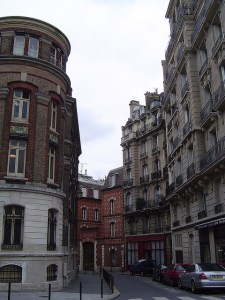
Photograph of a street in ParisHe arrived in Paris in 1930 with no money, no prospects, and no place to stay, in his words, “ a writer at the beginning of his career, naïve, enthusiastic, absorbent as a sponge, interested in everything and seemingly rudderless.”

He was little more than a middle-aged vagrant with exalted literary ambitions, tremendous self-confidence, and nothing in print. And there in the City of Lights, a penniless expatriate without a name, a reputation, or a fixed address, he did not just live, he sacrificed all material security and devoured life, searching for “the real Paris.”

His aim, he said, was to “regress” further and further to a state where culture and civilization “do not figure,” to “start completely from scratch in a way that is uncultivated, primitive.” There had to be “a time when I was totally broke, desperate, and living like a vagabond on the streets to start to see and to live the real Paris. I was discovering it at the same time I was discovering myself, undergoing a trial that was as difficult as it was fulfilling”

Miller’s was not the guidebook Paris, not the Paris of Cole Porter. Hemingway, and Fitzgerald, but the lurid backwater slums and dens of vice where he sloughed off American Puritanism and embraced a wild hedonistic, sensual existence–roaming the streets in search of new sensations without a single sou in his pocket, living a hand-to-mouth existence, sponging off friends and strangers alike.  He was attracted to cheats, shysters, and rogues, and they to him.

His worldly possessions consisted of the clothes on his back and a toothbrush, a razor, a notebooks, a pen, a raincoat, and a cane. He didn’t know in the morning where he would sleep at night—whether with friends or on a park bench or in an alley or a cheap hotel whose furniture “required the assistance of wires, ropes, and leather straps to keep from collapsing.”

With no bed, no tobacco, and no food, lying, cheating, and stealing for survival, he felt no anxiety, but rather felt liberated and free of worry and believed “there could not be anything better” than what he was experiencing.

He said, “I have no money, no resources, no hope. I am the happiest man alive.” He was euphoric, like a man who had been let out of prison, finding on most every street some rich new experience, some realization, some moment of illumination. He compared himself to a ghost haunting a banquet. His goal was to write autobiographical books that documented the living of a life no one before had ever dared to live, and in a manner no other writer ever had, books written in a new style and consciousness that “would restore our appetite for the fundamental realities.”

Miller felt that the artist’s truth lies in finding a “voice,” and that the discovery of one’s true voice doesn’t happen easily, but requires boldness. Miller imitated every style in hopes of finding the clue to the gnawing secret of how to write. Then: “Finally I came to a dead-end, to a despair and desperation which few men have known because there was no divorce between myself as a writer and myself as a man: to fail as a writer meant to fail as a man…It was at that point…that I really began to write. I began from scratch, throwing everything overboard, even those I loved. Immediately I heard my own voice…the fact that I was a separate, distinct, unique voice sustained me. It didn’t matter to me if what I wrote should be considered bad. Good and bad had dropped out of my vocabulary…My life itself became a work of art. I had found a voice. I was whole again.”


When he left Paris in 1939 Miller was the renowned author of Tropic of Cancer and Tropic of Capricorn, autobiographical works that jolted readers new to his writing. His unique books created a vast international following.


© 2024 David J. Rogers

For my interview from the international teleconference with Ben Dean about Fighting to Win, click the following link:

Interview with David J. Rogers


Order Fighting to Win: Samurai Techniques for Your Work and Life eBook by David J. Rogers

Fighting to win Amazon

Click on book image to order from Amazon.com

or

http://www.barnesandnoble.com/w/fighting-to-win-samurai-techniques-for-your-work-and-life-david-rogers/1119303640?ean=2940149174379


Order Waging Business Warfare: Lessons From the Military Masters in Achieving Competitive Superiority
Waging Business Warfare812sCY9edLL._SL1500_

Click on book image to order from Amazon.com

or

http://www.barnesandnoble.com/w/waging-business-warfare-lessons-from-the-military-masters-in-achieving-competetive-superiority-revised-edition-david-rogers/1119079991?ean=2940149284030


Follow my blog with Bloglovin

2 Comments

Filed under Henry Miller, Writers, Writers' Life

Why Some Writers and Artists Do Not Have a Single Close Friend

The Writer’s and Artist’s Sheer Voltage

Picasso style face in red, orange, khaki, green and whitePsychologists classify people in categories according to their personality traits. Yet they cannot measure intensity and sheer energy of a person’s life force.  There are some people who have a hundred times more intensity than others.  Artists and writers have an abundance of intensity. The energy pouring out of Vincent van Gogh would bowl you over. Writer Thomas Wolfe wrote in a “wild ecstasy” at top speed, never hesitating for a word, as though he were taking dictation. He wrote all night, at times churning out on large oversized sheets of newsprint thousands of hand-written words before dawn, leaving behind at his death at age 37 a million words to be made into books posthumously. Goethe called these super-charged creatures “demoniacs,” people with a super-abundance of vitality, “something that escapes analysis, reason, comprehension.” Goethe was aware of this power in himself.

A high level of energy is one characteristic of many artists and writers. Another characteristic is this: Artists and writers are often so highly focused and absorbed in solving artistic problems that they have no interest in anything that competes with attention to their work, such as concern for social relations, status, prestige, material objects, and money.

Most artists and writers spend an inordinate number of hours alone, and enjoy that very much, believing they are in ideal company alone in a studio or work room.  That need for autonomy and social isolation is one of the reasons why many artists and writers were attracted to their art in the first place.  A detached attitude in interpersonal relations–the strong desire to do what you have in mind to do without restraint or control from any other person–is a strong quality of yours if you are like most great artists. And not much desire to be included in a group unless that group stimulates your creativity.

The Need Theory of motivation states that the need for other people is one of the most powerful forces, yet many people pursuing an art have not a single close friend. Asked why, they answer that they don’t want or need friends.  They aspire to be non-conforming in thinking, and independent in judgment, to shut out irrelevant events and people, to cut off what is unnecessary to their creative life. Short story master and innovative playwright Anton Chekhov was the most popular writer in Russia, beloved by a vast public, and with many acquaintance in literature, but without one person he could call a valued friend.

It was said of Martha Graham, who revolutionized the art of modern dance, “Martha felt that she must cut from her life all deep emotional involvements, all attachments, all comforts, even moments of leisure, and beyond that love involving family and children. She gave everything to her work, withheld nothing.” Picasso could be affable and gracious when he wanted, but tended not to get deeply involved with anyone, and was willing to sacrifice any person who interfered with his work.  Toni Morrison said, “I don’t go to parties. All I do is write.”

Competence and elegance, aesthetics and the desire to create something novel and meaningful are at the heart of the artist’s and writer’s system of values. They are often indifferent to the standard conventions and social niceties. Some, like writer Raymond Chandler, are socially withdrawn.  As a screen writer Chandler abhorred the need to associate with other writers and collaborate with movie directors, and they, in turn, were none too happy working with such an unpleasant person.


Quotes

Nobel Laurette Saul Bellow was married five times.  He said, “I have always put the requirements of what I was writing first–before jobs, before children, before any material or practical interest, and if I discover that anything interferes with what I’m doing, I chuck it. Perhaps this is foolish, but it has always been the case with me.”

“The biographies of great artists make it abundantly clear that the creative urge is often so impervious that it battens on their humanity and yokes everything to the service of their work, even at the cost of health and ordinary human happiness.” (Carl Gustav Jung)

“The true artist will let his wife starve, his children go barefoot, his mother drudge for a living at seventy, sooner than work at anything but his art.”  (George Bernard Shaw.)

“I wish I could work straight through and wouldn’t have to stop for any reason–not for meals, sleep, rest, entertainment, shopping, socializing, conversation, repairmen, UPS deliveries, playing with the kids, sex.” (A writer friend)


© 2024 David J. Rogers

For my interview from the international teleconference with Ben Dean about Fighting to Win, click the following link:

Interview with David J. Rogers


Order Fighting to Win: Samurai Techniques for Your Work and Life eBook by David J. Rogers

Fighting to win Amazon

Click on book image to order from Amazon.com

or

http://www.barnesandnoble.com/w/fighting-to-win-samurai-techniques-for-your-work-and-life-david-rogers/1119303640?ean=2940149174379


Order Waging Business Warfare: Lessons From the Military Masters in Achieving Competitive Superiority

Waging Business Warfare812sCY9edLL._SL1500_

Click on book image to order from Amazon.com

or

http://www.barnesandnoble.com/w/waging-business-warfare-lessons-from-the-military-masters-in-achieving-competetive-superiority-revised-edition-david-rogers/1119079991?ean=2940149284030


Follow my blog with Bloglovin


7 Comments

Filed under Artists, energy, focus, Intensity, Traits of Creative People, Writers, Writers' Characteristics

Writers Write About Things that Happen to Them

Hourglass in front of orange cloudsGiven the gift of exceptional powers of memory, writers never forget so that they might write years later about events that compose their lives.

 

My Youth:

The Night Racer of My Childhood

I have not forgotten a strange boy who on summer nights
Appeared standing tall and stiff on the pedals
Of his bicycle and silently raced up and down the street
Where I lived, a puppy in a paper bag in the basket yapping.
As he rode the street an eerie train whistle blew plaintively
Although there were no tracks and no trains anywhere near.
The superstitious thought the whistle the cry of archangels.


Ice Cream Man

A bevy of children
Proffering handfuls
Of nickels and dimes
To the wizened Ice Cream
Man in exchange for
A delicious bar thickly crusted with
Brittle dark chocolate
Or nuts,
Or both.


Giant

Giants are heroes of children.
Every child would like to have
Their own giant, one who drives a car
From the back seat,
Long arms holding the steering wheel,
Long legs reaching the pedals–
A substantial giant.

When I was a boy in Chicago a giant
Sat in the seat next to mine in church
And we talked and I liked him.
He is cited in
The Guinness Book of World Records
As earth’s tallest person.

There is a replica of him
In the wax Museum in London
That I visited, and when I stood
Close to it, I seemed back years before
In church with Mr. Koehler
Towering eight feet two inches.


Childhood: A Period of Summer, Sunlight, Flowers

Morning Glories

Sitting on the window sill
Watching people
Exchanging stories
Over white and purple
Morning glories
Growing wild among clover
On the flanks of the hill


Jobs:

Public Speaker: Trippingly off the Tongue

I have come far from high school
When I was terrified to give a speech–
So full of fear.
Now I speak to audiences of thousands–
Eight thousand in Paris–and when I finish
They stand and applaud, a shy
Boy who now, a man, has no fear of public
Speaking whatsoever–no nerves –only pleasure, joy
Speaking artfully and addressing audiences that want
To know what I am thinking.
I feel I have accomplished something.


Professional Writer:

The Object in the Streetlight: A Writer’s Birth

Working so hard on abstract
Problems–being so sick of them that
My brain ached, I, troubled, anxious, going out
For a walk alone, without my lady love,
Hoping that the cool late night air
Might be therapeutic and could clear
My thinking so that I might decide
Calmly if a writer’s life could provide happiness.
Near the beds of flowers, flat on the pavement–showered
In the white light of a street lamp–was a single
Object which I picked up from the ground:
A book–of all things a book–
The symbol of the life I had been avoiding. I had to laugh.

I then felt this book I had found, which some person had lost
Or angrily thrown to the ground,
Had been purposefully intended for me
By the ineffable wisdom of the stars, by good fortune,
As a sign, a portent, a clue, a key.
And that what this epiphany of the book
Meant was that I could not escape my pre-
Appointed destiny that suited the architecture
Of my genes, the juncture of talents, gifts, desires, qualities–
Not striving to become any of the five thousand entities
Others are suited to be, but that are alien to me,
Becoming thereafter one thing alone–a being gluttonous of words,
A writer-poet-orator-essayist-teacher–a fish content,
Self-possessed, without further anguish,
Swimming in seas of language.


Business Traveler: People You Meet When You Travel For Work

Woman of the Night

If I tell you that in the hotel elevator
At two a.m. she touched my arm and said,
“I’ve been looking for you all night”
In a sweet voice and with a friendly face
You would have an idea of her lonely
Profession, but no idea what kind of
Woman she was, nor how pretty.


Flight Through a Storm

The plane seated only four passengers,
Two businessmen, a writer, and a nun.
Before we left the ground
I asked the pilot how it was “up there”
And he said “The winds are very bad”
And I knew I was being a fool and
I shouldn’t fly that day. But I was in
A hurry to get home. The plane was
Thrown about in the wind like a toy and
We were all scared. The nun was clutching
A crucifix and whispering prayers. She asked
Would I please hold her hand and promise her that
We were not going to crash. I took her hand
And promised. The winds soon died as though
They were exhausted, and we four–friends now–
Left the plane in good cheer.


Soldier: The Trains of Fort Jackson, 1965

There were long trains and some days and some hours longer still.
They came into U.S Army Fort Jackson, South Carolina round the clock,
Carrying young soldiers who were sent there to learn to fight
In the jungles of Viet Nam.  Their families lay behind them
In the cities, farms, and towns of the South. They stood at the open
Windows of the trains, the wind troubling their hair, their eyes large
With astonishment, trying to comprehend the enormity of
What they were about to face.


Family Life: Children and Their Fathers

I thought as all children think of their fathers
At that age that he was a great man. He had
Made a life out of little achievements that
Were magnificent to me–had made a paper
Weight, had painted a wagon, could change a tire.
Then he felt he had done something, and so did I,
A man who would live in anonymity, do the best he
Could, be remembered a little while and forgotten,
A father like every other.


Grocery store clerk at twelve: Lyric for Angela

At seventy-five cents per hour
I am a twelve year old
Professional bagger of cans
Of pineapples and tomatoes,
Weigher of potatoes,
Stocker of shelves
So the labels artfully frame
For the customers’ eyes
The Gerber baby,
The Scott tissues,
The orange carrots,
The vivid green peas.
When I am near Angela,
The dark-eyed store owner
Who favors me
My heart beats faster.
I cannot breathe
When I am near Angela.
As she works she sings.

Her spirit enfolds and singes me
As with hot tongs.
She smiles with
Such sweetness, gentleness,
And goodness she breaks my heart.
Her hair, her voice, her hands, her
Presence bring
A quality into my life
Which I know to be love.
My youth is purer,
My memories more
Lasting because of her.

Angela’s husband is awful
To her and treats
Her cruelly.
I vow that one day I will
Whisper to Angela,
“Why don’t you run away?”
But I fear she will not
And that after I have gone
To high school and college
And am grown up
She will still be heard
Singing in the aisles
Of this little store
Like a bird in its cage.


Adolescence: Racers

My father drives the family
To the beach, parks, and then
Says “Go,” and he and I race.
We race from the car to the sand
Where the family will happily
Spend the afternoon in the sun.
He always wins the race because
He is a racer and much older and
Stronger and faster than his son.

But I am a racer too, and through
Those years of finishing second I
Am growing stronger and faster,
And when I am fourteen I beat him.
Running that race we are even
And then I pull ahead. A strange thing
Happens:  as I approach the
Sand, I don’t want to win. I don’t want
To beat him. I slow down so that he will win again.

When we stop he says, “You needn’t slow down, son.
You are a faster racer than I am now.”
I never forget those words or that race.
I go on to win many races and set
Records, win trophies, medals, and ribbons.
I achieve more in racing than he ever did, and
Perhaps more in life than he did, but in
His prime and my youth he was
A racer who could beat me.


At the age of Seventeen riding freight trains across America with a friend for six months and writing about our adventures.

Setting Out

Nothing in this world will burden me.
Fields of crops out to the horizon.
Breathing in winds that rejuvenate like milk.
Waving to hikers come out from the city.
We can go east or west, south or north,
Not caring in the least where we are or where we are bound,
Through experiences we are not accustomed to, some dangerous,
Discovering what we are made of. We will climb onto boxcars
And jump off a thousand miles away and ride the lines with
Strangers with their lives to tell us about, relying on luck to take us
On adventures we will remember forever.


Shot at, Chased by Dogs

When our freight train reaches Longview-Kelso,
The railroad police are waiting,
Holding the leash of a German shepherd
In one hand, waving a gun in the other.
Shouting and running, we youngest, running fastest,
Hobos leap or fall from the cars and dash
In every direction, chased by the cops.
As Nick and I run we laugh at how out
Of our element we are and how ludicrous
The whole scene must appear–a hundred
Running hobos and bulls, men firing revolvers,
Other men praying not to be shot,
Ferocious dogs snapping at our heels.


Family Life: The Death of My Young Sister

Until I die I will feel the immense weight
Of grief for you, and now you are gone
I ask your forgiveness for any sadness
I ever caused through thoughtlessness or selfishness;
And wish you to know that I intended
No harm and am so terribly sorry.


Late Middle Age: Age: Going Home After Long Absence

I will go now where I grew up and visit
The people I miss the most–
My sister Sharon, my parents,
A few friends, all gone now.
I will arrive in the evening as the sun
Begins to set at the end of the street
Above the church where my father sang.
I will smell working class dinners and
Watch the night hawks circle above our chimney.
Neighbors will come home from work.
Children will put their bikes away.
I will remember my younger self running a race
To the corner by the mailbox and back.
(Whenever was I not running?)
Then I will sit on the stairs and listen
To crickets in the hedge chirping
Their praise of summer nights.


Romance, Love

“Meeting Diana”, Knowing in an Instant I Would Marry Her
I saw her across the room
And put down my book and went to meet her.
Her name, my name.
Black hair. Green eyes.
Elegant. Exquisite. Young.
The most beautiful woman on earth.


Lady With No Needs

D’elia–the self-sufficient
Lady of twenty-five–my age too–
Who has no desire for wealth
Though she is not rich,
And although the most pleasing
Rendition of a beautiful woman–
The eyes, hair, breasts, and face of a beautiful woman–
The mystic bearing and mood of a haunting woman,
Her skin’s softness and its shades, her lingering perfumes
She has no interest in applause, the stage, or film,
Which might be her professions had she wished,
But prefers a life untainted by fame,
And has:
No need of friends. Without friends she is not unhappy.
No need of a father at home in Dallas who disparages her,
No need of a husband she has no feelings for,
No need of anyone, but has never felt lonely.
She has no need of me,
But when I leave her, her lips tremble.


Greenwich Village

I saw you
Looking at me
Knowing I had
Looked at you,
No chance ever
To see you again
Or you to
Look at me again
With your enticing eyes,
You who had I
Known long ago
I would have run
My finger over
So carefully
And cupped
In my hand
Like an orchid.

Beauty Beyond Words

Whenever I see Sidney she
Steals my breath. Walking,
Her lithe body sways and
The sun shines bright on her wild, black,
Stormy-looking hair, engendering in me
A sense of her sophistication, and not coldness,
But rather inaccessibility, delicacy, refinement,
And intelligence. For that’s the impression
Women whose beauty is beyond words make
Upon me.

Unfathomable, Troubled
Unfathomable,
Troubled,
She entered
My life so
Suddenly
And I hers
That
Neither was prepared.
Three unexpected
Years together
Seemed a moment.


Pretty Ballerina

You danced
For me alone
So beautifully
Pretty ballerina.
Would you
Dance for me
Again
Were I to ask?


In the Company of the Most Beautiful Girl

We stopped for coffee one night in a little café
Up in North Platte, Nebraska. Outside it was
Cold and gray. We went inside, out of the rain,
And sat at the counter and waited for service. In a few minutes
We saw the kitchen door swing open and a waitress
About our age come out. She poured our coffee
Carefully, biting her lower lip, her finger on the top
Of the pot, not looking at us, and our eyes large,
We watched her closely. She had long, lovely-shaded
Amber-colored hair that flowed like oil and tossed from
Side to side. She smiled so gently, so exquisitely, that
I was numb. It was my opinion that she was the most
Beautiful girl we had ever seen in our lives and Nick
Agreed.

We stayed as long as we could just to look at her and
Be around her. When we paid up and left at closing time
We said goodbye to her, regretting we would never see
Her again, and she blushed and smiled at us in a friendly
Way, her eyes bright. We were warmed by the sincerity
With which she said, “Good luck, boys.” The thought of
Her would make us happy for a long time.


© 2024 David J. Rogers

For my interview from the international teleconference with Ben Dean about Fighting to Win, click the following link:

Interview with David J. Rogers


Order Fighting to Win: Samurai Techniques for Your Work and Life eBook by David J. Rogers

Fighting to win Amazon

Click on book image to order from Amazon.com

or

http://www.barnesandnoble.com/w/fighting-to-win-samurai-techniques-for-your-work-and-life-david-rogers/1119303640?ean=2940149174379


Order Waging Business Warfare: Lessons From the Military Masters in Achieving Competitive Superiority

Waging Business Warfare812sCY9edLL._SL1500_

Click on book image to order from Amazon.com

or

http://www.barnesandnoble.com/w/waging-business-warfare-lessons-from-the-military-masters-in-achieving-competetive-superiority-revised-edition-david-rogers/1119079991?ean=2940149284030


Follow my blog with Bloglovin

5 Comments

Filed under Memoir Writing, Personal Stories, Poetry, Writers' Life

The Birth of My Popular Post: “Why Artists and Writers Are So Self-Absorbed.”


Hands typing on a keyboardI have been a professional, best-selling author, poet, teacher, and blogger for a long time.  I am obsessed with and think about writing, painting, and other arts all the time. I have published two hundred prescriptive-posts that were written solely to improve the performance of the thousands of creative people who read them.

One day my wife asked me, “David, why are you so self-absorbed?” Being self-absorbed is usually thought to be an unpleasant quality, but my wife’s question was not a criticism. It was a statement of fact. She knows that I am self-absorbed, and I know it too, but she wanted to know why I am. I am self-absorbed because being a person in the arts, I have to be–I have no choice and it’s a good thing I am. Being self-absorbed is a necessary part of my make-up–and yours too if you are a writer or artist. That’s explained in the post “Why Artists and Writers Are So Self-Absorbed.”


© 2024 David J. Rogers

For my interview from the international teleconference with Ben Dean about Fighting to Win, click the following link:

Interview with David J. Rogers


Order Fighting to Win: Samurai Techniques for Your Work and Life eBook by David J. Rogers

Fighting to win Amazon

Click on book image to order from Amazon.com

or

http://www.barnesandnoble.com/w/fighting-to-win-samurai-techniques-for-your-work-and-life-david-rogers/1119303640?ean=2940149174379


Order Waging Business Warfare: Lessons From the Military Masters in Achieving Competitive Superiority

Waging Business Warfare812sCY9edLL._SL1500_

Click on book image to order from Amazon.com

or

http://www.barnesandnoble.com/w/waging-business-warfare-lessons-from-the-military-masters-in-achieving-competetive-superiority-revised-edition-david-rogers/1119079991?ean=2940149284030


Follow my blog with Bloglovin

3 Comments

Filed under Popular Posts

What is Image-Based Writing?

What is image-based writing and why is it effective?

With writing that is image-based the images in the narrative or poem have a starring role, and the chief skill of the writer is creating images. The writer needs a mind that thinks in images. Without vivid image-based writing, texts are lifeless, bland, dull. They don’t seem real and lack vitality. They seem to be business reports, not literature. With image-based writing, texts spring to life. Fill your writing with images.

Practice to develop the skill of image-making. With vivid image-based writing, readers believe that characters are made of flesh and blood and what they are doing really happened. The world of your physical descriptions is real and has three dimensions. That is what you are trying to have your readers believe–and you had better do it quickly, within the first paragraph.

Here are samples of image-based writing from David J. Rogers, author of the popular post “Imagery in the Arts.


Indian Summer Picnic

A sparrow flutters its wings just above the grass,
Squirrels shimmy up trees, a gopher pokes
Its head curiously out of a hole. The sunlight gives
The landscape a coppery hue. The sky grows dark
And threatening, and the clouds turn black.
The breeze has become surges of wind that spin leaves
In the air and drop them ten feet away. Everyone
Hurries to clear off the tables and take everything inside,
Everyone rushes around gleefully, pitching in, doing their share.

They snatch things up, and as they dash for the house
Raindrops the size of pebbles fall and soon the leaves on the
Ground are saturated. What an afternoon–
How fresh, as if floating on a pond–the dark sky,
The farm, the trees, and the people during the flight of
This passing moment.


Woman on a Hill Overlooking a Lake

As she walked
Her lithe body swayed and
The sun shone bright on her wild,
Stormy-looking hair, engendering in me
A sense of her sophistication, and not coldness,
But rather inaccessibility, delicacy, refinement,
And intelligence. For that’s the impression
Women whose beauty is beyond words make.


Welsh Men, English Woman

The men in that Welsh-American family smiled appropriately,
Frowned sympathetically, and looked as grave
As morticians at times, puckering their foreheads,
Pursing their lips, and pouting. Not for a single
Instant were they amazed, puzzled, or unsure
Of themselves, and their voices were firm.
They stood so erect, so confidently, as they talked
So earnestly, straight as if braced by rods, as though
What they were saying were unassailable truth
And could not be doubted but by a nitwit.

Or they stood nonchalantly and slack, their hips shifted to
The left or right, with nothing other between their
Hair and shoes than supreme, unshakeable
Self-assurance. But the English woman was alone against
A tree like a twig that could easily be broken in two or
An object on display to anyone who had a desire to
Stare–a scarecrow staked deep into the ground,
Impossible to budge.


Hints of Winter

The previous week’s frost wilted
And turned brown many of the flowers in the beds, but those
That are still alive are bright and straight. The farther back
You go in the yard, the stronger are the fragrances that
Come from all sides. Across the grass, close to the house,
A sprinkling of white and purple dresses the tops of
Oleander bushes.

The sun sheds light in patches on the grass.
Beside the barn, as if kneeling, is a gnarled and bent tree and
Farther away other straighter trees whose leaves are changing.
I can smell the green leaves and the dry leaves, the young
Leaves, and the old leaves that give hints of winter.


Then and Now

Chicago’s Sheridan Road ran parallel to Lake Michigan, as it does today, and when you walked down it in those days you heard the sounds of the traffic mingling with the lapping of the waves on the beaches. From the beaches on clear days you could see on the horizon’s edge the western shore of Michigan to the east, and out on the lake low in the water turgidly-moving barges carrying heavy loads of ore down from Minnesota to the steel mills of northern Indiana. On certain afternoons in July and August the sun bore down on the sand so intensely that it was painful to walk on it, so mothers and fathers with feet on fire dashed to and from the tumbling waves carrying their squealing children tight in their arms.

One by one the beaches were filled in and all the great industrialists’ mansions with ample lawns that lined the street were torn down and replaced by closely-packed towering apartment buildings with hundreds of balconies which were far more impressive architecturally, but far less beautiful. Few people remember the mansions or the beaches, but most believe that the high-rises have stood there forever. Now when you walk down Sheridan Road the traffic is so heavy and the water so far away behind the buildings that you can no longer hear the waves.


© 2024 David J. Rogers

For my interview from the international teleconference with Ben Dean about Fighting to Win, click the following link:

Interview with David J. Rogers


Order Fighting to Win: Samurai Techniques for Your Work and Life eBook by David J. Rogers

Fighting to win Amazon

Click on book image to order from Amazon.com

or

http://www.barnesandnoble.com/w/fighting-to-win-samurai-techniques-for-your-work-and-life-david-rogers/1119303640?ean=2940149174379


Order Waging Business Warfare: Lessons From the Military Masters in Achieving Competitive Superiority

Waging Business Warfare812sCY9edLL._SL1500_

Click on book image to order from Amazon.com

or

http://www.barnesandnoble.com/w/waging-business-warfare-lessons-from-the-military-masters-in-achieving-competetive-superiority-revised-edition-david-rogers/1119079991?ean=2940149284030


Follow my blog with Bloglovin

2 Comments

Filed under Creativity, Imagery in the Arts, Writing, Writing improvement, Writing models

Gentle Poems in a Troubled World

by David J. Rogers


A Writer Loves to Work:

What has night to do with sleep
When you are a writer?


As I Lie in Bed at Night

I lie in bed listening.
Soon the sounds
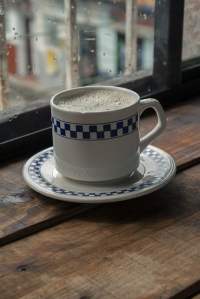
White and blue coffee cup and saucer near a windowOf spoons against coffee cups
And the low drone of speech
From the kitchen cease
And my parents go to bed.
I hear the whisper of
Their slippers in the hall.

Of my family I think in my child’s
Way they are all of them–each of
Them–good people, devoid
Of malice, and I am fortunate to be
Among them.
Why have I been so favored?

“Whoever you are please treat us kindly.
Spare us please from pain or
If sparing us is not possible so apportion
Suffering so that none of us is asked to bear
More than we should be required to.”
I fall to sleep. I dream.


Swimming in Space

Nightly, I have been swimming in space,
The safest, serenest place,
Stroking through eternity
Gracefully, smoothly, effortlessly,
Since childhood.

Alone,
Far beneath what’s above,
High over what’s below–
Towers and cities and rivers and seas–
Gusts of silver wind I breathe.

Content, blissful,
I leave my body behind
And float as aimlessly as air
I am the air,
No destination in mind.

I am as free as I think
It is possible for me to be.
I am immortal.
I am beautiful.
I will pass this way again.


Butterflies, Flowers, and Lovers

Green and brown butterfly on a leafButterflies, you and I,
Fluttering over gardens–
Our little world–
From flower to flower
In search of that one who is to us,
Though perhaps to no one else,
The loveliest flower,
And when we find that lovely flower,
Then we are content forever.


One Dog, Two Cats, a Squirrel

My dog and cats are dead now
But the squirrel who loved them
Comes every morning to sit on the fence,
Expecting them.


Night to Day

The solitary moon glows,
The glittering stars glow.
The sun rises daily over city lawns–
The pallor of dawn.
So my life passes into and
Out of my thoughts.


Waiting For a Bus on Christmas Eve

I am ten, my little sister eight.
Excited, we are looking out
The living room window.
Slush
On the street,
Soft and hushed.

Down the street,
Before the red brick fire
House, clanking chains lashed
Around softly humming tires
Splash past.

A warm Christmas Eve,
End of day.
Grandma and Grandpa
With gifts
On their way.

Look, there they are
What do they have
In the red and yellow bags?

A doll with golden hair.
A Louisville Slugger.
Books.


Midwest Winters

In late October among clouds in the shapes of bells
Withered leaves spread out on dying grass
In the sorrow of fading light
Unwelcome memories fill a Midwesterner’s thoughts
With premonitions of gray, raw, implacable winter.

Too soon cruel, inevitable
North and West winter winds apply their treachery
To frigid fingers, feet, and faces.
Eyeballs freeze in their sockets.
Wailing medieval demons of winds howl
Across cities, towns, fields, silos, prairies.

Laarge snow-covered tree at the side of a snowy expanseSnow drifts smother every highway,
Street, river, and stream.
Everything everywhere sparkles with frost.
In a weary succession of cold monotonous days
Citizens beat a path from home to work to home,
Hungry for warmth, pleading to see any color
But the white of snow.

There is no more hateful damnable
Rapacious ferocious and treacherous
Winter than right here in the Midwest.
Where winter punishes us for adoring summer.


Summer Evening

After dinner when the weather was good, the fathers,
Some in gaudy suspenders, to a man seeking peace,
Left their families and went alone outside in the yard to smoke.
The glowing tips of their cigarettes or bowls of their pipes
Hovered like red ornaments suspended from invisible strings
In the darkness. The men nodded cordially to one another,
But only rarely went to their fences to speak. They stood
Stationary and solitary in the middle of the yard gazing
Up at the field of glinting stars, being reminded of
Their own inadequacy, their own insignificance,
Feeling in their souls the overwhelming rapture
And wonderment of being alive on this earth. In a little
They shredded their cigarettes or tapped out their pipes
On the soles of their shoes and watched the embers
Drift into the grass.


My Mother Doing the Laundry

Monarch of the
clothes pin,

servant of the
breeze;

white sheets
muttering,

white shirts
fluttering

on the
line.

Mother at her
loveliest

on the gray creaking
porch

on a sunfresh
afternoon.


Memories

Flickering portions of you
That accompany the people who love you,
Fastened around their heart
Forever.


Cool Wind

And I thought how lovely
It was to feel
Through an open window
A cool wind on a hot night
Such as this
And to see let in
Between the window shade
And the window sill
Leaves’ shadows dancing on
A midnight floor


Disguises

We are all so complicated and sealed up
In the disguises we wear
That we can know intimately in one lifetime
Only a person or two, and they not always,
But only in momentary bursts of understanding.
All the others we reduce to a few strokes:
That woman in the garden is lovely,
Has a lovely smile,
Owns a lovely dog.


The Death of a Loved One

Death leaves nothing when it departs
But still another vacancy in the heart.


Mushrooms White and Brown

At the base of this tree–sycamore I think–
Maple? (I don’t know) grow
Mushrooms–little umbrellas
White and brown.


Wind at the Beach

Suddenly a wind strikes up.
Into the air ascend three hundred white gulls.
Waves rise up from the lake,
Lunge and plunge like a field of gray-green
Wheat that then collapses on the shore,
Splaying into streams that sink into the sand
Slowly, as though unwilling to disappear.


© 2024 David J. Rogers

For my interview from the international teleconference with Ben Dean about Fighting to Win, click the following link:

Interview with David J. Rogers


Order Fighting to Win: Samurai Techniques for Your Work and Life eBook by David J. Rogers

Fighting to win Amazon

Click on book image to order from Amazon.com

or

http://www.barnesandnoble.com/w/fighting-to-win-samurai-techniques-for-your-work-and-life-david-rogers/1119303640?ean=2940149174379


Order Waging Business Warfare: Lessons From the Military Masters in Achieving Competitive Superiority

Waging Business Warfare812sCY9edLL._SL1500_

Click on book image to order from Amazon.com

or

http://www.barnesandnoble.com/w/waging-business-warfare-lessons-from-the-military-masters-in-achieving-competetive-superiority-revised-edition-david-rogers/1119079991?ean=2940149284030


Follow my blog with Bloglovin

10 Comments

Filed under Memory, Personal Stories, Poetry

When You Are in the Arts and Nobody Knows Who You Are: “The Matthew Effect”

This is a post about something that about 98% of people in the arts have bad memories about.

A Conversation at a Party.

The cases Of Ernest Hemingway, Jack London, And Henry Miller

I was talking to a woman at a party. It was a nice party and the woman–a well-known painter from the Midwest–was good company–cheerful, friendly. Our conversation turned to the arts, as my conversations—and hers–often do, and we talked of this and that. And then, knowing I was a writer and poet, she asked me, “Did you ever not get published because you lacked the credential of previous publications?”

I said “Yes, when I was starting out, which is of course the worst possible time for a writer, the time of greatest vulnerability. I think everyone in the arts has been stymied by the particular problem of credentials.”

She said, “I certainly have.”

I said, “Funny isn’t it, you’re so famous.”

“But that wasn’t always the case. It was a long time before anyone knew I was a good saleable painter.”

I said, “It makes me think of all the great writers who had trouble getting published for that reason. I Black and white drawing of Ernest Hemingwaythink of my favorite writer, Ernest Hemingway, and ask myself, ‘How could an editor with any judgment at all reading young Hemingway’s beautiful prose say, ‘We can’t publish you because no one knows who you are.’ Hemingway would often cry as he received still another rejection slip. Yet he persevered submitting stories and in not many years he would be recognized as the best writer in the world, and in a few more years he would be the most famous and the most highly paid. The same happened to Jack London–unable to be published, hundreds of rejections, a publication, then within a year the most popular writer in the world.“

Henry Miller was angry with editors who rejected him because literarily he was a nobody. He was living in poverty, his only possessions the clothes he was wearing and a comb. Editors abused him mercilessly. He wrote in a letter to a friend,” Who do these shits think they are to say such things to me?”


“The Matthew Effect”

You may not like it, but unless you write or paint or act solely for the joy of it (as many people do) and have no interest in going any further in the Darwinian survival-of-the fittest, ferociously-competitive modern world of the arts, you have to compete for attention. Opportunities in the arts are limited, yet there are millions of Americans who claim to be “in the arts.”  They are trying to get their story rather than yours in the magazine, or their book released by the publisher rather than yours, or get their painting rather than yours in the show, or get the lead in Macbeth.

All any person in the arts asks for is a level playing field. But the playing field is not level. The concept of “The Matthew Effect” derives from the Bible’s book of Matthew (25, 29): “For unto everyone that hath shall be given, and he shall have abundance: but from him that hath not shall be taken away even that which he hath.” That refers in writing and painting (and all the other arts and all the sciences and in all of academia) to the rich get richer, the fact that more status is given to the most highly recognizable people in the field (though they might not be the most deserving), while recognition is withheld from writers, painters etc., who aren’t well-known (though they might be the most deserving).

Watercolor in blue with some brown and purple of a bird above a waveWhat unpublished author hasn’t had the depressing experience of reading crappy books by writers who have published fifteen other books just as crappy and thought, “I’m better than they are, so how does such a thing happen? Is there no justice?” It’s “The Matthew Effect” in operation—they hath and you hath not. The artist who hasn’t been recognized yet must understand and overcome “The Matthew Effect” to now become recognized—to become one who hath.


© 2024 David J. Rogers

For my interview from the international teleconference with Ben Dean about Fighting to Win, click the following link:

Interview with David J. Rogers


Order Fighting to Win: Samurai Techniques for Your Work and Life eBook by David J. Rogers

Fighting to win Amazon

Click on book image to order from Amazon.com

or

http://www.barnesandnoble.com/w/fighting-to-win-samurai-techniques-for-your-work-and-life-david-rogers/1119303640?ean=2940149174379


Order Waging Business Warfare: Lessons From the Military Masters in Achieving Competitive Superiority

Waging Business Warfare812sCY9edLL._SL1500_

Click on book image to order from Amazon.com

or

http://www.barnesandnoble.com/w/waging-business-warfare-lessons-from-the-military-masters-in-achieving-competetive-superiority-revised-edition-david-rogers/1119079991?ean=2940149284030


Follow my blog with Bloglovin

4 Comments

Filed under Adversity, Matthew Effect

Reflections of My Life in Poetry by David J. Rogers

Where Among Dreams She Had Often Walked

Shore of white sand in front of blue waterSmall and delicate, fair as a flower,
A woman on this earth who
At thirty-seven of her years passed
Away. Since her absence from the visible
World she has lived in many of my memories.
She died too soon to be aware of much of
My life, and I will not be able
To tell her about it, nor she to share her
Thoughts of what her life might
Have been had she grown old where
It ended: in beauty far across the pitching
Blue sea, along rows of white-sand beaches
Where among dreams she had often walked.


Chicago’s El Trains

At eight years–
My place of birth.
Walking through
The viaduct
Under the el platform
And into and out of
The cool, spread shadows
Amidst the thunderous
Rattle of the trains
Overhead that make
The earth and my heart
Tremble


The Welcome Inn

Lantern in front of a door with an old bell and a welcome signWe enter that tumult of sweat and whiskey, amidst the
Glow of the red bar lights and clouds of floating smoke
And stand next to a tattooed woman snapping a
Bull whip and wearing a black satin cape with red lining
And see a man pull a pistol on another man. The
Second man snatches the gun from the first and
Slugs him over the head. He turns to us
Disgusted with his friend, supine on the floor, and says
“He’s always doing that,” and that is the end of that.


What Are We To Do?

What’s the use trying to say what I feel?
How does it happen? How is it concluded
That this person should be happy, that one not?
This one healthy; that one ill; one blessed, the other
Troubled; he–undeserving– to live a long
And happy life; she who in her life has hurt
No one to die before she has fully lived?
How is it decided that this one should be put
Together with that one and that they should
Love each other all their days, but that another
Shall despair in loneliness. What happens to us
That we become the people we are, and
What are we to do now?


Judy Wazorick

We were in grammar school together.
She had a blue eye and a brown
And sat in the last seat of the last row.
She was very shy, but when I looked at her
She smiled at me.
Now I see she won’t be at the reunion,
And I am so sad because Judy Wazorick
Orange butterfly on pink flowersHas passed away.


Butterflies, Flowers, and Lovers

Butterflies, you and I,
Fluttering over gardens–
Our little world–
From flower to flower
In search of that one who is to us,
Though perhaps to no one else,
The loveliest flower,
And when we find that lovely flower,
Then we are content forever.


The Girl in Greenwich Village

I saw you
Looking at me
Knowing I had
Looked at you,
No chance ever
To see you again
Or you to
Look at me again
With your dark eyes,
You who had I
Known long ago
I would have run
My finger over
So carefully
And held
In my hand
Like an orchid.


Awaiting the Arrival of Dawn

A bare tree on a gentle hill infront of an orange and blue skyI delight in darkness and know that a bond
Intertwines me with everyone who exists
Or ever has, or will; and know too that some
Yet unknown purpose to my life beckons fondly
And that one day I will discover it.
So I dream of splendid things through
Each day as my life flickers away.
I welcome the luminous skies above and the
Magnificence of morning–and I will all
My life while awaiting the arrival of dawn.


A Man Like Every Other

I thought as all children think of their fathers
At that age that he was a great man. He had
Made a life out of little accomplishments that
Were magnificent to me–had made a paper
Weight, had painted a wagon, could change a tire.
Then he felt he had done something, and so did I,
A man who would live in anonymity, do the best he
Could, be remembered a little while
And forgotten. A man like every other.


Lightly Falling Snow

In the mountains, near the snow line, a blue
Haze is draped in grandeur over the land,
The summits surrounding us stupendous
.We have a snowball fight and then lie exhausted
And breathing hard in the snow while laughing
And making angels with our arms and legs.

We then come to an inn set far back from the road
Across a gravelly parking lot surrounded by tall trees
That are black with rain that fell last night.
We go up the long wooden stairway to a landing
With roughly-hewn wooden tables and chairs. But it is
Too cold to sit outside and so we go in.

The dining room is empty but for a waiter leaning
Against a wall. The tables are set with white linen
And gold utensils, and dressed as we are we seem
Out of place. We sit at a table by a wide window with
A good view of the mountains. The waiter comes over and
We order coffee.

From the window, Nick, the waiter,
A bare tree with falling snowAnd I watch a lightly falling snow.


Bedtime Prayer of a Little Boy

Of my family I thought in my child’s way–
They were all of them–each of them–good people, devoid of malice,
And I was blessed to be among them. Why, I wonder, had I been so
Favored. I thought, “Dear Lord, keep us safe, and please treat us kindly.
Spare us please from suffering or so apportion it so that none of us is asked
To bear more than one should be required to.” I prayed, as always fast,
“God bless Mom and Dad and…” and I fell asleep beseeching God.
The day ended then, and I dreamed and in a moment another dawn broke.


Hobos in a Clearing

We reach the crest of the hill at dusk.
Below us, like the camps of infantry,
Burn the scattered fires of forgotten men,
Each a separate picture.
They live in the open or in
The opulence of tarpaper lean-tos against a tree,
And migrate as punctually as geese.
They wear black–perhaps it is the soot of freight trains–
And squat on their haunches like crickets
Beside the snapping flames.
Streams of smoke trail off high into the trees
And embers flicker and fade, flicker and fade
In the harsh bite and sparkle of the wind,
And glow bronze on the men’s untroubled faces
Late into the night.


Ice Cream Man

A bevy of children
Proffering handfuls
Of nickels and dimes
To the wizened Ice Cream
Man in exchange for
A bar thickly crusted with
Brittle dark chocolate
Or nuts, or both


LONGER NARRATIVE POEMS

Lyric for Angela

At seventy-five cents per hour
I am a twelve year old
Professional bagger of cans
Of pineapples and tomatoes,
Weigher of potatoes,
Stocker of shelves
So the labels artfully frame
For the customers’ eyes
The Gerber baby,
The Scott tissues,
The orange carrots,
The vivid green peas.
When I am near Angela,
The dark-eyed store owner
Who favors me
My heart beats faster.
I cannot breathe
When I am near Angela.
As she works she sings.

Her spirit enfolds and singes me
As with molten tongs.
She smiles with
Such sweetness, gentleness,
And goodness it breaks my heart.
Her hair, her voice, her hands, her
Presence bring
A quality into my life
Which I know to be love.
My youth is purer,
My memories more
Lasting because of her.

Angela’s husband is awful
To her and treats
Her cruelly.
I vow that one day I will
Whisper to Angela,
“Why don’t you run away?”
But I fear she will not
And that after I have gone
To high school and college
And am grown up
She will still be heard
Singing in the aisles
Of this little store
Like a bird in her cage.


A Wagon, an Old Man, and Old Horse
(A Scene from Edgewater, Chicago, 1949)

Keeping to no particular schedule other than
It be daylight nearing evening, from down the alley
Through sunlight and shade, always from the west,
Never the east, comes the old disheveled
Rag Man–appearing to be a rag himself.
He sits high atop a large horse-drawn, creaking wagon
Loaded with junk, his gruff, metallic voice preceding
Him by half a city block:  “Rags, old iron.”

As the wagon nears, I hear, faintly at first, and then
More clearly, more purely, more emphatically, the
Mellow clomp, clomp, clomp of the shod hooves
Of the old brown mare whose head hangs low, neck bowed,
And swaying slowly to the rhythm of her gait.  She elevates
Her head as high, as majestically, as a queen of horses
Who is a about to speak and shakes her harness
Chains musically but uncomfortably and opens wide her mouth
To gulp the air. Then I hear her snorts as she struggles
Futilely with her bit and notice her bulbous brown eyes
Glazed with an expression of weariness and sorrow,
And the sunlight glistening off the thick sheet of sweat coating
Her flanks and the sinewy twitching muscles of her legs.

The sounds of hooves grow soft, then softer, and vanish,
Not to be heard again until another afternoon I witness the
Elegant procession of a wagon, a man, and a horse, and
Hear a voice bellowing, “Rags, old iron.”


On A Beach on a Wind-Blown Day

Beach with children running into the wavesSo there it is, laid out in my mind: that moment in our lives,
That day in July. We are told that memories recede, grow fainter,
Fall to tatters, but I remember that afternoon that
Has persisted through all the successive years, recalling it
Just as I lived it. Though it is intangible and lies in memory alone,
Nothing else is as real; everything vanishes in comparison.
It is with me when I bend to tie my shoelace, or ask for a fork. Or
Fall asleep:  my sister on the beach gripping my hand not to be
Swept away by the swirling, angry wind, and she standing on her
Tip-toes on a little stool down the aisle in the stacks at the dusty library,
Reaching for Little Women; my realizing in that instant, watching her,
That she was irreplaceable; I couldn’t do without her. So with her
In front of me on her red bike, I on my blue English racer, the two
Of us hurtled down Chicago streets at dusk. Her black hair flowing,
We raced–a glorious day when we were young.


Nurse’s Goodbye to Her Patient

I saw my sister’s favorite nurse up ahead
In the parking lot and called her name and she stopped
And turned around and I ran and caught up with her.
I expressed my gratitude to her for the gentleness
She had shown my sister. I told her I would never forget
Her kindness and thoughtfulness, and that I
Would remember her all my life, as I have.

She told me
What a good patient Sharon was, how despite her suffering
Sharon had never complained and was always so nice and
Had good manners, and how it would make her very sad
When she would have to say goodbye to her.

That night I left for home.


© 2024 David J. Rogers

For my interview from the international teleconference with Ben Dean about Fighting to Win, click the following link:

Interview with David J. Rogers


Order Fighting to Win: Samurai Techniques for Your Work and Life eBook by David J. Rogers

Fighting to win Amazon

Click on book image to order from Amazon.com

or

http://www.barnesandnoble.com/w/fighting-to-win-samurai-techniques-for-your-work-and-life-david-rogers/1119303640?ean=2940149174379


Order Waging Business Warfare: Lessons From the Military Masters in Achieving Competitive Superiority

Waging Business Warfare812sCY9edLL._SL1500_

Click on book image to order from Amazon.com

or

http://www.barnesandnoble.com/w/waging-business-warfare-lessons-from-the-military-masters-in-achieving-competetive-superiority-revised-edition-david-rogers/1119079991?ean=2940149284030


Follow my blog with Bloglovin


8 Comments

Filed under Personal Stories, Poetry

What Are Serious Writers Like? What Do They Do?

A serious writer has the identity of a writer, emphasizes the production of works, and is a skilled craftsman.

Serious Writers Have a Writer’s Identity

Sometimes a person who one day will become a serious writer doesn’t know herself what she might do with her life. But she feels instinctively that she’s good for something and has some reason for existing. She has a hunch that there is something important in her that’s worth pursuing further. She finds that something in words. She makes herself into a writer–an expert in expressing herself via written language. At times, with some people, writing becomes the center of their identity, and they become another Saul Bellow who said that when he wrote he felt like an artist, but when he was not writing he didn’t feel like anything.

As a writer you’re specially endowed with (and may have been born with) not only “creative stuff” but with an assortment of personality qualities that equip you specifically for the writer’s role. And it’s that identity that gives you the sense that you’re a person with a definite life task—to write, to create. Whether you find writers in big cities or in remote jungles or rain forests and deserts you will also find them generally to be quite similar. Writers who succeed have a combination of such inner qualities as curiosity, obsessiveness, doggedness, and endurance. They’re playful, sensitive to life, open to experience, and have an abundance of physical strength, energy, and stamina. Often it’s the end of the writer’s endurance that stops her work day. They have a much higher tolerance for ambiguity than the great majority of people—one reason they’re usually such good problem-solvers.

Your everyday identity isn’t the same as your writer identity.  The “you” that shines through a novel you’ve written isn’t the same person your neighbors know. It’s a version of you, but yet it’s different. As a writer you’ve a sensitivity to language which a person either possesses or does not possess.

Language—for a writer shaping it into phrases, sentences, and paragraphs–is delightful. Amy Tan wrote, “I am a writer. And by definition, I am someone who has always loved language. I am fascinated by language in daily life. I spend a great deal of my time thinking about the power of language.”

You know the basics of grammar (know a noun, a verb, and a preposition when you see them), and have the biggest vocabulary and highest appreciation of words, the greatest skill in using them, and the best ear for them.  Most writers are able to produce large volumes of work. But that’s just the tip of the characteristics writers have in common and which make up the identity of serious writer.


Serious Writers Emphasize Production of Works

A main goal of writers and all other creative people is to produce works. Writers make the structure of their creative lives by means of their work. If they are unable to work or the work doesn’t go well, they suffer. The writer–the artist, whatever the art–uses the art to express emotion and when they are denied that expression they feel tension and conflict.

Always have your production goals in mind: “The only certainty about writing and trying to be a writer is that it has to be done, not dreamed of or planned and never written, or talked about…but simply written” (Janet Frame). Saul Bellow said, “For the artist work is the main thing and always comes first.” Psychologist Howard Gardner writes about high-excelling creative people. He says, “Individuals whose stock in trade is to do things which are novel, are people who’ve got to have a pretty good command of how they work.” Psychologist Abraham Maslow said, “The fact that people who create are good workers tends to be lost.” The inventor, whether artist or thinker, creates the structure of his psychic life by means of his work…It is only as the work is done that the meaning of the creative effort can appear and that the development of the artist…is attained” (Brewster Ghiselin.)

In Art & Fear, authors David Bayles and Ted Orland write about what happens in a ceramics class that I’ve found also happens in a class of writers.  You could take two imaginary groups of writers in a class—those on the left side of the room would be graded solely on the quantity of the work they produced. Those on the right side would be graded only on the work’s quality. On the final day of the class the teacher would measure the amount of work of the quantity group—500 pages an A, 350 pages a B, and so forth. Those the teacher graded on quality would have to produce only one story, but it would have to be perfect to justify an A.

A curious thing would happen. The quantity group would also produce the highest quality work. The quantity group would churn out streams of work and learn from their many mistakes and develop a wide variety of skills. But the quality group would get caught in the elusive concept of perfection and grandiose dreams and would become paralyzed. Some writers produce 10, 15, or 25 times more writing than others and those most productive usually rise higher, do better work, and find a greater sense of accomplishment.

Experienced writers almost always structure their work time and environment carefully. A perfect work place and good production routines and rituals are to be treasured. Simply by being there, ready to work repetitively the same time day after day, the power of good habits goes into effect. Some writer’s production habits will strike you as strange.  The poet H.D. (Hilda Doolittle) splashed ink on her clothes to give her a feeling of freedom when she wrote. Hard-boiled detective writer Raymond Chandler could only write when he was drunk, and poet A.E. Housman rarely wrote unless he was sick. Voltaire wrote love poems in bed using his mistress’ back as a desk. I’m sure you have your own peccadillos too, and if we ever meet you can tell me about them. I’ll tell you about mine.

Writers’ production ebbs and flows. Some periods the words come out of you in torrents. You’re in overdrive–700 words a day, a thousand, 1,500, and every word is perfect. Other days they wouldn’t come out were you to use blasting powder. Some writers—most—find it easy to be distracted. Beth Henley, Pulitzer Prize winning playwright at 28, said, “I love to work, although sometimes I spend whole days doing nothing more than picking the lint off the carpet and talking to my mother on the phone.” Joyce Carol Oates says she squanders as much as 90% of her time writing letters—e-mails—to authors, her writer friends. “The problem is that they write back, and so do I. And suddenly the morning has vanished irretrievably.”

There isn’t one universal work/production program that suits all writers. A production program won’t work if it’s imposed on you. Your program will have to be custom-designed by yourself for yourself. To find the ways and means to improve your production should be a major aim.

If as a writer you’re productive, you’re happy.  If you’re not, you’re unhappy. Ernest Hemingway, as hard a working and production-minded writer as there’s ever been, said that for him, “Work could cure almost anything.” But many writers aren’t successful because they haven’t figured out the best work/production program that equips them to:

  1. Focus on the work for desired periods of time
  2. Abandon what isn’t working, putting aside futile problems that will lead to dead-ends
  3. Free themselves from distractions and time-wasters
  4. Persist in the midst of obstacles and setbacks
  5. Maintain their energy
  6. Achieve a desirable level of output


Serious Writers Are Craftsmen

The sciences and anything involving a machine are mysteries to me. I have no aptitude for them. Once I got hold of an old used paperback on how to become handy around the house and did some wiring and put in a light switch in the children’s bedroom without burning the house down. My children watched me and marveled.  I swelled with pride. I felt I’d really accomplished something. I’d say to guests, “come upstairs for a second” and show them the light switch and brag, “I put that in.” A very unusual accomplishment for me. But writing I understand and am good at. I’m confident about it. It’s my best craft.

Writers are talented people who have open to them many routes that could enable them to express themselves. But they focus on writing. Everyone has one dominant ability, and writing may well be yours. Ernest Hemingway could have been a professional big-game hunter or deep-sea fisherman—he was that versatile. He said, “I like to do and can do many things better than I can write, but when I don’t write I feel like shit.” William Faulkner could have made it as a painter.

The craft you choose to try to excel in has to be appropriate and can’t be simply wishful thinking. A moment comes—an experience occurs—and you become aware that writing, not something else, is the direction that suits you best and  will lead to a fulfillment you might not reach if you follow another route to another craft—the craft of the engineer, the attorney, the athlete, etc., for example.

Your aptitudes, personality, abilities, capabilities, temperaments, tastes, strengths, weaknesses, and interests are matched up first of all with a writing career and then with the kind of writing you wish to do. Will you specialize in fiction or non-fiction, drama, or poetry, novels or short stories, comedies or tragedies,  or will you be a jack of all trades and write more than one?  What you choose becomes the craft that’s your own.

Awakening to the realization that the writing craft is appropriate to you and you to it can strike at any time in a person’s life. Harriet Doerr finished her degree at 67 and won the National Book Award at 73. Englishman Thomas Chatterton was a mature poet by the age of sixteen. Poets, like mathematicians, mature very young. Dylan Thomas was at his most talented at nineteen.


A serious writer’s identity, production, and craftsmanship are three pillars of a structure of writing excellence.


© 2024 David J. Rogers

For my interview from the international teleconference with Ben Dean about Fighting to Win, click the following link:

Interview with David J. Rogers


Order Fighting to Win: Samurai Techniques for Your Work and Life eBook by David J. Rogers

Fighting to win Amazon

Click on book image to order from Amazon.com

or

http://www.barnesandnoble.com/w/fighting-to-win-samurai-techniques-for-your-work-and-life-david-rogers/1119303640?ean=2940149174379


Order Waging Business Warfare: Lessons From the Military Masters in Achieving Competitive Superiority

Waging Business Warfare812sCY9edLL._SL1500_

Click on book image to order from Amazon.com

or

http://www.barnesandnoble.com/w/waging-business-warfare-lessons-from-the-military-masters-in-achieving-competetive-superiority-revised-edition-david-rogers/1119079991?ean=2940149284030


Follow my blog with Bloglovin


5 Comments

Filed under Advice, The Writer's Path, Writers, Writers' Characteristics

New and Revised Poems by David J. Rogers

DELIA POEMS


She and I (In the Manner of Catullus 84-54 B.C.)

If ever there was a young woman who is self-sufficient and
Requires nothing beyond herself
And has a heart that like stone will never break
It is Delia. While she likes me and I like her and we are content together,
It is apparent that she doesn’t need me any more than I need her.
She calls her other affairs “flings” and when they
End they end. They are brief, none intense.
She says she feels more deeply about me than she is
Capable of feeling about anyone else, yet
For her and for me love is as elusive as a bumble bee.

Watercolor of woman's face with paint dripping in pink, yellow, blue and green

The Difficulty of Recalling a Past Romance`

Why when we gave ourselves to them
So passionately, tenderly, proudly
And for that period with them
Thought only of them and they committed
Themselves to us can we not now recall
Through memory’s thick gray mist what
They were like?


An Affair Begins and Ends

Unfathomable,
Troubled,
Delia entered
My life so
Suddenly
And I hers
Neither was prepared.
Three unexpected
Years together
Seemed a moment
Yet ended
Abruptly
With her flowing tears.


Goodbye

But that last night I was firm and told Delia
That I must be leaving forever
In a few minutes.
She was surprised and did not
Understand what had happened
Between Friday and Monday
That from now on the woman
On my mind would be someone else,
And that shortly I would be gone entirely
From her life.


Meeting Diana

I saw her across the college cafeteria
And put down my book and went to meet her.
Her name, my name.
Black hair. Green eyes.
Elegant. Exquisite.  Young.
The most beautiful woman on earth.


GOING HOME AND OTHER POEMS

Going Home

I will go back where I grew up and visit
The people I miss the most–
My sister Sharon, my parents,
A few friends, all gone now.
Colorful drawing of a city residential neighboorhood I will arrive in the evening as the sun
Begins to set at the end of the street
Above the church where my father sang.
I will smell three hundred six o’clock dinners and
Watch the night hawks circle our chimney,
Neighbors coming home from work,
Children putting their bikes away.
I will watch my younger self run a race
To the corner and back.
Then I will sit on the stairs listening
To crickets in the hedge chirping
Their praise of summer nights.


Awaiting the Arrival of Dawn

I relish waking early
And feeling that tingle in my waking body,
The chilly air lying so comfortably on my skin,
The enchantment that only a five in the
Morning holds for me.
I feel the growing anticipation
Of a remarkable day waiting ahead, of a
Remarkable life thronging with possibilities.
The knowledge doesn’t frighten me that
We are all marionettes dangling
Between the vast and sacred past and the vast
And sacred future.
I delight in darkness and know that a bond
Intertwines me with everyone who exists
Or ever has or will; and know too that some
Yet unknown purpose to my life beckons fondly
And that one day I will discover it.
So I dream of splendid things through
The seasons as they measure out my life.
I welcome the luminous skies and the
Magnificence of morning–
And I will all my life
While awaiting the arrival of dawn.


The Printers

The one skill they all shared
Was that they were masters
Of the big presses–
Rough good-hearted men
Who lived like vagabonds
Leading solitary lives in Chicago
Boarding houses with broken
Chairs and tables and nine or ten
Paperbacks with crimped pages.
The soft-spoken one named Aaron
Had made and lost fortunes
In investments many times
And currently was penniless.
He worked in monogrammed
Pink, blue, or gray shirts with stiff collars
And French cuffs and
Never spilled a drop of ink on them.


A President’s Death

Poor Professor Johnson,
I pitied him–his deep feelings.
A dignified man, a scholar,
Teacher of eighteenth
Century British poetry,
Couldn’t speak but to
Say go home, there would
Be no class today.
On the subway someone
Had a portable radio.
No passenger speaking,
Everyone listening in shock,
The tinny, crackling
Radio voice telling us over
And over as though we
Wouldn’t believe him, that
The President I felt I knew
Though he was rich and I
A student struggling with
Illness and poverty,
Had been shot.  Professor
Johnson went home and read
Alexander Pope’s masterful
Couplets through tears.


Her Yellow Bathing Suit

With rapturous eyes and golden tan
She was the loveliest girl
In the neighborhood.
She had freckles, was Irish,
Had an Irish name–McGuire.

She liked me.  At her door
She took my hand.
As we walked to the beach–
Her hand so soft–
We sang of happy things.

Her hair was parted
And drawn back with
Thin red ribbons
Except when she swam and let her
Long hair free to float as it wished.

I can’t forget her face
Which made everyone stare as she approached and
Still after she had passed, and that
Rendered plain every other girl who,
Jubilant, dove headlong into the frothing waves.

When she turned her head
She did so gracefully, like a
Bashful doe hiding in a thicket. That day
She was wearing a
Gold necklace with tiny links.

Everything she did; everything she said,
Her every feature, enchants my memory,
Particularly the yellow, yellow,
Yellow of her yellow bathing suit,
The only yellow on the crowded beach.


A Writer’s Epiphany: The Object in the White Light

A lighted lantern in front of a tree at nightWorking so hard on abstract
Problems–being so sick of them that
My brain ached. Troubled, anxious,
Confused, sleepless, I went out for a walk
Hoping that the cool late night air
Might be therapeutic and might clear
My thinking so that I could decide
Calmly if such a life would provide happiness
Or if I should choose a style of life
More conducive to peace of mind.
The dim streets empty, restful, a light rain,
The whistle of a distant train,
The bell on a boat ringing,
A woman on the boat singing.
Near the beds of flowers, on the pavement–showered
In the white light of a street lamp–a single object:
A book.
Perhaps this book I had found, which a scholar may have lost
Or angrily thrown to the ground,
Had been purposefully intended for me
By the ineffable wisdom of the stars, by good fortune,
As a sign, a portent, a clue, a key.
And that what this epiphany of the book
In the pure white light in the rain
And the shrill whistle of the far-off train
Meant was that I could not escape my pre-
Ordained destiny that suited the architecture of my genes,
The juncture of talents, gifts, desires, qualities–
Not striving to become any of the thousand entities
Others are suited to be, but that are alien to me,
Becoming thereafter one thing alone:
A being gluttonous of words, a fish content and
Self-possessed, free of anguish,
Swimming in seas of language.


The Fathers in My Youth

After dinner, when the weather was good, the fathers–
Some in gaudy suspenders, to a man seeking peace–
Went alone outside in the yard to smoke.
They stood stationary and solitary in the middle of the yard,
Gazing up at the dazzling field of glinting stars,
Being reminded of their own inadequacy, their own insignificance,
Feeling in themselves the overwhelming rapture and wonderment
Of being alive on this earth on this night.


Long Day

I’m still at work though it’s getting late.
I’m using an orange as a paper weight.


The Memory of Pain After a Long Illness

There is no memory
Like that of pain–
Impossible to share
And futile to compare.
There is no memory
Comparable to that of pain.


SIX MONTHS RIDING FREIGHT TRAINS ACROSS AMERICA WITH A FRIEND


Overview

We zigzagged back and forth across the country.
We heard the cries of hawks echoing through canyons and watched
Eagles circling like feathery kites above the great, austere
Shapes of mountain peaks. And always in the background
We heard the unceasing clackety-clack of the swaying trains.
We prowled train yards and for many hours
We sat on box cars, our legs dangling,
Gleaming railroad tracks under us.
And we felt deeply the fearful stillness of big cities
In darkness–their gloomy late nights. We saw
Women selling stuffed armadillos, a beautiful woman
Eating apricots at a picnic table, and evening after evening
Saw the sunlight fade.


A Place to Sleep

We slept on box cars and flat cars,
On benches in parks and playgrounds,
And in laundromats and on motel lawns,
Railroad box cars in alternating orange and yellowThe gaudy, intermittently-flashing lights of the vacancy
Signs keeping us awake. We slept without bedding
On creaking bed springs that cut your back torturously
Like knives in foul-smelling small-town two-bit jails that
Put us up for the night and fed us along with the prisoners.


Crossing a River in a Boxcar on a Rainy Night

A downpour had struck up suddenly and surprisingly
As our freight train was pulling in. Waves of cold rain rushed
In one side of the boxcar and out the other sheet after
Sheet. Flashes of lightning illuminated the entire sky
And cracked like gun shots in a shooting gallery.

Then the rain stopped just as
Suddenly, the lightning ceased, and the wind died. The
Sky had already cleared then and was tinged with a mellow
Violet at its edges. A wind, warm and refreshing in the cool
Night had come up from the south. We had
Crossed the Mighty Mississippi on a
Shaking railroad bridge that early September night.


Thoughts of Home

Often toward evening under skies appearing low enough to touch,
I thought of Chicago: the beaches, Sheridan Road, night falling, city
Lights starting to glitter, the people I loved.


A BOY’S ADOLESCENCE


Grocery Store Clerk/Delivery Boy

How I loved being twelve and
Out on a grocery delivery to an old
Neighborhood widow on streets whose every bump,
Hill, and crack my wagon was friends with–
No one with me to boss me, no problems to concern me,
And there feeling I was in a garden
Delighting in the air, golden
Sunlight, and glorious shades and shapes of
That tiny patch of the earth that fortune
Had so generously allocated to me for my pleasure,
And sounds beyond number that sang in my young ears.


Lyric for Angela

At seventy-five cents per hour
I am a twelve year old
Professional bagger of cans
Of pineapples and tomatoes,
Weigher of potatoes,
Stocker of shelves
So the labels artfully frame
For the customers’ eyes
The Gerber baby,
The Scott tissues,
The orange carrots,
The vivid green peas.
When I am near Angela,
The dark-eyed store owner
Who favors me
My heart beats faster.
I cannot breathe
When I am near Angela.
As she works she sings.

Her spirit enfolds and singes me
As with hot tongs.
She smiles with
Such sweetness, gentleness,
And goodness she breaks my heart.
Her hair, her voice, her hands, her
Presence bring
A quality into my life
Which I know to be love.
My youth is purer,
My memories more
Lasting because of her.

Angela’s husband is awful
To her and treats
Her cruelly.
I vow that one day I will
Whisper to Angela,
“Why don’t you run away?”
But I fear she will not
And that after I have gone
To high school and college
And am grown up
She will still be heard
Singing in the aisles
Of this little store
Like a bird in its cage.


© 2024 David J. Rogers

For my interview from the international teleconference with Ben Dean about Fighting to Win, click the following link:

Interview with David J. Rogers


Order Fighting to Win: Samurai Techniques for Your Work and Life eBook by David J. Rogers

Fighting to win Amazon

Click on book image to order from Amazon.com

or

http://www.barnesandnoble.com/w/fighting-to-win-samurai-techniques-for-your-work-and-life-david-rogers/1119303640?ean=2940149174379


Order Waging Business Warfare: Lessons From the Military Masters in Achieving Competitive Superiority

Waging Business Warfare812sCY9edLL._SL1500_

Click on book image to order from Amazon.com

or

http://www.barnesandnoble.com/w/waging-business-warfare-lessons-from-the-military-masters-in-achieving-competetive-superiority-revised-edition-david-rogers/1119079991?ean=2940149284030


Follow my blog with Bloglovin


8 Comments

Filed under Personal Stories, Poetry