Category Archives: Writers’ Life

When Writers’ and Artists’ Lives Are Simple

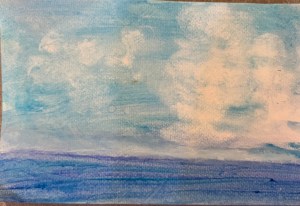
Clouds over blue water

You hear so much yapping about a career in writing and art being a hard life. Shoveling coal for a living is a hard life, but when you are doing what you were put on earth to do with your life–and that is to write or paint–your life is simple, for then you have answered the most crucial questions of all: “What shall I be? “What shall I do? Then you ask, “How do I do it” and that is your craft, that is your art.

My blog is intended for writers and artists. Three million Americans identify themselves as writers. 2.7 million Americans identify themselves as artists. Of course, the blog also reaches millions of people in foreign countries who also identify themselves as artists and writers. To date my blog has been looked at by four hundred thousand writers and artists, the majority Americans, and others from even the least populated mountain and island kingdoms.


 An Example of What Happens to Writers as Their Lives Unfold: The Opportunities that Appear

I will use myself as an example of a writer whose career over many years I can describe. It may be of value to writers and artists to compare to their own careers. Fighting to Win: Samurai Techniques for Your Work and Life is my best and my favorite book. It was written to help people. The main beneficiaries of Fighting To Win are discouraged people—broke, out of work, disappointed with their career or life, etc. Fighting to Win lifts them up.

Many people–probably most– struggle to find direction for their lives, but some people know from their earliest years the life, the career, they will pursue. I began writing professionally at eight–$25 for a story published in Jack & Jill. I didn’t know then that eventually in my career as writer I would, as many writers do, evolve into writer/poet/book marketer/public speaker/blogger. I decided on the way home from school on a rainy day that my goal when I grew up would be to be a writer so I could write beautiful words like “lovely,” “sea-faring,” and “proficient.” That goal has never changed through the publications of twelve books that are not self-published.

Ninety percent of a writer’s talent is inborn. That’s why writers needn’t attend the Iowa school of writing, but are generally self-taught. Some writers who write surprisingly well when they are very young are prodigies. There are artist prodigies too that draw and paint beautifully like much older artists. They master perspective when they seem too young to have mastered it .Mozart was a music prodigy, composing at four. Baryshnikov was a prodigy in ballet. He was the greatest dancer of his era because he could leap highest.

An early blooming prodigy can perform something before being taught to do it. For example, a young writing prodigy can write a story that has a plot, characterization, themes, tension, mystery, a strong conclusion though they have not been taught those features. The remaining ten percent of a writer’s expertise is skill and technique that comes from study, a ten percent separating great from good, and a phase that introduces the need for hard work, even among the most naturally-gifted.

As in every field, sweat-and-toil hard workers out-perform  lazy or listless workers. You cannot rely on natural talent alone to bring high success. Without drive and intelligence–however naturally talented you are–you will not go as far as you could.  Each day writers and artists should hope they have talent and tell themselves. “Today I will be energetic. Today I will be focused.”

A career in the arts is in keeping with my Welsh heritage. The Welsh entertain each other with stories and songs. I completed three degrees in American literature and taught Self Development in a university graduate school. At age twenty I had a short story published in a major literary journal. At twenty-one, a highly-regarded writing teacher said of my paper, “Teachers wait their entire career for a student who can write like this.”

I knew nothing about publishing and sent the entire manuscript of Fighting to Win to a publisher who called me and said they wanted to publish the book. I asked what kind of changes they wanted made and they said, “None. The book is a perfect book.” That statement soured me. Surely no book in first draft form is that good. I wanted a more demanding publisher who would encourage me to write my best. I turned the offer down. Having some doubts about the book I wrote an entirely new draft, starting from scratch, consuming a year.

I made an agreement with an excellent literary agent. I owe him a debt of gratitude.  He was energetic and honest, and placed my book Fighting to Win with Doubleday. After the success of Fighting to Win, another publisher said they wanted me to write a book for them. “What do you want me to write about?” I asked. They said, “Whatever you want.” So I wrote Waging Business Warfare for Scribner’s publisher, a book that The Wall Street Journal said would change the way companies do business. Both books climbed the best sealer charts. Fighting to Win was also a best seller in Sweden. Waging Business Warfare in France and Japan.

Writer or artist, you have to distinguish yourself from the crowd. You have to get known.  I’ve had many appearances in the national media on publicity tours and on my own. The books and my name became known in North America and foreign countries who purchased rights. I discovered that I am a good interviewee for marketing books, which is really sales. I have trained people in selling technique. The goal of a writer marketing to the broadcast media is to be invited back. Ideal is when the host of the show says “Call whenever you have something you want to talk about. We’ll put you on right away.”

Having written a book that becomes known by the public changes the author’s life forever. If you’re an author you’d better like the book since you and it from the publication date to the end of your life will be inseparable. You will be known as “So and so, the he author of….”   

A New York publisher, I didn’t know, head of a major house who “had read everything,” generously called me out of the blue to tell me  she had read Fighting to Win and found it “One of the  two or three best books of any type–prose, poetry, biography, history, arts etc.–I have ever read.”

Then I took on a new career: public speaking in auditoriums in North America and Europe to audiences of thousands about their self-improvement, based on the content of Fighting to Win. I discovered a talent for public speaking to large audiences that I wasn’t aware of. Long ago I was afraid of public speaking, but now I enjoy it as much as I do writing, and the income is impressive. Many speakers/writers earn more money from speaking than from writing.  The writer who can also speak is lucky. It is quite a shock to writers accustomed to working alone to find themselves on a stage addressing three, four, five thousand people who have come to hear an author’s wisdom.

Later I began this blog, designed to stimulate thinking about the important roles of writers and artists, especially those who hope to excel, a goal I share, placing emphasis on research and prescriptive how-to advice.  I wanted to think of every aspect of writers’ and artists’ work life and write something practical to aid them. Each blog is an essay pertaining to the life of writers or artists–their necessary knowledge, their moods, their challenges, their discouragements, and so on. My most popular post is “The Characteristics of Creative People.” There are now 141 essays.

A major change in this writer’s life was turning, later in life, from writing prose to writing poetry. Since then there has been a stream of publications of poems and great joy. I wrote a book of poetry about  adventures I had at seventeen when for six months I lived the life of a hobo hitching rides on freight trains: The Poetry of Riding Freight Trains Across America.

Philip Roth said eventually people won’t read novels anymore because with such busy lives, growing busier, they don’t have the many hours needed to read a novel. A poem can be read in a few minutes.

Gold and white clouds on a blue sky

In Bliss

When you spend thousands of hours working hard over many years as many writers and artists have, and think of your craft all the time since childhood, writing and painting and other arts are the simplest  tasks of your time here on earth. Dancers find a similar joy in dancing, actors in acting. When unhindered, such craftsmen write, paint, act, and dance in bliss.


© 2025 David J. Rogers

For my interview from the international teleconference with Ben Dean about Fighting to Win, click the following link:

Interview with David J. Rogers

Order Fighting to Win: Samurai Techniques for Your Work and Life eBook by David J. Rogers
Fighting to win Amazon

Click on book image to order from Amazon.com

or

http://www.barnesandnoble.com/w/fighting-to-win-samurai-techniques-for-your-work-and-life-david-rogers/1119303640?ean=2940149174379


Order Waging Business Warfare: Lessons From the Military Masters in Achieving Competitive Superiority

Waging Business Warfare812sCY9edLL._SL1500_

Click on book image to order from Amazon.com

or

http://www.barnesandnoble.com/w/waging-business-warfare-lessons-from-the-military-masters-in-achieving-competetive-superiority-revised-edition-david-rogers/1119079991?ean=2940149284030


Follow my blog with Bloglovin


7 Comments

Filed under Artists, Developing Talent, Human Potential and Achievement, Fame, Fighting to Win, Motivation, Personal Destiny, Personal Stories, Public Speaking, Publishing, Right Livelihood, Writers, Writers' Life

Henry Miller: A Unique Novelist To Say the Least

Brooklyn-born-and-bred Henry Miller, the late-bloomer of modern literature, published his first book in 1934 at the age of forty-three. His previous work had been unpublished, and for good reason; it showed no originality or promise. Miller worked in America as an employment manager of a Western Union office, ran a speakeasy, worked as a gravedigger and proofreader, and lived most of his life in poverty.

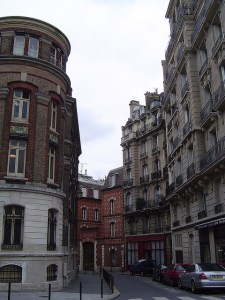
Photograph of a street in ParisHe arrived in Paris in 1930 with no money, no prospects, and no place to stay, in his words, “ a writer at the beginning of his career, naïve, enthusiastic, absorbent as a sponge, interested in everything and seemingly rudderless.”

He was little more than a middle-aged vagrant with exalted literary ambitions, tremendous self-confidence, and nothing in print. And there in the City of Lights, a penniless expatriate without a name, a reputation, or a fixed address, he did not just live, he sacrificed all material security and devoured life, searching for “the real Paris.”

His aim, he said, was to “regress” further and further to a state where culture and civilization “do not figure,” to “start completely from scratch in a way that is uncultivated, primitive.” There had to be “a time when I was totally broke, desperate, and living like a vagabond on the streets to start to see and to live the real Paris. I was discovering it at the same time I was discovering myself, undergoing a trial that was as difficult as it was fulfilling”

Miller’s was not the guidebook Paris, not the Paris of Cole Porter. Hemingway, and Fitzgerald, but the lurid backwater slums and dens of vice where he sloughed off American Puritanism and embraced a wild hedonistic, sensual existence–roaming the streets in search of new sensations without a single sou in his pocket, living a hand-to-mouth existence, sponging off friends and strangers alike.  He was attracted to cheats, shysters, and rogues, and they to him.

His worldly possessions consisted of the clothes on his back and a toothbrush, a razor, a notebooks, a pen, a raincoat, and a cane. He didn’t know in the morning where he would sleep at night—whether with friends or on a park bench or in an alley or a cheap hotel whose furniture “required the assistance of wires, ropes, and leather straps to keep from collapsing.”

With no bed, no tobacco, and no food, lying, cheating, and stealing for survival, he felt no anxiety, but rather felt liberated and free of worry and believed “there could not be anything better” than what he was experiencing.

He said, “I have no money, no resources, no hope. I am the happiest man alive.” He was euphoric, like a man who had been let out of prison, finding on most every street some rich new experience, some realization, some moment of illumination. He compared himself to a ghost haunting a banquet. His goal was to write autobiographical books that documented the living of a life no one before had ever dared to live, and in a manner no other writer ever had, books written in a new style and consciousness that “would restore our appetite for the fundamental realities.”

Miller felt that the artist’s truth lies in finding a “voice,” and that the discovery of one’s true voice doesn’t happen easily, but requires boldness. Miller imitated every style in hopes of finding the clue to the gnawing secret of how to write. Then: “Finally I came to a dead-end, to a despair and desperation which few men have known because there was no divorce between myself as a writer and myself as a man: to fail as a writer meant to fail as a man…It was at that point…that I really began to write. I began from scratch, throwing everything overboard, even those I loved. Immediately I heard my own voice…the fact that I was a separate, distinct, unique voice sustained me. It didn’t matter to me if what I wrote should be considered bad. Good and bad had dropped out of my vocabulary…My life itself became a work of art. I had found a voice. I was whole again.”


When he left Paris in 1939 Miller was the renowned author of Tropic of Cancer and Tropic of Capricorn, autobiographical works that jolted readers new to his writing. His unique books created a vast international following.


© 2024 David J. Rogers

For my interview from the international teleconference with Ben Dean about Fighting to Win, click the following link:

Interview with David J. Rogers


Order Fighting to Win: Samurai Techniques for Your Work and Life eBook by David J. Rogers

Fighting to win Amazon

Click on book image to order from Amazon.com

or

http://www.barnesandnoble.com/w/fighting-to-win-samurai-techniques-for-your-work-and-life-david-rogers/1119303640?ean=2940149174379


Order Waging Business Warfare: Lessons From the Military Masters in Achieving Competitive Superiority
Waging Business Warfare812sCY9edLL._SL1500_

Click on book image to order from Amazon.com

or
http://www.barnesandnoble.com/w/waging-business-warfare-lessons-from-the-military-masters-in-achieving-competetive-superiority-revised-edition-david-rogers/1119079991?ean=2940149284030


Follow my blog with Bloglovin

2 Comments

Filed under Henry Miller, Writers, Writers' Life

Writers Write About Things that Happen to Them

Hourglass in front of orange cloudsGiven the gift of exceptional powers of memory, writers never forget so that they might write years later about events that compose their lives.


My Youth:

The Night Racer of My Childhood

I have not forgotten a strange boy who on summer nights
Appeared standing tall and stiff on the pedals
Of his bicycle and silently raced up and down the street
Where I lived, a puppy in a paper bag in the basket yapping.
As he rode the street an eerie train whistle blew plaintively
Although there were no tracks and no trains anywhere near.
The superstitious thought the whistle the cry of archangels.


Ice Cream Man

A bevy of children
Proffering handfuls
Of nickels and dimes
To the wizened Ice Cream
Man in exchange for
A delicious bar thickly crusted with
Brittle dark chocolate
Or nuts,
Or both.


Giant

Giants are heroes of children.
Every child would like to have
Their own giant, one who drives a car
From the back seat,
Long arms holding the steering wheel,
Long legs reaching the pedals–
A substantial giant.

When I was a boy in Chicago a giant
Sat in the seat next to mine in church
And we talked and I liked him.
He is cited in
The Guinness Book of World Records
As earth’s tallest person.

There is a replica of him
In the wax Museum in London
That I visited, and when I stood
Close to it, I seemed back years before
In church with Mr. Koehler
Towering eight feet two inches.


Childhood: A Period of Summer, Sunlight, Flowers

Morning Glories

Sitting on the window sill
Watching people
Exchanging stories
Over white and purple
Morning glories
Growing wild among clover
On the flanks of the hill


Jobs:

Public Speaker: Trippingly off the Tongue

I have come far from high school
When I was terrified to give a speech–
So full of fear.
Now I speak to audiences of thousands–
Eight thousand in Paris–and when I finish
They stand and applaud, a shy
Boy who now, a man, has no fear of public
Speaking whatsoever–no nerves –only pleasure, joy
Speaking artfully and addressing audiences that want
To know what I am thinking.
I feel I have accomplished something.


Professional Writer:

The Object in the Streetlight: A Writer’s Birth

Working so hard on abstract
Problems–being so sick of them that
My brain ached, I, troubled, anxious, going out
For a walk alone, without my lady love,
Hoping that the cool late night air
Might be therapeutic and could clear
My thinking so that I might decide
Calmly if a writer’s life could provide happiness.
Near the beds of flowers, flat on the pavement–showered
In the white light of a street lamp–was a single
Object which I picked up from the ground:
A book–of all things a book–
The symbol of the life I had been avoiding. I had to laugh.

I then felt this book I had found, which some person had lost
Or angrily thrown to the ground,
Had been purposefully intended for me
By the ineffable wisdom of the stars, by good fortune,
As a sign, a portent, a clue, a key.
And that what this epiphany of the book
Meant was that I could not escape my pre-
Appointed destiny that suited the architecture
Of my genes, the juncture of talents, gifts, desires, qualities–
Not striving to become any of the five thousand entities
Others are suited to be, but that are alien to me,
Becoming thereafter one thing alone–a being gluttonous of words,
A writer-poet-orator-essayist-teacher–a fish content,
Self-possessed, without further anguish,
Swimming in seas of language.


Business Traveler: People You Meet When You Travel For Work

Woman of the Night

If I tell you that in the hotel elevator
At two a.m. she touched my arm and said,
“I’ve been looking for you all night”
In a sweet voice and with a friendly face
You would have an idea of her lonely
Profession, but no idea what kind of
Woman she was, nor how pretty.


Flight Through a Storm

The plane seated only four passengers,
Two businessmen, a writer, and a nun.
Before we left the ground
I asked the pilot how it was “up there”
And he said “The winds are very bad”
And I knew I was being a fool and
I shouldn’t fly that day. But I was in
A hurry to get home. The plane was
Thrown about in the wind like a toy and
We were all scared. The nun was clutching
A crucifix and whispering prayers. She asked
Would I please hold her hand and promise her that
We were not going to crash. I took her hand
And promised. The winds soon died as though
They were exhausted, and we four–friends now–
Left the plane in good cheer.


Soldier: The Trains of Fort Jackson, 1965

There were long trains and some days and some hours longer still.
They came into U.S Army Fort Jackson, South Carolina round the clock,
Carrying young soldiers who were sent there to learn to fight
In the jungles of Viet Nam.  Their families lay behind them
In the cities, farms, and towns of the South. They stood at the open
Windows of the trains, the wind troubling their hair, their eyes large
With astonishment, trying to comprehend the enormity of
What they were about to face.


Family Life: Children and Their Fathers

I thought as all children think of their fathers
At that age that he was a great man. He had
Made a life out of little achievements that
Were magnificent to me–had made a paper
Weight, had painted a wagon, could change a tire.
Then he felt he had done something, and so did I,
A man who would live in anonymity, do the best he
Could, be remembered a little while and forgotten,
A father like every other.


Grocery store clerk at twelve: Lyric for Angela

At seventy-five cents per hour
I am a twelve year old
Professional bagger of cans
Of pineapples and tomatoes,
Weigher of potatoes,
Stocker of shelves
So the labels artfully frame
For the customers’ eyes
The Gerber baby,
The Scott tissues,
The orange carrots,
The vivid green peas.
When I am near Angela,
The dark-eyed store owner
Who favors me
My heart beats faster.
I cannot breathe
When I am near Angela.
As she works she sings.

Her spirit enfolds and singes me
As with hot tongs.
She smiles with
Such sweetness, gentleness,
And goodness she breaks my heart.
Her hair, her voice, her hands, her
Presence bring
A quality into my life
Which I know to be love.
My youth is purer,
My memories more
Lasting because of her.

Angela’s husband is awful
To her and treats
Her cruelly.
I vow that one day I will
Whisper to Angela,
“Why don’t you run away?”
But I fear she will not
And that after I have gone
To high school and college
And am grown up
She will still be heard
Singing in the aisles
Of this little store
Like a bird in its cage.


Adolescence: Racers

My father drives the family
To the beach, parks, and then
Says “Go,” and he and I race.
We race from the car to the sand
Where the family will happily
Spend the afternoon in the sun.
He always wins the race because
He is a racer and much older and
Stronger and faster than his son.

But I am a racer too, and through
Those years of finishing second I
Am growing stronger and faster,
And when I am fourteen I beat him.
Running that race we are even
And then I pull ahead. A strange thing
Happens:  as I approach the
Sand, I don’t want to win. I don’t want
To beat him. I slow down so that he will win again.

When we stop he says, “You needn’t slow down, son.
You are a faster racer than I am now.”
I never forget those words or that race.
I go on to win many races and set
Records, win trophies, medals, and ribbons.
I achieve more in racing than he ever did, and
Perhaps more in life than he did, but in
His prime and my youth he was
A racer who could beat me.


At the age of Seventeen riding freight trains across America with a friend for six months and writing about our adventures.

Setting Out

Nothing in this world will burden me.
Fields of crops out to the horizon.
Breathing in winds that rejuvenate like milk.
Waving to hikers come out from the city.
We can go east or west, south or north,
Not caring in the least where we are or where we are bound,
Through experiences we are not accustomed to, some dangerous,
Discovering what we are made of. We will climb onto boxcars
And jump off a thousand miles away and ride the lines with
Strangers with their lives to tell us about, relying on luck to take us
On adventures we will remember forever.


Shot at, Chased by Dogs

When our freight train reaches Longview-Kelso,
The railroad police are waiting,
Holding the leash of a German shepherd
In one hand, waving a gun in the other.
Shouting and running, we youngest, running fastest,
Hobos leap or fall from the cars and dash
In every direction, chased by the cops.
As Nick and I run we laugh at how out
Of our element we are and how ludicrous
The whole scene must appear–a hundred
Running hobos and bulls, men firing revolvers,
Other men praying not to be shot,
Ferocious dogs snapping at our heels.


Family Life: The Death of My Young Sister

Until I die I will feel the immense weight
Of grief for you, and now you are gone
I ask your forgiveness for any sadness
I ever caused through thoughtlessness or selfishness;
And wish you to know that I intended
No harm and am so terribly sorry.


Late Middle Age: Age: Going Home After Long Absence

I will go now where I grew up and visit
The people I miss the most–
My sister Sharon, my parents,
A few friends, all gone now.
I will arrive in the evening as the sun
Begins to set at the end of the street
Above the church where my father sang.
I will smell working class dinners and
Watch the night hawks circle above our chimney.
Neighbors will come home from work.
Children will put their bikes away.
I will remember my younger self running a race
To the corner by the mailbox and back.
(Whenever was I not running?)
Then I will sit on the stairs and listen
To crickets in the hedge chirping
Their praise of summer nights.


Romance, Love

“Meeting Diana”, Knowing in an Instant I Would Marry Her
I saw her across the room
And put down my book and went to meet her.
Her name, my name.
Black hair. Green eyes.
Elegant. Exquisite. Young.
The most beautiful woman on earth.


Lady With No Needs

D’elia–the self-sufficient
Lady of twenty-five–my age too–
Who has no desire for wealth
Though she is not rich,
And although the most pleasing
Rendition of a beautiful woman–
The eyes, hair, breasts, and face of a beautiful woman–
The mystic bearing and mood of a haunting woman,
Her skin’s softness and its shades, her lingering perfumes
She has no interest in applause, the stage, or film,
Which might be her professions had she wished,
But prefers a life untainted by fame,
And has:
No need of friends. Without friends she is not unhappy.
No need of a father at home in Dallas who disparages her,
No need of a husband she has no feelings for,
No need of anyone, but has never felt lonely.
She has no need of me,
But when I leave her, her lips tremble.


Greenwich Village

I saw you
Looking at me
Knowing I had
Looked at you,
No chance ever
To see you again
Or you to
Look at me again
With your enticing eyes,
You who had I
Known long ago
I would have run
My finger over
So carefully
And cupped
In my hand
Like an orchid.

Beauty Beyond Words

Whenever I see Sidney she
Steals my breath. Walking,
Her lithe body sways and
The sun shines bright on her wild, black,
Stormy-looking hair, engendering in me
A sense of her sophistication, and not coldness,
But rather inaccessibility, delicacy, refinement,
And intelligence. For that’s the impression
Women whose beauty is beyond words make
Upon me.

Unfathomable, Troubled
Unfathomable,
Troubled,
She entered
My life so
Suddenly
And I hers
That
Neither was prepared.
Three unexpected
Years together
Seemed a moment.


Pretty Ballerina

You danced
For me alone
So beautifully
Pretty ballerina.
Would you
Dance for me
Again
Were I to ask?


In the Company of the Most Beautiful Girl

We stopped for coffee one night in a little café
Up in North Platte, Nebraska. Outside it was
Cold and gray. We went inside, out of the rain,
And sat at the counter and waited for service. In a few minutes
We saw the kitchen door swing open and a waitress
About our age come out. She poured our coffee
Carefully, biting her lower lip, her finger on the top
Of the pot, not looking at us, and our eyes large,
We watched her closely. She had long, lovely-shaded
Amber-colored hair that flowed like oil and tossed from
Side to side. She smiled so gently, so exquisitely, that
I was numb. It was my opinion that she was the most
Beautiful girl we had ever seen in our lives and Nick
Agreed.

We stayed as long as we could just to look at her and
Be around her. When we paid up and left at closing time
We said goodbye to her, regretting we would never see
Her again, and she blushed and smiled at us in a friendly
Way, her eyes bright. We were warmed by the sincerity
With which she said, “Good luck, boys.” The thought of
Her would make us happy for a long time.


© 2024 David J. Rogers

For my interview from the international teleconference with Ben Dean about Fighting to Win, click the following link:

Interview with David J. Rogers


Order Fighting to Win: Samurai Techniques for Your Work and Life eBook by David J. Rogers

Fighting to win Amazon

Click on book image to order from Amazon.com

or

http://www.barnesandnoble.com/w/fighting-to-win-samurai-techniques-for-your-work-and-life-david-rogers/1119303640?ean=2940149174379


Order Waging Business Warfare: Lessons From the Military Masters in Achieving Competitive Superiority

Waging Business Warfare812sCY9edLL._SL1500_

Click on book image to order from Amazon.com

or

http://www.barnesandnoble.com/w/waging-business-warfare-lessons-from-the-military-masters-in-achieving-competetive-superiority-revised-edition-david-rogers/1119079991?ean=2940149284030


Follow my blog with Bloglovin

5 Comments

Filed under Memoir Writing, Personal Stories, Poetry, Writers' Life

Why Your Life as a Writer Creates Conflicts

Stick figure in black leaning on a desk stacked with books Writing is a time-consuming process of self-discovery, self-awareness, and self-expression that may satisfy a writer’s deepest needs. Some writers find that nothing can compete with, nothing can replace, the writer’s joy of creating.  Many writers so saturate themselves with their work that it becomes a need as strong as sleep, sometimes stronger. Many writers think, “This writing that I am doing is essential to my fulfillment and well-being. At times I may be so involved I will forget to eat. I will forget to make love. I will block out distractions. I will arrange a life-style and personal habits and routines to accommodate my writing.”

But writers have other roles too. And this fact creates conflicts. Psychiatrist Carl Gustav Jung thought that the artist’s life cannot be otherwise than full of conflicts because two forces are at war in them—on the one hand the normal human longing for happiness, satisfaction, and security, and on the other hand “a ruthless passion for creation which may go so far as to override every personal desire.” That passion for creation absorbs almost all the artist’s energy: “A special ability means a heavy expenditure of energy in a particular direction with a consequent drain from some other side of life.” The artist’s work “means more to him than his personal fate, whether he is aware of it or not. Being essentially the instrument for his work, he is subordinate to it.” (Carl Gustav Jung, “Psychology and Literature’ in Brewster Ghiselin, ed. The Creative Process).

In Silences, Tillie Olsen points out that delaying a focus on writing for a long time during a period in your life may become a habit: “The habits of a lifetime when everything else had to come before writing are not easily broken, even when circumstances now often make it possible for writing to be first; habits of years—response to others, distractibility, responsibility of daily matters—stay with you, mark you, become you” (Tillie Olsen, Silences, p. 38). If you desire to be a serious writer, these habits of letting other things come first create conflicts.

Open laptop with a plant, cup, and cellphone next to itSome writers do consider writing the most important role in their life and give other roles short shrift. Many writers would agree with Katherine Anne Porter who said that the “thing” between her and writing was the strongest bond she had ever had—stronger than any bond she had ever had with any person or activity. A survey showed that writers and poets are considered highly desirable occupations for a mate. But many are so consumed by writing, and work such long hours in such solitude, that they may make poor spouses. Nobel Prize winner Saul Bellow—married five times–said, “I have always put the requirements of what I was writing first—before jobs, before children, before any material or practical interest, and if I discover that anything interferes with what I’m doing, I chuck it. Perhaps this is foolish, but it has been the case with me.” (Saul Bellow in Conversations with Saul Bellow, p. 20)

Others consider writing enjoyable, but not nearly their most important role. Being an actively involved parent–a time-consuming function–can take precedence. Some writers think during the day about when they’ll have all the time to write whenever they want, but because they have other roles to fulfill, they consider themselves lucky if they can write at all. Married women writers especially testify to the difficulty of finding the time and support needed to have a successful writing career while also possibly holding another job and managing a family.

Hourglass next to a checklistHere it seems appropriate to talk about my Law of Give Up to Get. The Law of Give Up to Get means simply that to get something important in life, you must give up something else. Gripe all you want, rail at the gods, and wish it weren’t so, but you have no choice. In the long run, perhaps you can have everything you desire. But at any one time, to get A you’ll have to give up B. To get X you must give up Y,  and maybe you might have to give up Z too.  To write, you have no choice but to give up something else—maybe more than one thing. That’s a law, the way life works: to achieve this, you’ll have to give up that—time, energy and other resources spent doing other things, attaining other satisfactions.

 

Your Roles in Addition to Writing

Now I want you to identify four other roles you  have in addition to your role as a writer. Also think about how important each role is to you and your major responsibilities in that role. Rank them in a hierarchy from the most important  to the least important. (Include the role of a writer which may be number 1, number 5, or somewhere in between).

Where does your writing role fit on your hierarchy?

Now, answer the question: “What will I do to fulfill my role as a writer to the degree I want while also fulfilling the demands of other roles that I value highly?”

Brown silhouette of a woman showing her brain in yellow as she looks at laptop, cellphone, calculator, and other itemsAre there any roles in your life that can be supported with a smaller investment of time, energy, and other resources so that you can devote more time to writing? Are there any roles currently in your life you might dispense with?

You may have found that the life of a serious, hard-working writer is a difficult life. Yet in the midst of difficulties, writers from the Greeks and Romans to the present would agree with Henry Miller that writing is worth pursuing because, despite difficulties and disappointments, setbacks and trials, and the competition among your roles, writing is “a delectable thing.”


© 2023 David J. Rogers

For my interview from the international teleconference with Ben Dean about Fighting to Win, click the following link:

Interview with David J. Rogers


Order Fighting to Win: Samurai Techniques for Your Work and Life eBook by David J. Rogers

Fighting to win Amazon

Click on book image to order from Amazon.com

or

http://www.barnesandnoble.com/w/fighting-to-win-samurai-techniques-for-your-work-and-life-david-rogers/1119303640?ean=2940149174379


Order Waging Business Warfare: Lessons From the Military Masters in Achieving Competitive Superiority

Waging Business Warfare812sCY9edLL._SL1500_

Click on book image to order from Amazon.com

or

http://www.barnesandnoble.com/w/waging-business-warfare-lessons-from-the-military-masters-in-achieving-competetive-superiority-revised-edition-david-rogers/1119079991?ean=2940149284030


Follow my blog with Bloglovin


7 Comments

Filed under Advice, Creativity Self-Improvement, Developing Talent, Human Potential and Achievement, Goals and Purposes, Habits, Law of Give Up to Get, Writers, Writers' Life

Embrace Your Destiny as a Writer

Orange sandy beach shore with dark mountains and aqua blue sky in backgroundIf you are to be a writer who will be recognized, you must have faith that you have been created to be a writer, that writing is a destiny toward which your life has been aimed. Virginia Wolf and Toni Morison felt that way, and James Joyce, Dylan Thomas, and Ernest Hemingway. Many writers we haven’t heard of yet, but will, also feel that way. The faith that you are fated to be a writer is a writer’s first requirement. You must believe that it is when you are writing that you’re doing what you were brought into the world to do.

That sense of being fated stirs writers to action: now they must go out to embrace with their whole being their writer’s destiny, to accept it, to resolve to be it, to realize their writer’s vocation,  and not flee from it the way many people flee from the heights they could have reached.

As a gift to you–a person with a literary talent–nature has singled you out. You have been specially endowed with not only “creative stuff” that is the source of achievement in all the arts and is possessed by only a minority of people, but with personal qualities that equip you specifically to fulfill the writer’s demanding role–energy, high intelligence, curiosity, a love of your language, a dictionary in your head of favorite words, the playfulness of a child, doggedness, discipline, daring, intuition, intensity, deep emotions, imagination, self-assurance, a warrior’s courage, the stamina of athletes, maturity, refined taste and  wise judgment.

Gold fountain pen leaning on a closed black leather-bound bookHistory shows that writers who will amount to anything also all have an attitude of “seriousness” about their work and their lives: “This is my only life; I am not playing games. I try to write every day. I strive to get better and better still and will do that all my life.”

It is the identity of a writer that gives you the confidence that you are a person with a definite life task—to write, to spend your life writing, to create poems, stories, novels, dramas, screen plays, essays–whatever form of literature you desire that comes out of you assembled in your own words, fashioned from the disappointments and glories of your own life, different as your life and your writing are from the life and writing of all other writers who are alive now or have ever lived.

Writing–the physical acts of writing, the movement of your muscles to write, your eyes to focus, the shifting of your weight in the chair–is so essential to writers that if they are prevented from writing for any reason, they will be tense and conflicted until circumstances change and once again they are able to write freely, confidently, and without holding back. And then, as though touched by a healer with extraordinary powers, they will be well again.

Dark grey road bordered by dark green fields leading to a distant point with a dark orange skyAs a writer you must be true to your awesome potential–must be in fact what you are potentially.  If you are not doing enough with your gifts, your conscience lets you know. The conscience of a writer asks, “Who am I? Why am I here? Where am I going? Have I become what I should have become? If I have not become what I should have become, what will I do now?” Your writer’s conscience is the voice that calls you to be the person you are fully prepared to be, the uniquely talented writer you have been created to be.

 

© 2023 David J. Rogers

For my interview from the international teleconference with Ben Dean about Fighting to Win, click the following link:

Interview with David J. Rogers


Order Fighting to Win: Samurai Techniques for Your Work and Life eBook by David J. Rogers

Fighting to win Amazon

Click on book image to order from Amazon.com

or

http://www.barnesandnoble.com/w/fighting-to-win-samurai-techniques-for-your-work-and-life-david-rogers/1119303640?ean=2940149174379


Order Waging Business Warfare: Lessons From the Military Masters in Achieving Competitive Superiority

Waging Business Warfare812sCY9edLL._SL1500_

Click on book image to order from Amazon.com

or

http://www.barnesandnoble.com/w/waging-business-warfare-lessons-from-the-military-masters-in-achieving-competetive-superiority-revised-edition-david-rogers/1119079991?ean=2940149284030


Follow my blog with Bloglovin


5 Comments

Filed under Developing Talent, Human Potential and Achievement, High Achievement, Success, talent, The Writer's Path, Writer's Destiny, Writers' Characteristics, Writers' Life

31 Prescriptions for Serious Writers

“Writing a novel is a painful and bloody process that takes up all your free time, haunts you in the darkest hours of night, and generally culminates in a lot of weeping over an ever-growing pile of rejection letters. Every novelist will have to go through this at least once and in some cases many times before they are published, and since publication itself brings no guarantee of riches or plaudits, it’s not unreasonable to ask what sort of a person would subject himself to such a thing” (Alice Adams).

Prescriptions:

Have a strong belief in and respect and enthusiasm for writing. To many serious writers writing is the central activity of their lives: no other activity compares. It is probably true that the majority of people, young or old or in between, don’t like to write. But there is just something about the act of writing that people struck by the writing bug find irresistible. Many aspiring writers wait all day for the half hour between putting a child to bed and sleep when at last they are free to pound away at a keyboard.

Be patient because all writers who reach high excellence in their craft will have done so via a long, sustained period of learning and application. P.G. Wodehouse wrote that “Success comes to a writer, as a rule, so gradually that it is always something of a shock to him to look back and realize the heights to which he has climbed.” “If the promising writer keeps on writing—writes day after day, month after month…he will begin to catch on” (John Gardner.)

Fountain pen on an open book Have a need for self-expression and self-disclosure. Good writers reveal themselves in their work. Readers want writers to reveal themselves. A novel, for example, enables authors to convey a wealth of information that expresses them.  Your writing, even the way you turn a phrase and the metaphors you use (why did you use an image of a fish then instead of a train?) and your vocabulary and points of view, tell the reader what you’re like. Writers have a need to discover exactly what they are thinking by writing it out, and then to artfully communicate it to the reader who wants to know.

Be more self-disciplined in matters concerning your work than most people in other fields .Success in writing is largely a matter of discipline.

Learn to overcome boredom and fatigue, particularly through positive self-talk and physical conditioning. .

Sacrifice for the sake of your writing. Anton Chekhov said, “It is difficult to combine the desire to live with the desire to write.” In A Moveable Feast Hemingway wrote, “On Thursday I was…feeling virtuous because I had worked well and hard on a day when I wanted to go to the races very badly.” For some writers writing is more important than their family.  The family goes to the zoo; they stay home and write. “Generally (Eugene) O’Neill elected to lead an existence completely removed from what the great majority of people would call life, It was centered on, was focused on, organized around work” (Malcolm Cowley). Toni Morrison didn’t do anything but write, to the exclusion of everything else.

Take pride in your extraordinary writer’s memory nature has equipped you with. Your writer’s imagination depends so much on remembering what you’ve heard about, read about, or seen. Whatever happens to writers they never forget it, but store it for future use. Katherine Anne Porter said, “We spend our lives making sense of the memories of the past.” Writers must have a gift to remember sensations and images that were experienced at times many years earlier and to relive them in their original freshness and vividness. Not just memories, but detailed memories: “Thus the greatest poets are those with memories so great that they extend beyond their strongest experiences to their minutest observations of people and things” (English poet Stephen Spender). A writer may not be able to remember a telephone number or to pick up a dozen eggs at the store, but will never all his life forget the expression on his mother’s face as she came in the door that particular day. He has a perfect memory for that. Memory is a writer’s workshop.

drawing of a hand with a penPossess extraordinary energy. No outstanding writing achievement has ever been produced without hard work. One of Joyce Carol Oates’ novels had 5,000 pages of notes. When writers are functioning at their best they work at white heat for an hour, a month, or years. Creative people don’t run out of steam.  Their enthusiasm doesn’t wane very long.

Don’t spend your time working on easy problems. Good serious writers work on problems that are hard for them because they’re stimulated by things that are difficult. They not only solve problems, they create them because when they solve those they make progress and become better writers. That’s how they create work that no one has seen the likes of before and expands their abilities at the same time. A major intuitive skill effective problem-solving writers have developed is being able to identify the specific point to approach the crux of the problem.

Be resilient and able to overcome obstacles and to persevere. Many writers persist however difficult the physical and mental effort of pursuing their goal might be. “Creative people are those who are more willing to redefine the ways in which they look at problems, to take risks, to seek to overcome daunting obstacles, and to tolerate ambiguity even when its existence becomes psychologically painful.” (Scott Barry Kaufman and James Kaufman)

Enjoy writing’s sweat factor and be able to produce tremendous amounts of work. Writers–creatives–love to work. Production is the writer’s main goal. Usually the greatest writers are also the most prolific.  Cynthia Ozick said, “There is a definite relationship between being major and having a profusion of work to show. You could write one exquisite thing, but you would never be considered more than a minor writer.”  Thomas Wolfe sometimes wrote 5,000 words in a night. Georges Simenon who was capable of writing 60 to 80 pages per day, produced 200 novels, 150 novellas, autobiographical works, numerous articles and scores of pulp novels under two dozen pseudonyms. Ray Bradbury took two hours to write a poem, half a day to finish a short story, and nine days to write a novel.

Strive for the fullest development of your skills. Developing skills leads to competence, then to expertise, then excellence, then greatness. If you feel you have the skills, you’re less likely to be haunted by self-doubt and your writing will flow more freely.

Young man typing on a laptopHave a strong concern for your technique and style. The reader isn’t meant to notice a writer’s technique, but other writers are aware of it immediately. The first thing you notice about writers is their style. Toni Morrison said that “getting a style is about all there is to writing fiction.” An appealing style is so important to a writer that writers joke about it:, ”If you are getting the worst of it in an argument with a literary man, always attack his style. That’ll touch him if nothing else will” (J.A. Spender).

Maintain an artistic vision and heightened perception. To writers the world is inexhaustibly rich with aesthetic potential. There are dimensions of reality they are sensitive to that other people overlook, perceptions of what might be called “hidden reality.” It’s the business of the writer, who has the creator’s faith that they are seeing a true reality, to find, collect, and communicate that reality in their work. Eugene O’Neill: “I am a dramatist…What I see everywhere in life is drama.”

Have a capacity for self-criticism and objectivity about your work and your abilities. Writers must learn to lay their egos aside as they would any other impediment.

Be sensitive to life and open to experience. Insatiably curious, writers plumb what is outside them in the world and their own thoughts, sensations, and emotions.  They are not afraid of what ogres they might discover in the world they write about or in themselves.

Be what you are: more self-confident, rebellious than the vast majority of people. Writers who lose their youthful rebelliousness are in danger of losing their talent as well.

Have a large tolerance for ambiguity–larger than the great majority of people. That’s one reason writers are generally such effective problem-solvers.

Be restless because you can’t help but be. Writers often move on to other projects just when what they’ve accomplished becomes clear. (Months may pass, years may pass, but be sure to get back to your project and finish it.) The first stanza of a poem by Wordsworth may have been written 28 years before the last stanza was written.

Strive for competence and constant improvement. Writers are never content very long. They are guided by a persistent willingness to write with more expressive power.

Value independence. Writers must be allowed to move unrestrained in their own direction under their own power. No voice should be more persuasive than the writer’s internal voice saying “X is the truth I must pursue.”

Spend a lot of your time alone. Most successful writers would agree with historian Arthur M. Schlesinger that “everything that matters in our intellectual and moral life begins with an individual confronting his own mind and conscience in a room by himself.” Writers often prefer solitude over socializing.

Have the ability to focus. Creative people often learn at an early age that they will achieve more if they focus their efforts on one area rather than dividing them among a variety of pursuits. Writers are capable of intense concentration, losing all sense of time and place, conscious only of the work before them. They will let nothing divert them from accomplishing it. Gustave Flaubert said that only writing mattered to him, and that he kept all his other passions locked up in a cage, visiting them now and then for diversion. Focusing is intense. Emily Dickinson said that if she felt physically as if the top of her head was taken off, she knew that was poetry.

Be playful and value the simple and the unaffected. Writers are in love with simplicity and bring to mind a Chinese proverb: “A truly great man never puts away the simplicity of a child.”

Computer, cup of coffee, and woman's hands writing in a notebookBe able to muster an abundance of physical strength and stamina. Often it’s the end of writers’ endurance that stops their working day. Novelist Thomas Wolfe would turn in manuscripts a million words long . He claimed that the physical demands on the writer made the writer’s life seem to him to be the hardest life man has ever known.

Adapt and make adjustments. An experienced writer has learned when to stop and begin again when something isn’t working.

Be studious in the sense of studying to develop your craft. All writers study and all are self-taught to a greater or lesser degree. Composers and fine artists are likely to have been taught by masters; writers are likely to have taught themselves.

Establish rapport with readers. Your writing is always for someone–yourself certainly. But also the audience, the reader. Skilled writers are aware of whom they are writing for and establish rapport with them within the first few sentences of the work.

Take luck, the breaks, and good or bad fortune into account. Good luck often follows persistence. A failure or wrong direction or bad luck may lead to something fruitful later on. A “wrong” word in a sentence may prove to be the perfect word.

Pencils, pens, markers and other writing toolsHave or develop a business sense. You have a career to manage and responsibilities and expenses. Study marketing and salesmanship–read. Take business classes.

Feel deeply; be emotionally rich. Writing, like music, must convey emotion–from sorrow to joy and everything between. Writers have strong feelings. For example, they often have fiery tempers.


If I asked you what you think are the qualities that it’s most important for writers to possess, how would you answer?

I, myself, would begin with “hard worker.”


© 2021 David J. Rogers

For my interview from the international teleconference with Ben Dean about Fighting to Win, click the following link:

Interview with David J. Rogers


Order Fighting to Win: Samurai Techniques for Your Work and Life eBook by David J. Rogers

Fighting to win Amazon

Click on book image to order from Amazon.com

or

http://www.barnesandnoble.com/w/fighting-to-win-samurai-techniques-for-your-work-and-life-david-rogers/1119303640?ean=2940149174379

Order Waging Business Warfare: Lessons From the Military Masters in Achieving Competitive Superiority

Waging Business Warfare812sCY9edLL._SL1500_

Click on book image to order from Amazon.com

or

http://www.barnesandnoble.com/w/waging-business-warfare-lessons-from-the-military-masters-in-achieving-competetive-superiority-revised-edition-david-rogers/1119079991?ean=2940149284030


Follow my blog with Bloglovin


24 Comments

Filed under Advice, Literary Life, Prescriptions, Productivity, Writers' Characteristics, Writers' Life, Writing

What Makes a Writer a Writer

Components of a Certain Kind Make a Writer a Writer

A Monte Python skit tells the story of an accountant who was dissatisfied with accounting because he felt it was so boring. He went to a service that analyzed an individual’s personality and capabilities and advised the person on the occupation that would best suit them. The tests revealed that he was a very boring person, which made him perfect for the accountant’s job. The skit gets a laugh, but also illustrates the fact that certain personal characteristics do equip people to perform well in a pursuit.

A number of components come into alignment to result in the direction of a person’s life and career. The components making a social worker are different from the components that work together to make a diplomat or a baker. Why do you happen to be a writer and not an acrobat or botanist? You didn’t become the writer you are willy-nilly. There are reasons. Why were Picasso and Monet painters and not novelists?

Pink lotus on green backgroundBuddhism sets up qualities a life must have if the person is to find fulfillment. One quality is “Right Livelihood:” To be most fulfilled the person must be in the occupation that most suits them and is most beneficial to them. My wife and I have four children. Each is very different than the others but is perfect for their occupation. The analytical one who loves mathematics is the director of revenue for a city. The organized one manages a number of people. The one who wants to help people is a therapist. The most sociable one is a real estate agent helping people find the home they will be most happy in.

You’re a writer because you have components of a certain type—an unusual type—of many personal qualities, interests, motivations, values, attitudes, abilities, experiences, and other elements equipping you specifically for the writer’s life, which I needn’t tell you is anything but an ordinary, typical, or easy life.

Jigsaw puzzle piecesAll necessary components have to be present if you are to excel at the writer’s craft. If just one component is missing, you no longer have an ideal writer. If you are to succeed in an art there must be a fit between the talent you possess and the talent necessary to participate with distinction in the art.

The existence of serious writers is atypical. Most people do not live a serious writer’s life. They do not keep artist’s work hours.  They are not absorbed in words, paragraphs, style, and sentences. They are not concerned with publishers’ deadlines. They do not worry about the rhythms of sentences, their music. Their training is different.  Their friends are different, as are their ambitions and dreams. They are not so self absorbed as writers are. Writers’ lives are like other writers’ lives.

Ernest Hemingway—quite probably the most innovative stylist of all–had all the components. William Faulkner had them all.  Shakespeare had them all, and Marcel Proust, Eugene O’Neill, Virginia Woolf, and Joseph Conrad and James Joyce and centuries before them Sophocles and Euripides. No component was missing.  Stephen King, Joan Didion, and John Grisham have them. People who win Nobel Prizes have them. Do you have them?

Louise Nevelson said: “My theory is that when we come on this earth, many of us are ready-made…Some of us–most of us–have genes that are ready for certain performances. Nature gives you these gifts.”

Needed Writers’ Skills

Tree and grass near a pondWriters and other artists should be able to recall many thousands of detailed memories that form a basis of their writings–a gift to recall sensations and experiences from many years earlier and to reconstruct them in their original freshness and vividness.

A seventy-five year old writer may describe the expression on her mother’s face at her fourth birthday party. And if a photograph of that face that day were held up it would be identical to the skilled writer’s written description.

If you don’t have the writer’s components and wish to excel as a writer you’ll have to acquire them–if you can. For example, having a rich imagination, being comfortable working in solitude, and being inquisitive are qualities that writers should possess. (If writers cannot be productive working alone for long periods they will have problems.)

But not everyone who wishes to be a writer is able to easily acquire all the components. For example, to be considered a good writer, a writer must possess a range of identifiable technical capabilities such as the ability to create an effective dramatic scene.

silhouette of writer working at a typewriterGood writers can do that, but not all writers can, even some writers who work very hard trying to learn how to. Think of any writer’s skill–some people will master it easily, some only with great difficulty, and some will never master it. Whatever they do, some writers’ scenes are not effective.

They become known as novelists or short story writers who though perhaps superlative in other respects, write scenes that are flat. Some writers are masters of the sentence. Their sentences seem to pop out of the text and startle you with their beauty. Thomas Wolfe could not handle the plots of his novels but wrote wonderful episodes.

Or the writer’s descriptions of characters and landscapes are always poor because they have no facility for creating images, metaphors, and similes although a good writer should have an “eye” and know how to write vivid descriptions that enliven the text and appeal to readers’ senses. Some writers must struggle to create a single image while others–painters in words–are able to pull five good ones out of the air at will. They are asked, “How are you able to do so easily what is so difficult for me?” It is a gift.

Hands of woman writing in a parkA writer should have an insatiable passion to write and the skill of persistence. Joyce Carol Oates is a prolific author of fifty-eight novels for a reason. She has good writing practices, and finds no reason why one who professes to be a writer shouldn’t be writing all the time. She says, “When writing goes painfully, when it’s hideously difficult, and one feels real despair (ah, the despair, silly as it is, is real!)–then naturally one ought to continue with the work; it would be cowardly to retreat. But when writing goes smoothly–why then one certainly should keep on working, since it would be stupid to stop. Consequently one is always writing or should be writing.”

© 2021 David J. Rogers

For my interview from the international teleconference with Ben Dean about Fighting to Win, click the following link:

Interview with David J. Rogers


Order Fighting to Win: Samurai Techniques for Your Work and Life eBook by David J. Rogers

Fighting to win Amazon

Click on book image to order from Amazon.com

or

http://www.barnesandnoble.com/w/fighting-to-win-samurai-techniques-for-your-work-and-life-david-rogers/1119303640?ean=2940149174379

Order Waging Business Warfare: Lessons From the Military Masters in Achieving Competitive Superiority

Waging Business Warfare812sCY9edLL._SL1500_

Click on book image to order from Amazon.com

or

http://www.barnesandnoble.com/w/waging-business-warfare-lessons-from-the-military-masters-in-achieving-competetive-superiority-revised-edition-david-rogers/1119079991?ean=2940149284030


Follow my blog with Bloglovin


23 Comments

Filed under Achievement, Motivation, Right Livelihood, The Writer's Path, Writers, Writers' Characteristics, Writers' Life