Category Archives: Poetry

The Poetry of Riding Freight Trains Across America by David J. Rogers

Anyone who knew what we were planning said, “You’re crazy.” They said, “You’ll come face to face with evil in the form of men whose death would improve the world, men out there who are too evil to live in society. They live by rules you have no knowledge of. They will slit your throats for your shoes.”

After we graduated from high school my good friend Nick and I–age seventeen–decided to do something we had never done before nor had known anyone who had. We would ride freight trains across America for half a year before we started college. People told us that we shouldn’t. We were just boys.

We spent six months hitchhiking and “ridin the rails,” a life that is alien to the more secure lives of stock brokers, school teachers, social workers, demographers, meteorologists, and the like that I thought was worth writing about so there would be a record of that unique way of life.


Train tracks converging at a point on the horiaon with a blue sky


Running Along the Tracks

How free I feel though far from my home
Along railroad tracks on a hot June day
With a knapsack bouncing on my back,
The chink, chink, chink, chink
Of crushed stones and coal cinders
Under the soles of my scuffed boots as I sprint,
Laughing with my buddy.


Setting Out

Nothing in this world will burden me.
Fields of crops out to the horizon.
Breathing in winds that rejuvenate like milk.
Waving to hikers come out from the city. We aim
To jump off this train a thousand miles away.


A Savory Dinner

Sitting cross-legged, face to face like diplomats or friends,
Backpacks for tables, water from canteens,
We dine on ham on bread with caraway seeds.


Full Throttle

We were really moving now, the hot wind raging in through the two open doors, but outside the box car not a leaf was moving. Birds sailed this way and that in the gossamer sky, grasshoppers chirped and leaped along the tracks, and butterflies, their wings outspread and fluttering, darted among the bushes. One of the butterflies flew into the car, explored a bit, found that our company wasn’t to its liking, then flew back out while in the background a scarecrow was out in a field together with a cluster of flitting blue jays and surrounded by mist. Then the ground rose to overlook a meadow resplendent with white wild flowers.


Hobos in a Clearing

We reach the crest of a hill at dusk.
Below us, like the camps of infantry,
Burn the scattered fires of forgotten men,
Each a separate picture.
They live in the open or in
The opulence of tarpaper lean-tos against a tree,
And migrate as punctually as geese.
They wear black–perhaps it is the soot of freight trains–
And squat on their haunches like crickets
Beside the snapping flames.
Streams of smoke trail off high into the trees
And embers flicker and fade, flicker and fade
In the harsh bite and sparkle of the wind,
And glow bronze on the men’s untroubled faces
Late into the night.


Knife Fight

Overcast this morning.
When we were looking for a box car to board
We saw dead beetles floating on a puddle.
And then we saw three men lying against a log.

When we were close to the men the big one
On the right asked if we had any money.
I said no. He asked if I was sure and I said I was.
I saw that the one in the middle had a newspaper

Wrapped around his arm.
The newspaper was drenched with blood.
The man’s skin was gray, his limp eyes were
Sunken into his head, and he looked weak.

The man on the left said,
Do you want to see something?’”
And reached over and took off the newspaper.
The man’s bloody arm had a deep, three-inch wide

Gash from the crook of his arm down to his wrist.
I went closer and could see the inside of his
Arm very clearly–red, blue, purple, gristly, and white.
His eyes were dull and without luster.

Blood trickled out of his wound and dripped in the dirt.
The man on the right said,
“He was in a knife fight and the guy cut him up.
It’s pretty bad, huh?”

“It’s very bad,” I said.  “You have to get him to a doctor.”
“Think so?” the man on the left said.
“We’re in the middle of nowhere,” the man on the right said.
On either side of the track were a fresh-smelling

Forest of oaks and pines and a broad stream
Running through it. We hadn’t seen buildings
For two hours on the train and there was nothing there.
“Go up front and tell the engineer that

You’ve got a dying man here and you’ve got
To get him to a doctor right away.” I said.
The dying man said, “Don’t bother,”
And closed his eyes.

Later, on the train Nick said,
“I guess he’s going to die.”
“Yes, he’ll die all right,” I said.
“He’ll bleed to death right there.”

His eyes would blur over with death
And his breath seep out,
And his associates would gaze on
With wonder as strange as dreams.


Girl for Sale

In a train yard one morning
A man approached with a girl
My younger sister’s age
Wearing a yellow sun dress,
Frail, her limbs just bones.
“You can have her for twenty dollars.”
“What?”
“You can buy this girl for twenty dollars.”
No sale, he continued down the track,
The shy girl following dutifully.


Milk
Fence post in front of a field with mountains in the backgroundThe train hadn’t stopped
For a long time, and our canteens
Were empty.
We’d never been as thirsty.

I fell asleep in the heat and dreamed
That I opened the refrigerator
At home and saw every shelf loaded
With bottles of milk.

Then in a second dream
I saw waterfalls of milk spraying
And roaring down like Victoria Falls–
Streams of milk, rivers of milk–

An ocean of cold milk. Nick asked if I was
Awake and I said I was.
“What are you thinking about?” he asked.
“Milk.”

“Milk?”
“Milk.”


Ice Cold Nights in Box Cars

On cold nights we paced back and forth,
From end to end, side to side,
Stamped our feet, pressed ourselves against the walls,
Rubbed the circulation into our hands, and
Flapped our arms against our bodies for warmth.


In the Company of the Most Beautiful Girl

We stopped for coffee one night in a little café up in North Platte, Nebraska. Outside it was cold and gray. We went inside, out of the rain, and sat at the counter and waited. In a few minutes we saw the kitchen door swing open and a waitress about our age came out. She poured our coffee carefully, biting her lower lip, her finger on the top of the pot, not looking at us, and our eyes large, we watched her closely. She had long, lovely-shaded hair that flowed like oil and tossed from side to side. She smiled so gently, so exquisitely, that I was numb. It was my opinion that she was the most beautiful girl we would ever see in our lives and Nick agreed. We stayed as long as we could just to look at her and be around her. When we paid up and left at closing time we said goodbye to her, regretting we would never see her again, and she blushed and smiled at us in a friendly way, her eyes very bright. We were warmed by the sincerity with which she said, “Good luck, boys.” The thought of her made us happy for a long time.


What You See and Hear Along a Siding On a Rainy Night

Freight train moving along tracks with shrubs in the foreground and pale blue sky in the backgroundIn the distant moon’s quiet light
Shadows of elegant birches
Are silk patches lying lightly
On the surface of puddles.
The chatter of fidgety locusts in the grass
Is gossip of talkative neighbors.

Arrayed along this siding are cars stenciled
Santa Fe, Illinois Central, Southern Pacific,
Northern Pacific, Union Pacific, Central Pacific,
The Soo Line, and B&O.

In a warm and refreshing wind
Whispering up from the south
You can hear
The booming midnight clash of freight cars coupling and uncoupling,
The heavy huff of released steam from brakes,
The languid breathing of engines cooling
As though they are falling asleep,
The muted voices of gaunt men stepping out of darkness,
Carrying oil cans with long necks, and swinging
With ease and grace, yellow-glowing lanterns,
Setting signals, and calling to each other in a garbled language
That we have no hope of understanding.
I may be wrong, but I think this is Montana.


Shot at, Chased By Dogs

When our freight train reached Kelso-Longview
The railroad police were waiting,
Holding the leash of a German shepherd
In one hand, waving a gun in the other.
Shouting and running, we youngest, running fastest,
Hobos leaped or fell from the cars and dashed
In every direction, chased by the cops.
As Nick and I ran we laughed at how out
Of our element we were and how ludicrous
The whole scene must appear–a hundred
Running hobos and bulls, men firing revolvers,
Other men praying not to be shot,
Ferocious dogs snapping at our heels.


Cherry Pickers

Cold, we stand at a curb in darkness at four in the morning
With a group of half-drunk, miserably poor, but good-hearted
Homeless men–day laborers–the Yakima sun too fierce
To work past noon. The boss hits Nick and me on the shoulder
With a rolled magazine. We look strong. We will work today, and
Everyone who works will be paid twenty-five cents a pail.

We are hauled out to the orchards under a tarp in a truck
Past rows of ramshackle abandoned houses with no
Windows and open front doors hanging from their hinges.
Everyone is in a good mood. Comrades now, we joke that the
Driver doesn’t know where the hell he’s going:
“Hey, he’s taking us to Walla-Walla.”
(A chorus of laughter shakes the truck.)

Working in a thick silence as though mute,
Clans of indefatigable
Migrant workers from Texas–
Old men, old women, young men, young
Women, children sweep the orchards clean
Like locusts with nimble fingers.


Love in a Parking Lot

Old cars with dented fenders and gaudy garters dangling on their rear-view mirrors, and pick-up trucks with rifle racks cradling shotguns and carbines were parked four deep in the lot. When the door of the Inn swung open, muscle-bound men, their shirt sleeves rolled up above the bicep, sauntered out, their arms tight around the waists of conspicuously made-up women, their heads thrown back in exaltation and abandon, and the chime of laughter spilled into the night like flowing wine.


On a Flat Car of a Freight Train Crossing the Great Salt Lake Desert Late at Night

Cold settles savagely on the
Great Salt Lake desert late at night.
When we reached it after a long, lazy day,
The massive red sun pulsating in the sky
Like a throbbing heart,
The temperature fell precipitously.
There would be a frost.
Then in the great, black,
Brooding mass of night,
The wind of the fast-moving train
Became a wall of icy air coming straight at us,
Death seeking to lay hold of us,
The frost to murder us, growing colder.
Colder, we in shirt sleeves.

You wanted to scream; you wanted
Someone to end this pain, to come
To your aid, to save you, to be merciful.
You prayed the train would fly off the
Track so it would have to stop
The merciless cold wind.
You wished to beg some power to
Lift you off this little island of misery
Where you knew without doubt you
Might die before the sun rose.

I had it in my mind that were
We to sleep we would never
Wake again, like mountain climbers
Dying on glaciers, so I shouted-
-La, la, la, tra-la, la, la–that
I thought would keep us awake.

I thought: “If I am about to die,
If am about to die,
If I am about to die
Why must it be as my life is beginning?
Why couldn’t death wait twenty
Or thirty years? What’s the hurry?
What is to be gained by killing a boy?”

Craning my neck I looked up
And saw the high twinkling stars.
I thought then that as long as I lived
I would never forget how beautiful they had been.

My thoughts flew like sparrows,
Repeating, “Tomorrow will be better,
Tomorrow will be warm, tomorrow
I will be out of it, and I will never have to
Come back to this place again.” And all the while
The sky was sublime: the orange glow of sunset,
The blue glow of evening; the white glow of the moon.


Eight Stalking Wolves

I point my finger and call to my friend:
“There, there up on the slope above us,
There, to the left, in those trees.”
Eight stalking wolves coming down
The mountain slowly, like liquid
Through a drizzle of large, wet snowflakes
In single file. A fawn has strayed from the herd.

.As the herd moves en masse, the wolves
Streak to the fawn through evergreens
And blue spruces, the wind blowing their tails,
Circling, wheeling, teasing, and tormenting the fawn,
Burrowing their snouts playfully in the snow.
Barks and cries echo through the canyons.
We shout and wildly wave our arms.

They stop. Every sound, every muscle,
Every movement ceases, their ears perk.
But they know that we are not hunters.
They have no fear of us. Their yellow eyes glisten.
As we leave the mountain the contours and the dim colors
Of the slopes, the sky, and the trees become beautiful.
So placid, so sublime, the radiance of the moon.


The Flanks of Tall Mountains

The flanks of tall mountains are abundant with gray shale
Slipping from higher elevations and lying like the rubble
Of fallen pillars of ancient kingdoms and battlefield dead.
On windy days and nights the air hisses in lofty evergreens
Slanting off mountains, furtive sounds everywhere.
Always vast distances lie wherever we look.
The lumpy hills of Sun Valley, with red-brown and
Black shadows spread like blankets, rise and gently dip.

Occasionally in the pall of night, here and there,
As though to frighten us, appears an unexplained light
Through the darkness, mysterious and indifferent.


Mountains against a dark blue cloudy sky


© 2023 David J. Rogers

For my interview from the international teleconference with Ben Dean about Fighting to Win, click the following link:

Interview with David J. Rogers


Order Fighting to Win: Samurai Techniques for Your Work and Life eBook by David J. Rogers

Fighting to win Amazon

Click on book image to order from Amazon.com

or

http://www.barnesandnoble.com/w/fighting-to-win-samurai-techniques-for-your-work-and-life-david-rogers/1119303640?ean=2940149174379


Order Waging Business Warfare: Lessons From the Military Masters in Achieving Competitive Superiority

Waging Business Warfare812sCY9edLL._SL1500_

Click on book image to order from Amazon.com

or
http://www.barnesandnoble.com/w/waging-business-warfare-lessons-from-the-military-masters-in-achieving-competetive-superiority-revised-edition-david-rogers/1119079991?ean=2940149284030


Follow my blog with Bloglovin


14 Comments

Filed under Poetry, Travel

Poems Mainly About People by David J. Rogers

Cool Wind

And I thought how lovely
It was to feel
Through an open window
A cool wind on a hot night
Such as this
And to see let in
Between the window shade
And the window sill
Leaves’ shadows dancing on
A midnight floor.


The Silence That Settles So Softly

Silence has settled as softly
As pollen on her hospital room
As visitors take their magazines
And as quietly as moths
Go out the door, leaving
Us to face this night alone.

“How fast life goes, Dave,” she says.
“It’s no longer than a mosquito’s life.
Why does it go so fast?”
A little room, a bed,
A pair of eyes; someone watching,
A young woman very ill.
Night has come, the day is gone.
Over the city shines a blue light.
Chrysanthemums stand in a vase.

She asks, “How do you explain life?
What does a person live for?”
It is probably happiness.
Yes, that was it all the time,
The happiness one feels.  No one
Could say she hadn’t known exquisite happiness.

I feel such love toward her that could I,
I would die for her
And am so regretful that I cannot suffer
Her pain for her, and am powerless to help her,
And that she soon will be gone entirely from my life
And from this world.

But now, dear sister,
Close your brown eyes.


Phoebe Leads Quite a Life

My friend Phoebe the writer leads quite a life.
She tried to explain why in affairs she chooses men that are out of character.
She said: “I read in George Eliot’s biography a perfect description
Of myself not as I seem, or would want to be, but as I really am:”
She quoted Eliot:
A retiring woman of gentle disposition and orderly habits.
A very cautious woman who chooses courses of action she cannot rationally defend.’


Sounds Beyond Number

I’ve run down the front stairs and
Out into the neighborhood
On my seventh birthday.
No adults who love me restrain me.
I am as free as the wind.
About me: the air and sunlight; the clouds,
The church tower, Lake Michigan, the cityscape
That good fortune has allocated for my pleasure
During these years of my happy youth.
These languorous streets of mine,
Mapped indelibly in my mind, are shaded by
Cool poplars, sycamores, and elms this sunny October day.

Familiar cars pass, and in the hedges
Crickets whose voices I recall are out in noisy numbers.
Bob the panhandler is dozing in his favorite doorway.
His mouth is closed but his lips flutter.
Machinists, teachers, clerks, and mechanics
On their way to somewhere else pass me by without a word.

Odors of bubbling tar are in the street where men
Soaked wet with sweat and without shirts
Work diligently in the torrid noon sun.
The silver-painted wagon I am pulling rattles
Among other street sounds beyond my counting.
They ring in my receptive ears
Like the jingle- jangle of festive bells.


Mister Koehler

When I was a boy in Chicago
Every Sunday the tallest man in the world
Sat in the seat next to mine in church–8’2”
The disparity in our height was
An object of humor, but not to me.

He had difficulty walking because he was so tall
And his spine was weak.
He shuffled between two wood canes,
Bent over, frail, his arms quivering, his eyes cast down
So that he would not fall.

He drove a car. He was a salesman.
His car had no front seat,
Only a back seat where he sat,
His long arms reaching the steering wheel,
His long legs the pedals.

There is a replica of him
In a wax Museum in London.
He is cited in
The Guinness Book of World Records
As earth’s tallest person.

He was too tall to have a long life.


Woman Sitting at a Table
In a Restaurant on Broadway
In New York City

I saw you
Looking at me
Knowing I had
Looked at you,
No chance ever
To see you again
Or you to
Look at me again
With your mystic eyes.
You who had I
Known long ago
I would have run
My finger over
So carefully
And cupped
In my hand
Like an orchid.


Young Woman in the Pontchartrain
Hotel, Detroit, Michigan

If I tell you that in the elevator
At three a.m. she stopped me and said,
“I’ve been looking for you all night”
You would have an idea of her lonely
Profession, but no idea what kind of
Woman she was, nor how pretty.


In the summer before the often cruel cold Chicago winter each year of my childhood there came in a truck the coal-shoveler who would appear in the alley to do his job. On the way to school I would walk past him carrying my books and would look at his tall pile of coal and wonder “How in the world will one man be able to shovel all that coal?” When I returned home the coal would be gone and the coal- shoveler–his work done– would be sleeping, waiting to be picked up, or he would be gone until reappearing when I would be a year older.


The Silent Coal -Shoveler

Behind the apartment building
Where I lived with my family and
Beside a mountain of coal
Toiled the always silent, always alone,
Never-speaking, never-grunting,
Never- complaining
Muscular black coal-shoveler.
From chilly dawn
To the end of afternoon
While I was at school
Or at the playground
From the alley
Behind my gate
Across from the church,
That cadenced scrape
Of his shovel
Between coal and pavement
Could be heard, and chunks of coal
Thumping, tumbling noisily
Like pieces of thunder
Down the wooden chute
Into the dark cellar.


Encounters in the Natural World

When I was a boy my father, brother, and I would leave the city and hike in the forests north of Chicago, where now, in a thriving suburb, I live with my wife.  I remember our last hike:

In the underbrush along the path we followed were morning glories, wild flowers, lilies of the valley, azaleas, and asters. In the trees squirrels preened on their hind legs, then leaped from branch to branch. A chipmunk made its departure into the lush chipmunk world.

A small female white-tail deer waited for us to pass, a puzzled expression in her bulging eyes, and then bounded across the path. We were so close we could have touched. Then a full-grown, majestic male with more serious eyes appeared as though it had come up from the ground.

Grasshoppers still damp with morning dew dried themselves in the sunlight, and we took care to step around them. A yellow finch, its head bobbing, whistled sweetly, and insects squabbled in the air. The fragrance of warm, sweet clover was everywhere.

A wind rippled across the river in front of us and the gold leaves on the trees along its banks rattled. The sun bright, the trees cast long, thin shadows that in the wind swayed on the water like a company of dancers.


Jim, Jim, I’ve Remembered You Often

Jim, Jim, I’ve remembered you often,
My roommate in college, a tortured
Red-headed business major so caught
In the grip of a terrible addiction to
Alcohol that, when desperate, he
Drank anything, including:
Lighter fluid
Hair tonic
Motor oil and lubricants
Gasoline

I had been studying all night when I heard Jim
Staggering up the stairs after a night ending at dawn at County Line, the dump
Where he often wound up after hours. There nothing was prohibited.

He was trying so hard to appear sober crossing the bedroom floor,
But his hands were shaking. His legs were as stiff as brooms.
I watched him compassionately without speaking a word

As I would watch an injured cat or dog, hoping that he would
Be able to do what I could see he had in mind to impress me with–
Hoping that he would be able to hang neatly on a hanger

Without any help the blue jacket he was holding in his right hand.
But the hanger slipped tragically from his grip and
Clattered on the wooden floor.

Then I saw what I cannot erase
From memories of my college years or of Jim:
The expression on his face of shame.

A False Assumption

Some people fall into a trap. They assume
That because the woman or man they desire is beautiful
And seems to be their ideal that they also possess fine qualities
Such as intelligence, kindness, and decency,
But often soon find them lacking virtues without a trace.


The Death of Judy Wazorick

I remember Judy Wazorick fondly.
We were in grammar school together.
She had a blue eye and a brown eye,
And sat in the last seat of the last row.
She was shy, but when I looked at her
She always smiled at me.
Now I see she won’t be at the reunion,
And I am so sad because Judy Wazorick
Has passed away.


Wings

Two seasons each year–spring and fall–
Flocks of familiar geese flutter down
From the sky to dine on the grassy field outside my home,
Waddling, pecking, bickering like
Children or thieves–then a truce–
Only a misunderstanding:
All is forgiven, friend. Departing
They assemble for the flight
In perfect order, poised, silent; air quivering.
Then torrents of ascending wings–wings.


There Were

There were pleasant, guileless women I liked on sight,
And women with the look of dreamers that I knew were
Full of dangers, but couldn’t resist and didn’t try very hard to.

There were women with long, raven-black hair that flowed like oil,
And plain, sincere, friendly women, and women who smiled
So gently, so exquisitely, that I was numb.

There were women who acted as if they were personal friends of God,
And light-hearted women, and women whose mood never changed,
And women with deep voices and treacherous eyes.

There were young, ugly-duckling women who were just about to be beautiful,
And attached women who enjoyed being fallen women, as well as a
Playful, petite woman full of horse-sense and laughter.

They and others brightened my life and are a pleasure to remember.


© 2023 David J. Rogers

For my interview from the international teleconference with Ben Dean about Fighting to Win, click the following link:

Interview with David J. Rogers


Order Fighting to Win: Samurai Techniques for Your Work and Life eBook by David J. Rogers

Fighting to win Amazon

Click on book image to order from Amazon.com

or

http://www.barnesandnoble.com/w/fighting-to-win-samurai-techniques-for-your-work-and-life-david-rogers/1119303640?ean=2940149174379


Order Waging Business Warfare: Lessons From the Military Masters in Achieving Competitive Superiority

Waging Business Warfare812sCY9edLL._SL1500_

Click on book image to order from Amazon.com

or
http://www.barnesandnoble.com/w/waging-business-warfare-lessons-from-the-military-masters-in-achieving-competetive-superiority-revised-edition-david-rogers/1119079991?ean=2940149284030


Follow my blog with Bloglovin

18 Comments

Filed under Personal Stories, Poetry

Selected Poems by David J. Rogers


Hobos in a Clearing in Wyoming

We reached the crest of the hill at dusk.
Below us like the camps of infantry
Burned the scattered fires of forgotten men,
Each a separate picture.

They lived in the open or in
The opulence of tarpaper lean-tos against a tree
And migrated as punctually as geese.
They wore black–perhaps it was the soot of freight trains–
And squatted on their haunches like crickets
Beside the snapping flames.

Cicadas chirped in the grass.
Streams of smoke trailed off high into the trees.
Embers flickered and faded, flickered and faded
In the harsh bite and sparkle of a sudden wind
And glowed bronze on the men’s untroubled faces
Late into the night.


Bed

Danger in the air today.
Madeline woke to morning fear,
Passed into afternoon fear,
And came to evening fear.
Unspeakable really-
+++++She’s going to bed.

As always her friend
Called at noon.
If Madeline answered she was still alive.
Then Madeline was hungry
And went down to the kitchen
But didn’t have the strength
To make a peanut butter and jelly
Or ham and cheese sandwich
And heard voices in the walls so
She gave up and now
+++++She’s going to bed.

She tried especially hard today,
Did her best
As long as she could
As she promised
She would
And now
+++++She’s going to bed.

She is sorry
She let her friend down
(He cares so much)
But nevertheless
+++++Bed is where she’s going.

She’s left her friend a note
Because she has no one else
To write notes to before
+++++Going back to bed.

Danger inside Madeline too so
Bed is where you will find her.
Bed is where she will be.
+++++Bed is the place she is going.


Lady at the Fair

At the history museum in Chicago
I turned into a gallery and
I saw your life size photograph, you
Coming toward me
Holding a parasol in the rain
At the World’s Fair in 1893.

What I wonder
Do you mean to me now.
What do your long lace gloves
Flowing textured white dress
Plumed floral hat
Pleasing face
Parasol
And eyes meeting mine
Signify to me?
Why does the memory of
The image of you in that picture
Take hold of my heart?

Why do I feel
Affection for you
(I don’t know you)
And wish I too at that moment
Was turning that corner
Under those rain clouds
Onto the fairway
With you whoever you were
Close to me
That day a century
And a quarter ago?


Friendship

My dog and cats are dead now
But the squirrel who loved them
Comes every morning to sit on the fence
Awaiting their return


Morning Glories

Sitting on a window sill
Watching people
Exchanging stories
Over white and purple
Morning glories
On the flanks of the hill


Woman Sitting at a Table in China Town

I saw you
Looking at me
Knowing I had
Looked at you
No chance ever
To see you again
Or you to
Look at me again
With your dark eyes.

You, who had I
Known long ago,
I would have run
My finger over so carefully
Then cupped in my hand
Like an orchid.


Fish

Down on the docks of Puget Sound
The air is pervaded
By the smell of
…Fish.

The trawlers, the warehouses,
The cutting houses, the waves and wind–
Everything–
…Fish.

And all the people there,
Are the color of
…Fish.

After work this fish population
Assembles in schools
In restaurants along the water
Where they eat
…Fish.

And when you walk down the street
Afterward you realize,
Laughing, in high spirits, that
You too have become a
…Fish.


Wolves In The Rocky Mountains

We sat at a table in the inn and ordered coffee.  The utensils were gold. From the windows we watched through the falling snow eight stalking wolves winding down the mountain in single file, slowly, like liquid through the spruces and evergreens. It was getting late. We had stayed too long. We didn’t want to stay around until dark when at that elevation it would be really cold, and the wolves were on our mind. We paid and left.

Looking over our shoulders we saw the wolves streaking among the trees and circling and wheeling around and teasing and tormenting a young deer they had separated from a herd. We could hear the wolves and the deer breathing and see the wolves when they weren’t attacking the deer playfully burrowing their snouts in the snow. There was nothing we could do to save the deer. We didn’t want to watch.


Lovely Ambition

I think I will write a masterpiece
After lunch today.

My readers will no doubt sigh and say
“This poem’s well-nigh beautiful,
The play of language across the page,
A rage of genius.”

It will not be frivolous and light
As other poems I’ve read,
But of love, birth, and death,
The major topics so to speak.
But first I’ve an appointment to keep–
Laundry in the corner piled steep.

I will begin with the delicates
As I am prone to do,
Then pen my masterpiece
In the afternoon.


Waitress in a Café in Kayenta Arizona

Fingers like sausage links,
Face round as a tire,
Hips the breadth of a moving van,
Elaborate, beauty-shop hair,
Said her name was Anita Valaquez.

She said:
“Shove over handsome” and sat down.
She said: “I know you’re thinking just look at that woman,
She’s got an ass you could set a table on.
But that’s okay with me. You can’t argue with reality.”

Then she said: “Got a minute?
I want to tell you kids a story.”


Woman Suffering Badly In Diversey Parkway Apartment

Day by day, event by event,
Milestone to milestone–
New Year’s Day, Independence Day
Birthdays and anniversaries-
Year by year and slowly
Like jelly tumbling from a jar
Illness interminable
Pain unceasing
Friends departing
Lonely.
Watching her soul dying
She asks
“Can one return safely from hell?”


The Snow Fort

As a boy
I built a snow fort
Under my porch
Working all day
While others played
And hosed it down
So it would survive
And I was proud

It was a sturdy structure
But not sturdy enough
I suppose because
When I went to admire it
In the morning
It was shattered
By whom I would never know

I wondered and often have
Why someone
Would be so cruel
As to destroy
A snow fort like mine
And never built another


The Joys of Puttering in Closets

Old clothes
Are the best clothes–
Ketchup on sleeves,
Rips on knees,
Mustard on trousers
In the shape of flowers,
Frays where frays belong.
Ah, there is nothing wrong
With wearing old jeans
Tearing along the seams.


Woman in the Garden

We are all so complicated and sealed up
In the little disguises we wear
That we can truly know in one lifetime
Only a person or two, and they not always

But only in momentary bursts of understanding.
All the others we reduce to a few strokes:

That woman in the garden is lovely, has a lovely smile,
Owns a lovely dog.


Summer Scene

Monarch of the
clothes pin

servant of the
breeze;

white sheets
muttering,

white shirts
fluttering

on the
line.

Mother at her
dearest

on the gray -painted creaking
porch

on a sunfresh
afternoon.


The Lessons of Birds

One cannot help but suffer desolation
As dreary as the land itself
Standing alone in barren places

And feel the sincerest admiration
To see rising from a yellow hill
A large black bird whose wings open wide
And show a bright vermillion underside
That cries loudly with delight as it takes flight

To live most admirably it seems
One’s soul must be to desolation
And barren places
As a bird ascending joyfully
From yellow hills


Mom

She bends over
The washboard
Exuding love

Uneasy with words
She has no other way
Of expressing it
So she scrubs and scrubs


Old Man in Shorts In Wilmette Illinois

Odd to see
An old man
With knobby knees
In Bermuda shorts
Thumbing a ride
On a busy street
At three PM


Butterflies

Butterflies you and I
Fluttering over a garden–
Our little world–
Flower to flower
One person then another
In search of that one who is to us
Though perhaps to no one else
The loveliest

And when we find that flower
That is enough


Sister and I Impatiently Waiting for a Bus

Slush
On the street and sidewalk
Soft and hushed

Down the street
Before the red brick fire House
Clanking chains lashed
Around softly humming tires
Splash past

A warm Christmas Eve
End of day
Grandma and Grandpa on their way


Friday Calls

813-629-5162
813-629-5162
813-629-5162
Every Friday night
813-629-5162
But now my mother has died
And O, I’ll never hear her voice again from
813-629-5162


We say goodbye to life in increments

We say goodbye to life in increments
A daily departure
And others in our absence
Ask when and how we went

We can’t return
Even if we wished
All hope spurned
Plot finished


Hiking Along the Timeless River


“We felt we were above the world, above reality, in pure, pure ecstasy.”

Then the river in the forest was back with us, coursing in its channel from north to south, country to city, undulating, serene, immortal, as though on our return that night it would sweep us along in its steady current past what had ever been and was ever to be, immune from time.  Overhead the trees cast long, thin shadows that swayed on the moving surface like dancers.  Sweat flowed in streams down our backs and we were as optimistic and happy as the wind was hot.

My father took off his knapsack and rubbed his shoulders where it had cut into them and reared back and flung a twig into the air and far out into the river. Then we took off our shoes and socks and put our feet refreshingly into the ceaselessly passing water. Laughing, we splashed each other.

We felt we were above the world, above reality, in pure, pure ecstasy. We lounged back on the bank, contented, centered, listening to the river wind, and gazed up at the eternal sun displayed in the sky like a burnished coin while below it the timeless river flowed on, bearing Dad’s twig swiftly away to eternity.


© 2020 David J. Rogers

For my interview from the international teleconference with Ben Dean about Fighting to Win, click the following link:

Interview with David J. Rogers


Order Fighting to Win: Samurai Techniques for Your Work and Life eBook by David J. Rogers

Fighting to win Amazon

Click on book image to order from Amazon.com

or

http://www.barnesandnoble.com/w/fighting-to-win-samurai-techniques-for-your-work-and-life-david-rogers/1119303640?ean=2940149174379

Order Waging Business Warfare: Lessons From the Military Masters in Achieving Competitive Superiority

Waging Business Warfare812sCY9edLL._SL1500_

Click on book image to order from Amazon.com

or

http://www.barnesandnoble.com/w/waging-business-warfare-lessons-from-the-military-masters-in-achieving-competetive-superiority-revised-edition-david-rogers/1119079991?ean=2940149284030


Follow my blog with Bloglovin


27 Comments

Filed under Personal Stories, Poetry

Extraordinary Creative Outliers

I think all creative people are extraordinary. You’re extraordinary. I’m extraordinary too. We’ve been extraordinary all our lives and one day at the age of six or eleven or twenty-one or fifty-seven something remarkable happened and we discovered we were, and then a corner was turned.

But a separate breed of outlier creator is so extraordinary and so driven and capable of such incredible creative feats and leads such an extreme existence of sacrifice that we wonder what there is about them that inspires them so. What sustains them and equips them so perfectly to produce such exceptional work? Theirs isn’t the only path to creative achievements—most creators lead more moderate lives. But it’s a path extraordinary creative outliers often choose.

Creative outliers are so absorbed in facing challenges and solving creative problems that they have almost no interest in anything else. Nobel Prize winner Saul Bellow—the premier American writer of the second half of the 20th century– said, “I have always put the requirements of what I was writing first—before jobs, before children, before any material or practical interest, and if I discover that anything interferes with what I’m doing, I chuck it. Perhaps this is foolish, but it has been the case with me.” He was married five times.

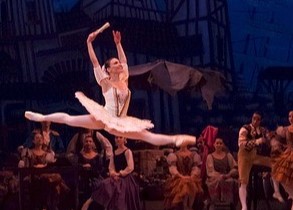
Novelist Jane Smiley wrote, “Even if my marriage is falling apart and my children are unhappy, there is still a part of me that says, ‘God! This is fascinating.’” Ernest Hemingway lived in poverty early in his career and sometimes stole food and said a writer’s perceptions are sharper when he’s “belly-empty, hollow hungry,” that “hunger is good discipline and you can ballerina-534356_640_copy2learn from it.” Before taking the literary world by storm late-blooming novelist/essayist Henry Miller lived in poverty too. He once said, “I have no money, no resources, no hope. I am the happiest man alive.” Emily Dickinson, the greatest American woman poet, author of 1,775 poems, said that if she felt physically as if the top of her head was taken off, she knew that was poetry. Ballerinas—artistes of artistes–may practice until their muscles scream and their feet bleed.

We look at these creative outliers and we marvel and are impressed or appalled or shocked, and often ask ourselves “Could I live an unusual life like sunflower-395026_640that? Am I willing to sacrifice so much for my art and suffer so much and risk so much?  Is that possible for me? How much of my normal life am I willing to give up? If I sacrificed more could I be great too?” And ordinarily decide it isn’t possible at all and we’re not willing to sacrifice in that way, nor suffer, nor risk all that. We couldn’t because a life like theirs asks too much. We draw a line and dare not cross it.

All creative people are obsessed to some extent or another, from mildly to ferociously, so much so that when we obsessed-but-less-obsessed creators hear about these outlier creators we have no problems understanding them since they’re only different from us in degree.

What humans in their craft can accomplish extraordinary outlier creators are willing to push themselves upward toward.  They have a genius.  They’re self-absorbed. They’re determined. They’re completely taken by a way that’s too demanding for the ordinary run of women and men. But for a select few like these outliers their craft becomes a way of life, a journey, a goal, an inevitable struggle of someone rare who’s capable of achieving the impossible.

Creative outliers pour themselves heart and soul and muscle and blood into their work. They work and they work and they work repetitively, and think bird-226700_640about their art or their writing, acting, or dancing continually, and have a monumental amount of confidence. Any time they’re not working they’re making plans for improvement because they know no matter how good you are and what you’ve accomplished you can always be better.

The fundamental role of all creators without exception is to create—to produce works–and they do with a vengeance. Pablo Picasso produced 50,000 works—1,885 paintings ,1,228 sculptures, 2,800 ceramics, 12,000 drawings, thousands of prints, and tapestries and rugs.

There wasn’t a moment of his waking day all his career that Nobel Prize dramatist Eugene O’Neill wasn’t thinking about writing.  He produced 35 full-length plays and 17 one act plays and revolutionized American theater. Writing  long hours, English novelist Charles Dickens—the most popular writer in the world at the time– would sometimes put his head into a bucket of cold water, dry his hair with a towel, and then go on writing.

Creative outliers learn—often at an early age–that they will achieve more if they concentrate their efforts in one area. They are aware only of the work before them, and let nothing divert them from it. French novelist Gustave Flaubert said that only writing mattered to him, and that he kept all his other passions locked up in a cage, visiting them now and then for diversion. He said too, “Sometimes I don’t understand why my arms don’t drop from my body with fatigue, why my brains don’t melt away. I am leading a stern existence, stripped of all external pleasure, and am sustained only by a kind of permanent rage, which sometimes makes me weep tears of impotence but which never abates.”

French novelist/poet/dramatist Victor Hugo started his day by handing his clothes to his servant with strict orders to return them only after Hugo had finished a day’s work of seven hours. Composer Igor Stravinsky and novelist Thomas Wolfe worked all their lives in a frenzy—Wolfe in a “wild ecstasy” at top speed, never hesitating for a word, as though he were taking dictation.

You can’t measure intensity and a person’s pure life force. But the energy pouring out of outliers like Vincent van Gogh would bowl you over. Van Gogh vincent-van-gogh-starry-night-1889worked  furiously at a fever pitch, gathering up the colors as though with a shovel, throwing them on canvas with rage, globs of paint covering the length of the paint brush, sticking to his fingers. Goethe called such super-charged outliers “demoniacs”–people with a super-abundance of vitality, “something that escapes analysis, reason, and comprehension.” Goethe was aware of this power in himself.

Russian Anton Chekhov wrote 10,000 pages of short stories, and also produced great plays like The Cherry Orchard, The Seagull, and Uncle Vanya, and was a practicing physician too. Noted architect and futurist Buckminster Fuller was often unable to stop working until he dropped from exhaustion. Isaac Asimov, author or editor of more than 500 books, said he wrote for the same reason he breathed—because if he didn’t, he would die.

Extraordinary creative outliers are guided by an ambition, a notion so bold that it’s almost outlandish:  that you’re born with a certain aptitude and with direction, discipline, and sacrifice you can transform yourself into something magnificent. Their focus is maniacal—all day long every day. When they’re away from their work they long for it.

Nobel novelist Toni Morrison said, “But the important thing is that I don’t do anything else. I avoid the social life normally associated with publishing. I Toni Morrisondon’t go to cocktail parties. I don’t give or go to dinner parties. I need that time in the evening because I can do a tremendous amount of work then. And I can concentrate.” Outlier novelist Philip Roth said, “My schedule is absolutely my own. Usually, I write all day but if I want to go back to the studio in the evening, after dinner, I don’t have to sit in the living room because someone else has been alone all day. I don’t have to sit there and be entertaining or amusing. I go back out and I work for two or three more hours.” American William Faulkner said jokingly, “If a writer has to rob his mother, he will not hesitate: the ‘Ode on a Grecian Urn’ is worth any number of old ladies.”

We live in a world where everyone is selling something. Everyone has an ulterior motive. They want to be a brand. But these outliers only want one goal: to reach the highest heights they can. That’s it. There’s nothing else.

You look at Picasso and Faulkner and say, “Oh, that’s why painting and writing were invented. As if the gods of the arts declared, ‘To show you others how it should be done we’re going to make a person to represent perfection’.”

They have bad days, difficulties, and setbacks, and still believe in themselves. Andre Gide said, “The great artist is one …for whom the obstacle is a springboard.”   They know that effort is more important than talent. And if you say to them, “You’re just so gifted” they’ll stop you and say, “No, I’m no more talented than anyone else, no more talented than you, but I work much harder” and tell you and me, “If you want to excel you’ll have to overcome the notion that it’s easy.”

They’re a psychologically phenomenal combination of purity of focus and energy-1101474_640purity of discipline and purity of energy. Their creative lives are both comfortable and disciplined.  Even when they’re miserable they’re happy. Age has little effect on their skills except to improve them. They’re never happier and more at ease than when under pressure. They have a sense of being destined for something that very few other people are fitted for. But they are and they know they are.

They have a supreme care about their craft, and they never forget their failures. Their craft is their sanctuary. They’re never better than when doing their craft.

Outlier playwright George Bernard Shaw said, “I am of the opinion that my life sparks-142486_640belongs to the whole community and as long as I live it is my privilege to do for it whatever I can. I want to be thoroughly used up when I die. For the harder I work the more I live. I rejoice in life for its own sake. Life is no brief candle to me. It’s a sort of splendid torch which I’ve got to hold up for the moment and I want to make it burn as brightly as possible…”


© 2016 David J. Rogers

For my interview from the international teleconference with Ben Dean about Fighting to Win, click on the following link:

www.mentorcoach.com/rogershttp://www.mentorcoach.com/positive-psychology-coaching/interviews/interview-david-j-rogers/

Order Fighting to Win: Samurai Techniques for Your Work and Life eBook by David J. Rogers

Fighting to win Amazon

Click on book image to order from Amazon.com

or

http://www.barnesandnoble.com/w/fighting-to-win-samurai-techniques-for-your-work-and-life-david-rogers/1119303640?ean=2940149174379

Order Waging Business Warfare: Lessons From the Military Masters in Achieving Competitive Superiority

Waging Business Warfare812sCY9edLL._SL1500_

Click on book image to order from Amazon.com

or

http://www.barnesandnoble.com/w/waging-business-warfare-lessons-from-the-military-masters-in-achieving-competetive-superiority-revised-edition-david-rogers/1119079991?ean=2940149284030


8 Comments

Filed under Artistic Perfection, Artists, Becoming an Artist, Creativity Self-Improvement, Dancers, Developing Talent, Human Potential and Achievement, Emily Dickinson, Ernest Hemingway, Faulkner, George Bernard Shaw, Goals and Purposes, High Achievement, Literature, Motivation, Outliers, Picasso, Poetry, Preparation, Self-Confidence, Self-Direction, Stamina, Success, The Writer's Path, Thomas Wolfe, Vincent van Gogh, Work Production, Writers

Woman with a Broken Heart

This is different from the kind of posts I normally write, but I discovered it and I wanted you to see it.

George Voyajolu (2)

Storm By The Gulf by George Voyajolu

There are many reasons why this strange mesmerizing work has such a powerful effect on so many people. One is its economy—the writer’s rarely-achieved ideal of not a single unnecessary word. Others are its lyricism and its evocative imagery, its haunting non-metrical rhythms, and its repetitions and grammatical strangeness that lead at the poem’s end to an almost unbearable emotion.

The poem’s uniqueness is struck right away in the opening line by the mixed tenses—“It is” (present tense) is matched with “last night …was speaking of you” (past tense). The “correct” tenses would be far less effective in portraying the feelings of this woman.

It was written by an anonymous 8th-century Irish poet and translated into English by Lady Augusta Gregory (1852-1932). It’s titled “Donal Og,” “Young Donal.”

Read it out loud to yourself.


It is late last night the dog was speaking of you;
the snipe was speaking of you in her deep marsh.
It is you are the lonely bird through the woods;
and that you may be without a mate until you find me.

You promised me, and you said a lie to me,
that you would be before me where the sheep are flocked;
I gave a whistle and three hundred cries to you,
and I found nothing there but a bleating lamb.

You promised me a thing that was hard for you,
a ship of gold under a silver mast;
twelve towns with a market in all of them,
and a fine white court by the side of the sea.

You promised me a thing that is not possible,
that you would give me gloves of the skin of a fish;
that you would give me shoes of the skin of a bird;
and a suit of the dearest silk in Ireland.

When I go by myself to the Well of Loneliness,
I sit down and I go through my trouble;
when I see the world and do not see my boy,
he that has an amber shade in his hair.

It was on that Sunday I gave my love to you;
the Sunday that is last before Easter Sunday
and myself on my knees reading the Passion;
and my two eyes giving love to you forever.

My mother has said to me not to be talking with you today,
or tomorrow, or on the Sunday;
it was a bad time she took for telling me that;
it was shutting the door after the house was robbed.

My heart is as black as the blackness of the sloe,
or as the black coal that is on the smith’s forge;
or as the sole of a shoe left in white halls;
it was you put that darkness over my life.

You have taken the east from me, you have taken the west from me;
you have taken what is before me and what is behind me;
you have taken the moon, you have taken the sun from me;
and my fear is great that you have taken God from me.


The poem is rich in exotic descriptive detail along with great simplicity and lack of straining for effect—qualities of all true art. The imaginative phrases as well as the rustic setting blend with the lonely speaker’s sad lament, contributing to the reader’s compassion and the poem’s powerful effect.


© 2016 David J. Rogers

For my interview from the international teleconference with Ben Dean about Fighting to Win, click on the following link:

www.mentorcoach.com/rogershttp://www.mentorcoach.com/positive-psychology-coaching/interviews/interview-david-j-rogers/

Order Fighting to Win: Samurai Techniques for Your Work and Life eBook by David J. Rogers

Fighting to win Amazon

Click on book image to order from Amazon.com

or

http://www.barnesandnoble.com/w/fighting-to-win-samurai-techniques-for-your-work-and-life-david-rogers/1119303640?ean=2940149174379

Order Waging Business Warfare: Lessons From the Military Masters in Achieving Competitive Superiority

Waging Business Warfare812sCY9edLL._SL1500_

Click on book image to order from Amazon.com

or

http://www.barnesandnoble.com/w/waging-business-warfare-lessons-from-the-military-masters-in-achieving-competetive-superiority-revised-edition-david-rogers/1119079991?ean=2940149284030

6 Comments

Filed under Artistic Perfection, Artists, Donal Og, Irish poetry, Literature, Poetry, Writers