Category Archives: Creativity

Motivating Quotes for Writers and Artists


  • “Painters and poets alike have always had license to dare anything.” (Horace)
  • “The incurable itch of writing possesses many.” (Juvenal)
  • “He is the greatest artist who has embodied, in the sum of his work, the greatest number of the greatest ideas.” (John Ruskin.)
  • “The excellency of every art is its intensity.” (John Keats)
  • “Great artists need great clients.” (Artist I.M. Pei.)
  • “It seems to me that the writers who have the power of revelation are just those who, in some particular part of life, have seen or felt considerably more than the average run of intelligent beings…The great difference, intellectually speaking, between one man and another is simply the number of things they can see in a given cubic yard of the world.” (Gilbert Murray.)
  • “High but not the highest intelligence, combined with the greatest degree of persistence will achieve greater eminence than the highest degree of intelligence with somewhat less persistence.” (Catherine Cox.)
  • “I think if you’re going to write, you’re going to write and nothing will stop you.” (William Faulkner.)
  • “It is the nature of man to rise to greatness if greatness is expected of him.” (John Steinbeck.)
  • “The essential factor of development of expertise is the accumulation of increasingly complex patterns in memory.” (Andreas Lehman.}
  • “Gifts like genius, I often think, means only an infinite capacity for taking pains.” (Jane E. Hopkins)
  • “Writing a book is a horrible, exhausting struggle, like a long bout of some painful illness. One would never undertake such a thing if one were not driven on by some demon one can never resist or understand.” (George Orwell)
  • “It is through art and through art only, that we realize our perfection; through art and art only that we can shield ourselves from the sordid perils of actual existence.” (Oscar Wilde)
  • “If I set out to sculpt a standing man and it becomes a lying woman I know I am making art.” (Henry Moore.)
  • “The whole function of the artist in the world is to be a seeing and feeling creature; to be an instrument of such tenderness and sensitiveness, that no shadow, no hue, no line, no instantaneous and evanescent expression of the visible things around him, nor any of the emotions they are capable of conveying to the spirit which has been given him, shall either be left unrecorded, or fade…The work of his life is two-fold only; to see, to feel.” (John Ruskin.)
  • “I am just a man in the position of waiting to see what the imagination is going to do next.”(Saul Bellow.)

Rainbow in sky with clouds above a thick row of trees and water


© 2025 David J. Rogers

For my interview from the international teleconference with Ben Dean about Fighting to Win, click the following link:

Interview with David J. Rogers


Order Fighting to Win: Samurai Techniques for Your Work and Life eBook by David J. Rogers

Fighting to win Amazon

Click on book image to order from Amazon.com

or

http://www.barnesandnoble.com/w/fighting-to-win-samurai-techniques-for-your-work-and-life-david-rogers/1119303640?ean=2940149174379


Order Waging Business Warfare: Lessons From the Military Masters in Achieving Competitive Superiority

Waging Business Warfare812sCY9edLL._SL1500_

Click on book image to order from Amazon.com

or

http://www.barnesandnoble.com/w/waging-business-warfare-lessons-from-the-military-masters-in-achieving-competetive-superiority-revised-edition-david-rogers/1119079991?ean=2940149284030


Follow my blog with Bloglovin


2 Comments

Filed under Artists, Creativity, Motivation, Quotations, Writers

Comprehensive Post on the Characteristics of Creative People

I have written two hundred popular and pragmatic posts, articles, and “How To” essays for writers and artists over the past ten years.

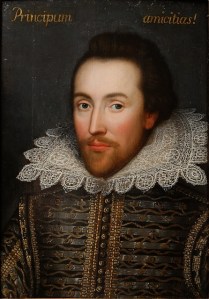
Painting of ShakespeareMy most popular post is entitled “The Characteristics of Creative People.” The subtitle of the post reveals what is different about my approach and makes the post popular. The subtitle, “What We Learn from Writers, Artists, Dancers, Musicians, and Actors,” is my way of saying that through analysis of successful people I have known in various arts and crafts and many others I have read about and studied, these characteristics and personal qualities I describe are those that help writers and artists and others in the arts to do their best work.

For example, they helped Toni Morrison (who never wasted time because, she said, writing was the only thing she ever did) win the Nobel Prize and create magnificent novels and essays, and helped Joan Miro create in vibrant colors lovely paintings, Colorful picture of a jar with paintbrushessculptures, prints, and ceramics, and established Lynn Fontanne as a great dancer, Laurence Olivier a great actor, George Gershwin (as hard a worker as there ever has been in any field), a great composer, and so on.

They are many of the same characteristics that you and I draw upon when we are creating, and our finished work is especially high quality–our best work–thrilling us.  The characteristics tell us what artists are like and how they prefer to work.


© 2025 David J. Rogers

For my interview from the international teleconference with Ben Dean about Fighting to Win, click the following link:

Interview with David J. Rogers


Order Fighting to Win: Samurai Techniques for Your Work and Life eBook by David J. Rogers

Fighting to win Amazon Click on book image to order from Amazon.com

or

http://www.barnesandnoble.com/w/fighting-to-win-samurai-techniques-for-your-work-and-life-david-rogers/1119303640?ean=2940149174379


Order Waging Business Warfare: Lessons From the Military Masters in Achieving Competitive Superiority

Waging Business Warfare812sCY9edLL._SL1500_ Click on book image to order from Amazon.com

or

http://www.barnesandnoble.com/w/waging-business-warfare-lessons-from-the-military-masters-in-achieving-competetive-superiority-revised-edition-david-rogers/1119079991?ean=2940149284030


Follow my blog with Bloglovin

Leave a comment

Filed under Characteristics of Creative People, Creativity

What is Image-Based Writing?

What is image-based writing and why is it effective?

With writing that is image-based the images in the narrative or poem have a starring role, and the chief skill of the writer is creating images. The writer needs a mind that thinks in images. Without vivid image-based writing, texts are lifeless, bland, dull. They don’t seem real and lack vitality. They seem to be business reports, not literature. With image-based writing, texts spring to life. Fill your writing with images.

Practice to develop the skill of image-making. With vivid image-based writing, readers believe that characters are made of flesh and blood and what they are doing really happened. The world of your physical descriptions is real and has three dimensions. That is what you are trying to have your readers believe–and you had better do it quickly, within the first paragraph.

Here are samples of image-based writing from David J. Rogers, author of the popular post “Imagery in the Arts.


Indian Summer Picnic

A sparrow flutters its wings just above the grass,
Squirrels shimmy up trees, a gopher pokes
Its head curiously out of a hole. The sunlight gives
The landscape a coppery hue. The sky grows dark
And threatening, and the clouds turn black.
The breeze has become surges of wind that spin leaves
In the air and drop them ten feet away. Everyone
Hurries to clear off the tables and take everything inside,
Everyone rushes around gleefully, pitching in, doing their share.

They snatch things up, and as they dash for the house
Raindrops the size of pebbles fall and soon the leaves on the
Ground are saturated. What an afternoon–
How fresh, as if floating on a pond–the dark sky,
The farm, the trees, and the people during the flight of
This passing moment.


Woman on a Hill Overlooking a Lake

As she walked
Her lithe body swayed and
The sun shone bright on her wild,
Stormy-looking hair, engendering in me
A sense of her sophistication, and not coldness,
But rather inaccessibility, delicacy, refinement,
And intelligence. For that’s the impression
Women whose beauty is beyond words make.


Welsh Men, English Woman

The men in that Welsh-American family smiled appropriately,
Frowned sympathetically, and looked as grave
As morticians at times, puckering their foreheads,
Pursing their lips, and pouting. Not for a single
Instant were they amazed, puzzled, or unsure
Of themselves, and their voices were firm.
They stood so erect, so confidently, as they talked
So earnestly, straight as if braced by rods, as though
What they were saying were unassailable truth
And could not be doubted but by a nitwit.

Or they stood nonchalantly and slack, their hips shifted to
The left or right, with nothing other between their
Hair and shoes than supreme, unshakeable
Self-assurance. But the English woman was alone against
A tree like a twig that could easily be broken in two or
An object on display to anyone who had a desire to
Stare–a scarecrow staked deep into the ground,
Impossible to budge.


Hints of Winter

The previous week’s frost wilted
And turned brown many of the flowers in the beds, but those
That are still alive are bright and straight. The farther back
You go in the yard, the stronger are the fragrances that
Come from all sides. Across the grass, close to the house,
A sprinkling of white and purple dresses the tops of
Oleander bushes.

The sun sheds light in patches on the grass.
Beside the barn, as if kneeling, is a gnarled and bent tree and
Farther away other straighter trees whose leaves are changing.
I can smell the green leaves and the dry leaves, the young
Leaves, and the old leaves that give hints of winter.


Then and Now

Chicago’s Sheridan Road ran parallel to Lake Michigan, as it does today, and when you walked down it in those days you heard the sounds of the traffic mingling with the lapping of the waves on the beaches. From the beaches on clear days you could see on the horizon’s edge the western shore of Michigan to the east, and out on the lake low in the water turgidly-moving barges carrying heavy loads of ore down from Minnesota to the steel mills of northern Indiana. On certain afternoons in July and August the sun bore down on the sand so intensely that it was painful to walk on it, so mothers and fathers with feet on fire dashed to and from the tumbling waves carrying their squealing children tight in their arms.

One by one the beaches were filled in and all the great industrialists’ mansions with ample lawns that lined the street were torn down and replaced by closely-packed towering apartment buildings with hundreds of balconies which were far more impressive architecturally, but far less beautiful. Few people remember the mansions or the beaches, but most believe that the high-rises have stood there forever. Now when you walk down Sheridan Road the traffic is so heavy and the water so far away behind the buildings that you can no longer hear the waves.


© 2024 David J. Rogers

For my interview from the international teleconference with Ben Dean about Fighting to Win, click the following link:

Interview with David J. Rogers


Order Fighting to Win: Samurai Techniques for Your Work and Life eBook by David J. Rogers

Fighting to win Amazon

Click on book image to order from Amazon.com

or

http://www.barnesandnoble.com/w/fighting-to-win-samurai-techniques-for-your-work-and-life-david-rogers/1119303640?ean=2940149174379


Order Waging Business Warfare: Lessons From the Military Masters in Achieving Competitive Superiority

Waging Business Warfare812sCY9edLL._SL1500_

Click on book image to order from Amazon.com

or

http://www.barnesandnoble.com/w/waging-business-warfare-lessons-from-the-military-masters-in-achieving-competetive-superiority-revised-edition-david-rogers/1119079991?ean=2940149284030


Follow my blog with Bloglovin

2 Comments

Filed under Creativity, Imagery in the Arts, Writing, Writing improvement, Writing models

 The Worst and Best Traits of Creative People

Night scene of ridge over water with street lights Whether you find creative people in remote little mountain kingdoms accessible only by mule or in big, modern, cosmopolitan cities, you will discover that they are surprisingly alike. The many traits they share are not all favorable; some are obstacles. Yet those traits–the worst and the best together–prepare creative people for fascinating lives other people look at with admiration and envy.


Creative people:

Feel deeply and are gifted. They are people whose ecstasies and traumas will be the raw material for their creations–never to be forgotten, but reflected again and again many times in the works they contribute to the world.

Red-haired, barefoot little girl in a blue dress with a serious expression sitting on a chair and playing a violin May be “overlooked” as school children. Their talents unrecognized, they may have undistinguished elementary and high school careers, only to be recognized for their significant achievements later in life to the surprise of everyone.

Are self-absorbed, concerned first and foremost with themselves, their own wellbeing and state of mind, their projects and their cherished and most private desires, needs, hopes. Their self-absorption can make them overly emotional, temperamental, and difficult. But self-absorption is a necessary feature of a creative personality.

Proud, may react defensively, angrily, bitterly to criticism.

Man wearing a black sweater holding his head in his hands, as if sad or upset Sadly, at times may be too emotionally ill to work, particularly poets and writers who may be victims of the high and inexplicable incidence of debilitating mood disorders affecting them.

Have a strong belief in, respect, and enthusiasm for their art.

Need confidence. Confidence grows exponentially with each success. The most accurate predictor of future success is past success, as “Since I have written a best seller before, I can do it again.”

Are often “seduced” by their art. There is no shortcut to the tremendous amount of experience necessary to become highly skilled in an art. It is hard for someone in the arts not to see their art taking over more and more of their time and possibly becoming their most important activity, finding themselves doing everything for their art.

Are rebellious, bold, and open to new experiences. More daring than the majority of people. Have no fear of risks.

Pianist performing in front of an audience on a stage with a shiny wood floor and a background of blue water behind him Have an insatiable need to establish rapport with and hold an audience–followers, fans to applaud them.  And yet, deprived of an audience, they will still work just as conscientiously.


May not seem to be but are competitive, ambitious, prone to envy and jealousy.

Will of necessity bloom late due to the difficulties of becoming established, overcoming a sequence of hurdles, and mastering their chosen art. Late developing, being “behind,” they needn’t despair because they often accelerate and “catch up” quickly after their first successes, often surpassing those who bloomed sooner.

Tend to “live in their heads.”

Consider themselves the best judge of their work, its “foremost authority.”

Are lucky to have the particular creative talents esteemed by society that make them ideal writers, artists, actors, dancers, composers, etc. as if  they are people who have been ordered from a catalogue.

Beige and brown Siamese cat sitting up on a light-colored wooden table and looking at the viewer with intense blue eyes.“Know who they are.” Are marked by a clear, unambiguous sense of identity, as “I am an historical novelist specializing in women’s roles in England during the Victorian era.”

Can be characterized as having heightened perceptions of the drama in the world and the beauty and importance of their art. In time they develop a “novelist’s mind,” or a ”painter’s mind,” or an architect’s, or dramatist’s mind, etc.

Can be perfectionists who are extremely hard on themselves and others (loved ones, associates, subordinates).

Abhor pretense.

Are not driven by the same needs as even the people dearest to them. (That causes conflicts).

Hold sacred their independence (Will fight for it, don’t want to lose it) Hate having their freedom interfered with or restrained.

Are far more self-disciplined in their work than most people in other fields.

Fanciful painting of many red, orange yellow, blue, and green, and white open umbrellas floating in the skyCan be playful, child-like, humorous, silly, fun to be with, and seem younger than their age.

Are committed to the development and refinement of their talents; motivated by “an urge to improve.”

Are exuberant, often boastful, about their achievements.

Love to work, work hard, sometimes harder than seems humanly possible.

Possess extraordinary energy and are excitable.

Must be patient and longsuffering because if they reach high-level mastery and become famous they will have persisted doggedly through thick and thin for years; many “rough spots on the road” appear in a creative person’s career.

Are strengthened by powerful needs to be competent and to be respected.

colorful abstract painting with yellow, red, pink, green blue, black, brown and traces of other colorsBenefit from a rare ability to focus on one object, problem, or task for extended periods without being bored or losing interest. (Facilitates completing “big jobs” like writing novels and painting murals.)

Strive to find “the one true voice” that expresses them vividly and accurately. (Doesn’t happen overnight.)

Generally find more pleasure working alone than working in groups; do not avoid, but relish, solitude.

Must quickly develop a capacity for mature self-criticism, objectivity, and judgment about their work and their abilities

Highly value authenticity, integrity, and sincerity.

large number of small jigsaw puzzle pieces in blue, orange, yellow, green, and brown piled on top of each otherFor survival must become skilled at overcoming obstacles, of which there are many in the arts.

Have a practical problem-solving intelligence; prefer difficult to easy problems.

May show minimal interest in current events, gossip, and politics–not interested in discussing them, “tune them out.”


Creative people possess many gifts, many strengths, and many imperfections. As imperfect as anyone else, they nevertheless benefit the world in innumerable ways.


© 2022 David J. Rogers

For my interview from the international teleconference with Ben Dean about Fighting to Win, click the following link:

Interview with David J. Rogers


Order Fighting to Win: Samurai Techniques for Your Work and Life eBook by David J. Rogers

Fighting to win Amazon

Click on book image to order from Amazon.com

or

http://www.barnesandnoble.com/w/fighting-to-win-samurai-techniques-for-your-work-and-life-david-rogers/1119303640?ean=2940149174379


Order Waging Business Warfare: Lessons From the Military Masters in Achieving Competitive Superiority

Waging Business Warfare812sCY9edLL._SL1500_

Click on book image to order from Amazon.com

or

http://www.barnesandnoble.com/w/waging-business-warfare-lessons-from-the-military-masters-in-achieving-competetive-superiority-revised-edition-david-rogers/1119079991?ean=2940149284030


Follow my blog with Bloglovin


8 Comments

Filed under Artists, Becoming an Artist, Creativity, Developing Talent, Human Potential and Achievement, energy, Late Blooming, Life of Creators, Persistence, The Nature of Artists, Traits of Creative People, Voice, Writers, Writers' Characteristics

The Three Qualities Found  in Successful Artists and Writers

A Story of Three Artistic Friends

I was sitting in my living room that wintry Saturday night with three old friends who were successful in the arts:  a novelist, a poet, and a Path and trees covered with snowpainter. The storm buffeting the windows and pelting them with hail and snow made impossible even the thought of digging cars out and driving home. But everyone was in a good mood, and the house was warm. We were happy being together again after being separated so long by COVID.

For a while the conversation wasn’t really a conversation–just random comments, funny memories from their careers and mine, times we had spent together, and our favorite projects. I told them that I had an idea. I had a topic that had intrigued me for a long time. The novelist, a very cheerful man, said, “What topic is that?” I said, “I’m glad you asked.” Everyone laughed, and I said, “I would like to know what  main qualities bring a person success in the arts–qualities that Da Vinci had, and Shakespeare, Monet, Brando, Faulkner, and anyone successful in the arts now, in the past, and in the future. What are the main qualities instrumental in their success?”

Everyone was agreeable, and Norman started things off.


Norman the Poet

Energy

Norman is an award-winning poet I have been friends with since I attended one of his riveting readings. The principal feature of his personality is gentleness which is reflected in his often-tender lyric poems. He said, “I’ve given this question some thought too.  I think a lot of Depiction of swirling energy in pink, blue, yellow and greean against a black backgroundaccomplished people in the arts have wondered what they have that makes their creative work possible. The main quality anyone must possess if they are trying to be successful in anything, not just the arts, but certainly the arts, I feel, is energy. Powerful, potent personal energy equips creatives to produce a steady flow of works. Isn’t that our goal?

“Phoebe and Paul, I know you will each have something important to say, but I think an accomplished person in the arts is inconceivable without a high level of sustainable energy. The most successful artists have the energy and reserves of energy to work very hard, sometimes in a creative frenzy, and produce their art steadily over the course of a satisfying career.

” I cannot imagine people in any field having more energy than those of us in the arts. Athletes may equal us, but don’t surpass us. Artists are the antithesis of lazy, but have a passion to roll up their sleeves and work. I think they have had this passion all their lives. Their energy breeds more energy, as though their supply of it is inexhaustible. In a creative state of mind and body they don’t seem to get tired the way other people do. They can work long hours when working long hours is needed, as when they have a deadline. Imagine writing a novel. It is a pleasant ordeal that requires the expenditure of energy every day from the first draft which may have been written a thousand days before the finished book is available to readers.

“Consider the staggering achievements of Shakespeare. He wrote more than thirty tragedies, comedies, and histories, and the sonnets, and directed plays and acted in them. He managed a theatre company and had a wife and children to take care of.  Vincent van Gogh produced three thousand works in his brief five year career. That’s two works a day`. Picasso was even more productive.

“I’ve never known a successful creative person who lacked impressive energy. Their main goals are to pay their dues mastering their craft and then to produce one work after another non-stop. A big reason for a creatives’ failure is just lack of the energy that excellence in the arts requires.”


Phoebe the Painter

Talent

Phoebe has long experience and has had many shows. Her work can be found on the walls of several museums. She oozes confidence–a woman giving an impression of total self-possession, independence, and fearlessness. She is remarkably attractive. A friend once described her to me by saying, “And then I saw crossing a bridge the most beautiful woman on earth.”

She said, “I believe that the most important quality in an artist is talent. People in the arts are people with a gift, and that gift is their talent.  Shakespeare, Picasso, and van Gogh had tremendous energy but if they hadn’t had more talent than other people, they wouldn’t be the artists we admire so. An artist will not succeed without substantial talent.

Talent is the most recognizable quality in the creative world. It is everywhere. The most impressive thing in the world of art is the virtuoso performance, a display of talent by an individual that is so great that you will remember it long after you have forgotten everything else. There it is in Norman’s poems and Paul’s novels, and Degas’ and Jackson Pollack’s paintings, Laurence Olivier performing Hamlet, and Hemingway’s and Faulkner’s novels. Their talent is–how should I say it–extreme.

Colorful photo of young girl working on artwork“Painters, writers, actors, and dancers enter the world talented. From the beginning of their lives they can draw better than other children or write more interesting compositions, act out scenes more skillfully, dance more gracefully. Just look at the lovely paintings some little children can paint and the poems they can write.  Some children are too young to have learned to paint, yet they paint wonderfully and have technique. No one has taught them. They can paint superbly before being taught.  When they are being taught they absorb information so quickly, it’s astonishing. That’s the definition of talent.

“Talent cannot be depleted. If you have it you will never lose it. There will always be more. To be very good or great you must add to your talent. Creative people have been favored since birth, but not without the gods requiring something in return, and that is the responsibility to augment their talent.  Much of the energy Norm was talking about an artist applies to getting better–studying, practicing, experimenting.

“Raw talent is a quality which grows in quantity with effort.


Paul the Novelist/Actor

Focus

Paul had his first literary success as a college sophomore when his short story received an O’ Henry Award. He went on to write novels, and then in his words “branched out” into theatre acting where he also found success. That snowy night he said, ”Who can argue with a creative person’s need for inexhaustible energy and for talent that is exceptional? But I think that focus that is the salient factor that brings success to anyone in any field, especially in the arts, where the creator must concentrate so hard so often on so many things.”

He continued, “People often think of broad periods of time: ‘In eight months I’ll take my vacation and in eighteen years I’ll retire.’ But the creator in the act of creation focuses, thinking only of what occurs in single moments, such as ‘this brush stroke’  and ‘this sentence,’ ‘this musical phrase,’ or ‘these lines in this play I am to deliver now.’ The best moments of a creative person are that sliver of time when your mind is sharp and focused only on your work, when your mind is alert and clear, your concentration undivided and pin-point.

Magifying glass illuminated in gold light“I think that focus is a rare quality–the famous image in Zen of lack of creative mindfulness being a drunken monkey. People in our business have to learn pretty quickly to discipline their minds, so they don’t wander, but stick to the creative job at hand and not let any extraneous thought cancel that mysterious moment when you’re hard at work, focused, and being as creative and fulfilled artistically as you will ever be.”

Paul said, ”I also think that people in the arts have to be sure that they are in the art that most suits them and where their energy, talent, and focus will bring the best results. That may seem so obvious that it’s not worth mentioning, but what has struck me is that practicing artists sometimes discover they are focusing on the wrong art or genre, or that other artistic careers are right for them too, the way I discovered I could act and write both. Sounds ridiculous doesn’t it that a creator wouldn’t realize that another art or creative specialty would be more suitable. But it happens.

“There are other examples of people in the arts who were focused on the wrong specialty. Thomas Wolfe began by thinking that he was a playwright and was educated to be one in college and at graduate school at Harvard.  It was only after studying and writing plays for ten years, when his lover said, “Tom, you’re not equipped to be a playwright. You’re intended to be a novelist” that Wolfe became a novelist. Mary Cassatt spent several years painting in a conventional style before living in France and falling under the sway of Impressionism. She became an Impressionist herself. She destroyed all the paintings she had produced prior to making that change. “

“For me the key to success in the arts more than anything else is focus, both in the sense of mindfulness in the moment and in the sense of concentration on the most suitable and rewarding art.”


Application of Energy, Talent, and Focus

We thought our evening together had been fun–and enlightening. I said, “Other qualities are important to creators too. Self-confidence, intelligence, a rich imagination, detailed memory, drive, intensity, curiosity, experience, and careful preparation, for example, and beyond those of course is luck–is the person lucky? But energy, talent, and focus–I like that. We could look at the theatre department of a small college. Let’s say there are thirty students in the department.  They will all receive exactly the same training in acting, but the results will be different.

“Let’s estimate that after college fifteen will have no further connection with acting.  Ten will get involved in community theatres.  Five will become professional actors, two in lead roles. One will become a star. What we’re saying is that it’s likely that those who will become professionals will have more energy, talent, and focus than the others, and that the star will have more than anyone. I think we have something.”  Phoebe said, “Something good happens whenever we’re together.” Norman said, “We’re a good team.”

Going Home

painting of a simple house on a snowy nightThe storm still didn’t look so good, so they stayed the night. In the morning Paul insisted on making breakfast. I made coffee. We vowed to get together again soon. Then in early afternoon a bright sun came out, the winds died, and they left for home where work and many challenges were waiting.


© 2022 David J. Rogers

For my interview from the international teleconference with Ben Dean about Fighting to Win, click the following link:

Interview with David J. Rogers


Order Fighting to Win: Samurai Techniques for Your Work and Life eBook by David J. Rogers

Fighting to win Amazon

Click on book image to order from Amazon.com

or

http://www.barnesandnoble.com/w/fighting-to-win-samurai-techniques-for-your-work-and-life-david-rogers/1119303640?ean=2940149174379


Order Waging Business Warfare: Lessons From the Military Masters in Achieving Competitive Superiority

Waging Business Warfare812sCY9edLL._SL1500_

Click on book image to order from Amazon.com

or

http://www.barnesandnoble.com/w/waging-business-warfare-lessons-from-the-military-masters-in-achieving-competetive-superiority-revised-edition-david-rogers/1119079991?ean=2940149284030


Follow my blog with Bloglovin


10 Comments

Filed under Artists, Creativity, energy, Excellence in the Arts, focus, talent

Good Advice, Quotes, and Concepts for Writers and Artists

You Don’t Have to Feel Good to Have a Delightfully Productive Day

I follow sports closely, and it surprises me how often swimmers, tennis players, track stars, basketball players, and other athletes perform their record best on the very days they are not feeling fit physically or emotionally. They feel “off” but nevertheless they compete and often they excel. Field with pink green, orange, white and purple rows of flowers curving in front of a blue sky with white cloudsI think of the famous Michael Jordan “flu game” when he had to be carried off the floor after the game with the flu by a teammate, yet scored 38 points and led the Bulls to victory.  “Probably the most difficult thing I have ever done,” said Jordan.

That illogical phenomenon of feeling unprepared and yet excelling also applies to people in the arts. Robert Boice said, “Beyond doubt, creative writers who begin a project before feeling prepared or motivated achieve more quantity and quality.” Feeling out of sorts used to stop me.  When I wasn’t feeling right, I’d think, “Why even try?” But now, because I am familiar with athletes not feeling good but performing so well, when I feel not ready at all to write, I become optimistic and confidently sit down at the computer and expect a productive day, and usually have one.

You will be more productive if like those athletes you don’t make your mood the dictator of your performance, but simply however you feel you do your work. Don’t live by how you feel. Everyone Girl looking sad leaning on her handwould prefer to be cheerful and happy, but as far as creative work is concerned, how you feel is secondary. What matters most are the requirements of the craft you have committed yourself to, and one requirement is day after day to put out effort to achieve your creative goals. It seems to me that one constant goal that is shared by most people in the arts is to develop your in-born talents to the fullest and that another requirement is to produce finished works.  When you see your talents growing and you are producing original works regularly and everything is meshing, you are at your best, and you know it.

In the nineteen-sixties a number of America’s excellent poets who knew each other well felt that to write their best poetry–to be in what they thought was the ideal mood for writing verse– they had to feel deeply depressed.  That was their philosophy and what they talked and Young man looking depressed with his hand on his foreheadcorresponded about. Nurturing depression in and out of psychiatric hospitals, some of them committed suicide including John Berryman and Randall Jarrell. Poets Sylvia Plath and Ann Sexton were friends and felt the same. They talked to each other often, and also committed suicide.

But you don’t have to feel miserable to write a poem or a tragedy or be in love to write a romance. Anton Chekhov said that ironically happy writers write sad things and sad writers write happy things. Gustav Flaubert said that the less writers feel a thing, the more likely they are to express it as it really is. J.D Salinger wrote that ecstatically happy prose writers have disadvantages. They can’t be moderate, temperate, detached, or brief.

Some writers seem so grim and bitter about their need to write. George Orwell said that “Writing a book is a horrible, exhausting struggle, like a long bout of some painful illness. One would never undertake such a thing if one were not driven on by some demon one can never resist or understand.” Opera composer Giacomo Puccini said “Art is a kind of illness.” Nobel laureate Ernest Hemingway felt differently. He felt awful when he wasn’t writing, the opposite when he was: “Suffer like a bastard when don’t write, or just before, and feel empty…Never feel as good as while writing.”

Silhouette of a person with arms outstretched looking at a sunriseWhatever has been said about the relationship between creatives’ state of mind and their performance,  writers and painters I know or have read or heard about have found writing or painting the most fulfilling and blissful thing they do.


Overview

I have assembled a number of quotations that pertain to many aspects of the lives of people in the arts– their function, their preference for simplicity, their complex nature, and the construction of their work.


The Creative’s Function

It is not coincidental that the remarkable art and architectural critic John Ruskin and novelist Joseph Conrad with his dazzling visual imagery Drawn outline of an eye with an illustration of the world map as the eyehad the same view of the function of writers and artists. Ruskin: “The whole function of the artist in the world is to be a seeing and feeling creature.”

Conrad: “My task, which I am trying to achieve is, by the power of the written word, to make you hear, to make you feel–it is, before all, to make you see.”


Don’t Complicate Arts That Are So Simple

Usually, over the course of a career, noted practitioners of an art simplify their views of their role.

“What shall I say about poetry? What shall I say about those clouds, or about the sky? Look; look at them; look at it! And nothing more. Don’t you understand that a poet can’t say anything about poetry? Leave that to the critics and the professors. For neither you, nor I, nor any poet knows what poetry is” (Frederico Lorca).

Picture of a green grassy hillside with buildings and trees and blue sky with cloudsPainter Edouard Manet thought the urge to create is a simple reflex that doesn’t require thought: “There is only one true thing: instantly paint what you see. When you’ve got it, you’ve got it. When you haven’t, you begin again.”

William Faulkner wrote in a highly complicated rhetorical style that is difficult to understand unless you read the sentences over and over. Yet he was the most direct person when he spoke. When asked what he thought made a good writer he said, “I think if you’re going to write, you’re going to write and nothing will stop you.”  Saul Below, like Faulkner a Nobel Prize winner, was as direct when he said, “I am just a man in the position of waiting to see what the imagination is going to do next.”

Henry Moore felt that his art had a spontaneity of its own. He believed that if he set out to sculpt a standing man and it became a lying woman, he knew he was making art.

Henri Matisse is reported to have said, “When a painting is finished, it is like a newborn child. The artist himself must have time for understanding it. It must be lived with as a child is lived with, if we are to grasp the meaning of its being” (John Dewy).


The Makeup of Creatives

People generally are fascinated by creatives and want to know what makes them able to produce memorable works. A survey was done dealing with women’s preferences for a husband. The most attractive partner was thought to be a writer. And creatives are self-absorbed and fascinated by themselves.

Creatives express love: Alfred Werner of Marc Chagall: He is a painter of love. He loved flowers and animals, he loved people, he loved love. There is sadness in his paintings, but there is no despair and always a metaphysical hope. “When he paints a beggar in snow, he puts a fiddle in his hands.”

Blue and brown fantasy illustration of a face with diagrams of the brain on either sideCreatives have complex memories from which their art derives: “The essential factor of development of expertise is the accumulation of increasingly complex patterns in memory” (Andreas Lehmann).

Creatives convey great ideas: “He is the greatest artist who has embodied, in the sum of his work, the greatest number of the greatest ideas” (John Ruskin).

Creatives involve their whole selves in their art: “It is art that makes life, makes intensity, makes importance…and  I know of no substitute whatever for the force and beauty of its process “(Henry James).

Creatives are especially perceptive: “It seems to me that the writers who have the power of revelation are just those who, in some particular part of life, have seen or felt considerably more than the average run of intelligent beings…The great difference, intellectually speaking, between one man and another is simply the number of things they can see in a given cubic yard of the world.” (Gilbert Murray.)


How is a Work Made?

Pink, brown and gold pieces of a jigsaw puzzle on a dark wooden tableSince the earliest civilizations people have been theorizing about creatives among them and the creative process. The first question was: is creative ability a gift from the gods?

John Ruskin communicated his ideas so beautifully. About the making of a work of art he said, “Fine art is that in which the hand, the head, and the heart go together.”

Novelist George Eliot said about creation:  “Great things are not done by impulse, but by a series of small things brought together.”

Creatives have a strong need for independence and resist having their work meddled with, as communicated by this quote from Patty McNair: “Get your mitts offa my story.”

The need for a developed expertise: “The repeated reminder of Mr. (Ezra) Pound: that poetry should be as well -written as prose” (T.S Eliot).

Eventually a writer will come to the conclusion that simplicity and naturalness are the keys to effective styles: “As for style in writing, if one has anything to say, it drops from him simply and directly” (Henry David Thoreau).

Brown tree branches in front of a gold sunsetThe best writing resists critical explanation:  “In truly good writing no matter how many times you read it you do not know how it is done. That is because there is a mystery in all great writing and the mystery does not dissect out” (Ernest Hemingway).

Inspirations are creative urges such as “Go ahead and do it”: “If you find a book you really want to read but it hasn’t been written yet, then you must write it” (Toni Morrison).


The Work is Greater than the Artist Who Produced the Work

It is very common for people meeting someone who has produced a great work of art to be disappointed, not with the work, but with the impression the artist makes: “I thought he would be better looking”  “He writes so beautifully but he’s not much of a conversationalist, is he?” Poet and essayist Joseph Brodsky said aptly, “What people can make with their hands is a lot better than they are themselves.”


© 2022 David J. Rogers

For my interview from the international teleconference with Ben Dean about Fighting to Win, click the following link:

Interview with David J. Rogers

Order Fighting to Win: Samurai Techniques for Your Work and Life eBook by David J. Rogers

Fighting to win Amazon

Click on book image to order from Amazon.com

or

http://www.barnesandnoble.com/w/fighting-to-win-samurai-techniques-for-your-work-and-life-david-rogers/1119303640?ean=2940149174379


Order Waging Business Warfare: Lessons From the Military Masters in Achieving Competitive Superiority

Waging Business Warfare812sCY9edLL._SL1500_

Click on book image to order from Amazon.com

or

http://www.barnesandnoble.com/w/waging-business-warfare-lessons-from-the-military-masters-in-achieving-competetive-superiority-revised-edition-david-rogers/1119079991?ean=2940149284030


Follow my blog with Bloglovin

3 Comments

Filed under Advice, Artists, Creativity, Creativity Self-Improvement, Creators' Work Life, Developing Talent, Human Potential and Achievement, Productivity, Quotations, Writers

Writers with No Desire to Publish

The senior editor of a literary journal asked a writer friend of mine to submit a piece for a future issue, but my friend who thanked the editor for the compliment has no interest in submitting anything to that magazine or any other.  I’ll call her Kathy because that’s the name she wishes she brown silhouette against gold background of a woman working at a computerhad, but doesn’t. It is a highly-regarded journal and would enhance any serious writer’s reputation to appear in it. That journal had published other pieces of Kathy’s in the past during her particularly prolific period when work poured out of her and was in demand by editors and readers. Some of her books were being published at the time, and many of her articles appearing in magazines were achieving record readership scores.

Kathy is far from alone now being a writer who works as hard as ever at the writer’s craft to perfect her work, and has high standards–revising, refining, embellishing, cutting, and improving endlessly–but does not care to be published by book or magazine publishers. People like Kathy enjoy writing for its own sake and its own sake alone. Publication that was once important to her is not important to her now. People ask her, “Don’t you get a kick out of seeing your name in print?” and she answers, “Ive seen it in print many times so it is not as big a thrill.”

colorful pile of open magazine pagesI am talking about the difference between writers whose overriding goal is to see their work in print–a Publication Focus–contrasted with writers whose overriding goal stops short of publication in which they are not interested. They are concerned solely with generating what is in their judgment the highest possible quality text–a Production Focus.  The latter are more than contented to produce works they are proud of without seeing them published.

Having their work published seems an automatic motivation for writers that follows sequentially from writing the work, and is generally expected of writers–you are a writer and you write a story, for example, and then you are expected to submit it to a magazine (or a novel to a publishing house) where a committee of editors and managers evaluate it in comparison with other submissions and decide if it is suitable for them to publish. The submitting writers are competing for a prize and the prize they are competing for is seeing their name and their work printed, perhaps for pay, but even if not for pay, for the delightful satisfaction of well, having a work published which they can tell friends and family about, which for most writers is the whole point, the end goal for which they are prepared to work very hard.

What could writers who are not motivated to publish possibly be thinking, and what does motivate them to go on writing with no intention or hope of seeing the finished product in print where it would be read by  hundreds, or thousands of others–or more–many of them fans of good writing?

Research

Production Writers who have no desire to publish don’t have to wait for money or praise or any external reward to be fully satisfied. All that fantasy picture of woman standing on an open book flying a kitematters to them is that the works they produce be the best they have the skills to produce. They believe that because they are not interested in publishing but in producing the highest quality work they can, they are more creative and do better work than they would were they competing with others to see their work in print, and there are grounds for that belief.

Harvard psychologist Teresa M. Amabile has spent her entire career trying to understand what motivates people to be creative and what are dis-incentives. She has staked her reputation on proving that creativity increases when you are what she calls intrinsically motivated and engage in the creative activity for the sheer pleasure it offers (as Production Writers do). If you write, paint, sculpt, dance, etc, to earn rewards other than the enjoyment, satisfaction, and challenge of performing the activity as well as you are able (as Publication Writers do), you are extrinsically motivated and  become less creative. The work that results is not as finished-beautiful-aesthetically pleasing-masterful as it might have been.

Amabile tested subjects ranging from young children to college women, giving some of them rewards for doing the work. What they had pile of magazines and booksproduced was then graded by professionals–seasoned painters grading the paintings, experienced writers the writing, etc. The results were significant in that no matter what the reward was or when it was given, if the subjects thought they were working for  external rewards, even a little trinket, and not for fun and pleasure, they became less creativeBut when they were light-hearted and fooling around and no external reward was involved, they were more creative and their work was better.

In one experiment Amabile divided writers into two groups. She had one group fill out a questionnaire about the joys of writing for its own sake such as being able to experiment with words. The other group filled out a different questionnaire about the external benefits of writing like being on a bestseller list. Writers in both groups then wrote short, haiku-like poems. Then a panel of judges—poets–rated the poems. The writers who had been thinking about rewards like bestsellers wrote inferior poems. Extrapolated, that suggests that it may be detrimental to the quality of your next novel to have making The New York Times list on your mind.

I had experiences that confirmed Amabile’s research in my writing life. When I was writing one book, my mind was solely on communicating in man sitting on the edge of a cup of coffee, writing on a laptop computera clear, informative, and entertaining way concepts that were unfamiliar to western thinking. It was a challenge because the concept of the book was totally new and original. Every day’s work  of many hours was fulfilling, I didn’t spend a second thinking about how my book would do in the stores, only about the book’s clarity and how useful I could make it and how inviting it would be for readers. It was a highly successful and profitable book and my ambitions for the next book I began were high. But I found my thoughts losing focus. They often wandered away from the book’s content and style and how to satisfy the reader to where I would build the new house the new book’s royalties would bring me and the kind of cars I would buy. Both books received many accolades and made best seller lists. But whereas I wouldn’t change a single word of the first book, I live with the knowledge that the second book could have been better.

Publication Writers in Contrast with Production Writers

Publication Writers often experience stress and worry about the chances of the work being published. But in contrast the Production Writer feels no pressure, no stress, and is relaxed. That experience can make Production Writers feel freer and bolder and unafraid of taking chances they might not otherwise take, but which might improve the work. That freer confident mood can lead to leaps in their performance. William Faulkner is a good example.

When Faulkner realized that his complex rhetorical style and subject matter weren’t those of a commercially-popular author (would not lead to extrinsic rewards such as high sales) he began a period of sustained creative energy. He started to become great. He decided to write for himself: brown shut door in the middle of black wall“One day I seemed to shut a door between me and all publishers. I said to myself, ‘Now I can write.” He started working on The Sound and the Fury, “thinking of books, publication, only in the sense in saying to myself, I wont (sic) have to worry about publishers liking or not liking this at all.”

A disincentive Publication Writers must face is the inevitability that their work is going to be evaluated by editors and others. They are competing for the good opinion and a favorable decision of people who have power who will be passing judgment on the quality of the work, and indirectly, also the quality of the writer. That is why rejections can be so hurtful and discouraging, and taken so personally: “In rejecting what I have worked so hard on and put so much effort into they are telling me I am inadequate.” Thousands of writers make the decision to quit silhouette of dejected man sitting with head on his hand with a background of words such as worthless, unwanted, hopeless, etc.writing every day.  Most of them quit because of the heavy, depressing weight of too many failures and too few–if any–successes and the toll of failures on one’s confidence and sense of competence and self-esteem. Extraordinary self-confidence is necessary to persist in the face of failures and setbacks.

The knowledge that the submission will be evaluated negatively affects the writer and tends to produce works that are more conventional. Some of them are written specifically to suit the publication as if to order. Magazines and publishing houses make very clear the kinds of materials they are in the market for and will publish. Possibly the works could have been better written had the writer been more relaxed and playful and had not been seeking the approval of editors so desperately.

Writers at ease and at work–in a favorable state for creativity–have many of the attributes of children at play. Psychiatrist D.W. Winnicott wrote that “it is in playing and only playing that the individual child or adult is able to be creative.” Psychoanalyst Erik Erikson said it is striking to see a two-year old child rolling a ball. They can throw the ball on the floor again and again, watching it roll a hundred times and never get little boy in yellow and blue rain jacket playing with a ball in a water puddle or near a water's edgebored. Just as children do that, writers can do something remarkable. As fully absorbed as children, they can work on perfecting a single paragraph forty or fifty times without experiencing a moment of boredom while people who are not writers and think that one draft is sufficient are astonished that such a feat is possible. The conclusion of Amabile’s experiments was that a playful approach like that of children increases the likelihood of producing creative results, and that pursuing external rewards diminishes the person’s creativity.

Being competitive makes it hard for most writers to be relaxed and in a light and child-like playful mood that is conducive to creativity. But competition is a major feature of most writers’ experience Out of necessity writers are forced to be competitive when they try to get their work published. There may be hundreds of other writers attempting to get their work published at the same time in the same magazine or thousands with the same book publisher.

In contrast, the absence of competition and evaluation (other than their own evaluation, perhaps severe, but coming from no one but Woman writing on glass pane in front of her the words, "I'll do it My Way."themselves) which Production Writers experience has been shown to improve the quality of the work that is produced.  That is why so many famous writers think that they, and no one else, are the best judge of their work and why so many of them ignore or don’t ask for the advice of editors. Who enjoys being evaluated? Writers often dread evaluations, and evaluations negatively affect the writer’s mood and thus the quality of work that is produced. A Production Writer may ask for editorial assistance–to be helped–but not to be evaluated.

The best way to recognize which kind of motivation you have is to ask yourself if you’d continue doing the work if no reward were to follow. If you answer, “No way,” your motivation is that of a Publication Writer. But if you answer, “Of course I would; it wouldn’t affect my work whatsoever,” it is the motivation of playful, child-like Production Writers.


© 2022 David J. Rogers

For my interview from the international teleconference with Ben Dean about Fighting to Win, click the following link:

Interview with David J. Rogers


Order Fighting to Win: Samurai Techniques for Your Work and Life eBook by David J. Rogers

Fighting to win Amazon

Click on book image to order from Amazon.com

or

http://www.barnesandnoble.com/w/fighting-to-win-samurai-techniques-for-your-work-and-life-david-rogers/1119303640?ean=2940149174379

Order Waging Business Warfare: Lessons From the Military Masters in Achieving Competitive Superiority

Waging Business Warfare812sCY9edLL._SL1500_

Click on book image to order from Amazon.com

or

http://www.barnesandnoble.com/w/waging-business-warfare-lessons-from-the-military-masters-in-achieving-competetive-superiority-revised-edition-david-rogers/1119079991?ean=2940149284030


Follow my blog with Bloglovin


14 Comments

Filed under Boldness, Confidence, Creativity, Motivation, Productivity, Publication Writer or Production Writer, Publishing, Self-Confidence, The Creative Process, Work Production, Writing

Should a Painter or Writer Plan the Work?

Let me tell you about a problem I had:  I started to write a prescriptive how-to book for serious creatives interested in becoming skilled craftsmen in their art. It was to be titled A Book for Creative Writers and Painters in Training. But wouldn’t you know it, right away I was in a container of pens, pencils, and highlighters in front of a computer keyboardfix. I was writing what should be an easy section on planning what you are about to write or paint. Now planning is something I know a lot about. For years I was a trainer for a consulting company I founded. I trained thousands of people to use the best techniques of planning so they might effectively plan whatever business or career project they had in mind.

But I couldn’t go on when I realized that it would have been hypocritical of me to tell writers or painters how best to plan an artistic work when I had an epiphany, a realization which was that I never–never–plan  a written work.  I then asked myself a question: “Why don’t you plan texts?” and found myself answering “Because I consider planning unnecessary at least for me and writers and painters like me, of whom I’ll bet there are an astounding number.” It’s not that non-planning is superior to planning or planning superior to non-planning. They just suit people who create differently.

The Habit of Planning

Even as children girls and boys who will become writers and painters when they grow up have been told and taught by teachers to plan the work before they begin to execute it.  They are taught that in grade school, and in graduate school professors or experienced visiting artists and writers stipulate that every work should have a plan. Planning becomes a habit that isn’t questioned because “everyone knows you have to have a plan before you begin. How else will you know how to proceed?”

When these now adults feel that urge that stirs a person to create a work they immediately tell their mind to start concocting a plan that will guide them in making the idea for the work or the painting’s main emotion into a tangible reality, as a finished landscape or a finished novel, for example.  A novelist submitting a book proposal to a publisher must include a plan that the publisher will scrutinize and refer to to judge the potential of the book.

Having made a plan that the creative has thoroughly thought out, the writer or painter can tell anyone who asks what they are trying to accomplish in the work because the plan’s goals and sub-goals and the book’s or painting’s features are precise. Some writer’s working plans are so detailed that they are hundreds of pages long, and some painters make abundant pre-painting sketches and work-ups.

Road extending to the distance with the word start at the beginningSome creatives meticulously plan and think the work to be produced through to the last detail. But some non-planner creatives begin to paint or write without a subject in mind, preferring to permit the work to grow organically and emerge. Some writers, like me, begin without any conscious concept of how to proceed other than, at best, a notion not at all well-developed of what the work should probably be about.

For example, it seemed to me that a “How-to-live” book containing the knowledge, spiritual insights, and wisdom of the Japanese samurai I had acquired could be helpful in many practical ways to people now living everyday lives if it were adapted and written properly. I wrote a brief six -page proposal, it was accepted, I wrote the book successfully without a plan, and from its revenues I bought a house.

Like the speaker in the poem “The Waking” by Theodore Roethke, non-planners “learn by going where [they] have to go.” They start not knowing yet what they will create, waiting for an inspiration to guide them.  Writers will write something and then react to what is written, and then without a plan a work begins to take shape little by little. They write a book this way. Non-planning painters work the same way–each brush stroke an experiment.

hand of a child painting vibrant colors Non-planning Virginia Woolf said that her idea for Mrs. Dalloway started without any conscious direction. She thought of making a plan but soon abandoned the idea. She said, “The Book grew day by day, by week, without any plan at all, except that which was dictated each morning in the act of writing.” Had someone asked her what exactly she was trying to accomplish other than to follow a woman throughout a day she would have replied, “I’m not sure.” The planner- writers are sure of where they are going. Their plan tells them.

Research

The research cited in David W. Galenson’s book Old Masters and Young Geniuses: The Two Life Cycles of Artistic Creation sheds light on the question this post asks: should a painter or writer plan a work? The answer is that not everyone profits from planning the work because given the methods of creativity of some artists and writers planning a text or a painting is superfluous.

Mona Lisa paintingThe more spontaneous process which non-planning creatives like greats Woolf and Mark Twain (possibly America’s greatest writer) and Michelangelo and Leonardo da Vinci use to complete a work is contrary to the rational goal-setting, plan-making processes.  Following a plan inhibits certain creatives for whom a more spontaneous approach results in better work.

If a writer for whom planning the work is contrary to the way they think and create is forced to develop a plan, doing so will be difficult and stressful because doing so is unnatural to someone for whom planning a painting or a text is unimportant. Such people are dying to omit planning and to get to the keyboard or the easel and create the way they do best, relying on repeated inspirations to guide them to the right words and pigments as they experiment with this sentence or brush stroke, and that until they are satisfied that they have done the best they could, and the work finished.  With regard to a plan before starting the execution of the work they think: how can I possibly plan the death scene, for example, when I don’t know at the moment what my mood and state of mind will be when I reach that section a year from now?

Often in the act of executing the work the non-planning writer or painter realizes that the plan that seemed perfect as they imagined the work will simply and emphatically not do the job. I’ve had that experience with every book I’ve written. I ignored the plans and proceeded in what Galenson would call an “Experimentalist’s” manner. A plan sometimes has to be done because that’s what teachers and publishers want and “grade” you on, but no plan will ever satisfy a writer or painter whose methods of creating works make detailed plans unnecessary.

Planners and Non-planners

colorful abstract paintingGalenson describes two significantly different types of artists. The “everything must be planned” artists are called Conceptualizers: they must have a full-blown concept of the work they wish to create in all its detail before they begin writing or painting the work. Ernest Hemingway, William Faulkner, James Joyce, Herman Melville, and F. Scott Fitzgerald were Conceptual writers. Pablo Picasso was a Conceptual painter. Conceptualizers state their carefully- wrought goals for a particular work precisely before the work’s production. For their paintings conceptualizers like Georges Seurat (the best example of a painter who planned)–a very cerebral painter) make many detailed preparatory sketches that may be so detailed and finished that they are works of art in themselves. While painting, they closely follow a preconceived image they hold clearly in mind.

The other type of writer or painter Galenson calls” Experimentalists”–each new idea they set about to write is an experiment. Experimentalists such as Charles Dickens, Henry James, Twain, and Woolf, and painter Paul Cezanne have a totally different approach.  They allow the work–a novel’s plot, for example–to take shape as if it were growing organically on its own because they believe that creating should be a process of discovery.

The extreme Conceptual painter “is one who makes extensive preparations in order to arrive at a precisely formulated desired image before beginning the execution of the final work.” In contrast extreme Experimentalists “make no decisions for a painting before beginning to create what will become the final work” except to have needed materials and a space to work, etc.

watercolor landscape with mountains in blues and purplesOnce Conceptualizers find the crucial problem they advance slowly with a plan, but Experimentalists move fast without a plan. Experimentalist’s goals are imprecise. They have ideas about what the work will be like when it is finished, but are unclear about everything else until the piece is written, the painting mounted on a wall. That imprecision is how Experimentalists like to work, but it creates problems. Not clear as to what they want the final work to look like, they have trouble finishing works.

Because they have trouble finishing a work many Experimentalists often return even after many years to finish works they earlier abandoned. They “hang on” to works rather than being done with them. They have difficulty deciding when the work should be presented to the public in the form of a painting that is for sale, or a book that is ready to be offered to a publisher. It is said that Experimentalists Michelangelo and Da Vinci never really finished a single work. Mark Twain was very slow in producing works and labored over his books’ endings. His endings are never satisfying.

One of Da Vinci’s greatest contributions was his rebellion against the rigid procedures of traditional artists’ training that emphasized the use of careful preparatory studies, advocating in its place methods that allowed artists the freedom to develop their own ideas as they worked.

Which Bloom Early and Which Bloom Late?

orange and yellow tulips with green stems and leavesConceptualizers tend to bloom early, often with a striking new style or innovation or great success at the start of their career. They mature quickly, starting very early, not gradually through years of trial and error as Experimentalist painters like Jackson Pollock and Claude Monet did, but rapidly.  A young Ernest Hemingway’s innovative writing style quickly revolutionized writing throughout the world.  At twenty-six he took over as “the big man” in American literature.

A problem for Conceptualizers is that they may be captive to their early success and develop fixed habits of thought and become too committed to a single way of approaching artistic problems.  They become stuck.  Experimentalists experiment, writing works that are not all the same.  Another problem of Conceptualizers is that like F. Scott Fitzgerald, so mournful in his last auto-biographical short stories, many Conceptualizers spend their last years wondering where their talent has gone.

Experimenters tend to bloom late. As in the case of Impressionist Monet, their skills are not full blown at the beginning of their career as is often the case with Conceptualizers, but develop slowly over the course of a career spanning sometimes decades: they get better and better as time passes.

Is One Method Better than the Other?

It may be thought that non-planners are not as well-organized as planners and may produce disorganized works, but that not true. They organize as they go. Throughout history, both methods have produced superb works.


© 2021 David J. Rogers

For my interview from the international teleconference with Ben Dean about Fighting to Win, click the following link:

Interview with David J. Rogers


Order Fighting to Win: Samurai Techniques for Your Work and Life eBook by David J. Rogers

Fighting to win Amazon

Click on book image to order from Amazon.com

or

http://www.barnesandnoble.com/w/fighting-to-win-samurai-techniques-for-your-work-and-life-david-rogers/1119303640?ean=2940149174379

Order Waging Business Warfare: Lessons From the Military Masters in Achieving Competitive Superiority

Waging Business Warfare812sCY9edLL._SL1500_

Click on book image to order from Amazon.com

or

http://www.barnesandnoble.com/w/waging-business-warfare-lessons-from-the-military-masters-in-achieving-competetive-superiority-revised-edition-david-rogers/1119079991?ean=2940149284030


Follow my blog with Bloglovin


19 Comments

Filed under Artists, Creativity, Developing Talent, Human Potential and Achievement, Experimentalists and Conceptualists, Planning Artworks, Writers

Finding Fulfillment in the Arts

Abstract watercolor in blues and greensPeople in every walk of life and in every hemisphere on earth–in cities, on deserts, in towns and villages–long to create something. My nine year old grandson is a talented artist and cellist studying architecture. His six year old sister takes dance and will begin taking piano lessons in the fall. Their forty two year old father was an excellent cellist in his youth and was inspired by the performance of a famous cellist to return to it last year. My wife, is a former cellist, and has taken up water colors and has returned to the piano. I write every day. I have for many years, and when I am not writing I am thinking about it and planning what I will write. We are representative people no different from millions of others with whom we share the globe because the current era is an Age of Heightened Creativity. Little children and women and men of all ages are bent on having creative experiences. They will not let their creative instincts be stifled.

I think it is worthwhile to look at what happens to creative people who have turned to art for fulfillment.

If You Are to Be an Artist, a Decisive Moment Occurs

A decisive moment occurs early in your life or later—an experience happens—and if you are to be an artist, you become aware that this art is the direction that fits you as no other direction will. You feel that it will lead to fulfillment that you probably would not enjoy were you to follow another route. You’ve had a crystalizing experience in a critical moment when you were first focused and organized toward an artistic purpose you knew was right for you and which you wished to pursue further, a sudden attachment to an artistic field that brought with it a motivation and a sense of knowing what you wanted to do in life.

Watercolor paints with brushIt became a permanent part of your entire being–an idea, a theme, or an image that became a guiding force in your life. You may not be conscious of it, but it starts you out in a creative direction, and gives you a sense of moving steadily in that direction, of heading straight toward something concrete and specific. Making a living in art is difficult and so most artists must find financial security other than in art. But whatever your occupation if you are to be an artist you will define yourself first as an artist, an accountant, HR manger, or English teacher second.

Nature Cooperates With Gifted People

In his Confessions Saint Augustine wrote, “People travel to wonder at the height of mountains, at the huge waves of the sea, at the long course of rivers, at the vast compass of the ocean, at the circular motion of the stars, and they pass by themselves without wondering.” Artists may be guilty of being so totally absorbed in their work that they neglect their health and their families, but are rarely guilty of passing by themselves without wondering. They wonder insatiably about themselves, and explore themselves continually. They do not always understand how it happened that they are more gifted than others but are fascinated by what capabilities they discover in themselves that make their art possible.

Nature equips artists for the creative pursuit that most suits them, making available to them what often will be their most highly developed skill, their core capability, and with an aptitude for a particular art–for painting rather than writing, or acting and not dancing, for example.

Girl with headphones listeningNoted composers and performing artists in musical fields–so sensitive to sound and tone—possess what the Germans call Horlust–“hearing passion.” Writers–particularly poets and lyrical writers–have a word passion (they adore words), and painters adore colors and shapes, often from the cradle.

The Self-Absorbed Artist

Artists are absorbed in themselves and smitten by their craft for many practical reasons: first of all because the task of being creative is not like any other tasks.  Art comes from the mind of the one person you are, and your duty is to probe that mind’s depths and breadths every time you create. You must plumb from it words, or music, or colors that will be shaped into a finished work with your name on it that will be passed on to an audience who will think, “This is the creation of… (your name); no one else’s. I wonder what they’re like.”

The Inner World of Artists

In a poem poet Emily Dickinson said that the soul selects her own society and shuts the door. Often what is sacrificed and left outside the artist’s closed door is the world of ordinary life–of Wordsworth’s “getting and spending,”

Jean Paul Sartre said, ‘Rather than face the real and terrifying risks of becoming, many human beings prefer not to develop behind the structures, rules, and patterns that society gives them.” Those things may have little or no importance for creative people. Marcel Proust said, “Those who have created for themselves an enveloping inner life pay little heed to the importance of current events.”

Door opening to sceneWhat is inside the shut door is the artist’s rich inner life from which creative products pour–without stopping if the artists explore themselves more and more deeply. Transformation of what is inside the artist into what is outside is the overriding goal –to make a book, a painting, a song or a symphony — that is completely as the artist wishes and offering it out to be shared with an appreciative world.

To Artists We Remember Best, Their Art Is All-engulfing.

If you are an artist you are the embodiment of your art. There can be no separating one from the other–art, artist–the work, the producer of the work.  You are a daughter or son, citizen of a country, lover, and teacher, true, but you’re also an artist and that artist’s identity may be your center of gravity.

Your art is always somewhere in your mind. It is being processed–being worked up into a properly embellished work–and it is impossible to extract your personality from the work. You cannot be hidden even if you wished to hide. Creative works are the products of the whole person: your intelligence and courage, talents, training, and commitments, your energy, and your memories.

Novelist Henry Miller said, “I don’t care who the artist is, if you study him deeply, sincerely, detachedly, you will find that he and his work are one.” Novelist Joseph Conrad said, “The writer of imaginative prose stands confessed in his works.” Pablo Picasso said, It is not what the artist does that counts, but what he is…What interests me is the uneasiness of Cezanne, the real teaching of Cezanne, the torment of van Gogh, that is to say the drama of the man.” Artists may try to eliminate themselves from the work, but they can’t. Henry James said that the artist of a work “stands present on every page of every book from which he sought so assiduously to eliminate himself.”

pink rose openingPoet W.H. Auden wrote, “Speaking for myself, the questions which interest me most when reading a poem are two. The first is technical: ‘Here is the verbal contraption. How does it work?’ The second is, in the broadest sense moral. What kind of guy inhabits this poem? What is his notion of the good life or the good place? His notion of the Evil One. What does he conceal from the reader? What does he conceal even from himself?” William James said it is the amount of life in the act of creation which artists feel that makes you value their mind.

How Is Creative Excellence to Be Identified In a Person?

As a creative you’re specially endowed with (and may have been born with) not only “creative stuff” but with an assortment of personality qualities that equip you specifically for the writer’s, painter’s, actor’s, composer’s, architect, or dancer’s role. And it’s that identity that gives you the sense that you’re a person with a definite life task—to write, dance, paint, etc.–to create something that comes from your mind, your spirit, and your muscles.

What does a person need to be creative: an active, complex, and excitable mind, and a combination of such inner qualities as curiosity, obsessiveness, doggedness, and endurance.  Plus an openness to experience, and an abundance of physical strength and energy. And a high tolerance for ambiguity.

Develop an interest in life as you see it; the people, things, literature, music—the world is so rich, simply throbbing with rich treasures, beautiful souls, and interesting people. Forget yourself” (Henry Miller).The most interesting thing in art is the artist’s personality. Artists need intensity: “Nothing is at last sacred but the intensity of your own mind” (Ralph Waldo Emerson).

purple neon designArtists must be people of action because their main goal is production of works over which they think and sweat. Jean Paul Sartre said, “There is no reality except in action” and said, “Man is nothing else than his plans; he exists only to the extent that he fulfills himself; he therefore nothing else than the ensemble of his acts.”

Artists must be feeling beings because whatever the art may be, the artists’ aim is to express emotions. “Every day I attach less and less importance to the intellect. Every day I realize more that it is only by other means that a writer can regain something of his impressions, reach, that is, a particle of himself, the only material of art” (Marcel Proust). When they are denied the expression of emotions they experience conflict and tension that must find an avenue of relief.

According to critic Malcolm Cowley “Genius is energy–mental energy first of all, but sometimes…physical, emotional, and sexual energy. Genius is vision, often involving the gift of finding patterns” (where others see a random collection of objects.) “Genius is a memory for essential details. Genius…is the capacity for brooding over a subject until it reveals its full potentialities…Genius is also a belief in oneself and the importance of one’s mission, without which the energy is dissipated in hesitations and inner conflicts.”

Besides genius, a creative person has to have talent: technical skills, self-critical ability, and notions about how to present their work so that it appeals. The only obligation that art can be held to is that it be interesting.  Who will be the judge of that? Composer Igor Stravinsky preferred the general public: “I am convinced that the spontaneous judgment of the public is always more authentic than the judgment of those who set themselves up to be judges of works of art.”

The Artist’s First Notable Work

The “years of silence” artists often experience is the period when they–even those who are highly gifted–have few tangible successes, or none at all. But that period is not wasted or unimportant. It is a crucial period of growth when the artist acquires knowledge and experience that through practice will culminate in the artist’s first notable work.

What follows then is the full flowering of the artist’s capabilities. Those capabilities become automatic. Then there usually is a rapid increase in the artist’s production of his or her best works that continues for years. There need not be a period of decline. Many artists produce popular works into old age.

Smiling child with art suppliesChildren and adults may drop out, but those who turn to art may well be playing the cello or dancing or painting, only getting better and enjoying their art perpetually–all their lives– with fond memories of what they accomplished and of the exciting people they met on the path they took.


© 2021 David J. Rogers

For my interview from the international teleconference with Ben Dean about Fighting to Win, click the following link:

Interview with David J. Rogers


Order Fighting to Win: Samurai Techniques for Your Work and Life eBook by David J. Rogers
Fighting to win Amazon

Click on book image to order from Amazon.com

or

http://www.barnesandnoble.com/w/fighting-to-win-samurai-techniques-for-your-work-and-life-david-rogers/1119303640?ean=2940149174379

Order Waging Business Warfare: Lessons From the Military Masters in Achieving Competitive Superiority

Waging Business Warfare812sCY9edLL._SL1500_

Click on book image to order from Amazon.com

or

http://www.barnesandnoble.com/w/waging-business-warfare-lessons-from-the-military-masters-in-achieving-competetive-superiority-revised-edition-david-rogers/1119079991?ean=2940149284030


Follow my blog with Bloglovin

 

9 Comments

Filed under Artists, Becoming an Artist, Creativity, Developing Talent, Human Potential and Achievement, Fulfillment in the Arts, Inner Skills, Life of Creators, Personal Destiny, The Nature of Artists, Writers

Why Artists and Writers Are So Self-Absorbed

The Self-Absorbed Artist and Writer

Blue sky with clouds above mountains and trees

A Break in the Clouds by Kendall Kessler

In his Confessions Saint Augustine wrote, “People travel to wonder at the height of mountains, at the huge waves of the sea, at the long course of rivers, at the vast compass of the ocean, at the circular motion of the stars, and they pass by themselves without wondering.” But Saint Augustine’s observation, true of most people, is not true of artists and writers. Artists and writers may be guilty of being so totally absorbed in their work that they neglect their health and their families, but are rarely guilty of passing by themselves without wondering.

They wonder insatiably about themselves, and explore themselves continually because they are their own laboratories from which, like alchemist’s mixtures, their art is formed. They must know their strengths (and exploit them) and their weaknesses (and avoid them), and they must be able to estimate accurately the level of their talents relative to what they wish to create, and to foresee the effects of their moods on their work. (If the mood plummets too low or soars too high, will they be able to work today?)

Green mountains with pink and orange sunrise

Morning Color Dance by Kendall Kessler

They don’t usually understand how it happened that they are more gifted than others but find themselves from their earliest days in a state of creative grace that has been given to them gratis and they haven’t earned any more than a pretty or handsome face has been earned, but brings benefits throughout life. They are fascinated by what capabilities they discover in themselves that make their art possible.

Many people consider self-absorption like that of people in the arts a negative and unpleasant characteristic. And, in fact, the self-absorption of painters, writers, actors, and ballet dancers among other artists can make them overly emotional, temperamental, and difficult to get along with. But for people engaged seriously in an art being self-absorbed is a necessary element of their creative disposition.

Green trees in front of blue mountains snd pink and white clouds in sky

Distant View of the Peaks of Otter by Kendall Kessler

Artists of all kinds are self-absorbed and smitten by their craft for many practical reasons: first of all because the job of being creative is not like any other job. It all comes from the mind of the one person you are, and your duty is to probe that mind’s depths and breadths and pull out what is there every time you create. You must plumb from it patterns of words, or music, or colors that will be shaped into a finished work with your signature on it. The work will be passed on to an audience. They will think, “This is the creation of… (your name); no one else’s.” If the work succeeds it is your success. If it fails, the failure is yours. In any case you have tried your hardest and laid yourself bare before strangers .All responsible fans of the arts try very hard to respond in accord with what they take to be the intention of the author or painter and the work. You make an impression: they praise your work, or are indifferent, or dislike it.


Nature Cooperates With Gifted People

bare trees leaning over river with mountains in the background

Fall on the New River by Kendall Kessler

Nature does artists of all kinds a favor. It equips them for the creative pursuit that most suits them, making available to them what often will be their most highly developed and most valued skill, their core capability, and with an aptitude, a “feel,” for a particular art. Noted composers and performing artists in musical fields–so sensitive to sound and tone—possess what the Germans call Horlust–“hearing passion.” Writers–particularly poets and lyrical writers–have a word passion (they adore words), painters find bliss in colors and shapes, often from the cradle, actors and dancers in  physical gestures.

A moment comes early in your life or later—an experience occurs—and if you are to be an artist or writer you become aware that this craft is the direction that fits you as no other direction will. You feel that it will lead to satisfactions that you probably would not enjoy were you to follow another route. You’ve had a crystalizing experience in a critical moment when you were first focused and organized toward an artistic purpose you knew was right for you and which you wished to pursue further. It was a sudden attachment to an artistic field that brought with it a motivation–and urge to create—and a sense of knowing what you wanted to do in life.

Wooden walkway over water with greens, pinks and blues

Pawleys Island Atmosphere by Kendall Kessler

Your artistic purpose became a permanent part of your mind, your body, your spirit, your entire being—an idea, a theme, a scene from a memory, or perhaps an image that became meaningful.  You may not be conscious of it, but it could be a major turning point that starts you out in a creative direction, and gives you a sense of moving steadily in that direction, of moving headlong straight toward a future that is concrete and specific.

Playwright Eugene O’Neill’s major turning point was the result of being stricken by a life-threatening illness and having to find something to do to pass the time during recovery. Novelist Raymond Chandler’s was the result of being fired from a job for drunkenness and having to turn to a new career in his forties. Vincent van Gogh’s turning point was seeing that a life for him in art was a real possibility after reading Cassagne’s Guide to the ABC of Drawing.


To Artists Their Art Is All-Engulfing.

Three boats on blue and purple water

Boats on the Chesapeake Bay by Kendall Kessler

If you are an artist or writer you are the embodiment of your art. There can be no separating one from the other–art/artist, the work/the producer of the work.  You are a daughter or son, citizen of a country, land-owner, athlete, lover, and teacher, true, but you’re also an artist and that art may be your center of gravity. Your belief in and enthusiasm for your art is always somewhere in your life. Your art is being processed even in your sleep–being worked up into a properly embellished work–and it is impossible to extract your personality from the work. You cannot be hidden even if you wished to hide.

Creative works are the products of the whole person: your intelligence and courage, (who is more timid and less bold than an artist or writer who lacks courage?), and products of your talents, training, and commitments, your energy, and your memories. Your painting, writing, acting, dancing voice is the end result of all the experiences of the life you’ve lived, and it comes through your work–every painting, each manuscript– loud and clear. The most distinguishing quality of the work–the feature the audience is affected by first–is the always-unique (never a duplicate of anybody else)–style of its creator, the artist’s unmistakable “touch.”

Wooden pier obove green, blue and white waves with cloudy sky

Breakers at Pawleys Island by Kendall Kessler

Novelist Henry Miller said, “I don’t care who the artist is, if you study him deeply, sincerely, detachedly, you will find that he and his work are one.” Novelist Joseph Conrad said, “The writer of imaginative prose stands confessed in his works.” Pablo Picasso said, It is not what the artist does that counts, but what he is…What interests me is the uneasiness of Cezanne, the real teaching of Cezanne, the torment of van Gogh, that is to say the drama of the man.” Artists may try to eliminate themselves from the work, but they can’t. Henry James said that the artist of a work “stands present on every page of every book from which he sought so assiduously to eliminate himself.”

Poet W.H. Auden wrote, “Speaking for myself, the questions which interest me most when reading a poem are two. The first is technical: ‘Here is the verbal contraption. How does it work?’ The second is, in the broadest sense moral. What kind of guy inhabits this poem? What is his notion of the good life or the good place? His notion of the Evil One. What does he conceal from the reader? What does he conceal even from himself?” William James said it is the amount of life in the act of creation which artists feel that makes you value their minds.


The Inner World of Artists and Writers

Creative people are adventurers mapping out their inner creative life. They have a need for creative expression that mustn’t be ignored. They have experiences and values that are unlike those of other people.  In a poem poet Emily Dickinson said that the soul selects her own society and shuts the door. Often what is left outside the artist’s closed door is the world of ordinary life of Wordsworth’s “getting and spending,”

Two figures wading in green water with orange and blue sky

Morning Stroll at Isle of Palms by Kendall Kessler

Even now at this moment you may not be caring very much about many things other people talk about. Those things may have little or no importance for you. They often don’t for people in the arts who value independence, individuality, rebelliousness, and detachment, and are infatuated with their work. They march to the rat-a-tat of a drummer unique to themselves which they hear so clearly but less creative people could not hear even faintly were their life to depend on it. Marcel Proust said succinctly, “Those who have created for themselves an enveloping inner life pay little heed to the importance of current events.”

In the same vein Oscar Wilde wrote: “It is through art and through art only, that we realize our perfection; through art and art only that we can shield ourselves from the sordid perils of actual existence.” American naturalist/ philosopher Henry David Thoreau said that most of what society called good he thought was evil, and that if he could repent anything it would be his “good” conduct.

What is inside the shut door Dickinson spoke of is the artist’s fertile inner life. From it a river of creative products pour–ceaselessly flowing and moving if the artists explore themselves more and more thoroughly. Transformation of what is inside the artist into what is outside is the overriding goal–to produce into the clear light of day a book, a painting, a song or a symphony, a memorable performance –that is completely as the artist wishes, and offering it out to be shared with an appreciative and admiring world.


The artist whose beautiful work is featured on this post is Kendall Kessler, award winning professional artist  and former Asst. Professor of Art at Radford University. She primarily creates large impasto oil paintings, but also works in pastels. Kendall has exhibited throughout the USA, and won local, national & international awards in both mediums. Her artwork is in private collections in thirty-two states, Washington D.C., Canada, Germany, Russia, Australia, Switzerland,and England. For more information on Kendall Kessler, see her website KendallKessler


© 2019 David J. Rogers

For my interview from the international teleconference with Ben Dean about Fighting to Win, click the following link:

Interview with David J. Rogers


Order Fighting to Win: Samurai Techniques for Your Work and Life eBook by David J. Rogers

Fighting to win Amazon

Click on book image to order from Amazon.com

or

http://www.barnesandnoble.com/w/fighting-to-win-samurai-techniques-for-your-work-and-life-david-rogers/1119303640?ean=2940149174379

Order Waging Business Warfare: Lessons From the Military Masters in Achieving Competitive Superiority

Waging Business Warfare812sCY9edLL._SL1500_

Click on book image to order from Amazon.com

or

http://www.barnesandnoble.com/w/waging-business-warfare-lessons-from-the-military-masters-in-achieving-competetive-superiority-revised-edition-david-rogers/1119079991?ean=2940149284030


Follow my blog with Bloglovin
 

27 Comments

Filed under Artists, Creativity, Developing Talent, Human Potential and Achievement, Emily Dickinson, Life of Creators, The Nature of Artists, Writers