Tag Archives: William Faulkner

Why Do Creative People Write Blogs?

Until I started writing a blog I’d never read one. And one thing that surprised me right away was how so many talented, creative people writing them were woman-865111_640talking so freely, so honestly, and so candidly—so confidentially–about their work in progress. And knowing that hardly anyone does anything without expecting something in return, I wondered why they were doing that. What were they gaining? And were they losing something by doing it as I had been led to believe a creator who did that would? Now I can see that they are gaining something of immeasurable benefit.

I cannot imagine myself showing work in progress I’m serious about or discussing it with anyone until I think it’s finished and that I’ve done the best I can. To get that feeling about the work I’m serious about such as a book or a literary sketch, I might make major changes in it 70 or 75 times before anyone else knows about it. When I was writing what was to become my most popular book, an award-winning poet/professor of literature friend and I would get together every two or three weeks and talk  intensely for hours about writers and writing (and jazz, and the price of apples—that kind of thing–etc.).

And for two years I never once mentioned the book I was spending 18 or 20 hours a day writing. I told him about it when I gave him the date it would be typing-849807_640hitting the book stores.  He said “What the hell?” I didn’t show him. I didn’t show my wife. I didn’t show other friends. I didn’t show anyone because I didn’t want to hear anything that might affect my vision of the work, my plans for it, or my enthusiasm for it. And I believed that if you talked about your work in progress you’d dissipate the drive and energy you should be using to write it. I was very happy with my editor who didn’t give me a word of advice except to say, “An introduction would be a good idea,” and then as I turned chapters in said simply, “It’s really very good.”

But once the work in my mind is done I want to hear the frankest and most direct criticism, the kind a creator gains the most from—if it’s from someone who knows what they’re talking about.  A teacher in college said to me, “A good friend is one who’ll kick you in the teeth constructively” and that has always stayed with me. Without adequate feedback, effective learning is impossible and performance improvements only minimal, even for the most highly gifted artists or writers.

You need to have a good sense of your strengths and weaknesses as a creator. Often the best route to that kind of self-understanding is via constructive feedback and help from other people who won’t know about you unless you tell them the way bloggers tell you, “Here I am in England, Russia, Paraguay, Australia, Oman, etc., and I’m working hard.”

Getting help, support, and feedback is a major strategy for reaching creative excellence.  Without any doubt at all, performance feedback, support, high blogging-15968_640motivation, and writing success go hand in hand despite what anyone says to the contrary. Being deprived of support and positive feedback is a big reason why so many thousands of creators give up their craft altogether and   turn to other pursuits, hoping to find fulfillment there. And maybe finding it, maybe not.

I suppose I was thinking along the lines of William Faulkner who said, “The good artist believes that nobody is good enough to give him advice. He has supreme vanity.”  Or Truman Capote who said, “I never show anybody a single thing I write…I write it and finish it and this is the way it’s going to be.” Or Hans Koning, author of 40 books who wrote, “You don’t worry about what editors or reviewers may like or not like. (That comes afterward.) You don’t write…in order to get an independent judgment. Your own judgment is independent. You don’t accept any suggested changes except where you made a factual or grammatical mistake. My motto has been through all these years: Not a comma.” (And I once had an editor who told me she was so depressed because she’d argued for an hour with a writer about a comma.)

Ernest Hemingway believed talking about your work was bad luck and that writers should work in disciplined isolation, and “should see each other only after their work is done, and not too often then.” Otherwise they become “like writers in New York.” He thought that giving a public reading of your work in progress was “the lowest thing a writer can do” and was “dangerous” for the writer. If people liked the writing and said, “It’s great Ernest,” he would think, “If these bastards like it what is wrong with it?” “It made me feel sick for people to talk about my writing to my face.”

When I ask myself why I’m so private about my work until in my mind it’s finished (at that point I’d like every person on earth to read it) my theory is it’s because growing up we did not talk openly about personal things that were important to us and were taught not to blow our own horn, not to be showy in any way, and that has had a lasting effect on me. Not showing off is a value I think of all born and bred bona fide American Middle Westerners. Even now when I find myself showing off in my writing I say to myself, “Cut it out.”

I’ve often thought about there being so many women artist and writer bloggers and so few men and such strong relationships between the women. It’s kind of woman-69531_640lonely for me. But I sit back and read what creative women say to each other and just as often have thought, “There’s something very special, very wonderful going on. Look how they understand each other, how they comprehend each other’s meanings, the nuances and subtleties. And how they raise each others’ confidence.”

When I look at the comments such forthright writer and artist bloggers receive about their experiences with their works in progress, what strikes me is that what they receive mainly is not technical information. There’s very little discussion of that at all, or it’s superficial—a few positive words. No, they talk about what they’re going through—their difficulties, successes, failures, setbacks, fears, and hopes, the balance they’re trying so hard to strike between their creative life and their family and work lives. And that’s exactly what readers want more than anything to hear about and what they respond to.

Before I’d thought of writing a blog and I don’t think knew what a blog was, my son Eli, a writer himself, told me I should write one.  “Me?” I said. And he said, “Yes.” He said I was writing every day for hours and producing volumes of work, and that I should share it with other people and receive feedback from them.

How I love now to wake in the morning and still drowsy-eyed go upstairs to my work room, and there on the screen see that I’d been visited overnight by viewers from the world’s capitals and desert villages, remote South Sea and map-221210_640Atlantic islands, and African mountain kingdoms accessible only by horseback–Lesotho, Sri Lanka, Somalia–and to hear from them that they like what I’m doing and look forward to it. What a joy to hear from bloggers from everywhere who’ve become my friends, whose work I admire, to hear the stories of the lives they’re leading and to care about them and about hard they’re trying and  to think about them.

What honest bloggers receive in return for their blogging is what every creative person hungers for—companionship, friendship, kindness, generosity, and words of blessed encouragement.  To “discourage” someone is to steal their courage away from them, but to “encourage” them is to give them courage. When we’re deeply discouraged –and that is so often in the arts–our courage abandons us and one way or another we must retrieve it or we will perish creatively. The main thing a writer or artist–or actor or dancer–has to overcome is getting discouraged.

Even the smallest encouragement during difficult times bolsters a person’s spirits. Someone, anyone, saying, “Just hang in there, my friend, a little longer.”


© 2016 David J. Rogers

For my interview from the international teleconference with Ben Dean about Fighting to Win, click on the following link:

www.mentorcoach.com/rogershttp://www.mentorcoach.com/positive-psychology-coaching/interviews/interview-david-j-rogers/

Order Fighting to Win: Samurai Techniques for Your Work and Life eBook by David J. Rogers

Fighting to win Amazon

Click on book image to order from Amazon.com

or

http://www.barnesandnoble.com/w/fighting-to-win-samurai-techniques-for-your-work-and-life-david-rogers/1119303640?ean=2940149174379

Order Waging Business Warfare: Lessons From the Military Masters in Achieving Competitive Superiority

Waging Business Warfare812sCY9edLL._SL1500_

Click on book image to order from Amazon.com

or

http://www.barnesandnoble.com/w/waging-business-warfare-lessons-from-the-military-masters-in-achieving-competetive-superiority-revised-edition-david-rogers/1119079991?ean=2940149284030


21 Comments

Filed under Actors and Directors, Artistic Perfection, Artistic Relationships, Artists, Becoming an Artist, Bloggng, Creativity Self-Improvement, Dancers, Developing Talent, Human Potential and Achievement, Encouragement, Feedback, Goals and Purposes, Inner Skills, Literature, Motivation, Rituals and Habits, Self-Confidence, The Writer's Path, Writers

Writing Routines and Rituals

The main goal of all creative people is to be productive: to produce works. Their work schedule and environment are artist workingdesigned to facilitate production because production is their reason for being. Everything—all your education and training, habits, dreams and hopes, and all your routines and rituals are aimed at that one central goal: getting good work out; being able to produce. If a writer or artist is being productive she’s happy. If she’s not, she’s unhappy.

I rise fully awake, my mind sharp, at 4:00 A.M. Then I turn on music and putter around in the kitchen. I’m purposely delaying starting to work so ideas will start germinating, straightening themselves out, and working themselves to my consciousness. Waking or sleeping, night or day, conscious or unconscious, writers’ and artists’ minds continue without stop to produce ideas relevant to their work.

I have a bowl of Cheerios and make my wife’s breakfast. In the winter I go out and shovel snow. (This is, after all, Chicago.) I may throw a snowball at my wife and I may load or empty the dishwasher and put in a load of laundry in the basement. I avoid knowing anything about the news, bills, problems, troubles, and other practical matters that are Cerealunrelated to my work. I kiss my wife good-bye as she goes off to work or wherever she’s going.

In my mid-twenties I was hired by a university think tank of psychologists and economists to rewrite for publication a book from a draft they had written. My main job was to translate all the pretentious academic mumbo-jumbo of their version into clear concepts and language the general reader would have no problem understanding. One day I was at the institute in Ann Arbor, Michigan, my feet up on a window sill, gazing out at ducks on a pond. I was paying no attention to the stacks of books, research periodicals, and reams of data surrounding me. The director of the institute poked his head in and said, nervously, “When are you going to get started, Dave? We’ve got to get the thing to the printer.” And I said, “I’ve already started. I’m working right now.” What I meant was that I was deep in what I call “Pre-Compositional Lilt.” It’s a very pleasant mental aimlessness—a lilting–that most creative people need to engage in before they tackle a project—a ritualistic, nebulous, uncertain, dream state.

In the article “Write Before Writing” Pulitzer Prize author Donald M. Murray is really talking about my lilt, and my lilt affects artists and writers as well as inventors and scientists—creators generally. He says that resistance to writing is not something to be avoided, but “is one of the great natural forces of nature. It may be called The Law of Delay: that writing which may be delayed, will be. Dawdling, going on errands, sharpening well-pointed pencils, rearranging the writing space, wandering to libraries and book stores, going for walks, and driving around serve a purpose.” Murray adds, “Teachers and writers too often consider resistance to writing evil when in fact it is necessary…There must be time for the seed of an idea to be nurtured in the mind.” Murray says writers who delay starting are trying not to think about what they are going to write so they can think subconsciously about it first. Most writers are strong believers in putting their subconscious to work.

I go upstairs to my work room and listen to You Tube for a few songs—always the same songs, same performers—while shuffling mindlessly through my piles of notes, and checking the ten-day weather forecast, and last night’s scores, also drinking a large mug of coffee that isn’t too strong. I try never to write for an hour after eating. I don’t want brain oxygen that I save for writing to be worried about digestion.

It’s commonplace for creative people to nap at least once during the day, sometimes more, and that’s highly cat-17772_640recommended by psychologists who study creative achievement. Who was more creative than Thomas Edison (1,093 patents)? And he alternated work and naps throughout the day. He napped under a table in his lab. I take a short nap on the living room couch. All the while everything else is going on I know my mind is busy toying with a problem I set for it the night before, or a minutes before, such as, “How will I organize the section on…” or “Should I cut the last paragraph as so-and-so suggests?” Ideally writers and artists work in the same place every day, a place that is exclusively for work.

I’m now in my element, fully confident, contented, primed and ready to write. Then I plunge into work and follow Ernest Hemingway’s advice and review what I wrote the day before, editing a little, expanding, embellishing a little—a word here, a phrase there–till I get a feel for the rhythms of written words, am able to fit myself into the narrative flow, and stimulate the right vocabulary. I’ve transitioned and am now in a goal-focused state. This is when—when the actual work begins—that you mustn’t allow the Law of Delay to be in effect any longer. What do you have when the Law of Delay becomes a habit? Writers who make a career of delay, whose promise will not be fulfilled, whose talent goes to waste, whose books go unwritten.

I take no phone calls during the day unless from a member of my immediate family, make only essential calls (as to my wife at noon), and generally skip lunch or have a small container of yogurt. If I’m being very productive—“making good progress” in my lingo–I can easily feel an excitement which can get out of control and make me lose focus and write sloppily. I try never to be so relaxed that my writing isn’t crisp, but aim for a degree of alert tension.

To “settle down” from an excited state I may take time out to whip up a salad for dinner later and tell myself, “No more coffee today.” And I may do deep abdominal relaxation breathing. Broadway composer Cole Porter had an alarm clock rigged to ring every fifty minutes when he was composing. Then he took a ten minute break. William Faulkner wrote rapidly at top speed as fast as he could type for a half hour or so and then would relax for perhaps another half hour, talking or reading, and return again and type at the same breakneck speed, sometimes picking up in mid-sentence and continuing without any hesitation. I may work the entire day without a break except the bathroom.

I try never, never to do any writing after 4:00 p.m., and certainly don’t do any after six, unless a deadline tells me I have clock-611619_640to, for if I did, words, ideas, and plans would fly through my mind like missiles and I would not—would not, absolutely would not—would not be able to sleep that night. Tell me, is it possible to be a writer without also being an insomniac?

Between four and five is “reading time,” which is essential—a hunger. The kind of reading depends on the reason for my reading: non-fiction research reading involves close concentration and taking extensive notes. For best results I must sit at the dining room table (in a particular place at the table) with notebooks and black ink Pilot G-2 07 pens. Fiction reading can be done in an easy chair or on the couch while a baseball or hockey game is played on the television screen. I read fiction more for its style than its content.

Then my wife appears and asks, “How was your day? Were you productive?”


© 2015 David J. Rogers

For my interview from the international teleconference with Ben Dean about Fighting to Win, click on the following link:

www.mentorcoach.com/rogershttp://www.mentorcoach.com/positive-psychology-coaching/interviews/interview-david-j-rogers/

Order Fighting to Win: Samurai Techniques for Your Work and Life eBook by David J. Rogers

Fighting to win Amazon

Click on book image to order from Amazon.com

or

http://www.barnesandnoble.com/w/fighting-to-win-samurai-techniques-for-your-work-and-life-david-rogers/1119303640?ean=2940149174379

Order Waging Business Warfare: Lessons From the Military Masters in Achieving Competitive Superiority

Waging Business Warfare812sCY9edLL._SL1500_

Click on book image to order from Amazon.com

or

http://www.barnesandnoble.com/w/waging-business-warfare-lessons-from-the-military-masters-in-achieving-competetive-superiority-revised-edition-david-rogers/1119079991?ean=2940149284030


26 Comments

Filed under Artists, Creativity Self-Improvement, Developing Talent, Human Potential and Achievement, Goals and Purposes, Motivation, Rituals and Habits, The Writer's Path, Work Production, Writers

Artists Aim for Perfection

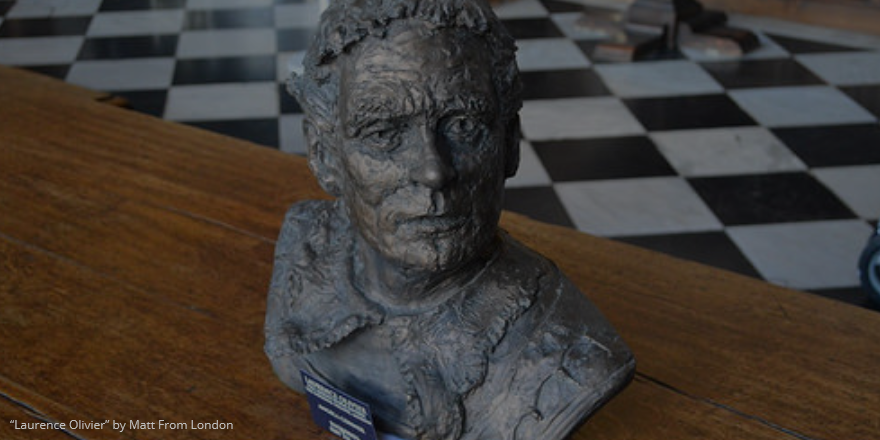
Artists develop notions of something greater than competence, greater than excellence, and become intoxicated with Laurence Olivierperfection of their craft, perfection of their technique, and perfection of their repertoire of skills culminating in what they hope will one day be the perfect story, perfect poem, perfect painting, or perfect performance. Once in his career Laurence Olivier, the greatest actor of the 20th century, gave what he knew and everyone knew who was present that night was a perfect performance of Hamlet. “My God,” he wondered, “How did I do it and how will I ever be able to do it again?”

All artists want to “get better” and to “get it right.” They devote their entire careers to getting better and getting it right. The development of expertise is the artist’s most crucial task. If there is one thing that all successful creative people have in common it’s that they all work hard developing their skills, the foundation of their success.

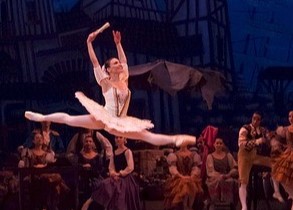
To strive to improve one’s performance continually and to more and more often get it right, requires qualities that are not common. One is self-confidence; another is an objectivity about one’s artistic and sometimes personal shortcomings and limitations—a capacity for stern, dispassionate self-criticism. If an artist shows  you his work and you don’t notice the flaws in it that are so apparent to him, he will doubt your critical judgment and may not ask you again. Tell a ballerina her performance was breathtaking and she will say, “I missed a beat and my right foot wasn’t arched properly. “

The most difficult task for artists is to find and put into their work the right voice, the presence of the artist in the work. E.L Doctorow said, “I wait until I find a narrative voice. Then I listen to that and start writing.” John Updike wrote, “I notice that as I write it comes out as a sort of Updike prose. I sit down in such different moods, wearing such different clothes, and out this comes—like a kind of handwriting. It’s always mine, and there’s no way I can seem to get around it. Isn’t it funny you have only one voice?”

cream-rose-272946_640Artists may have to spend many years finding what their proper subject matter and voice may be. When they do find it, everything suddenly comes out into the clear light of day: “Now I know how to say what I’ve been trying to say.” At times—sometimes in mid-career—they discover that what they have been doing has been all wrong. The work doesn’t express them. When halfway through her life painter Mary Cassatt discovered her true subject—mothers with their children—and the right style, she destroyed all but a few of her previous works, signifying a new beginning. In mid-career painter Georgia O’Keefe decided her art was too influenced by other people and set out in a new direction.

Every art is physically and mentally exhausting. When they finish a day’s work, artists feel they have lifted a thousand pounds. They have a compulsion to work. The reason artists, like experts in all other fields, most often cite for their enormous energy, commitment, and focus necessary to excel is their motivation to concentrate on the task and put out effort to improve their performance.

Non-artists cannot be motivated or even forced to work at an artistic task to the extent that a person with an intense interest does willingly. There has probably never been a great artist who didn’t have a strong sense of single-mindedness and an ability to persevere, overcome difficulties, and concentrate on reaching his goals while resisting distractions. An interesting question is, “Why do some people but not others possess those qualities, and why do virtually all creative people?”

The artist’s main goal is production. When they have not worked at their craft for 48 hours, or 24 hours, or one hour, they get uneasy. When they are away from their work without a brush in their hand or something to write with or dancing slippers on their feet they are completely out of their element.

You cannot distinguish between true artists and their work. They are exactly what they do. A composer is his music, a writer his language. Every molecule in their body is the molecule of an artist. A director is one who directs; an actor acts. That’s what they do and that’s all there is to it. Their work is on their mind almost every waking moment.

mountain-299009_640Artists grow accustomed to loneliness. Even as children they spent much of their time alone. The common notion that artists are different and have different points of view, habits, personalities, and preoccupations than the majority of humankind is correct. There is often a distance, a gap, between them and their neighbors, even other members of their family, even their lovers and spouses who are not involved themselves in art.

They must incorporate the other person in their work or find a way of coping with that distance, or those sharing their lives must find a way. That may not be possible. Nobel Prize winning author Saul Bellow said, “I have always put the requirements of what I was writing first—before jobs, before children, before any material or practical interest, and if I discover that anything interferes with what I’m doing, I chuck it. Perhaps this is foolish, but it has been the case with me.” Bellow was married five times.

The artist, realizing that she’s looking at the world from a vantage point that’s not available to everyone, can say, “I am different. I see things differently. I value different things.” Everyone else wants to be rich. The artist wants fulfillment.

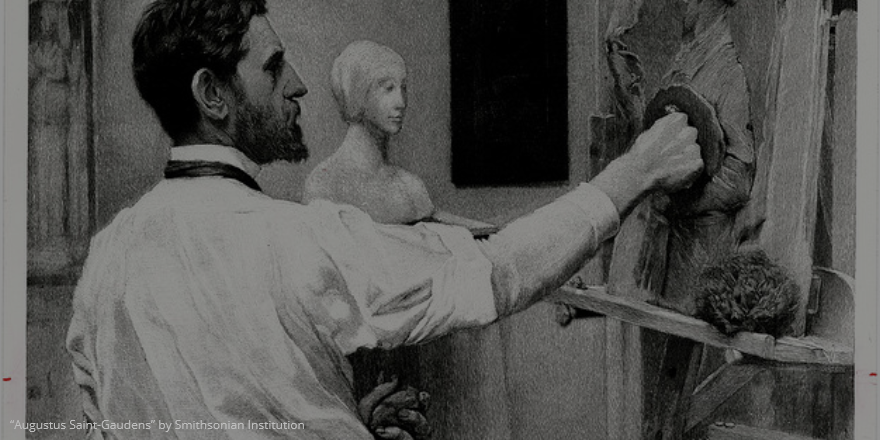
If they are truly artists, they are especially equipped and seem to have been born with not only magical “creative stuff” but with tenacity, strength, powerful will, and patience. In the achievements of successful artists you always see gifts coupled with extraordinary application, the former meaningless without the latter. A man I know was curious and attended an art show to ask a famous sculptor if he had advice for his son John, a sculptor who was just beginning. The sculptor said, “Yes I do have advice. It’s very simple. You tell John to pick up his mallet and his chisel and make chips.” A poet who lived several hundred years before Plato wrote, “Before the Gates of Excellence the high Gods have placed sweat.” Artists are great believers in sweat and making chips.

georgia-okeefe-396957_640Who sets the standard for perfection that all artists measure themselves against? The work of everyone is compared with the virtuoso. Miles Davis in jazz. Arthur Rubenstein playing Chopin. A novel by Faulkner.

French philosopher-playwright Jean Paul Sartre wrote that man exists first and only afterwards defines himself. He is what “he will have planned to be; he is what he conceives himself to be.” Artists may not talk much about being artists, preferring if they are any good, working to talking about working. But they conceive themselves to be artists. They have planned to be artists. They are creative in the grandest sense of creating themselves from scratch.

Henry David Thoreau, as great a clear-thinking artist as there ever was, wrote, “I know of no more encouraging fact than the unquestionable ability of man to elevate his life by conscious endeavor.” The Japanese say, “Irrigators guide water, fletchers straighten arrows, and as for wise people, they shape themselves.” Artists are shaping themselves from their first exposure to their art.

A cat becomes all the cat it will ever be without having to think about it. All that’s necessary is to be born a cat. But people who aspire to be artists have considerably more work to do than cats. The highest development of an artist’s capabilities to aim for and reach perfection is worth giving up almost everything for.


© 2015 David J. Rogers


For my interview from the international teleconference with Ben Dean about Fighting to Win, click on the following link:

www.mentorcoach.com/rogershttp://www.mentorcoach.com/positive-psychology-coaching/interviews/interview-david-j-rogers/

Order Fighting to Win: Samurai Techniques for Your Work and Life eBook by David J. Rogers

Fighting to win Amazon

Click on book image to order from Amazon.com

or

http://www.barnesandnoble.com/w/fighting-to-win-samurai-techniques-for-your-work-and-life-david-rogers/1119303640?ean=2940149174379

Order Waging Business Warfare: Lessons From the Military Masters in Achieving Competitive Superiority

Waging Business Warfare812sCY9edLL._SL1500_

Click on book image to order from Amazon.com

or

http://www.barnesandnoble.com/w/waging-business-warfare-lessons-from-the-military-masters-in-achieving-competetive-superiority-revised-edition-david-rogers/1119079991?ean=2940149284030

13 Comments

Filed under Actors and Directors, Artistic Perfection, Artists, Becoming an Artist, Creativity Self-Improvement, Dancers, Developing Talent, Human Potential and Achievement, Goals and Purposes, High Achievement, Inner Skills, Motivation, Self-Confidence, Success, Work Production, Writers