Tag Archives: artistic style

Do You Dance For Me Or Yourself?

Artists’ Intensity, Obsessions, and Will

yoga-366093_640To say that artistic work is often difficult and artists must be highly motivated if they are to produce it is to say the surface of the sun is quite hot. The artist must not only have that motivation, but must also sustain it, often over a long period of many years. Among the personal qualities that cause motivation that is strong are not luxuries but virtual necessities for any artist: passion, restlessness, intensity, obsessiveness, will, and persistence. It’s not hard at all to look at an artist and say, “That man (or woman) is driven.”

French author Gustave Flaubert called his motivation rage: “Sometimes I don’t understand why my arms don’t drop from my body with fatigue, why my brains don’t melt away. I am leading a stern existence, stripped of all external pleasure, and am sustained only by a kind of permanent rage, which sometimes makes me weep tears of impotence but which never abates.”

“While the daily life of every [ballet] dancer is a full-time struggle against fatigue, strain, natural physical limitations and those due to injuries (which are inevitable), dance itself is an enactment of an energy which must seem, in all respects, untrammeled, effortless, at every moment fully mastered.” The dancer’s performance smile is “a categorical denial of what he or she is actually experiencing–for there is some discomfort, and often pain, in every major stint of performing [–and we might add, practicing]. (Susan Sontag. American writer, teacher, and film-maker)

But artists seem to develop tremendous recuperative powers and verge on the inexhaustible. Flaubert went back for more every day and dancers continue to smile while in pain. Picasso, who worked incessantly from childhood and produced a quarter million works, claimed never to have felt tired, never to have felt the slightest fatigue. He said, “When I work I leave my body outside the door.”

 If There Is One Thing Famous Artists Will Tell You

Freud thought that artists are actually seeking wealth and power, but being unable to secure them directly find satisfaction in creative activities. Whether that is true or it isn’t, if there is one thing famous artists will tell you it is that you work best and are most powerfully motivated to create and will work long, often tedious, hours and endure a great deal and surmount even major obstacles when you’re not thinking of anyone’s liking but your own.

It may take years to come to that conclusion, but come to it many do. “I alone here, on my inch of earth, paint this thing for my own sole joy, and according to my own sole mind. So I should paint it, if no other human being existed but myself. Let who will get good or ill from this–I am not concerned therewith. Thus I must do it, for thus I see it, and thus I like it, woe be to me if I paint as other people see or like.”(Art Critic John Ruskin)

At the time American novelist William Faulkner’s picture appeared on the cover of Time magazine he couldn’t afford to pay his electric bill. As soon as he resigned himself to the fact that his unique vision and natural complex and rhetorical style and particular subject matter were not those of a commercially-popular author, he immediately entered a period of sustained creative energy that produced in quick succession one masterpiece after another. Making the decisions not to seek fame or wealth, he embarked on a path that would lead ironically to eventual world fame, financial security, and celebrity, culminating in the Nobel Prize.

He turned inward and decided to write for himself: “One day I seemed to shut a door between me and all publishers. I said to myself, ‘Now I can write.’“ He started working on what would be the innovative The Sound and the Fury–“thinking of books, publication, only in the sense in saying to myself, I wont [sic] have to worry about publishers liking or not liking this at all.”

The Awareness of Being Judged

When an artist is hard at work, work is center stage and doing it as skillfully as possible and enjoying it for its own sake are the strongest driving forces. The standard against which artists measure themselves is making use of their capabilities to the fullest each time they set to work—a notion of personal perfection, as in ballet, perfect expression and perfect technique.

But from time to time the thought that the work is going to be judged by someone else enters the artist’s mind. When thinking that a critic, an editor, an agent, a reviewer, a potential buyer, an audience will soon be evaluating the work, for most artists, even the best and most highly regarded, the self-conscious nervousness begins. Prolific nineteenth century English novelist Anthony Trollope said that an author should let criticism fall on him as “dew or hail from heaven,” and accept it as fate. But even the most renowned artists worry about the reception their work will receive and cannot help but to bear that in mind during the creative process.

Psychologist Teresa M. Amabile staked her whole reputation on proving that creative solutions to problems occur more frequently when people engage in the activity for the sheer pleasure it offers, and less frequently when their creativity is being judged. When we are not being evaluated, our creativity is liberated and free, but is inhibited when we are.  Amabile tested a wide range of subjects. No matter what the reward was or when it was given, if the subjects thought they were working for external remuneration, they became less creative. But when they were playing, they were creative. A playful approach to the task increases the likelihood of producing creative results.

Another experiment showed that even the hint that an external reward was riding on performance was sufficient to make the subject lose interest. The same happens to chimps. Given paint and canvas chimpanzees become so absorbed in painting that they show little interest in sex or food. But if the chimps are extrinsically rewarded for their painting, the quantity and quality of their painting declines. They do only well enough to get the reward. Chimps, like many humans, are more likely to be creative when no expectations of external reward are contingent on their performance.  Then it’s fun. But even  thinking about external rewards reduces creativity among many people.

The Thought of Failing

With every performance an actor, violinist, singer, or dancer gives, and every work a painter, writer, or composer begins, the slate is wiped clean. Past successes mean nothing, and there is a new opportunity to please other people, true, but also the possibility of disappointing them and having to suffer the devastating thought, “I failed,” and possibly the loss of reputation and income. More than one performer has vomited before going on, fearing the unfavorable opinion of the people filling the theater and critics out there jotting notes on their pads.

All artists go through fallow periods when success seems unattainable. Hemingway’s career consisted of alternating decades of critical success and failure. I have a friend who won a prestigious national literary award, but couldn’t find a single publisher who would publish his next book.

 Artists Deprived of Success

Deprived of favorable outward success and validation, some artists experience hopelessness and simply give up. But others continue to work at their craft without external feedback on the strong basis of their self-confidence or unflagging hope or sheer love of their art. (Creativity is addictive.) Jack London received 600 rejection letters before selling his first story. But within two years of that he was one of the most famous writers in the world. 85% of Equity (union) actors are unemployed at any one time, but survive as best they can, and refuse to give up their art.

An ideal world for artists would be one in which the work sold itself. Van Gogh wrote, “My opinion is that the best thing would be to work on till art lovers feel drawn toward it (his work) of their own accord, instead of having to praise or explain it.” I can hardly think of anyone who doesn’t believe their art would be better quality if they didn’t have to worry about making it saleable—possibly producing a more extreme, more original, more daring, and more outrageous art out of the commercial mainstream that is less compromised and truer to the artist’s individuality.

Artists would prefer not to be dependent on the opinion of others at all, and must decide, as you must, whose liking their art is for; if they dance for me or themselves.

© 2014 David J. Rogers

For my interview from the international teleconference with Ben Dean about Fighting to Win, click on the following link:

www.mentorcoach.com/rogershttp://www.mentorcoach.com/positive-psychology-coaching/interviews/interview-david-j-rogers/

Order Fighting to Win: Samurai Techniques for Your Work and Life eBook by David J. Rogers
Fighting to win Amazon

Click on book image to order from Amazon.com

or

http://www.barnesandnoble.com/w/fighting-to-win-samurai-techniques-for-your-work-and-life-david-rogers/1119303640?ean=2940149174379


Order Waging Business Warfare: Lessons From the Military Masters in Achieving Competitive Superiority

Waging Business Warfare812sCY9edLL._SL1500_

Click on book image to order from Amazon.com

or
http://www.barnesandnoble.com/w/waging-business-warfare-lessons-from-the-military-masters-in-achieving-competetive-superiority-revised-edition-david-rogers/1119079991?ean=2940149284030


6 Comments

Filed under Actors and Directors, Artists, Becoming an Artist, Creativity Self-Improvement, Dancers, Developing Talent, Human Potential and Achievement, Goals and Purposes, Motivation, Writers

The Characteristics of Creative People: What We Learn from Writers, Artists, Dancers, Musicians, and Actors

Artists Starting The Day

fountain-pen-297440_640A novelist sits down at the computer to begin the day with an idea in mind, and a painter organizes her brushes before she begins. An actor is in a theater lobby trying to understand how she will play a complicated new role, and a ballet dancer is on a bus on his way to ten o’clock practice. He has worked so hard so long—since childhood—that his feet throb day and night.

They might be anyone, but they’re not. They are artists and they are different and they know they are, and have always known. They have different points of view, habits, values, routines, and preoccupations than even the people closest to them, and as they perform their art today, carrying out their chosen roles, they will exercise talents that not everyone possesses. All the skills they’ve struggled to develop, and all the hopes and ambitions guiding them, and their entire being, will be brought to bear today.

 To Be an Artist

Artists possess traits and qualities that equip them for the artist’s creative life. Whether you find them in big cities or remote jungles or on farms or in desert tents, in any of the four hemispheres, you will also find them generally to be quite similar: to have varied interests and to be persistent in the face of obstacles and disappointments. They are dogged, determined, resourceful, open-minded, undeviating, tolerant of ambiguity and novelty, tenacious, and tremendously independent and self-reliant. And they are also self-confident, resilient risk-takers with good memories, and the hardest workers on this globe and almost as self-sacrificing and self-demanding as Saint Francis of Assisi. They are complex thinking and feeling people who seek out complexity and who:

ballerina-534356_640_copy2Possess extraordinary energy and an addiction to work (A characteristic of artists that distinguish them from others is their capacity for hard sustained effort. No outstanding creative achievement has ever been produced without a great deal of conscious work on the part of the creator. When artists are fully functioning they work at white heat for an hour, a day, a week, or months or years.)

Can produce tremendous volumes of work (Balzac wrote 95 novels before his death at 51. Picasso produced a quarter million works of art. Novelist Thomas Wolfe sometimes wrote 5,000 words in a night. Not always, but usually, the greatest artists are also the most prolific.)

Are willing to sacrifice for the sake of their art without hesitation (American Impressionist Mary Cassatt, possibly the greatest woman painter of the nineteenth century, kept royalty waiting until she had finished her day’s work. Hemingway said he had to ease off making love when he was writing hard because the two things were “run by the same motor.” Nobel Prize novelist Toni Morrison said, “The important thing is that I don’t do anything else.” Another Nobel novelist, Saul Bellow, said writing was more important to him than anything, including his family.)

Value authenticity, integrity, and sincerity (How many other occupations involve a quest for truth?)

wells-theatre-210914_640Are oriented to the fullest development of their skills (You must never lose the belief that you have the ability to carry out skills needed to produce quality art successfully. Developing skills leads to competency, then to expertise, then excellence, then greatness. If you feel you have the skills you are less likely to be haunted by self-doubt, and your art flows more freely. If you ask yourself “Do I have the skill?” and you answer “No I don’t,” you’ll have to learn the skill. There are any number of ways to accomplish that.)

 Are preoccupied with technique and style (The public isn’t meant to notice an artist’s technique, but other artists are aware of it immediately. The first thing you notice about a great artist is a distinctive style.)

Are ambitious and competitive (Art is as competitive as a Yankees-Red Sox game.)

Are resilient and able to overcome obstacles and persevere (Artists persist doggedly, however difficult or frustrating the physical and mental effort of pursuing their goal might be. After a success, your expectations of future success rise. When you see you are overcoming obstacles and making steady progress and reaching your goals, your confidence increases, sometimes phenomenally.)

Value originality (A work must be original if it’s to be considered artistic.)

Must have the ability to establish rapport with and hold an audience (To succeed, all works of art need a theatrical element.)

Must have a business sense (Artists have a career to manage, and responsibilities and expenses, and intangible rewards are not the only rewards. When you receive rewards your sense of well-being and hopefulness rise. All arts involve salesmanship.)

violin-374096_640Have a practical, problem-solving intelligence (Each day every artist on earth solves a hundred complex problems. Artists do not spend their days working on easy problems; they work on problems that are hard for them. That’s how they create work that has never been seen before and continue to expand their abilities at the same time.)

Have an artistic vision and heightened perception (To the artist the world is inexhaustibly rich with aesthetic potential. To painters and photographers a leaf is much more than a leaf; an actor’s frown signifies more than a frown; a single word, a single syllable, holds untold riches for a poet.)

Have a capacity for self-criticism and objectivity about their work and their abilities (Artists learn to lay their egos aside as they would any other impediment.)

Are sensitive to life and open to experience (Curious, they plumb what is outside them in the world and their own thoughts, feelings, and emotions. Whatever happens to them, they never forget it.)

Strive for competence and constant improvement (An artist is never content very long.)

Value independence (All artists must be allowed to move in their own direction under their own power.)

Are more self-confident, rebellious, bold, and daring than the vast majority of people (If you lose those things, you lose your talent as well.)

Have the ability to focus (Artists are capable of ferocious concentration, losing all sense of time and place, conscious only of the work before them.)

Are playful and value the simple and the unaffected (Artists are in love with simplicity.)

Have an abundance of physical strength and stamina (Architect Buckminster Fuller was often unable to stop working until he dropped from exhaustion. Work poured out of Da Vinci in a torrent. Often it is the end of the artist’s endurance that stops his working day.)

Are far more self-disciplined in matters concerning work than most people in other fields

vincent-van-gogh-86742_640(1)Are able to adapt and make adjustments (An experienced artist has learned when to stop and begin again when something isn’t working.)

Are studious in the sense of studying to develop their craft (All artists study and all are self-taught to a greater or lesser degree.)

Take luck, the breaks, and good or bad fortune into account (Good luck often follows persistence. A failure or wrong direction or bad luck may lead to something fruitful later on. A “wrong” word in a sentence may prove to be the perfect word.)

Must be patient, because all artists who reach high excellence will have done so via a long period of learning and application while pushing themselves upward to it.

Have a strong belief in, and respect and enthusiasm for their art

Are deep-feeling, emotionally rich

The writer at the computer, the painter sorting brushes, the actor in the lobby, and the dancer with sore feet needn’t feel lonely as they start the day because possibly very near are others who lead similar lives and are very much like them.

© 2014 David J. Rogers

For my interview from the international teleconference with Ben Dean about Fighting to Win, click on the following link:

www.mentorcoach.com/rogershttp://www.mentorcoach.com/positive-psychology-coaching/interviews/interview-david-j-rogers/

Order Fighting to Win: Samurai Techniques for Your Work and Life eBook by David J. Rogers

Fighting to win Amazon

Click on book image to order from Amazon.com

or

http://www.barnesandnoble.com/w/fighting-to-win-samurai-techniques-for-your-work-and-life-david-rogers/1119303640?ean=2940149174379


Order Waging Business Warfare: Lessons From the Military Masters in Achieving Competitive Superiority

Waging Business Warfare812sCY9edLL._SL1500_

Click on book image to order from Amazon.com

or

http://www.barnesandnoble.com/w/waging-business-warfare-lessons-from-the-military-masters-in-achieving-competetive-superiority-revised-edition-david-rogers/1119079991?ean=2940149284030


29 Comments

Filed under Actors and Directors, Artists, Becoming an Artist, Creativity Self-Improvement, Dancers, Developing Talent, Human Potential and Achievement, Expectations, Goals and Purposes, Motivation, Writers

The Writer’s, Artist’s, and Actor’s Quest for Truth

Painting by Urwana DeBoulans

With kind permission of artist Urwana DeBouclans

An actor in teacher-actor-director Konstantin Stanislavski’s Moscow Art Theatre Company owned a dog that she brought to rehearsal, and it slept all day while the company rehearsed. Inexplicably, every night just before the actors were to end the rehearsal the dog got up and went to the door with its leash in its mouth, ready to be taken home. It puzzled Stanislavski why the dog trotted to the door several minutes before his master called him, just as rehearsal ended. How did the dog know that rehearsal had ended before anyone went to the door?

Eventually Stanislavski figured it out. The dog could hear from the voices when the actors started talking like normal people again. It could tell the difference between the fake and the real. If a dog could, certainly an audience could, and the fake is repulsive in an actor. As the best actors tell each other, “When you are on stage or before the camera, remember not to act. People can tell when you’re acting.”

The Actor’s Truth

Stanislavsky was the most significant figure in the history of actor training. When he used the word “art” it meant “life” to him, and life meant the truthful, the real, the authentic, the genuine.

“Life” is all he wanted, and life is what he struggled to get to flow through the actor, and between the actors, and between the actors and the audience. Everything in the work of art must be convincing for the artist as well as for the audience. Actors should behave as though the character is real and what he is doing is real, as though the conditions and circumstances of the character’s life are real. That the dagger Othello stabs himself with is real. That everything is real. Stanislavsky said that the judge of the truthfulness of a performance is not the actor or the audience, but the actor’s fellow actors on stage with him. If you have an effect on your fellow actor; if he believes in the truth of your performance, you’ve reached your creative goal: truth.

Many Paths

A household name in his time, John Ruskin was a 19th century English art and architecture critic and wonderful stylist whose beauty of expression ignited the creativity of Marcel Proust. Ruskin believed that what distinguishes great artists from weak ones is first their sensibility, second, their imagination, and third, their appetite for hard work. He might just as well have added a fourth, their quest for truth. All great artists in every art are aiming and have always aimed to achieve that object of their quest. What that truth is to them—how they conceive of it—varies from artist to artist, and is the basis of their distinctive work. A Zen adage reads: “There are many paths to the top of the mountain. “ There are also many paths, many routes, to artistic truth. You are on a path.

To Ruskin the artist’s truth lay in his/her self-expression, the revelation of the artist’s being, such as the painter’s special talent to convey every shadow, every hue, every line, every impression of “visible things around him ” and secondly his ability to communicate his every emotion. Painter and print maker Edward Hopper too believed that the aim of great painters was to attempt “to force the unwilling medium of paint” into a record of their emotions. A skilled writer, a skilled dancer, a skilled sculptor works an entire career to express every shadow and every emotion—in words, in motion, in an object.

Truth and the Artist’s Vision

In Fire in the Crucible: The Alchemy of Creative Genius, John Briggs sees the artist’s quest for truth and beauty as the artist’s important motivation to communicate his/her vision. That vision is based on “themes” which are the artist’s “fingerprints.” The vision is a strong part of the artist’s identity and may well have become a part of him in childhood, and may well too, be reflected in his work all his future life. In early life future artists accumulate experiences, people, places, key episodes, and ideas which they will draw on the rest of their lives, endlessly recapitulating them in their work. These are the origins of their craft. Anyone who knows an artist’s work well is able to identify the artist’s recurring themes and subjects—his preoccupations that are everywhere in the work.

Your work has themes in it that are inseparable from your personality and creative spirit and life. Those themes and that vision affect everything about your work down to its smallest detail. Every part of the artist is revealed in his/her art and cannot be hidden. And if it is really art, its truth is that it is in close partnership with the whole being of the audience that the artist is trying to reach, the beauty and truth in the work resonating in the sensitivity to truth and beauty in the audience.

Hemingway’s Truth

No artist talked about or wrote about or was more consumed with the quest for truth than Ernest Hemingway. The writer’s job, he said, is quite simply “to tell the truth,” to speak truly. To tell the truth was to tell about what he had personally experienced, or what he knew from going through something similar. Most artists are concerned with subjective truth more than literal truth, but Hemingway used no other information from any sources than what had happened to him, not literary sources, not academic. Truth was transcribing accurately and simply for the reader “the way it was,” and “the real thing,” putting down what he saw and felt in the simplest way he could. He could invent and elaborate as any artist does, but he elaborated from the reality of what he actually knew from having been there. He said that a writer’s “gift” was a conscience, a “built-in, shockproof bull shit detector” the “writer’s radar” that went off in his mind when the writer was not telling the truth, but “faking.”

Hemingway wrote in Death in the Afternoon:

“I was trying to write then and I found the greatest difficulty, aside from knowing truly what you really felt, rather than what you were supposed to feel, was to put down what really happened in action: what the actual things were which produced the emotion that you experienced…the real thing, the sequence of motion and fact which made the emotion and which would be as valid in a year or in ten years or, with luck, and if you stated it purely enough, always.”

Similar to Hemingway, many painters paint only what is before them and is true and visible, and refuse to paint from memory. Are you an artist who sticks to “the way it was” and “the real thing”?

Henry Miller/ Gertrude Stein/ Paul Cezanne

Novelist and essayist Henry Miller felt that the artist’s truth lies in finding a “voice,” and that the discovery of one’s true voice doesn’t happen easily, but requires boldness. Miller imitated every style in hopes of finding the clue to the gnawing secret of how to write. Then:

“Finally I came to a dead-end, to a despair and desperation which few men have known because there was no divorce between myself as a writer and myself as a man: to fail as a writer meant to fail as a man…It was at that point…that I really began to write. I began from scratch, throwing everything overboard, even those I loved. Immediately I heard my own voice…the fact that I was a separate, distinct, unique voice sustained me. It didn’t matter to me if what I wrote should be considered bad. Good and bad had dropped out of my vocabulary…My life itself became a work of art. I had found a voice. I was whole again.” (Henry Miller, Reflections on Writing)

Gertrude Stein also found truth and beauty coming out of the artist’s spontaneity: You “have to know what you want to get; but when you know that, let it take you and if it seems to take you off the track don’t hold back, because that is perhaps where instinctively you want to be and if you hold back and try to be always where you have been before, you will go dry.”

Truth doesn’t lie in “careful thinking,” But “It will come if it is there and if you will let it come, and if you have anything you will get a sudden creative recognition.” It “will be a creation if it came out of the pen and out of you and not out of an architectural drawing of the thing you are doing.” (John Hyde Preston, “A Conversation with Gertrude Stein”). In the same way, 19th century landscape painter George Inness found that the truth of art is the artist’s “personal vital force” that if left alone comes out of the artist spontaneously without fear or hesitation.

A creator must necessary possess tremendous drive, determination, and persistence because exceptional creativity requires a tremendous amount of effort. Paul Cezanne’s truth was the perfection of his craft in a lifetime’s work: “I could paint for a hundred years, a thousand years without stopping, and it would still seem to me as if I knew nothing…I consume myself, kill myself, to cover fifty centimeters of canvas…I want to die painting…” All great artists are spurned on by a single-mindedness, but few can match Cezanne in that regard.

An Architect’s Truth

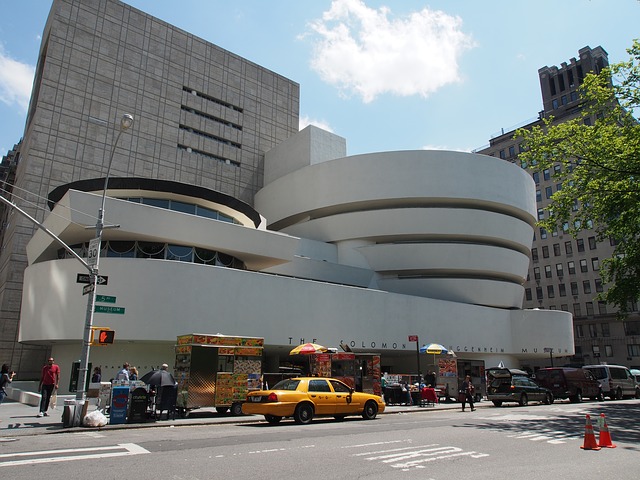
new-york-115629_640Frank Lloyd Wright was America’s greatest architect. Not one given to easy goals, Wright’s architectural goals were , he stated, “the rejuvenation of architecture, the creation of indigenous forms to express and suit life in the United States, and the destruction of Fakery and Sham (that) rule the day.” To Wright, truth didn’t lie on the surface of things. Surfaces were deception. Truth was hidden and capable of being discovered only by probing deeply. “For the architect the patient analysis of nature would reveal the true meaning of functional structures.” Wright found in nature and the machine the two inseparable cornerstones of his search for truth. (Robert C. Twombly, Frank Lloyd Wright: His Life and His Architecture.)

A Dancer’s Truth

Isadora Duncan’s quest for a dancer’s truth was lifelong and intense. “My art is just an effort to express the truth of my Being in gesture and movement. It has taken me long years to find even one true movement…I spent long days and nights in the studio seeking that dance might be the divine expression of the human spirit through the medium of the body’s movement…I was seeking and finally discovered the central spring of all movement, the center of motor power, the unity from which all diversities of movement are born, the mirror of the vision for the creation of the dance—it was from that discovery that was born the theory on which I founded my school.” (Isadora Duncan, Autobiography)

Commitment and Sacrifice as Truth

Artists exhibit ferocious concentration on the task to be accomplished and will let nothing divert them from accomplishing it.

“I have always put the requirement of what I was writing first–before jobs, before children, before any material or practical interest, and if I discover that anything interferes with what I’m doing, I chuck it. Perhaps this is foolish, but it has always been the case with me.” (Saul Bellow)

“What one bestows on private life—in conversations, however refined it may be…is the product of a quite superficial self, not of the innermost self which one can only recover by putting aside the world and the self that frequents the world.” (Novelist V.S. Naipaul)

“Sometimes I don’t understand why my arms don’t drop from my body with fatigue, why my brain doesn’t melt away. I am leading an austere life, stripped of all external pleasure, and am sustained only by a kind of permanent frenzy, which sometimes makes me weep tears of impotence but never abates.” (Gustave Flaubert)

Your Artist’s Credo

It should be apparent from what you’ve just read that great artists are precise and clear and quite serious about what they are striving to accomplish—what truth they’re seeking–and can describe it succinctly in a paragraph or two.

How would you describe your overall artistic vision, the truths you are trying to express in work after work? And what are the handful of most important recurring themes that are so much a part of you?

“What I’m trying to get across is…”

“In all my works I find these themes again and again…”

You might ask people who know your work well their opinion. Put the answers down in writing, a statement of your artist’s credo.

Let me know by leaving a comment about the truth you are seeking, your artistic vision, and the themes in your work. I’m writing a book about art and artists of all kinds and want to see what your thinking is. If you are not an artist but are interested in the subject, I would like to hear your opinions too.

© 2014 David J. Rogers

For my interview from the international teleconference with Ben Dean about Fighting to Win, click on the following link:

www.mentorcoach.com/rogershttp://www.mentorcoach.com/positive-psychology-coaching/interviews/interview-david-j-rogers/

Order Fighting to Win: Samurai Techniques for Your Work and Life eBook by David J. Rogers

Fighting to win Amazon

Click on book image to order from Amazon.com

or

http://www.barnesandnoble.com/w/fighting-to-win-samurai-techniques-for-your-work-and-life-david-rogers/1119303640?ean=2940149174379


Order Waging Business Warfare: Lessons From the Military Masters in Achieving Competitive Superiority

Waging Business Warfare812sCY9edLL._SL1500_

Click on book image to order from Amazon.com

or

http://www.barnesandnoble.com/w/waging-business-warfare-lessons-from-the-military-masters-in-achieving-competetive-superiority-revised-edition-david-rogers/1119079991?ean=2940149284030


15 Comments

Filed under Actors and Directors, Artists, Becoming an Artist, Creativity Self-Improvement, Dancers, Developing Talent, Human Potential and Achievement, Goals and Purposes, Writers

Writers and Other Artists and Their Audience: A Very Personal Relationship

IMG_0240_David Pic copyEvery Tuesday or Wednesday I have lunch with a friend, a professor of philosophy, at a deli near my home and everything is fair game for our talks but sports. I am interested in sports, having grown up in Chicago—the slap-happiest sports town in the world. But he grew up somewhere else and thinks a basketball is something you hit with a bat.

A few weeks ago I mentioned that very important to my wife, who teaches writing, is the relationship the author establishes with the reader. I said I agree with her that the personality of the author shines all through the words and that as you read you respond to that personality, and that it accounts for much of the value we find in the work. Just as you make judgments about the work itself, such as to answer the question, “Do I like this and should I continue reading,” you also make judgments about the author such as, “Do I like and respect the person behind the words, and do I want to spend more time with him?” That happens whatever you’re reading—novel, blog, short story, play, poem, email, essay, memo, or letter.

And something similar happens whenever you look at a work of art, or see an actor act, or a dancer dance.

My friend said, “There is no relationship. There is no personality. There are only words.” Then I said, “I was reading a book recently and the information was useful—the author knew what he was talking about– but he was so arrogant and smug and self-satisfied that I couldn’t go on reading. But now James Agee, for example, is to me so likable and gentle and right-minded and has such compassion that I always enjoy his company.”

And then I thought: There are millions of people on earth who consider themselves serious writers, and many millions more who are engaged in other arts, and to whom the relationship between themselves and their audience has to be a major concern (2.5 million people in the U.S. alone consider themselves artists); so it would be worthwhile to give that relationship the attention it deserves.

The True Center

The true center of our experience with any kind of narrative writing in any language on earth is the sense that someone with a mind, a personality, and a background of experience is talking to us. That sense accounts—if it is favorable– for much of the pleasure we derive from reading, and it is that sense that a good writer will develop in the reader, consciously or not. What a writer is intellectually, spiritually, and emotionally radiates in the work and can’t be hidden from the discriminating reader.

Herman Melville said, “No man can read a fine author, and relish him to his very bones, while he reads, without subsequently“ forming “some ideal image of the man and his mind. And if you look…you’ll find the author has furnished you with his own picture.” Literary critic Georges Poulet wrote, “ (As I read) “I am aware of a rational being, of a consciousness, the consciousness of another opens to me, welcomes me, lets me deep inside itself, and even allows me, with unheard of license, to think what it thinks and feel what it feels. I am thinking the thought of another, but I am thinking it as my very own.”

Energy, Sincerity, and Other Qualities

The author’s qualities we connect with are those we respond to in any person we meet face to face. They include humor, energy, vitality, seriousness, playfulness, friendliness, originality, boldness, glibness, sensitivity, sensuality, elegance, flexibility of mind, intelligence, tenderness, objectivity, flippancy, etc. We become aware of the author’s interests, preoccupations, even obsessions, and how involved the author is in the subject, including her attitude toward her characters. Even the most objective and dispassionate writing, as in the short stories of Chekov, the master of understatement, conveys the personality of the author—his control and self-restraint.

We make judgments about the degree of ability the author has, and say, “That man is so skilled that he can do anything he wants with language. He’s so self-confident that he breaks the rules whenever he wants. He has courage; he takes chances.” We look at a great actor performing or Baryshnikov leaping and we say “Their skill is breathtaking; they are very disciplined and have worked hard to develop themselves.” It’s been said that painter and tortured genius Jackson Pollock had no natural talent. He was always aware that he was an artist that could not draw. But the guts he had appears in his every work, and in painting his groundbreaking way he changed the course of western art and the definition of what we mean by art.

A Distinctive Style

The first quality we notice about a master, or a truly excellent writer—or painter, or dancer, or actor, or any other artist– is a distinctive style. All great artists are concerned not only with communicating their vision and expressing their talent, but are preoccupied with the most effective way to do that. And style, which is anything but a minor afterthought, is the artist’s signature and as individual and as much a part of the writer’s, sculptor’s, actor’s, or architect’s, etc., personality and life experience as DNA. There was only one Marlon Brando and only one Frank Lloyd Wright.

Possibly the first requirement of a good style for a writer is the ability to put the reader into what is being written about and the writer’s presence right away, from the very beginning, and all the way through the work. Using a first-person “I” voice as in Hemingway’s autobiographical novel The Sun Also Rises invites the reader to share in the writer’s and narrator’s thoughts, feelings, and experiences, and can be tremendously effective. With the second person “you” the writer is addressing the reader directly, and that too, can have a strong effect.

How We Want To Be Treated

There is a sharp difference between authors who treat us as essentially their equals and those that (like political candidates) imply we’re their inferiors. That author I couldn’t stand and couldn’t go on reading had no respect for the reader. He had no concept of the fundamental truths that artists must have an understanding of their audience and what will please them, excite them, and hold their attention, and what will “lose” them, including the author’s own personality. Authors we have friendships with are those who share interests with us and respect us, never underestimating us, never talking down to us.

The Author’s Mind; the Artist’s Mind

We respond very much to the author’s mind in action, and whether we’ll go on reading or not and how attentive or respectful we’ll be depends on how interesting and stimulating we find that mind. I was reading a true story about a man who was having trouble getting to sleep, and his mind was so active trying to figure out how to do that that I just sat back and laughed and marveled at his ingenuity. We are involved with the author’s mind from the first word, and the skilled author will let you know immediately that his mind is active and sharp. Even a nice metaphor or a perfect sentence or clear writing give us the reality of entering the author’s mind.

We could just as easily be talking about the painter’s mind, or the ballet dancer’s mind, or the movie director’s mind. Whatever the art, the audience responds to that mind one way if it is interesting and another if it’s not.

Intimacy and Integrity

The particularly effective writer—the particularly effective artist of any kind—will develop a relationship that goes beyond liking and beyond friendship to intimacy, and that comes from above all else the sincerity we find in the work. Sincerity is what I sense in Agee, for example. Anyone who can write so beautifully and so sensitively, honestly, and intensely must be trying to communicate to me something that he cares deeply about. The intimate writer invites us in to his inner life and says “Here I am.” I sense utmost sincerity too in Whitman’s “Crossing Brooklyn Ferry”—a poem in which the writer actually speaks to the reader and tells us that as he is writing the poem he is thinking about us. And I find it in all the work of van Gogh, and some blogs I read. The artist is sincerely trying to connect with me and communicate something directly to me as well as he or she is able, and I respond.

Good writing has integrity—our being whole and authentic with no division between who we are and what we write, or paint, or how we perform on stage. We guarantee that we aren’t faking, or deceiving, or compromising. Hemingway referred to integrity as the built-in “bullshit detector” that every real artist possesses.

No Place to Hide

It is futile to think we can hide ourselves from an audience for very long or fool it into believing we’re something we’re not. The voice that comes through is not something that is imposed artificially from the outside, but is the genuine, the authentic, the true, the real person. Even when we write about a character that is nothing like us, the person we are—with our history and our points of view and our opinions comes through clearly. The very images we use and the very vocabulary tell a great deal about us.

Addition by Subtraction

An authentic voice is not achieved by adding something, but by the opposite process—by subtracting what is pretentious or not genuine. Every artist is unique and different from every other. There are no duplicates. But whatever she is like, we are trying to locate her and understand her.

Coming Out of the Shadows

So if we are looking for prescriptions, the first would be: “Whatever your art, come out of the shadows and reveal yourself. Let your true personality permeate all through your work—your sincerity, your honesty, your mind in action, your originality and uniqueness, the ‘I’ who you are–for it is that, above and beyond the other content, that your audience will respond to. Be interesting, be clever, be skilled, be alive, be true, and be authentic.

© 2014 David J. Rogers

For my interview from the international teleconference with Ben Dean about Fighting to Win, click on the following link:

www.mentorcoach.com/rogershttp://www.mentorcoach.com/positive-psychology-coaching/interviews/interview-david-j-rogers/

Order Fighting to Win: Samurai Techniques for Your Work and Life eBook by David J. Rogers

Fighting to win Amazon

Click on book image to order from Amazon.com

or

http://www.barnesandnoble.com/w/fighting-to-win-samurai-techniques-for-your-work-and-life-david-rogers/1119303640?ean=2940149174379


Order Waging Business Warfare: Lessons From the Military Masters in Achieving Competitive Superiority

Waging Business Warfare812sCY9edLL._SL1500_

Click on book image to order from Amazon.com

or

http://www.barnesandnoble.com/w/waging-business-warfare-lessons-from-the-military-masters-in-achieving-competetive-superiority-revised-edition-david-rogers/1119079991?ean=2940149284030


11 Comments

Filed under Becoming an Artist, Creativity Self-Improvement, Developing Talent, Human Potential and Achievement, Personal Stories