Tag Archives: Maxwell Perkins

F. Scott Fitzgerald’s Crack-Up no

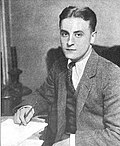
Photograph of F. Scott FotzzgeraldF. Scott Fitzgerald’s (1896-1940) writing was the major interest in his life. From grade school to his death nothing was quite true to him unless he had written about it. He was a fine writer, and his writing was always about himself or people he was intimate with. As a result his life was inextricably bound up with his work and his life with his kooky and attractive wife Zelda was an interest in itself. He lived a colorful life and a disastrous one with Zelda. They lived like fairy-story hero and heroine, filling newspapers with reports of their wild life-style. Much of the disaster of their lives were of their own making. Fitzgerald is called the creator of the Jazz Age which began with his writing best seller This Side of Paradise at the age of twenty-four, making him rich, his goal for writing it. The book became the voice of the younger hedonistic, thrill-loving, post-World War I generation.

Fitzgerald felt that a person such as himself was happiest if they were rich and had acquired the trappings of wealth and were living “the good life.” In his earlier adult life Fitzgerald saw the “improbable, often the impossible come true. Life was something you dominated if you were any good. Life yielded easily to intelligence and effort. It seemed a romantic business to be a successful literary man.” (Arthur Mizener.)

Fitzgerald felt he could not have chosen any other profession although in the writing trade “you were forever unsatisfied.” In the nineteen twenties the big problems of his life seemed to solve themselves, and if the problems were too tough he ignored them. He strove to make a lot of money from his writing novels and dozens of short stories that were immensely popular, as he did in the early and middle parts of his career. Fitzgerald always lived well beyond his income, troubling his editor Maxwell Perkins for many advances on earnings. He was often confused between writing just for the money and writing high quality literary work. He had a keen understanding of public literary tastes and could profitably write both.

The Crack-Up

Fitzgerald wrote three magazine articles frankly describing his crack-up. His friend Ernest Hemingway advised him against writing them because, he said, they would make Fitzgerald appear weak. The fear of appearing weak was a concern of macho Hemingway, but not of Fitzgerald. Rare is writing so honest about one’s psychological and spiritual problems as Fitzgerald’s revelations in those articles.

For seventeen years things went on marvelously well, and then at thirty-nine Fitzgerald suddenly realized that he had cracked up. He said you can crack up in the mind and can crack up in the body and the nerves. His crack-up was in the nerves where he said there was “too much anger and too many tears.” He said that he had been living a long time “not caring much, not thinking about what was left undone, or of his responsibilities.”  He had a sudden instinct that he must go somewhere and be alone for a while. He wrote, “I didn’t want to see people at all. I had seen so many people all my life.” He was seeking “a certain insulation from ordinary cares. I went away and there were fewer people…I felt tired and slept dozens of hours or twenty -four hours at a day.” Sick, he made lists, “hundreds of lists of happy times, baseball plays, popular songs, of pairs of shoes, of women he liked, “and then suddenly, surprising, he said, “I got better.”

In reflection he began to realize “that for two years of my life I had been drawing on resources that I did not possess, that I had been mortgaging myself physically and spiritually up to the hilt. I realized that in those two years…I had weaned myself from all the things I used to love.” He saw that for a long time he had not liked people. He felt that even his love for those closest to him was only an attempt to love them, but was not love. He became bitter about everything he encountered or thought about day and night.

In the article “Putting it Together” Fitzgerald said, “In a real dark night of the soul it is always three ‘o clock in the morning day after day. At that hour the tendency is to refuse to face things as long as possible by retiring to an infantile dream– but one is continually startled out of this by various contacts with the world. One meets these occasions as quickly and carelessly as possible and retires once more back into the dream, hoping that things would adjust themselves by some great material or spiritual bonanza…But as the withdrawal persists one witnesses the disintegration of one’s own personality.”

Fitzgerald said “It was strange to have no self–to be like a little boy left alone in a big house who found he could do anything  he wanted, “but found there was nothing he wanted to do.”  In a final reflection on his ordeal, his crack-up, Fitzgerald wrote, “A man does not recover from such a jolt–he becomes a different person and eventually the new person finds new things to care about.”

Fitzgerald’s Death

In 1937 Fitzgerald was sick and unable to write and no longer earning royalties. He turned to Hollywood’s film industry. He died at   forty-four a modestly paid Hollywood screen writer of mediocre movies. Many critics consider his The Great Gatsby the great American novel many writers have striven to write. The Great Gatsby surprised the literary world by being more substantial than anything Fitzgerald had written before.


© 2025 David J. Rogers

For my interview from the international teleconference with Ben Dean about Fighting to Win, click the following link:

Interview with David J. Rogers

Order Fighting to Win: Samurai Techniques for Your Work and Life eBook by David J. Rogers
Fighting to win Amazon

Click on book image to order from Amazon.com

or

http://www.barnesandnoble.com/w/fighting-to-win-samurai-techniques-for-your-work-and-life-david-rogers/1119303640?ean=2940149174379


Order Waging Business Warfare: Lessons From the Military Masters in Achieving Competitive Superiority

Waging Business Warfare812sCY9edLL._SL1500_

Click on book image to order from Amazon.com

or

http://www.barnesandnoble.com/w/waging-business-warfare-lessons-from-the-military-masters-in-achieving-competetive-superiority-revised-edition-david-rogers/1119079991?ean=2940149284030


Follow my blog with Bloglovin


2 Comments

Filed under Biographies, F. Scott Fitzgerald, Writers

Turning Points In The Lives Of Creative People

From the time I was a little boy watching mystery movies I’ve waited for the first clue. From that point on the solution is just a matter of time. All fates are sealed with that clue.  I will watch movies over and over, waiting for that definitive clue. And then I’m thrilled.  In the same way, I can’t think of any time in my life I haven’t been intrigued by those events in peoples’ lives that started them on the course that would define them as human beings—the Turning Points in their lives. The first clue.

Why were they this and then became that? What happened?  I would like to know. That’s true now of artists whose lives fascinate me—writers, painters, sculptors, actors, ballet dancers, composers, musicians. Was it a lucky break or a bad break? A triumph or a failure?  An illness? A significant man or woman?  A teacher? A lover? A walk on a beach?  A birth, a death?

If you and I were ever to meet–how nice that would be–I’d ask you about yours. I think you would tell me that after the Turning Point you knew right turning-arrowaway you’d never be the same. You were facing in a new direction. Winds picked up and caught your sails and you set out to sea. You were on a quest and were experiencing the pouring-out of floods of creative thoughts. You’re confident that your quest is still leading to something though you might not be aware yet just where it will take you. You will have to see.

American Nobel Prize dramatist EUGENE O’NEILL’S Turning Point was a life-threatening illness. The son of a rich and famous actor, he quit college after a year, worked as a deck hand on ocean-going ships, drank heavily in various ports, and dissipated his life.

Then he experienced his Turning Point: “I just drifted along till I was twenty-four and then I got a jolt and sat up and took notice. Retribution overtook me and I went down with T.B. It gave me time to think about myself and what I was doing—or, better, wasn’t doing. I got busy writing one act plays…If I hadn’t had an attack of tuberculosis, if I hadn’t been forced to look at myself, while I was in the sanitorium, harder than I had ever done before I might not have become a playwright.” He would, he said, “Become an artist or nothing.” From that point on, his life was centered on, focused on, and organized around writing plays.

Writer RAYMOND CHANDLER’S Turning Point was getting fired from a high-paying executive job. For many years he drifted from job to job. He started in silhouette-144967_640business as an accountant and rose to the ranks of the director of eight oil corporations. He was called by some the best businessman in America. He drank so heavily that he started going off on his own on binges without telling anyone for weeks at a time and eventually was fired– the worst crisis of his life.

But while driving along California’s Pacific coast to a cabin where he planned to figure out what to do now, he stopped at a gas station and picked up reading material: copies of Black Mask, a magazine of hard-boiled detective stories. Reading them, he decided that he could write stories as good as those, and that’s what he did, starting a  writing career at age 44 that saw him establish himself as probably the greatest writer in that genre.

Self-taught VINCENT VAN GOGH’S Turning Point was reading a particular book. Before deciding to devote himself to art he wrote to his brother Theo: “I quite well remember that when you spoke at the time of my becoming a painter, I thought it was very impractical and would not hear of it. What made me cease vincent-van-gogh-self-portrait-1887to doubt was my reading a clear book on perspective, Cassagne’s Guide to the ABC of Drawing and a week later I drew the interior of a kitchen with a stove, chair, table and window, in their place and on their legs, while before it had seemed to me witchcraft or pure chance to get depth and the right perspective in drawing. If you had only drawn one thing right, you would feel an irresistible longing to draw a thousand other things.”

Many creative people have Turning Points in childhood. They fall in love with some activity. Children who know what they are in love with and are pretty boy-paintingsure what they will be when they grow up are likely to be creative as adults.

At the age of eight Nobel writer SAUL BELLOW was hospitalized for half a year in the children’s ward. With boys and girls dying all around him he decided that his own survival was a near miracle; that he was “privileged” and that there was some form “of bookkeeping going on.”

He did his own mental bookkeeping and decided he “owed something to some entity for the privilege of surviving.” He believed he had “better make it worth the while of whoever it was that authorized all this.” In his twenties he turned to writing and went on to achieve all the highest literary awards. Until he died he thought it possible that he had “gotten away with something but that it had been by permission of some high authority.”

Short story specialist/poet RAYMOND CARVER’S Turning Point was meeting a teacher– being taught at the Iowa Writers Workshop by John Gardner and pen-27043_640being affected profoundly. Carver said that whatever Gardner had to say “went right into my blood stream and changed the way I looked at things…He took my stories more seriously… I was completely unprepared for the kind of criticism I received from him.”

Gardner taught Carver to be tough on himself, showing what is best about all good teachers. Through them you learn to adopt an objective critical attitude toward your work.  You learn “taste.” At that point Carver and his wife Maryann shared the goal of Raymond not selling out his writing and not have him get involved in any career but writing. Not to forget that he was put on earth to be a great writer and for no other reason.

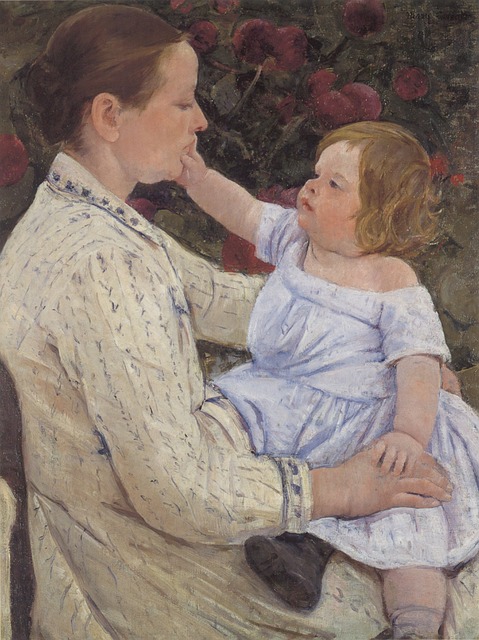
MARY CASSATT’S Turning Point midway in her paining career was the result mary-cassatt-89730_6401of a sequence of Turning Points: living in Paris, mingling with the French Impressionists, especially Edgar Degas, and becoming an Impressionist herself. But the single most important turning point for Cassatt was finding her true subject: mothers with their children.

ERNEST HEMINGWAY’s Turning Point was deciding a college education wasn’t for him and landing a job as a journalist on the Kansas City Star.  Over the years the “Stars” editors had complied a book of 110 rules designed to force reporters to ernest-hemingway-401493_640use simple, plain, direct, cliché-free English, and those rules were strictly enforced. Hemingway’s writing style that revolutionized the way writing is done across the globe, was based on those very rules. He later called them, “the best rules I ever learned about writing.” He showed the first cable he ever wrote to fellow writer Lincoln Steffens and said, “Steffens, look at this cable: no fat, no adjectives, no adverbs…It’s a new language.”

Novelist THOMAS WOLFE’S Turning Point was submitting his first novel to Maxwell Perkins and Perkins becoming his editor. Perkins was the most acclaimed book editor of the twentieth century and thus far in the twenty-first. During the 1920s and 30s his Scribner’s writers included the greatest and most gifted working with one editor in the history of American publishing. They included, in addition to his protégé Wolfe, Ernest Hemingway, F. Scott Fitzgerald, and Ring Lardner. Wolfe’s association with Perkins is the most celebrated author/editor relationship in American literature.

Wolfe was stupendously talented. But his main problems were his uncontrollable, obsessive verbosity and a chronic inability to cut that resulted in unedited manuscripts of fantastic lengths, three or four times longer than a publishable book could possibly be.

Those problems in turn were caused by Wolfe’s difficulty making any kind of vintage-typewriterindependent decisions. He didn’t know where or what to cut. He would stare for hours at the manuscript before eliminating a few sentences when his agreement with Perkins was that he would strike out tens of thousands–a hundred thousand—words. He would start by rereading the manuscript section by section, trying to find things that were unnecessary and could be omitted. But he was totally blind to them. He never in his entire career had a concept of a publishable book.

The day before Christmas, 1929 Wolfe wrote to Perkins: “One year ago I had little hope for my work, and I did not know you…. You are now mixed with my book in such a way that I can never separate the two of you. I can no longer think clearly of the time I wrote it, but rather of the time when you first talked to me about it, and when you worked upon it….You have done what I had ceased to believe that one person could do for another–you have created liberty and hope for me.” Wolfe wrote a note to Perkins: “In all my life, until I met you, I never had a friend.”

I doubt there’s ever been a great creator who after a Turning Point didn’t have a powerful sense of single-mindedness and an ability to persevere, face difficulties, and concentrate on reaching goals while resisting distractions.

And rarely, if ever, wandering off on tangents. High-powered focused attention is a result of Turning Points–the ability of the creator to be absorbed, caught up in, and wholly involved in his/her creative existence.

Do you remember your Turning Point?  Just look up from the screen now and reflect on when the first clue appeared in the mystery you call your life and you turned from this direction to that.


© 2016 David J. Rogers

For my interview from the international teleconference with Ben Dean about Fighting to Win, click on the following link:

www.mentorcoach.com/rogershttp://www.mentorcoach.com/positive-psychology-coaching/interviews/interview-david-j-rogers/

Order Fighting to Win: Samurai Techniques for Your Work and Life eBook by David J. Rogers

Fighting to win Amazon

Click on book image to order from Amazon.com

or

http://www.barnesandnoble.com/w/fighting-to-win-samurai-techniques-for-your-work-and-life-david-rogers/1119303640?ean=2940149174379

Order Waging Business Warfare: Lessons From the Military Masters in Achieving Competitive Superiority
Waging Business Warfare812sCY9edLL._SL1500_

Click on book image to order from Amazon.com

or

http://www.barnesandnoble.com/w/waging-business-warfare-lessons-from-the-military-masters-in-achieving-competetive-superiority-revised-edition-david-rogers/1119079991?ean=2940149284030


12 Comments

Filed under Artists, Becoming an Artist, Creativity Self-Improvement, Developing Talent, Human Potential and Achievement, Serendipity, The Writer's Path, Writers