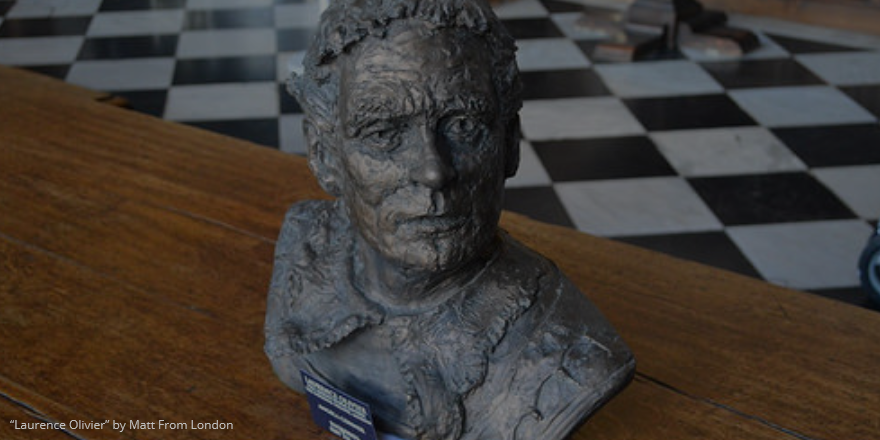
Artists develop notions of something greater than competence, greater than excellence, and become intoxicated with 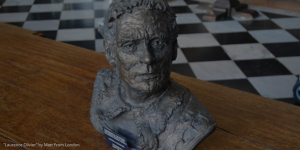 perfection of their craft, perfection of their technique, and perfection of their repertoire of skills culminating in what they hope will one day be the perfect story, perfect poem, perfect painting, or perfect performance. Once in his career Laurence Olivier, the greatest actor of the 20th century, gave what he knew and everyone knew who was present that night was a perfect performance of Hamlet. “My God,” he wondered, “How did I do it and how will I ever be able to do it again?”
All artists want to “get better” and to “get it right.” They devote their entire careers to getting better and getting it right. The development of expertise is the artist’s most crucial task. If there is one thing that all successful creative people have in common it’s that they all work hard developing their skills, the foundation of their success.
To strive to improve one’s performance continually and to more and more often get it right, requires qualities that are not common. One is self-confidence; another is an objectivity about one’s artistic and sometimes personal shortcomings and limitations—a capacity for stern, dispassionate self-criticism. If an artist shows you his work and you don’t notice the flaws in it that are so apparent to him, he will doubt your critical judgment and may not ask you again. Tell a ballerina her performance was breathtaking and she will say, “I missed a beat and my right foot wasn’t arched properly. “
The most difficult task for artists is to find and put into their work the right voice, the presence of the artist in the work. E.L Doctorow said, “I wait until I find a narrative voice. Then I listen to that and start writing.” John Updike wrote, “I notice that as I write it comes out as a sort of Updike prose. I sit down in such different moods, wearing such different clothes, and out this comes—like a kind of handwriting. It’s always mine, and there’s no way I can seem to get around it. Isn’t it funny you have only one voice?”
 Artists may have to spend many years finding what their proper subject matter and voice may be. When they do find it, everything suddenly comes out into the clear light of day: “Now I know how to say what I’ve been trying to say.” At times—sometimes in mid-career—they discover that what they have been doing has been all wrong. The work doesn’t express them. When halfway through her life painter Mary Cassatt discovered her true subject—mothers with their children—and the right style, she destroyed all but a few of her previous works, signifying a new beginning. In mid-career painter Georgia O’Keefe decided her art was too influenced by other people and set out in a new direction.
Every art is physically and mentally exhausting. When they finish a day’s work, artists feel they have lifted a thousand pounds. They have a compulsion to work. The reason artists, like experts in all other fields, most often cite for their enormous energy, commitment, and focus necessary to excel is their motivation to concentrate on the task and put out effort to improve their performance.
Non-artists cannot be motivated or even forced to work at an artistic task to the extent that a person with an intense interest does willingly. There has probably never been a great artist who didn’t have a strong sense of single-mindedness and an ability to persevere, overcome difficulties, and concentrate on reaching his goals while resisting distractions. An interesting question is, “Why do some people but not others possess those qualities, and why do virtually all creative people?”
The artist’s main goal is production. When they have not worked at their craft for 48 hours, or 24 hours, or one hour, they get uneasy. When they are away from their work without a brush in their hand or something to write with or dancing slippers on their feet they are completely out of their element.
You cannot distinguish between true artists and their work. They are exactly what they do. A composer is his music, a writer his language. Every molecule in their body is the molecule of an artist. A director is one who directs; an actor acts. That’s what they do and that’s all there is to it. Their work is on their mind almost every waking moment.
 Artists grow accustomed to loneliness. Even as children they spent much of their time alone. The common notion that artists are different and have different points of view, habits, personalities, and preoccupations than the majority of humankind is correct. There is often a distance, a gap, between them and their neighbors, even other members of their family, even their lovers and spouses who are not involved themselves in art.
They must incorporate the other person in their work or find a way of coping with that distance, or those sharing their lives must find a way. That may not be possible. Nobel Prize winning author Saul Bellow said, “I have always put the requirements of what I was writing first—before jobs, before children, before any material or practical interest, and if I discover that anything interferes with what I’m doing, I chuck it. Perhaps this is foolish, but it has been the case with me.” Bellow was married five times.
The artist, realizing that she’s looking at the world from a vantage point that’s not available to everyone, can say, “I am different. I see things differently. I value different things.” Everyone else wants to be rich. The artist wants fulfillment.
If they are truly artists, they are especially equipped and seem to have been born with not only magical “creative stuff” but with tenacity, strength, powerful will, and patience. In the achievements of successful artists you always see gifts coupled with extraordinary application, the former meaningless without the latter. A man I know was curious and attended an art show to ask a famous sculptor if he had advice for his son John, a sculptor who was just beginning. The sculptor said, “Yes I do have advice. It’s very simple. You tell John to pick up his mallet and his chisel and make chips.” A poet who lived several hundred years before Plato wrote, “Before the Gates of Excellence the high Gods have placed sweat.” Artists are great believers in sweat and making chips.
 Who sets the standard for perfection that all artists measure themselves against? The work of everyone is compared with the virtuoso. Miles Davis in jazz. Arthur Rubenstein playing Chopin. A novel by Faulkner.
French philosopher-playwright Jean Paul Sartre wrote that man exists first and only afterwards defines himself. He is what “he will have planned to be; he is what he conceives himself to be.” Artists may not talk much about being artists, preferring if they are any good, working to talking about working. But they conceive themselves to be artists. They have planned to be artists. They are creative in the grandest sense of creating themselves from scratch.
Henry David Thoreau, as great a clear-thinking artist as there ever was, wrote, “I know of no more encouraging fact than the unquestionable ability of man to elevate his life by conscious endeavor.” The Japanese say, “Irrigators guide water, fletchers straighten arrows, and as for wise people, they shape themselves.” Artists are shaping themselves from their first exposure to their art.
A cat becomes all the cat it will ever be without having to think about it. All that’s necessary is to be born a cat. But people who aspire to be artists have considerably more work to do than cats. The highest development of an artist’s capabilities to aim for and reach perfection is worth giving up almost everything for.
© 2015 David J. Rogers
For my interview from the international teleconference with Ben Dean about Fighting to Win, click on the following link:
www.mentorcoach.com/rogershttp://www.mentorcoach.com/positive-psychology-coaching/interviews/interview-david-j-rogers/
Order Fighting to Win: Samurai Techniques for Your Work and Life eBook by David J. Rogers

Click on book image to order from Amazon.com
or
http://www.barnesandnoble.com/w/fighting-to-win-samurai-techniques-for-your-work-and-life-david-rogers/1119303640?ean=2940149174379
Order Waging Business Warfare: Lessons From the Military Masters in Achieving Competitive Superiority

Click on book image to order from Amazon.com
or
http://www.barnesandnoble.com/w/waging-business-warfare-lessons-from-the-military-masters-in-achieving-competetive-superiority-revised-edition-david-rogers/1119079991?ean=2940149284030
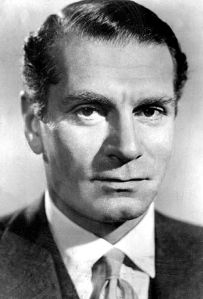 satisfaction watching and listening to him, and wanted to watch and listen all day. What was happening to me was beyond me to describe. I was young; I didn’t have the vocabulary to explain it. But I am far from young now, and still do not have the vocabulary, not because my vocabulary is deficient, but because when you see or read or hear something that is so out of the ordinary that it is almost beyond belief, you are unprepared for it and no words in all the lexicons, even the most expressive, are sufficient. That is art.
 One day in the third grade my favorite teacher, Miss Gross, standing in the front of the room, started reading something I had written. She had had us describe something that had happened to us, and because I loved to run and was the fastest running boy in the neighborhood I wrote about running while playing football. I heard her read (very dramatically) my words: “They tackled me and I fell to the ground like a blob of jelly coming out of a jar.” “That is what is called an image, the basis of poetry, an art. David made a simile.”



 davidjrogersftw