The information in this post is applicable not only to artists, but to people working in any occupation.
A Friend Was in Town
 A friend was in town and we went out and had a few laughs, and told a few lies, and he reflected on his career. He said, “I knew when I started out there were an awful lot of writers who were more gifted and more intelligent and went to fancier schools and got better grades. So I decided then and there that to survive competitively I had no choice: I would have to buckle down and out-work the others, and that’s what I’ve done. Now I’m a popular author and I’ve never heard anything more about them.”
Every artist, every person, who reaches high expertise in a field—a “domain”—will have done so via a long period of learning and application while pushing themselves upward to excellence.
Lengthy training is nearly always the reason for superior performance.
The best way to improve your abilities is to deliberately practice, even if you have no interest in becoming one of the greats, or any more proficient in your art than being excellent, or “pretty good,” or “not bad.”
One sign of prodigies is that you can’t keep them from practicing. That’s all they want to do and they find it exciting. But many people, I’m told, find practicing drudgery. I’ve never found drudgery a problem. I don’t mind drudgery. But drudgery or not, if you want to excel, it’s got to be done.
Good artists manufacture themselves.
The enlightened artist begins with the knowledge that an art is a learnable performance made up of a number of separate skills, each of which can be learned, developed, refined, and put together with others.
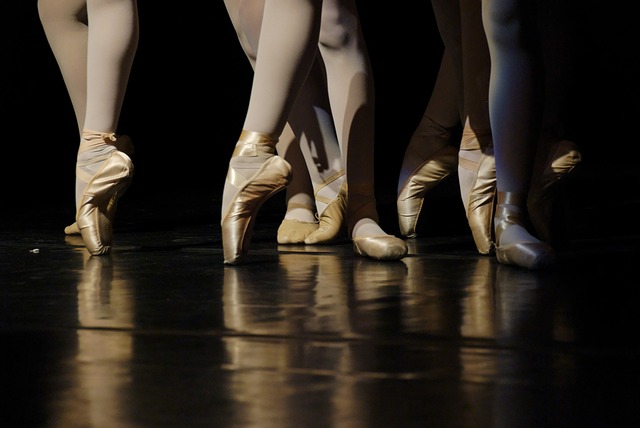
Dancers who practice until their feet bleed so their performance is all it could be are developing and increasing talent. Writers, actors, composers, and artists who go over and over and over their work until it is as perfect as they want are developing and increasing talent.
You don’t have to be born exceptional to achieve exceptional things as an adult.
The Deliberate Practice (DP) School of Development
While looking closely at the superior achievements of great artists like Faulkner, Shakespeare, or Picasso, we are strongly tempted to believe that the rules and principles determining the development of abilities simply don’t apply to rare individuals the way they do to us who have not written The Sound and the Fury, or Hamlet, or painted Guernica.
But according to what I call the Deliberate Practice (DP) School of expertise development the ways in which famous artists develop exceptional capabilities are quite similar to how everyone else develops their abilities; that if certain procedures are followed high artistic performance is a more realistic goal than might be expected.
Every artist, every person, who reaches high expertise in a field—the “domain”—will have done so via a long period of learning and application while pushing themselves upward to excellence. Lengthy training is nearly always the reason for superior performance.
The Amount of Time Devoted to Deliberate Practice is the Best Predictor of Your Attainments
 It is generally believed now according to “The 10 Year Rule of Necessary Preparation” that to reach peak performance in most domains ten years and 10,000 hours of application are required, a sizable portion of that time devoted to sustained, focused “deliberate practice.” Ten years and 10,000 hours sounds intimidating, but if you stop to think about your own artistic career, you’ll see it’s not so intimidating after all. And there are many exceptions to the ten-year rule.
Studies of piano students show a very precise correlation between the number of practice hours and the student’s proficiency. The best students practice substantially more hours than students at a mid-level of proficiency, who in turn, practice considerably more hours than poorer performers.
When I was an 800 meter runner on the track team, a few of us spent more hours than others on the team practicing and even sent away for information on the world’s most innovative training methods, and trained year round. Our goal was to develop our abilities as high as we could so that we might win races. We consistently lowered our times and won more often than not. But some of our teammates were satisfied to come in third, fourth, or fifth, and left practice well before we did, didn’t study training methods, and worked out only during track season.
I notice the same in writing groups. It’s obvious that certain hard workers really want to write a better poem this time than they did last time, want eventually to write supremely well, and that others in the group have much lower ambitions. They reach a certain level of ability they’re satisfied with, and there they stay.
If your ambitions for your art are high, practice more hours; if not high, you needn’t spend as much time practicing.
The Rule Is Not A Rule
More recently, research has shown that the ten year rule is not a “rule” after all. Some artists require even more time. Generally the number of years from a pianist’s first lesson to a major concert performance is seventeen years. And some artists require less than ten years and 10,000 hours. In fact, the people who will become the best in a domain ordinarily require less time than others to reach high expertise. They get there quicker and they are better. They also produce more volume of work and more high quality work in their career than others in the domain. Very tall professional basketball player—seven feet—become very proficient after six or seven years.
What is Deliberate Practice?
The best way to improve your abilities is to deliberately practice, even if you have no interest in becoming one of the greats, or any more proficient in your art than being excellent, or “pretty good,” or “not bad.”
To deliberately practice is to set out and conscientiously follow a specific program to improve your performance, including increasing your knowledge because a major way of leaping up in performance–and possibly the most significant way–is through the acquisition of knowledge about your domain.
Being intelligent explains many successes, but the best chess player, the best athlete, the best creative artist, the best business person, is not necessarily the most intelligent, but has acquired more sheer knowledge of the domain than others in the field. He or she has a higher number of patterns–“chunks” of knowledge–in their memories to draw on and apply to solving the problems at hand—possibly a few million chunks.
Acquiring more and more chunks is what you’re doing all the time you’re working at your craft, talking about your craft, studying it, and practicing. Major artists are immersed in their art—they breathe it; they dream of it.
The knowledge of the domain you possess also depends on your motivation to learn. Some artists—some people in general–have an insatiable appetite for new information; others have virtually no appetite. (Research show that more than 50% of college graduates never read a book again after graduation.) But since the best artists are also the most knowledgeable, it’s clear that studiousness is a characteristic of the best.
One sign of prodigies is that you can’t keep them from practicing. That’s all they want to do and they find it exciting. But many people, I’m told, find practicing drudgery. I’ve never found drudgery a problem. I don’t mind drudgery. But drudgery or not, if you want to excel, it’s got to be done.
A Useful DP Program
 DP should really be called “Sustained, Private Deliberate Practice” because to be maximally effective it should continue over time and is usually carried out in private. A violinist who practices four hours every morning needn’t have a teacher with him all the time. (Though children taking music lessons are more likely to want to continue practicing if parents stay with them.)
Deliberate efforts to improve performance beyond its current level require concentration, problem-solving, and a continuous striving to find better methods for performing the artist’s tasks. The primary prerequisite is always bearing in mind and never forgetting what the goal is—concentrating on improving some specific aspect of performance.
For example, in practicing a piece, a less experienced pianist will play the entire piece, but the more experienced pianist will concentrate repeatedly on a particular passage or small set of notes that she is weak on and needs to play better. You stunt your artistic growth when you practice what you’re already good at and neglect what needs more work.
The enlightened artist begins with the knowledge that an art is a learnable performance made up of a number of separate skills, each of which can be learned, developed, refined, and put together with others. He analyzes his performance as objectively as possible, particularly strengths and weaknesses, and sets realistic (not unrealistic) performance-improvement goals, sets aside specific and regular practice hours (when and where it will be done), practices conscientiously and hard (but takes regular breaks, gets sufficient sleep and rest, and takes naps), coordinates practice with instruction (which may be self-instruction), seeks feedback, seeks help when needed (consulting, mentoring, advising), focuses more on weaknesses than strengths (that’s important to do), and keeps track of and evaluates improvements over time.
Focus on a Small Set of Crucial Tasks
It is important to identify and focus on developing expertise in the most crucial tasks in your art (and your style and technique)—those tasks that occur often and that capture the essence of high performance in your domain. Very important to me are the rhythm, the “sound,” the “flow” of the words, and refining that ability is important to me.
All artists are trying to establish a relationship with an audience. Poets are particularly interested in doing so through imagery, size and scope of vocabulary, particularly concrete language, fluency, and succinctness; dramatists in crisp dialogue; non-fiction writers in conveying complex information clearly and simply; dancers in physical preparation, strength, balance, elevation, control, and the ability to imitate movements; actors in improving their ability to memorize lines and to assimilate information quickly; fine artists to convey in colors, shapes, and perspectives a very direct form of self-expression.
Right now, what would you say are the crucial tasks you should focus on?
List them: 1,2,3,4 and set up your goals and your schedule.
Is Talent Important? Does it Even Exist?
The DP School doesn’t buy the notion that people, in our case, artists, are born with innate talents that are the causes of one artist being a better artist than another one, or that explains why artists seem naturally equipped for artistic performances. They would reject the notion that Hemingway was born with more “creative stuff” than the other writers of his era. The Talent (T) School agrees that practice is essential, but believes that if you don’t have the sheer talent—that “creative stuff”– you’re at a serious disadvantage.
THE DT School points to other causes than innate talent to explain remarkability, particularly effort and the amount of time spent on improvement. The T School maintains that some people will never become experts no matter how hard they apply themselves because they lack the necessary talents that would equip them to excel. A well-known acting teacher wrote, “the overwhelming majority of trained actors who have more than fulfilled the 10-year/10,000- requirement proposed by the strict deliberate practice view” seem to be missing the ability to rise above the competition, but “superior talent does eventually get noticed”
An orchestral violinist said on hearing a brilliant eleven year old violin prodigy: “I was so overcome by what she did in rehearsal…If I practiced for three thousand years I couldn’t play like that. None of us could.”
The Middle Way
 My Middle Way philosophy which avoids extremes tells me that innate talent and basic abilities do exist and that to disbelieve that is contrary to everyday experience. You know that from your own life. Since your earliest days you were always the best writer, or best painter or dancer, and you knew that even as a child and everyone knew that and you didn’t know how you got that way: you just were. Deliberate Practice is not the only cause of excellence in the arts or any other domain.
My friend, the late composer/performer/conductor Marvin Hamlisch, was a creative genius who showed exceptional musical ability at three and auditioned for and was accepted into the Julliard School of Music, the world’s finest music school, at seven. Marvin went on to win many awards, including a Pulitzer Prize, and was a tremendously hard worker. But unlike Marvin, most prodigies are not exceptional as adults. Other people who were not as advantaged in childhood surpassed them just as you and I have surpassed others who were born with more talent.
Artist’s life after artist’s life show us that talent is not a hard and fast commodity that some people possess and will always possess, but that talent is malleable and changeable, and something you develop through devoted effort and persistence. Good artists manufacture themselves. You don’t have to be born exceptional to achieve exceptional things as an adult.
Dancers who practice until their feet bleed so their performance is all it could be are developing and increasing talent. Writers, actors, composers, and artists who go over and over and over their work until it is as perfect as they want are developing and increasing talent. Self-taught autodidacts like poet Walt Whitman who begin their careers with no discernible talent at all and become the most talented artists of their age intrigue me very much.
Long hours of hard work painting, writing, dancing, and acting, combined with a sustained schedule of deliberate practice and deepening of knowledge, and the talent you know you possess and have known for a long time you do will go a long way, and can lead to undreamed of satisfaction, rich experiences, new talents, meaningful friendships, and success, profit, and recognition.
© 2014 David J. Rogers
For my interview from the international teleconference with Ben Dean about Fighting to Win, click on the following link:
Order Fighting to Win: Samurai Techniques for Your Work and Life eBook by David J. Rogers

Click on book image to order from Amazon.com
or
Order Waging Business Warfare: Lessons From the Military Masters in Achieving Competitive Superiority

Click on book image to order from Amazon.com
or






 davidjrogersftw