Category Archives: Intensity

Fame is Fleeting:  Novelist Thomas Wolfe

Introducing Thomas Wolfe

Writers are always looking for material to write about. The right material is half the job. American writer six-foot-seven-inch Thomas Wolfe (1900-1938) wrote about himself. When he wrote he strove to use everything. He wanted to put all the experiences of his life into books. He might write thousands of words about a young man waiting for a train–just waiting as he recalled having once done. Every experience had to be used; nothing could be left out, a goal that was the source of his distinctive achievements and his greatest weakness, for the immensity of his goal was an impossible ambition.

Abstract painting like clouds in orange, gold and purpleAll writers are equipped with a good memories, but Thomas Wolfe’s memory was astonishing. Because of it he was able with ease to recall events, people, and places in stunning detail. That was his strength. His weakness was an inability to restrain the deluge of words that poured out of him from evening to dawn as he wrote, or when he spoke, and he simply, despite himself, had no ability to stay within the requirements of writing a saleable novel. He had no concept of how to write such a book and needed the help of his editor, the legendary Maxwell Perkins of Scribner’s, who at the same time was the editor of Ernest Hemingway and F. Scott Fitzgerald, two other difficult clients.

The manuscripts Wolfe turned in to Perkins were of enormous lengths, twice as long to War and Peace. They required tens of thousands of words–or hundreds of thousands–being cut. But Wolfe, being told to go home and cut fifteen thousand more words, might go home and add twenty or twenty-five thousand. Wolfe would sit looking at the manuscript with no idea of what to do to shape it into a novel that could be sold at a book store. The only way Perkins could get Wolfe to stop adding words was to take the book away from him and send it to the printer without Wolfe knowing.


A Sketch of Thomas Wolfe

Thomas Wolfe was the most naïve and trusting man on earth and wanted everyone to be his friend. His belief in hard work was almost holy. He wrote all night, each night producing thousands of words on large scrolls of newsprint that he dropped on the floor for an assistant to try to paginate.

He was a big man in many ways, not just in his physical size, but in terms of his ambitions, his memory, and the intensity of his emotions. To Wolfe, the need to write–to spare no effort, to exhaust himself writing–was paramount. Whenever he was distracted from working he would fall into a black mood; then he would brood, drink, and pace New York streets all night, telephoning his friends and accusing them of betraying him.  The next day he would call them and apologize abjectly. He was governed almost wholly by his insatiable need to write.

Wolfe inherited from his father the richness, rhetoric, and music of his prose and the gusto with which he lived. His vocabulary was immense, and his ability to select from it the right word, phrase or image was, and is, unrivaled by any other writer. From his mother he acquired his enormously retentive memory and his dogged attraction to long-sustained, exhausting work.


Wolfe’s Most Important Relationships

Three relationships were most important in Wolfe’s life: with his parents, his lover Aline Bernstein, and his editor Maxwell Perkins (considered the best editor any writer ever had). Aline Bernstein, a beautiful, brilliantly successful stage designer and one of the directors of the Neighborhood Playhouse, had more charm in her little finger than most people have in their whole body. Wolfe met her in September, 1925 when he was twenty-five. She was nineteen years older at forty-four and a married woman. He wrote about her that “that woman would become his heart’s centre.”  It was love at first sight for both of them. Wolfe had been involved with other women, but Bernstein was the one great love affair of his life, and the influence she had on him was incalculably great.

Without her unwavering belief and confidence in him and her substantial financial and emotional support, he could never have written Look Homeward Angel when he did. She made it possible materially and spiritually for him to write it while he taught English at NYU. For six years she guided and transformed his life until 1931 when their affair ended bitterly. Often Wolfe’s relationships ended bitterly, for example his working relationship with Perkins–editor, confidant, adviser, creditor, and friend, the most important relationship in Perkins’ life.


A Writer’s Life Becomes More Difficult with Each Succeeding Book

After having his first book (Look Homeward Angel) successfully published, Wolfe wrote about the difficulties of each succeeding work, the travails of the life of a creative person. He wrote that the writer is alone: “At that time, among the many other things I did not know, I did not know that for a man who wants to continue with the creative life, to keep on growing and developing, this cheerful idea of happy establishment, of continuing now as one has started, is nothing but a delusion and a snare. I did not know that if a man really has in him the desire and the capacity to create, the power of further growth and further development, there can be no such thing as an easy road. I did not know that so far from having found out about writing, I had really found out almost nothing … I had made a first and simple utterance; but I did not know that each succeeding one would not only be … more difficult than the last, but  would be completely different–that with each new effort would come new desperation, the new, and old, sense of having to begin from the beginning all over again; of being face to face again with the old naked facts of self and work; of realizing again that there is no help anywhere save the help and strength that one can find within himself.”


Fame is Fleeting

Boat at the horizon with red sky and gold waterNo writer in the nineteen thirties–or even now–could write with the beauty of Thomas Wolfe’s prose. His reputation after his death suffered because of the perceived formlessness and verbiage of his writing in an age when critics preferred tight structure and economy of language–short sentences and short episodes, and highly-focused scenes rather than the volume and torrents of Wolfe’s  language.  Once considered by Nobel Prize winners William Faulkner and Sinclair Lewis to be America’s finest writer, and in the past extremely popular with readers and critics, Wolfe is now almost never read–unfortunately in my opinion, if one is interested in being inspired by the brilliance of written expression. Hard as you look, you will not find Thomas Wolfe–once thought a towering genius–in current anthologies of American literature.


© 2025 David J. Rogers

For my interview from the international teleconference with Ben Dean about Fighting to Win, click the following link:

Interview with David J. Rogers


Order Fighting to Win: Samurai Techniques for Your Work and Life eBook by David J. Rogers
Fighting to win Amazon

Click on book image to order from Amazon.com

or

http://www.barnesandnoble.com/w/fighting-to-win-samurai-techniques-for-your-work-and-life-david-rogers/1119303640?ean=2940149174379


Order Waging Business Warfare: Lessons From the Military Masters in Achieving Competitive Superiority

Waging Business Warfare812sCY9edLL._SL1500_

Click on book image to order from Amazon.com

or

http://www.barnesandnoble.com/w/waging-business-warfare-lessons-from-the-military-masters-in-achieving-competetive-superiority-revised-edition-david-rogers/1119079991?ean=2940149284030


Follow my blog with Bloglovin

2 Comments

Filed under Biographies, Intensity, Thomas Wolfe, Writers

Why Some Writers and Artists Do Not Have a Single Close Friend

The Writer’s and Artist’s Sheer Voltage

Picasso style face in red, orange, khaki, green and whitePsychologists classify people in categories according to their personality traits. Yet they cannot measure intensity and sheer energy of a person’s life force.  There are some people who have a hundred times more intensity than others.  Artists and writers have an abundance of intensity. The energy pouring out of Vincent van Gogh would bowl you over. Writer Thomas Wolfe wrote in a “wild ecstasy” at top speed, never hesitating for a word, as though he were taking dictation. He wrote all night, at times churning out on large oversized sheets of newsprint thousands of hand-written words before dawn, leaving behind at his death at age 37 a million words to be made into books posthumously. Goethe called these super-charged creatures “demoniacs,” people with a super-abundance of vitality, “something that escapes analysis, reason, comprehension.” Goethe was aware of this power in himself.

A high level of energy is one characteristic of many artists and writers. Another characteristic is this: Artists and writers are often so highly focused and absorbed in solving artistic problems that they have no interest in anything that competes with attention to their work, such as concern for social relations, status, prestige, material objects, and money.

Most artists and writers spend an inordinate number of hours alone, and enjoy that very much, believing they are in ideal company alone in a studio or work room.  That need for autonomy and social isolation is one of the reasons why many artists and writers were attracted to their art in the first place.  A detached attitude in interpersonal relations–the strong desire to do what you have in mind to do without restraint or control from any other person–is a strong quality of yours if you are like most great artists. And not much desire to be included in a group unless that group stimulates your creativity.

The Need Theory of motivation states that the need for other people is one of the most powerful forces, yet many people pursuing an art have not a single close friend. Asked why, they answer that they don’t want or need friends.  They aspire to be non-conforming in thinking, and independent in judgment, to shut out irrelevant events and people, to cut off what is unnecessary to their creative life. Short story master and innovative playwright Anton Chekhov was the most popular writer in Russia, beloved by a vast public, and with many acquaintance in literature, but without one person he could call a valued friend.

It was said of Martha Graham, who revolutionized the art of modern dance, “Martha felt that she must cut from her life all deep emotional involvements, all attachments, all comforts, even moments of leisure, and beyond that love involving family and children. She gave everything to her work, withheld nothing.” Picasso could be affable and gracious when he wanted, but tended not to get deeply involved with anyone, and was willing to sacrifice any person who interfered with his work.  Toni Morrison said, “I don’t go to parties. All I do is write.”

Competence and elegance, aesthetics and the desire to create something novel and meaningful are at the heart of the artist’s and writer’s system of values. They are often indifferent to the standard conventions and social niceties. Some, like writer Raymond Chandler, are socially withdrawn.  As a screen writer Chandler abhorred the need to associate with other writers and collaborate with movie directors, and they, in turn, were none too happy working with such an unpleasant person.


Quotes

Nobel Laurette Saul Bellow was married five times.  He said, “I have always put the requirements of what I was writing first–before jobs, before children, before any material or practical interest, and if I discover that anything interferes with what I’m doing, I chuck it. Perhaps this is foolish, but it has always been the case with me.”

“The biographies of great artists make it abundantly clear that the creative urge is often so impervious that it battens on their humanity and yokes everything to the service of their work, even at the cost of health and ordinary human happiness.” (Carl Gustav Jung)

“The true artist will let his wife starve, his children go barefoot, his mother drudge for a living at seventy, sooner than work at anything but his art.”  (George Bernard Shaw.)

“I wish I could work straight through and wouldn’t have to stop for any reason–not for meals, sleep, rest, entertainment, shopping, socializing, conversation, repairmen, UPS deliveries, playing with the kids, sex.” (A writer friend)


© 2024 David J. Rogers

For my interview from the international teleconference with Ben Dean about Fighting to Win, click the following link:

Interview with David J. Rogers


Order Fighting to Win: Samurai Techniques for Your Work and Life eBook by David J. Rogers

Fighting to win Amazon

Click on book image to order from Amazon.com

or

http://www.barnesandnoble.com/w/fighting-to-win-samurai-techniques-for-your-work-and-life-david-rogers/1119303640?ean=2940149174379


Order Waging Business Warfare: Lessons From the Military Masters in Achieving Competitive Superiority
Waging Business Warfare812sCY9edLL._SL1500_

Click on book image to order from Amazon.com

or

http://www.barnesandnoble.com/w/waging-business-warfare-lessons-from-the-military-masters-in-achieving-competetive-superiority-revised-edition-david-rogers/1119079991?ean=2940149284030


Follow my blog with Bloglovin


7 Comments

Filed under Artists, energy, focus, Intensity, Traits of Creative People, Writers, Writers' Characteristics

Why Are So Many Talented Writers Unsuccessful?

I’m assuming that you have a writing talent, and that you may even have been the most talented in your class, in your school, and now are the Hands typing on a laptopmost talented in your writers’ group, most talented in your home town. That’s something to be proud of. But talent alone isn’t enough to make you a highly successful writer in the competitive field of creative writing in which almost everyone is talented, everyone gifted, and everyone exceptional.

But there are qualities other than talent that will determine how successful, fulfilling, and happy your writing career will be in that competitive world of very talented people. That hard-to-define stuff called talent is just one of the many requirements of the writer who excels. If you are relying solely on the talent you were born with to bring you writing success and happiness you are making a mistake.

Poet John Berryman thought that talent was no more than 20% of a successful poet’s personality, and why shouldn’t the same may be true of novelists, dramatists, screen writers, and essayists?  What I’m asking is, “What comprises the eighty percent of a writer’s personality that blended with natural talent brings about success?”

To that question there are innumerable possible answers. According to writers, teachers, critics, and researchers other factors that are important are:


Endurance/ Persistence

Novelist Kurt Vonnegut said that talent was extremely common, but what is rare is endurance, the willingness to endure the sometimes difficult and trying life of the writer. Many writers have come to the conclusion that sheer old-fashioned day-by-day doggedness is the key to writers’ success. In the book The Courage to Write, Ralph Keyes says, “Success as a writer is within the grasp of whoever can tell a story on paper that people want to hear and is willing to persevere, to put up with boredom, frustration, and anxiety. Determined writers will find ways to get published regardless of whether they are brilliant or have a degree from the Iowa Writer’s Workshop.”

Hand writing on blackboard in white chalk NEVER GIVE UPWhenever people say to me “I hate writing” I am shocked. Teachers tell me that most people hate writing. It is only a person who has a continuous intense interest in writing and in mastering the skills of writing who will persist in developing their abilities over a long period of time. Non-writers cannot be motivated or even forced to work at a writing task to the extent that a person with an intense interest does willingly. Writers—creative people generally—are often such astoundingly motivated people that less creative people have difficulty comprehending their zeal, their stamina, their capacity for sustained effort. Few people who ever lived–whatever their art, whatever their field–were as motivated as Shakespeare, Dickens, or Faulkner.


Passion, Intensity, Obsessiveness, Willpower, and Patience

Among the personal qualities that cause motivation strong enough to sustain a writer through the inevitable trials, disappointments, setbacks, and self-doubts are those that are not luxuries but necessities for any writer who is in any way serious about writing: passion, intensity, obsessiveness, willpower, and patience. Gertrude Stein said that all of a writer’s work comes out of a passion as a powerful force, and added that if you really have that passion you aren’t able to recognize it because you don’t know what it is to feel any differently.  Many people with obsessive compulsiveness–including writers I’ve known–are especially productive not despite that affliction but because of it.


Hard Work, Commitment, and the Hunger for Success

Writing teachers are generally in agreement that it’s not the best, most talented students whose names they see in print in later years, but the hardest workers and the hungriest for success. The students with the most talent but the weakest work ethic who dazzled the class disappear into oblivion, while the hard workers often go on to great achievements. Many prodigiously gifted but poorly motivated people do not end up where gifted people belong:  in the upper echelons of their field. Without pursuing all your goals with clear-mindedness, confidence, and commitment over years, you’ll probably quit after repeated failure.

Every writer, as every artist and every actor, who experiences minimal success eventually asks “Should I quit?” or lowers their ambitions. Writers who have achieved a high level of excellence and success are not satisfied to reach merely an acceptable level of performance, but are motivated to pursue increasingly higher goals.


Example of Pursing Increasingly Higher Creative Goals: Frank Loesser

Piano keyboard with fingers on a keyIn the field of music Frank Loesser began by being contracted to write individual songs for movies. To hear what they sounded like he made up makeshift lyrics. His wife told him that his makeshift words were better than the lyrics of the lyricists he turned his music over to, so he then started writing words as well as the music.  Then he became more ambitious and turned to writing all the music in movies and then, more ambitious still, turned to writing the stories and the librettos (the words and music) in plays like Guys and Dolls and How to Succeed in Business Without Really Trying. Similarly, novels are often written by men and women who started their careers as short story writers where they learned the fundamentals of their craft.


Self-Confidence and The Need to do Your Best

Those who are sure of themselves intensify their efforts when they don’t reach their goal. Studies of high-performers in all the arts show that they are all universally alike: over and over again they are people who believe in trying to excel, in doing one’s best, in working very hard and spending time constructively. They are intensely attracted to their field from their first exposure to it and all through their efforts to develop their skills and their “reach.” In fact, if you have an intense interest in a creative field, that in itself is almost always a sign that you have a natural talent in it.


The Effect of Passing Comments

Talent can be ignited at any time. The cause of motivation to write a 300 page book or continue on the writer’s life path may be nothing more than a passing comment. Simply being told by someone else or telling yourself that you can achieve much more through trying harder will get most people to try harder.  Just being told that they are talented is often enough to start people off to develop that talent.


An Analogy

Talent in writing will not bring success unless it is supplemented by other human qualities. Without endurance, determination, intensity, passion for writing, obsessiveness, will power, hard work, commitment, hunger for success, and self-confidence a writer would be analogous to an automobile–beautiful, streamlined, expertly designed–but lacking an engine.


© 2023 David J. Rogers

For my interview from the international teleconference with Ben Dean about Fighting to Win, click the following link:

Interview with David J. Rogers


Order Fighting to Win: Samurai Techniques for Your Work and Life eBook by David J. Rogers

Fighting to win Amazon

Click on book image to order from Amazon.com

or

http://www.barnesandnoble.com/w/fighting-to-win-samurai-techniques-for-your-work-and-life-david-rogers/1119303640?ean=2940149174379


Order Waging Business Warfare: Lessons From the Military Masters in Achieving Competitive Superiority

Waging Business Warfare812sCY9edLL._SL1500_

Click on book image to order from Amazon.com

or

http://www.barnesandnoble.com/w/waging-business-warfare-lessons-from-the-military-masters-in-achieving-competetive-superiority-revised-edition-david-rogers/1119079991?ean=2940149284030


Follow my blog with Bloglovin


7 Comments

Filed under Confidence, Developing Talent, Human Potential and Achievement, High Achievement, Intensity, Persistence, Success, Willpower, Writers, Writers' Characteristics

Why Writers and Artists Are So Intense

I wanted to know why artists and writers are so self-absorbed.

Then I wanted to know why writers, painters, and other artists bloom late.

In popular posts I addressed those questions. Now I want to know why so many writers and artists are intense and have intense personalities.


Waking, Wanting To Get Going

Hands typing on a laptopI was excited waking up at 3:00 A.M. yesterday, and I was not thinking of going back to sleep. I wanted to finish some poems where I had left off the night before. I thought, “Let my wife–a calmer, less excitable person–sleep; I love to work and I have work to do.”

Then I started thinking that it was likely that other creative people I know–good friends in the arts–at that very moment also were waking early and were anxious to get to work on their project, that we are similar–we resemble each other in regard to the emotions we bring to bear as we live and work–that we are all creative and we are all intense and excitable. Certain qualities endear creative people to me. One is their intensity.

It seemed to me then that intensity and excitability were a pattern, a hard and fast characteristic of myself and my artful friends, and come to think of it, of many of the famous writers and artists and other creative people I have been reading about, studying, admiring, and writing about all my life. Their intensity made them different.

The Feeling of Intensity

What does intensity feel like?

Sunrise over a lake with blue and orange streaksIntense writers and artists do everything intensely–experiencing, feeling, thinking, and imagining. They are significantly different human beings from other writers and artists (and agents and family members and co-workers) who are not intense. They feel their emotions strongly. They soar high with elevated emotions, and they plunge into dark moods, at times their moods changing so fast as to be bewildering. In contrast, people who are not intense the way so many writers and artists are feel their emotions more mildly and without such major fluctuations between the high moods and the low moods. Differences in intensity between people who work closely together or live together may cause conflicts.

Some writers and artists feel that they are being flooded by waves of joy, that their every cell is being excited. Some writers and artists–perhaps you, certainly I–revise their work tirelessly, at times almost maniacally, ten times, twenty times, thirty times, until they are satisfied the work is the best they can do. Only then can they stop themselves.

The intensity of writers’ and artists’ personality is a powerful element of their creativity. The wonderful poet John Keats thought that intensity–not intelligence or any other quality — in and of itself is the most powerful creative element of all.

Intensity and the Arts

Deep blue-pruple crocus flower against green leavesIntensity is a quality found in many creative people that facilitates artistic pursuits. Abbe Dimnet said that the creator’s intensity will be reflected in the quality of the work: “The experience of most artists is that the quality of their production is in keeping with the intensity of their wish.” Henry James wrote: “It is art that makes life, makes intensity, makes importance.” Horace said, “Painters and poets alike have always had license to dare anything.” It is their intensity that gives them strength. Keats said, “The excellency of every art is its intensity “ A problem every writer and artist faces is maintaining in every phase  of their story or painting  the intensity that keeps it going and energizes the  creator’s every gesture and the work’s every detail.  They must be able to generate and sustain intensity as they work.

Emotional Intensity and Over-Excitability of Many People in the Arts

“Emotional intensity” of the kind I am describing is a quality that Polish psychologist, psychiatrist, physician, and poet Kazimierz Dabrowski found when he studied intellectually or artistically gifted people. The degree of a person’s emotional intensity is a stable characteristic. Some people are intense; some are not. Just as self-absorbed artists and writers can’t help being self-absorbed any more than they can help having the color eyes they do, intense artists and writers can’t help being intense.

Dabrowski recognized that, as I thought, creative people experience an intensification of experience much beyond what other people experience. Dabrowski considered the intensity of their emotions, their sensitivity and emotional extremes–their “over-excitabilities”–to be part and parcel of their makeup. Every aspect of their personality is intense.

They are “spirited,” and are also more sensitive, perceptive, energetic, and persistent than other people. They possess what I have called “inner” skills such as persistence, confidence, and courage that not everyone has but that lead directly to success in the arts. Dabrowski identified five “overexcitabilites” exhibited by more people in the artistically gifted population than in the general population.

The Five Dimensions of Intense Writers’ and Artists’ Lives

  1. Sensual

Sensualists, intense writers and artists seek an enhanced sensory and aesthetic pleasure in seeing, smelling, tasting, touching, hearing, and sex. They delight in beautiful objects and in sounds of words, and in form, color, and balance. Negatively, they may overeat and be sexually over-indulgent.

  1. Psychomotor

Intense people have a surplus of energy, are competitive, enjoy intense physical activity such as fast games and sports, often are compulsive talkers–they may jabber–and act impulsively. They may have nervous habits. They may bite their nails or have nervous twitches.

  1. Intellectual

They enjoy intensified activity of their mind in their curiosity, concentration, and in their capacity for sustained intellectual effort, avid reading, asking probing questions, and making keen observations. They can vividly recall what they see with their eyes (that fundamental necessity for writers and artists) and may be detailed planners.  They are tenacious problem-solvers. They search for truth and understanding. They think about thinking and love theory and analysis. They are logical and independent thinkers.

  1. Imaginational

In speaking and writing, intense writers and artists often use images and metaphors, are given to poetic and dramatic perceptions, and are skilled at inventing. Some can make up fantasy worlds of their own and imaginary companions and are attracted to magic and fairy tales. Under emotional tension their imagery can mix truth and fiction. They may have elaborate dreams and illusions. They cannot tolerate boredom. They may lack self-judgment and be overly-critical.

  1. Emotional

The feelings and emotions of over-excitable writers and artists are intensified. They are given to extremes of emotions, complex feelings and a large range of emotions and have an awareness of the feelings of others. They have heights and depths of emotions that others lack. At times their mood soars. And it also may plunge. Their moods change quickly.

They may have strong physical expressions of over-excitability such as tense stomach, sinking heart, pounding heart, sweaty palms. Intense writers and artists experience euphoria, enthusiasm, and ecstasy, but also shyness, timidity, and obsessiveness.

But Dabrowski found that inner forces were at work in them also, forces that generated overstimulation, conflicts, and pain, and often set them out in a search for a way out. One way out may lead to inner growth and transformation, another may lead to results such as addiction.

Examples of Famous Intense Writers and Artists

Photograph of Walt Whitman with a long white beardWho could be more intense than poet Walt Whitman who expressed a wish to have “one hour of madness and joy,” “to feed the remainder of life with one hour of fullness and freedom,” “To have the feeling today or any day I am sufficient as I am.” Who more intense than novelists Charles Dickens with his phenomenal storehouse of drive that enabled him to work on a multiplicity of books, speeches, plays, travels, and social projects at the same time without ever tiring?

Or Thomas Wolfe whose monumental goal was nothing less than to describe in the millions of published words that poured out of him uncontrollably, as from a spigot, every experience he had ever had? And Gustave Flaubert, a pioneer of a modern writing style, who agonized rewriting his novels and stories to perfection? Or intense painter Vincent van Gogh who produced a masterpiece a day, or Claude Monet, who for his artistic experiments could paint thirty or forty canvasses of exactly the same scene.

There are drawbacks to a writer or artist being over-excitable and intense. But the advantages of being a writer or artist who is intense and has the powerful energies, the drive, and many other qualities that facilitate success in the arts far outweigh the negatives. The creative’s intensity is reflected in the quality of the work they produce–more intensity, better quality work.

If writers and artists are asked to identify the important characteristics they would l really like to have that would positively affect their career, they will be wise to identify intensity.

An intense writer or artist trying to create a vision they perhaps alone perceive is fortunate.


© 2023 David J. Rogers

For my interview from the international teleconference with Ben Dean about Fighting to Win, click the following link:

Interview with David J. Rogers


Order Fighting to Win: Samurai Techniques for Your Work and Life eBook by David J. Rogers

Fighting to win Amazon

Click on book image to order from Amazon.com

or

http://www.barnesandnoble.com/w/fighting-to-win-samurai-techniques-for-your-work-and-life-david-rogers/1119303640?ean=2940149174379


Order Waging Business Warfare: Lessons From the Military Masters in Achieving Competitive Superiority

Waging Business Warfare812sCY9edLL._SL1500_

Click on book image to order from Amazon.com

or

http://www.barnesandnoble.com/w/waging-business-warfare-lessons-from-the-military-masters-in-achieving-competetive-superiority-revised-edition-david-rogers/1119079991?ean=2940149284030


Follow my blog with Bloglovin


8 Comments

Filed under Artists, Charles Dickens, Claude Monet, concentration, Dabrowski, Developing Talent, Human Potential and Achievement, energy, Excellence in the Arts, Imagery in the Arts, Inner Skills, Intensity, Moods, Over-Excitabilities, talent, Walt Whitman, Writers, Writers' Characteristics

A Style Is About All There Is to Art

Style is everywhere in art and everywhere in everyday life. There would be no art without style. Picasso’s Guernica has a style, and Pride and Prejudice does too, and the building you are in has a style. Whenever you speak or send a text or dress or brush your hair, you have a style. You’re reading a style right now. It is mine, and just as, whether you know it or not, you have spent probably Interior livingroom with stylethousands of hours developing yours (so that I’d recognize anywhere that it is yours), I have consciously spent many hours developing mine.

A core reason you are attracted to one painter over others or one writer over others, or why you like Sinatra, or Chopin or Debussy or The Simpsons is their style.  Speaking of style, short story specialist Irishman Frank O’ Connor said, “One sees that the way a thing is made controls and is inseparable from the whole meaning of it.” In the same vein but more emphatically American Nobel Prize writer Toni Morrison said, “Getting a style is about all there is to writing.”

The total effect of what a writer says will depend to a considerable extent on how the writer says it. Style is the manner of saying what is said.  Some styles are appealing, but many are unappealing. The writer should always want to write with an appealing style. It needn’t be beautiful, but it should be appealing.

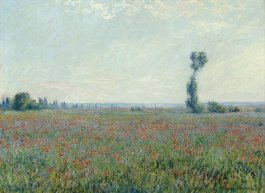
Painting of field by Claude Monet

Claude Monet

The writer’s style expresses his or her temperament and his or hers alone, and reveals verbal abilities, methods of writing, enthusiasms, and even self-doubts. By analyzing a writing style you can analyze the writer. Painters leave their print everywhere in their paintings. Style is the whole artist that is made recognizable in the work. You can see from a work that a Cezanne temperament is not a Monet temperament.

There are good styles and bad styles. .  People do not generally like weird, eccentric styles. When artists discover the style that best expresses them (which may take years to happen) they experience a breakthrough and feel a new sense of power and confidence over their work.

A sign for writers that they are on the right track is the emergence in the work at hand of their characteristic style.  When they see their style taking shape in the work, they feel secure. I’ve always felt that when I get the first paragraph under control (in my style), the piece is basically written.

Simplicity

Artists who are interested in styles today are almost automatically interested in SIMPLICITY, claiming that works of art should not be unnecessarily complicated. Speaking of simplicity, writer Willa Cather said that the higher processes of art are all processes of simplification.

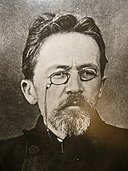
portrait of Anton Checkhov

Anton Checkhov

Anton Chekhov is considered the master of the short story–the greatest, the best to learn from. He wrote to his brother, also a writer, “A strange thing has happened to me: I have developed a mania for brevity–everything strikes me as too long.” He practiced “maximal conciseness.” His phrases are simple, such as, “The sun set,” “It got dark,” and “It started to rain.”  Novelist Somerset Maugham thought that writing simply was more difficult than it might seem. He said: To write simply is as difficult as to be good.”

Chekhov believed that not only should a short story’s style be simple, but the plot should be simple too. He said, “The more elaborate the plot of a given story is, the less effective it tends to be as a work of art.” In many of his stories precious little happens.   He said, “You should take something ordinary, something from everyday life without a plot or ending.” He said a story should have a man and a woman, and a little action. Some of his most admired stories are mood-pieces in which plot is barely present.

Frank Lloyd Wright building

Frank Lloyd Wright

Architect Frank Lloyd Wright, designer of New York’s Guggenheim Museum, was interested in simplicity not only in architecture, but in all arts. He believed that there could be but one best way for the artist to express anything, and that the way could include only what was absolutely necessary to express the essential meaning of the thing. That requires stringent simplification. By eliminating the inessentials, the artist arrives at the nature of the object—its pure form. But the artist must know when to stop simplifying. Wright said, “Less would ruin the work as surely as would ‘more.’”  So, simplify but don’t go too far.

Accessibility and Artworks

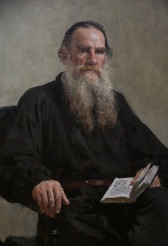
Portrait of Leo Tolstoy

Leo Tolstoy

Artists who are interested in style and interested in simplicity are also interested in ACCESSIBILITY of their works. In any of the arts, the artist has to decide–as do you–if it is important to appeal to an audience, to be understood by an audience. Should the work be accessible? How accessible? Leo Tolstoy, whose novels are sometime considered the greatest ever written, said, “Great works of art are only great because they are accessible and comprehensible to everyone.” Sculptor Jacques Lipchitz thought what many people think: that so-called great works are too pompous, too stiff, and are not accessible. Ford Maddox Ford was all for accessibility and said, “You must have your eyes forever on your Reader. That alone constitutes Technique”

William Faulkner felt differently. He said, “I don’t care about John Doe’s opinion on mine or anyone else’s work. Mine is the standard which has to be met.” (And he won a Nobel Prize.) But his work is accessible only with difficulty–long, convoluted sentences and rhetorical style. But Francois Mauriac disagreed with Faulkner and said, “An author who assures you that he writes for himself alone and that he does not care whether he is heard or not is a boaster and is deceiving himself or you.”  (And he won a Nobel Prize too.) Delacroix wanted accessibility. He said. “A picture is but the bridge between the soul of the artist and that of the spectator.”  How accessible will your work be?

The Author’s Intensity and the Production of Literature

The artist’s INTENSITY is reflected in style.  Some artists’ style is laid back, but others’ style is red hot. Raymond Chandler turned hard-boiled detective writing into critically-accepted literature and had a lot to say about the writer’s craft.  He wrote: “When a book, any sort of book, reaches a certain intensity of artistic performance it becomes literature. That intensity may be a matter of style, situation, character, emotional tone, or idea, or half a dozen other things. It may also be perfection over the movement of a story similar to the control a great pitcher has over a ball.” Painter George Innes said, “The greatness of art is not in the display of knowledge…but in the distinctness with which it conveys the impression of a personal vital force that acts spontaneously, without fear or hesitation.”

Advice Regarding Emotions, Plot, and Understatement

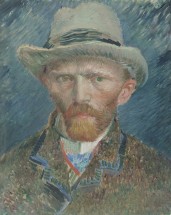
Van Gogh self portrait

Van Gogh

A style conveys EMOTIONS. Chekhov wrote, “The more emotionally charged a situation, the more emotional restraint one must show in writing, and then the result will be emotionally powerful. There is no need to lay it on thick.” Other Chekhov quotes: “Avoid describing the mental state of your protagonist.” “Avoid describing emotional states…one should make these apparent from action.“ “To get strong emotions from the reader, try to be somewhat colder.” Thinking the same thing as Russian Chekhov, Frenchman Gustave Flaubert said, “The less one (the writer) feels a thing, the more likely one is to express it as it really is.”

The two other greatest writers of short stories–Guy de Maupassant and Ernest Hemingway–also advocated emotional understatement. Hemingway wrote “Dispassionate prose,” prose always less emotional than the events seem to demand. Understatement elicits strong emotional responses from the reader.

Emotional states in writing are amplified by brevity.  American writer Flannery O’ Connor said that the fiction writer has to realize that compassion or emotions cannot be created with emotion. The style itself must be emotion-free.

Artists Can’t Help It: They Repeat Themselves

F. Scott Fitzgerald was a highly successful writer by the age of twenty-four. He said, “Mostly, we authors repeat ourselves—that’s the truth. We have two or three great moving experiences in our lives—experiences so great and moving that it doesn’t seem at the time that anyone else has been caught up and pounded and dazzled and astonished and beaten and broken and rescued and illuminated and rewarded and humbled in just that way ever before”

Claude Monet painted the same subject over and over. As an Impressionist he was interested in conveying the effect of light on objects, and would often  set his clock to be at  the place where the subject was at intervals so he could catch the light at noon, say, and ten minutes later and ten minutes after that. He might paint seven or ten paintings of the very same thing in different light.

All Artists Need Taste

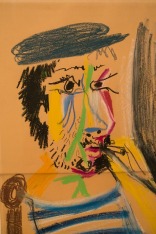
Picasso painting

Picasso

Obvious in a work of art is the artist’s aesthetic judgment, which  he/she develops over time and experience.  “At the higher levels of creativity it is probable that few besides the creators themselves are able to assess a new creation, and it is necessary that they should learn to adopt an objective critical attitude toward their own work…(the creators’ self-criticism) must be based on  sound insight and aesthetic appreciation–what one would call ‘taste” (R. Ochse).

Some Writers Are in the Wrong Art

“Often while reading a book one feels that the author would have preferred to paint rather than write; one can sense the pleasure he derives from describing a landscape or person, as if he were painting what he is saying because deep in his heart he would have preferred to use brushes and colors” (Pablo Picasso). A good example is Joseph Conrad in his masterpiece Heart of Darkness.

Miscellaneous Insights About Writing

 “Good writing is the hardest form of thinking. It involves the agony of turning profoundly difficult thoughts into lucid form, then forcing them into the tight-fitting uniform of language, making them visible and clear. If the writing is good, then the result seems effortless and inevitable. But when you want to say something life-changing or ineffable in a single sentence, you face both the limitations of the sentence itself and the extent of your own talent” (Pat Conroy).
Flannery O’Connor said, “A good short story should not have less meaning than a novel, nor should the action be less complete. Nothing essential to the main experience can be left out of a short story.”

“Since Stephen Crane’s time [late nineteenth century] all serious writers have concentrated on the effort of rendering individual scenes more vividly” (Caroline Gordon).

“A novelist’s characters must be with him as he lies down to sleep, and as he wakes from his dreams. He must learn to hate them and to love them” (Anthony Trollope.)

“It has been through Flaubert that the novel has at last caught up with poetry” (Allen Tate).

“Maybe every novelist wants to write poetry first” (William Faulkner).

“Only when the moral beliefs of the reader tally exactly with those on which a story is based will the reader have the whole of the emotion which it is potentially able to produce in him” (Montgomery Belgion).

A personal style that makes you comfortable and confident helps you accomplish whatever you wish to accomplish in your art. An artist’s style evolves over a lifetime of work. What it was when you were twenty-five is not the same as it is now when you are fifty. This post and the ideas and experiences here of many important artists may help you strengthen and perfect your own style.


© 2020 David J. Rogers

For my interview from the international teleconference with Ben Dean about Fighting to Win, click the following link:

Interview with David J. Rogers


Order Fighting to Win: Samurai Techniques for Your Work and Life eBook by David J. Rogers

Fighting to win Amazon

Click on book image to order from Amazon.com

or

http://www.barnesandnoble.com/w/fighting-to-win-samurai-techniques-for-your-work-and-life-david-rogers/1119303640?ean=2940149174379

Order Waging Business Warfare: Lessons From the Military Masters in Achieving Competitive Superiority

Waging Business Warfare812sCY9edLL._SL1500_

Click on book image to order from Amazon.com

or

http://www.barnesandnoble.com/w/waging-business-warfare-lessons-from-the-military-masters-in-achieving-competetive-superiority-revised-edition-david-rogers/1119079991?ean=2940149284030


Follow my blog with Bloglovin

23 Comments

Filed under Accessibility, Artists, Confidence, Creativity Self-Improvement, Developing Talent, Human Potential and Achievement, Intensity, Quotations, Simplicity, Style, Writers